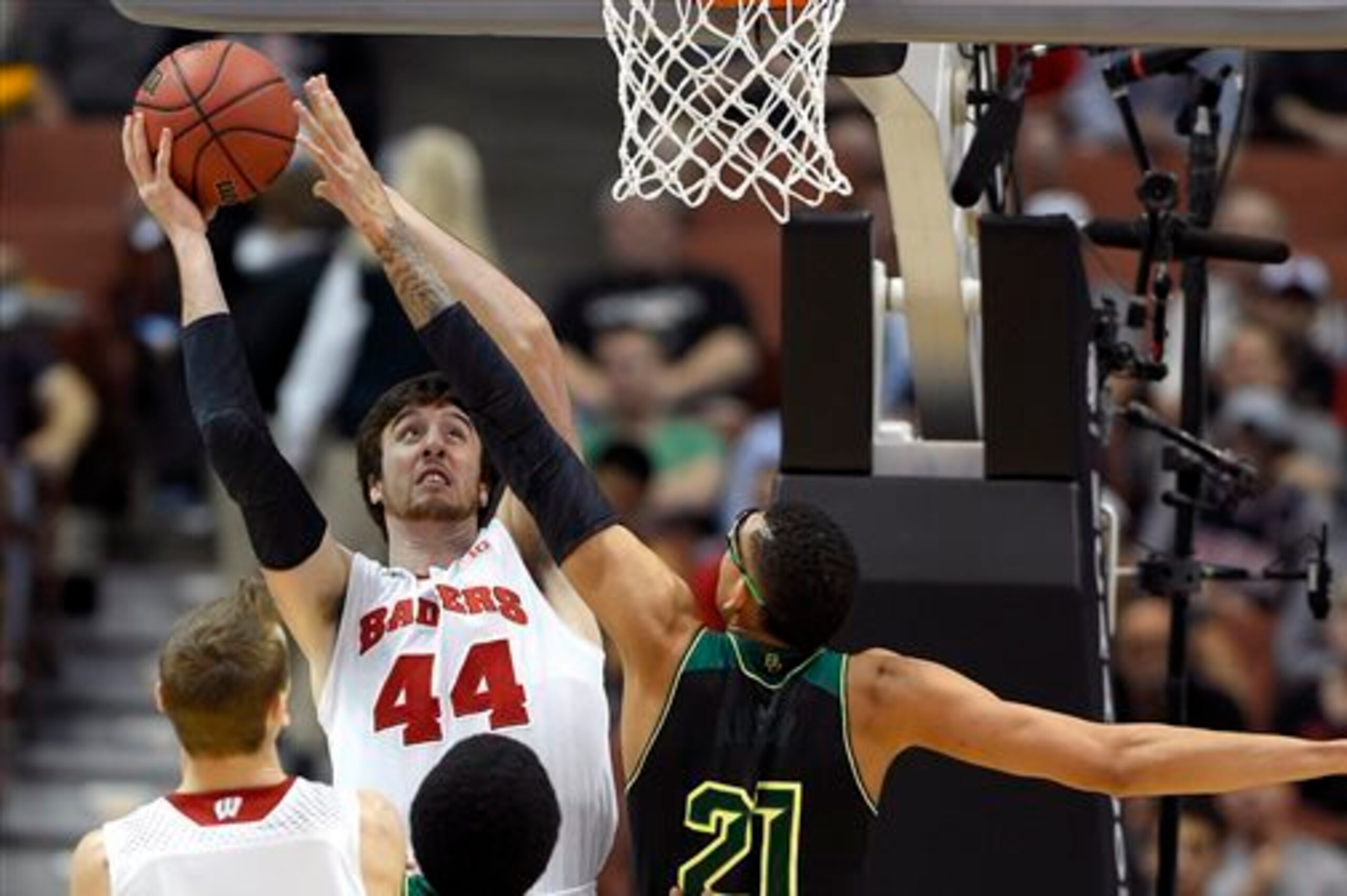

Ranking the Nation's Top 100 Players for 2014-15 NCAA Basketball Season
The two favorites for Player of the Year could not be more different. One is a senior. The other is a freshman. One was on nobody's radar when he started college. The other was a household name by his junior year of high school. One is great because of his jumper. The other because of his post moves.
Frank Kaminsky and Jahlil Okafor are the two players, in case you hadn't guessed already, and the only thing they really have in common is that they both play center.
This offseason I spent months watching video and studying numbers to try to put together the best 100 possible. I was set on the top two. After that, it gets tricky. Trimming the list to 100 was a chore.
This is the most difficult exercise I do all year, and the Okafors and Kaminskys of the world are what make it impossible to not have some big swing and misses. I've seen Okafor play. But I haven't seen him play in college, and it's difficult to predict how a freshman's game will translate to that level. Elite post players usually have an easier time, so that's why Okafor is higher than you would have found Andrew Wiggins last year.
Kaminsky is now proven, but a year ago he wasn't even on this list. If anyone else had him, I'd be impressed.
The players are ranked based on predicted value they will bring to their team. So some players, like Wichita State's Fred VanVleet, may not put up great numbers, but he's still one of the best point guards in the country.
Opportunity and team strength are also factors. Placing Kentucky's players is difficult because there are only so many minutes and shots to go around, but the preseason No. 1 does have more players appear in the top 100 (seven) than any other.
Apologies if your favorite player off your favorite team didn't make it or is undervalued. Now let's get to the picks.
This is the final installment in B/R's player ranking series in the lead-up to the 2014-15 season. In case you missed them, here are the top 20 point guards, the top 20 shooting guards, the top 20 small forwards, the top 20 power forwards and the top 20 centers. Some text that appears in those slideshows appears in this article as well.
100-96: Sulaimon-Weber
1 of 60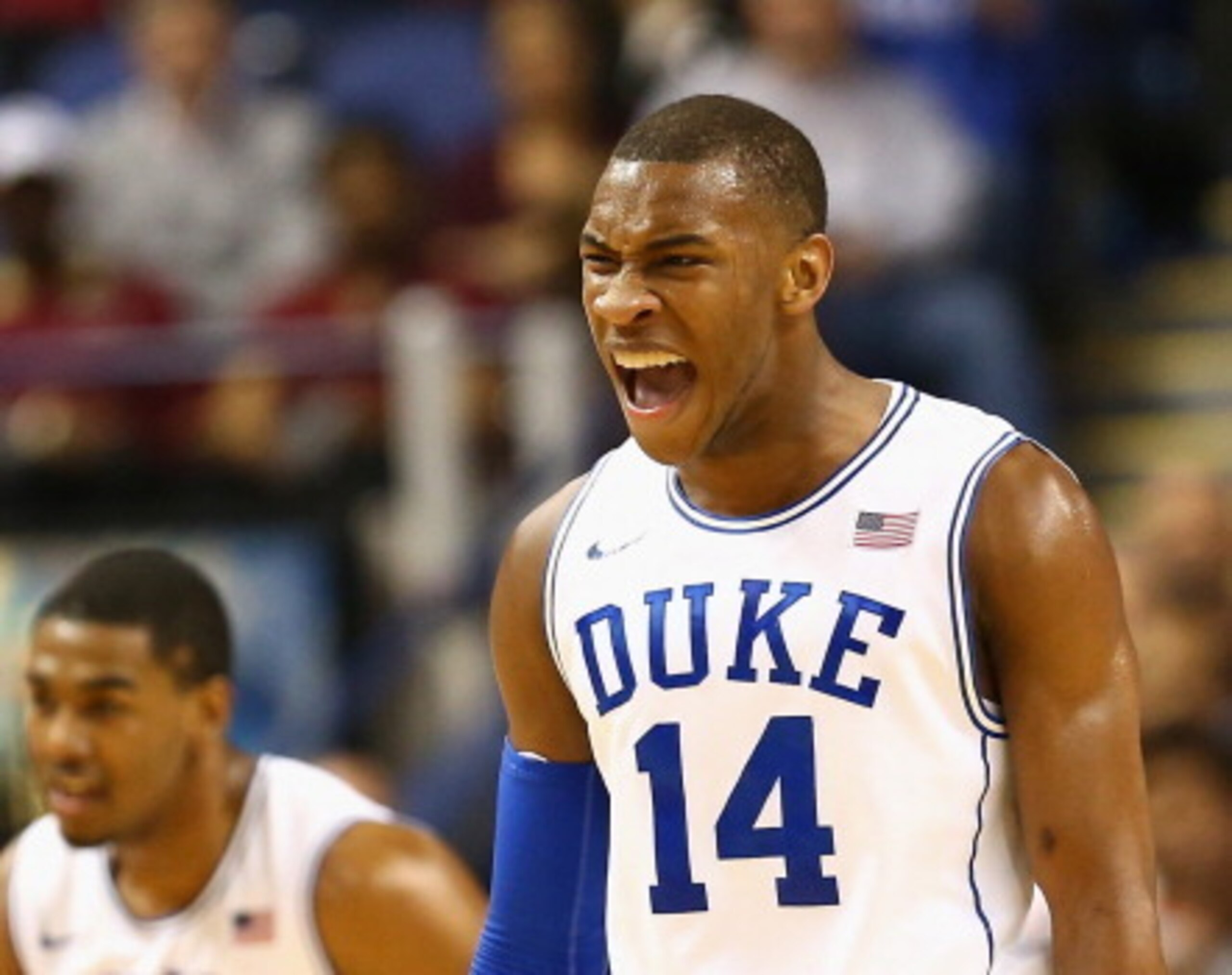
Rasheed Sulaimon, SG, Duke
Class: Junior
2013-14 Stats: 9.9 PPG, 2.4 RPG, 2.4 APG
On talent alone, Rasheed Sulaimon would be a lot higher on this list. But for some reason as a junior, he is still a bit of a mystery.
Sulaimon came off the bench in two exhibition games and averaged only 4.5 points in 16 minutes per game. He's playing behind sophomore Matt Jones, who wasn't a part of the rotation last season.
Sulaimon spent last year in and out of the starting lineup. He shot the ball well—41 percent from deep—but his production was up and down all season. Some nights he looks like a star. Some nights he disappears. On paper, you'd think he would be Duke's No. 2 scorer this year. But who knows if he's going to give himself the opportunity.
Jordan Sibert, SG, Dayton
Class: Senior
2013-14 Stats: 12.2 PPG, 2.3 RPG, 1.5 APG
Jordan Sibert was the leading scorer on a balanced Dayton team that made the Elite Eight. The former Ohio State guard is one of the best shooters in the country, knocking down 42.6 percent of his threes last year.
Sibert did a good job of picking his spots and taking good shots. After losing Devin Oliver and Vee Sanford, the Flyers could need Sibert to be a more aggressive scorer this season.
D'Angelo Russell, SG, Ohio State
Class: Freshman
2013-14 Stats (High school): 19.3 PPG, 4.7 APG, 3.6 RPG
D'Angelo Russell is a smooth lefty who could be Ohio State's go-to scorer right from the start. He can score from the perimeter and off the bounce. Russell has really good feel for his age and has the ability to play both guard spots.
The Buckeyes will need Russell to make a big impact this year to remain one of the top Big Ten teams. Scoring was an issue last year, and they lost their three leading scorers.
Isaiah Taylor, PG, Texas
Class: Sophomore
2013-14 Stats: 12.7 PPG, 4.0 APG, 3.3 RPG, 1.1 SPG
Like his team, Isaiah Taylor sort of came out of nowhere last season. Taylor was an unranked recruit coming out of high school, and not a lot was expected of the Longhorns last year.
Taylor proved to be one of the best freshman guards in the country thanks to his speed with the basketball. Unlike Myck Kabongo, UT's previous blur of a point guard, Taylor did a good job of taking care of the ball and executing the offense.
With Taylor running the show combined with a huge and talented front line, the Longhorns are considered a legitimate threat to end KU's run of 10 straight Big 12 regular-season titles.
Briante Weber, PG, VCU
Class: Senior
2013-14 Stats: 9.4 PPG, 3.9 APG, 4.1 RPG, 3.5 SPG
What a weapon Briante Weber has been in VCU's Havoc system. Weber has led the country in steals rate each of the last three seasons, per KenPom.com (subscription required), and he's a good bet to do it again.
Weber is like a guy you know is going to go out and get you 20 points every night. You know going into each game that he's likely to steal the Rams several possessions.
Offensively, he's a solid point guard, and his speed makes him tough to defend off the dribble.
95-91: Jackson-Hanlan
2 of 60
Traevon Jackson, PG, Wisconsin
Class: Senior
2013-14 Stats: 10.7 PPG, 4.0 APG, 3.8 RPG
Traevon Jackson is a trusty old veteran after starting at point guard for the last two years for Wisconsin. He knows how to run Bo Ryan's system and has a great feel for the game and how to control pace.
Jackson is also a reliable shooter—38.2 percent from three last season—and he has the ability to create off the dribble late in the clock if Wisconsin's offense breaks down. He's not a star by any measure, but you know what you're going to get from him.
Trevor Lacey, SG, NC State
Class: Junior
2012-13 Stats (at Alabama): 11.3 PPG, 3.2 APG, 3.8 RPG, 1.4 SPG
Trevor Lacey will be one of the best shooters in the ACC this year, and his scoring should help compensate for the loss of T.J. Warren.
The Wolfpack should be more perimeter-oriented with Lacey and Ralston Turner as the go-to scorers. Both will need to have big years to get the Wolfpack back to the NCAA tournament.
Tekele Cotton, SG, Wichita State
Class: Senior
2013-14 Stats: 10.3 PPG, 4.0 RPG, 2.4 APG, 1.4 SPG
Tekele Cotton is Wichita State's designated stopper on the defensive end and always draws the toughest defensive assignment on the perimeter. Cotton is also a reliable spot-up shooter.
Similar to Fred VanVleet, Cotton doesn't put up big numbers, but he impacts winning with all the little things he does.
Aaron Thomas, SG, Florida State
Class: Junior
2013-14 Stats: 14.5 PPG, 4.2 RPG, 1.8 APG, 1.6 SPG
Aaron Thomas was one of the most improved players in the country last year after averaging only 6.0 points as a freshman. Thomas thrived getting out in transition and improved his outside shot as a sophomore. He knocked down 37.1 percent of his threes after making only nine threes and shooting 22 percent as a freshman.
The Seminoles have enough talent to qualify for the NCAA tournament for the first time since 2012. If another scorer emerges to pair with Thomas—possibly redshirt freshman Xavier Rathan-Mayes—they could surprise some people in the ACC.
Olivier Hanlan, SG, Boston College
Class: Junior
2013-14 Stats: 18.5 PPG, 2.9 APG, 3.4 RPG
Boston College was one of the most disappointing teams in the country last season. Olivier Hanlan and Ryan Anderson, who transferred to Arizona after the season, made up one of the better duos in the ACC. Offensively, the Eagles were pretty good, and few guards in the country were as good as Hanlan at creating their own offense. He put together a really impressive year on the offensive end.
So what was this issue? Defense. The Eagles ranked 298th in adjusted efficiency on that end, according to KenPom.com. New coach Jim Christian isn't known as a defensive wizard, so it could take some time for BC to improve. But as long as Hanlan is around, the Eagles will have a shot to pull off an upset like they did last year at Syracuse, when he dropped 20 points on the Orange.
90-86: Karnowski-Nichols
3 of 60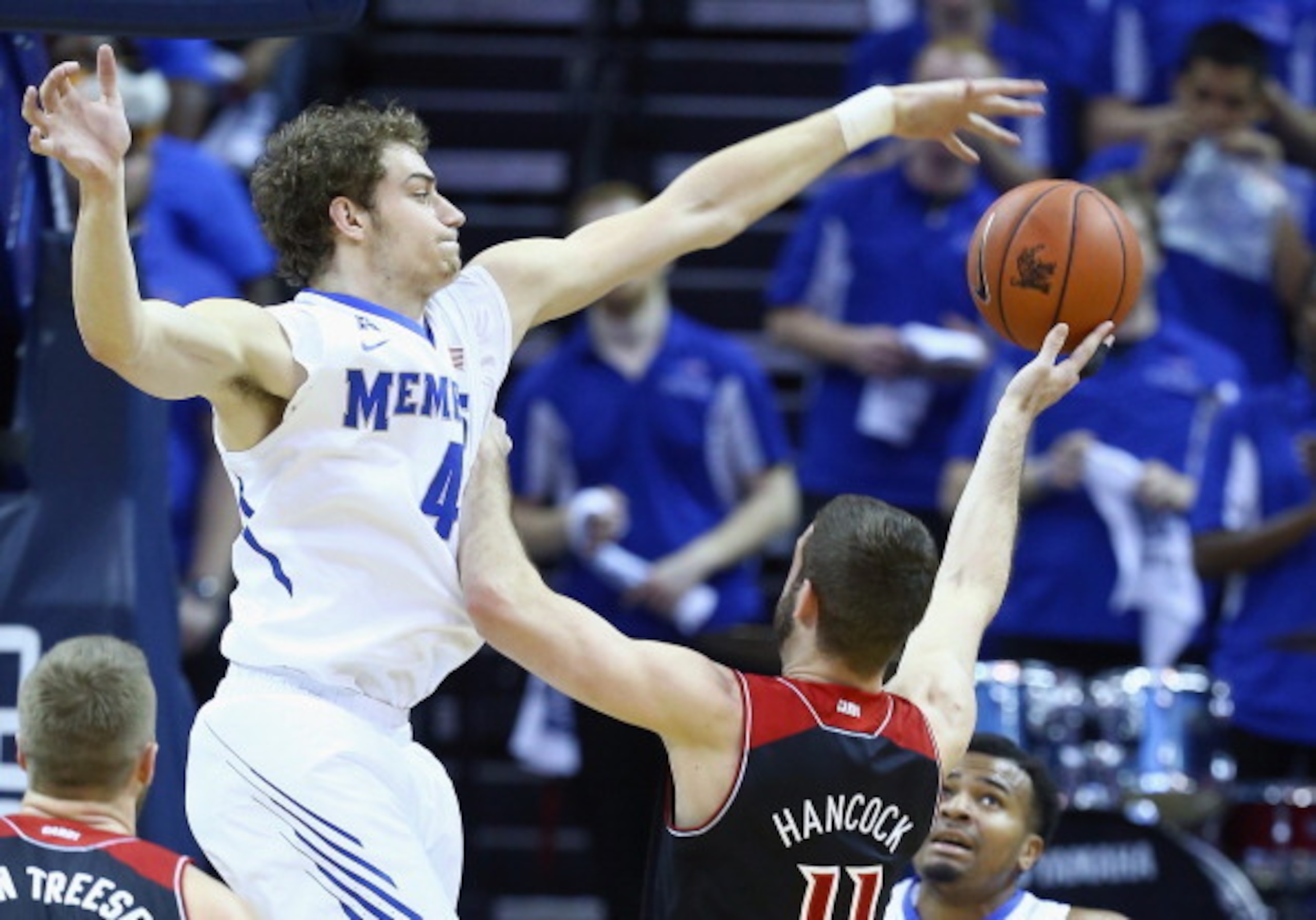
Przemek Karnowski, C, Gonzaga
Class: Junior
2013-14 Stats: 10.4 PPG, 7.1 RPG, 1.7 BPG
Przemek Karnowski is a mountain on the blocks and does a good job of using his great size (7'1", 288 lbs) to establish position and put himself in scoring spots. He gets to the free-throw line often but shot only 50 percent there last season.
Last year, Sam Dower was the go-to guy in the post for the Zags, and Kentucky transfer Kyle Wiltjer could be that guy this year. Karnowski could also get pushed by Domantas Sabonis, the son of Arvydas Sabonis. But Karnowski is going to get his minutes because he's such a mismatch.
Myles Turner, C, Texas
Class: Freshman
2013-14 Stats (High school): 18.2 PPG, 11.8 RPG, 7.2 BPG, 3.8 APG
Right away, Myles Turner will be one of the best shot-blockers in the country. He has good timing and great length. On the offensive end, he's a bit more raw.
Turner can shoot from the perimeter, but he'll be best served as a freshman to stick around the bucket. He runs the floor well and should benefit from playing with lightning-quick point guard Isaiah Taylor.
The Longhorns are stacked up front, returning starters Cameron Ridley and Jonathan Holmes along with Connor Lammert (20.7 minutes per game last season) and Prince Ibeh (13.6 minutes). Turner will earn minutes because of his defense, but he may not be as heavily involved in the offense as you would think a highly touted recruit would be right out of the gate.
Dakari Johnson, C, Kentucky
Class: Sophomore
2013-14 Stats: 5.2 PPG, 3.9 RPG, 0.6 BPG
It's a crowded frontcourt at Kentucky, and Dakari Johnson could come out on the short end for minutes. At almost any other school, he'd be a go-to guy.
Depending on how things shake out in UK's rotation, Johnson still has a chance to be a breakout player. He has good hands, a good feel for playing with his back to the basket and was moving better this summer in the Bahamas than he did last season. He could just end up a victim of being surrounded by so much talent.
Cady Lalanne, C, UMass
Class: Senior
2013-14 Stats: 11.3 PPG, 7.9 RPG, 2.2 BPG
Cady Lalanne was a solid secondary scorer at UMass last year and often a beneficiary of the penetration of Chaz Williams.
This season could go one of two ways with Williams gone. Lalanne will either be a star as his touches increase, or he could miss Williams setting him up. He's always been a good finisher at the rim, but he needs to improve his post-up game. He scored a lot of his points from the post last year but wasn't overly efficient with his opportunities.
Austin Nichols, PF, Memphis
Class: Sophomore
2013-14 Stats: 9.3 PPG, 4.3 RPG, 1.2 BPG
Young big men with great fundamentals are few and far between these days. Austin Nichols is one of the rarities. Nichols has great footwork and really good feel with his back to the basket. He can score over either shoulder and knock down the jump hook with either hand.
More of the Memphis offense should run through the bigs this year. Nichols deserves the touches after what he did as a freshman. He scored 90 points on 82 post-ups, good for 1.098 points per possession, per Synergy Sports (subscription required). Those are good numbers, especially for a freshman.
85-81: Lyles-Walker
4 of 60
Trey Lyles, PF, Kentucky
Class: Freshman
2013-14 Stats (High school): 23.7 PPG, 12.9 RPG, 3.5 APG
Trey Lyles is part of a beyond-loaded frontcourt, and it's still too early to say how it's going to shake out. Lyles, at this point, is probably a favorite to start because of the versatility he brings. He can shoot and is more comfortable on the perimeter than UK's other bigs.
Lyles is extremely skilled. Everything he does is smooth, and he makes it look easy. He has great hands, great feet and a nice touch. He is a good dark-horse pick to lead the Wildcats in scoring.
A.J. Hammons, C, Purdue
Class: Junior
2013-14 Stats: 10.8 PPG, 7.4 RPG, 3.1 BPG
A.J. Hammons has been a bit of a disappointment because his numbers haven't exactly met his potential on the offensive end. Part of the problem could be he just doesn't get enough touches, and he needs to get the ball on the blocks to be effective. Both starting guards from last year's team are gone, so maybe the Boilermakers will make it more of a priority to pass him the ball.
The 7-footer was productive on the defensive end last year. His block percentage (13.3) ranked seventh nationally, per KenPom.com (subscription required). He has the game to be one of the better two-way centers in the country.
Bobby Portis, PF, Arkansas
Class: Sophomore
2013-14 Stats: 12.3 PPG, 6.8 RPG, 1.5 APG, 1.0 SPG, 1.6 BPG
The last NBA-caliber power forward who Mike Anderson had in his system was DeMarre Carroll. Here were Carroll's numbers in his first year at Missouri (as a junior):
- 13.0 PPG, 6.7 RPG, 1.3 APG, 1.1 SPG, 0.7 BPG
Look familiar? Portis had a very similar first year at Arkansas. Now here were Carroll's numbers in his second year:
- 16.6 PPG, 7.2 RPG, 2.2 APG, 1.6 SPG, 0.7 BPG
It's also worth noting that Missouri was a .500 team in Carroll's junior year in 2007-08 and made the Elite Eight his senior season. Arkansas fans should expect similar progress from Portis, who is arguably the best talent Anderson has coached since Carroll.
As for an Elite Eight? Hey, the Razorbacks were better last year than 2008 Mizzou, and they return their three leading scorers. At the very least, an NCAA tourney bid wouldn't be surprising.
Nigel Hayes, PF, Wisconsin
Class: Sophomore
2013-14 Stats: 7.7 PPG, 2.8 RPG
Nigel Hayes was terrific off the bench last year for Wisconsin and has the potential to be a great scorer down the road in Bo Ryan's swing offense. He can score facing up or with his back to the basket, and he gets to the line often—he drew 7.3 fouls per 40 minutes as a freshman, according to KenPom.com (subscription required).
Hayes will be an important piece on this year's team, which will be a national title contender, but whether he gets starter minutes could depend on whether Sam Dekker can play the 3. A lineup with Hayes will definitely be the most talented one, so that should be the hope for the Badgers.
Chris Walker, C, Florida
Class: Sophomore
2013-14 Stats: 1.9 PPG, 1.3 RPG, 0.4 BPG
Don't buy too much into Chris Walker's numbers last year. He had to sit out the first semester and only averaged 4.8 minutes per game. Even if he had been eligible all year, head coach Billy Donovan rarely gives big minutes to freshmen. He especially wasn't going to give real minutes to a guy coming in late who was playing behind a rock in Patric Young.
In those limited minutes, Walker would show off some of the potential that made him such a highly ranked recruit. He plays with great energy and is an extremely explosive athlete. Florida has a really good penetrating point guard in Kasey Hill, who Walker will benefit from playing with (read: lobs galore). He also projects to be a great rim protector.
80-76: Tarczewski-Shepard
5 of 60
Kaleb Tarczewski, C, Arizona
Class: Junior
2013-14 Stats: 9.9 PPG, 6.3 RPG, 1.0 BPG
Kaleb Tarczewski was the anchor of the best defense in the country last year, and the Wildcats once again will be one of the most difficult teams to score against in the paint.
On the offensive end, Tarczewski has been helped by point guard T.J. McConnell. He was really good in the pick-and-roll as the roll man for McConnell. He also does a good job of getting to the line, where he shot 75.6 percent last season.
Rayvonte Rice, SG, Illinois
Class: Senior
2013-14 Stats: 15.9 PPG, 6.0 RPG, 1.7 SPG
Rayvonte Rice is a bulldog who doesn't have much of a jumper but still gets his numbers. Rice is really good at plowing into the paint and can overpower most guards.
Rice, a transfer from Drake, played above expectations in his first year with the Illini. Transferring up has become a trend, and the more we see players like Rice prove they can go from a mid-major to becoming the man at a reputable Big Ten program, the more major conference schools will seek out talents like him.
Kellen Dunham, SG, Butler
Class: Junior
2013-14 Stats: 16.4 PPG, 4.0 RPG, 1.7 APG
Kellen Dunham is one of the best shooters in college basketball, although his 35 percent accuracy from beyond the arc didn't exactly reflect that last season.
What Dunham (and the Bulldogs) were missing was someone to help get him good looks. The return of Roosevelt Jones should help Dunham get his percentages up. He'll still be the go-to scorer, but he'll be able to work off the ball a lot more than last year.
Brad Waldow, C, Saint Mary's
Class: Senior
2013-14 Stats: 15.1 PPG, 7.5 RPG, 1.3 BPG
Brad Waldow is a space-eater who does all of his damage at the basket. Waldow does an excellent job of establishing himself on the blocks, utilizing all 270 pounds of his frame.
Waldow gets to the line often—he shot 239 free throws last year—and he's always been an excellent offensive rebounder, ranking in the top 51 in offensive rebounding percentage in each of his first three seasons, per KenPom.com.
Winston Shepard, SF, San Diego State
Class: Junior
2013-14 Stats: 11.6 PPG, 4.9 RPG, 2.1 APG
While Dwayne Polee may have more upside as a scorer, Winston Shepard is more proven and the leading returning scorer for the Aztecs. Shepard's shooting numbers weren't great last year, but he is a great athlete and Steve Fisher has done a good job with skill development in his program.
Getting the offense on track could be an issue for the Aztecs. The defense, on the other hand, should once again be one of the best in the country, and Shepard is a big reason why. He can guard multiple positions, and he's quick and lengthy.
75-71: Drmic-Henton
6 of 60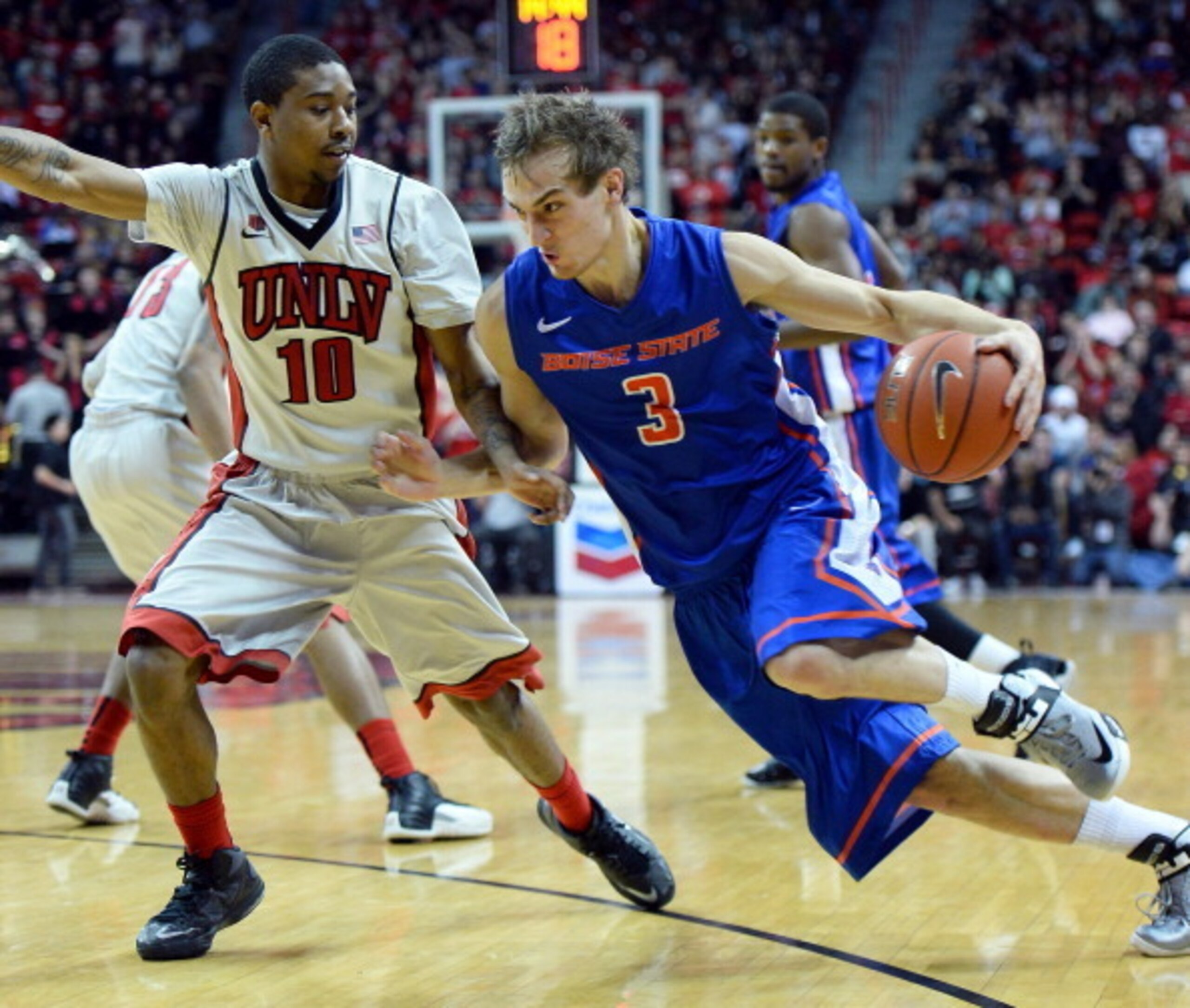
Anthony Drmic, SF, Boise State
Class: Senior
2013-14 Stats: 15.9 PPG, 4.5 RPG, 1.7 APG, 1.1 SPG
Boise State and Anthony Drmic both took a step back last season. Drmic averaged nearly two points fewer per game, he shot 34.1 percent from deep compared to 39.2 percent as a sophomore, and the Broncos went .500 in the Mountain West after making the NCAA tournament in 2013.
Drmic was also slightly less aggressive and didn't get to the line as often, but mostly his production was similar other than the outside shooting. He's too good of a shooter to shoot that poorly from distance, and it'd be a good bet that he'll be more like his sophomore self this season.
The Broncos only lose one contributor (Ryan Watkins), so they'd be a good sleeper pick to start the season, as the most important pieces from two seasons ago are still around.
Justise Winslow, SF, Duke
Class: Freshman
2013-14 Stats (High school): 27.5 PPG, 13.6 RPG, 3.5 APG, 2.1 BPG, 1.8 SPG
I was at the under-18 FIBA America's championships this summer and developed a great appreciation for Justise Winslow. He may not put up big numbers this season, but he'll be an important piece for Duke.
That's because Mike Krzyzewski will be able to trust Winslow, who plays beyond his years. He doesn't make mistakes, takes good shots and plays with great effort. He didn't get the MVP in Colorado Springs this summer—Stanley Johnson did—but Winslow was the best and most consistent player on an extremely talented roster.
Like he did for the Americans, he'll play multiple positions for Duke—look for him in some small-ball lineups at the 4. The one question mark with his game is his outside shot, and that appears to be improving.
Justin Jackson, SF, North Carolina
Class: Freshman
2013-14 Stats (High school): 31.5 PPG, 9.1 RPG, 2.0 APG, 1.9 BPG
Roy Williams signed a great class, and Justin Jackson figures to be the most important piece. The Tar Heels were in desperate need of a shooter, and Jackson will fill that role right away.
Jackson has one of the best mid-range jumpers in the country. He doesn't shoot as much from beyond the arc but has the stroke to be a consistent three-point shooter. He made 40.5 percent of his threes in Nike's Elite Youth Basketball League (EYBL) during the summer of 2013. At 6'8" with the ability to put the ball on the floor, Jackson is a tough matchup on the wing and should thrive in UNC's uptempo attack.
Dustin Hogue, SF, Iowa State
Class: Senior
2013-14 Stats: 11.6 PPG, 8.4 RPG
Fred Hoiberg knows how to take advantage of mismatches, and the 6'6" wing who can post up is a rarity in college basketball. That's Dustin Hogue. Hogue was successful in just about any situation Hoiberg put him in.
He led Iowa State with an effective field-goal percentage of 61.5 percent, which is quite the feat considering the number of shooters Hoiberg puts on the floor. It'll be interesting to see how Hogue performs if he's one of Iowa State's featured scorers instead of just a complementary piece.
You would think his role offensively would increase considering the finish he had last season. He averaged 17.7 points over ISU's final six games and dropped 34 points in the Sweet 16 loss to UConn.
LaDontae Henton, SF, Providence
Class: Senior
2013-14 Stats: 14.0 PPG, 7.9 RPG, 1.7 APG, 1.3 SPG
The opportunity to put up huge numbers is there for LaDontae Henton this season now that Bryce Cotton and his 21.8 points and 15.7 attempts per game are gone.
Henton has been a consistent secondary scorer for the Friars throughout his career, averaging more than 13 points in each of his three seasons. Last season, he scored in double figures in 29 of Providence's 35 games and averaged an impressive 18 points over the final six games.
Henton is a good shooter with a pro body at 6'6", 215 pounds. He complemented Cotton well. Now we'll get to see what he can do when he's the man.
70-66: Wiltjer-Jones
7 of 60
Kyle Wiltjer, PF, Gonzaga
Class: Junior
2012-13 Stats (at Kentucky): 10.2 PPG, 4.2 RPG, 1.5 APG
Kentucky is a great place to play college basketball. Kyle Wiltjer would have been a contributor last year on the team that went to the national title game. But for Wiltjer, the player, the move to Gonzaga makes a lot of sense for his game.
Some guys are better in a certain system, and Wiltjer's game is suited for the Zags. Mark Few likes to play a big man around the top of the key and utilizes stretch 4s. It's hard to find a 4 who can shoot it better than Wiltjer.
He should get to show off more of his game too. He didn't get many iso opportunities in UK's offense, but when he did, he showed an ability to put the ball on the floor. Wiltjer is extremely skilled, just not the kind of caliber athlete that John Calipari prefers.
But Few loves skill, and the two should be a great fit. It's also worth mentioning the last talented big man to sit out a year at Gonzaga was Kelly Olynyk, and he ended up being an All-American.
Brice Johnson, PF, North Carolina
Class: Junior
2013-14 Stats: 10.3 PPG, 6.1 RPG, 1.3 BPG
The ceiling for Brice Johnson is really high. He's one of the best athletes in college basketball who gets off his feet extremely quickly. He runs the floor well, which makes him a good fit in UNC's offense. And he can knock down a face-up jumper.
Considering all that ability and the production he put up last season, it was tough to explain why he played only 19.4 minutes per game. The Tar Heels were deep inside, so I guess that explains it. Now that James Michael McAdoo is gone, there's really no reason why Johnson shouldn't slide into his starting role and play more minutes.
Roosevelt Jones, SF, Butler
Class: Junior
2012-13 season: 10.1 PPG, 5.6 RPG, 3.5 APG
Roosevelt Jones is about as unorthodox as they come in college basketball. His shot is so ugly that he rarely ever shoots it outside the paint. He had one attempt outside 17 feet his sophomore season, according to Synergy Sports, and that attempt was at the shot-clock buzzer. But even without the threat of a jumper, Jones finds a way to score and is still hard to guard.
Jones makes up for his lack of jumper by finishing really well around the rim. He's also a great ball-handler and passer, and he's a good defender who can guard multiple positions.
A wrist injury kept Jones out last season, and the Bulldogs struggled without their best playmaker, going 14-17 and winning only four games in the Big East. Don't be fooled into thinking that it was Brad Stevens' leaving that led to the program's first losing season since 2005; Jones' injury played a much bigger role in Butler's struggles.
Denzel Valentine, SF, Michigan State
Class: Junior
2013-14 Stats: 8.0 PPG, 6.0 RPG, 3.8 APG
In most years, there would be concern for Michigan State with a point guard like Travis Trice, who is more of a three-point specialist than a playmaker—Trice averaged only 2.3 assists per game last season in 22.3 minutes per game. But need not worry, Michigan State fans, because you have one of the best playmaking forwards in the country in Denzel Valentine.
Valentine is a point forward who has great vision and feel for the game. Last year, Valentine was also a solid spot-up shooter, knocking down 37.7 percent of his threes for the Spartans. Valentine may need to take on more of the scoring load this year now that the Spartans are without Adreian Payne, Keith Appling and Gary Harris. The one area where he needs to improve is finishing inside the arc and at the rim—he made only 43 percent of his twos last year.
At the very least, he'll make the game easier for his teammates, who are mostly unproven as scorers.
Bryce Dejean-Jones, SG, Iowa State
Class: Senior
2013-14 Stats (at UNLV): 13.6 PPG, 3.7 RPG, 3.0 APG
At UNLV, Bryce Dejean-Jones was at his best in transition in an up-and-down game.
Well, he couldn't have picked a better system than Fred Hoiberg's uptempo attack at Iowa State.
Hoiberg has had tremendous success with transfers, especially guards who can create off the dribble and shoot the rock. DeAndre Kane, for instance, went from a poor three-point shooter at Marshall (24.8 percent) to a dependable shooter at Iowa State (39.8 percent). He also averaged two more points per game, which is surprising when you consider he was playing much stiffer competition in the Big 12.
Dejean-Jones will fill the spot that Kane played in the Iowa State lineup. Who knows if he'll be as good, but it's tough to bet against Hoiberg's record of targeting the right transfers.
65-61: Harrison-Meeks
8 of 60
D'Angelo Harrison, SG, St. John's
Class: Senior
2013-14 Stats: 17.5 PPG, 4.9 RPG, 1.9 APG
D'Angelo Harrison has developed the reputation of a chucker—and for good reason. He rarely sees a shot he doesn't like.
But on a team that has been offensively challenged, Harrison has had to score, and last year, when St. John's went on a run to at least get in the bubble conversation—winning 10 of 13 Big East games—Harrison averaged 18.4 points in those 10 wins.
That streak was one of the few times the Johnnies have played consistently the last few years. St. John's has underachieved throughout Harrison's career. He is the star on a roster with enough talent to get to the tourney for the first time since 2011.
Wesley Saunders, SG, Harvard
Class: Senior
2013-14 Stats: 14.2 PPG, 4.6 RPG, 3.8 APG, 1.7 SPG
Wesley Saunders has led Harvard in scoring each of the last two years, and in both of those seasons, Harvard has advanced to the round of 32 in the NCAA tournament. Not that his game needs any sort of qualifier, but it's easy to question how good a guy in the Ivy League can be.
Saunders would be successful at any level because of his slashing ability. He's not much of a shooter, but he's great at getting to the rim or the free-throw line—he averaged 5.9 attempts per game—and is also a good passer for a 2-guard.
Nigel Williams-Goss, PG, Washington
Class: Sophomore
2013-14 Stats: 13.4 PPG, 4.4 APG, 4.4 RPG, 1.1 SPG
Nigel Williams-Goss doesn't have a lot of talent around him this season, but he has the type of ability to play Washington into relevancy.
At 6'3", the Huskies use Williams-Goss in a variety of ways, including utilizing his size to post up smaller guards. When Williams-Goss is attacking with the ball in his hands, he's similar to former Syracuse guard Tyler Ennis. Both play with good pace but never appear to be in a hurry.
Ennis ended up getting drafted in the first round this past season, partly because he played for a winner and was around good talent. Williams-Goss doesn't have that luxury. He'll need to have a monster season to get Washington back to the tournament for the first time since 2011. Either way, the scouts will likely be watching.
Shaq Goodwin, PF, Memphis
Class: Junior
2013-14 Stats: 11.5 PPG, 6.5 RPG, 1.8 APG, 1.3 SPG, 1.8 BPG
Last season all anyone could talk about when it came to Memphis going into the year was the guard play. That changed some because of how good Shaq Goodwin was, and now all the talk around Memphis going into this season should be about the bigs: Goodwin and Austin Nichols.
Goodwin made a big leap from his freshman year. He shot 58.4 percent after shooting 46.6 percent as a freshman, and he had a better idea of how to use his great strength and quickness to his advantage.
Goodwin and Nichols were good working the high-low together, and that combination should only get better this season. It'll need to be if the Tigers—inexperienced everywhere else—want to make the tournament for a fifth straight season.
Kennedy Meeks, C, North Carolina
Class: Sophomore
2013-14 Stats: 7.6 PPG, 6.1 RPG, 0.8 BPG
Kennedy Meeks is listed 20 pounds lighter than he was as a freshman. He's still a hefty 270, so it's not like he won't be able to throw his weight around, but he should be lighter on his feet and able to play more minutes.
It was obvious as a freshman that Meeks has a lot of ability and potential. He has great hands and does a good job getting position in the post and on the boards. He's a good fit in UNC's fast-paced system because of his ability to throw terrific outlet passes.
60-56: Frazier-Summers
9 of 60
Michael Frazier, SG, Florida
Class: Junior
2013-14 Stats: 12.4 PPG, 3.5 RPG, 1.1 APG, 1.1 SPG
Michael Frazier is a one-dimensional scorer—a three-point ace—but he is really good in that one dimension.
Frazier attempted 264 threes compared to just 79 shots inside the arc last season, and he knocked down 44.7 percent of them. Most of Frazier's threes were on spot-ups off Florida's penetration, usually with Scottie Wilbekin setting him up. He'll once again play with a talented penetrator in Kasey Hill.
Frazier also got better last year at running off screens to get open. That helped him consistently get more looks from the perimeter.
Andre Hollins, PG, Minnesota
Class: Senior
2013-14 Stats: 13.6 PPG, 3.5 RPG, 2.4 APG
Andre Hollins is one of the best scoring point guards in the country, and he's been able to concentrate on scoring playing alongside fellow point guard Deandre Mathieu.
The value of Hollins was obvious last season for the Gophers. Hollins averaged 16.2 points per game in Minnesota's first 19 contests of which they won 14. He injured his ankle against Wisconsin, missed two games and averaged 11.3 points with the injury that assistant coach Dan McHale told the Star Tribune he had "no business playing" on.
After the Wisconsin game, the Gophers lost eight of their next 13 before their NIT championship run. With a healthy Hollins, they'll have a good shot to get back to the NCAA tournament.
D'Vauntes Smith-Rivera, SG, Georgetown
Class: Junior
2013-14 Stats: 17.6 PPG, 5.0 RPG, 2.7 APG, 1.2 SPG
Georgetown missed the tournament for only the third time under John Thompson III last year, and an impressive season by D'Vauntes Smith-Rivera went mostly unnoticed outside of the Georgetown fanbase.
The Hoyas were actually a better team offensively last season than the previous year, when they were a No. 2 seed in the NCAA tournament. The major difference was that the defense was not nearly as stingy.
Smith-Rivera will be relied upon even more this year with Markel Starks having graduated. The junior guard has a good mid-range game and shot a solid 39.3 percent from deep last season.
Josh Scott, C, Colorado
Class: Junior
2013-14 Stats: 14.1 PPG, 8.4 RPG, 1.1 BPG
Josh Scott is a crafty low-post scorer with a variety of moves and counters. He can score over either shoulder and with either hand. Scott is also really good at getting to the free-throw line, where he shoots 81 percent.
The Buffs have been to three straight NCAA tournaments. With Scott as the go-to man this year, there's a good shot they'll make it four.
Jarvis Summers, PG, Ole Miss
Class: Senior
2013-14 Stats: 17.3 PPG, 3.8 APG, 2.4 RPG
Jarvis Summers played in the shadow of Marshall Henderson mania, but Summers was the real star for Ole Miss.
When you study what Summers was able to do offensively, he put up numbers that rivaled another point guard who got quite a bit of love last season: Shabazz Napier.
Napier was so valuable to UConn's offense because he could create offense all on his own when nothing else was going right. Same for Summers. In fact, Summers was the best one-on-one scorer in the country. He ranked No. 1 in isolation efficiency (minimum 100 possessions), scoring 1.197 points per possessions in iso sets, per Synergy Sports (subscription required). Napier ranked fifth at 0.988 points per possessions.
Summers can shoot from anywhere. He doesn't have blow-by speed but can create separation with his dribble and strength and is terrific shooting pull-up jumpers or runners. He also shot 42.3 percent from deep.
55-51: Long-Nance Jr.
10 of 60
Shawn Long, C, Louisiana-Lafayette
Class: Junior
2013-14 Stats: 18.6 PPG, 10.4 RPG, 2.7 BPG
Shawn Long is a rarity—the stretch 5.
Long is a terrific spot-up shooter who drained 42.3 percent of his threes last season. He's also a legitimate threat scoring in the post. On the other end, he is a good shot-blocker and great defensive rebounder, another combo that is rare—most are either one or the other.
Long will have to adjust to playing without Elfrid Payton, who was a lottery pick in June's NBA draft. Payton was the team's only elite distributor, but NBA scouts are still stopping at Louisiana-Lafayette this year. If Long continues to produce without Payton, the Ragin' Cajuns could have a player in the draft for the second year in a row.
Markus Kennedy, PF, SMU
Class: Junior
2013-14 Stats: 12.4 PPG, 7.1 RPG, 1.5 SPG, 1.2 BPG
Markus Kennedy has three attributes that make him really tough to cover on the blocks. He's a lefty, he has a big backside and he's patient.
So far in Larry Brown's two years back in college, he has preferred that his team score inside the arc, and Kennedy was the go-to guy last year, particularly in March. He averaged 14.4 points per game in the Mustangs' final nine games, helping the team advance all the way to the NIT Championship Game.
Terry Rozier, PG, Louisville
Class: Sophomore
2013-14 Stats: 7.0 PPG, 1.8 APG, 3.1 RPG, 1.0 SPG
Louisville had an experienced backcourt last season, and Terry Rozier was the one freshman who carved himself out a role.
Rozier played smart basketball for a freshman, rarely turning the ball over and picking his spots when to attack. He was terrific for the Cardinals when they played at a fast tempo. He's really gifted in the open court with a good combination of speed and strength. He's not afraid to attack the rim even if a big man is awaiting him and has a solid outside shot, knocking down 37.1 percent of his threes last season.
Combine those attributes with the ability to play great defense, and he's the perfect fit in Rick Pitino's system and a prime breakout candidate.
Branden Dawson, PF, Michigan State
Class: Senior
2013-14 Stats: 11.2 PPG, 8.3 RPG, 1.6 APG
There are some guys who just know who they are and know how to get the most out of that. Branden Dawson has developed into one of those guys.
Dawson plays with terrific energy and has figured out how to be a productive scorer without much of a jumper. He's a really good finisher around the rim and can out-athlete just about anyone in the country.
On a loaded team last year, he averaged 17.5 points per game in Michigan State's six games leading up to the UConn loss. The Spartans lose stars Adreian Payne, Keith Appling and Gary Harris, but that six-game stretch from Dawson has to give them hope heading into this season.
Larry Nance Jr., PF, Wyoming
Class: Senior
2013-14 Stats: 15.4 PPG, 8.6 RPG, 1.6 APG, 1.4 SPG, 2.1 BPG
Larry Nance Jr. was blessed with his dad's athletic ability and hops, and his pops taught him some footwork along the way as well.
Nance is a treat to watch operate from the blocks. He's really good at getting an angle, and that makes him a target for an easy bucket when the ball is delivered. He's also extremely quick with his moves inside. His 1.202 points per possession on post-ups ranked fourth in the nation last year (minimum 50 possessions), per Synergy Sports.
Nance isn't a great shooter, but he's so good inside of four feet that it doesn't matter. He shot 81.3 percent at the rim last year, according to Hoop-Math.com. And to really see his value, look at what Wyoming did with him last season (17-9 overall, 8-5 in the Mountain West) and without him (1-6).
50. Willie Cauley-Stein, C, Kentucky
11 of 60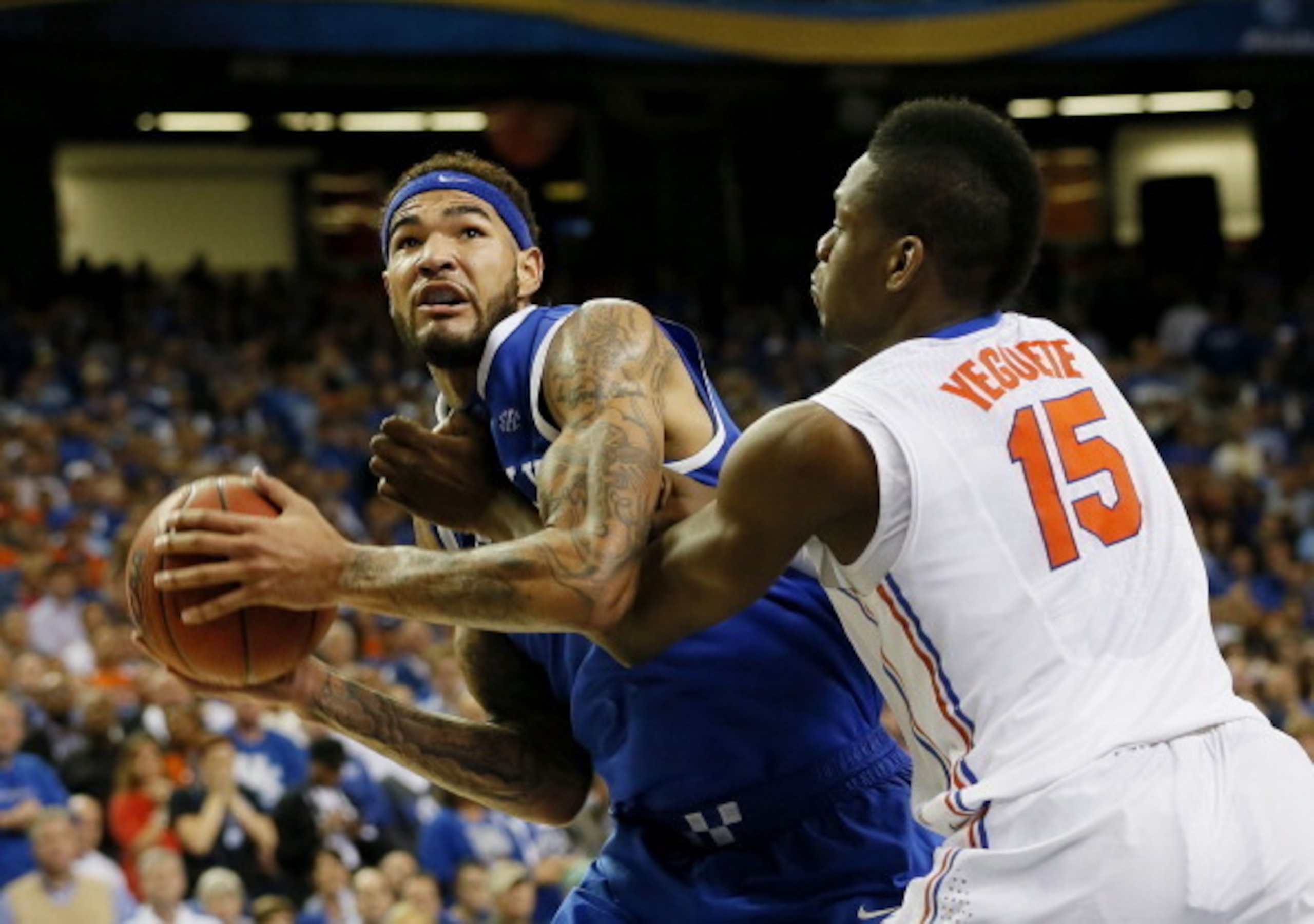
Class: Junior
2014-15 Stats: 6.8 PPG, 6.1 RPG, 2.9 BPG
Willie Cauley-Stein is one of the most valuable defensive assets in the country. He's the rare rim protector who can also get out on the perimeter and check a guard if necessary.
On the offensive end, Cauley-Stein has been a work in progress throughout his career, but he has gotten better every season. He's great in transition because of his speed and hands. It's tough to predict how head coach John Calipari will rotate his big men once he ditches the platoon, but it's a good bet he'll find minutes for Cauley-Stein because of the impact he can make on the defensive end.
49. Cameron Ridley, C, Texas
12 of 60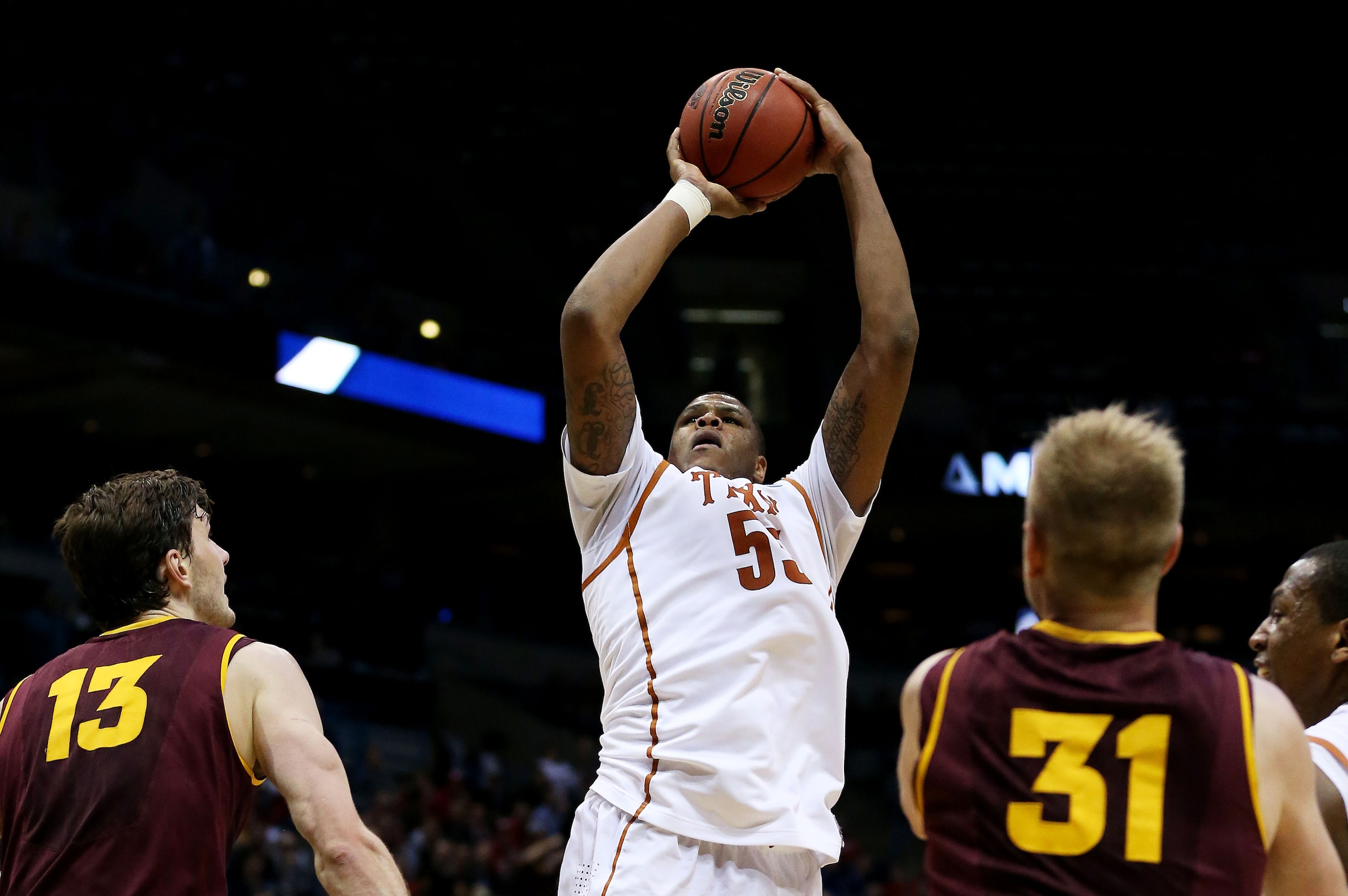
Class: Junior
2013-14 Stats: 11.2 PPG, 8.2 RPG, 2.2 BPG
A big reason for Texas' comeback last season was the development of Cameron Ridley, a 247Sports composite 5-star recruit who disappointed as a freshman. Ridley went from an oversized non-factor to an intimidating presence as a sophomore.
It's clear why at one time he was such a sought-after prospect. At 6'9" and 285 pounds, Ridley has great hands and a soft touch around the basket. He's also a strong defender in the paint. Much of the preseason hype around Texas will surround incoming freshman Myles Turner, but I expect Ridley to be the team's most valuable big man.
48. Darrun Hilliard, SG, Villanova
13 of 60
Class: Senior
2013-14 Stats: 14.3 PPG, 2.6 APG, 3.6 RPG, 1.3 SPG
When head coach Jay Wright has had good guard play, his program has always been strong, and Darrun Hilliard's emergence last season was a big reason why Villanova returned to relevance.
Hilliard had been a 30.9 percent shooter from deep for his career until last season when he made 41.4 percent of his threes. The Wildcats do a good job of spacing the floor, and Hilliard is a good spot-up shooter and was also really good creating space for his shot using ball screens. Now that James Bell has graduated, Hilliard's role in Villanova's offense should only grow.
47. Kasey Hill, PG, Florida
14 of 60
Class: Sophomore
2013-14 Stats: 5.5 PPG, 3.1 APG, 2.0 RPG, 1.2 SPG
I had Kasey Hill on this list last season, and that was a bit premature. Scottie Wilbekin ended up being one of the best point guards in the country, and that limited Hill's opportunities to really showcase everything he can do.
This season, Wilbekin is gone, and Hill should take over a lot of his responsibilities in Billy Donovan's offense, which has always been kind to guards.
The Gators will likely look to spread the floor with shooters and let Hill create off the dribble. He showed a great ability to drive into the paint last season. He got to the free-throw line at a higher rate than any other Gator.
It usually takes most players at least a year until they're really productive in Donovan's system. If Hill is able to add a respectable jumper—he made only five of 35 threes last year—he has the ability to be just as valuable as Wilbekin was to the Gators.
46. Chris Jones, PG, Louisville
15 of 60
Class: Senior
2013-14 Stats: 10.2 PPG, 2.9 APG, 2.3 RPG, 2.2 SPG
Chris Jones is the second Louisville point guard to make this list, and both will have plenty of opportunities to succeed in Rick Pitino's offense.
Jones is the one most likely to see his numbers approach Russ Smith-dom, as he's a more aggressive scorer than Terry Rozier, and it wasn't that long ago he was putting up Russdiculous-like usage numbers in JUCO ball.
Pitino told the media this summer that Jones has started to eat better, and his weight loss should make him one of the quicker guards in the country. Smith was so valuable last season attacking off the dribble, and that's one area where Jones could stand to get better. Added quickness should help there.
It should also help him on the defensive end, where he was already a great weapon in Pitino's press. Jones ranked eighth nationally in steals rate last season, per KenPom.com.
45. Nic Moore, PG, SMU
16 of 60
Class: Junior
2013-14 Stats: 13.6 PPG, 4.9 APG, 2.3 RPG, 1.5 SPG
It was a real bummer for SMU to lose out on the talents of Emmanuel Mudiay, who decided to play overseas this year instead of learn under head coach Larry Brown. But the Mustangs are still in really good hands at point guard with Nic Moore, who would have fit really nicely next to Mudiay.
Moore is a terrific shooter—43.6 percent from distance last season—and Mudiay's ability to penetrate would have led to a lot of Moore threes.
Instead, SMU will once again rely on Moore to be the creator, and that's not a bad consolation prize. He can create for himself and was terrific using ball screens last season, scoring at a 1.02 points-per-possession clip in ball-screen situations, according to Synergy Sports. That ranked 15th nationally for players who used a minimum of 100 ball-screen possessions.
44. T.J. McConnell, PG, Arizona
17 of 60
Class: Senior
2013-14 Stats: 8.4 PPG, 5.3 APG, 3.6 RPG, 1.7 SPG
T.J. McConnell will probably put up the worst scoring numbers on this list, but he's as valuable to his team as any point guard in the country.
McConnell has been the perfect setup man for the Wildcats, who were missing just that: a setup man. Sean Miller has put together an extremely talented roster, and McConnell is one of the best passers and floor generals in the game. He has a great understanding of how to run a team and where to get his teammates the ball in position to succeed.
McConnell is also an excellent defender who applies ball pressure like Aaron Craft did during his Ohio State career. What makes McConnell an even better college guard than Craft is that he has a better jumper and is a better decision-maker on the offensive end. We might have to consult the ladies to find out if he's as high on the heartthrob scale.
43. JayVaughn Pinkston, PF, Villanova
18 of 60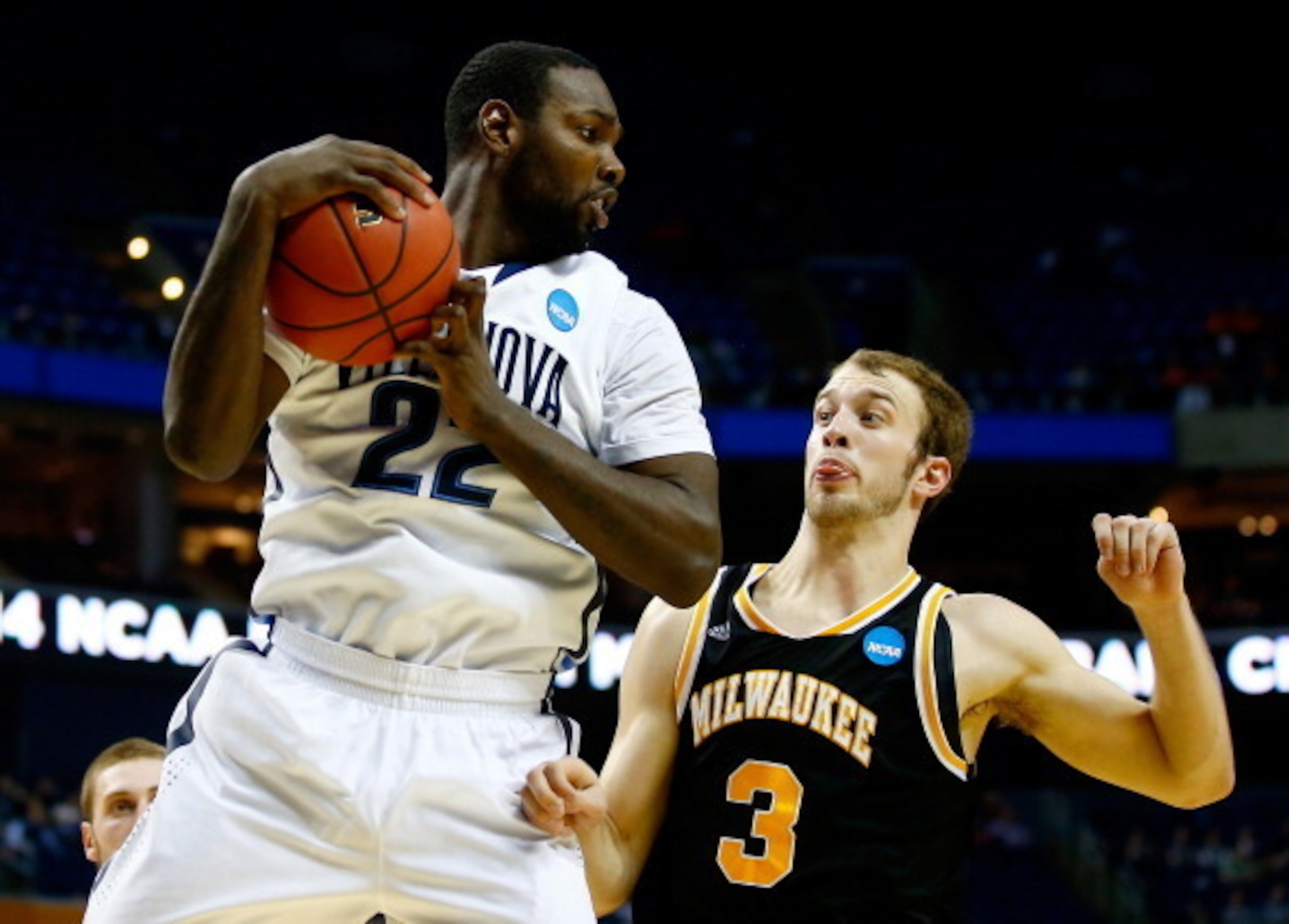
Class: Senior
2013-14 Stats: 14.1 PPG, 6.1 RPG, 1.4 APG
Jay Wright has never had a Villanova team shoot a higher percentage of its attempts from outside the three-point line than last year's squad. The Wildcats shot a three on 44.8 percent of their attempts.
Yet with the guards firing all those long balls, JayVaughn Pinkston still got his numbers. And it was Pinkston—or at least the threat of Pinkston—who played a part in opening things up for the shooters. Pinkston is solid scoring from the blocks, and he can also attack off the dribble and get to the rim. He's always been consistent because he's always gotten to the line and is a solid free-throw shooter (74.4 percent).
It seems like he's been at Villanova forever. That's usually the case for a guy who has been as productive as he has.
42. Jonathan Holmes, F, Texas
19 of 60
Class: Senior
2013-14 Stats: 12.8 PPG, 7.2 RPG, 1.3 BPG
What started as a talented class of six at Texas was down to one by last season. Jonathan Holmes was the lone junior for Texas, as he watched his five other classmates either transfer or go pro the previous two years.
Thanks to all the departures, not much was expected out of the Longhorns. Holmes was not considered the most talented of that group, yet his leadership and versatility turned the Longhorns into an NCAA tournament club.
Holmes also showed he is a pretty talented player. He's an efficient scorer who can bang inside or knock down a pick-and-pop jumper, and he played solid defense and was a good rebounder. As the lone senior on this team, he'll play a similar role, although he may have to take on the added responsibility of playing a second position.
Rick Barnes plans to experiment with Holmes at the 3 to get both Cameron Ridley and freshman Myles Turner in the starting lineup. Holmes is a good enough shooter to play that spot, but will he be able to defend that position? How he fares there and how Barnes divvies up those minutes will be interesting to watch.
41. Kelly Oubre, SF, Kansas
20 of 60
Class: Freshman
2013-14 Stats (High school): 22.0 PPG, 7.0 RPG, 2.4 APG, 2.1 SPG
Kelly Oubre will be a complete player if he's able to shoot consistently from the perimeter. Oubre is more of a streaky shooter now, but even if that's the case this year, he does plenty of things really well to make a mark at Kansas as a freshman.
Oubre is great finishing around the basket, and he's a sneaky offensive rebounder. He has the potential to be a solid defender who can get a ton of deflections—his wingspan measured 7'2" at the Nike Hoops Summit, according to DraftExpress.com. He also has the potential to be a good slasher. He's a lefty, which makes him tough to defend, and he handles the ball well for his size.
40. Dez Wells, SF, Maryland
21 of 60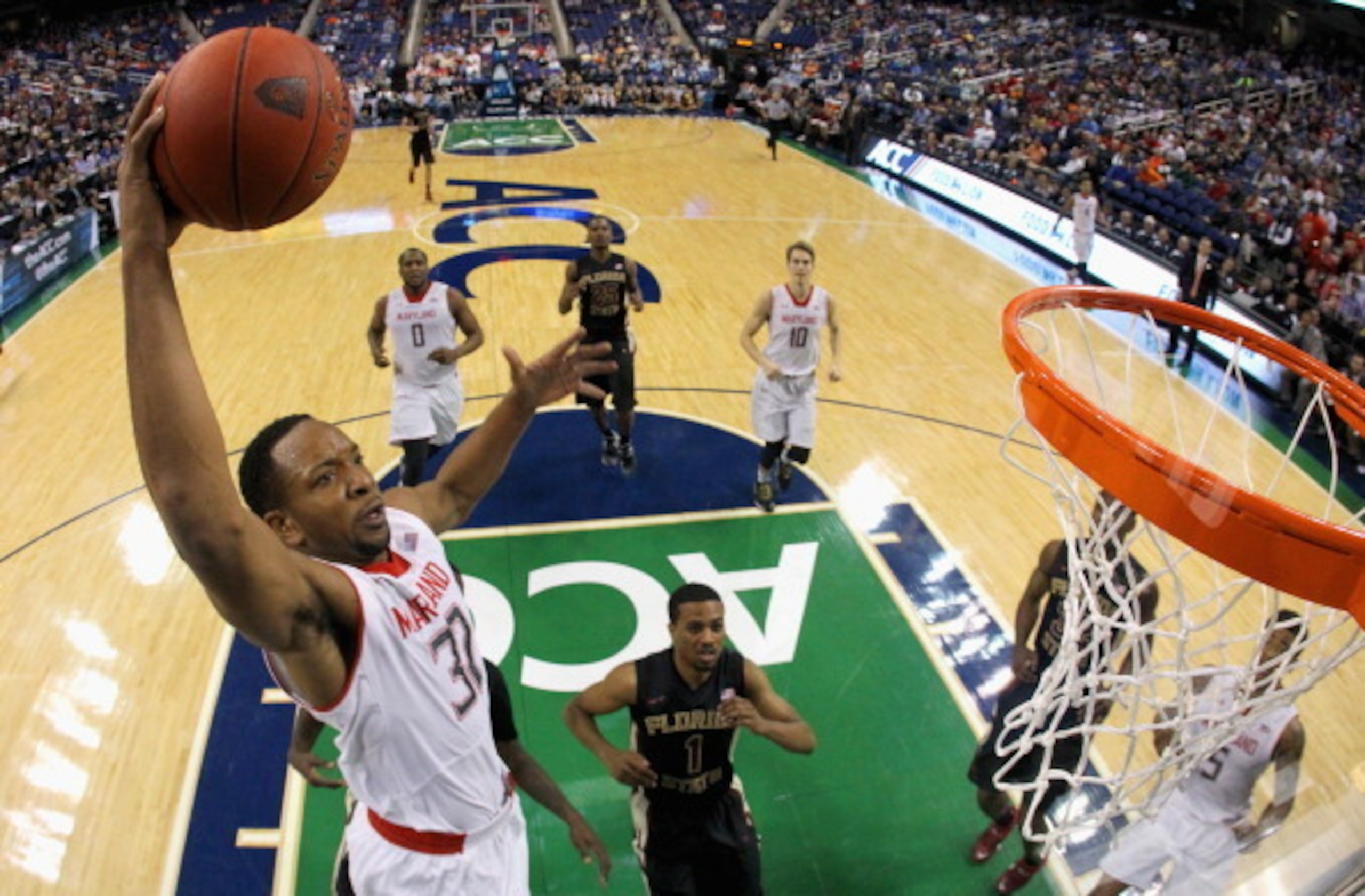
Class: Senior
2013-14 Stats: 14.9 PPG, 4.3 RPG, 2.2 APG, 1.1 SPG
Maryland played at a quicker tempo last season than the typical Mark Turgeon team, and that was conducive to the strengths of Dez Wells' game.
Wells is really good in the open floor. Get him in space, and he usually finds his way into the paint. The Terps will do whatever they can to get him there, too. He scored 32 points last season on 27 post-up opportunities, per Synergy Sports. Outside the arc, he's not great (33.7 percent for his career), but inside the arc he's one of the better scorers at his position in college basketball.
39. Ryan Boatright, PG, UConn
22 of 60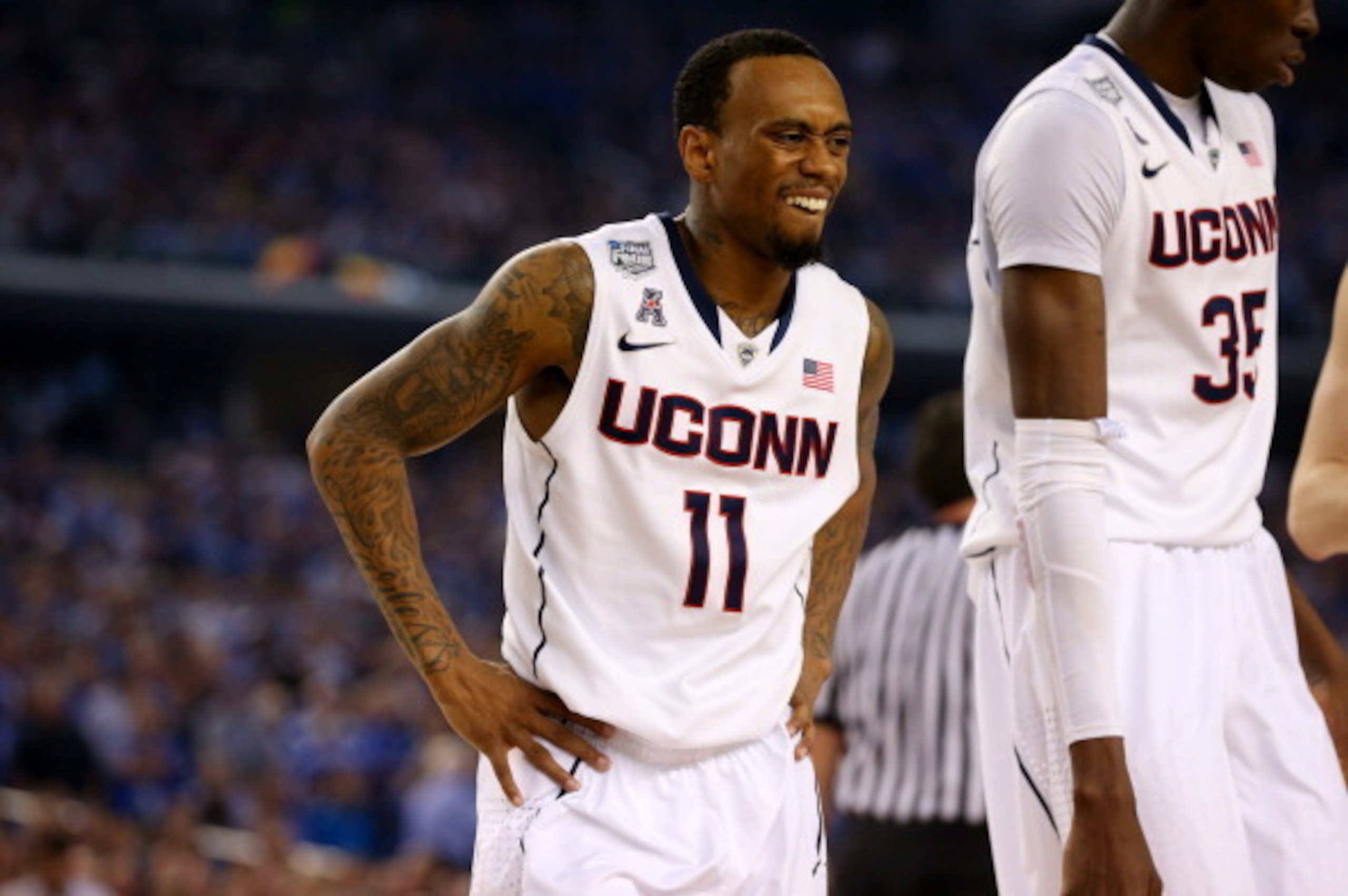
Class: Senior
2013-14 Stats: 12.1 PPG, 3.4 APG, 3.5 RPG, 1.6 SPG
The keys have been handed from Shabazz Napier to Ryan Boatright.
Boatright proved to be a great sidekick last year. The big question will be whether he can be what Napier was from a leadership standpoint. He also will need to take on more offensively.
He may not ever be the shot-maker Napier was—few have been—but he's extremely valuable because of his defense. His on-the-ball peskiness in the NCAA tournament was a big key to UConn's run in March. Based on the roster Kevin Ollie has built, lockdown defense could once again be its identity, with Boatright setting the tone.
38. Yogi Ferrell, PG, Indiana
23 of 60
Class: Junior
2013-14 Stats: 17.3 PPG, 3.9 APG, 3.0 RPG
The narrative of Yogi Ferrell's career at Indiana will start to take shape this year. Last season, Ferrell was the star on a disappointing team. Two years ago, he was the point guard on one of the best IU teams in recent memory and had a big part in taking that team to the next level.
This is a huge season for Tom Crean's future at IU, and Ferrell is his most important piece. It's a matter of "what have you done for me lately" when it comes to the blue bloods, and if the Hoosiers miss the tourney for the second straight year after being a No. 1 seed in 2012-13, that's not going to sit well. Ferrell will have a big say in whether the Hoosiers get things turned around or have another season of mediocrity.
He's proved to be a quality college point guard, but the Hoosiers need other players to step up around him. And whether he can make the young guys around him better will determine whether he's a great college point guard or just someone who can put up big numbers.
37. Alan Williams, C, UC Santa Barbara
24 of 60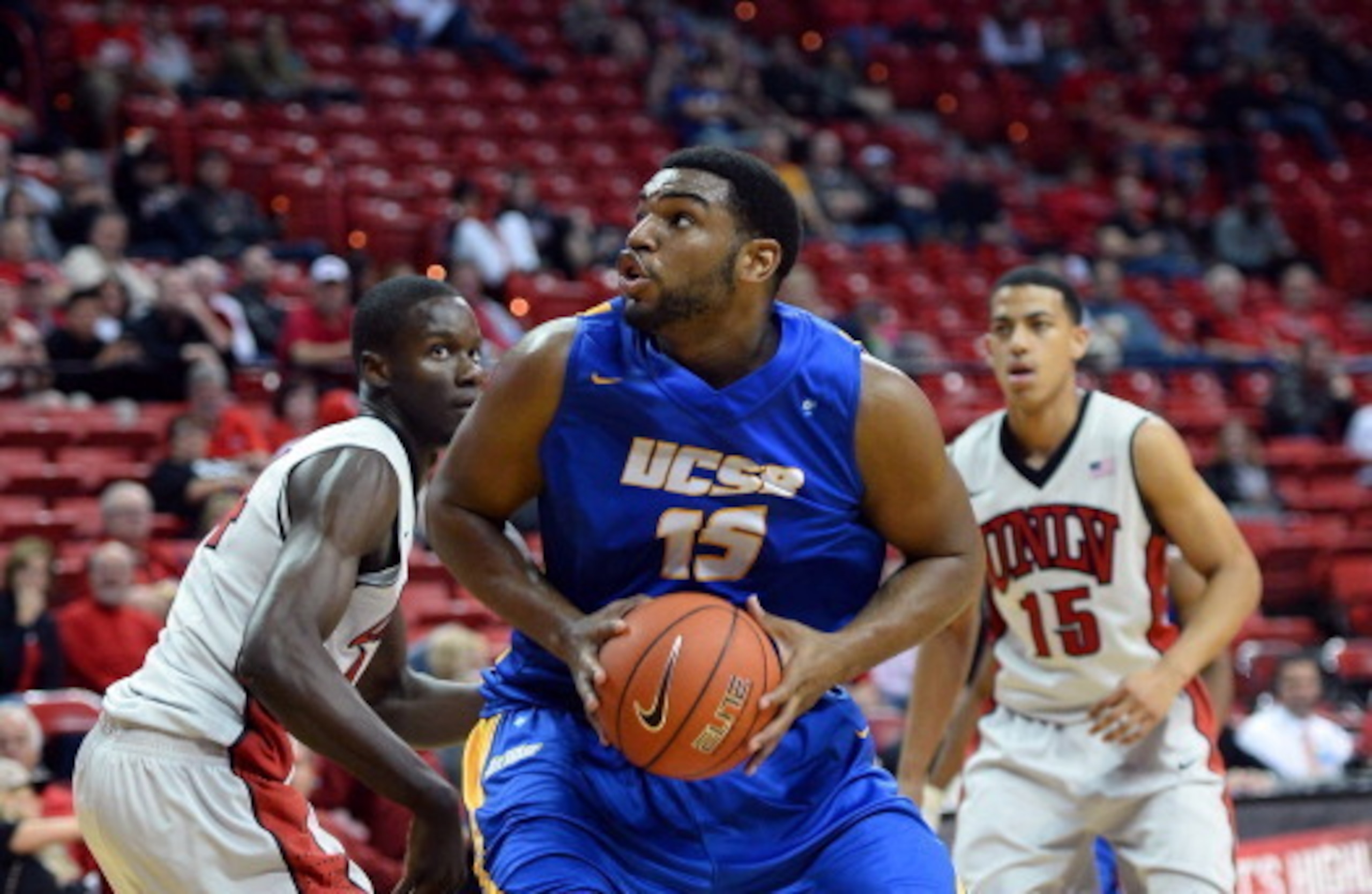
Class: Senior
2013-14 Stats: 21.3 PPG, 11.5 RPG, 2.4 BPG, 1.2 SPG
He's not a household name because he plays at UC Santa Barbara, but no player in the country does more for his team than Williams. He averaged 21.3 points and 11.5 rebounds last season, taking 37.2 percent of his team's shots when he was on the floor. It's rare for a man his size—6'8" and 265 pounds—to play the kind of minutes he plays (31.1 per game last season).
Williams is arguably the best back-to-the-basket scorer in college basketball. He scored more points on post-up opportunities (298 points) than any player in the country last year, per Synergy Sports. He was also a force in the paint on the defensive end, helping the Gauchos rank as the 21st-best two-point field-goal percentage defense.
He's the rare shot-blocking presence who can also control the boards. He blocked 2.4 shots per game and was one of only three players to rank in the top 50 in both block percentage and defensive rebounding percentage—Kansas' Joel Embiid and Minnesota's Elliott Eliason were the others, per KenPom.com.
See what I mean? The man does everything for his team.
36. Cliff Alexander, PF, Kansas
25 of 60
Class: Freshman
2013-14 Stats (High school): 25.0 PPG, 16.0 RPG, 6.0 BPG
Right away Cliff Alexander could overwhelm college players with his strength and effort. That's rare for a freshman, but getting Alexander to play hard should not be difficult for Bill Self. He projects as a Kenneth Faried type.
Alexander is a bit raw when it comes to fundamentals and footwork, but he picked the right program to get better in that capacity. Self's high-low offense has been great for developing big men and will put Alexander in spots to score. And not since Thomas Robinson has Self had a big man who played with such tenacity.
Like Robinson, Alexander figures to be a double-double machine. The Jayhawks will just be banking on it happening faster than it did for Robinson, because for this team to live up to expectations, Alexander is going to have to be good on both ends.
35. Brandon Ashley, PF, Arizona
26 of 60
Class: Junior
2013-14 Stats: 11.5 PPG, 5.8 RPG, 1.0 APG
Arizona was 21-0 last season when Brandon Ashley got hurt against California in a game that turned out to be Arizona's first loss.
The 'Cats still managed to have a great season, but Ashley was missed because his absence made the team easier to guard. Ashley helps space the floor because of his shooting ability as a stretch 4. He made 37.9 percent of his threes last season and is a great pick-and-pop guy. He was scoring 1.294 points per possession on pick-and-rolls, according to Synergy Sports, many of those paired with T.J. McConnell.
This team is similarly built—full of athletes, short on shooters—and Ashley's ability to make outside shots should once again be an extremely valuable asset.
34. Keifer Sykes, PG, Green Bay
27 of 60
Class: Senior
2013-14 Stats: 20.3 PPG, 4.9 APG, 4.4 RPG, 1.2 SPG
Keifer Sykes is college basketball's version of Russell Westbrook. Sykes doesn't have the height of a Westbrook—he's listed at a generous 6'0"—but he's a freak athlete with great bounce. That combination leads to some pretty sweet highlights.
But Sykes isn't just a YouTube sensation. The point guard produced at a high level last year and was at his best against good competition. In nonconference games against NCAA tournament teams (Wisconsin, Harvard, Virginia and Tulsa), he averaged 26 points, and Green Bay went 2-2 with wins over Tulsa and Virginia.
Sykes hurt his ankle against UW-Milwaukee in Green Bay's Horizon League tourney loss, a game the regular-season league champs lost in overtime. That kept the Phoenix out of the NCAA tournament and kept much of the nation from learning about one of the most entertaining guards to watch in the country.
33. Alex Poythress, SF, Kentucky
28 of 60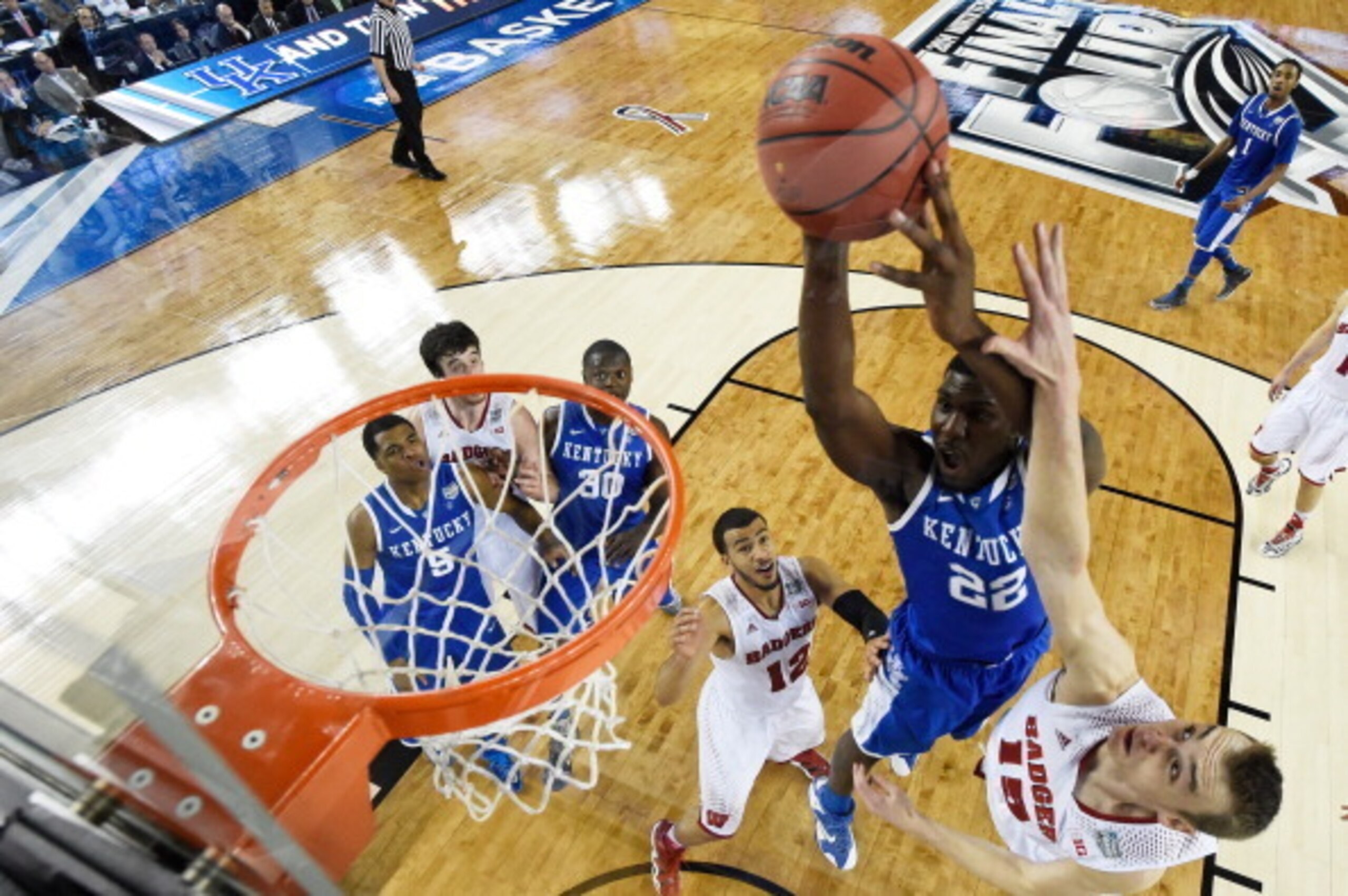
Class: Junior
2013-14 Stats: 5.9 PPG, 4.5 RPG
The wait for Alex Poythress to be a star eventually started to turn into the realization last season that Poythress was never going to be more than a really athletic role guy. Then Poythress started to change that thinking this summer when Kentucky went to the Bahamas.
Poythress was often the best player on the floor, averaging 11.8 points on 75 percent shooting and 5.7 rebounds in 18.8 minutes per game over six games. Those numbers have some merit, because unlike most summer trips, Kentucky played legit competition in the Bahamas.
It appears that Poythress has figured out how to maximize his ability. He's not a great shooter, but he's a great finisher at the rim, and he did a good job putting himself in those spots this summer. He did get the luxury of playing the 4 spot in the Bahamas. Kentucky has more of a need for Poythress to play the 3 this year, and it'll be interesting to see if he can be as effective there.
32. Wayne Selden, SG, Kansas
29 of 60
Class: Sophomore
2013-14 Stats: 9.7 PPG, 2.5 APG, 2.6 RPG
At Bill Self's basketball camp this summer, the Kansas coach introduced Wayne Selden as a player who could end up as an All-American.
The expectations are big for Selden in KU's program, especially now that he could be "the man" on the perimeter with Andrew Wiggins no longer around.
Selden looked the part that day Self introduced him with such lofty praise, and he has the ability to be special. He's a bulldozer attacking the rim and should only get stronger in that area. He had knee problems last season and had arthroscopic surgery on his left knee to clear that up this offseason. Add that explosiveness to a year of seasoning, and Selden could be in for a big year.
31. Marcus Foster, SG, Kansas State
30 of 60
Class: Sophomore
2013-14 Stats: 15.5 PPG, 2.5 APG, 3.2 RPG
Based on expectations and production, no one had a more impressive freshman season in college basketball last year than Marcus Foster.
Foster was a natural scorer from the start, which is impressive considering Bruce Weber's motion offense usually takes some time to pick up. Weber used Foster in a lot of different ways, running him off screens in an effort to get him free for his jumper or simply getting Foster the ball and letting him shoot off the dribble. He was actually more accurate on jumpers off the dribble (45.9 percent) than catch-and-shoot (39.1 percent), according to Synergy Sports' numbers.
Foster took an unreal 31.3 percent of K-State's shots when he was on the floor, and he was at his best in the postseason. In three postseason games (Big 12 tournament and NCAA tournament combined), he averaged 21.7 points per game. That suggests what seems obvious: He's only going to get harder and harder to defend with more experience in Weber's offense.
30. Aaron Harrison, SG, Kentucky
31 of 60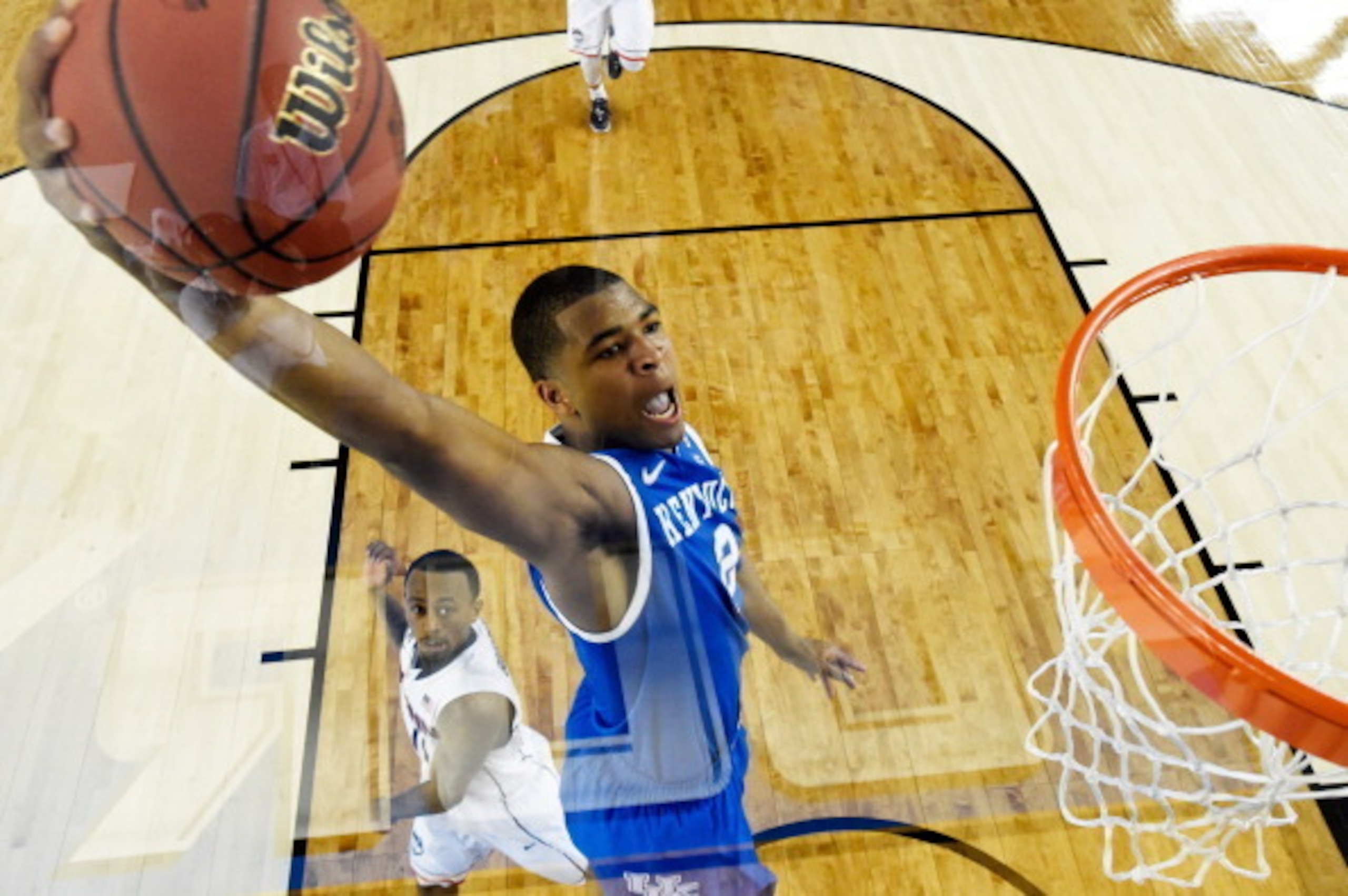
Class: Sophomore
2013-14 Stats: 13.7 PPG, 3.0 RPG, 1.9 APG
If the Aaron Harrison who showed up in the NCAA tournament is the one Kentucky gets all season this year, he probably deserves to move up this list.
Harrison was Mr. Clutch in the tourney, knocking down the game-winner in three straight games and draining 15 of his 30 three-pointers for the tournament. For the entire season, however, he shot 35.6 percent from distance. He needs to become more consistent with his jumper to be considered one of the top shooting guards in the country.
29. Malcolm Brogdon, SG, Virginia
32 of 60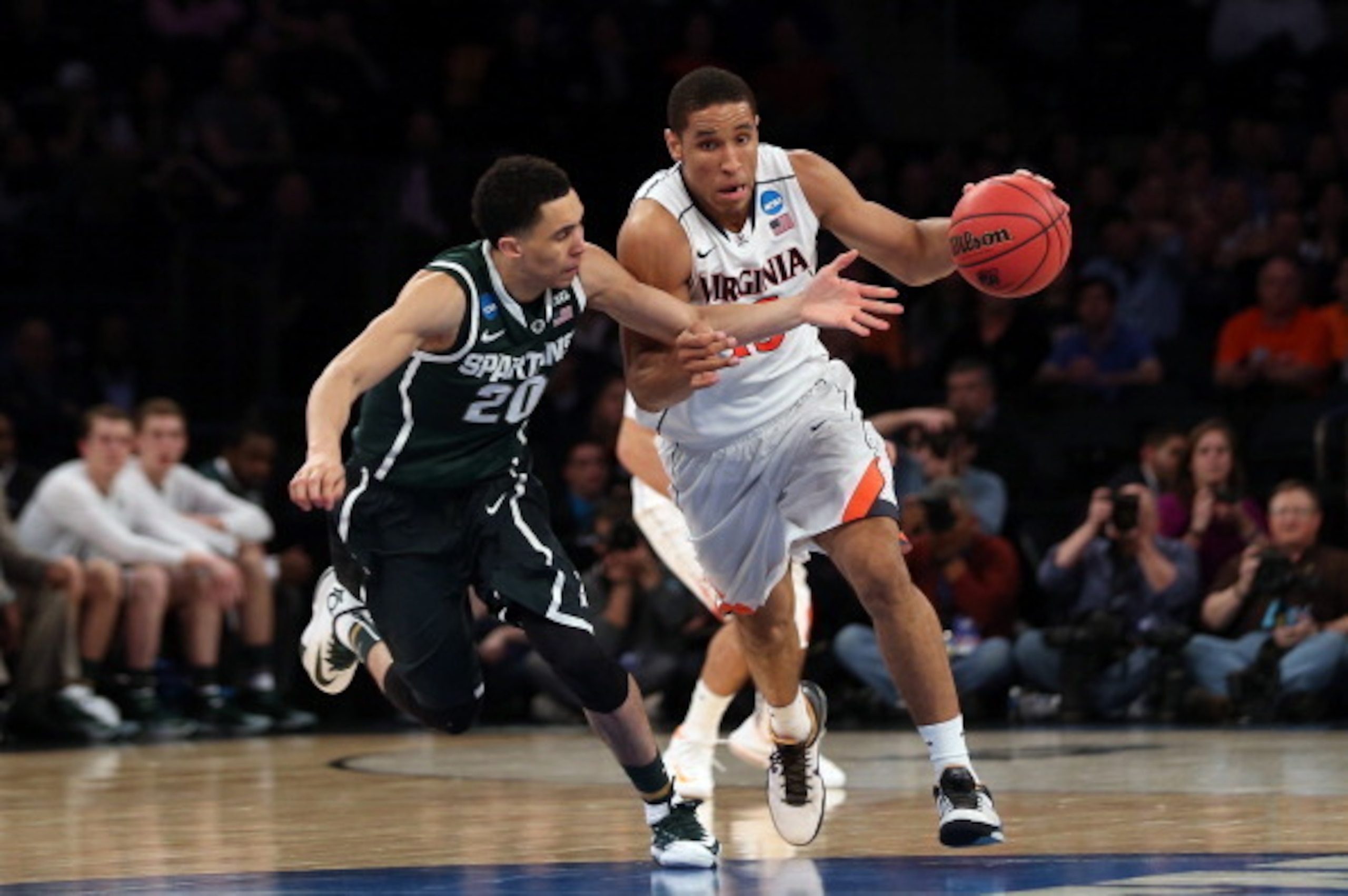
Class: Junior
2013-14 Stats: 12.7 PPG, 5.4 RPG, 2.7 APG, 1.2 SPG
Virginia head coach Tony Bennett likes guards with size who can shoot, and Malcolm Brogdon, at 6'5", fits perfectly.
Brogdon was the leading scorer on last year's team that won the ACC and got a No. 1 seed in the tournament. Along with the Cavaliers, he kind of sneaked up on everyone after sitting out the previous season while recovering from foot surgery.
He was extremely consistent once conference play hit, scoring in double figures in all 18 games and averaging 14.8 points per game. That's more impressive when you consider Virginia plays at such a slow pace.
28. Jordan Mickey, PF, LSU
33 of 60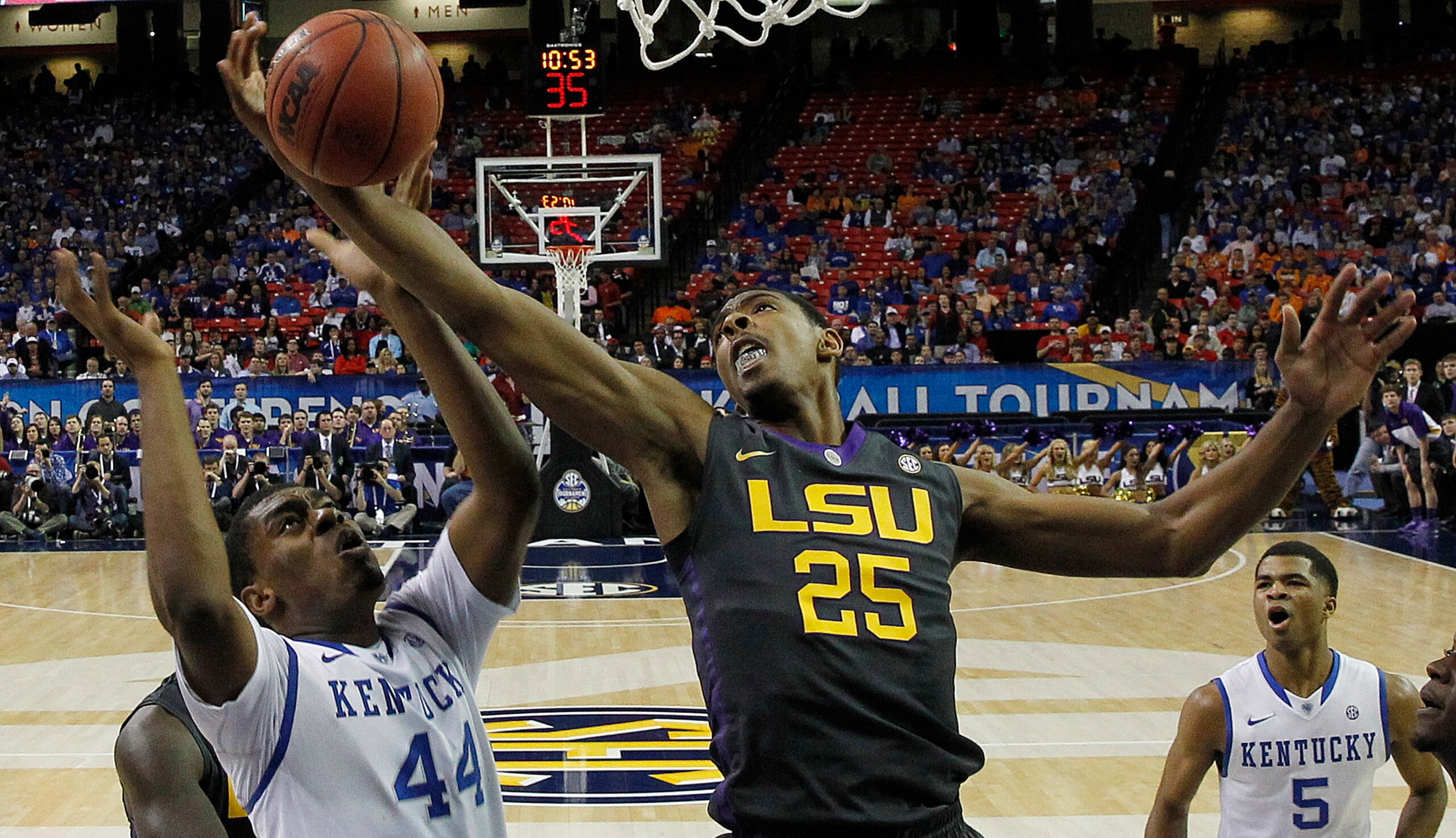
Class: Sophomore
2013-14 Stats: 12.7 PPG, 7.9 RPG, 3.1 BPG
Jordan Mickey is a great athlete with a chance to be a great player. His athleticism alone made a big impact as a freshman for the Tigers. Defensively, he was a great shot-blocker and rarely fouled. On the offensive end, he was a good finisher at the rim because of his ability to just jump over everyone else.
To become a great scorer, Mickey needs to improve as a shooter. The good news is he has good form. He should also benefit this year from playing more inside. The Tigers would start games huge last year with Mickey at the 3 alongside the inside duo of Jarell Martin and Johnny O'Bryant. O'Bryant's leaving was not a good thing, but it at least makes it so Johnny Jones shouldn't have to play Mickey out of position as much.
27. Treveon Graham, SF, VCU
34 of 60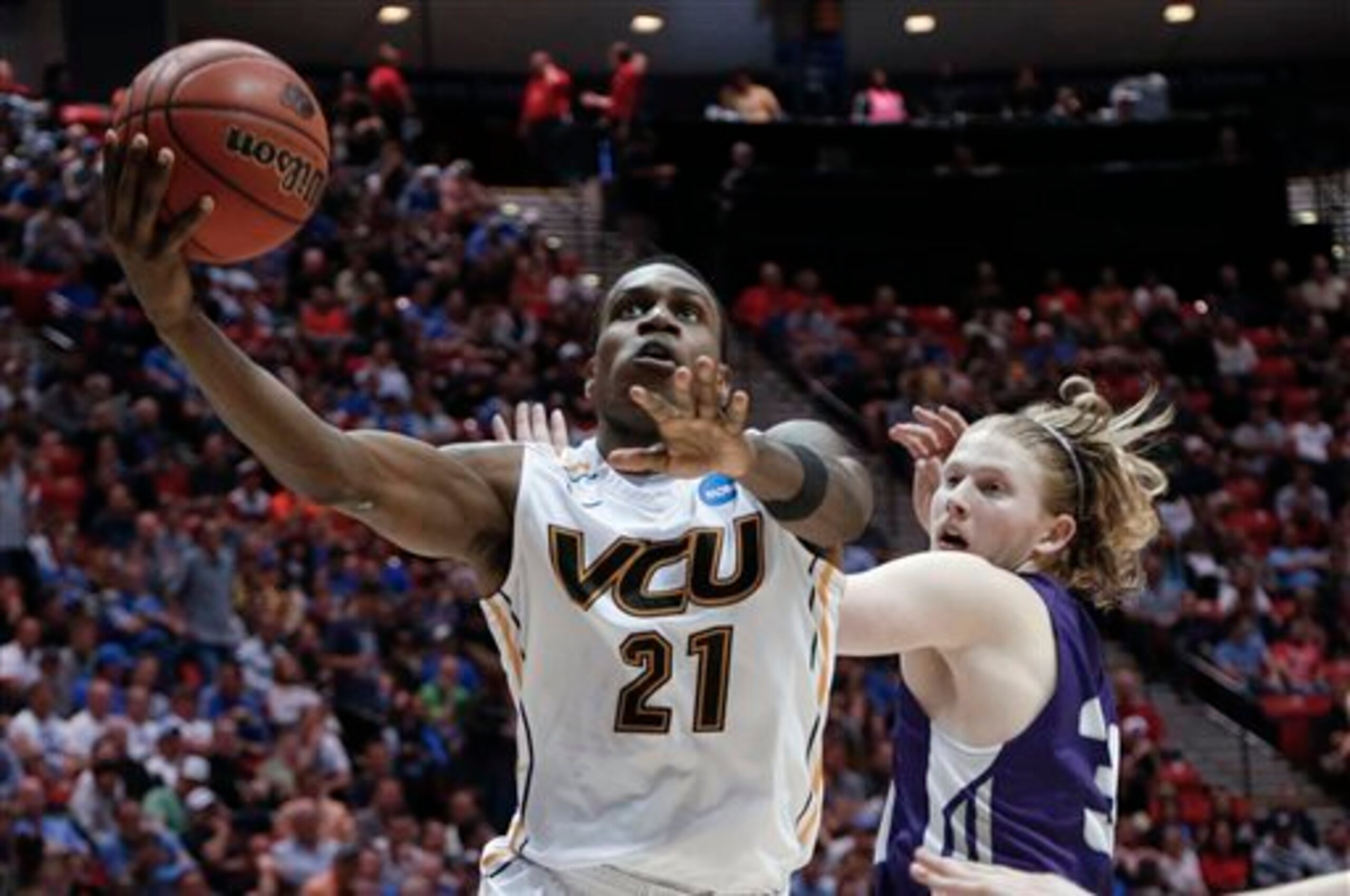
Class: Senior
2013-14 Stats: 15.8 PPG, 7.0 RPG, 2.0 APG
When VCU cannot get an easy bucket off its press and has to play in the half court, Treveon Graham becomes the man.
Graham is one of the rare Rams who isn't great in the steals department, but he makes up for it with his scoring and rebounding from the wing spot. The 6'6" small forward has been VCU's most consistent scorer the last two years. Last season, he scored in double figures in 32 of 35 games.
Graham is a decent shooter, but he's most dangerous around the basket. The Rams even post him up on occasion to get him touches in the paint. Any team without a wing player who has size, quickness and strength—those are few and far between—will have a hard time matching up with Graham.
26. Buddy Hield, SG, Oklahoma
35 of 60
Class: Junior
2013-14 Stats: 16.5 PPG, 4.4 RPG, 1.9 APG, 1.4 SPG
Buddy Hield has been a great fit in head coach Lon Kruger's run-and-gun system at Oklahoma.
Last season, Hield scored the 13th-most transition points in college basketball, according to Synergy Sports' numbers. The Sooners like to spread the floor, and Hield does a great job of finding space on the perimeter for catch-and-shoot jumpers. He made 90 three-pointers last season after knocking down only 19 as a freshman.
Kruger told me at Big 12 media day that he expects Hield to put the ball on the floor and attack the rim more this season similar to how he played as a freshman. Hield definitely has the ability to be both a shooter and slasher.
25. R.J. Hunter, SG, Georgia State
36 of 60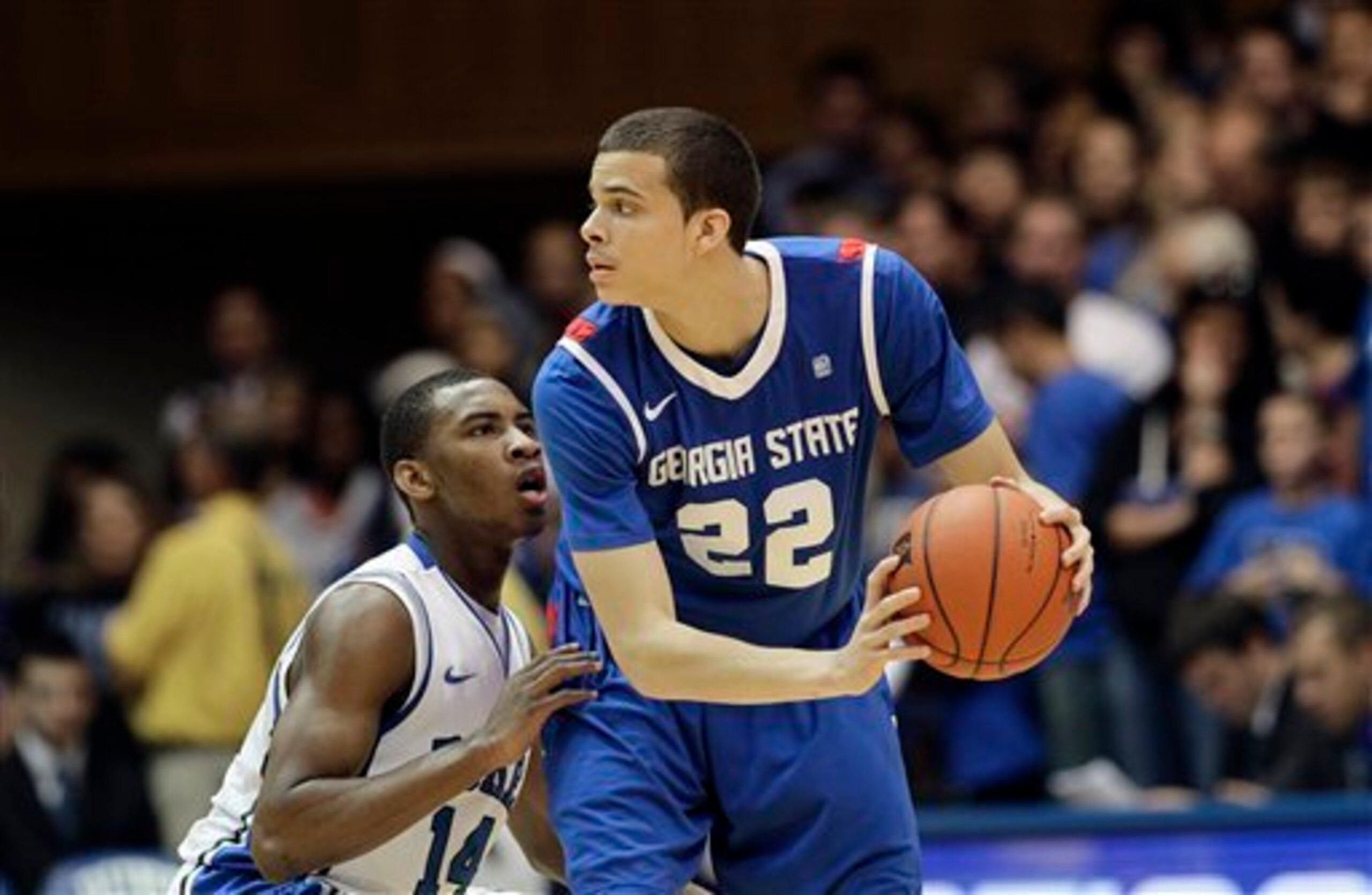
Class: Junior
2013-14 Stats: 18.3 PPG, 4.6 RPG, 1.7 APG, 1.9 SPG
How good is R.J. Hunter? Well, he was the Sun Belt Player of the Year last season in a league that included Elfrid Payton, a lottery pick this past June.
The country would have been introduced to Hunter in March if it weren't for Payton's Louisiana-Lafayette squad knocking off Georgia State in overtime of the conference finals after Georgia State had swept the regular-season series.
Hunter has a ton of range and does a really good job of moving without the ball. He also has an extremely quick release. Combine the range, release and his height (6'5"), and he has no problem getting off shots. He was impressive this summer at LeBron James' camp, where one scout told ESPN.com's Jeff Borzello that Hunter is the "best shooter in the country."
24. Zak Irvin, SG, Michigan
37 of 60
Class: Sophomore
2013-14 Stats: 6.7 PPG, 1.3 RPG
If Michigan's summer trip to Italy was any indication, Zak Irvin will be one of the top breakout players in college basketball this season. On the trip, Irvin averaged 20.8 points and 7.3 rebounds per game, and those weren't his most impressive numbers. His shooting percentages were. He shot 66.7 percent from deep and had an effective field-goal percentage of 81.3 percent.
It's not just the trip that should get Michigan fans excited. Irvin showed the potential last year as a deadly long-ball shooter and great fit in John Beilein's offense. He made a very impressive 42.5 percent of his threes. That kind of long-ball accuracy will be an incredible weapon in Beilein's offense, which delivers plenty of good looks from outside.
Last year, Irvin split time between the 3 and 4 spots, playing a role similar to that of Glenn Robinson III. The expectation this season is that Caris LeVert will slide into Michigan's go-to role, but don't be shocked if Irvin challenges him for that spot. Even if he's just the sidekick to LeVert, he'll put up impressive numbers for the Wolverines, who have led the country in adjusted offensive efficiency the last two years, per KenPom.com.
23. Aaron White, PF, Iowa
38 of 60
Class: Senior
2013-14 Stats: 12.8 PPG, 6.7 RPG, 1.8 APG, 1.0 SPG
Aaron White was made for Fran McCaffery's run-and-gun system. White is probably the quickest power forward in the country. He's also very skilled. He's so athletic and so skilled, in fact, that he often leaves you wanting more.
Wouldn't you want a guy who made 63.1 percent of his twos and 80.7 percent of his free throws to take more shots? For as talented as White is, it's really hard to grasp how he took only 17.9 percent of the shots last season when he was on the floor, according to KenPom.com.
White needs to be more assertive, especially with Roy Devyn Marble gone. Marble was undeniably the leader of last year's team. That might not be in White's personality, but for the Hawkeyes to get back to the tournament, he's going to need to be more involved in the offense.
22. Delon Wright, PG, Utah
39 of 60
Class: Senior
2013-14 Stats: 15.5 PPG, 5.3 APG, 6.8 RPG, 2.5 SPG
Delon Wright is much more than "NBA veteran Dorell Wright's younger brother." The younger Wright also has the ability to play in the league and should have Utah in the NCAA tourney for the first time since 2009.
At 6'5", Wright is a triple-double threat and one of the best two-way point guards in the country. Defensively, he does a great job of getting into passing lanes and is also a solid on-the-ball defender. His ability to create turnovers is a major plus for Utah because Wright is great in transition.
Offensively, he does't have much of a jumper but finishes really well around the rim. He's not lightning quick but plays with good pace and keeps defenders on their heels. He didn't get a lot of attention nationally last season, but Pac-12 coaches realized how good he was, selecting Wright to the All-Pac-12 First Team.
21. Juwan Staten, PG, West Virginia
40 of 60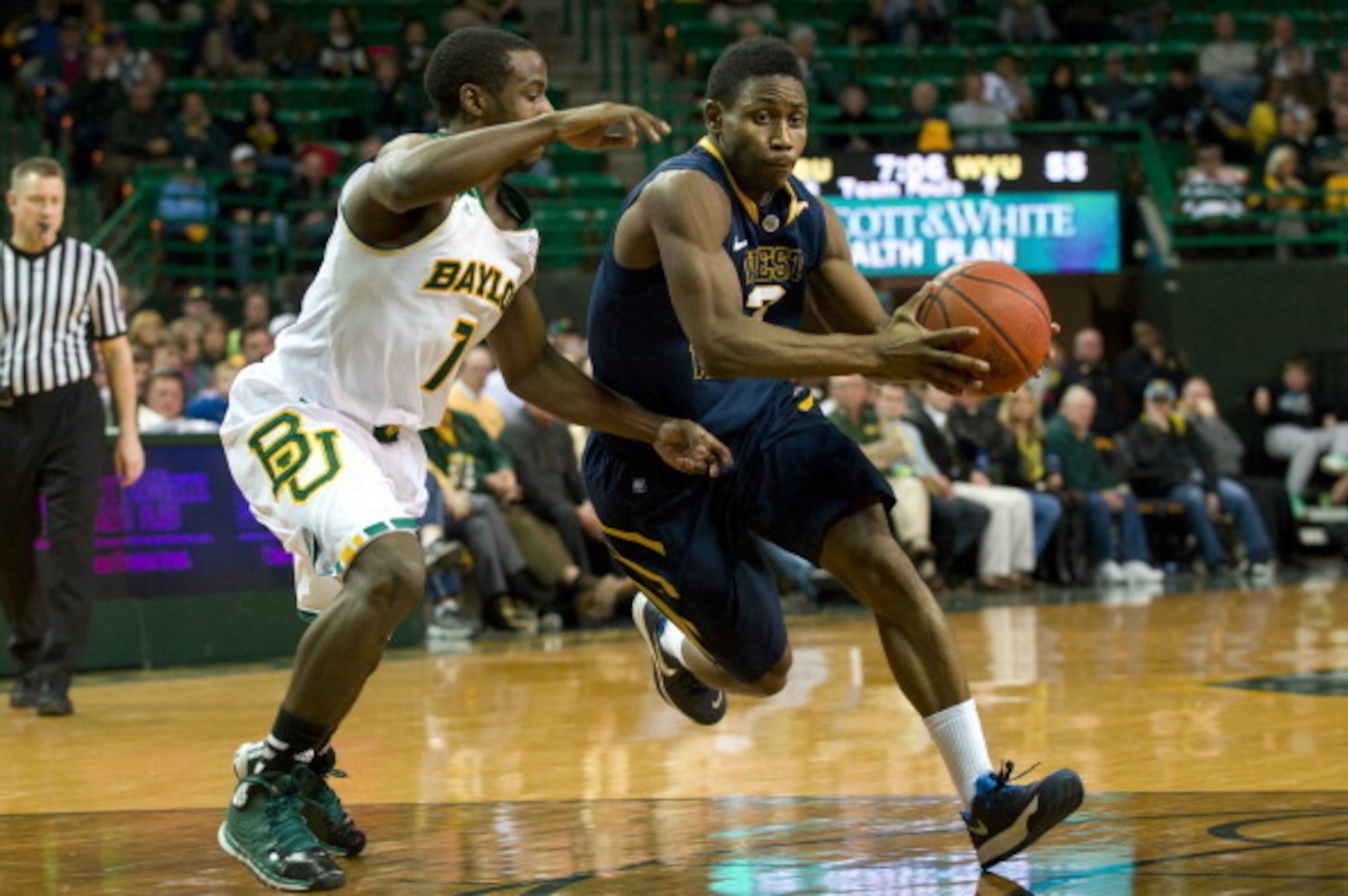
Class: Junior
2013-14 Stats: 18.1 PPG, 5.8 APG, 5.6 RPG
Juwan Staten's success is pretty easy to explain. The guy is awesome off the dribble and great at getting into the paint.
Staten relies almost exclusively on his speed and sweet handles. He put up great numbers last season without much of a jumper—he attempted only 15 threes. West Virginia coach Bob Huggins said at Big 12 media day that Staten has more confidence in his jumper this year.
Last season was the first that Staten experienced as a go-to scorer. He averaged only 7.6 points per game as a sophomore. He may have to raise his game to another level if the Mountaineers are going to flirt with a tourney bid—they were on the bubble last year and ended up in the NIT. West Virginia's second- and third-leading scorers (Eron Harris and Terry Henderson) both transferred, so Staten's importance is elevated to another level.
20. Chasson Randle, SG, Stanford
41 of 60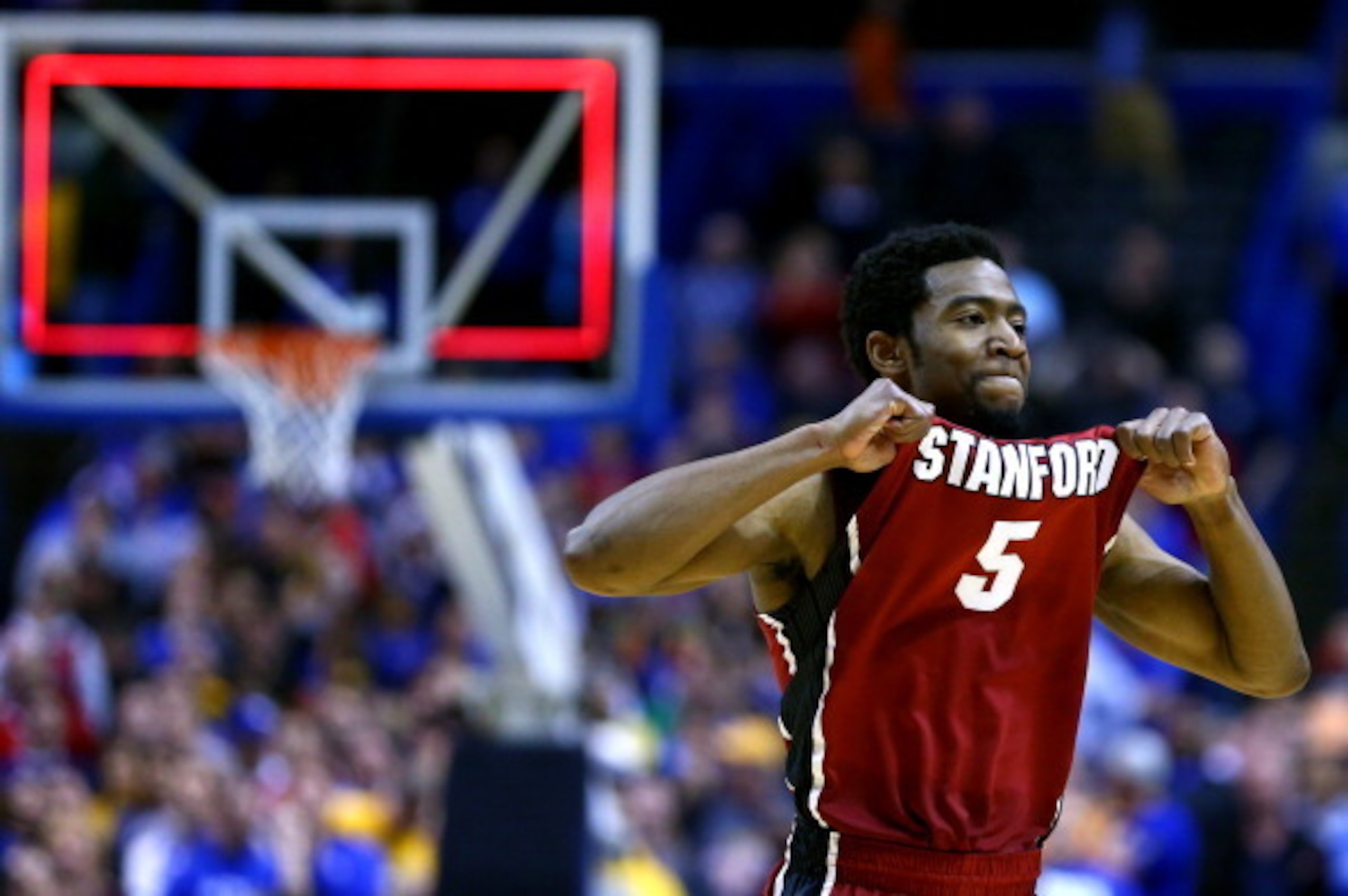
Class: Senior
2013-14 Stats: 18.8 PPG, 3.6 RPG, 2.1 APG, 1.0 SPG
Chasson Randle is one of the toughest guards to defend in the country.
You can't back off him because he's a good shooter (39.7 percent for his career from distance). If you close out hard and depend on help at the rim, Randle has a really good in-between game and can knock down a pull-up jumper or hit a runner in the lane.
Most casual fans had no idea who Randle was until the NCAA tournament. Even Kansas' star freshmen gave off the impression that they didn't know much about Randle before their matchup in the tourney.
So learn the name. He's one of the best scorers in the country, and Stanford has enough talent returning and coming in to get back to the tournament.
19. Joseph Young, SG, Oregon
42 of 60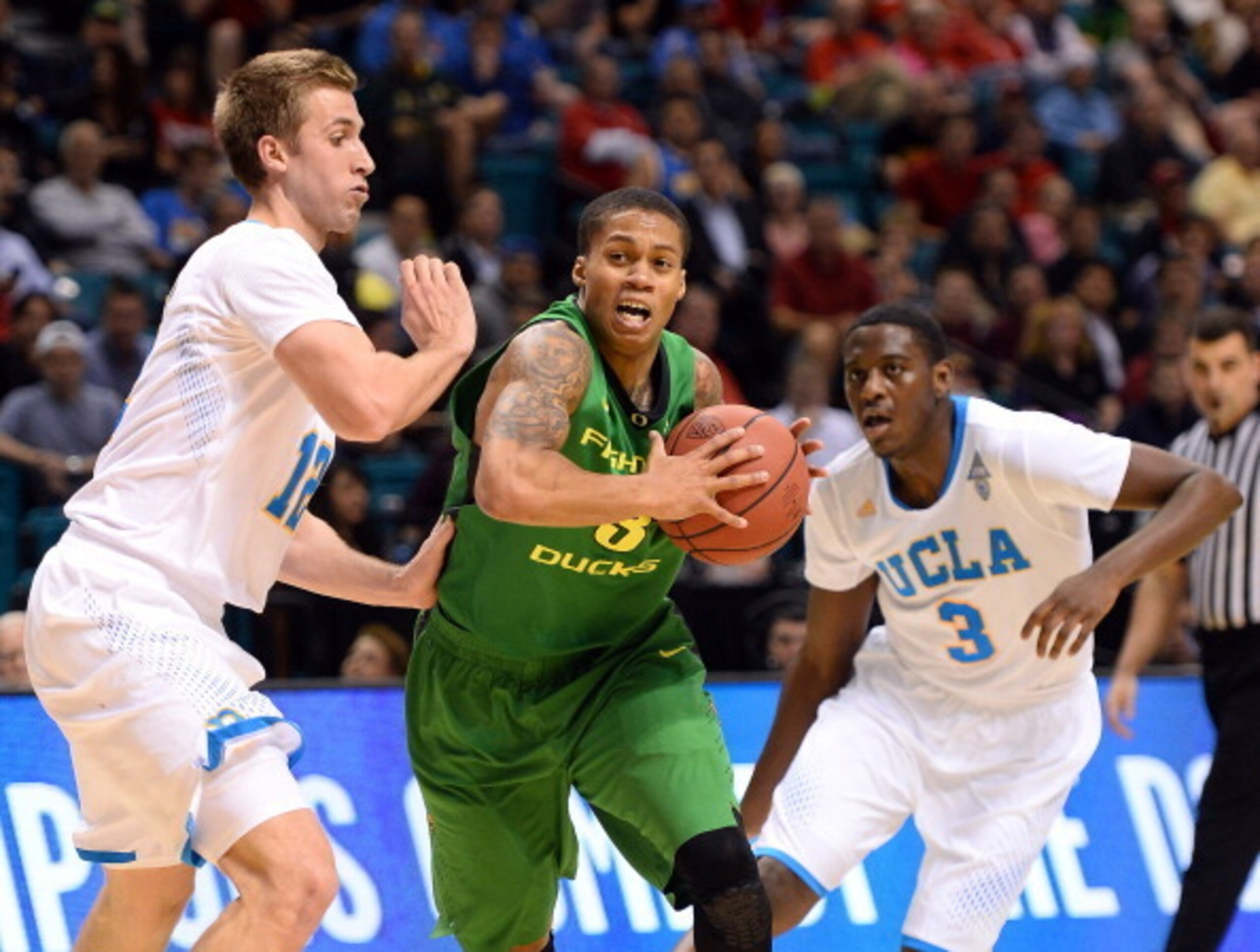
Class: Senior
2013-14 Stats: 18.9 PPG, 1.9 APG, 2.8 RPG, 1.3 SPG
Not much is left at Oregon. Only Joseph Young and Elgin Cook return of the team's top eight scorers.
Young was not shy about gunning last year, his first with the Ducks after transferring from Houston, and there will be plenty of shots for him to take this year.
The Ducks roster is depleted because of the sexual assault case that forced out Damyean Dotson, Dominic Artis and Brandon Austin, and it's in even worse shape than anticipated after freshman JaQuan Lyle was not able to enroll at Oregon.
They can take some satisfaction in that if they could choose to retain one player, it would be Young. He was one of the most efficient scorers in college basketball last season, knocking down 41.5 percent of his threes, 52.8 percent of his twos and shooting 88.1 percent at the line.
18. Tyler Haws, SF, Brigham Young
43 of 60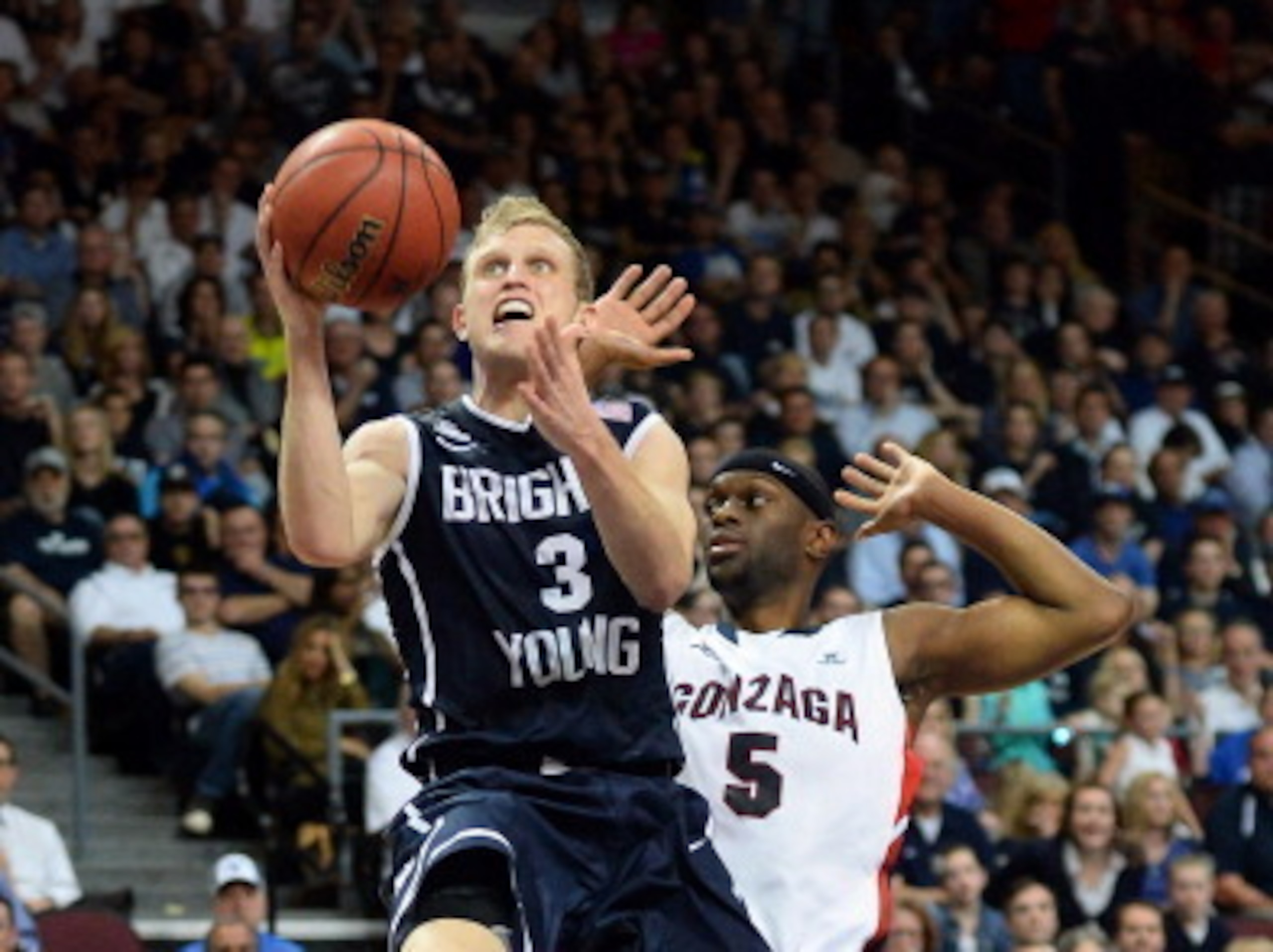
Class: Senior
2013-14 Stats: 23.2 PPG, 3.8 RPG, 1.5 APG, 1.0 SPG
Tyler Haws is a really crafty scorer who can fill it up quickly in BYU's fast-paced offense. Haws scored 25 or more points 12 times last season.
It's rare in college basketball to see a scorer like Haws make it to his senior season. His career at BYU started in 2009, which is when the current freshman class was in the eighth grade. Haws can knock down the three (40.4 percent), but he does most of his work with a smooth mid-range jumper. He also gets to the line often. His 223 made free throws ranked fifth in the nation last season.
17. Kevin Pangos, PG, Gonzaga
44 of 60
Class: Senior
2013-14 Stats: 14.4 PPG, 3.6 APG, 3.3 RPG, 1.0 SPG
As a sophomore, Kevin Pangos was the point guard on a No. 1 seed and sidekick to All-American Kelly Olynyk.
Pangos took on the starring role on last year's team and put up really good numbers despite the fact that he battled foot and ankle issues throughout the year. He told NBCSports.com's Rob Dauster that he was playing at 60 percent. That obviously limited his ability as a playmaker.
When he's at 100 percent, Pangos is one of the best scoring guards in the country. He averaged 22 points per game with a 52.3 field-goal percentage in the first month of the season last year. That player is who we should expect to see this season if he can stay healthy. And with the addition of some transfers and a strong freshman class, Mark Few's Zags could once again climb to the top of the ladder, and this time around, Pangos could be their All-American.
16. Andrew Harrison, PG, Kentucky
45 of 60
Class: Sophomore
2013-14 Stats: 10.9 PPG, 4.0 APG, 3.2 RPG
Andrew Harrison received a lot of criticism during his freshman year, and some deservedly so. But it's important to remember what we should have been reminding ourselves last season over and over again when it comes to UK: It's rare that freshmen are great players, especially at point guard.
To put that statement in perspective, take a look at the freshmen seasons of the last four first-team All-Americans compared to Harrison's first year:
- Shabazz Napier: 7.8 PPG, 3.0 APG, 1.7 assist/turnover ratio
- Trey Burke: 14.8 PPG, 4.6 APG, 1.7 A/T ratio
- Kemba Walker: 8.9 PPG, 2.9 APG, 1.6 A/T ratio
- Nolan Smith: 5.9 PPG, 1.3 APG, 0.9 A/T ratio
- Harrison: 10.9 PPG, 4.0 APG, 1.5 A/T ratio
The transition from high school to college is not easy, and it wasn't as seamless for Harrison as most thought it would be. But that doesn't mean he's not a great talent. If that wasn't true, the Cats wouldn't have made it to the championship game. That run gave some credence to the hype surrounding Harrison and helped him realize the power of playing unselfish.
This season, we should see a more mature Harrison, from his body language to his understanding of how to run a team. He could also provide value to Kentucky as a scoring guard when he moves off the ball. That will happen when pass-first freshman point guard Tyler Ulis plays alongside him. How he embraces playing with Ulis could be one of the major keys to UK's success.
If he succeeds in both roles, he could end up in the All-American conversation.
15. Rondae Hollis-Jefferson, SF, Arizona
46 of 60
Class: Sophomore
2013-14 Stats: 9.1 PPG, 5.7 RPG, 1.4 APG, 1.1 BPG
Rondae Hollis-Jefferson is probably best suited in college basketball as a 4-man. That's where he spent a lot of time last year and thrived in that role as a rebounder and finisher at the rim.
But with the return of Brandon Ashley, Hollis-Jefferson will be seeing more time at small forward, and Sean Miller made it work last year when he had three beasts up front in Aaron Gordon, Ashley and Kaleb Tarczewski. Much like Gordon, Hollis-Jefferson is great around the basket, but his jumper leaves much to be desired. He made only 20.8 percent of jump shots as a freshman, according to Synergy Sports (subscription required).
Even if he's not able to knock down shots, Hollis-Jefferson is so good at slashing to the rim that he can still be a really effective scorer, and fortunately, his jump-shot woes don't carry over to the free-throw line. During the NCAA tournament, he averaged 14 points per game on 18-of-27 shooting and made 20-of-23 free throws. Those sorts of numbers can be expected this year as he takes on a more prominent role with Gordon and Nick Johnson off to the NBA.
14. Karl Towns, C, Kentucky
47 of 60
Class: Freshman
2013-14 Stats (High School): 20.9 PPG, 13.4 RPG, 6.2 BPG
The first time I saw Karl Towns play was in the Jordan Brand Classic practices last spring. I came away thinking he might be the odd man out in Kentucky's crowded frontcourt. Then I watched all of UK's games in the Bahamas and came away thinking Jahlil Okafor has some actual competition for the No. 1 overall pick in the 2015 NBA draft.
Towns was impressive during the Big Blue Bahamas Tour—11.0 points and 6.5 rebounds in only 19.7 minutes per game, and that was against grown men. His size and skill are beyond his years, and his feel for the game puts him on another level. He also showed off some passing ability in the Bahamas and has good vision.
The only thing he didn't do well in the Caribbean is hit the three—he went 1-of-9—but he's shown in the past that he can knock down perimeter shots. He's the five-tool big man.
13. Perry Ellis, PF, Kansas
48 of 60
Class: Junior
2013-14 Stats: 13.5 PPG, 6.7 RPG, 1.0 APG
Andrew Wiggins got all the hype, but when Kansas needed a bucket in crunch time last season, Perry Ellis was the man Bill Self trusted.
Ellis is an extremely versatile scorer in the mold of Marcus Morris, who was an All-American as a junior at Kansas. Ellis can hit the spot-up jumper, play with his back to the basket and he got more comfortable last season attacking off the dribble as the game slowed down for him.
If there's one word to describe his offensive game, it'd be slippery. He has a great spin move and can score over either shoulder. He scored 30 or more points twice last season, and he has the ability to average 16-to-18 points per game. The Jayhawks have other talented scorers coming in, but once again, Ellis is likely the man Self will trust more than any other.
12. Stanley Johnson, SG, Arizona
49 of 60
Class: Freshman
2013-14 Stats (High School): 25.1 PPG, 8.1 RPG, 3.3 APG, 2.5 SPG
Based on ability alone, Stanley Johnson is probably the most talented wing in the country. He already has the body of a pro and will be one of the most athletic players in college basketball right away.
Johnson is also in a good situation at Arizona. He could end up as the team's leading scorer—and I predict he will—but he doesn't need to be for Arizona to be good. The Wildcats would be a top-10 team if he wasn't on the roster. Rondae Hollis-Jefferson and Brandon Ashley should provide plenty of scoring punch.
Much like Aaron Gordon, Johnson could just blend in and be more of a role player than a star. But Johnson has more of an alpha-dog personality than Gordon, and he's also more of a natural scorer. Head coach Sean Miller will be able to use him all over the court—he played all five positions in high school. Even though Gordon didn't put up big numbers, he was still one of the best wings in the country. Johnson could be the same, and it's a good bet his numbers will reflect his value more than Gordon's did.
11. Jerian Grant, SG, Notre Dame
50 of 60
Class: Senior
2013-14 Stats (12 games): 19.0 PPG, 6.2 APG, 2.5 RPG, 2.0 SPG
Jerian Grant was putting up All-American numbers last season until he had to leave Notre Dame because of an academic matter.
Grant is back now, and his role should not diminish from what it was in the early stages of last season. Grant has a great understanding of how to thrive in Notre Dame's offense.
Before you chalk up his gaudy stats in 12 games to beating up on weak nonconference opponents, look at what he did in three games against Big Ten opponents in the nonconference (Iowa, Indiana and Ohio State): 18 points and 7.7 assists per game.
Grant is a great scorer and also a terrific passer, especially for a wing. That type of player can be such a weapon. Simply look at what Lamar Patterson did for Pittsburgh last year.
10. Terran Petteway, Nebraska
51 of 60
Class: Junior
2013-14 Stats: 18.1 PPG, 4.8 RPG, 1.6 APG
Nebraska might have its best team in the history of the program this season, and Terran Petteway is a legit candidate for Big Ten Player of the Year.
Tim Miles has brought a toughness to the program, and the Cornhuskers thrived last year because of their defense. Petteway, at 6'6", is a really good defender on the wing. He carried the offense for stretches—he had 12 games with 20 or more points—and he led the Big Ten in scoring. He's extremely tough to stop when he gets going because he can make difficult shots off the dribble.
For the Cornhuskers to compete for a Big Ten title, which is within reason, they'll need to provide Petteway with more help offensively. If his numbers end up going down a tick, that could be a good thing.
9. Fred VanVleet, PG, Wichita State
52 of 60
Class: Junior
2013-14 Stats: 11.6 PPG, 5.4 APG, 3.9 RPG, 1.9 SPG
It takes a special kind of quarterback to lead a team to a perfect regular season, and Fred VanVleet was as close to perfect as possible in his role for Wichita State.
The numbers will not blow you away, but coaches left Wichita dreaming of point-guard play like VanVleet provided. VanVleet could get a bucket when his team needed it and was a reliable shooter—41.8 percent from distance and 83.0 percent at the free-throw line.
What he did best was set up his teammates for success and make sure the Shockers rarely had a wasted possession. His 4.02 assist-to-turnover ratio ranked fourth nationally, and he had only four games when he turned the ball over more than twice.
VanVleet was also the best defender at his position in the country. He has great awareness off the ball, and his on-the-ball defensive metrics were better than any point guard in the country.
This season, the Shockers will likely rely on VanVleet to up his scoring a bit now that Cleanthony Early is gone, although don't expect him to ever be a great scorer. Simply judge VanVleet by wins and losses.
8. Sam Dekker, PF, Wisconsin
53 of 60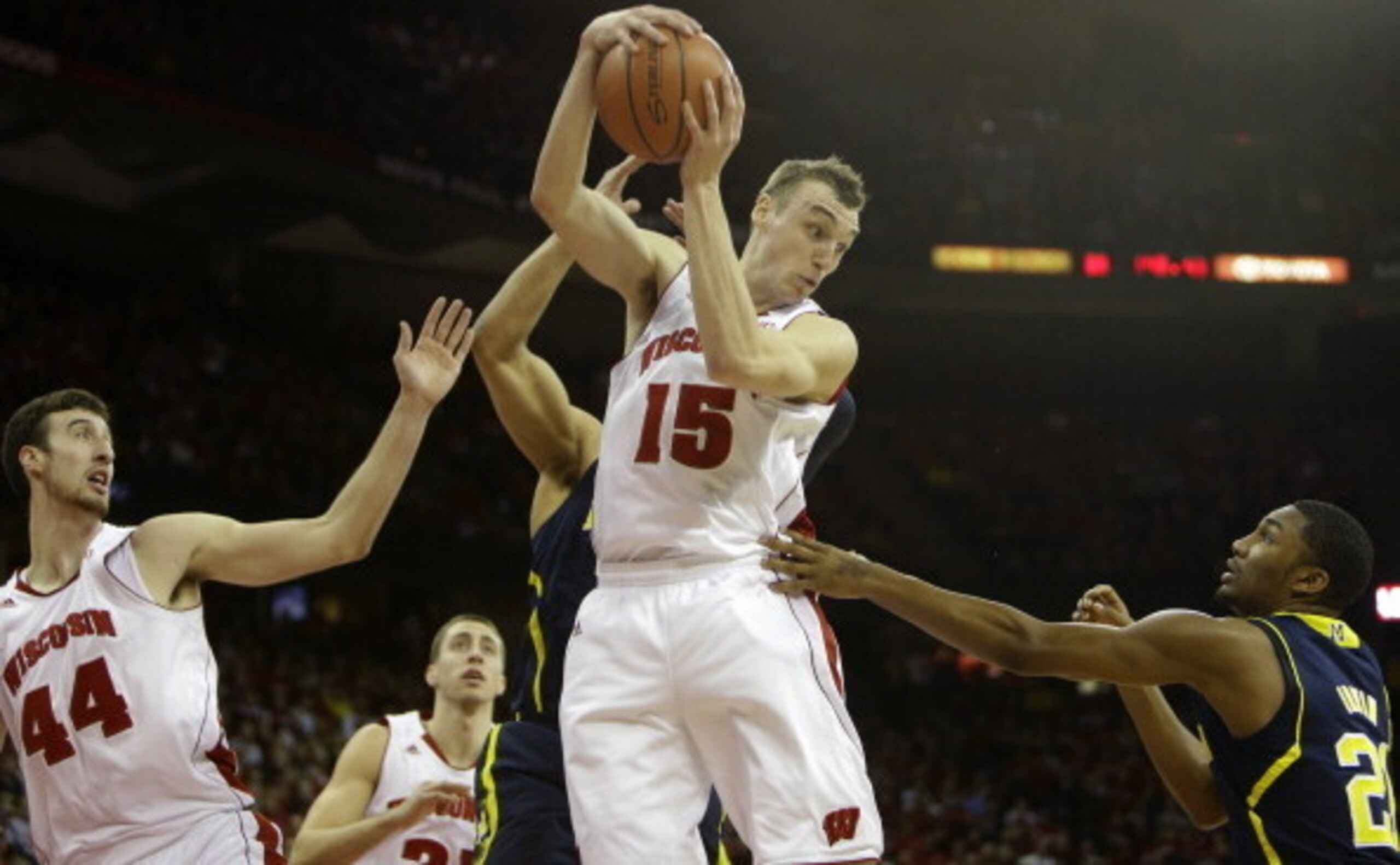
Class: Junior
2013-14 Stats: 12.4 PPG, 6.1 RPG, 1.4 APG
Look at those numbers. Sam Dekker was a starter on a Final Four team. That's a pretty darn good season, but for Dekker...
"I wasn't necessarily happy with how things ended up for me as a player," Dekker told my colleague, Jason King, this summer. "I don't think I lived up to my expectations of myself."
Dekker was expected to be the man for the Badgers last year, and Frank Kaminsky ended up coming out of nowhere to be the star. Dekker was solid all-around, but he didn't shoot as well from deep (32.6 percent) as he expected. He shot 39.1 percent as a freshman.
King said he was the standout among college players at the LeBron James Skills Academy that included some of the best talent in the country. He also reported that Dekker grew two inches—from 6'7" to 6'9".
The Wisconsin system does a great job of exploiting mismatches, and at 6'9", he's an even tougher cover for 3s. And his ability to shoot from deep or put the ball on the floor as a stretch 4 makes life difficult for bigs.
Dekker will play both positions for the Badgers with Nigel Hayes expected to get more minutes at power forward. Sophomore Dekker gave defenders fits. Add two inches, another year of experience in Ryan's system and some motivation...
Good luck, Big Ten.
7. Georges Niang, PF, Iowa State
54 of 60
Class: Junior
2013-14 Stats: 16.7 PPG, 4.5 RPG, 3.6 APG
Georges Niang was one of the most difficult matchups in college basketball last season, and that was pudgy Niang. This summer, Niang got skinny.
The argument could be made he was already the most dangerous weapon Fred Hoiberg has ever had. Royce White was bigger and more athletic, but he couldn't shoot. Niang can handle the ball and initiate the offense just like White but with the added threat of scoring the ball. That puts any big guarding him in an awkward spot.
Hoiberg is creative in how he uses his best scorers, but all he needs to do with Niang is feed him the ball and have everyone get out of the way. Niang was only one of two post players who ranked in the top 30 in points per possession on isolation plays (minimum of 50 possessions) last season, according to Synergy Sports (subscription required).
Everyone says he has an old-man game. That's because he has great footwork, great feel and he's slow. Add a little more quickness as a result of the weight loss, and he's going to be even more difficult to check.
6. Ron Baker, SG, Wichita State
55 of 60
Class: Junior
2013-14 Stats: 13.1 PPG, 3.8 RPG, 3.1 APG, 1.4 SPG
Ron Baker arrived on the scene two years ago as a knockdown shooter during Wichita State's Final Four run. Last season, we found out Baker is so much more than that.
Baker has gone from an unknown, small-town Kansas kid to an NBA prospect. Yes, he can knock down shots, but he's also a great defender and jack-of-all-trades weapon on the offensive end. He was arguably Wichita State's most important piece on offense last season because of his ability to get his own shot or create for others off the dribble.
He slid over to point guard last season when Fred VanVleet was out of the game, and coach Gregg Marshall used Baker a lot in the pick-and-roll game.
Defensively, Baker usually locks down his man and also covers a lot of space when he's off the ball. He and VanVleet form the best defensive backcourt in the country, and I'd argue they also have the best basketball IQ.
5. Montrezl Harrell, PF, Louisville
56 of 60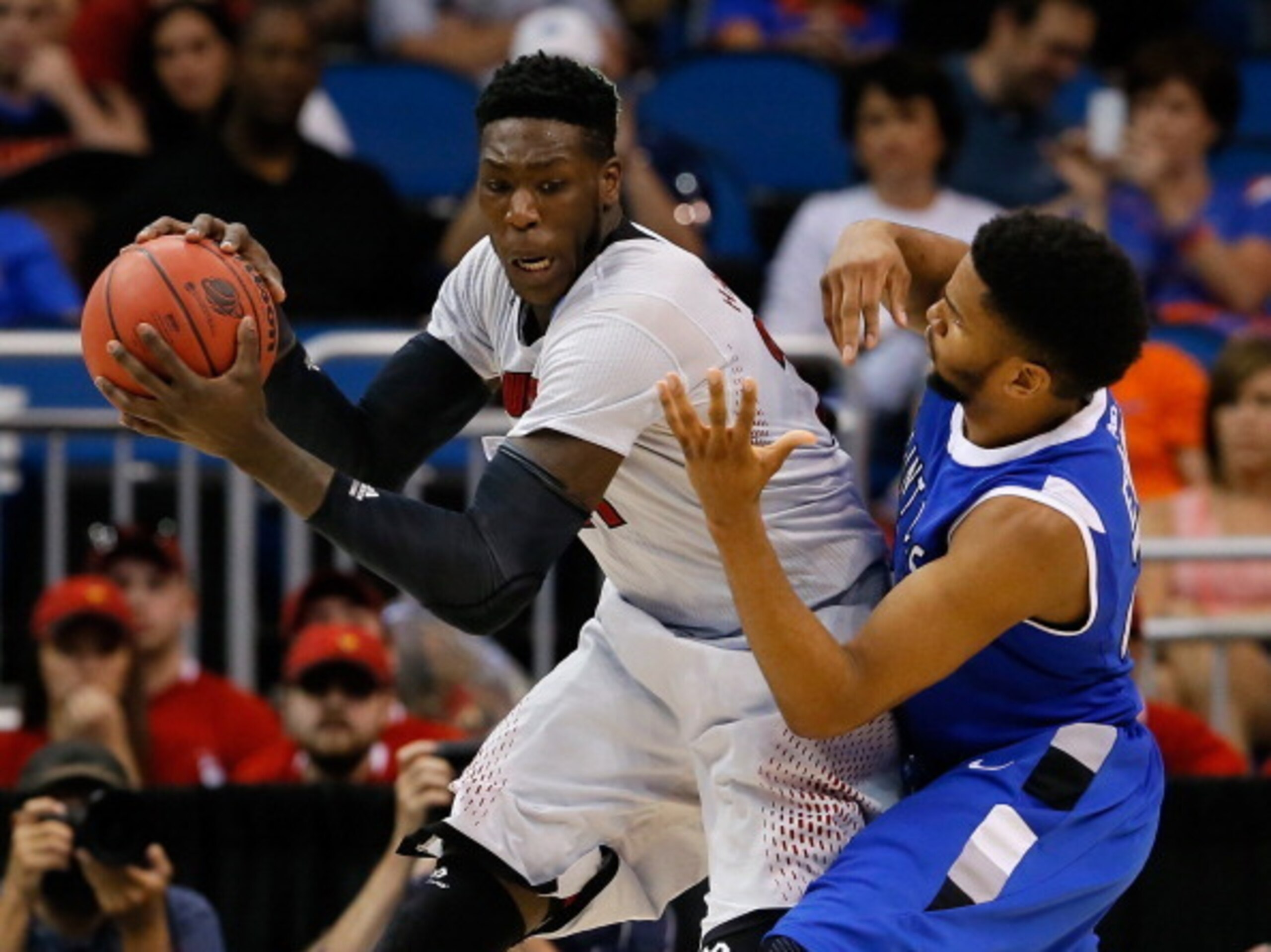
Class: Junior
2013-14 Stats: 14.0 PPG, 8.4 RPG, 1.3 BPG
When Louisville lost to Kentucky in the NCAA tournament, Rick Pitino called it the "end of an era." All of his best players were graduating or likely off to the NBA. That included Montrezl Harrell.
Harrell surprised many by coming back to school, and his return means Louisville is once again a Final Four threat. He's one of the most overpowering bigs in the country, runs the floor, is a strong finisher at the rim and he's an excellent defender. Last season, the opponents whom he defended only scored a combined 71 points—a measly 0.587 points per possession—according to Synergy Sports (subscription required).
Harrell does have areas where he could improve and make Louisville's offense more diverse. He's never been great with his back to the basket, and he's dependent upon others to create for him. That was often Russ Smith. He could also stand to improve on his 46.4 percent shooting at the line last year. That's really just nitpicking, though, because what Harrell does well, he does better than arguably any big in the country.
4. Caris LeVert, SG, Michigan
57 of 60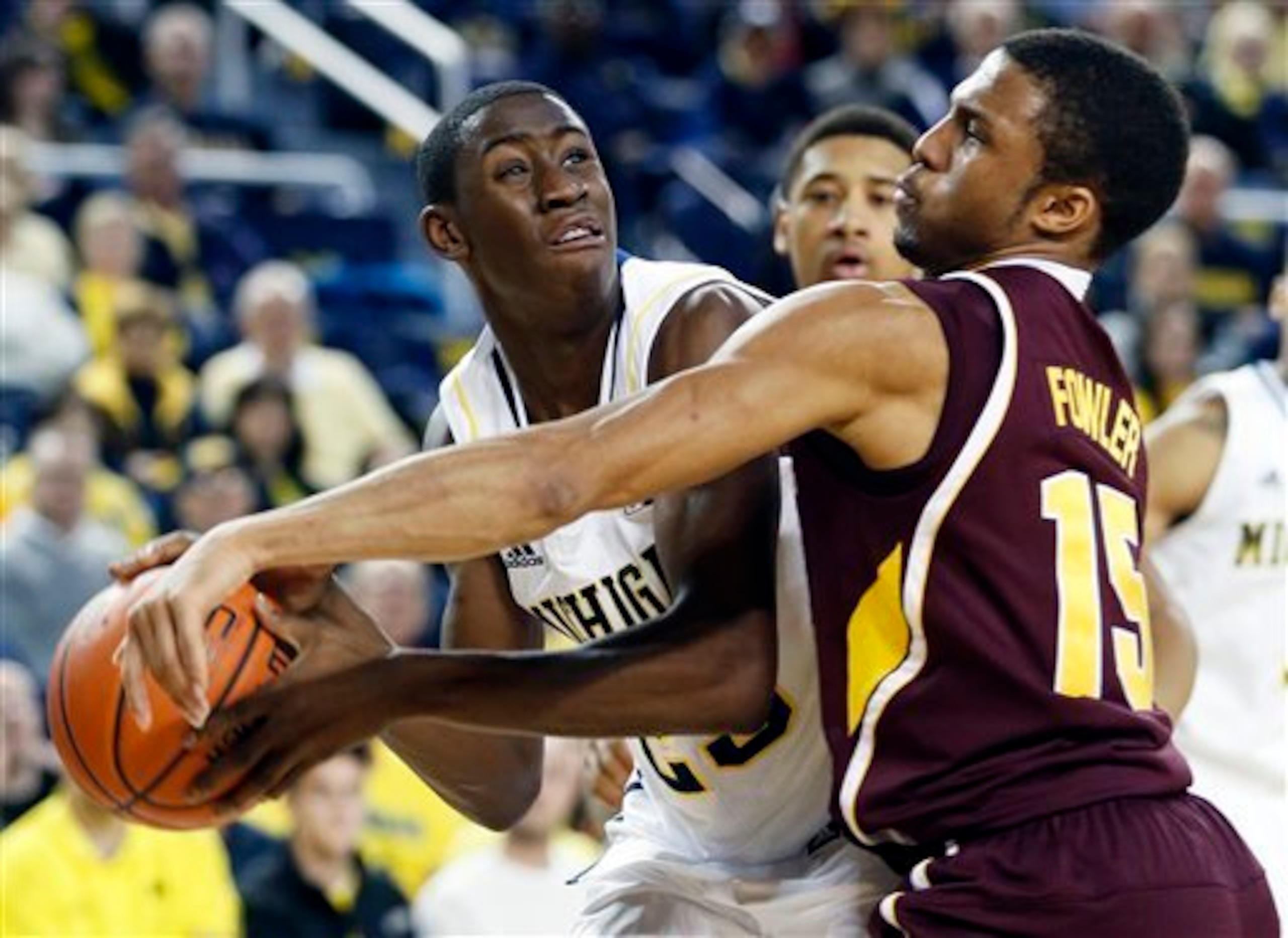
Class: Junior
2013-14 Stats: 12.9 PPG, 4.3 RPG, 2.9 APG, 1.2 SPG
Caris LeVert has gone from a little-known recruit to a star at Michigan. And being a star guard in head coach John Beilein's offense means the accolades and a fat NBA contract are likely to follow.
Here are the numbers of Michigan's leading scorers (all guards) over the last four seasons.
- Darius Morris (2010-11): 15.0 points per game, 6.7 assists per game, 108.9 offensive rating
- Trey Burke (2011-12): 14.8 points per game, 4.6 assists per game, 105.3 offensive rating
- Burke (2012-13): 18.6 points per game, 6.7 assists per game, 121.2 offensive rating
- Nik Stauskas (2013-14): 17.5 points per game, 3.3 assist per game, 124.1 offensive rating
Morris was drafted 41st, Burke—the National Player of the Year in 2013—went ninth, and Stauskas was taken eighth in the most recent draft.
LeVert provides the versatility that is perfect in Beilein's offense. He's a great spot-up shooter, just as good off the bounce and an excellent passer for a wing. His skill set is similar to that of Stauskas, who made a big leap once he was the man as a sophomore. Now, it's LeVert's turn.
3. Marcus Paige, PG, North Carolina
58 of 60
Class: Junior
2013-14 Stats: 17.5 PPG, 4.2 APG, 3.2 RPG, 1.5 SPG
It's not unusual for a program like North Carolina to have the best point guard in the country, but it wasn't anything anyone would have predicted a year ago at this time.
Last season, Marcus Paige was expected to be maybe just a little more than a role player. He was forced into a starting role early on when P.J. Hairston, the man who was expected to be UNC's go-to scorer, was kept off the court. Once Hairston got booted, there was no question Paige was the man in Chapel Hill.
Paige's numbers were unreal considering he had been nothing more than a solid setup man as a freshman (8.2 points and 4.6 assists per game). Particularly impressive was how efficient he was with so much pressure to produce. He was often the one and only perimeter threat—only one other Tar Heel made more than 10 threes last season, and that player, Leslie McDonald, missed nine games—and he was the team's best creator, which meant he was responsible for his own shot-creation.
Luckily for the Heels, Paige was unreal in that capacity. He was the most efficient shooter off the dribble in the country (on a minimum of 100 possessions), shooting 48 percent on jump shots off the dribble (59.3 adjusted field-goal percentage), per Synergy Sports (subscription required).
This season, Paige should have more help with the addition of freshman wings Justin Jackson and Theo Pinson. Mixing in the experience of those returning with the talent of the freshmen should make the Heels a more consistent winner. Last season, Paige kept the Heels relevant. This year, he should be the star on a top-five team.
2. Frank Kaminsky, C, Wisconsin
59 of 60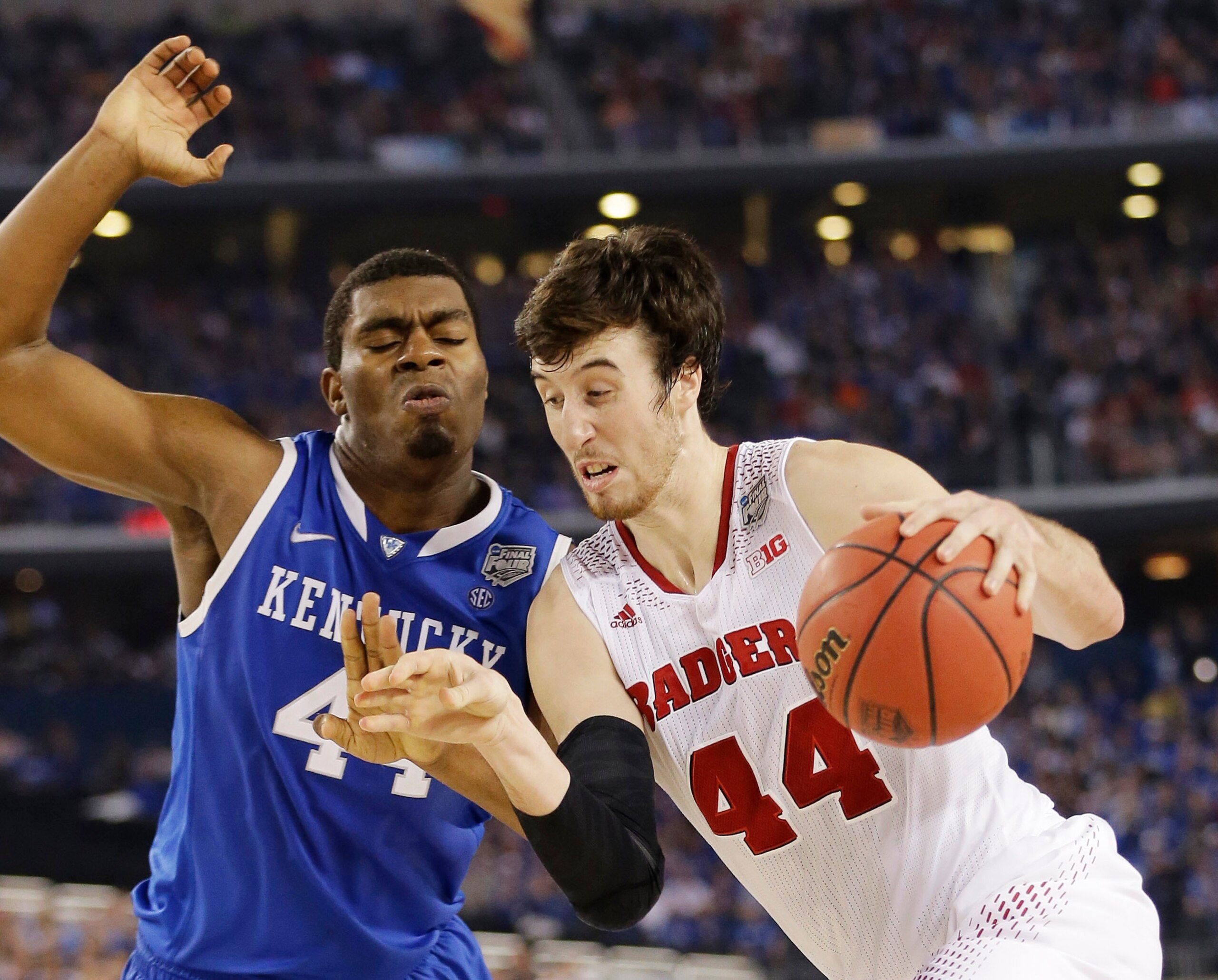
Class: Senior
2013-14 Stats: 13.9 PPG, 6.3 RPG, 1.3 APG, 1.7 BPG
It's incredible where Frank Kaminsky's game went from one year to the next. Last season when I ranked the top 100 players, he wasn't even in consideration. He had been a fringe rotation player the year before for Wisconsin, averaging 4.2 points and 1.8 rebounds.
By the end of November, he had dropped 43 points in a game. In March, he was one of the stars of the NCAA tournament, scoring 28 points against Arizona's stacked front line to send Wisconsin to the Final Four.
Kaminsky is an extremely difficult matchup because of his ability to hit the three (37.8 percent last season), drive to the basket off the bounce and score from the blocks with his back to the basket.
The Badgers are a legitimate title contender, and Kaminsky will be in the conversation for National Player of the Year if his team lives up to expectations.
1. Jahlil Okafor, C, Duke
60 of 60
Class: Freshman
2013-14 Stats (High School): 24.1 PPG, 11.3 RPG
It's rare that a big man comes along as ready to be a star in the college game as Jahlil Okafor. It's difficult to find many pros with his assortment of post moves. To give an idea of how far along Okafor is for his age, he played for the United States U19 team in the summer of 2013—he was 17 at the time—and he averaged 10.8 points and shot 77.2 percent in only 14.2 minutes per game.
Okafor will likely get the opportunity to be the man right away for the Blue Devils, who lost leading scorers Jabari Parker and Rodney Hood to the NBA. Head coach Mike Krzyzewski will be able to surround Okafor with shooters and give him space to operate on the blocks. If he gets his touches, it's a safe bet that he'll put up numbers.
C.J. Moore covers college basketball for Bleacher Report. You can follow him on Twitter @CJMooreBR.
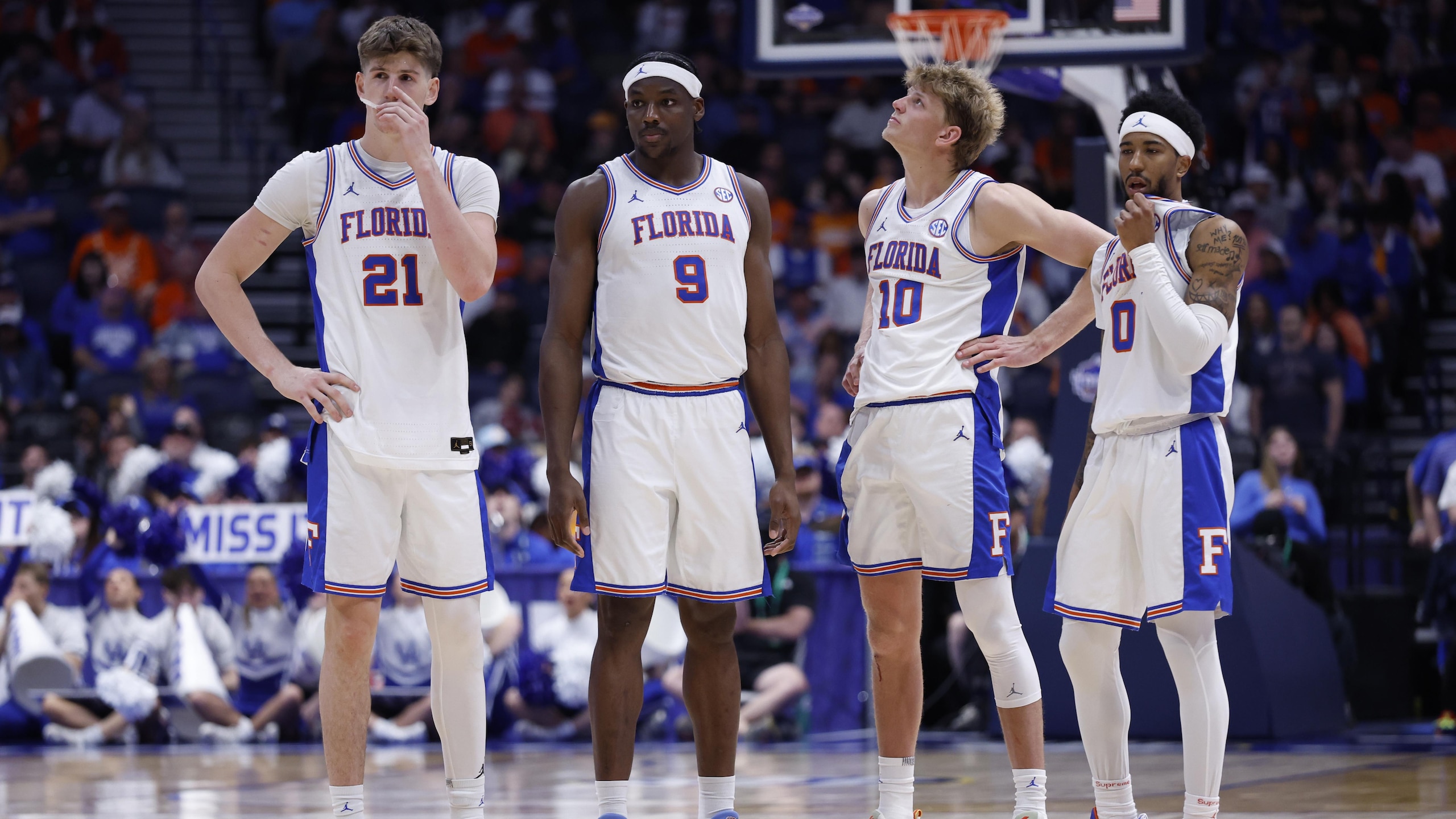
.jpg?w=2560 "B/R's Expert Week 7 NFL Picks 🔮")
.jpg?w=2560 "JJ Watt to Be Top CBS Analyst")
.jpg?w=2560 "Report reveals list of next NFL international locations")