
The 50 Best College Basketball Players Of The 2000s
I've always viewed sports to be about one thing: players and their desire to become the best they can be. Sure, coaches help develop them, fans give them that extra adrenaline rush when they need it most, but it's the players who have made college basketball arguably the most exciting sport in the country.
If anything, their postseason is by far the best of any major sport (I am a fan of the College World Series, but it's not nearly as mainstream as March Madness).
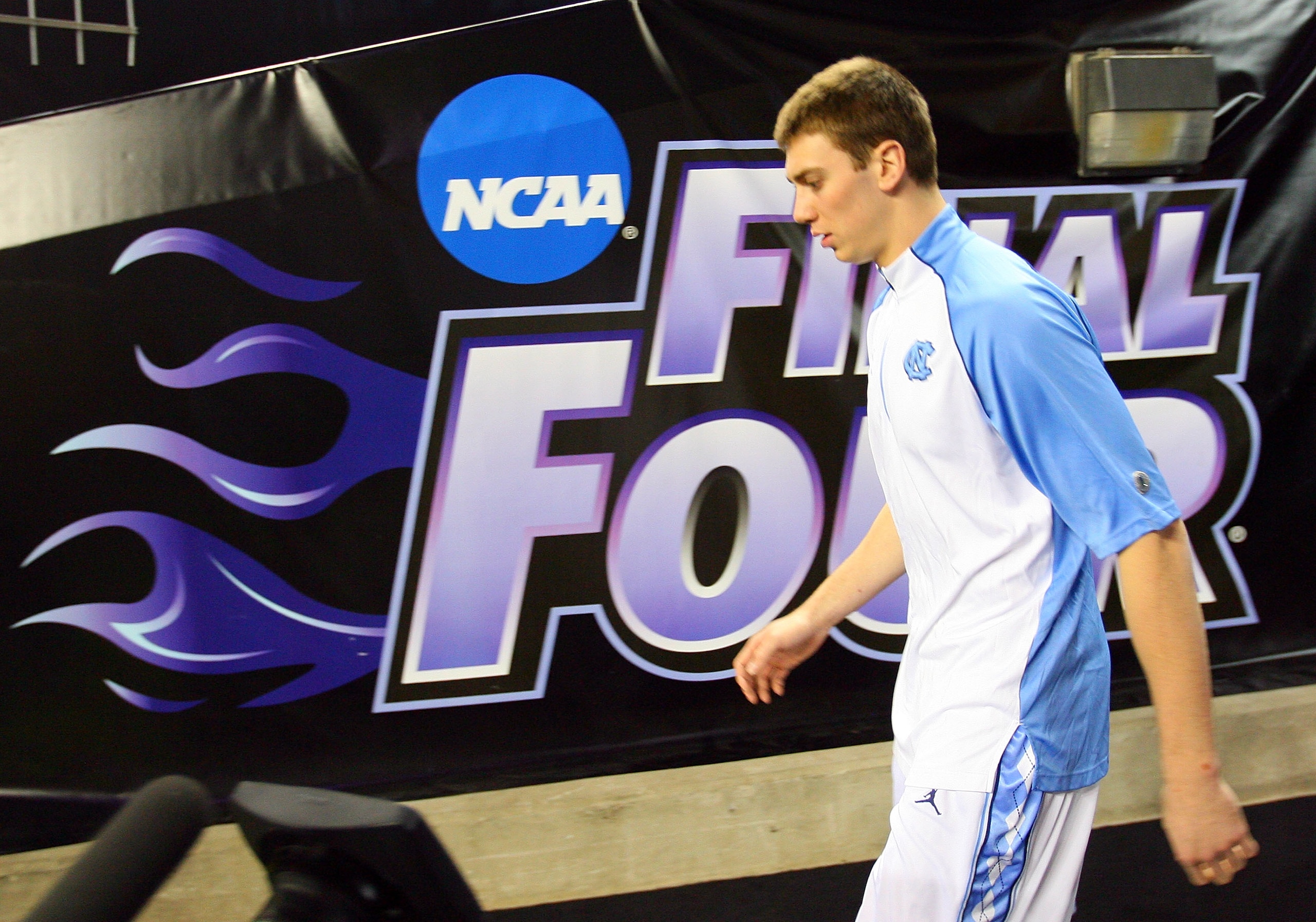
These 50 players have done what thousands of their comrades wished they could have done in their time on the hardwood floor: become the best. Many of these players are well known, like Mr. Hansbrough here, while others may make you say, "Oh yeah! That guy was really good, I completely forgot about him."
If you're simply curious as to who No. 1 is, you're going to have to wait awhile, but here's a hint: he is no longer playing in the NBA.
The Method To The Madness
1 of 51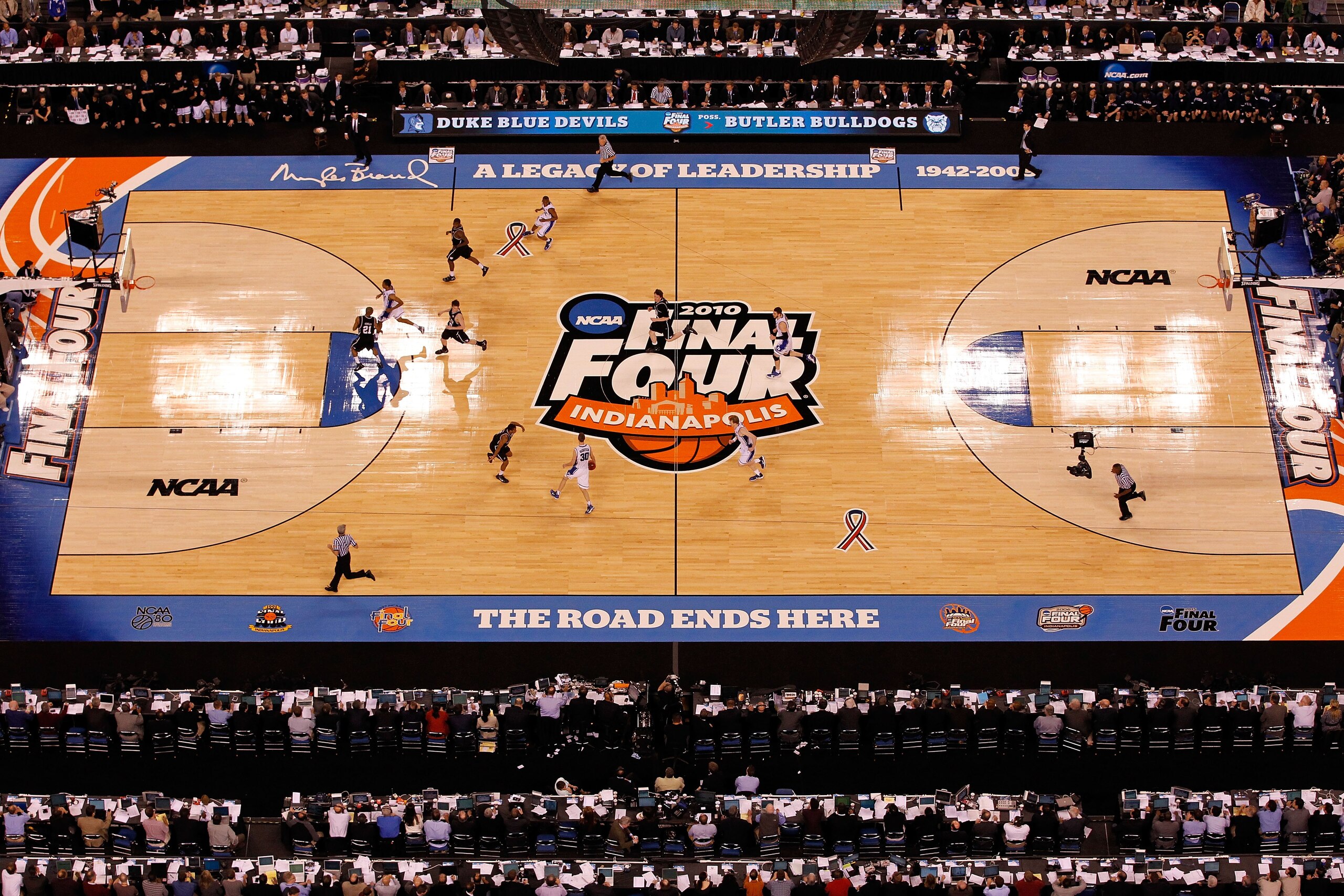
Starting with obvious names that rolled off the top of my head and then researching great teams and the Consensus All-American lists, I ended up with around 100 players that I felt at least warranted consideration for making this list.
The one rule which hurt some of the great mid-major players was that every player had to have won at least one NCAA tournament game. If a player was truly great, he must have been able to prevent his team from getting a horrendous seed, or pull off at least one upset.
I also wanted each player to have played at least half of his career in the 2000's, so current sophomores were not counted and players who were seniors in the 1999-2000 season were immediately eliminated.
Once I got down to around 75 players, I then looked at four specific categories: 1) their best season; 2) overall career; 3) team success; and most importantly, 4) how memorable they were.
By how memorable, I mean that if in 10 years, who would we think of immediately as a guy who, for whatever reason, made us think "wow, it was incredible to see him play". If I thought a player would stand the test of time, he got a significant boost. Subjective? Probably, but I didn't think there would be much of a discrepancy.
Once at 50 players, I created a little point system for the four categories, giving out a max of 20 points for best season and overall career, 10 points for team success (as this ranking is about players I stressed their individual ability over their teams, but obviously winning is still important), and 25 points for how memorable they were. Do the math and their total was out of 75 points.
To help out the mid-major players (anyone outside the six major conferences), if their team made the Sweet Sixteen, I viewed it as almost equivalent to a powerhouse like Duke making the Final Four. Both are hard to do, but not impossible. Considering only Marquette, Butler, and George Mason are the only mid-major teams to make it that far this decade, I made making it to the Final Four equivalent to winning a National Title.
To reward players who stayed, I subtracted the number of years a player skipped out on if he entered the draft early. For example, Kevin Durant got a 20 for his best season, but got a 17 for his overall career because he only played one out of a possible four seasons.
No player got a perfect score, though the top three were in the seventies. No player scored below a 46 as well. The majority of the players scored between 49 and 61.
Now that we all know how I attempted to sort these great players, lets begin.
50. Corey Brewer, Florida
2 of 51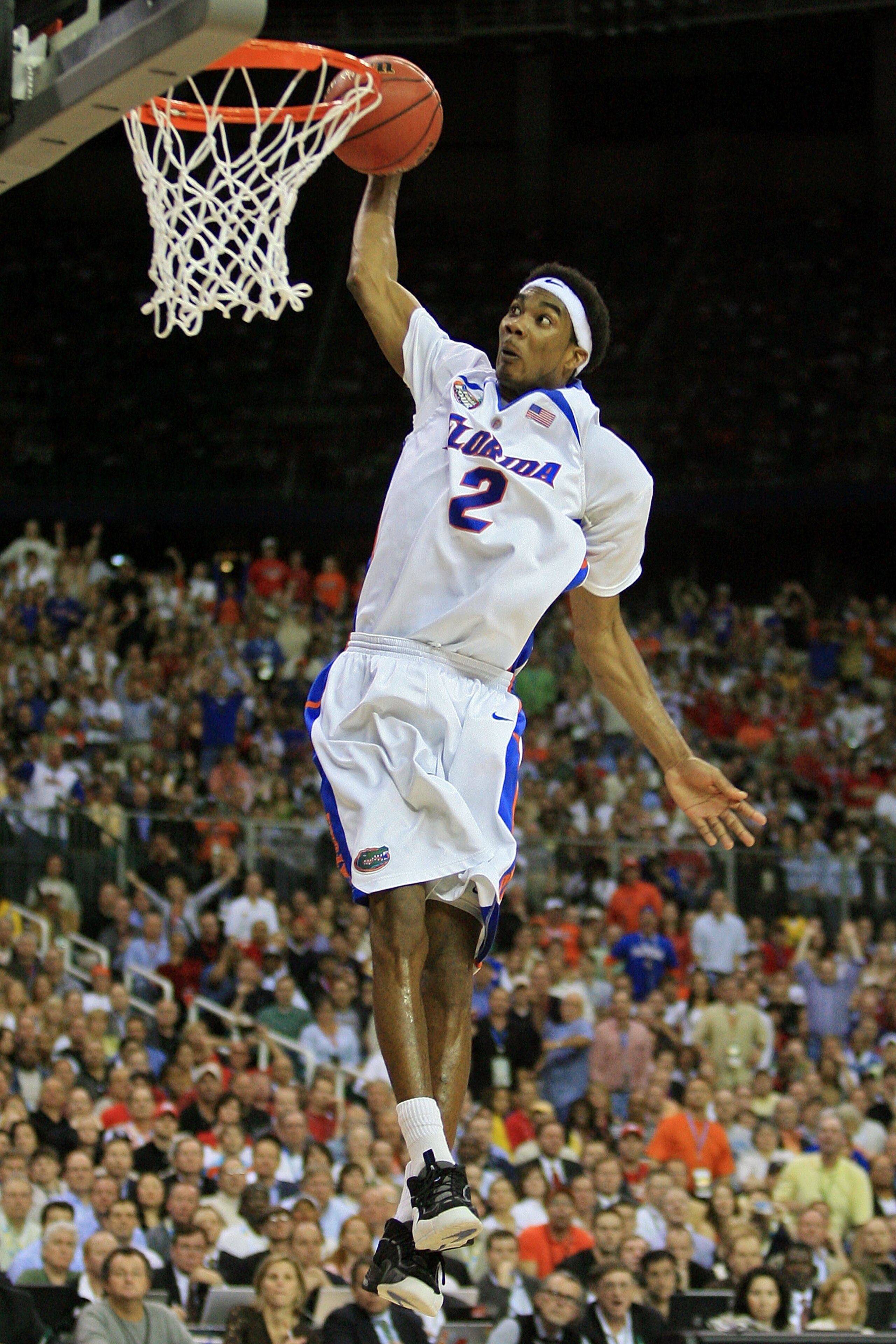
Career: 11 ppg, 4 rpg, 3 apg (three years: 2005-07),
Best Season: 13 ppg, 5 rpg, 3 apg (sophomore year).
Team Success: 13 NCAA wins, two national titles.
Brewer just makes it in and part of me wanted to leave him out. His statistics are by far the worst of anyone on the list.
However, being a key piece in winning back-to-back national titles was too hard to ignore. I wanted to include two Gators (Joakim Noah was a lock and comes later) on the list and I felt Brewer was slightly better than Al Horford because of his versatility and defensive prowess.
49. Dee Brown, Illinois
3 of 51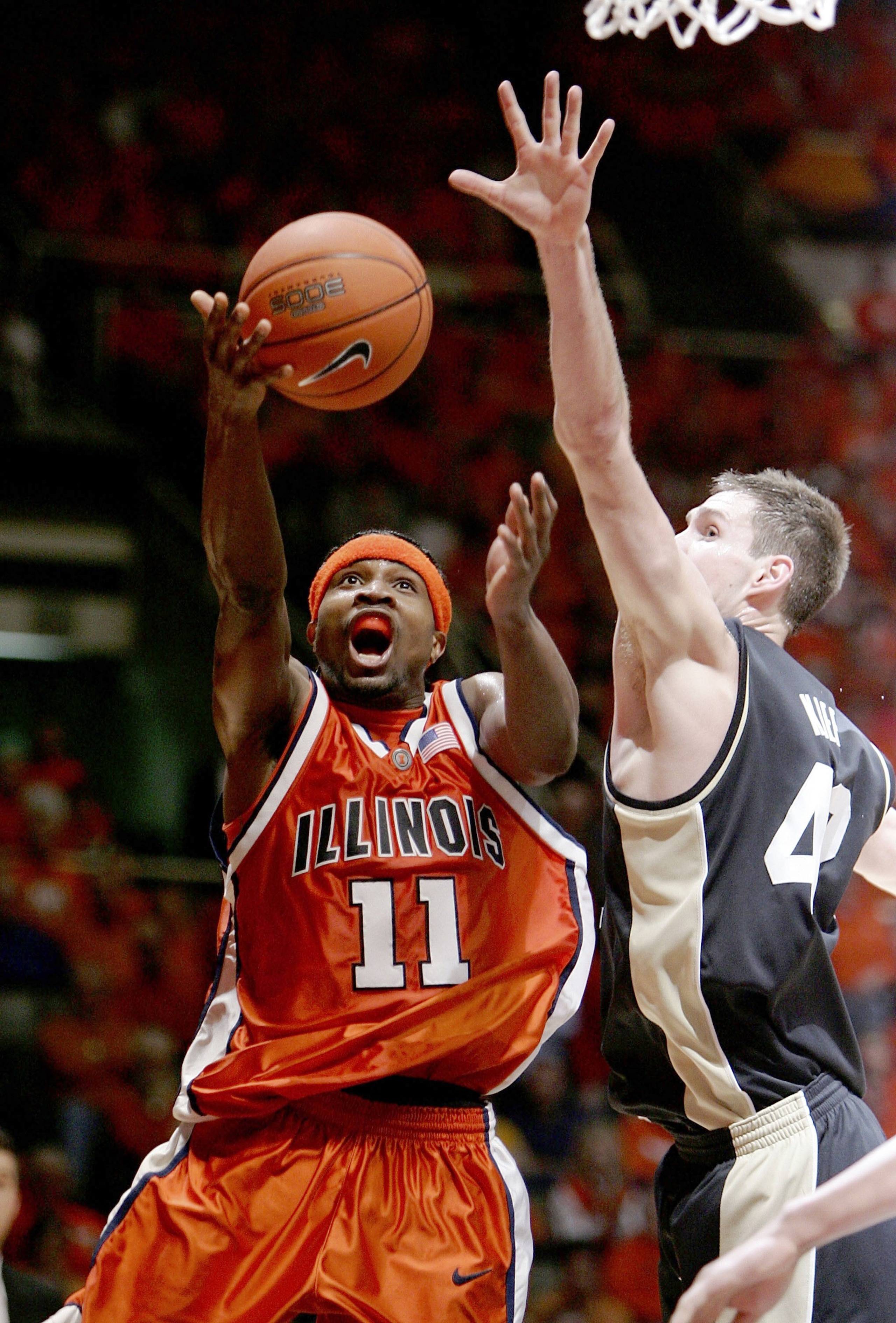
Career: 13 ppg, 5 apg, 3 rpg, (four years: 2003-06), First team All-American, Second team All-American.
Best Season: 13 ppg, 5 apg, 3 rpg, 50% FG, 43% 3PT, First team All-American (junior year)
Team Success: Eight NCAA wins, one Final Four.
Of the three-headed-monster that took Illinois to the national championship game in 2005, Brown had the best body of work. His shot-making ability and consistency made him a dangerous player in the Big Ten.
His actual numbers are not flashy in any way, but being a two-time All-American on good teams puts him ahead of Deron Williams and Luther Head, both of which only made All-American status once.
.jpg?w=2560 "NCAA Combating Sextortion")
.jpg?w=2560 "Raiders Camp Football")
48. Troy Bell, Boston College
4 of 51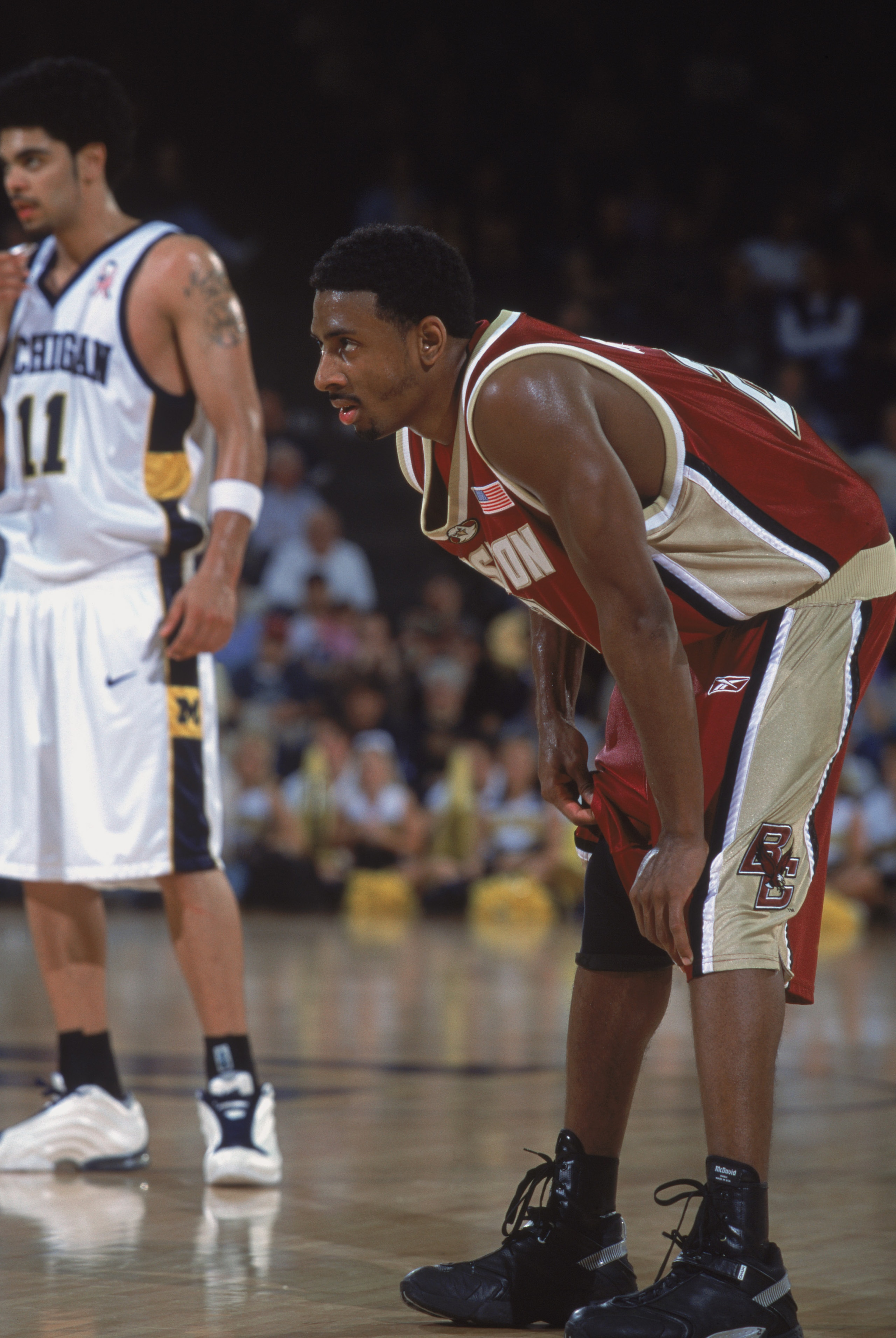
Career: 22 ppg, 4 rpg, 4 apg, 87% FT (four years: 2000-03), two-time second team All-American.
Best Season: 25 ppg, 5 rpg, 4 apg, 40% 3PT, 85% FT Second team All-American (senior year).
Team Success: One NCAA win.
One of the most consistent scorers of the decade, Bell was a stud for the Eagles, though his one tournament win hurt his case. Still, he made BC relevant early in the decade and will be known as one of the best players in school history.
47. Casey Jacobsen, Stanford
5 of 51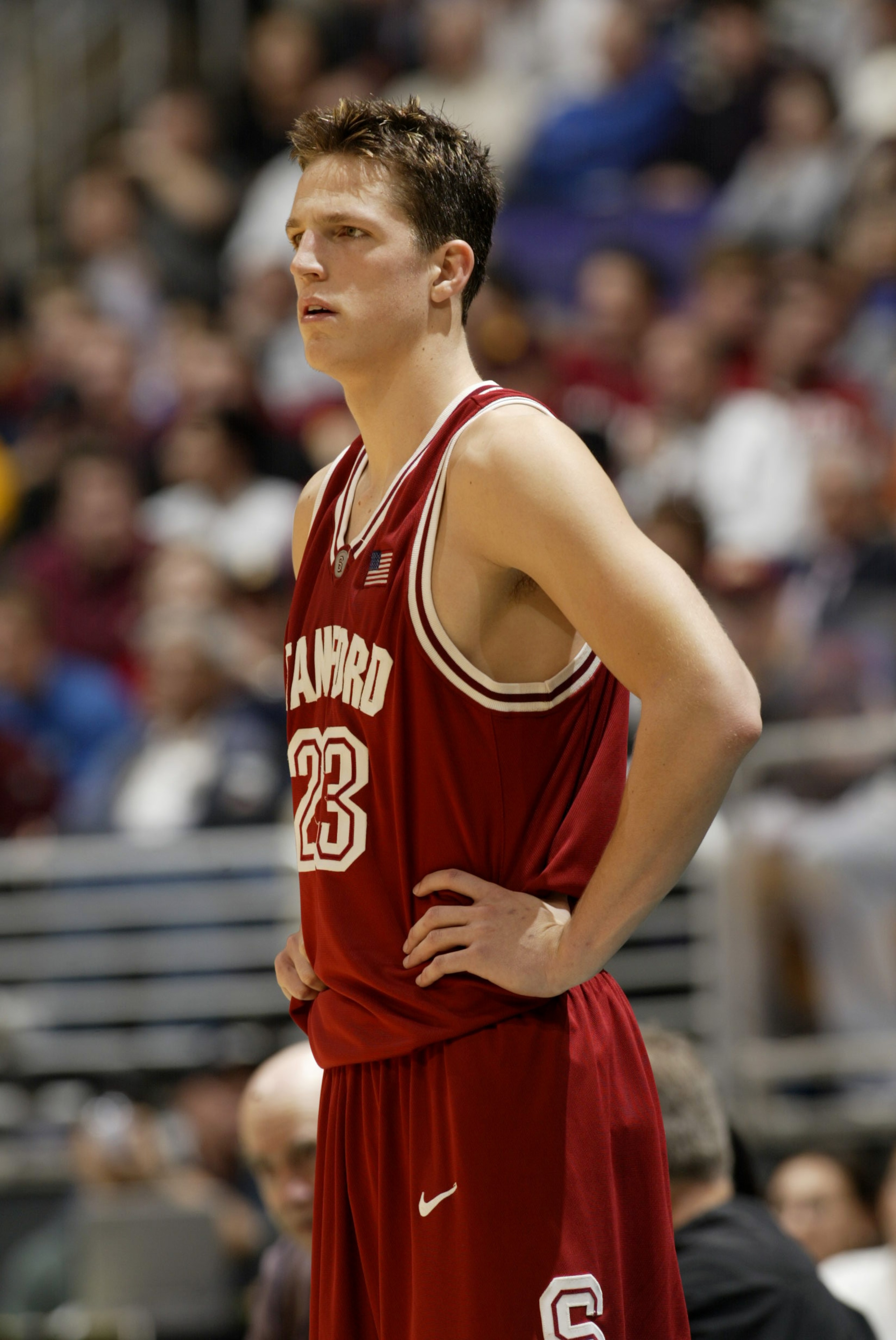
Career: 18 ppg, 4 rpg, 3 apg, 43% 3PT (three years: 2000-02), First team All-American, Second team All-American.
Best season: 18 ppg, 4 rpg, 51% FG, 47% 3PT, 81% FT, First team All-American (sophomore year).
Team Success: Five NCAA wins.
I'm not going to lie, I completely forgot about Casey Jacobsen until I actually saw he was an All-American. A consistent scorer who had incredible range, he helped the Cardinals to their most successful stretch of the decade. Had I not forgotten him, he would have been higher on the list.
46. Chris Lofton, Tennessee
6 of 51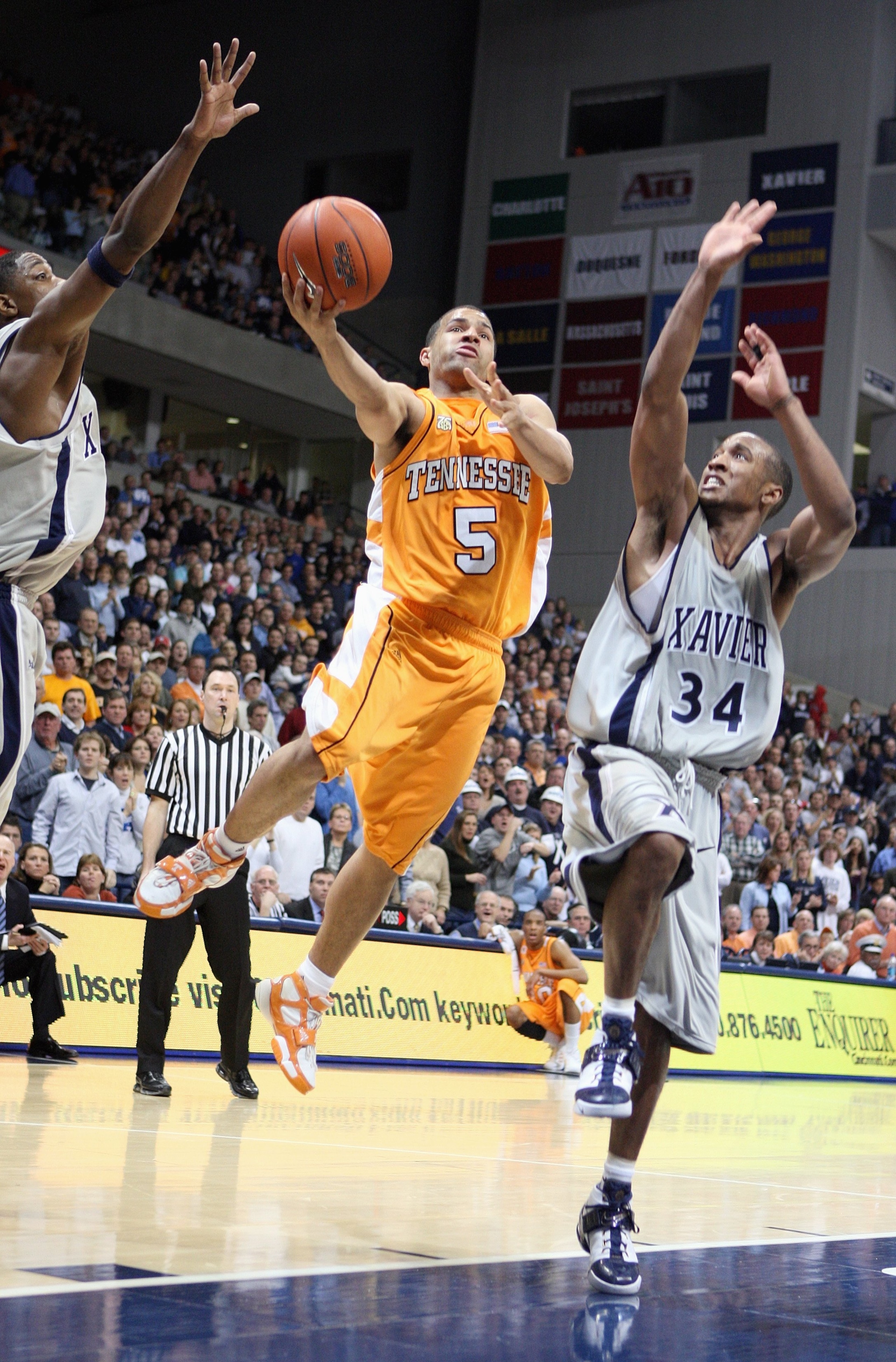
Career: 17 ppg, 3 rpg, 42% 3PT, 84% FT (four years: 2005-08), Two-time second team All-American.
Best Season: 21 ppg, 3 rpg, 42% 3PT, 82% FT, Second team All-American (junior year).
Team Success: Five NCAA wins.
A quality guard who helped spark Tennessee's rise to the elite program it is now.
His teams always did something in the NCAAs, just not enough. Yet another consistent player with great range, just not much else.
45. Brandon Roy, Washington
7 of 51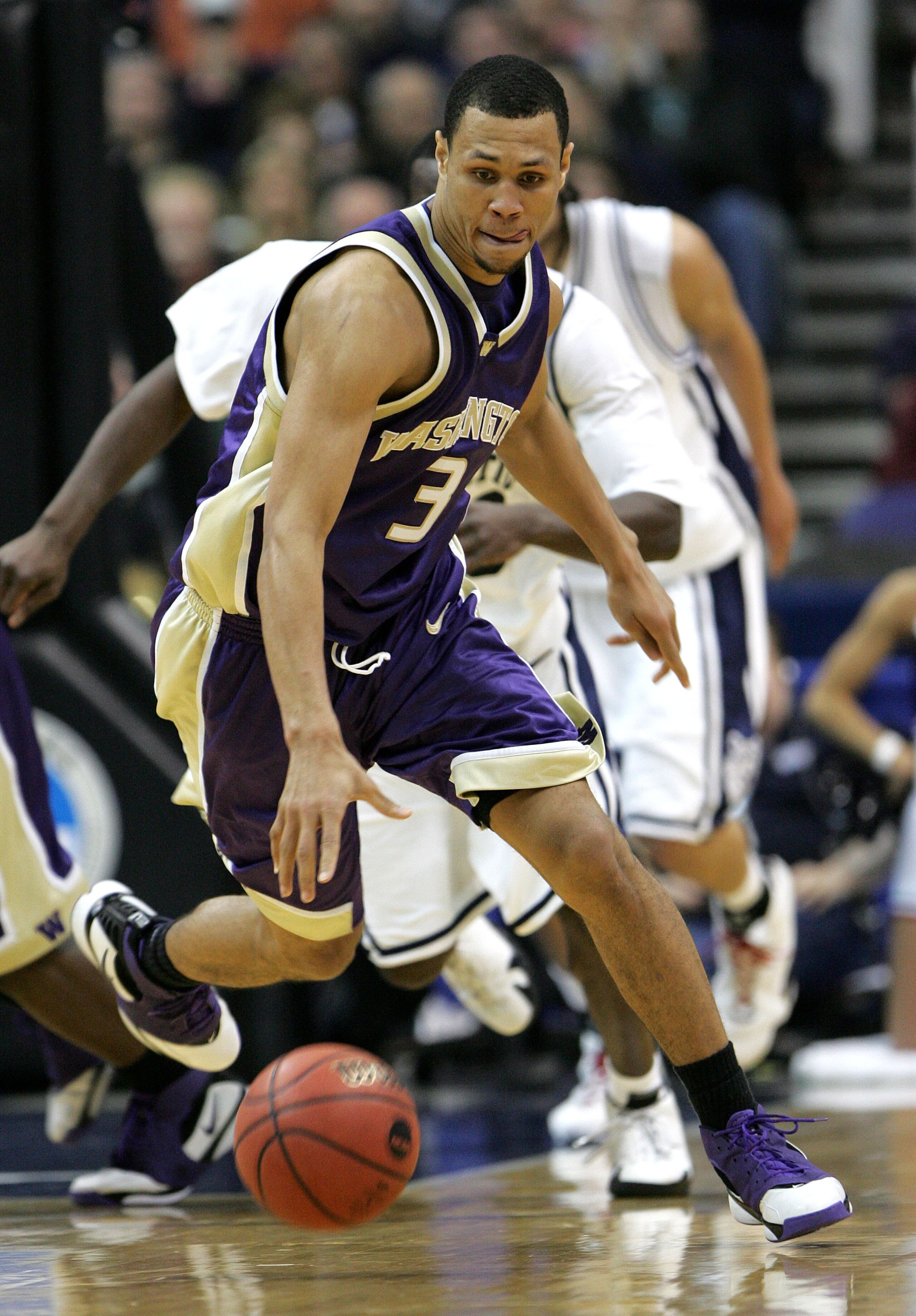
Career: 14 ppg, 5 rpg, 3 apg, 51% FG (four years: 2003-06), First team All-American.
Best Season: 20 ppg, 6 rpg, 4 apg, 51% FG, 40% 3PT, 81% FT, First team All-American (senior year).
Team Success: Four NCAA wins.
Before his senior year, I doubt many people had heard of this guy. That didn't stop Roy from bursting onto the scene with one of the best overall shooting percentages of the decade.
He's better remembered now for being a stud in the NBA than for what he did in college, but his senior season was incredible.
44. Ben Gordon, Connecticut
8 of 51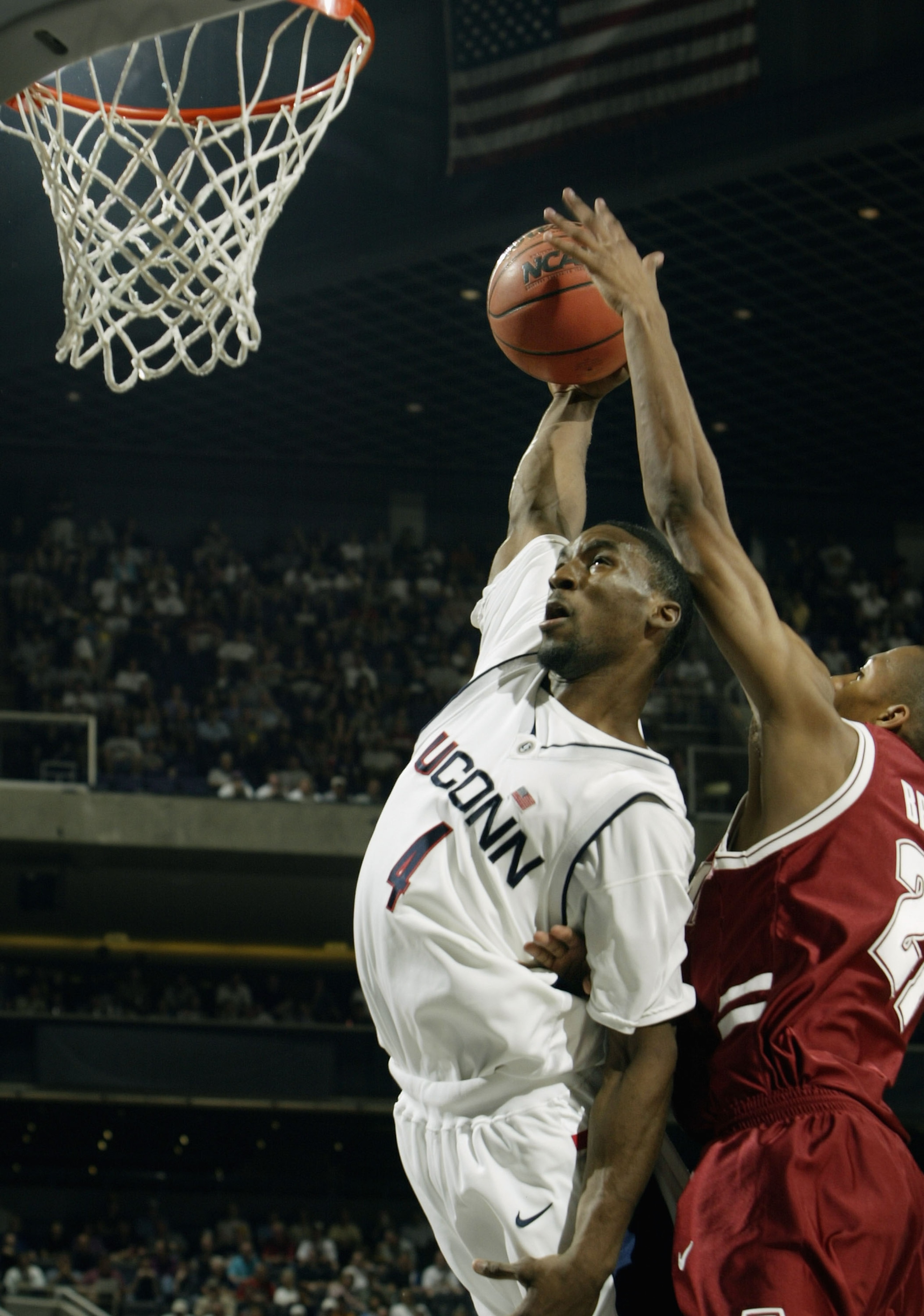
Career: 17 ppg, 4 apg, 4 rpg, 42% 3PT, 80% FT (three years: 2002-04)
Best Season: 19 ppg, 5 apg, 5 rpg, 43% 3PT, 83% FT (junior year).
Team Success: 11 NCAA wins. One National Title.
The second best guy on UConn's national championship team. Gordon had sick range and could put up 30 points on anyone. His problem was that he was never a great player, apparent from his lack of individual awards.
Had he stayed an extra year, I'm confident that he would have been in the top 30.
43. Wayne Simien, Kansas
9 of 51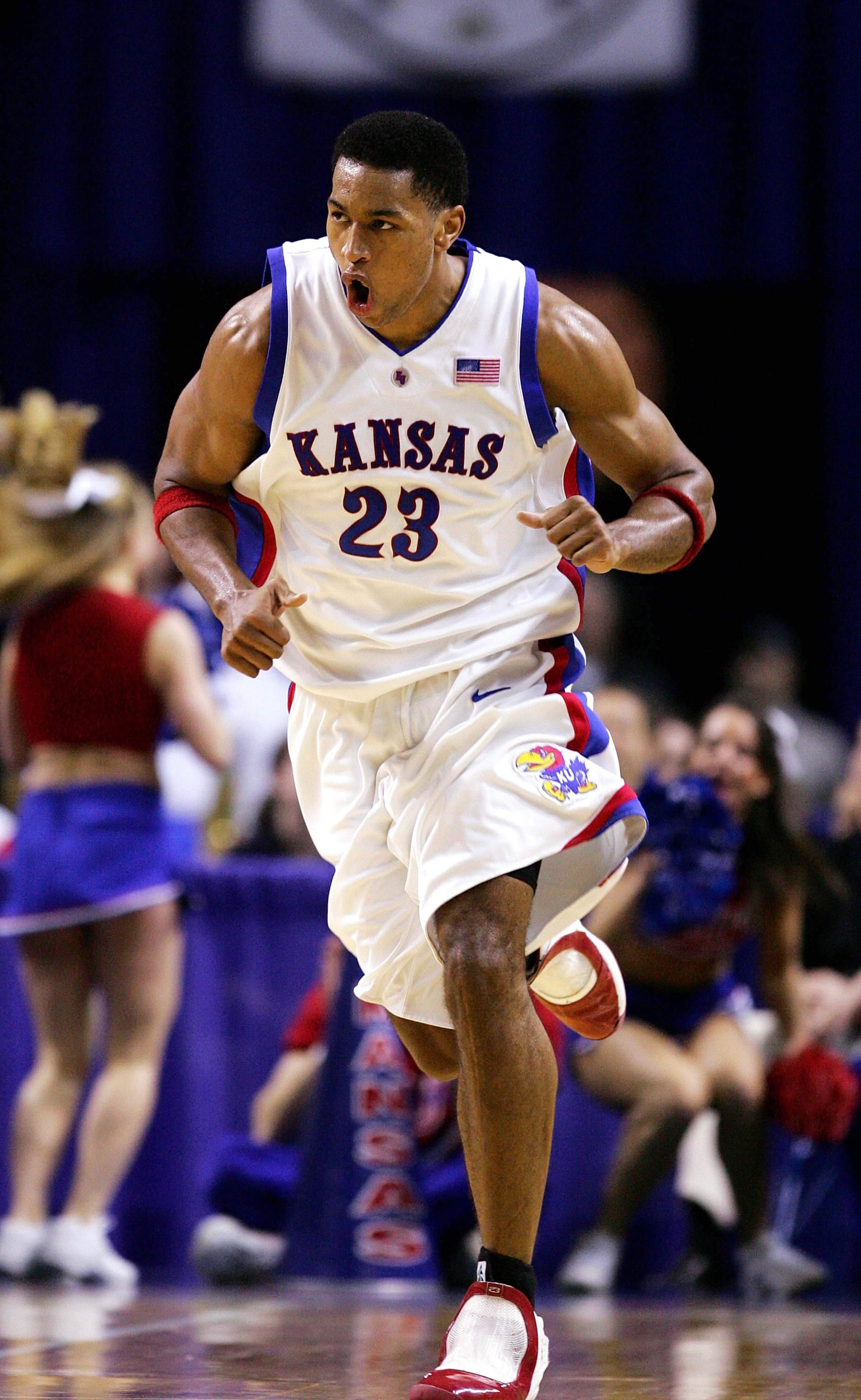
Career: 15 ppg, 8 rpg, 56% FG (four years: 2002-05), First team All-American.
Best Season: 20 ppg, 11 rpg, 55% FG, 82% FT, First team All-American (senior year).
Team Success: 12 NCAA wins, two Final Fours.
Wayne Simien was one of the best winners of the decade to never win a national championship.
He had incredibly talented teammates (two of which are coming later) which made his life much easier as he had to focus solely on rebounding and getting those offensive put-backs.He did everything consistently well and was rewarded for his efforts in his best, and final, season.
42. Josh Howard, Wake Forest
10 of 51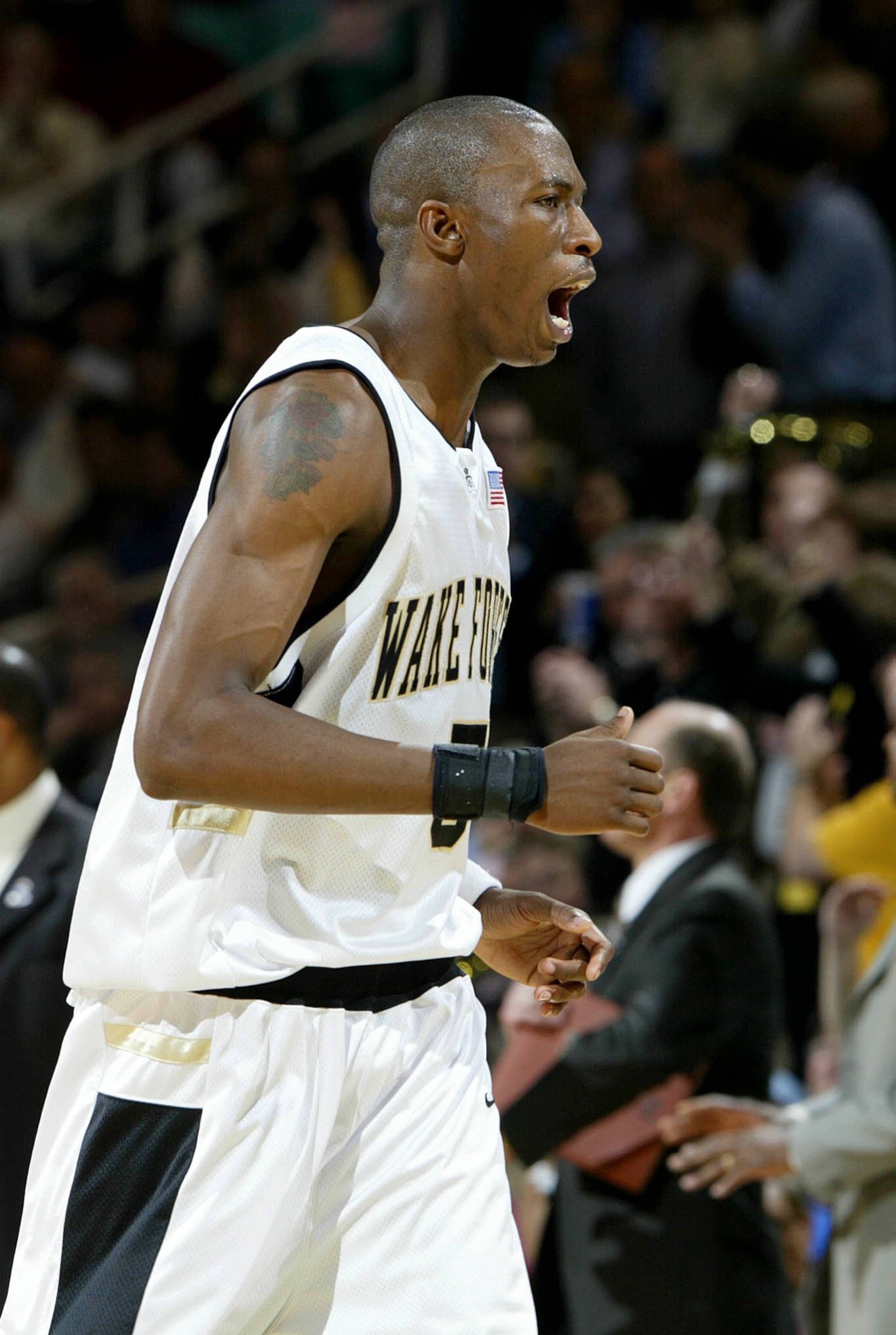
Career: 14 ppg, 7 rpg (four years: 2000-03), First team, All-American.
Best Season: 20 ppg, 8 rpg, 83% FT, First team All-American (senior year).
Team Success: Two NCAA wins.
Another guy who bursted onto the scene late in his career, Howard was the best player in the ACC his senior year. He would either drop 25 points or put up a double-double. He rarely had a bad game. It's a shame he never had a reliable second option to help him make more of an impact in March.
41. Nick Fazekas, Nevada
11 of 51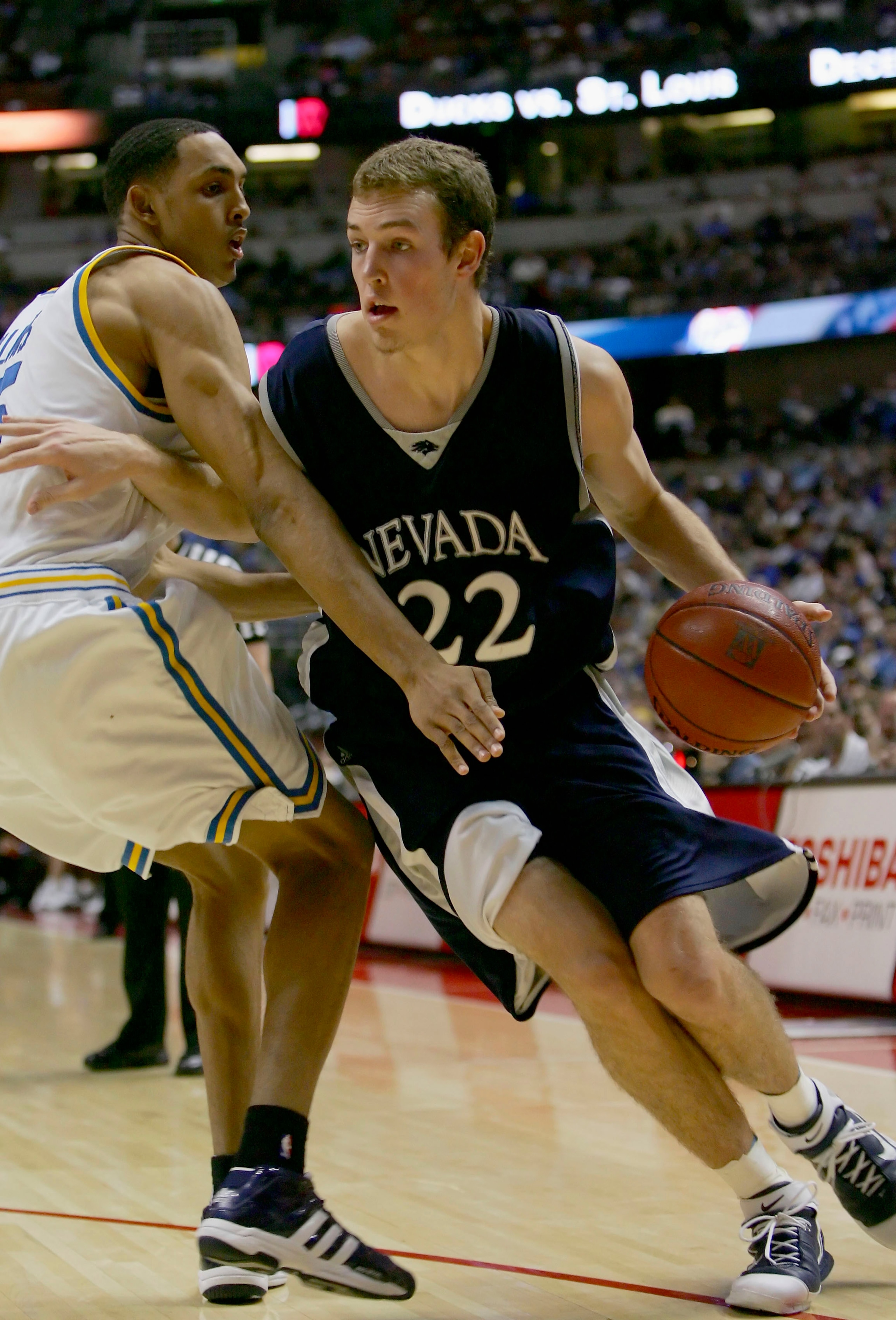
Career: 19 ppg, 10 rpg, 53% FG, 81% FT (four years: 2004-07), Second team All-American.
Best Season: 20 ppg, 11 rpg, 57% FG, 43% 3PT, 85% FT, Second team All-American (senior year).
Team Success: Four NCAA wins, one Sweet Sixteen.
The first of nine mid-major players on the list, Fazekas put Nevada on the map in the middle part of the decade. He did more with less in leading the Wolfpack to four wins in the NCAA tournament with upset wins over Texas, Michigan State, and Gonzaga.
His numbers were fantastic and it's a shame he wasn't recognized more for his performances.
40. Dan Dickau, Gonzaga
12 of 51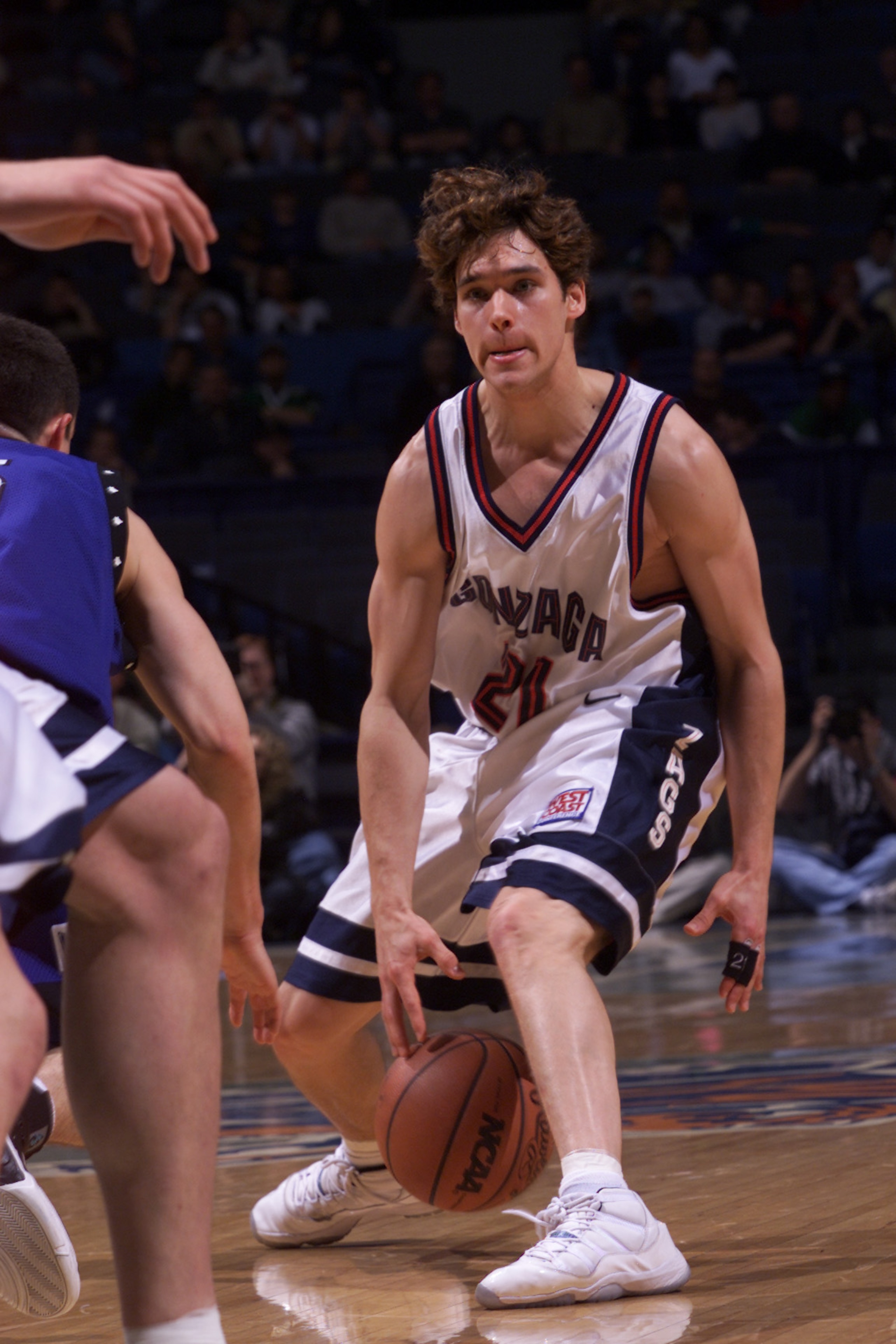
Career: 13 ppg, 4 apg, 46% 3PT, 85% FT (four years: 98-99 and 01-02), First team All-American.
Best Season: 21 ppg, 5 apg, 3 rpg, 46% 3PT, 86% FT, First team All-American (senior year).
Team Success: Two NCAA wins, one Sweet Sixteen.
Had Dickau stayed at Washington, he wouldn't have sniffed my top 100 players, let alone the top 50. Lucky for him, his move to Gonzaga made him one of the first in the long line of great Bulldog players.
His career numbers are low due to his time on the bench at Washington in the 1998-99 seasons, but his postseason success helped alleviate that.
39. Scottie Reynolds, Villanova
13 of 51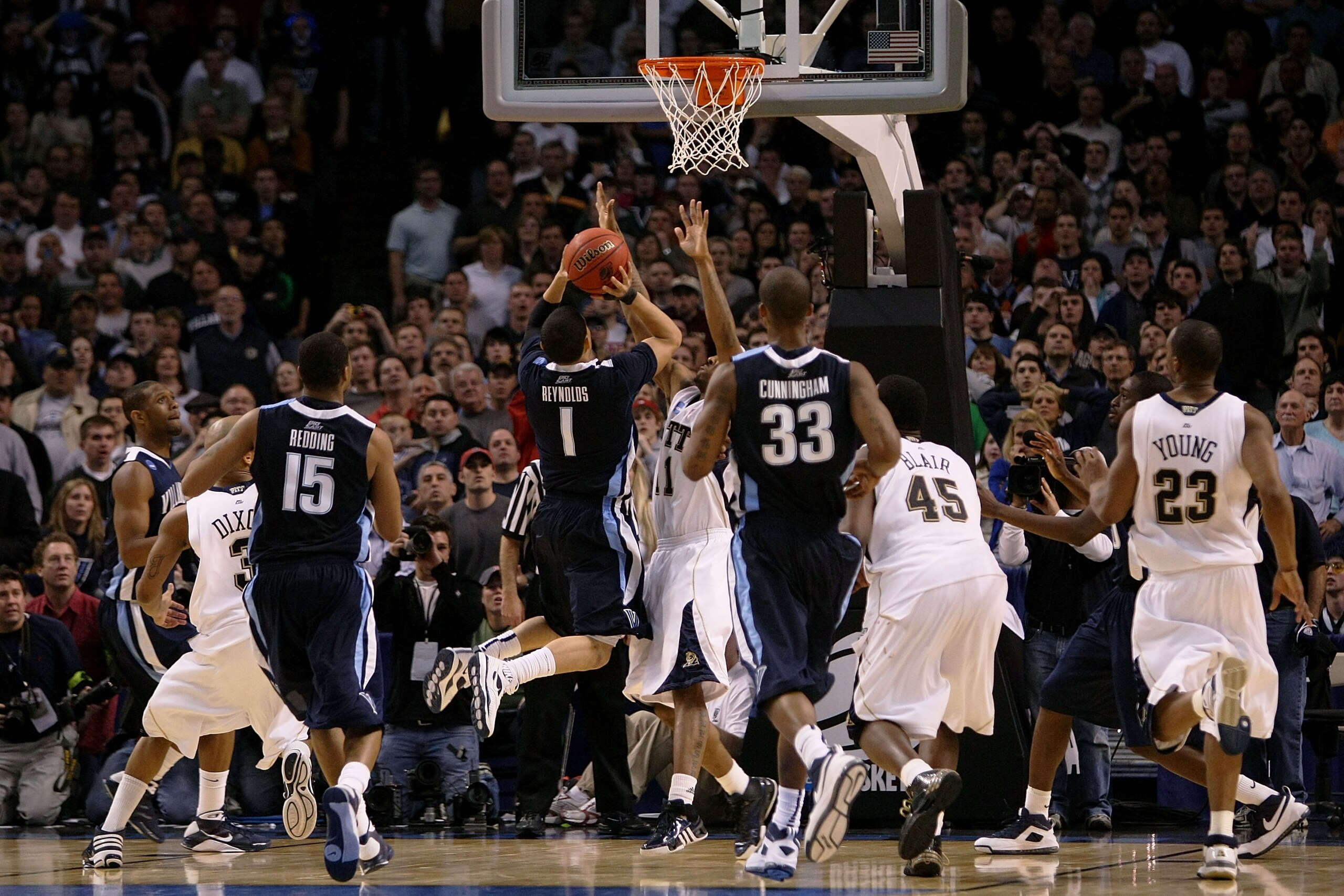
Career: 16 ppg, 4 apg, 3 rpg, 81% FT (four years: 2007-10), First team All-American.
Best Season: 18 ppg, 3 apg, 3 rpg, 84% FT, First team All-American (senior year).
Team Success: Seven NCAA wins, one Final Four.
Know this shot? Most of us do, as it was the shot that downed Pittsburgh and sent Villanova to the Final Four in 2009. Reynolds' numbers may not be as flashy as those below him, but this memorable shot combined with his consistent play all four years may force us to not forget him.
It's a shame no NBA team took a chance on him.
38. Randy Foye, Villanova
14 of 51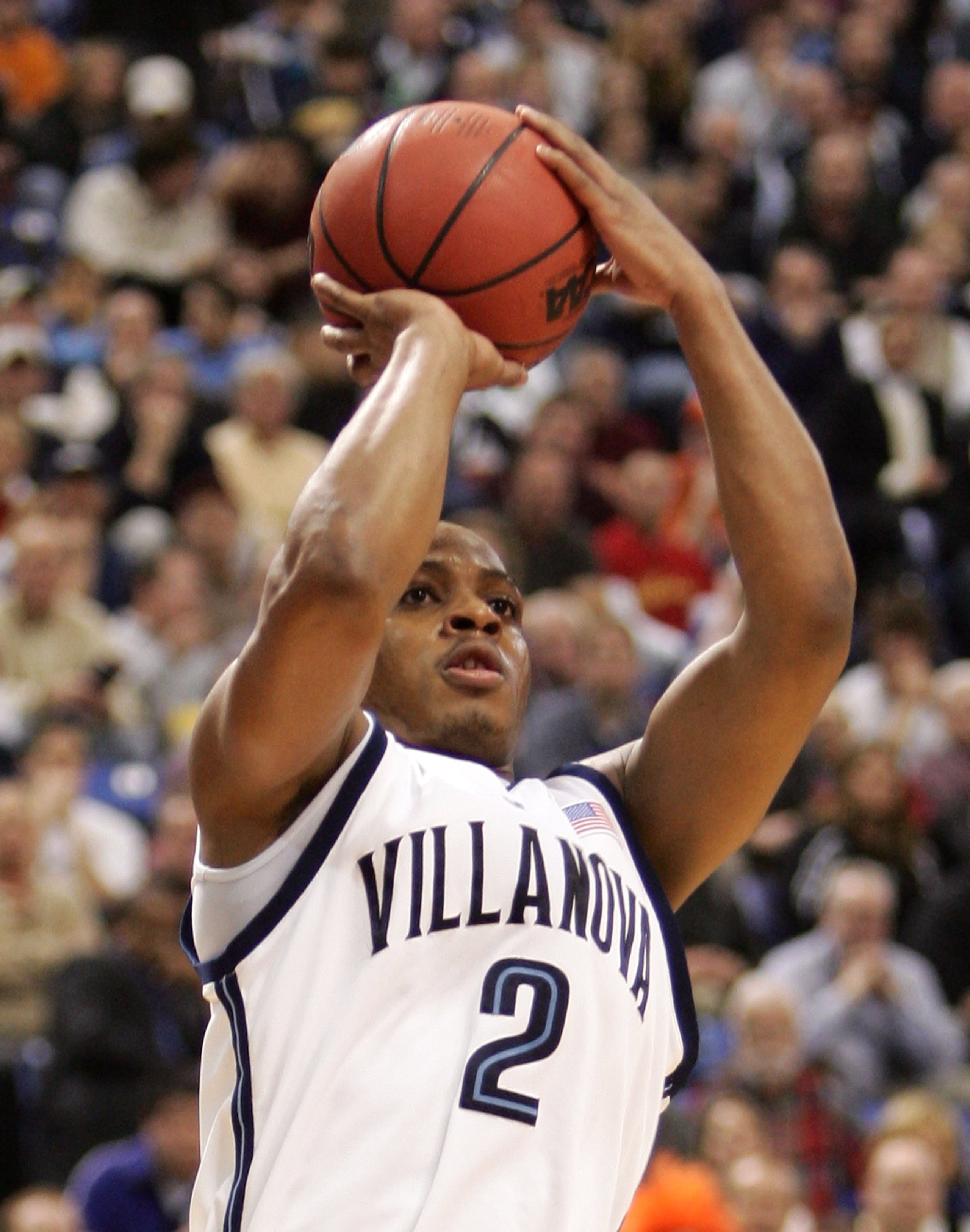
Career: 15 ppg, 5 rpg, 3 apg (four years: 2003-06), First team All-American.
Best Season: 21 ppg, 6 rpg, 3 apg, First team All-American (senior year).
Team Success: Five NCAA wins.
Meet Scottie Reynolds before Scottie Reynolds arrived. Foye had an incredible senior season before running into Florida on their way to a national championship.
His shooting percentages weren't quite good enough to be mentioned, but he could score from anywhere on the court.
37. Luke Harangody, Notre Dame
15 of 51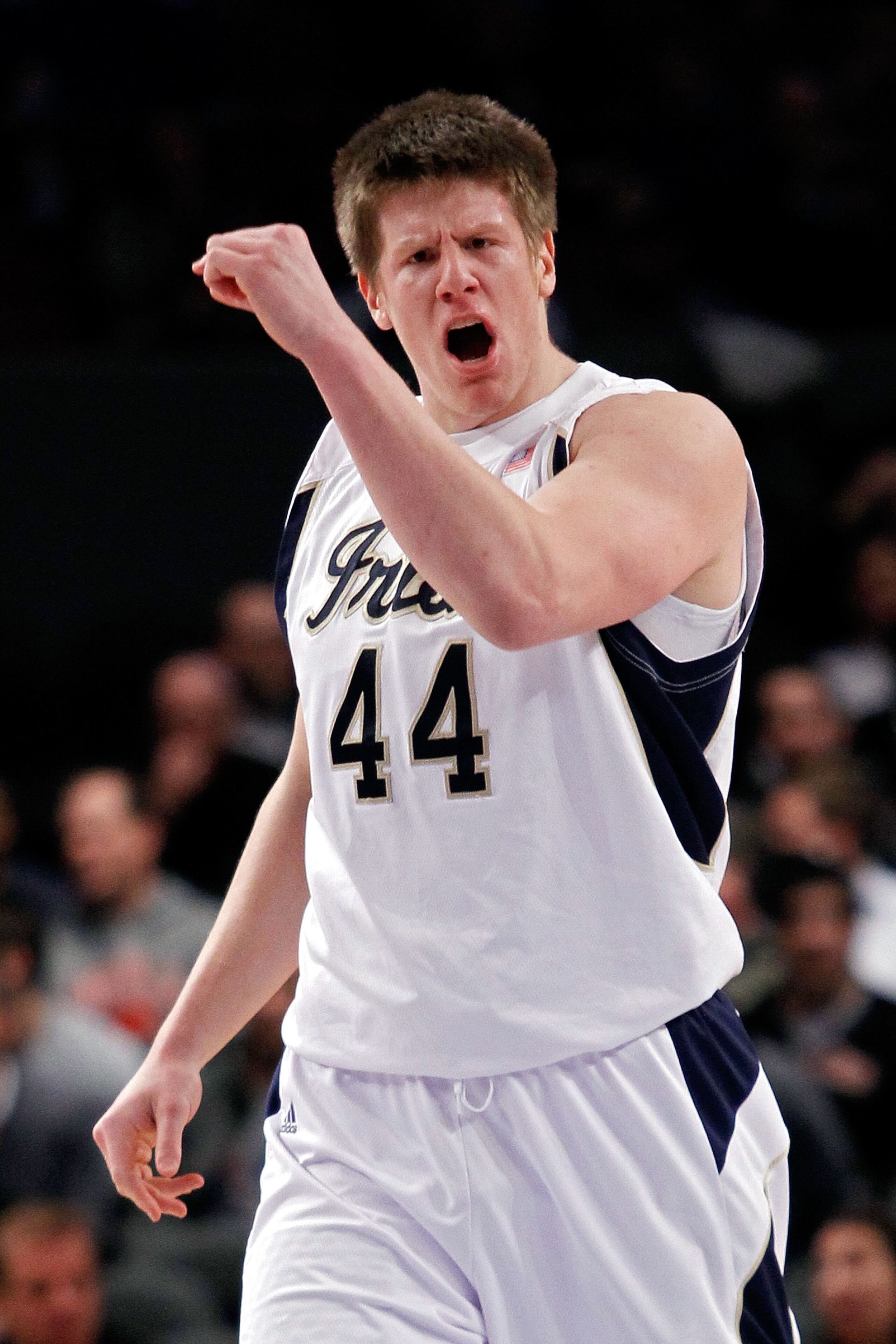
Career: 19 ppg, 10 rpg (four years: 2007-10), three-time second-team All-American.
Best Season: 23 ppg, 12 rpg, Second team All-American (junior year).
Team Success: One NCAA win.
Staying in the Big East, Harangody came out of nowhere his sophomore season, and then refused to leave. Making the All-American team three consecutive years while averaging a double-double for his career makes up for the fact that his teams mustered just one victory in the NCAA tournament.
This giant white boy baffled opposing coaches as he was almost impossible to stop.
36. Troy Murphy, Notre Dame
16 of 51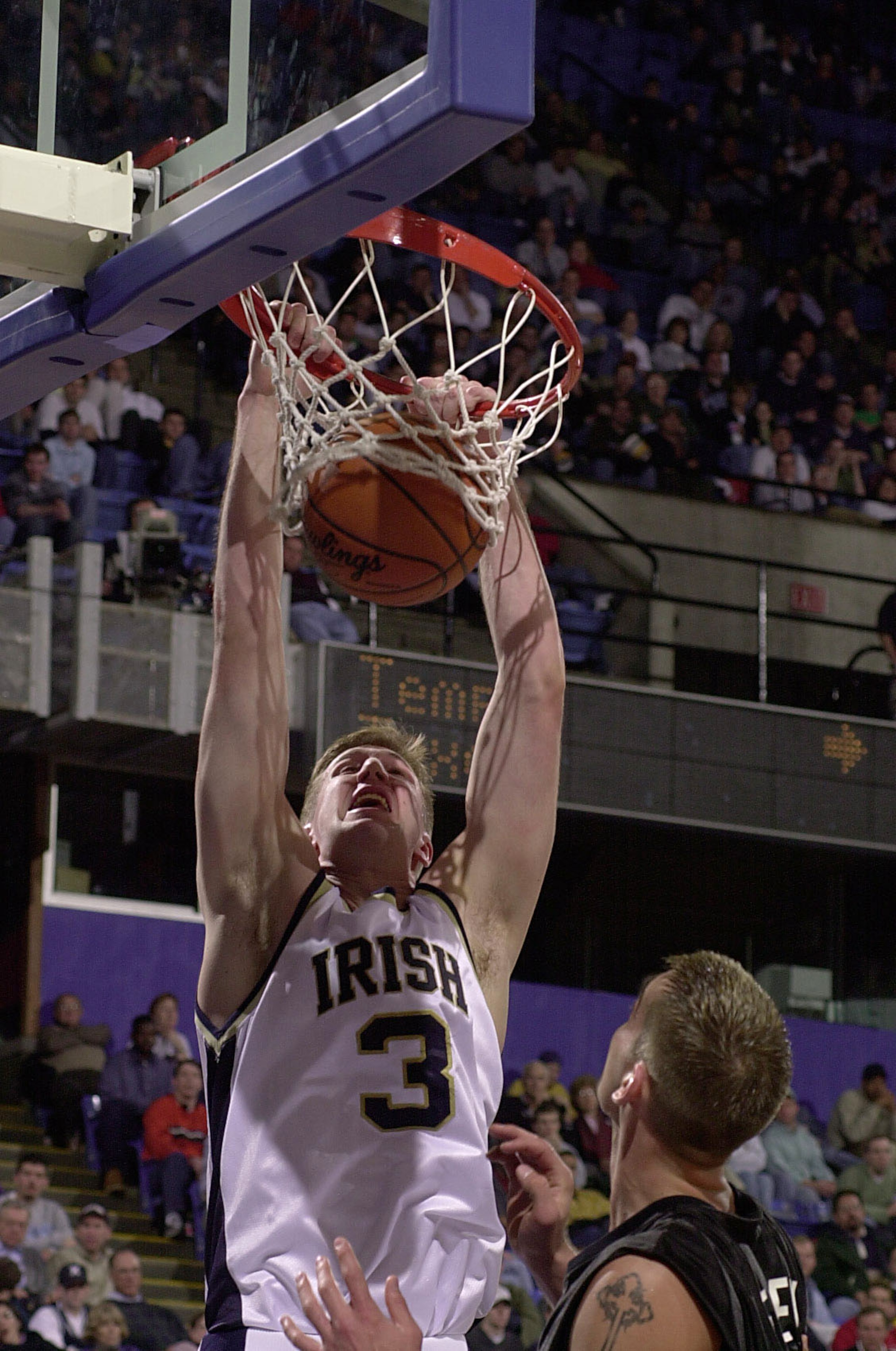
Career: 21 ppg, 10 rpg, 50% FG (three years: 1999-2001), two-time first team All-American.
Best Season: 23 ppg, 10 rpg, 81% FT, First team All-American (sophomore year).
Team Success: One NCAA win.
Hmm, well I've already used this once, but meet Luke Harangody before Luke Harangody. Murphy's numbers are virtually identical to Harangody's except that he made the All-American first team a couple times.
This guy was big, skilled, and a good shooter making him a versatile big man during his tenure in South Bend.
35. Nick Collison, Kansas
17 of 51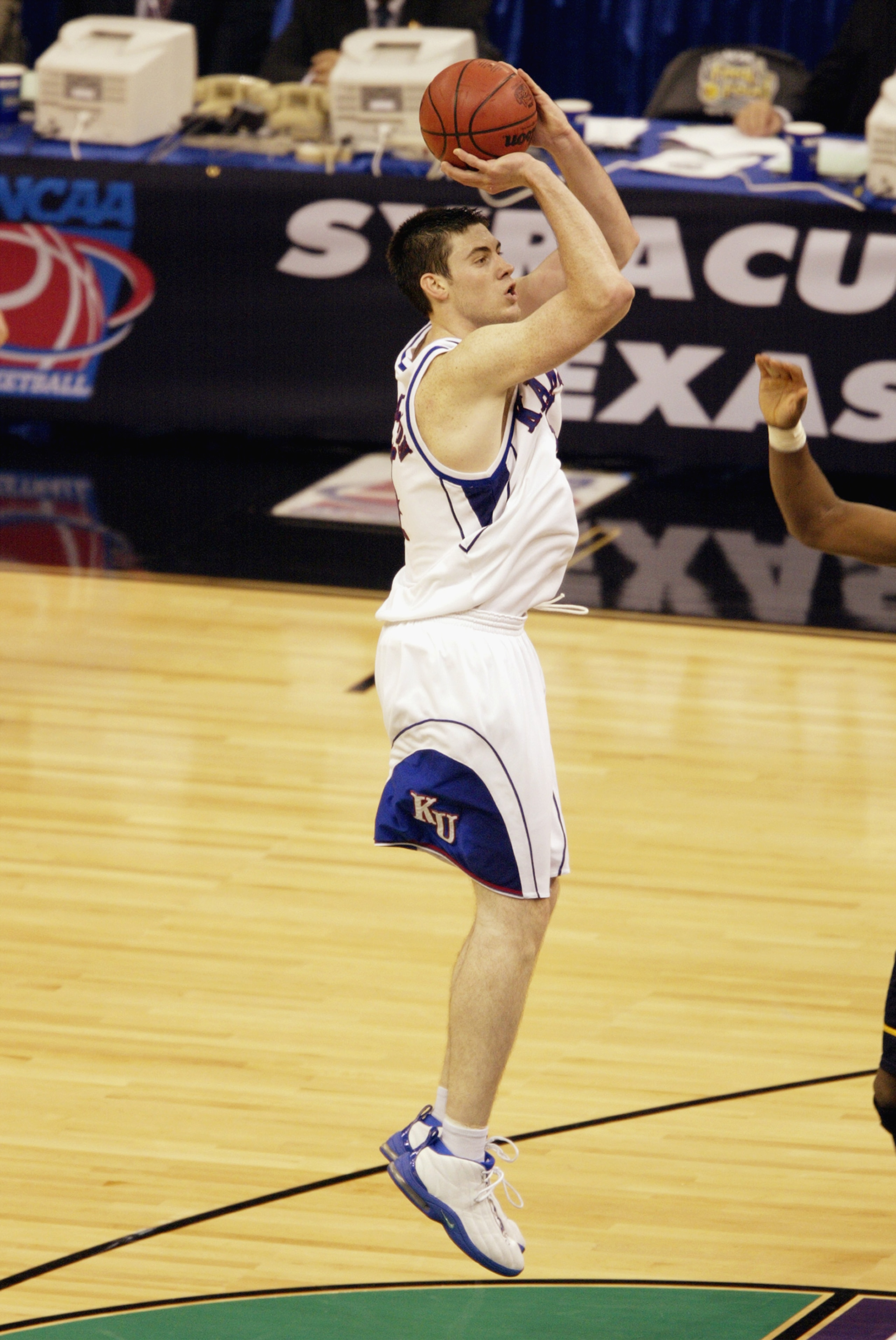
Career: 15 ppg, 8 rpg, 56% FG (four years: 2000-03), First team All-American.
Best Season: 19 ppg, 10 rpg, 55% FG, First team All-American (senior year).
Team Success: 12 NCAA wins, two Final Fours.
Another one of those Kansas players who just couldn't get over the hump and win it all, Collison was the consistent big man who got then-coach Roy Williams a double-double every night. The tandem of him and Kirk Hinrich (who just missed the list) was one of the best duos of the decade.
34. Chris Kaman, Central Michigan
18 of 51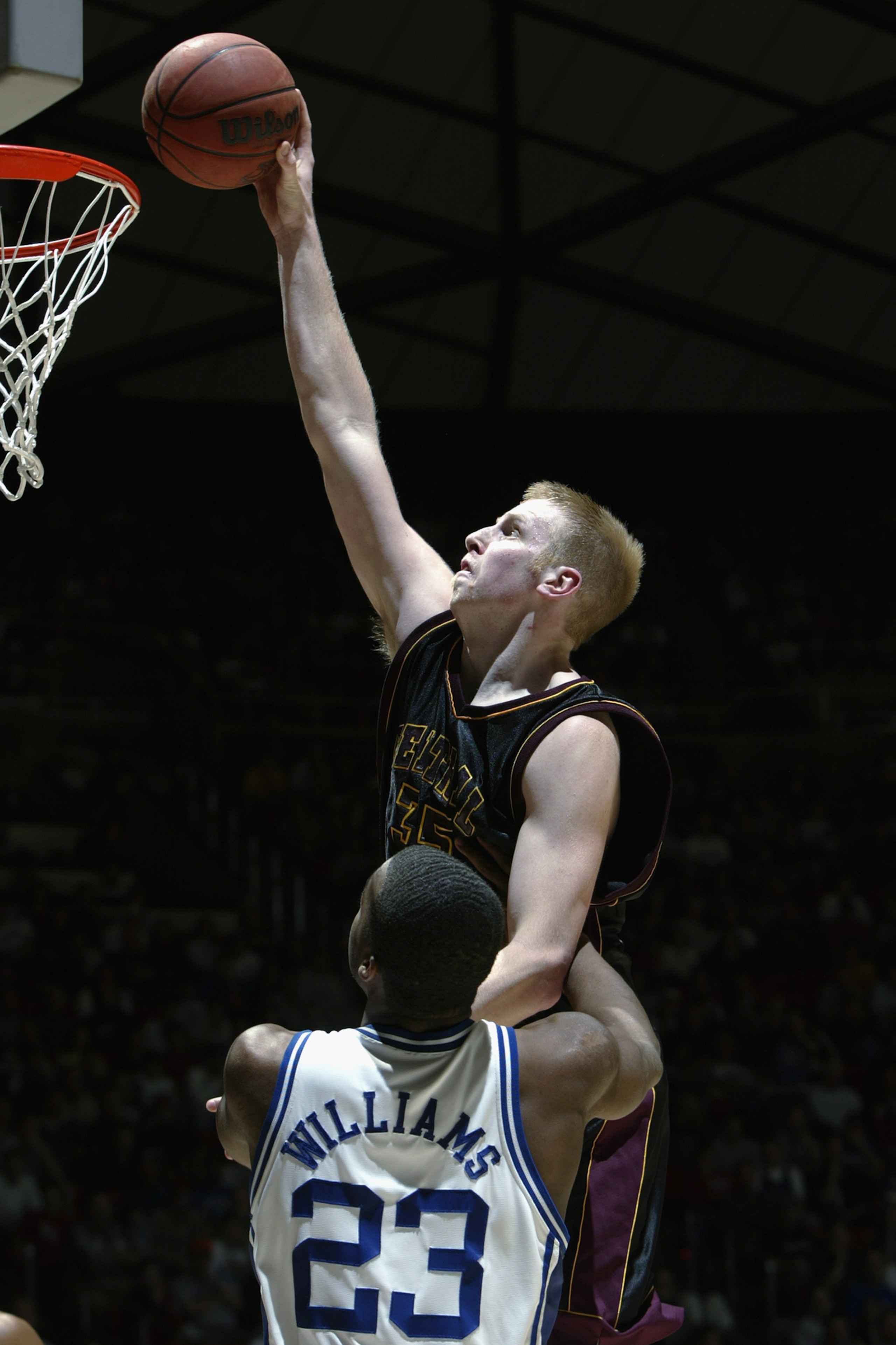
Career: 15 ppg, 9 rpg, 61% FG (three years: 2001-03).
Best Season: 22 ppg, 12 rpg, 3 bpg, 62% FG (junior year).
Team Success: One NCAA win.
Chris Kaman is probably the least well-known player on the list. The fact that he was not an All-American his junior year is an absolute travesty in my opinion as he destroyed everyone that went up against him.
Don't believe me? In their second-round loss to Duke in the 2003 NCAA tournament, Kaman put up 25 points and 10 rebounds. Keep in mind he was going up against Shelden Williams (coming later) who managed a measly four points and seven rebounds.
The fact that he had a complete lack of a supporting cast is what hurt him.
33. Drew Gooden, Kansas
19 of 51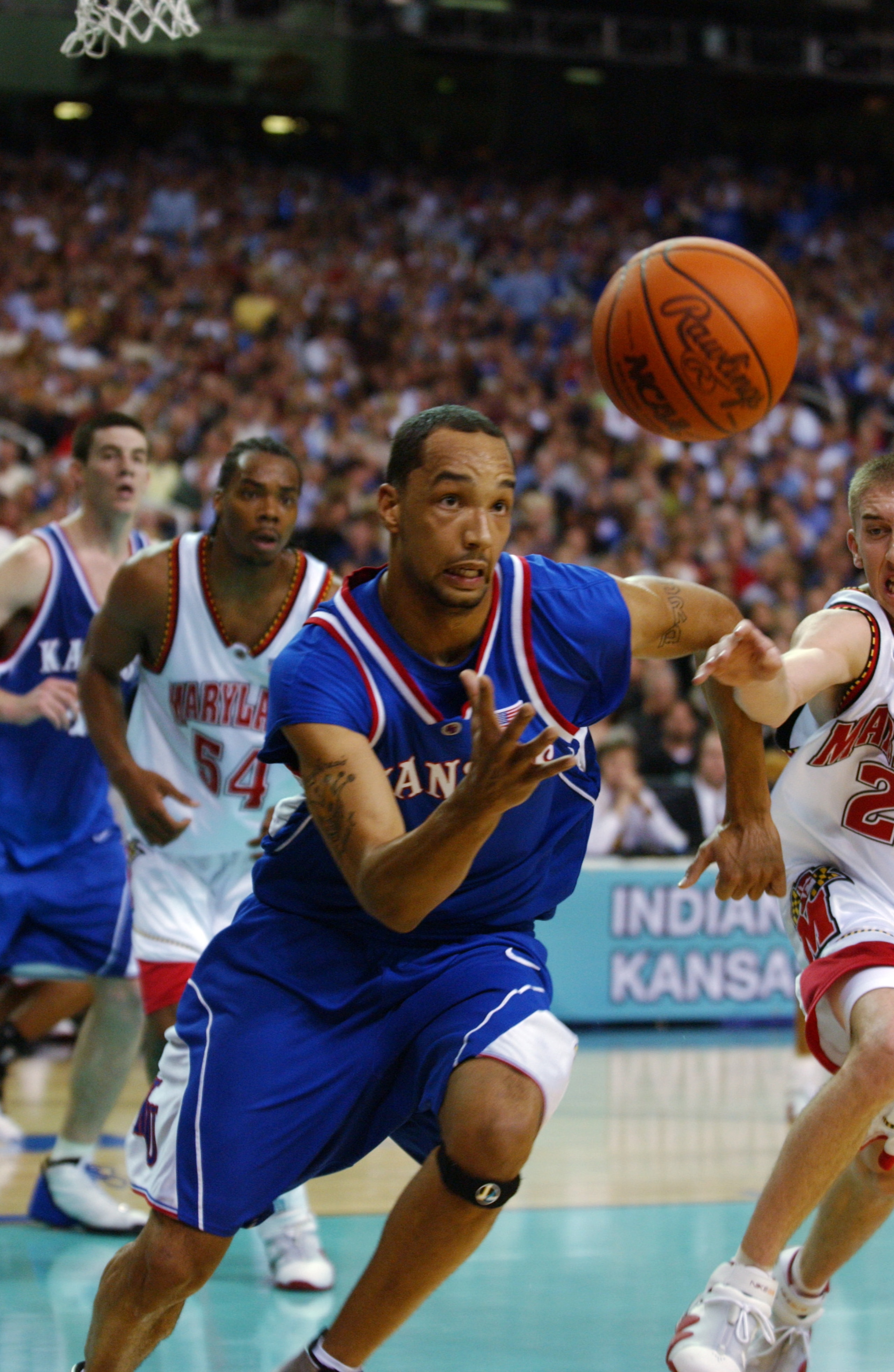
Career: 16 ppg, 9 rpg, (three years: 2000-02), First team All-American.
Best Season: 20 ppg, 11 rpg, 50% FG, First team All-American (junior year).
Team Success: Seven NCAA wins, one Final Four.
Before he was playing on every single NBA team in the span of five years, Drew Gooden was an absolute monster at Kansas. His junior season was one of the seasons I remember best. His post game was solid and if he ever got into the paint, it was pretty much over.
Had he come back for another year, Kansas probably would have beaten Syracuse in the title game and his rating would have been much higher.
32. Kevin Love, UCLA
20 of 51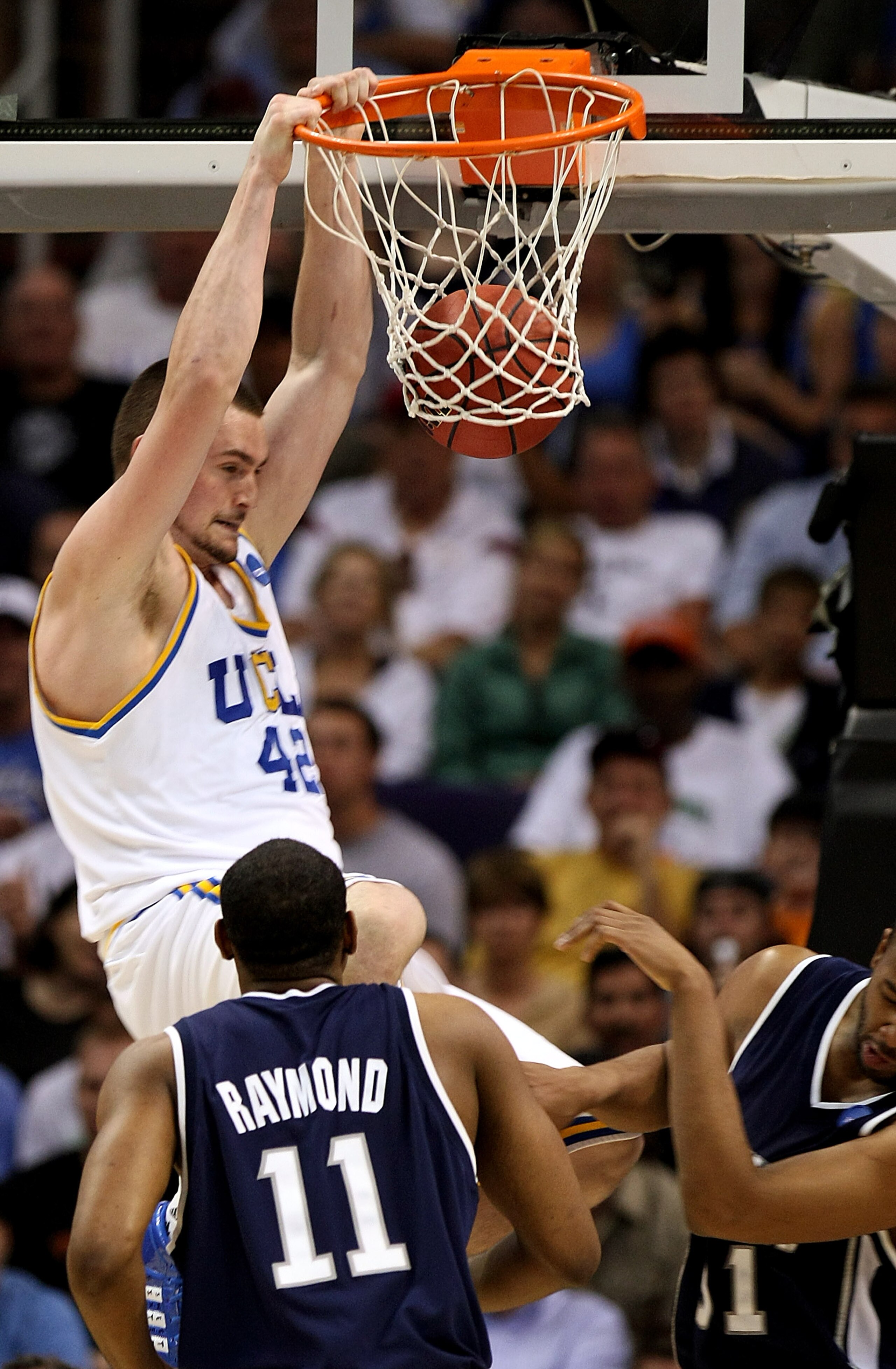
Career/Best Season: 18 ppg, 11 rpg, 56% FG, First team All-American (one year: 2008).
Team Success: Four NCAA wins. One Final Four.
The first of the one-and-done's, I was actually surprised that Love played as well as he did in his only year on the college circuit. He was the best pure rebounder that season and gave the Bruins the inside presence they needed.
His ability to step out and hit jumpers made him a multi-faceted big man who could have been so much more. Instead, he's elected to play for another college-level team: the Minnesota Timberwolves. Just kidding, sort of.
31. Sherron Collins, Kansas
21 of 51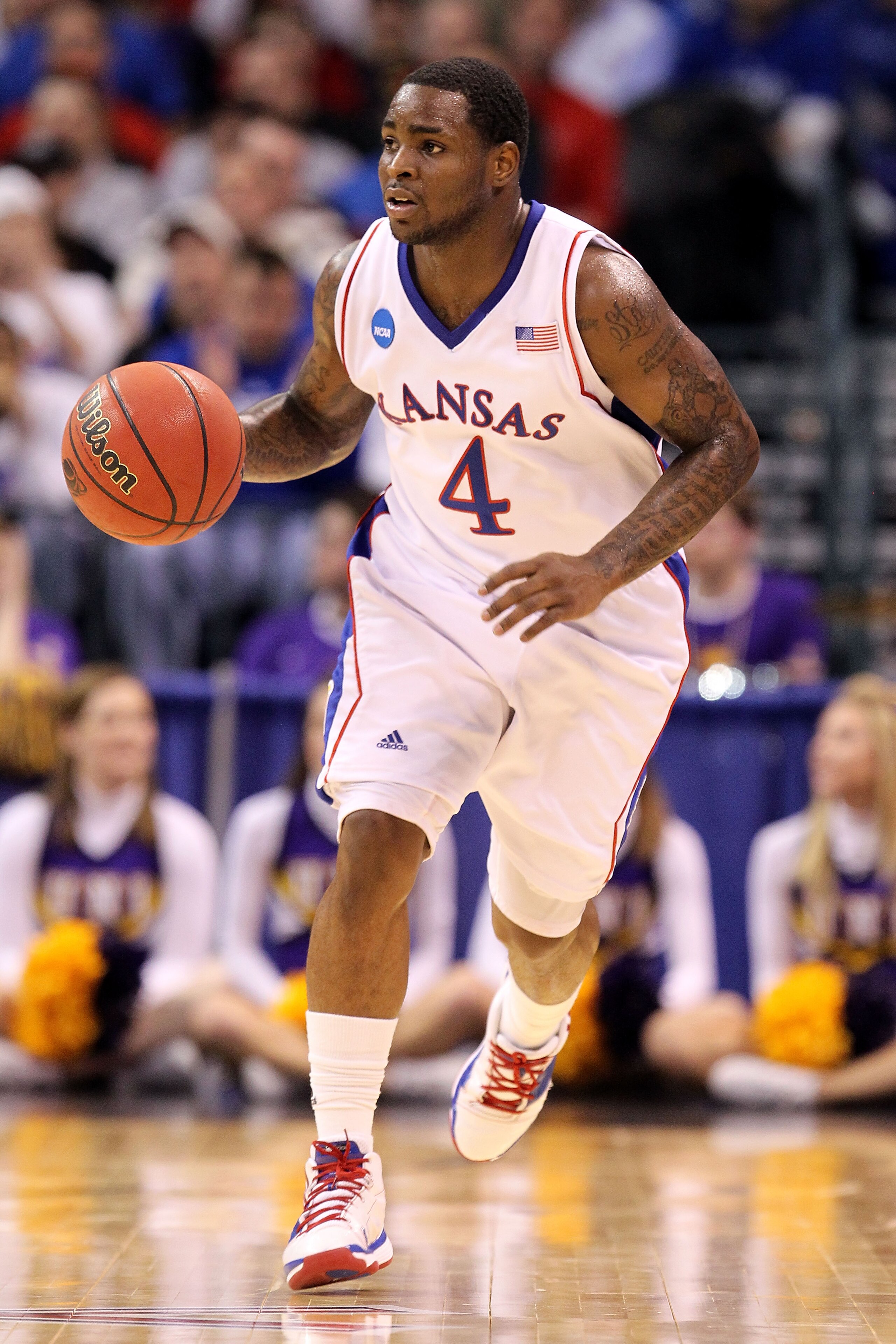
Career: 13 ppg, 4 apg, 81% FT (four years: 2007-10), Second team All-American, First team All-American.
Best Season: 19 ppg, 5 apg, 3 rpg, 80% FT, 2nd team All-American (junior year).
Team Success: 12 NCAA wins. One National Title.
Doesn't it seem like every Kansas player has around a dozen NCAA victories? Still, Collins was the sixth man on the Jayhawks championship team and then carried them to a strong showing the following year despite many people thinking Kansas wasn't going to be very good. It sure would have been nice for them to not get upset by Northern Iowa, though.
Nevertheless, two All-American honors and a national championship make Collins one of the best players ever at Kansas.
30. Kyle Singler, Duke
22 of 51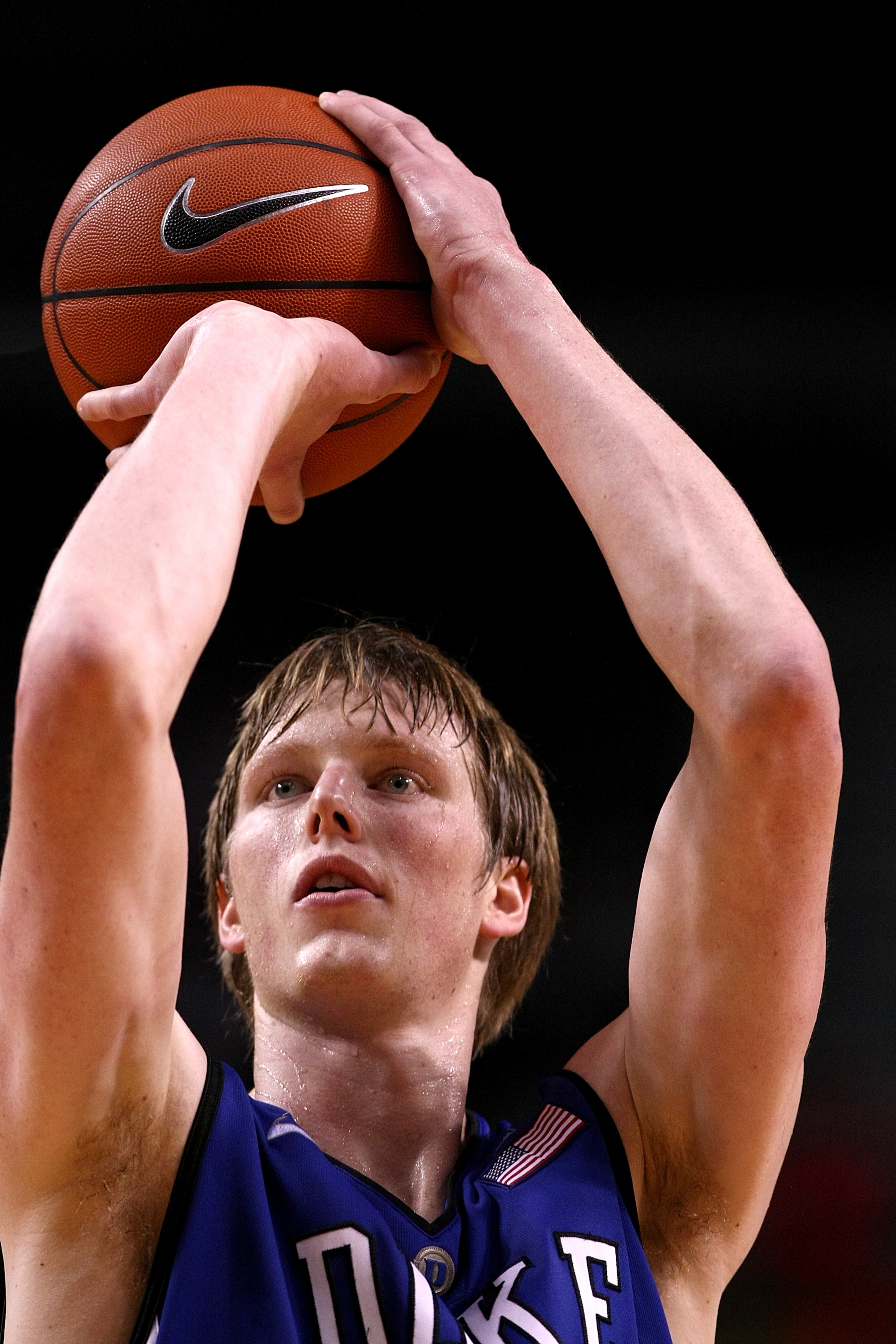
Career: 16 ppg, 7 rpg, (four years: 2008-11)
Best Season: 18 ppg, 7 rpg, 40% 3PT (junior year).
Team Success: Nine NCAA wins. One National Title.
Singler is the first, and only, active player to make the list. A model of consistency for Coach K, Singler has been a stat stuffer since day one. He was the biggest head on three-headed monster that led Duke to a national championship last season.
While I personally can't stand Duke, Singler is just flat out good in everything he does.
29. Joakim Noah, Florida
23 of 51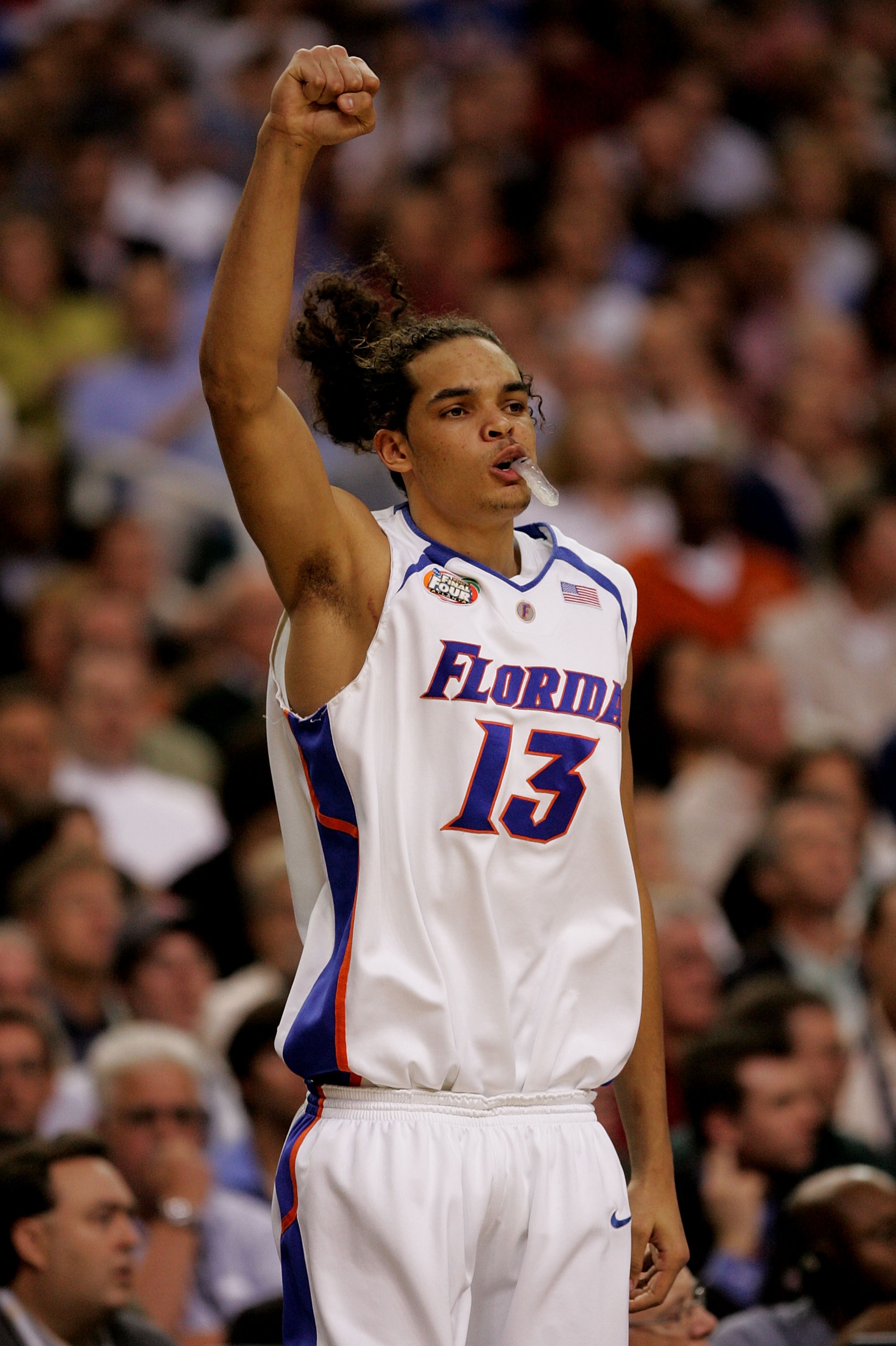
Career: 11 ppg, 6 rpg, 61% FG (three years: 2005-07), Second team All-American.
Best Season: 14 ppg, 7 rpg, 63% FG, 2nd team All-American (sophomore year).
Team Success: 13 NCAA wins. Two National Titles.
And here's the craziest guy on the list, everybody. Though he had (or still has) a screw loose, Joakim Noah was the best guy on the dynasty that was the Florida Gators in the middle part of the decade.
His numbers were pedestrian, but his intensity and post presence made him one of the most unforgettable players of the decade.
28. David West, Xavier
24 of 51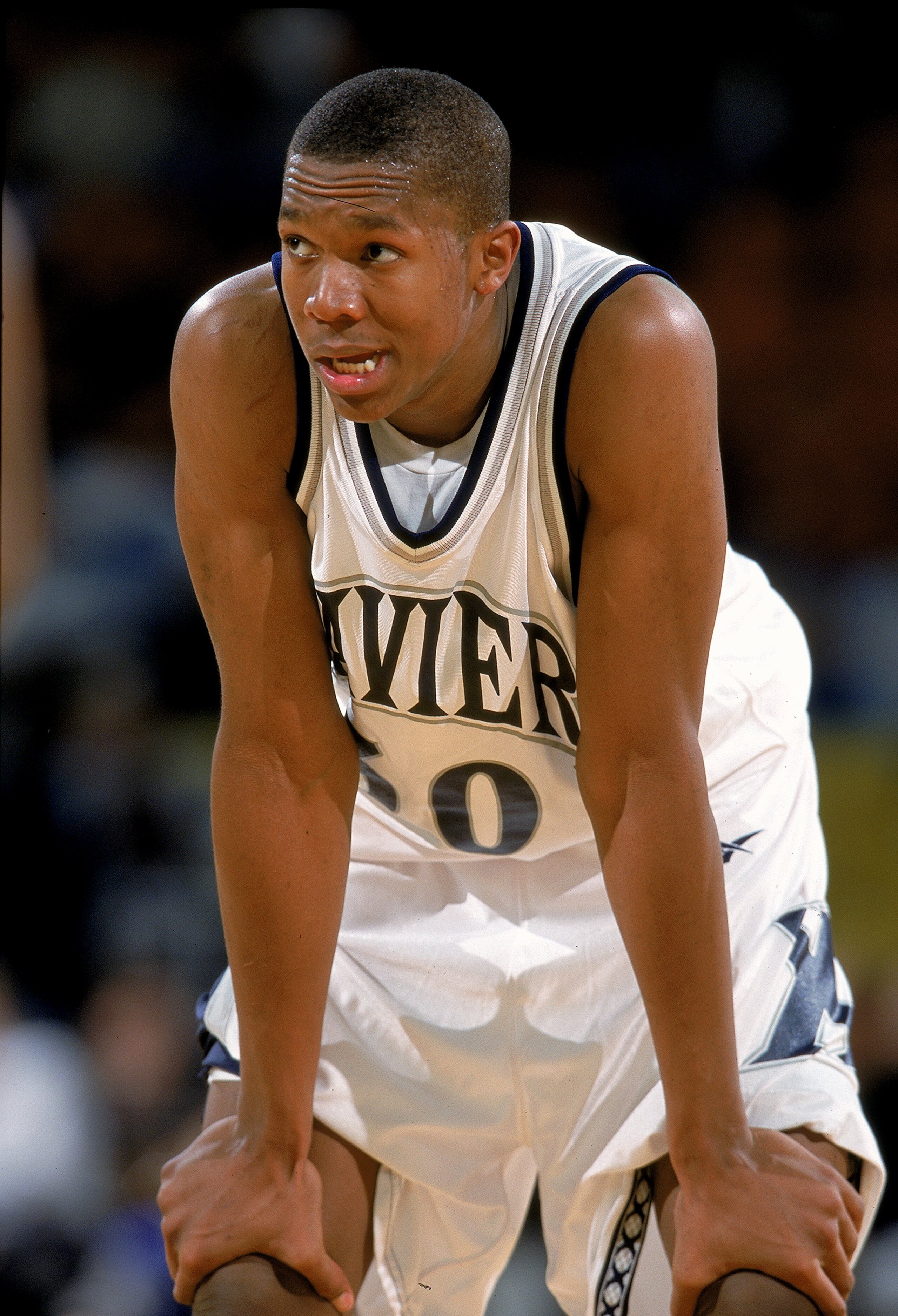
Career: 17 ppg, 10 rpg, 53% FG (four years: 2000-03), Second team All-American, First team All-American.
Best Season: 20 ppg, 12 rpg, 51% FG, 82% FT, First team All-American (senior year).
Team Success: Two NCAA wins.
One of the most consistent big men in the first part of the decade, West forced people to recognize his talent by putting up double-doubles night in and night out. He brought the Musketeers into the basketball spotlight.
Because of him and his predecessor James Posey, Xavier has become one of the best mid-major programs in the country.
27. Sean May, North Carolina
25 of 51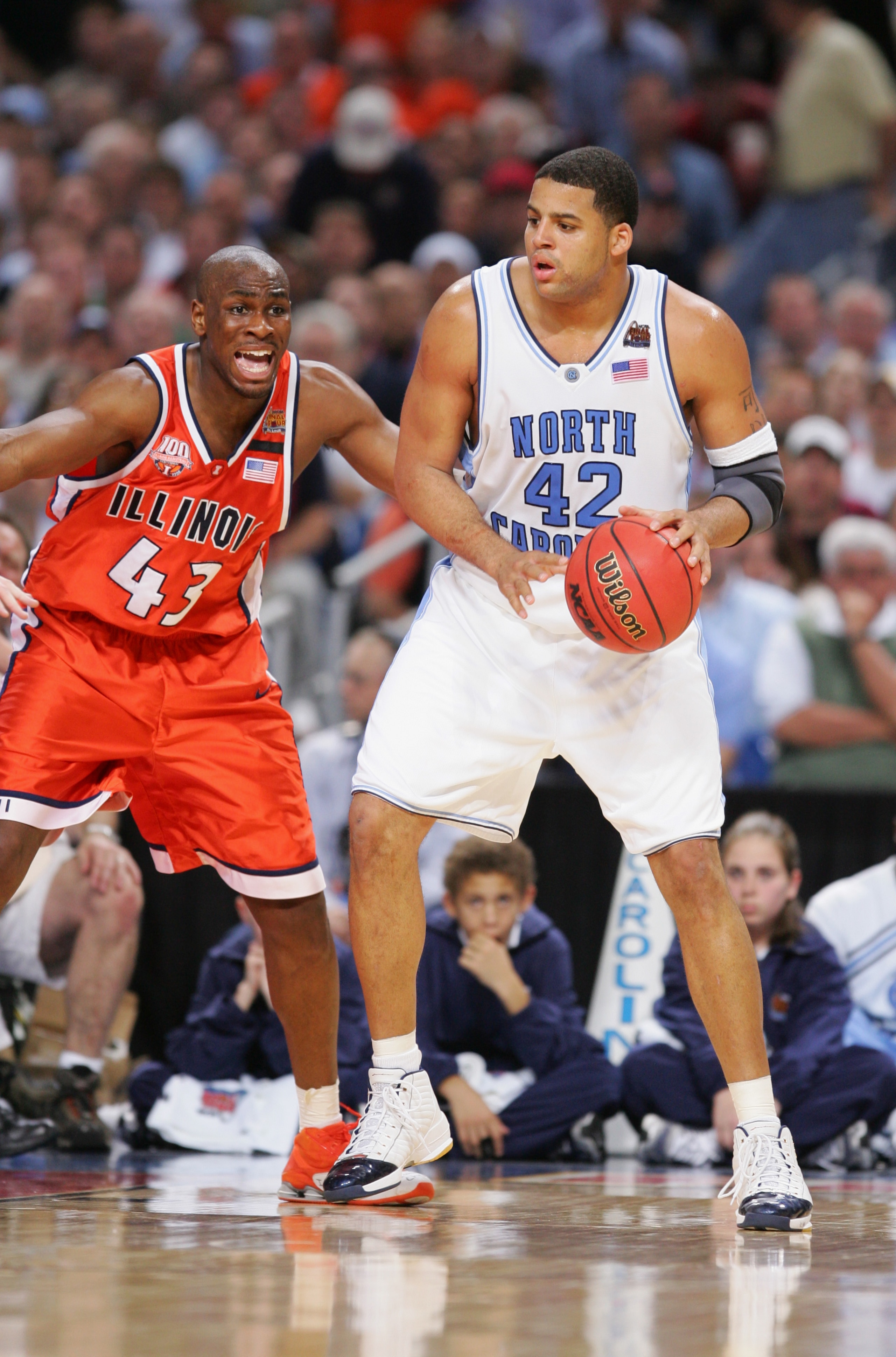
Career: 16 ppg, 10 rpg, 51% FG (three years: 2003-05), Second team All-American.
Best Season: 18 ppg, 11 rpg, 57% FG, 2nd team All-American (junior year).
Team Success: Seven NCAA wins. One National Title.
Sean May is widely credited with helping bring North Carolina back from the dead (aka the Matt Doherty era) along with his teammates Rashad McCants and Ray Felton. However, what sets May apart was that he was the best player on their championship team in 2005.
His wide load forced teams to double him with little success, making life easier on McCants and Felton.
26. Gerry McNamara, Syracuse
26 of 51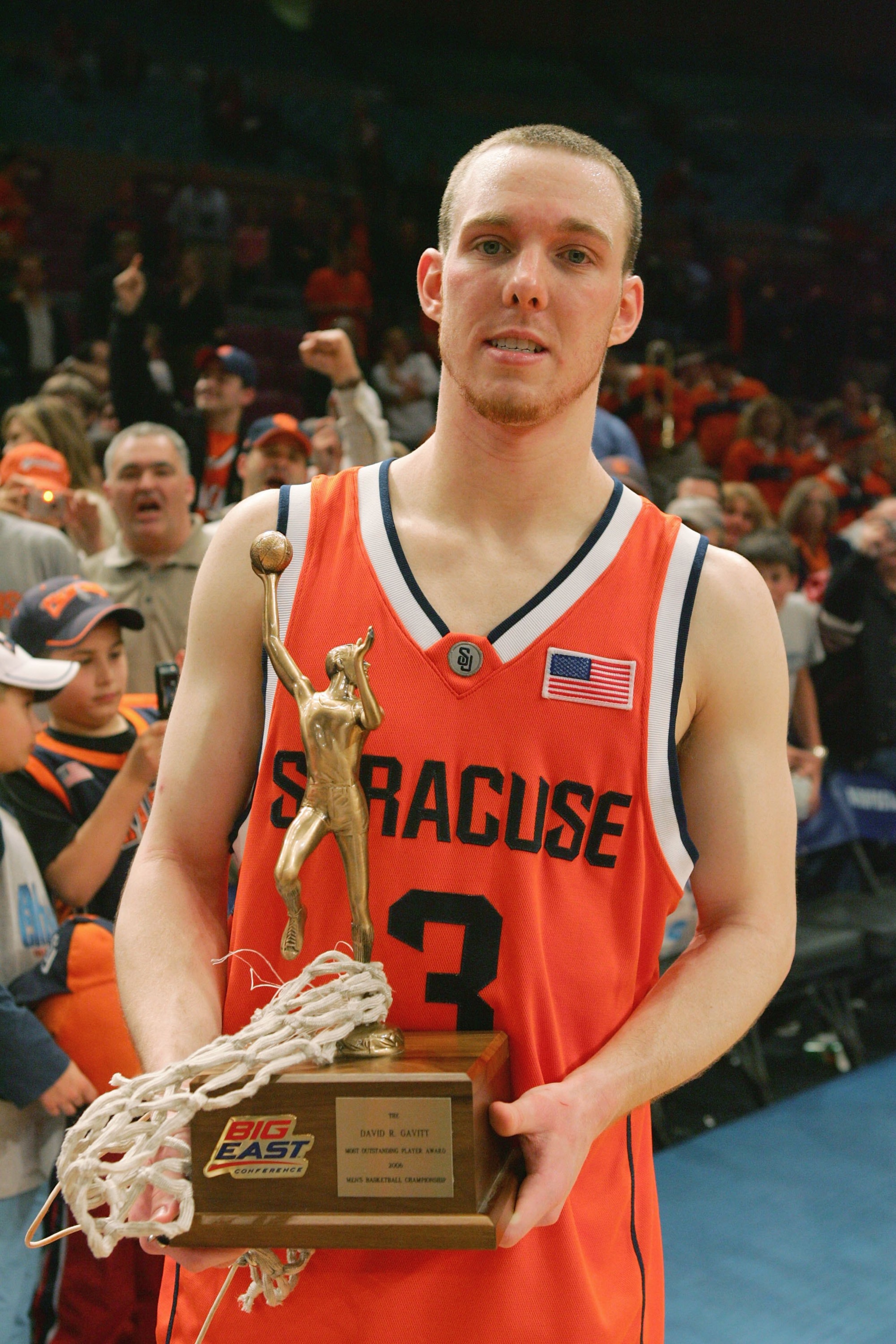
Career: 15 ppg, 5 apg, 3 rpg, 89%FT (four years: 2003-06).
Best Season: 17 ppg, 4 apg, 3 rpg, 87% FT (sophomore year).
Team Success: Eight NCAA wins, one National Title.
I'll admit it, this is probably higher than most people would think to put Gerry McNamara, but let me explain. He was a key guy on their national championship team his freshman year, then became the best guard on a team that perennially made runs in the Big East Tournament.
One of the more memorable tournaments I can remember is during McNamara's senior season when Syracuse was a bubble team coming into the Big East Tournament.
In the first round, he made a game-winner against Cincinnati. In the second round he hit a game-tying three pointer against Connecticut (they went on to win in overtime). In the semis he dished an assist to Eric Devendorf in the closing minute to beat Georgetown. They then went on to beat Pittsburgh in the finals.
Not only did do enough to get into the NCAA's, Syracuse won the whole thing, and it was because of McNamara. Now, Syracuse lost in the first round of the NCAA's to no one's surprise, but Gerry's performance in the Big East Tournament that year is something I'll never forget.
25. DeJuan Blair, Pittsburgh
27 of 51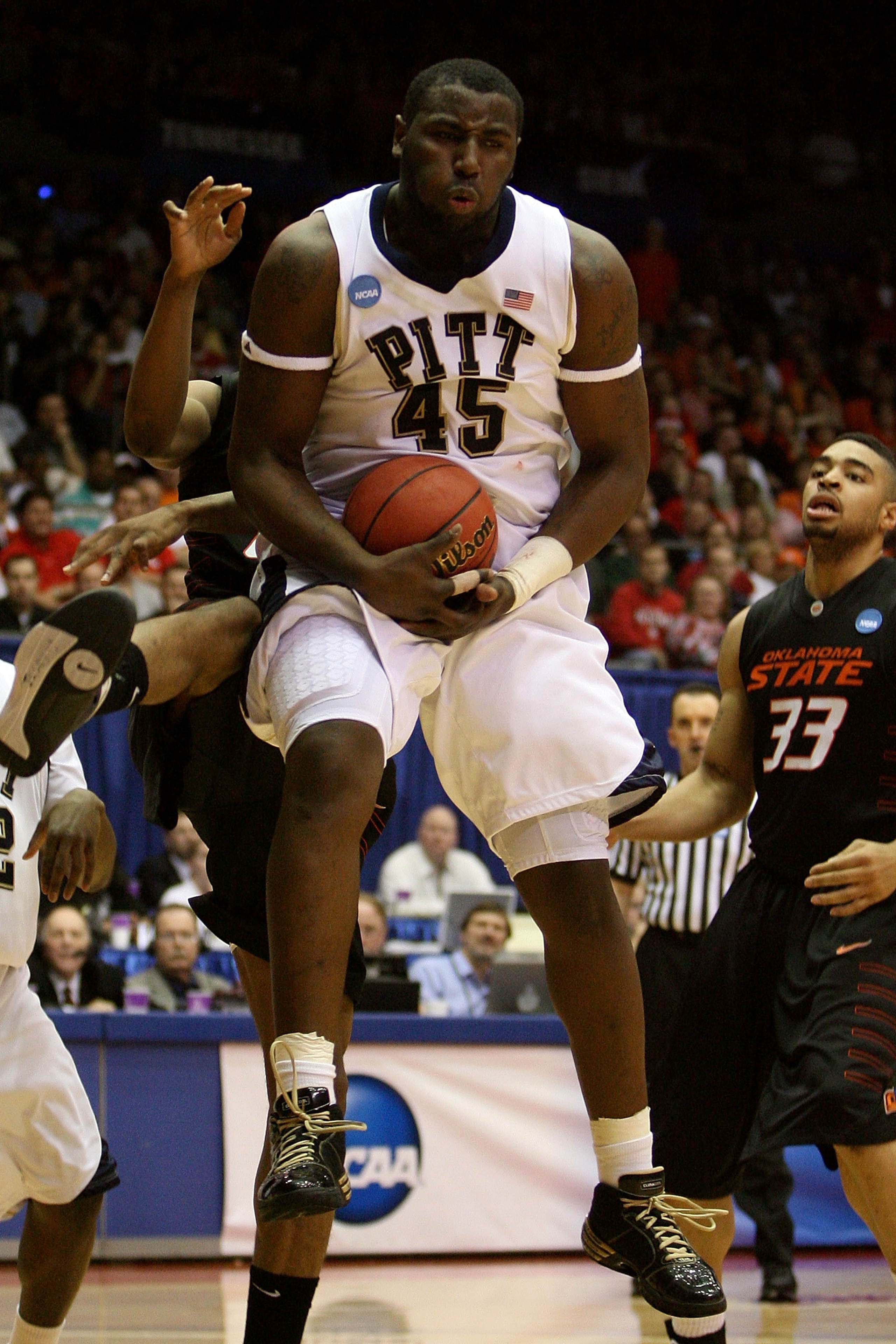
Career: 14 ppg, 11 rpg, 57% FG (two years: 2008-09), First team All-American.
Best Season: 16 ppg, 12 rpg, 59% FG, 1st team All-American (sophomore year).
Team Success: Four NCAA wins.
If anyone ever creates a definition for human tank, DeJuan Blair should be pictured next to definition, because that's what this guy was in college. He destroyed opposing defenses with his girth and subtle quickness.
Though he only played in the 'Burgh for two years, Blair's body frame and his genuine joy to be playing will make him one of the better remembered players of the decade.
24. Alando Tucker, Wisconsin
28 of 51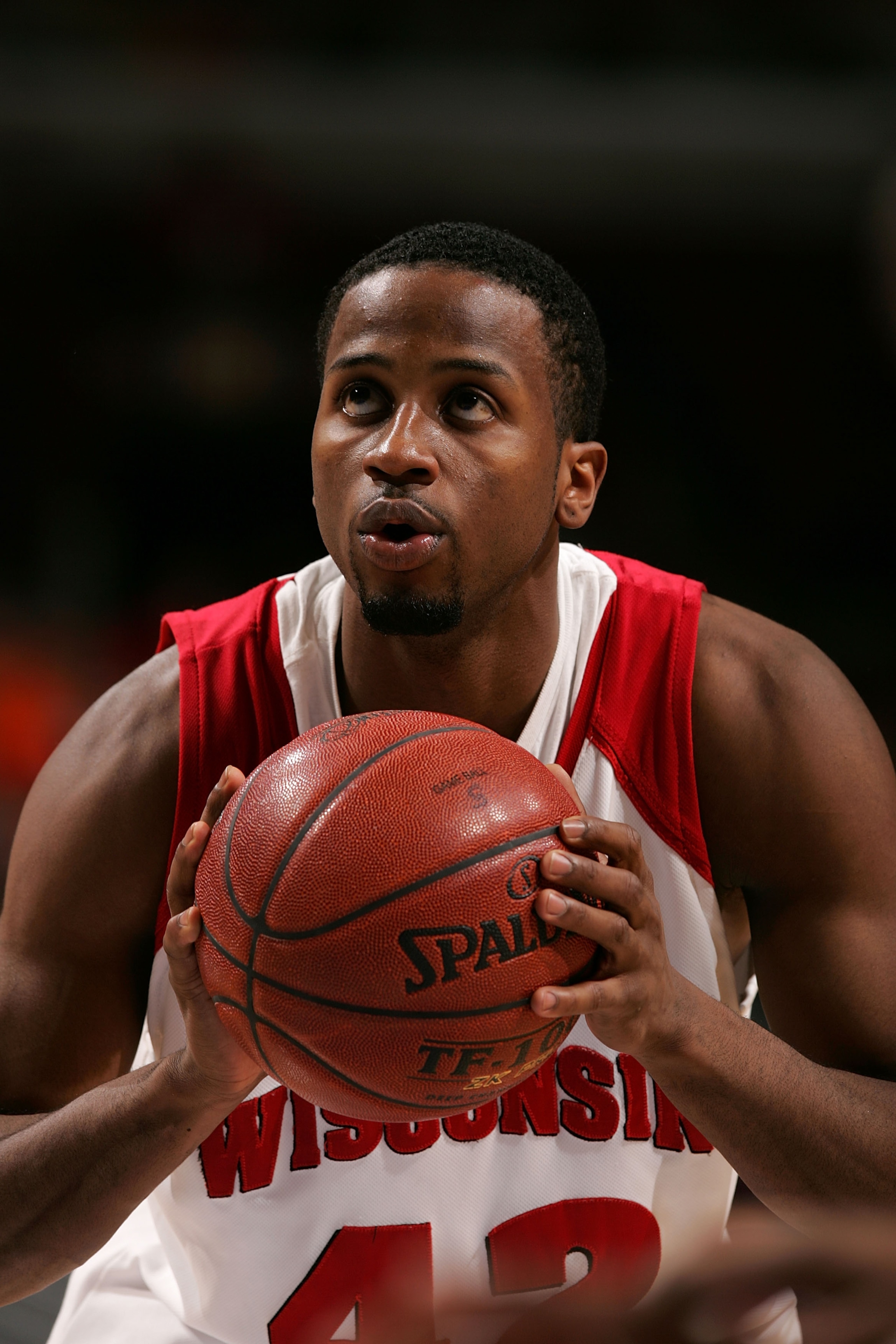
Career: 17 ppg, 6 rpg (four years: 2003, 2005-07), First team All-American.
Best Season: 20 ppg, 5 rpg, 1st team All-American (senior year).
Team Success: Six NCAA wins.
Many people may have forgotten about Alando Tucker. As a Big Ten fan, I certainly did not.
Tucker was the best guy on some of Wisconsin's best teams, specifically in his senior year. The Badgers weren't known for scoring much, but when they did, chances are it was Tucker. His consistenty was his best asset as he hardly ever had a bad game.
He was in the conversation for Player of the Year in 2007, and had it not been for a guy coming later on the list, he may have won it.
23. Greg Oden, Ohio State
29 of 51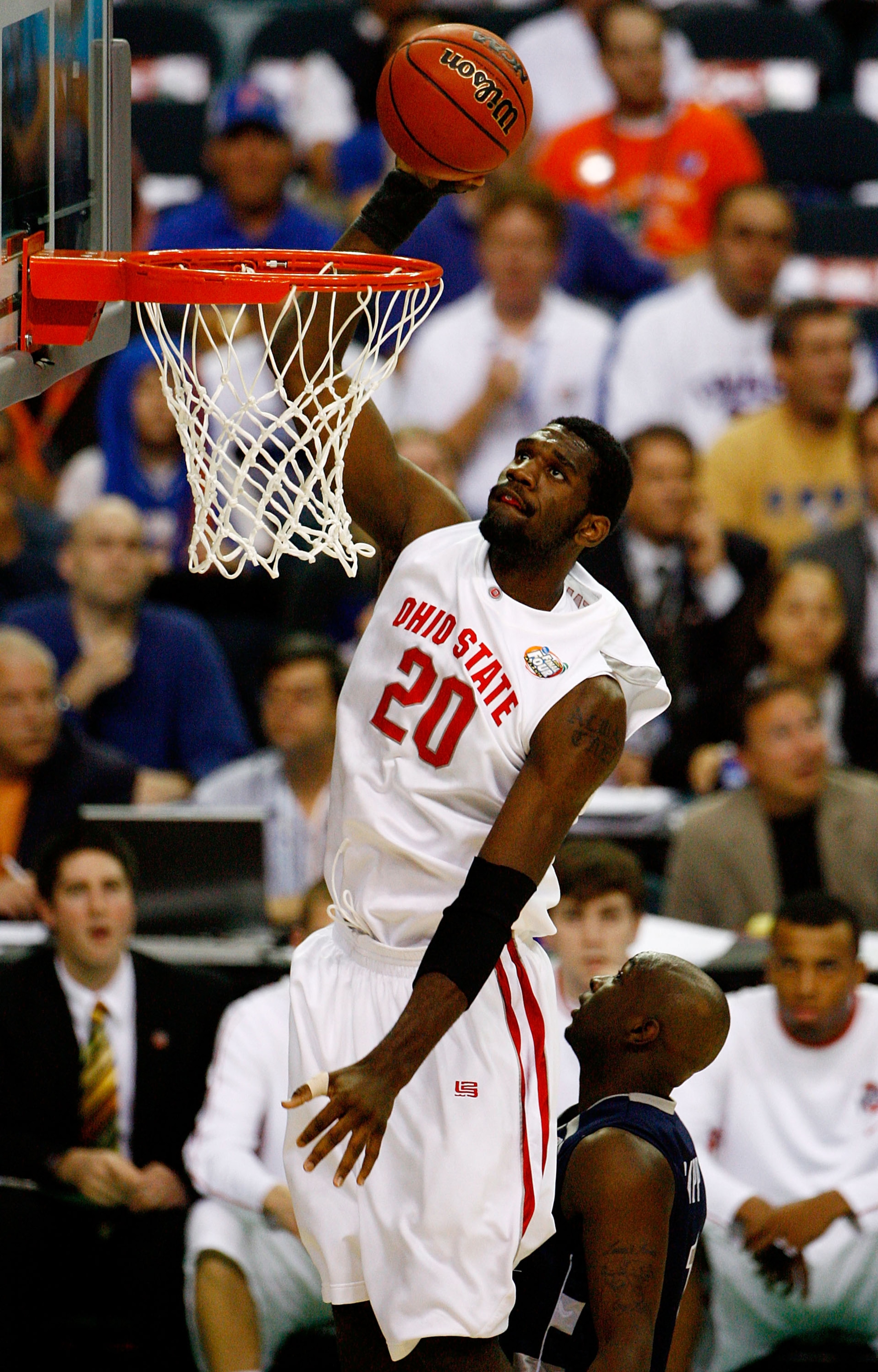
Career/Best Season: 16 ppg, 10 rpg, 3 bpg, 62% FG, Second team All-American (one year: 2007).
Team Success: Five NCAA wins. One Final Four.
And here is Alando Tucker's nemesis in the Big Ten tournament championship game: Greg Oden. While Oden only played one season at age 45 (he sure looks like it), around half of it without the use of his right hand, he was still one of the most dominating big men of the past ten years.
The fact that for the first half of the season or so he had to shoot solely with his left hand was astounding. When he finally gained use of his dominant hand, he helped lead the Buckeyes to the national championship game.
The fact that he was part of one of the most decorated recruiting classes since the Fab Five is just icing on the cake.
22. Shelden Williams, Duke
30 of 51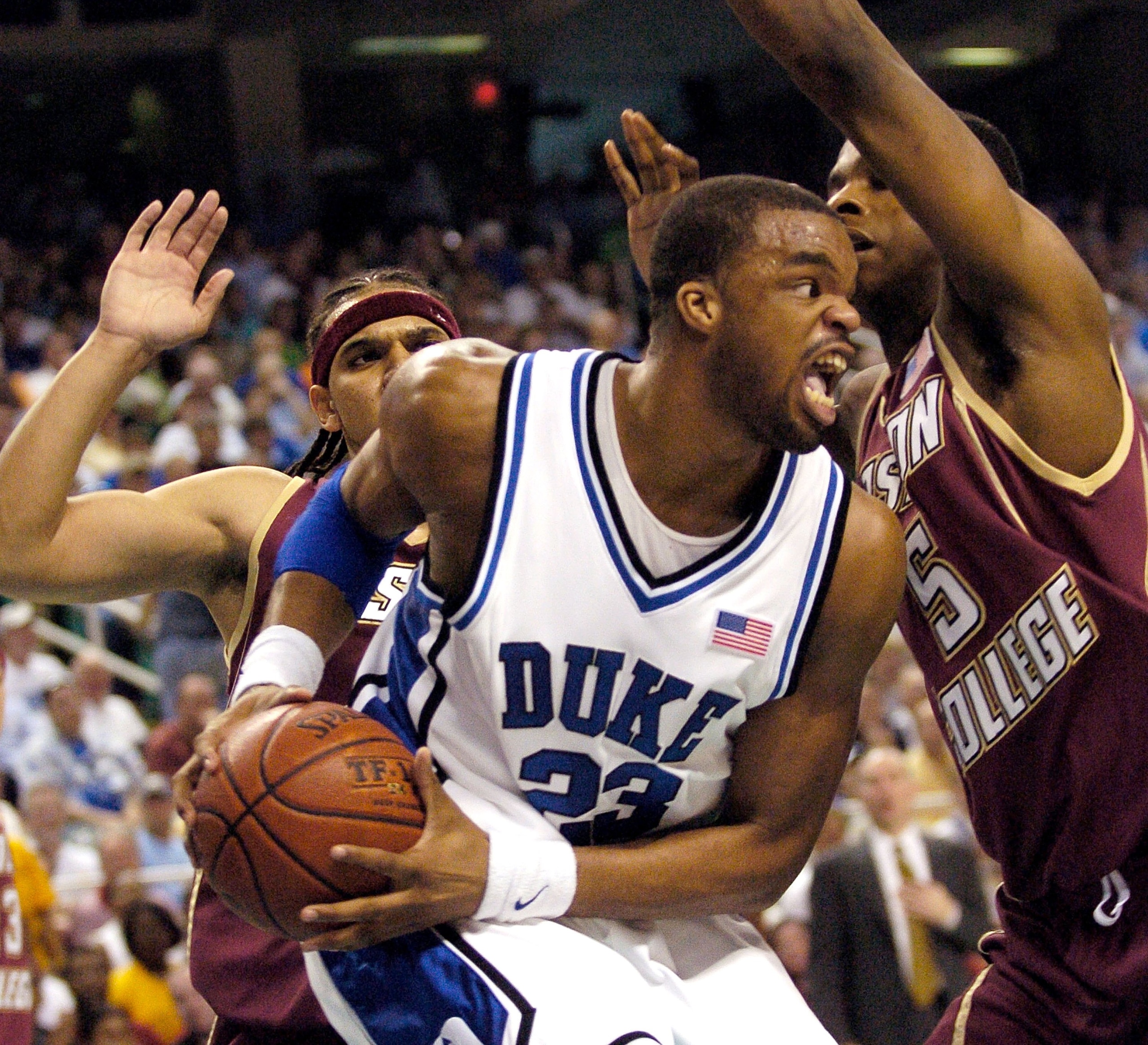
Career: 14 ppg, 9 rpg, 3 bpg, 57% FG (four years: 2003-06), First team All-American.
Best Season: 19 ppg, 11 rpg, 4 bpg, 58% FG, 1st team All-American (senior year).
Team Success: 10 NCAA wins. One Final Four.
The best post player of the decade for the Blue Devils was Shelden Williams and it wasn't really that close (sorry Carlos Boozer fans). Williams was more productive for longer and his best season was superior to Boozer's best. Williams' defensive presence made opposing teams debate about driving into the paint.
His inside-out combination with a white guy further up on the list was arguably the second best in the decade.
21. Hakim Warrick, Syracuse
31 of 51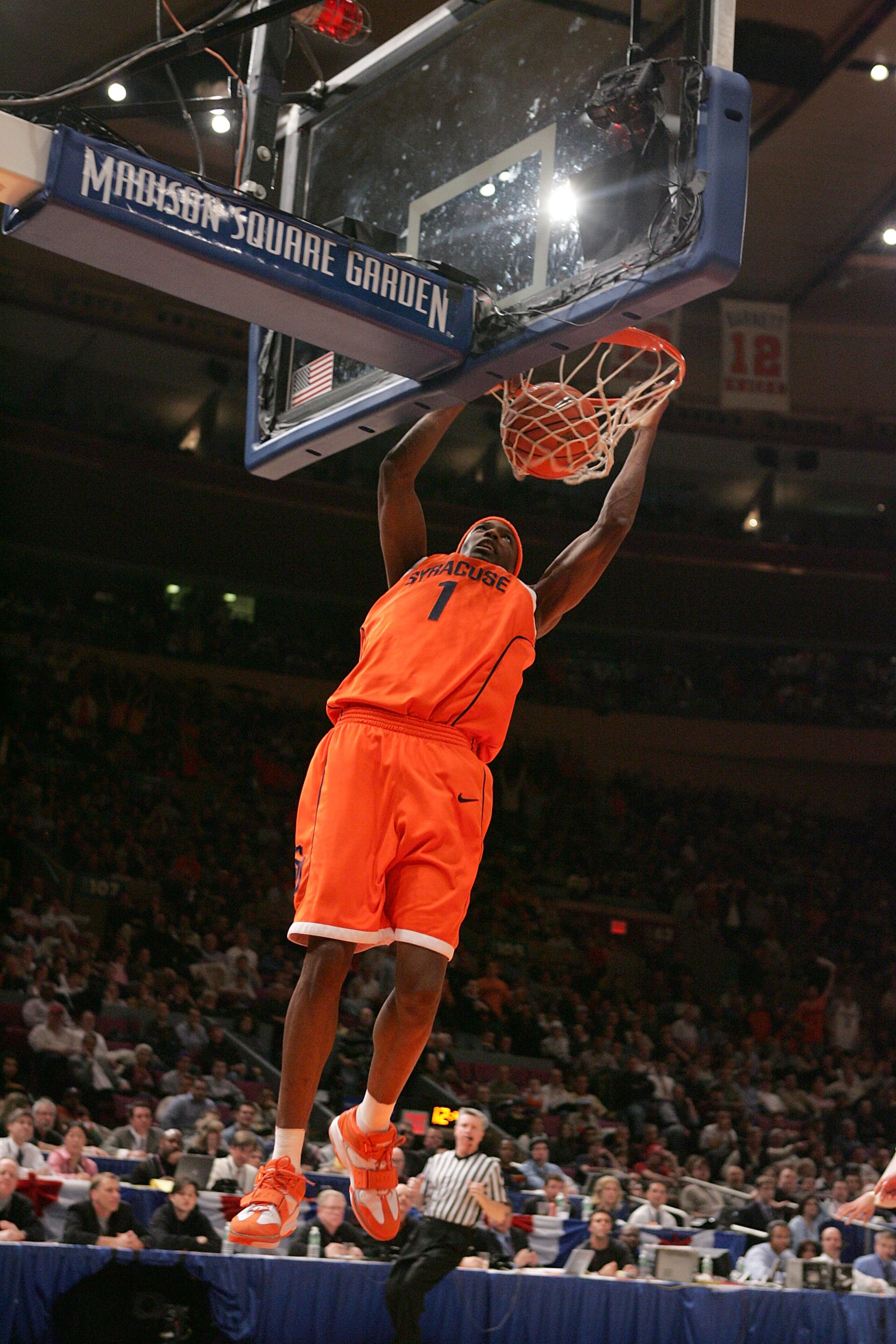
Career: 15 ppg, 8 rpg, 53% FG (four years: 2002-05), First team All-American.
Best Season: 21 ppg, 9 rpg, 55% FG, 1st team All-American (senior year).
Team Success: Eight NCAA wins, one National Title.
Think back to the 2003 championship game. Remember the guy who blocked the Kansas player's shot at the end of the game? That would be Hakim Warrick, one of the more explosive players in the middle part of the decade.
He's got a memorable moment, a fantastic senior season, and a national title on his resume. What more could a guy want?
20. Evan Turner, Ohio State
32 of 51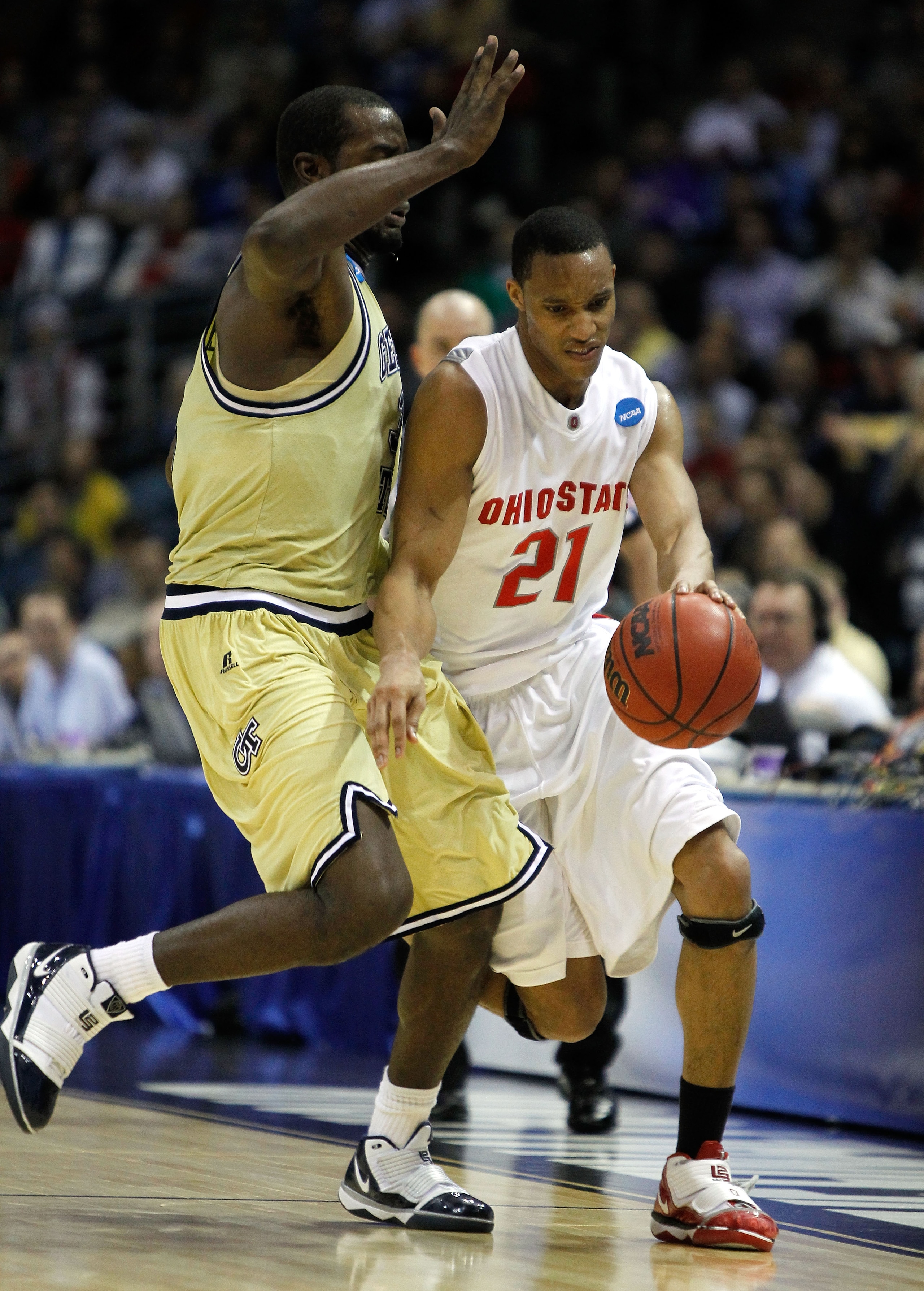
Career: 15 ppg, 7 rpg, 4 apg, 50% FG (three years: 2008-10), First team All-American.
Best Season: 20 ppg, 9 rpg, 6 apg, 52% FG, Naismith Player of the Year (junior year).
Team Success: Two NCAA wins.
Into the top 20 and our first Player of the Year on the list is the most recent: Evan Turner.
Turner's season last year was one of the best in the last ten years all while missing a handful games because of a broken back (and no, that's not a joke). He did everything for a Buckeye squad that overachieved and made it to the Sweet Sixteen.
Despite being a Buckeye fan, his lack of postseason success really hurt his ranking. Had he come back for a senior season, the Buckeyes would be the favorites to win it all and his ranking would have jumped significantly. Regardless, he was easily one of the best players to ever play for the Buckeyes.
19. Andrew Bogut, Utah
33 of 51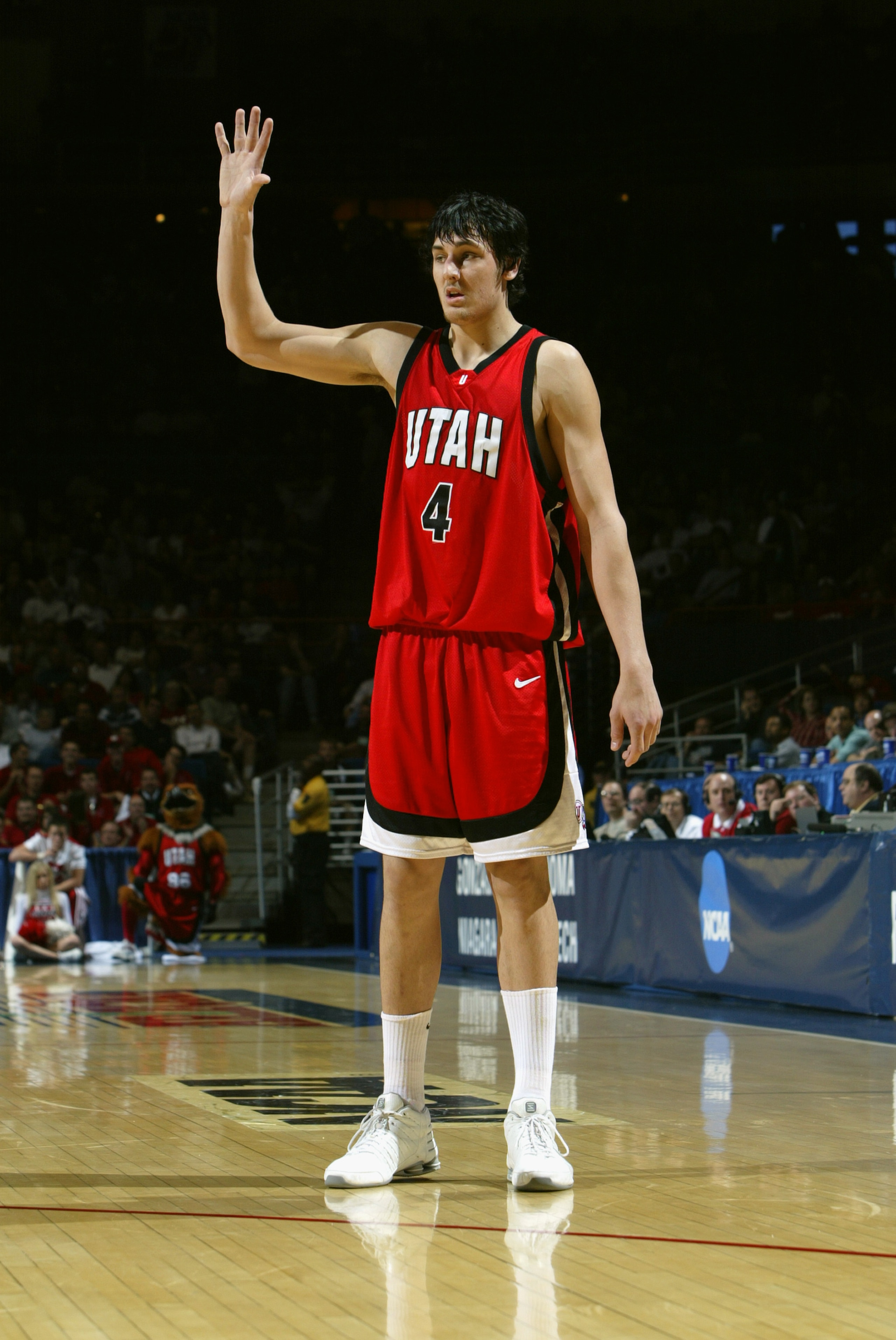
Career: 17 ppg, 11 rpg, 60% FG (two years: 2004-05), First team All-American.
Best Season: 20 ppg, 12 rpg, 62% FG, Naismith Player of the Year (sophomore year).
Team Success: Two NCAA wins. One Sweet Sixteen.
Despite being the player of the year in 2005, Bogut's season went under the radar for pretty much all of it. He took his team to the Sweet Sixteen by upsetting Oklahoma in the second round.
The highest foreign born player on the list, Bogut was a monster for the Utes and brought them back into the national spotlight for the first time since the late 90's.
18. Michael Beasley, Kansas State
34 of 51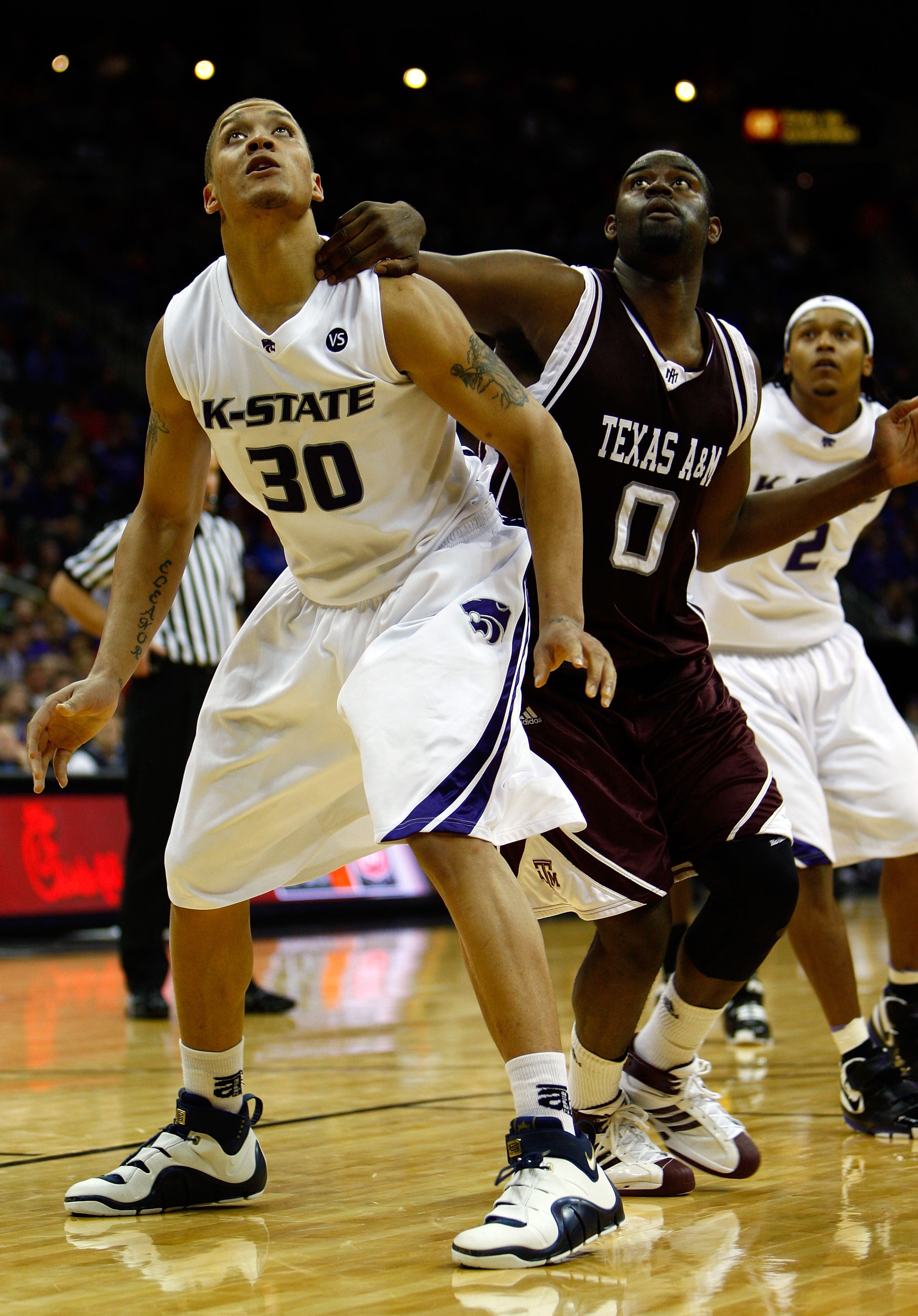
Career/Best Season: 26 ppg, 12 rpg, 53% FG (one year: 2008), First team All-American.
Team Success: One NCAA win.
Michael Beasley stormed onto the scene in 2008 with his insane ability to score from anywhere inside the three point arc. The southpaw was unstoppable for the majority of the season, putting up 20-10 games so easily it was as if he had entered a cheat into real life.
The lack of a supporting cast hurt his ability to take his team past the second round of the NCAA's, but it did allow him to have one of the best seasons in recent memory.
17. Shane Battier, Duke
35 of 51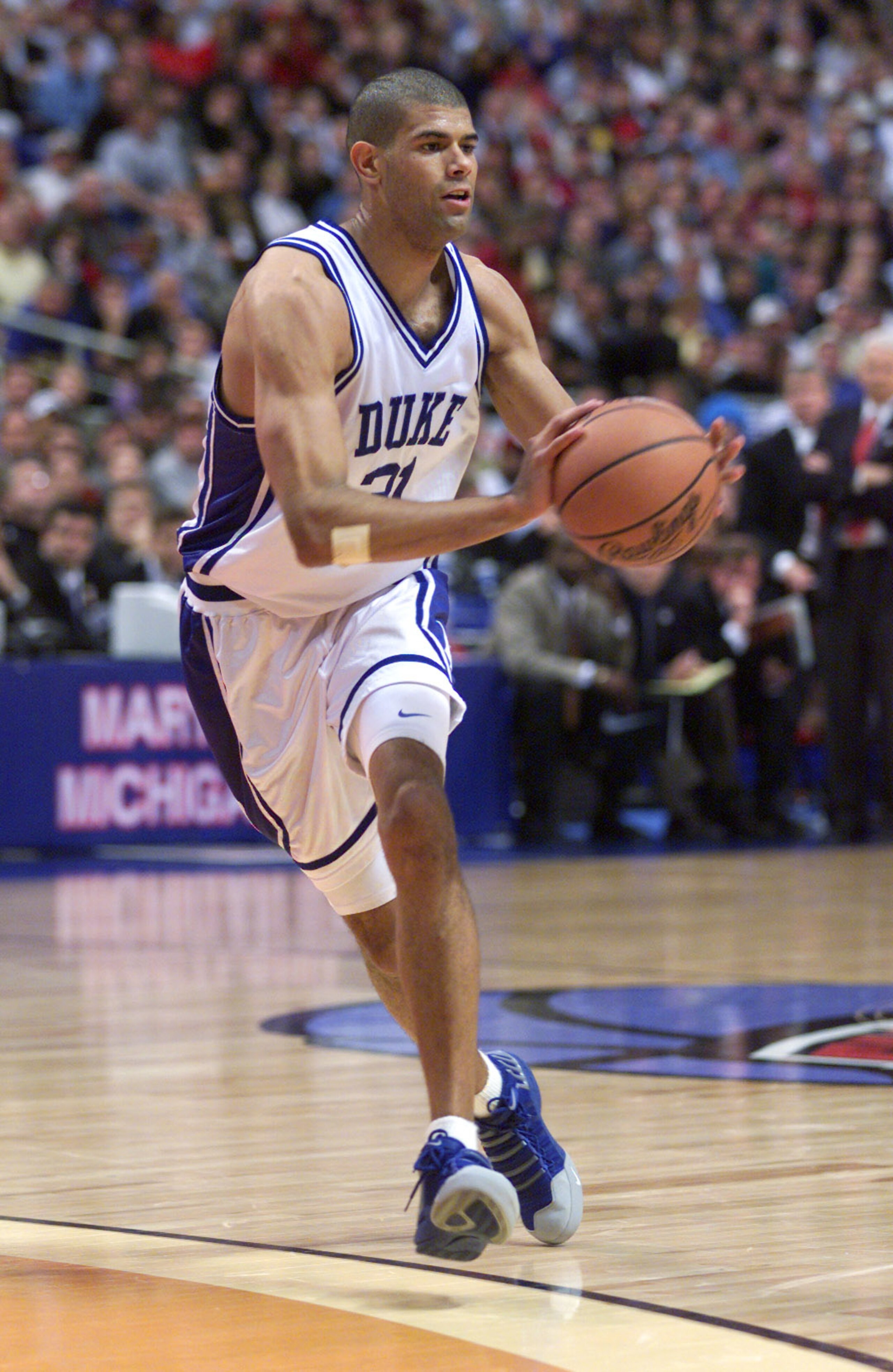
Career: 14 ppg, 6 rpg, 50% FG, 41% 3PT (four years: 1998-2001), Second team All-American. 1st team All-American.
Best Season: 20 ppg, 7 rpg, 42% 3PT, 80% FT, Naismith Player of the Year (senior year).
Team Success: 16 NCAA wins, two Final Fours, one National Title.
Look up winner and chances are Shane Battier's picture is next to the definition.
The grandfather of the list, Battier thrived in the first two years of the decade, leading the Blue Devils to a national championship in his senior season. His numbers aren't eye-popping, but he made his teammates better and was also an excellent defender.
When basketball historians chronicle the 2000's, it should start with Shane Battier.
16. T.J. Ford, Texas
36 of 51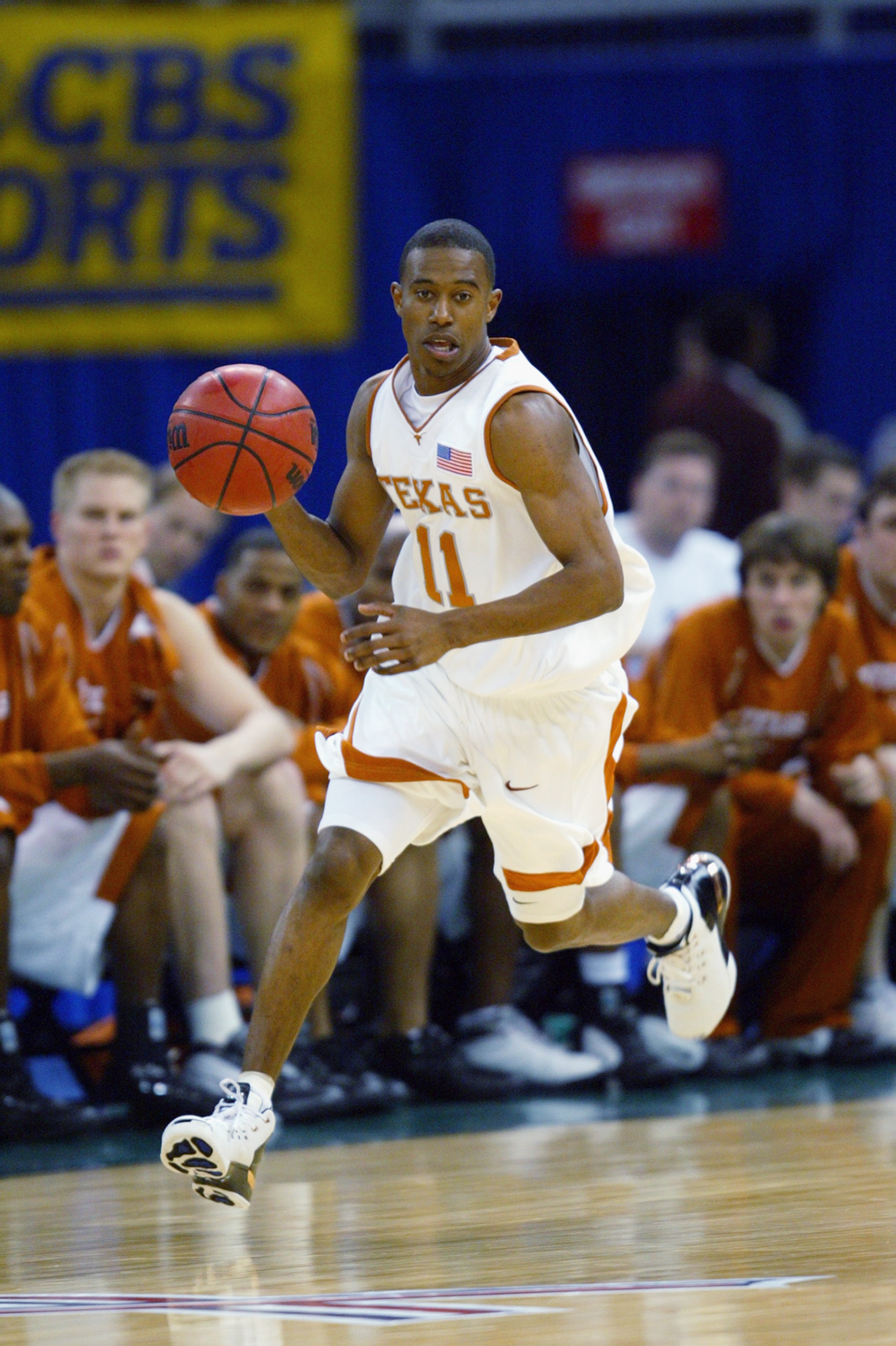
Career: 13 ppg, 8 apg, 4 rpg, 80% FT (two years: 2002-03), 1st team All-American.
Best Season: 15 ppg, 8 apg, 4 rpg, 82% FT, Naismith Player of the Year (sophomore year).
Team Success: Six NCAA wins, one Final Four.
The first of many ultra-quick guards that took the college basketball world by storm this decade was T.J. Ford. It was sometimes hard to watch Texas because if you blinked when they had the ball, chances are this 5'11" speedster had already gotten to the paint.
Though he only played two seasons, his individual and team accolades are hard to top.
15. Emeka Okafor, Connecticut
37 of 51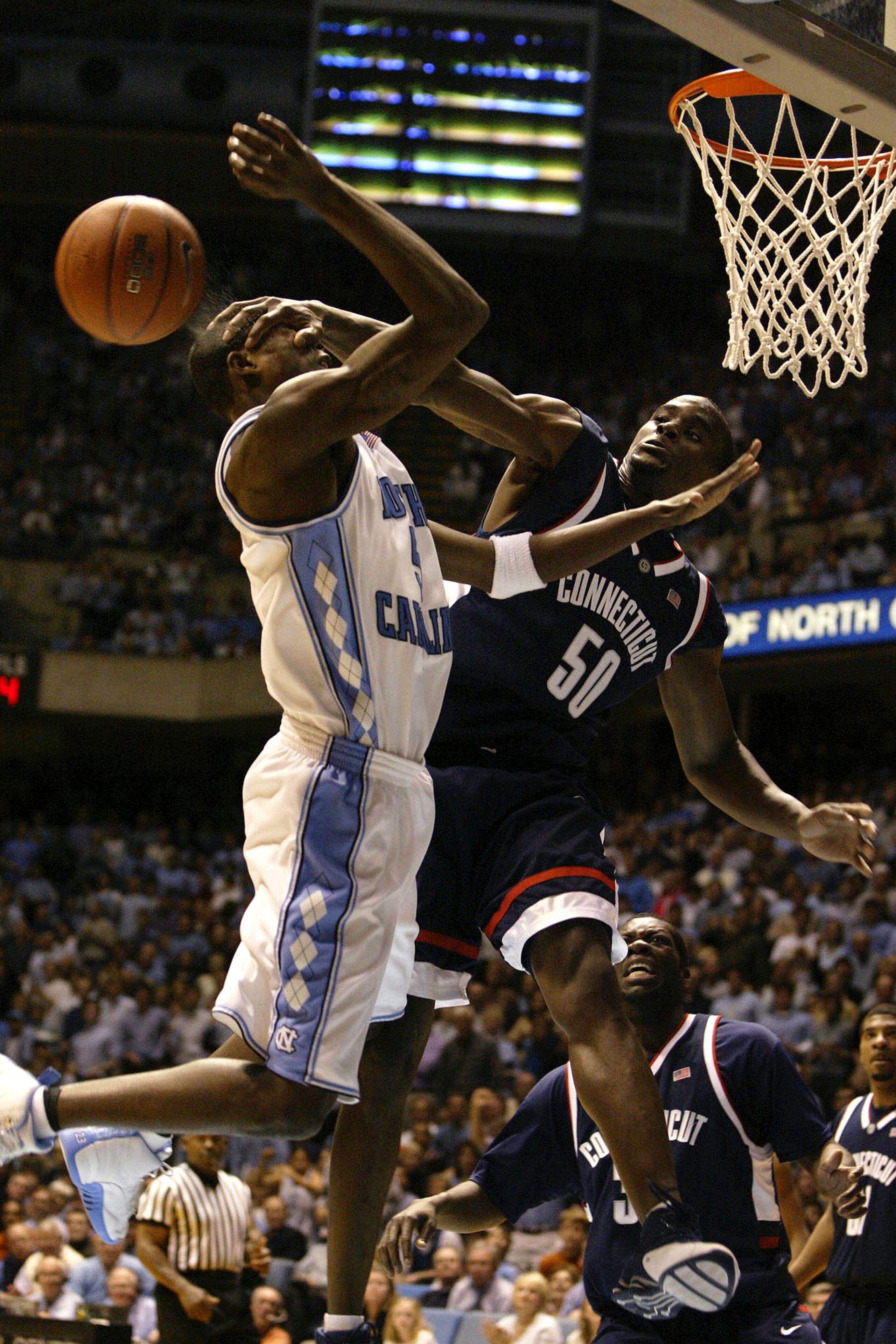
Career: 14 ppg, 11 rpg, 4 bpg, 59% FG (three years: 2002-04), First team All-American.
Best Season: 18 ppg, 11 rpg, 4 bpg, 60% FG, 1st team All-American (junior year).
Team Success: 11 NCAA wins, one National Title.
Okafor was without a doubt the most dominating defensive big man in the decade. Teams didn't even debate driving the lane. They knew better than to challenge him. Apparently this North Carolina player didn't get the memo.
Okafor was the best player on UConn's dominant national championship team and while his offensive ability wasn't anything to write home about, it wasn't too bad either.
14. Ty Lawson, North Carolina
38 of 51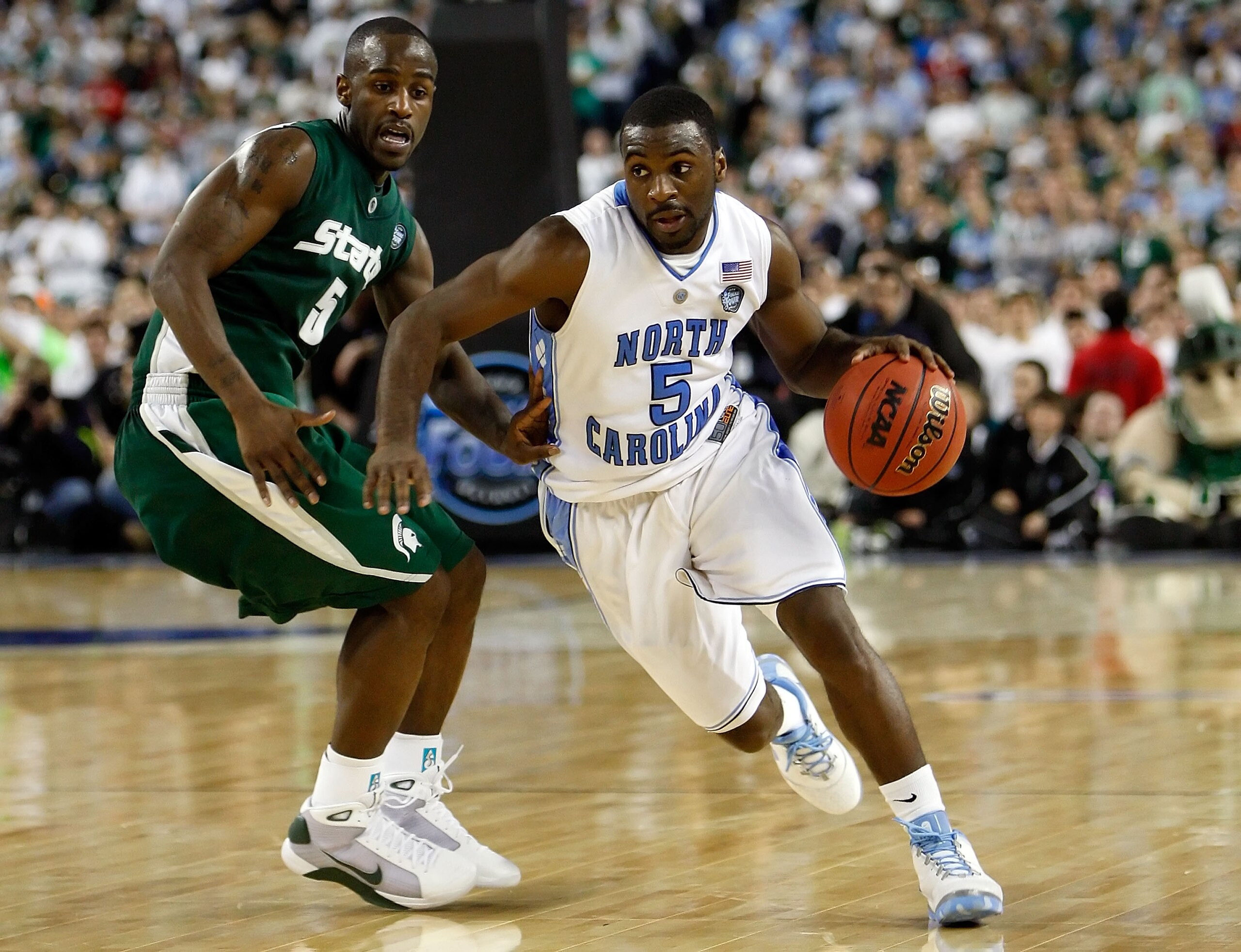
Career: 13 ppg, 6 apg, 3 rpg, 52% FG, 40% 3PT (three years: 2007-09), Second team All-American.
Best Season: 17 ppg, 7 apg, 3 rpg, 53% FG, 47% 3PT, 80% FT, 2nd team All-American (junior year).
Team Success: 13 NCAA wins. Two Final Fours. One National Title.
One of my personal favorites of the decade, Lawson was the best guard on North Carolina's championship and final four teams. He was easily the fastest player in the country and excelled in Roy Williams' up and down offense.
Should he be lower? Maybe, but his team success combined with one of the best shooting performances of the decade make him a memorable guard for a terrific team.
13. John Wall, Kentucky
39 of 51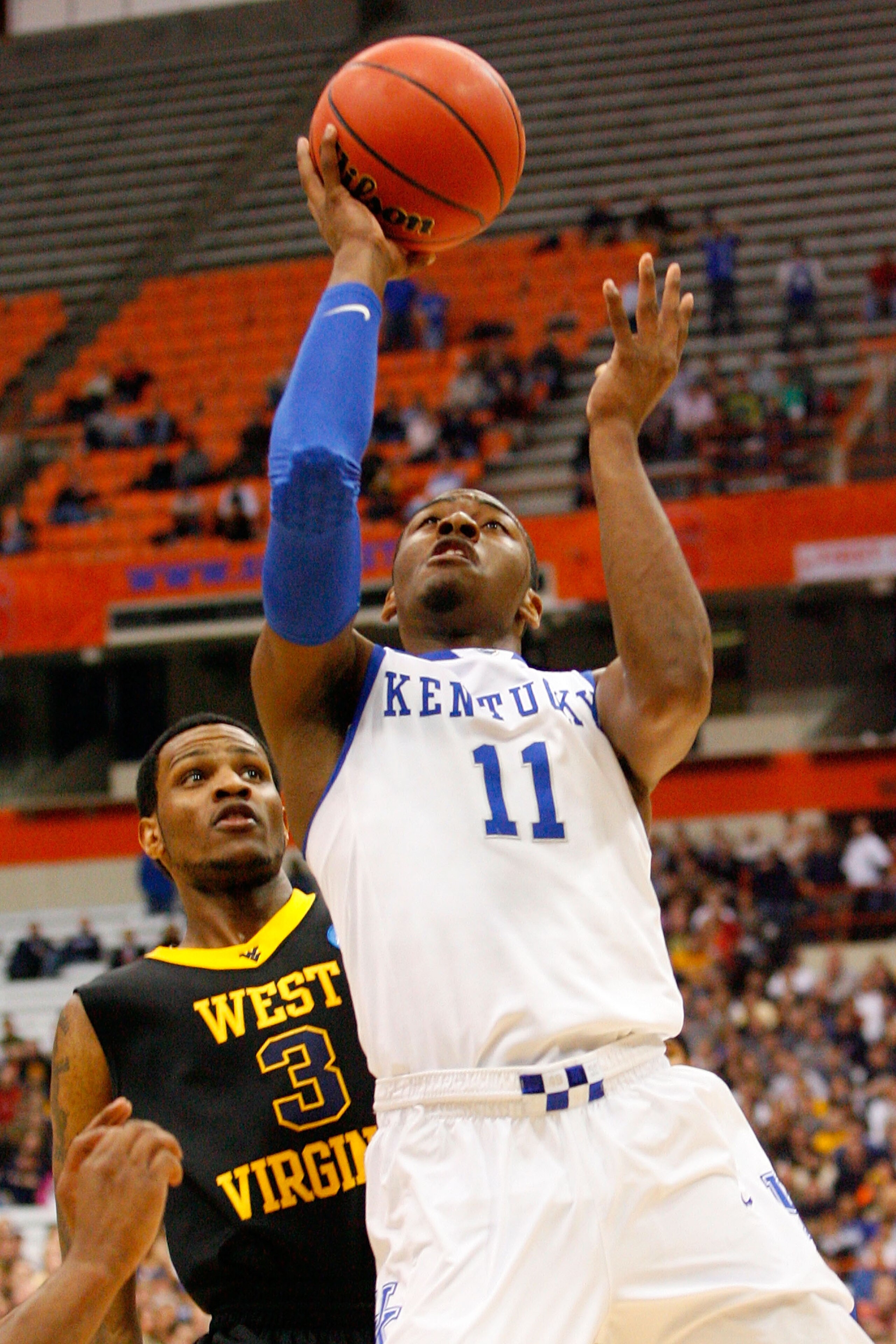
Career/Best Season: 17 ppg, 7 apg, 4 rpg (one year: 2010). First team All-American.
Team Success: Three NCAA wins.
The most recent one-and-done, Wall was the most recent insanely fast point guard. What sets him apart from the rest of them was that he could explode and throw down monster dunks with ease.
He ended up finishing second to Turner in the player of the year race, but had it not been for one of the worst shooting nights a team has ever had, Wall and Kentucky would have made the Final Four.
12. Adam Morrison, Gonzaga
40 of 51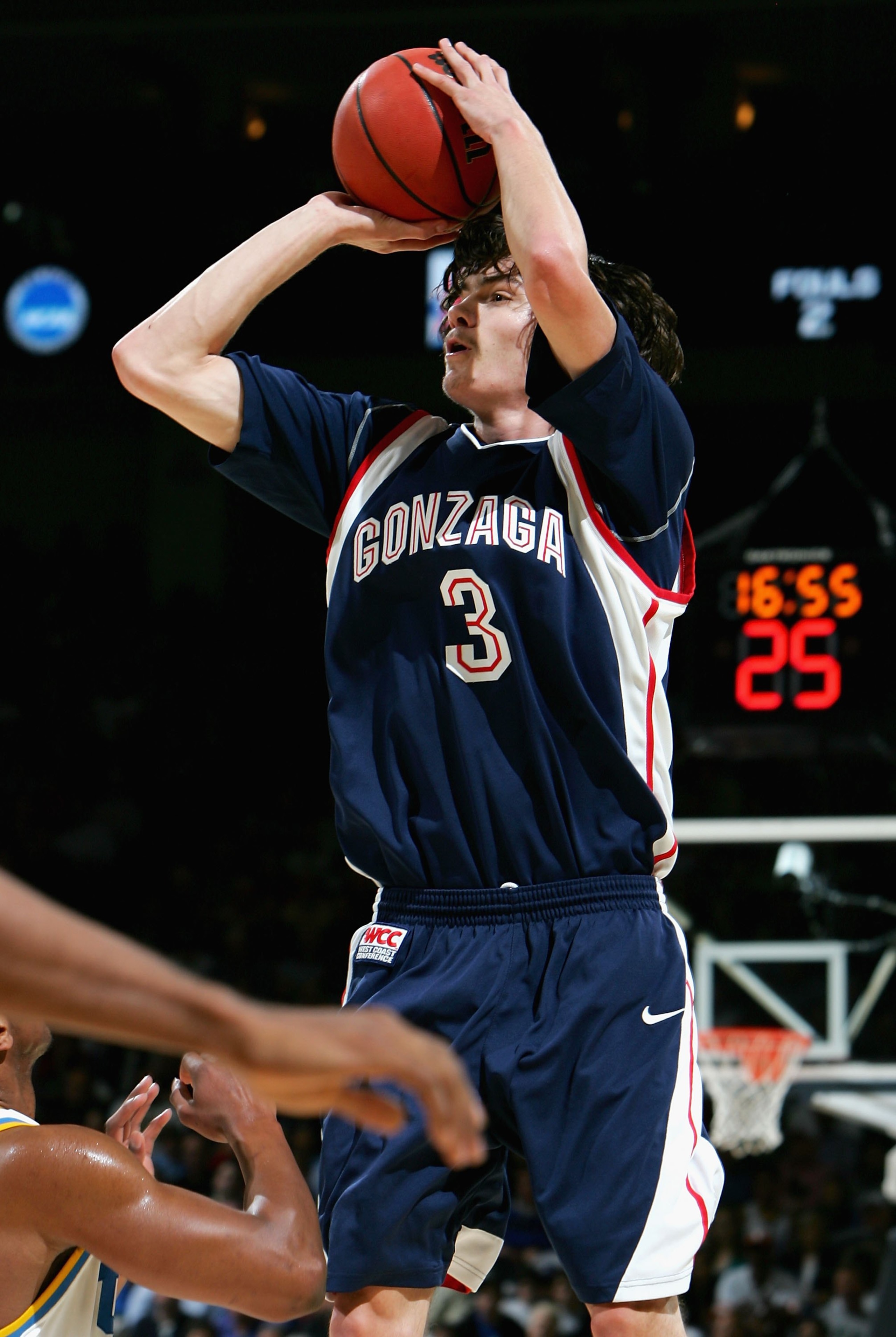
Career: 20 ppg, 5 rpg, 50% FG (three years: 2004-06), First team All-American.
Best Season: 28 ppg, 6 rpg, 50% FG, 43% 3PT, First team All-American (junior year).
Team Success: Four NCAA wins. One Sweet Sixteen.
Who could forget Adam Morrison aka the guy with the awesome mustache? The best Gonzaga player ever (in terms of college numbers that is), scored at will in his junior season all the while having diabetes. If that isn't impressive, I'm not sure what is.
He took his team to the Sweet Sixteen while nearly beating UCLA in the process. Keep in mind that UCLA would go all the way to the national championship game before losing.
11. J.J. Redick, Duke
41 of 51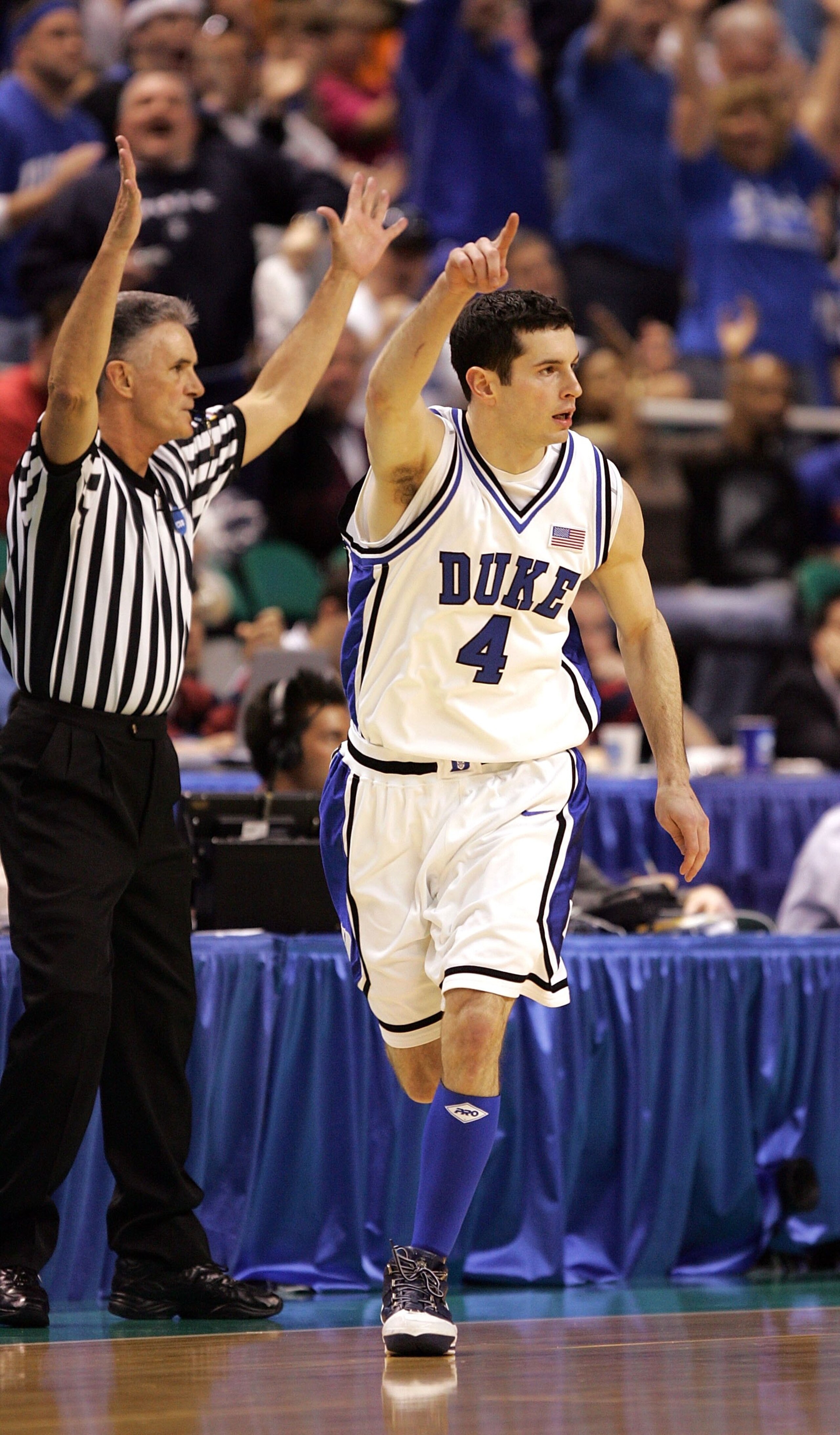
Career: 20 ppg, 40% 3PT, 91% FT (four years: 2003-06), Two-time First team All-American.
Best Season: 27 ppg, 3 apg, 42% 3PT, 86% FT, Naismith Player of the Year (senior year).
Team Success: 10 NCAA wins, one Final Four.
It's fitting that Redick is slightly ahead of Morrison as their duel for the scoring and player of the year honors in 2006 was incredible to witness. One night Morrison would score 35. The next night Redick would put up 33 against a better team.
It was as if they were one-upping each other the entire season.
Redick's deadly range from anywhere inside half court made him nearly unstoppable to defend and it was pointless to foul him as he made almost everything from the foul line.
Thought he'd be higher? This is partially my subjectivity as I always thought he was overrated in college. I'm also not sure I'll remember him in a positive manner which hurt him a little too. If this was completely subjective, I would switch him with number nine on the list, but as everyone will see, the top 10 is pretty hard to crack.
10. Kevin Durant, Texas
42 of 51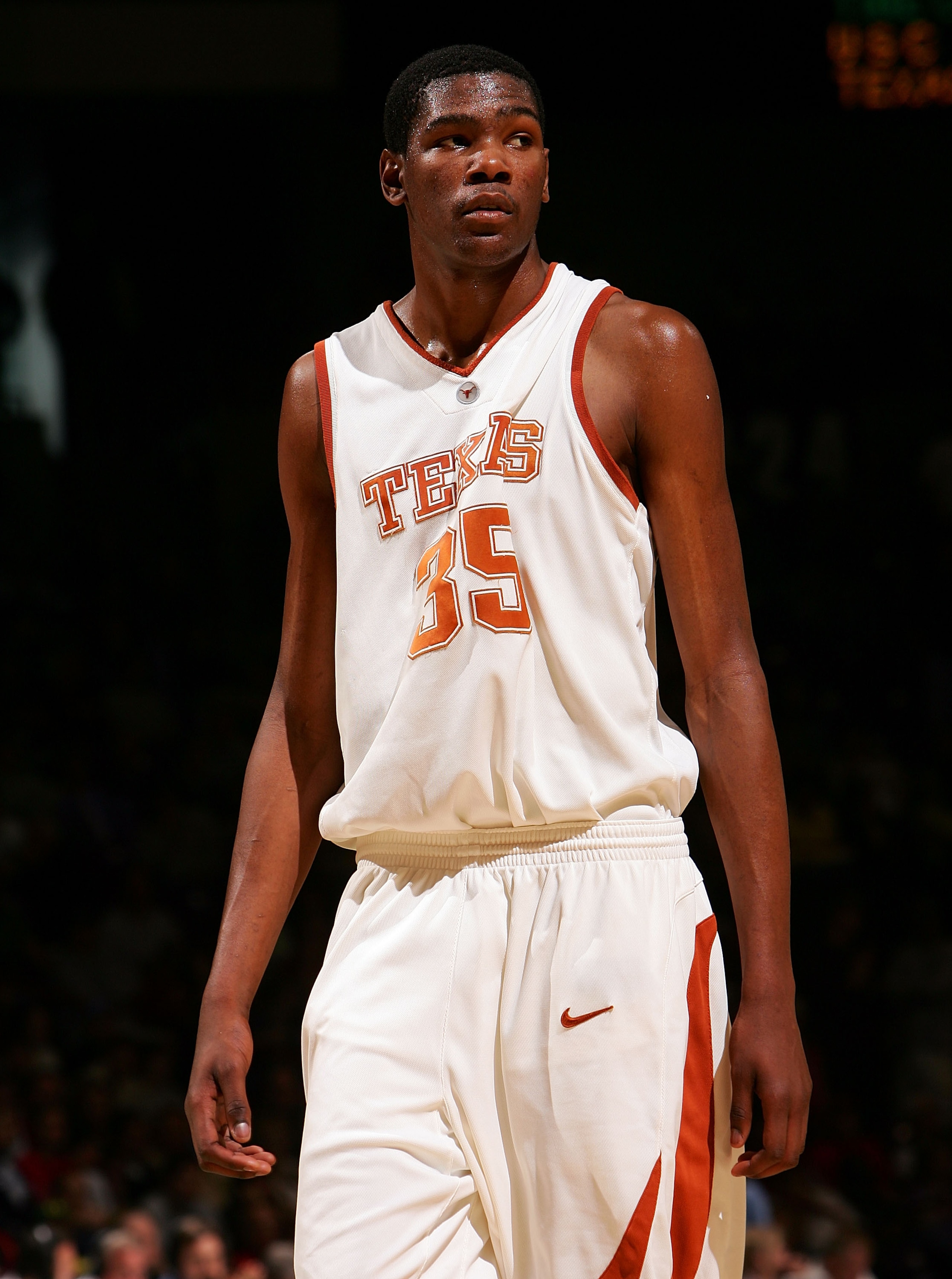
Career/Best Season: 26 ppg, 11 rpg, 40% 3PT (one year: 2007). First team All-American. Naismith Player of the Year.
Team Success: One NCAA win.
I must thank David Stern for implementing the rule that prohibits high school players from entering the NBA draft immediately, because if not, chances are we never would have seen Kevin Durant don a Texas uniform and have probably the best single-season of any player this decade.
Durant did something no other player has ever done in 2007: win national player of the year as a freshman. Wall came close, but Durant has been the only one, and with good reason. His numbers don't even do his performance in 2007 justice. He was far and away the best player in the country that year.
Keep in mind that freshmen typically didn't dominate right out of the gate. People were blown away by what he was doing. I was shocked myself.
Ask me in ten years who the best player in college basketball was in the 2000's and I'll probably say it was Kevin Durant. He's certainly the one I'll remember above all others.
9. Juan Dixon, Maryland
43 of 51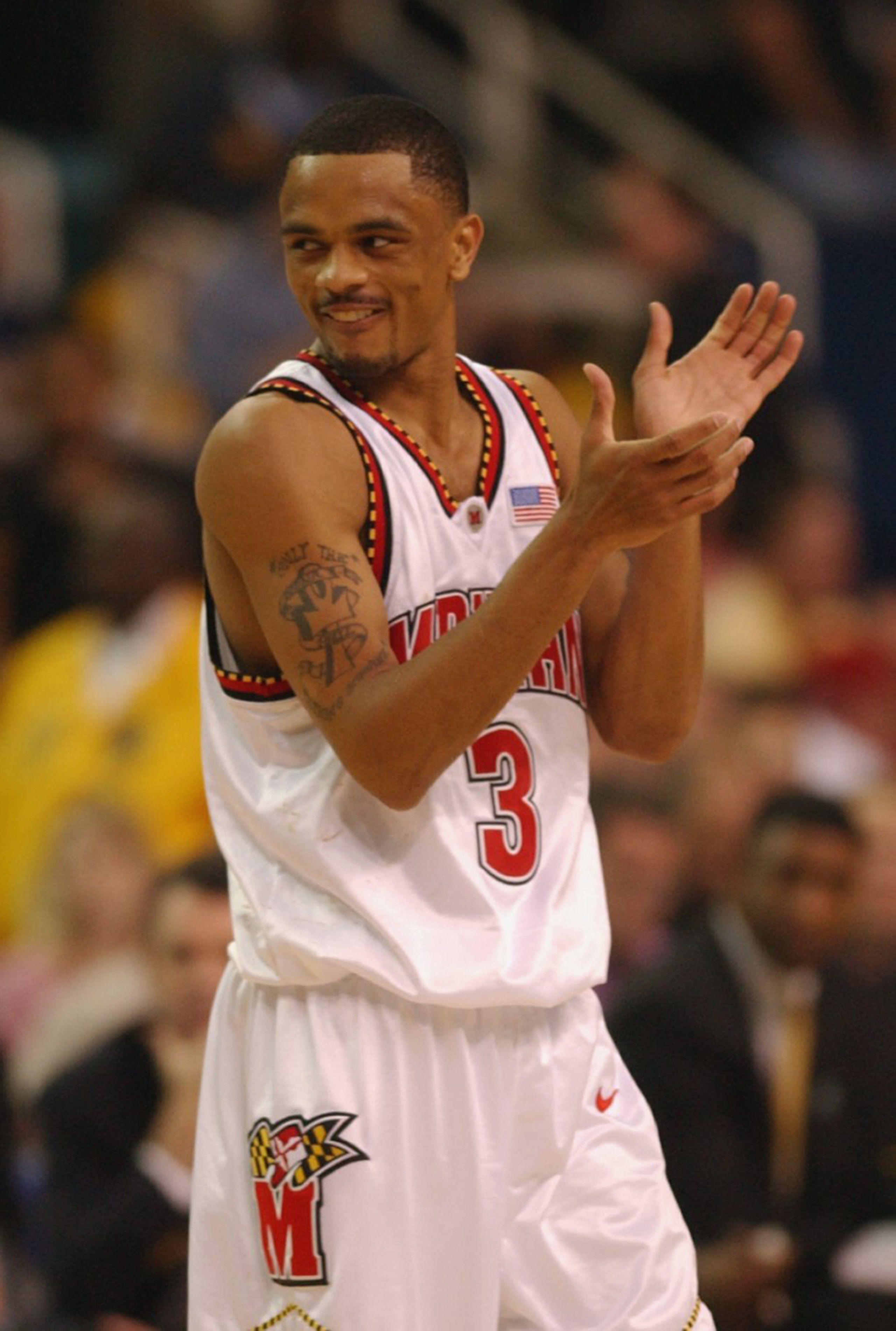
Career: 16 ppg, 4 rpg, 3 apg, 85% FT, (four years: 1999-2002), First team All-American.
Best Season: 20 ppg, 5 rpg, 3 apg, 3 spg, 90% FT, 40% 3PT, First team All-American (senior year).
Team Success: 13 NCAA wins, two Final Fours, one national title.
Shocked he's this high? Don't be.
In terms of team success, only a couple players have Juan Dixon beat. He was the best guy on a national championship team and it wasn't close. Where most national champions have a couple guys on this list, Dixon is the only Maryland player I even considered from that team.
Dixon was also the first player I grew to truly appreciate in the 2000's (Richard Hamilton was the first ever, and yes, I'm very young and enjoying it). They had come so close in 2001 before losing to Duke that I wasn't sure they'd be able to recover, but Dixon willed them to the championship.
Should he be lower? Probably, but for me, I had trouble not putting him higher.
8. Chris Paul, Wake Forest
44 of 51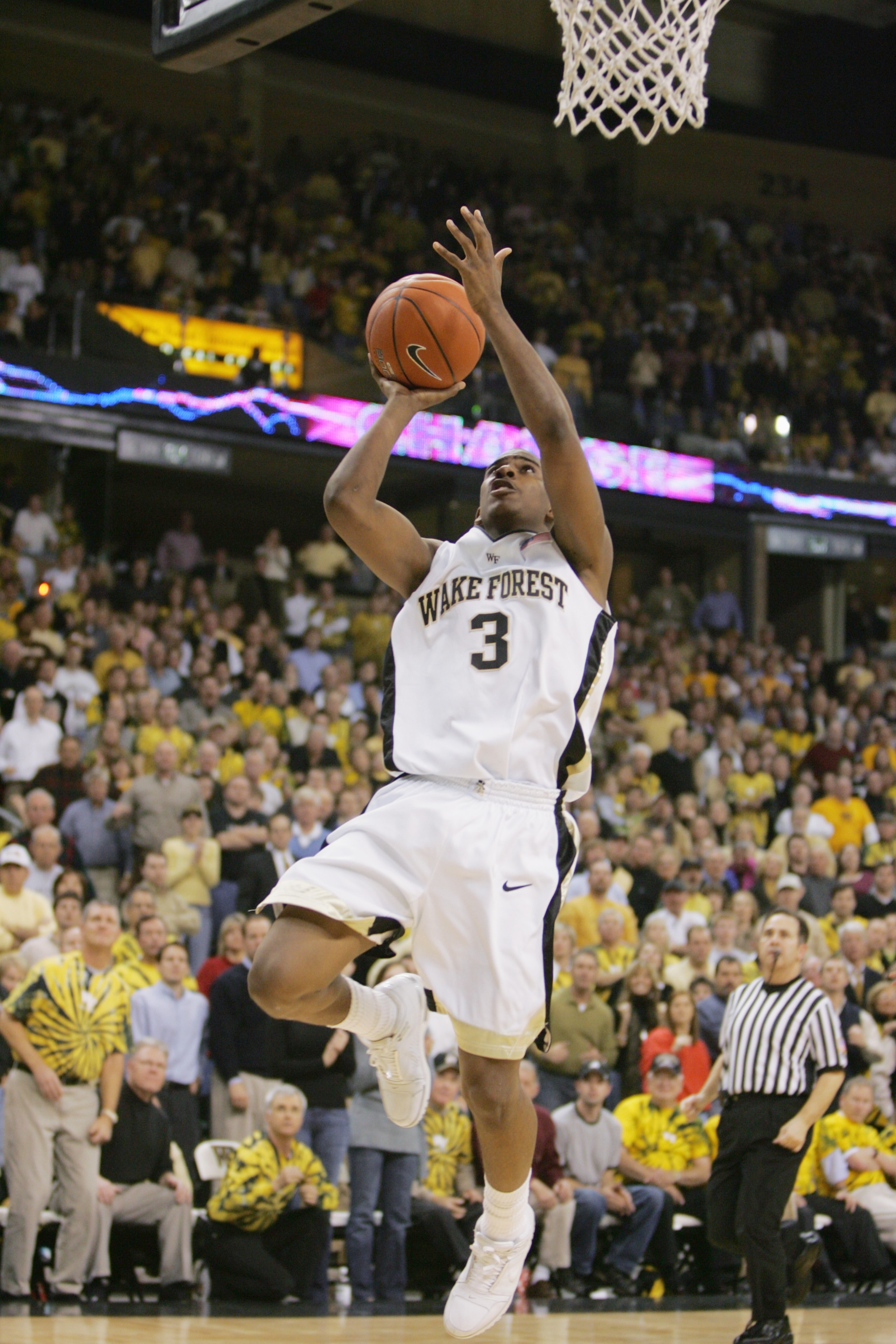
Career: 15 ppg, 6 apg, 4 rpg, 3 spg, 47% 3PT, 84% FT (two years: 2004-05), First team All-American.
Best Season: 15 ppg, 6 apg, 3 rpg, 3 spg, 50% FG, 47% 3PT, 84% FT (freshman year).
Team Success: Three NCAA wins.
The scoring numbers aren't eye-popping. His team didn't win much in March. So why is he this high?
Don't forget that while his scoring numbers aren't incredible, the rest of them are pretty incredible. Paul made everyone better by creating open shots, he was one of the best ever at anticipating passing lanes, and he was a pretty deadly shooter. But there was something else about him.
Anytime Chris Paul was on the court, the game changed. He controlled the tempo better than anyone I remember.
While I was in awe of Kevin Durant's performances and wanted Juan Dixon to win more than anyone else, I had more fun watching Chris Paul than any other player. He made the game fun for his teammates. It was a true shame that he was only around for two seasons, but man were they fun ones.
7. Jameer Nelson, Saint Joseph
45 of 51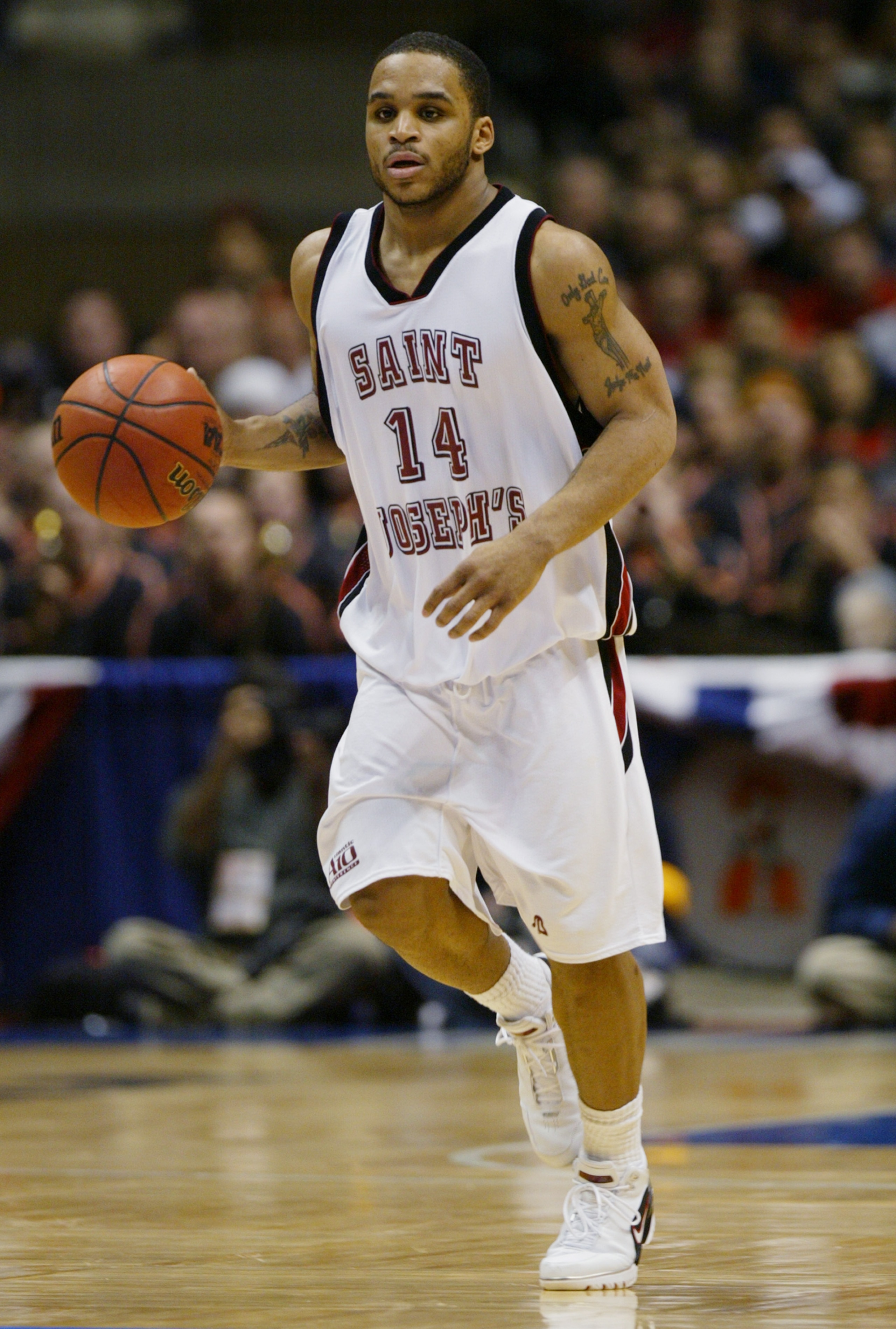
Career: 17 ppg, 6 apg, 5 rpg, (four years: 2001-04), First team All-American.
Best Season: 21 ppg, 5 apg, 5 rpg, 3 spg, Naismith Player of the Year (senior year).
Team Success: Four NCAA wins, one Sweet Sixteen.
Jameer Nelson was the only player from a mid-major conference to win the Player of the Year that was eligible (sorry, Kenyon Martin). He was one of the best leaders of the decade and forced people to figure out where Saint Joseph's was in case they were close enough to go see a game.
His Saint Joseph's team nearly made the Final Four and had one of the most dominant regular seasons of the decade, earning a number one seed in the NCAA tournament.
While I didn't look it up, I'm pretty sure no mid-major team has gotten a No. 1 seed in the decade outside of Memphis or maybe Cincinnati.
My favorite memory of Nelson was their game against Oklahoma State in the Elite Eight. It was one of the best NCAA tournament games I can remember. Unfortunately, it didn't work out for Mr. Nelson.
6. Carmelo Anthony, Syracuse
46 of 51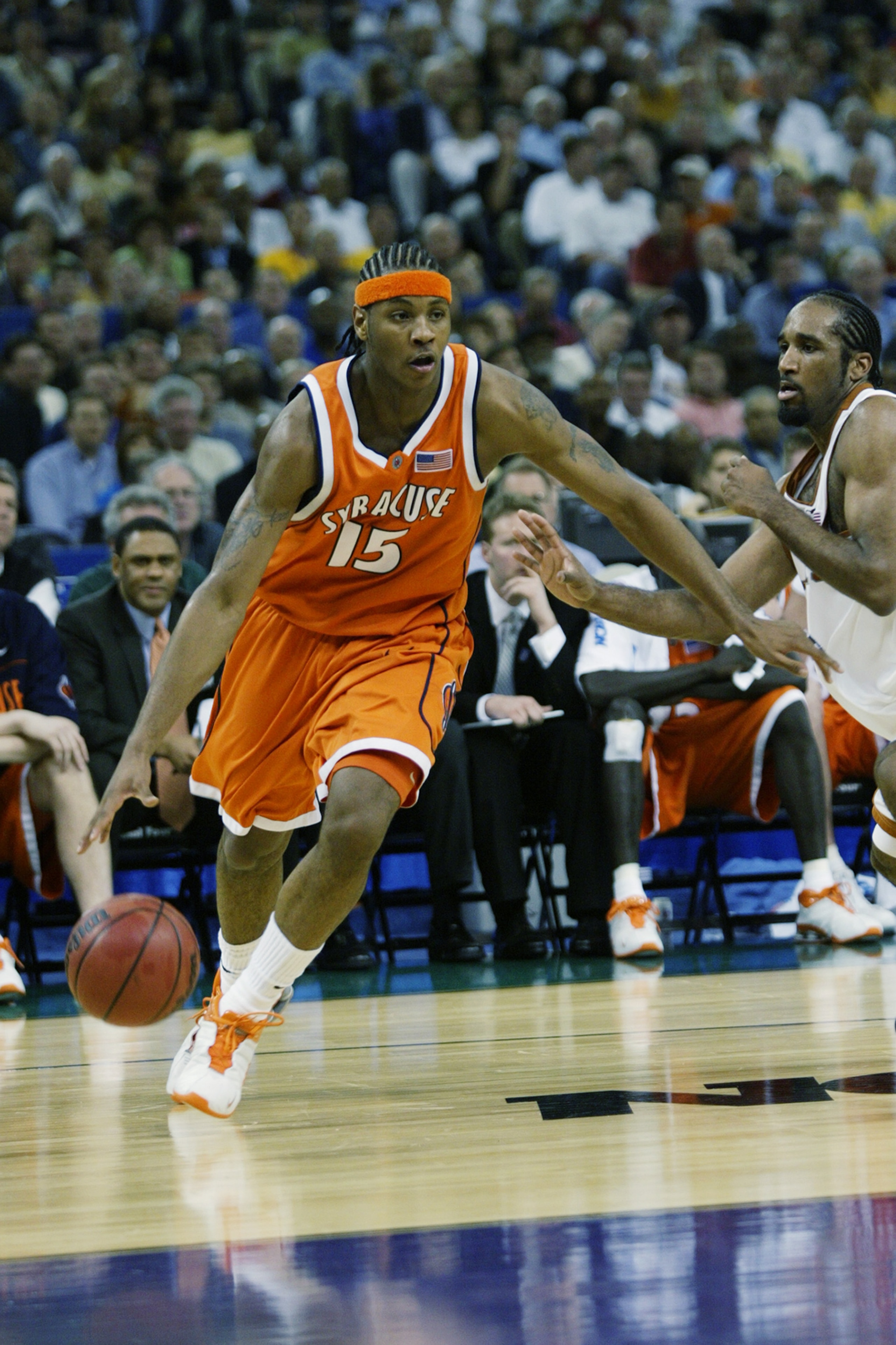
Career/Best Season: 22 ppg, 10 rpg, (one year: 2003). Second team All-American.
Team Success: Six NCAA wins, one national title.
The first great one-and-done player, and the most successful. Not only did Carmelo Anthony dominate in the stat book, he did something no other one-and-done player has: lead his team to a national championship.
Anthony played like an experienced senior from the start and put up fantastic numbers throughout the year. He showed no signs of being overwhelmed by the spotlight or the increase in skill level everyone else now possessed. He was calm and cool, which helped the rest of his young teammates stay calm themselves.
Now, did he have help? Absolutely, as two of his teammates are in the top 30. But Warrick and McNamara are there mostly on what they did themselves, without Carmelo. Anthony helped put them on the map, but those two players made sure they stayed there.
It's hard to put into words the impact Anthony had on the game when he left. It gave coaches the idea that they could win with elite freshmen even if they were only around for one year. John Calipari, Thad Matta, Roy Williams, and others have used the NBA's mandated year removed from high school policy to find the next Carmelo Anthony.
For those reasons, Anthony will probably go down as the most memorable player of the decade.
5. Dwyane Wade, Marquette
47 of 51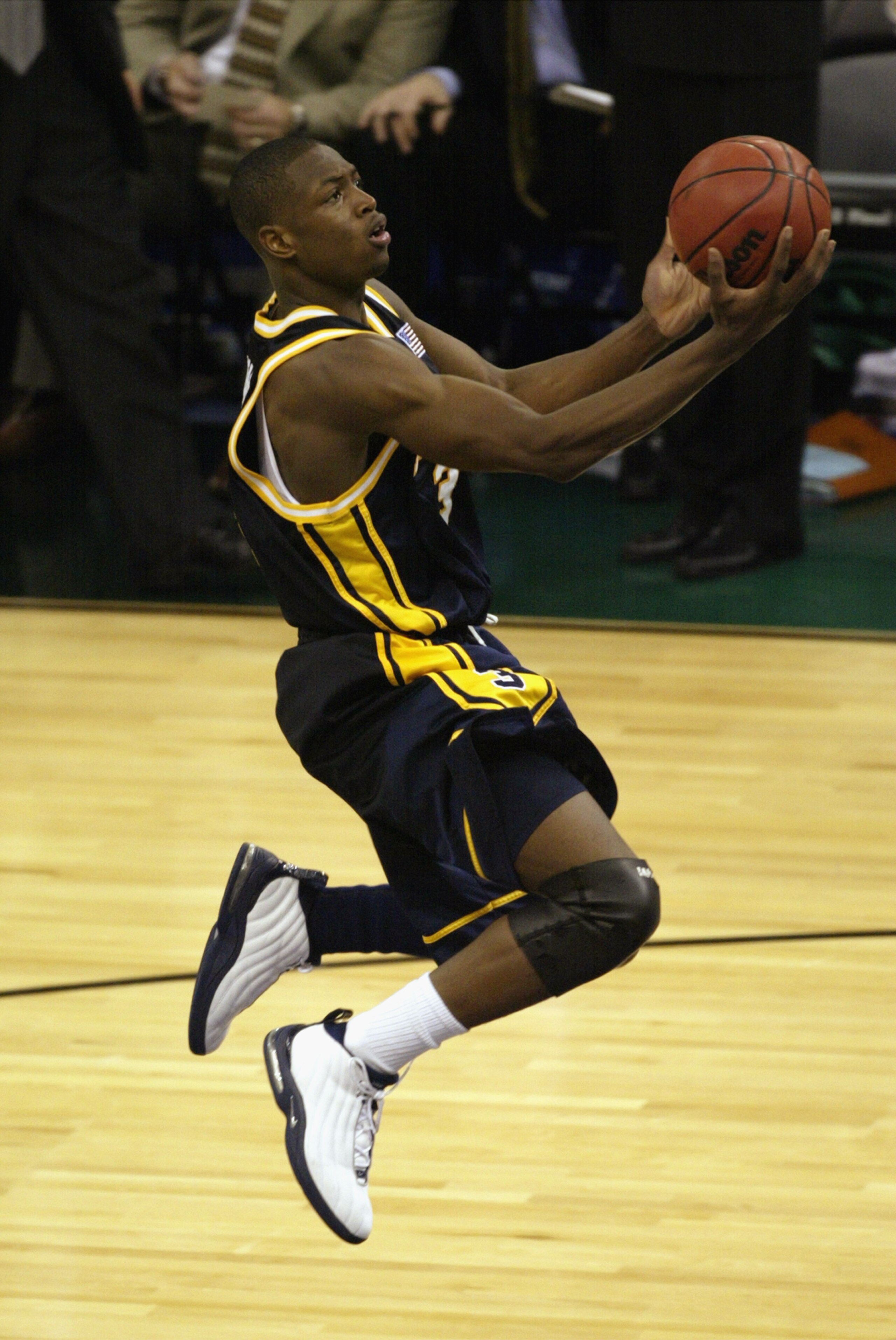
Career: 20 ppg, 7 rpg, 4 apg, 50% FG (two years: 2002-03), First team All-American.
Best Season: 22 ppg, 6 rpg, 4 apg, 50% FG, First team All-American (sophomore year).
Team Success: Four NCAA wins, one Final Four.
Some people may have forgotten that when Dwyane Wade was at Marquette, they were still part of Conference USA, a mid-major conference. Granted, it had powers like Louisville and Cincinnati, but the fact that Wade took the Golden Eagles to the Final Four as just a sophomore, without the kind of teammates Anthony had at Syracuse, was one of the more impressive team-related accomplishments of the decade.
Individually, rebounding at that high a level and shooting as well as he did for a 6'3" guard is pretty impressive to along with his ability to score.
In one of the most impressive tournament games in its history, Wade single-handedly beat top-ranked Kentucky to advance to the Final Four by posting 29 points, 11 rebounds, and 11 assists.
One could say that performance was a sign of things to come.
4. Blake Griffin, Oklahoma
48 of 51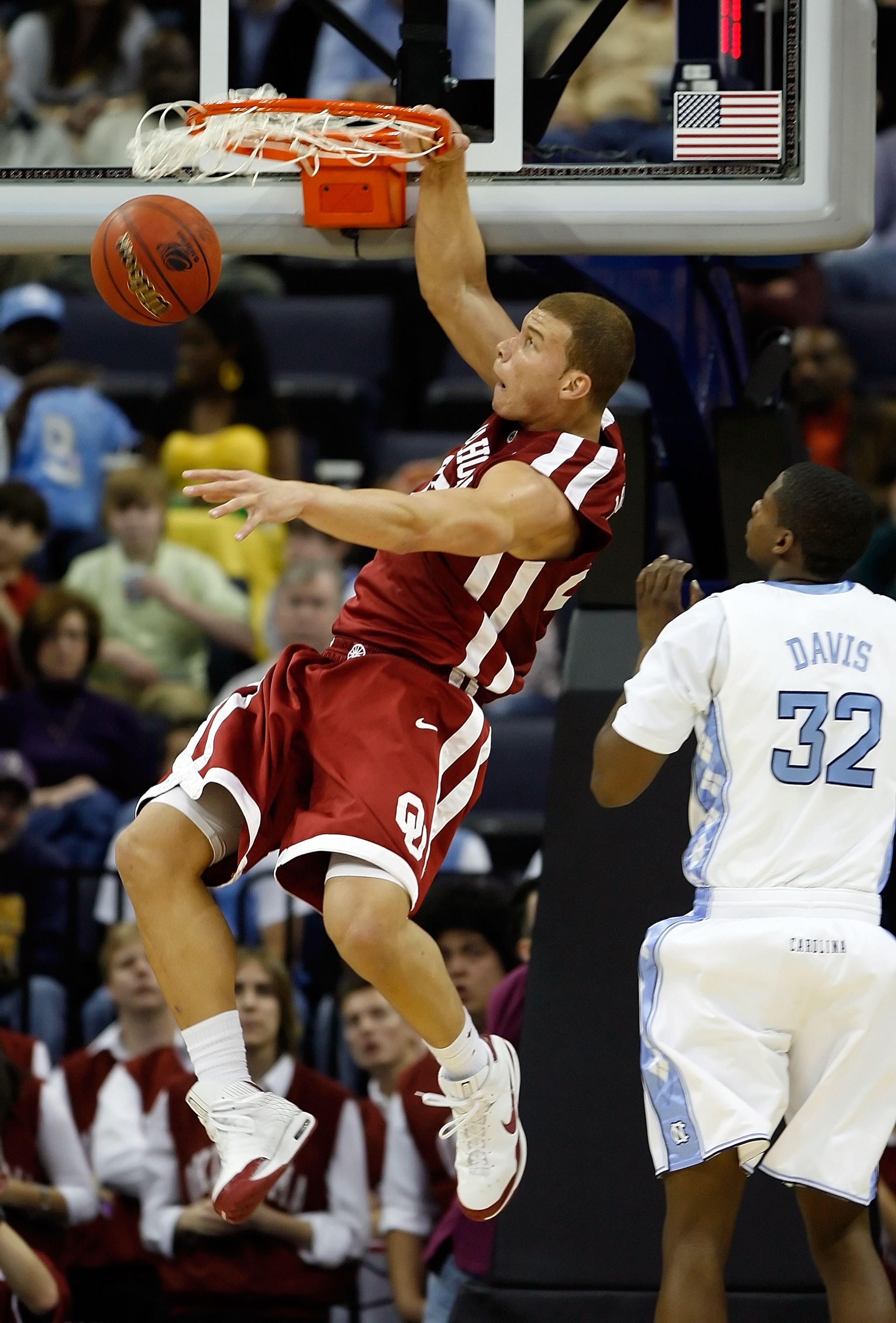
Career: 19 ppg, 12 rpg, 62% FG (two years: 2008-09), First team All-American.
Best Season: 23 ppg, 14 rpg, 65% FG, Naismith Player of the Year (sophomore year).
Team Success: Four NCAA wins.
Blake Griffin was probably the most explosive offensive player of the past 10 years. If he ever got the ball in the paint, it was a good idea to just step aside unless the defender wanted to get embarrassed.
The fact that he managed to win four games in the NCAA tournament with a supporting cast that was highlighted by Willie Warren is pretty impressive.
Griffin easily had the best season for a post player this decade. Shooting 65 percent is almost unheard of unless we are talking about Shaq. The only thing defenses could try to do would be to hurt him, as he was routinely hit harder than most hockey players. That certainly didn't stop Griffin from dunking on just about anybody who thought they could actually stop him by playing fair.
3. Stephen Curry, Davidson
49 of 51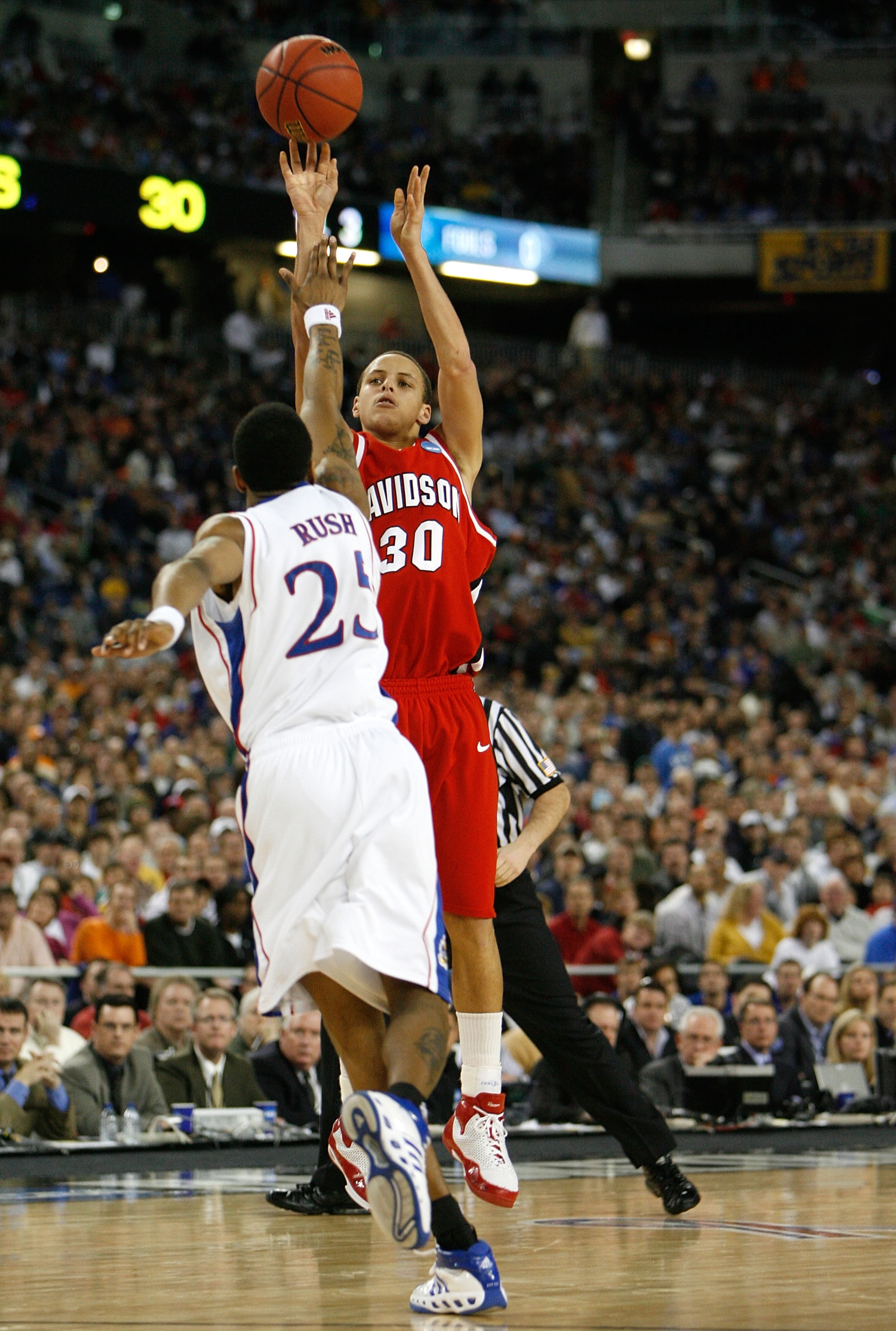
Career: 25 ppg, 5 rpg, 4 apg, 41% 3PT, 87% FT (three years: 2007-09), Second team All-American, First team All-American.
Best Season: 29 ppg, 6 apg, 4 rpg, 3 spg, 88% FT, 1st team All-American (junior year).
Team Success: Three NCAA wins, one Sweet Sixteen.
Curry was without a doubt the best pure scorer of the decade. He was J.J. Redick without nearly the kind of teammates or coaches at his disposal.
Curry wasn't under the radar, either. In his sophomore year he led Davidson to the Elite Eight and nearly beat Kansas to go to the Final Four. Curry had entrenched himself as the next great mid-major player.
In his junior year, one team literally double-teamed Curry for the entire game and Davidson essentially played four on three. That didn't stop Curry from averaging nearly 30 points per game. Remember, the college game is 40 minutes long, not 48 like the NBA.
With his incredible range and heroics in March, Curry is the best mid-major player of the decade, and will go down in history as one of the greatest mid-major players since Larry Bird. In fact, he will probably be this generation's version of Bird. Not a bad way to be remembered.
2. Tyler Hansbrough, North Carolina
50 of 51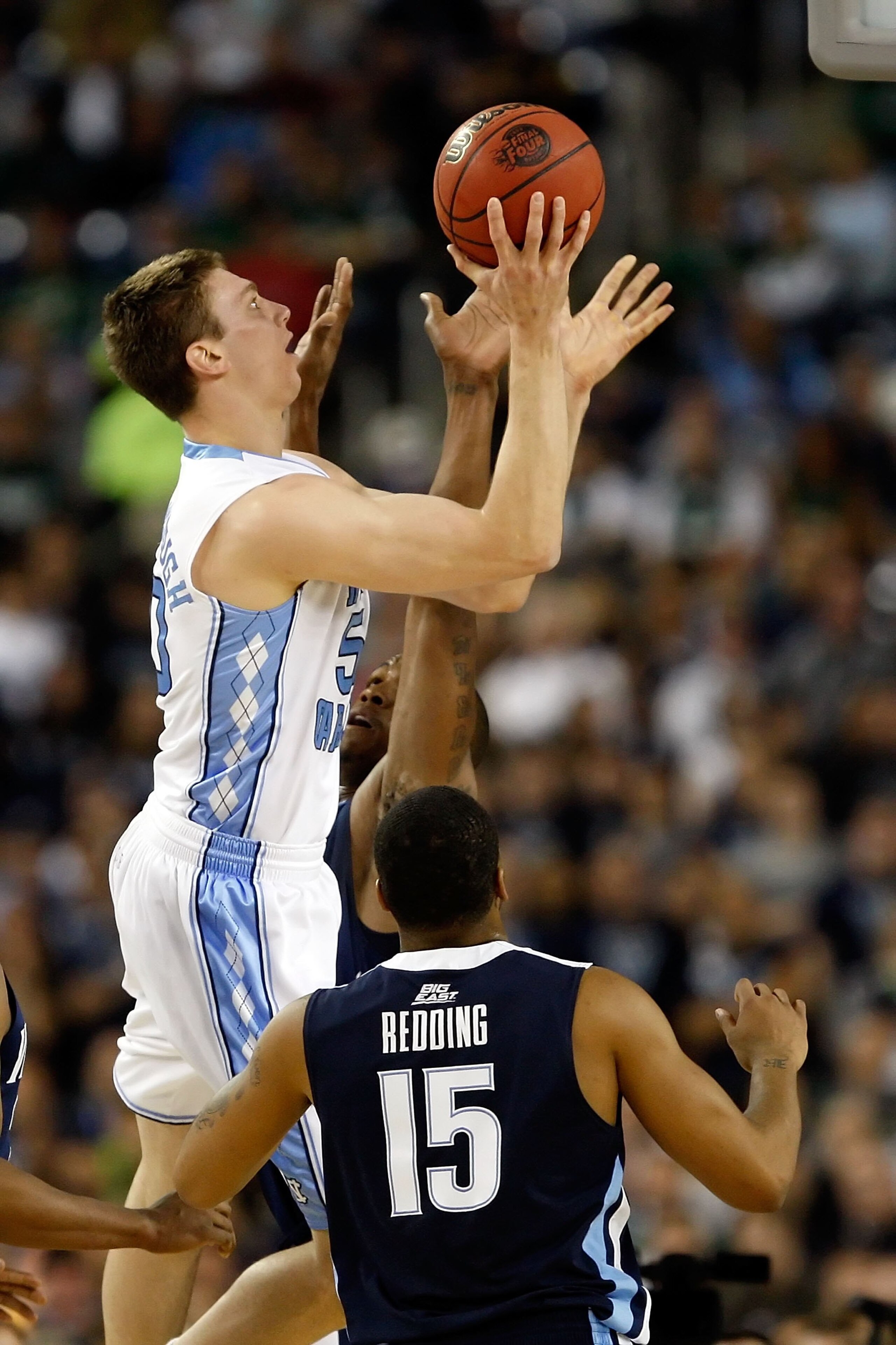
Career: 20 ppg, 9 rpg, 53% FG (four years: 2006-09), Second team All-American, Three-time First team All-American.
Best Season: 23 ppg, 10 rpg, 54% FG, 81% FT, Naismith Player of the Year (junior year).
Team Success: 14 NCAA wins, two Final Fours, one national title.
Quite simply the most consistent player of the decade, and one of the best winners as well.
After losing virtually everyone from their 2005 championship team, North Carolina was expected to struggle, but then a kid from Poplar Bluff, Missouri came along and helped the Tar Heels make the NCAA tournament the following season. That kid was Tyler Hansbrough.
His game was unorthodox to say the least. He'd put his body into someone and throw up a wild shot that usually went in. If not, he was usually fouled. His game never changed in his four years, yet he became more effective.
Hansbrough is the only player of the decade to make the All-American team in each of his four seasons and also the only one to make first team for three straight years.
He was the best guy on North Carolina's championship team.
His tenacity is probably what sets him apart from almost everyone else. The man never quit and worked hard for everything he did. If there was a role model for kids to look up to in the 2000's, I would introduce them to number 50.
1. Jason Williams, Duke
51 of 51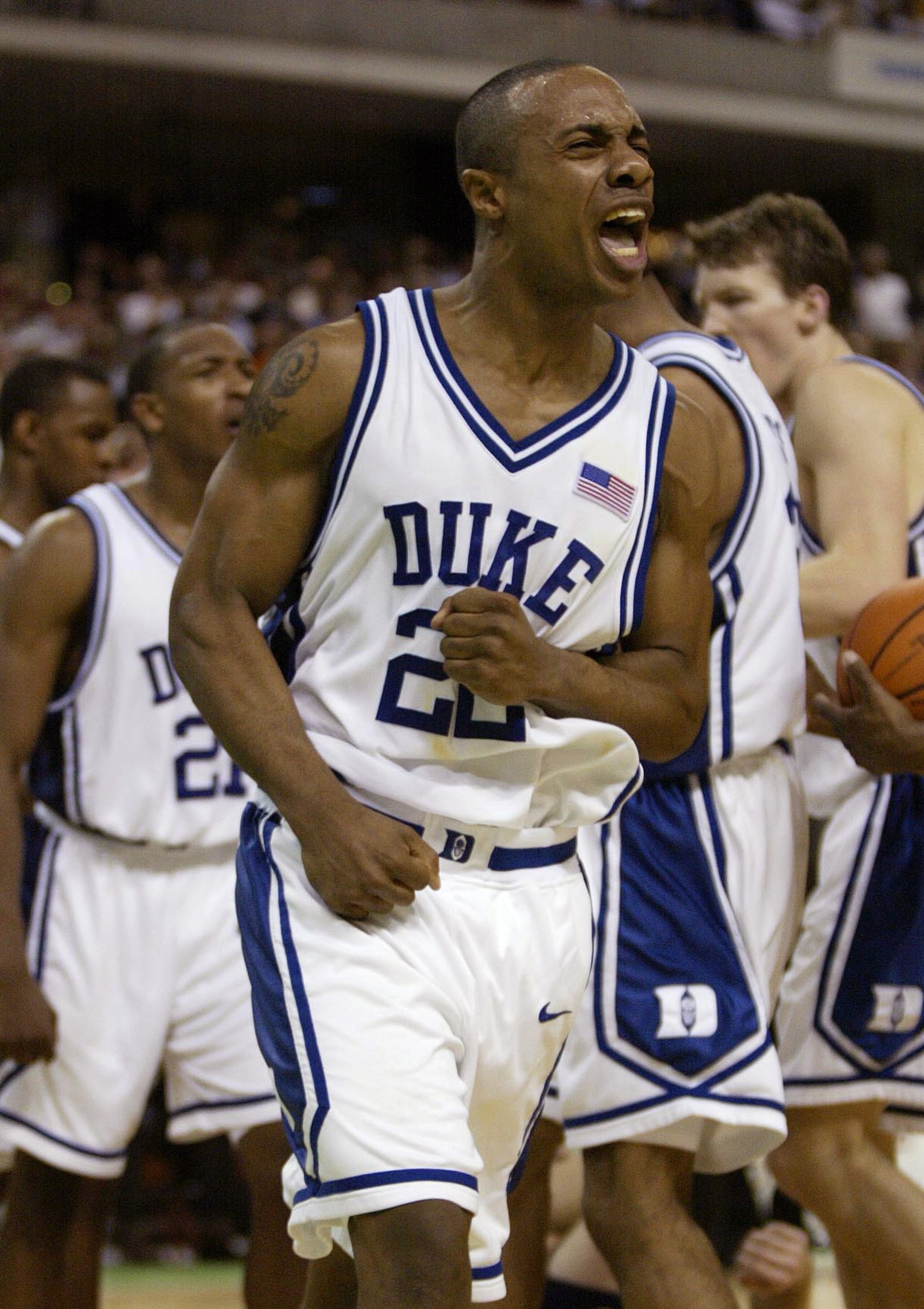
Career: 19 ppg, 6 apg, 4 rpg, (three years: 2000-02), Two-time First team All-American.
Best Season: 22 ppg, 6 apg, 3 rpg, 43% 3PT, Naismith Player of the Year (sophomore year).
Team Success: 10 NCAA wins, one national title.
At first, I was surprised to see Jay Williams score the highest on my methodology chart (73), but then I realized it wasn't as shocking as I initially thought. Allow me to explain.
He won the Player of the Year award in just his sophomore season with pretty darn good numbers. Certainly nothing to complain about. That warranted a 20 out of 20.
His career was incredibly consistent as his numbers aren't dwarfed by his best season. Being a first team All-American twice meant that his best season was not a fluke. He did leave a year early, so that's a 19 out of 20.
His team success is pretty astounding. Anytime anyone won a national championship, they got all 10 points and the 10 NCAA victories in just three seasons means he won important games in more than just one season. Again, a perfect 10 out of 10.
Then there's the memorable category. Most people when asked about Jay Williams immediately think about the horrific motorcycle accident that ended his playing career. See, I tend to focus on the positive side of things, so this is what I remember about Jay Williams.
He was the first in the line of super quick guards this decade that paved the way for guys like T.J. Ford, Ty Lawson, and John Wall. He could break down a defense better than anyone I had seen at the time.
Despite hating Duke, I actually rooted for Jay Williams. I respected him above all other Duke players because of his incredible ability to score from anywhere all the while dishing it to teammates for open shots. He may not be the first guy I think of when remembering players of the 2000's, he's definitely in the first five, so he gets 24 out of 25.
So, while I may not want to admit that a Duke player was the best one of the decade, if it had to be anyone, I'm okay with it being Jay Williams.
_1.png?w=2560 "Little League World Series Recap")
.jpg?w=2560 "Bucs Rookie's 'Bane' Face Mask 😈")