

If Your Favorite CBB Team Is Struggling, Relax and Remember It's Only January
April showers bring May flowers, but there's nothing to suggest that January losses keep college basketball's best teams from making deep runs in March.
A lot of fans are standing on the proverbial ledge right now. Duke is currently on its first three-game losing streak since 2006-07—all to unranked opponents, no less. Michigan State has also lost three in a row, thanks to an inexplicable home loss to Nebraska on Wednesday night. Kentucky lost to Auburn last weekend after a nail-biter at home against Mississippi State. Even Kansas is 4-2 in Big 12 play for the first time in a decade.
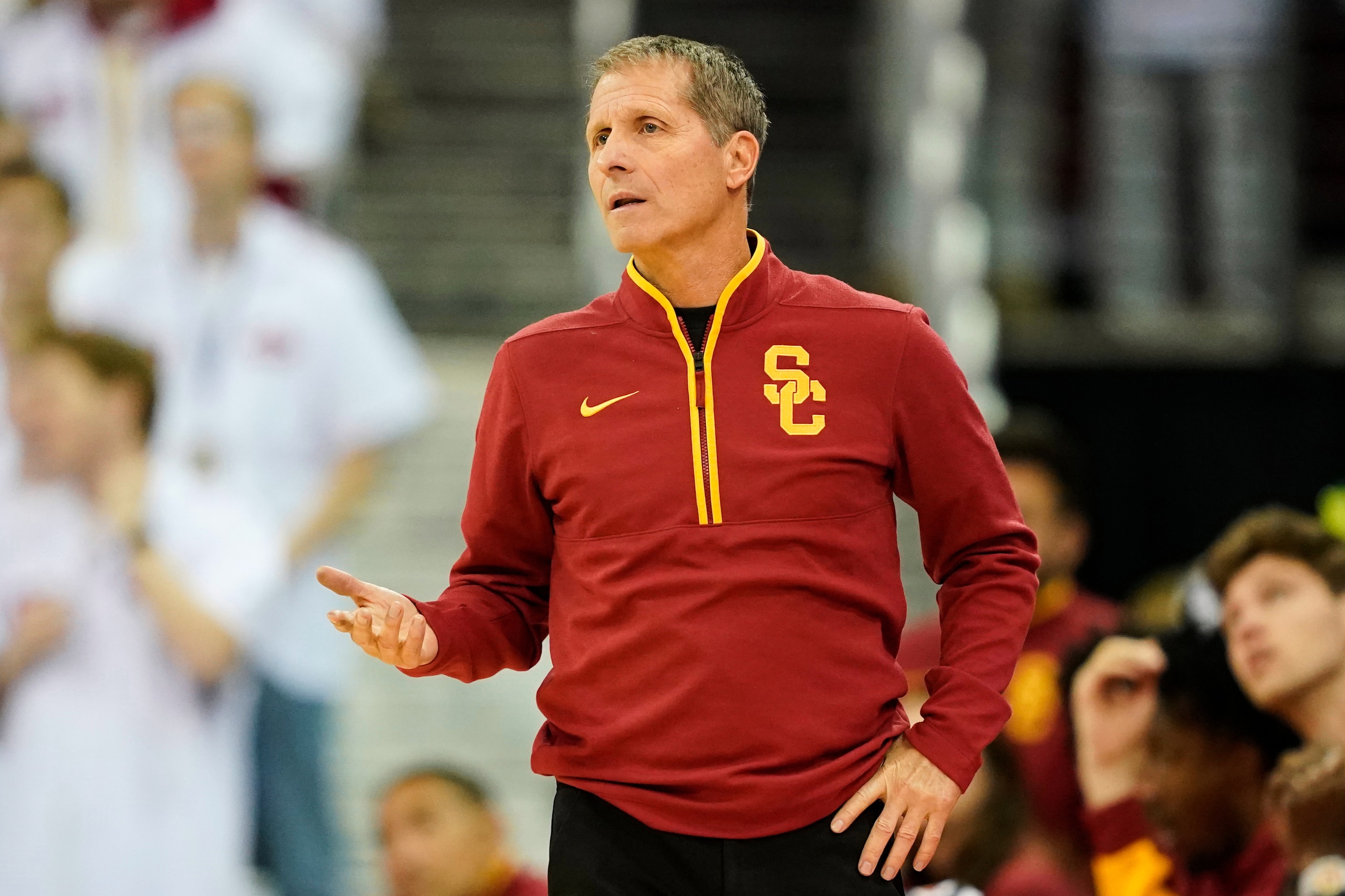
And those are just the recent struggles of the teams that annually participate in the Champions Classic. There are far too many similar cases around the country.
At this point, it feels like SMU is the only team we can count on to win, and the Mustangs aren't even allowed to be a factor in the postseason.
There are at least a couple of crazy upsets seemingly every night.
No one can be trusted!
Parity is king in a world that makes no sense!
Before you jump, though, let us remind you even the best teams go through something like this around this time almost every year.
| Year | Nat'l Champ | Regular-Season Struggles |
| 2015 | Duke | Lost back-to-back games to NC State and Miami; three total losses in January. |
| 2014 | Connecticut | Went nearly four months between five-game winning streaks; earned a No. 7 seed. |
| 2013 | Louisville | Lost three games in eight days in mid-January. |
| 2012 | Kentucky | The exception to the rule. |
| 2011 | Connecticut | Lost seven of its last 11 regular-season games. |
| 2010 | Duke | Lost three times in last three weeks of January. |
| 2009 | North Carolina | Opened ACC play 0-2 against Boston College and Wake Forest. |
To recap: Six of the last seven national champions had to battle through some significant regular-season woes, usually during the month of January.
Moreover, at least two of the Final Four teams in each of those seven seasons had similar issues. Last year, Wisconsin lost to a Rutgers team that is 0-20 in Big Ten play since then, and Michigan State lost to teams such as Texas Southern, Nebraska and Illinois. Two years ago, Wisconsin lost five out of six games from Jan. 14 through Feb. 1 and still made the Final Four.
Hell, Wichita State lost three straight Missouri Valley Conference games in 2013, and Butler lost five of its first 11 Horizon League games before making it to the title game in 2011.
If you think your team is already dead and buried, think again.
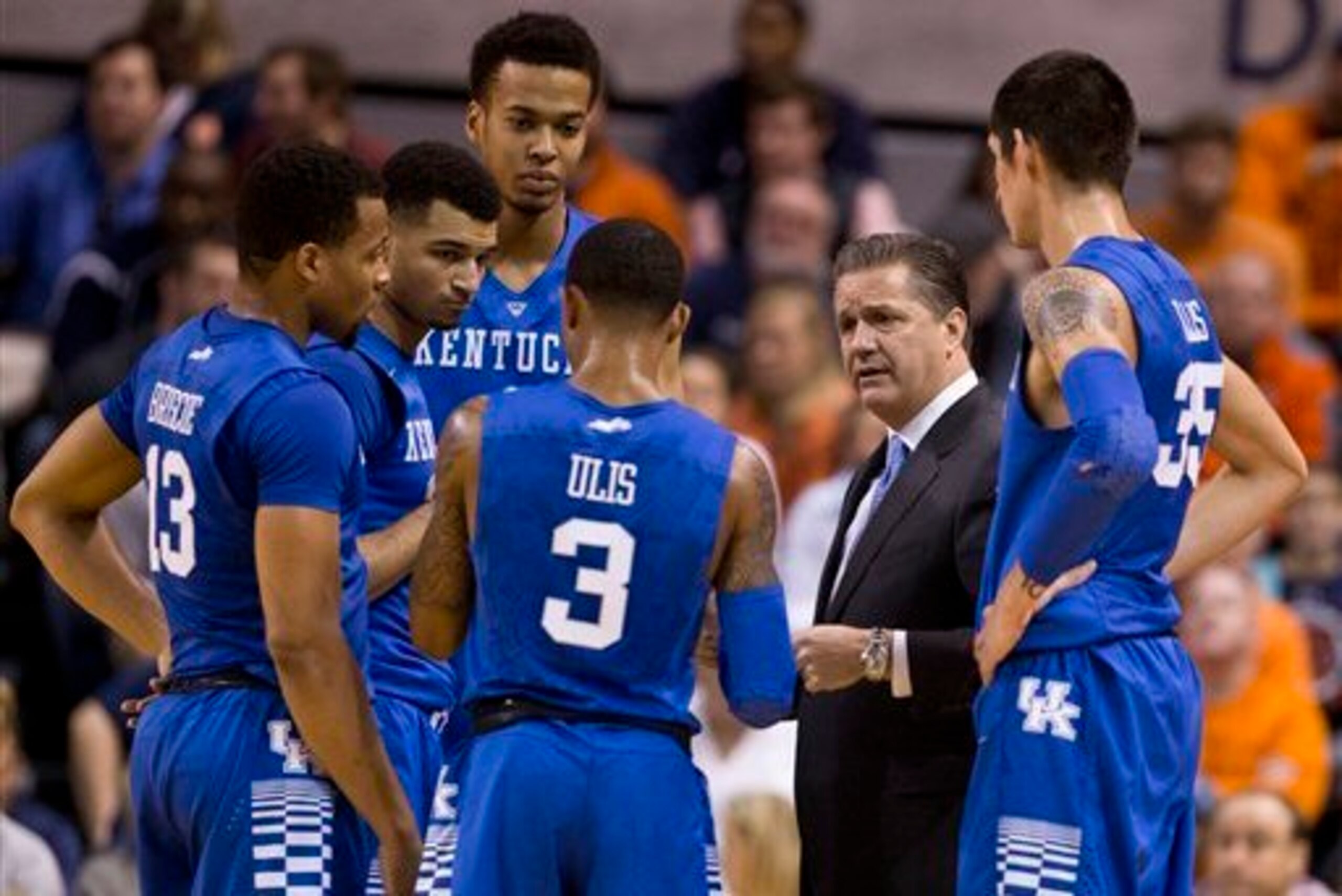
While I cannot stand it when people say they only watch college basketball in March because the regular season doesn't matter, the truth is that for the good teams in power conferences, it kind of doesn't. At least not in the sense that every game is life or death like it is in college football.
Case in point: Kansas has lost two of its last three games and would still be projected for a No. 1 seed if we built a bracket today. Similarly, Duke and Michigan State are in no danger whatsoever of missing the NCAA tournament. At worst, these three-game losing streaks have cost them two seed lines and moved them to a position maybe six losses away from the bubble rather than nine.
As Troy Machir of Sporting News noted on Twitter on Wednesday night, there have been quite a few losses lately by teams in the AP Top 10:
But do you really think any of those teams won't be making the Big Dance?
Many people have likened the NCAA tournament to a marathon, but it's more like a Tough Mudder.
(If you're unfamiliar with the event, it's a 10- to 12-mile-long obstacle course with such perils as wall scaling, ice baths, climbing under barbed wire and running through what they call "Electroshock Therapy." There's even a "mud mile," which is literally a mile-long portion of the course where you run through mud that might be several feet deep. I've never done one, and I hope to keep it that way.)
But however you view March Madness, the regular season is the training period for it. By the time the season is over, you've hopefully played at least one game against every type of scheme you might draw in the tournament.
Prior to the big nonconference tilt Dec. 19 between Virginia and Villanova—two teams that couldn't be much more different in style—both head coaches had similar thoughts on the value of the game.
"This home-and-home with Villanova is really about playing great teams," Virginia coach Tony Bennett told Bleacher Report. "Prepare your team. Learn about yourself so that we can play the best basketball that we can, heading into the conference season and hopefully afterwards."
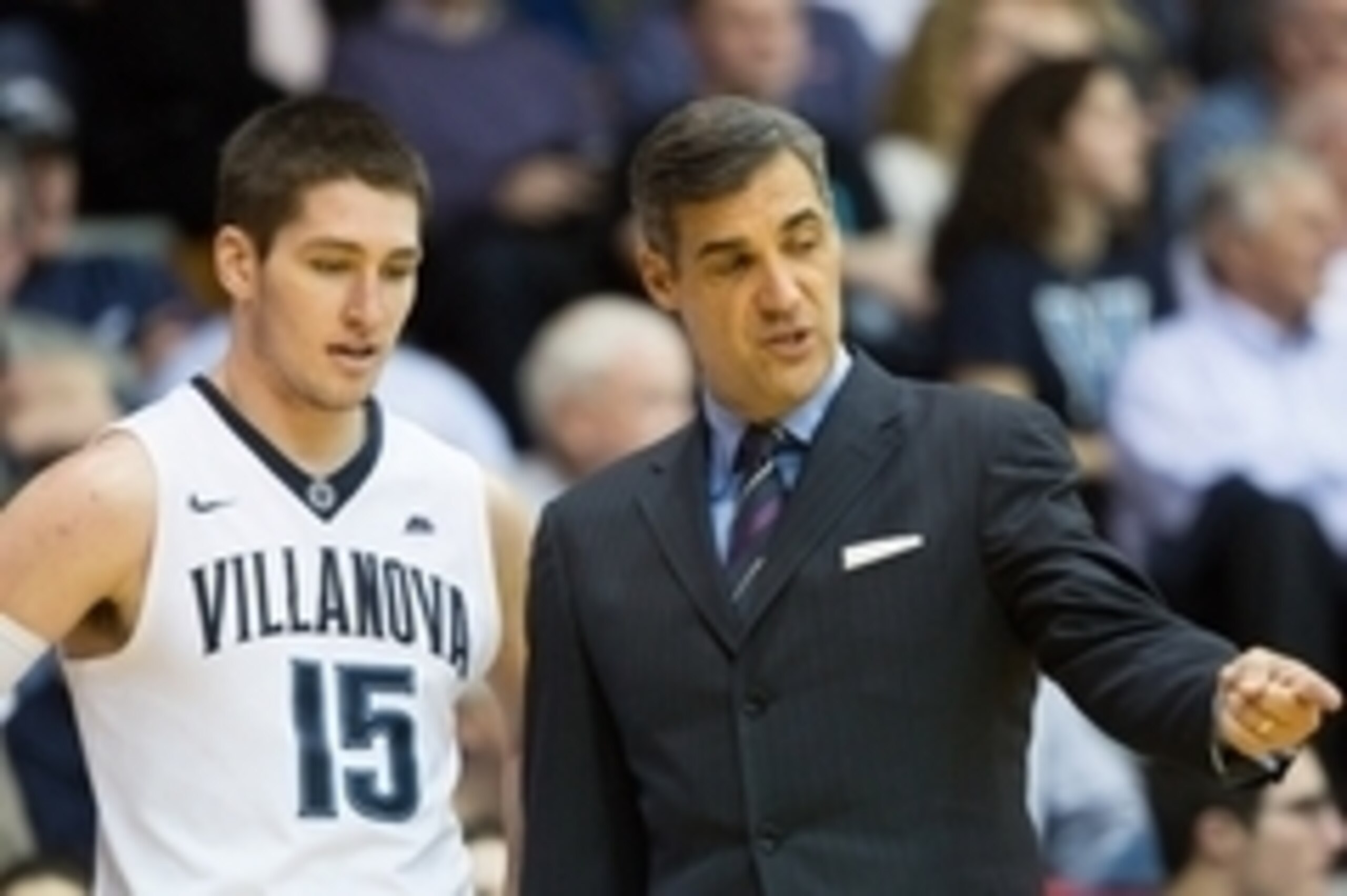
"Our basketball philosophies are going to be tested to the hilt in playing them," Villanova coach Jay Wright told Bleacher Report. "Just like after the Oklahoma game, we’re gonna have a great feel going into the Big East where we are and what we need to work on; what our strengths are and what our weaknesses are."
Virginia won the game by an 86-75 margin, but really, both teams won by getting in a great workout session in preparation for the main event.
Just like in training for a marathon, sometimes you sprain an ankle or tweak a muscle. (Translation: losing on the road against a respectable team.)
Maybe you actually pull a muscle or come down with a sickness and need to make some changes to your training regimen. (Translation: losing at home to a not-so-great team.)
Perhaps during training you even suffer an injury so bad that you're not sure you'll be able to compete in the event at all. (Translation: What are you doing, California?)
By the time the big day arrives, there's a very good chance you've suffered some setbacks during your months of training. All that really matters is that you're at or near 100 percent health when the event begins.
That's how it's supposed to be in college basketball.
The problem leading to what seems like an unusual number of head-scratching losses this season is that we were brutally spoiled over the past few years.
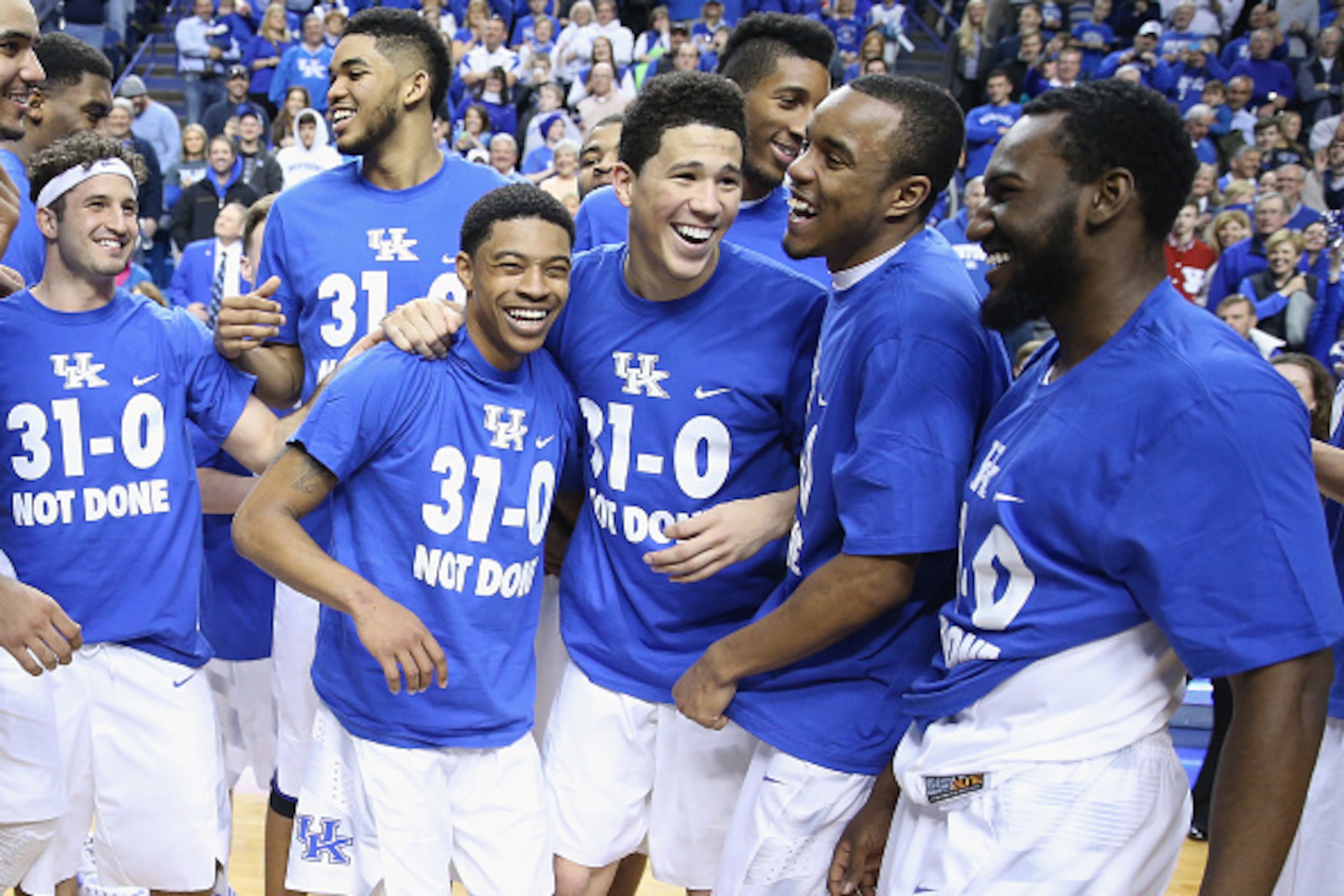
There were 34 NCAA tournaments played from 1980 to 2013, and only one team started one of those tournaments with a perfect record (UNLV in 1991).
Then it happened in back-to-back years with Wichita State opening the 2013-14 season with 35 straight wins and Kentucky getting to 38-0 last year, making even the biggest doubters accept that a 40-0 season might be possible. And while they didn't quite flirt with perfection, the 2011-12 Wildcats might have been the best team since those early-'90s Runnin' Rebels.
Thus, in three of the past four years, there was at least one team that could be counted on to not lose games. But those three, 2011-12 Murray State and 2007-08 Memphis (if we're counting the 38-2 season that officially never happened) are the only teams in the past decade to suffer fewer than three losses in a season. They stand out most vividly in our memory because they aren't the norm.
What's more, we were spoiled by elite, reliable freshmen.
Not even a decade ago, freshmen were given a chance to develop and were more or less expected to stay for multiple seasons. Of the top 10 recruits who came to college in 2008 (as ranked by 247Sports), six stayed for at least two years, and Tyreke Evans (Memphis) was the only one to lead his team in scoring as a freshman—and if you'll recall, there was a time not so long ago when people thought John Calipari was out of his mind to rely so heavily on first-year guys.
But now, thanks to consecutive years of immediate stars such as Anthony Davis, Andrew Wiggins, Jabari Parker, Jahlil Okafor, Karl-Anthony Towns and more, we've reached the point where every kid with a 5-star rating is expected to be a basketball god by the end of November.

That's simply unrealistic.
Outside of Ben Simmons, pretty much every freshman in the country has either occasionally or consistently struggled this season, narrowing the divide between good teams of veterans and the (usually) elite teams who can sign those high school studs in bunches.
The season is still young, though. MLB pennants are sometimes won and lost because of September call-ups, and as far as the percentage of the season that's been completed is concerned, college basketball is just now hitting the MLB All-Star break.
The great coaches will figure out what adjustments need to be made, the highly rated freshmen will (presumably) continue to develop, and things will start to make sense again by March—just in time for the start of the most unpredictable postseason format ever created.
So to the fans of teams such as Duke, Kentucky and Michigan State who have fallen on hard times: Try to relax and enjoy the ride, and just be glad we don't have to fill out our brackets in January.
Kerry Miller covers college basketball for Bleacher Report. You can follow him on Twitter @kerrancejames.

.jpg?w=2560 "Report: Darnold Could Miss 3-6 Weeks")
.jpg?w=2560 "Grading WWE NXT 🔠")
