

College Football Rankings 2016: Top 25 Post-NFL Draft Announcements
Monday was the deadline for college football underclassmen to declare for the NFL draft, though an official list of those opting to forgo eligibility won't be be released until Friday. Unofficially, the number of juniors and redshirt sophomores who decided to turn pro is in the triple digits, which would be a record.
Nearly every team that made it into Bleacher Report's projected 2016 preseason Top 25 lost a player early to the draft, some more than others. Most of these departures were expected; however, as is the case every season, some surprise exits happened.
How will these losses affect the top teams as they move toward next season? We've re-ranked the Top 25 after taking into account the NFL draft announcements, as well as other news that has popped up since the 2015 season came to an end.
No. 25 Boise State
1 of 25
When Boise State wasn't shooting itself in the foot, it was a pretty darn good team in 2015. Unfortunately, the Broncos committed 15 of their 22 turnovers in their losses.
Assuming Boise can clean up those miscues, it should be back to its old ways behind an offense that is teeming with standouts at the skill positions. Brett Rypien threw for more than 3,300 yards as a freshman, while running back Jeremy McNichols' 26 touchdowns were tied for second in the country.
Boise has to replace some serious playmakers on defense, and it just lost coordinator Marcel Yates to Arizona. If the reinforcements can do well, the Broncos will challenge again for the "Group of Five" spot in a major bowl game.
No. 24 Oregon
2 of 25
Oregon finished the 2015 season ranked 19th in the Associated Press poll, its worst final placement since 2007. We've got the Ducks starting 2016 even lower because they're again dealing with a hole at quarterback and likely looking at another graduate transfer from the FCS ranks as their starter.
No offense to Dakota Prukop, who put up big numbers at Montana State, but his arrival means the players Oregon has recruited at quarterback don't pass muster. The same can't be said for its running backs, though, with Royce Freeman coming off a monster year and all of his understudies back for more.
Changes to the Ducks' defensive staff could have the greatest impact on the upcoming year. The team demoted Don Pellum from defensive coordinator to linebackers coach and eventually replaced him with former Michigan coach Brady Hoke.
No. 23 Georgia
3 of 25
Kirby Smart would love to follow the path that Tom Herman did as a first-year coach, going from a coordinator on a national championship team to his own program that flourishes in his debut. That's a lot harder to do in the SEC than where Herman did it in the American Athletic Conference, but it's not unthinkable.
He'll be doing it without much of the defensive stars that Georgia leaned on in 2015, most of whom were seniors, while edge-rusher Leonard Floyd turned pro.
The Bulldogs offense should again center around the run game, with the hope being that Nick Chubb will be able to return from his knee injury. If not, Sony Michel is a capable second option.
More balance is needed, though, which puts a premium on getting the quarterback situation settled. None of the passers from last season stood out, which could open the door for early enrollee Jacob Eason to get a shot.


No. 22 Washington State
4 of 25
The Pac-12's North Division proved to be the much better side of the conference this past season, and Washington State had much to do with that. And unlike most of their brethren in the North, the Cougars aren't faced with many holes to fill.
Most of the offense and half of the defense return for Mike Leach, who again will be throwing the ball all over the place with Luke Falk entering his second full season as starter. Gabe Marks opted to return to school for his senior year after catching 104 passes for 1,192 yards and 15 touchdowns, meaning WSU will bring back nine players who had at least 20 receptions in 2015.
The front seven will take a hit by losing its two best run-stoppers, but that just means more opportunities for all-name team candidate Hercules Mata'afa to shine.
No. 21 Oklahoma State
5 of 25
Of the two major question marks that Oklahoma State has heading into 2016, one was already there, and the other was made worse by the lure of the NFL.
The Cowboys struggled mightily to run the ball this past season, something that held them back down the stretch and contributed to a three-game losing streak after a 10-0 start. Their most effective runner was quarterback J.W. Walsh, who had 13 touchdowns on 77 carries, but he's graduated.
OK State was one of the best pass-rushing teams in FBS a year ago thanks to end Emmanuel Ogbah, whose 13 sacks tied for second most in the country. He declared for the NFL draft, leaving junior-to-be Vincent Taylor (five sacks) as the top returner on the line.
No. 20 TCU
6 of 25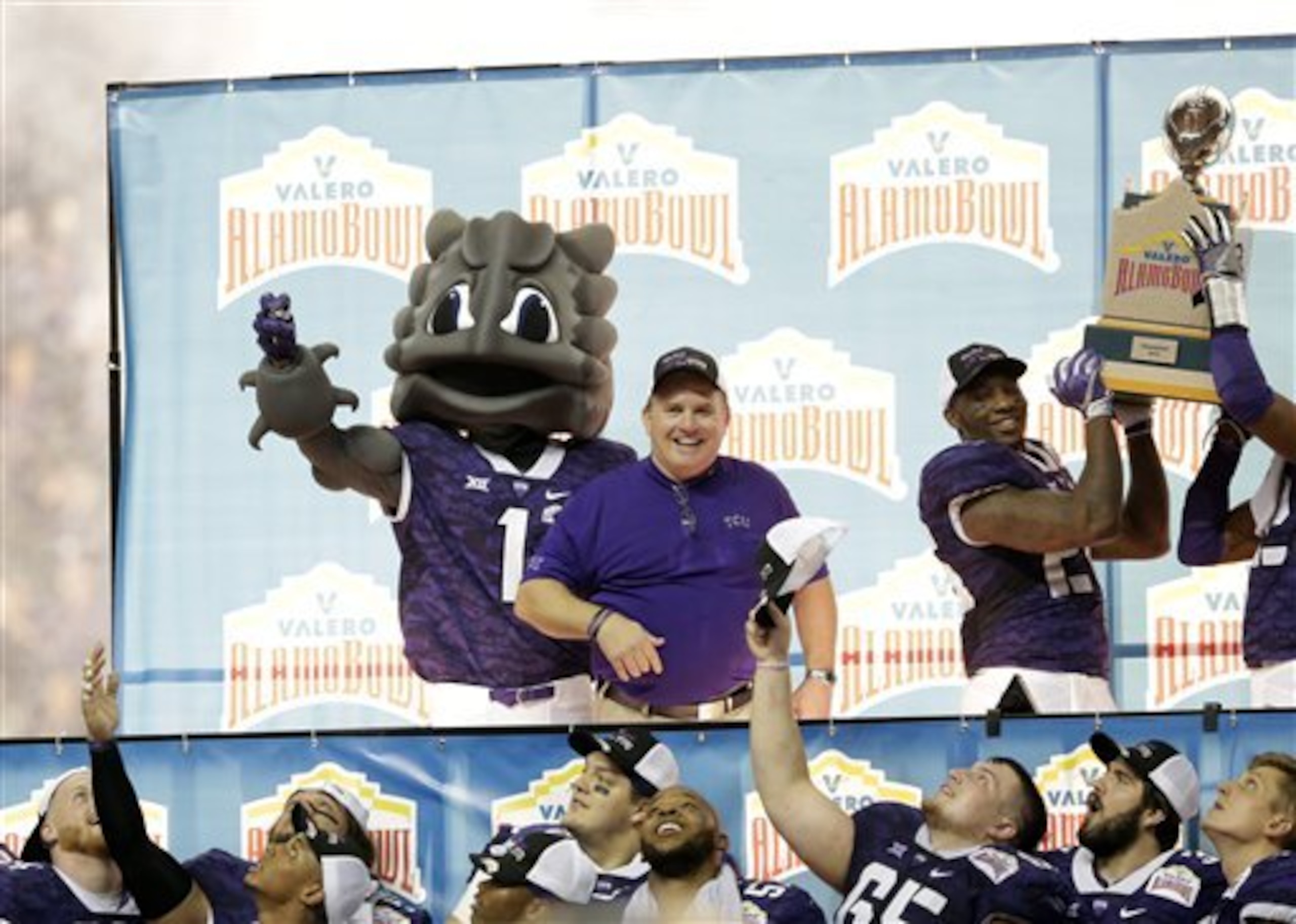
Our lasting memories of TCU from this past season are of a team rallying from a 31-point deficit to win its bowl game in triple overtime, doing so with a patchwork lineup of backups and youngsters. It wasn't the team the Horned Frogs started 2015 with, but it could be what they look like in the fall.
Quarterback Trevone Boykin was suspended for that game, and top receiver Josh Doctson was injured. Both have graduated, as has leading rusher Aaron Green, and there will probably be more new starters than returners.
But the injury issues TCU dealt with all season helped build depth and allow unproven players to step up, such as speedy KaVontae Turpin. And if Texas A&M transfer quarterback Kenny Hill can rekindle the spark he had early in 2014, the Frogs will again be in the mix in the Big 12.
No. 19 Iowa
7 of 25
Iowa's hopes of being able to match its breakthrough 2015 season rested on whether cornerback Desmond King would choose to return to school for one more season. Once the Thorpe Award winner decided that was his best course of action, any other potential holes didn't seem as difficult to fill.
"King recorded eight interceptions in 2015 and is one of the top defensive backs in the nation," ESPN's Josh Moyer wrote. "That's a huge boost for the Iowa defense."
With King back in the fold, the Hawkeyes don't have to worry about starting from scratch in the secondary. They'll need to plug in some new starters throughout the offense, but quarterback C.J. Beathard returns, as do three of the top four rushers.
No. 18 USC
8 of 25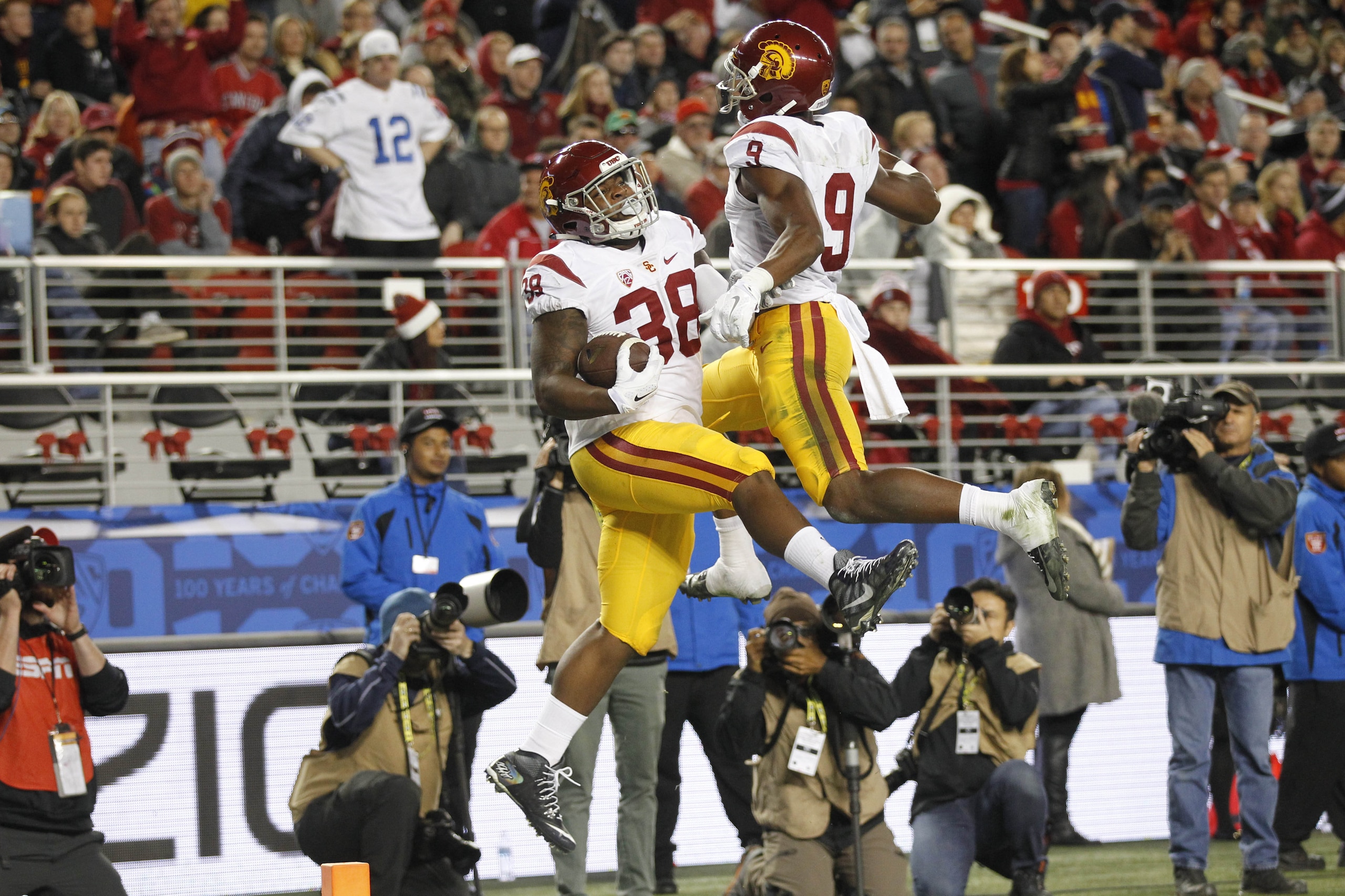
To project what USC will do in 2016 is tricky, since it won't be a matter of whether the Trojans have the talent to perform well this coming season. That's never an issue with this program, and even with the loss of quarterback Cody Kessler and linebacker Su'a Cravens, among others, there's more than enough star power left on the roster.
Instead, USC's chances again will boil down to whether it can just play football and not have outside distractions. Clay Helton will go into his first full season as head coach after having done great in an interim role and then losing both games after being elevated to full-time coach. That puts him behind the eight ball already, and he's well aware of how short the leash is in Los Angeles.
Helton's recently assembled staff—which includes several coaches who were previously with USC during the Lane Kiffin era—has some great players to work with. Ronald Jones set the freshman rushing record, JuJu Smith-Schuster is the school's latest standout wide receiver, and the defense is loaded with standouts.
No. 17 Michigan State
9 of 25
Losing offensive tackle Jack Conklin to the NFL draft wasn't a surprise, but that didn't make it any less painful when he declared earlier this month. That ensured that Michigan State would be going through a major overhaul from the lineup that had won 36 games and two Big Ten titles over the past three seasons.
All told, the Spartans must replace 14 offensive and defensive starters, many of whom were three-year starters. Quarterback Connor Cook finished as the school's career passing leader, while receiver Aaron Burbridge led the conference in catches and yards, and defensive end Shilique Calhoun had been huge on the line for quite some time.
It's not a bare cupboard in East Lansing—just one where Mark Dantonio will have to use different ingredients. There are several solid young running backs to build around, while Malik McDowell is more than capable of assuming Calhoun's role as defensive leader.
No. 16 Washington
10 of 25
It's not just SEC teams that are able to parlay a late-year surge into offseason hype. Washington is going to get some of that "team on the rise" treatment after the way it finished 2015, winning three straight behind a young offense and an underappreciated defense.
And the Huskies bring back almost everyone of importance, which should make them a player in the Pac-12 and maybe beyond.
"Now that the youth has had a season of experience, Chris Petersen should have the Huskies poised to take the next step," Sports Illustrated's Colin Becht wrote.
Running back Myles Gaskin and quarterback Jake Browning both emerged as future stars in their true-freshmen seasons, but they can still get a lot better. The same goes for safety Budda Baker, one of several juniors-to-be who will pace the Washington defense next fall.
No. 15 North Carolina
11 of 25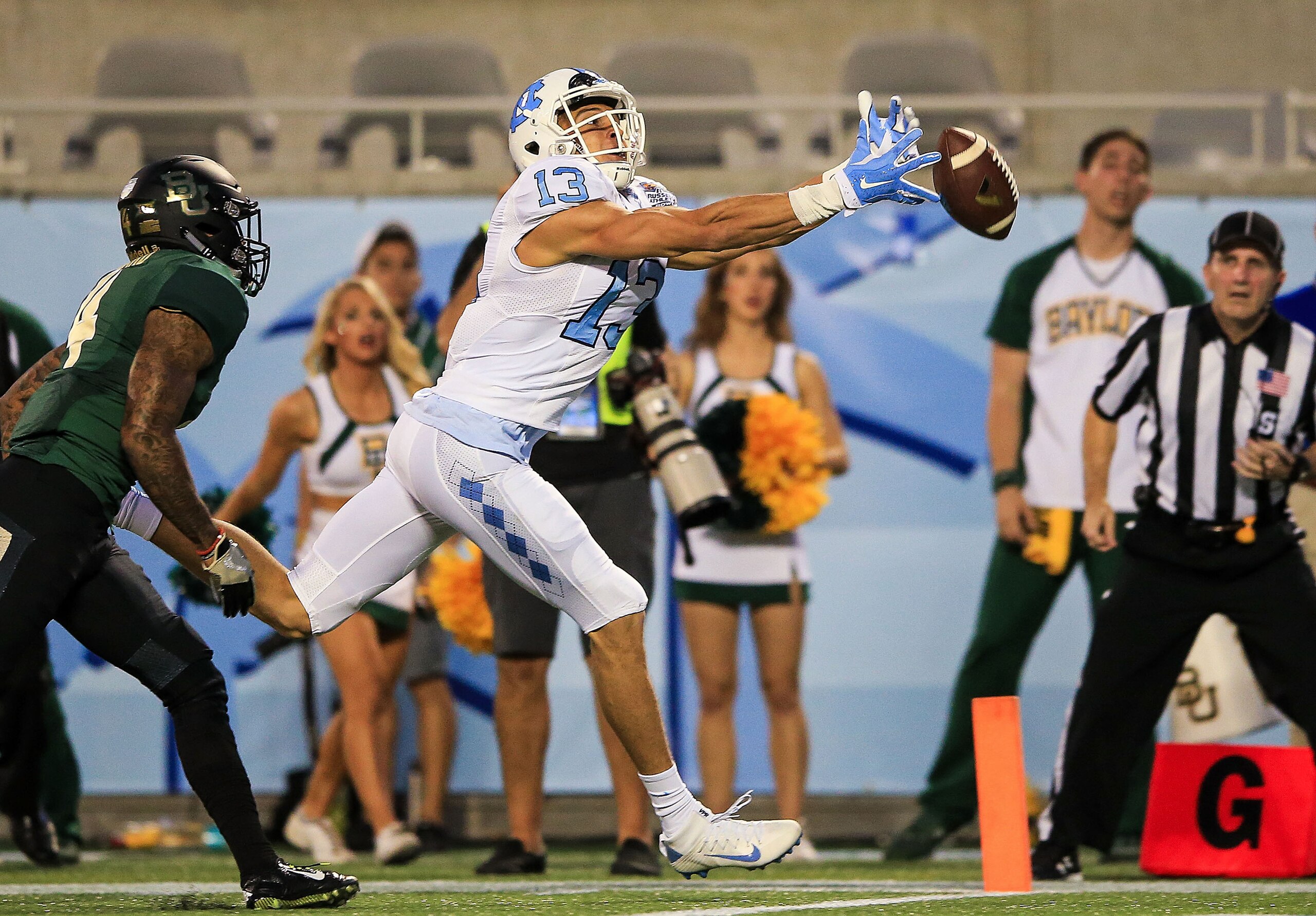
Its season began and ended with losses, but in between, North Carolina was one of the hottest teams in the country when it won 11 in a row en route to the ACC's Coastal Division title. A similar run is possible in 2016, assuming it can replace a few key seniors.
Topping that list is quarterback Marquise Williams, who leaves as the Tar Heels' all-time leader in total offense. Backup Mitch Trubisky is in line to succeed, and he'll have a lot to work with as UNC returns four starters on the offensive line and most of its skill-position players.
The Heels defense, which until getting plowed over by Clemson and Baylor in December had been among the most improved in the country, is poised to return eight starters.
No. 14 Louisville
12 of 25
Louisville might have been one of the biggest winners when it came to the draft deadline, as it did not lose any of its potential departees, which means big things should be expected from the Cardinals this fall.
"The defense got excellent news with the announced returns of linebacker Keith Kelsey, linebacker Devonte Fields, safety Josh Harvey-Clemons and cornerback Shaq Wiggins," wrote Matt Brown of Sports on Earth (h/t Yahoo).
That quartet will help offset the graduation of defensive end Sheldon Rankins and linebacker James Burgess. And the offense is in even better shape, led by sophomore-to-be Lamar Jackson at quarterback.
Jackson finished the year with 2,800 yards of total offense and 23 total touchdowns, with five 100-yard rushing games, including 226 yards in the Music City Bowl win over Texas A&M.
No. 13 Ole Miss
13 of 25
It's seemed like a foregone conclusion, ever since Ole Miss signed a whopper of a recruiting class in 2013, that the best ones from that group were going to be gone after three years. That proved to be mostly true, as offensive tackle Laremy Tunsil, wide receiver Laquon Treadwell and defensive tackle Robert Nkemdiche are all moving on.
But it could have been worse. Much worse. Tight end Evan Engram and safety Tony Conner opted to come back, as did quarterback Chad Kelly, whose one season with the Rebels produced numerous school records.
Kelly's return is great news for Ole Miss because it won't be forced to consider using 5-star quarterback commit Shea Patterson right away. That's not the case with No. 2 overall prospect Greg Little, who could step right in for Tunsil on the offensive line.
No. 12 Stanford
14 of 25
The return of one player doesn't usually trump the loss of several, unless that one player is the most prolific all-purpose athlete in college football history. Stanford's Christian McCaffrey nearly gained 4,000 yards this past season as a running back, receiver and return man, and in his junior year, he might need to top that mark despite being a marked man.
That's because the Cardinal lose a lot from their third Pac-12 title team in the last four years. McCaffrey is one of only three starters back on offense, while the defense brings back five starters. The only departure that might have been unexpected was their lone junior to turn pro, tight end Austin Hooper, who had team highs in catches (45) and yards (645).
By far the most pressing issue for Stanford during the offseason will be identifying its next quarterback. Kevin Hogan was a three-year starter, the winningest QB in school history, and none of his potential successors saw extended playing time in 2015.
No. 11 Houston
15 of 25
Houston accomplished quite a bit in its first season under coach Tom Herman, winning 13 games and earning a bid to the Peach Bowl, where it knocked off Florida State. That was the Cougars' third win against a power-conference team, though their biggest victory of 2015 was managing to hold on to Herman for at least another year.
They also bring back a ton of the top players from this past team, led by dual-threat quarterback Greg Ward Jr. He threw 17 touchdowns and ran for another 21, with more than 1,100 yards, which will enable him to fill the void as Houston tries to replace its top two running backs. Ward won't have No. 1 target DeMarcus Ayers, though, as he turned pro as a junior.
The Houston defense didn't get enough respect for the work it did in 2015, but it has to replace five starters, including most of a secondary that helped force an FBS-best 35 turnovers.
No. 10 Ohio State
16 of 25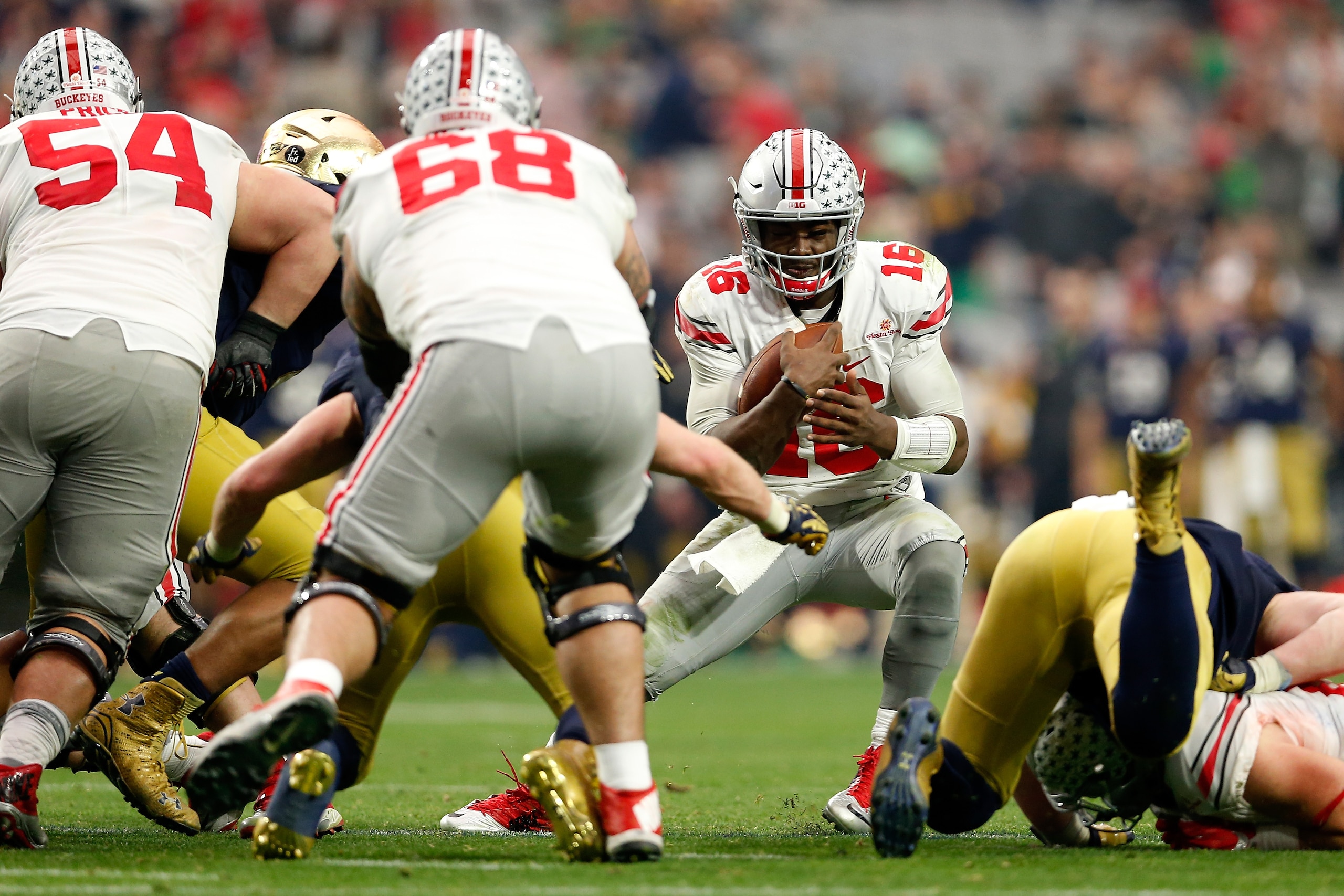
To say Ohio State got raided by the NFL would be an understatement, as nine juniors or redshirt sophomores declared for the draft. The losses are so significant that the Buckeyes' leading returning rusher (other than quarterback J.T. Barrett) and receiver is Curtis Samuel, who had 39 touches in 13 games.
The defensive losses are almost as significant, with eight starters moving on, though leading sack man Tyquan Lewis is still around.
But don't let this mass exodus of talent fool you into thinking Ohio State won't be able to replace those who have left. Depth has yet to be a problem for this team under Urban Meyer, and two seasons ago, it dealt with a similar situation and ended up winning a national title.
Having Barrett back to anchor the offense helps immensely, and he no longer has to fight for his job like in 2015. OSU was in much better shape when he was playing quarterback.
No. 9 Notre Dame
17 of 25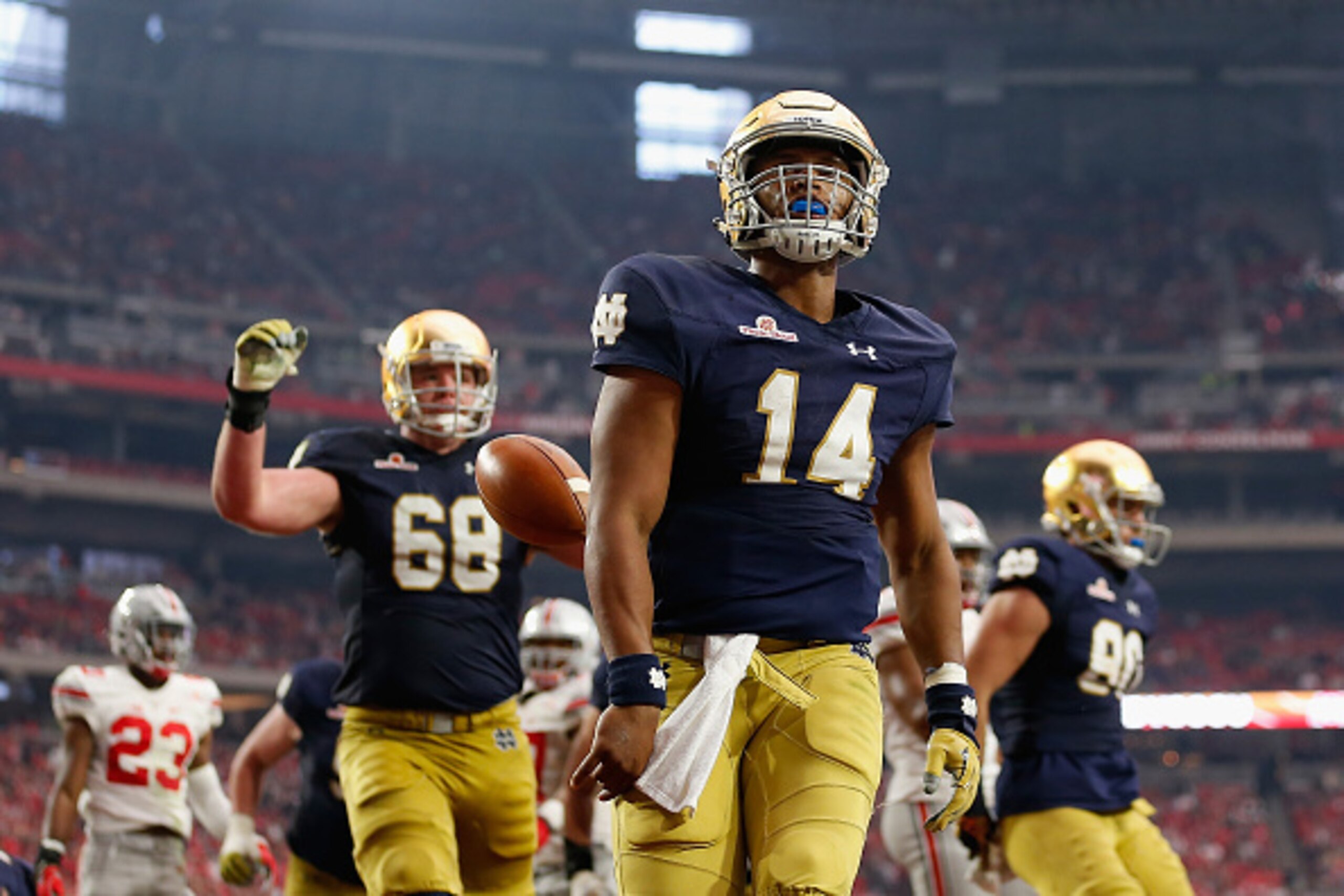
If Notre Dame can prevent its quarterback situation from reaching the level of chaos, distraction and disappointment that Ohio State's got to, all the other question marks this team has won't be of much concern. If the projected battle between Malik Zaire and DeShone Kizer takes on a life of its own, though, then the Fighting Irish could face bumps in 2016.
Injuries had a major impact on this past season but not just in a bad way. With players falling left and right, Notre Dame developed depth that will help ease the loss of five starters to the NFL draft and several more to graduation. Josh Adams should step in for C.J. Prosise at running back, Torii Hunter Jr. and Corey Robinson should be able to replace Will Fuller, and young prospects are ready to get their shot on defense.
Everything circles back to the quarterback position, though. Coach Brian Kelly was quick to act this past offseason in turning to Zaire over Everett Golson, causing Golson to leave for Florida State. A similar devotion to getting the situation settled would make sense.
"There’s no question both of them can help us win, and if it means that we play both of them, well, maybe that’s what happens," Kelly said on ESPN’s SportsCenter (h/t Bleacher Report's Mike Monaco). "But we’re gonna let them both go compete."
No. 8 Tennessee
18 of 25
Another offseason, another round of the offseason hype train for Tennessee. The six-game winning streak the Volunteers finished 2015-16 on will provide ample fuel to power this locomotive across the next several months, similar to how the hot finish to 2014 led to such hopes for this past season.
But will this time be any different?
One thing's for sure: The Volunteers don't have any significant holes to fill. Other than the safety position, where both starters graduate, the return rate is alarmingly high and aided by the decision of every draft-eligible non-senior (other than receiver Marquez North) to come back for another year.
And Tennessee somehow managed to upgrade what was already a good situation on defense by replacing coordinator John Jancek with Penn State's Bob Shoop.
"Tennessee is finally beginning to flex its muscles as a college football alpha dog again, and with tons of talent returning in 2016, there's no reason to believe the Vols won't be in contention for the SEC championship," Bleacher Report's Brad Shepard wrote.
No. 7 Baylor
19 of 25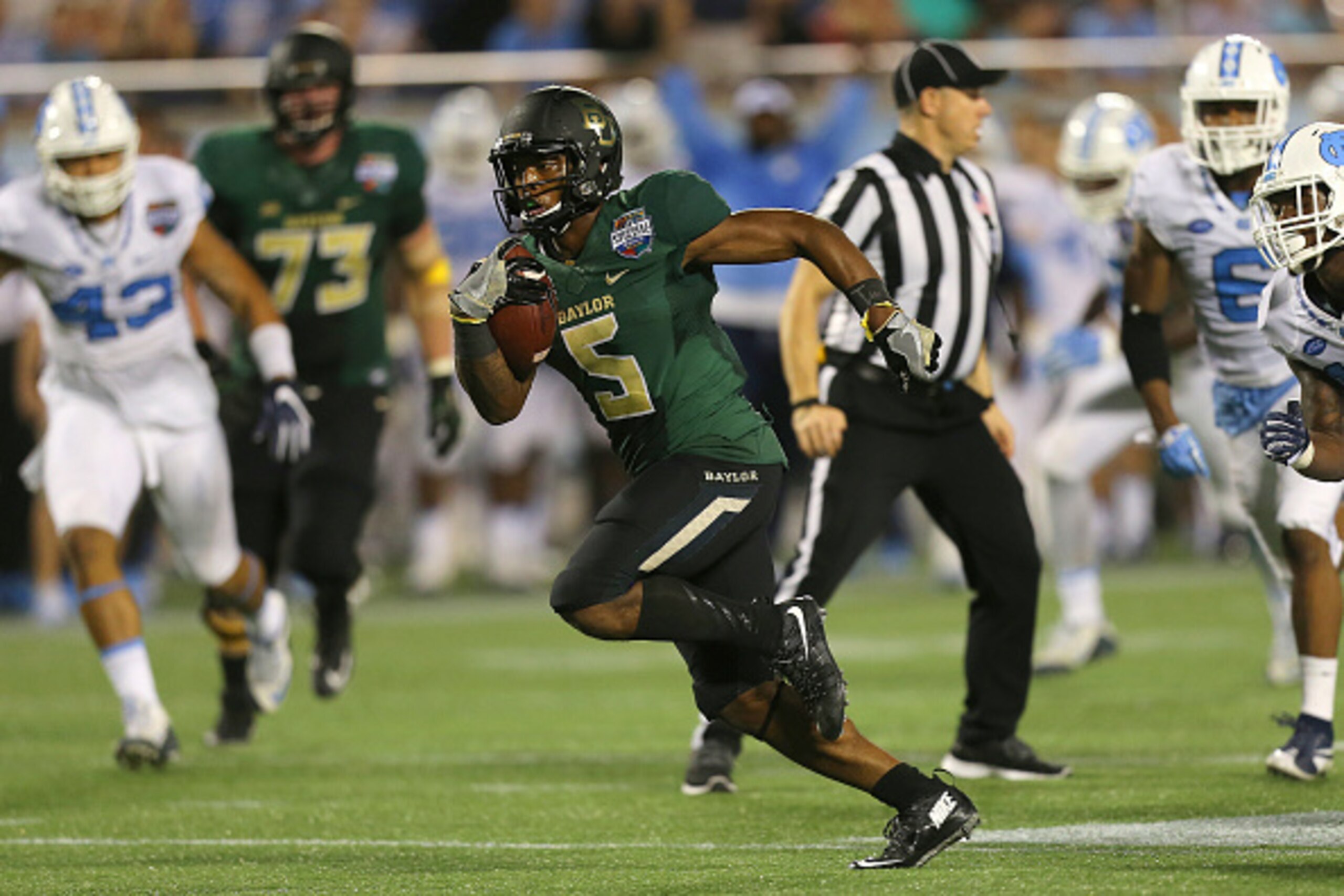
Baylor went through an outstanding—albeit injury-mandated—metamorphosis late in the 2015 season by going from an explosive yet balanced offense to one that really could only run the ball. And yet it still dominated with a bowl-record 645 rushing yards.
With the ability to change like that now well-documented, there's no reason to suspect the Bears can't be an offensive juggernaut again despite some major retooling needed on the offensive line. Only center Kyle Fuller returns, as the other four starters were seniors.
Getting strong protection and blocking is critical for the Baylor offense, both in terms of production and keeping its quarterbacks out of harm's way. Both Seth Russell and Jarrett Stidham suffered major injuries last season, but each should be at full strength for 2016.
Losing junior Andrew Billings from the defensive line wasn't unexpected, but it will hurt.
No. 6 LSU
20 of 25
The early-entry deadline is a day that LSU fans can't wait to put in the past each year, though most times that date comes and goes with a slew of underclassmen saying goodbye.
"Remember when LSU lost 17 underclassmen to the draft in 2013-14? The early exits have slowed considerably," ESPN's Adam Rittenberg wrote.
This time, the Tigers' only impact loss is offensive lineman Gerald Hawkins. Combined with senior Vadal Alexander's graduation, this means they have to replace both tackles.
At least the Tigers already know how effective Leonard Fournette is at running through holes up the middle, while he's fast enough to get around the edge and strong enough to muscle through tacklers if the blocking isn't there. They will want to get some good anchors in those spots, though, especially if Brandon Harris is going to be able to take the next step at quarterback.
LSU thought it might lose cornerback Tre'Davious White and linebacker Kendell Beckwith, but each is coming back for his senior year. Beckwith's return prevents a complete overhaul in the middle, since the other two starting linebackers were seniors.
Coach Les Miles appeared close to losing his job last November, and now he heads into 2016 with plenty of changes to his staff. The most notable addition was Dave Aranda at defensive coordinator, while on the loss side, he said goodbye to running backs coach (and ace recruiter) Frank Wilson, as he left to become UTSA's head coach.
No. 5 Florida State
21 of 25
Florida State is going to be much more experienced on offense in 2016, but just like this last season, everything will depend on who plays quarterback. And the team isn't likely to make that decision during the spring—not with Sean Maguire recently undergoing surgery for a fractured ankle.
Maguire started the Seminoles' final six games, including the Peach Bowl, though he was intercepted four times in that game. If he misses spring practice, that will impact his chance to hold on to the starting job from the likes of sophomore J.J. Cosentino and freshmen Deondre Francois and Malik Henry, the last of whom is an early enrollee.
Thankfully, FSU knows what it has at running back. Dalvin Cook is the first Seminole with consecutive 1,000-yard seasons since the mid-1990s and set the school rushing record in 2015, and that was on a bum hamstring.
Depth on defense will help fill holes left by graduation as well as cornerback Jalen Ramsey's jump to the NFL draft. Rising stars such as safety Derwin James and edge-rusher Josh Sweat will take on bigger roles.
No. 4 Michigan
22 of 25
The Jim Harbaugh era at Michigan has been a rousing success so far, and it's only going to get better. That's assuming that he and his staff can be as fortunate with their quarterback selection in 2016 as they were a year ago.
The play of graduate transfer Jake Rudock topped the long list of things that exceeded expectations a year ago, and now the Wolverines must find a replacement for the one-year rental. It could be another transfer in ex-Houston passer John O'Korn or one of the team's signings from the recruiting trail, but whoever lands that job will have big tight end Jake Butt (6'6", 248 lbs) back for his senior year.
Derrick Green's choice to transfer will thin the running back depth, but De'Veon Smith returns and Michigan already has 4-star prospect Kareem Walker on campus as an early enrollee.
Six starters are gone from the nation's No. 4 defense, but new coordinator Don Brown has plenty to work with.
No. 3 Oklahoma
23 of 25
After getting blown out by Clemson to end the 2014 season, there wasn't much hope that Oklahoma could get things turned around enough in one year to be a title contender. After another loss to the Tigers, the question is whether the Sooners can remain in the hunt.
With Quarterback Baker Mayfield and a nearly intact offense operating a scheme that was wildly successful this past season, the chances are pretty good.
Other than leading receiver Sterling Shepard and two offensive linemen—most notably center Ty Darlington—the Sooners are going to start the same group that scored at least 44 points in seven of nine Big 12 games. The options to step in for Shepard are many, such as wideouts Dede Westbrook and Jarvis Baxter or H-back Dimitri Flowers, who scored on four of his eight receptions.
And don't forget about the running backs—one who holds the single-game FBS rushing record (Samaje Perine) and another (Joe Mixon) who ran for seven scores and also caught four TD passes.
Four starters depart the Big 12's best defense, three from the front seven. Defensive coordinator Mike Stoops has work to do, but Oklahoma doesn't need to be dominant on defense because of how loaded it is on offense.
No. 2 Clemson
24 of 25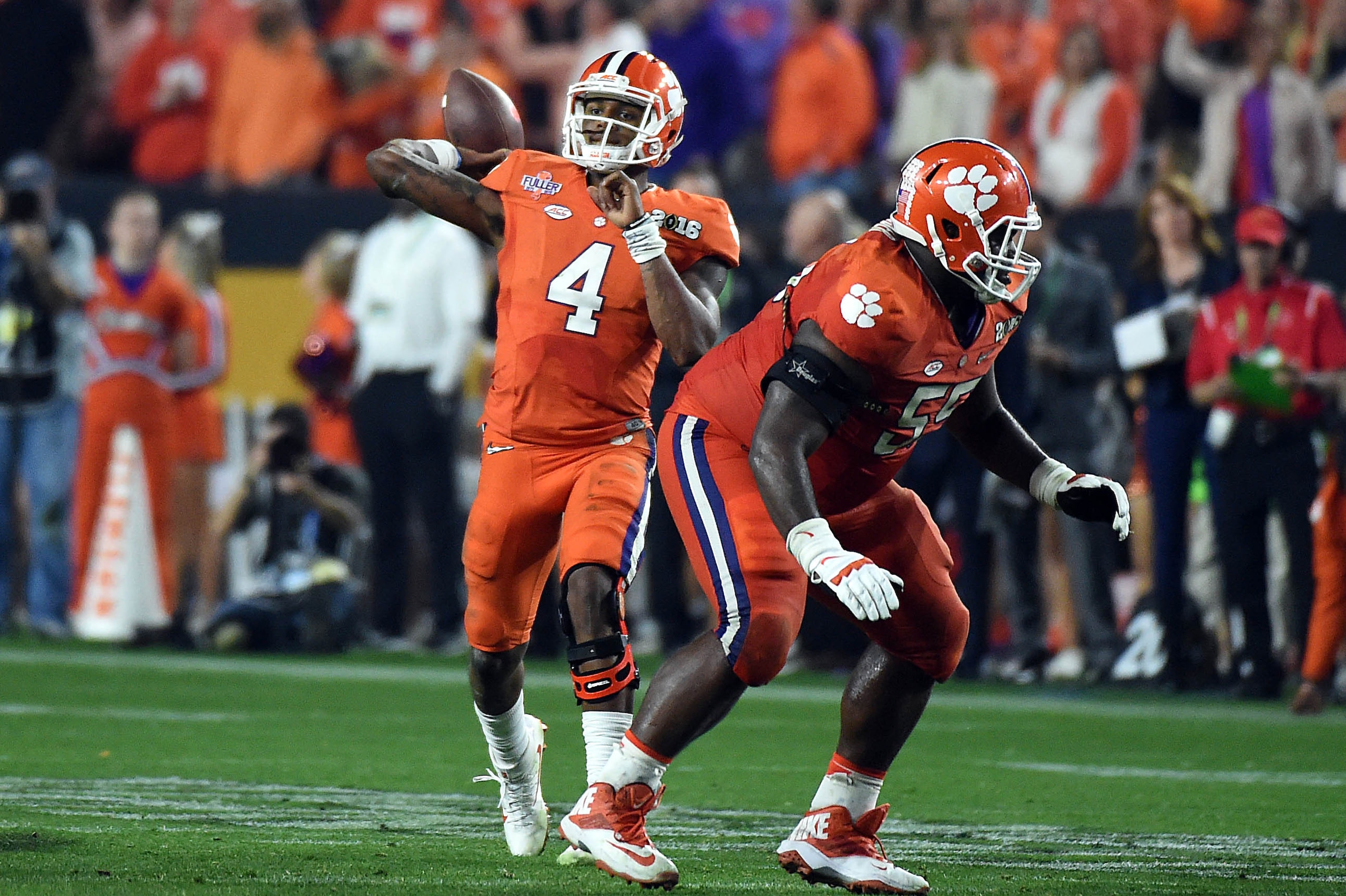
Pretty much every underclassman who was projected to turn pro from Clemson's national runner-up team did as such, so the projections for the Tigers haven't changed much since losing to Alabama last week. That's because Deshaun Watson, Wayne Gallman and Artavis Scott are back for another year as the best offensive trio in the ACC, if not the country.
Watson figures to be among the Heisman front-runners after being the first player in FBS history to throw for 4,000 yards and rush for 1,000 yards. And that was only a year removed from surgery to repair a torn ACL; just imagine what he'll be like after a full offseason of training and preparation, instead of using much of that time rehabbing an injury.
Gallman was a redshirt sophomore and could have left, but in coming back, he can build off his school-record 1,527 rushing yards. And Scott won't be the only receiver with experience coming back, as tight end Jordan Leggett opted not to turn pro and Mike Williams is expected back after missing nearly the entire 2015 season with a neck injury.
The Clemson defense wasn't as fortunate, losing six players to early entry and two senior starters. This will mean the Tigers will have to nearly start from scratch for the second year in a row, which could lead to some early hiccups.
No. 1 Alabama
25 of 25
Alabama's depth was on full display during the national championship game, to the point where it was pretty clear it was set to reload for the 2016 season. And that was with the assumption of certain juniors choosing to turn pro.
Then title game star O.J. Howard and leading sack man Jonathan Allen both decided to return for their senior seasons, meaning the Crimson Tide won't need to load as many bullets as expected.
Allen's return is by far the bigger deal. He was ranked 23rd on Bleacher Report NFL draft expert Matt Miller's most recent big board, and he'll lessen the affect of Alabama losing Jarran Reed and A'Shawn Robinson from the defensive line, as well as Reggie Ragland and others at linebacker.
"With Allen's return, the players who had 41 of Alabama's nation's-best 52 sacks will be back next season," Alex Byington of DecaturDaily.com wrote.
And Howard, who was horribly underused until catching two touchdown passes against Clemson, means Alabama will bring back its top three receivers. That will help provide whoever succeeds Jake Coker at quarterback with ample options to throw to, while promising prospect Bo Scarbrough steps in to replace Heisman winner Derrick Henry at running back.
Recruit ratings courtesy of 247Sports.
Follow Brian J. Pedersen on Twitter at @realBJP.
.jpg?w=2560)
.jpg?w=2560 "Rams Eagles Football")
.jpg?w=2560 "Injury-stricken Seahawks signing veteran RB")

.jpg?w=2560 "2 NFL Officials Suspended")

.jpg?w=2560 "Mahomes' Wife Trolls Kubiak 💀")
