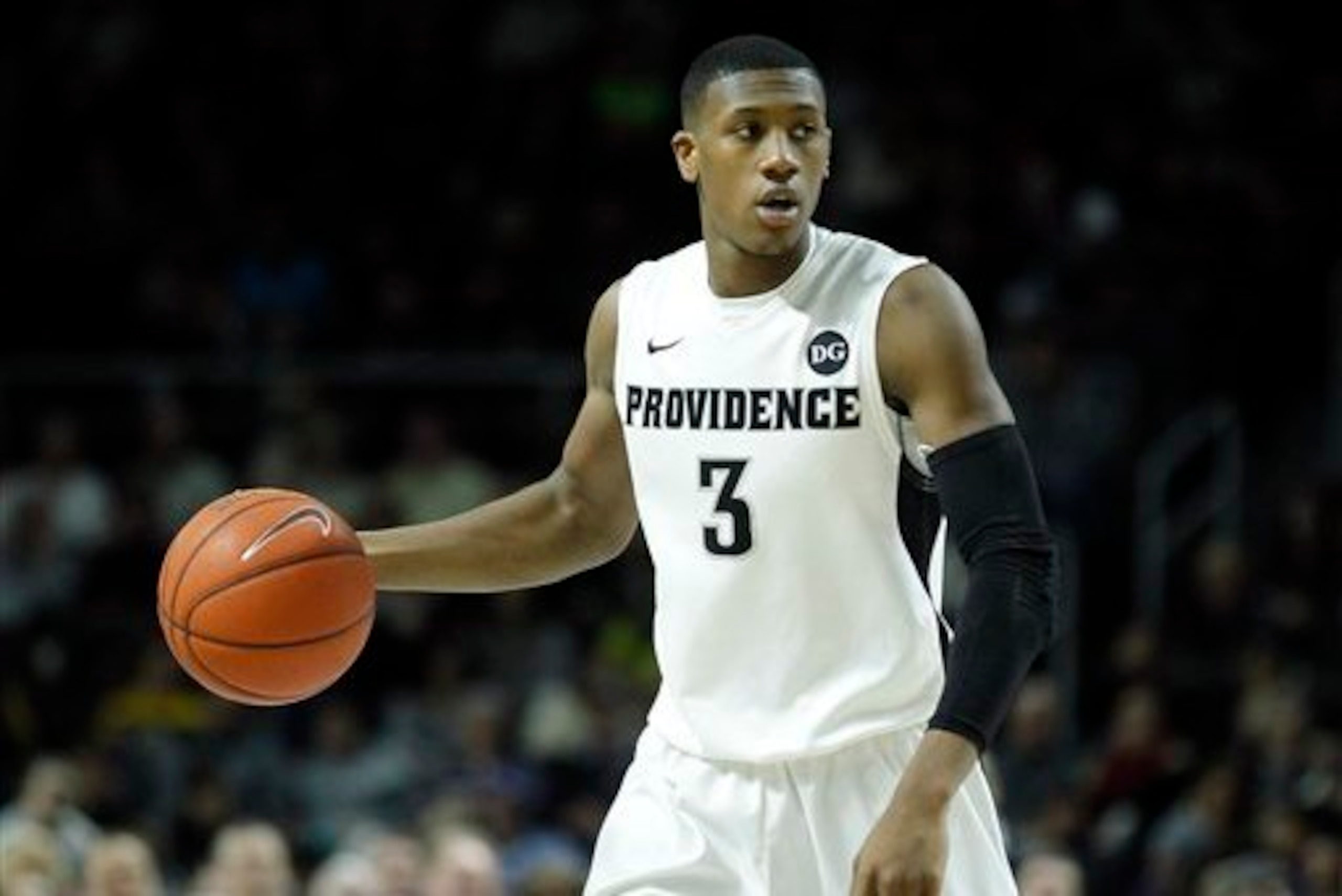

Ranking the Nation's Top 100 Overall Players for 2015-16 NCAA Basketball Season
It used to be easy to predict who the best players in college basketball would be.
Look back 20 years ago. The Associated Press All-American first-team that season included Ray Allen, Marcus Camby, Tim Duncan, Allen Iverson and Kerry Kittles. Iverson was the only underclassman of the group, and he was a sophomore who had averaged 20.4 points per game as a freshman. Three of the five (Allen, Duncan and Kittles) had appeared on one of the three All-American teams the year before. They were lottery picks making it to their upperclassmen years in college. It wasn't that hard to predict before that season who were going to be the best players in college basketball.
Fast forward to this season. All five first-team All-Americans went to the NBA, two of which were one-and-done freshmen. Only four players off the three All-American teams return to school (Virginia's Malcolm Brogdon, Iowa State's Georges Niang, Oklahoma's Buddy Hield and Gonzaga's Kyle Wiltjer), and really only Hield had a decision to make about the NBA out of that group.
The turnover in college basketball has made freshmen more relevant in today's game, and it has made making lists like this more difficult to generate.
Not asking for your pity. The larger point I'm trying to get at is that any top 100 list has to take a much more predicative approach than, say, 20 years ago.
So the formula that I use in making this list is a combination of talent, opportunity and past success of players in a similar role in that system. This is not based on where each player will eventually go in the NBA draft. It's more of a prediction of which players will have the most significant impact on this college basketball season.
The unpredictability of it all makes for a lot of fun preseason debate. Have at it.
This is the final installment in B/R's positional ranking series for the 2015-16 season. In case you missed it, here are the top 20 point guards, shooting guards small forwards, power forwards and centers. Some text that appears in those slideshows appears in this article as well.
100-96: Loveridge-Arcidiacono
1 of 60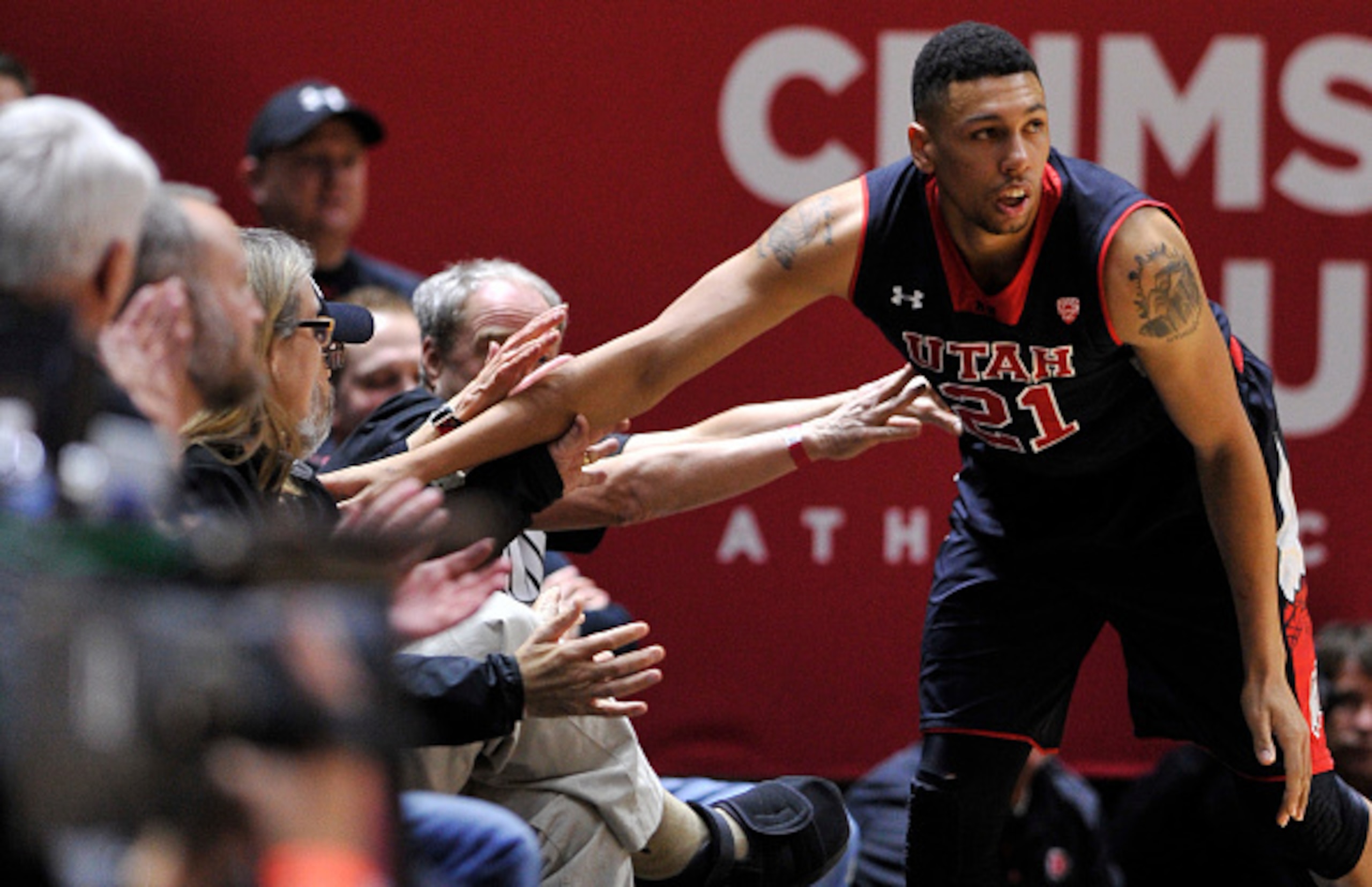
Jordan Loveridge, Utah
Class: Senior
2014-15 Stats: 10.0 PPG, 3.9 RPG, 1.0 APG
This season, Utah will look to get a combination of Jordan Loveridge as a sophomore and junior.
Last season, Loveridge improved drastically as a three-point shooter—from 30.6 percent to 43.5 percent—but he wasn't able to score nearly as much inside the arc, and his scoring averaged dipped 4.7 points per game. That's probably because midseason knee surgery slowed Loveridge down, making him more of a spot-up shooter type than he had been in the past.
The sophomore version of Loveridge was a threat outside, but he was more dangerous working out of the post or in the mid-range area of the floor. With an offseason to get his legs back, we should see more of that player this year but with the improved jumper added to his arsenal. The Utes lost do-everything point guard Delon Wright, so they'll need Loveridge to get back to scoring more.
Amida Brimah, Connecticut
Class: Junior
2014-15 Stats: 9.1 PPG, 4.4 RPG, 3.5 BPG
Amida Brimah offers the best rim protection in the country. He led the NCAA in blocked shots (121) last year. Offensively, he's never been aggressive but finishes well when he gets his chances. He shot 67.4 percent as a sophomore and 64 percent as a freshman.
If Brimah can show more of an offensive game this season, that raises the Huskies' ceiling and could make him an intriguing NBA prospect. He got off to a good start by scoring 18 points in UConn's opener against Maine.
Isaiah Briscoe, SG, Kentucky
Class: Freshman
2014-15 Stats (High School): 20.8 PPG, 5.5 RPG, 4.0 APG
Kentucky's Isaiah Briscoe should come in not looking like the usual freshman. Briscoe's game is mature for his class, and he can fit into just about any role.
In the summer of 2014, I watched Briscoe play the star (19.2 points, 6.9 rebounds and 5.2 assists per game) in leading the New Jersey Playaz to an EYBL title at the Peach Jam, and I watched him play solid ball as a role guy for the under-18 United States squad at the FIBA Americas tournament.
Briscoe probably saw his role diminish a bit when Kentucky signed Jamal Murray. His numbers might not be as great, but he should be a solid defender who can go out on any given night when needed and score 15 points for a top-five team.
John Brown, PF, High Point
Class: Senior
2014-15 Stats: 19.3 PPG, 6.0 RPG, 1.2 APG, 1.0 BPG
John Brown is not only the biggest, baddest man in the Big South, he's also probably one of the oldest. He's already 23 and will be 24 this coming year. Point being that this is a grown man in the college game.
That's not to take away from Brown's ability or argue he wouldn't be as effective if he were younger. Sure, age helps his case, but he has been a beast throughout his college career at High Point. Brown does a lot of his damage in the paint and has been known to abuse a rim or two. Do yourself a favor and take a few minutes to watch some of his best work.
Ryan Arcidiacono, PG, Villanova
Class: Senior
2014-15 Stats: 10.1 PPG, 3.6 APG, 1.1 SPG
It says a lot about Ryan Arcidiancono that he shared Big East Player of the Year honors with Kris Dunn last year despite putting up numbers that weren't exactly POYish.
It's not about the numbers or ego with this guy. This season he'll share point guard duties with star freshman Jalen Brunson, and if any player is willing and able to do so, it's Arcidiacono. It is a good fit too, because Arcidiacono is a knockdown shooter and Brunson should give him more opportunities to spot up. Together, they should form one of the best backcourts in the county.
95-91: Jones-English
2 of 60
Jalen Jones, PF, Texas A&M
Class: Senior
2014-15 Stats: 13.7 PPG, 6.6 RPG, 1.0 SPG
Transfers Jalen Jones and Danuel House immediately made a huge impact on a Texas A&M offense that hadn't been very good in 2013-14. Jones is a bit undersized at 6'7", but he can bulldog his way to the basket and has always been good at getting to the free throw line.
The Aggies upgraded their talent with a great recruiting class and should rise from a bubble team to the top 25. Jones will work well next to A&M incoming bigs Tyler Davis and Elijah Thomas, and with his slashing abilities, he could see some time at the 3 in bigger lineups.
Kahlil Felder, PG, Oakland
Class: Junior
2014-15 Stats: 18.1 PPG, 7.6 APG, 4.8 RPG, 2.0 SPG
Kahlil Felder is one the best playmakers in college basketball, and he now has some new weapons to work with. Oakland added two transfers from Iowa State and former Texas wing Martez Walker, who was one of the most talented guys on the Longhorns' roster.
The Golden Grizzlies could be a sneaky-good mid-major team. Here's hoping their success allows more people the chance to watch Felder play.
Rasheed Sulaimon, SG, Maryland
Class: Senior
2014-15 Stats (at Duke): 7.5 PPG, 1.8 APG, 1.0 SPG
Rasheed Sulaimon never really lived up to expectations past his freshman season at Duke. The way he played as a freshman led many to believe he had star potential, but he spent his final couple years in Durham in and out of the doghouse.
A change of scenery could ultimately lead to Sulaimon showing what he was capable of had he kept himself in Mike Krzyzewski's good graces. We know he can shot and fill it up from the perimeter when given the chance. He showed glimpses of that at Duke. Maryland was already stacked, but his addition could be the missing piece, a reliable outside shooter and secondary ball handler to help out Melo Trimble.
Wayne Selden, SG, Kansas
Class: Junior
2014-15 Stats: 9.4 PPG, 2.8 RPG, 2.6 APG
Had Kansas not played in the World University Games this summer, Wayne Selden would be much lower on this list.
Selden as a sophomore was mostly a disappointment. He took too many long twos. When he did get to the rim, he finished poorly. He had the occasional hot night shooting the three and he did improve as a perimeter defender, but his offensive production was underwhelming.
Then a totally different Selden showed up for the Jayhawks this summer. He used his big body and athleticism to get to the rim. He finished really well around the basket. And he used his slashing game to help set up his jump shot, which looked great as well. Selden ended up leading the Jayhawks in scoring (19.3 points per game) and was the MVP of the tournament in South Korea.
Selden spent most of his time this summer playing small forward, and he'll probably see more time there this year than in the past. Maybe that had a role in his success. Whatever clicked, the expectations have changed for his junior year.
A.J. English, SG, Iona
Class: Senior
2014-15 Stats: 20.1 PPG, 5.1 APG, 5.1 RPG, 1.4
If you haven't watched Iona in the past, be sure and check out the Gaels this season. For one, they play fast and score a lot of points. But their star, A.J. English, is also good enough to demand your attention.
English is not just the product of a system. He's a future pro. Whether that's in the NBA or overseas is debatable, but the guy should end up making a lot of money playing ball somewhere. He's a 6'4" athletic point guard who can shoot the three. You just don't find many of those at any level.
90-86: Davis-Gibbs
3 of 60
Tyler Davis, C, Texas A&M
Class: Freshman
2014-15 Stats (High School): 18.7 PPG, 12.2 RPG, 3.4 BPG
Tyler Davis arrives at Texas A&M with a mature game that should allow him to have a very successful season. Davis has a big body (6'10" and 265 pounds) and already understands how to use his size to score from the blocks. He has solid post moves, good hands and a soft touch around the bucket. That combination is not easy to find anymore.
Davis isn't going to excite scouts with his athleticism, but he should be a productive player at A&M for years.
Ivan Rabb, C, Cal
Class: Freshman
2014-15 Stats (High School): 24.5 PPG, 16.3 RPG, 4.5 BPG
Ivan Rabb has one of the highest upsides of any player in the freshman class. He's an athletic 6'11" and is a skilled low-post scorer. He can shoot with either hand—he's ambidextrous—and his footwork is textbook.
If you catch Rabb on the right day, he looks like a star. But he also had some games on the EYBL circuit as a high schooler when he was hardly noticeable. He's not always aggressive.
There are a lot of mouths to feed at California. The Bears have talented perimeter players who are going to want to shoot. Whether Rabb puts up numbers or not will depend on how willing they are to get him involved. If head coach Cuonzo Martin makes it a priority to play through Rabb, he could very well be one of the most productive post players in the country.
Ryan Spangler, C, Oklahoma
Class: Senior
2014-15 Stats: 9.7 PPG, 8.2 RPG, 1.3 APG, 1.1 BPG
Ryan Spangler does not need touches to get his points or keep his intensity level up. The dirty work man for the Sooners is all about playing hard, defending and rebounding, which is perfect on a team that has plenty of scoring from the perimeter. Any scoring opportunities he gets is just gravy.
That's not to say Spangler isn't gifted. He can step out and hit a jumper and is a good finisher around the rim. He shot 62.7 percent inside the arc last season. But his value for Oklahoma is more about the intangibles and hustle he brings to the table. His intensity is contagious, and he played a big role in OU's defensive improvement last year. The Sooners ranked ninth in adjusted defensive efficiency, per kenpom.com, and Spangler helped limit opponents to just 42.2 percent shooting inside the arc.
Devin Williams, C, West Virginia
Class: Junior
2014-15 Stats: 11.6 PPG, 8.1 RPG, 1.3 APG
The culture that West Virginia coach Bob Huggins wants is personified by Devin Williams. Tough. Rugged. Relentless.
Williams is not a guy anyone wants to cross paths with in the paint. He's intimidating based on his size and build alone, and he's just as strong as he looks. The Mountaineers were not particularly skilled last year, but they got by playing harder than everyone else and creating a ton of turnovers.
Williams helps allow West Virginia to play a helter-skelter defense by gobbling up rebounds on the backend of that gambling defense. He ranked fourth in defensive rebounding rate last year, pulling down 30.0 percent of available defensive boards, per kenpom.com. On the offensive end, he gets most of his points by simply outworking people as well and drawing fouls. He averaged 5.8 free throws per game last season.
And lastly, he rocks a mean pair of rec specs. That earns him some extra street cred.
Sterling Gibbs, SG, Connecticut
Class: Senior
2014-15 Stats (at Seton Hall): 16.3 PPG, 3.8 APG, 2.1 RPG, 1.2 SPG
Sterling Gibbs is at his third college this season, and he's the ultimate rent-a-player. UConn system has been ideal for a scoring guard—see Shabazz Napier and Ryan Boatright—and Gibbs was the best one of the best options out there available on the transfer market.
Gibbs has come a long way from the freshman guard who could barely get on the floor at Texas. He's a professional scorer at this point in his career with a confident shooting stroke—he made 43.6 percent of his threes last season. UConn is one of those teams tough to predict how it will all come together, but if I had to bet on anything with the Huskies this season, it would be that Gibbs does what he was brought there to do: score.

.jpg?w=2560)
No. 85-81: Woodard-House
4 of 60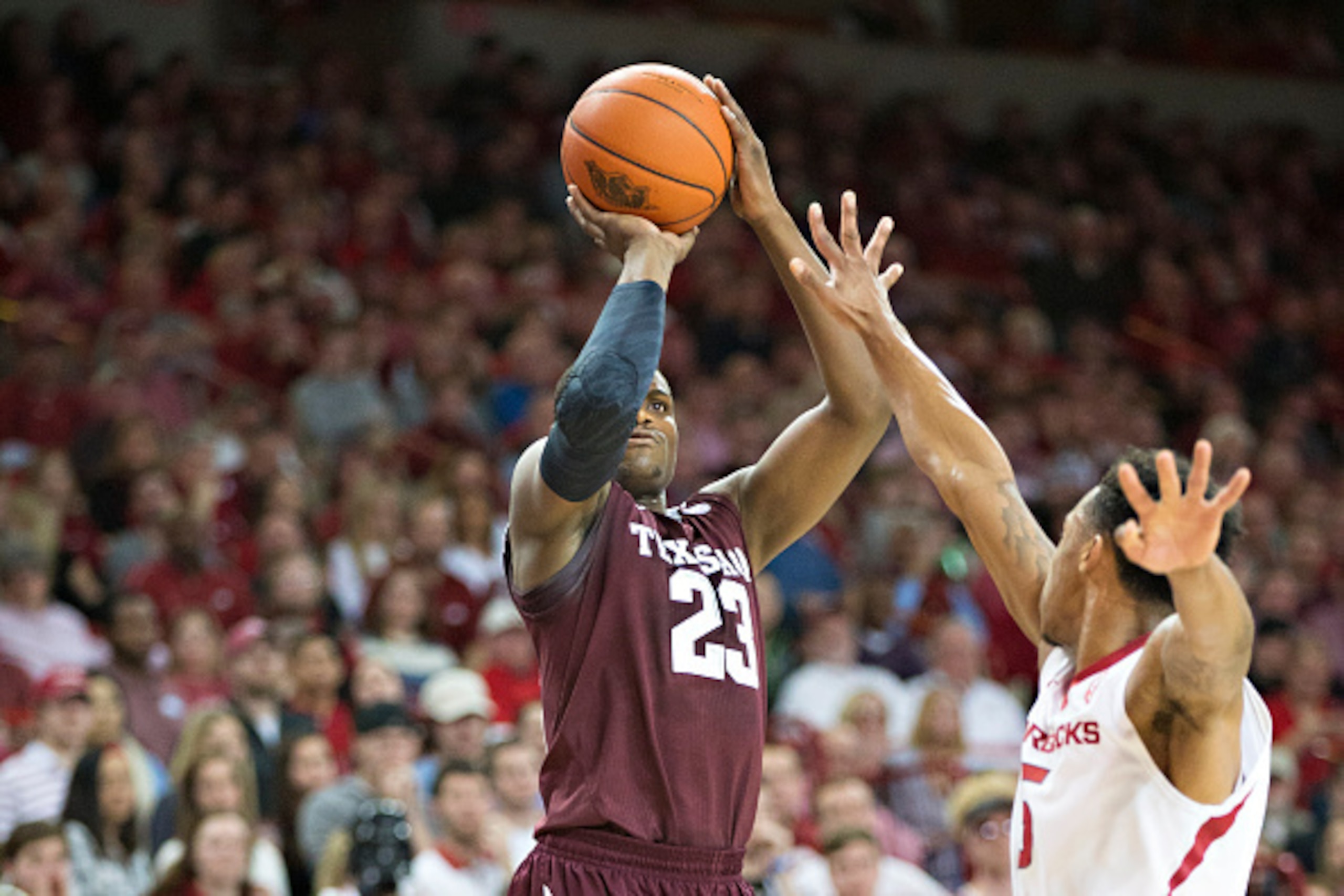
James Woodard, SG, Tulsa
Class: Senior
2014-15 Stats: 14.5 PPG, 4.9 RPG, 1.1 APG
James Woodard has flown a bit under the radar because he's been at Tulsa and only made one NCAA tournament. But the streaky lefty has been productive on good teams the last two years.
It took some time for the Golden Hurricane to get going last year under new coach Frank Haith, but they ended up going 14-4 in the American Conference. If not for their crummy nonconference run, they would have been in the NCAA tournament for the second straight year. With all five starters back, including Woodard and fellow senior point guard Shaquille Harris in the backcourt, Tulsa should get back to the tournament and give Woodard a chance to make his mark in March.
Isaiah Cousins, SG, Oklahoma
Class: Senior
Stats: 11.7 PPG, 4.6 RPG, 2.2 APG, 1.2 SPG
Isaiah Cousins is one of the most underappreciated guards in the country, and it's probably because he plays in the shadow of Buddy Hield.
Hield is unquestionably the star, but Cousins deserves a lot of credit for the ascent of the Sooners. Cousins is the team's best perimeter defender, and OU went from a very average defense his sophomore season to finishing ninth in adjusted defensive efficiency last season, per kenpom.com.
Cousins also wasn't much of a shooter as a freshman, making just 10 threes that year, and last season he made 63 threes and shot 45 percent from deep. Part of what makes the Sooners so good is that if Hield is off, Cousins is capable of carrying the water.
Winston Shepard, PF, San Diego State
Class: Senior
2014-15 Stats: 11.1 PPG, 5.3 RPG, 1.9 APG
San Diego State has ranked 17th, ninth and fourth in adjusted defensive efficiency in Winston Shepard's three years at San Diego State, per kenpom.com.
Steve Fisher does a great job of recruiting long, quick and versatile athletes like Shepard to make it really, really hard for the other team to score. That recruiting philosophy hasn't always led to great offense, and Shepard, the team's leading scorer last season, isn't exactly the ideal go-to guy.
He's inefficient and not a great shooter, but he's always done a great job of getting to the free throw line and that's made him productive.
Cheick Diallo, C, Kansas
Class: Freshman
2014-15 Stats (High School): 17.6 PPG, 10.5 RPG, 2.5 BPG
The Jayhawks are hoping that Cheick Diallo can be what they hoped Cliff Alexander would be: An inside scorer who dominates with his motor.
Alexander didn't help much last season, and if Diallo is allowed to play, he'll start his freshman year behind the curve because of the NCAA investigation of his eligibility.
If Diallo is able to master the KU system and catch up to the college game, he has unique abilities that should serve him well. He is exceptionally quick for a big man and runs the floor really well, which should help create pace for the Jayhawks. He's also good on the boards and has the length to provide solid rim protection.
It could take Diallo some time to figure out how to score effectively in Bill Self's big man-friendly halfcourt offense, but the Jayhawks have enough scoring in other spots that if Diallo provides energy and is a defensive presence, he'll be an impact guy.
Danuel House, SG, Texas A&M
Class: Senior
2014-15 Stats: 14.8 PPG, 3.8 RPG, 2.1 APG,
Danuel House was allowed to play immediately last season after transferring from Houston and he nearly helped Texas A&M get back to the NCAA tournament.
House's value was apparent late in the year. He missed the final four games of the season with a foot injury and A&M fell apart, losing three of those games including a bad loss to Auburn in the SEC tournament. Before House got hurt, the Aggies had won 11 of 14 games and he had scored 18 or more points in seven of those contests.
With a good core returning led by House combined with one of the best recruiting classes in the country, the Aggies should be one of the top teams in the SEC.
No. 80-76: Hill-Carter
5 of 60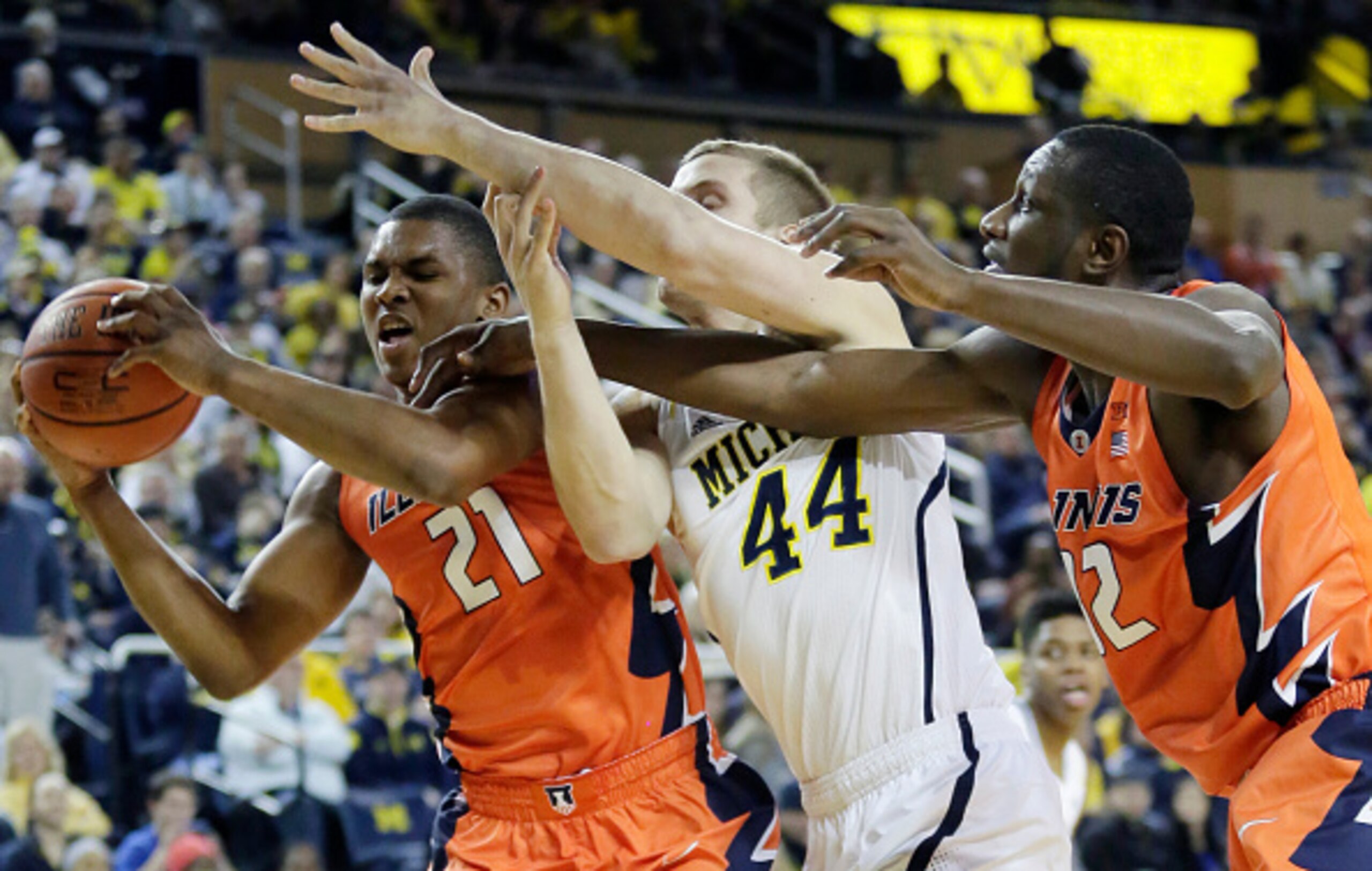
Malcolm Hill, SF, Illinois
Class: Junior
2014-15 Stats: 14.4 PPG, 4.8 RPG, 1.3 APG
Malcolm Hill is a matchup nightmare. Put him at the 3 and he can overpower his defender. Put him at the 4 and he can abuse his guy off the dribble and stretch the floor with his jumper.
Hill was one of the most improved players in the country last season, and a big part of that was getting stronger and making himself a hybrid forward. He was listed 20 pounds heavier as a sophomore than his freshman year.
With Rayvonte Rice graduating, Hill will be looked upon to be the Illini's primary scorer this year.
Diamond Stone, C, Maryland
Class: Freshman
2014-15 Stats (High School): 24.4 PPG, 11.7 RPG, 3.0 BPG
Maryland point guard Melo Trimble didn't put up great assist numbers last year (3.0 per game), but that should change this season with the chance to play with Diamond Stone.
Stone is good enough to simply lob the ball into him and let him go to work one-on-one in the post, something Maryland lacked on the interior last season. The freshman big man is able to knock down the mid-range jumper, so the pick-and-pop will be a weapon. He has extremely soft hands, so anytime Trimble penetrates and draws the defense, he should be looking out for Stone.
The Terps haven't had a big man this gifted on the offensive end since Lonny Baxter. Coincidentally, Baxter's senior year is the last time the Terps made a Final Four and won a national title. Stone's addition is one reason Maryland is considered one of the nation's top title contenders this year.
Justin Sears, PF, Yale
Class: Senior
2014-15 Stats: 14.3 PPG, 7.5 RPG, 1.5 APG, 2.4 BPG, 1.1 SPG
Justin Sears has a funky looking shot and he's not the smoothest of scorers, but the guy produces. His quick burst and length—some may call him lanky—also make him a dangerous weapon on the defensive end.
Sears was the Ivy League Player of the Year last season, and before you minimize that accomplishment as the best player among a bunch of smart kids, remember that Harvard is recruiting at a pretty high level these days and has won two NCAA tournament games in the last three years.
Sears and the Bulldogs nearly ended Harvard's NCAA tourney run last year, but they lost on a buzzer beater to Dartmouth on the final day of the regular season, then lost by two to Harvard in a one-game playoff for the conference title.
Kaleb Tarczewski, C, Arizona
Class: Senior
2014-15 Stats: 9.3 PPG, 5.2 RPG, 0.6 BPG
If you're starting at Arizona for four years, you're doing something right.
Kaleb Tarczewski has been a dependable program player for head coach Sean Miller over the years. He has his limitations—he doesn't have great hands or post moves—but he's a capable finisher and has anchored a defense that ranked first and third in adjusted defensive efficiency the last two years, per kenpom.com.
The Wildcats lost four starters, but I'll bet they spend most of the year around the Top 10, and Tarczewski will quietly be a big reason why.
Robert Carter, PF, Maryland
Class: Junior
2013-14 Stats (at Georgia Tech): 11.4 PPG, 8.4 RPG, 1.1 APG, 1.1 BPG
Two years ago Robert Carter finished the season with Georgia Tech averaging 16.7 points per game over the final six games of the season. That was on a bad team, but it was in the ACC and it was obvious that Carter had ability his first two years at Georgia Tech.
During the year Carter sat out at Maryland, he reportedly went to work on his body. Carter lost nearly 20 pounds and his body fat went from 18 percent to 12 percent, Don Markus of The Baltimore Sun reported this summer. Carter and Diamond Stone both give the Terps the back-to-the-basket inside scorers that they lacked a season ago.
No. 75-71: Peters-Sabonis
6 of 60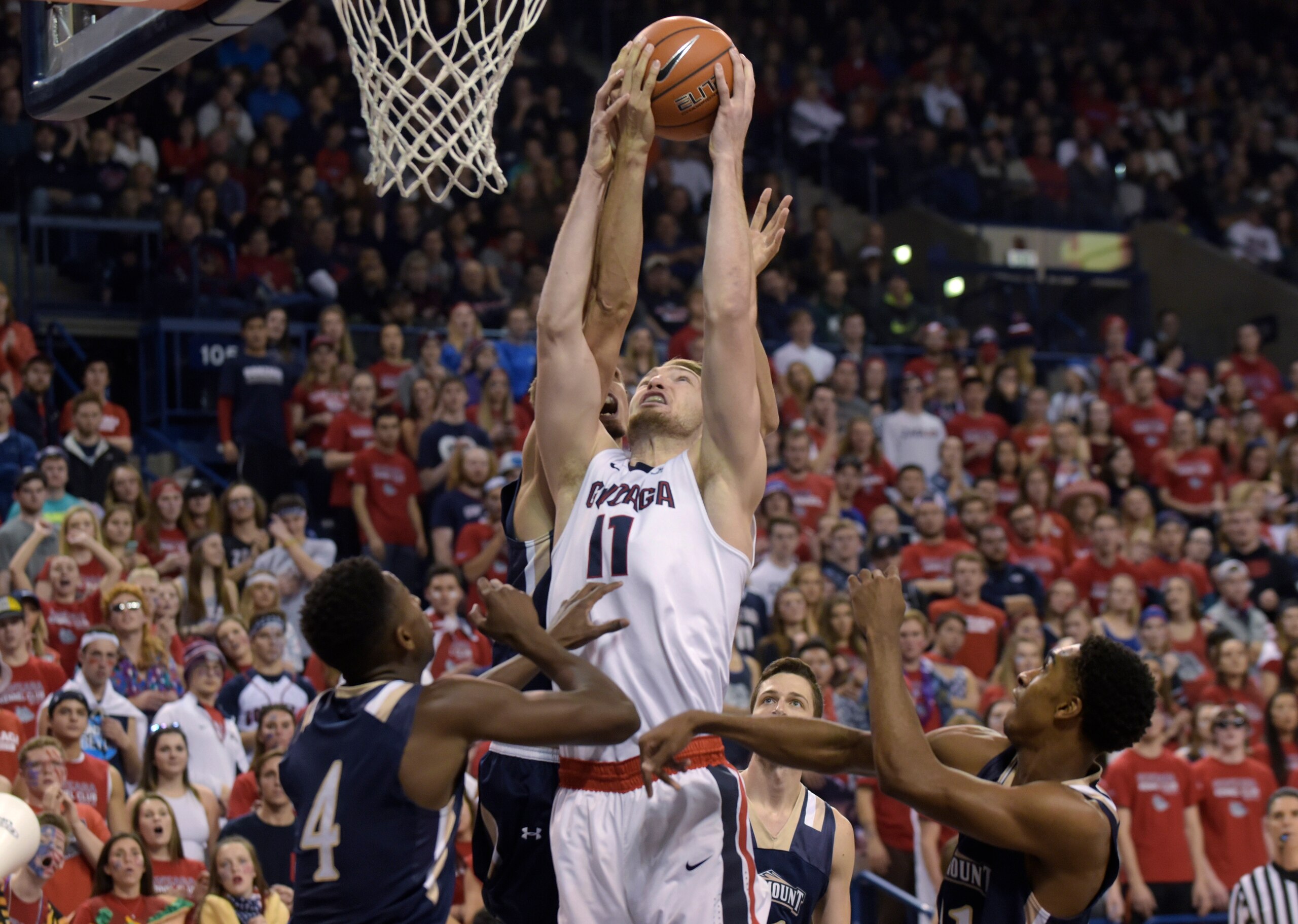
Alec Peters, PF, Valparaiso
Class: Junior
2014-15 Stats: 16.8 PPG, 6.7 RPG, 1.2 APG
Alec Peters is one of the best shooters in college basketball and certainly the best shooter at his position in the country.
Peters made 83 threes last season and shot 46.6 percent from deep. He had only three games in which he didn't make a three. He's not just a one-trick pony either, as he made more baskets inside the arc than he did outside it last season.
The Crusaders were close to advancing the NCAA tournament last season, losing by just three points to Maryland as Peter dropped four threes and 18 points. That's a Maryland squad that some outlets will have preseason No. 1 this year. At 6'9", Peters is a high-major talent playing for a team that no major program will want to see come March.
Steve Vasturia, SF, Notre Dame
Class: Junior
2014-15 Stats: 10.1 PPG, 1.7 APG, 3.0 RPG, 1.1 SPG
Steve Vasturia was one of the most unappreciated players in the country last season.
Notre Dame's coaching staff raved about his defensive ability. He was clutch, taking and making some huge shots, including the game-winner to beat Duke in South Bend. He averaged 17.0 points per game over Notre Dame's final three games in the NCAA tournament. And he was stellar from the mid-range, knocking down 57.9 percent of his mid-range jumpers, according to Hoop-Math.com.
A 3-and-D wing in most systems is valuable. In Notre Dame's system, it's gold. It also helps that Vasturia, at 6'5", can play shooting guard and a small-ball 4 for the Irish in addition to small forward. He's a big reason why the Irish might not fall off as much as you'd think after graduating Jerian Grant and Pat Connaughton.
Trevon Blueitt, SF, Xavier
Class: Sophomore
2014-15 Stats: 11.0 PPG, 4.2 RPG, 2.4 APG
Xavier has made the NCAA tournament in nine of the last 10 seasons, and the program has had some stars who get overlooked until March. That's usually when the Musketeers are making a run and proving their talent is better than anyone thought. The attention that Matt Stainbrook received during last year's Sweet 16 run is a prime example.
That guy this year for the Musketeers will likely be leading returning scorer Trevon Bluiett. Bluiett had a great start to his freshman year--18 points per game over Xavier's first five contests--but he fizzled down the stretch. He scored just 11 points in Xavier's final four games.
Last year's team was very balanced with six players averaging better than 8.4 points per game, so they could win without a consistent Bluiett. The offense went through Stainbrook, but he was as much a passer as he was a scorer. That could change with Bluiett as the go-to guy. He is a natural scorer, and look for his usage rate to go up this season.
Tim Quarterman, SF, LSU
Class: Junior
2014-15 Stats: 11.5 PPG, 4.0 APG, 5.2 RPG, 1.4 SPG
LSU will have one of the more unusual offenses in college basketball this season, because the two best players on the roster (Ben Simmons and Tim Quarterman) are both point forwards.
Quarterman gets overlooked because of the additions of Simmons and fellow freshman Antonio Blakeney, but he's on the radar of NBA scouts. It's rare to finish his combination of athleticism and ability as a playmaker at 6'6".
Last season, he led the Tigers in assists, and this summer on the team's trip to Australia he finished second to Simmons in both scoring (16.4 per game) and assists (4.6 per game).
Domantas Sabonis, C, Gonzaga
Class: Sophomore
2014-15 Stats: 9.7 PPG, 7.1 RPG
Domantas Sabonis is not as skilled as his father, Arvydas, but the smarts rubbed off. Sabonis is patient in the post and uses his strength and footwork to get easy shots. He's also a lefty, which makes him even harder to guard.
He made 66.8 percent of his shots last season, which would have ranked second nationally if he had enough attempts. He also averaged 18.0 points and 13.1 rebounds per 40 minutes. Opportunity is the only thing holding him back, as he plays in a stacked frontcourt. If he sticks around for his junior season when both Kyle Wiltjer and Przemek Karnowski will have graduated, Sabonis could end up being an All-American.
No. 70-66: Hammons-Walkup
7 of 60
A.J. Hammons, C, Purdue
Class: Senior
2014-15 Stats: 11.9 PPG, 6.6 RPG, 2.8 BPG
A.J. Hammons missed the first two games of the season and came off the bench for the third, and he's not injured, so that's not a great sign. When Hammons isn't in the dog house, he's one of the most gifted centers in college basketball. He's a strong 7-footer with offensive upside who offers rim protection on the defensive end. Yet, to this point in his career, Hammons hasn't always played to his potential.
That could be a blessing for Purdue because if Hammons had played at a higher and more consistent level, he may have left school already. Instead, Purdue will once again have one of the best interior defenses in the country and multiple low-post scorers. With him as a senior, the Boilermakers have a loaded front line that includes 7'2" backup center Isaac Haas and McDonald's All-American freshman power forward Caleb Swanigan. That's a lot of beef and length in the paint.
Josh Scott, C, Colorado
Class: Senior
2014-15 Stats: 14.5 PPG, 8.4 RPG, 1.1 APG, 1.8 BPG
Josh Scott has quietly been one of the best back-to-the-basket scorers in college basketball over the last few years. He didn't get a lot of attention last year because the Buffs fell off the map last season after three straight NCAA tournament appearances.
Scott put up solid numbers despite low usage rates, mostly because of his ability to maximize his touches. He has solid post moves and can score over either shoulder. Plus, he gets to the line frequently, as he attempted 5.9 free throws per game last season.
The Buffs should end up playing through Scott more this season, and his numbers should go up now that Askia Booker has graduated. Booker was one of the chuckingest chuckers in college basketball. More Scott more often will be a good thing for the Buffs.
Caleb Swanigan, PF, Purdue
Class: Freshman
2014-15 Stats (High School): 22.6 PPG, 13.7 RPG
Caleb Swanigan could easily go with the centers, but we'll grant him his wish. Swanigan, who originally committed to Michigan State, is at Purdue in part because he wanted to play power forward.
The Boilermakers have triplet towers with Swanigan joining 7-footers A.J. Hammons and Isaac Haas. The shorter Swanigan, who is 6'9", will likely be the best rebounder among the trees. He led the EYBL in rebounding in the summer of 2014, and he does a great job using his big backside to carve out space.
Swanigan can knock down the occasional outside jumper, but he would probably be better suited playing next to a stretch 4 type, as he's best on the blocks with his back to the basket. It bears watching how head coach Matt Painter designs his offense. Nevertheless, Swanigan is too promising of a talent not to produce, especially on the boards.
Anthony Drmic, SF, Boise State
Class: Senior
2014-15 Stats (7 games): 15.0 PPG, 5.0 RPG, 1.6 APG
Derrick Marks and his 19.4 points per game are gone, but Boise State has the perfect guy to replace the scoring of a graduated star, the guy who was the star before Marks.
Yes, it was Anthony Drmic who was the Batman to Marks' Robin before last season. Drmic led the Broncos in scoring the duo's first three years in school, and the offense took a slight dip in efficiency last season without him.
Drmic played only seven games before season-ending ankle surgery as a senior last year, and the NCAA granted him a medical hardship. Now Drmic has a shot to co-star with James Webb III, a stretch 4 man with NBA potential, to get the Broncos to their third NCAA tourney in four years. Drmic and Webb will be one of the best 3-4 combinations in all of college basketball.
Thomas Walkup, SF, Stephen F. Austin
Class: Senior
2014-15 Stats: 15.6 PPG, 6.5 RPG, 3.7 APG, 1.2 SPG
Thomas Walkup is one of the best mid-major players at one of the best mid-major programs in the country. Last season, Walkup led Stephen F. Austin in scoring and rebounding, and he finished second on the team in assists.
The Lumberjacks have made back-to-back NCAA tournaments, will be heavy favorites to win the Southland Conference again and probably continue to be the favorite as long as Brad Underwood is around. He's finding players to fit his system and has lucked into a few guys, like Walkup, who could play at the major-conference level but slipped through the cracks.
Walkup, who was already around when the coach arrived, has been a terrific fit in Underwood's pinch-post offense as a driver, cutter and creator. He could play in just about any system, but he gets the most out of his ability in Underwood's offense because of his feel for of how to use the offense to get easy buckets.
No. 65-61: Rathan-Mayes-Balentine
8 of 60
Xavier Rathan-Mayes, PG, Florida State
Class: Sophomore
2014-15 Stats: 14.9 PPG, 4.3 APG, 3.5 RPG, 1.1 SPG
When Xavier Rathan-Mayes gets hot, it's a fun ride. Rathan-Mayes is the guy who put up an insane 30 points over the final 4 minutes, 38 seconds at Miami last year. He finished with 35 points in that game, and that was the second time he had dropped 35 points—both, coincidentally, were FSU losses.
Help is on the way this season for Rathan-Mayes, as Leonard Hamilton signed a strong freshman class led by Dwayne Bacon.
The Seminoles should also expect a more consistent Rathan-Mayes, who finished the season averaging 19.4 points over FSU's last eight games. The main area Rathan-Mayes should improve is scoring more efficiently. He struggled shooting the ball from deep last year—he shot 28.1 percent on 171 attempts. He's a better shooter than that, and with better scorers around him, he shouldn't have to take as many bad shots.
Alex Poythress, PF, Kentucky
Class: Senior
2014-15 Stats (8 games): 5.5 PPG, 3.8 RPG, 1.5 BPG
The last time Alex Poythress was playing exclusively at power forward was in the summer of 2014 in the Bahamas, and Poythress was Kentucky's best player on that trip. He led the 'Cats in scoring and made 83.3 percent of his shots inside the arc.
Poythress got off to a slow start last season before tearing his ACL eight games in, but he was playing out of position at small forward. He's a better fit as a small-ball 4. It's hard to say how John Calipari's rotation will shake out this year, but Kentucky's best lineup will likely include Poythress at the 4.
He can be used similar to Willie Cauley-Stein on the defensive end, able to switch screens and guard on the perimeter, and he's best offensively when he's hanging around the rim. His return is one of the most overlooked reasons why UK will once again be a title contender.
Shawn Long, C, Louisiana-Lafayette
Class: Senior
2014-15 Stats: 16.4 PPG, 10.2 RPG, 1.5 APG, 1.6 BPG
Shawn Long is one of the most talented centers in the country, regardless of level. Long can score both inside and out, and the ability at 6'11" to shoot with range will give him a shot to get drafted after he graduates. The Sun Belt has had two players get drafted the last two years: Long's former teammate Elfrid Payton and Georgia State's R.J. Hunter.
Long has averaged a double-double for three straight seasons, and he has more double-doubles (52) in his career than any current college player. If he puts up another 17 double-double this season, which is his career average, he'll finish tied for 16th on the NCAA all-time list.
Damion Lee, SG, Louisville
Class: Senior
2014-15 Stats (at Drexel): 21.4 PPG, 6.1 RPG, 2.3 APG, 1.5 SPG
Damion Lee will be an interesting case study this season. Can a great scorer from a losing, small mid-major team make the jump to a big program and succeed?
Louisville needed scoring after losing Montrezl Harrell to the NBA, and the early returns this summer from Louisville's trip to Puerto Rico suggested Lee is legit. He averaged 23.6 points and 6.2 rebounds on the trip.
When you look at Lee's advanced numbers last year as well, they suggest that he wasn't just a chucker on a bad team. He was an efficient scorer who shot well from deep (38.9 percent) and made a living getting to the foul line, where he scored 168 of his points and shot 88.9 percent. If he can do those two things well and have enough energy to play the hellacious full-court defense Rick Pitino demands, he'll be a great fit with the Cardinals.
D.J. Balentine, SG, Evansville
Class: Senior
2014-15 Stats: 20.1 PPG, 3.2 APG, 3.2 RPG
D.J. Balentine is not exactly an advanced stats darling—he takes a lot of jumpers inside the arc—but he's mastered the art of the mid-range J and that's part of the reason he puts up points so consistently.
Balentine is one of those mid-major guys who could transfer up and produce. Props to him for staying put at Evansville, where the program has improved each season and could make some noise this year. The Purple Aces won the postseason CIT last year, and Balentine has a good sidekick in big man Egidijus Mockevicius. They're not on Wichita State's level, but they should challenge Northern Iowa, Illinois State and Indiana State for second place in the Valley.
No. 60-56: Brooks-Webb III
9 of 60
Dillon Brooks, SF, Oregon
Class: Sophomore
2014-15 Stats: 11.5 PPG, 4.9 RPG, 1.8 APG
Dillon Brooks is the most likely player on Oregon's roster to take over the go-to guy role from Joseph Young, and that fits Brooks' game and personality. Brooks will have some competition in senior Elgin Cook and freshman Tyler Dorsey, but Dana Altman would be smart to give Brooks the opportunity to be that guy.
Brooks likes being the alpha dog. He thrived in that role the last two summers playing for Canada. This past summer, he led the Canadians to a fifth-place finish at the under-19 World Championships, finishing as the second-leading scorer in the tournament at 18.8 points per game.
In Brooks, the Ducks have a different type of scorer than Joseph was. Brooks is more of a slasher who does a good job getting to the free throw line. If he can improve his three-point shot—33.7 percent as a freshman—he could become one of the toughest scorers to guard in the Pac-12.
Zak Irvin, SF, Michigan
Class: Junior
2014-15 Stats: 14.3 PPG, 4.8 RPG, 1.5 APG, 1.0 SPG
Michigan's coaching staff has done a great job of finding athletic shooters with size who can play multiple positions, and Zak Irvin is yet another.
Irvin saw his role in the program evolve last season. As a freshman, he was mostly a spot-up shooter in John Beilein's offense, and he was extremely efficient in that role. Irvin made 42.5 percent of his threes that season.
Last year, his usage and scoring numbers increased, but he shot only 35.5 percent from deep. It was difficult for him to be as efficient as he got less wide open looks and had to work harder to get shots. Michigan has done a great job with its player development, and Irvin should take another leap this year. It will also help that he'll have less pressure on him with the return of Caris LeVert.
Jameel McKay, C, Iowa State
Class: Senior
2014-15 Stats: 11.0 PPG, 7.6 PG, 2.4 BPG
Iowa State struck gold with another transfer when Jameel McKay landed in Ames by way of Marquette. McKay gave the Cyclones the one piece they had been missing in the Fred Hoiberg era—a rim-protector—and his contributions on the offensive end were more than expected.
McKay's speed alone is a weapon, as he regularly beats his man up the floor. The Cyclones are all about opportunistic baskets, and McKay is a killer in transition. But he's also been solid in the halfcourt, using his quickness or jumping ability to get buckets or get to the foul line. He scored in double figures in 11 of his final 13 games last season.
As for his defense, the Cyclones two-point field-goal percentage D was the best it had ever been in the Hoiberg era last year. McKay, who wasn't eligible first semester, had six games with four or more blocks.
D'Vauntes Smith-Rivera, PG, Georgetown
Class: Senior
2014-15 Stats: 16.3 PPG, 3.2 APG, 4.2 RPG, 1.6 SPG
D'Vauntes Smith-Rivera is one of those guys who seems like he's been around forever. That's because Smith-Rivera has been productive since the minute he stepped foot on Georgetown's campus.
In Smith-Rivera, the Hoyas have a perfect program player who can score the ball efficiently, run the offense and rarely turns it over. Smith ranked in the top 10 in the Big East last season in scoring, assists, steals, free throw percentage (86.1), three-point percentage (38.7) and three-pointers made (72).
James Webb III, PF, Boise State
Class: Junior
2014-15 Stats: 11.2 PPG, 8.0 RPG, 1.1 SPG
James Webb III's story is pretty unreal. He started his career at a juco, North Idaho College, where he averaged 9.2 points per game. He transferred to Boise State after one year at North Idaho and redshirted his first season in Boise. He then began last season glued to the bench, going scoreless in 11 minutes over the first five games with two DNPs.
Then Boise State star wing Anthony Drmic got hurt, and Webb came out of nowhere to become the team's second-leading scorer and one of the most efficient players in the country. Now he's a legit NBA prospect, who DraftExpress has going 41st in the 2016 draft.
No. 55-51: Meeks-Gathers
10 of 60
Kennedy Meeks, C, North Carolina
Class: Junior
2014-15 Stats: 11.4 PPG, 7.3 RPG, 1.1 APG
The slimmed-down version of Kennedy Meeks that will suit up for the Tar Heels this season is barely noticeable from the one who showed up on campus.
Meeks' body is now better suited for UNC's uptempo style of play, and his uptick in minutes should continue this coming season—he went from playing 16.3 minutes per game as a freshman to 23.3 minutes per game as a sophomore. What has always made Meeks special is his soft hands and touch around the basket and an ability to throw some mean outlet passes to start the break. Now the Heels should get that package for closer to 28-30 minutes per game.
Stefan Moody, SG, Ole Miss
Class: Senior
2014-15 Stats: 16.6 PPG, 2.4 APG, 3.4 RPG, 1.7 SPG
Stefan Moody has taken over the designated chucker role from Marshall Henderson, and he's a (less noisy) upgrade over Henderson.
Moody can catch fire and is almost unstoppable when he gets in that zone. Moody seemed to be at his best on the big stage as well. He scored 25 points in an overtime loss at Kentucky, and he carried Ole Miss to a win over BYU in the NCAA tourney play-in game, scoring 26 points and dishing out five assists.
Like Henderson, Moody has the occasional game where he'll shoot his team out of it. But usually even when he's not hitting, he'll still produce by getting to the free throw line, where he shot 90.3 percent as a junior.
Grayson Allen, SG, Duke
Class: Sophomore
2014-15 Stats: 4.4 PPG, 1.0 RPG, 0.4 APG, 9.2 MPG
Ranking Grayson Allen this high might be an overreaction to the national championship game? BUT DID YOU SEE THE CHAMPIONSHIP GAME?!
Allen was awesome on the biggest stage, showing the exact traits that you want out of a scoring guard. He knocked down perimeter jumpers, and he slashed through Wisconsin's defense and finished at the rim. It also wasn't the only bit of proof that Allen can ball. He gave a sneak peek weeks earlier of what he was capable of when he went for 27 points against Wake Forest.
Now Allen has a chance to be one of Duke's go-to guys. Jahlil Okafor, Justise Winslow, Tyus Jones and Quinn Cook are all gone, and even if talented freshman wing Brandon Ingram emerges as the go-to guy, Allen figures to play a big role in Duke's offense. We'll see if he's more than a one-hit wonder. I'm going to bet that he is.
Malik Newman, SG, Mississippi State
Class: Freshman
2014-15 Stats (High school): 29.7 PPG, 5.7 RPG, 4.2 APG
Malik Newman is the best scorer in the 2015 class, and he's entering a situation where he should get as many shots as his heart desires. The Bulldogs return four of five starters, but no one on the roster is nearly as talented as Newman.
It's rare that new Mississippi State coach Ben Howland has had a guard dominate the ball in the past, although he was used to having elite talent at UCLA and pretty good players at Pitt as well. Even with Newman, he's not going to have the number of pros he's accustomed to coaching. Howland will look to build an offense around Newman, and he did show in his final year at UCLA that he can adapt his style to the roster. The Bruins played much faster that season than they traditionally had.
The biggest question surrounding the Bulldogs—and what scouts will be looking for—is whether the freshman can make those around him better. Everyone knows he can score. He'll be a point guard at the next level, so showing he can pass and elevate the guys around him will be key to Mississippi State's success and his draft stock.
Rico Gathers, PF, Baylor
Class: Senior
2014-15 Stats: 11.6 PPG, 11.6 RPG, 1.2 SPG, 1.0 BPG
Rico Gathers is the Dennis Rodman of college basketball if Dennis Rodman had been built like a defensive end. Gathers is a 6'8", 275-pound immovable object. He's also athletic and runs the floor well. The man is a beast.
Gathers is likely to lead the country in rebounding this season—he finished tied for third last year—and he's a double-double threat every night out. He's not super skilled, but he's developed a nice jump hook, and no shocker here, he does a pretty good job at establishing position and posting guys up.
50. Troy Williams, PF, Indiana
11 of 60
Class: Junior
2014-15 Stats: 13.0 PPG, 7.4 RPG, 2.0 APG, 1.0 SPG
Troy Williams isn't exactly a stretch 4. He's capable of shooting the 3—and he'll probably take more threes this season—but he only attempted 13 shots from beyond the arc last season. He's certainly not a traditional power forward, as you'll rarely ever see him catch the ball with his back to the basket. The term that best defines Williams is a playmaking 4, a role similar to Draymond Green played for Golden State last year.
Williams is the most explosive athletes in college basketball, and Tom Crean has had success utilizing the speed of his 4 or 5 men. He did it with Cody Zeller, and Williams was a big reason why the Hoosiers offense turned elite last year. Crean made it almost impossible to load up the help side when Williams had the ball by surrounding him with shooters. He even played Williams some at the 5.
The Hoosiers will have closer to traditional look this season with the addition of big man Thomas Bryant. His presence should only help Williams, as he will not have to concentrate as much on rebounding and can leak out more in transition, where he's even more dangerous than in the halfcourt.
49. Nic Moore, PG, SMU
12 of 60
Class: Senior
2014-15 Stats: 14.5 PPG, 5.1 APG, 2.3 RPG, 1.3 SPG
The season Nic Moore put together made losing out on a year of Emmanuel Mudiay not as much of a gut punch as it could have been. Moore was the American Conference's Player of the Year and led the Mustangs to their first conference title since 1993 and an NCAA tournament appearance. It's a shame he's not going to be a part of the NCAA tournament this year.
Moore, at 5'9", is just a tough little guard who gets the most out of his ability and doesn't back down from anyone. He had some of his best games in SMU's most meaningful contests last year. He scored 23 points in a big road win at American Conference runner-up Tulsa, and he had 24 points in the NCAA tourney game against UCLA, which SMU lost on a goal tend.
The Mustangs have won 54 games in the two years with Moore as their point guard. In the two years before that, they had just 28 wins.
48. Henry Ellenson, PF, Marquette
13 of 60
Class: Freshman
2014-15 Stats (High school): 27.4 PPG, 12.0 RPG, 1.8 APG, 2.4 BPG
Henry Ellenson is just oozing with skill. The 6'11" big fella can shoot it, handle the ball, pass and score with either hand. He reminds me of Marcus Morris when he was at Kansas, and similar to Morris at KU, Marquette will try to feed Ellenson all over the floor. He even had the green light to rebound and bring the ball up the floor himself this summer on their trip to Italy.
It's clear that Ellenson will be the Golden Eagles' star right away and is a one-and-done candidate. On Marquette's summer trip to Italy, Ellenson averaged 21.3 points, 7.5 rebounds and 1.3 assists.
47. Brice Johnson, PF, North Carolina
14 of 60
Class: Senior
2014-15 Stats: 12.9 PPG, 7.8 RPG, 1.1 BPG
This is what makes North Carolina so difficult to defend: Brice Johnson, who could be star for many teams, is like the third—maybe even fourth—option for the Tar Heels.
Johnson has improved every season in Chapel Hill and it's good to see him back for his senior season. He could have left and been drafted, but instead he's back and the Heels have a shot to have a special season. Johnson is the rare jumping-jack big man with a jumper. His turnaround baseline J is borderline unguardable, and the type of shot we don't see that often anymore in college basketball.
46. Ryan Anderson, PF, Arizona
15 of 60
Class: Senior
2013-14 Stats (at Boston College): 14.3 PPG, 7.3 RPG, 1.4 APG
Ryan Anderson was a star for a mediocre Boston College program for three years, and he transferred up to play his final season at Arizona. The last transfer Sean Miller pulled in from a mediocre team was T.J. McConnell. That seemed to work out pretty well.
Anderson just so happens to be Arizona's most proven scorer. Miller wil be able to use him inside and out similar to how he used Brandon Ashley. Ashley is a better outside shooter, but Anderson is a better scorer around the bucket. The fact that Miller can plug him in as the starting 4 makes the loss of Ashley one that shouldn't hurt the Wildcats too much.
45. Phil Forte, SG, Oklahoma State
16 of 60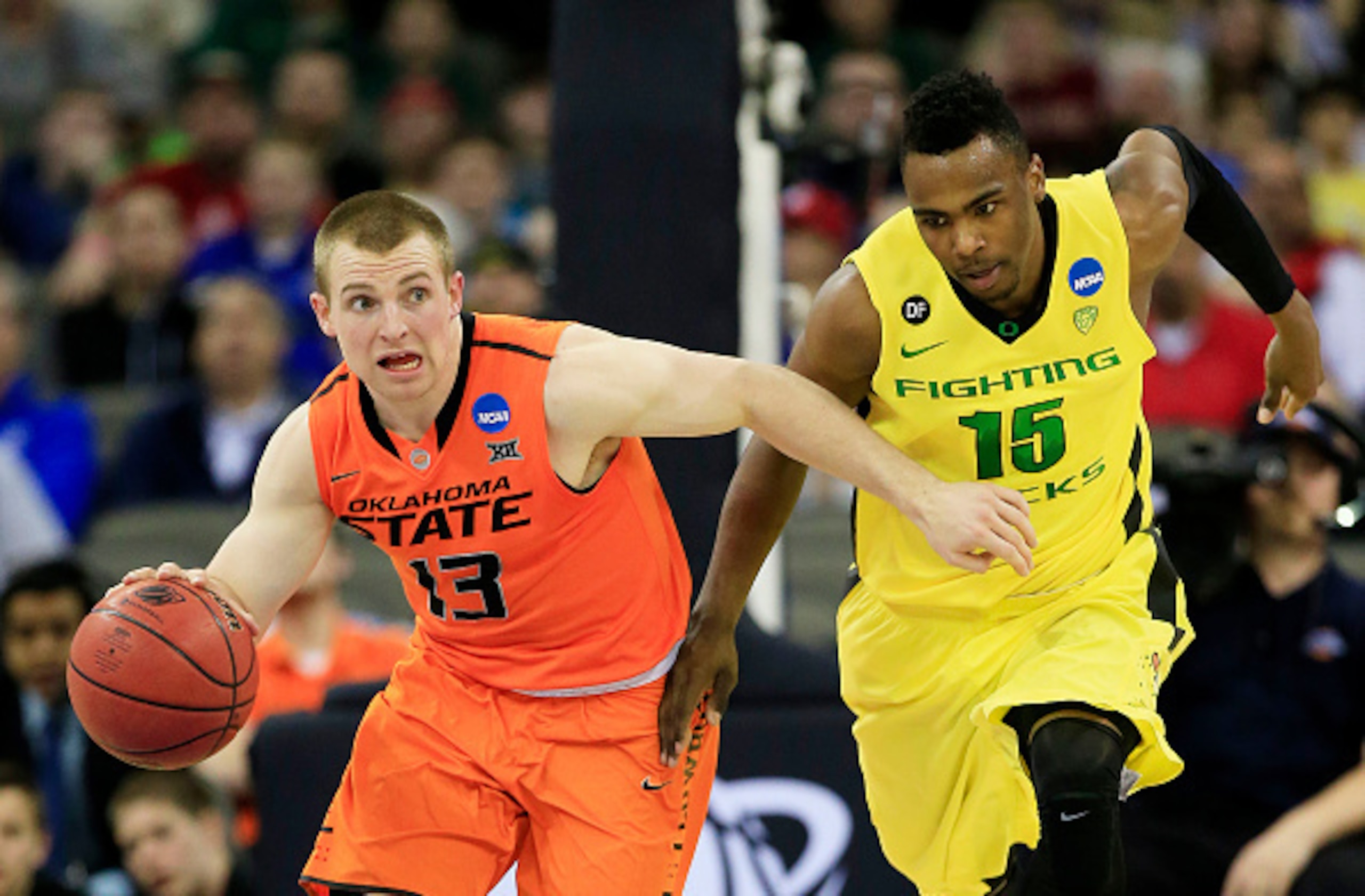
Class: Junior
2014-15 Stats: 15.0 PPG, 1.7 APG, 2.1 RPG, 1.9 SPG
The other part of the package deal that helped Oklahoma State land Marcus Smart has turned into the face of the program. It turns out Phil Forte is a great college player and would have been a major get for the Cowboys even if he hadn't helped deliver Smart.
Forte is one of the best shooters in the country, and he's a pro at finding ways to get his shots and he has a quick trigger. It helps that Forte has excellent stamina, and he can run defenders around screens all day to get his looks. He's become more of a scorer—and not just a shooter—by improving his ability to put the ball on the floor and score off the bounce.
With Le'Bryan Nash no longer around this season, Forte is going to see even more defensive attention. The Cowboys might take a step back unless they find other guys to step up, but it's not going to be because of Forte. They'll get every drop of production he's capable of mustering.
44. Jake Layman, SF, Maryland
17 of 60
Class: Senior
2014-15 Stats: 12.5 PPG, 5.8 RPG, 1.4 APG
With the addition of Robert Carter Jr. from Georgia Tech, Jake Layman will move from the stretch 4 to small forward this season.
Layman has the all-around game to make the move. He was able to use his shooting and quickness to take advantage of getting checked by 4s last year, and he ma have to change up his approach and use his size to take advantage of 3s this year. Playing power forward allowed him to work on his back-to-the-basket game, and Layman has the tools to attack from just about any spot on the floor.
The Terps have more scoring punch this year, so his scoring numbers might not go up. But Layman's adaptability should help him successfully blend into his changing role.
43. Cat Barber, PG, NC State
18 of 60
Class: Junior
2014-15 Stats: 12.1 PPG, 3.7 APG, 3.3 RPG
The Wolfpack will rely more on Cat Barber this season after seeing leading scorer Trevor Lacey make the head-scratching decision to leave early for the NBA—he went undrafted—and the graduation of Ralston Turner.
Barber is certainly capable. He can dribble circles around defenses and had some of the most impressive performances in the ACC last season, including dropping 34 points in the ACC tournament against Pittsburgh. He'll just need to more consistent, as he would be a star one night and disappear the next.
42. Damian Jones, C, Vanderbilt
19 of 60
Class: Junior
2014-15 Stats: 14.4 PPG, 6.5 RPG, 2.0 BPG
Damian Jones is still figuring out how to get the most of out his ability, but he has the best combination of size and athleticism of any big man returning in colllege basketball.
Jones is oozing with potential and probably could have gotten drafted last June because of it, but he made a good decision to return to school and continue to refine his game. Vandy has a chance to be one of the surprise up-and-comers this season if Jones takes the next step. And even as someone most scouts would consider raw, the 7-footer put up good numbers as a sophomore.
41. Przemek Karnowski, Gonzaga
20 of 60
Class: Senior
2014-15 Stats: 10.9 PPG, 5.8 RPG, 1.3 APG, 1.0 BPG
Przemek Karnowski is borderline unguardable at the college level. Karnowski is a mountain of a man--7'1" and 288 pounds (check)--and if he gets the ball deep, he's too big to bother his shot and too strong to move off his spot. Double team him, and he's an excellent passer. He even has a nifty behind-the-back pass he'll bust out every once in a while.
On top of all that, Karnowski is a lefty with a soft touch. He shot 62.2 percent from the field last season. Defensively, he does a good job positioning himself to make opponents have to score over him, which is a chore. The only real knock on Karnowski's game is his free throw shooting. He shot just 50.4 percent from the line last year, but the stroke looks good and he's capable of shooting better.
Karnowski isn't going to put up huge numbers, because he has to share minutes with Domantas Sabonis. The luxury of that is he rarely has to play tired, and that's one reason why both big men are so efficient.
40. Kellen Dunham, SG, Butler
21 of 60
Class: Senior
2014-15 Stats: 16.5 PPG, 2.6 RPG
Kellen Dunham took less shots his junior year compared to his sophomore season, but he became a much more efficient scorer. The difference was the talent around Dunham improved. Most specifically, his buddy Roosevelt Jones returned and Andrew Chrabascz made a big leap from his freshman to sophomore season.
Dunham deserves some credit for improving his game, and Chris Holtmann did a fine coaching job getting Butler back to defending at Brad Stevens levels and tinkering with the offense. But Jones helped take some of the pressure off of Dunham and allowed him to get some actual open looks. And when you give Dunham clean looks, he's one of the best snipers in the country.
39. Sheldon McClellan, SG, Miami
22 of 60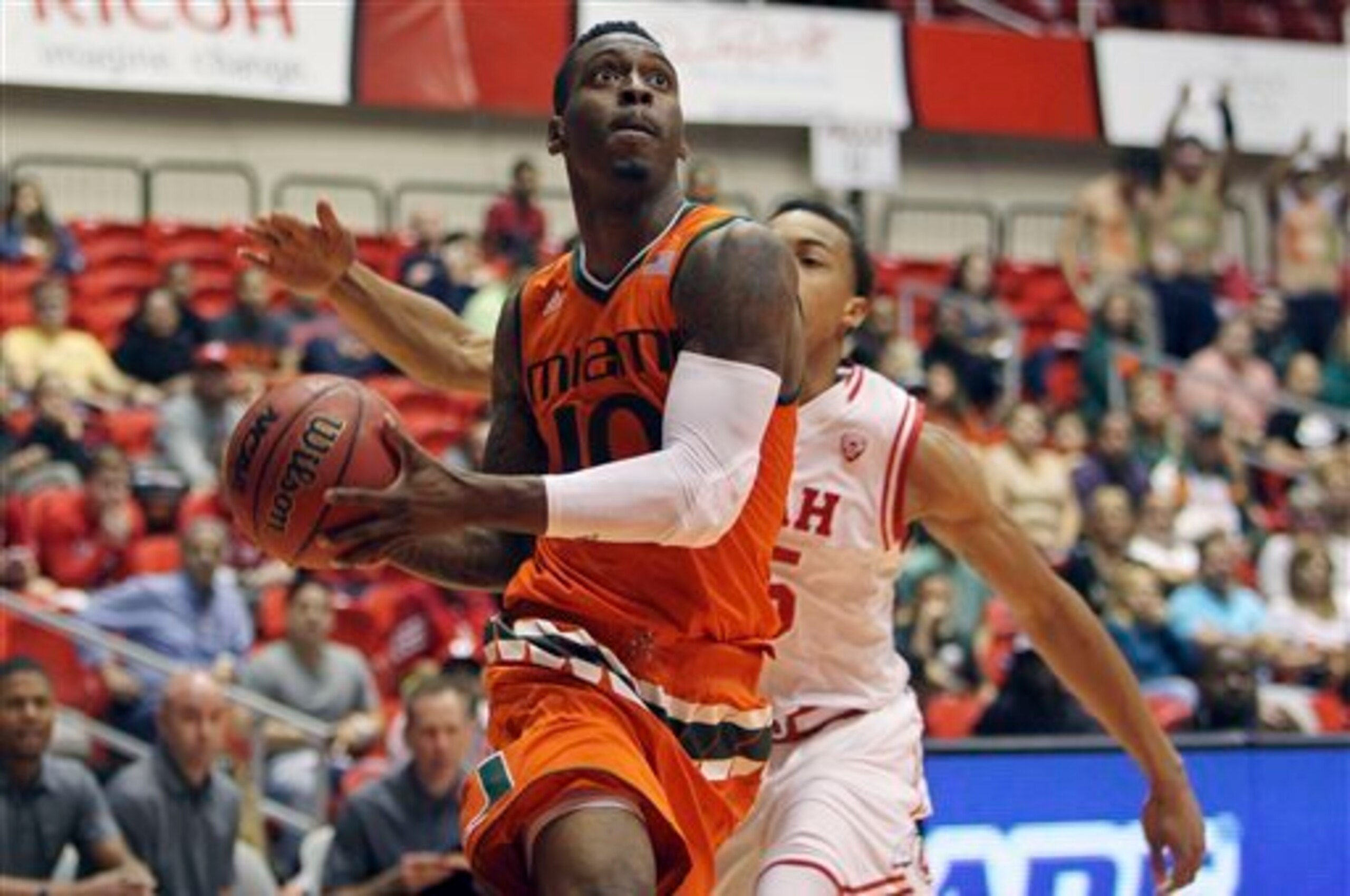
Class: Senior
2014-15 Stats: 14.5 PPG, 4.7 RPG, 1.9 APG
At 6'5", Sheldon McClellan is one of the toughest shooting guards to cover in the country. He can score from all three levels and is solid off the catch or the bounce.
McClellan quietly put together a great first season at Miami after transferring from Texas. Angel Rodriguez got more attention, but McClellan was the more consistent of the two. If Rodriguez can be more like the version of himself who torched Duke at Cameron and McClellan replicates his junior year, the Hurricanes could surprise some folks in the ACC and should be a tourney team.
38. Tyrone Wallace, PG, Cal
23 of 60
Class: Senior
2013-14 Stats: 17.1 PPG, 4.0 APG, 7.1 RPG, 1.3 SPG
Tyrone Wallace was one of the best scorers in the Pac-12 and is a tough guy to cover. He has the rare mid-range game, and on top of that, he's a lefty. But for the Bears to contend for a Pac-12 title, which is expected, Wallace needs to become a more efficient scorer this season.
As a junior, Wallace shot just 42.5 percent from the field and 60.6 percent at the free throw line. With the addition of freshmen Ivan Rabb and Jaylen Brown, he shouldn't have to carry the offense as much as he did a year ago. If Wallace can be more of a facilitator and get his shooting numbers up, the ceiling is high this year for the Bears.
37. DeAndre Bembry, SF, St. Joseph's
24 of 60
Class: Junior
2014-15 Stats: 17.7 PPG, 7.7 RPG, 3.6 APG, 1.9 SPG
The first player comparison listed under DeAndre Bembry's sophomore season on Ken Pomeroy's site is Paul George's sophomore season at Fresno State in 2010.
George played on a losing team that season and eventually turned into a star in the NBA. I'm not convinced Bembry will become Paul George, but he's an NBA talent who played on a bad team as a sophomore.
Bembry got an invite to the Nike Skills Academy this summer and was there mostly with good players from successful programs. He more than held his own. He's an athlete who can really defend and is a better a shooter than his 32.7 percent from beyond the arc last season would suggest. If college coaches held a draft, he'd be one of the first wings off the board.
36. Bronson Koenig, PG, Wisconsin
25 of 60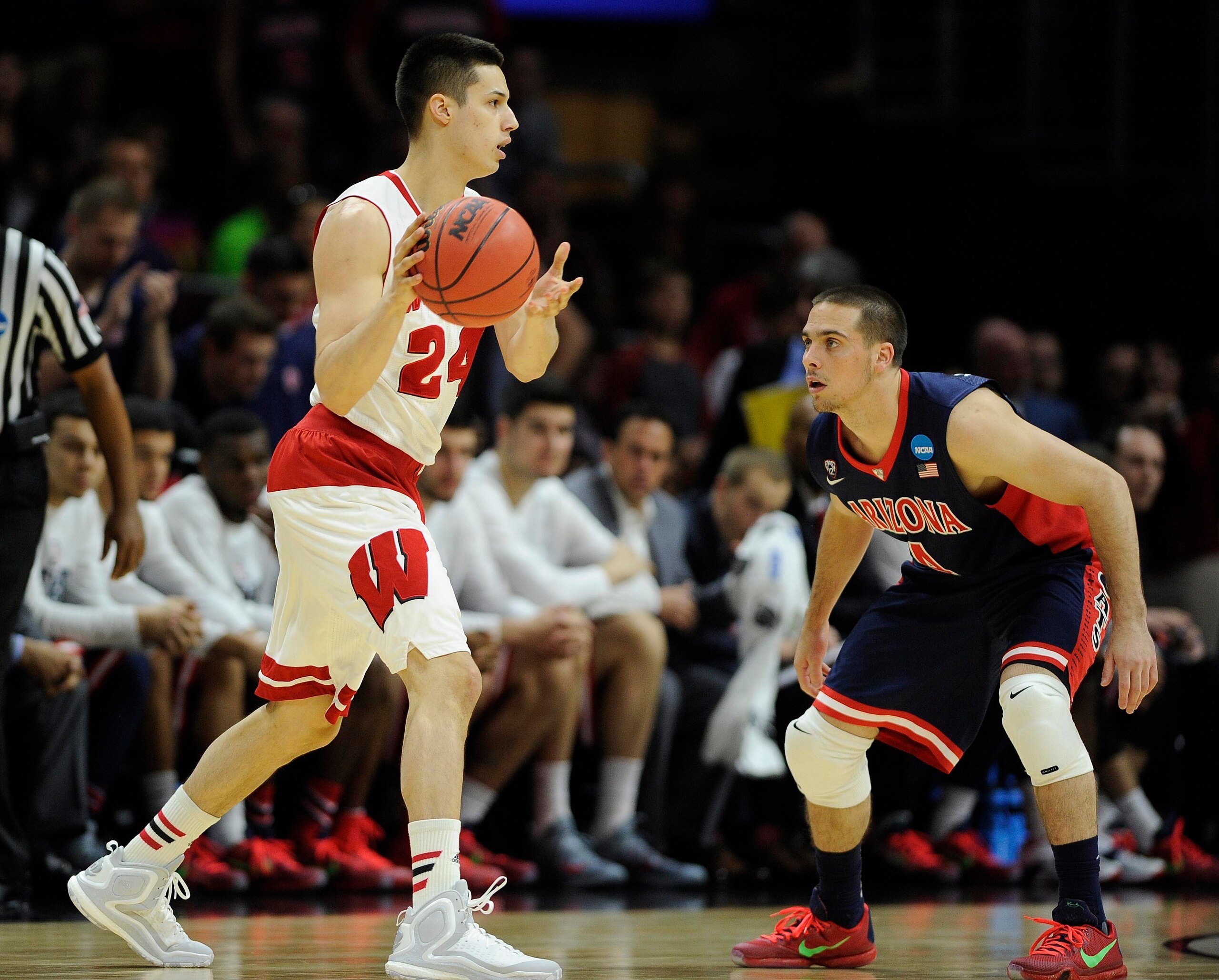
Class: Junior
2014-15 Stats: 8.7 PPG, 2.5 APG, 1.8 SPG
The turnover on the Wisconsin roster will put a lot of pressure on Nigel Hayes and Bronson Koenig this season. That might just be a welcome change for Koenig.
The junior guard is at his best when he's allowed to make plays off the dribble. There's a little bit of Steph Curry in his game. Koenig is clever with the dribble and a really good shot-maker off the bounce. According to Hoop-Math.com, only two of the 53 buckets Koenig made inside the arc were assisted last season.
The biggest challenge for Koenig will be whether he can make others around him better, as the talent in Madison is nowhere close to what it was the last two years.
35. Gary Payton II, PG, Oregon State
26 of 60
Class: Senior
2014-15 Stats: 13.4 PPG, 7.5 RPG, 3.2 APG, 3.1 SPG, 1.2 BPG
Gary Payton II is more than just a stat-stuffer. Payton helped transform Oregon State's defense from mediocre to borderline elite in his first year in the program, as OSU's defense went from ranking 215th in 2013-14 to 16th last season in adjusted defensive efficiency, per kenpom.com.
Much like his dad, he is known for his defense—he ranked second nationally in steals per game—and he can score as well. Payton's jumper needs some work (29.3 percent from distance last year), but he's strong off the bounce and a good finisher around the rim.
The Beavers were the surprise of the Pac-12 last year, going 8-10 in conference play. With Payton back, they could flirt with their first NCAA tourney bid since Payton's dad led the Beavers there in 1990.
34. James Blackmon Jr., SG, Indiana
27 of 60
Class: Sophomore
2014-15 Stats: 15.7 PPG, 5.3 RPG, 1.5 APG
It's rare that we get to see a prospect like James Blackmon Jr. have such a good freshman season at a program like Indiana and return for his sophomore year.
The Hoosiers have had it happen twice in the last few years. First, it was Cody Zeller coming back and that produced one of the best offenses in the country. Blackmon's return could lead to similar results. IU was already a chore to guard his freshman season, able to spread the floor and flood opponents with threes.
Blackmon was most effective outside the arc, knocking down 77 threes at a 38.7 percent clip. He should only get better with a year of experience, and all of IU's shooters should benefit from the added inside presence of freshman Thomas Bryant, something Tom Crean's squad was missing last year.
33. Daniel Ochefu, C, Villanova
28 of 60
Class: Senior
2014-15 Stats: 9.2 PPG, 8.5 RPG, 1.5 APG, 1.4 BPG
Daniel Ochefu was one of the most improved players in the country last season. He's always moved well for a guy his size, but he became a more complete player by improving his back-to-the-basket game.
Ochefu definitely benefits from playing with a bunch of guards who can spread the floor and pass the ball, but it's mutual. His presence opens things up for the 'Nova guards, and he's an elite finisher on the pick-and-roll. Ochefu is also one of the best rebounders in the country, and he offers rim protection as well. He's one of the rare big men who blocks shots and recovers quickly enough to gobble up defensive boards as well.
32. Zach Auguste, C, Notre Dame
29 of 60
Class: Senior
2014-15 Stats: 12.9 PPG, 6.5 RPG
Notre Dame had the best pick-and-roll attack in the country last season with Jerian Grant setting the table and Zach Auguste as the roll man. Grant is gone, which would be worrisome for Auguste if the Irish didn't have another talented guard who should be able to slide into his role in Demetrius Jackson.
What makes Auguste so good as a roll man is his quickness and ability to catch and finish around the rim. His hands and how quick he is off the floor also make him a strong offensive rebounder.
Auguste had a memorable finish to his junior season, finishing with 20 points and nine boards against Kentucky. He averaged 16.8 points per game in the NCAA tournament, and without Grant and Pat Connaughton, he should see his numbers continue to rise this season.
31. Anthony Gill, PF, Virginia
30 of 60
Class: Senior
2014-15 Stats: 11.6 PPG, 6.5 RPG
Anthony Gill was an advanced stats darling last season. Gill finished seventh in Ken Pomeroy's Player of the Year Standings, which is the highest among returning players in college basketball.
The reason Pomeroy's system loved Gill was his efficiency. He made 58.2 percent of his shots and got to the free throw line for nearly five attempts per game. He also ranked 13th nationally in offensive rebounding percentage. Plus, he played on one of the best teams in the country with the nation's top defense.
Gill is not just taking wide open layups either. He's a really good back-to-the-basket scorer, and he does get some easy buckets off the offensive glass. Like most the guys on Tony Bennett's roster, Gill is a heady player who understands his strengths and doesn't get away from who he is. That's part of what makes Virginia so good.
30. Isaiah Taylor, PG, Texas
31 of 60
Class: Junior
2014-15 Stats: 13.1 PPG, 4.6 APG, 3.2 RPG, 1.0 SPG
Isaiah Taylor is one of the fastest guys with the basketball—if not, the fastest--in college hoops.
But as a sophomore, Taylor was pretty one-dimensional as a scorer. He was great at getting into the lane and had a nice floater, but he had little confidence in his jumper. He made just 11 threes all year and shot 28.2 percent from deep.
Taylor shot the ball really well this summer at the Nike Skills Academy, and he said the difference was the new coaching staff has instilled confidence in him. Plus, he had a summer routine of making 600 jumpers a day.
That new confidence and the changes in style Shaka Smart will bring—quickness is gold in Smart's full-court press—should help Taylor become more of a complete guard.
29. Brandon Ingram, SF, Duke
32 of 60
Class: Freshman
2014-15 Stats (High School): 24.3 PPG, 10.4 RPG, 3.6 APG, 3.0 BPG, 1.6 SPG
Head coach Mike Krzyzewski has brought in an uber-skilled, potential one-and-done freshman for the third straight season. Brandon Ingram, however, is not exactly in the mold of Jabari Parker and Justise Winslow.
Both Parker and Winslow eventually found that the best spot for them in Duke's offense was as a small-ball 4. Ingram could end up dabbling as a small-ball 4, but he doesn't have the strength or girth of Parker or Winslow, so he'll likely play mostly at the 3.
Ingram is just as skilled and has a chance to play more of a Parker-like role, especially with the Blue Devils needing scoring after losing Winslow, Jahlil Okafor, Tyus Jones and Quinn Cook. He will also likely have more ball-handling responsibility in Duke's offense than Winslow or Parker had. It will be yet another year that the Blue Devils have to reinvent themselves around a star freshman, but Krzyzewski is as good as it gets at molding his offense around his talent.
28. Justin Jackson, SF, North Carolina
33 of 60
Class: Sophomore
2014-15 Stats: 10.7 PPG, 3.7 RPG, 2.3 APG
Justin Jackson is really hard to guard because he has an in between game that is rare in basketball today. The question is whether he can become a scoring threat from all three levels.
Jackson scored a majority of his buckets from the mid-range last season and knocked down an impressive 50 percent of his two-point jumpers, according to Hoop-Math.com. Jackson arrived at North Carolina with that reputation, as a great mid-range shooter, and the hope was that he would add some range to his jumper and give UNC someone besides Marcus Paige who was a threat from deep.
Jackson only made 28 threes all season, but he shoot better from deep and seemed to gain confidence late in the year. In UNC's final 12 games, Jackson scored in double figures in 11 of those games, averaged 13.4 points and made 17 threes and shot 44.7 percent from deep during that stretch. I also watched him shoot well (and comfortably) from deep this summer at the Nike Skills Academy. If you're picking a preseason breakout player of the year, he'd be a smart choice.
27. Monte Morris, PG, Iowa State
34 of 60
Class: Junior
2014-15 Stats: 11.9 PPG, 5.2 APG, 3.4 RPG, 1.9 SPG
There's reason to question whether the Iowa State offense will keep humming without coach Fred Hoiberg. Hoiberg was one of the most innovative offensive minds in college basketball, and the Cyclones ranked in the top 11 in adjusted offensive efficiency, per kenpom.com, each of the last three years.
But Iowa State fans should take comfort in the fact that Monte Morris is still around, and new coach Steve Prohm coached and helped develop two elite point guards at Murray State: Cameron Payne and Isaiah Canaan.
Morris is not as explosive a scorer as those two, but he doesn't have to be. Iowa State still has a solid stable of weapons for Morris to work with, and he deserves some of the credit for helping ISU's offense be so efficient.
Morris set an NCAA record with his 4.79 assist-to-turnover ratio as a freshman and he once again led the country in assist-to-turnover ratio (4.63) last season. He also does a great job pushing the pace, and he can go get a bucket when his team needs it. As long as he's around, you can bet on the Cyclones getting good shots.
26. Jaylen Brown, SF, Cal
35 of 60
Class: Freshman
2014-15 Stats (High School): 28.0 PPG, 12.0 RPG
Jaylen Brown shares some similarities with Stanley Johnson. Both were physical freaks at the high school level with pro bodies and a reputation for playing hard. The one question Johnson had going into his freshman season was his jumper, and that's the same with Brown.
The surprising thing about Johnson as a freshman was he wasn't exactly a great finisher around the basket. He made just 52.7 percent of his shots at the rim, according to Hoop-Math.com. I'd expect better from Brown.
Johnson was able to lead an Arizona team with plenty of scorers in scoring, and Brown is walking into a similar situation. The program hasn't had the same kind of success as Arizona has, but Cal has talented pieces in Tyrone Wallace, Jabari Bird, Jordan Mathews and fellow incoming freshman Ivan Rabb. Brown could be the missing piece that turns Cal from a disappointment into a top-20 team.
25. Taurean Prince, Baylor
36 of 60
Class: Senior
2014-15 Stats: 13.9 PPG, 5.6 RPG, 1.3 APG, 1.5 SPG
Taurean Prince was an easy choice last season for Bleacher Report's Sixth Man of the Year, and he was also in consideration for Most Improved Player. Prince played just 14.2 minutes per game as a sophomore and turned into the most dangerous scorer off the bench in college basketball as a junior, leading the Bears in scoring. Now what will he become as a senior?
Prince is the prototypical three-and-D wing with length (he's a long 6'7") that the NBA covets. There aren't many players on the college level like him, and that makes him a really tough cover in Baylor's offense. His length and quickness also makes him a perfect fit in Baylor's zone defense.
With more minutes available this season and a spot in the starting lineup, he has a great chance to climb draft boards. And we could see him go from Sixth Man of the Year to someone worthy of All-American attention.
24. Skal Labissiere, C, Kentucky
37 of 60
Class: Freshman
2014-15 Stats (High school): Not available
John Calipari is known for recruiting great point guards, but he's had a higher success rate on big men at Kentucky.
Skal Labissiere fits the ideal Calipari big man. He moves well on both ends and can catch and finish near the rim. With the number of penetrators the Wildcats will have this season, led by Tyler Ulis, a big man who can finish lobs should thrive.
Labissiere is more than just though. He can step away from the bucket and shoot the ball, can score with his back to the basket and can even put it on the floor. Those are the types of things that made Anthony Davis and Karl-Anthony Towns so valuable and dominant. By the end of the year, Labissiere should be part of the pipeline.
23. Jalen Brunson, PG, Villanova
38 of 60
Class: Freshman
2014-15 Stats (High School): 23.3 PPG, 5.3 APG, 4.7 RPG, 2.6 SPG
Tyus Jones was pretty good as a freshman at Duke, huh? Well, two summers ago Jalen Brunson and Jones were both point guards for the United States' under-18 team, and anyone who watched those games live (myself included) will tell you Brunson outplayed Jones.
Brunson followed that up this past summer by leading the under-19 team to a gold medal as the team's MVP. He tied for the team-lead in scoring (14.0 points per game) and led the U.S. in assists (5.6 per game). Brunson also knocked down 44 percent of his threes.
There's nothing really flashy about Brunson's game. He plays like a veteran point guard and will fit in nicely surrounded by a talented veteran core at Villanova.
22. Roosevelt Jones, SF, Butler
39 of 60
Class: Senior
2014-15 Stats: 12.7 PPG, 5.2 RPG, 3.7 APG
Chris Holtmann deserves some credit for getting Butler in the NCAA tournament last season, but it wasn't like Brandon Miller had deviated from the Butler Way the previous season.
The biggest difference between the Bulldogs that won 23 games and made the round of 32 in 2014-15 and the team that won just 14 games (and only four in the Big East) was one team had Roosevelt Jones and the other didn't—Jones missed the 2013-14 season because of a wrist injury.
The roster really didn't change much outside of Jones. He helped turn the defense from good (66th in adjusted defensive efficiency) to great (7th in AdjD), per kenpom.com. He also helped Butler leading scorer Kellen Dunham turn into a better version of himself. Dunham has by far had his two most efficient season playing next to Jones. Jones is a unique weapon. His game is absent of a jumper, but he still finds ways to score and his greatest value is elevating the games of everyone else around him.
21. Kyle Collinsworth, SF, Brigham Young
40 of 60
Class: Senior
2014-15 Stats: 13.8 PPG, 8.7 RPG, 6.0 APG, 1.8 SPG
Kyle Collinsworth tied Shaquille O'Neal last year for the NCAA record for most triple-doubles (six). And Collinsworth broke the record for single-season triple-doubles with six. That's right, he did this all in one season. Less than eight months after tearing his ACL.
Collinsworth is college basketball's version of Magic Johnson, and the Showtime Cougars wouldn't be a bad nickname for BYU's attack.
Collinsworth and BYU are must-see TV. The Cougars play at a breakneck pace, and it's not just run-and-foolishly-gun. It's an organized uptempo approach that sees the Cougars take quality shots. It helps when you've got a guy running the show who is 6'6" with terrific vision and passing ability. And he's your best rebounder as well.
It's going to be fun to see what Collinsworth will be able to do when he's not just coming off knee surgery. It's safe to say Shaq's record is history.
20. Frank Mason, PG, Kansas
41 of 60
Class: Junior
2014-15 Stats: 12.6 PPG, 3.9 APG, 3.9 RPG, 1.4 SPG
Frank Mason was an afterthought in KU's 2013 recruiting class that included Andrew Wiggins, Joel Embiid and Wayne Selden, but Mason could end up being the most valuable player to the program from that class.
Mason made huge strides in his sophomore season. Bill Self told Bleacher Report this summer that Mason was/is the team's most valuable player, and he's "become more of a point guard." That last part is important because Mason had never really played the position until last season.
The progression continued this past summer at the World University Games, where Mason thrived with a 24-second clock. The short clock allowed Mason to have more control than usual over the offense, and he was unstoppable off the dribble in late-clock situations.
Mason has also become a much better shooter after adjusting how he held the ball before his sophomore season. The change helped him shoot an impressive 42.9 percent from deep. The junior pretty much can do it all now and has gone from an unknown to one of the most complete guards in the country.
19. Nigel Hayes, PF, Wisconsin
42 of 60
Class: Junior
2014-15 Stats: 12.4 PPG, 6.2 RPG, 2.0 APG
Now that Frank Kaminsky and Sam Dekker have moved on to the NBA, it's time for the offense to run through Nigel Hayes.
Wisconsin's program is known for player development, and Hayes is one of the workers that the coaching staff was raving about at the Final Four last year. The big improvement between his freshman and sophomore season was his outside shot. He went from not attempting a three as a freshman to making 40 threes and shooting 39.6 percent from deep as a sophomore.
"I know he was bound and determined to be a three-point shooter," Wisconsin assistant Gary Close told B/R last April. "He wants to be a complete player."
Hayes has the skillset for the Badgers to use him similar to how they used Kaminsky. It'll be hard to duplicate the numbers Kaminsky put up, but with fewer scoring options on the roster this year, Hayes is definitely going to get plenty of opportunities.
18. Jakob Poeltl, C, Utah
43 of 60
Class: Sophomore
2014-15 Stats: 9.1 PPG, 6.8 RPG, 1.9 BPG
The value of Jakob Poeltl is not always obvious, but watch closely and you'll see the many ways he impacts the game.
Poeltl is a slightly less athletic version of Willie Cauley-Stein on the defensive end. He not only serves as a elite rim protector, but he can also get out on the perimeter and defend guards, like Cauley-Stein, in ball-screen situations. Jahlil Okafor can attest to how good his post defense is, as he held the former Duke star to six points in the Sweet 16 last year.
Poeltl's game is not as far along on the offensive end, but he still managed to shoot 68.1 percent from the field last year. That's because he's well aware of his strengths and doesn't try to force the issue. In fact, sometimes he's too unselfish. His back-to-the-basket game is awkward at times but still effective; he just needs to gain the confidence to attack more often. His bread and butter as a freshman was as a roll man in the pick-and-roll. He has good hands and benefited from playing with Delon Wright.
Wright will be missed by the Utes, but they still have a chance to contend for the Pac-12 title. They return enough to build around their budding Austrian star.
17. Jamal Murray, PG, Kentucky
44 of 60
Class: Freshman
2014-15 Stats (High school): Unavailable
Jamal Murray saw his stock rise this summer more than any other player after what he did playing for Canada's national team in the Pan American Games. Murray showed he can score at any level of basketball by averaging 16 points per game for Canada, including a 22-point game in the semifinals against United State.
Murray, 6'4", is more of the big scoring guard that John Calipari is used to running the show, but he'll have to coexist with Tyler Ulis, likely moving off the ball when the two are on the floor at the same time. Murray is a gunner—he took 61 shots in five games had only 12 assists at the Pan-Am Games—and it wouldn't be surprising to see him lead the 'Cats in scoring. Right away he'll be one of the best shot-makers off the dribble in the country.
16. Tyler Ulis, PG, Kentucky
45 of 60
Class: Sophomore
2014-15 Stats: 5.6 PPG, 3.6 APG, 1.0 SPG
Andrew Harrison probably caught more flack than he deserved last year because it was easy to watch Kentucky and believe the machine ran smoother with Tyler Ulis at point guard.
Ulis is one of the best passers in college basketball, and he did a great job spreading the ball around to all of UK's weapons. He was also a knockdown shooter, making 42.9 percent of his threes, and he wasn't shy about taking big shots in high-stress situations.
That's probably because Ulis is super competitive. When UK lost to Wisconsin in the Final Four, Ulis said going undefeated up until that point was all for nothing. As a sophomore, he'll be a leader for the 'Cats and should be a good influence on the freshmen.
The challenge for John Calipari is he has three guards—Ulis, Jamal Murray and Isaiah Briscoe—who all like to play with the ball in their hands. In this offense with scoring threats at every spot, my money is on Ulis running the show and helping Murray and Briscoe learn to thrive off the ball.
15. Demetrius Jackson, PG, Notre Dame
46 of 60
Class: Junior
2014-15 Stats: 12.4 PPG, 3.1 APG, 3.6 RPG, 1.6 SPG
Mike Brey gives his lead guard a lot of responsibility in his offense, and it's now Demetrius Jackson's turn to take over as the star for the Irish. Jackson certainly has the ability; he was just in the shadow of Jerian Grant last season.
Brey told Bleacher Report last year that playing next to Grant was good for Jackson. Grant had an excellent feel for the game, and that rubbed off on Jackson.
What comes natural to Jackson is getting buckets. He can make shots from all three levels, and his jump-shooting numbers last season were some of the best in the country. Jackson shot 42.9 percent from deep and made 53.2 percent of his two-point jumpers, per Hoop-Math.com. Look for him to become Notre Dame's go-to scorer this season.
14. Caris LeVert, SG, Michigan
47 of 60
Class: Senior
2014-15 Stats: 14.9 PPG, 3.7 APG, 4.9 RPG, 1.8 SPG
Caris LeVert had his season cut short after only 17 games last year because of a foot injury, but LeVert likely would have still been drafted had he come out early. That's because you just don't find many 6'7" guards who can handle the ball, shoot and create for others.
LeVert is a dangerous weapon with a coach with a dangerous (offensive) mind. John Beilein has had a lot of success with multi-faceted guards like LeVert, and he has better weapons to surround his star with this year than he did a year ago. The pieces didn't really change, but because of injuries, Beilein figured out some of the guys he had on the bench, like Aubrey Dawkins, were better than expected.
LeVert can score, but he's best when he can look to be a setup man as well. So with better guys around him this year, Michigan should get a better LeVert.
13. Perry Ellis, PF, Kansas
48 of 60
Class: Senior
2014-15 Stats: 13.8 PPG, 6.9 RPG, 1.2 APG
Perry Ellis has put up almost identical averages over the last two years, but he did see a drop in his field-goal percentage last season—from 54.9 percent to 45.7 percent.
What should help Ellis this season is the chance to play next to better players at the 5 spot for the Jayhawks. His sophomore efficiency came when Joel Embiid was on the roster. This year the expectation is that Cheick Diallo will be an improvement over Cliff Alexander, and the Jayhawks were pleasantly surprised this summer at the World University Games with what they got out of Hunter Mickelson. Both big guys can knock down the mid-range jumper, which should free up Ellis for better opportunities in the post out of KU's high-low offense.
Ellis has also shown an ability to step away from the basket, knocking down the perimeter jumper or attacking off the bounce. He's one of the best inside-out scorers at his position in the country.
12. Yogi Ferrell, PG, Indiana
49 of 60
Class: Senior
2014-15 Stats: 16.3 PPG, 4.9 APG, 3.2 RPG
Yogi Ferrell helped transform the Hoosiers into an elite offense again last year. IU became one of the toughest teams to guard in the country by going small and three-ball happy. Ferrell, in the process, showed he can be a dual threat as a scorer and distributor.
Ferrell was still IU's leading scorer, just like his sophomore season, but he shot less as the talent around him got better. What he's shown in both his freshman and junior seasons is that when surrounded by capable scorers, he can orchestrate a high-scoring attack.
The challenge this year will be whether the Hoosiers can improve defensively. Freshman big man Thomas Bryant should help by providing a much-needed presence protecting the paint. If the defense is at least respectable, the Hoosiers have the goods around Ferrell to help the point guard get past the Sweet 16 for the first time in his career.
11. Marcus Paige, PG, North Carolina
50 of 60
Class: Senior
Stats: 14.1 PPG, 4.5 APG, 2.9 RPG, 1.7 SPG
Marcus Paige wasn't right his junior year, and his numbers dipped. He battled plantar faciitis in his right foot, a hip injury and sprains in both ankles.
But even with those injuries, Paige was still one of the most productive point guards in the country, and UNC's improved talent also had something to do with his scoring average dropping 3.4 points per game.
Paige is begging this year with another injury—he fractured the third metacarpal on his right (non-shooting) hand on Nov.3 and is expected to miss close to a month—but that isn't the type of injury that should linger like foot or ankle issues.
So what can we expect once Paige is healthy? A slightly more efficient version of his sophomore season, which would make Paige one of the most feared scorers in the country.
Paige's efficiency numbers actually came close to mirroring his sophomore season. His offensive rating dropped from 120.1 to 118.8, per kenpom.com, and his three-point percentage actually went up (from 38.9 percent to 39.5). The main thing the injuries did in holding him back was inhabiting him from finishing around the rim as well.
Paige had shot 65.2 percent at the rim as a sophomore, and last year he shot a measly 47.8 percent at the rim, according to hoop-math.com. Paige does most his scoring from the perimeter anyway, but the ability to get in the paint and finish just makes him more of a complete scorer. It should also help him better set up his teammates.
10. Fred VanVleet, PG, Wichita State
51 of 60
Class: Senior
2014-15 Stats: 13.6 PPG, 5.2 APG, 4.5 RPG, 1.9 SPG
If you want to argue Fred VanVleet's production is propped up by the caliber of competition Wichita State faces in the Missouri Valley, go back and watch last year's NCAA tournament.
VanVleet out-dueled two guards on this list—Indiana's Yogi Ferrell and KU's Frank Mason—and he also outplayed Notre Dame's Jerian Grant, who was drafted in the first round in June. VanVleet averaged 23.0 points and 4.3 assists in those three games going against some of the best guards in the country.
The guy has game and is arguably the best leader in college basketball. Watch VanVleet on both ends of the court—he's also a terrific defender—and it's like an instructional tape for how to play point guard. Coach Gregg Marshall trusts VanVleet so much that he allows him to audible play calls Marshall sends out.
"He's not like an assistant coach on the floor; he's a head coach on the floor," Marshall told Bleacher Report last March. "That's a little different. I trust him to run whatever he thinks is best."
With the addition of two transfers—KU's Conner Frankamp (eligible at semester) and Cleveland State's Anton Grady—VanVleet has more weapons as his disposal this season, and Wichita State is a legit top-10 team. VanVleet has already had a great career, reaching a Final Four as a freshman, winning 95 games in three years and setting the school's assist record. If he can get Wichita State back to a Final Four; you can edit "Shocker legend" to "college basketball legend."
9. Melo Trimble, PG, Maryland
52 of 60
Class: Sophomore
2014-15 Stats: 16.2 PPG, 3.0 APG, 3.9 RPG, 1.3 SPG
Melo Trimble far exceeded what expectations were as a freshman and played a big role in leading Maryland to its first NCAA tournament since 2010.
Trimble showed himself worthy of a go-to scoring role right away. He's strong off the bounce—a wicked crossover led to a lot of wobbly ankles—and he has a reliable jumper, knocking down an impressive 41.2 percent of his threes as a freshman.
For Trimble and Maryland to make the leap, Trimble needs to be more of a complete point guard in Year Two. The Terps have what is potentially the best starting five in college basketball with the additions of freshman big man Diamond Stone, Georgia Tech transfer power forward Robert Carter and Duke transfer guard Rasheed Sulaimon.
The Terps weren't exactly short on talent last year, but the offense ranked an unspectacular 58th in adjusted efficiency, per kenpom.com, and relied too much on Trimble and Dez Wells to create their own offense.
If Trimble can improve as a distributor, Maryland should be in the title conversation and that could help Trimble rise his draft stock. The potential for big payoffs on both ends is certainly there for the sophomore.
8. Georges Niang, PF, Iowa State
53 of 60
Class: Senior
2014-15 Stats: 15.3 PPG, 5.4 RPG, 3.4 APG
Iowa State had one of the most innovative offenses in college basketball with Fred Hoiberg, and it wasn't just because of Hoiberg. Yes, Hoiberg was the mastermind, but adding to his creativity was the ability to use a power forward with elite post moves on the interior and point guard skills on the perimeter.
That player, obviously, was Georges Niang. Hoiberg is gone, but the Cyclones will still be a feared offense with the guys they have returning led by Niang.
Niang has arguably the best footwork on the blocks of any big man in the country, and he handles the ball and passes better than any big man in the country. (Ben Simmons is the only guy who will be in his class on those last two points.) Niang also is coming off a season that he shot a career-best 40 percent from beyond the arc. There's really nothing he can't do on the offensive end.
7. Buddy Hield, SG, Oklahoma
54 of 60
Class: Senior
2014-15 Stats: 17.4 PPG, 5.4 RPG, 1.9 APG, 1.3 SPG
Buddy Hield has always been a streaky shooter, and when he's hot, look out. But the progression Hield has made through the years is that he's found ways to be productive even when his shot is off.
His consistency last season led to Big 12 Player of the Year honors. Hield scored in double figures in 32 of OU's 35 games last year, and he put up 15 or more points in each of the team's final eight games.
This summer Hield showed off a better than expected handle when he had to play some point guard at the Nike Skills Academy. That was valuable info for NBA teams who found out that in a pinch, Hield can slide over to the other guard spot. But it also showed the continued growth in his game and that's he's now much more than just a shooter.
6. Malcolm Brodgon, SG, Virginia
55 of 60
Class: Senior
2014-15 Stats: 14.0 PPG, 3.9 RPG, 2.4 APG
A foolish take is that Virginia doesn't have talented players and simply wins because of Tony Bennett's system. There are those who believe that and it's hogwash.
Take this summer's Nike Basketball Academy as proof. Malcolm Brogdon got invited to the prestigious event, and at a camp that included a number of All-American candidates—Oklahoma's Buddy Hield, LSU's Ben Simmons, Gonzaga's Kyle Wiltjer and Iowa State's Georges Niang, to name a few—it was Brogdon who was the camp's MVP.
Brogdon was the best defender, making anyone he guarded uncomfortable. Brogdon knocked down outside shots and was better than expected shaking defenders off the dribble. He played both guard spots. And more important than anything else, he was usually on the winning team. He's not flashy and he's not a future lottery pick, but Brogdon is talented.
5. Ron Baker, SG, Wichita State
56 of 60
Class: Senior
2014-15 Stats: 14.7 PPG, 4.5 RPG, 2.5 APG, 1.3 SPG
This summer at the Pan American Games in Canada, the United States trailed by 21 points to the Dominican Republic in the third-place game. The U.S. would end up winning by five, because, well, let's have coach Mark Few explain it.
"It was not looking good," Few said. "... Through that whole time, though, Ron Baker was just playing his tail off, and I think that kind of kept us alive."
Few had been on the other side of that before. It was Baker who buried some daggers a few years ago when the Shockers had a crazy comeback to knock off Gonzaga on their way to the Final Four.
The Shockers have lost only nine games with Baker on the floor over the last three seasons. And on top of all those intangibles that coaches love, he is a future pro and the best two-way shooting guard in college basketball. He was the best defender for the U.S. this summer on a team that included several pros, and he performed better than any college player on the roster.
Baker arrived in Wichita as a walk-on and he'll finish his career as one of the best players in the history of the school.
4. Denzel Valentine, SF, Michigan State
57 of 60
Class: Senior
2014-15 Stats: 14.5 PPG, 4.3 APG, 6.3 RPG
Michigan State has had a good run of point guards—from Drew Neitzel to Kalin Lucas to Keith Appling to Travis Trice—but there could be a drop off this season with Lourawls Nairn taking over. But if there was ever a good time for a transition year for that spot in the program, this would be it.
That's because the Spartans have Denzel Valentine, and Valentine as the primary ball-handler is a good thing for the Spartans. Valentine is best when he has the ball in his hands and he has one of the highest basketball IQs in college basketball. He also embraces pressure situations—see his performance against Duke in the Final Four (22 points, five treys and 11 boards).
In fact, when you study Valentine's numbers last season on kenpom.com, his numbers against "tier A" competition (top 50 opponents) were better than his numbers overall. He doesn't have ideal size or athleticism and he's not an elite pro prospect, but he's a great college player.
3. Kyle Wiltjer, PF, Gonzaga
58 of 60
Class: Senior
2014-15 Stats: 16.8 PPG, 6.2 RPG, 1.9 SPG
Kyle Wiltjer had one of the most impressive offensive seasons in recent college basketball memory, and it went slightly underappreciated. Probably because it happened at Gonzaga.
Wiltjer's offensive rating, a stat used to reflect offensive efficiency, was 128.2 last season, and only five players in the last 12 seasons have had a high offensive rating and used at least 24 percent of their team's possessions, according to kenpom.com. (And none of those players were taller than 6'6".)
At 6'10", Wiltjer made 46.6 percent of his threes. (That's not fair.) Everyone knew that he could shoot when he was at Kentucky, but Wiltjer has been able to show at Gonzaga that he has a lot more game outside of just draining threes. He is really hard to guard with his back to the basket. He has such great feel for how to get the shot he wants, using an assortment of moves, counters and shot fakes. It's like an old NBA veteran putting a clinic on a rookie.
Some will question Wiltjer's numbers because Gonzaga plays in the WCC. They shouldn't. I watched him school some of the best bigs in the country at the Nike Skills Academy this summer. Hopefully Wiltjer gets the love he deserves this season if he can duplicate (or maybe even improve) on his historic junior season.
2. Ben Simmons, PF, LSU
59 of 60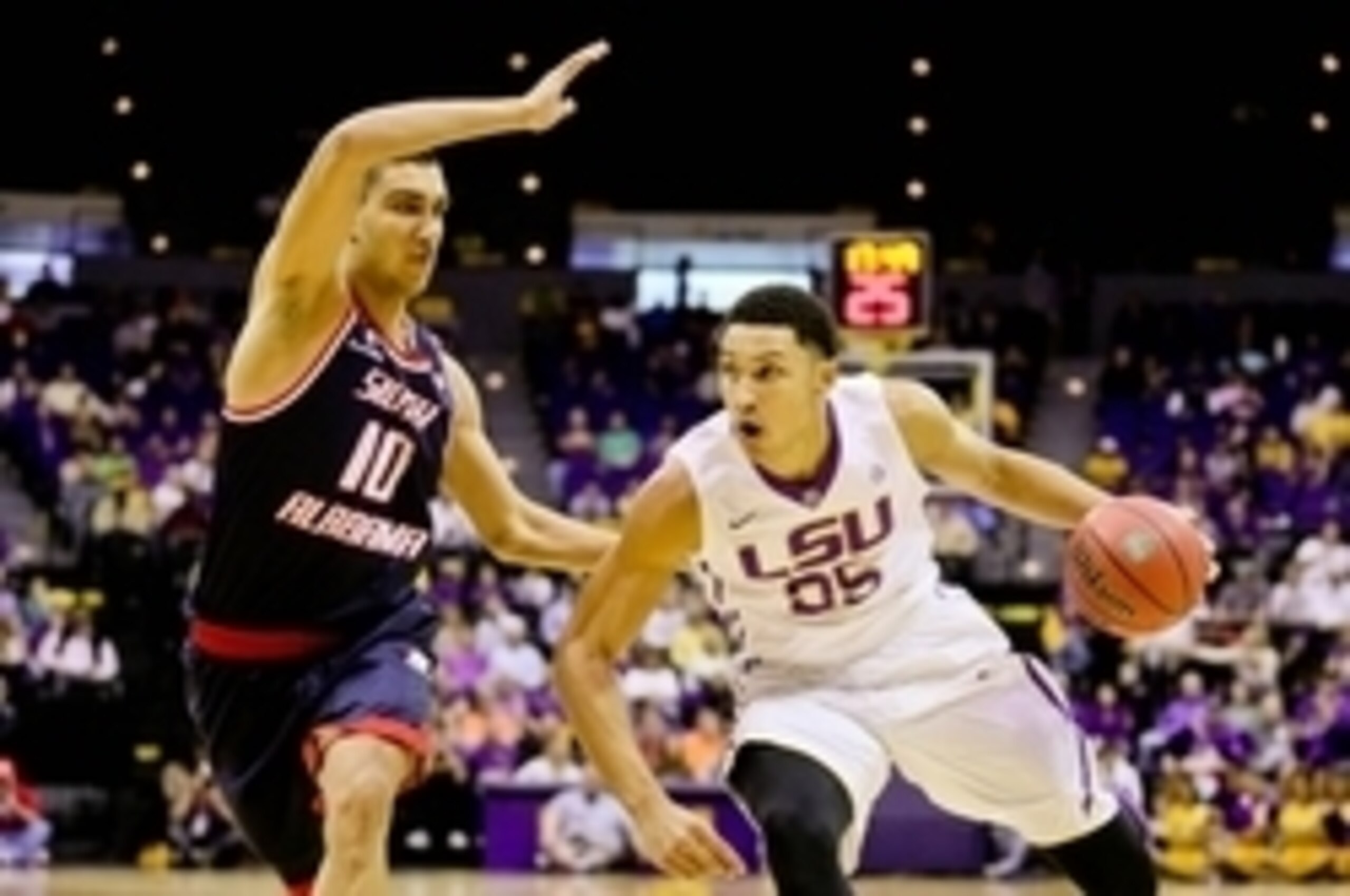
Class: Freshman
2014-15 Stats (High school): 28.0 PPG, 11.9 RPG, 4.0 APG
I'll never forget watching Ben Simmons in the summer of 2014 at Peach Jam. He had just grabbed a rebound and was racing the ball up the floor, and a major-conference assistant coach next to me says, "Forget college. He's ready for the League."
Thanks to the one-and-done rule, we get to see one season of Simmons in college. Simmons is an unorthodox talent. His best comp would probably be Lamar Odom. He can pass and handle and I'd expect LSU to use him as sort of a point forward.
The only real question mark with Simmons on the offensive end is his jumper, and he got off to a good start with the Tigers shooting the ball this summer. He made 4-of-9 threes on a trip to Australia. He also averaged 20.0 points, 9.0 rebounds and 5.4 assists. He is going to do a little bit of everything for LSU this season, and then it's likely off to the NBA.
1. Kris Dunn, PG, Providence
60 of 60
Class: Junior
2014-15 Stats: 15.6 PPG, 7.5 APG, 5.5 RPG, 2.7 SPG
Every NBA scout I talked to this summer about Kris Dunn believed he would have gone in the first round of the draft had he declared. It's rare to see someone with his talent make it to his junior year—Dunn will actually be a fourth-year junior—but there were areas of his game he wanted to improve.
"As you see in the last couple years, there's been a lot of guys go in the first round who turn out to be nothing and just went to the D-League," Dunn told Bleacher Report this summer. "I felt like I needed to improve more on my game so I'm not just an NBA talent; I can be NBA ready."
Dunn's main focus this offseason was improving his three-point jumper and he has a goal of making 77 threes this season—he attempted only 77 last year, making 27. The Friars could certainly use the scoring after graduating leading scorer LaDontae Henton and then seeing third-leading scorer Tyler Harris transfer to Auburn.
The good news is that Dunn is exceptional at making everyone else around him better and controlling both sides of the ball. He led the nation in assistant rate last season and finished fifth in steals rate, per kenpom.com. He's the only player in the 14 years Ken Pomeroy has tracked such data to finish in the top 10 of both statistics. There's not a more complete player in college basketball.
C.J. Moore covers college basketball for Bleacher Report. You can follow him on Twitter @CJMooreBR.
All stats from the 2015 Pan-American Games and U-19 World Championships via USA Basketball. Unless otherwise noted, all high school statistics via each player's official university website.


.jpg?w=2560 "Viral Rams Coach Vid 🖕")

.jpg?w=2560 "Injury-stricken Seahawks signing veteran RB")
