
College Basketball Players Most Likely to Reach 2,000 Career Points in 2015-16
It takes a special breed of player to score 2,000 career points in men's college basketball. One has to be good enough to average better than 15 points per game over the course of a 130-game career yet not so good as to leave for the NBA draft before playing four seasons.
It's an impressive achievement, but it happens more often than you might think. Over the past decade, an average of 12.4 players per season have hit the mark, including such names as Tyler Haws, D'Angelo Harrison, Chasson Randle and Joseph Young this past year.
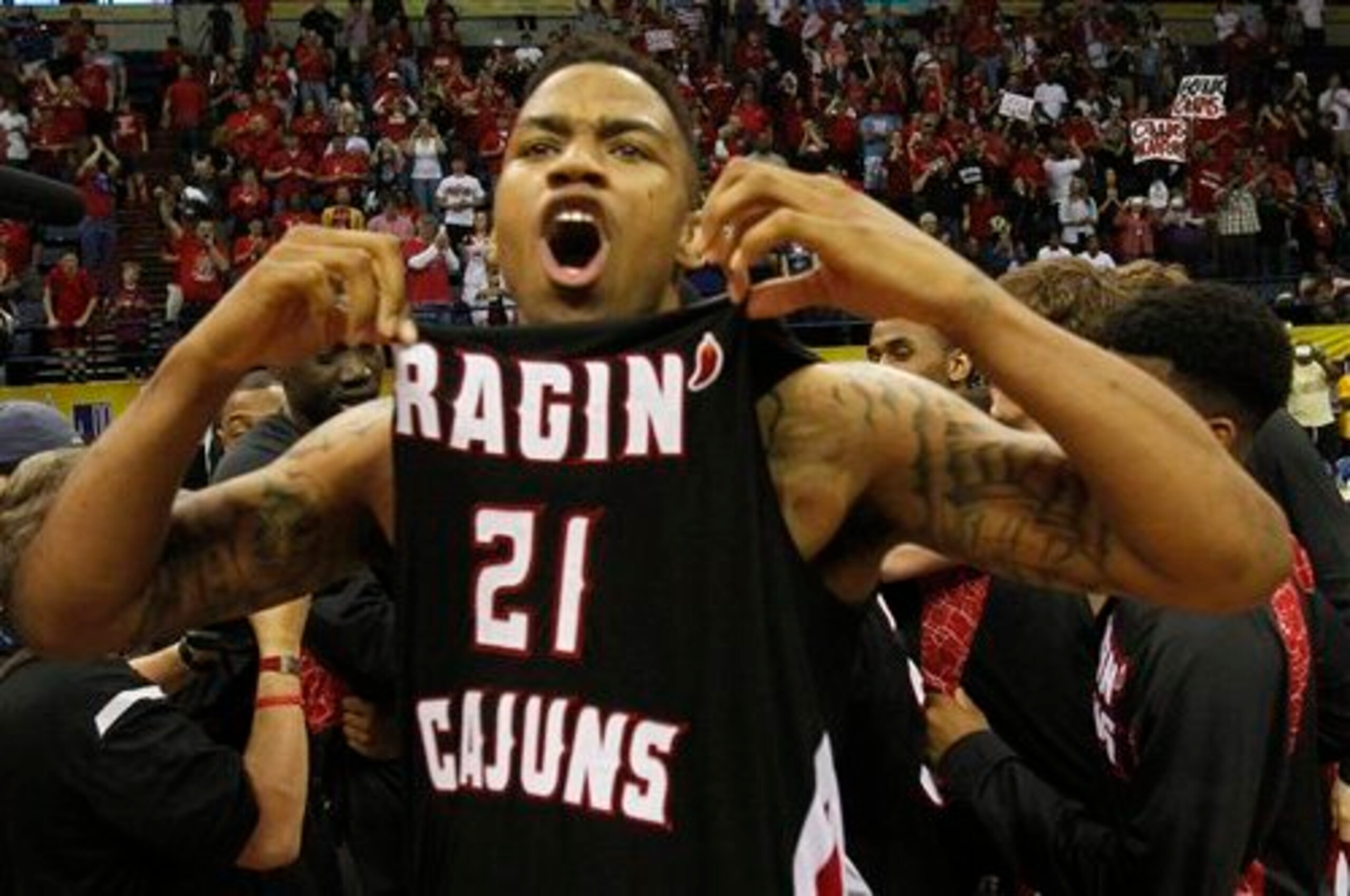
Who is going to reach two grand in 2015-16? Might anyone reach 2,500 career points? And what kind of ridiculously exclusive club is Louisiana-Lafayette's Shawn Long on the brink of joining?
Based on a combination of career points, number of points scored in 2014-15 and projected number of games played in 2015-16, we've ranked the 20 players with the best chance of surpassing 2,000 points this coming season.
The ones at the beginning of the list have a slim chance of getting there, but by the end, it's just a matter of guessing how many weeks it will take them to inevitably do it.
Honorable Mentions
1 of 21
Stacy Davis, Pepperdine
1,307 career points; 501 points in 2014-15
Pepperdine is a team on the rise in the West Coast Conference, and Davis is the biggest reason why. Hanging onto all seven of last year's leading scorers is a nice perk too, but it's also the likely reason that Davis will fail to reach 2,000 points. With minimal change to the roster, it seems unlikely that Davis will suddenly be called upon to average an additional five points per game over last year's 15.7 average.
Phil Forte, Oklahoma State
1,267 career points; 479 points in 2014-15
Because of his streaky outside shot, Forte has an outside shot at this milestone. No more Le'Bryan Nash means Forte is undeniably the first and best scoring option on the roster. If he can replicate his three-point stroke from 2013-14 (44.1 percent) and his minutes from 2014-15 (33.7 per game) while becoming an even more assertive scorer, totaling 733 points isn't too crazy of a proposition.
Alex Hamilton, Louisiana Tech
1,332 career points; 530 points in 2014-15
Of all the honorable mentions, I like Hamilton's chances best. Louisiana Tech had a great four-year run with a core of Raheem Appleby, Michale Kyser and Kenneth "Speedy" Smith, but those three players, top-scoring frosh Xavier Stapleton and head coach Mike White are all gone, leaving Hamilton and Erik McCree in a position to both flirt with averaging 20 points per game.
Nic Moore, SMU
1,345 career points; 493 points in 2014-15
Moore averaged 34.7 minutes per game and shot 41.6 percent from three-point range last season, but he still "only" scored 493 points. Given those already impressive figures, it's tough to see how and where he's going to find the 33 percent increase in scoring necessary to reach the 2,000 mark.
Kyle Collinsworth, BYU
1,140 career points; 456 points in 2014-15
Scoring 860 points in one season is almost unthinkable. Even if BYU somehow played 40 games by making it to the national championship game, that's still a scoring average of 21.5 points per game. But Tyler Haws scored at least 760 points in each of the past three seasons for one of the highest-scoring offenses in the country. Is it that crazy to think Collinsworth could lead the country in scoring without Haws around to attempt 15 shots per game?
Kyle Wiltjer, Gonzaga
1,173 career points; 638 points in 2014-15
Again, putting up 800-plus points in one season is a tall order. Haws (776 points) was the only player in the country to even top 750 last season. But Wiltjer put up 638 points while playing just 27.6 minutes per game.
With the entire starting backcourt graduating, there's a chance—albeit, probably not a great or smart one, given his defensive limitations—that Wiltjer starts at small forward, leaving the 4 and 5 to Domantas Sabonis and Przemek Karnowski for a situation in which they each play more than 32 minutes per game. If that happens, maybe Wiltjer puts up junior-year Adam Morrison numbers (28.1 points per game, 926 total points).
20. James Woodard, Tulsa
2 of 21
2014-15 Points (per game): 493 (14.5)
Career Points: 1,404
As was the case with Stacy Davis in the honorable mentions, James Woodard is in a bit of a pickle as the top scorer on a roster that returns virtually everyone.
That's great news for Tulsa, which was led in scoring by seven juniors who will all be back for the 2015-16 season, but bad news for Woodard's campaign for 2,000 points.
Woodard already averaged 11.4 field-goal attempts per game last season for a team that played at a slightly below-average pace—a hallmark of Frank Haith-coached teams throughout the years. It's kind of difficult to envision Woodard increasing that rate of shots by much, so he'll need to increase his efficiency in order to reach 596 points.
He was actually significantly better as a sophomore than he was as a junior, not only converting on a higher percentage of his shots but taking a more homogeneous mixture of them in 2013-14. His assist rate has decreased each season, while his rate of three-point attempts has gone through the roof, which confirms that he has gone away from his slashing ability in favor of becoming more of a spot-up shooter. The substantial decrease in free-throw rate is also a testament to his changing style.
There's certainly nothing wrong with a shooting guard becoming more of a shooter, but he'll need to do better than 37.4 percent from beyond the arc this season to have any chance at reaching 2,000 points for his career.
19. Stephen Croone, Furman
3 of 21
2014-15 Points (per game): 535 (17.3)
Career Points: 1,373
Outside of last year's surprising run to the Southern Conference championship game, it has been a few years since we had any reason to pay any mind to Furman. However, Stephen Croone's scoring ability over the past two years ensures that at least one Paladin will be playing for something in March.
Following an unremarkable freshman season (9.9 points per game; 14.1 points per 40 minutes), Croone has been unstoppable for the past two years, averaging 18.1 points per game and 22.3 per 40 minutes. Both his two-point and three-point stroke have increased each season, resulting in an impressive 1.55 points per field-goal attempt in 2014-15.
For Croone, the issue won't be his ability to score. Rather, it might be his inability to play enough games. Despite his scoring prowess, Furman has lost at least 21 games in each of his three seasons, never catching so much as a whiff of postseason play. Even with last year's deep run in the SoCon tournament, the Paladins only played 33 games.
Assuming 30 games played, he'll need to average 20.9 points per game. That's a tall order, but eight players around the country hit or exceeded that mark this past season.
.jpg?w=2560 "Titans Giants Football")
18. LeAntwan Luckett, Alcorn State
4 of 21
2014-15 Points (per game): 490 (16.3)
Career Points: 1,441
Identical to Stephen Croone's situation, we're required to wonder whether Alcorn State will play enough games for LeAntwan Luckett's scoring average to be enough to get him to 2,000 points.
Rated by KenPom.com as one of the 30 worst teams in the country for 12 consecutive seasons—failing to win so much as 40 percent of their games in any of those years—a deep NCAA tournament run probably isn't in the cards for the Braves. As if they even needed to be banned from postseason play, their APR scores confirmed that they won't be allowed to participate in any end-of-season invitationals.
So now we're talking about a guy who has yet to score 500 points in a season in his career needing to reach 559 points without any hope of playing more than 34 games.
Let's assume 30 games and say he needs to average 18.6 points per game. That would be a big achievement from a player who has averaged just 1.15 points per field-goal attempt in his career.
In addition to taking nearly 200 free-throw attempts per season, Luckett has already been taking a ton of shots. He averaged 14.1 field-goal attempts in 34.4 minutes per game last season. It's the 37.3 field-goal percentage that keeps him from putting up 20 points per game.
Maybe he'll have some better luck with his shots and pour in 600 points this year, but it would be unreasonable to expect an increase in scoring based on added minutes or attempts.
17. D'Vauntes Smith-Rivera, Georgetown
5 of 21
2014-15 Points (per game): 522 (16.3)
Career Points: 1,386
Something of a combination between Stephen Croone and James Woodard, D'Vauntes Smith-Rivera didn't do much as a freshman (8.9 points per game) but was noticeably greater as a sophomore (17.6 PPG, 44.5 FG%) than as a junior (16.3 PPG, 42.1 FG%).
Unlike anyone else that we've encountered thus far, though, Smith-Rivera temporarily decided to forgo his senior season by declaring for the NBA draft. It was when he changed his mind and came back that the Hoyas became a team that might open the season ranked in the AP Top 25.
However, for his attempt to reach 2,000 points, where they stand in November means nothing compared to where they finish in March. The Hoyas have developed a nasty habit of earning a single-digit seed in the NCAA tournament before failing to live up to the expectations of that seed.
In fact, in Smith-Rivera's three seasons, Georgetown has a combined record of 4-6 between the Big East tournament, NCAA tournament and NIT, leaving a ton of potential 16- or 17-point games on the table.
"I've been here three years. We still haven't turned that corner," Smith-Rivera told Ben Standig of CSNMidAtlantic.com in late April. "I feel like this year we had a great team, but next year we'll have an even better team with the guys coming in and a lot of the guys that we have now."
If he's going to hit 614 points this season, it might take a Big East championship game before a Sweet 16 appearance. Give him 37 games and he merely needs to average 16.6 points per game. Restrict him once again to 32 games, though, and he'll need to put up 19.2 per game to hit 2,000 career points.
Both are perfectly feasible for one of the better combo guards in the country, but it doesn't take a math degree to understand that his odds improve considerably with each additional game played.
16. Sheldon McClellan, Miami
6 of 21
2014-15 Points (per game): 550 (14.5)
Career Points: 1,393
One of several former transfers on the list, Sheldon McClellan's case was greatly helped on multiple fronts by Miami's run to the 2015 NIT championship game.
For starters, it gave him five extra games to rack up points. Stating the obvious once again, more games is a good thing when attempting to accumulate numbers.
It wasn't just the number of games, though, so much as it was his performance in them. After a fairly hit-or-miss run through the ACC, McClellan scored at least 15 points in four of Miami's five NIT games, possibly cementing his status as the Hurricanes' go-to scorer in 2015-16.
For most of last season, that role belonged to Angel Rodriguez, who had an incredible first two months. But after Miami's huge win over Duke on Jan. 13, Rodriguez became a ghost. He averaged 9.6 points per game and shot 18 percent from three-point range for the next 12 games before suffering an injury that caused him to miss the majority of the team's final 10 games.
Clearly, there's an opening for McClellan to become "the guy" for a team that many are pegging as a top-five finisher in the ACC this season.
Still, 607 points is a lot. It's one thing to put up 15 points in four out of five games. It's another thing to average 17.3 points over the course of 35 games. But because he accomplished the former, the latter is at least a possibility.
15. Yogi Ferrell, Indiana
7 of 21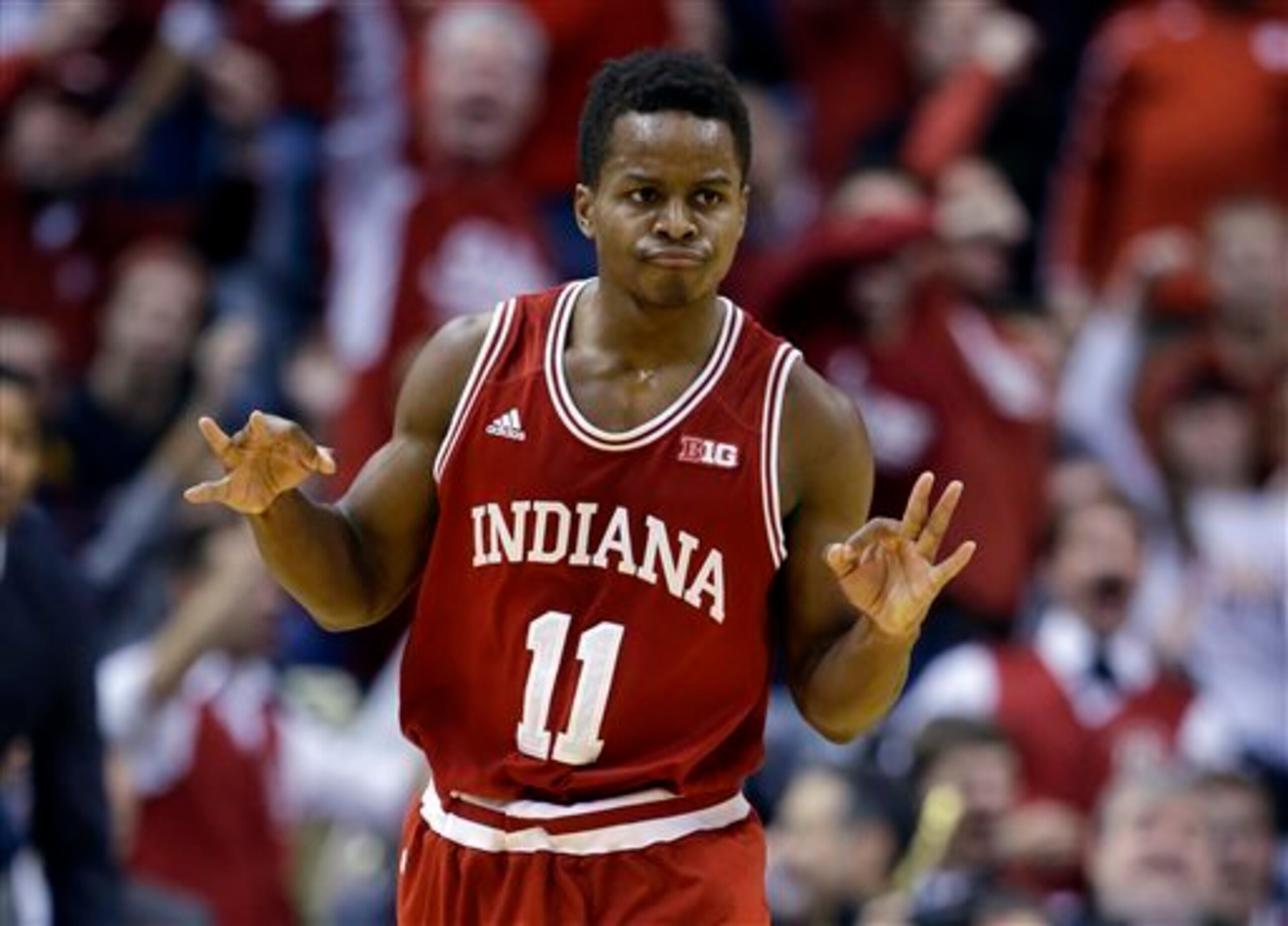
2014-15 Points (per game): 555 (16.3)
Career Points: 1,379
It's a shame that Yogi Ferrell didn't discover his affinity for scoring until his sophomore season. Otherwise, he easily could have been in the top five on this list.
While taking a backseat to the established core of Jordan Hulls, Victor Oladipo, Will Sheehey, Christian Watford and Cody Zeller, Ferrell barely even tried to score in 2012-13, averaging one field-goal attempt for every 4:29 on the floor and finishing the season with 56 more assists than made buckets.
In the two years since, Ferrell has taken one shot for every 2:46 spent on the court and has 59 more made field goals than assists. The vast majority of that increase has come from behind the arc, where he went from a 30 percent shooter who barely attempted two per game to a 40.8 percent shooter who jacks up 6.4 triples per contest.
Ferrell scored 552 points two seasons ago and 555 this past season, but he still has a long way to go because of that low-scoring freshman year.
Several players to this point on the list have been in the range of needing 600-650 points to hit 2,000, so you know by now that Ferrell will need somewhere in the vicinity of 16-19 points per game to reach 621, depending on how deep the Hoosiers decide to go in the tournament.
The big question is: How will the addition of competent frontcourt players impact Ferrell's scoring? Will the added presence of Thomas Bryant and Juwan Morgan in the post (not to mention the continued presence of other great perimeter shooters on the roster) open up more space for Ferrell to score, or will he become more of a point guard by occasionally passing up shots to create easier ones for his teammates?
Both are valid assumptions, as it really boils down to the DNA of the player. My guess is that the 6'0" guard takes a Russ Smith approach to his senior season and goes out of his way to rack up assists to prove his worthiness as a point guard in the NBA. Of course, Smith also scored 673 points as a senior, so who's to say Ferrell can't do both?
14. Marcus Paige, North Carolina
8 of 21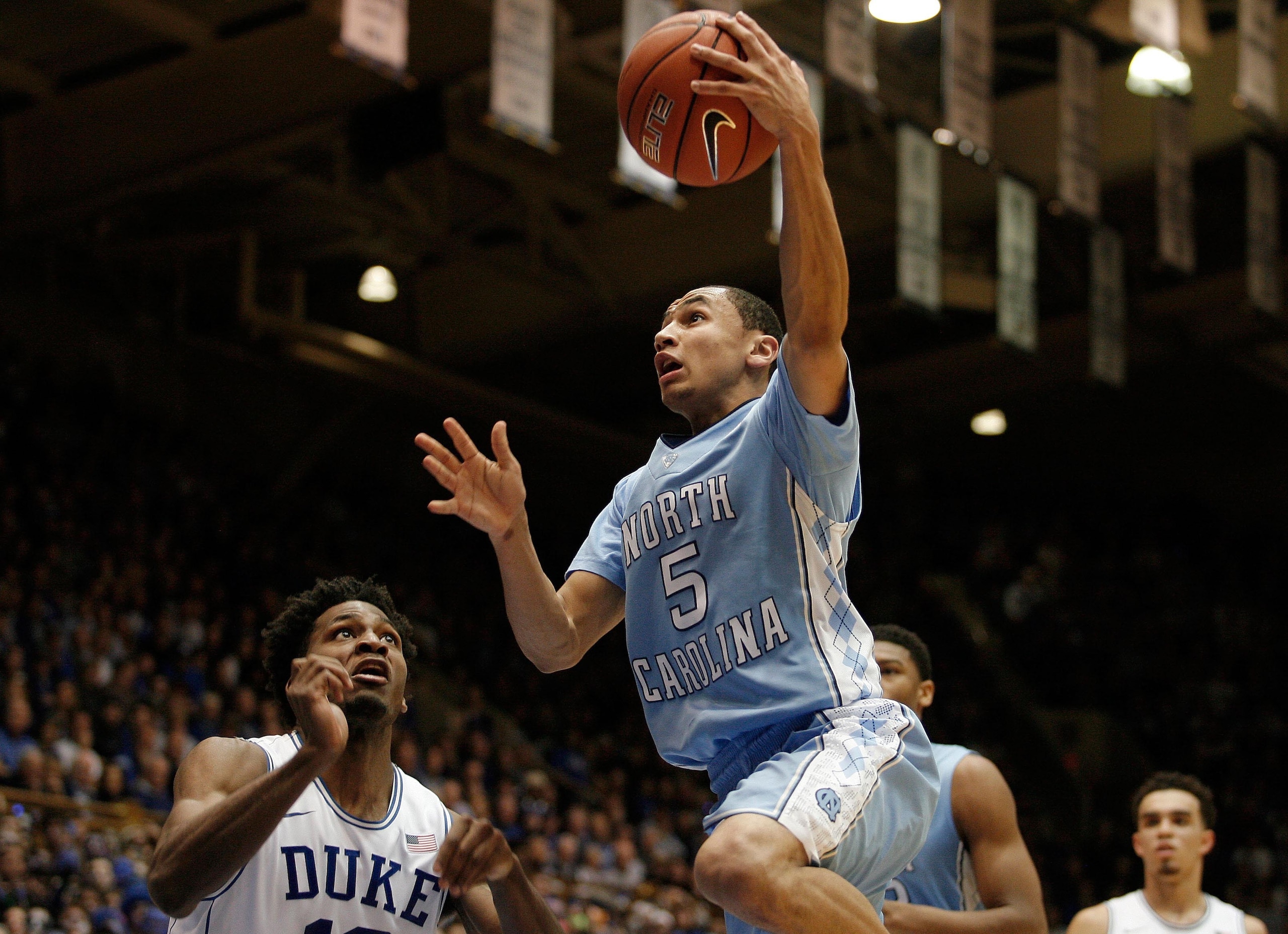
2014-15 Points (per game): 534 (14.1)
Career Points: 1,416
In another case of a guard who did a ton of passing as a freshman, exploded as a sophomore and took a step backward as a junior, Marcus Paige is the first person we've encountered on the list who probably should hit 2,000 career points this season.
Scoring 584 points in one season seems like a lot, but there are three reasons to like Paige's chances. First off, he already did it two years ago, scoring 596 points in 34 games. Second, 51 players scored at least that many points last season, so it's hardly an unapproachable plateau. And third, North Carolina is one of the favorites to win the NCAA championship this year, so playing as many as 40 games is very much within the realm of possibility.
Really, the only reason to doubt Paige's chances—unless you're of the mind that UNC might still get banned from postseason play—is the plantar fasciitis that held him back this past season.
The majority of the players on this list have had a clean bill of health. After all, it's hard to score 1,300-1,600 points in three seasons without averaging 30 or more minutes per game. But Paige was all sorts of injured throughout the course of his junior year, and it showed in his substantially decreased willingness to drive to the lane for points.
He still shot quite well from three-point range, but a drop of 1.6 two-point attempts and 1.4 free-throw attempts per game really added up over time for a guy whose scoring average went down 3.4 points per game.
If he's healthy enough to unleash his full arsenal of tricks, though, Paige could easily reach 2,000 career points before the Tar Heels even play their first tournament game.
13. Buddy Hield, Oklahoma
9 of 21
2014-15 Points (per game): 610 (17.4)
Career Points: 1,366
Well what do you know? Here's another guard who had a mediocre freshman year—7.8 points per game, in Buddy Hield's case—before a monster sophomore season and a less-efficient-but-still-pretty-great junior year.
Considering what we've seen out of Hield over the past two years, it's really surprising that he's still 634 points away from 2,000 in his career. However, he didn't really embrace his three-point prowess until his sophomore year.
It's not like he had much of a choice, though. When he arrived on campus, Steven Pledger was already firmly entrenched as the primary long-range weapon for the Sooners, and he wasn't about to relinquish that role to some freshman who hit just 23.8 percent of his three-point attempts.
After Pledger graduated, Hield became an assassin, nearly doubling his rate of three-point attempts per 40 minutes while simultaneously increasing his percentage by 148 points. It was a pretty unbelievable turnaround for a guy who shot 2-of-32 from downtown over the final 12 games of his freshman year.
Despite being named the 2014-15 Big 12 Player of the Year, Hield's shooting wasn't nearly as efficient the following season. His three-point percentage dropped 27 points, and his two-point percentage plummeted 43 points.
Yet, he finished the season with 610 points while not shooting nearly as well as we know he can, so 634 is a very attainable number—particularly if Oklahoma lives up to the preseason expectations of being a fringe top-10 team. Another 35-game season for the Sooners could be enough to get Hield to the plateau.
12. Kellen Dunham, Butler
10 of 21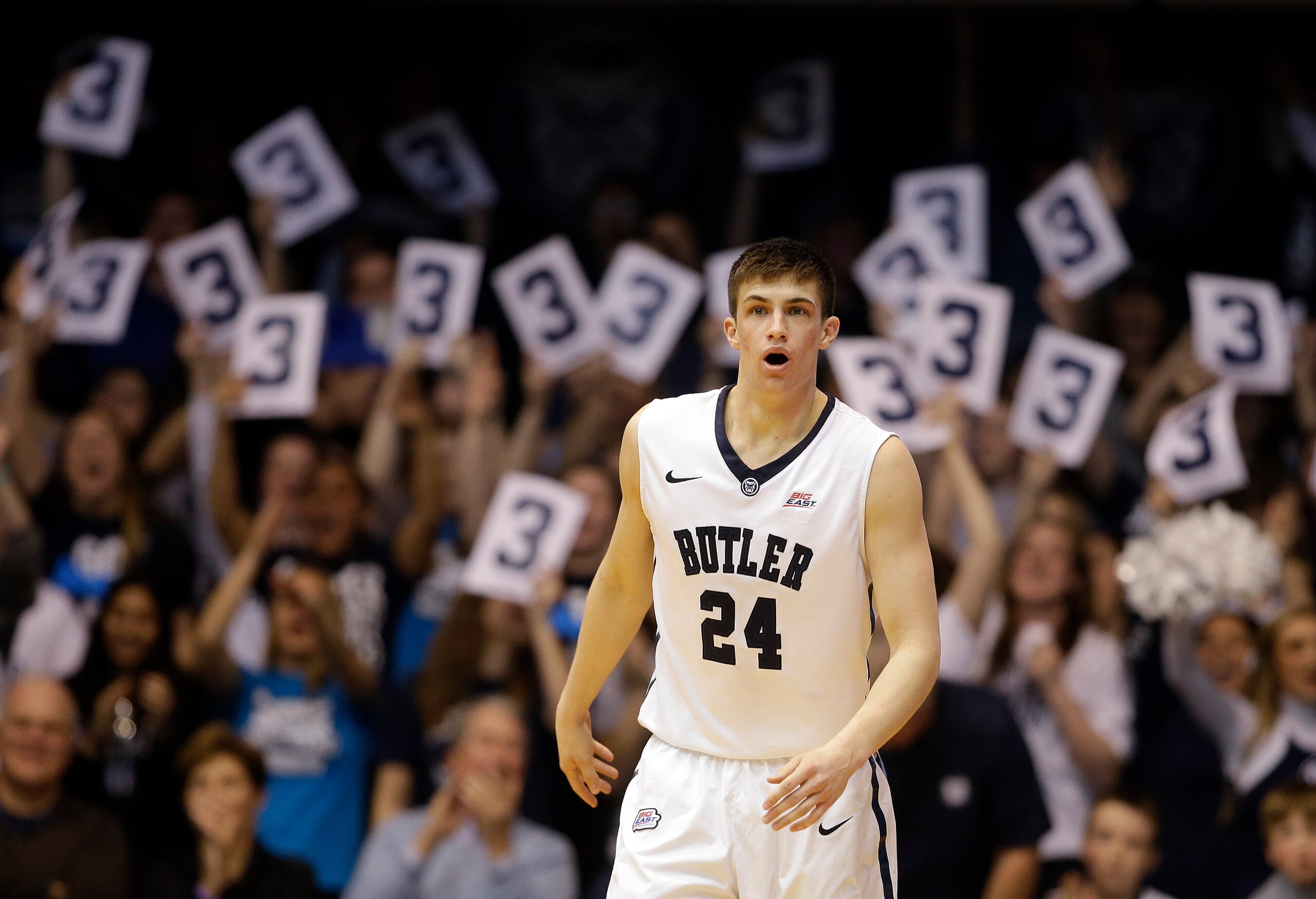
2014-15 Points (per game): 561 (16.5)
Career Points: 1,411
Lather, rinse and repeat for another lethal shooting guard who had to wait a year to claim his spot as the team's primary perimeter weapon.
Kellen Dunham (9.5 PPG, 57-of-165 from three-point range) had a much better freshman year than Buddy Hield had, but it was Arkansas transfer Rotnei Clarke who did the bulk of Butler's shooting, connecting on more than twice as many triples as Dunham.
But Clarke only had one year of eligibility with the Bulldogs, and with Roosevelt Jones suffering a season-ending injury before the season began, 2013-14 was Dunham's time to shine. His shooting percentages as a sophomore were almost identical to the ones he posted as a freshman, but he averaged 36.1 minutes per game and attempted 27.4 percent of the team's shots while on the court—as opposed to 26.1 minutes and 20.6 percent the previous year.
Butler finished the season below .500 but certainly not for lack of effort from Dunham.
With Jones back in the fold this past season, Dunham didn't play as many minutes or take as many shots, but his three-point percentage skyrocketed from 35.5 to 41.0.
Does he have enough left in the tank to increase his scoring by one point per game? Butler has Sweet 16 potential, but assuming 34 games for a second consecutive season, Dunham would need 17.3 points per game to reach the goal.
The addition of North Carolina State transfer Tyler Lewis should help. He averaged 7.5 assists per 40 minutes as a freshman and will likely look to create a ton of open shots for Dunham.
11. Kyle Wilson, Army
11 of 21
2014-15 Points (per game): 508 (17.5)
Career Points: 1,481
With Kyle Wilson, we bridge the gap between a tier of players who have a good chance of scoring 2,000 career points and a higher tier of players for which it would be a big surprise if they fail to reach the mark with a healthy season.
At long last, Army is making the transition into the 21st century with a regular-season schedule that consists of more than 29 games. For some reason, the Black Knights only scheduled 11 nonconference games in each of the past two seasons, but they have 13 on the docket for this year. This means Wilson (if healthy) will have a new career high in games played in a season.
Given his career scoring average (16.3 PPG), Wilson would already be at or over 1,600 career points with a normal schedule of at least 32 games per year, but he hasn't yet had that opportunity.
Not only are there more games on the schedule, but Army might be the team to beat in the Patriot League this year. If the Black Knights win the conference tournament, Wilson would merely need to average 14.8 points per game. Even if they get bounced in their first Patriot tourney game, we're still talking about 16.2 points per game for a guy who crushed that mark in each of the past two seasons.
In fact, if he can rediscover his three-point stroke, Wilson could lead the nation in scoring. He shot 41.6 as a freshman and 43.4 percent as a sophomore, but that number dropped like a rock to 33.8 percent this past season as he became more of a volume shooter.
Even with that mediocre stroke, he still averaged 17.5 points per game, so it's hard to imagine him suddenly struggling to put up 15 per night.
10. A.J. English, Iona
12 of 21
2014-15 Points (per game): 685 (20.1)
Career Points: 1,372
Yes, A.J. English needs to score 109 more points than Kyle Wilson to reach 2,000.
No, it's not a mistake that English is ranked ahead of Wilson.
A product of Iona's uptempo, high-scoring frenzy, English is one of five returning players who averaged at least 20 points per game last season.
Despite playing 37.4 minutes per game, he shot 38.7 percent from three-point range to join NJIT's Damon Lynn as the only returning players to make at least 105 triples last season. He played 36.6 minutes per game the previous year, so there's no good reason to question his ability to continue to excel on the heels of that type of workload.
What's more, teammate David Laury (19.8 PPG, 9.7 RPG) graduated after leading the Gaels in percentage of shots taken by a sizable margin, so there's actually reason to believe English will do even more scoring as a senior than he did as a junior.
It's too bad he broke his wrist midway through his freshman season. English was barely a cog in the rotation for a month-and-a-half before missing the rest of the year. It's because he only scored 119 points that season that he still needs so many this year. However, that probably just delays the inevitable until early March.
9. Jameel Warney, Stony Brook
13 of 21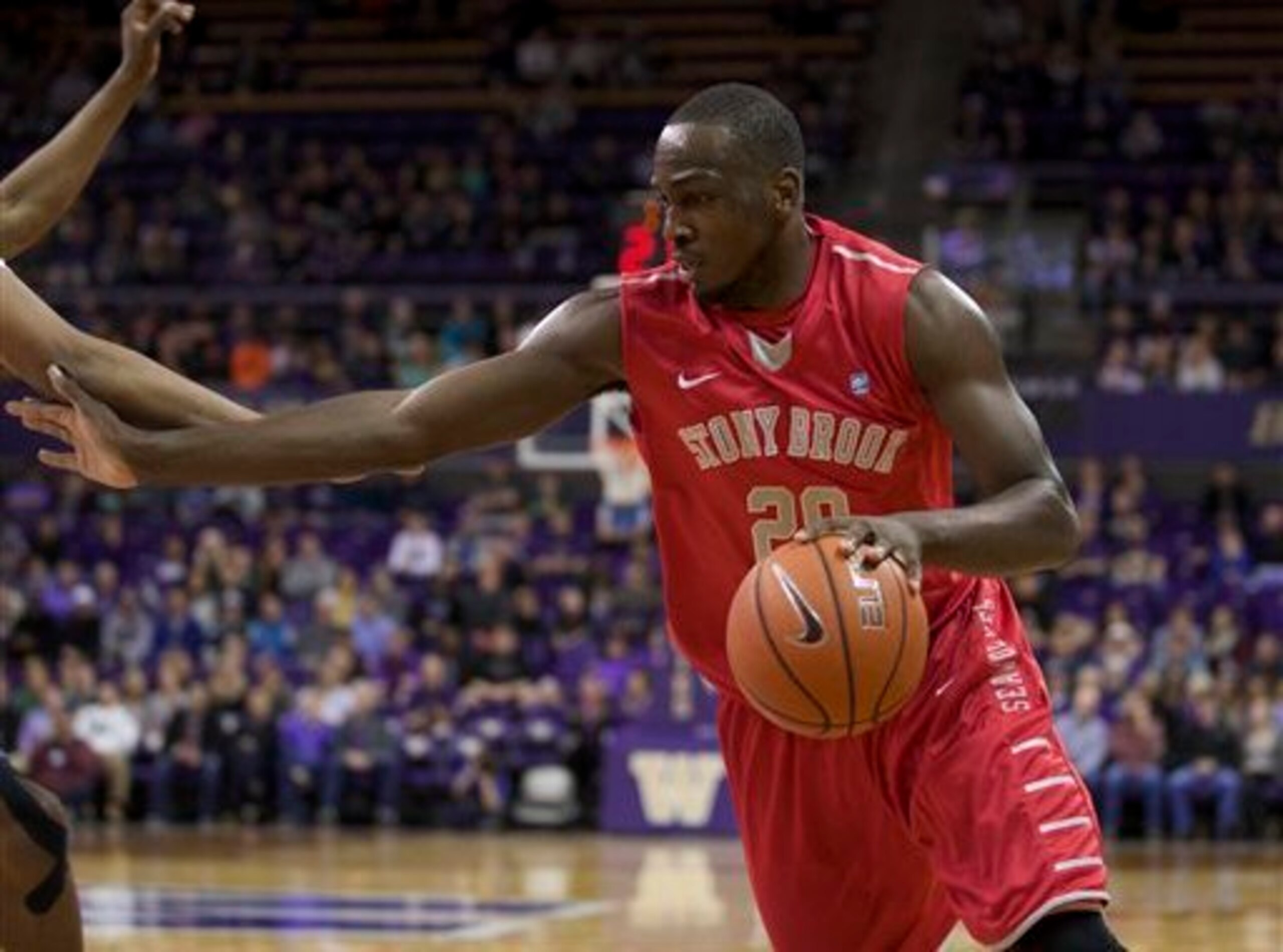
2014-15 Points (per game): 575 (16.4)
Career Points: 1,477
The patron saint of double-doubles, Jameel Warney led the nation with 24 of them last season, averaging 11.7 rebounds per game in addition to his 16.4 points.
Despite a career spent struggling from the free-throw line (57.9 percent vs. 58.3 percent from the field), Warney has been one of the most unstoppable interior weapons in the country. Throw in the 2.5 blocks per game from this past season and he's right up there with recently graduated Big West Conference cult hero Alan Williams.
Perhaps this will finally be the year that Warney's efforts are enough to get Stony Brook over the top and into a game the nation might actually watch. The Seawolves have won three straight America East regular-season titles, but they have nothing but a trio of NIT participation trophies to show for it, repeatedly falling short in the conference tournament.
Warney shouldn't need any extra games to hit 2,000 career points, though. A repeat of last year's scoring average would put him on pace to eclipse that mark in the first game of the AEC tournament.
Considering he went from scoring 12.4 points per game as a freshman to 14.5 and 16.4 the following years, expecting a duplication of 2014-15 would be selling short what he's capable of doing. Instead, get ready for at least 17.5 points per game and a third consecutive America East Player of the Year title.
8. Anthony Drmic, Boise State
14 of 21
2014-15 Points (per game): 105 (15.0)
Career Points: 1,528
The toughest player to rank, Anthony Drmic might have joined the 2,000-point club in 2014-15 were it not for an ankle injury that ended his season after seven games.
The silver lining is that he scored 105 points without losing his final year of eligibility, so now he only needs 472 points to hit the mark.
Better yet—not so much for Boise State, but definitely for Drmic's scoring prospects—Derrick Marks is out of the picture after averaging 16.0 field-goal attempts and 21.6 points per 40 minutes in his career with the Broncos.
Marks ranked third in the nation in percentage of shots taken while on the floor in 2014-15, so there's plenty of slack to be picked up. Some of that will fall into the hands of rising star James Webb III, but the team will certainly want to create opportunities for a veteran who averaged 17.7 points as a sophomore and 15.9 as a junior.
Even at the rate of 15.0 per game that he scored in 2014-15, Drmic would hit 2,000 career points before the postseason begins. Thus, the health of his ankle is the only concern keeping him from near-lock status to reach that goal.
7. Damion Lee, Louisville
15 of 21
2014-15 Points (per game): 578 (21.4)
Career Points: 1,538
In his four years with Drexel, Damion Lee averaged 19.9 points per 40 minutes, thanks to shooting 49.5 percent, 36.9 percent and 84.2 percent from two-point range, three-point range and the free-throw line, respectively. Those aren't the most efficient numbers in the world, but a career rate of 1.38 points per field-goal attempt is pretty darn solid.
But how will he fare in a "real conference"?
With all due respect to the CAA, averaging 32 points against UNC-Wilmington isn't necessarily going to translate to 32 points against UNC. The one game that Lee played against an ACC team in 2014-15 was the one time he failed to score 12 points—Miami held him to nine in November.
One year ago, another high scorer grad-transferred from a minor conference to a major conference. Antoine Mason averaged 25.6 points per game with Niagara in 2013-14 before putting up just 14.4 with Auburn.
Could Lee be headed down a similar path?
The good news is he doesn't need to average 21.4 points per game with Louisville to reach 2,000 career points. He wouldn't even need 14 points per game if the Cardinals are able to make any sort of run in the NCAA tournament. Furthermore, most expect Lee to be Louisville's top scorer, while no one was particularly confident about what to expect out of Mason.
We're confident Lee will have little trouble scoring 462 points this season, but he isn't nearly the sure thing that the top six guys are.
6. Georges Niang, Iowa State
16 of 21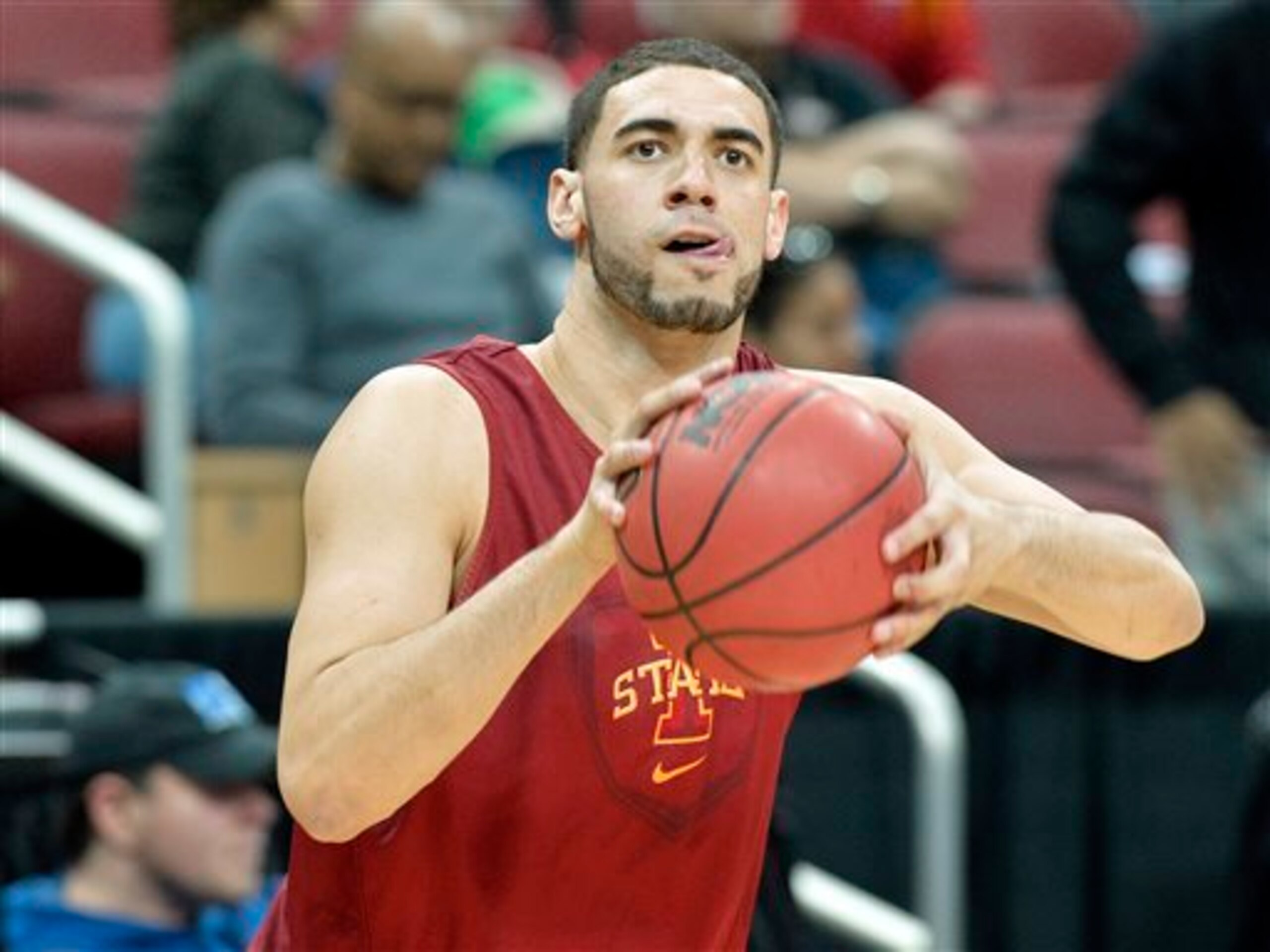
2014-15 Points (per game): 521 (15.3)
Career Points: 1,510
Now we've crossed over into the group of guys for whom it's not really a question of whether they'll reach 2,000 points but rather when they'll get there.
Georges Niang, for instance, averaged 15.3 points per game in 2014-15 and 16.7 the year before that. He's playing for a team that is, at worst, a strong candidate to make the Final Four. And he's a hybrid forward on a roster that just lost both Bryce Dejean-Jones and Dustin Hogue to graduation.
Even if you don't view Niang as a stone-cold lock for preseason first team All-American, you're probably on some intense combination of hallucinogens if you don't think he's going to score at least 490 points this year. Assuming 35 games, that's only 14.0 points per game for a guy who can almost score that much in his sleep.
Unless opposing teams focus solely on stopping him and allow Monte Morris, Jameel McKay and others to go to town, we're probably looking at a player who will average 17 per game, potentially hitting 2,000 career points on senior night in Hilton Coliseum.
Pro tip to anyone covering that game if such a situation arises: Bring earplugs.
5. Jalan West, Northwestern State
17 of 21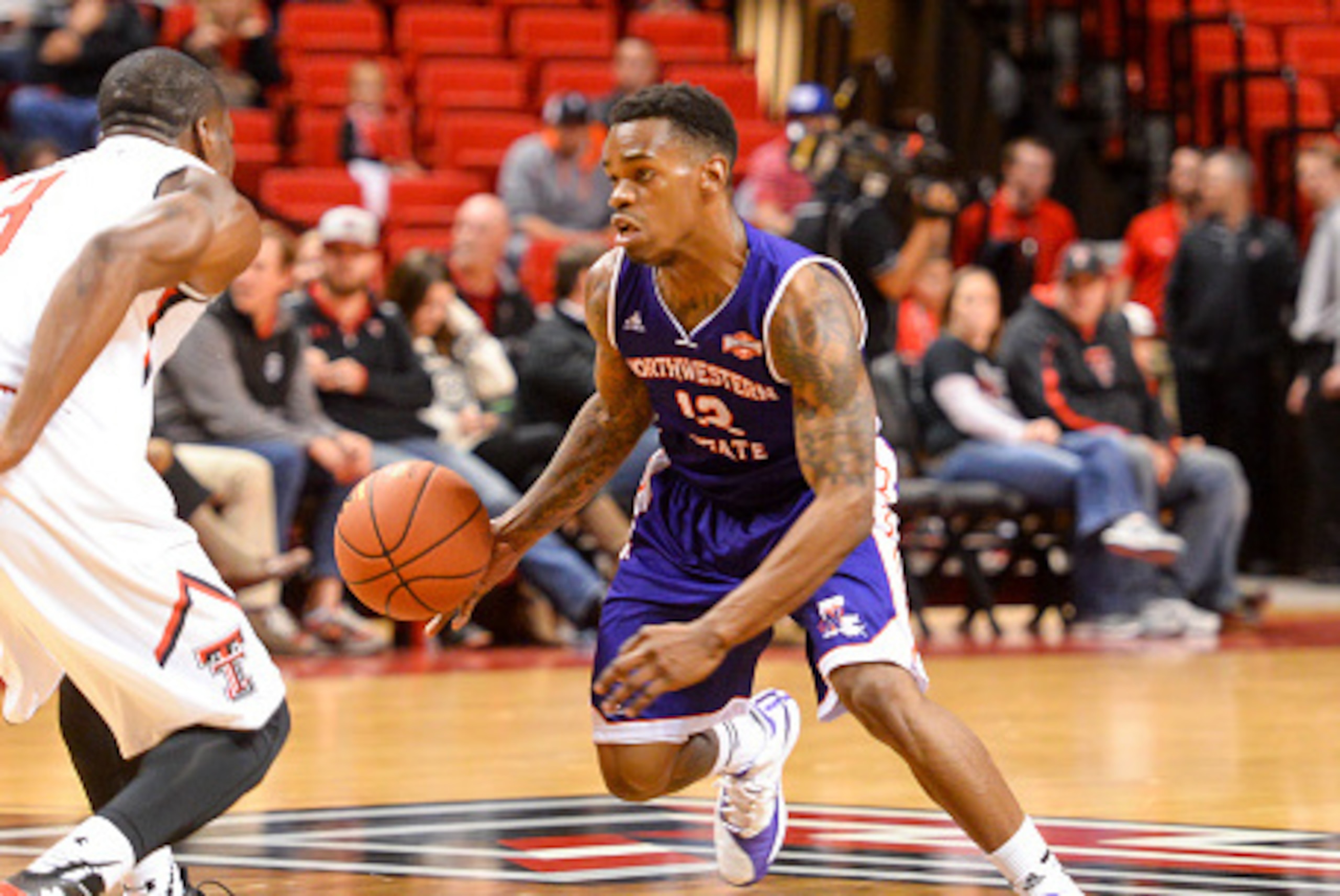
2014-15 Points (per game): 641 (20.0)
Career Points: 1,567
Much like A.J. English at Iona, Jalan West is a product of one of the fastest, highest-scoring offensive systems in the country.
Northwestern State has ranked either first or second in the nation in points per game in each of the past three seasons. West wasn't a gigantic factor as a freshman, but he has averaged 19.7 points, 7.0 assists and 2.3 steals per game over the past two seasons.
Don't blame it all on the tempo, though. It'd be one thing if West was scoring a ton of points just because he's taking a ton of shots, but he is shooting 50.1 percent from two-point range, 39.7 percent from three-point range and 86.4 percent from the free-throw line in his career.
The pace of play certainly doesn't hurt his case, but he is averaging 1.46 points per field-goal attempt. Even legendary three-point weapon J.J. Redick only scored 1.45 points per field-goal attempt in his career.
Good luck finding any nationally televised Southland Conference games, but we should get a few chances to watch West in action early in the season. Northwestern State plays Ole Miss, Arizona, Auburn, Arkansas and Baylor within the first four weeks of the season. Some of those games are bound to be on TV, right? Please?
4. John Brown, High Point
18 of 21
2014-15 Points (per game): 617 (19.3)
Career Points: 1,680
Fans of other Big South programs will not be the slightest bit sad to see John Brown graduate next summer.
That isn't to say he is an unlikable person. In fact, NBC Sports' Rob Dauster called Brown "bar-none one of the most entertaining interviews I've ever done."
Rather, the 6'8" wrecking ball has been absolutely terrorizing opponents on the court for the past three years. ESPN's Jay Bilas is one of many to bestow Brown with the title of best dunker in college basketball.
Watch a mixtape of some of his ridiculous slams and it's hard to argue against that claim.
"Players like (Brown) belong in the ACC, not the Big South," wrote Dauster.
As far as the 2,000-point mark is concerned, he's 320 points away and has scored at least 600 in each of the past two years. He should be dunking his way to that plateau at some point in early January.
3. Juan'Ya Green, Hofstra
19 of 21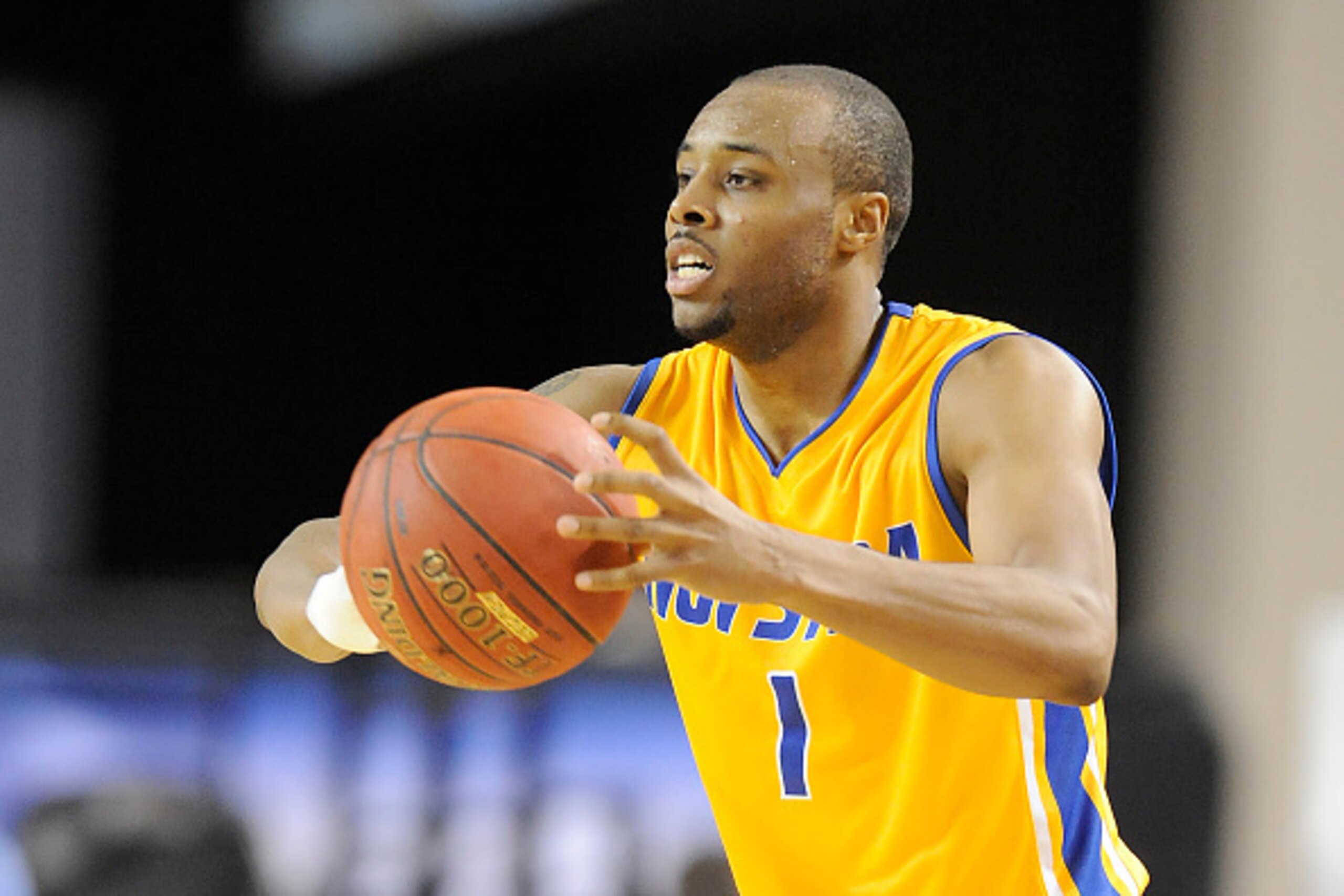
2014-15 Points (per game): 580 (17.1)
Career Points: 1,711
An absolute lock to reach 2,000 points, Juan'Ya Green has scored at least 546 points in each of his three seasons. It doesn't matter whether he's wearing a jersey from Niagara or Hofstra; he can put the ball in the hoop over and over again.
Perhaps even more intriguing than the points scored is the number of minutes that Green plays.
It's not often that a freshman averages 37.2 minutes per game, but that's what Green did for Niagara in 2011-12 before upping that rate to 38.0 minutes per game as a sophomore. When Joe Mihalich left Niagara for the job at Hofstra, Green followed him, sat out a season and proceeded to average 36.4 minutes per game this past season.
He ranked fourth in the nation in percentage of minutes played in his sophomore year and has ranked in the top 35 all three seasons. If he can pull it off, he would be the only person in at least a decade to have played at least 90 percent of his team's minutes in all four seasons. Matthew Dellavedova was the only other person to come particularly close, failing to reach the mark in his sophomore season.
The sheer number of minutes has undoubtedly been of paramount importance to Green's success as a scorer.
He has a career field-goal percentage of just 39.6, but he takes plenty of shots and has done a ton of scoring from the free-throw line (489 of his 1,711 points.) It'll be a long time before anyone approaches Tyler Hansbrough's record of 982 made free throws in a career, but Green certainly isn't afraid to let a little contact help his spot in the record books.
2. Shawn Long, Louisiana-Lafayette
20 of 21
2014-15 Points (per game): 558 (16.4)
Career Points: 1,700
As noted earlier this summer in ranking Shawn Long No. 3 on the list of projected double-double machines, he is in position to do something that hasn't been done in two decades: average at least 10 points and 10 rebounds in four consecutive collegiate seasons.
The rebounds are completely meaningless in the context of this list, but we're talking about a guy who has averaged at least 15.5 points per game in each of his three seasons. Do I really need to sell you on his ability to score 300 points this year?
Instead, let's take a look at the rarefied air he's entering.
There are 12 players in college basketball history who recorded at least 2,300 points and 1,300 rebounds: Lew Alcindor, Oscar Robertson, Elgin Baylor, Elvin Hayes, Tom Gola, David Robinson, Ralph Sampson, Joe Holup, Lionel Simmons, Keith Lee, Michael Brooks and Dickie Hemric.
Pretty nice names, huh? And of the bunch, Simmons was the most recent one to play a college basketball game, finishing his career in 1990, so there haven't been any new entries to that club in a quarter century.
To gain membership, Long merely needs 500 points and 264 rebounds—numbers he has surpassed with room to spare in each of his three seasons.
Put me down for one season of checking the Ragin' Cajuns box score every time they play.
1. D.J. Balentine, Evansville
21 of 21
2014-15 Points (per game): 723 (20.1)
Career Points: 1,766
Last, but absolutely not least, D.J. Balentine has had an incredible past two seasons with Evansville. He ranked seventh in the nation in total points scored two years ago and followed it up with a sixth-place finish this past season.
If he averages so much as 18 points per game—child's play after putting up 22.8 and 20.1 over the last two years—Balentine will hit 2,000 career points before the calendar is even flipped to 2016.
Heck, if he scores like he did in the 2015 CIT, maybe he'll get there before the end of November. Completely debunking every theory ever conceived about rest leading to rust, Balentine scored 35 points against IPFW in his first game in nearly two weeks. In Evansville's first four games of the tournament, he averaged 30 points per game while shooting 18-of-30 (60 percent) from three-point range.
Sure, the level of competition in the CIT wasn't the greatest, but does that even matter to Balentine? He scored 25 and 31 in consecutive games against Belmont and Murray State, respectively, last December. And two years ago while Wichita State was going undefeated, Balentine averaged 25.3 points in three games against the Shockers.
He's truly one of the best scorers in the nation, and we'll all get a chance to watch him play three nationally televised games in the Wooden Legacy.
Don't blink, though. He'll have 20 points in those games before you know it.
Advanced stats per KenPom.com.
Kerry Miller covers college basketball for Bleacher Report. You can follow him on Twitter @kerrancejames.


.jpg?w=2560 "Rap: Lions, LaPorta End Contract Talks")

.jpg?w=2560 "Report: Baker May Miss Up to 6 Weeks")