Sign of the Times: Does College Basketball Have an Autograph Problem?
LEXINGTON, Ky. — They wait in cars with basketballs, glossy photos and sharpies, flinging open their doors and darting across the parking lot as soon as a Kentucky player exits the dorm.
When it's warmer they move to the benches outside Wildcat Coal Lodge, their backpacks filled with items for the potential NBA lottery picks to autograph before they head for class.
“It happens the most right after school starts, when all the new freshmen are here,” sophomore forward Willie Cauley-Stein said. “We learn to leave earlier than usual, because we know we’re going to be doing a lot of signing.”
TOP NEWS
Hakeem's Son Going to SMU
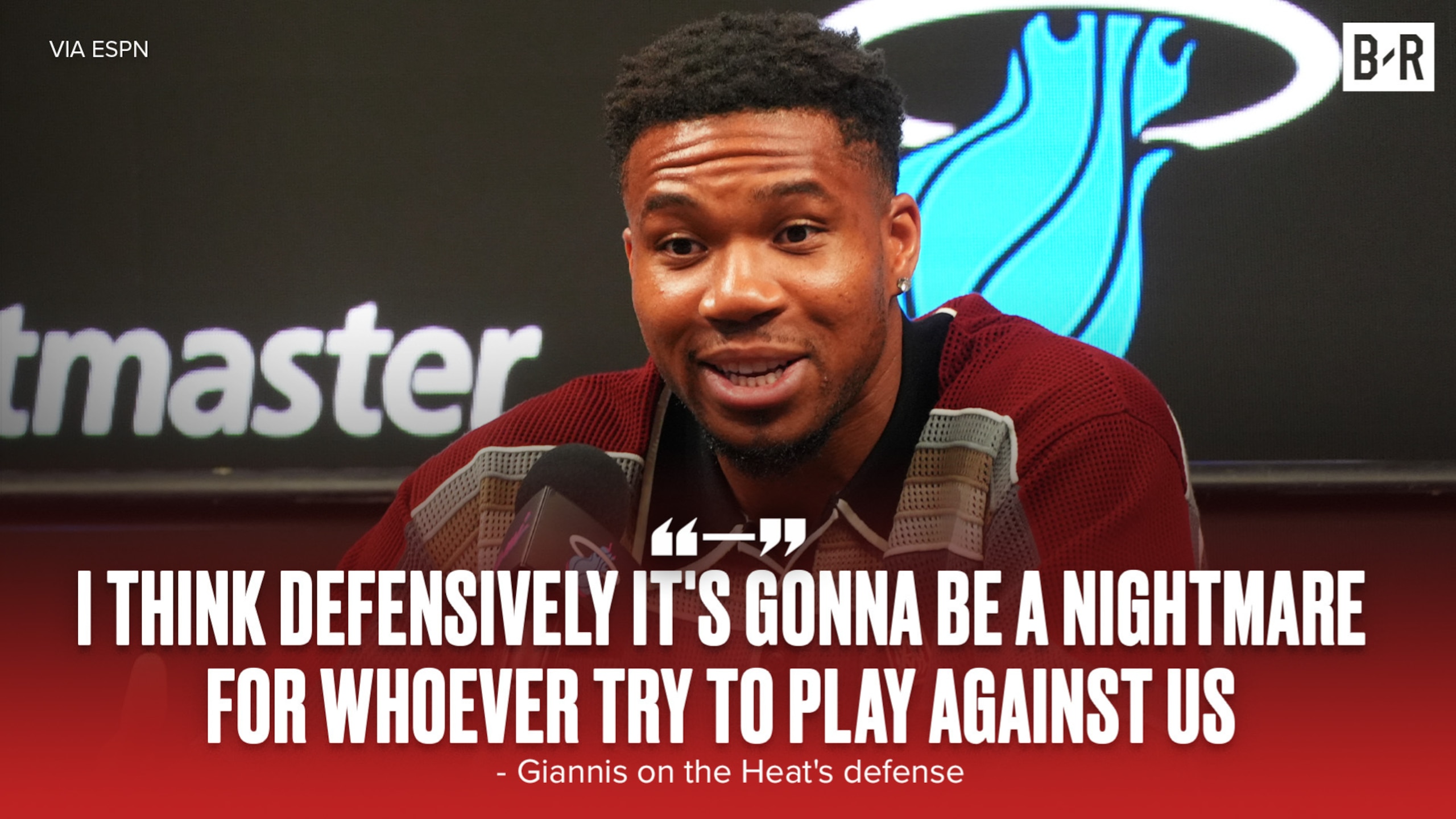
Giannis' Warning to NBA ⚠️
Caitlin Clark to appear on College GameDay

If they choose to oblige.
Does the man in his 40s really want a jersey signed for his 11-year-old son? Or is he actually a memorabilia dealer who will sell the item at his store for $300? What about the “student” in the backwards Kentucky cap? Does he literally plan to display all five of his autographed copies of Sports Illustrated in his off-campus apartment? Or will he sell them on eBay for $150 a pop?
“There are a couple of guys I’ve seen about 10 times,” shooting guard Aaron Harrison said. “I try to sign at least one thing for everyone, but it’s not hard to figure out what’s really going on.”
As big as it’s become at Kentucky, the issue regarding autographs is hardly confined to Lexington. Coaches and administrators across the country said they’ve noticed increased efforts by outsiders to obtain the signatures of their star athletes on items they can sell for profit.
The situation is especially troublesome at schools such as Kentucky, Kansas and others that boast players who have been tagged as potential first-round draft picks and future NBA stars.
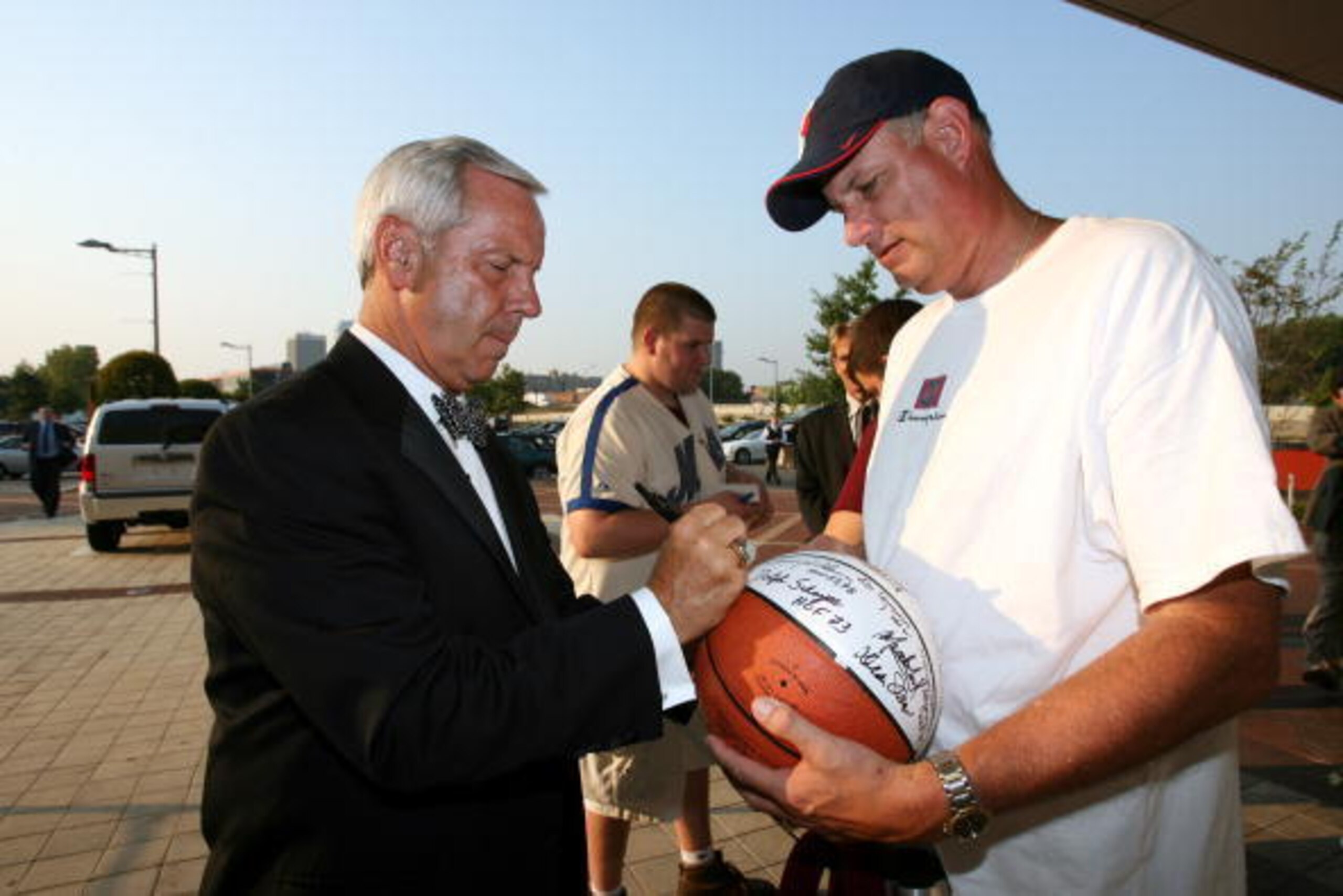
“It really makes me mad,” North Carolina coach Roy Williams said. “You can spot them. On the road, people wait for our bus to pull into the hotel. Some of them have four or five things. Almost every time I say, ‘Are you selling this?’
“If I think they’re selling it, I’m not signing.”
Autographs in collegiate sports became a national topic last summer when images surfaced of former Texas A&M quarterback Johnny Manziel signing photos for a sports memorabilia dealer in Florida.
The NCAA forbids athletes from profiting financially from their name or likeness while they’re in college. Even though an investigation failed to prove Manziel accepted money for his signatures, it was determined he still committed a violation because he was aware the items would be sold by the dealer for financial gain.
Manziel only received a half-game suspension for the infraction. Still, the case prompted universities to enhance their efforts to prevent athletes from signing items that could eventually be sold.
Compliance directors at Kansas and Kentucky instruct their players to sign only one item per fan and to personalize their autograph whenever possible. Writing “To: Carson” on a picture, for example, causes it to lose its monetary value.
Players are also told not to sign plain white sheets of paper, a request often made by dealers hoping to scan the signature onto other items for resale. Autographing cardboard plaques that could be mounted below a framed picture is also discouraged.
Administrators at Kansas do all they can to keep issues to a minimum. During postgame autograph sessions, star players such as Andrew Wiggins and Joel Embiid are almost always flanked by a staff member who makes sure they are following the school’s guidelines.
“Most notably (we do it) to enforce our institutional policy of one item per fan,” David Reed, KU’s Associate Athletic Director for Compliance, wrote in an e-mail.
“This has paid dividends in being able to identify and distinguish the fans from the few unscrupulous individuals who are getting items signed under the guise of being a fan and selling it for their personal profit.”
Kansas student Jared Wilson is one such individual.
Earlier this season Wilson and his twin brother, Jacob, purchased four basketballs autographed by Kansas’ entire team for $175 and then sold them on eBay for $275. The Jayhawks sign approximately 1,500 of the balls each year and sell them through the athletic department. The proceeds go to charity.
In 2007, Wilson said he sold more than 50 autographed copies of a Sports Illustrated that featured former KU stars Mario Chalmers and Julian Wright on the cover.
A diehard Kansas fan, Wilson said he keeps most of the items he gets signed and displays them at his home. Still, for a college student, the lure of quick and easy cash is often difficult to pass up.
“I guess I’m a hypocrite,” Wilson said. “I really do feel bad that the players can’t get any of the money people make off of their names.”
Wilson said his brother has received multiple cease-and-desist letters from Kansas ordering him to halt his attempts to sell Jayhawks merchandise online. Reed, the compliance director, said the arrival of Wiggins—arguably the most hyped college player since Kevin Durant—has forced his team to increase their efforts.
Reed estimates that since August of 2013, a member of the compliance staff has spent nearly 20 hours each week scrolling the Internet for items listed as memorabilia on eBay and other websites.
Anyone attempting to sell an item featuring the signature or likeness of a current Jayhawks player is sent a letter similar to the one received by Wilson’s brother. Secretly, administrators admit the letters have little power other than to prove to the NCAA that they attempted to stop a sale.
Wilson said that, early in the season, Kansas players attempt to follow orders and personalize their signatures. Eventually, though, a persistent autograph hound will catch the player when he’s in a rush and get the desired, non-personalized signature that’s needed to make a sale.
Dealers and fans often go to great lengths to obtain autographs from high-profile stars.
At Kentucky, Cauley-Stein said almost every trip to the local mall includes a 45-minute autograph session with fans who have no problem interrupting him and his teammates while they shop.
“It’s funny to watch,” he said. “You can spot someone looking at you that probably wants an autograph or picture, but they’re too shy to ask. But as soon as one person works up the courage to come up to you, all of the other people come rushing up. It’s like, ‘Since he did it, I guess it’s OK now.’
“All of a sudden you’ve got 50 people waiting.”
Former Kansas State star Michael Beasley once signed autographs for a line of about 50 people at Applebee's, where they’d waited patiently for him and teammate Jacob Pullen to finish their dinner.

When he arrived in Kansas to begin classes last summer, Wiggins said he was greeted at the airport by about 10 autograph seekers who had tracked his flight on the Internet. When word leaked that he had departed the airport for the drive to Lawrence, more fans gathered in the parking lot of his dorm, waiting for his arrival.
A few weeks later Wiggins tweeted that he was eating lunch at Jefferson’s, a popular restaurant near campus, and within 20 minutes two fans showed up with things for him to sign.
“I’ve even signed someone’s forehead,” Wiggins said. “I usually don’t care. I’ll sign anything for anyone. I don’t want to make anyone mad.”
Former Michigan State star Mateen Cleaves had that same attitude when he was a freshman in 1999. But after leading the Spartans to the 2000 NCAA title, things began to change.
“One of my favorite things was always interacting with fans and signing autographs,” Cleaves said. “But after we won the championship, people started taking it too far. They were waiting for me outside my dorm after games and following me to restaurants.
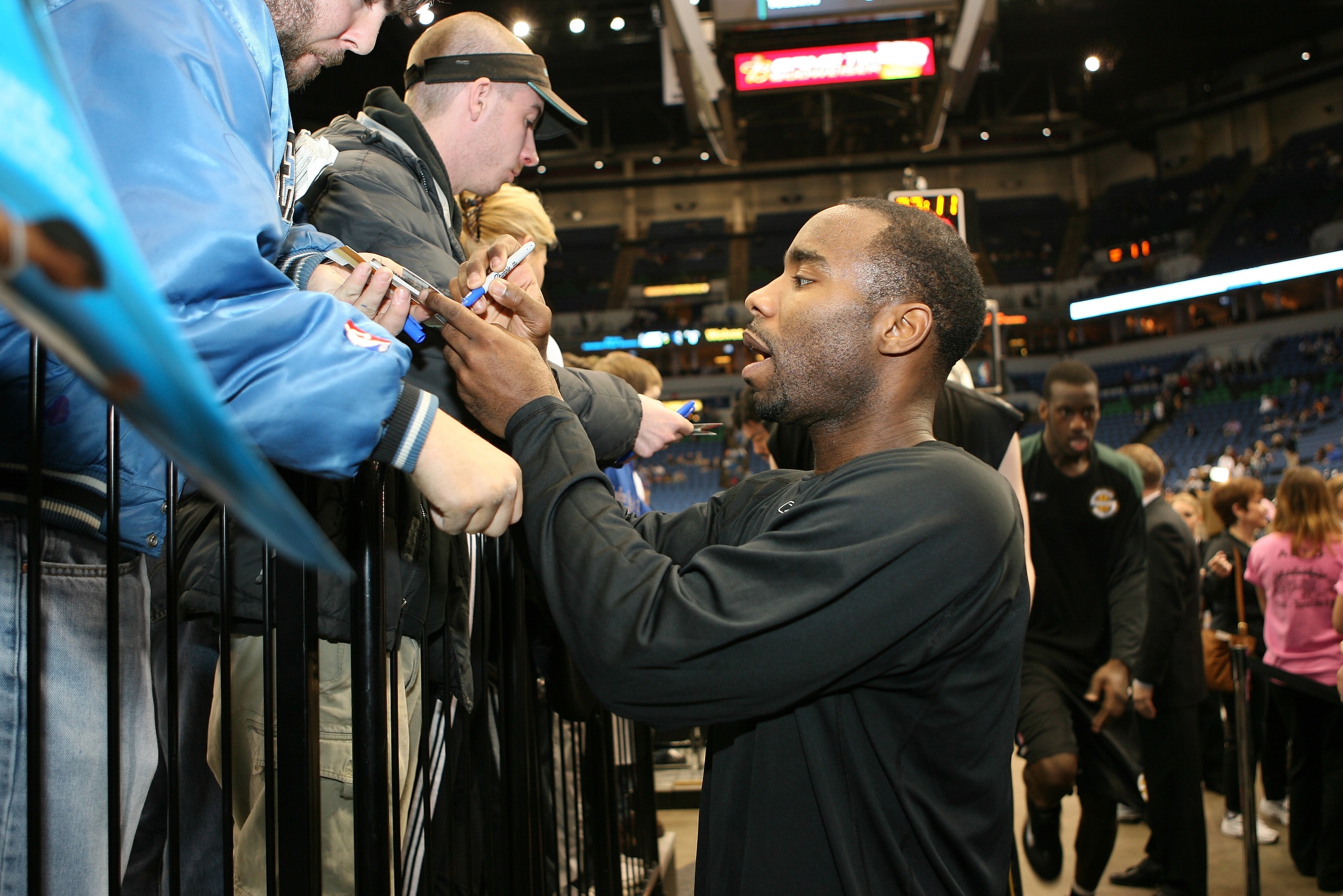
“These weren’t kids with basketballs. These were grown men with binders full of pictures. It got irritating. Sometimes they’d find some little boy to get my autograph for them because they knew I wouldn’t turn away a kid. So they were exploiting little kids.”
Still, Cleaves said he knew how much Michigan State’s true fans appreciated the opportunity to interact with the Spartans. He said he eventually became comfortable saying "no" to the older autograph seekers who made frequent appearances after games so he could focus his attention on the kids.
“It’s still something I enjoyed doing,” he said. “I was always that guy who would stay an hour after a scheduled appearance just to make sure I got to everyone.”
Greg Anthony, a star player for UNLV’s 1990 NCAA championship squad, said he didn’t deal with the same issues regarding autographs that athletes face today. He said the increased publicity surrounding high school recruiting has made stars and public figures out of players before they ever set foot on a college campus.
Prep standout Myles Turner, for example, said he routinely signs about 50 items after each of his games at Euless (Tex.) Trinity High School. Not just for home fans, but for fans of the opposing team too. Turner is the top uncommitted prospect in the Class of 2014.
“The autograph industry is huge now,” Anthony said. “When I played kids weren’t ranked in the sixth or seventh grade. We didn’t have the Internet, so kids weren’t being followed on a national level.
“We had people that wanted our autograph—but not until we’d established who we were. These days, when kids arrive on campus, they’ve already experienced it and are sophisticated enough to deal with it.”
Anthony, who spent 11 years in the NBA, said star players should eventually develop their own rules about when they will or won’t sign.
“Some guys will only do it for kids,” he said. “Other guys, it may just depend on their personality. Are they an introvert or are they outgoing? I had teammates that refused to sign every single time—even if it was for a friend of another teammate.
“One you develop black and white lines for yourself, your life becomes much easier. Because when you’re at the peak of your career you literally get asked (for an autograph) every single day.”
Athletes are sometimes shocked to hear how much money their signatures command.
A few months after his heroic three-pointer sparked Kansas to a win over Memphis in the 2008 NCAA title game, Chalmers—who by then had declared for the NBA draft—did an autograph signing for which he was paid $15 per signature. One man paid for him to sign 50 posters with an image of him releasing the ball with a few seconds left on the clock.

Chalmers later went into the man’s store and saw the now-framed posters on sale for $1,500 each.
“I had to put a clamp on it after that and stop it before it got out of hand,” Chalmers’ father Ronnie said. “People were taking advantage of him. I had to protect his signature.”
Indeed, Kentucky players with bright NBA futures are advised that signing too many autographs could hurt them financially once they turn pro. Autographs, they’re told, are like baseball cards. The more of them that are available, the less valuable they become.
In Kentucky, an autographed jersey of 2012 No. 1 draft pick Anthony Davis sells for $150 at Lexington Sports Cards. John Weaver, the store’s owner, said he works closely with the school’s compliance office to ensure he’s not going against any of its wishes.
Then, once a Wildcats player graduates or enters the NBA draft, he invites them to his store for autograph signings and markets the event to Kentucky fans.
Davis charged $50 per signature a few weeks after leading the Wildcats to the NCAA title, while Michael Kidd-Gilchrist and Terrence Jones asked for $30. Weaver said the players paid him a percentage of that fee for hosting the signing, although he wouldn’t disclose a figure.
“They had a span right after they won the title where they probably did 25 signings in 30 days throughout the state,” Weaver said. “It’s a big business.”
Even when they’re being paid for it, players said it’s disheartening to sign items knowing they’ll eventually be sold. The situation also frustrates diehard fans who simply want to have a nice exchange with their favorite athlete before getting him to sign something that will be treasured forever.
“It’s a shame a few people have to ruin it for everyone else,” Indiana coach Tom Crean said. “Players don’t know who to trust.”

Piotr Zygmunt, 34, has spent more than two decades collecting signed Kansas memorabilia. He has autographed copies of every Sports Illustrated ever printed featuring a Jayhawks player. The walls of his basement are covered with framed newspaper articles and posters—all of which have been signed—and autographed books and basketballs rest on his coffee tables and shelves.
“It’s been a passion of mine, a hobby, since 1991,” said Zygmunt, who lives in Overland Park, Kan. “But I’m sure these players see a guy in his 30’s and wonder why he’d want an autograph. It’s frustrating.
“I almost always have to say, ‘I promise I’m not going to sell this.’”
Jason King covers college basketball for Bleacher Report. You can follow him on Twitter @JasonKingBR.
.jpg?w=2560)

.jpg?w=2560 "🚨 Tony Romo, CBS Sports Part Ways")