Predicting the Most Fun Teams to Watch in the 2016-17 College Basketball Season
College basketball fans have a variety of reasons for tuning in to games each year, but something that everyone is looking for is entertainment value. While the athleticism you see in the NBA and the wide-open nature of that game can't really be replicated at the college level, that doesn't mean it's hard to find teams that are fun to watch.
Elements that make for interesting viewing include a fast tempo, efficient scoring (particularly from three-point range) and the kind of defense that doesn't just stop the opponent but also fuels their own team's attack.
Who figures to meet most or all of those criteria in the 2016-17? We've made our guesses after evaluating last year's numbers and factoring in the players who are moving on and those coming in over the summer. Teams are listed alphabetically, not based on any sort of ranking, though it shouldn't be a surprise to anyone that most of our choices are almost among those ranked in Bleacher Report's Super-Early Preseason Top 25.
Arizona Wildcats
1 of 12
The concept of positionless basketball is becoming more and more prevalent at the NBA level, but it hasn't really trickled down to college. Arizona could be in line to change that in 2016-17 in order to get its best players on the court, since they're nearly all guards.
A quartet of 5-star prospects includes three who play shooting guard, the same spot where top returning scorer Allonzo Trier stood out as a freshman this past season. Kobi Simmons is a combo guard who can handle both the point and the 2, as could Rawle Alkins—though he's better suited to be off the ball—while Terrance Ferguson is strictly a scorer and shooter (as he showed with a record seven three-pointers at the Nike Hoop Summit).
Throw in senior Kadeem Allen and junior Parker Jackson-Cartwright, who combined to start 34 games at the point last season, and the Wildcats will be overflowing with perimeter players. We have no idea how coach Sean Miller is going to parse out the minutes—or address a lack of depth in the frontcourt—but it should be fun to watch it all unfold.
Duke Blue Devils
2 of 12
From ultra-thin to overloaded, Duke's roster will have a drastically different look this coming season. Such turnover is common with teams that have become reliant on one-and-done players, though the Blue Devils seemed ill-prepared for the departures it had after winning the 2015 national title and thus had to go with a six- or seven-man rotation after Amile Jefferson was injured in December.
Live and learn. The 2016-17 Blue Devils team could be Mike Krzyzewski's most loaded yet, both because of another crop of incoming stars but also the return of Jefferson (thanks to a medical redshirt) and leading scorer Grayson Allen. Allen, who ranked 15th in the country at 21.6 points per game, opted to come back for his junior year instead of declare for the NBA draft.
Also back will be guards Matt Jones and Luke Kennard, but most exciting will be the newcomers. Forwards Harry Giles and Jayson Tatum and guard Frank Jackson all rank among the top 14 players in the 2016 class, per 247Sports.
"Duke is so loaded in 2016-17 that Grayson Allen could be the fourth scoring option for the Blue Devils," ESPN's Myron Medcalf wrote.
Florida State Seminoles
3 of 12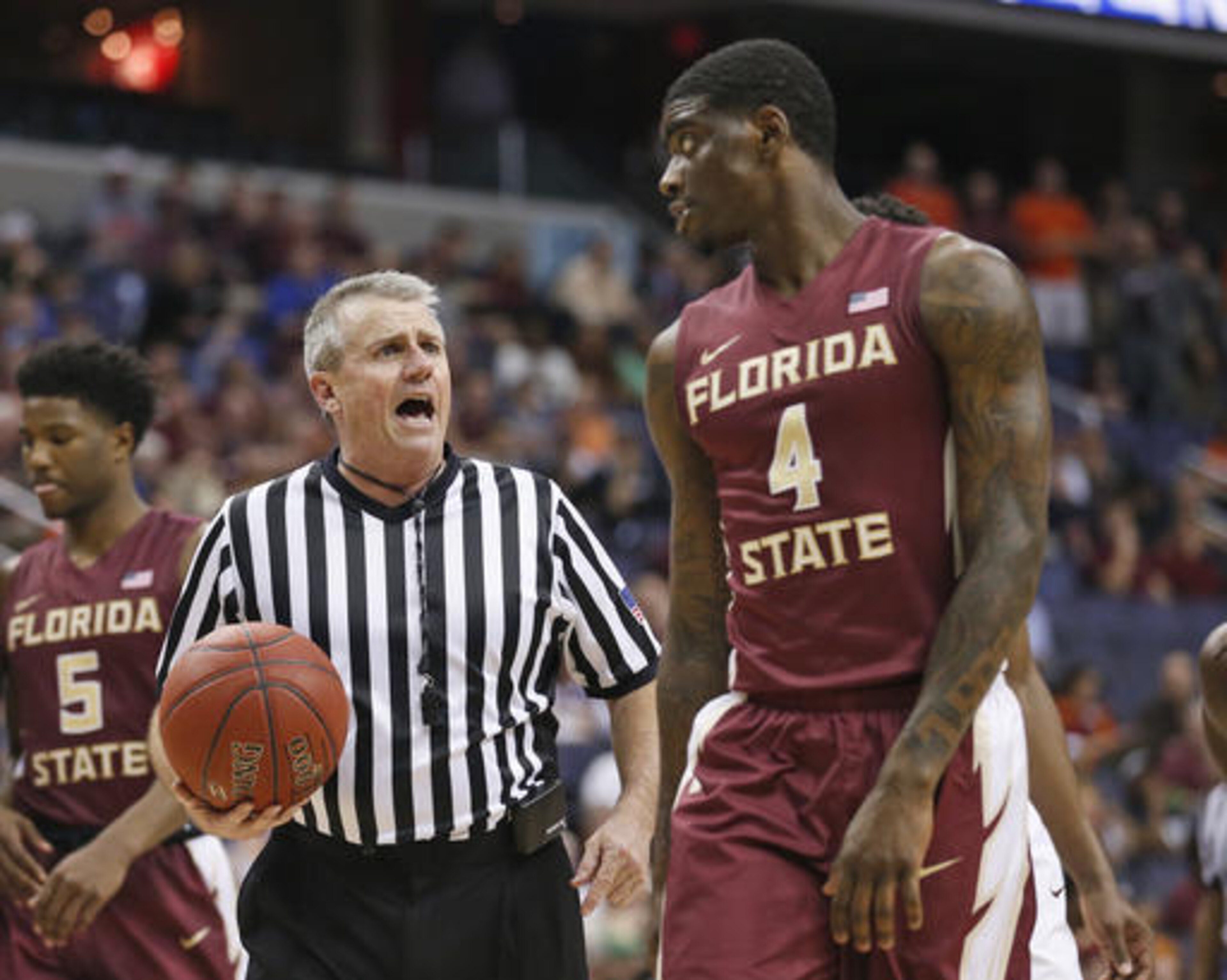
Being fun to watch doesn't always translate into being a very good team, which was the case with Florida State last year. Despite having arguably the best freshman backcourt duo in Dwayne Bacon and Malik Beasley, the Seminoles finished in 11th place in the ACC and ended up in the NIT.
Beasley has left for the NBA draft, but Bacon was among the most productive first-year players in Division I to come back for a second season. And he'll again figure to be part of some great twosomes, either with junior guard Xavier Rathan-Mayes—who as a freshman in 2014-15 once scored 30 points in the final four minutes, 39 seconds of a game—or as an inside-out combo with incoming freshman Jonathan Isaac.
Bacon averaged 15.8 points and 5.5 rebounds last season, while Rathan-Mayes contributed 11.8 points and 4.4 assists, and those numbers would have higher for each if either could hit three-pointers more consistently. They'll both benefit from having a better scoring option inside in Isaac, who, despite his lanky 6'10”, 185-pound frame, has a reputation as a fierce offensive player.
FSU's "fun" factor is enhanced by its lack of defensive intensity, saving most of its energy for the offensive end. It allowed 74 points per game and 44.2 percent shooting, both of which ranked in the 200s nationally.
.jpg?w=3840)
Gonzaga Bulldogs
4 of 12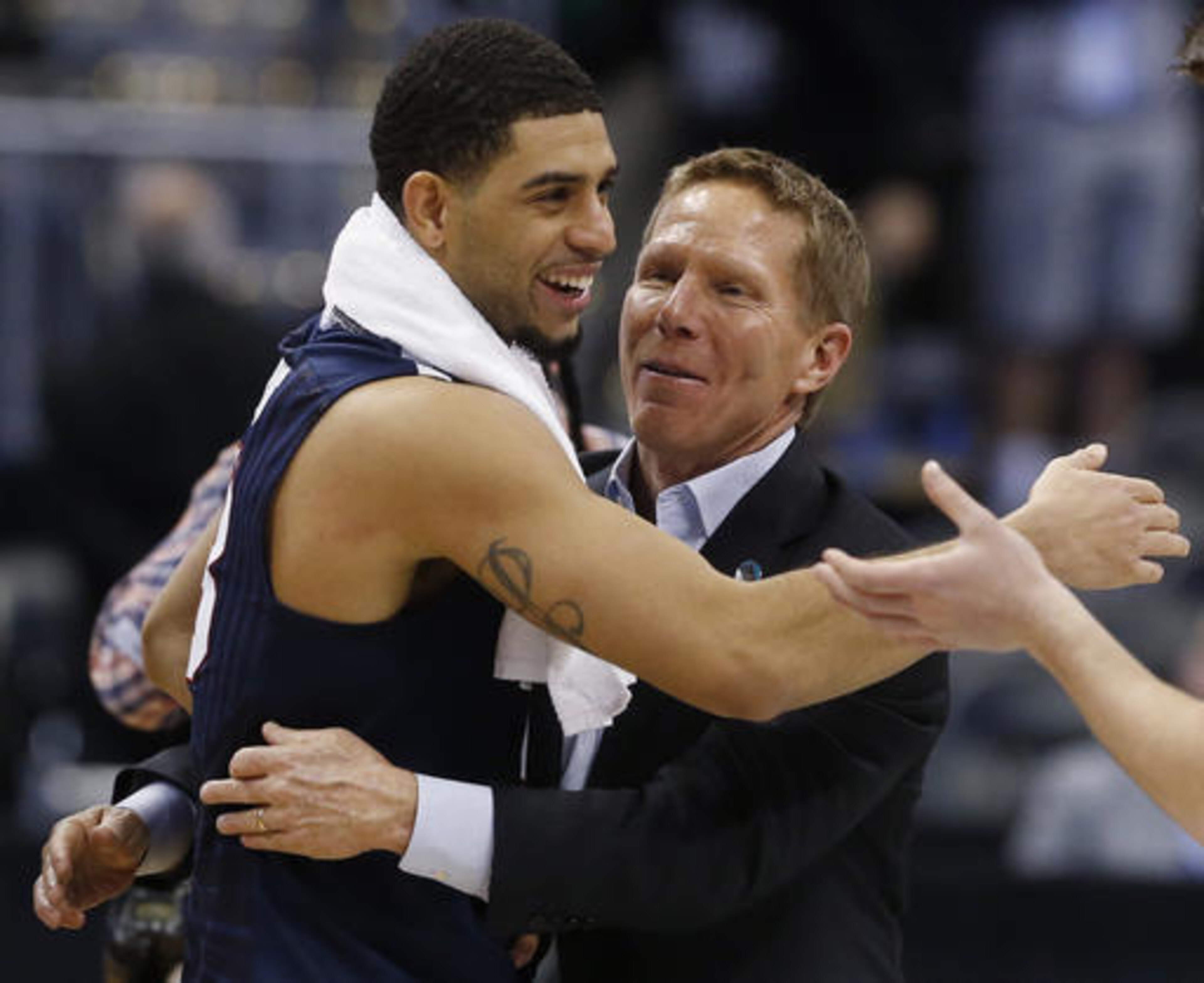
The top three scorers from a Sweet 16 have moved on, but even with those departures, don't expect Gonzaga to be any less enjoyable to watch in 2016-17. If anything, the Bulldogs will be even more entertaining as they become a more well-rounded offensive team while remaining as globally diverse as any school in the country.
Kyle Wiltjer and Domantas Sabonis made it so every possession went inside and most didn't come back out, but expect much more from the perimeter this time around. That's because Josh Perkins came into his own as a redshirt freshman and is ready to lead the offense, though he'll get help from former Washington guard Nigel Williams-Goss, who had to sit out last season after averaging 14.5 points and 5.1 assists in two years with the Huskies.
The frontcourt will still have options, with 7'1” center Przemek Karnowski returning from back surgery and Johnathan Williams III becoming eligible following his transfer from Missouri. And a roster that already includes players from Canada and Poland adds freshmen from Denmark (forward Jacob Larsen), France (forward Killian Tillie) and Japan (wing Rui Hachimura).
Kansas Jayhawks
5 of 12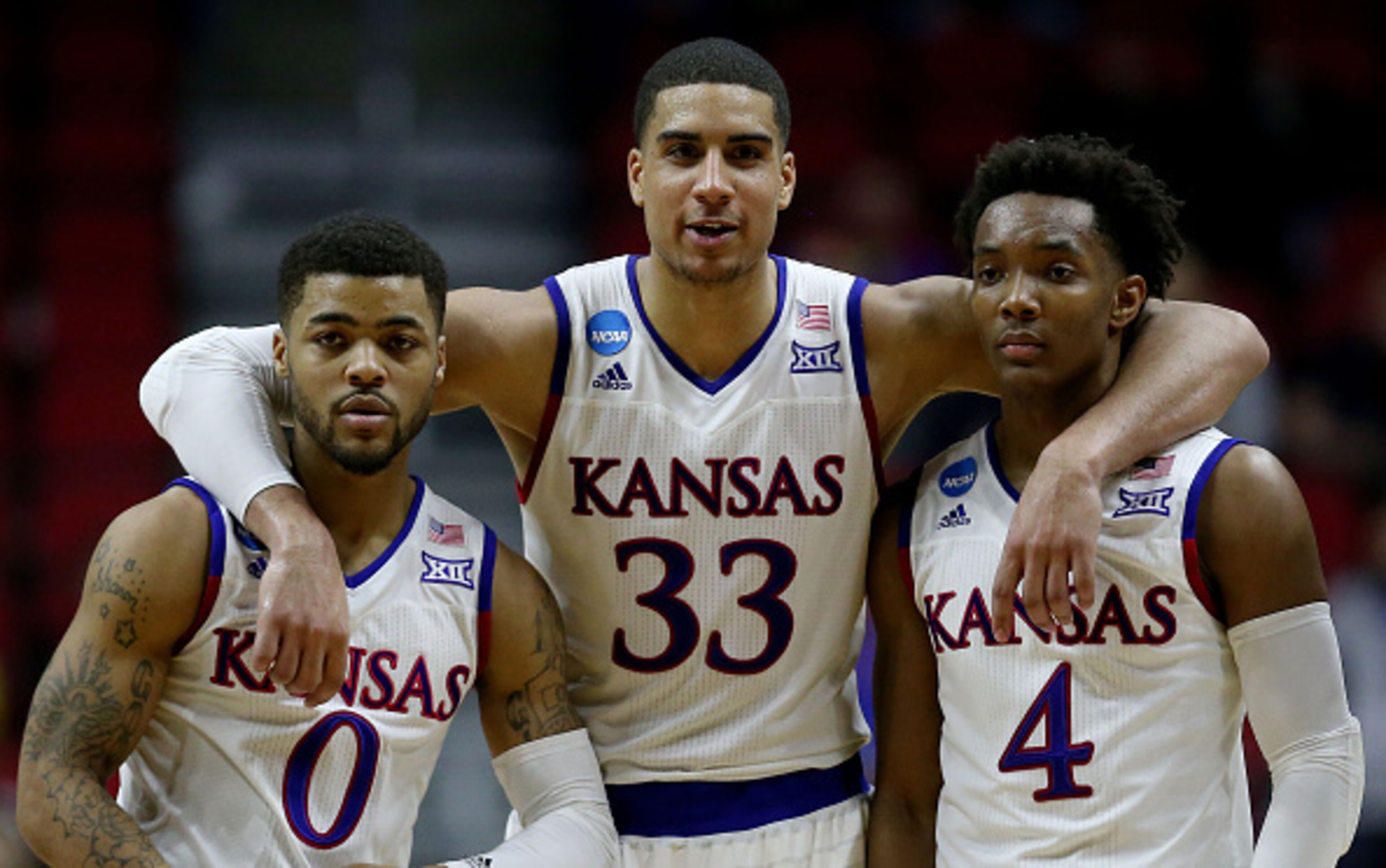
As dominant as Kansas has been in winning 12 consecutive Big 12 regular-season titles, it hasn't always done so with much in terms of flash and flair. Even when Andrew Wiggins and Joel Embiid were around in 2013-14, the Jayhawks didn't bring that “wow” factor to the court.
Enter Josh Jackson, the No. 1 prospect in the country and the player who will make one of the most consistently successful programs in Division I also among its most exciting.
Jackson, a 6'7” guard, will be asked to replace the production of the likes of Perry Ellis and Wayne Selden Jr. but not exactly in the same way. His fundamentals are strong, but even more enticing is the passion and energy he plays with, which will play very well with the already raucous crowds at Allen Fieldhouse.
Combining him on the perimeter with veteran point guards Devonte' Graham and Frank Mason will put possibly Bill Self's most fun team ever on the court in 2016-17.
Kentucky Wildcats
6 of 12
Your guess is as good as anyone as to which of the Kentucky players who turned pro (but didn't sign agents) will end up coming back to Lexington for another season. All could come back or none could return, and it won't matter when it comes to the type of team we'll see from John Calipari.
Calipari only recruits players he feels can make it into the NBA, which is why he encouraged every eligible player—"including walk-ons," he tweeted—to put their names in for draft consideration. Those who decide not to stay in the draft after May's combine will no doubt declare again after the 2016-17 season, as will likely each of the stars he's bringing in from another top-rated recruiting class.
Guards De'Aaron Fox and Malik Monk and frontcourt players Bam Adebayo, Wenyen Gabriel and Sacha Killeya-Jones are all rated by 247Sports as among the top 26 players in the 2016 class. We don't know which will be great and which will struggle, but we know Calipari is going to set them up for success with his coaching and game plan.
And, in turn, fans are going to get an enjoyable product that will be worth checking out whenever possible.
Marshall Thundering Herd
7 of 12
Not that much of a college basketball fan, preferring a more wide-open (read: defense-optional) style like you see during the regular season in the NBA? Then consider Marshall your gateway team, one that tries to push the tempo and get as many possessions as possible and therefore makes for some fun action.
As long as you don't mind the lack of defensive stops.
Heading into his third season with the Thundering Herd, coach Dan D'Antoni is a former Marshall point guard who spent 10 years working as an assistant for brother Mike D'Antoni with three different NBA teams. He brought Mike D'Antoni's run-and-gun style to Huntington, with last year's team ranking fourth in the country in pace (77.6 possessions per 40 minutes) and third in scoring (86 points per game).
Marshall was also fourth-worst in scoring defense, allowing 84.8 points per game, resulting in a 17-16 record. That was up from 11-21 in D'Antoni's first year, and the Herd tied for third in Conference USA this past season.
It loses leading scorer James Kelly, who averaged 20.1 points per game, but there's plenty of scoring coming back, including from three players who averaged at least 12.8 points.
Oregon Ducks
8 of 12
Like many teams, Oregon has to sweat out the next month as it waits to see whether some of its stars will remain in the NBA draft or opt to return to school. Getting Dillon Brooks and Tyler Dorsey back for their junior and sophomore years, respectively, will go a long way toward improving the Ducks' chances to repeat as Pac-12 champions.
But even if they don't come back, don't expect head coach Dana Altman to change his approach, which means we'll be in store for another season of exceptional play on both ends of the court.
Oregon outscored opponents by 9.9 points per game last season thanks to a balanced offense—four guys averaging double-digits in scoring, four making at least one three-pointer per contest—and a defense that was like a sixth offensive weapon. The Ducks recorded 275 steals, part of a plus-103 turnover margin, and also were second nationally with 221 blocked shots.
Chris Boucher had the majority of those swats, his 110 second-most in Division I and a school record, while the 6'10” forward also drained 39 threes. Even better: He was granted an extra year of eligibility and will be part of the fun again in 2016-17.
UCLA Bruins
9 of 12
In the final minutes when a big shot needed to happen, there were few players who were more clutch last season than UCLA's Bryce Alford. The problem was, the Bruins often weren't in a position for Alford to make that big shot during a 15-17 season, one where seven of those losses were by double-digits.
UCLA lacked that one player who could make everyone else better, though it believes that person is on its way in the form of Lonzo Ball. And if the freshman point guard is as good as advertised, the Bruins are going to be something to see this coming fall, winter and spring.
Rated as the No. 7 prospect in the 2016 class, Ball is the jewel of coach Steve Alford's best group of freshmen since coming to UCLA. Ball is known for his amazing passing and unselfish play—though capable to score just as well—and he believes that's what the Bruins didn't have going for them this past year.
"Right now they don't really have a set point guard, they don't really have that leader on the floor," he told Bleacher Report in March.
Ball running the offense will allow Bryce Alford to focus more on scoring, the same with Isaac Hamilton. They combined for 32.9 points and 8.5 assists per game, but with neither needing to worry about distribution and sharing, the production can go up.
Villanova Wildcats
10 of 12
Villanova will be the defending national champions for the duration of the 2016-17 season, regardless of what its roster looks like. Even if leading scorer Josh Hart doesn't return to school for his senior year, it's not like coach Jay Wright is going to stray from the formula that blitzed through the NCAA tournament and then knocked off North Carolina for the title.
If Wright's not part of the title defense? Well, that's a different story.
His name is among a handful of college coaches who are being linked to the just-opened Los Angeles Lakers job by ESPN's Ramona Shelburne. This is standard procedure for most championship coaches, and while Wright didn't end up leaving for the Phoenix Suns job that he was supposedly the "top choice" for, he might not be able to resist such a high-profile gig as the Lakers.
Until that happens, though, assume that the well-tailored Wright will be roaming the sidelines for Villanova again. And with every 'Nova opponent wanting to take out the champs, that will make every Wildcats game appointment television.
Virginia Cavaliers
11 of 12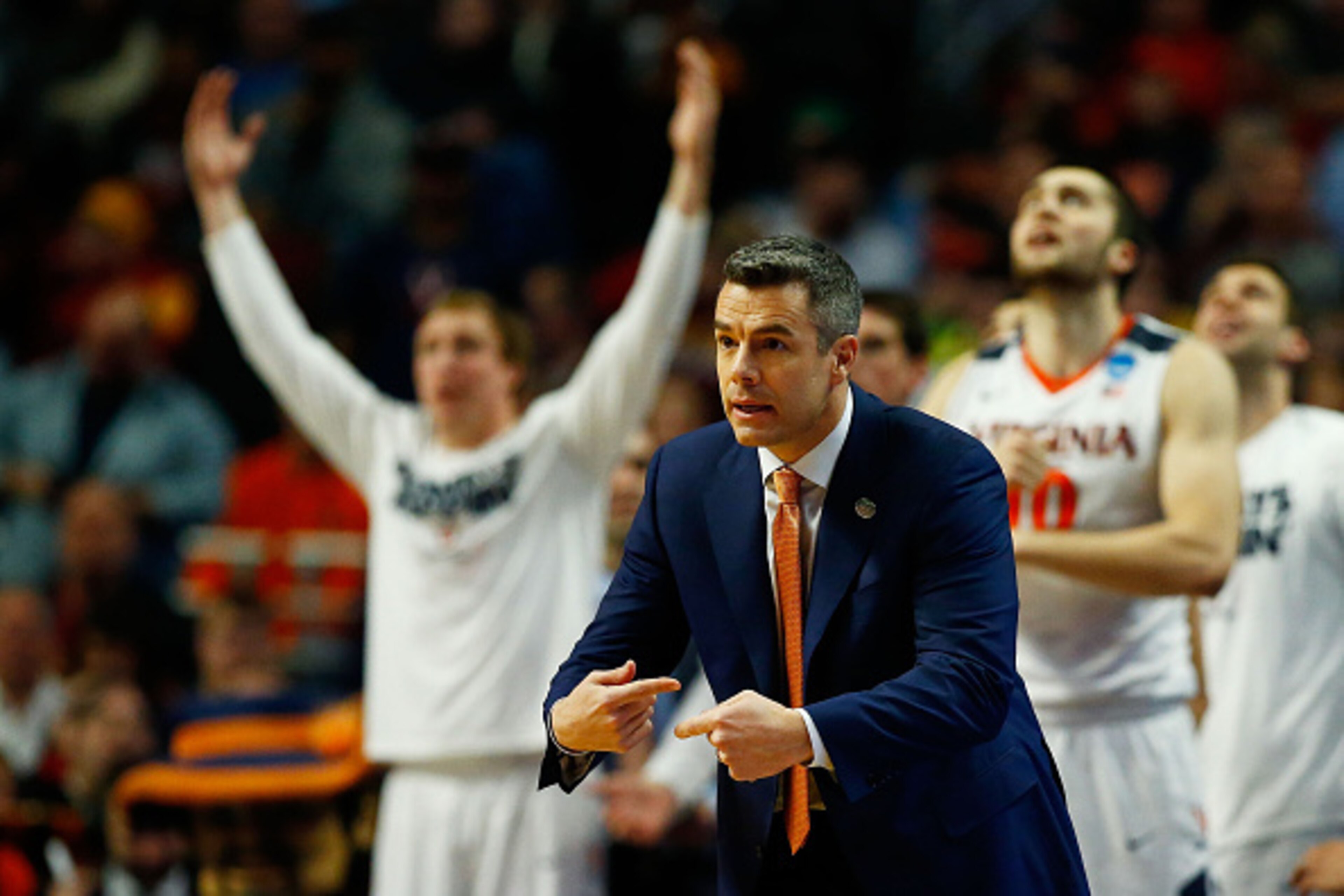
Let's get this out of the way right now: Virginia is not a slow-down team. Just because they were last in Division I in pace, at 61.6 possessions per game, doesn't mean they hold onto the ball to squeeze the life out of the clock.
Rather, the Cavaliers try to make their opponents take as much of the shot clock up as possible before attempting a field goal, though ideally they're trying to keep them from even doing that. This resulted in forcing better than 11.5 turnovers per game, which is a lot more than it sounds when you consider the reduced number of chances.
Despite the slower pace, Virginia is wildly efficient on offense by averaging nearly 1.15 points per trip down the court. In 2015-16, the Cavs failed to average at least a point per possession just six times in 37 games, and unsurprisingly that resulted in four of their eight losses.
There's something uniquely fun about a team that makes its opponents work so hard to score but manages to make it look so easy themselves. It's the system head coach Tony Bennett has installed at Virginia, one that should continue on even with Malcolm Brogdon and others moving on.
West Virginia Mountaineers
12 of 12
At its best, West Virginia's frenetic style of defense can wreak so much havoc that it forces opponents into submission—but not until after they watch as most of their turnovers are converted into quick scores. At its worst, the vaunted “Press Virginia” can backfire and lead to the Mountaineers getting beaten at their own game.
Either way, it's worth watching just to see which direction things go.
Coach Bob Huggins regularly goes deep into his bench in order to constantly have fresh players on the court who can execute the press. Six of the nine guys who logged at least 13 minutes per game are returning, and three of the returners (Jevon Carter, Daxter Miles and Tarik Phillip) combined to record 158 of West Virginia's 343 steals.
West Virginia isn't particularly crisp when it has to run a halfcourt set, but that's why Huggins puts in the press to get easy buckets in transition. That will be the case again in 2016-17 even with Jaysean Paige and Jonathan Holton graduating and Devin Williams turning pro.
All statistics courtesy of Sports-Reference.com, unless otherwise noted. All recruiting information from 247Sports, unless otherwise noted.
Follow Brian J. Pedersen on Twitter at @realBJP.
.jpg?w=3840 "Inside Donald's Rams Workout")