
Villanova vs. UNC: X-Factors to Watch in 2016 NCAA Championship Game
Monday's NCAA championship game features an intriguing matchup of Villanova's outstanding perimeter game against North Carolina's inside power.
Each team has its stars, with first-team Associated Press All-American forward Brice Johnson leading the Tar Heels and first-team All-Big East guard Josh Hart and 2015 Big East Co-Player of the Year guard Ryan Arcidiacono representing the Wildcats. But which unsung players could make the difference in Monday's game?
We all know that Villanova has been hot from beyond the three-point line, while North Carolina does not do much damage from long range. But what are the less obvious factors that may determine the outcome?
In the following slides, we point out some X-factors that may spell victory or defeat in the title game, including a pivotal player for each team and four other issues that are likely to impact the outcome.
Villanova Center Daniel Ochefu
1 of 5
Villanova has three stars: Hart, Arcidiacono and Kris Jenkins, a perimeter power forward who has averaged 19.0 points over the past 13 games.
However, the deciding factor in Monday's game could be 6'11" center Daniel Ochefu, for three reasons.
First of all, Ochefu has played well in the NCAA tournament, averaging 12.0 points and 7.4 rebounds while shooting 68.4 percent from the field and blocking eight shots in the five games. He is capable of putting up big numbers, as he did while collecting 20 points and 18 rebounds in a January victory over Seton Hall, an NCAA tournament team.
Secondly, he is the only inside threat in the Wildcats' perimeter-oriented offense, and he must hold his own against North Carolina's big and talented frontcourt for Villanova to have a chance. If Ochefu gets overwhelmed by the Tar Heels' collection of big men, Villanova may get overrun. Non-starter Darryl Reynolds is Villanova's only other inside player of note, and he went scoreless against Oklahoma.
Finally, the physical condition of Ochefu remains an issue. An ankle injury limited his playing time and effectiveness in the Big East tournament, and he has tweaked the ankle a few times in the NCAA tournament, forcing him off the floor temporarily. He returned to the game each time, but the uncertain status of that ankle makes him a player to watch. If he injures it again and has to leave the game for an extended period, Villanova will be hard-pressed to handle Johnson, Kennedy Meeks and the rest of the North Carolina big men.
North Carolina Guard Joel Berry II
2 of 5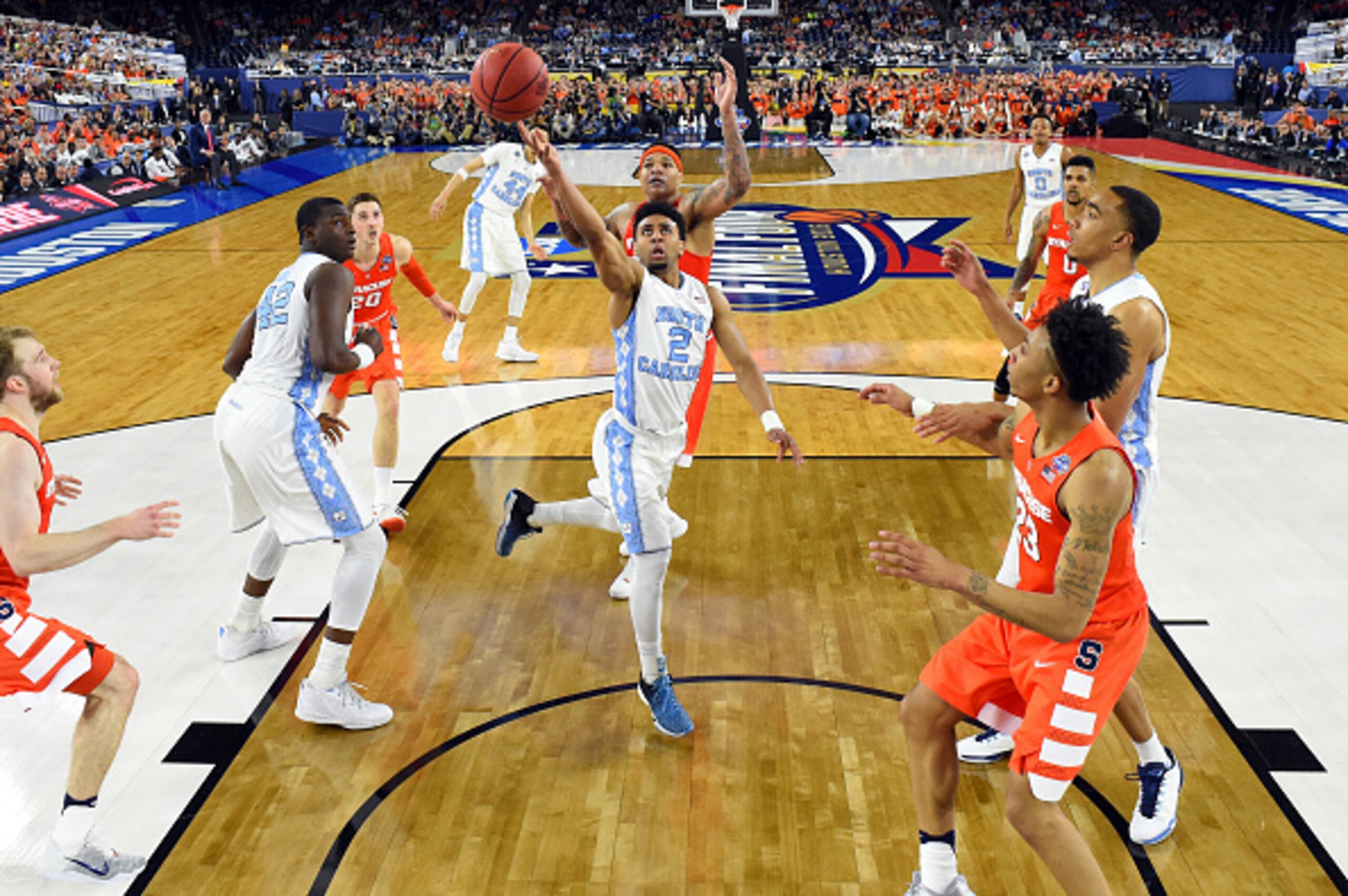
Brice Johnson and North Carolina's other frontcourt players receive most of the media attention, and for good reason. However, the player most likely to determine whether the Tar Heels win or lose on Monday is point guard Joel Berry II.
When Berry plays well, the Tar Heels win. When he performs poorly, North Carolina often loses. When Berry scores eight points or fewer, the Tar Heels are 2-4 this season, but when he scores nine or more, they are 31-2.
Berry is shooting a respectable 48.1 percent from the field in the NCAA tournament, and he has had 23 assists and just two turnovers in the Tar Heels' last three games. It is no coincidence that North Carolina beat each of those three quality games by at least 14 points.
If Berry keeps his turnovers to a minimum and provides what is needed in perimeter scoring, North Carolina is almost unbeatable. If he struggles, Villanova could steal a win.
Bench Production
3 of 5
Although most of the focus will be on the game's 10 starters, production from non-starters has often had a major impact in title games. In each of the past five NCAA championship games, the team that got more points from its bench was the winner.
In two recent cases, a player off the bench turned out to be one of the game's stars. Grayson Allen averaged just 4.4 points for Duke last season and had played mostly in garbage time before collecting 16 points that were crucial in the Blue Devils' victory over Wisconsin in the championship game. Louisville's Luke Hancock was named the Final Four's Most Outstanding Player in 2013, even though he was not a starter.
Villanova has two key players off the bench in guards Phil Booth and Mikal Bridges. Neither has scored more than 13 points in a game since November, but Booth has scored in double figures 10 times this season, and Bridges has done it six times, including twice in the NCAA tournament. Booth is 5-of-10 on three-pointers in the tournament and Bridges is 3-of-7 from long range, so the scoring potential is there.
They may make a bigger impact on defense. Bridges had five steals in the upset of Kansas, and Booth had five steals in the rout of Oklahoma. Villanova's chances will improve significantly if it can force North Carolina into numerous turnovers.
Three players give North Carolina production off the bench: forwards Theo Pinson and Isaiah Hicks and guard Nate Britt, who average a combined 19.2 points and 9.4 rebounds. Even 6'10" Joel James had two important first-half buckets in the semifinal victory over Syracuse.
The Tar Heels bench player most likely to make an impact on Monday is Hicks, who showed his offensive potential when he had 21 points and eight rebounds in just 22 minutes in a regular-season victory over Syracuse. He is 16-of-23 from the field in the NCAA tournament and is capable of putting up impressive numbers if one of the Tar Heels' starting big men gets into foul trouble.
Whichever teams gets a standout performance from one of its bench players is likely to win.
.jpg?w=2560 "Alabama Shooting Times Lawsuit")
.jpg?w=2560 "NCAA Combating Sextortion")
Villanova's Momentum
4 of 5
North Carolina has played solid basketball throughout the season, coming close to maximizing its potential in the postseason. However, Villanova has done more than merely maximize its potential the past three weeks, playing better than virtually anyone thought possible.
The Wildcats have won their five tournament games by an average margin of 24.2 points per game. They took out Miami, which finished tied for second in the Atlantic Coast Conference, by 23 points, and they manhandled an Oklahoma team that looked like championship material by 44 points, the biggest margin in Final Four history. The Sooners had crushed Villanova by 23 points back in December but were merely roadkill for the Wildcats during their current run.
Villanova's only close postseason game came against Kansas, which was riding a 17-game winning streak and was the No. 1 overall seed in the tournament. The Wildcats won that one by five points, holding the lead for the final 8:42.
North Carolina has not defeated any team in the tournament seeded better than fifth, while the Wildcats have rolled through teams seeded first, second and third.
Villanova is shooting 58.2 percent from the field and 49 percent (48-of-98) on three-pointers for the tournament, and this is against the best teams in the country. The Wildcats shot an amazing 71.4 percent overall and 61.1 percent from long range in the semifinals against Oklahoma. So much for the theory that playing in a football stadium would ruin a team's shooting percentage.
The Wildcats are a team of perimeter players, which can lead to inconsistency, but it can also produce wondrous feats when everyone is hot at the same time. And everyone is hot at the moment. It is reminiscent of Connecticut's 2011 national championship team that caught fire at the end of the season and rode the momentum through the Final Four, which was played at the same venue as this year's Final Four, Houston's NRG Stadium (then Reliant Stadium).
Villanova has become a freight train that will be difficult to derail with all the confidence and momentum it has built. Can North Carolina stop the train?
North Carolina's Offensive Rebounding
5 of 5
North Carolina's frontcourt is intimidating.
The 6'9" Brice Johnson is a first-team All-American. The 6'9" Kennedy Meeks is almost an immovable object. The 6'8" Justin Jackson is among the most athletic players in the country for his size, and 6'8" Isaiah Hicks provides more frontcourt power off the bench. The Tar Heels entered the weekend ranked 10th in the nation in rebounding margin, at 8.5 per game, and they are particularly adept at pounding the offensive boards, ranking seventh in the country in that category at 14.15 offensive rebounds per game. That statistic is made more impressive by the fact that the Tar Heels rank among the nation's leaders in field-goal percentage, at 48.4 percent, limiting their opportunities for offensive rebounds.
Even though the Tar Heels shot better than 51 percent in each of their last four tournament games, none of those four opponents had more offensive rebounds than North Carolina.
Johnson and Meeks combined for nine offensive rebounds against Syracuse to help North Carolina dominate that game. Commentator Grant Hill mentioned semi-seriously during the telecast that a missed shot is one of the Tar Heels' best plays.
The question is whether an undersized Villanova team can prevent the Tar Heels from getting as many shots as they want on each possession. Rebounding has been an issue for the Wildcats this year, and they rank 124th in the nation in rebounding margin.
Oklahoma collected 16 offensive rebounds against the Wildcats, an alarming number, and the Sooners got six shots at the basket in one fruitless possession. However, Villanova limited Kansas and Miami to five and seven offensive rebounds, respectively, earlier in the tournament.
The Tar Heels are a lousy three-point shooting team, and the degree to which North Carolina controls the offensive boards against Villanova may determine the winner.
The source for statistics is NCAA.org unless otherwise specified, and the statistics are valid for games played through April 2.
.jpg?w=2560 "Buccaneers Lions Football")
.png?w=2560 "Nuggets to Sign DeMar 🚨")

.png?w=2560 "Best Fits for Top Free Agents📍")