NCAA Tournament 2016: Power Ranking the Sweet 16 Teams
Kansas entered the 2016 NCAA tournament atop our power rankings, and that has not changed after a pair of convincing wins over Austin Peay and Connecticut. However, Nos. 2, 7 and 9 (Michigan State, Kentucky and Utah) on that list have been knocked out of the Big Dance while No. 46 (Syracuse) is still standing, so it seems we're due for a major refresh of said power rankings.
Please note that these rankings should not be read as odds to win the national championship. (B/R's C.J. Moore handled that if that's what you want to see.) Who each team is facing the rest of the way is irrelevant for this exercise. Rather, this is how we would reseed the 16 remaining teams if we were ranking the field from top to bottom.
How teams looked in the first weekend of the tournament was an important factor, but those two games only account for about 6 percent of the games these teams have played to date. Thus, we're largely considering what we've seen over the course of the entire season.
You may disagree on the order, but the bottom three teams (Notre Dame, Syracuse and Wisconsin) were no-brainers. Apologies to Iowa State at No. 13, though. There are a ton of great teams left in the tournament, and they couldn't all rank in the top 10.
Advanced metrics on the following slides courtesy of KenPom.com and Sports-Reference.com
16. Notre Dame Fighting Irish
1 of 16
How They've Looked: Some team had to come in last place, and we're going with the one that trailed (controversial tournament inclusion) Michigan by a dozen at the half, needed a tip-in with 1.5 seconds remaining to beat Stephen F. Austin and has a combined turnover margin of negative-16 in the tournament. That said, the Fighting Irish are shooting 64.5 percent inside the arc and have done an excellent job of defending without fouling.
Bread and Butter: They've struggled to hold on to the ball thus far in the tournament, but their biggest strengths are avoiding turnovers and keeping the opposition off the free-throw line. They rank 17th in offensive turnover percentage and 11th in defensive free-throw rate. Those fundamental principles can go a long way.
Achilles' Heel: Notre Dame doesn't often defend the three, and it rarely forces turnovers. As a result, the Fighting Irish allow an average of 7.8 made three-pointers per game. Should they run into Indiana in the Elite Eight, it would make for one heck of a long-range show.
MVP: Zach Auguste and Demetrius Jackson are the stars, but Bonzie Colson is the guy who came to play in Notre Dame's five biggest wins this season, averaging 16.2 points and 10.2 rebounds per game in victories over Duke (two), Louisville, North Carolina and Iowa. Perhaps that makes him more of an X-factor than a MVP, but the fact is the Fighting Irish are better when he's more involved.
Championship Blueprint: As long as Auguste keeps getting double-doubles—he has seven in his last eight games—Notre Dame has a chance. Hitting triples is also a must. In their last four wins, the Fighting Irish are shooting 42.3 percent from downtown. In their last four losses, that accuracy plummets to 30.0 percent.
15. Syracuse Orange
2 of 16
How They've Looked: Though we're not impressed with the strength of the opponents Syracuse has drawn, it's impossible to not be impressed with how well the Orange have played—particularly on defense. They held Dayton and Middle Tennessee to a combined total of 101 points on 120 field-goal attempts. MTSU shot just 27.5 percent inside the arc against Jim Boeheim's patented 2-3 zone.
Bread and Butter: The polar opposites of Notre Dame, Syracuse's biggest strengths are its three-point defense and its ability to create turnovers. The Orange recorded 13 combined steals against Dayton and MTSU and have limited their opposition to 30.4 percent shooting from downtown—both in the tournament and for the entire season. Among remaining teams, only Gonzaga's three-point field-goal defense is better, which could mean we're in for a low-scoring affair between those teams on Friday.
Achilles' Heel: By the nature of the zone, Syracuse's defense is vulnerable to ball movement and offensive rebounds. Opponents record an assist on 65.1 percent of made baskets and grab 35.0 percent of available offensive rebounds against Syracuse. In both categories, that's the highest rate in the Sweet 16.
MVP: Where Michael Gbinije goes, the Orange follow. He leads the team in points, assists, steals and three-point percentage. Despite a bit of a dud in the first round against Dayton, he has averaged 21.5 points while shooting 48.8 percent (20-of-41) from three over his last six games.
Championship Blueprint: Syracuse needs to both hit and defend the three. These aren't crazy thresholds to meet, but when the Orange shoot at least 34 percent from three while holding the opponent to below 40 percent, they are 12-0 this year.
14. Wisconsin Badgers
3 of 16
How They've Looked: The Badgers did beat much better opponents than both Syracuse and Notre Dame did; however, their offense has been far from crisp. Bronson Koenig hit a pair of three-point daggers in the final 12 seconds against Xavier, but they had scored just 107 points on 110 field-goal attempts prior to those buckets. Nigel Hayes leads that "charge" with 18 points on 27 shots.
Bread and Butter: Excluding the 91-point outlier in the season finale against Purdue, Wisconsin has held its last seven opponents to an average of 57.3 points per game. Former head coach Bo Ryan may be gone, but the Badgers still love to play slow-paced, low-scoring affairs.
Achilles' Heel: Three-point defense was an issue for Wisconsin for most of the season, but it hasn't been a problem yet in the tournament. Pittsburgh and Xavier combined to shoot just 8-of-27 (29.6 percent) against the Badgers.
MVP: Hayes and Koenig are the names that fans recall from yesteryear, but Ethan Happ has been Wisconsin's star for much of the season. The Badgers have averaged 56.5 points in the tournament, but Happ has tallied 16.5 points and 8.0 rebounds per game while also holding opposing big men in check. Get ready to hear a lot about this redshirt freshman for the next few years.
Championship Blueprint: Hope Vitto Brown keeps shooting and hope Hayes remembers how to score. Brown entered this season with zero three-point attempts in his first two years, yet he shot 17-of-30 from downtown over his last six games. Meanwhile, Hayes was one of the most efficient players in the country last season, but his numbers have been dreadful as of late. He's shooting 7-of-42 (16.7 percent) from the field and 0-of-17 from beyond the arc in his last three games.
.jpg?w=3840 "Raiders Chargers Football")
13. Iowa State Cyclones
4 of 16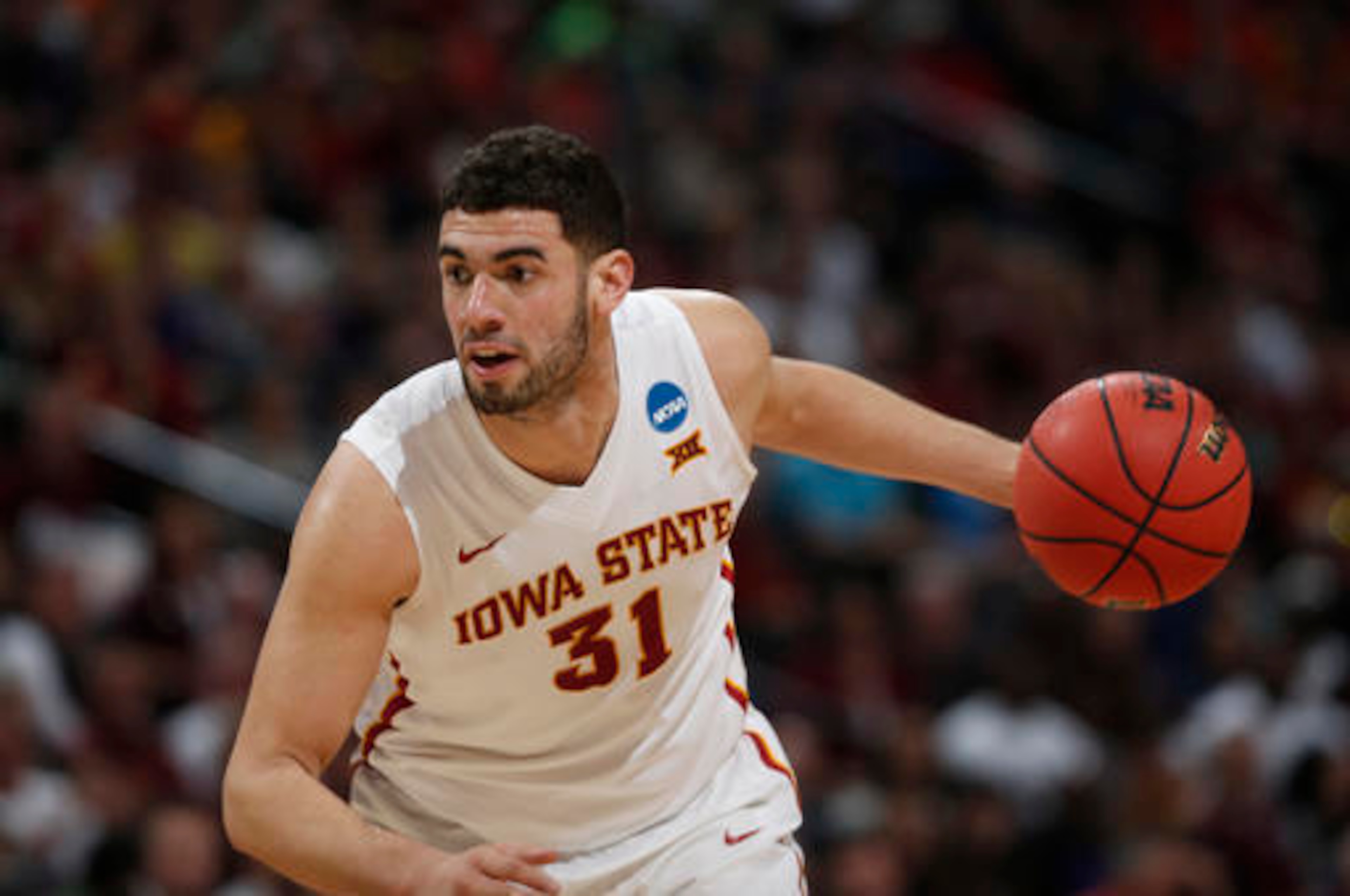
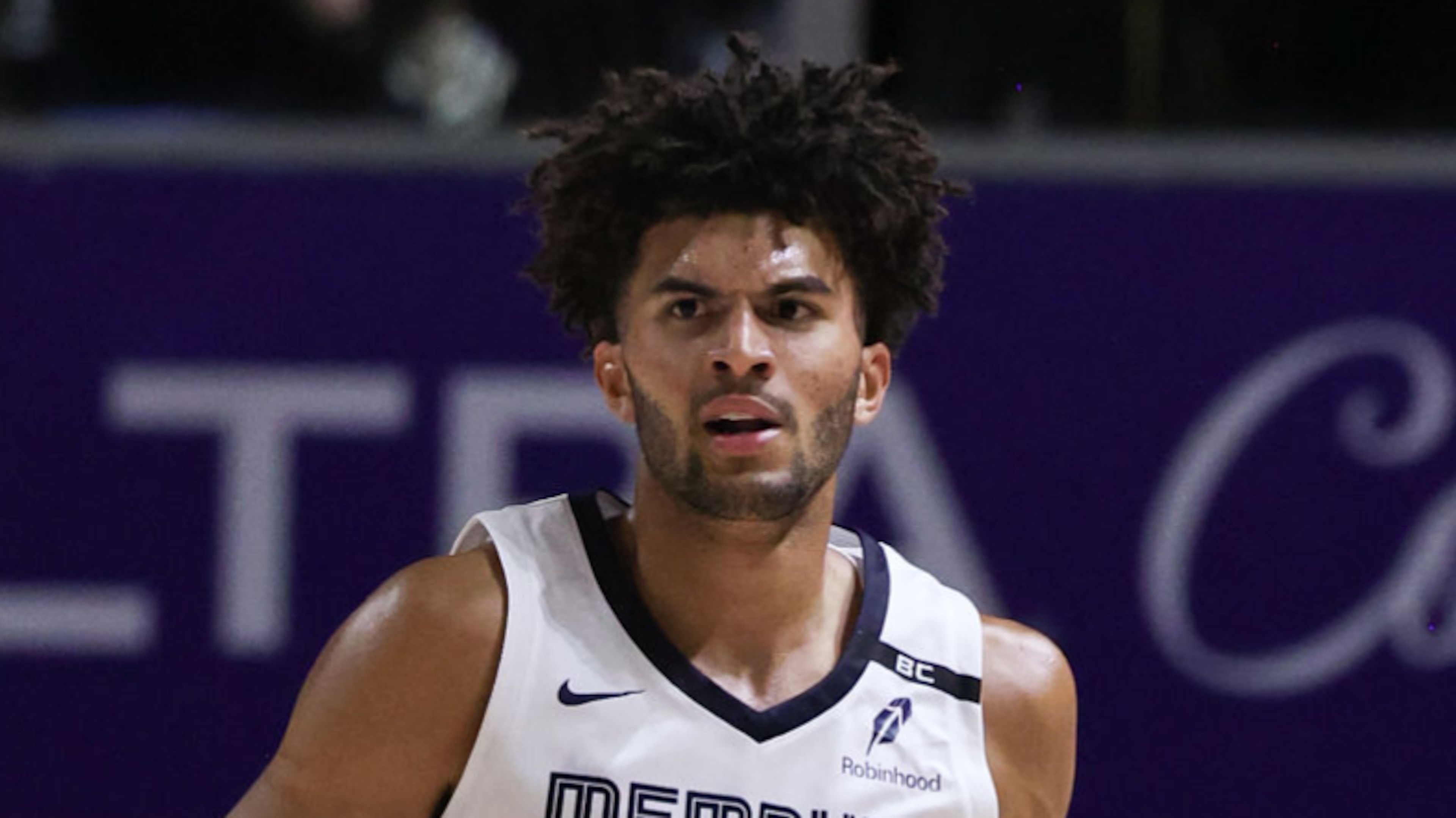
How They've Looked: This was the toughest spot to dole out in this entire exercise. Iowa State has looked great in wins over Iona and Arkansas-Little Rock, but there are still 13 excellent teams remaining in the field. However, lack of defense and tournament history was enough to put the Cyclones at the bottom of the list. Of the top 13 teams, only Duke has a worse adjusted defensive efficiency than Iowa State, but at least the Blue Devils have been to a Final Four (16 of them, in fact) in the past 72 years.
Bread and Butter: Iowa State thrives in uptempo, finesse games. The Cyclones don't foul, draw fouls or rebound well, but they can straight-up outscore any team in the country when given the opportunity. Jameel McKay is the only regular who isn't a threat to score from 24 feet away, but he's so dominant in the post that he can beat most defenders one-on-one. These guys can spread you out and strike with surgical precision.
Achilles' Heel: Though they have 11 losses, the Cyclones haven't ever been walloped this season, losing each game by a margin of 10 points or fewer. Thus, it's usually the little things that bring them down. In nine of those losses, their opponent shot better than 36 percent from three-point range. They have a negative turnover margin in eight of the losses as well as a negative rebounding margin in eight of them. In five losses, all three of those factors worked against them.
MVP: Monte Morris is incredible, but Georges Niang is the man for this job. He has tallied 28 points, six rebounds and three assists in each of Iowa State's first two tournament games. He has scored in double figures in every game this season and is averaging 27.3 points a night in March.
Championship Blueprint: Protect the ball and protect the arc. Morris rarely commits turnovers, but the team has had occasional issues this season. And for as great as he is on offense, Niang can be a liability on the defensive end. However, if the Cyclones keep shooting threes like they have been (48.8 percent through two games), they'll be just fine.
12. Maryland Terrapins
5 of 16
How They've Looked: There have been flashes of brilliance peppered throughout prolonged bouts of maddening inconsistency. In other words, not much has changed for Maryland in the transition from regular season to postseason. Jake Layman and Jared Nickens were great in the opener against South Dakota State, but the Terrapins shot 1-of-18 from three-point range against Hawaii, winning by 13 because the Warriors had even more trouble putting the ball in the hoop.
Bread and Butter: Maryland is average on the glass, but its strength is in the paint where Diamond Stone, Robert Carter, Damonte Dodd and Layman all shoot at a high percentage and block a fair number of shots. There isn't one dominant big man—though, Stone has proved he can be when he wants to be—but the summation of big men results in a team two-point percentage that ranks eighth in the nation and a block percentage ranking 17th. The Terps also defend well with fouling, allowing fewer than 16 free-throw attempts per game on the season.
Achilles' Heel: Does a steadfast refusal to live up to potential count as an Achilles' heel? If not, rebounding margin, turnover margin and three-point defense have been problematic. In each of Maryland's eight losses, at least two of those three categories were a problem.
MVP: Melo Trimble is the straw the stirs Maryland's drink, and he's getting back to what made him such a terror last season: drawing contact. Trimble's free-throw rate and percentage as a freshman were among the best in the nation, resulting in the fifth-most made free throws during the regular season. And after spending most of the season spurning that element of his game, Trimble is 22-of-23 from the free-throw line in the tournament. If he also starts hitting three-pointers (1-of-10 in tourney), he could go for 35 points against just about anyone.
Championship Blueprint: As far as starting fives are concerned, the Terrapins still rank top five in the nation in raw talent. Their blueprint—as it has been all season—is figuring out how to make it work together. Teams like LSU, Vanderbilt, Georgetown and UCLA never solved the puzzle of getting the whole to be anywhere near as great as the sum of their parts, but there's still time for the light to come on for Maryland.
11. Duke Blue Devils
6 of 16
How They've Looked: Outside of a great first half against Yale, Duke hasn't played well. That first half was some of the best basketball the Blue Devils played all season, though, and—perhaps most importantly—they look fresh. In particular, Brandon Ingram seemed to be running on fumes for the last few weeks of the regular season, but he was great in Duke's first two games and gets four days off before the next one.
Bread and Butter: In what can't possibly be a surprise to anyone, Duke's best offense is the long ball. The Blue Devils shoot 38.7 percent from beyond the arc, where they take 39.9 percent of their shots. Ingram, Grayson Allen and Matt Jones each averages at least 2.2 made triples per game while shooting better than 41 percent. There were only 78 members of that club this season, and Duke has three of them.
Achilles' Heel: Duke has no depth, especially in the frontcourt. As a result, opponents have destroyed the Blue Devils on the defensive glass for most of the season and guys like Ingram and Marshall Plumlee seem to constantly be one whistle away from disaster.
MVP: Allen and Ingram are the big scorers, but Plumlee is the most important player on Duke's roster by a wide margin. He doesn't always put up points, but the Blue Devils need him on defense and on the glass. In six March games, though, he has fouled out three times and picked up four fouls in one other, so it's hardly uncommon for him to knock himself out of the game.
Championship Blueprint: This is a bit of a "No kidding" statement, but Duke needs to score more than it gives up. When the Blue Devils score at least 73 points in regulation, they are 22-1. They're 3-9 in all other games, though, because they allow 72.2 points per contest. If Allen and Ingram keep scoring 20 points apiece, Duke could win back-to-back titles.
10. Texas A&M Aggies
7 of 16
How They've Looked: It's hard to feel too great about the Aggies after they needed the most incredible comeback in college basketball history just to beat a No. 11 seed in double overtime, and yet it almost feels like they're unbreakable because of it. Then again, Duke lost its first game and three out of nine after the Miracle Minute in 2001, so the momentum gained from that finish could be nil.
Bread and Butter: It took 39 minutes and 26 seconds for it to show up against Northern Iowa, but turnover-forcing defense is crucial for the Aggies. They had a season-high 13 steals against Green Bay in the first round and are now 19-1 this season when recording at least seven steals.
Achilles' Heel: The long ball is not a reliable asset for Texas A&M. It shot worse than 32 percent from three-point range 16 times this season, including 7-of-32 (21.9 percent) against Northern Iowa on Sunday. These things happen when your three leading scorers shoot a combined 31.2 from beyond the arc.
MVP: Danuel House is the primary scorer, but Tyler Davis is the axis upon which the Aggies turn. When the big freshman scores at least 10 points, Texas A&M is 19-1 this season. It's a total coincidence that it's the same record as when the Aggies record at least seven steals, but if he's scoring and they're forcing turnovers, that's a win every time.
Championship Blueprint: In addition to team steals and buckets for Davis, perhaps the biggest key for the Aggies is remembering to share the rock. With two point guards (Alex Caruso and Anthony Collins) in the starting lineup, they have the best assist rate among the remaining teams. But when the going gets tough, they tend to devolve into hero ball. Case in point, they recorded just eight assists on 31 made field goals against Northern Iowa. It was their worst assist rate of the season. Losses to LSU, Alabama and Arkansas were also a byproduct of poor ball movement.
9. Gonzaga Bulldogs
8 of 16
How They've Looked: One could make the argument for Indiana or Villanova, but no team impressed us more last weekend than Gonzaga. Seton Hall and Utah were great teams this year. The Zags treated them both like WCC cellar-dwellers, taking Isaiah Whitehead and Jakob Poeltl completely out of those games.
Bread and Butter: Gonzaga is strong on defense, but it's stronger on offense. The Bulldogs have scored at least 80 points 20 times this season and are 26-0 when scoring 69 or more. As long as Kyle Wiltjer and Domantas Sabonis each scores in double figures, Gonzaga is almost unbeatable.
Achilles' Heel: Foul trouble has plagued Sabonis for much of his two seasons at Gonzaga. He has committed at least four fouls in 10 of his last 16 games, and the Bulldogs simply cannot afford to play more than a couple of minutes per game without him.
MVP: It's impossible to choose between the dynamic duo. Wiltjer is shooting 48.8 percent from three-point range over his last 23 games, but Sabonis is averaging 17.6 points and 11.9 rebounds during that same time. In a bizarre twist, it's the one non-major team remaining in the tournament that has the most unstoppable pair of players.
Championship Blueprint: As great as Wiltjer and Sabonis are, the big key for Gonzaga is continuing to get production out of its backcourt of Josh Perkins, Eric McClellan and Kyle Dranginis. And led by three games of at least 20 points from McClellan, that trio is averaging 37.6 points and 8.8 assists per game in March. If those guys keep putting points on the board, can anyone beat the Zags? They earned their No. 11 seed by beating no one of value during the regular season, but they're playing better than most of the No. 1 seeds right now.
8. Indiana Hoosiers
9 of 16
How They've Looked: As far as teams that couldn't play a lick of defense in early December go, Indiana is unbelievable right now. The offense was the story in the 99-74 win over Chattanooga, but the Hoosiers played great defense in holding Kentucky to just 67 points on Saturday. Granted, Jamal Murray helped out by missing a plethora of open three-pointers and playing his worst game since December, but we also saw Thomas Bryant manhandle Kentucky's entire frontcourt.
Bread and Butter: Ranking fifth in the nation in three-point percentage and fifth in two-point percentage, putting the ball in the basket is Indiana's bread and butter. The Hoosiers have four regulars shooting 41.9 percent or better from three-point range, and Bryant makes 71.2 percent of his two-point attempts. It's only because they play at an average pace that the Hoosiers don't average 90 points per game.
Achilles' Heel: Even after stifling Kentucky, the defensive numbers still aren't great. The bigger concern, though, is the turnovers on offense. The Hoosiers have committed at least 15 turnovers in 10 games this season, including losses to Penn State and UNLV and too-close-for-comfort wins over St. John's and Rutgers. They usually shoot exceptionally well from three and typically do an acceptable job in the turnover department, but they're liable to get blown out on the rare night when both of those categories fail them.
MVP: Save for maybe Oklahoma's Buddy Hield, there isn't a more valuable player left in the tournament than Yogi Ferrell. Even on nights where his shot isn't falling, he's running the offense, driving the lane and defending the perimeter with fervor. Over the course of the past two seasons, even his bad nights have been good ones.
Championship Blueprint: For four full months, it felt like Indiana's only shot at winning the title was to stay hot from three-point range for six straight games. After the defensive effort the Hoosiers gave against Kentucky, though, their blueprint may just boil down to not committing too many turnovers. With how well they shoot from all over the floor, they'll be in good shape as long as they aren't giving away possessions.
7. Miami Hurricanes
10 of 16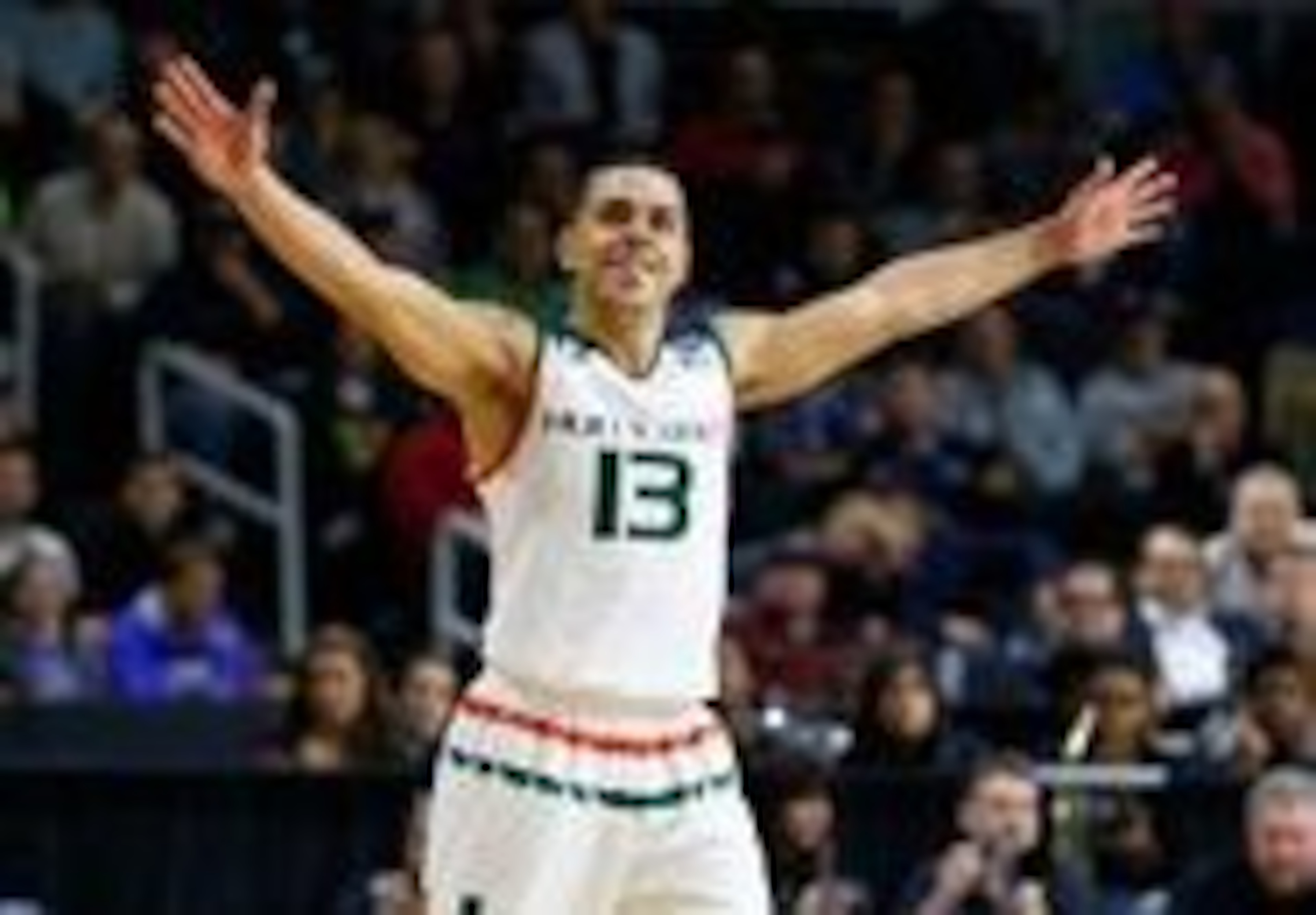
How They've Looked: The Hurricanes squandered a 27-6 first-half lead against Wichita State, but they responded well to close out a win over what was one of the most dangerous teams in the field. Defense and backcourt production have been crucial to Miami's early success.
Bread and Butter: Where other teams will win 95 percent of the time when X, Y and Z happen, Miami's biggest strength may just be balanced experience. This team is the proverbial jack-of-all-trades, master of none. So much of its success boils down to whether Angel Rodriguez shows up.
Achilles' Heel: The Hurricanes are typically solid on defense, going 23-1 this season when holding the opposition to 72 points or fewer. However, they have difficulty stopping the bleeding when an opponent starts cooking. In their final three losses of the regular season, they allowed an average of 86.0 points and 47.9 percent three-point shooting, losing by an average margin of 18.7 points.
MVP: Sheldon McClellan was Miami's MVP for most of the regular season, but Rodriguez has been the man for the past few weeks. With 52 points, nine assists, nine rebounds and seven steals in two tournament games and a combined line of 55 points, 21 assists and five turnovers in Miami's final three wins before the tournament, Rodriguez is finishing his collegiate career with one heck of a bang.
Championship Blueprint: Avoid turnovers and hope that Rodriguez continues to play well. Even with him excelling in the first two rounds, the Hurricanes only won by a total margin of 15 points because they committed a combined total of 30 turnovers. With Villanova on deck and Kansas likely next on Miami's path to the Final Four, that many wasted possessions would be the death of this team.
6. Villanova Wildcats
11 of 16
How They've Looked: Between the final 25 minutes against UNC-Asheville and the first 20 minutes against Iowa, Villanova outscored its opposition 118-66. It was pure domination, and it's exactly what the Wildcats are capable of doing when they're shooting 48.9 percent from beyond the arc, as they did throughout the first weekend of the tournament.
Bread and Butter: Though they jack up a ton of three-pointers, they are actually much more lethal from two-point and one-point range. The Wildcats rank fourth in the nation in two-point percentage and third in free-throw percentage. Makes you wonder why they take 43.7 percent of their shots from an area of the court where they shoot just 35.1 percent, doesn't it?
Achilles' Heel: Daniel Ochefu does a great job on the glass, but the one-man wrecking crew isn't enough to make Villanova any more than an average rebounding team. The Wildcats were beaten on the boards in all four of their losses before the Big East tournament.
MVP: By far the biggest variable in the rotation equation before the season began, Kris Jenkins has emerged as a cold-blooded assassin. Over his last 10 games, Jenkins shot 36-of-76 (47.4 percent) from three-point range and averaged 19.5 points.
Championship Blueprint: Hope and pray the three-point arc doesn't fail them now. Villanova is shooting 44.7 percent (72-of-161) from downtown in its seven games in March, but the Wildcats know better than any team in the country just how volatile that shot can be. Between Dec. 28 and Feb. 13, they shot 52.0 percent or better three times and 29.0 percent or worse seven times.
5. Oklahoma Sooners
12 of 16
How They've Looked: Even though Buddy Hield leads all players in the tournament with 63 points, Oklahoma hasn't looked that good. Ryan Spangler and Khadeem Lattin have done next to nothing in the frontcourt, allowing Cal St. Bakersfield and VCU to shoot a combined 53.3 percent from inside the arc while collecting 35.6 percent of their own misses. The backcourt is scoring in bunches, but it will likely take more than three guards to win from this point forward.
Bread and Butter: Without a doubt, the three-pointer is Oklahoma's one true love, averaging 10.4 made triples per game and shooting 42.5 percent as a team. There were 24 players this season who averaged at least 2.0 made threes while converting at a clip of 44.0 percent or better, and the Sooners had two of those players in Hield and Jordan Woodard. Isaiah Cousins (1.79 per game, 43.0 percent) isn't too shabby, either.
Achilles' Heel: The Sooners shoot the three well but don't defend it. In each of their seven losses, their opponent shot at least 36.8 percent from downtown—usually 40.0 percent or better. Oklahoma also occasionally has turnover issues, committing at least 15 in 11 games this season.
MVP: You know who Oklahoma's MVP is. Hield is so ridiculously good that he set the single-game record for points in the 2016 NCAA tournament on a night where he was held scoreless for the first 10 minutes. He was like a diesel engine in that game against VCU. It took him a while to get warmed up, but then he was unstoppable in scoring 36 points. By the end, the Rams literally had three guys guarding him when he touched the ball.
Championship Blueprint: Just keep shooting. Though we've had our doubts about any team's ability to stay hot from three-point range throughout the entire tournament, we've said all along that Oklahoma was the one team that could potentially pull it off. The Sooners have made at least 10 three-pointers in 22 games this season, and they can win it all with four more such outings.
4. Virginia Cavaliers
13 of 16
How They've Looked: For the first 10 minutes against Hampton and for the entire first half against Butler, Virginia struggled to get going offensively. Anthony Gill has been a rock in the paint, though, tallying 38 points and 15 rebounds. And Marial Shayok has been a pleasant surprise, scoring in double figures in both games after doing so just twice between Dec. 1 and the start of the tournament.
Bread and Butter: The Cavaliers are all about that pace ('bout that pace, slow tempo). They haven't played a game with more than 66 possessions since the first week of the season, even though the national average this year was 69.0 possessions per game.
Achilles' Heel: In terms of effective field-goal percentage, they're significantly worse on defense than each of the past four seasons, but they're so efficient on offense that it hasn't often mattered. Every now and then, though, the Cavaliers get torn apart from long range. Ten times this season an opponent shot better than 40.0 percent against them from three-point range. They lost four of those games, and four of the six wins came by a margin of eight points or fewer. At their slow pace, it's tough to combat a hot-shooting team.
MVP: Not only is Malcolm Brogdon the MVP of this team, he has ascended to No. 1 in the KenPom.com Player of the Year standings. At the end of February, I wrote about Brogdon as the quiet (but very legitimate) candidate for National POY, and that train will only continue to gain steam as Virginia keeps rolling in the tournament.
Championship Blueprint: As long as they continue to control the tempo while avoiding blocks and turnovers, the Cavaliers can beat anyone. They have limited their last 15 opponents to an average of 56.3 points per game, so it doesn't take a ton of shooting luck on offense for them to win.
3. Oregon Ducks
14 of 16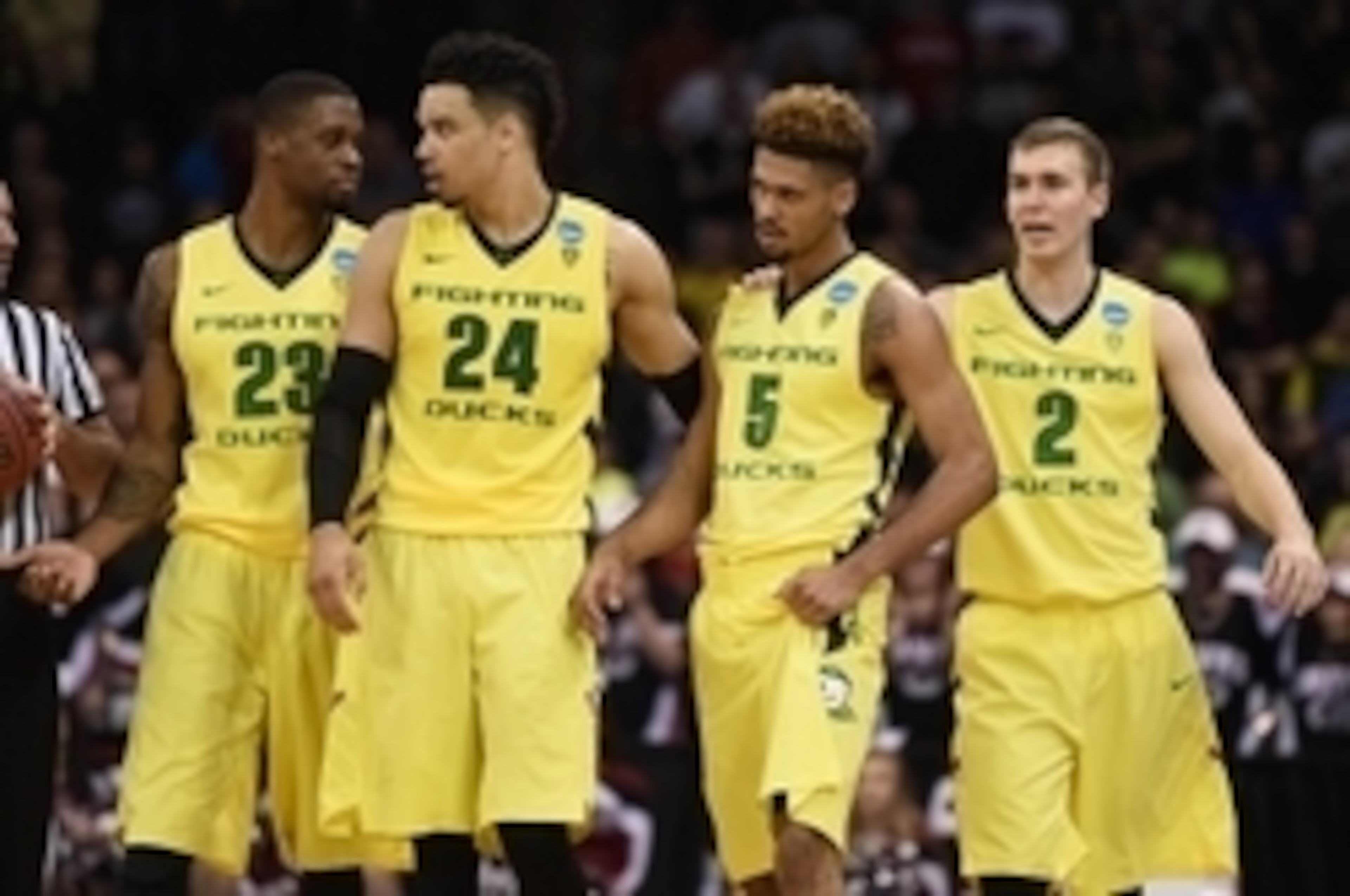
How They've Looked: Sunday night's nail-biter against Saint Joseph's was not Oregon's finest hour, but the Ducks were still able to win a game in which their second-best player (Chris Boucher) was a non-factor. Also, they're used to beating quality opponents by slim margins. Of their 12 regular-season wins over the RPI Top 50, nine were by a difference of 10 points or fewer. It's why their RPI and KenPom rankings were never quite in sync.
Bread and Butter: Oregon thrives on blocking shots and avoiding live-ball turnovers. Led by Boucher and Jordan Bell, when the Ducks block at least six shots, they are 20-0. And when the opposition records four or fewer steals, they are 18-1—and the one loss came early in the season on a night where star point guard Tyler Dorsey injured his knee and Bell was still sidelined by a broken foot.
Achilles' Heel: Often too intent on blocking shots, Oregon gives up more than its fair share of offensive rebounds. And three-point defense has occasionally been a nightmare. In their six losses, the Ducks have watched their opponents shoot a combined 52-of-110 (47.3 percent) from beyond the arc. There have been 15 games this season in which the opposition shot better than 40.0 percent from three.
MVP: Dillon Brooks is the star of the show. He hasn't come that close to a triple-double this season—in fact, he only has three double-doubles—but he is an excellent scorer who is more than capable of adding rebounds and assists to the box score. When things were looking grim late in the second half against Saint Joseph's, he was the guy who brought the Ducks back from the dead.
Championship Blueprint: There's not much they can do about the three-point defense, but the Ducks are lethal when Boucher and Bell are blocking shots and Dorsey and Brooks are avoiding turnovers—all of which they usually do. In this his 27th year as a D-I head coach, Dana Altman has never been to the Final Four. He has the roster to do that and then some.
2. North Carolina Tar Heels
15 of 16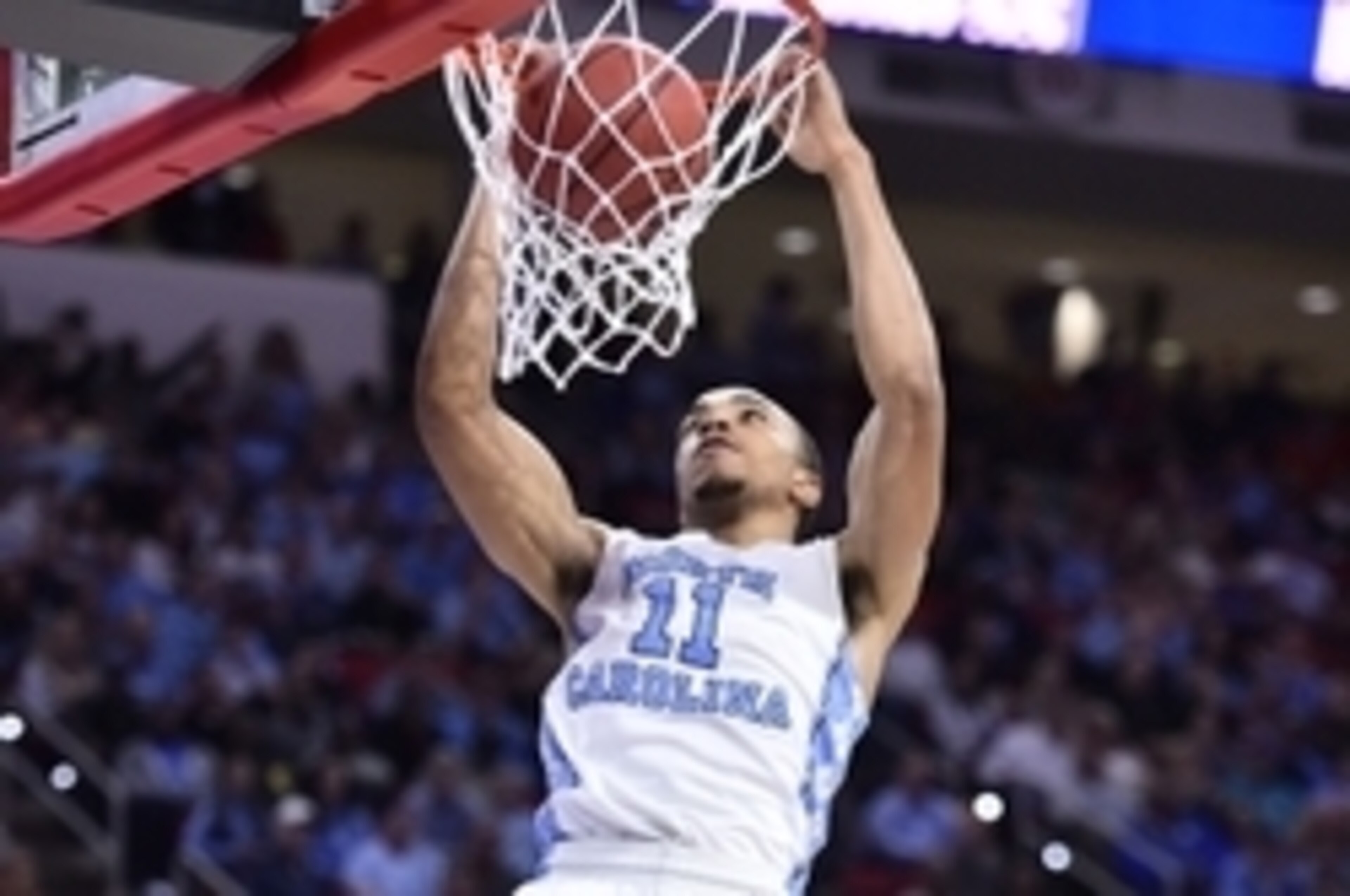
How They've Looked: The Tar Heels seemed to be coasting at half speed for the majority of their wins over Florida Gulf Coast and Providence, but there was a point in the second half of each game at which they decided to stop messing around and turned on the afterburners. Whether that run eventually takes place has always been the unknown with this team. It has the most talent in the country, but its killer instinct is often average, at best.
Bread and Butter: North Carolina owns the offensive paint. Brice Johnson and Isaiah Hicks both shoot better than 61 percent from two-point range, and Justin Jackson and Kennedy Meeks connect on better than 54 percent of their shots inside the arc. The Tar Heels also rank fourth in the nation in offensive rebounding percentage. Closing out defensive possessions against this team is a challenge, to say the least.
Achilles' Heel: On both ends of the court, three-point shooting is an issue for North Carolina. At 31.4 percent on offense and 35.4 percent on defense, the perimeter is not a friend of the Heels. Fortunately, that wasn't an issue against poor three-point shooting teams in Florida Gulf Coast and Providence, but their next opponent (Indiana) is a different story.
MVP: Brice Johnson leads the team in points, rebounds and blocks and ranks second in steals. It took four years for him to fully tap into his potential, but he is now arguably the best forward in the country.
Championship Blueprint: Stick with what works. In the infamous home loss to Duke, the Tar Heels shot (and missed) too many three-pointers in the process of neglecting Johnson down the stretch. That's always going to be a recipe for disaster. As long as they commit to feeding the post, they can outscore anyone in their path.
1. Kansas Jayhawks
16 of 16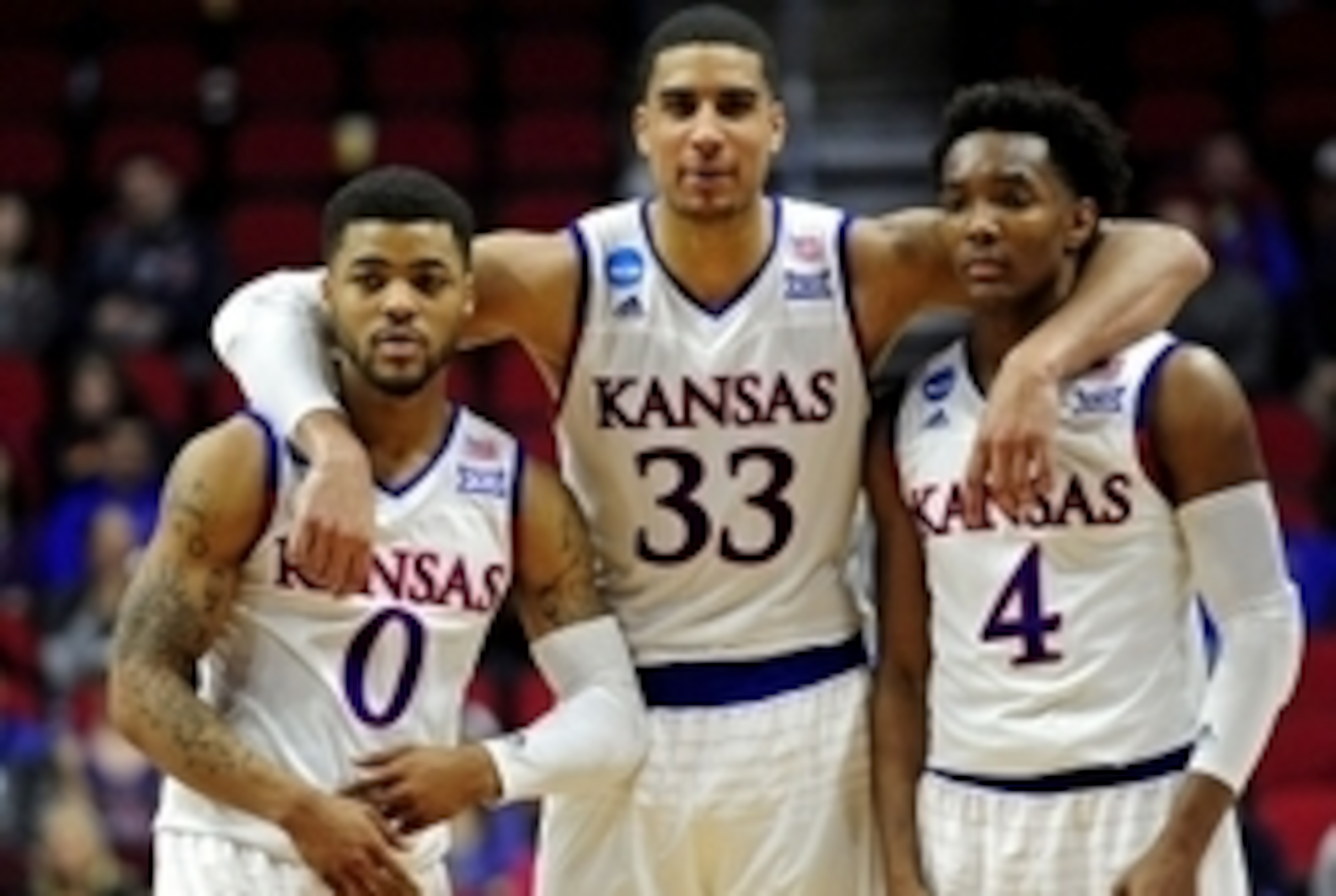
How They've Looked: The Jayhawks slaughtered Austin Peay and led Connecticut by 20 at halftime. Perry Ellis had 21 in both games, and Landen Lucas (11.0 points, 10.0 rebounds, 2.5 blocks) is still playing like the best fifth-best starter in the nation. With how well Lucas has performed since being inserted into the starting lineup, it's astounding it took more than two months to determine he was the best possible sidekick for Ellis in the post.
Bread and Butter: They aren't anywhere near as reliant upon it as Oklahoma or Villanova, but the Jayhawks are excellent from three-point range, shooting 42.3 percent on the season. And that shot hasn't even been there yet in the tournament. They shot just 12-of-33 (36.4 percent) in the first two games, so there's even more that Kansas has to give on offense in the remaining rounds.
Achilles' Heel: Partially a result of playing three games against West Virginia this season, Kansas' turnover rate leaves something to be desired. Even during the current 16-game winning streak, the Jayhawks have coughed up the ball at least 15 times on six occasions.
MVP: Consistent as a metronome, Ellis is Kansas' knight in shining armor. He has scored between 17 and 22 points in seven consecutive games, shooting 63.8 percent from inside the arc in the process. Frank Mason isn't far behind Ellis in terms of uniform production, and it's a huge asset for Kansas to know both of those guys will show up on a nightly basis.
Championship Blueprint: Just keep plugging away. At 10.8 percent, the gap between Kansas' effective field-goal percentages on offense and defense is wider than that of any team still standing. The Jayhawks don't have the highest ceiling, but they have the highest floor. That's usually what matters most when it comes to winning six straight games.
Kerry Miller covers college basketball for Bleacher Report. You can follow him on Twitter @kerrancejames.
.jpg?w=3840 "Police Investigate Death of South Africa World Cup Player (AP)")
.png?w=3840 "Top 1st-Rounder in Every Slot Since 2000 🔢")