

Inside the Growing Trend of Home Schooling in High School Basketball
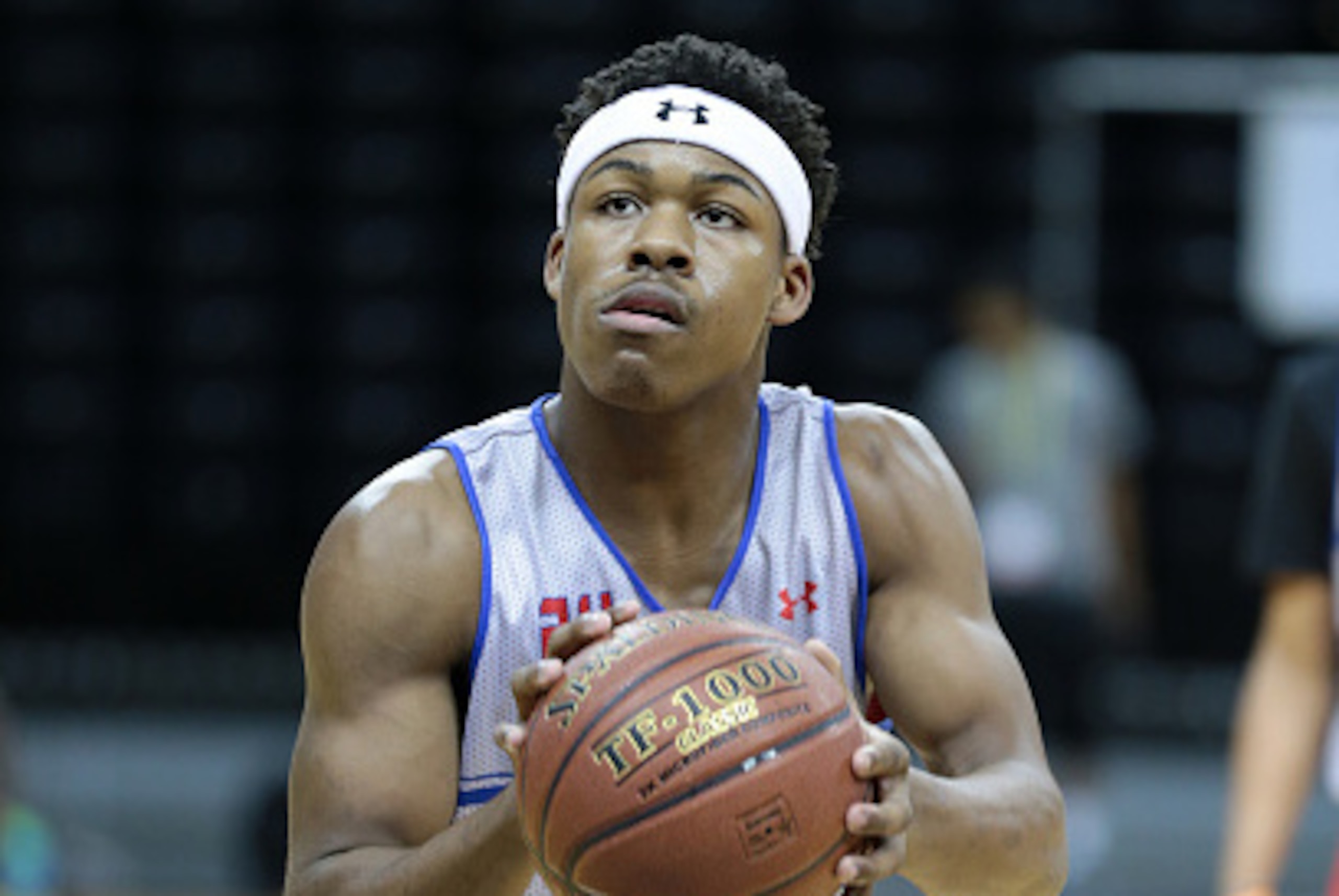
Since appearing in a Powerade commercial with Carmelo Anthony as a sixth-grader, Allonzo Trier has embraced the attention that comes with being a basketball star.
Still, as accommodating as he’s always been with the media, there’s one topic Arizona’s freshman guard won’t discuss. It involves where he went to high school.
Or rather, where he didn’t.
TOP NEWS
🚨 Azzi Fudd Out For Season

MLB stars who played in LLWS

Rory McIlroy's harsh take on LIV golfers
Years before becoming a McDonald’s All-American as a senior at Findlay Prep in Las Vegas, Trier was home-schooled as a ninth- and 10th-grader while living in Oklahoma. Trier, though, clearly isn’t comfortable speaking about the experience, as attempts to interview him for this article were declined.
“There is some sensitivity around this [issue] for Allonzo and his family,” an Arizona athletic department spokesman wrote in an email, “so we are not going to be able to fulfill this media request.”
Trier’s silence isn’t all that surprising, as home schooling is quickly becoming one of prep basketball’s most controversial topics.
For decades, home schooling was an alternative for kids whose parents were uncomfortable with the social, religious and/or academic environments that existed in traditional classrooms. That could include the socially awkward child who often felt bullied, the slow learner who couldn’t keep up with his classmates or the kid who couldn’t stand to be away from his parents and siblings. For some, educating from home was an effective approach.
Lately, however, families are choosing the home-school route for a different reason.
Athletics.
Or more particularly, basketball.
More and more these days, Division I prospects are withdrawing from traditional schools so they can pursue a diploma from their living room sofa—while also logging hours and hours of extra practice time on the court.
Arizona’s Trier, Oklahoma’s Khadeem Lattin and North Carolina’s Justin Jackson are all starters on Top 10 teams who were home-schooled. So, too, was Connecticut women’s star Moriah Jefferson, an All-American point guard who leads the No. 1 Huskies in assists.
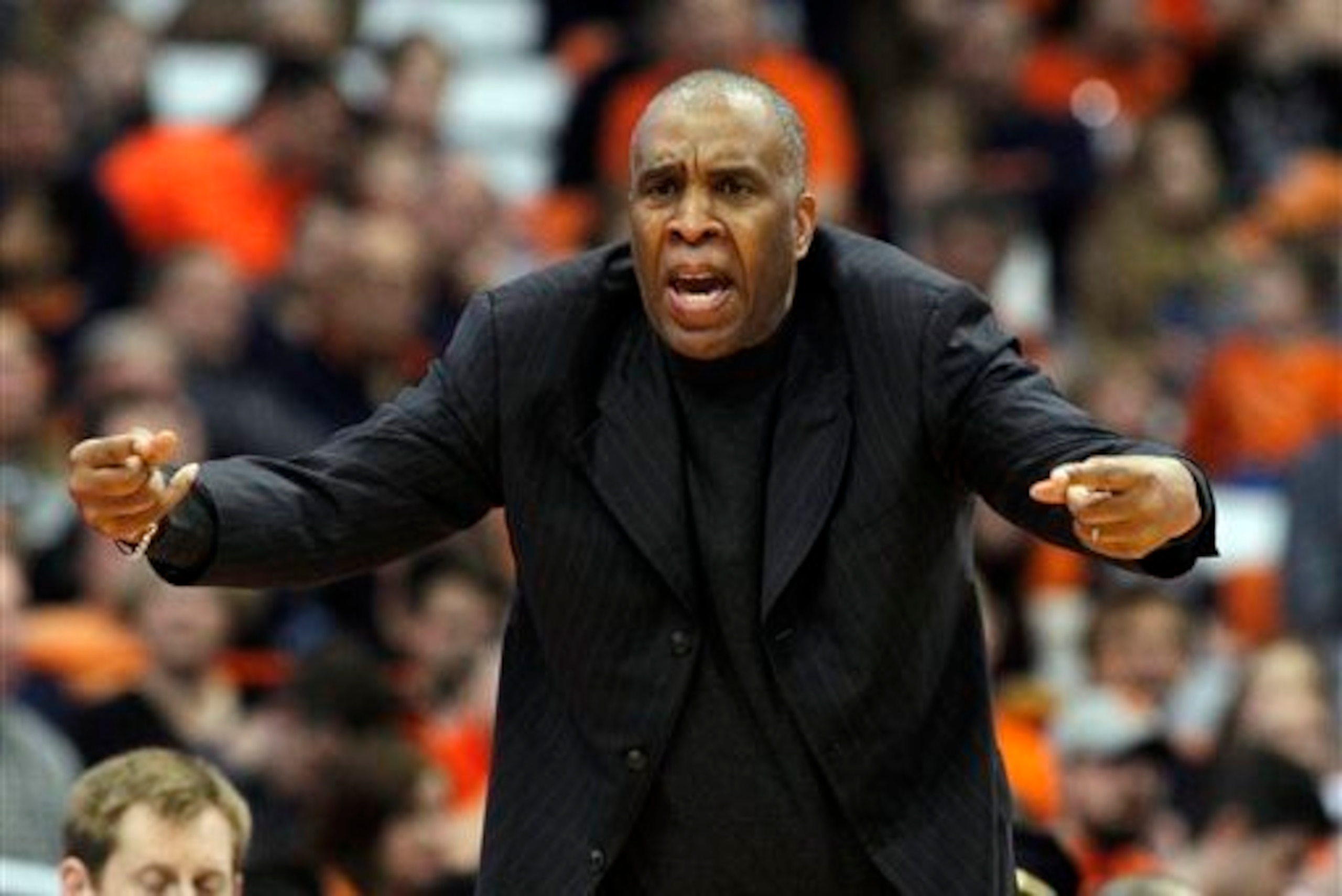
In talent-rich Houston, one of the top high school teams in the entire city is SATCH, a squad comprised entirely of home-schooled athletes. One of them is guard Antoine Davis, the son of former Indiana coach Mike Davis, who is now at Texas Southern.
Earlier this month, SATCH was declared ineligible for this season’s National Christian HomeSchool Basketball Championships after concerns were raised about the large number of players who had left traditional high schools to join the program in the past year.
Two of those athletes—Texas A&M signee J.J. Caldwell and highly touted recruit DeAndre Williams—made the move, in part, because they were floundering academically and feared they wouldn’t meet NCAA eligibility requirements without changing their learning environment.
“You’re seeing kids who have struggled in high school for three years all of a sudden getting home-schooled,” said Eric Bossi, a national recruiting expert for Rivals.com. “Of course it’s going to seem fishy.”
SATCH coach Ben Perkins said almost all of his players take their courses on a computer with the help of online tutors.
Others, such as North Carolina’s Jackson, were taught by their parents.
In some neighborhoods, home-schooled kids meet at local churches and community centers to receive help from retired educators.
With so many variations, a question that would’ve seemed easy 10 years ago is suddenly difficult to answer.
What, exactly, is the definition of home schooling?
“Who knows anymore?” said Tim Flatt, the director of the National Christian Homeschool Basketball Championships. “Ask 10 people, and you’ll probably get 10 different answers.”
While his former classmates sit through first- and second-period classes at Klein Forest High School in Houston, DeAndre Williams is often still asleep.
A top target of Division I programs such as SMU, Houston and Baylor, Williams withdrew from Klein Forest after his junior year and enrolled at SATCH. His new team practices each Monday and Wednesday from 7 to 9 a.m. Most other days, Williams said he wakes up at 10 a.m., eats breakfast and then spends three hours on his computer doing coursework, usually with the help of an online tutor.
After that, it’s back to the gym for more training, often under the tutelage of former NBA coach and Houston native John Lucas.
“I wish I would’ve known about this as a freshman,” Williams said. “I’d have done this all four years [of high school].”
Williams was in desperate need of a change.
As his grades began to dip at Klein Forest, fear arose among those in Williams’ inner circle that his core GPA wouldn’t be high enough to qualify for a Division I scholarship. At SATCH, Williams said he’s been able to retake classes he struggled with as a freshman while also benefiting from the individualized attention he receives from tutors.
Williams said he’s also taking SAT and ACT prep courses online.
“My main problem [at Klein Forest] was that there were too many distractions,” Williams said. “There were always people in the classroom playing around, or guys influencing me to do other things besides paying attention. It made it hard to concentrate.
“I couldn’t get the kind of one-on-one attention I’m getting now. I’m so much more focused.”
So, too, is Caldwell, the Texas A&M-bound guard who left Houston’s Cypress Woods High School and enrolled at SATCH for many of the same reasons as Williams.
Caldwell’s mother, Hattie, said her son is “learning so much” because of the home-school approach. She said she has the passwords to log on to J.J.’s online curriculum to make sure he’s doing his work.
“But honestly,” she said, “I haven’t had to push him very much. He’s been very diligent about it because he knows what he has to do. He loves basketball, and he loves Texas A&M. That’s been enough to keep him motivated.”
SATCH officials realize that a curriculum comprised almost solely of online coursework could raise red flags and lead to additional scrutiny from the NCAA Clearinghouse. To combat the issue, Perkins said school administrators are in regular contact with the NCAA about which courses need to be taken, grades that need to be achieved and the way to document completed coursework so that the NCAA won’t have any questions as to whether it was done legitimately.
“We’re very proactive,” Perkins said. “We follow the curriculum to a T. We communicate with the Clearinghouse nonstop.”
Perkins said decisions regarding online tutors, co-ops and private instructors are made by the players' parent—not SATCH administrators.
"It's up to each parent to determine how to educate their child—whether it's through online courses or coops, or whether they're doing it themselves," Perkins said. "We're certainly willing to provide guidance when needed."
That’s why the announcement that SATCH has been banned from the 2016 national tournament is so hurtful to school administrators along with Perkins, the Mavericks’ head coach. The program is clearly helping kids, Perkins said, yet it’s being penalized for it.
SATCH, which stands for Sports Association of Texas for Christian Homeschoolers, was founded in 2003.
“They’re making it look like we’ve done something wrong or broken a rule,” Perkins said. “Image-wise, they’re trying to damage us. We don’t want to have a negative cloud over our program.”
In an email, Flatt informed SATCH administrators that the decision to declare the Mavericks ineligible for the tournament was made by the tournament’s Eligibility Advisory Board (EAB). Along with a high number of upperclassmen transfers with no previous history of being home-schooled, the committee also said SATCH didn’t resemble a “traditional” home-school team because almost all of its members did their coursework online instead of being taught the old-school way, by one of their parents.
The line of thinking is similar to that of the NCAA, which defines “home schooling” as an environment where a parent or tutor creates the curriculum, provides the instruction, assesses progress and makes decisions on grades.
“Learning at home is not necessarily the same as being home-schooled,” the NCAA manual states. “Because of recent growth in online and virtual education, a student may be able to learn at home through an online school with online teachers, which would not be considered a parent-directed home school.”
Considering there are as many as 340 teams competing nationally in 10 age divisions (five for boys, five for girls), Flatt said it’s impossible to ensure that each and every home-school program operates in a manner that adheres to tournament guidelines.
“We are trying to maintain our credibility,” Flatt said. “If coaches are using this as a way to basically coach their AAU team in the offseason, that’s a problem. If players are using it as a way to avoid disciplinary action or academic issues at a school where they wouldn’t be eligible to play, that’s a problem. We’re not about that.”
Flatt said he recently deemed a team ineligible after discovering that one of its transfers had been kicked out of a public high school for bringing a gun onto campus.
“We’re not trying to be the place everyone goes for a second chance,” he said. “Home school isn’t designed for delinquents. I’m not saying there aren’t exceptions but, for the most part, the parents need to be involved in their education.”
Devonte Patterson’s basketball career has taken him from Australia to New York to Washington D.C. to Philadelphia for games and tournaments.
He’s received individual instruction from former Dallas Mavericks stars Michael Finley and Jason Terry and ex-Kentucky coach Billy Gillispie. And Patterson has been educated by a private tutor while riding on his team’s customized, luxury bus.
And he’s only a senior in high school.
Before he became a star player at Bridgeport, a public school about 30 miles northwest of Fort Worth, Texas, Patterson spent his eighth-, ninth- and 10th-grade seasons as a member of the Flower Mound (Texas) Rebels, a home-school squad that became the envy of prep basketball across the state.
The team was founded in the fall of 2011 by Neal Hawks, a wealthy real estate developer who is also the brother-in-law of Dallas Mavericks owner Mark Cuban. Hawks and his wife were concerned that their legal ward, Ethan Chapman, was slated to attend a high school (Flower Mound Marcus) that had nearly 1,000 students per grade.
“We didn’t feel like that was an ideal setting,” Hawks said.
Along with being a basketball fanatic—his “man cave” is decorated with jerseys, photos and shoes signed by Michael Jordan, Kobe Bryant and countless others—Hawks also has a history of helping disadvantaged youth. He’s worked extensively with the Dallas chapters of Big Brothers Big Sisters and the Boys and Girls Clubs. And he’s a financial supporter of the Promising Youth Alliance.
So those who know Hawks weren’t all that surprised when three underprivileged eighth-graders began living at his home along with Chapman during the Rebels’ first season—an arrangement that continues today.
One of the move-ins was Patterson, a Wichita, Kansas, native who was struggling both academically and socially following the death of his grandmother. Hawks heard about Patterson’s situation, agreed to meet with him and within weeks had moved him into his home.

“We got him on the court,” Hawks said, “and he didn’t even know you couldn’t step across the line on an inbound throw.
“We didn’t decide to home-school because of basketball. I just used basketball as a motivator and a punishment. If they didn’t have their act together in school, they didn’t get to play.”
Still, Hawks spared no expense to make sure the Rebels were successful. He built a practice facility adjacent to his home complete with an indoor court, weight room, cold tub, swimming pool and meeting room.
The most pivotal investment, though, came when Hawks convinced longtime Texas prep coach Brad Chasteen to quit his job at Coppell High School after 16 years and 534 career victories to coach the Rebels.
Chasteen loved the fact that he was no longer beholden to state high school rules that limited practice time to eight hours per week. Home-school teams had no restrictions. Even in the offseason, the Rebels often worked out three hours per day, at times with former Mavericks or coaches such as Gillispie (a close friend of Hawks) stopping by to help.
“To speed up the learning curve in any sport, it’s all about reps,” Chasteen said. “The more productive practices you can have, the quicker you can get better.”
While most public schools in Texas play about 35 games, Chasteen estimates the Rebels played as many as 85 games each season between October and March. Some of the contests were against public school teams in their region—other times, the Rebels hit the road to take on top competition from other states. Frequently, their travels took them overseas or on extended trips to the East Coast.
Some of the trips were made on Hawks’ customized luxury bus, complete with beds so players could stretch out and sleep.
“It sounds like we were trying to get away with something,” Chasteen said. “But really, it was just like hockey players as kids, or kids that are movie stars. You do the educational part of it when it’s convenient, and you spend the rest of the time working on your other goals.”
That’s not to say academics weren’t a top priority, as road trips always included stops at places such as Arlington Cemetery, the Lincoln Memorial and Ground Zero.
“I’m a firm believer that not all education occurs in the classroom,” Hawks said.
Hawks also hired a tutor to travel with the team, which paid huge dividends for players such as Patterson, who had missed a considerable amount of school before moving in with Hawks.
“There were days when she’d work with [Patterson] for eight hours,” Hawks said. “He was so far behind when he got here, but now he’s made so much progress. We’ve gotten him to the point where he can hold his own academically.”
That proved to be vital prior to last season, when Hawks shuttered his home-school squad after the four players living with him (Patterson, Chapman, Keenan Holdman and Caleb Smith) expressed the desire to spend their last two years in a public school. The Rebels wanted a chance to be around other kids each day, he said. They wanted to go to homecoming and prom and high school football games on Friday nights.

“Athletically, I’d recommend home schooling—and that’s coming from a guy with a history in public schools,” Chasteen said. “But socially, there are things to consider. When you’re in home school, it’s not like you can sit next to a girl at lunchtime.”
Rather than send the four players who lived with him to Marcus, the large public school, Hawks built a home near his ranch in Bridgeport, whose school boasts a smaller enrollment with about 175 students per class.
Chasteen still works with the players individually and said he’s “on the same page” with Bridgeport’s coach. In 2013-14, the season before the Rebels enrolled, Bridgeport finished 12-17 and lost in the first round of the playoffs. The following year they went 35-4 and won the Class 4A state title for the first time in school history.
In the final two games of the state tournament, Patterson, Smith and Holdman combined for 130 of the team’s 151 points.
“It’s amazing how far they’ve come,” Chasteen said. “Neal took them in when they were very young. It wasn’t like he tried to ship them in because they were some superstar that could help his team. He wanted to see them develop as people.”
It’s a process that will likely continue in college.
Patterson, a 6’7” forward, and Smith, a 6’0” shooting guard, are Division I prospects being courted by such schools as Texas-El Paso, Tulsa, Southern Illinois and Illinois-Chicago. Holdman has blossomed into a multisport star, excelling not only as a point guard but also as the leading receiver on Bridgeport’s football team.
“In order to be successful in college,” Hawks said, “they needed to be in a situation where they’d be accountable to more people than my wife and I. Now they’ve got even more people trying to help them.
“I like to think they’ve benefited from both experiences.”
For Justin Jackson, the path toward a high school diploma changed when he contracted the flu as a third-grader and missed a week-and-a-half of classes.
When his teacher sent home days’ worth of assignments he’d missed, his mother, Sharon, said Jackson completed all of them in a single afternoon.
Later that year, Sharon began noticing artwork and sheets from coloring books mixed in with Jackson’s grammar and math assignments. It turns out Justin was finishing his schoolwork 20 minutes after it was assigned and doodling the rest of the time.
Realizing he could be doing more with his spare time, Sharon said she and her husband, Lloyd, “decided to take the plunge” and home-school Justin beginning in the fourth grade.
“We had some really good friends who had talked about home schooling,” Sharon said, “and we’d always thought, ‘That’s just weird. We’re not going to do that. We’re not going to be that weird family.’
“But [Justin] enjoyed it. It just kinda became what we do.”
More than 10 years later, Jackson is the poster boy for home-schooling advocates. Partly because he’s the third-leading scorer for No. 7 North Carolina and a projected first-round NBA draft pick but more because his home schooling was done the old-school way.

“The traditional way,” Flatt said.
Although he had occasional help from tutors, Jackson’s mother served as his primary teacher until the sixth grade, when Jackson enrolled in a private school after his family moved from Cincinnati to Tomball, Texas, a small town just outside of Houston.
Jackson made plenty of friends and became the go-to guy on his basketball team. Still, after just one year, he told his mom he wanted to return to the home-school format.
One of the most important things in Jackson’s life is his faith, so he enjoyed the way his mom taught basic curriculum “with a Christian twist.” Jackson also relished the opportunity to grow closer with his parents and three younger siblings.
According his mother, countless hours were spent on the 50-by-60-foot full court—complete with lights, and free-throw and three-point lines—they built in their backyard. Sharon, who played collegiately at Blinn (Tex.) Community College, put Jackson through dribbling drills, while Lloyd worked with him on his jump shot.
Jackson also worked with a personal trainer and made regular appearances at Lucas’ gym, where he worked out with eventual pros such as Khris Middleton of the Milwaukee Bucks.
Unlike many home-school athletes, Jackson never took any of his high school courses online.
“We stayed away from it because we knew it’d be hard to get cleared by the NCAA,” Jackson said. “We didn’t want to make it more difficult. We did it the normal way so there wouldn’t be any complications.”
Jackson said the discipline and time-management skills he developed during his home-school years have helped him academically at North Carolina.
“Home school is all about self-motivation,” he said. “So many people think kids go to home school just so they can get better at basketball, and that we sit at home all day and do nothing. But that’s not necessarily true.
“If you do it the right way, you spend the same amount of time on schoolwork as you do at a regular school.”
Davis—the former Indiana coach who led the Hoosiers to the 2002 NCAA title game—said his son, Antoine, is having a similar experience at SATCH, where he recently made seven three-pointers in a victory over Advanced Prep International, a Dallas-based squad featuring ESPN top-10 recruits Billy Preston and Terrance Ferguson.
Davis knew little about home schooling when he took the head coaching job at Texas Southern in 2012. But the more his wife Tamilya—a former teacher—began to research Houston-area schools for their youngest son, the more appealing home schooling became.
Davis said Antoine, who is now a junior, had always made good grades overall. But he struggled in certain classes because he was “too shy and embarrassed” to ask questions.
“Now,” Davis said, “he never gets behind because his mother is patient with him and keeps explaining it until he gets it.
“Home schooling works great for all types of students. If you’re slow academically, you take your time and do it. If you’re fast, you speed up.”
Davis scoffs at the myth that home schooling impedes the development of social skills.
“There are kids who go to regular school every day that have poor social skills,” he said. “I don’t care about [Antoine] not going to a homecoming or a prom. I went to prom and homecoming, and I can’t remember who I went with.
“He’s putting value and time into something that’s going to be important over the long run. Life and sports, to me, are similar. [If] you put your work in and embrace the process, you improve.”
Equally beneficial to Antoine’s academic success, Davis said, has been the opportunity for him to train multiple times each week with Lucas, who starred collegiately at Maryland and in the NBA before becoming a head coach.
Since he was 12, Antoine has been participating in drills and pickup games with college and NBA players—both former and current—who show up randomly for workouts in Lucas’ gym.
“He’s able to excel in school and test himself on the court against the top competition in the country,” Davis said. “It truly is the best of both worlds.”
There are times when Khadeem Lattin wishes he could’ve donned a cap and gown and walked across a stage to receive his high school diploma at a graduation ceremony.
“It would’ve been cool for my mom to see that,” Lattin said. “She’d have been proud.”
The Oklahoma forward pauses.
“Other than that,” he said, “I don’t have any regrets about being home-schooled.”
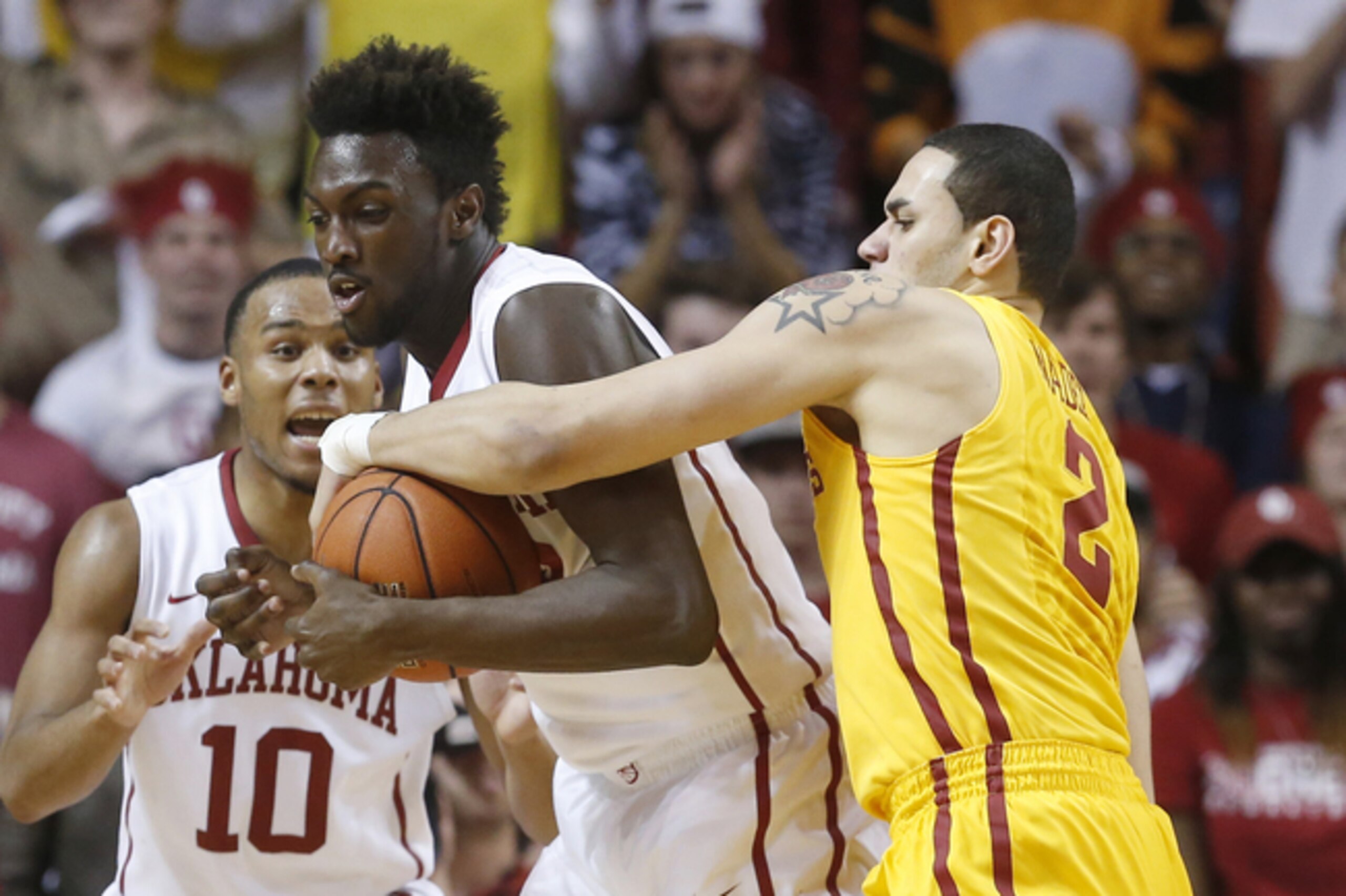
Much like Davis, Jackson and many others, Lattin said he benefited from the individual instruction he received from tutors—both online and in-person—who were “hyper-focused” on his weak points and allowed him to learn at his own pace. And he said the additional time he spent working on his game each day is one of the main reasons he’s a starter on the nation’s third-ranked team.
Still, as beneficial as home school can be, Lattin knows there will be naysayers eager to spew negativity about the system.
“I’ve heard some really mean, evil things,” Lattin said. “Everything from, ‘They’re delinquents’ and ‘They couldn’t keep up in school’ and ‘We’d be good, too, if all we did was stay in the gym all day.’
“People shouldn’t say those things until they’ve met a home-schooled kid and seen what they’re like. They’d realize then that home schooling is a good thing.”
But many aren’t convinced.
Thus, as the numbers keep rising, the newest trend in education for high-profile basketball players will continue to be a polarizing topic often accompanied by skepticism, its participants tagged with stigmas they may never be able to shed.
“It’s hard to blame the players,” said Bossi, the recruiting analyst. “It’s an opportunity that’s there for them, and they’re taking advantage of it.”
Jason King covers college sports for Bleacher Report. You can follow him on Twitter @JasonKingBR.
.jpg?w=2560 "Eagles Lions Football")


.jpg?w=2560 "Nightmare Fantasy RB Rooms 😨")

