An Early Guide to the 2015-16 College Basketball Season: From A to Z
College football and the NFL are well underway, while Major League Baseball is heading into the postseason. The NHL is about to start, and the NBA will follow suit in a few weeks, so there is no shortage of options for sports lovers.
But for those who call college basketball their favorite sport, there's still a little longer to wait.
The 2015-16 season will begin in mid-November, when teams all over the country get started on the long road toward March in hopes of playing in the NCAA tournament. Along the way we'll get upsets, amazing individual achievements and plenty of other happenings that will make every moment of the five-month grind amazingly enjoyable.
To prepare you for the season ahead, we've put together an early guide of what to watch out for this fall.
There's an item for every letter in the alphabet, some more important than others, but when you put them all together, you've got the nuts and bolts of a preview of the upcoming road to March Madness.
A Is for Atlantis
1 of 26
Though the NCAA tournament in March and April is the pinnacle of each college basketball season, smaller tourneys earlier in the season provide their own intrigue by bringing together eclectic fields of teams who often play in far-off locales. And the most exciting (and exotic) of those preseason events each year has been the one held in a converted ballroom at a resort in the Bahamas.
The Battle 4 Atlantis is heading into its fifth year with another stellar field for the three-day, eight-team tourney. The lineup of Charlotte, Connecticut, Gonzaga, Michigan, Syracuse, Texas, Texas A&M and Washington is by far the best of any preseason tourney and should give us great matchups in the quarterfinals, semifinals, the championship game and the consolation rounds, no matter who plays.
"If you could only choose one tournament to watch and had to watch every game of it, this is the one you'd want," Bleacher Report's Kerry Miller wrote.
Last year's tourney, won by Oklahoma, also featured eventual NCAA tourney entrants Butler, Georgetown, North Carolina, UAB and UCLA as well as national runner-up Wisconsin.
This season's Battle 4 Atlantis is set for Nov. 25-27.
B Is for Bubble
2 of 26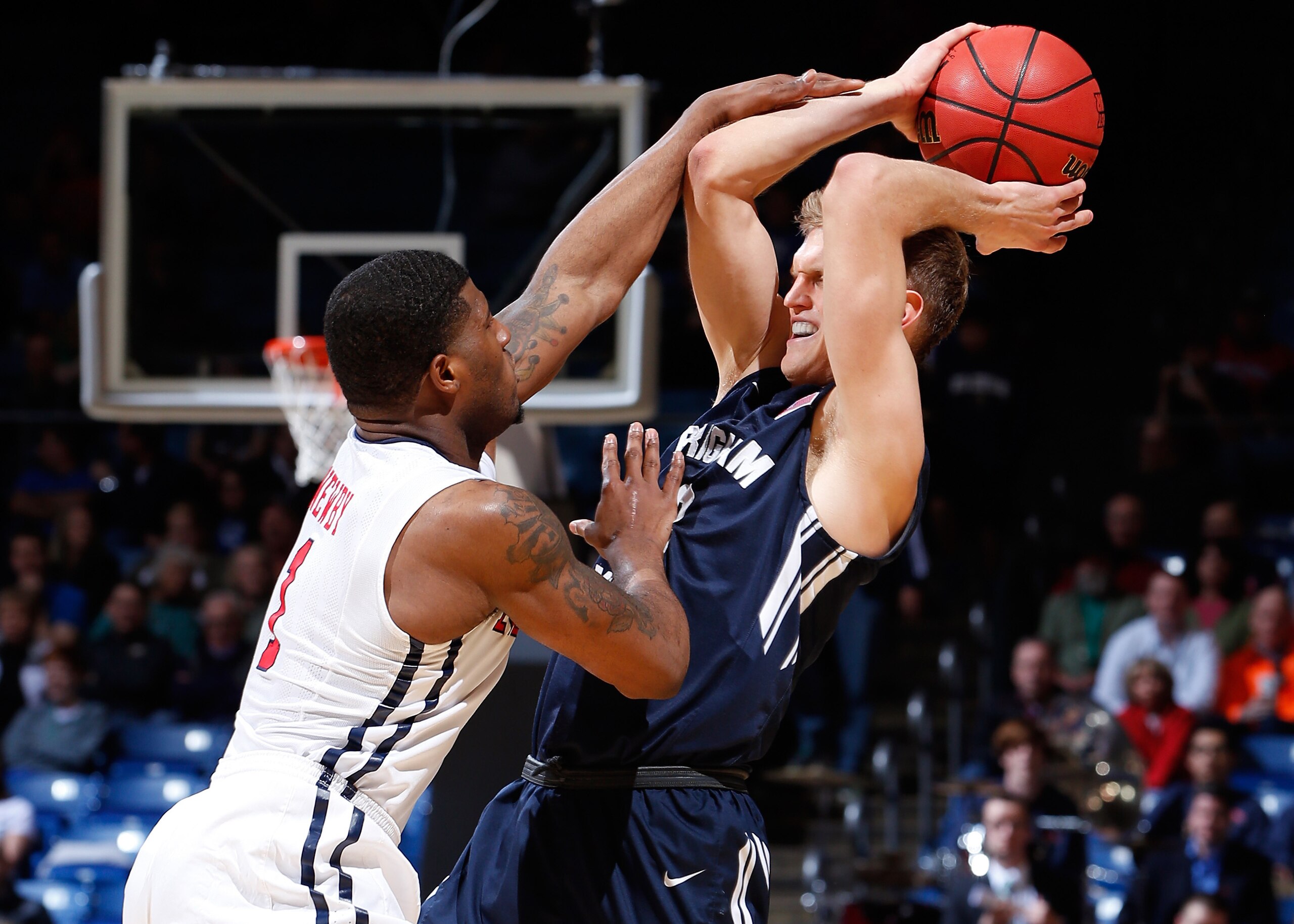
Among the many buzzwords you'll hear throughout the college basketball season, one that has a very broad meaning is "bubble." Meant to describe schools whose records and resumes make it uncertain if they'll earn an at-large bid to the NCAA tournament, it ends up being used all year long.
Any time a school from a power conference begins to struggle, its "on the bubble" status comes into discussion. It's foolish in most cases, because unlike with college football and its playoff selection committee, we don't have any idea what the people deciding the NCAA tourney field are thinking until the 68-team bracket is revealed on Selection Sunday.
Still, it does provide plenty of intrigue, particularly when various "bracketologists" like ESPN's Joe Lunardi and CBS Sports' Jerry Palm produce mock tourney fields throughout the season. It helps make every game feel like it has importance and an impact on what will happen in March.
C Is for Coaching Changes
3 of 26
Of the 351 schools playing at the Division I level, 40 of them have a coach in his first season with the program. Many of these moves are the product of the offseason coaching carousel, where an opening at one school prompts a currently employed head coach to jump ship and take that opening...and the cycle continues throughout the summer.
Follow along if you can: Tennessee parted ways with first-year coach Donnie Tyndall in late March after learning of potential NCAA violations from his previous stint at Southern Mississippi. The Volunteers replaced him with Rick Barnes, who was pushed out at Texas after 16 seasons and more than 400 wins.
The Longhorns ended up with Shaka Smart, who'd made a name for himself at VCU, and his old employer reached out for ex-Rams assistant Will Wade. Wade had been at Chattanooga the previous two seasons, and to fill his void the Mocs brought in Florida assistant coach Matt McCall.
So unofficially, one opening led to changes at four schools.
Of the 40 new coaching changes this season, 14 happened in the seven biggest conferences. The SEC alone has four new coaches (Barnes at Tennessee, Avery Johnson at Alabama, Michael White at Florida and Ben Howland at Mississippi State).
.jpg?w=2560 "NCAA Combating Sextortion")
.jpg?w=2560 "49ers Chargers Football")
D Is for Defending Champs
4 of 26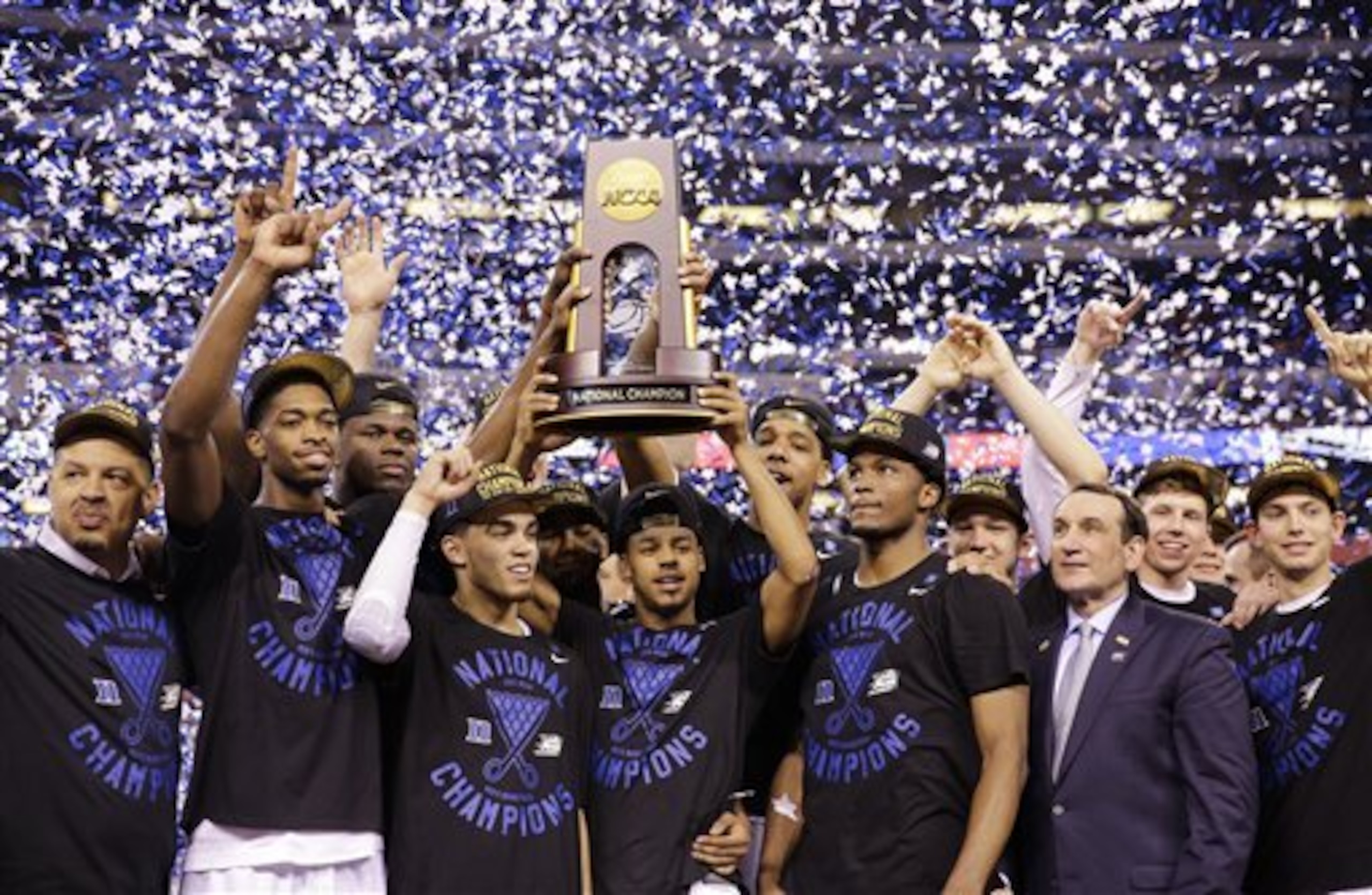
It was about six months ago that Duke cut down the nets at Lucas Oil Stadium for its fifth national title and first since 2010. Now comes the fun part: defending that crown and trying to become the first repeat champion since Florida in 2006-07.
This won't be easy for the Blue Devils, and not just because they have to replace four starters, including three freshmen (Tyus Jones, Jahlil Okafor and Justise Winslow) who were taken in the first round of the NBA draft. Recent history has shown just how difficult the road to a repeat is, to the point than many defending champs haven't even had an opportunity to go for a second straight title.
Since Florida won its second consecutive crown in 2007, four of the eight reigning champs ended up missing out on the NCAA tournament and had to settle for the NIT. The other four combined to make three Sweet 16 appearances, including Duke in 2011 as defending champs.
E Is for English
5 of 26
One of the top returning scorers in the country is Iona senior A.J. English, who in 2014-15 averaged 20.1 points per game. The 6'4" guard is the son of a former pro basketball player, also named A.J., who spent two years in the NBA and then played overseas.
English hasn't been noticed because of his lineage so much as his scoring ability, which has generated 1,372 points in his career. He also averaged 5.1 assists per game last season, making him one of three players in the country with at least 20 points and five dimes per game.
Iona missed out on the NCAA tournament during English's past two seasons but reached the field in 2012 and 2013. English didn't play in the Gaels' loss to Ohio State because of a wrist injury that cut his freshman season down to 17 games.
The Gaels and English will be shown on national television at least five times this season, including a Nov. 17 game at Oregon State.
F Is for Freshmen
6 of 26
There's something to be said about experience and senior leadership in college basketball, but the reality is that today's game belongs to the freshmen.
Each year a new crop of first-year players come to campus and instantly make impacts, with many of the top freshmen knowing full well they only plan on spending one season at the college level before making the jump to the pros. The first three picks in June's NBA draft were college freshmen, as were eight of the 14 lottery picks.
The same is very possible next June, as NBADraft.net's 2016 mock draft projected freshmen to be taken eight times in the first 12 picks (including five of the top six). LSU's Ben Simmons is projected to be the No. 1 overall selection, followed by Kentucky's Skal Labissiere and California's Jaylen Brown.
With that in mind, make sure to check out these and other fabulous frosh as often as possible this season, since they won't be around for long.
G Is for Gathers
7 of 26
Rebounding the basketball isn't the sexiest thing about the game, but it's essential for any successful team to be able to grab missed shots in order to produce offensively and limit opponents' scoring chances. It's what Rico Gathers does best and helps make up for the rest of his game, which isn't nearly as polished or as exciting to watch as he crashes the boards.
Gathers, a 6'8", 280-pound senior forward for Baylor, ranked fourth in Division I last season with 11.6 rebounds per game. That's the same amount of points he averaged for the Bears, and much of that scoring came on putback layups or jams after he'd grabbed an offensive rebound.
Of his 394 rebounds last season, 164 were obtained after he or a teammate missed a shot. That figure, as well as his 18.9 percent offensive rebound rate, ranked second in the country in 2014-15.
H Is for Houston
8 of 26Houston served as the host of the first Final Four played inside a dome back in 1971, when UCLA won its fifth of seven consecutive NCAA titles. The city also hosted the event in 2011, when Connecticut knocked off Butler for the title. Now it's getting its third turn in the rotation.
This will be the second time the Final Four is held at NRG Stadium, which in 2011 was known as Reliant Stadium. That facility was where Duke went through to win the South Regional on its way to the national title, while regionals in 2008 and 2010 were also held there.
I Is for Investigations
9 of 26
When the 2015-16 season gets going here next month, a pair of the game's most famous and successful coaches will have to spend some time away from the court, while a third might end up facing the same penalty because of various NCAA infractions.
Syracuse's Jim Boeheim must sit out the first nine games of the ACC schedule in December and January as part of NCAA sanctions levied against the program in March. Academic misconduct, extra benefits, drug policy issues and booster activities that happened between 2001-10 all contributed to this penalty.
SMU learned on Sept. 28 that its men's basketball team was banned from postseason play this year and that coach Larry Brown has been suspended nine games for his role in an academic fraud case involving a former player, according to the Associated Press (h/t USA Today).
Then on Friday, allegations surfaced that a former Louisville staff member used an escort service to entertain players and recruits from 2010-14, according to Gary Graves of the AP (h/t Yahoo Sports).
"University officials say they learned of the allegations in late August and immediately notified the NCAA," Graves wrote.
Louisville coach Rick Pitino has denied any knowledge of the allegations, but if the NCAA finds the program did anything wrong, it's possible Pitino could end up getting hit with a suspension similar to those of Boeheim and Brown.
J Is for Jaspers (and Other Odd School Nicknames)
10 of 26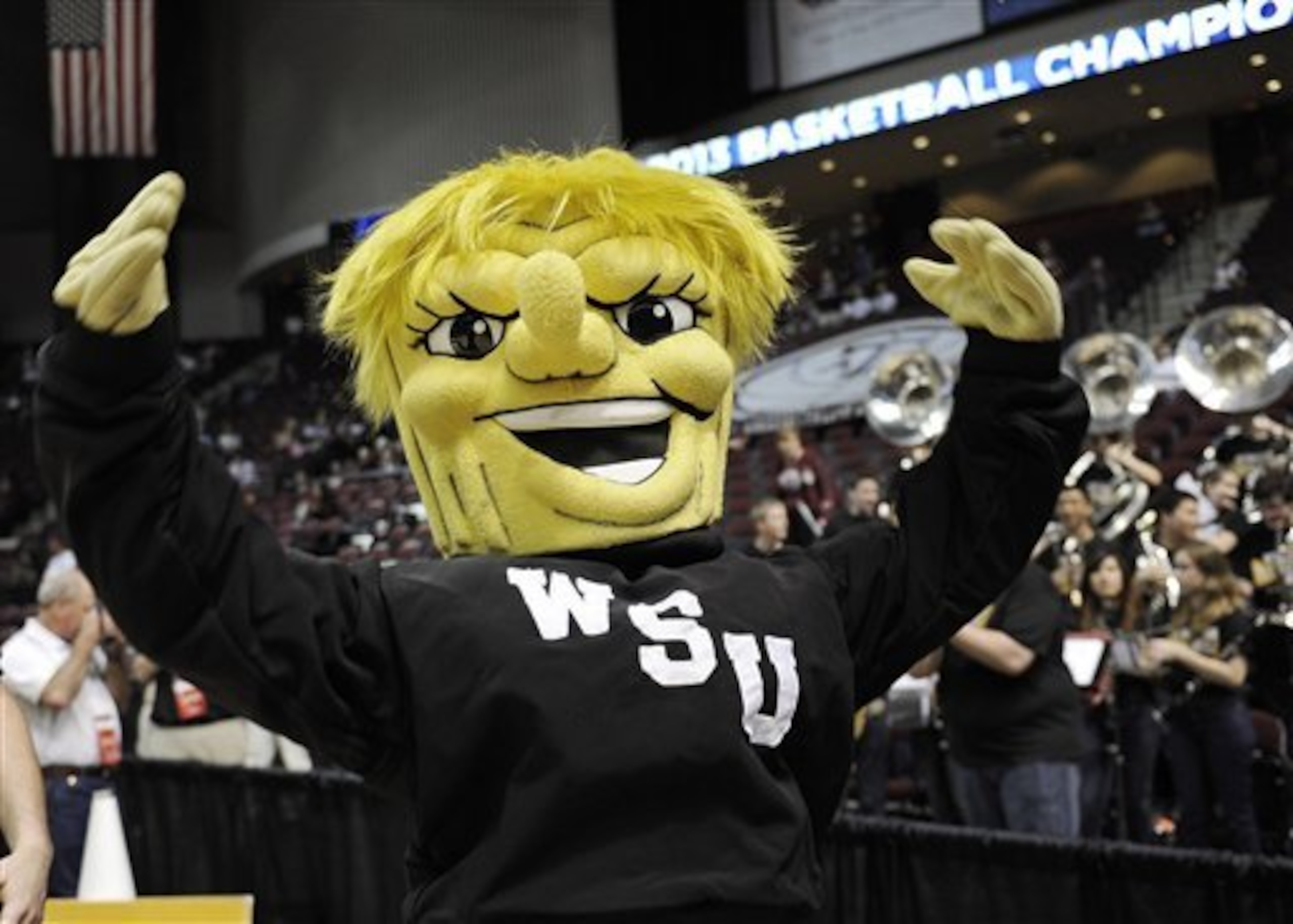
For every college basketball team nicknamed the Bulldogs, Eagles, Hawks, Tigers or Wildcats, there are ones that have mascots that stand out from the pack in a very crowded sport. Big-name programs like Arizona, Kentucky and Villanova (all Wildcats) don't need something like that to grab attention, since they get the headlines for performance.
That's not the case for many of the little guys in Division I, schools whose mascots have special meanings but make casual fans shake their heads in wonder.
Thanks to its stellar run over the last few seasons, plenty of people now know Wichita State's nickname is the Shockers, which is related to the school and region's agricultural roots. But what about the Manhattan Jaspers? Or the Stetson Hatters? What's the story behind those?
You could spend days going down Internet wormholes looking up the histories of such mascots, which is both awesome and scary. To save you some time, Manhattan is named for Brother Jasper, who worked at the school in the late 19th century and who is credited with developing the famed seventh-inning stretch used in baseball, while Stetson's founder is John B. Stetson, the namesake of the famous hats.
K Is for Krzyzewski
11 of 26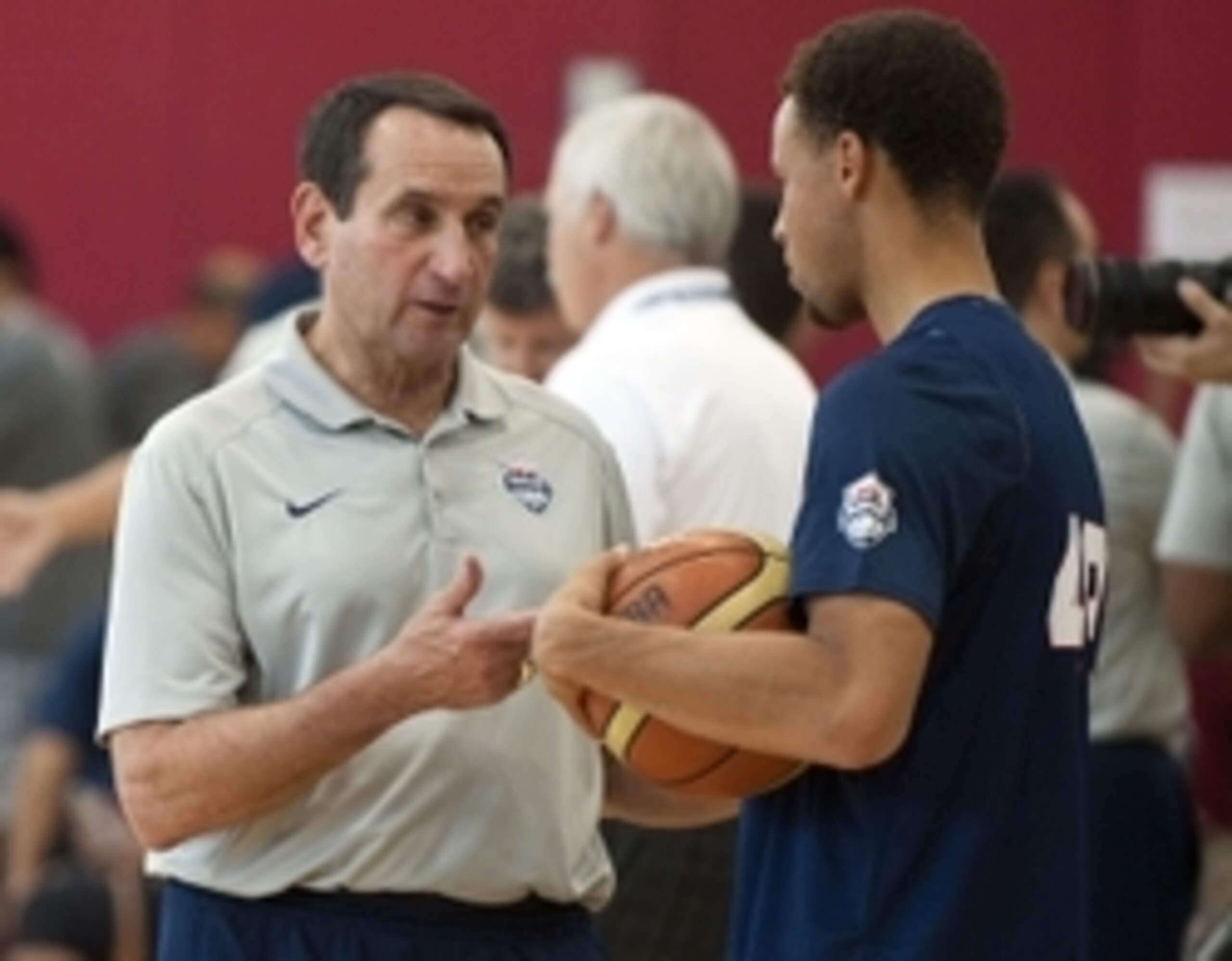
Duke coach Mike Krzyzewski became the first coach in Division I history to reach 1,000 wins last season, then he capped off the season with his fifth national title. Yet the 68-year-old isn't showing any signs of slowing down, as the work he's been doing on the recruiting trail since claiming that last championship has shown.
Krzyzewski put together the second-best recruiting class for 2015, according to 247Sports, by signing three 5-star players in the days immediately after the 2014-15 season ended. And since then he's already put together the foundation of a potential No. 1 class for 2016 with commitments from three of the top 40 prospects in the country.
It wasn't long ago that Krzyzewski, whose teams were bumped in the second round of the NCAA tournament in two of three seasons, was starting to be known as someone whose time had passed and who couldn't get the players he wanted to have sustained success.
"Is Mike Krzyzewski the only older coach who has started to be written off but then totally turned it around?" Laura Keeley of the News & Observer tweeted recently.
In addition, Krzyzewski remains heavily involved in the U.S. men's national team as it prepares for the 2016 Summer Olympics in Brazil.
L Is for Lynn
12 of 26
Damon Lynn wasn't a highly regarded recruit coming out of high school in New Jersey, which is why his best option was to stay close to home and play for one of Division I's least established basketball teams, NJIT. That meant having to spend the first two seasons of his college career playing for the only independent program in the country.
But along the way his performance with the Highlanders helped them pull off one of the biggest upsets of the 2014-15 season, winning at Michigan en route to a 21-12 record and a trip to the CollegeInsider.com Tournament semifinals.
Lynn took 350 three-pointers last season, 43 more than any other player in the nation. He made 126, second-most in Division I, and for his career he's made 36.9 percent of his threes.
NJIT is no longer an independent, as it's set to play in the Atlantic Sun Conference in 2015-16. This means Lynn could have a shot at making the NCAA tournament, where he could jack up threes on a much bigger stage.
M Is for Marathon
13 of 26
The first games of the 2014-15 season are set for Nov. 13, a Friday, with more than 150 scheduled for that initial day. But the real action gets underway a few days later, when ESPN brings us a nonstop run of games that will last more than 30 hours.
The marathon runs from 5:30 p.m. ET on Monday, Nov. 16 through Nov. 17, with 16 games on tap on either ESPN or ESPN2. Fifteen of those games involve men's teams, while the opener pits women's basketball powers Connecticut and Ohio State.
The final games on the schedule are the biggest, as the annual Champions Classic matchups from Chicago feature defending NCAA champion Duke against Kentucky and Kansas facing Michigan State. But the lineup is littered with good matchups such as San Diego State vs. Utah, Baylor vs. Oregon, Valparaiso vs. Rhode Island, Alabama vs. Dayton and Colorado vs. Auburn.
And if you can stay up all night, you can watch Nevada face Hawaii at 4 a.m. ET and then have breakfast while checking out Green Bay's visit to East Tennessee State at 6 a.m. ET.
N Is for North Carolina
14 of 26
The first Associated Press and USA Today coaches polls won't be out for a little bit, but there's a short list of teams that are expected to be at or near the top. And if North Carolina isn't No. 1 in the preseason rankings, it will be pretty close.
Unlike most of the other power programs that saw good chunks of their lineups graduate, turn pro or head elsewhere, the Tar Heels bring back almost the same team that won 26 games and reached the Sweet 16 before falling to Wisconsin. Other than J.P. Tokoto, UNC's fifth-leading scorer, what Roy Williams will have to work with this season is very much the same as what he had a year ago.
This starts with senior guard Marcus Paige, who struggled during much of 2014-15 but was the ACC Player of the Year as a sophomore. The Tar Heels also return a deep frontcourt led by seniors Brice Johnson and Kennedy Meeks, while sophomores Justin Jackson, Theo Pinson and Joel Berry figure to be far more involved with a year of experience under their belts.
UNC made it at least as far as the Elite Eight in five of six seasons from 2005-12 and won two national titles, but it hasn't gone past the Sweet 16 in three straight years.
O Is for Offensive Rating (and Other Advanced Statistics)
15 of 26
The team that scores the most points wins the game, which is something that thankfully will never change in college basketball. But so many other statistics factor into determining which players and teams are better than others by comparison.
Offensive rating is one of a slew of "advanced statistics" that take into account more than just shooting percentages and per-game averages in scoring, rebounding and other categories. This one, in particularly, gauges the pace of a team by noting the average number of points it scores per 100 possessions.
Other advanced stats that you'll hear a lot of this season include offensive and defensive pace, effective and true shooting percentage and win shares. But at the end of the day, it will still come down to which team ends up with a higher score when the clock's all zeros.
P Is for Payton
16 of 26
Gary Payton II shares both a name and a style of play with the greatest player in his school's history. The 6'3" guard showed this off last season in his first season with Oregon State, in which he led the Beavers in scoring (13.4 points), rebounding (7.5), steals per game (3.1) and shooting percentage (48.5).
Payton also recorded only the second triple-double in program history (10 points, 12 rebounds, 10 assists) against Grambling in December; naturally, the other was recorded by father Gary Payton in 1988.
With Payton in the lineup last year, Oregon State won 17 games in coach Wayne Tinkle's first season. The Beavers could be much better this year thanks to the arrival of several notable recruits.
Q Is for Quicker Offenses and Games
17 of 26
College basketball games could be a little more high-scoring this season, and they might take a little less time in the final minutes if some rule changes implemented for 2014-15 work out as hoped.
The NCAA reduced the shot clock from 35 to 30 seconds in the hopes of improving scoring averages. The shorter clock was used during the NIT and other postseason tournaments (other than the big one), and teams scored slightly higher, though shooting percentages dipped a bit.
"Scoring in Division I men's basketball dipped to 67.6 points a game last season, which neared historic lows for the sport," the NCAA wrote on its website in June.
Other notable rules changes for this year include limitations to timeout usage, with teams only allowed to carry over three into the second half after getting to bank four last season. Also, coaches can no longer call timeouts when the ball is live, and when one is called within 30 seconds of (or immediately after) a scheduled TV timeout, it will count as such.
R Is for Rio Grande Valley
18 of 26There are no new programs joining the Division I ranks for the 2015-16 season, and after the major changes that occurred because of conference realignment for several years, this fall there's only two league switches: NJIT goes from being independent to the Atlantic Sun Conference, replacing Northern Kentucky after it joined the Horizon League.
The most significant change from 2014-15 is of the name variety, as the school formerly known as Texas-Pan American will now be called Texas-Rio Grande Valley. That means we'll have two schools in Division I with five-letter acronyms, UTRGV and IUPUI (Indiana University-Purdue University at Indianapolis).
Don't expect much from the Vaqueros, who were 10-21 overall and 4-10 in the Western Athletic Conference last season. They've yet to make the NCAA tournament since moving into Division I in the early 1980s.
S Is for St. John's
19 of 26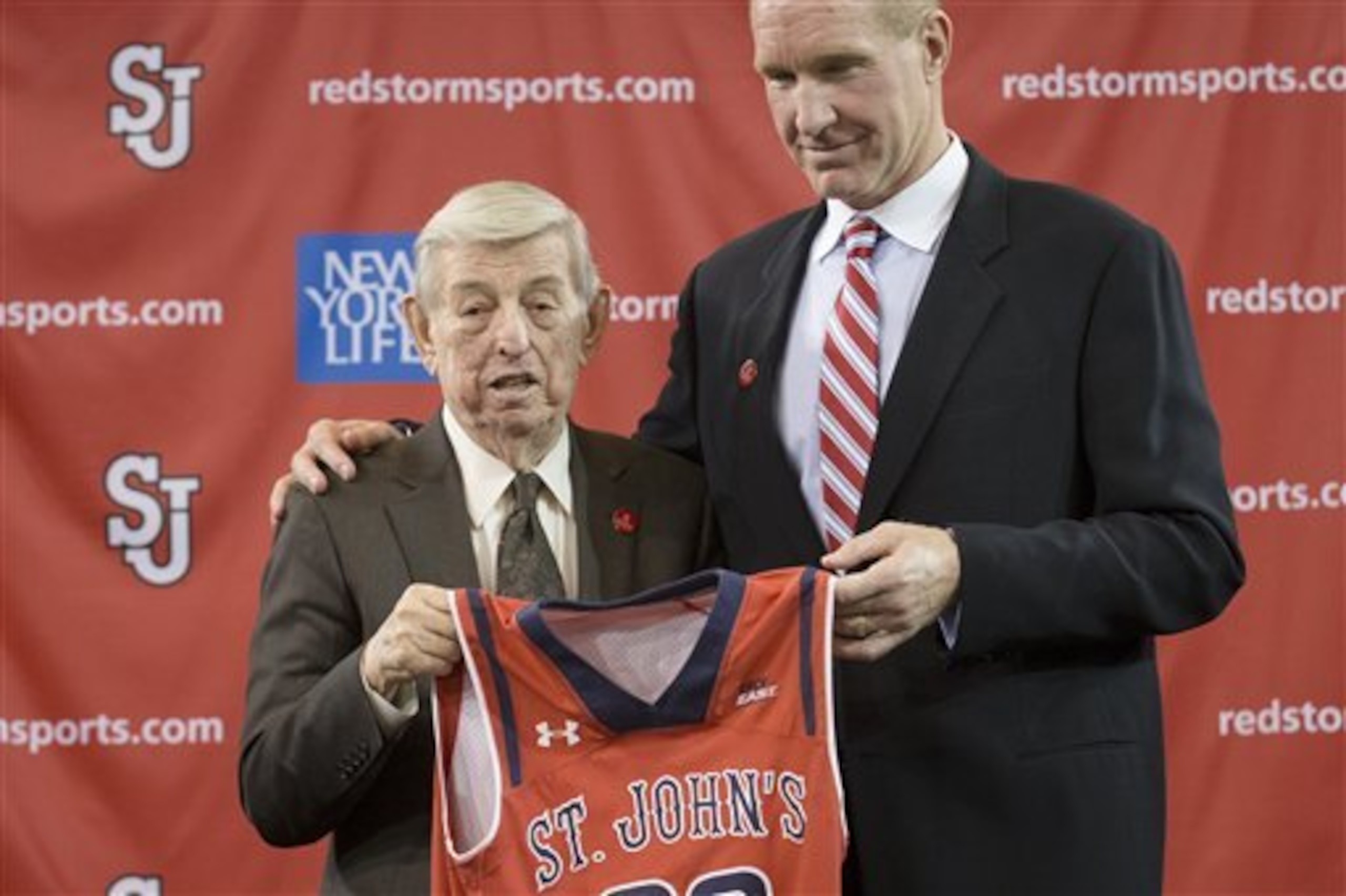
St. John's used to be one of the blue bloods of college basketball, a program that under legendary coaches Joseph Lapchick and Lou Carnesecca were perennial contenders for NCAA and NIT championships. This continued through the early 1990s, but since then St. John's has fallen out of the spotlight and struggles to remain relevant in today's game.
But the Red Storm hope that bringing back one of their all-time greats to coach the team will lead to a resurgence. Chris Mullin, who starred for St. John's in the 1980s and led it to its last Final Four appearance in 1985, was hired in March after the school fired Steve Lavin.
Mullin, who played 16 seasons in the NBA, worked in the front office of pro teams but has no head coaching experience.
T Is for Transfers
20 of 26
The loss of players to the NBA draft as well as graduation leads to major roster turnover in college basketball, and most of those openings are filled by high school recruits and players who spent the last season or two at a junior college.
Yet more and player players in Division I are opting to split their college years with more than one program, making a switch somewhere along the way via transfer.
This past offseason, ESPN's Jeff Borzello and Jeff Goodman tracked the comings and goings of several hundred players who have either switched schools or announced their intentions to transfer. Many of these players have to sit out a year because of NCAA transfer rules and thus won't be eligible until 2016-17, but others can play right away, since they've graduated from one program and are able to use the grad transfer rule.
Schools like Arizona, Connecticut, Louisville and Pittsburgh all figure to benefit greatly from new players who will only be around for one season, while numerous others get to use players who sat out last year and are now ready to contribute.
U Is for Upsets
21 of 26
Heading into the 2014-15 season, there are probably 20 or 30 teams among the 350-plus at the Division I level that are capable of winning a national title. But nearly every school has a shot of jumping up and biting one of the big boys on any given day.
Upsets are a huge part of college basketball, and the ones that tend to stand out most early in the season involve an unknown opponent—often with a name that includes directional descriptions—that was scheduled by a power-conference team to be a sacrificial lamb. Instead, those upstart underdogs pull off shockers, while getting paid handily to do so.
Some of the most notable early upsets from 2013-14 involved Big Ten schools: Indiana lost to Eastern Washington, Michigan fell to NJIT, Michigan State was toppled by Texas Southern and Purdue lost to North Florida.
That league has plenty more of those matchups this season, as do the other power conferences that fill up the November and December slates with perceived cream-puff opponents.
V Is for Virginia
22 of 26
The postseason results haven't been there, but there are few teams that have been as successful in the regular season (and against such strong competition) as Virginia in the past two seasons. The Tony Bennett-led Cavaliers have won the last two outright ACC regular-season titles, becoming the first school other than Duke or North Carolina to do so since North Carolina State in 1973-74.
And Bennett has done it in an unconventional way, opting for suffocating defense and a methodical offensive pace to lull opponents to sleep. This has resulted in national-best scoring defenses of 51.5 points per game in 2014-15 and 55.7 the year before, and in both seasons the Cavaliers' opponents shot worse than 39 percent.
The switch to a shorter shot clock could potentially neutralize some of Virginia's approaches, particularly on offense, but it's not as if the team lacks in playmakers. Senior guard Malcolm Brogdon is one of the top returning players in the country, and beyond being a great defender, he averaged 14 points per game last season.
Expect Virginia to be in the fight for another ACC title, as well as to do better than its Sweet 16 exit two seasons ago and its third-round departure this past March.
W Is for Wiltjer
23 of 26
Gonzaga senior forward Kyle Wiltjer had a monster 2014-15 season, during which he showed off how much he'd transformed his 6'10" frame into one that could be used both as an interior presence and one that was deadly from distance.
Now we'll get to see what he can do as the leader of another strong team looking to continue the Bulldogs' long run as perennial powers.
Wiltjer, who spent his first two seasons at Kentucky, where he was mostly a perimeter shooter, averaged 16.8 points and 6.2 rebounds while shooting 54 percent overall and 46.6 percent from three-point range. His player efficiency rating of 30.7 was seventh in Division I and is second-best among returning players, according to Sports-Reference.com.
Last season's Gonzaga team had three senior contributors, including point guard Kevin Pangos, who helped it get to the Sweet 16. Now Wiltjer will be the veteran leader, as another responsibility is lumped onto his plate.
X Is for Xavier Rathan-Mayes
24 of 26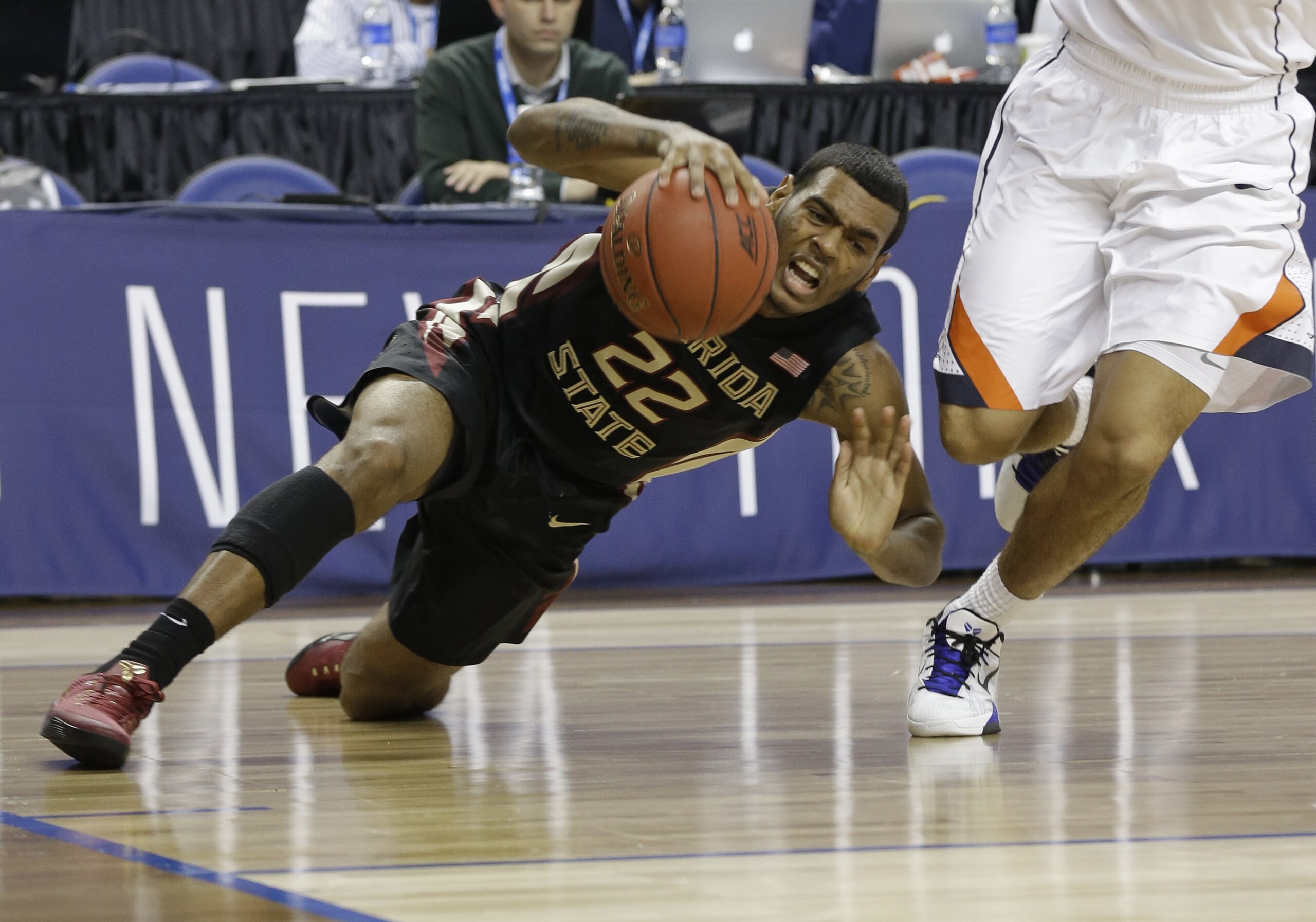
Florida State hasn't made the NCAA tournament since 2012, and last year the Seminoles went 17-16 and didn't compete in any postseason tourney. But thanks to the strong recruiting class that Leonard Hamilton landed—as well as one of the most explosive scorers in the country from a season ago—they should be right in the mix for 2015-16.
Xavier Rathan-Mayes led FSU in scoring at 14.9 points per game last season. The 6'4" guard had eight 20-point games and three with at least 30 points, including a memorable performance in a February loss to Miami (Florida) in which he scored 30 of his 35 points in the final 4:38 of play.
Rathan-Mayes won't be able to do it alone, though, as we saw last season. That's why Hamilton toiled to bring in a group that includes well-regarded prospects Dwayne Bacon, Malik Beasley and Terance Mann.
"It's not unrealistic to think they can't finish in the top five in the ACC," wrote Terrence Payne of NBC Sports.
Y Is for Kris Yanku
25 of 26
Kris Yanku is far from a household name in college basketball, and barring some amazing run by Northern Arizona this season, that will remain the same. But the 6'4" junior guard is one of the hardest-working players in the country, which can be seen in how much he ends up going to the free-throw line.
Last year Yanku made 230 foul shots, tops in Division I, on 289 attempts. He needs six more made free throws to become the Lumberjacks' career leader.
Yanku got 45 percent of his points at the line, helping him average 13.8 points per game and make up for a poor 33.1 shooting percentage. NAU made the finals of the CollegeInsider.com Tournament, and during that run Yanku was 27-of-34 from the line in five tourney games.
Z Is for Zero (Losses)
26 of 26
Kentucky almost did it last year. Will anyone manage to end college basketball's long run without an undefeated national champion this season?
The Wildcats made it all the way to the Final Four, winning their first 38 games before falling to Wisconsin in the national semifinals. It was the furthest a team has gone into a season without a loss since UNLV also reached the Final Four unbeaten in 1990-91 but fell to eventual champion Duke.
Kentucky's streak followed the run the season before by Wichita State, which didn't lose for the first time in 2013-14 until the third round of the NCAA tournament (ironically, to Kentucky). Prior to that, St. Joseph's in 2003-04 was the last team to enter the tourney unbeaten.
Follow Brian J. Pedersen on Twitter at @realBJP.
.jpg?w=2560 "Raiders Camp Football")
.png?w=2560 "MLB Playoff Picture Shaping Up")
.png?w=2560 "New-Look Luka Dončić 👀")