
Ranking the Top 10 Conferences for the 2014-15 College Basketball Season
The NCAA's recent granting of autonomy to the so-called power conferences (the ACC, Big 12, Big Ten, Pac-12 and SEC) officially codifies those leagues' heretofore unwritten ability to play by their own rules.
While the system in college football has long been tailored to exclude schools outside those conferences, basketball's use of the NCAA tournament at least offers the other leagues a chance at glory, even if they're not often equipped to take it.
UConn's 2014 national championship run was the first by a school outside the above five leagues or the old Big East since UNLV represented the Big West in 1990. But even if the other conferences aren't left standing on the season's final weekend, they still play quality basketball in several earlier rounds.
While the power-five conferences still stand atop basketball much like they do in football, the next tier of leagues are still worth watching. There's still enough depth in college hoops that 10 or 11 leagues should be capable of staking claims to multiple NCAA tournament bids.
Here's a look at how the top 10 conferences should stack up in 2014-15.
10. West Coast
1 of 10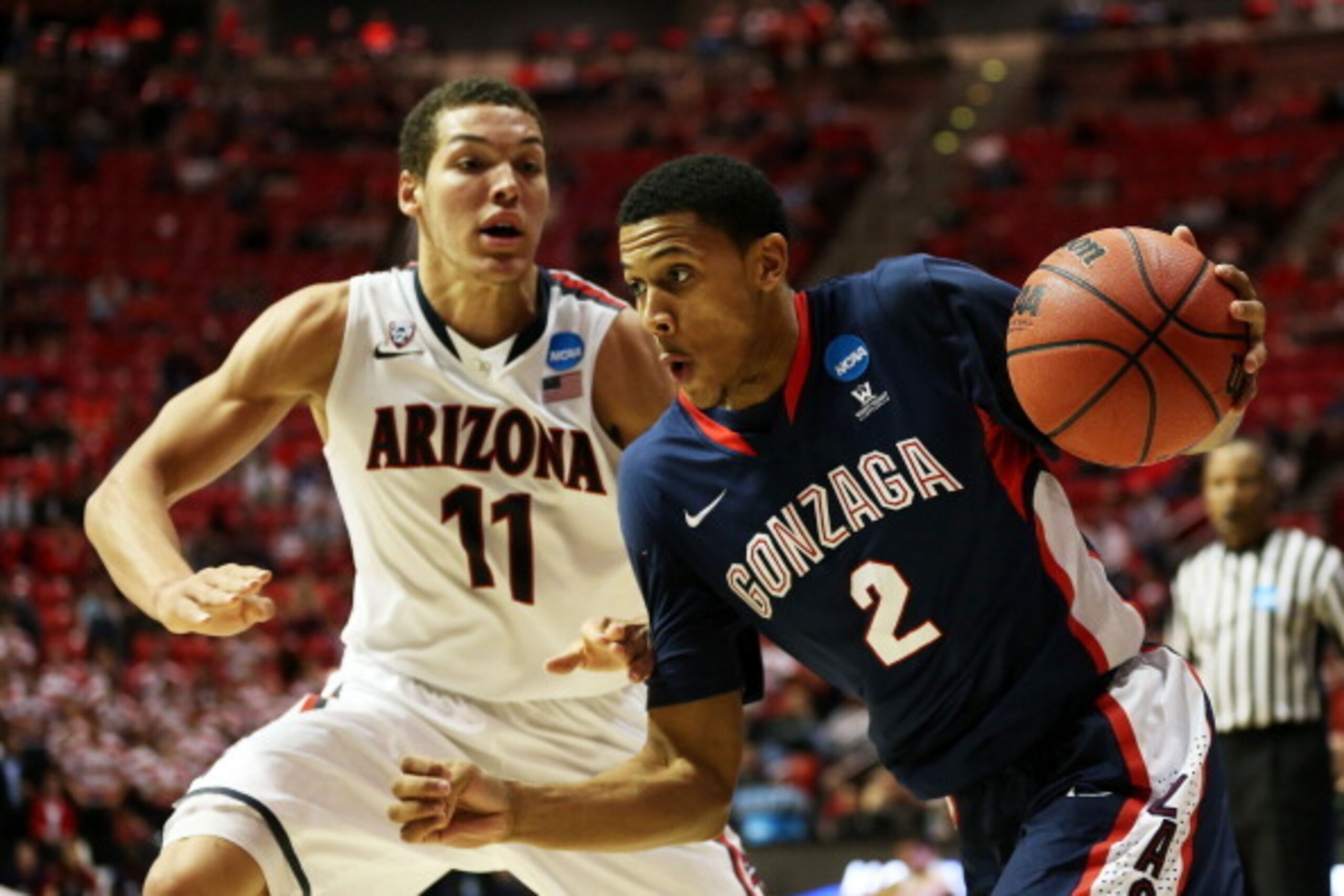
The fortunes of the West Coast Conference are directly tied to one question: How many schools can give Gonzaga a genuine challenge this season?
By that rationale, it's a typical year in the WCC. Gonzaga still stands on a mountaintop overlooking the other nine schools. If imitation is the sincerest form of flattery, then GU should be blushing a vibrant shade of purple as prime contenders BYU and Saint Mary's ape the Zags' methods for roster management.
While Gonzaga will suit up transfers Kyle Wiltjer and Byron Wesley for the first time this year—along with ex-Vanderbilt guard Eric McClellan at the semester break—their rivals also welcome new faces with Division I experience.
BYU adds ex-UNLV forward Jamal Aytes in December and former Wake Forest guard Chase Fischer from the opening tip, continuing the endless game of roster Jenga prompted by players coming and going for Mormon missions. The Gaels supplement their usual Australian pipeline with former Stanford point guard Aaron Bright, ex-Minnesota guard Joe Coleman and former Washington forward Desmond Simmons.
Portland, San Francisco, San Diego and Pepperdine all return solid veteran cores—and each managed at least one win against the big three last year—but as a group, they've seen more talent transfer out than in.
The WCC could see three teams in the NCAA tournament for the first time since 2012. Conversely, if BYU struggles, Saint Mary's transfers can't come together and no other program steps up—keep an eye on Portland—the league could end up with only one bid for the first time since 2011.
9. Mountain West
2 of 10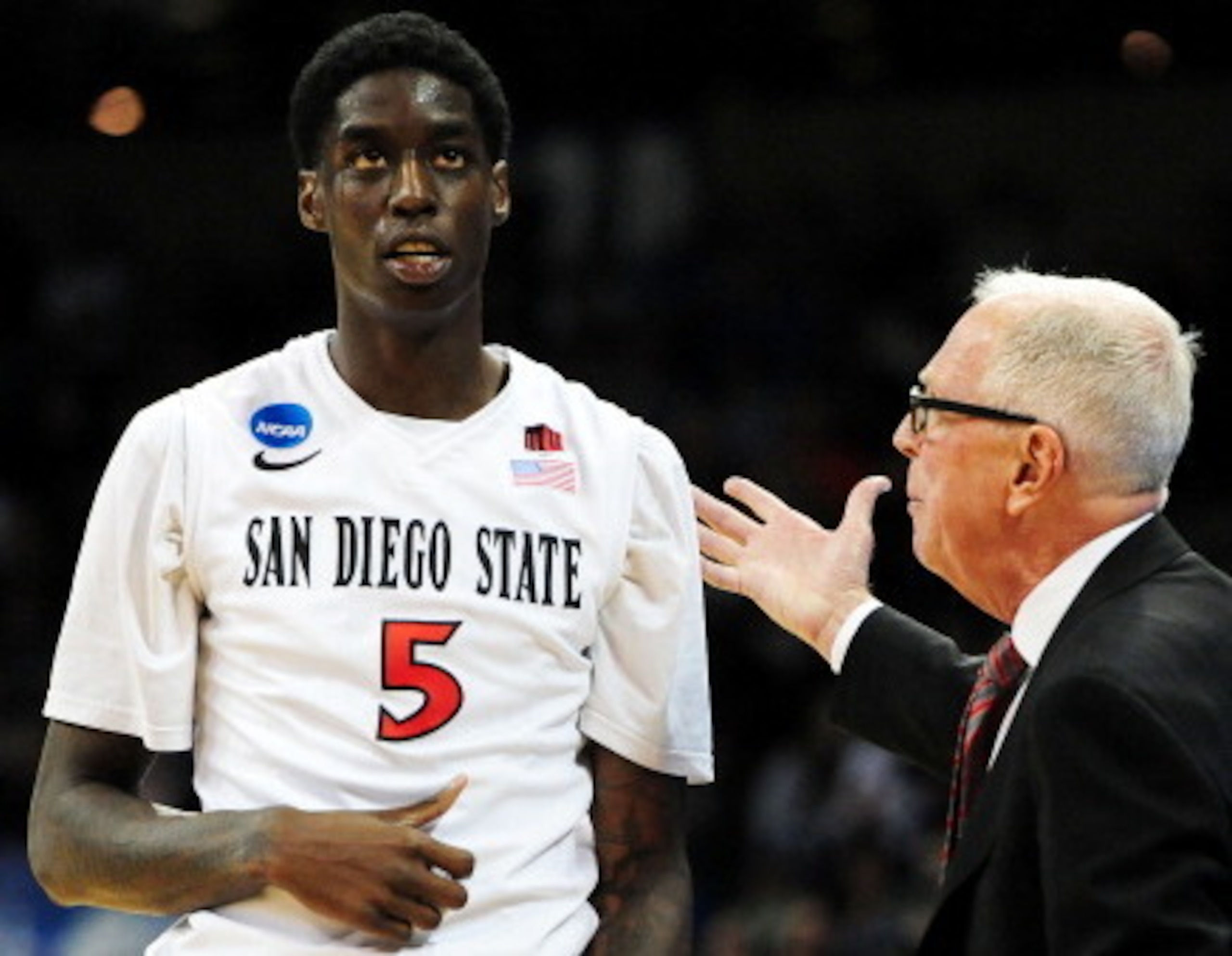
San Diego State is the widely accepted class of the Mountain West, much like Gonzaga in the West Coast. Unlike the WCC, however, the MWC would shock the world if it were only a one-bid conference.
Aside from the Aztecs, who must replace the clutch leadership of point guard Xavier Thames, there are six other schools harboring legitimate NCAA tournament hopes.
Boise State returns the all-conference duo of Derrick Marks and Anthony Drmic, the latter finally healthy after struggling with foot and ankle issues last season. Forward Nick Duncan, guard Mikey Thompson and ESPN top 100 recruit Chandler Hutchison will try to replace some capable supporting pieces.
Speaking of recruits, UNLV hauled in one of 247 Sports' top five recruiting classes in the nation. If San Francisco transfer Cody Doolin is eligible to run the point, the Rebels have a piece of sorely needed veteran leadership.
Wyoming has a good cast surrounding preseason MWC Player of the Year Larry Nance Jr. Fresno State has solid talent returning and adds Texas transfer Julien Lewis, who put up 9.5 points per game in burnt orange. New Mexico appears depleted, but junior college All-American Jordan Goodman is a talent to watch.
Finally, there's chic sleeper Colorado State. Coach Larry Eustachy continues trucking in transfer talent—first Daniel Bejarano and J.J. Avila, now Stanton Kidd (ex-N.C. Central), Dantiel Daniels (Southern Illinois), John Gillon (Arkansas-Little Rock) and Antwan Scott (Grambling State).
At this stage, two bids should be the minimum expectation for the Mountain West, with a potential ceiling of four.
8. Atlantic 10
3 of 10
The Atlantic 10 got six NCAA tournament bids last season, as many as the mighty ACC. Or one more, if you prefer to downgrade N.C. State for being shunted into a play-in game.
Smart money says that the race won't be close this year. The ACC simply reloads year after year, while the A-10's prime contenders all lost some major pieces.
That even goes for presumptive league favorite VCU, which must replace the low-post muscle of Juvonte Reddic and the shooting of Rob Brandenberg. Defensive nightmare Briante Weber and all-conference wing Treveon Graham are still on the court, though, and Shaka Smart is still on the sideline. Therefore, this league belongs to VCU until someone comes to take it from the Rams.
Dayton scintillated with an Elite Eight run but loses No. 2 scorer Devin Oliver, sixth man Vee Sanford and big man Matt Kavanaugh. There's still more than enough left to go dancing. George Washington has to replace solid scorers Maurice Creek and Isaiah Armwood, but if the backcourt stays healthy this season, the Colonials also can carve out a place in the field of 68.
Rhode Island is the sexy sleeper after adding top recruit Jared Terrell to a solid core led by Freshman of the Year E.C. Matthews and senior Gilvydas Biruta. Turnovers were a killer last season, and rectifying that weakness could put URI in the field next to those other Rams.
After those four, however, the field looks spotty. UMass, La Salle, Richmond and St. Joseph's will all start the season as potential bubble teams, but all could just as easily dip into the CBI. La Salle brought back a ton of talent from a 2013 Sweet 16 team and finished under .500 last year, so there are no absolutes.
Even Saint Louis—one of only 10 programs to win a game in each of the last three NCAA tournaments—has to start practically from scratch this year. Expect three NCAA berths for the Atlantic 10, with potential to steal one or two more.
.jpg?w=2560 "Chargers Mack")
.jpg?w=2560 "Green Bay Steelers Football")
7. American
4 of 10
In the annals of bad trades, the American Athletic Conference losing Louisville and adding Tulsa, Tulane and East Carolina will rank right up there with Robert "Tractor" Traylor for Dirk Nowitzki, or—if we're being charitable—Vlade Divac for Kobe Bryant.
Tulsa at least appears prepared to contend in Year 1, sporting a junior-laden core and a veteran coaching staff. Tulane and East Carolina, while trending upward in Conference USA, will find the sledding tougher in the American.
Of course, we're probably burying the lede by not mentioning the defending national champions from UConn first. The Huskies have a handful of contributors to replace, but they appear to have more than enough capable horses to crack the Top 25 again. Offensive sparkplug Ryan Boatright and defensive threat Amida Brimah should be very capable leaders this season.
Speaking of horses, the SMU Mustangs still have a vibrant array of talent, including certain all-conference picks Nic Moore and Markus Kennedy and a pair of potential honorees in sophomore guard Keith Frazier and senior center Yanick Moreira. If someone's going to crash UConn's victory lap, it'll be coach Larry Brown's team.
Memphis added Vanderbilt transfer Kedren Johnson to a broccoli-green backcourt and a frontcourt anchored by studs Shaq Goodwin and Austin Nichols. Cincinnati lost two superstars, but Mick Cronin is becoming a very difficult coach to bet against. Temple has a solid group of newcomers to add to double-figure scorers Quenton DeCosey and Will Cummings.
The American was dragged down by five anchors at the bottom half of the league last season, but even the also-rans should at least be presentable, thanks to Rutgers becoming the Big Ten's resident albatross. Four or five tournament bids should still be within the American's reach, with a floor of two if Memphis and Cincinnati can't keep up.
6. Big East
5 of 10
The Big East is no longer part of the power-conference conversation, but it will content itself with hanging just out of earshot of the cool kids' table. Despite losing stars on the court (Creighton's Doug McDermott) and on the sidelines (Buzz Williams bolting from Marquette for Virginia Tech), the Big East still has enough quality programs to hope for a substantial NCAA tournament presence.
Villanova should be written in ink as the favorite, with stars Darrun Hilliard, JayVaughn Pinkston and Ryan Arcidiacono returning. The development of sophomores Josh Hart and Kris Jenkins will determine if the Wildcats can reach the tournament's second weekend, something that eluded them last season.
Chasing Nova are a motley pack of programs including Georgetown, Xavier, Providence and St. John's. The Hoyas and Friars could both use solid seasons out of players who've endured frustrating careers. Providence point guard Kris Dunn, a former McDonald's All-American, hopes for good health. Georgetown would like to be able to rely on senior center Josh Smith, long plagued by both weight and grades.
Even if the Hoyas don't get what they need out of Smith, though, the presence of star guard D'Vauntes Smith-Rivera and the addition of solid recruits Isaac Copeland, L.J. Peak and Paul White should give Georgetown enough firepower to carve out second place for itself.
Seton Hall hopes that freshman Isaiah Whitehead is the kind of dominant scorer who can turn around a program's—and coach's—fortunes, for another .500 season could put coach Kevin Willard on the hot seat.
There could be—very heavy accent on could be—five NCAA teams out of the Big East if things break right elsewhere. Three seems more likely, two should be certain—and one would be slightly alarming.
5. Pac-12
6 of 10
The recovery of the Pac-12 is nearly complete after disastrous two-bid seasons like 2010 and 2012. The 2013 and 2014 editions earned a combined 11 NCAA tournament berths, and this season should yield five more. The bottom half of the league, however, doesn't carry much cachet nationally.
Let's start with the top half, though.
Arizona will be projected as a Final Four candidate by numerous analysts due to the rare roster that can shrug off the loss of the conference player of the year (Nick Johnson), not to mention the No. 4 pick of the NBA draft (Aaron Gordon) and potentially get even better. Freshman Stanley Johnson should follow Gordon into the lottery, and he could be joined by teammate Rondae Hollis-Jefferson.
Colorado and Stanford both suffered substantial losses but are still led by All-Pac-12 performers Josh Scott and Chasson Randle respectively. UCLA lost three first-round draft picks but replaced them with talented newcomers like guard Isaac Hamilton and forward Kevon Looney.
Utah is the wild card, returning nearly everyone from a team that competed hard in the Pac-12 but cost itself a tournament bid by playing a terrible nonconference schedule. Still, all five of these programs appear to have what it takes to make this year's field.
Beyond them, it's hard to drum up a lot of excitement. Cal returns talented pieces like David Kravish and Jabari Bird, but depth is a major issue for new coach Cuonzo Martin. Washington is a perennial sleeper, with a talented backcourt of Nigel Williams-Goss and Andrew Andrews. The Huskies frontcourt has some burden of proof on it, however.
The rest are still in varying stages of building. And, if we may, a special moment of mourning for an Oregon team that endured a hellish offseason and must now get herculean efforts from senior guard Joseph Young and a slightly undersized crop of newcomers. If that team reaches the NCAA tournament, Young should be your National Player of the Year.
Injuries to some marquee players reared their heads last season, with Arizona losing Brandon Ashley and Colorado losing Spencer Dinwiddie. Repeats of such issues could doom programs like Colorado, Stanford or Utah. If any of those contenders go down, there may not be anyone to pick up the slack.
4. SEC
7 of 10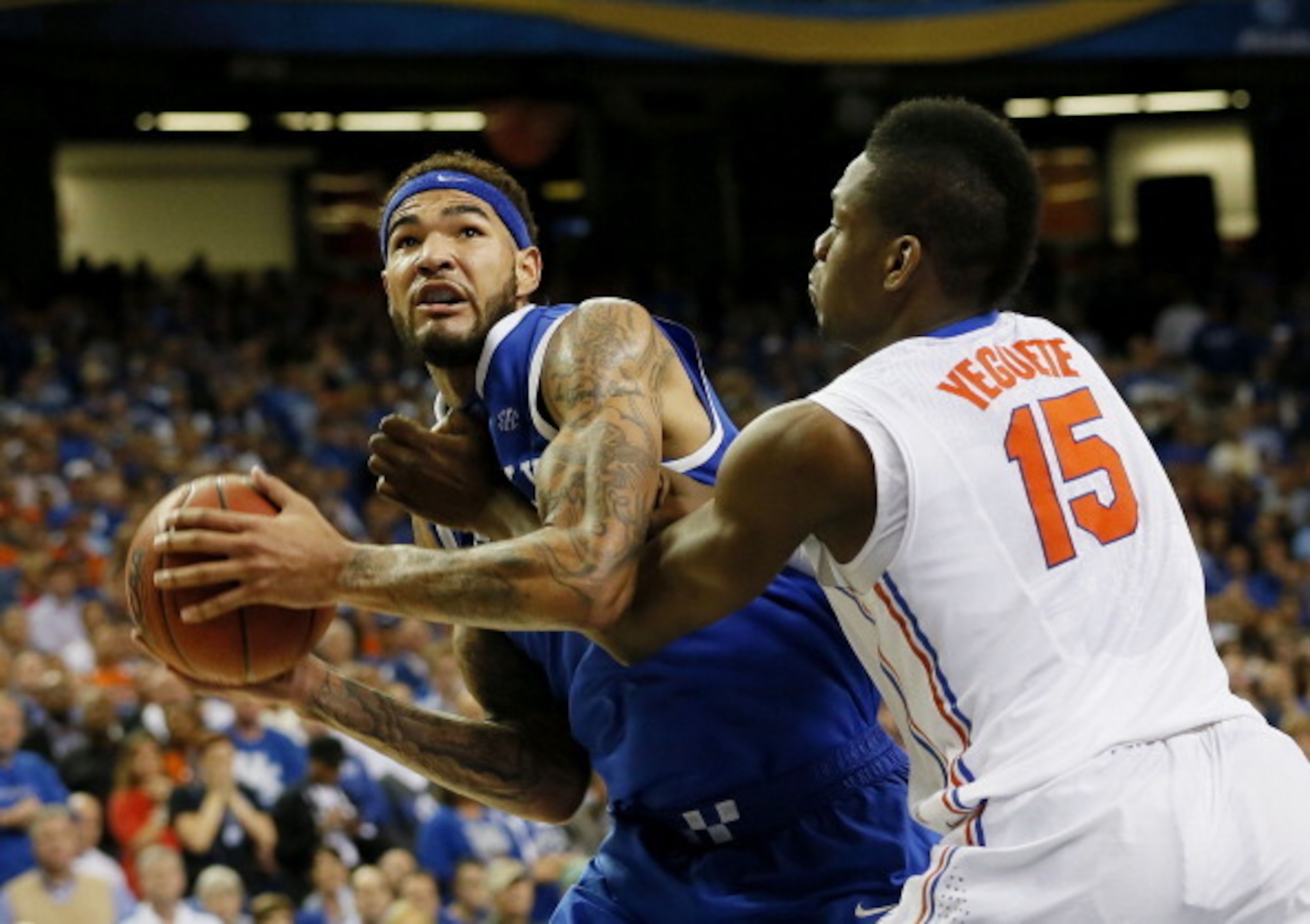
Depending on who you talk to, the SEC's power-conference status should be in heavy question after earning two fewer NCAA bids than the Atlantic 10—and only one more than the Mountain West—since 2010. Of course, neither of those plucky conferences has any brand names comparable to the SEC's twin titans at Kentucky and Florida.
Both teams are likely to enter the season ranked in the top 10, with Kentucky fans unable to help themselves from reigniting last season's undefeated talk. Florida has to replace most of the veteran leaders from last year's Final Four run, but the more talented underclassmen will now see a lot more playing time.
Those two are the death and taxes of this conference, the only two things fans and analysts can count on come March. Which one is death and which one is taxes? That's up to you, but the point is that there's no other reliable program in the SEC, only a few intriguing pretenders.
Arkansas appears third in line, with a roster featuring future pros like Bobby Portis and Michael Qualls, along with one of the SEC's best guards in Ky Madden. LSU must replace NBA draft pick Johnny O'Bryant with massive freshman Elbert Robinson and hope that the backcourt comes together behind JUCO stud Josh Gray and UNC Asheville transfer Keith Hornsby.
Georgia sports a great backcourt duo but lacks frontcourt depth. Most of Missouri's productive veterans are imports from other programs. Alabama has complementary pieces returning, but no real star power. Ole Miss coach Andy Kennedy may have done the best job of transfer-picking in the entire nation, but he still has to pull them all together behind potential All-SEC point guard Jarvis Summers.
Then there's Auburn. New coach Bruce Pearl and his staff launched a recruiting blitz that was frightening in its speed and intensity, including bringing in transfers who can compete this year. However, K.C. Ross-Miller (ex-New Mexico State) and Antoine Mason (25.6 PPG at Niagara) alone do not a tournament team make.
The conference could sire as many as six NCAA tournament teams, but that would require the likes of Georgia or Auburn to rise up and join the party. The worst-case scenario is Kentucky and Florida going to the fight with no backup, but three or four bids sounds more realistic.
3. Big 12
8 of 10
The snarky knee-jerk argument for ranking the Big 12 behind the Big Ten in recent seasons has been, "The Big 12 has TCU, and the Big Ten doesn't." Now, with Rutgers imported to play the role of resident Big Ten roadkill, there has to be new reasoning.
How about this: The Big 12's attrition rate drew some blood this offseason.
Kansas said goodbye to NBA lottery picks Andrew Wiggins and Joel Embiid, but being Kansas, simply reloaded with more future pros. Iowa State bid adieu to Big 12 Player of the Year Melvin Ejim and top newcomer DeAndre Kane. West Virginia lost a pair of talented guards to transfer, Oklahoma State lost guards Marcus Smart and Markel Brown and Baylor said goodbye to bigs Cory Jefferson and Isaiah Austin.
Clubs like Kansas and Iowa State have proven capable of replenishing the talent pool, but the other three could have a harder time of it.
Even comparatively intact teams like Kansas State and Oklahoma lost some veteran pieces. So, everyone's in trouble, right?
Eh, not so much. Texas brought back everyone—the recently withdrawn Martez Walker notwithstanding—and added two talented freshmen to boot. Texas and Kansas should be listed among the Final Four contenders.
Iowa State, Oklahoma and Kansas State should all be looked at as tournament teams until proven otherwise. West Virginia, Baylor and Oklahoma State will start the season hip-deep in the bubble conversation, for what that's worth in November.
Even TCU no longer looks completely comatose, although Texas Tech has to rebuild again. The Big 12 could see anything from four bids to eight, but the latter would require Baylor's Scott Drew and Oklahoma State's Travis Ford quieting their ever-present chorus of critics.
2. Big Ten
9 of 10
The Big Ten prides itself on being a meat grinder, the kind of conference in which only the strong survive. It's also, unfortunately, a league that hasn't won a national title since 2000. Unless, of course, you're willing to let the league lay claim to newcomer Maryland's 2002 crown. (That's cheating. Stop it.)
This season, Wisconsin has the tools in place to take another shot at the Final Four, including two potential All-Americans in Frank Kaminsky and Sam Dekker. There's size, experience, improving depth—everything, it seems, except a surplus of shooters.
The Badgers are a unanimous pick for the championship in a poll of writers assembled by the Columbus Dispatch, and beyond them lie nine other teams that can legitimately expect NCAA bids.
Ohio State, Indiana, Michigan and Maryland all added talented freshmen who will play roles from their first day. Illinois and Michigan State have added impact transfers, while Iowa hopes junior college All-American Trey Dickerson hits the ground quickly at the point. Minnesota has plenty of senior leadership, while Nebraska returns juniors Terran Petteway and Shavon Shields, potentially the league's best wing duo.
Beyond those 10, star quality bubbles up from Purdue center A.J. Hammons and Penn State guard D.J. Newbill.
With all that said, though, the league's teams will spend the months of January, February and early March cannibalizing each other. Two and perhaps three teams will drop onto—or worse, potentially off of—the bubble based on a lack of significant conference victories.
If a seventh-seeded UConn team can strike hot for six games and win a national title, any of these 10 teams would have a similar chance. Aside from Wisconsin, however, no one stands out as a favorite to storm the Final Four. Regardless, there should still be six to eight bids earmarked for Big Ten schools.
1. ACC
10 of 10
The ACC's addition of Louisville may constitute a knockout punch to the Big Ten's and Big 12's claims on college basketball conference supremacy. Rick Pitino joins North Carolina's Roy Williams, Duke's Mike Krzyzewski and Syracuse's Jim Boeheim to make this year's ACC the first conference with four active Hall of Fame coaches. Three of the four active coaches with multiple national titles are in the ACC.
The thing that makes the ACC so potent this season, however, is that the rest of the league doesn't appear willing to roll over and die while Duke, North Carolina and Louisville run roughshod.
Virginia swept last year's championships, still has a skilled backcourt tandem and will still play defense that frustrates opponents. Syracuse's 2-3 zone seemingly invented frustration, but Boeheim has to break in a largely inexperienced team, including key freshmen Chris McCullough and Kaleb Joseph, the latter his second straight freshman point guard.
N.C. State has an array of underrated talents looking for some shine now that ACC Player of the Year T.J. Warren has left for the NBA. Florida State still has tremendous size, a rugged defense and an improving backcourt. Miami is attempting an overnight rebuild behind a cast of transfers and some highly skilled freshmen.
Notre Dame coach Mike Brey welcomes back star guard Jerian Grant, while Pitt coach Jamie Dixon always seems to find the tournament no matter who his main players are.
That's 10 teams, all with legitimate NCAA expectations. The lower echelon features intriguing new coaches like Danny Manning at Wake Forest and Buzz Williams at Virginia Tech.
Like the Big Ten, someone will likely get caught in the undertow and see their bubble pop due to middling conference results. Still, a nine-bid season is very realistic for this league. The baseline should probably be six or seven, and that's with an injury epidemic.
This year's ACC still won't quite be the greatest conference of all time, as Krzyzewski was predicting last summer, but the 11-bid Big East of 2011 should start hearing footsteps in the next year or two.
.jpg?w=2560 "MHJ's Potential Trade Value 📉")