Markus Kennedy and Ryan Boatright are the two players jostling for the top spot on the 2014-15 preseason American Athletic All-Conference teams.
Don't sleep on Shaq Goodwin, Will Cummings or Jermaine Sanders as candidates for AAC Player of the Year, either. Memphis, Temple and Cincinnati lost a ton of important players this summer, and those three will be most responsible for getting their respective teams to the tournament.
In the final week of our second seven-week series of the summer, we took a look at AAC rosters and projected standings to forecast the first, second and third All-AAC teams—as well as a handful of honorable mentions.
In addition to those teams, we also projected Freshman of the Year, Defensive Player of the Year, Newcomer of the Year, Sixth Man of the Year and Coach of the Year.
In case you'd like to reference them in the discussion, here are the projected AAC standings from mid-July.
Unless otherwise noted, statistics on the following slides are courtesy of ESPN.com, Sports-Reference.com and KenPom.com (subscription required). Recruiting information courtesy of 247Sports.
Honorable Mentions
1 of 12
These are the players who won't receive quite enough votes to get onto one of the three all-conference teams, but they will get enough votes to have their names mentioned at the bottom of the press release as "Others Considered":
- Troy Caupain, PG, Cincinnati
- Quenton DeCosey, SG, Temple
- Jay Hook, SG, Tulane
- Nick King, SF, Memphis
- Danrad Knowles, C, Houston
- Rodney Purvis, SG, Connecticut
- Paris Roberts-Campbell, SG, East Carolina
- Rashad Smith, SF, Tulsa
- Shaquille Thoms, PF, Cincinnati
3rd Team
2 of 12
Amida Brimah, C, Connecticut
Brimah will be a serious contender for AAC Defensive Player of the Year, but he's a little more than just a shot-blocking machine. He just barely averaged one field-goal attempt for every blocked shot last season, but 64.0 percent of his rare attempts resulted in buckets. He could become a bigger focus of the offense with Shabazz Napier, DeAndre Daniels and Niels Giffey gone.
Daniel Dingle, SF, Temple
Temple's 2013-14 season began its downward spiral when the Owls lost Dingle to a torn meniscus at the end of December. He averaged 13.3 points per 40 minutes in his 10 games and was just starting to catch fire when the injury occurred.
Jherrod Stiggers, SG, Houston
Stiggers only averaged 23.7 minutes per game, but he managed to jack up 6.7 three-point attempts per game while playing his way out of the starting rotation in favor of Brandon Morris. But with Morris graduating, Stiggers could be this year's version of Marshall Henderson. Stiggers made 36.0 percent of his 222 attempts last season.
Jonathan Stark, PG, Tulane
Tulane will likely go through an adjustment period while making the move from Conference USA to AAC, but what little success the Green Wave does have will likely be thanks to Stark. As a freshman, he averaged 4.2 APG, 14.5 PPG and shot 38.1 percent from three-point range. He logged at least 30 minutes in all 34 games that Tulane played.
Justin Martin, SF, SMU
More on Martin later as the projected AAC Newcomer of the Year.
2nd Team
3 of 12
Anthony Collins, PG, South Florida
Knee problems limited Collins to just eight games last season, but he was a monster in his first two seasons with the Bulls. During the 2012-13 season, he averaged 8.6 PPG and 6.5 APG with a 2.4 assist-to-turnover ratio.
It was good enough for him to be named a preseason second-team player on the All-AAC team. Of the 10 players who made that list last October, only Collins and Ryan Boatright are still playing in the AAC. Despite a lost season in 2013-14, he could be a stud this year.
Nic Moore, CG, SMU
In his first season after transferring from Illinois State, Nic Moore had an extremely solid year for the Mustangs. He shot 43.6 percent from three-point range, averaging 13.6 points per game and 4.9 assists.
The team wasn't quite good enough to make the 2014 NCAA tournament, but certainly not because of lack of effort from Moore.
Austin Nichols, PF, Memphis
As a freshman on a team that already had an established post presence in the form of Shaq Goodwin, Nichols averaged an impressive 16.3 points, 7.5 rebounds and 2.2 blocks per 40 minutes.
He received only 22.8 minutes per game, but he's poised to explode as a sophomore with a full workload.
L.J. Rose, PG, Houston
Despite missing five games with a foot injury in the middle of the year, Rose had one of the more underrated seasons in the country in his first year after transferring from Baylor. The sophomore point guard averaged 5.5 assists and 8.9 points per game while shooting 41.3 percent from three-point range.
His assist count will inevitably drop with TaShawn Thomas and Danuel House out of the picture, but he should have a good number of dimes while serving as one of the leading scorers for the Cougars this year.
James Woodard, SG, Tulsa
We're on the fence about putting Woodard this high on the list because he really struggled in big games. He finished the season averaging 15.5 points per game and shooting 38.7 percent from three-point range, but those numbers dropped to 9.8 PPG and 27.8 percent in Tulsa's games (all losses) against Wichita State, Creighton, Green Bay and UCLA.
It's one thing to find your stroke against the likes of Texas Southern and Arkansas-Little Rock, but can Woodard bring it this year against Connecticut, SMU and Memphis?
.jpg?w=2560 "Seahawks Chiefs Football")


1st Team No. 5: Jermaine Sanders, SF, Cincinnati
4 of 12
Somebody—anybody—has to step up in a big way for the Bearcats after the graduation of leading scorers Sean Kilpatrick (20.6 PPG), Justin Jackson (11.1 PPG) and Titus Rubles (7.3 PPG). Sanders could be that someone after leading the team in O-Rating last season, according to KenPom.com (subscription required).
Sanders averaged only 5.7 PPG last year, but as the only Bearcat who shot better than 35.0 percent from three-point range last season (37.6), he should be the primary player forced into handling a bigger workload.
What's more, Mick Cronin's teams have a recent history of seniors blossoming in their fourth and final season.
Jackson absolutely exploded last season, doubling his block average and nearly tripling his scoring average from his junior year. The year before that, Jaquon Parker sprung up and averaged 10.9 PPG while shooting 40.0 percent from three-point range. In 2011-12, Dion Dixon averaged 13.0 PPG as a senior, scoring 86 more points than he did in his freshman and sophomore seasons combined.
Maybe Ge'Lawn Guyn (4.5 PPG last year) will be the four-year senior who blows up for Cronin, but his efficiency metrics over the past three seasons are a joke compared with what Sanders did last year.
Sanders will serve as both the emotional and scoring leader for a Bearcats team that desperately needs some of both after all it lost this summer.
1st Team No. 4: Will Cummings, PG, Temple
5 of 12
Not many took notice while the Owls were losing 22 games, but Will Cummings came out of nowhere last season to nearly lead the AAC in scoring.
As a sophomore, Cummings never got into a rhythm while sharing the court with seniors Khalif Wyatt (20.5 PPG), Scootie Randall (11.3 PPG) and Rahlir Jefferson (8.9 PPG). He played 23.2 minutes per game but was hardly ever actually used, with those three guys doing most of the work on offense.
But with all of them out of the picture, Cummings was one of several Owls to experience a meteoric rise in scoring this past season. He averaged 5.8 PPG and 1.9 APG as a sophomore, but skyrocketed to 16.8 PPG and 4.6 APG as a junior.
Might he have even further improvement up his sleeve as a senior? And isn't it inevitable that Cummings gets some extra brownie points from the voters if Temple can bounce back from a horrendous season and at least flirt with a tournament bid?
1st Team No. 3 and AAC Defensive Player of the Year: Shaq Goodwin, PF, Memphis
6 of 12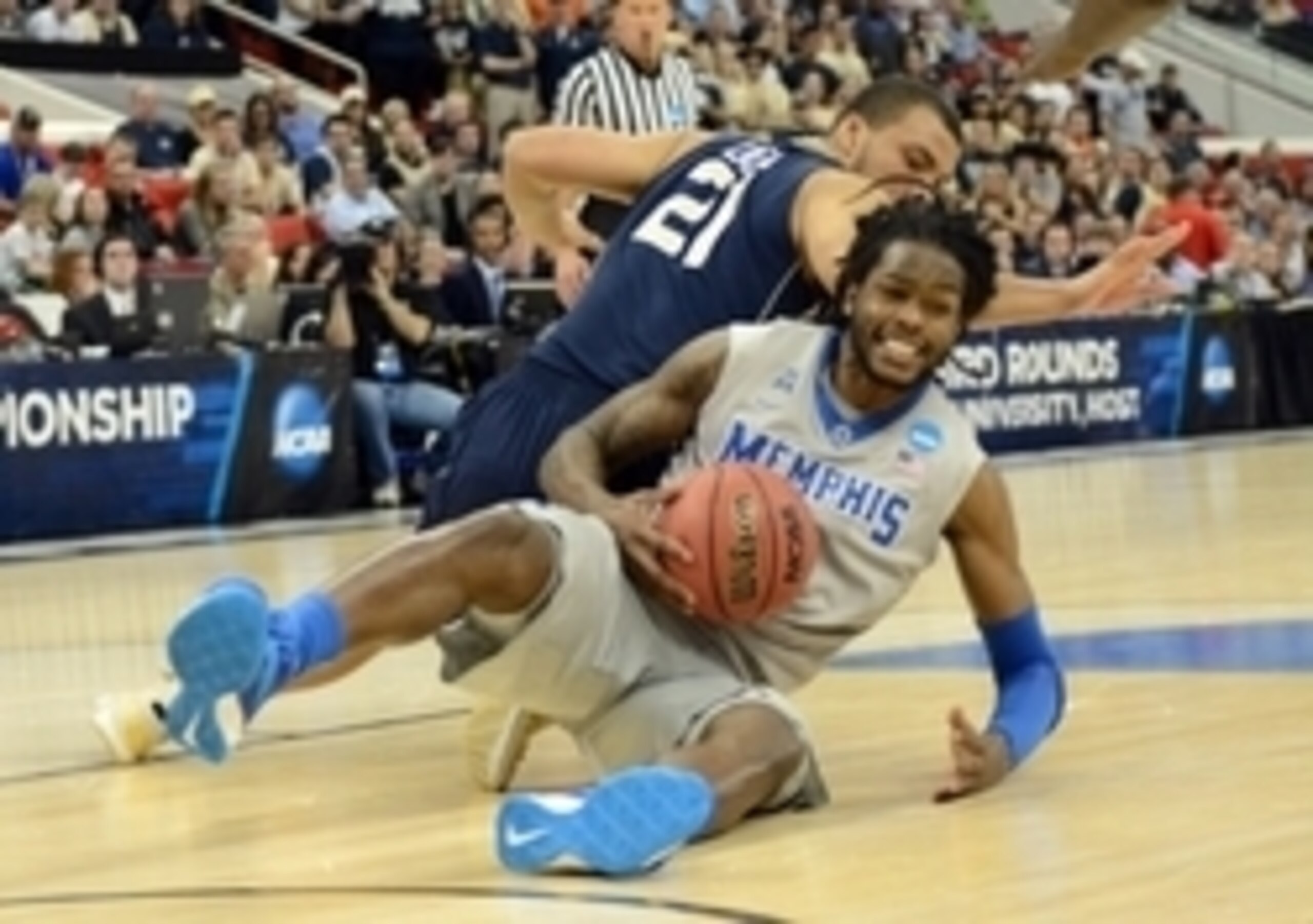
The 2014 AAC Defensive Player of the Year was awarded to perhaps the greatest mean mug in the history of college basketball, but the 2015 award should go to a player who seems to have a smile on his face every second of every game.
Memphis' Shaq Goodwin averaged 1.8 blocks, 1.3 steals and 6.5 rebounds per game last season while bouncing between power forward and center for an undersized squad.
Those numbers don't scream "Defensive Juggernaut," but they are plenty respectable when you consider he was pretty much Memphis' only interior presence against the likes of Montrezl Harrell, DeAndre Daniels, Justin Jackson, TaShawn Thomas and Anthony Lee. His numbers should improve without having to play 10 games against those guys.
In addition to his defensive accolades, Goodwin shot 58.4 percent from the field and averaged 11.5 PPG.
And after Memphis lost four of its six leading scorers from last season, Goodwin could be headed for a monster junior season as a much bigger focus in the offense.
(In actuality, Markus Kennedy is probably most deserving of the AAC DPOY, but it's unlikely that the voters would name him both Player of the Year and Defensive Player of the Year.)
1st Team No. 2: Ryan Boatright, CG, Connecticut
7 of 12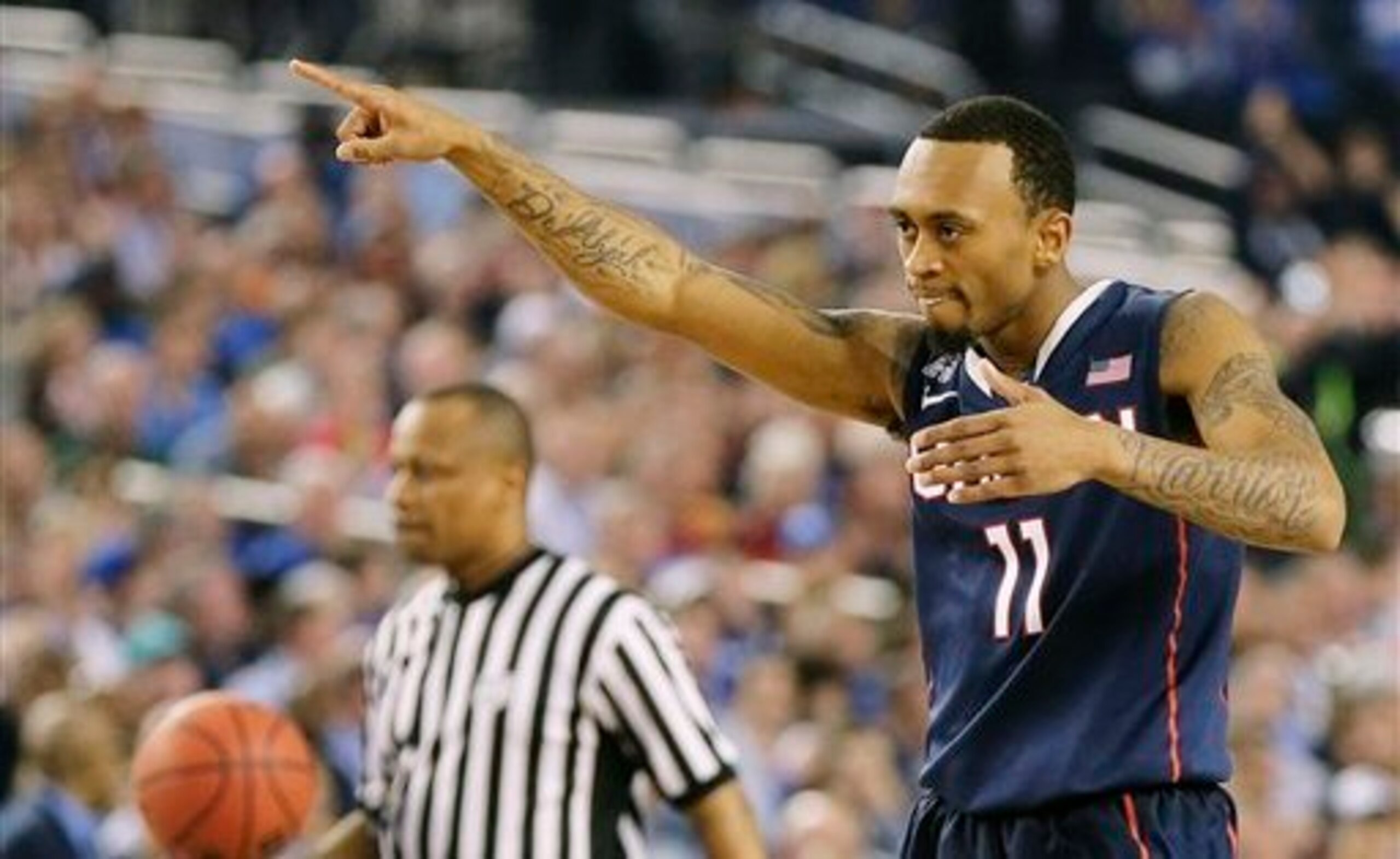
Expectations for Ryan Boatright will be impossibly high. Shabazz Napier became Kemba Walker 2.0, and people will unfairly expect Boatright to now become Napier 2.0.
But, really, he just has to be himself in order to be an AAC first-teamer with plenty of room to spare.
After a huge sophomore year (15.4 PPG, 4.4 APG, 11.7 field-goal attempts per game), Boatright took a backseat to Napier as a junior, averaging just 12.1 PPG and 3.4 APG with 9.5 field-goal attempts per game. His usage rate dropped from 25.6 percent to 22.3 percent while he played 3.9 fewer minutes per game.
While a lot of his stats were down, Boatright's efficiency increased. His assist-to-turnover ratio improved from 1.47 to 1.72, and his three-point percentage increased from 33.3 to 37.6. Both numbers were much more in line with what he did as a freshman (1.79 and 37.7 percent, respectively) before pushing the issue as a sophomore.
Boatright has also improved as a defender since first arriving in Storrs, recording 61 steals last season—including three in the national championship against Kentucky.
He will unquestionably be the leader of a team with a legitimate shot at repeating as champions, but try not to be disappointed if he doesn't average 20 points per game while developing a reputation as a crunch-time assassin.
Not every Connecticut guard can morph into Kembazz Walpier.
AAC Player of the Year: Markus Kennedy, PF, SMU
8 of 12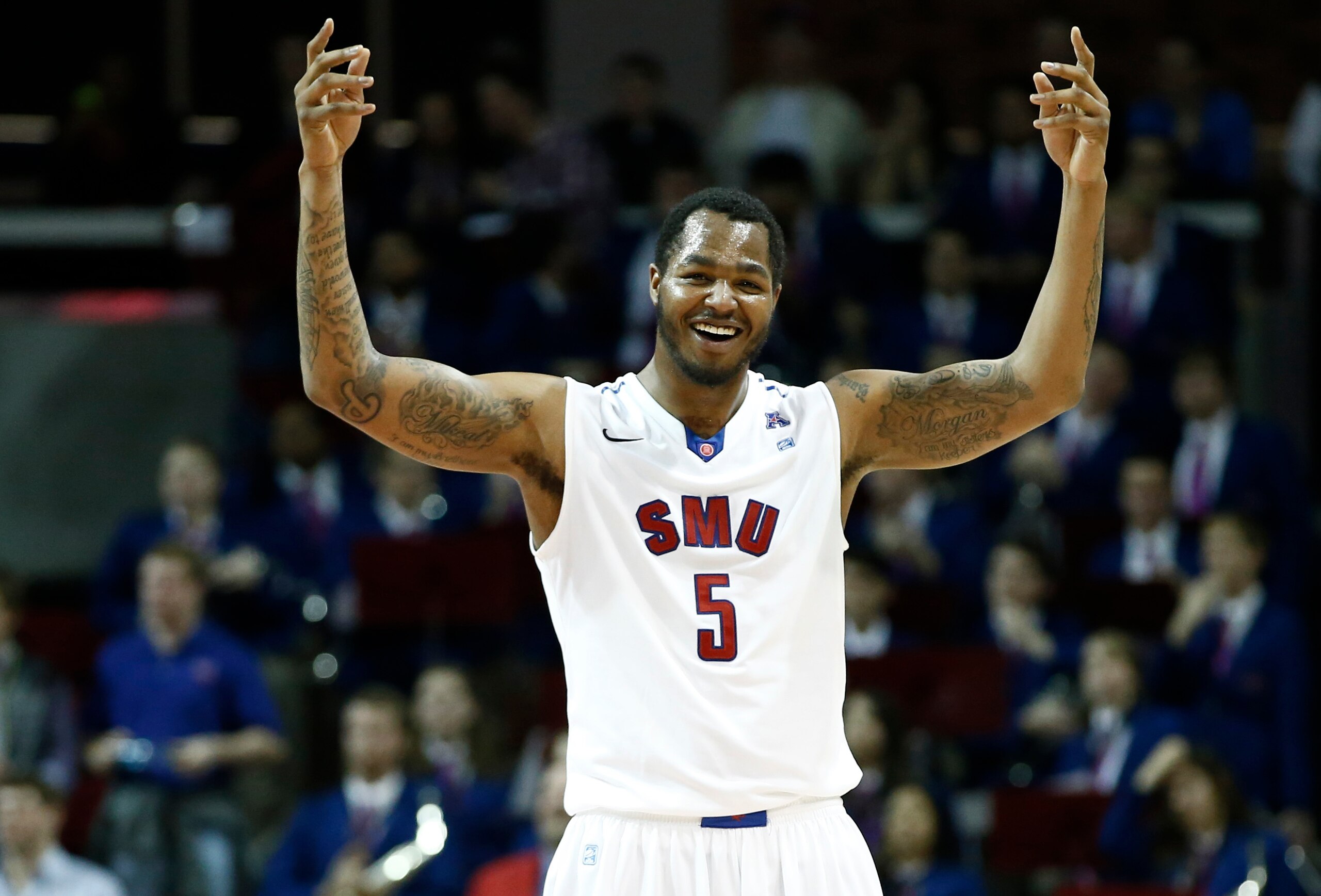
Quite the transformation from a freshman who wasn't in good enough shape to make a significant impact at Villanova.
It wasn't until Yanick Moreira's knee injury in early January that Larry Brown finally gave Markus Kennedy a spot in SMU's starting rotation.
He didn't disappoint.
In the 23 games after becoming a starter, Kennedy averaged 27.0 minutes, 13.6 points, 7.8 rebounds, 1.8 steals, 1.8 assists and 1.1 blocks per game.
Long story short, the power forward did more than a little bit of everything, and he still has room for improvement with enough conditioning to average another 5-8 minutes per game.
When the 2013-14 season ended, everyone was expecting this to be Emmanuel Mudiay's team. If Kennedy can anchor the Mustangs in the paint and get them to the NCAA tournament for the first time since 1993, it could be more than just the AAC Player of the Year Award that he wins.
AAC 6th Man of the Year: Kuran Iverson, SF, Memphis
9 of 12
Hopefully Kuran Iverson likes practice better than his older cousin Allen, because he'll need to put in some serious work to find a spot in Memphis' rotation after a lackluster freshman year.
Iverson was ranked as one of the 10 best incoming small forwards last summer, but he struggled to find playing time behind the Tigers' four senior guards and was pretty inefficient when he actually got to play.
He logged just 172 minutes as a freshman and had nearly as many turnovers (17) as made field goals (19). He shot a dreadful 38.1 percent from the free-throw line (8-of-21) and 11.1 percent from three-point range (1-of-9).
And it's not as if he started finding favor with Josh Pastner toward the end of the season, either. Iverson played a total of seven minutes in Memphis' final 12 games.
But with so many Tigers graduating this summer, he's bound to get a second chance to prove he belongs on the court.
It's tough to see Iverson earning a starting job with Shaq Goodwin, Austin Nichols and Nick King figuring to occupy the starting spots in the frontcourt, but he should be the first man off the bench for a team looking to make the NCAA tournament for the ninth time in the past 10 years.
AAC Freshman of the Year: Daniel Hamilton, SG, Connecticut
10 of 12
If you believe the AAC is still a major conference, try this factoid on for size.
The ACC landed 22 of the top 100 incoming freshmen as rated by 247Sports.com. The SEC got 17, 15 are going to the Pac-12, 14 are headed to the Big East, 11 to the Big Ten and seven to the Big 12. Even the Mountain West has six of the top 100 freshmen in the country.
However, with Emmanuel Mudiay spurning SMU to play in China, the AAC scored exactly one Top 100 freshman: Connecticut's Daniel Hamilton.
To be fair, he's pretty high up the list at No. 17, so at least the AAC got one of the 22 5-star recruits. Still, adding three Conference USA teams and only one noteworthy freshman hardly cries for inclusion with the six best conferences in the country.
As far as Hamilton is concerned, he should start from day one for Kevin Ollie alongside Ryan Boatright and Rodney Purvis in one heck of a talented three-guard backcourt. He's an extremely talented shooter with the height (6'8") to tower over most of his defenders. At his best, he'll draw comparisons to Harrison Barnes.
Hamilton's game has plenty of room for growth—he needs to learn how to finish at the rim and give a darn on defense—but the lack of other competition among AAC freshmen makes this one of the biggest locks of any All-Conference prediction made this summer.
AAC Newcomer of the Year: Justin Martin, SF, SMU
11 of 12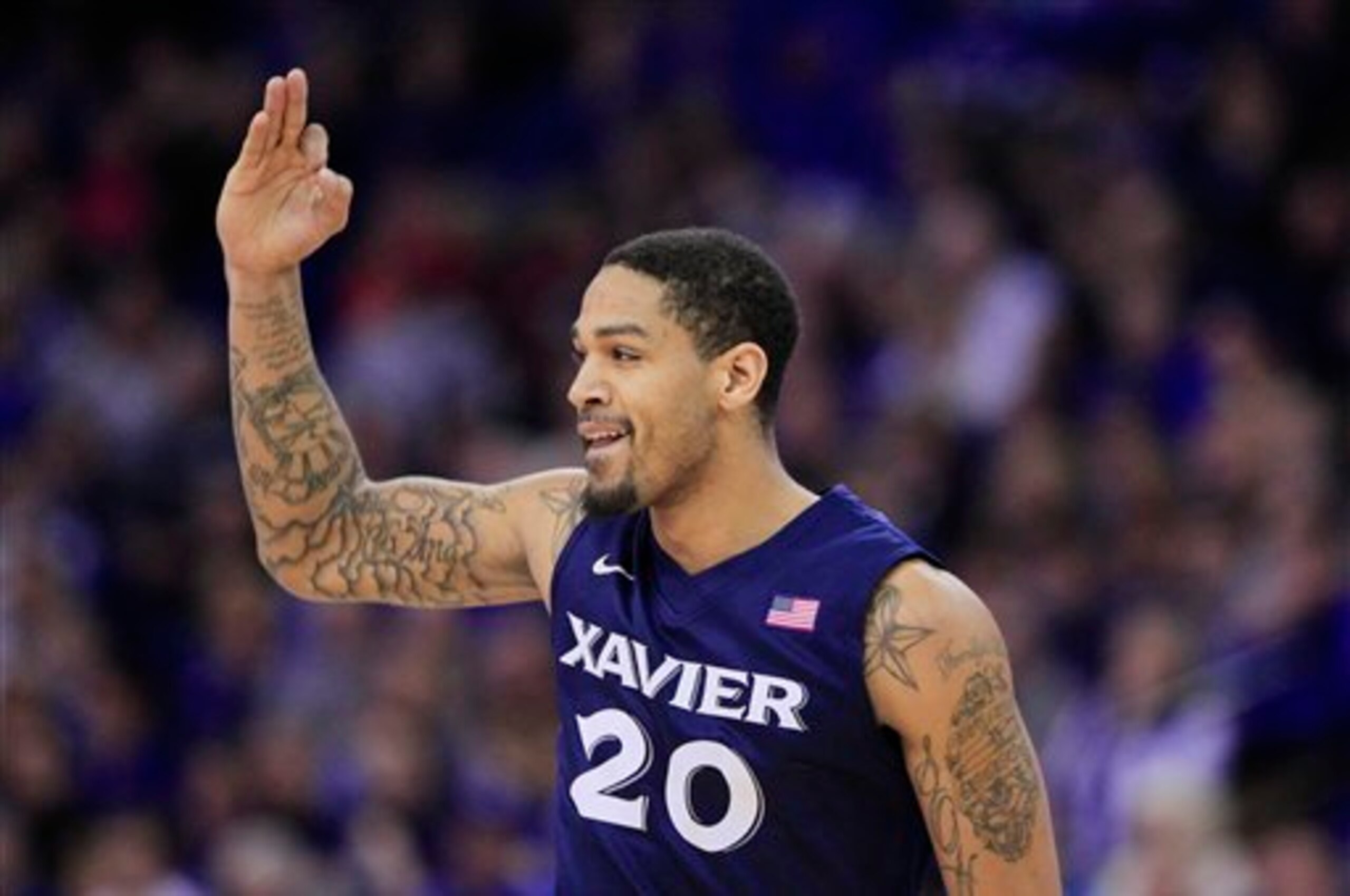
Larry Brown struggled to find a small forward whom he trusted last season.
While Nic Moore and Nick Russell each averaged better than 32.0 minutes per game in the backcourt and Markus Kennedy got all the minutes he could handle in the paint once Brown realized how much of a talent he had in the power forward, the Mustangs played "Small Forward Whac-a-Mole" between Keith Frazier, Ryan Manuel, Sterling Brown and Shawn Williams.
As such, Justin Martin has to be considered the most welcome addition via transfer in the AAC.
Last season with Xavier, Martin averaged 11.7 PPG and 5.2 RPG in just 28.2 minutes per contest. With Semaj Christon running the show, Martin only attempted 8.5 field goals per game, but he shot 37.3 percent from three-point range after comparatively inefficient freshman and sophomore seasons.
He'll join a backcourt that already has a propensity for draining threes. Moore (43.6 percent) and Frazier (39.8 percent) led the team in long-range shooting last year and could get a little more space to do their thing with defenses needing to also worry about Martin's affinity for putting the ball in the hoop.
AAC Coach of the Year: Kevin Ollie, Connecticut
12 of 12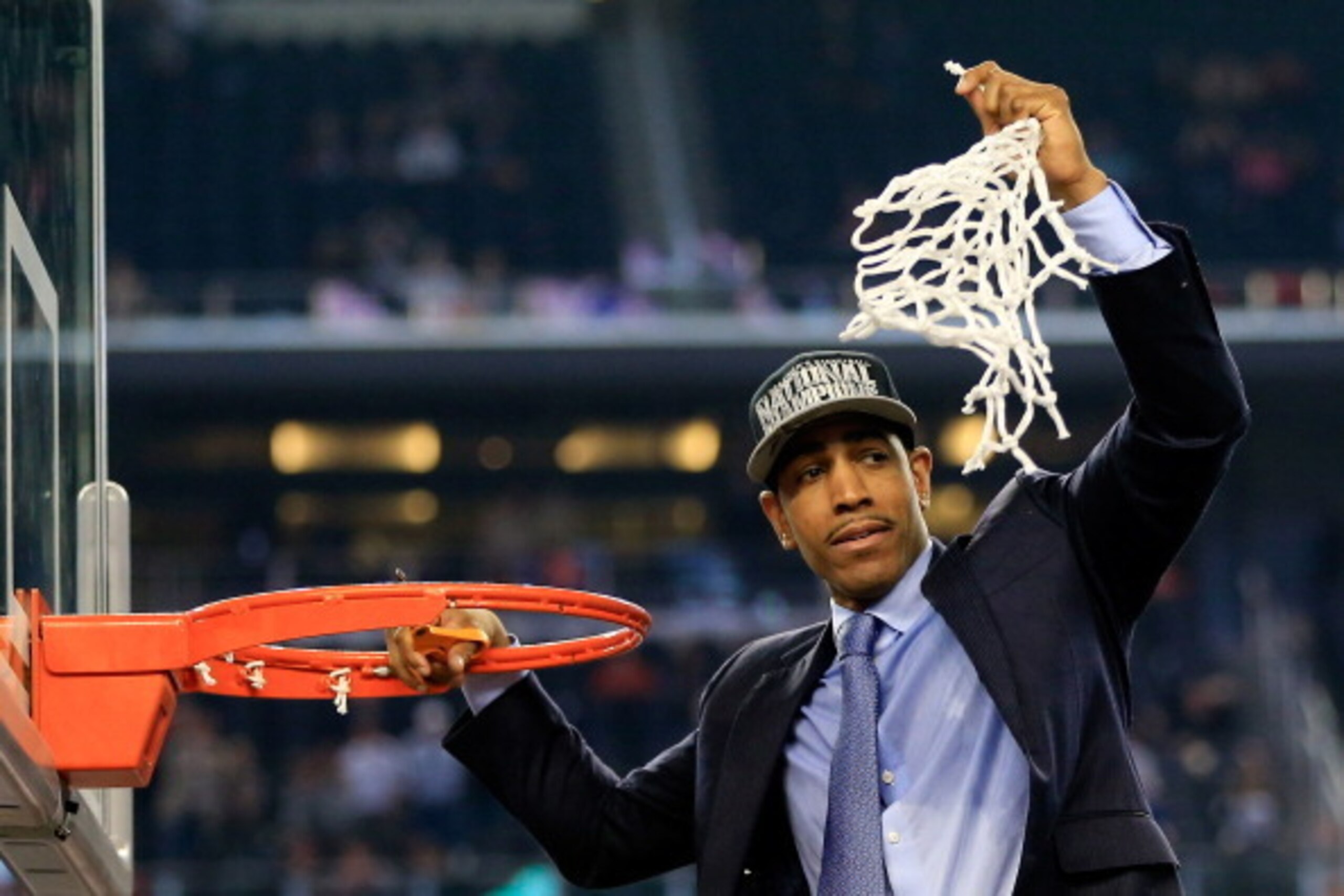
It's hard to believe Kevin Ollie didn't win this award last year.
Obviously, the voters had no idea that Connecticut would go on to win the national title when the vote was finalized in early March. Still, we're talking about a coach took over a program facing a one-year tournament ban before putting together a 24-7 record prior to the start of the AAC tournament.
With all due respect to Cincinnati's Mick Cronin, the 2014 AAC Coach of the Year should have been Ollie. And unless the Huskies completely fall apart this year, the voters should make it up to him with a belated award in 2015.
By a pretty significant margin, Connecticut is expected to be the best team in this conference. Only time will tell whether the Huskies have enough for another deep tournament run, but a great regular season will be more than enough to get Ollie this honor.
Other conferences covered in this series:
Kerry Miller covers college basketball for Bleacher Report. You can follow him on Twitter @kerrancejames.