
Best Comparisons for Every Top-30 Prospect in 2016 NBA Draft
Every new prospect is a unique player when he enters the NBA, but that doesn't mean each defies comparison. There are only so many different types of builds in the Association, and we can usually draw similarities between incoming and established contributors that hold at least a little weight.
That's our goal for each of the top 30 prospects for the 2016 NBA draft, as determined by using a combination of Jonathan Wasserman's last two big boards for Bleacher Report. We'll take all NCAA prospects from his May 17 edition, and then, since we can't use any international players*, fill in the rest of our rankings by using the April 13 edition.
For each eligible player, we'll establish a statistical baseline by comparing their scores in the offensive and defensive portions of NBA Math's total points added (TPA) metric to every 2015-16 NBA contributor. The closest matches who play a similar position will serve as eligible comparisons, and we'll then subjectively determine the player from that group whose playing style makes for the best parallel.
We're not looking for the player with the exact same game as the top-30 prospect in question. Instead, we're trying to find someone who performed at a similar level and plays a similar game.
(Apologies to Dragan Bender, Juan Hernangomez, Furkan Korkmaz, Timothe Luwawu, Ante Zizic and Ivica Zubac, but we don't have enough data to form comparisons for them.)
30. Diamond Stone, Maryland, Freshman C
1 of 30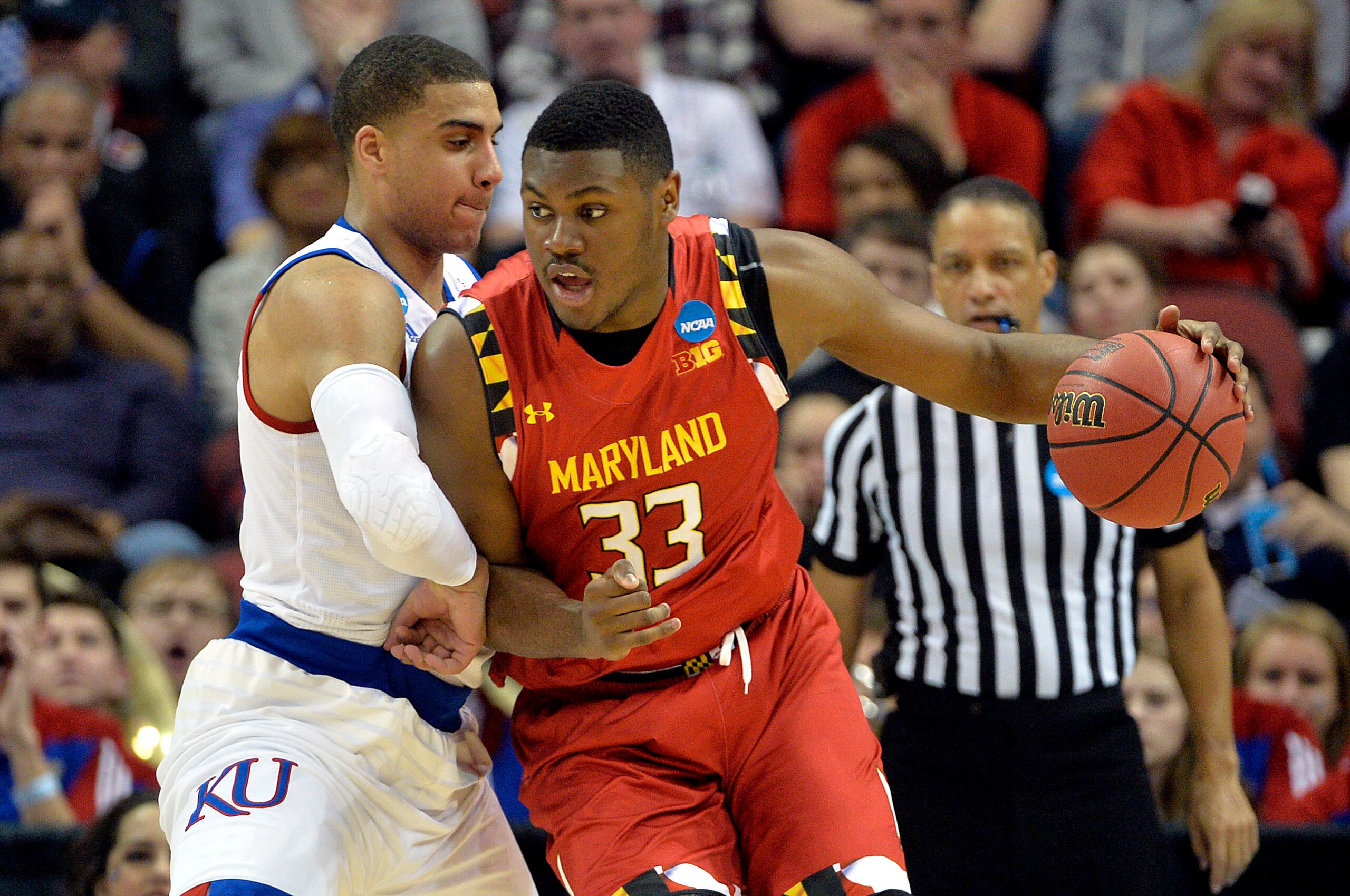
Offensive Points Added: 34.43
Defensive Points Saved: 38.25
2015-16 Per-Game Stats: 12.5 points, 5.4 rebounds, 0.4 assists, 0.5 steals, 1.6 blocks
Top 2015-16 NBA Comparison: Nikola Vucevic
After watching him go through shooting drills, Dan Barto, the lead skills trainer at IMG Academy, had nothing but good things to say about Diamond Stone. Per Don Markus of the Baltimore Sun:
"Barto believes Stone has set himself up well to have a smooth transition to the NBA and compares Stone's game to that of 7-foot center Nikola Vucevic, who as a 20-year-old was drafted No. 16 by the Philadelphia 76ers in 2011 and traded the [following] year to the Orlando Magic. Vucevic has been the team’s leading scorer the past two seasons and its leading rebounder in each of his four seasons there.
"
Stone didn't show off his jumper while playing at Maryland, but that skill is lying dormant. Whether in drills or during his high school career, he's displayed three-point ability that will help him live up to that lofty Nikola Vucevic comparison.
Thanks to lateral quickness that allows him to cover a larger range than Vucevic, the incoming rookie could be even better on the defensive end. But the offensive games should be quite similar, especially given the shared ability to finish plays below the rim while surrounded by smaller defenders.
29. Patrick McCaw, UNLV, Sophomore SG
2 of 30
Offensive Points Added: 109.55
Defensive Points Saved: 70.88
2015-16 Per-Game Stats: 14.7 points, 5.1 rebounds, 3.9 assists, 2.5 steals, 0.4 blocks
Top 2015-16 NBA Comparison: Nicolas Batum
Based on his top TPA comparisons (Jae Crowder, Nicolas Batum, Luol Deng, Trevor Ariza and Victor Oladipo), it shouldn't be much of a surprise that Patrick McCaw is a three-and-D prospect. He was an adept defensive presence at UNLV who knocked down 36.6 percent of his three-point looks during 2015-16 while taking 5.6 per game.
In fact, McCaw was one of only five NCAA players in 2015-16 to attempt at least five triples per game, connect at no less than 36 percent and post a defensive box plus/minus north of three, joining Iowa's Jared Uthoff, Florida's Dorian Finney-Smith, Michigan State's Denzel Valentine and Seton Hall's Isaiah Whitehead.
But that's not all. His ability to serve as a facilitating presence for the Rebels—he averaged 3.9 assists—pushes him toward the Batum comparison, as the Charlotte Hornets swingman was the most versatile among the listed options.
The 6'6" McCaw doesn't have the length of Batum, who measured in at 6'8" with a 7'1" wingspan before the 2007 NBA draft, per DraftExpress. But the playing style offers the closest fit.
28. A.J. Hammons, Purdue, Senior C
3 of 30
Offensive Points Added: 51.45
Defensive Points Saved: 106.97
2015-16 Per-Game Stats: 15.0 points, 8.2 rebounds, 1.1 assists, 0.3 steals, 2.5 blocks
Top 2015-16 NBA Comparison: Ed Davis
We're looking for a player who can score on the interior and protect it on the other end.
To be fair, Ed Davis isn't a perfect fit. He's an undersized center who thrives by using constant energy, while A.J. Hammons is a true 7-footer who lacks the motor necessary to emerge as a top-10 prospect. If he played every possession like his life depended on it, he'd be getting quite a bit more lottery buzz.
We can rule out DeMarcus Cousins and Al Horford, simply because they're so much more versatile than the Purdue product. Derrick Favors is close, and Gorgui Dieng—who, per NBA.com's SportVU data, allowed opponents to shoot 52.6 percent at the rim—isn't a strong enough basket-defender to serve as an ideal match.
So it has to be the Portland Trail Blazers big man. Hammons is already a better shooter than Davis, and he should one day boast far more offensive versatility. Then again, there's no ideal comparison for a player with this much size and skill who also possesses such limited consistency.



27. Caris LeVert, Michigan, Senior SG
4 of 30
Offensive Points Added: 73.13
Defensive Points Saved: 19.45
2015-16 Per-Game Stats: 16.5 points, 5.3 rebounds, 4.9 assists, 1.0 steals, 0.2 blocks
Top 2015-16 NBA Comparison: Manu Ginobili
With a quick first step and tremendous agility handling the ball, Caris LeVert can easily squeeze his way through tiny gaps in the defense, acting as a homing missile to the tin. He might not have a noteworthy Eurostep, but his offensive acumen is still reminiscent of Manu Ginobili's—though admittedly not while the Argentine 2-guard was in the prime of his Hall of Fame-worthy career.
"LeVert reminds me of a skinnier version of Joe Johnson, who has always been a good scorer off the bounce and one of the better passing wings in the league," C.J. Moore wrote for Bleacher Report, highlighting some of the offensive skills that have made the former Wolverine so intriguing in spite of his troubling foot injuries.
Johnson is a valid comparison. So too is Jamal Crawford—another skinny guard who can torture a defense with his quickness and yo-yo handles. LeVert doesn't have the athletic ability of Eric Bledsoe, Victor Oladipo and J.R. Smith, nor does he possess the sharp-shooting accuracy of Patty Mills. He's a shot-creating guard who can occasionally become inefficient when he settles for mid-range looks; not a sniper or rim-punishing presence.
But we're limited to the closest statistical comparisons, and Ginobili is easily the player who best fits the billing.
26. Damian Jones, Vanderbilt, Junior C
5 of 30
Offensive Points Added: 37.43
Defensive Points Saved: 68.86
2015-16 Per-Game Stats: 13.9 points, 6.9 rebounds, 1.2 assists, 0.2 steals, 1.6 blocks
Top 2015-16 NBA Comparison: Robin Lopez
Nothing perfectly fits Damian Jones.
The 6'10" center has too much speed and size to compare to some of the NBA's more lumbering bigs, while his combination of skills also stands out in a unique way. He's best suited rolling to the hoop or taking mid-range jumpers, but he's by no means a go-to option on the offensive end. He's not confident working in the post, and his defensive positioning is often lacking.
As J.Z. Mazlish explained for Upside & Motor, Jones has lots of potential. It just hasn't manifested itself yet, and the mental game might prevent it from doing so:
"Jones is one of the more vexing prospects in this draft class. His combination of tools and some skill is basically as good as any single player. [Kentucky's] Skal Labissiere is younger and had more hype coming in, but Jones has produced better at the college level and — if anything — has better physical tools.
However, part of me wonders if Jones’s low basketball IQ and somewhat stiff body movement will hold him back from ever being an NBA contributor. Adreian Payne has similar physical tools to Jones and is an even better shooter, but he has struggled to look like an NBA player because he just doesn’t process the game at that level.
"
For now, Jones defies comparison. His closest stylistic fit may be a version of Robin Lopez who seeks to block more shots, but his collegiate stats don't lend themselves to that match.
25. Dejounte Murray, Washington, Freshman PG/SG
6 of 30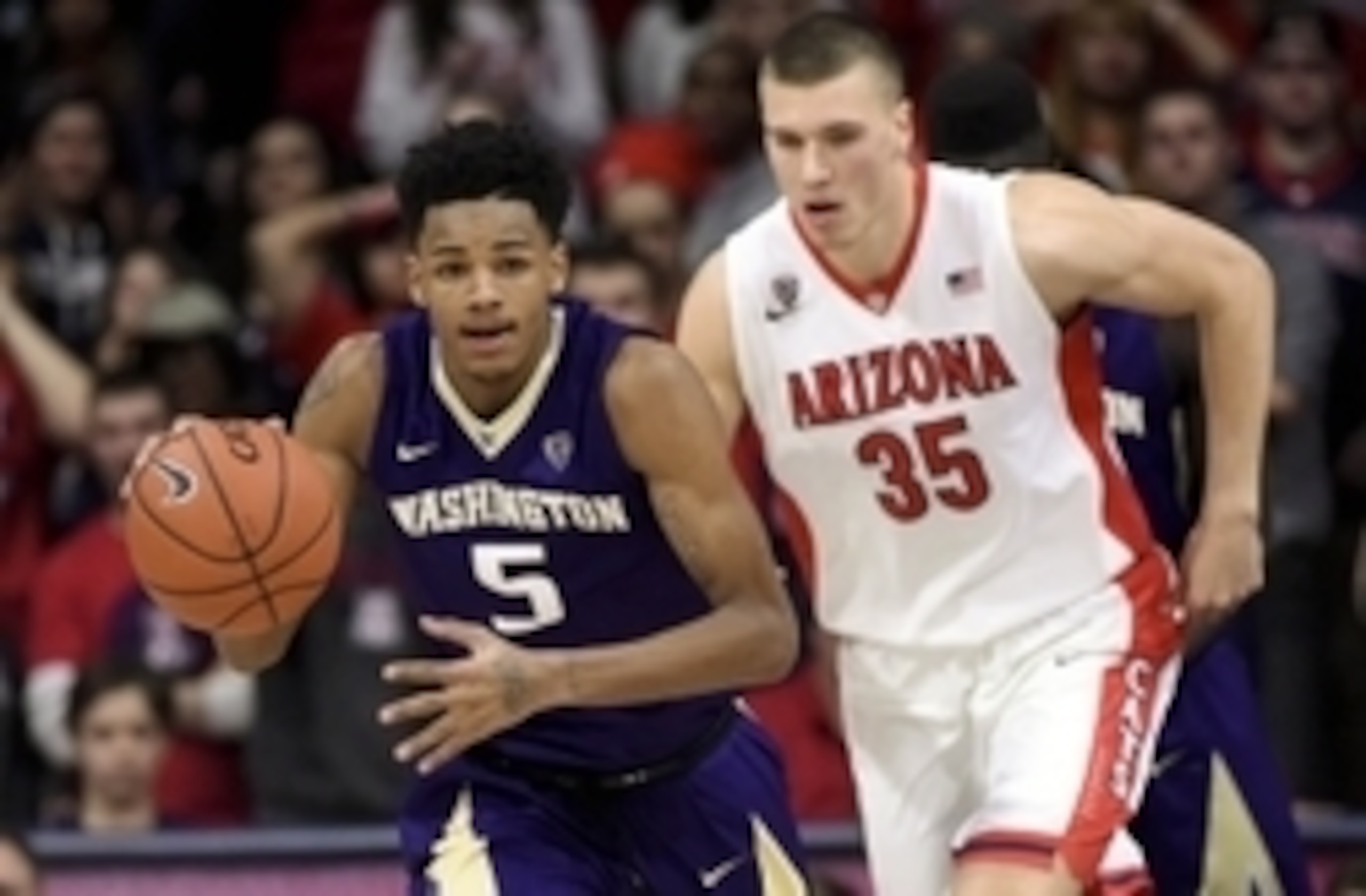
Offensive Points Added: 32.33
Defensive Points Saved: 58.19
2015-16 Per-Game Stats: 16.1 points, 6.0 rebounds, 4.4 assists, 1.8 steals, 0.3 blocks
Top 2015-16 NBA Comparison: Victor Oladipo
During his one and only season at Washington, Dejounte Murray averaged 16.1 points, 6.0 rebounds and 4.4 assists while shooting 41.6 percent from the field. But he also knocked down just 28.8 percent of his attempts from beyond the arc and 66.3 percent from the charity stripe.
Though he was a smart player who thrived on the defensive end, it was his athleticism that carried him on offense. Murray can't shoot yet, though he's willing to fire away with reckless abandon. He rarely converts, which allows defenses to sag off and shut down passing lanes instead of staying in his grill.
It's quite similar to how NBA defenders treat Victor Oladipo these days. Though the Orlando Magic guard could shoot during his final season for the Indiana Hoosiers—he made 44.1 percent of his triples as a junior—he's struggled from the Association's downtown (33.9 in three seasons). Instead, he has to rely on his playmaking and ability to slice through a defense.
Murray likely won't be as good as Oladipo is now, but names like Tony Wroten and Austin Rivers aren't showing up on the statistical comparison, given the freshman guard's ability to produce gaudy numbers for a limited Washington outfit.
24. Tyler Ulis, Kentucky, Sophomore PG
7 of 30
Offensive Points Added: 188.76
Defensive Points Saved: 23.6
2015-16 Per-Game Stats: 17.3 points, 3.0 rebounds, 7.0 assists, 1.5 steals, 0.1 blocks
Top 2015-16 NBA Comparison: Kemba Walker
Despite standing only 5'9", Tyler Ulis averaged 17.3 points and seven assists for the Kentucky Wildcats en route to winning SEC Player of the Year. He shot 43.4 percent from the field and 34.4 percent from beyond the arc while routinely making defenders uneasy with his vast array of dribbling moves, which Jonathan Givony broke down for DraftExpress:
"Ulis is an outstanding ball-handler, showing great command of the ball getting low to the ground, while using his quickness and ability to operate at different speeds to keep defenders off balance. He has a variety of moves he can utilize to create space, including crossovers, behind the back dribbles and subtle hesitation moves, as [it] often looks like he's playing at a different pace than everyone else on the floor with how calculated and under control he is.
"
The odds are against Ulis developing into a star of Kemba Walker's caliber, but his offensive game is quite similar to the Charlotte Hornets point guard. Walker is also a diminutive backcourt scorer who is forced to rely on tight handles and body control to beat bigger defenders, even if he relies on his step-back jumper more than his crossover.
23. Brice Johnson, North Carolina, Senior PF/C
8 of 30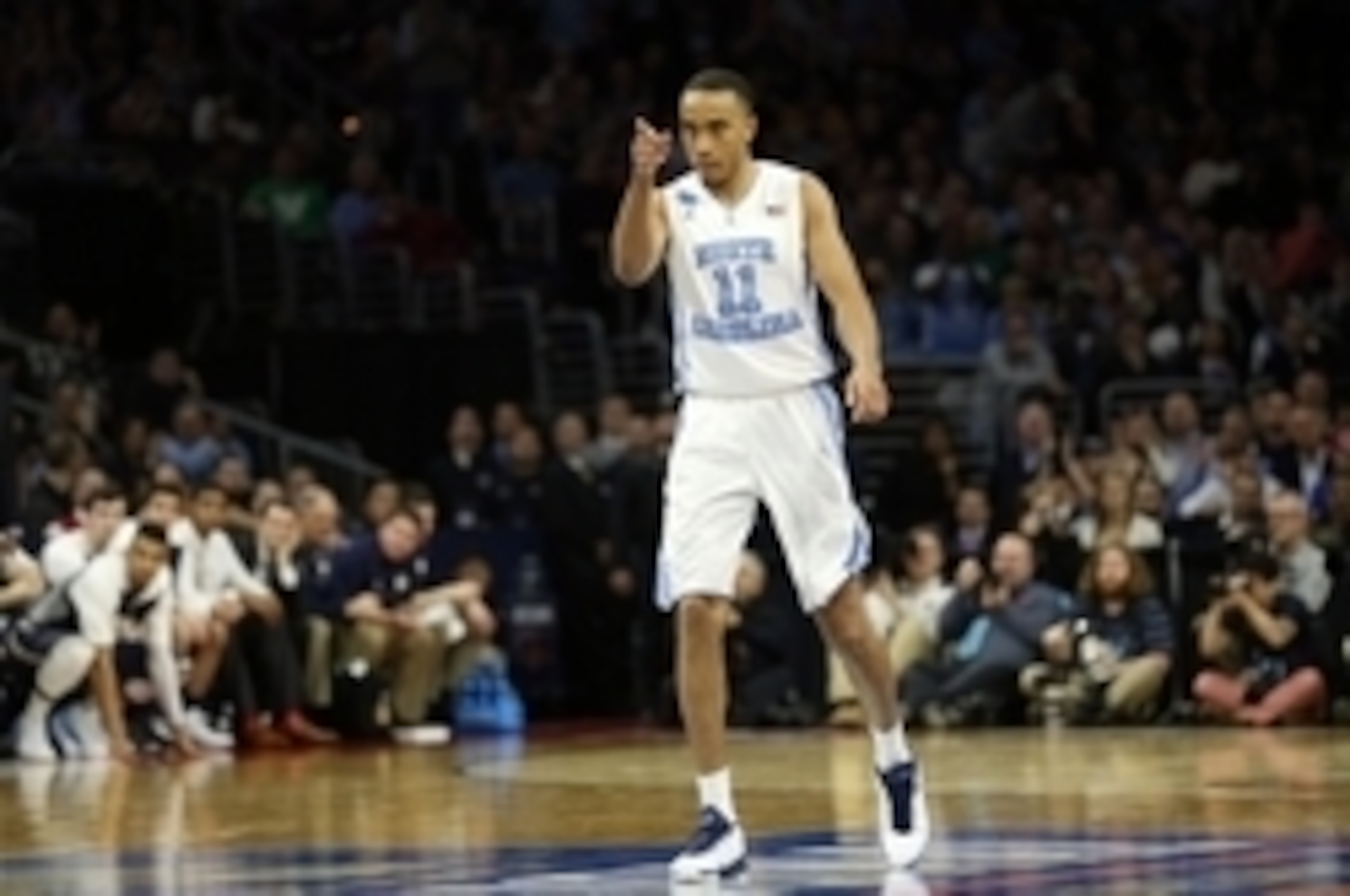
Offensive Points Added: 117.67
Defensive Points Saved: 109.27
2015-16 Per-Game Stats: 17.0 points, 10.4 rebounds, 1.5 assists, 1.1 steals, 1.5 blocks
Top 2015-16 NBA Comparison: Ed Davis
The ability to protect the rim applies to both Brice Johnson and Ed Davis, but this is more about the frontcourt players' mutual ability to score efficiently and a tremendous knack for crashing the glass.
"He's a player who opts to take good shots," Tajh Jenkins wrote of Johnson for NBADraft.net. "Very effective as a scorer around the basket and at the rim (scores on putbacks and alley-oops) ... A skilled finisher around the rim and seems to have a knack for being at the right place at the right time ... Possess a soft touch on his jumpers and around the rim."
Sound familiar? It should.
Johnson also possesses a certain tenacity on the glass that should help him replicate—or come close—the 12.8 boards per 36 minutes that the Portland Trail Blazers big averaged during 2015-16.
22. Stephen Zimmerman, UNLV, Freshman C
9 of 30
Offensive Points Added: Minus-49.86
Defensive Points Saved: 60.35
2015-16 Per-Game Stats: 10.5 points, 8.7 rebounds, 0.8 assists, 0.5 steals, 2.0 blocks
Top 2015-16 NBA Comparison: Serge Ibaka
It's no surprise Stephen Zimmerman's top statistical comparisons include four defensive stalwarts (Serge Ibaka, Clint Capela, Dwight Howard and John Henson) who thrive when anchoring the interior of a defense. This 7-footer has a gigantic wingspan (7'3", per DraftExpress) and the instincts necessary to become a dynamite shot-blocker at the professional level. His lateral quickness also helps him recover against guards attacking in pick-and-roll sets.
But it's on offense where Ibaka takes the lead.
Zimmerman shows nice fluidity in his shooting motion and has the confidence necessary to step out and space the court. His range extends all the way to the three-point arc, and he runs the floor well enough to become a transition threat in the athletic, modern NBA.
He won't have the defensive polish of Ibaka early in his career, but he also shows more potential on the offensive end, largely because he's a willing distributor who doesn't hesitate to involve himself as an offensive hub.
21. Malachi Richardson, Syracuse, Freshman SG
10 of 30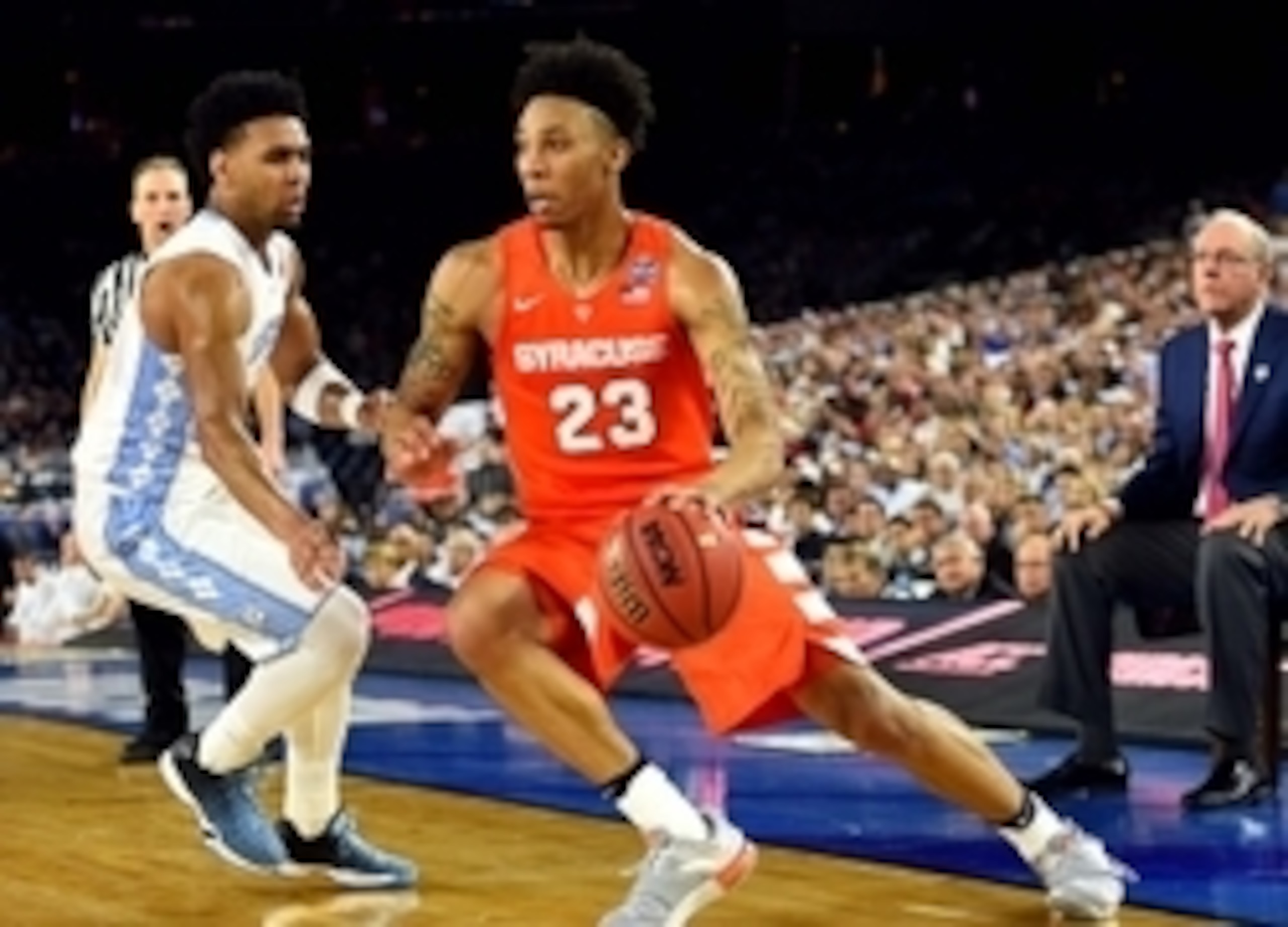
Offensive Points Added: 24.05
Defensive Points Saved: 31.45
2015-16 Per-Game Stats: 13.4 points, 4.3 rebounds, 2.1 assists, 1.1 steals, 0.3 blocks
Top 2015-16 NBA Comparison: Kentavious Caldwell-Pope
"I don't think he's moved anywhere," Syracuse head coach Jim Boeheim said about former player Malachi Richardson's draft stock, per Syracuse.com's Stephen Bailey. "That's just media nonsense. That's just the media and agents talking. Pro teams have not even had a thought about who they're going to draft. The top, maybe the top two or three prospective picks, are thinking about the two or three guys they might take."
Regardless, Richardson fared rather well during the athletic testing at the NBA Draft Combine. Per NBA.com, he had one of the top lane agility results and posted a 38-inch vertical leap, which should only help him continue his rise up the boards.
It's clear Richardson has the athletic tools—and plenty of unrealized upside—necessary to succeed at the sport's highest level. He's also able to create his own shot, drain spot-up treys and hold his own on the defensive end.
Kentavious Caldwell-Pope may have been the more high-profile prospect when he was coming out of Georgia, but his game is strikingly similar.
20. Ben Bentil, Providence, Sophomore PF
11 of 30
Offensive Points Added: 100.16
Defensive Points Saved: 40.88
2015-16 Per-Game Stats: 21.1 points, 7.7 rebounds, 1.1 assists, 0.9 steals, 1.0 blocks
Top 2015-16 NBA Comparison: Nikola Jokic
Though he'll never blow you away with athletic ability or superstar potential, Ben Bentil became a tremendously versatile prospect during his final season with the Providence Friars. For proof, just look at the lengthy list of strengths given by ESPN's Chad Ford:
- Long, athletic forward
- Can score from anywhere on the floor
- Runs the floor well
- Toughness in the paint
- Good free-throw shooter when he gets to the line
- Terrific motor
- Emerging three-point shooter
Meanwhile, the only listed weaknesses are his underwhelming rebounding and a need to improve defensively. Ford doesn't even mention that the undersized power forward has already shown some growth as a playmaker despite being on a team with only one other legitimate NBA prospect (Kris Dunn).
It's the versatility of his game that reminds us of Nikola Jokic, who just completed one of the league's better rookie seasons despite flying almost entirely under the radar—per NBA Math, the Denver Nugget's TPA score ranked No. 19 in the league.
Bentil is not as big as Jokic, nor is he quite as skilled with the ball in his hands. But he avoids having many discernible weaknesses, much like his Serbian counterpart.
19. Cheick Diallo, Kansas, Freshman PF/C
12 of 30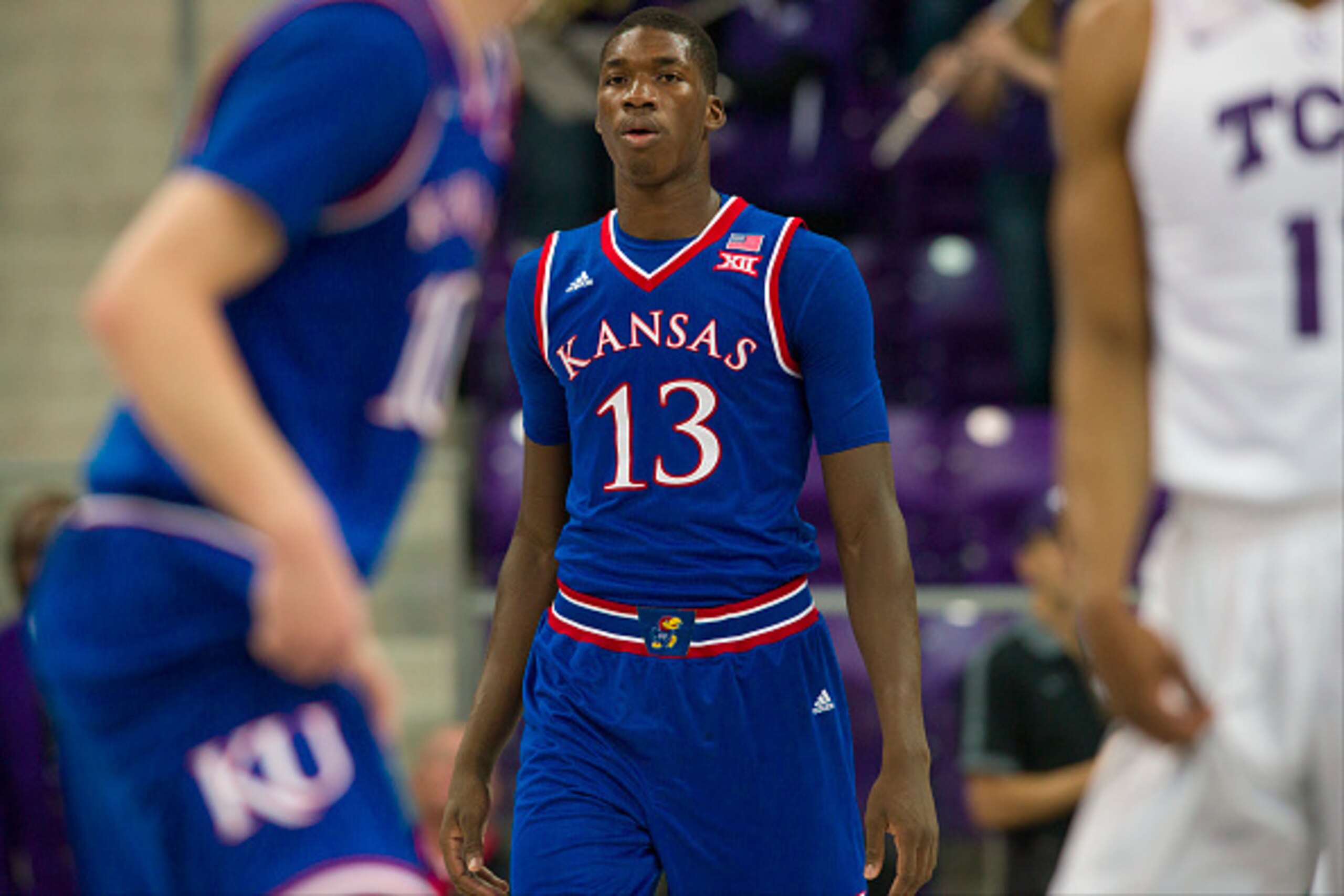
Offensive Points Added: Minus-11.52
Defensive Points Saved: 25.48
2015-16 Per-Game Stats: 3.0 points, 2.5 rebounds, 0.3 steals, 0.9 blocks
Top 2015-16 NBA Comparison: Kevin Garnett
To be clear, we're comparing Cheick Diallo to the current version of Kevin Garnett rather than the prime version who won an MVP award during his first stint with the Minnesota Timberwolves. Throughout his age-39 season, the artist formerly known as "The Big Ticket" provided sparse offensive contributions—typically stemming from his accurate mid-range jumper—but helped out on defense whenever he received minutes.
Expect to see a similar profile from this Kansas product, especially as he looks to make the huge leap from infrequent run for the Jayhawks. As a freshman, Diallo averaged only 3.0 points and 2.5 rebounds, so his draft stock is based purely on long-term potential.
"Diallo has the quickness and length to be a factor on the defensive end as well," Bleacher Report's C.J. Moore explained after pointing out his promising mid-range jumper. "He's able to block shots as a help defender and also has had a few impressive blocks against his man trying to score in the post."
Down the road, Diallo could draw stronger comparisons. But for now, there's nothing wrong with becoming the equivalent of a defensive specialist who can occasionally hit some jumpers.
18. Taurean Prince, Baylor, Senior SF
13 of 30
Offensive Points Added: 81.78
Defensive Points Saved: 48.72
2015-16 Per-Game Stats: 15.9 points, 6.1 rebounds, 2.3 assists, 1.3 steals, 0.7 blocks
Top 2015-16 NBA Comparison: Jae Crowder
If you're looking for a big prospect willing to make an impact in just about any facet of the game, the passionate Taurean Prince is your guy.
He's able to step up as a scorer (whether on the interior or perimeter), crash the boards, pass the ball around the horn or settle in on the defensive end. If you really want to know, he'll even help explain exactly how to define a rebound.
But until Prince improves his handle, he's going to be limited at the NBA level. We're looking at a three-and-D guy, albeit one who can do a bit more when the right moment arises. In other words, we're looking at Jae Crowder 2.0.
And to be clear, that's the Boston Celtics version of Crowder, not the Dallas Mavericks edition who hadn't yet been given a chance to thrive.
17. Deyonta Davis, Michigan State, Freshman PF
14 of 30
Offensive Points Added: 35.1
Defensive Points Saved: 87.76
2015-16 Per-Game Stats: 7.5 points, 5.5 rebounds, 0.7 assists, 0.3 steals, 1.8 blocks
Top 2015-16 NBA Comparison: Ed Davis
"If [Deyonta] Davis struggles to progress in his understanding of the game and if his offense fails to develop much further, I think Davis' tools will still allow him to become a valuable role player in an Ed Davis type of mold—a guy who crashes the glass, plays hard, defends the rim a bit and dunks whenever he gets the chance," Jacob Padilla wrote for Bright Side of the Sun.
It's worth noting this is basically the floor for the one-and-done prospect from Michigan State.
Deyonta Davis didn't spend enough time in East Lansing to blossom into a true force, but that could still happen at the NBA level if he adds post moves and develops a better fundamental understanding of defensive positioning. A more consistent jumper would also help.
Right now, he's an energy guy with plenty of raw tools. Fortunately, his athleticism and aggressiveness should allow him to make use of his long, lanky arms right away—both as a rim-protector and an interior finisher.
Yes, this Davis is the third prospect to draw the Ed Davis comparison, joining Brice Johnson and A.J. Hammons. But remember, we're trying to match statistical ability and style of play, so the Rip City big will inevitably come up more often so long as he serves as the prototypical athletic frontcourt player who's not yet a star.
16. Skal Labissiere, Kentucky, Freshman PF/C
15 of 30
Offensive Points Added: Minus-1.86
Defensive Points Saved: 50.27
2015-16 Per-Game Stats: 6.6 points, 3.1 rebounds, 0.3 assists, 0.3 steals, 1.6 blocks
Top 2015-16 NBA Comparisons: Boris Diaw, Taj Gibson
Sushi. Uncooked burgers. Skal Labissiere. Oysters. Steak tartare. A certain WWE television program.
They're all raw, but Labissiere may be the most undercooked of the bunch. Though he's brimming over with potential, he tapped into very little of it during his Kentucky career, only blossoming into a valuable player toward the end of his freshman season. As such, it's hard to come up with a perfect comparison—especially given the significant limitations possessed by so many of the players who are close statistical matches.
On offense, Labissiere could be most similar to Boris Diaw—capable of handling the ball and creating for others while thriving as a pick-and-pop jump-shooter. He's not as tough as Diaw yet, but there's plenty of time to fill out.
Defensively, Taj Gibson is the easy choice, given his ability to block shots and control the painted area. The now-former Wildcat struggled on the glass, but Labissiere could clearly affect a game with his rejection skills when locked in.
15. Marquese Chriss, Washington, Freshman SF/PF
16 of 30
Offensive Points Added: 41.55
Defensive Points Saved: 57.53
2015-16 Per-Game Stats: 13.8 points, 5.4 rebounds, 0.8 assists, 0.9 steals, 1.6 blocks
Top 2015-16 NBA Comparison: Aaron Gordon
"World-class athleticism ultimately acts as the driving force behind [Marquese] Chriss' enticing upside," posits Bleacher Report's Jonathan Wasserman. "The bounciest prospect in the draft, he is a stud athlete with superhero-like leaping ability. His springs and coordination translate to easy buckets above the rim off misses ... lobs, pick-and-rolls, catch-and-finishes and fast breaks."
The leg springs make Aaron Gordon the easy choice ahead of other statistical matches (Otto Porter, Tobias Harris, Marvin Williams and Marcus Morris), but Chriss has the potential to be even better.
He's already a more polished shooter after knocking down 35 percent of his threes during his freshman season at Washington, and he'll make an immediate impact as a shot-blocking threat.
However, Chriss is still raw. He's more potential than finished product, and that leaves open the possibility he could be far worse than Gordon after they've spent a similar amount of time in the Association.
14. Demetrius Jackson, Notre Dame, Junior PG
17 of 30
Offensive Points Added: 113.28
Defensive Points Saved: 9.29
2015-16 Per-Game Stats: 15.8 points, 3.5 rebounds, 4.7 assists, 1.2 steals, 0.3 blocks
Top 2015-16 NBA Comparison: Eric Bledsoe
As Ben Stram wrote for Today's Fastbreak, playing without former Notre Dame guard Jerian Grant allowed Demetrius Jackson to emerge as an elite prospect:
"Jackson was held back by senior Jerian Grant last year [2014-15] and is proving to be a better prospect in his own right, thanks to his combination of athleticism, quickness, and shooting ability as a lead guard. He reminds me a bit of Eric Bledsoe at this stage, and if that comparison is valid, someone will be willing to take him in the lottery.
"
Those physical tools have helped Jackson dominate his overmatched competition. Precious few defenders have been able to stay in front of his lightning-quick first step, and his ability to work with the ball helps create an unreal amount of separation.
The Bledsoe comparison still isn't perfect, though.
Jackson hasn't asserted himself as a top-notch defender, and his perimeter jumper is a bit lacking. That latter part could push him closer to John Wall territory, but he hasn't shown quite enough vision in the passing game to justify that loftier comparison either.
13. DeAndre Bembry, Saint Joseph's, Junior SG/SF
18 of 30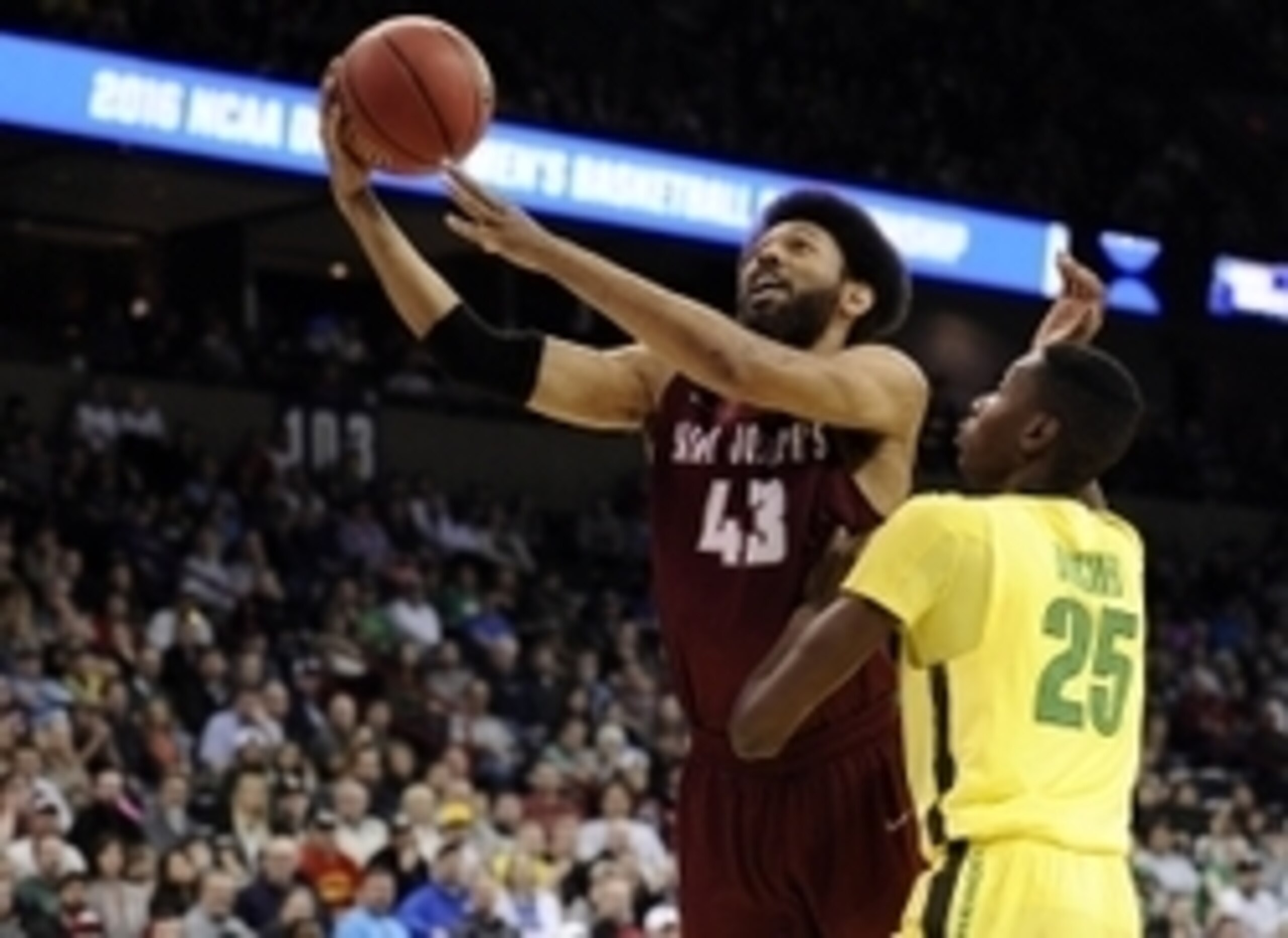
Offensive Points Added: 98.3
Defensive Points Saved: 100.58
2015-16 Per-Game Stats: 17.4 points, 7.8 rebounds, 4.5 assists, 1.4 steals, 0.8 blocks
Top 2015-16 NBA Comparison: Giannis Antetokounmpo
Despite standing 6'6" and often lining up as a small forward for Saint Joseph's, DeAndre Bembry proved he could run an offense with his ball-handling ability and a knack for distributing that few players his size possess.
As a junior, he averaged 17.4 points, 7.8 rebounds and 4.5 assists while turning the ball over just twice per contest. Along with Denzel Valentine and Ben Simmons, he was one of just three collegiate players to average such numbers this year.
Bembry remains a limited shooter who must get to the basket to score with efficiency, but he knows how to find gaps in a defense and exploit them. And that intelligence is also present on the defensive end, where he can guard multiple positions with relative ease.
The Giannis Antetokounmpo comparison is an eyebrow-raising one now that the positionless Milwaukee Buck is on the brink of unabashed superstardom, but the style similarities do exist.
Ideally, Bembry will be used in the same role the Bucks invented for the Greek Freak during the 2015-16 campaign, allowing him to handle the ball and control an offense rather than serve as a baseline cutter on most possessions.
12. Malik Beasley, Florida State, Freshman SG
19 of 30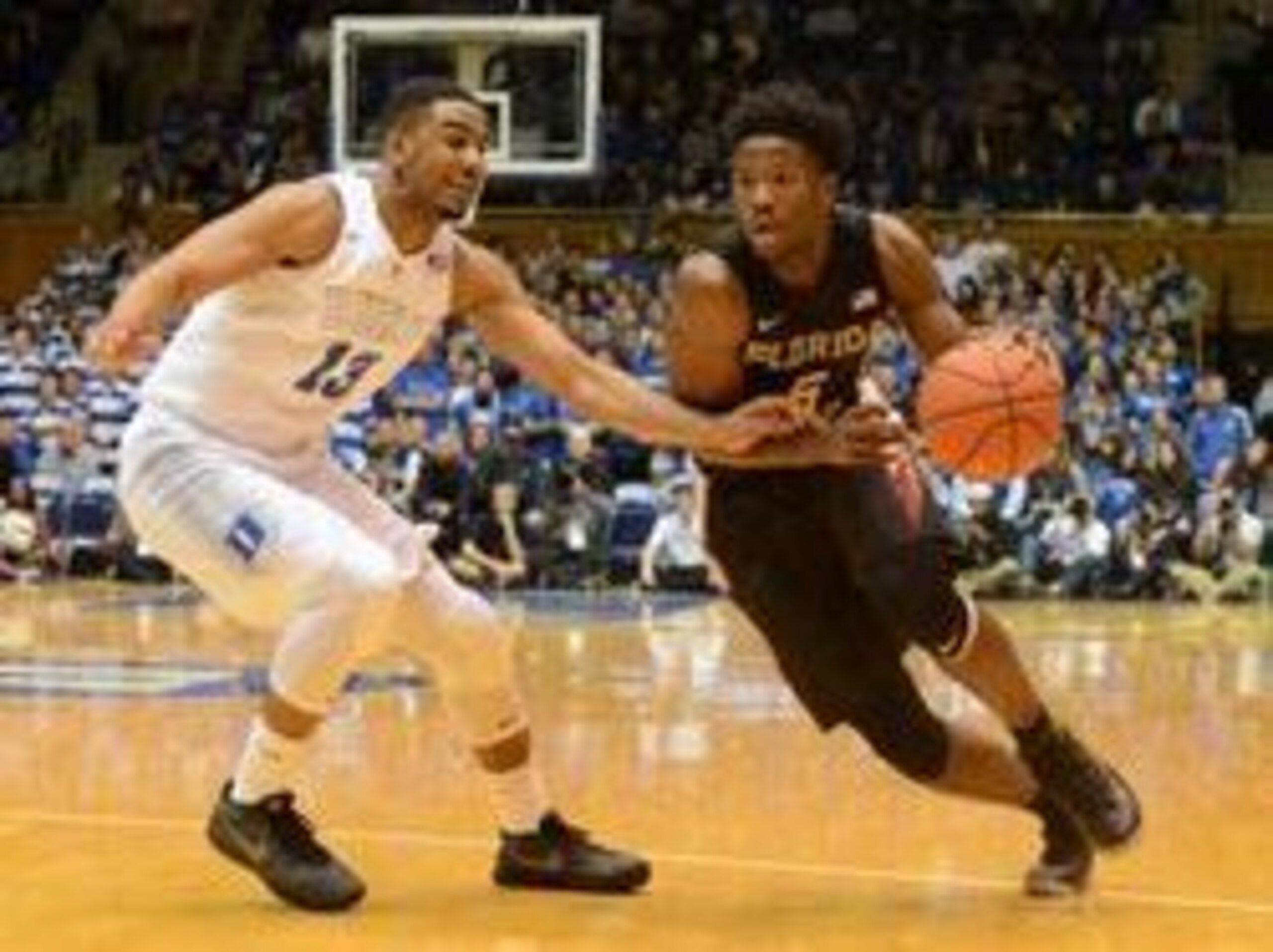
Offensive Points Added: 87.3
Defensive Points Saved: 10.48
2015-16 Per-Game Stats: 15.6 points, 5.3 rebounds, 1.5 assists, 0.9 steals, 0.2 blocks
Top 2015-16 NBA Comparison: Chandler Parsons
Meet your prospect in the 2016 class who's good at everything and possesses no glaring weaknesses. Just take a gander at the 12 different category grades NBADraft.net bestowed upon him:
- 7/10: size, leadership, NBA ready, ball-handling, passing
- 8/10: athleticism, defense, strength, quickness, potential, intangibles
- 9/10: jump shot
It's only fitting that we compare him to another player with such a well-rounded game. When Chandler Parsons was coming out of Florida, he was the incoming rookie master of versatility and across-the-board solidity, while standing out in no particular facet.
Malik Beasley is a bigger threat from the perimeter than Parsons. His form and the resulting 38.7 percent clip from beyond the arc as a freshman both bode well for his NBA hopes, while Parsons peaked at 36.8 percent during his senior season with the Gators.
But we're picking nits there.
11. Henry Ellenson, Marquette, Freshman PF
20 of 30
Offensive Points Added: 16.45
Defensive Points Saved: 55.51
2015-16 Per-Game Stats: 17.0 points, 9.7 rebounds, 1.8 assists, 0.8 steals, 1.5 blocks
Top 2015-16 NBA Comparison: Kevin Love
Largely because the raw 19-year-old will only continue to improve once he reaches the NBA, Henry Ellenson doesn't fit any of the players emerging as his closest statistical replicas (Tristan Thompson, Robin Lopez, Aaron Gordon, Steven Adams and Taj Gibson). His ability to stretch the court to the three-point line—he made 30 triples as a freshman at Marquette—immediately eliminates everyone on the list other than Gordon, and he's not nearly the physical specimen the Orlando Magic forward has become.
Given that he has that stretchiness every NBA team covets at the 4, as well as potentially elite ability on the glass, here's Bleacher Report's Jonathan Wasserman:
"Ellenson shares the same strengths and weaknesses as Kevin Love, whose identity revolves around stretchiness, occasional post scoring and rebounding. Neither forward plays above the rim or brings much to the table defensively. But like Love, Ellenson can knock down jumpers, convert with his back to the hoop and clean the glass.
Love only made two threes as a rookie and shot 33 percent form deep his second year before emerging as a knockdown shooter. Ellenson would have to make similar strides around the perimeter to ultimately match Love's success as a pro.
"
We're now well into the lottery. Comparisons to All-Stars are allowed.
10. Denzel Valentine, Michigan State, Senior PG/SG
21 of 30
Offensive Points Added: 212.75
Defensive Points Saved: 79.99
2015-16 Per-Game Stats: 19.2 points, 7.5 rebounds, 7.8 assists, 1.0 steals, 0.2 blocks
Top 2015-16 NBA Comparison: Gordon Hayward
Denzel Valentine was incredibly good during his final season at Michigan State. You're seeing some impressive names popping up because the former Spartan put together one of the best years we've seen in a while. According to NBA Math's TPA database, he added more points than any other collegiate player in 2015-16:
- Denzel Valentine, 292.74 TPA
- Ben Simmons, 251.44
- Buddy Hield, 241.61
- Gary Payton, 233.73
- Brice Johnson, 226.94
Valentine will be more limited at the NBA level, but only because of his athletic abilities. He's not a high-flying slam artist who will dominate in transition, nor does he have the footspeed necessary to thrive on the less glamorous end.
That immediately makes finding a worthy comparison tough, as NBA guards and swingmen who tend to produce excellent TPA scores have the requisite athleticism. Gordon Hayward is the best of the close statistical comparisons, given his offensive versatility and shooting touch from the perimeter, but this is by no means a perfect fit.
9. Jakob Poeltl, Utah, Sophomore C
22 of 30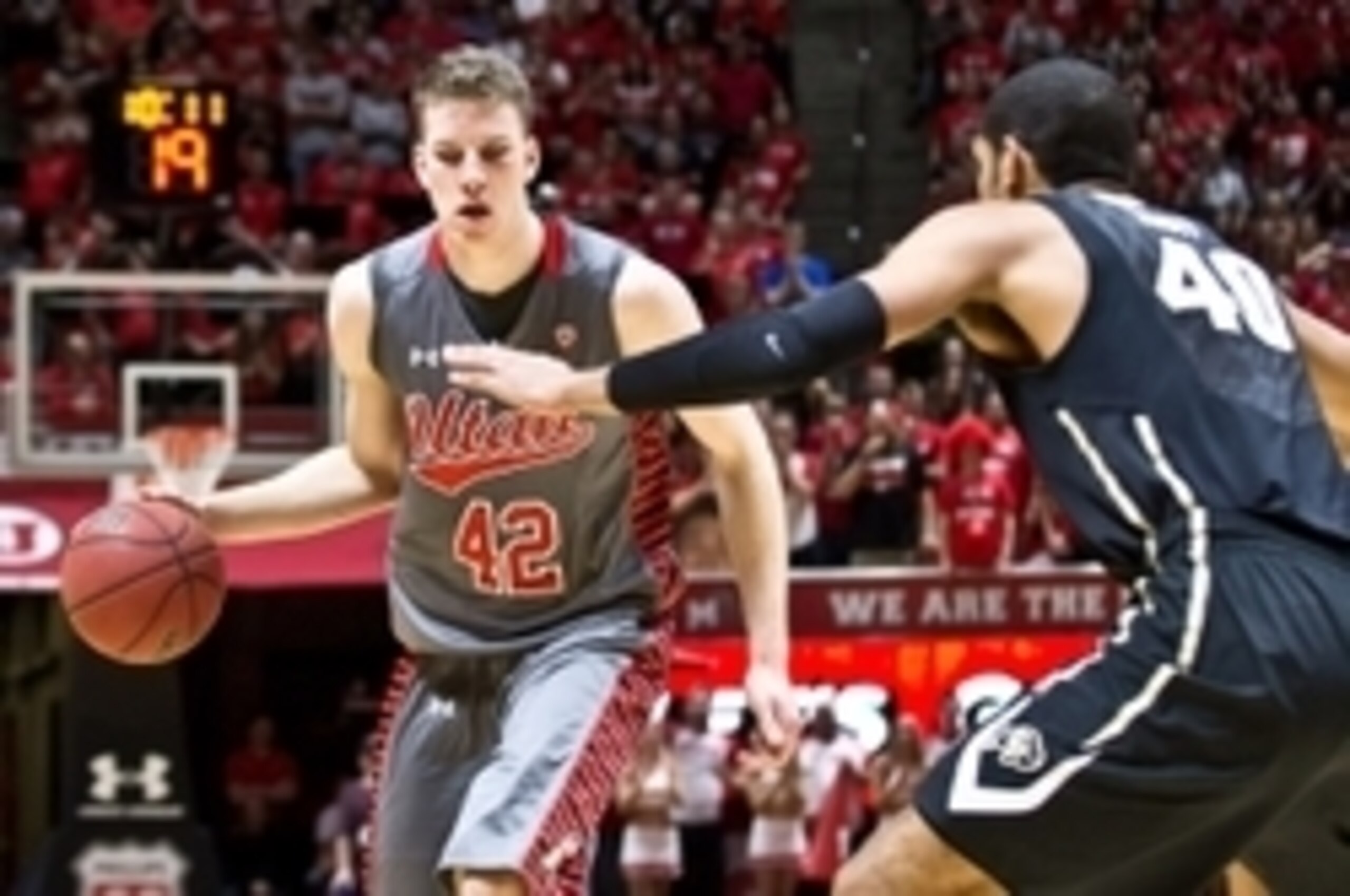
Offensive Points Added: 128.01
Defensive Points Saved: 84.74
2015-16 Per-Game Stats: 17.2 points, 9.1 rebounds, 1.9 assists, 0.6 steals, 1.6 blocks
Top 2015-16 NBA Comparison: Al Horford
See if this description of Jakob Poeltl, provided by an anonymous Pacific Division personnel man and relayed by NBA.com's David Aldridge, reminds you of anyone:
"Personally, I think he wants to be a four. If you watch his body actions and the way he plays. I think he'll ultimately play both positions, but I think his mindset is as a power forward. I think that's what he wants to be. He's such a good passer. I have him as a center initially, but I have him as both. With his agility and his size and his range, he'll be able to play some power forward.
"
For years, Al Horford has been a center whom plenty of fans think should play power forward. He's found success at both slots because his versatile skill set allows him to stretch the floor, score on the interior and serve as a primary distributor in the Atlanta Hawks offense.
Poeltl isn't strong enough or skilled enough on the interior to initially have the All-Star impact Horford provides each and every season, but he could easily get there as he continues to mature.
8. Domantas Sabonis, Gonzaga, Sophomore PF/C
23 of 30
Offensive Points Added: 91.15
Defensive Points Saved: 63.81
2015-16 Per-Game Stats: 17.6 points, 11.8 rebounds, 1.8 assists, 0.6 steals, 0.9 blocks
Top 2015-16 NBA Comparison: Nikola Jokic
Domantas Sabonis isn't as quick as many modern bigs, nor does he have the athleticism necessary to represent his eventual team in a Slam Dunk Contest. Instead, he's a creative center who can use his vast arsenal of moves to torture opponents, much like a certain former player—his father, Arvydas Sabonis—once did for the Portland Trail Blazers.
He's a great rebounder, never stops using his physicality on either end of the court, always knows how to position himself and can finish plays around the hoop with ease. He's as intelligent as prospects come on both ends of the floor, which often allows him to position his frame in an advantageous spot.
Plus, as Stefanos Makris recently reported for NBADraft.net, his jumper should be better than what he showed at Gonzaga, where he made only five treys in two seasons.
Given the athletic limitations, the cerebral play and the incredible versatility (primarily the passing ability), he is closest to Nikola Jokic. And even though the other four statistical possibilities (Karl-Anthony Towns, Kevin Love, LaMarcus Aldridge and Blake Griffin) enjoy more name recognition, that's by no means an insult.
7. Wade Baldwin IV, Vanderbilt, Sophomore PG
24 of 30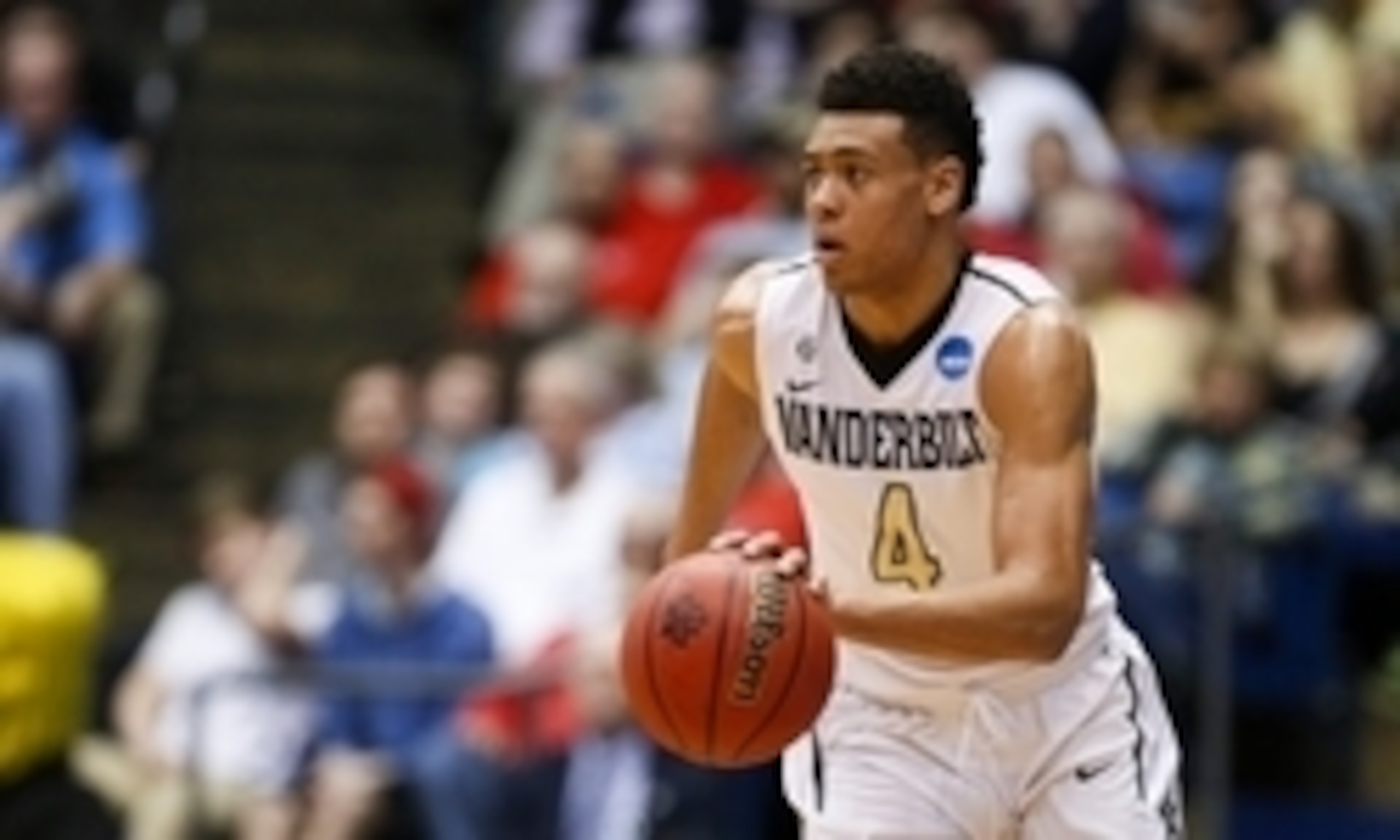
Offensive Points Added: 91.53
Defensive Points Saved: 55.26
2015-16 Per-Game Stats: 14.1 points, 4.0 rebounds, 5.2 assists, 1.2 steals, 0.3 blocks
Top 2015-16 NBA Comparison: Eric Bledsoe
Almost everything about Wade Baldwin IV screams Eric Bledsoe.
Neither player is a natural fit at either guard spot, even though they both fall into the height slots of your typical NBA point guards—6'1" for Bledsoe, and 6'4" for Baldwin. They have a scoring mentality, and they're perfectly comfortable playing off the ball and using their quickness to seek out the rim.
Both excel when lofting up shots from beyond the arc, but they prefer to attack the hoop and make use of their impressive hops. This can also get them in trouble, as poor shot selection can rear its ugly head and force inefficient outings.
As if that's not enough, they know how to parlay their physical gifts into quality perimeter defense. Each guard likes to gamble and rack up steals, which can easily turn into transition buckets on the other end.
6. Jaylen Brown, California, Freshman SF
25 of 30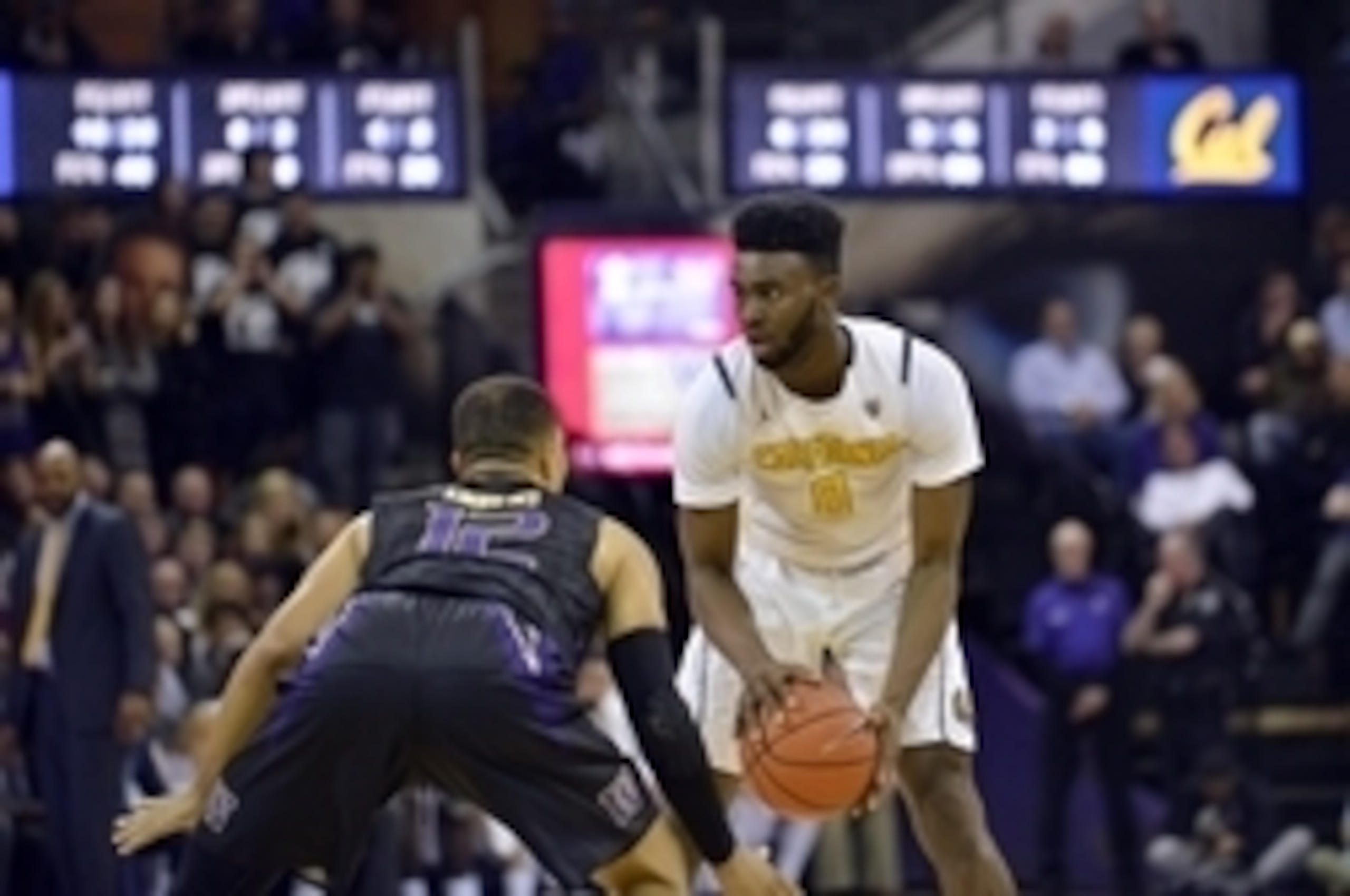
Offensive Points Added: 13.06
Defensive Points Saved: 57.12
2015-16 Per-Game Stats: 14.6 points, 5.4 rebounds, 2.0 assists, 0.8 steals, 0.6 blocks
Top 2015-16 NBA Comparison: Andre Iguodala
Imagine if this veteran version of Andre Iguodala escaped the Golden State Warriors bench and was allowed to run the show for a lesser team, much like he did during his prime years with the Philadelphia 76ers.
He'd be able to showcase his vaunted athleticism in the open court, distribute the ball with aplomb and slash to the hoop whenever he desired. But his primary weaknesses—handles that can sometimes grow sloppy and a limited outside shot—would also become more visible.
The same scenario could unfold for Jaylen Brown. He's an incredibly athletic wing who thrives on the defensive end, but those weaknesses could grow more detrimental if he's placed in a system that immediately asks him to serve as a leading piece.
"His closest physical comparison may be Andre Iguodala who measured 6'6 ¾" in shoes with a 6'11" wingspan and a 217-pound frame in 2004 at the NBA Pre-Draft Camp," DraftExpress reported before Brown had played his first game at California. "Brown's frame is impressive for an incoming freshman."
He's no longer an incoming freshman, and the comparison no longer rests solely on the physical similarities.
5. Jamal Murray, Kentucky, Freshman SG
26 of 30
Offensive Points Added: 179.18
Defensive Points Saved: 23.19
2015-16 Per-Game Stats: 20.0 points, 5.2 rebounds, 2.2 assists, 1.0 steals, 0.3 blocks
Top 2015-16 NBA Comparison: Manu Ginobili
Important caveat: This is a shaky comparison, as none of Jamal Murray's top statistical matches—Jimmy Butler, Paul George, Reggie Jackson, DeMar DeRozan and Manu Ginobili—play the same game he does.
The Kentucky product thrives when able to use his offensive skill, creating his own shots and firing away from all areas of the half-court set. He's a decent athlete, though no one is going to mistake him for a Butler, George or DeRozan.
As a scout told Bleacher Report's C.J. Moore, Chauncey Billups could be an apt comparison:
"He's got a little bit of Chauncey Billups to his game. He's a combo guard, but I don't mean that in a bad way. He can shoot. He likes big moments. Not the quickest guy but he can handle and pass. Chauncey was probably more athletic than he was at the same time, but when he went on in his career, he wasn't the most athletic guy and didn't depend on his athleticism. Murray is going to have to be that way too.
They're both big guards (Billups is 6'3") who sort of play both spots, and I think the same way Billups established himself as a point guard, I think Murray will eventually establish himself as a point guard and be a tough floor leader for his team.
"
Billups, by virtue of no longer being an active player, isn't an option here. Manu Ginobili and his unrelenting creativity on the offensive end will have to do.
4. Kris Dunn, Providence, Senior PG
27 of 30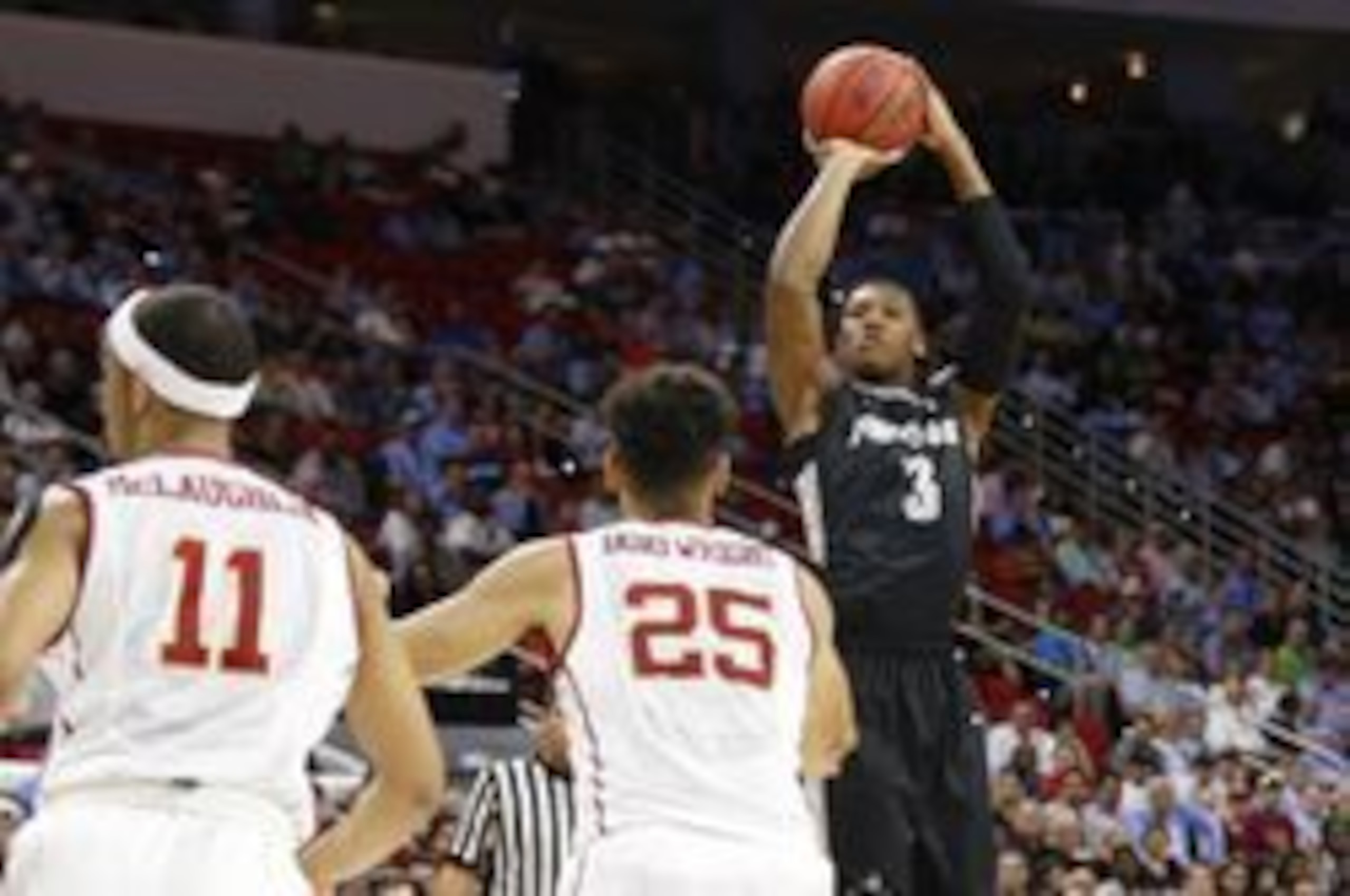
Offensive Points Added: 93.95
Defensive Points Saved: 108.98
2015-16 Per-Game Stats: 16.4 points, 5.3 rebounds, 6.2 assists, 2.5 steals, 0.6 blocks
Top 2015-16 NBA Comparison: John Wall
Let's turn to NBC Sports' Rob Dauster:
""I see John Wall, but a B-plus athlete instead of an A-plus athlete."
That’s how one NBA scout described Dunn's game to NBCSports.com, and it’s a more-than-fair comparison when you really look at it. Their physical profiles are strikingly similar: Big point guards, long arms, proven ability in ball-screen actions. Wall, as the scout mentioned, is one of the best athletes at the point guard position in the NBA, with the kind of explosiveness that deservedly puts him in the same league as the likes of Russell Westbrook and Derrick Rose circa the MVP years. Dunn is a better defender than Wall, but he’s not the same level of athlete.
"
Even though the athleticism and physical profiles immediately allow for the comparison, Kris Dunn and John Wall had rather similar games during their college careers.
The latter's was admittedly a lot shorter, but he showed enough vision to average 6.5 assists per game at Kentucky—only slightly superior to Dunn's 6.2 dimes per contest as a senior. Each excelled when they were allowed to control an offense and drive into the teeth of a defense, keeping their eyes up to look for spot-up snipers on the perimeter.
Their raw scoring numbers were also nearly identical, but it's worth noting Dunn has been the superior shooter. In 2015-16, he knocked down 44.8 percent of his field-goal attempts and 37.2 percent of his shots from beyond the arc, whereas Wall hit 46.1 and 32.5, respectively, during his lone go-round as a Wildcat.
3. Buddy Hield, Oklahoma, Senior SG
28 of 30
Offensive Points Added: 208.57
Defensive Points Saved: 33.04
2015-16 Per-Game Stats: 25.0 points, 5.7 rebounds, 2.0 assists, 1.1 steals, 0.5 blocks
Top 2015-16 NBA Comparison: Paul George
Buddy Hield was incredible during his final season at Oklahoma, but he still didn't do quite enough to earn the offensive comparison he really deserves—James Harden. Instead, we're left looking at a lower tier of NBA players, though there are still a few All-Stars in the mix.
We have to completely forget about defense for this comparison, as Hield is a limited stopper who often gets beat by both bigger and quicker opponents (while his parallel is a perennial All-Defense candidate). But solely on the scoring end, the former Sooner's game is decently similar to Paul George's.
He's long and athletic, and he can often make up for his relative lack of size by exploding through a defense or rising and firing over the top. Though he is smaller than George, he still likes squaring up and lofting a shot whenever he finds a matchup advantage.
The discrepancy in defensive ability and size makes this comparison seem a bit shaky unless you focus solely on how they go about getting their points. But unfortunately, the other top statistical matches all have glaring holes as well.
Jimmy Butler, similar to George, is a great defensive player, and he attacks on offense in an entirely different manner. Gordon Hayward's game is predicated on versatility, not the take-over instincts possessed by Hield. There's an even larger defensive gap between the former Sooner and Kawhi Leonard, and Luol Deng is by no means a No. 1 option.
2. Brandon Ingram, Duke, Freshman SF
29 of 30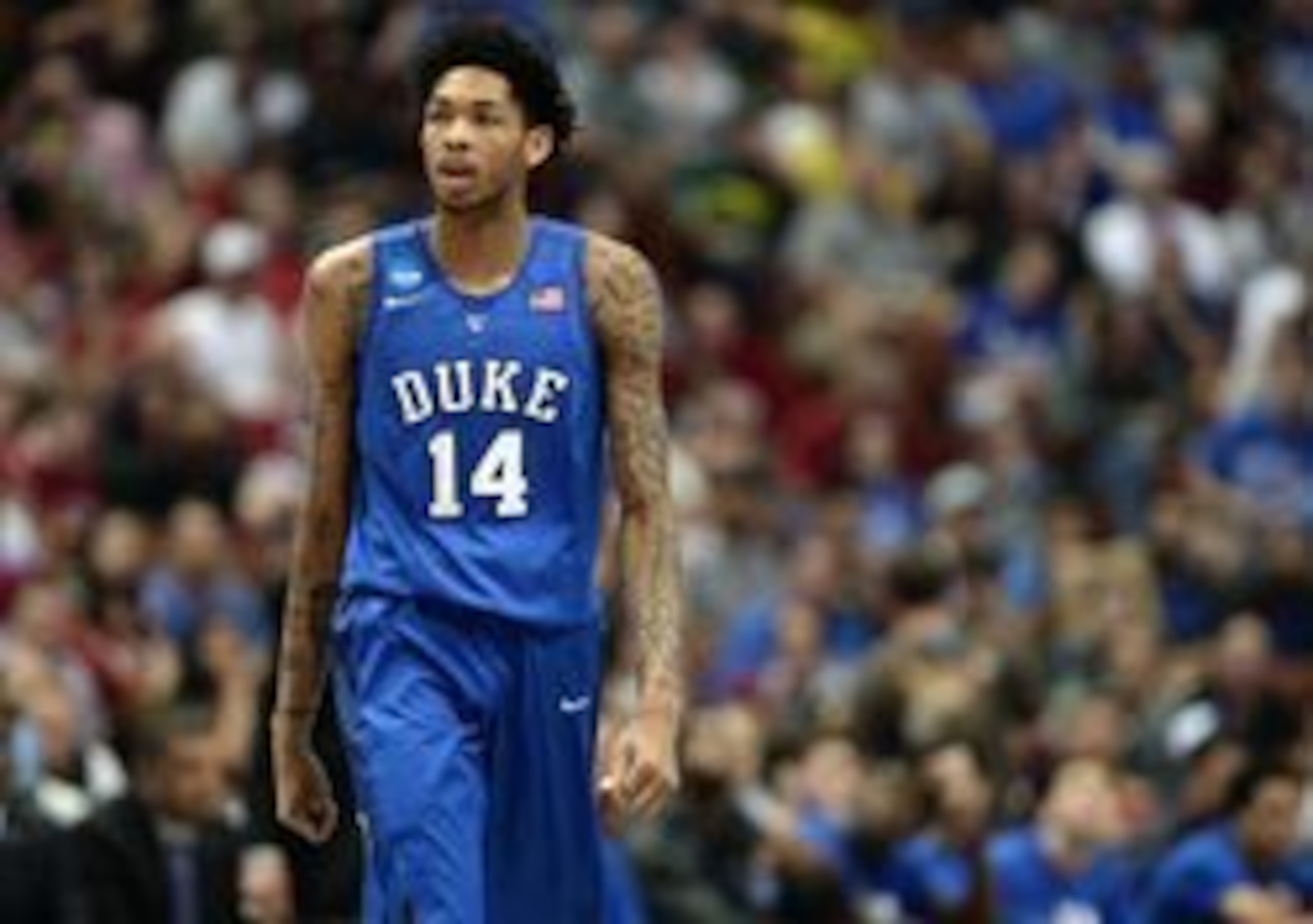
Offensive Points Added: 89.51
Defensive Points Saved: 63.65
2015-16 Per-Game Stats: 17.3 points, 6.8 rebounds, 2.0 assists, 1.1 steals, 1.4 blocks
Top 2015-16 NBA Comparison: Nicolas Batum
Brandon Ingram didn't do enough as a Duke freshman to earn a statistical comparison to Kevin Durant—what freshman could?—but his style is eerily similar to the 2014 NBA MVP's. He's quite adept at using his lanky arms to swing through defenders' arms and routinely creates his own offense by driving to the basket and finishing through traffic.
If you squint, you can almost see Durant taking his place on those plays; the equivalence is that visually striking.
But we have to compare the 6'9" Ingram to one of the closest numerical matches in this exercise, and it's Nicolas Batum who has the same type of length and versatility to his game, even if he's not the shot-maker Ingram projects to be at the professional level.
Though Batum can look like a fringe All-Star when feeling it, the French swingman should be considered a low-level projection for Ingram. When you look so similar to vintage Durant as a freshman in the ACC, you're allowed to receive that type of hype.
1. Ben Simmons, LSU, Freshman PF
30 of 30
Offensive Points Added: 135.39
Defensive Points Saved: 116.05
2015-16 Per-Game Stats: 19.2 points, 11.8 rebounds, 4.8 assists, 2.0 steals, 0.8 blocks
Top 2015-16 NBA Comparison: Draymond Green
If anybody defies comparison, it's Ben Simmons.
We're talking about a freshman who produced some of the nation's best stats and projects as a power forward at the NBA level. But instead of boasting a back-to-the-basket game, he's a natural ball-handler who could become a de facto point forward if he lands on a team (cough, Philadelphia 76ers, cough) without a strong incumbent 1-guard.
In some ways, Simmons is the evolutionary Lamar Odom. Or he may be a poor man's LeBron James at the beginning of his career. The possibilities feel limitless.
His closest statistical matches, Marvin Williams, Kevin Love, Draymond Green, Kawhi Leonard and Ed Davis, all have vastly dissimilar games, and few of them have much in common with this LSU standout. But at least Green proved himself as one of the NBA's best distributors by leading the 73-win Golden State Warriors in assists per game.
But don't be fooled into thinking Simmons fits into any one established box. More so than any other player in this year's draft class, he's truly a unique prospect.
Adam Fromal covers the NBA for Bleacher Report. Follow him on Twitter @fromal09.
Unless otherwise indicated, all stats are from Basketball-Reference.com, Sports-Reference.com or NBAMath.com.
.jpg?w=2560 "NFL investigating 2 referees for separate viral exchanges")
.jpg?w=2560 "OBJ Calls Out Giants After Release")

.jpg?w=2560 "Tyreek makes another cryptic post amid Chiefs rumors")
.jpg?w=2560 "Report: Chiefs Contact Hill's Agent")