
NFL Draft 2011 Grades: Report Card for All 32 First Round Picks
The first round of the 2011 NFL Draft is in the books. Time to hand out report cards.
On a wild night that included a number of surprise picks and trades, many teams looked to fill their coffers with the talent to get them to Super Bowl XLVI in Indianapolis. Others drafted tonight in the hopes of finding a cornerstone for a rebuilding project. All began tonight with the hope that a new season brings.
Who succeeded? Well let's just say it wasn't everyone.
Let's recap and grade all 32 first round picks:
No. 1—Carolina Panthers: Cam Newton, QB, Auburn
1 of 32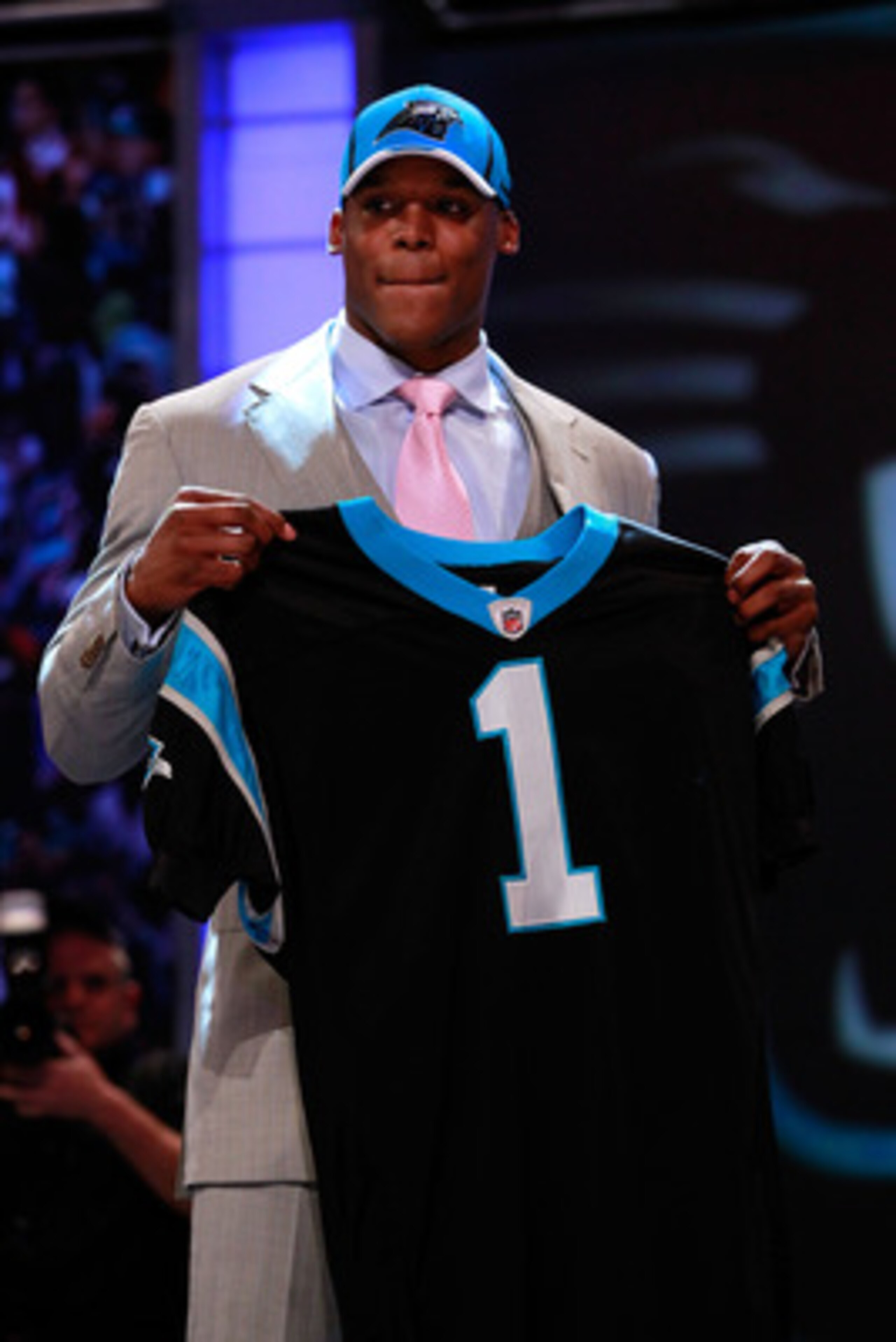
Grade: C+
To the surprise of no one, the Carolina Panthers selected Cam Newton with the first overall pick. Carolina has been enamored with Newton for several weeks and has, for the second time in as many years, selected a quarterback they hope will be the face of their franchise for the next decade.
The problem is, Newton is not ready to be an NFL starting quarterback.
I was outspoken in my recent mock draft that Newton was the wrong pick for the Panthers. There is no doubt that Cam Newton has the raw talent to develop into a great quarterback, but he could be two to three years away from being ready to take the reins.
That leaves Carolina with two young QBs, neither of whom are prepared to lead Carolina out of the cellar of the NFL.
It’s a boom or bust pick. But at No. 1 overall, it's a risky proposition.
No. 2—Denver Broncos: Von Miller, OLB, Texas A&M
2 of 32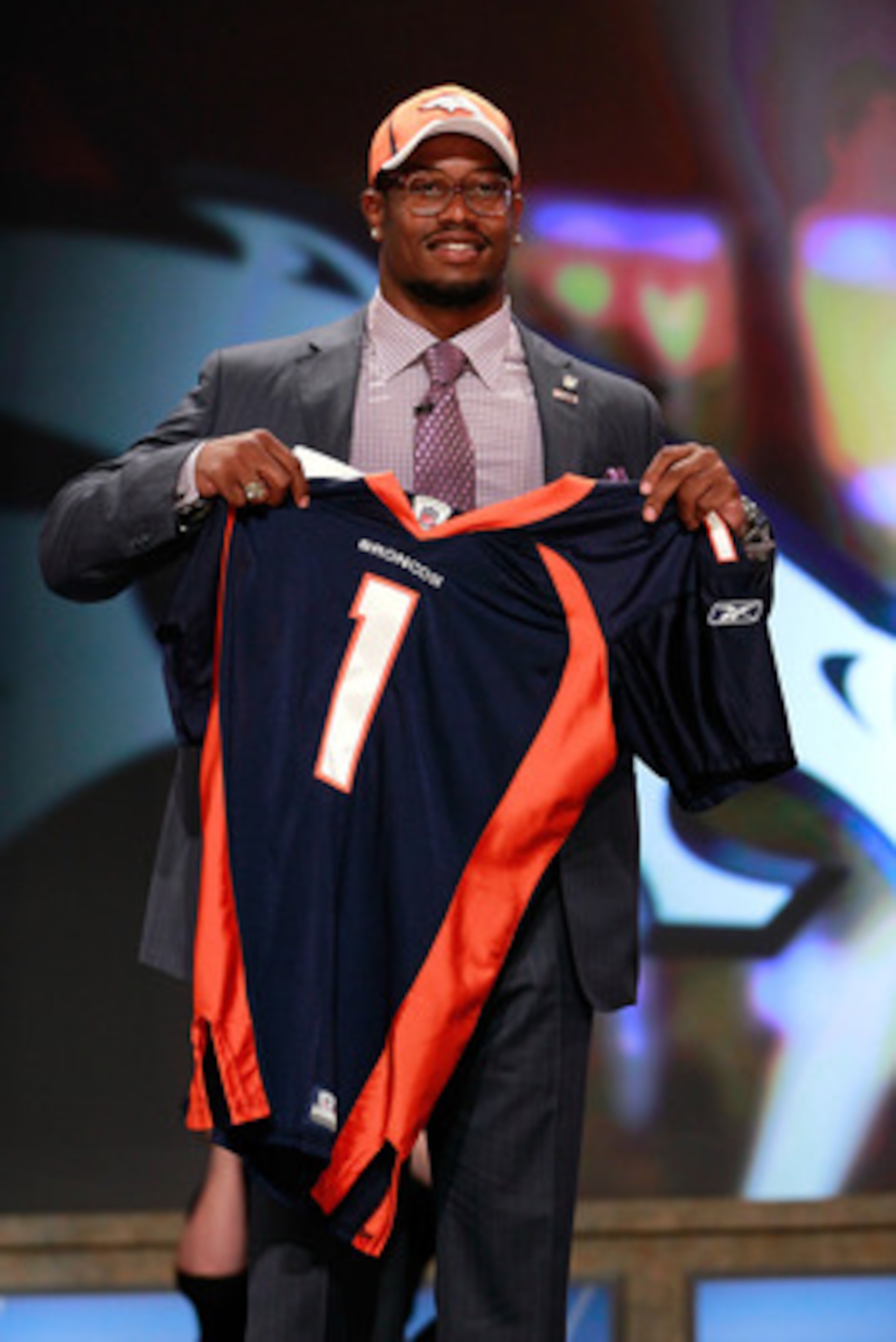
Grade: A-
Von Miller is the best edge rusher in this draft class. His combination of speed, strength and versatility make him a perfect centerpiece for Denver’s transition to the 3-4 defense.
Miler can immediately step on the field and make an impact and has the ability to drop into coverage or use his incredible burst at the snap to get to the quarterback.
He will need to improve his consistency against the run, but shows the ability to take on blockers and maintain gap discipline in space. He can become a great two-way threat with more coaching.
This is a great pick for the Denver Broncos.
No. 3—Buffalo Bills: Macell Dareus, DE, Alabama
3 of 32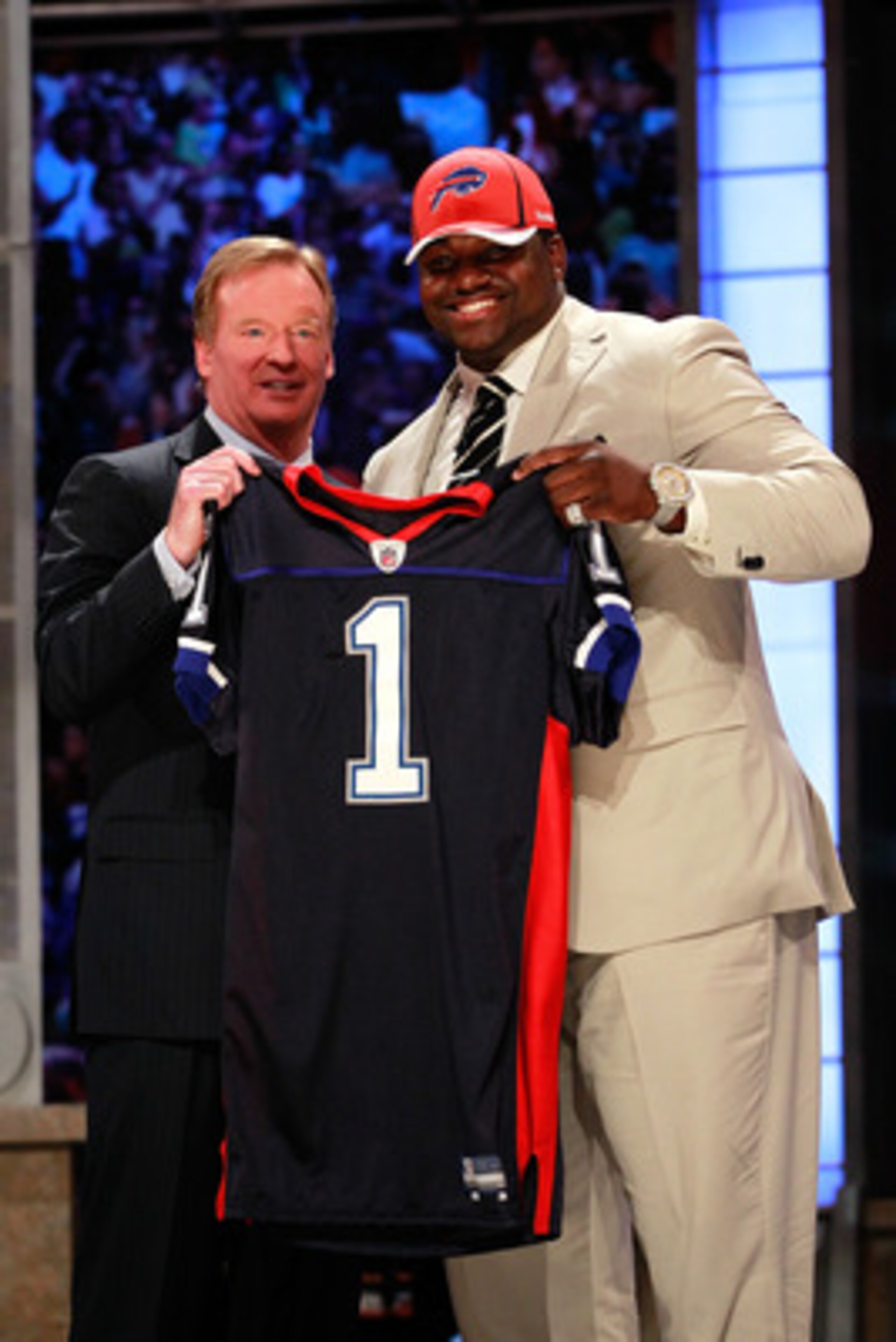
Grade: A
Marcell Dareus was No. 1 on my pre-draft list, and I think the Bills were very fortunate to get him at the No. 3 spot.
Dareus can play any position on the defensive line and is an absolute beast against the run. He can take on double teams and has the athleticism to get off blocks and make tackles in space.
Buffalo ranked 32nd in rush defense last year, so this pick not only lands them the best DE/DT in the draft but fills a pressing need for their defensive unit.
There isn’t much downside risk here; Dareus will be a disruptive force for the Bills for years to come.
.jpg?w=2560 "Vikings Bears Football")
No. 4—Cincinnati Bengals: A.J. Green, WR, Georgia
4 of 32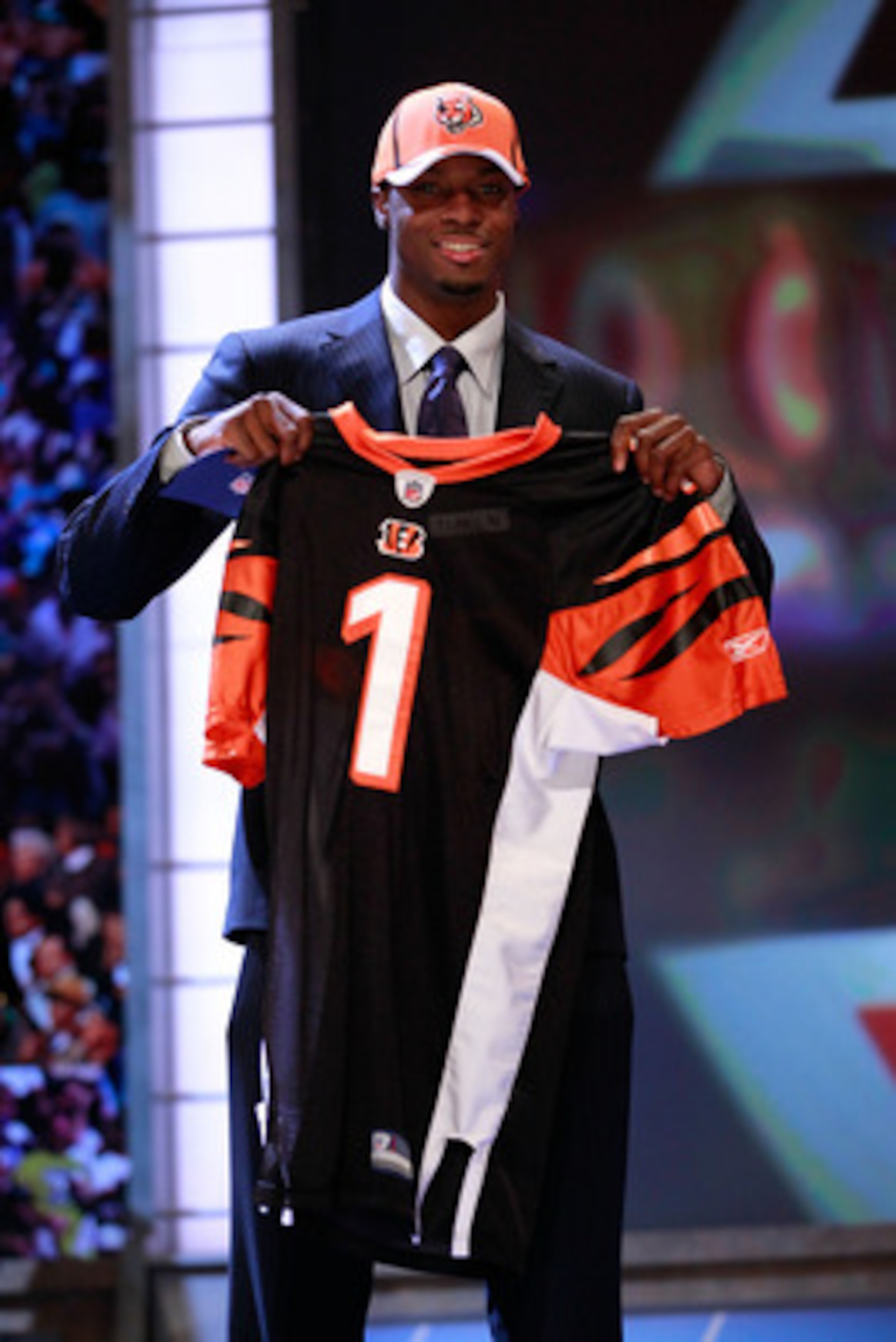
Grade: A-
Is this Carson Palmer’s incentive to stay in Cincinnati?
The Bengals have some uncertainty in their receiving corps with Chad Ochocinco (or is it Johnson again?) and Terrell Owens possibly on their way out. Green will bring stability and big play ability to Cincy’s passing attack.
Green is a fantastic athlete given his size, having run a 4.48-40 and posting a 34.5-inch vertical jump at the Combine. He gives the Bengals a threat on the outside and can stretch the defense in a way that will open seams for Jordan Shipley working out of the slot.
Some people thought Cincinnati might go with a quarterback here in anticipation of Palmer's exit, but I think this is a solid pick.
No. 5—Arizona Cardinals: Patrick Peterson, CB, LSU
5 of 32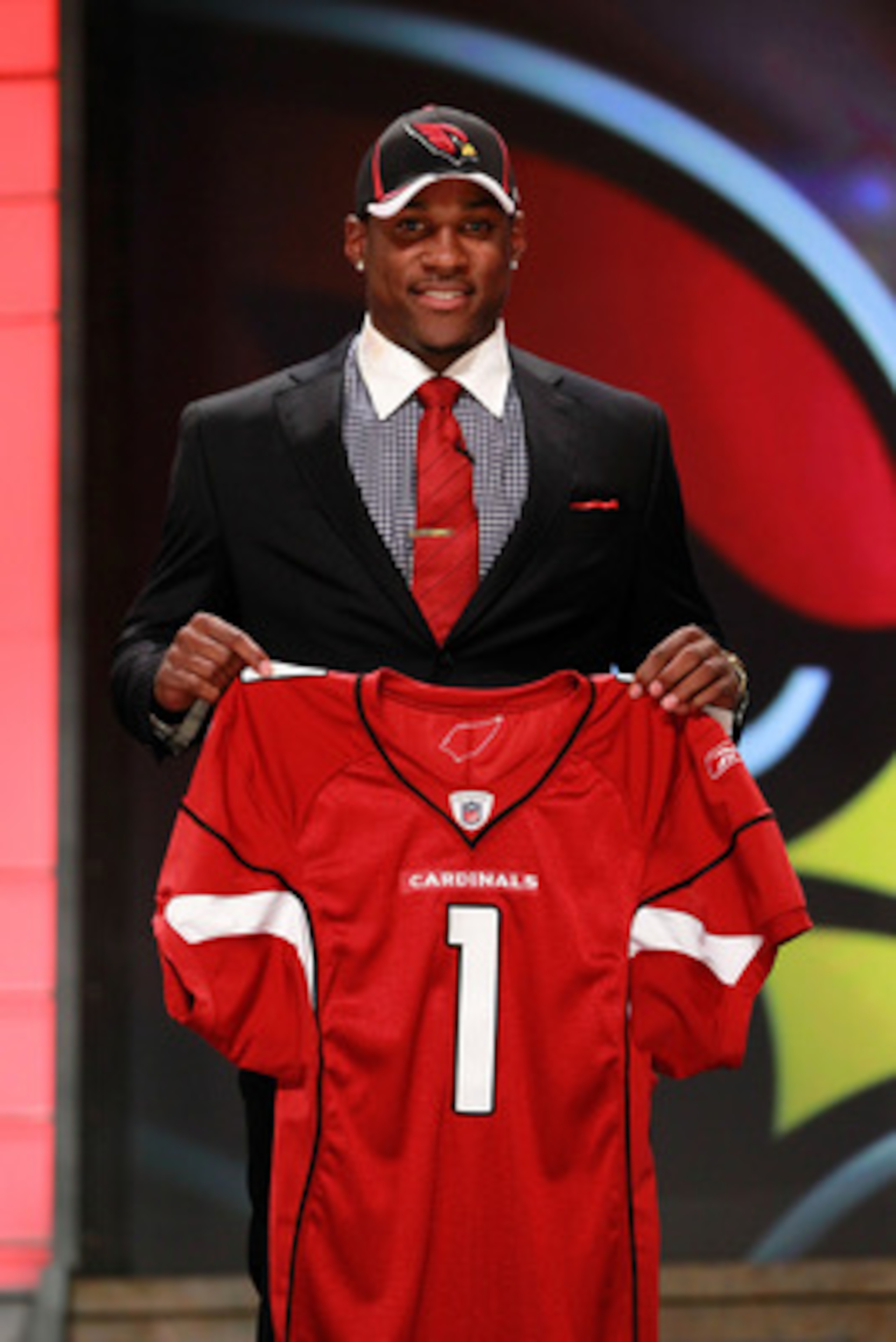
Grade: A
Another pick many thought would be a quarterback; the Cardinals opted to select the best cornerback in the draft.
Patrick Peterson is a player that many analysts had at the top of their draft boards. His combination of speed, size and ball skills will make him an instant starter in Arizona.
I’ve read analysis arguing that Peterson is destined to be a safety in the NFL; I disagree. He is big for a CB, but his strength at the line and ability to adjust to balls in the air will make him a star for the Cardinals.
The work isn’t over for the Cardinals, however. Look for them to target a quarterback and pass-rushing DE in the rounds to come.
No. 6—Atlanta Falcons (From Cleveland): Julio Jones, WR, Alabama
6 of 32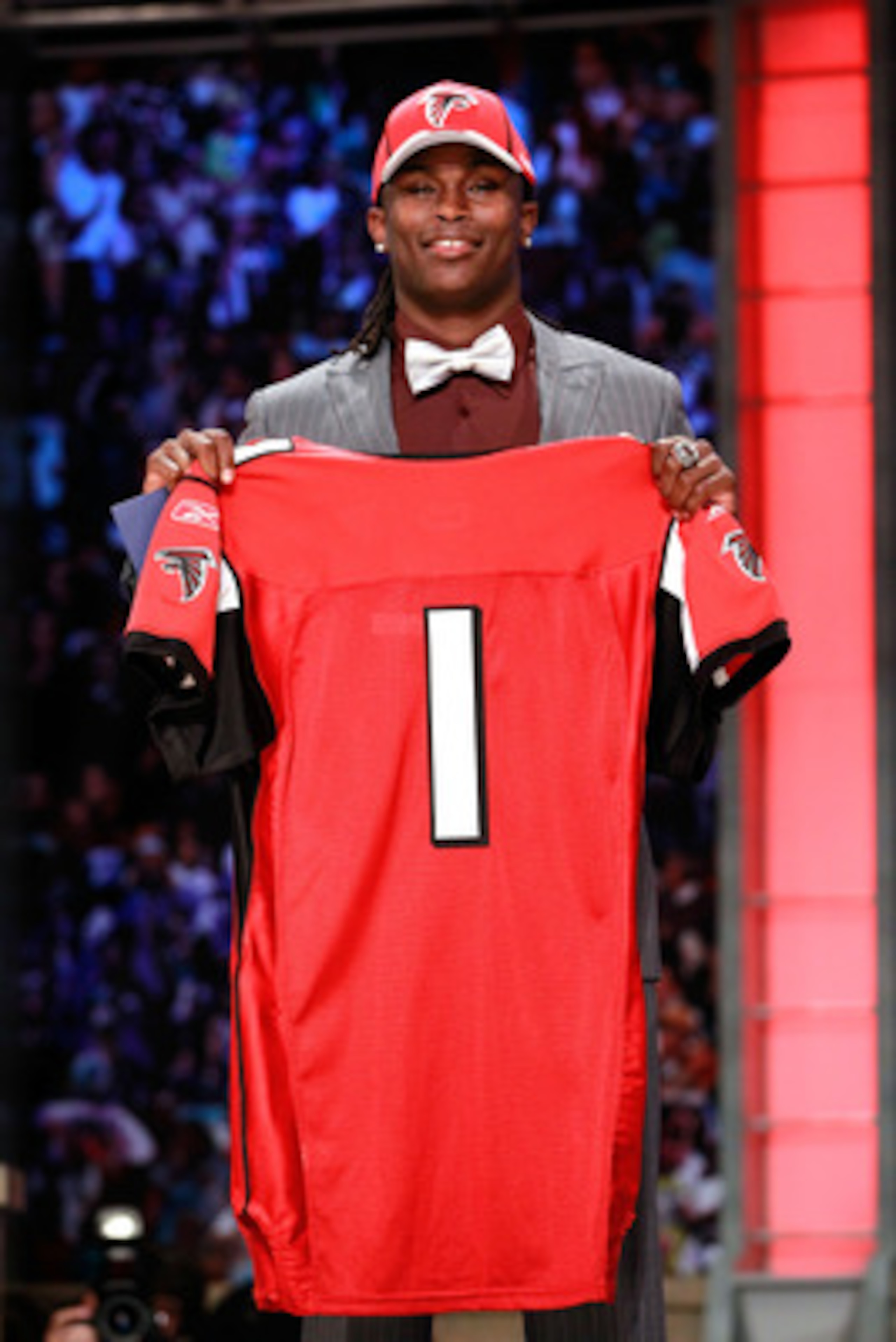
Grade: C
Atlanta made Cleveland an offer they couldn’t refuse. They sent their 2011 first- (No. 27 overall), second- (No. 59) and fourth- (No. 124) round picks, as well as their 2012 first- and fourth-round selections to the Browns for the opportunity to draft Julio Jones.
That is a lot to give up.
Jones could very well be the most complete, NFL ready receiver in this year’s draft. But Atlanta is making a big wager here. I don’t like it.
I understand the Falcons’ desire to take some of the pressure off of Roddy White, but history has taught us all that protecting picks and adding depth is preferable in the long run to chasing a single player.
If it works, Matt Ryan will have an incredible cast to throw to (don’t forget about Michael Jenkins and Tony Gonzalez), but if it doesn’t Mike Smith and co. will have some explaining to do.
No. 7—San Francisco 49ers: Aldon Smith, DE, Missouri
7 of 32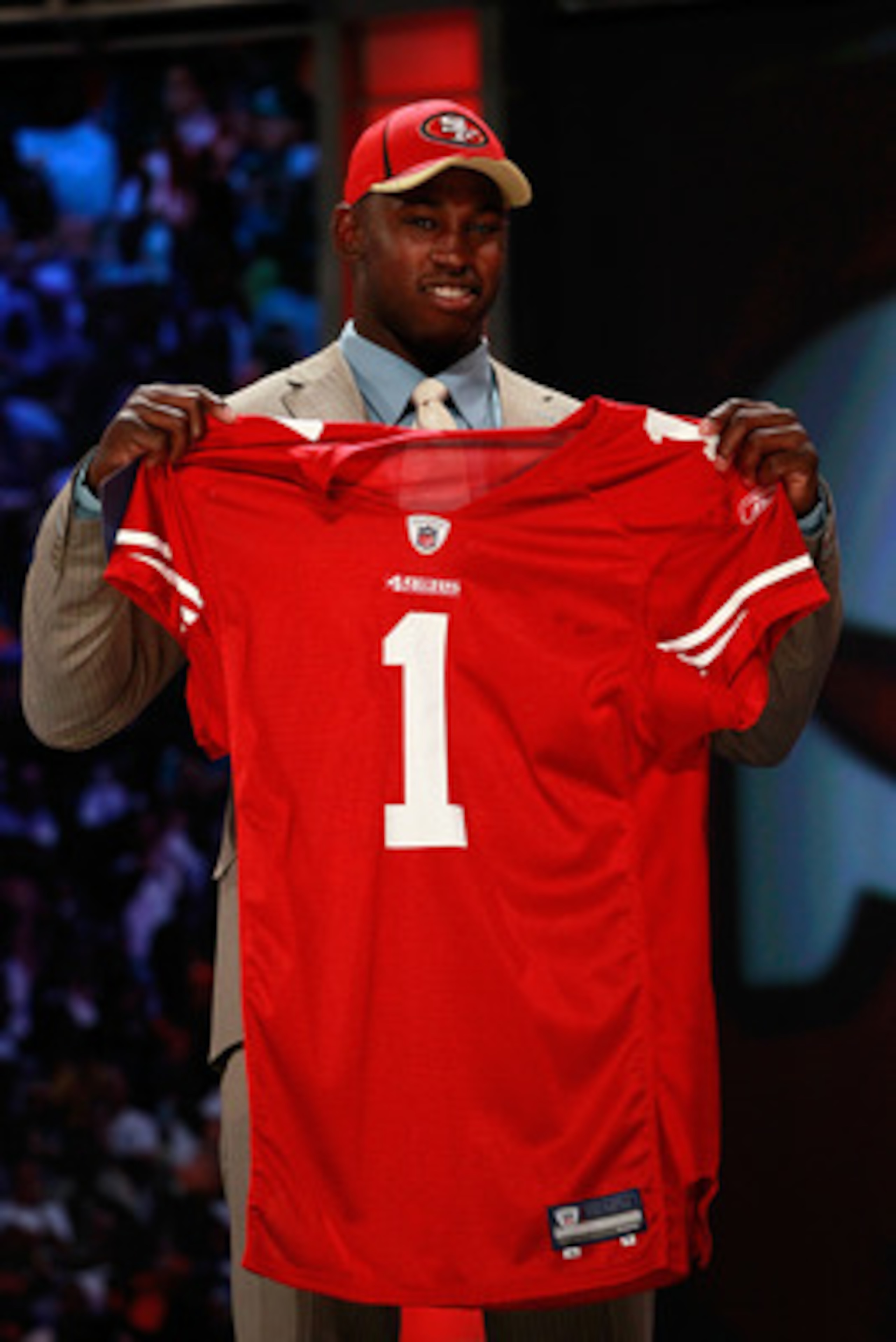
Grade: B-
This is another pick I am not crazy about. Aldon Smith’s draft stock has risen rapidly in the past 72 hours, but I think this is a stretch.
Targeting an edge rusher here isn’t a bad play for the 49ers, but I would have liked to see them go with J.J. Watt or Robert Quinn. Both are more complete DEs (especially against the run), and would come to camp better equipped to make an impact right away.
Smith is a gifted athlete, however, and is well suited to play OLB in San Francisco’s 3-4 scheme.
Another pick with the potential to go either way.
No. 8—Tennessee Titans: Jake Locker, QB, Washington
8 of 32
Grade: D
I was shocked when Locker’s name was called with this pick. I suspect I wasn’t alone.
It’s not that I hate Jake Locker, but it was an incredible reach to pick him here. Why not trade down to the back half of the first round, stockpile a few extra picks, and select him then? Anyone? Bueller?
Quarterback fever had taken over at this point in the draft.
The Titans should have filled a pressing need on their defensive line by taking a player like Nick Fairley.
But that would have made too much sense. Yikes.
No. 9—Dallas Cowboys: Tyron Smith, OT, USC
9 of 32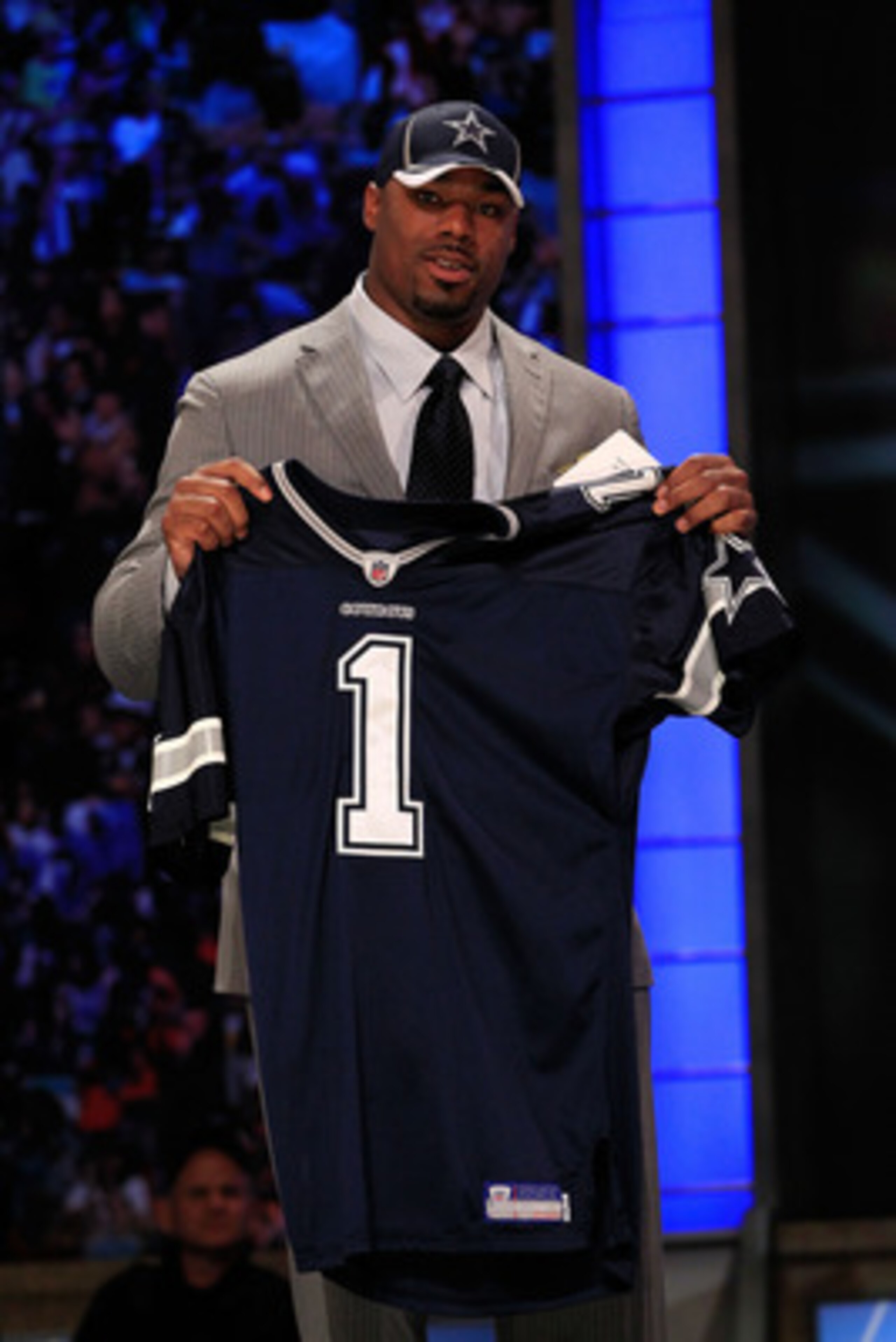
Grade: A-
Tyron Smith is a player the Cowboys had been coveting for weeks, so it was no surprise to see them take the USC OT with this pick.
Smith was rated by most analysts as the top offensive lineman in this year’s class and will provide stability in protecting Tony Romo.
Smith is still a bit raw in areas and needs to improve his consistency, but he has the most upside potential of any OT in the draft.
Many people thought Dallas would trade down with this pick, but I think they made the right choice in selecting their LT of the future.
No. 10—Jacksonville Jaguars (From Washington): Blaine Gabbert, QB, Missouri
10 of 32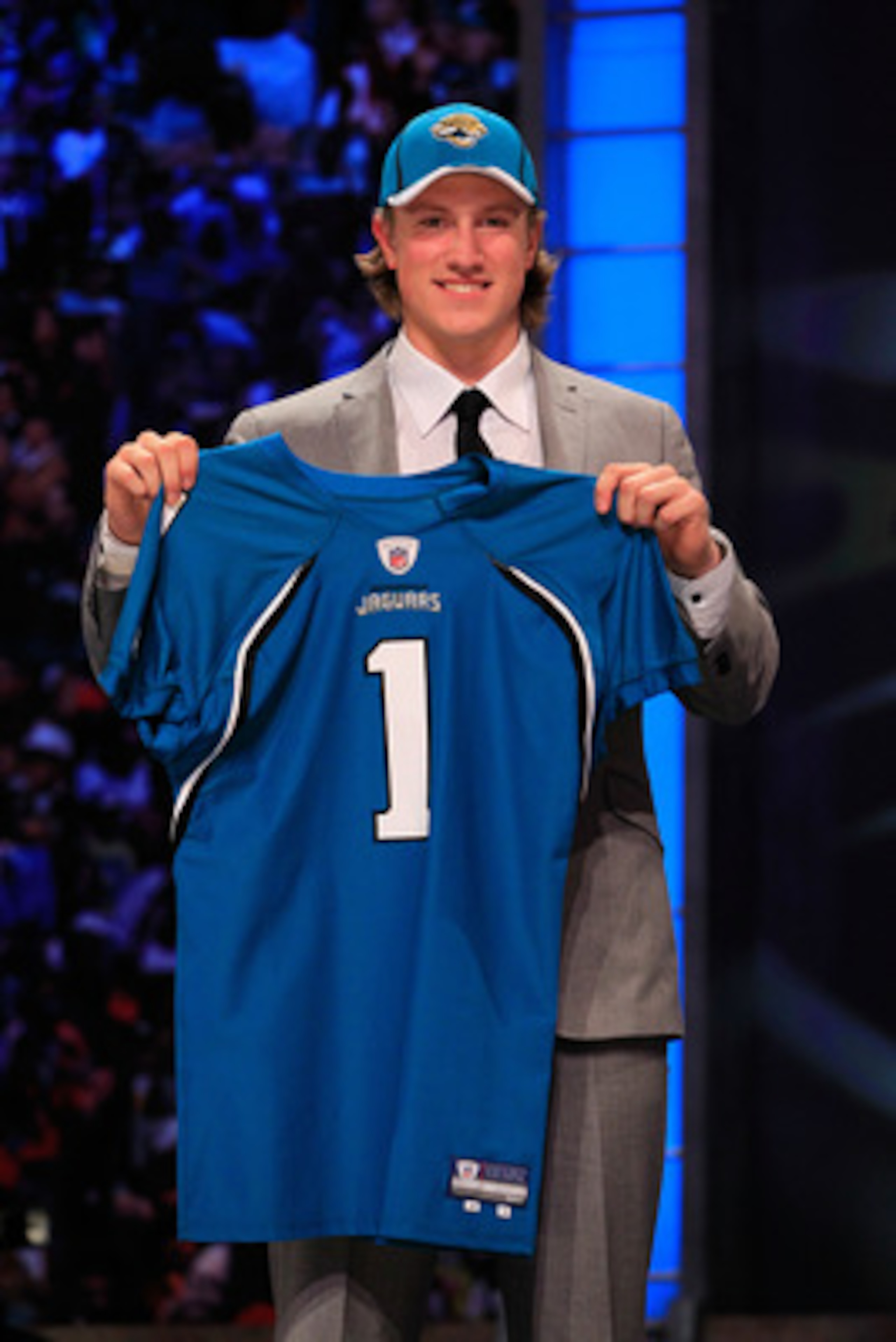
Grade: B
With quarterback fever setting in, Jacksonville made the peculiar move of trading up to select Blaine Gabbert at No. 10.
Assuming Garrard is their projected starter next season, Gabbert will have time to develop and learn the Jaguars system without the pressure of being forced to play before he’s ready.
That said, Jacksonville missed an opportunity to fill a need with their defensive front or secondary with this pick.
It’s a great situation for Gabbert, who could easily become the best quarterback in this draft. But the Jaguars might have found more value elsewhere.
No. 11—Houston Texans: J.J. Watt, DE, Wisconsin
11 of 32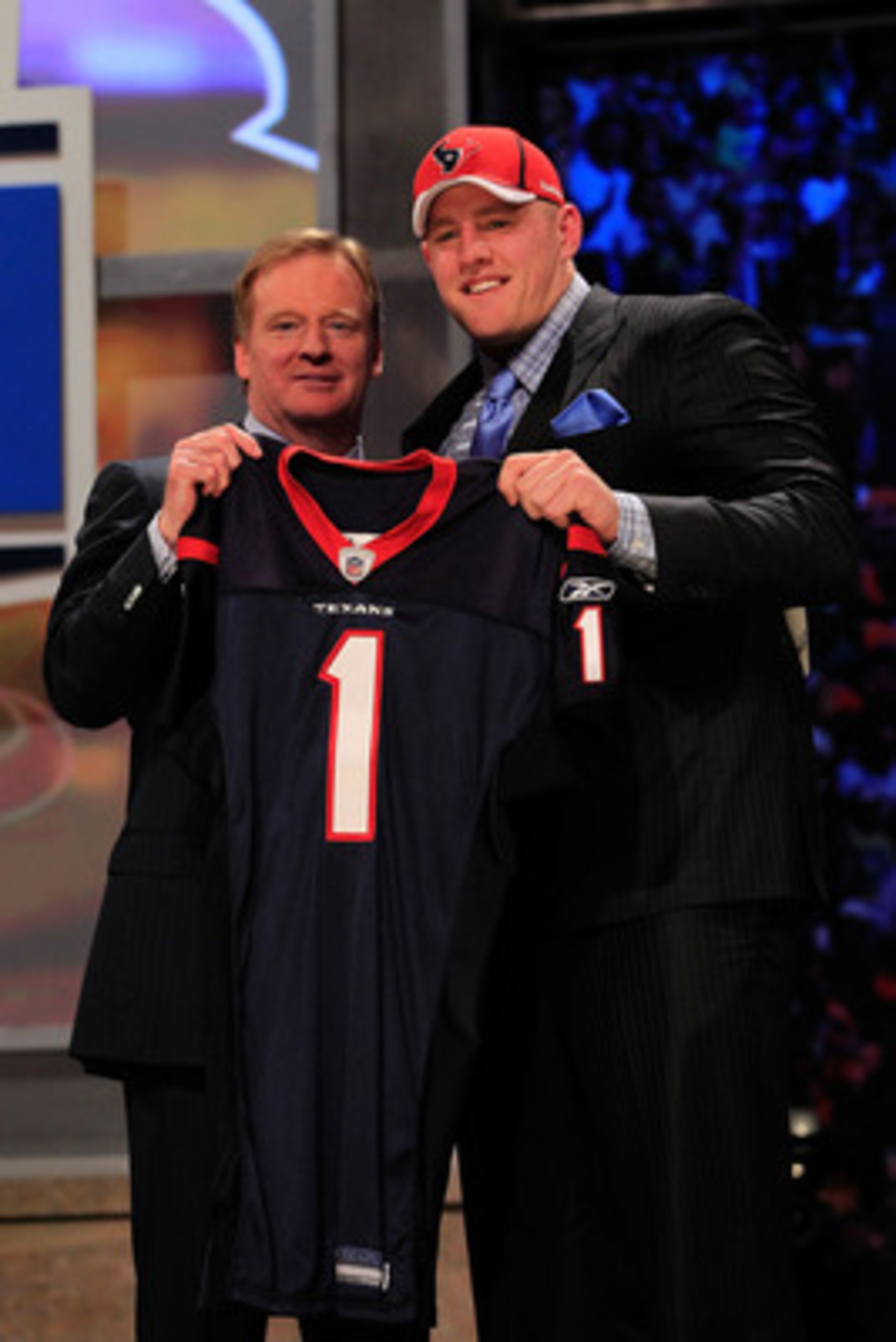
Grade: B+
Watt may not be exotic or flashy, but quietly this is a great pick.
The Texans are transitioning to a 3-4 base defense and Watt fits perfectly as a compliment to Mario Williams.
He has an all-day motor and is relentless rushing the passer or pursuing from the backside. Beyond being strictly a pass rushing DE, Watt is versatile enough to play DT and strong enough to be a run stopper.
Another relatively risk-free pick, the Texans defense is immediately better as a result.
No. 12—Minnesota Vikings: Christian Ponder, QB, Florida St.
12 of 32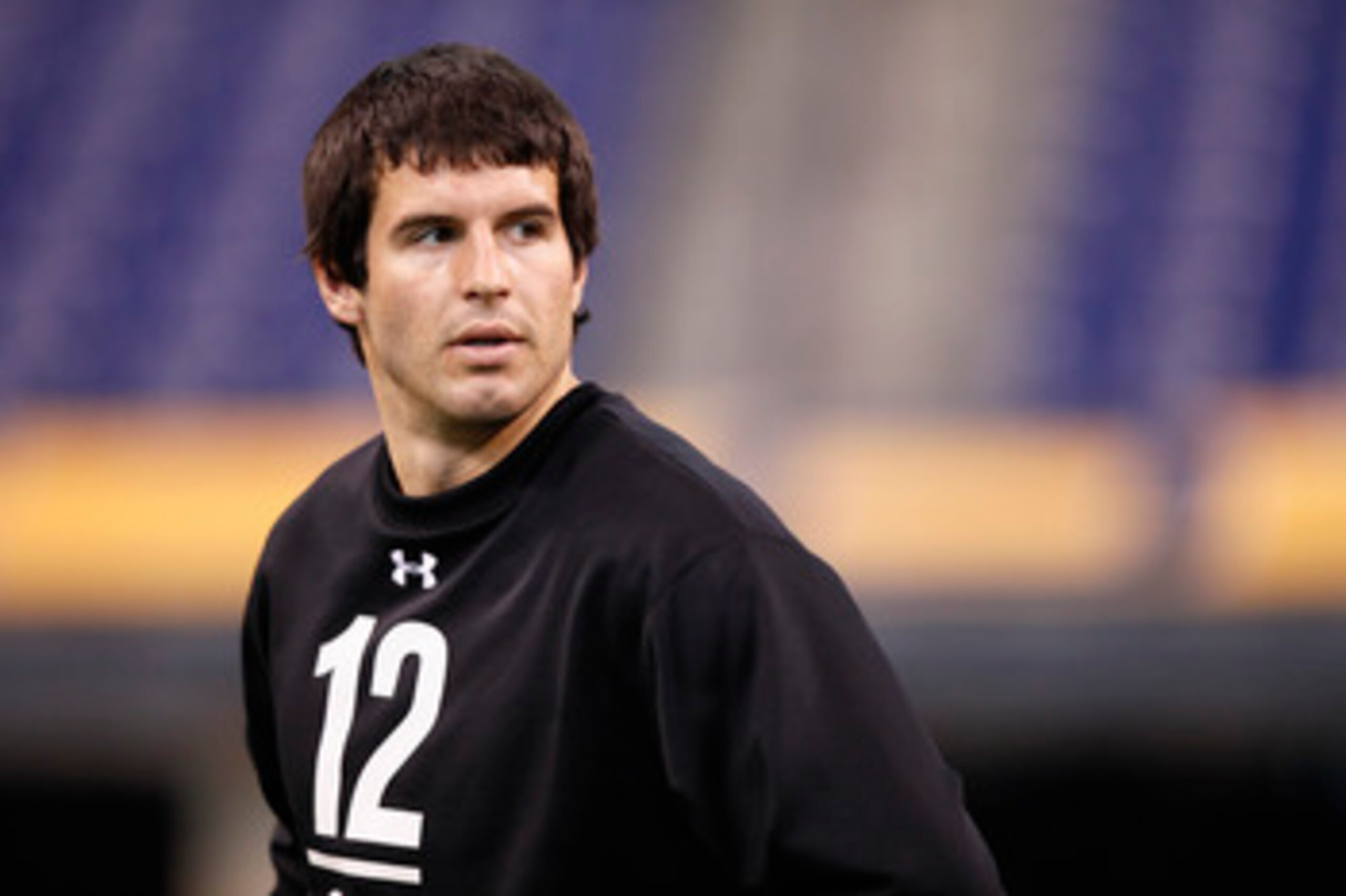
Grade: F
I’ve been trying but can’t come up with any rationale for this pick.
I’m fine with the Vikings deciding Ponder is their guy, but why in the world do you pick him here? Did Rick Spielman not realize that he could have traded down 10 spots and still picked Ponder with virtually no threat of him being gone?
Unless there were really no takers for this pick (which I doubt), this is a pretty bad mistake.
This is not to cast aspersions on Ponder, who I actually like a lot. I was very impressed with him at the Combine (he reminds me a little of Matt Ryan) and I think he can develop into a solid starting quarterback.
But unless Minnesota can get a veteran quarterback this offseason (Donovan McNabb?) to act as a bridge, Ponder will be thrust into a terrible situation.
I hope that doesn’t happen.
No. 13—Detroit Lions: Nick Fairley, DT, Auburn
13 of 32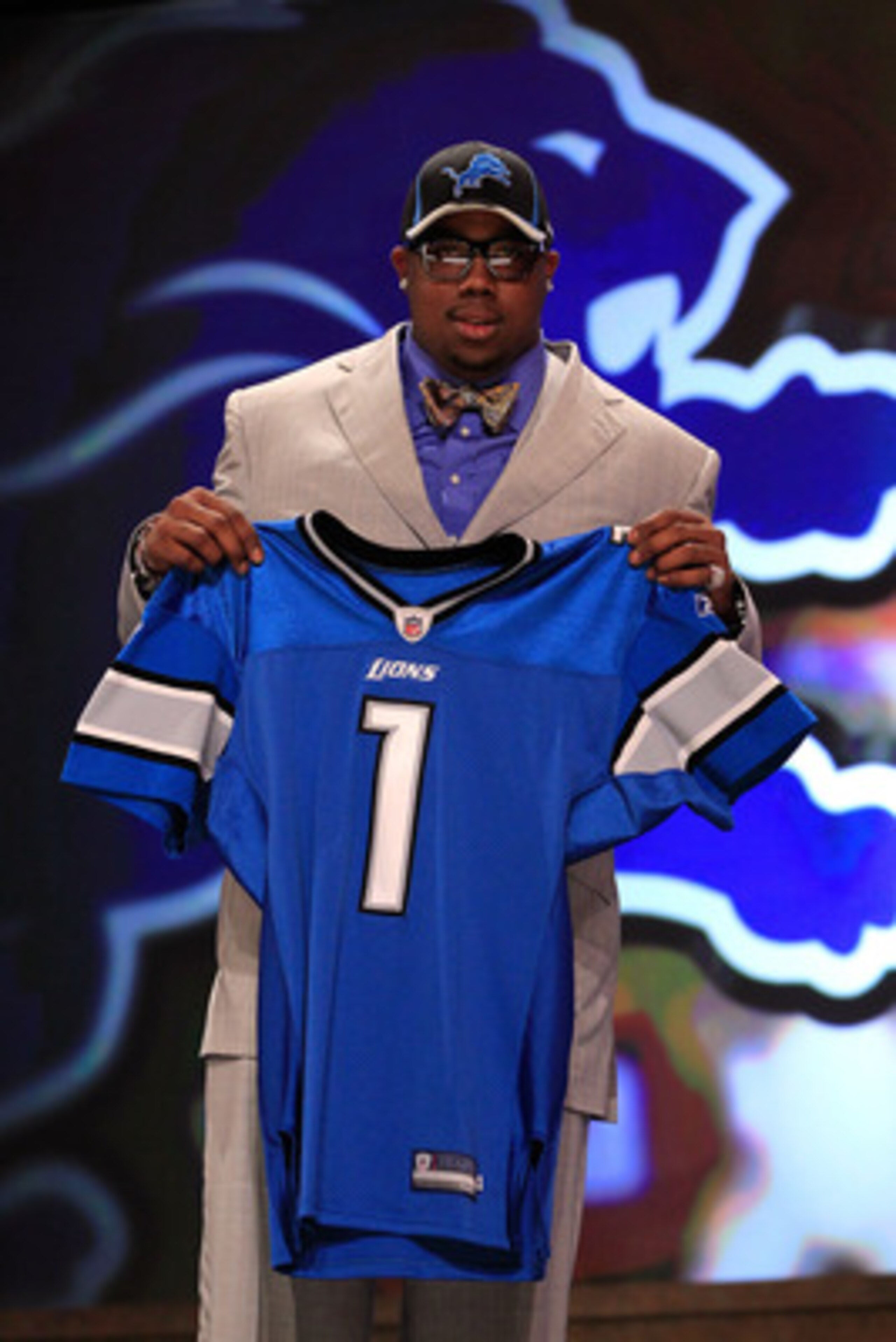
Grade: A
This might be my favorite pick of the first-round—and my least favorite.
As a Packers fan, I am terrified of the Lions defensive front. Suh, Vanden Bosch and now Fairley?
How do you protect against that? The Lions will enter the season with the best defensive line in the NFL.
There have been questions about Fairley’s maturity and work ethic, but I think Detroit will be a good locker room for him.
With a little work on his body, Fairley could easily develop into the best defensive lineman to come out of this draft.
For a Packers fan, that is a scary thought.
No. 14—St. Louis Rams: Robert Quinn, DE, UNC
14 of 32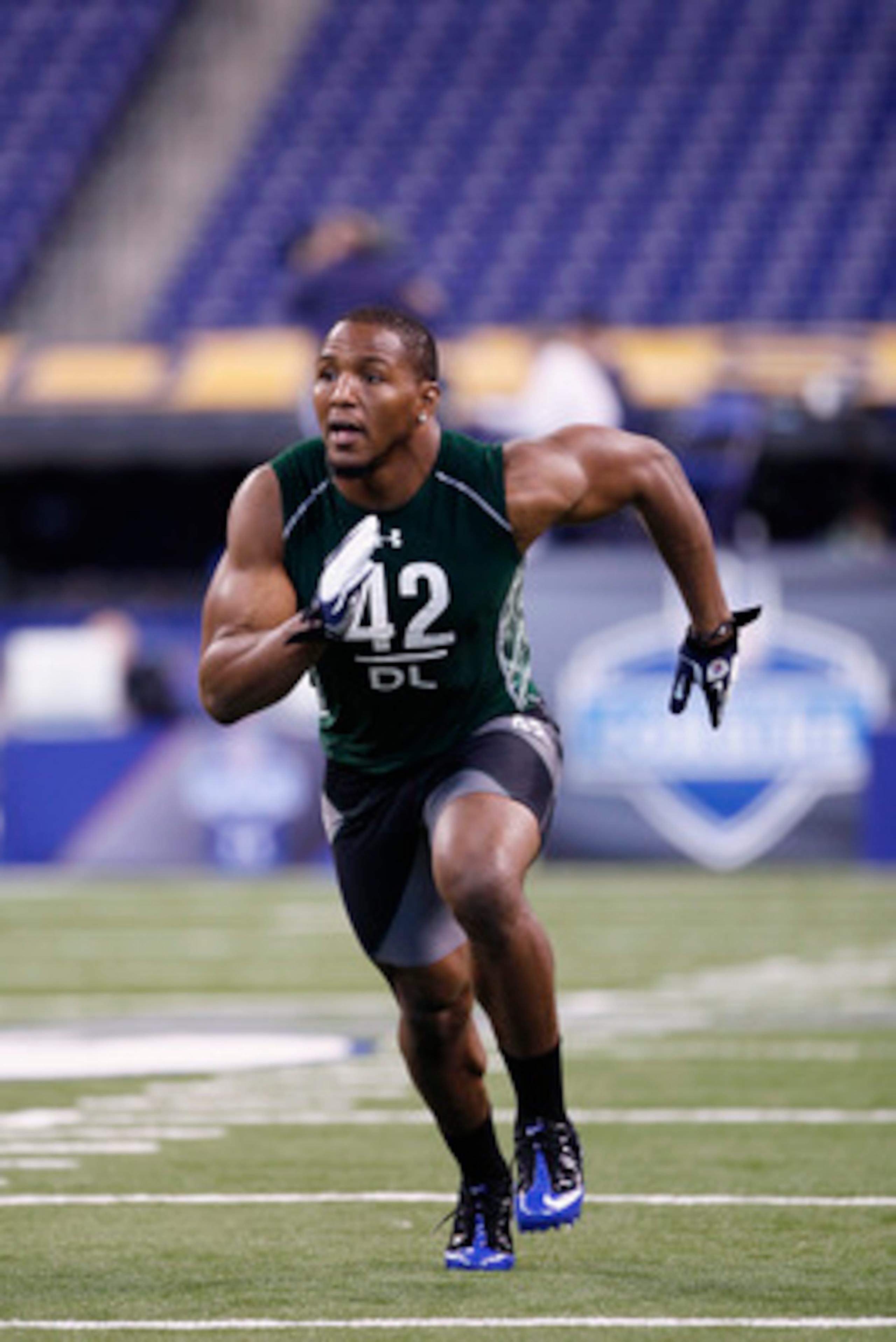
Grade: A
This was a great value pick. The Rams don’t have a huge need at defensive line, but the addition of Quinn will give defensive coordinator Ken Flajole the opportunity to mix up his personnel packages to take advantage of matchups up front.
Quinn is an excellent edge rusher and, with time, can develop into a reliable run-stopper as well. His physical tools are best in class (4.62-40, 34 inch vertical jump) and his motor and work ethic are excellent.
Rams fans will come to love this pick. Take it to the bank.
No. 15—Miami Dolphins: Mike Pouncey, C, Florida
15 of 32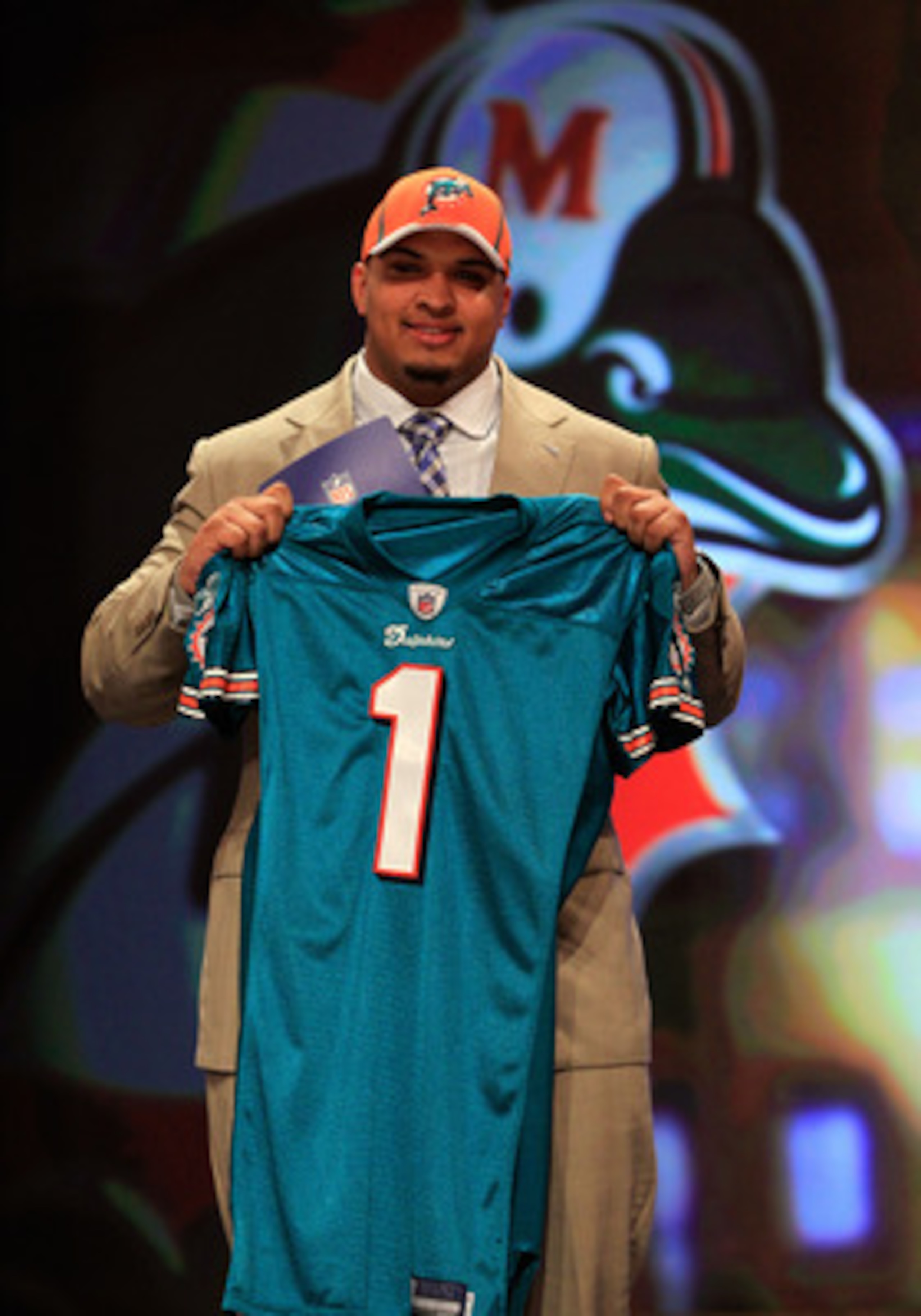
Grade: B+
Like twin brother Maurkice, Mike Pouncey is likely to step in to a starting role from day one. He is a physical, well-rounded center who can also play either guard position.
On a line where the only sure thing is LT Jake Long, Pouncey offers considerable flexibility should an injury occur. He plays with a mean streak and is athletic enough to pull to the edge and block at the second level.
For a run offense that ranked 30th in the NFL, Pouncey will be a welcome addition.
No. 16—Washington Redskins (from Jacksonville): Ryan Kerrigan, DE/OLB, Purdue
16 of 32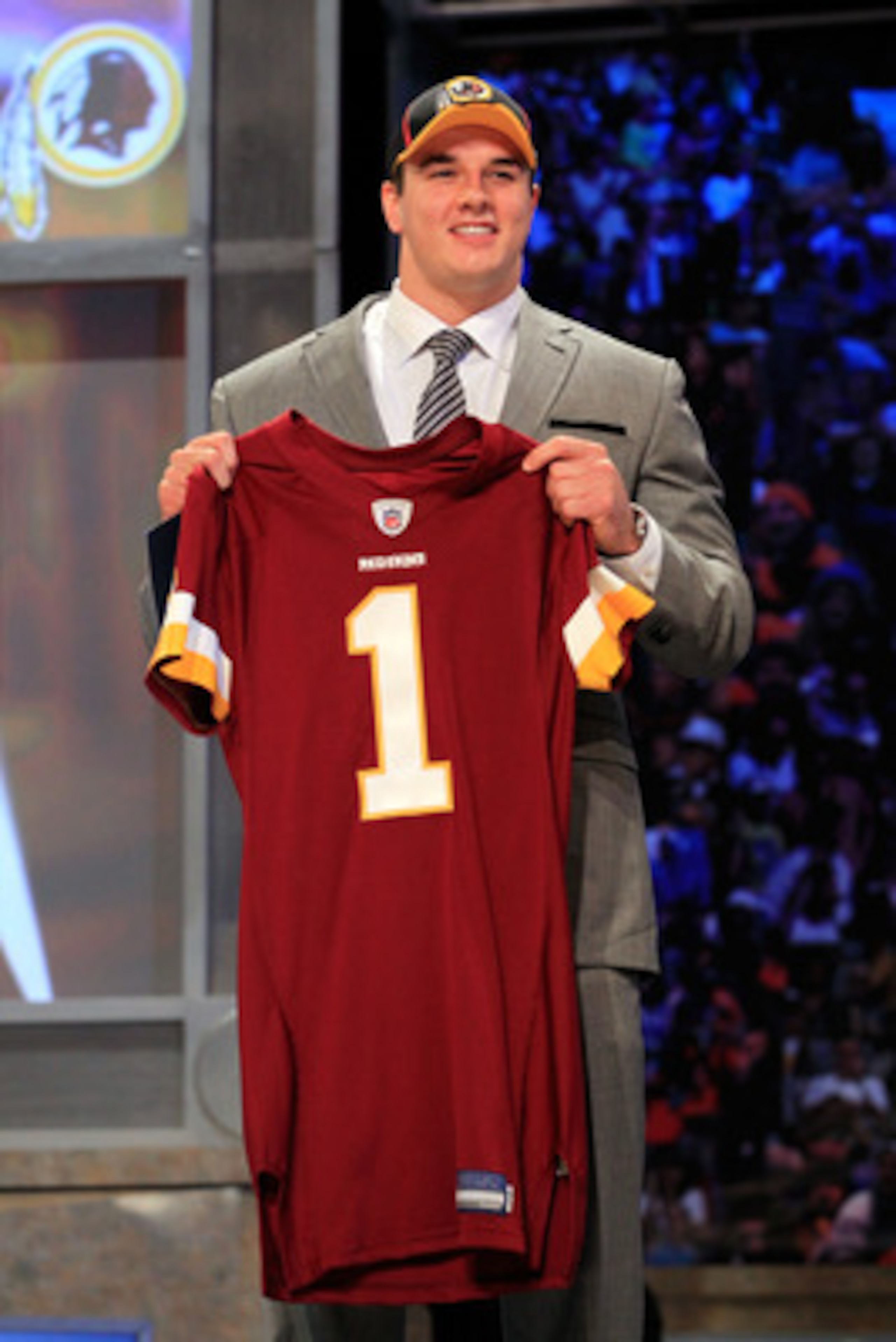
Grade: B+
Washington came into this draft needing a pass-rushing OLB to compliment Brian Orakpo in their 3-4 base defense. They got it Ryan Kerrigan.
Kerrigan is a player I watched quite a bit last season and, while he isn’t the elite athlete that Von Miller is, he always seemed to be making a play.
Some players are just wired to be around the ball.
He will take a lot of pressure off of Orakpo and is a good edge rusher in his own right.
Cameron Jordan was also available here, and probably has more physical tools than Kerrigan. Many will argue that Washington should have gone with him, but I think Kerrigan is a good pick here.
No. 17—New England Patriots: Nate Solder, OT, Colorado
17 of 32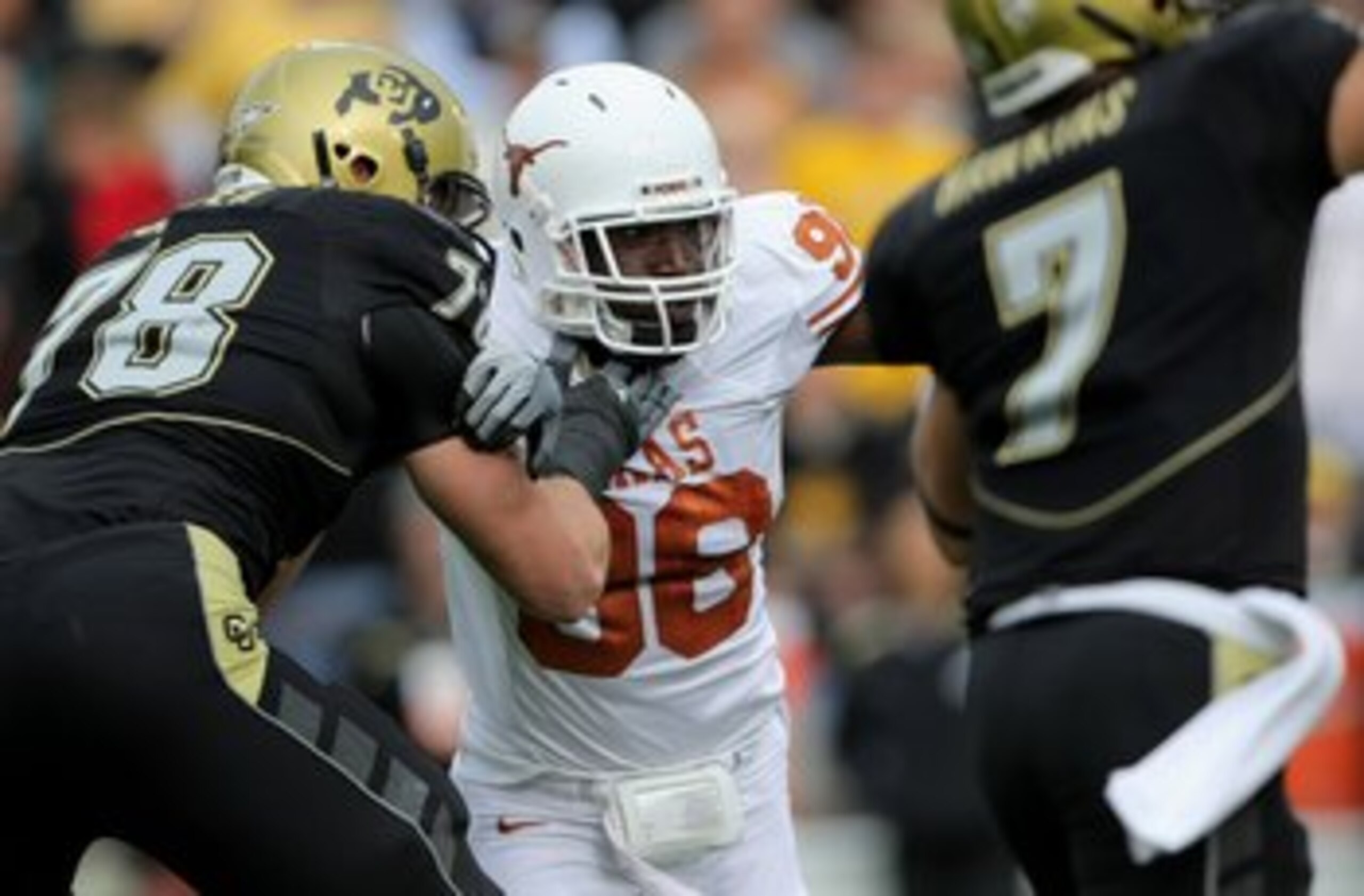
Grade: B-
Nate Solder has a great story.
He began his collegiate career as a tight end (believe it or not) and is still learning the OT position. At 6’8”, he is a monster who is surprisingly athletic and quick for his size.
He is still raw, but his talent is undeniable. With Matt Light on his way out of New England, Solder has a chance to be their LT of the future.
While he has perhaps more potential than any OT in this year’s class, Gabe Carimi and Anthony Castonzo would have been safer picks here.
The Patriots are banking on Solder’s potential, but when you’re talking about the future health of Tom Brady, that is a risky bet.
No. 18—San Diego Chargers: Corey Liuget, DT, Illinois
18 of 32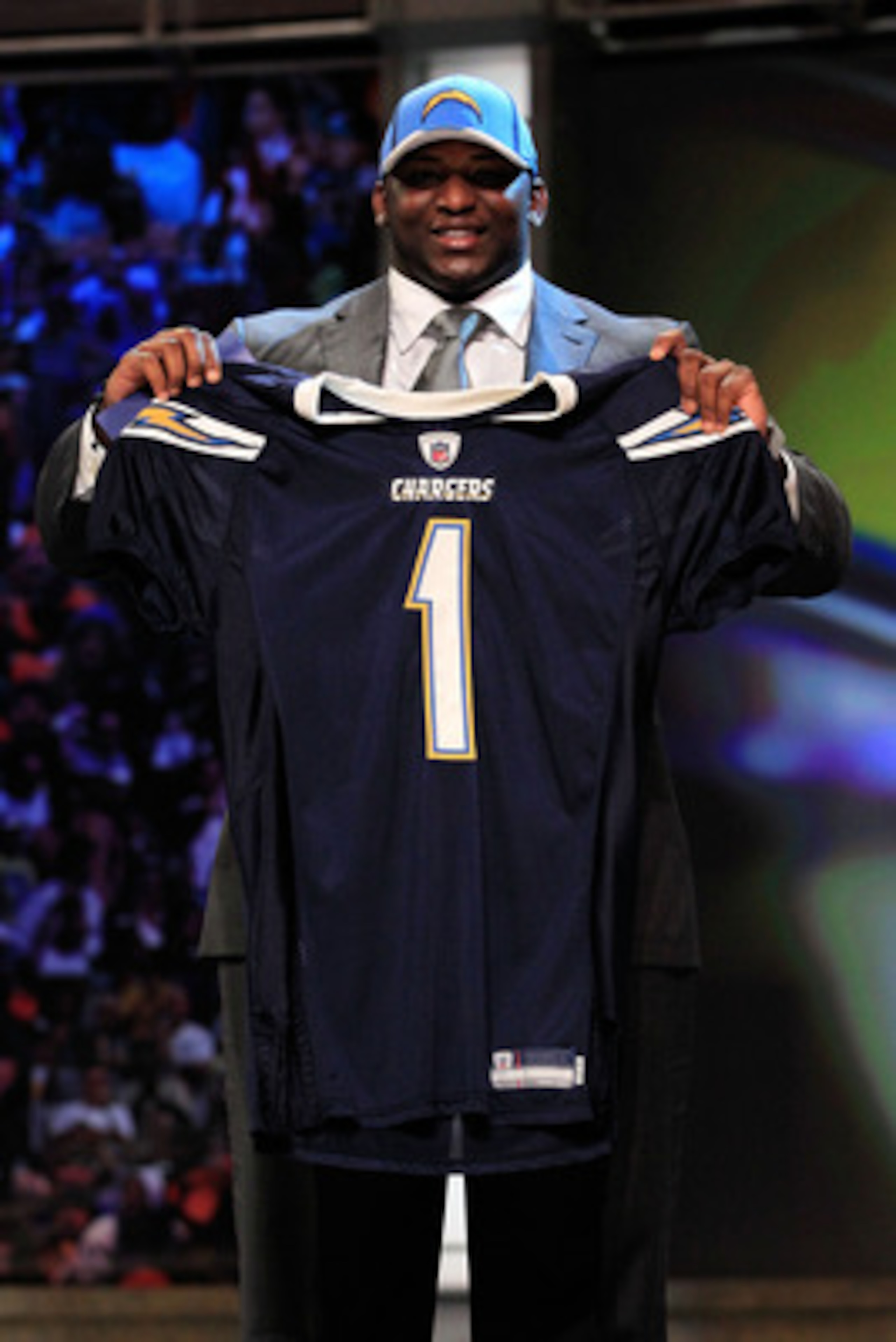
Grade: A-
Corey Liuget wins the award for best draft night jewelry. Did you see that watch?
As an interior lineman, Liuget is also one of the best in this year’s draft. He can play either DE or DT and has a nonstop motor that is put to great use against the run.
He will be a great five technique DE in the Chargers’ 3-4 and was a steal at No. 18.
Great pick.
No. 19—New York Giants: Prince Amukamara, CB, Nebraska
19 of 32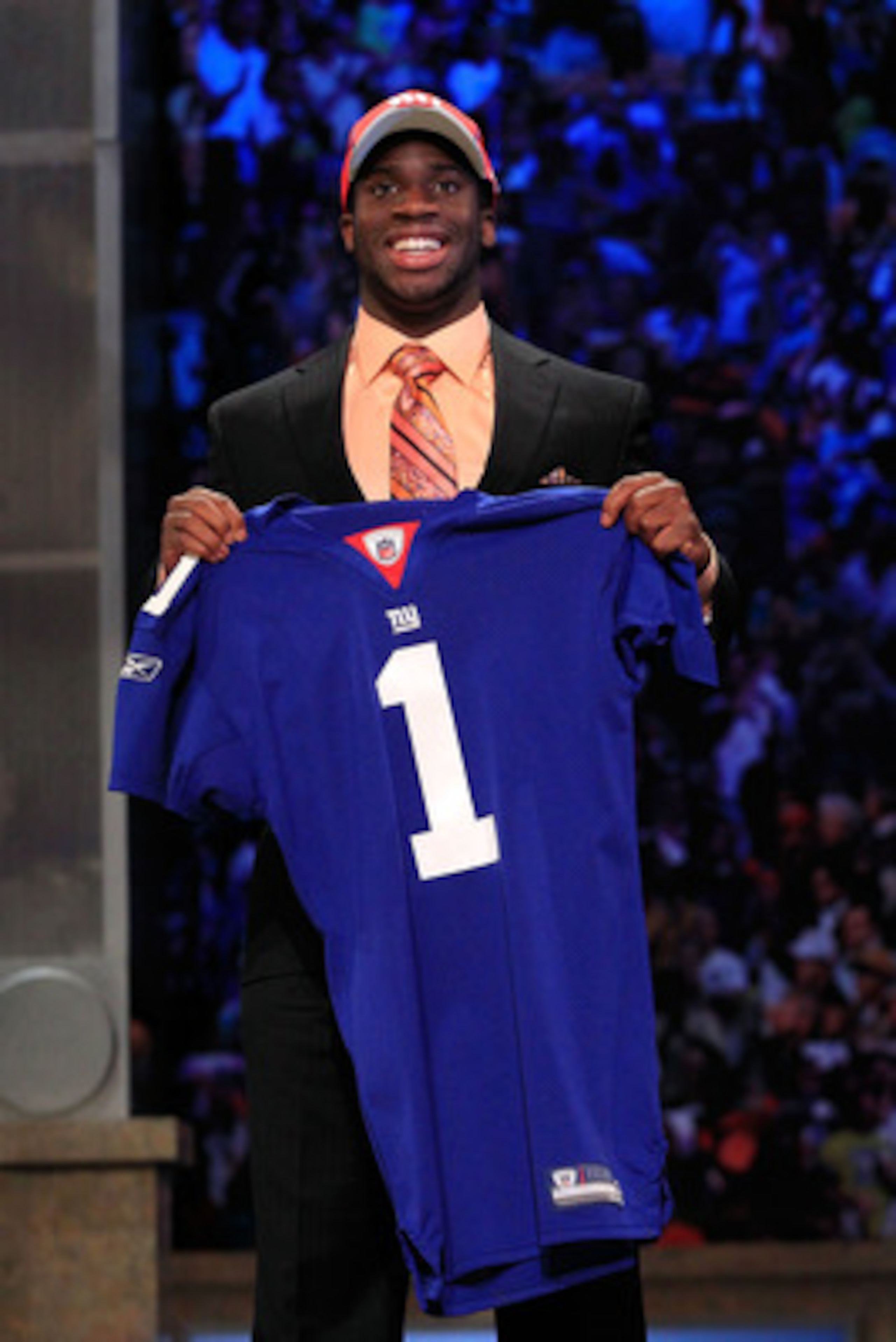
Grade: A-
It’s always fun to watch the two New York teams draft. You never know what you’re going to get from them. If fans like their team’s pick, the reaction is pure jubilation. If they don’t, it’s probably a good idea take a security detail with you to the parking lot if you’re the GM.
Luckily for Jerry Reese, the former was the reaction from Giants fans.
Amukamara is a player who slid down the board a bit and was a gift at No. 19. His addition will give the Giants a formidable secondary, allowing their defensive front the flexibility to dial up exotic blitzes at will.
Amukamara is a natural cornerback and uses his superior athleticism to make plays on the ball, even when out of position. With time he can develop into a true shutdown corner.
It’s never a bad idea to take the best player available, especially when that player was in the Top 10 of many pre-draft rankings.
No. 20—Tampa Bay Buccaneers: Adrian Clayborn, DE, Iowa
20 of 32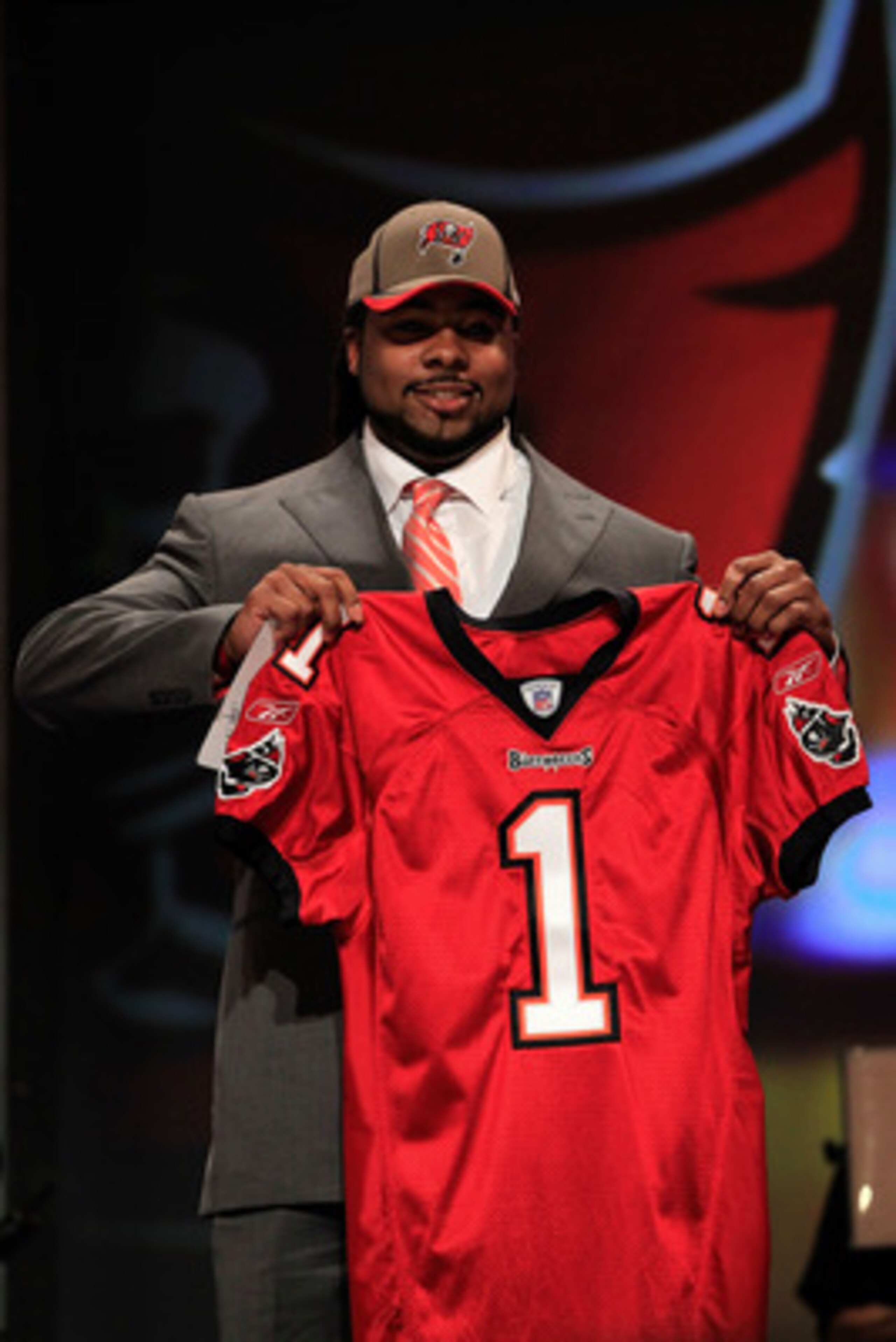
Grade: B
Tampa Bay plays a relatively conservative defensive system. Much of their pass-rush comes from the defensive end position, so drafting someone who can get to the quarterback was the top priority of the night.
Clayborn is a good—but not great—selection.
Clayborn suffers from Erb’s palsy, which limits the motion of his right arm. He will need to play on the right side of the line in order to protect that arm out of the three-point stance.
Clayborn is, however, a good pass rusher and has good burst from the line of scrimmage. His combine stats (4.78-40, 33 inch vertical) show that he has the physical tools to become a star at the NFL level, but he needs to work on his consistency against the run to take the next step.
In the end, however, I question this pick with Cameron Jordan still available.
No. 21—Cleveland Browns (from Kansas City): Phil Taylor, DT, Baylor
21 of 32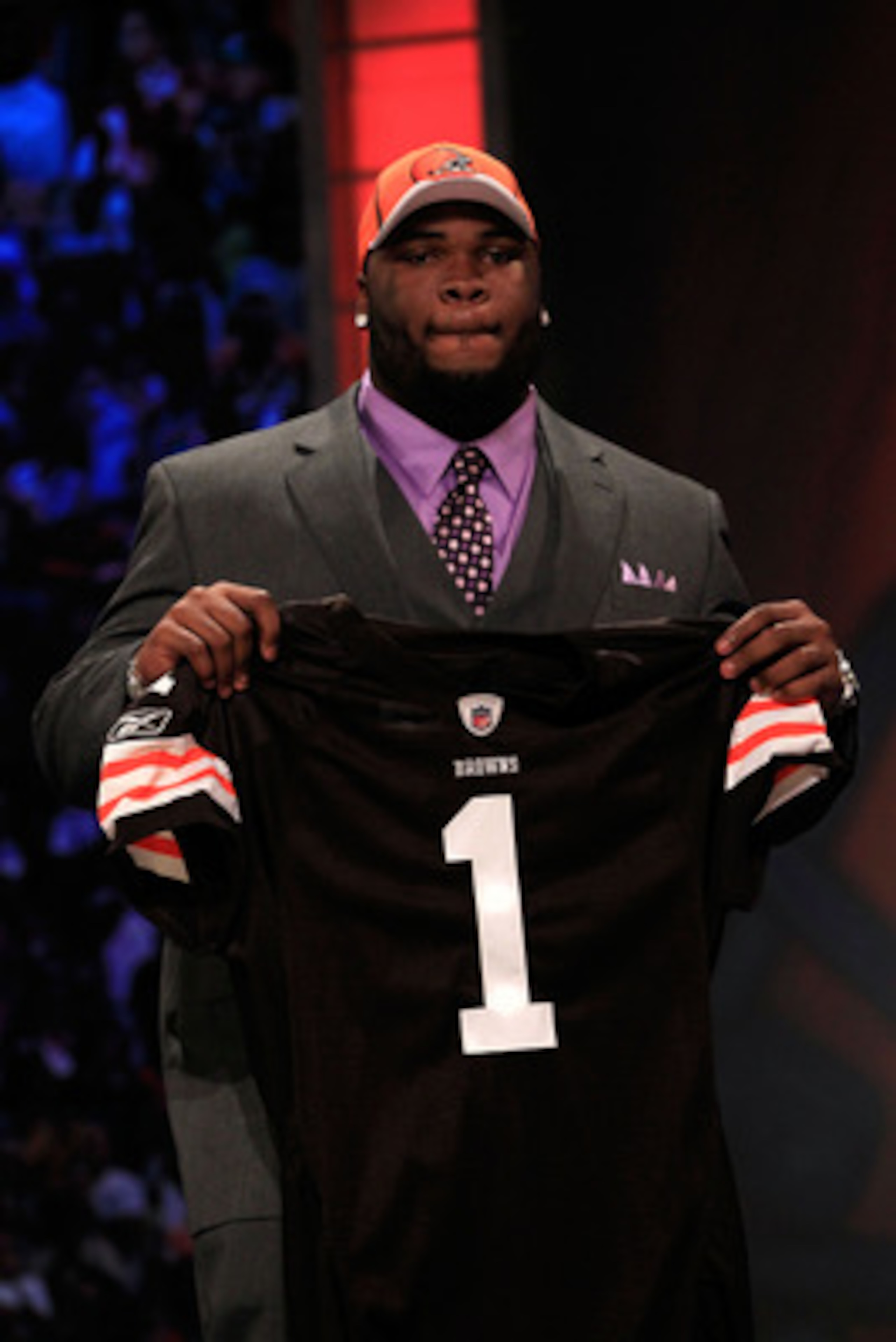
Grade: B+
A beast in the middle, Taylor can take up two blockers, opening up holes for any linebacker to get to the quarterback. He is an incredible athlete for his size and was the first true nose tackle to be selected.
Taylor is excellent against the run but won’t add much to the pass rush. His strength lies in staying home and taking up space blockers.
If the Browns can keep him on the field, he will help create a lot more sacks for a Cleveland defense that struggled to get to the quarterback last season.
No. 22—Indianapolis Colts: Anthony Castonzo, OT, Boston College
22 of 32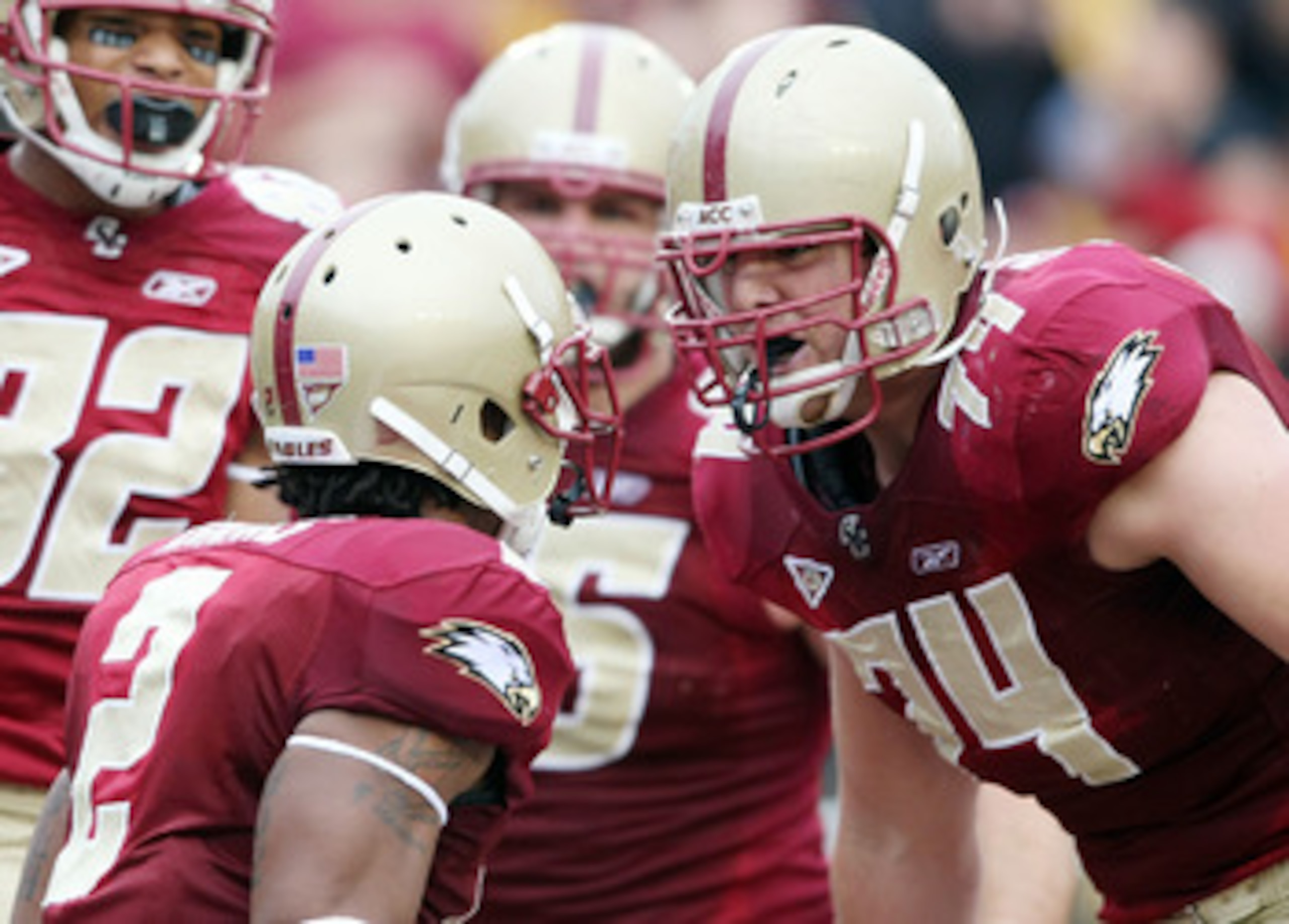
Grade: A-
The Colts must have been grinning from ear to ear when Castonzo fell to them at No. 22. In need of an upgrade at both tackle positions, Castonzo brings the polish and technique to step in and play right away.
He isn’t a beast as a run blocker, but has enough strength to plow the road and open up holes.
As Peyton Manning gets older, protecting his blind side becomes increasingly important. Drafting Castonzo with this pick is a necessary first step in ensuring that Manning stays upright for the foreseeable future.
No. 23—Philadelphia Eagles: Danny Watkins, OG, Baylor
23 of 32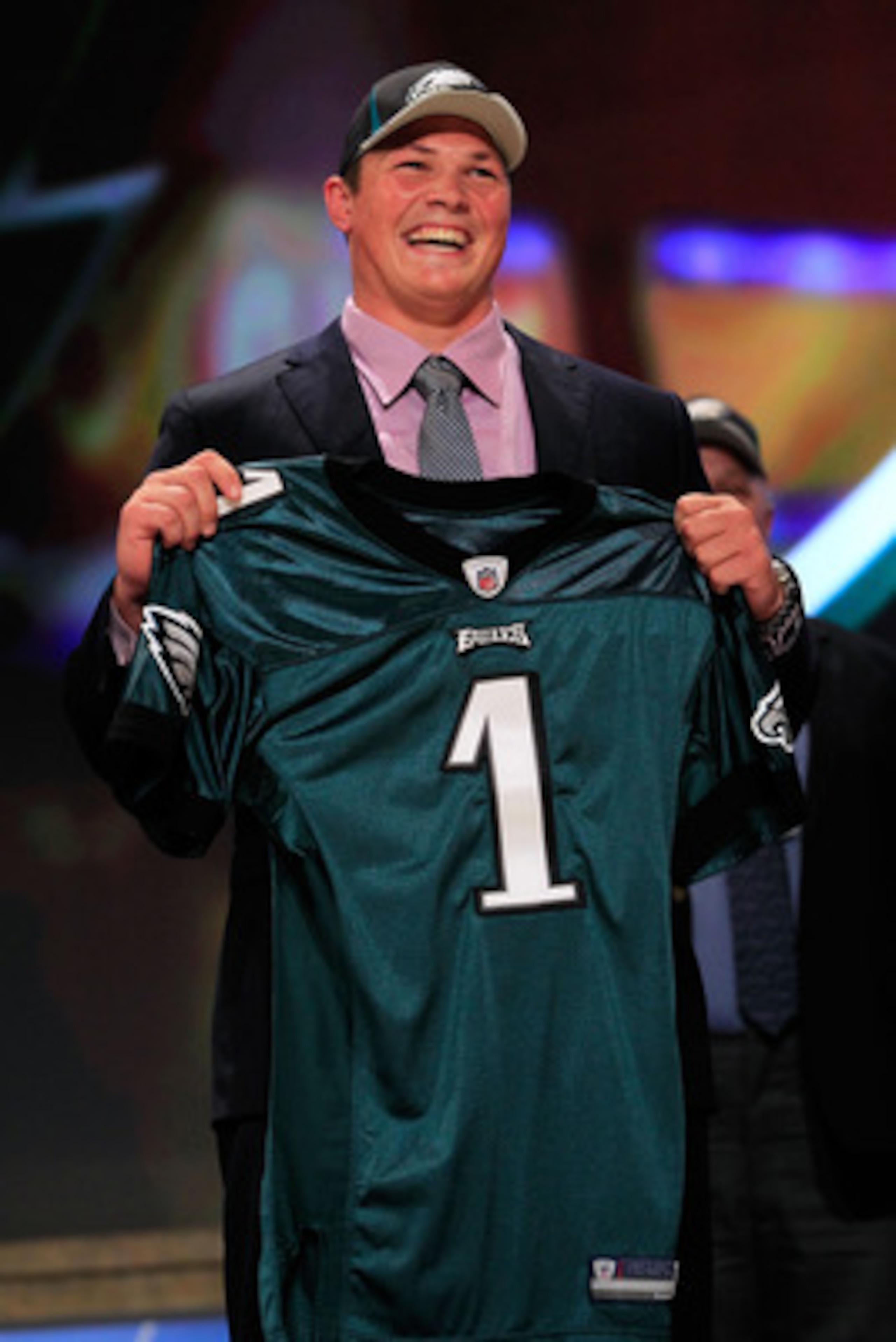
Grade: B+
Danny Watkins benefited greatly from a strong showing at the Senior Bowl practices and shot up draft boards around the NFL as a result.
Watkins plays mean but lacks the lateral speed to play the tackle position in the NFL. The right side is Michael Vick’s backside in Philadelphia, so look for Watkins to step in and start at RG almost immediately.
At 27 he will be a relatively old rookie, which will limit the time he can spend developing. But Watkins is polished enough to be a competent starter from day one.
No. 24—New Orleans Saints: Cameron Jordon, DE, Cal
24 of 32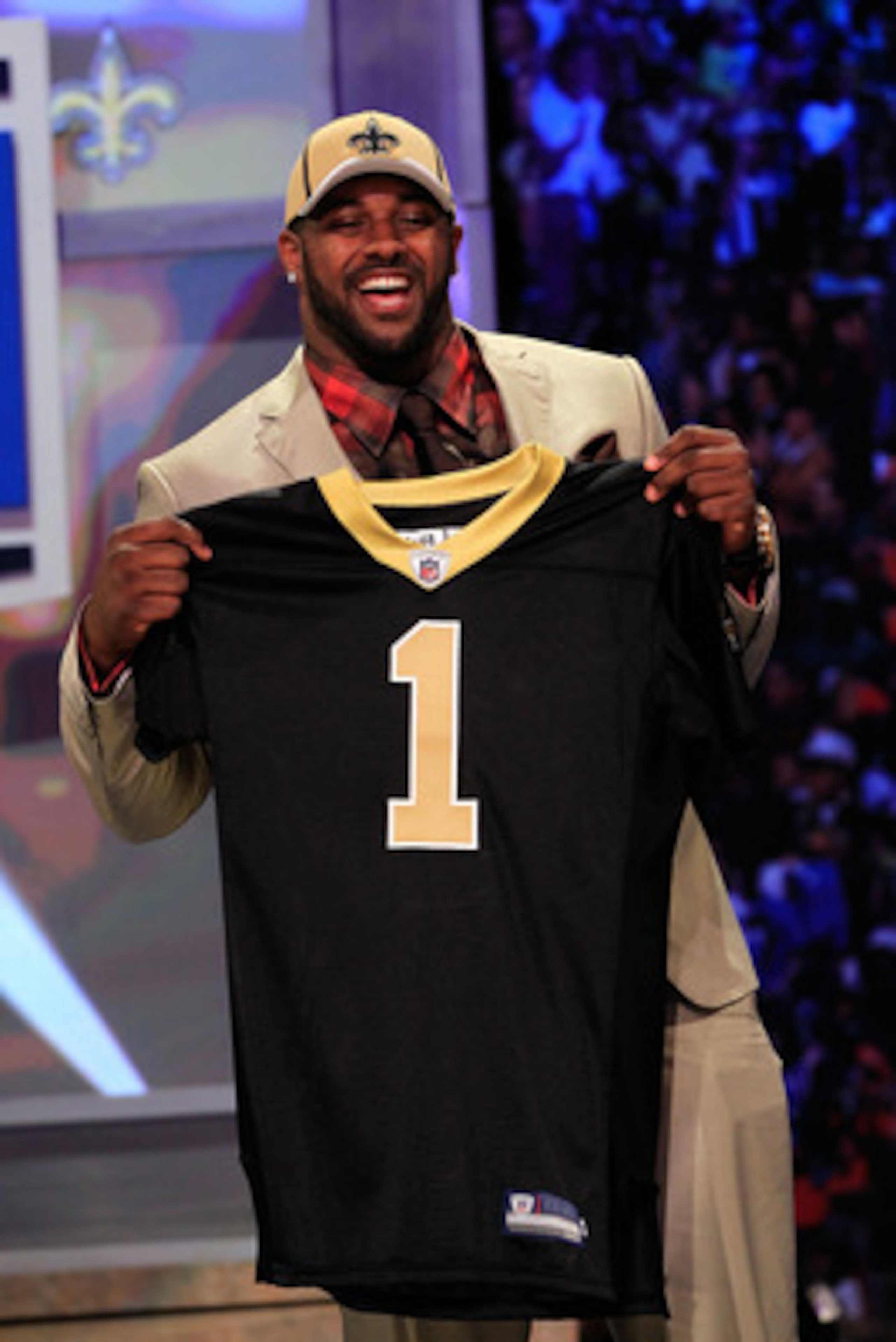
Grade: A
The first of two great picks for the Saints, Cameron Jordan can step in immediately and be a difference maker in New Orleans.
This pick not only fills the No. 1 need for the Saints entering next season, but represents the best player available on many boards.
Jordan is a player who easily could have gone in the No. 10-15 range and is an absolute steal at No. 24. He will be relied on to get to the quarterback in the Saints 4-3 defense and will bring the quickness and power off the edge to do just that.
One of the best value picks in the first round.
No. 25—Seattle Seahawks: James Carpenter, OG, Alabama
25 of 32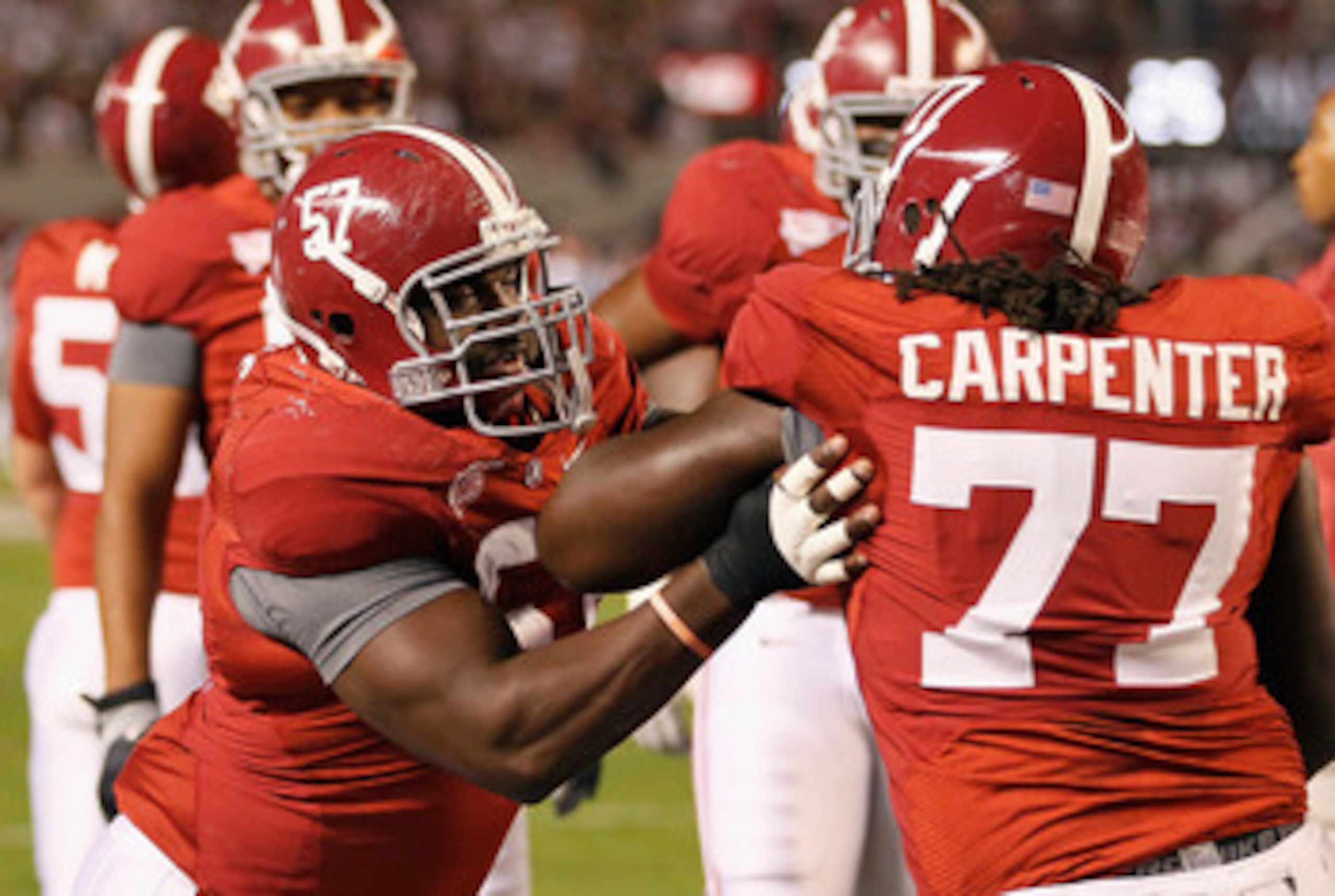
Grade: D+
I’m not sure what to think about this pick.
In all the research I did leading up to this draft, I never saw Carpenter’s name on a potential first-round list. Most analysts had him projected as a mid- to late-second-round pick.
Even if Carpenter develops into a good RT (his likely position) in Seattle, the value in selecting him with this pick just isn’t there. This is another case of a missed opportunity to move down and acquire additional middle round picks.
With the much more skilled and polished Gabe Carimi still on the board, this pick becomes even more confusing.
Fans in Seattle have to be scratching their heads over this one.
No. 26—Kansas City Chiefs (from Cleveland): Jonathan Baldwin, WR, Pitt
26 of 32
Grade: B
After Baltimore bizarrely passed, the Chiefs used the opportunity to select Pitt WR Jonathan Baldwin.
This is another stretch, but at least with Baldwin I can see why a team like Kansas City would want to pull the trigger a little early.
Baldwin has physical tools that no WR in this class (A.J. Green and Julio Jones included) can match. At nearly 6’5” and 230 lbs., Baldwin reminds me of a young Calvin Johnson.
Baldwin has had off-field problems in the past and many question his attitude (with good reason), but there is no doubt that he could be an amazing weapon for Matt Cassel.
No. 27—Baltimore Ravens: Jimmy Smith, CB, Colorado
27 of 32
Grade: A
When they were finally ready to pick, the Ravens landed a gem.
Character concerns knocked Jimmy Smith down the board on day one, but he is the best pure cover-corner in this draft. He will immediately step in and make Baltimore’s defense better.
I loved him at the Combine and he impressed with a 4.42-40 and 36-inch vertical jump.
Baltimore’s once stout defense fell on hard times last year, but the addition of Smith will allow their defensive front to once again be creative in their blitz packages.
Additionally, Baltimore’s locker room is filled with veterans on the defensive side of the ball and may be the ideal place for Smith to grow and develop, both as a player and as a man.
If he can clean up his act, Jimmy Smith could be the steal of the first round.
No. 28—New Orleans Saints (from New England): Mark Ingram, RB, Alabama
28 of 32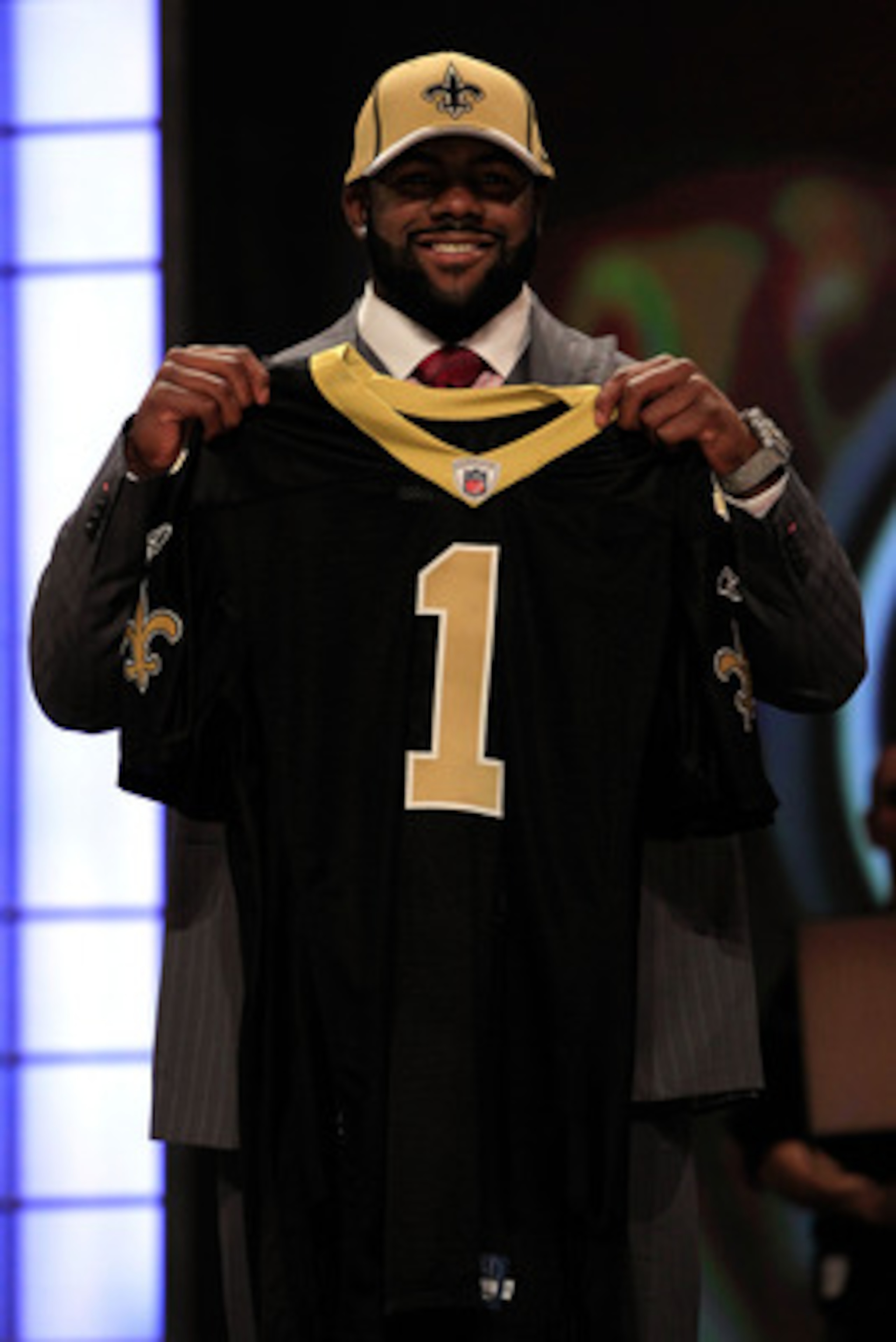
Grade: B+
Another great pick by the team that owned day one at the 2011 NFL Draft.
Mark Ingram is a player that can calm the uncertainty at the running back position that New Orleans was struggling to deal with.
His knee is a concern but, if he stays healthy, Ingram is can absolutely be a 1,000 yard rusher for the Saints. He needs to improve his pass-protection skills but has displayed a great work ethic and willingness to learn.
Everyone in New Orleans seemed to love this pick except Reggie Bush who, shortly after, tweeted, “It’s been fun New Orleans.”
Ouch.
No. 29—Chicago Bears: Gabe Carimi, OT, Wisconsin
29 of 32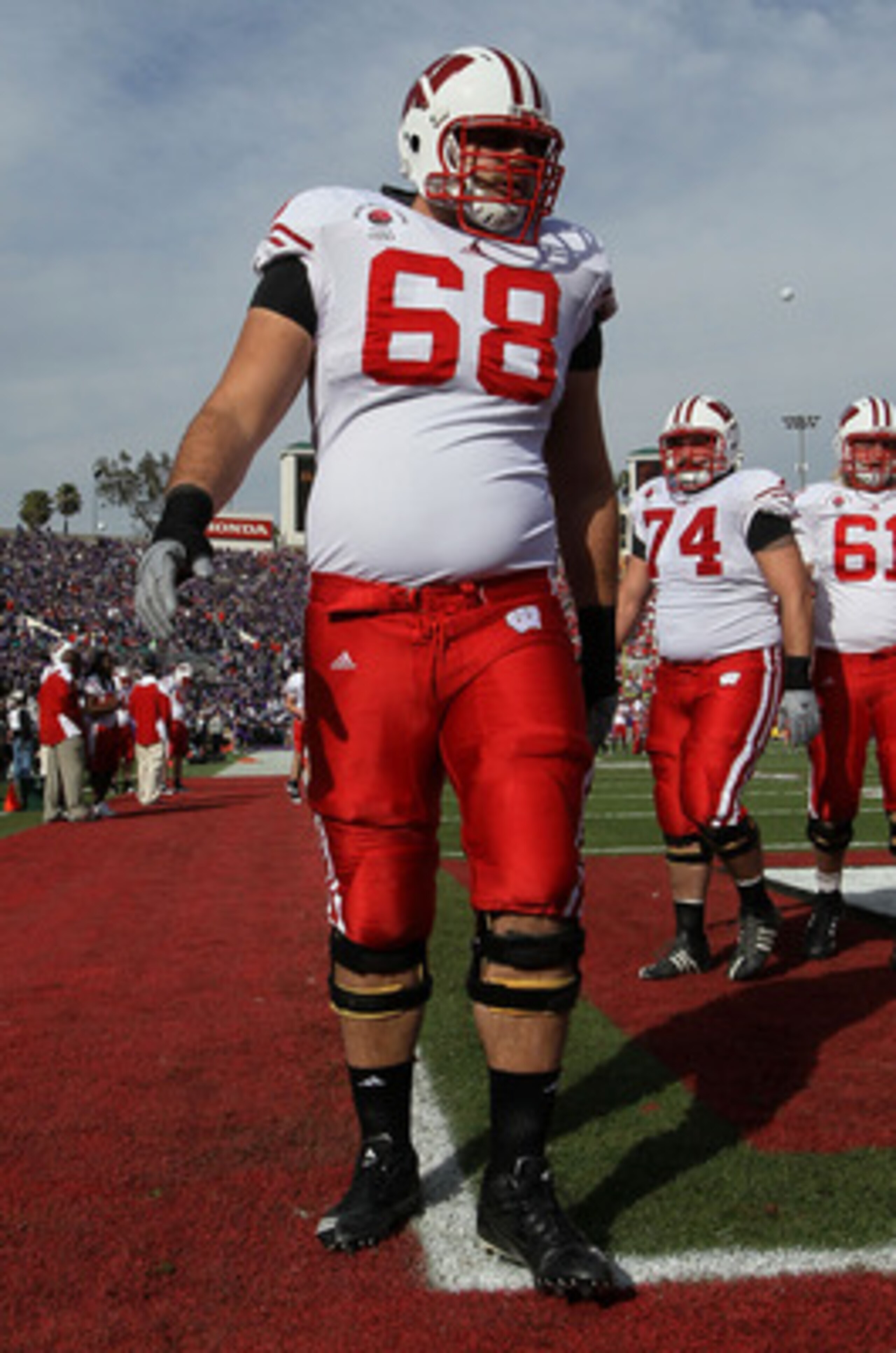
Grade: A
I can’t believe Gabe Carimi fell this far. I had him ranked as the No. 2 offensive lineman on my pre-draft board, and was certain he’d be gone well before the first-round ended.
He will likely be a RT for the Bears, but has the versatility to play RT, LG or possibly even LT.
This is a great value pick for the Bears as Carimi will absolutely contribute immediately in Chicago. He lacks top-end lateral agility but makes up for it with superb hands and great technique.
His real strength lies in the run game. Carimi was unstoppable at Wisconsin last year, opening up holes that you could drive a bus through. That makes him ideally suited for the RT position in Chicago.
Matt Forte will enjoy running behind Gabe Carimi.
No. 30—New York Jets: Muhammad Wilkerson, DE, Temple
30 of 32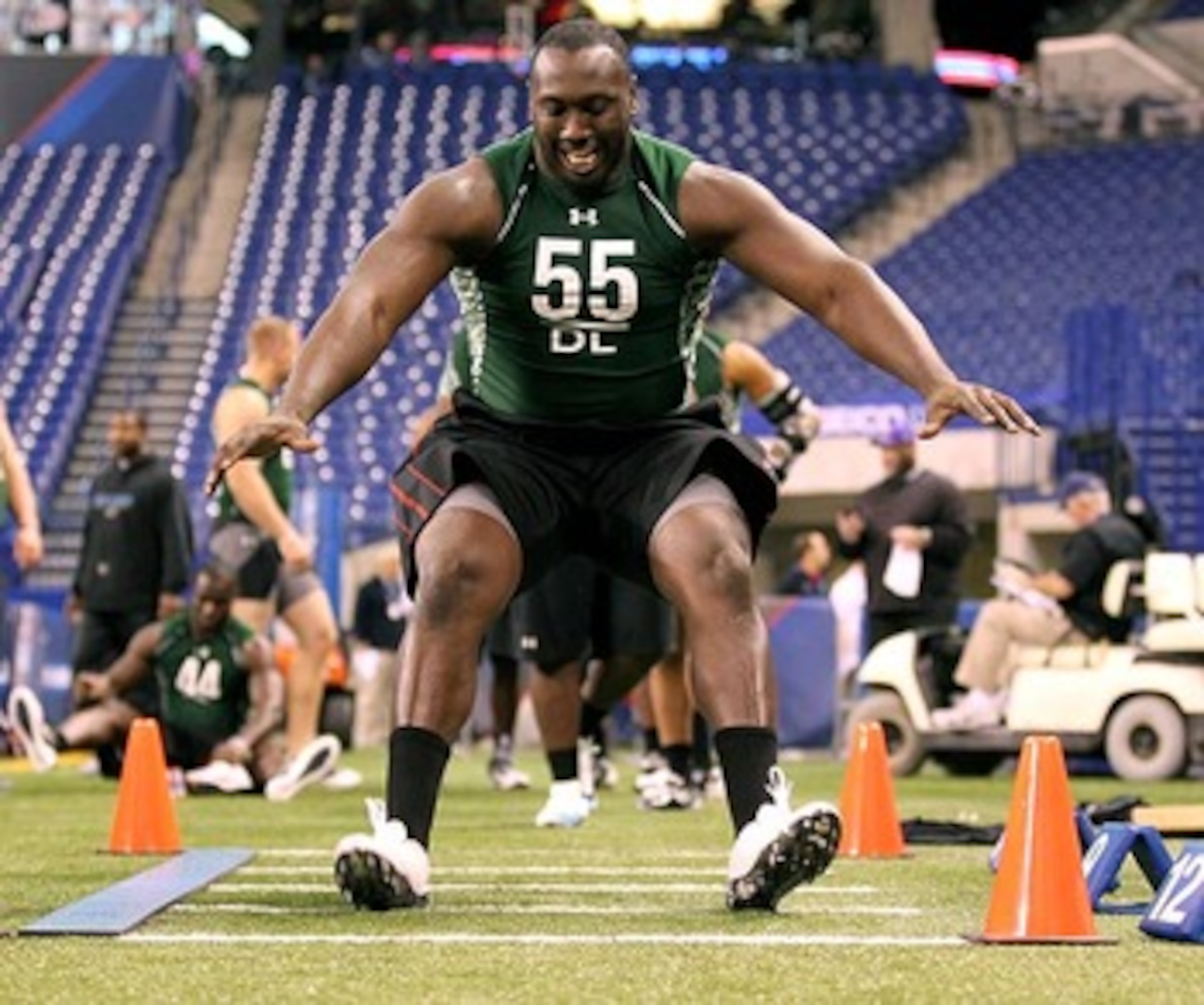
Grade: A
Adding to a defensive front that wasn’t as dominant as many assumed, Muhammad Wilkerson is an incredible pick for the Jets.
He is a perfect interior lineman for the Jets 3-4 defensive system. His size (6’4”, 315 lbs.) would seem to suggest that he is primarily a run-stopping DE, but Wilkerson has the ability to shed blocks and get into the backfield.
He will be an upgrade over aging Shaun Ellis and should step into a starting role immediately.
No. 31—Pittsburgh Steelers: Cameron Heyward, DE, Ohio St.
31 of 32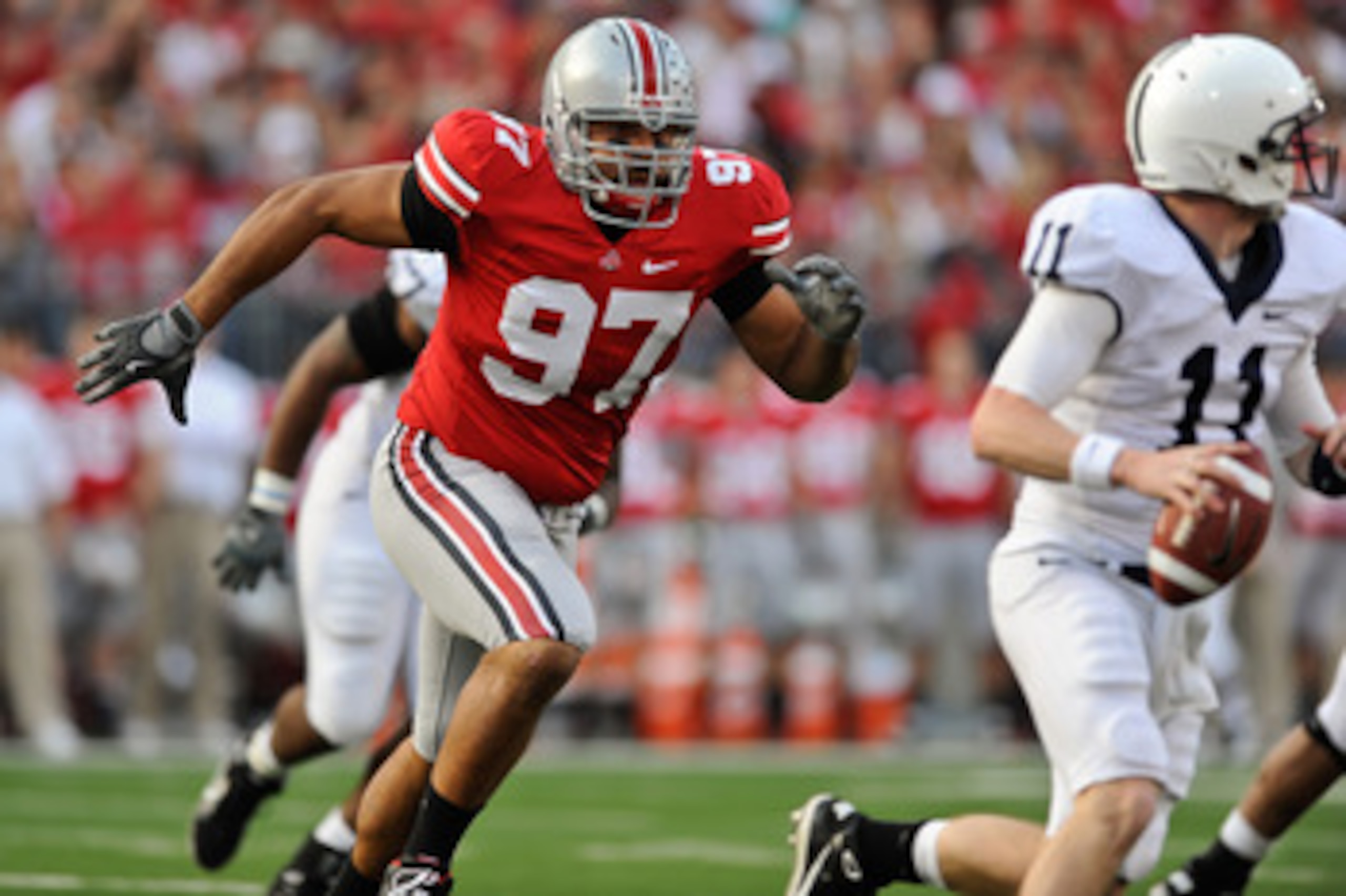
Grade: A
A perfect fit for the five technique in Pittsburgh’s 3-4, Cameron Heyward was one of my sleepers in the first-round.
A versatile lineman, Heyward can line up at DE or DT and be effective in both spots against the run and the pass.
Heyward has the ability to take on double teams at the line of scrimmage, freeing up OLBs LaMarr Woodley and James Harrison to set the edge and get in the backfield. The Steelers defensive line is aging rapidly, but they found their DE of the future in Heyward.
The Steelers defense just got a whole lot better.
No. 32—Green Bay Packers: Derek Sherrod, OT, Mississippi St.
32 of 32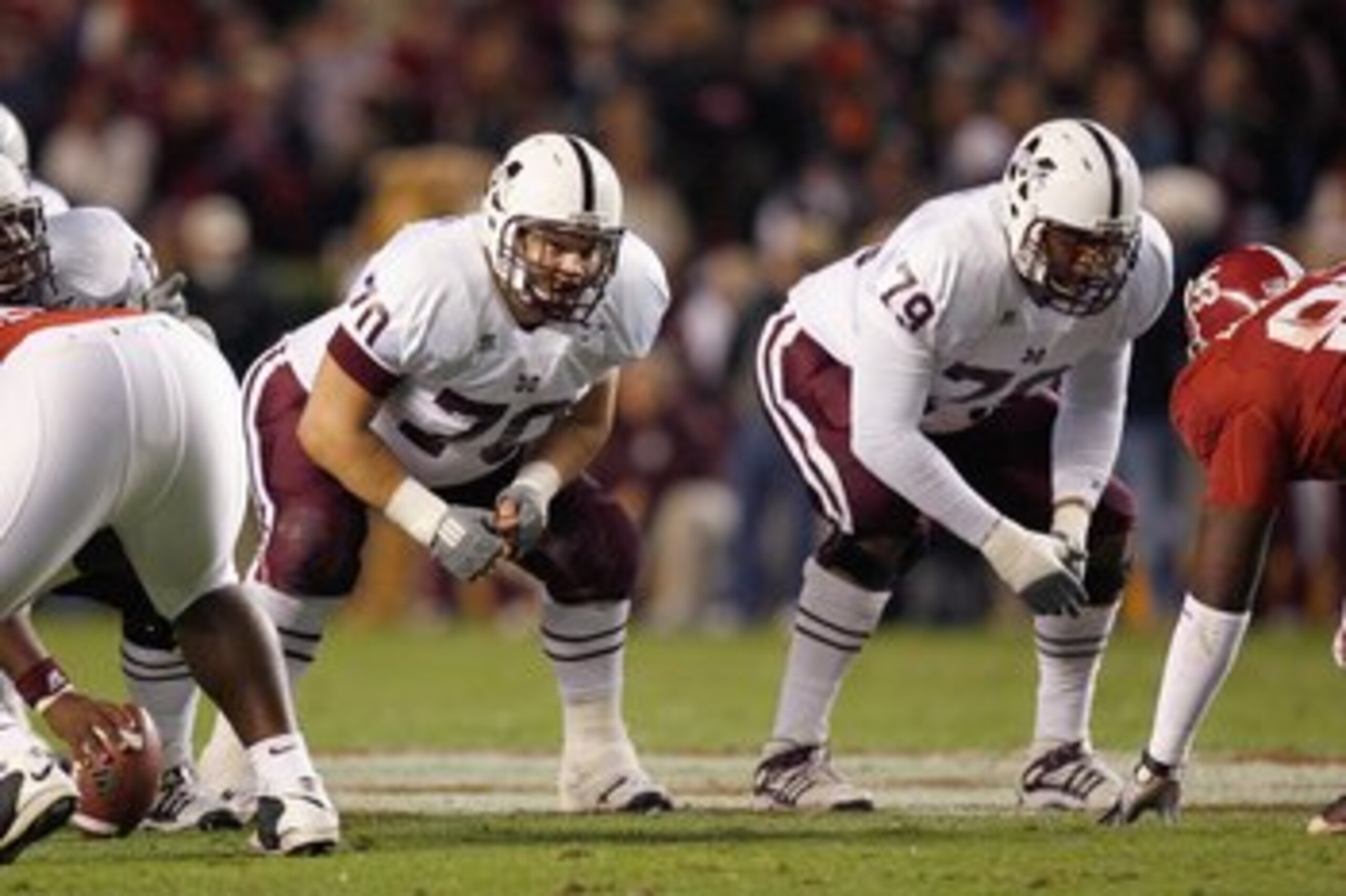
Grade: A-
I love this pick as a Packers fan.
Let me say that again. I love it.
The Packers offensive line was shaky at times last season and Chad Clifton isn’t getting any younger. Sherrod is a player many thought would be gone by the time the World Champs picked and fills an important need for Green Bay going forward.
As a result, the Packers could move Bryan Bulaga to LT and allow Sherrod a year to develop at RT, or let Sherrod compete with Clifton right away for the starting job on the left side.
With this pick, the Packers followed the most important rule when you have a player like Aaron Rodgers.
Protect the franchise.

.jpg?w=2560 "Seahawks Commanders Football")

.jpg?w=2560 "EVERY Fantasy Update")
.png?w=2560 "New Top 5 in CFB Rankings 👀")