Marc-Andre ter Stegen Must Show Consistency with Quality to Be Barcelona No. 1
Barcelona's formality of completing their UEFA Champions League group-stage fixtures on Wednesday night saw them take a 1-1 draw at Bayer Leverkusen, ending the group stage unbeaten themselves and denying the German side a place in the last 16 in the process.
While Luis Enrique did leave Lionel Messi and Ivan Rakitic in the XI at the BayArena, many of his other first-choice stars were rested or rotated, handing chances to the likes of youngsters Sergi Samper and Sandro Ramirez along with senior back-ups Marc Bartra and Adriano.
In goal, of course, was regular European choice Marc-Andre ter Stegen—and the German, back on home soil, impressed as a one-man barrier between Leverkusen and the knockout phase. It's not the first time he has put in a notable display this season, and the 23-year-old has been making noises about becoming a regular first choice in the future. To do so, though, he'll need to show the quality he is capable of, along with something that has been an issue for him to date: consistency.



"Luis Enrique: "Ter Stegen, Bravo, Masip all have quality to be Barça keepers and they play according to performance" pic.twitter.com/XN3zcXtznm
— FC Barcelona (@FCBarcelona) December 8, 2015"
Rotation, Extended
Rotation of goalkeepers was never the "done thing" in football, even when a club found themselves with two extremely capable options to choose from relative to the club's standards and ambitions at the time.
Iker Casillas and Santiago Canizares at Real Madrid, Nigel Martyn and Paul Robinson at Leeds United, Jens Lehmann and Oliver Kahn with Germany. One played; the other had to be a supportive but frustrated onlooker until injury or poor form offered a chance to step into the breach. Later, of course, "cup goalkeepers" became a thing, handing irregular chances to the second choice in a bid to keep them happy and fit when called upon.
Now it's essentially becoming a norm; of the top three clubs in Spain, Barcelona have had a Liga goalkeeper and a Champions League goalkeeper for the past two seasons, Atletico Madrid did last season and Real Madrid have rotated their stoppers in Europe this term.
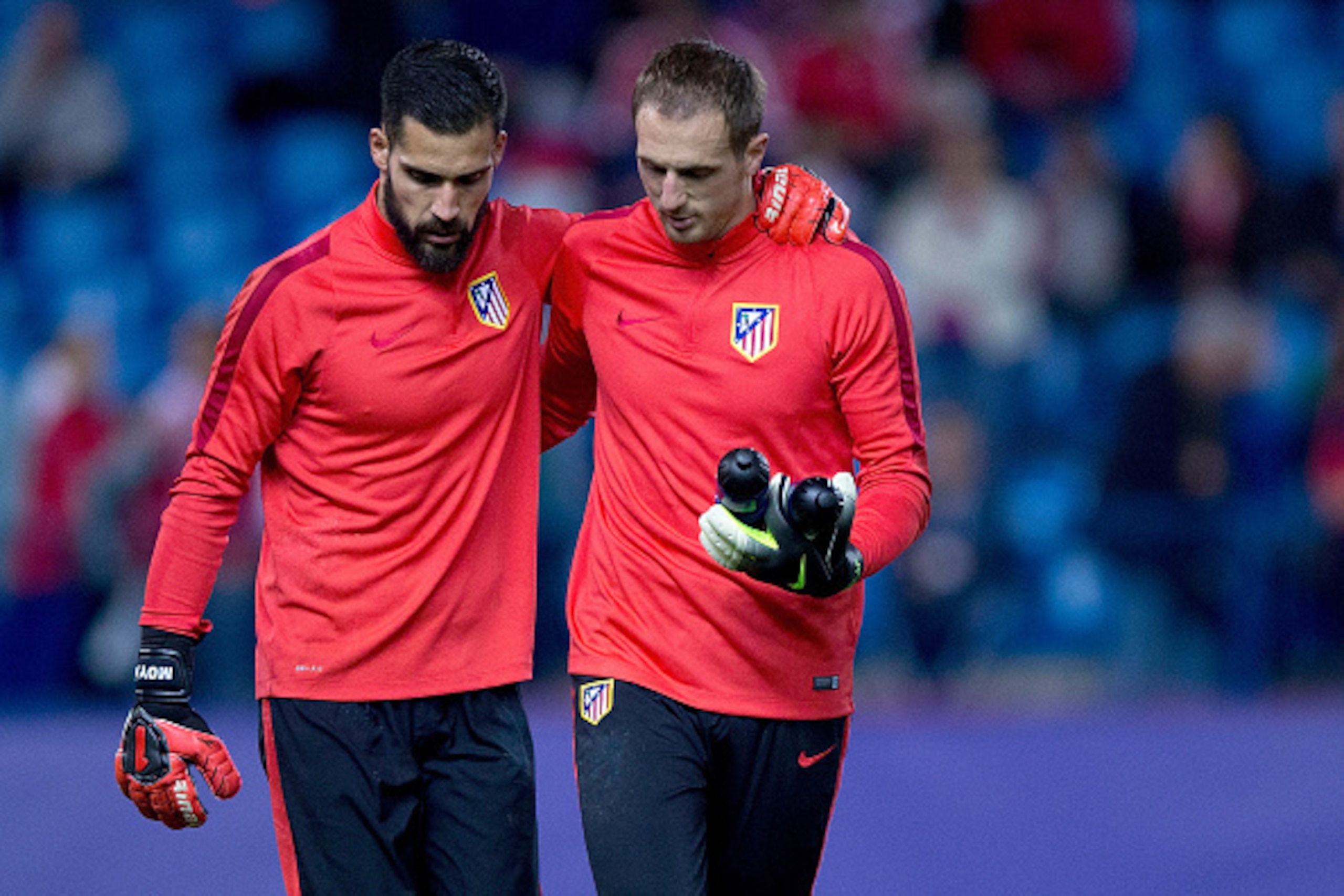
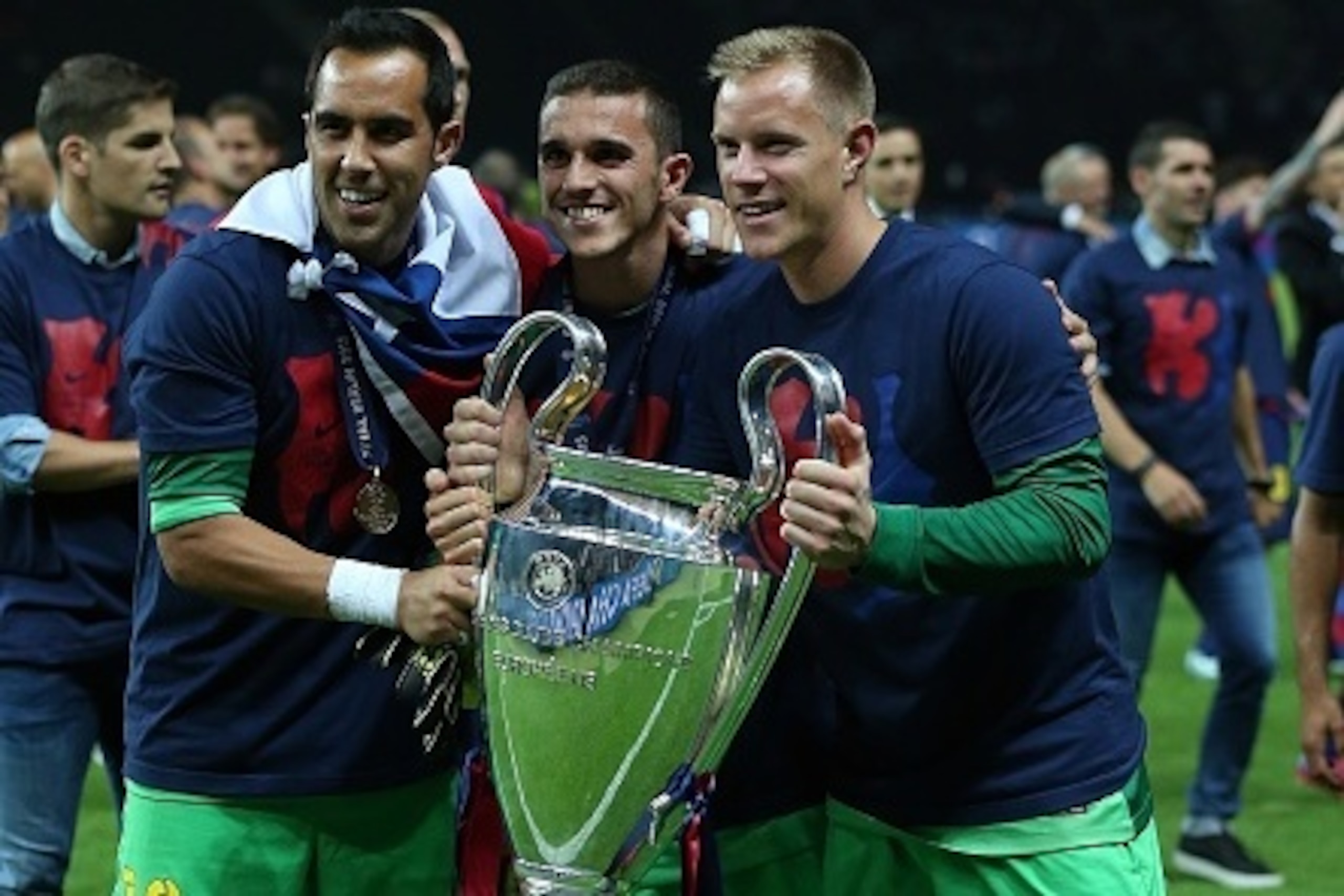
Being a cup goalkeeper—even including the European Cup—Ter Stegen would have generally considered himself to be facing significantly less time between the sticks than Claudio Bravo, Barcelona's first choice in La Liga. But last term, en route to the treble, the Catalan club played 60 fixtures. The Chilean played 37 games, the German 21 and third-choice stopper Jordi Masip made two appearances.
There was still a disparity of over 1,000 minutes of action between Bravo and Ter Stegen, but two trophies and performing on the world's biggest stage in club football probably helped bridge that gap for the latter, especially in his first season with the club.
Even so, it means Ter Stegen simply must take his chances when they come along.
Early-Season Chance
To 2015-16, then, and with Bravo performing in the Copa America over summer and being successful with his nation before picking up a muscle strain in September, Ter Stegen was finally handed the chance for a run of fixtures.
Treble winners or not, the season didn't start well for Barcelona, especially in a defensive sense. The German conceded four against Sevilla in the UEFA Super Cup, another four against Athletic Club in the Spanish Super Cup first leg and was dropped for the second leg.
A run of four Liga matches in a row for Ter Stegen saw him fail to keep a clean sheet and concede another four against Celta Vigo in September during Barcelona's first league loss of the campaign; all told, he has let in 19 in 12 games this season, recording just two clean sheets.
By contrast, Bravo has conceded seven in 11, with six clean sheets.
That's not empirical evidence—it's simply data that supports the notion that Bravo has immense consistency to his game, something Ter Stegen has not yet managed.
Against those pure numbers, there's an argument to be had that clean sheets against Getafe and Malaga are easier to manage than keeping out Roma and Bayer Leverkusen, but Bravo's clean sheets have also come against Villarreal and Real Madrid. On the flip side, Ter Stegen has at times had to deal with a heavily rotated defence in front of him, which Bravo often does not.
Bravo
Barcelona's No. 1 isn't as spectacular with reaction saves as some—Real's Keylor Navas, perhaps. Nor is he a huge and imposing presence—like Atleti's Jan Oblak, maybe—when dominating his penalty area. Instead, Bravo simply seems to do everything rather well: He reads the game, makes his move and sticks to it, whether punching clear, going to ground or standing his position and awaiting the moment to make a save.
He has good reactions, his distribution is intelligent, he can make instinctive stops and his handling is laudable. In short, there's no reason to drop or displace him because he rarely makes an error of judgement or a suffers a technical lapse.
With both at their very best, perhaps it's fair to suggest Ter Stegen has an additional factor or two to his game: unreasonably high self-confidence relative to achievements in the game, superior willingness to work with his feet and a bigger reach to make those unexpected saves.
But Bravo displays all his traits and adds a fine mentality to them every time he takes to the pitch.
And that side of the game, especially for a goalkeeper who's not called upon every minute of the match, can be worth a lot more to a team than a spectacular fingertip save or two.
CL Winner, CL Performer
The Spanish press were effusive in their collective praise of Ter Stegen after the Leverkusen match while pillorying the overall Barcelona team display. AS called the former Borussia Monchengladbach stopper "a goalkeeper of similar dimension to the cathedral in neighbouring Cologne," while Sport reported manager Luis Enrique called his goalkeeper "spectacular" and "really safe."
Marca said Ter Stegen was "in a different league" and "an iron curtain" against his compatriots, while the match report from the same outlet offered the opinion he had sent a message out about his potential as No. 1.
"Don Marc. https://t.co/2eMufbIHEe
— BARÇA. (@xavismo) December 10, 2015"
As if all that hadn't been achieved last year anyway when, you know, he lifted the Champions League trophy after a run of three clean sheets in the seven knockout-stage games. Even so, Marca's assertion that Ter Stegen had to face the most shots any Barcelona goalkeeper has dealt with in the Champions League since 2008-09 attests to both his diligence and his quality on the night.
It wasn't the case only against B04 during the group stage, either; against AS Roma, in Barcelona's hefty 6-1 win, Ter Stegen was one of the top performers in the fixture.
And that's what he needs more often; too frequently Ter Stegen's great and obvious potential has been undermined by his foolish actions and moments of poor judgement. Basic errors, easily avoidable, have been part of his game since he first broke through in German football—and those have extended to the national stage too, where he has so far won four senior caps but missed out on a place in the 2014 World Cup squad.
Cut those errors, those simplistic but monumental moments of failure, out of his game and Ter Stegen is a well-rounded goalkeeper with enormous self-belief. But while they are part of his performance, even on a semi-regular basis, Bravo will remain in place.
Future
Three questions are pivotal to the ongoing Bravo-Ter Stegen scenario: How long will the German give it at Barcelona, a great club winning trophies, before he gets frustrated at only playing once every two weeks for part of the season and perhaps not at all from mid-December to late February? How long will Bravo be happy to continue playing 30 to 38 games a season if he is an established top 'keeper and could play another 20 on top of that at another club fighting for league and European honours? And, finally, how long do Barcelona give Ter Stegen to improve and show he can be more consistent?
Per Marca, Ter Stegen stated before the Leverkusen game he was "trying to make Luis Enrique's life difficult by putting in good performances and working hard in training." It's the official party line of course, not upsetting coach or a team-mate and showing professionalism—but another sentence uttered just afterward is probably closer to the truth.
"I hope to play more in the future," he said. "That's the situation right now."
As things stand, ter Stegen has played more than Bravo this season—12 games to 11 and 1,110 minutes to 990. By the turn of the year, perhaps that will have reversed again and the decision by Luis Enrique over who is first-choice goalkeeper at the upcoming FIFA Club World Cup might also be telling as to his current views and long-term plans.
It's a simple equation for Ter Stegen, who has age and ability on his side. Barcelona's best teams over the last few years have had a simple theme in common: The best players, not only technically but also mentally, make up the longest-serving and most successful players. He needs both sides to his game, every week, before he can usurp Bravo from the position on a regular basis.
.jpg?w=2560)







.jpg?w=2560 "Nabers' Recent IG Post 👀")