

For the Cleveland Cavaliers, "All In" wasn't just a playoff motto but apparently the offseason strategy as well.
Already with a payroll well above the salary cap and dipping into the luxury tax during 2014-15, the Cavs now appear to be closing on historic spending levels.
What's somewhat remarkable about all of this is that Cleveland has signed just one outside free agent to date. The rest of the money has all been spent in-house, extending and re-signing their own marquee players.
TOP NEWS
Lakers HC: Bronny Hasn't Played Well
Porzingis' Statement on Health Issue
Ranking Best Shooters 📊
After finishing just two wins shy of an NBA championship with an injury-riddled roster, the 2015-16 Cavaliers are showing money is no object. To prove it, they are set to become the most expensive team in basketball history.
Players Coming Back
Remarkably, the Cavs had just thee players—Kyrie Irving, Anderson Varejao and Joe Harris—under guaranteed contracts entering this offseason. Everyone else either became a restricted free agent, unrestricted free agent or had a team or player option to decide on.
The Cavaliers, unwilling to renounce the rights of their own players to create cap space, were never going to be major players in the free-agent market. Instead, the goal became clear: Bring back everyone you can.
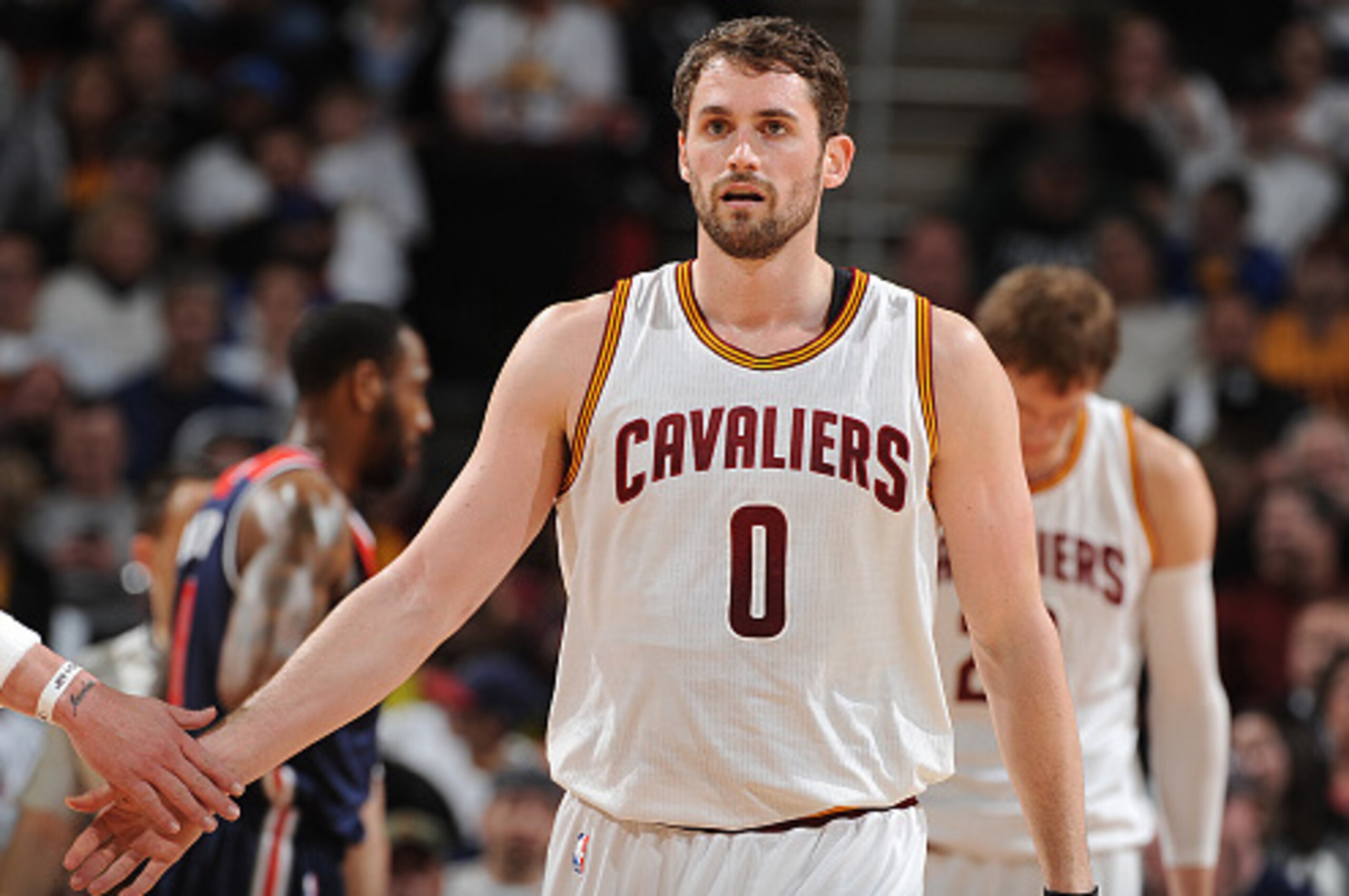
General manager David Griffin made the easiest decision of his summer by picking up the $4.95 million team option on starting center Timofey Mozgov. Given his strong play following a trade from the Denver Nuggets in January, this was a no-brainer. Next year, Mozgov will become an unrestricted free agent and has to be salivating over some of the deals being handed out to players worse than him now.
After Mozgov, veteran guard/forward Mike Miller opted in to his $2.8 million player option. This left the Cavaliers with restricted free agents Tristan Thompson, Iman Shumpert and Matthew Dellavedova, as well as unrestricted players such as LeBron James, Kevin Love and J.R. Smith.
Here's a look at how the Cavs and owner Dan Gilbert have distributed their money thus far:
Mo Williams is the only outside hire to date, agreeing to a team-friendly deal that pays him just over $2 million this year and includes a player option for next, as Adrian Wojnarowski of Yahoo Sports reported. The Cavaliers, although with no cap space, used part of their $3.376 million taxpayer mid-level exception to bring Williams back to Cleveland.
Shumpert, awarded a starting job in the final three rounds of the postseason, settled on a deal that will pay him an average of $10 million a year. He averaged 9.1 points, 4.9 rebounds and 1.3 steals during the playoffs and is considered the Cavaliers' best perimeter defender.
Love and James both decided to re-up with the Cavs but on very separate deals. While Love chose financial security over a larger payday in the future, James is once again chasing a historic contract later down the road.
Love, after meeting with James poolside in Los Angeles, agreed to five years and $113 million, reported by Chris Fedor of the Northeast Ohio Media Group, which is the largest contract in franchise history.
Following a similar strategy as last summer, James inked a new one-year max deal with a player option for the following season, per Chris Broussard of ESPN, one he'll assuredly opt out of. He stands to make $22.97 million this season under the $70 million salary cap. Should the cap make another dramatic jump next year as expected, James' annual salary could reach $30 million or more.

Between Love, James, Shumpert, Mozgov and Williams, that's roughly $207 million the Cavs have pledged in a matter of days.
But they aren't done yet.
ESPN's Marc Stein recently reported that Thompson and the Cavaliers were nearing an $80 million extension, presumably over five years. While nothing has been finalized, it's safe to assume Thompson will command at least $16 million per year, if not more.
After Thompson, Cleveland still has numbers to talk with Dellavedova and Smith. The first will almost certainly return, as the Cavaliers extended a qualifying offer to Dellavedova after his strong play in the NBA Finals. While he'll likely reach a settlement in the $3-5 million range, every bit of salary now added brings significant luxury-tax implications.
Smith chose not to opt in to his $6.4 million deal, although it's hard to imagine any other team offering him that kind of money. Outside of the Finals, Smith was outstanding and should absolutely be brought back now that spending cash is being handed out freely in Cleveland.
Of course, there's the Brendan Haywood scenario as well. The Cavaliers are still pursuing trades to upgrade the roster, using Haywood's non-guaranteed $10.5 million contract as bait. Should no deal be reached, Cleveland would simply release the 35-year-old center and save a little coin.
With so many big extensions and new contracts handed out this summer, with more for James and Mozgov looming next year, Cleveland is paying a very big price to keep everyone together.
Historic Spending
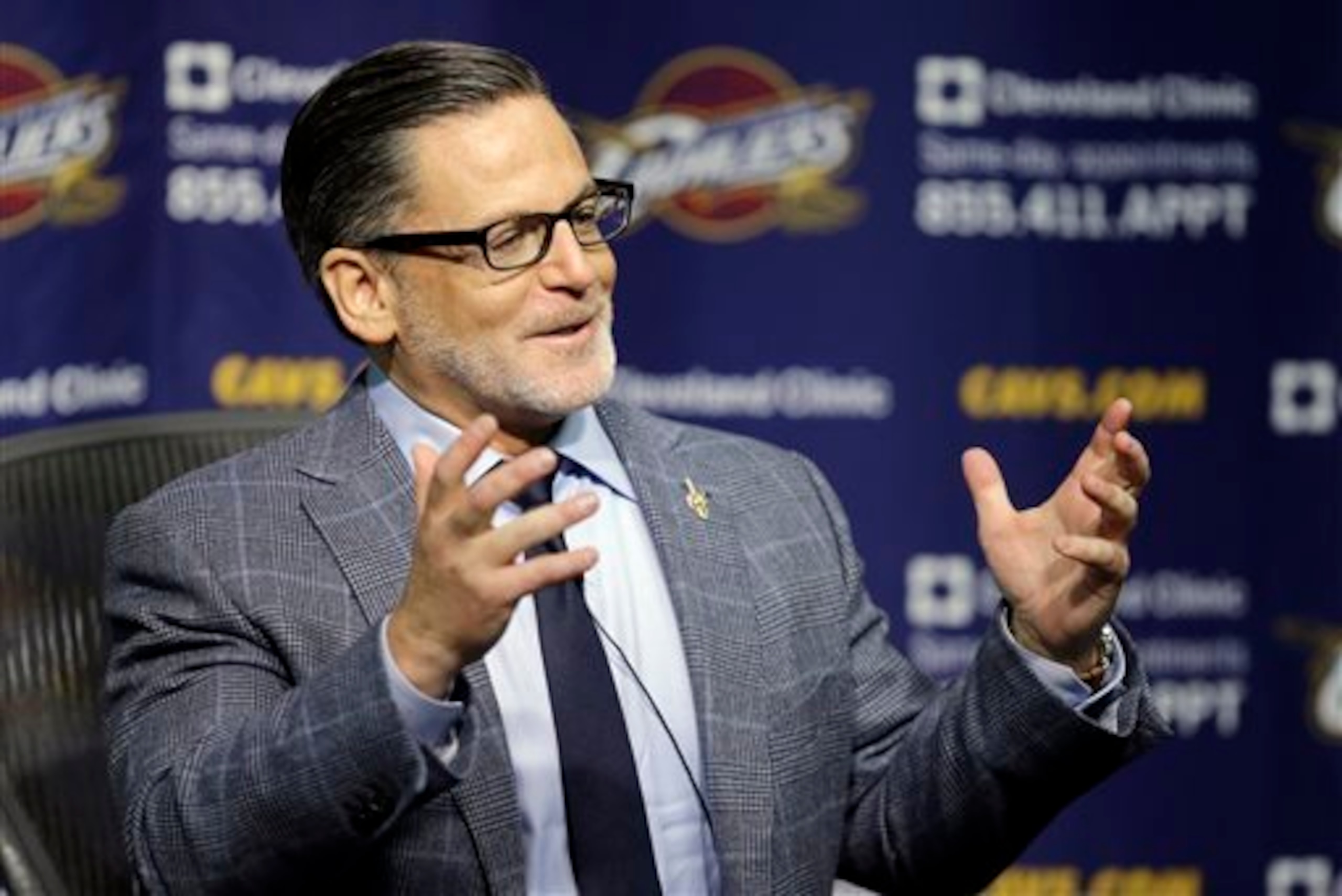
Gilbert, the Cavaliers' majority owner since 2005, has never been shy when it comes to writing checks or letters.
"I almost think it's kind of silly when you invest so much into a franchise and have such high costs already," Gilbert told Scott Sargent of WFNY in October. He continued:
"I know it's a lot of raw dollars by itself, but relative to everything that's invested. ... I'm always a little surprised when owners of franchises stop right there. To me it's like you're getting to the two-yard line and you're done. It's not smart business [or] smart financially.
Clearly, the cap will be going up these next few years. But that message is still there. When the decisions are ours and they're regarding financials, it will not stop us from being able to deliver a championship-caliber basketball team.
"
Thus far, Gilbert has remained true to his word.
Payrolls have been high since Gilbert took over the franchise in 2005, as the Cavaliers were consistently in the $80-90 million range thanks to players such as Larry Hughes, Ben Wallace, Shaquille O'Neal, Zydrunas Ilgauskas, Wally Szczerbiak and James.
What the Cavaliers are about to do goes far above anything they, or anyone else, have done before.
The previous record high for team payroll belonged to the 2012-13 Brooklyn Nets at a staggering $102.9 million. That record is about to be broken.
Cleveland's spending could escalate to over $120 million in team salary alone. Luxury taxes would then push Gilbert's total bill to as much as $263 million, notes Jacob Rosen of WFNY.
Since the Cavaliers dipped into the luxury tax last season, they're now considered repeaters. This means that, like the team salary, Gilbert's tax bill would be an all-time high as well.
As Jason Lloyd of the Akron Beacon Journal writes, "The Nets and billionaire owner Mikhail Prokhorov paid $90.57 million in luxury taxes last summer, easily the largest tax bill in NBA history. In the summer of 2016, the Cavs could shatter it."
This $263 million roster may not be finished, either.
Should the Cavaliers bring back Smith on a deal of around $7 million annually, with the compounded taxes, Cleveland's roster may top $300 million in overall costs, more than $100 million above the previous record.
Success, it seems, comes at a price.
The good news for Gilbert and the Cavaliers is that as the salary cap rises from year to year, so too will the luxury-tax line. While they'll still likely hit this line for years to come, Cleveland won't have to pay nearly as much on a $100 million salary cap as opposed to the upcoming $70 million one.
For now, this pricey roster seemingly grows more expensive by the day.
If the Cavs end up winning at least one title in the coming years, nobody can say it wasn't worth it for Gilbert. If they don't, consider it the most expensive failed experiment in sports history.
Greg Swartz has covered the Cleveland Cavaliers and NBA for Bleacher Report since 2010. Follow him on Twitter: @CavsGregBR
All stats come via Basketball-Reference.com unless otherwise noted.
.jpg?w=2560 "Top Trade Targets Entering Week 6")


.png?w=2560 "Muncy Sums Up NLCS Offense 💩")

