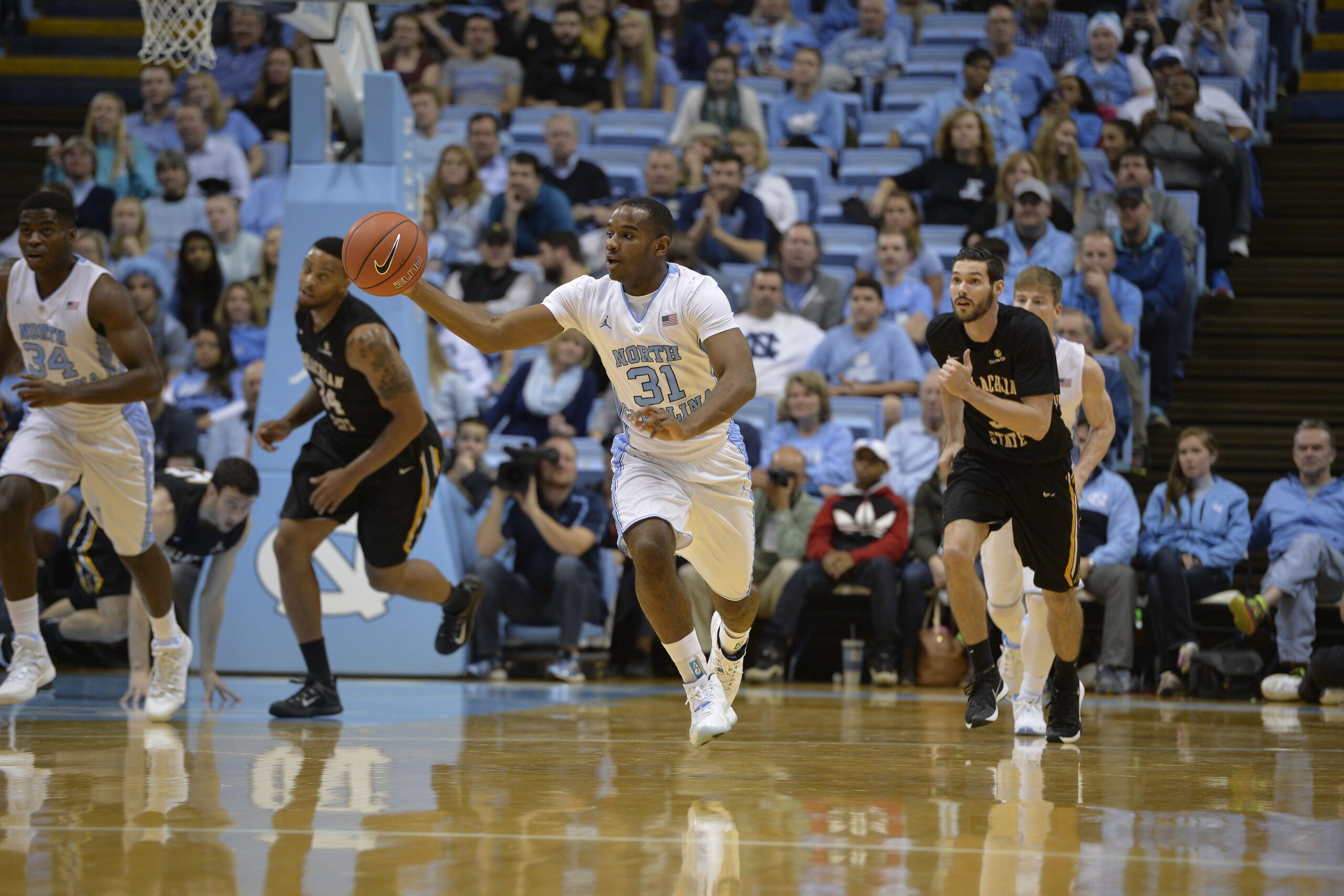

Horrific Accidents Driving UNC Reserve Justin Coleman to Inspire Tar Heels
HOUSTON — He probably won't get on court for North Carolina in what will be his final college game. You could look at the career of Justin Coleman, a perennial backup guard for the Tar Heels, and say it hasn't been very impressive. Except for one thing: It's impressive he even had a career.
When he was in high school, playing AAU ball on May 22, 2010, Coleman was tripped and fell into a wall, fracturing three vertebrae in the process. Doctors said he never would play again, but play he did.
He needed surgery. After doctors inserted 10 screws and two plates in Coleman's neck, they told him his athletic dreams were done, that he was fortunate not to be paralyzed, according to Adam Lucas of GoHeels.com. Yet seven months after the surgery, the diagnosis changed.

-(1).jpg?w=2560)
Coleman went into his junior year having been unable to work out since the injury. He needed months to get back into shape and didn't return to high school ball until he was a senior.
Exactly one year later, on May 22, 2011, while driving his sister to a swimming pool, he hit a motorcycle, killing the driver. Coleman was charged with failure to yield the right of way. After the trial ended, the family of the fatally injured driver, Rubin Smith, embraced Coleman, saying they forgave him and wanted him to make a positive contribution to society.
One serious physical problem. "Like diving into a pool headfirst," he said of the way his neck injury occurred.
One terrible mental one. "It was a turning point in my life when the family forgave me," he said, "taking my focus off my guilt."
A recovery from both. And a place on a team that is in the NCAA national championship game.
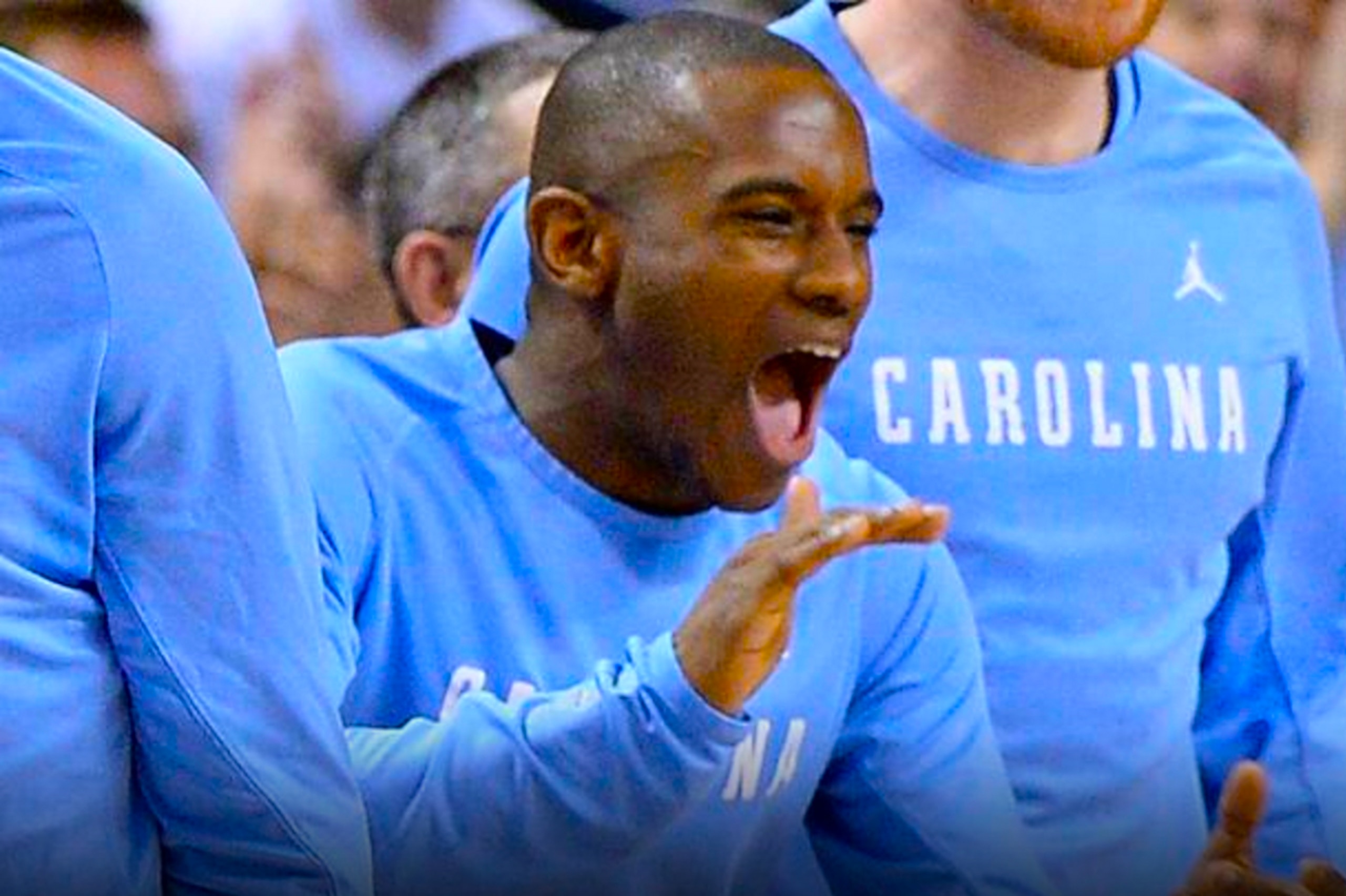
"He's been challenged about as much as I can ever imagine any individual being challenged," said Roy Williams, the eminently successful and thoughtful North Carolina head coach.
The opportunity Coleman was given to respond to these challenges is not something he takes for granted.
"I feel like it's something that happened to me, and it's my responsibility to share it so someone else can use it for motivation," said Coleman. "It's amazing to think about how far I've come, and a lot of people, including coach, have been instrumental in my success.
"I do think a lot about [the accidents], but everything happened so fast. Now you have to be ready every day. I think it works to my advantage to kind of say, OK, to me things happened and I'm here, like be in the moment. But there are times when we have down times, every time we have a down time, I think how far... how I came through two tragic incidents, and I'm thankful for all the people who ever helped me get to where I am. It's really been amazing."
In September, Williams awarded a scholarship to Coleman, who for three previous seasons had been a walk-on. Coleman's teammates, some considerably more famous, cheered when Williams gathered the team to tell them of Coleman's prize.
"I don't think there's anyone more deserving of a scholarship," sophomore guard Justin Jackson said Sunday. "He comes out to practice every day with a smile on his face. He's been a huge part of our success, getting us ready for the other teams. He's just a joy to be around."
Coleman is a survivor, happy to be where he is and what he has become. There's no bitterness about the accidents or about rarely getting on court.
"Just a wonderful, wonderful kid," said Williams.
Coleman is from Raleigh, North Carolina, and he qualified for the university academically. He is majoring in business and hopes either to become an investment banker or an attorney following graduation. After enrolling, he joined North Carolina's junior varsity team, a leftover from the days when Dean Smith was the Tar Heels' head coach. As Jackson pointed out, Coleman has worked tenaciously.
Achievement is relative. Coleman's won't be reflected in box scores but in his own progress.
"He's a unique individual," said Williams. "He really is. As a youngster you're told you're never going to play basketball again, it may be difficult for you to ever walk again. You come back from that. Think about being involved in a car accident where someone is killed."
There's no understating the importance of the Smiths' forgiveness. Coleman hasn't seen the family since the day at the trial when they hugged him, but he does exchange holiday cards and an occasional phone call with them.
Williams is enamored as much by Coleman's personality as his story.
"The only man I ever coached," said Williams. "If you ask him a question, he talks 10 times more than I do. Giving him the scholarship, I mean, it is truly one of those warm, fuzzy, good-feeling stories."
Which is something sports always can use. You don't always have to win to be a champion.
That Justin Coleman refused to surrender to the guilt, that he overcame hardships that would have stymied most of us is as much a triumph as hitting the game-winner in an NCAA title game.
He wanted to be a source of motivation. He is, more than he ever could imagine.
Art Spander has covered 34 consecutive Final Fours. Unless otherwise noted, all quotes were obtained firsthand.


.jpg?w=2560 "Waiver-Wire Pickups 👀")

.jpg?w=2560 "Best Fantasy Team Names")
