
Kentucky Basketball: Who's to Blame for UK's Early Exit in 2016 NCAA Tournament
It's an unwritten rule in Big Blue Nation that anything short of a national championship makes for a disappointing year. But even in a season when Kentucky showed plenty of flaws, being knocked out of the NCAA tournament during the first weekend doesn't make the pain any more digestible.
The Wildcats (27-9) made their earliest tourney exit in a season that included an NCAA bid since 2008, as rival Indiana sent them packing in Saturday's second round. All five of coach John Calipari's previous tournament entrants made it to at least the Elite Eight, with four Final Four appearances along with the 2012 national title.
Losing to the Hoosiers adds to the sting, and Calipari's group's play should be heavily credited for the result. But Kentucky's performance in 2015-16 was certainly lacking what we've come to expect, even with the mass departures from last year's near-perfect squad.
Who, specifically, is at fault?
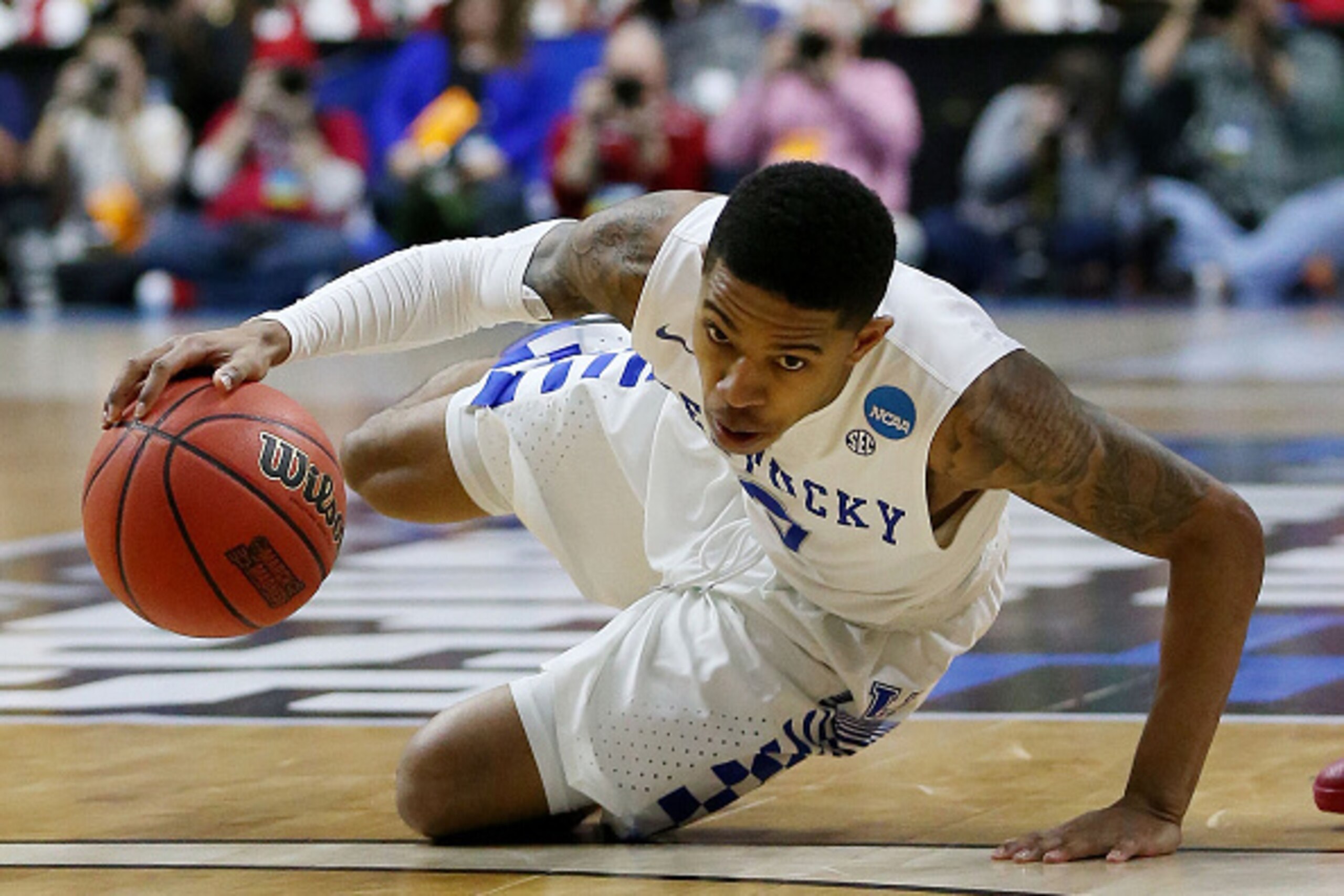
Isaiah Briscoe
1 of 5
Isaiah Briscoe wasn't going to beat out Tyler Ulis for Kentucky's starting point guard spot as a freshman, despite having the size and makeup of the kind of player John Calipari normally plays at the 1. Still, Briscoe was expected to provide the Wildcats with an extra ball-handler alongside Ulis, one who could focus more on scoring than on running the offense.
While the 6'3" Briscoe managed that on occasion, he didn't do it regularly enough to make him someone Kentucky could count on to spell Ulis or take pressure off of the diminutive sophomore.
Briscoe, who started all but three games this season, was Kentucky's least consistent shooter despite taking almost exclusively two-pointers. He shot 43.9 percent overall and 48.1 percent inside the arc, averaging 9.6 points, 5.4 rebounds and 3.1 assists.
Briscoe's production came and went, but one thing that never manifested was accuracy from the foul line. For someone who didn't mind contact, Briscoe's 46 percent free-throw rate was horrendous.
Skal Labissiere
2 of 5
Kentucky brought in the nation's top-rated recruiting class for 2015-16, according to 247Sports, asking six prospects to step in for the seven players who left early for the 2015 NBA draft. However, one guy from that group came in with hype far greater than the rest.
Skal Labissiere also failed to live up to expectations more than any of the others, to the point that many wondered if he'd been completely overvalued as a prospect.
The 6'11" center, rated as the No. 2 prospect from 2015, was in and out of the starting lineup during his freshman year. He ended up averaging 6.6 points, 3.1 rebounds and 1.6 blocks per game, numbers well below what you'd expect from someone who was once projected as a top-five draft pick.
Labissiere lacked the strength to handle playing the post against most big men, often getting knocked off his spot when trying to block out. Frontcourt play was the strength of last year's Kentucky team, and without Labissiere replicating what the likes of Karl-Anthony Towns, Willie Cauley-Stein and others provided, the Wildcats were often exposed down low.
This led to guards Jamal Murray and Tyler Ulis having to carry the team from the perimeter, with the lack of balance rearing its ugly head in most losses (including the NCAA tournament defeat to Indiana).
"There was just too much on Ulis and Murray's shoulders," ESPN's Jeff Goodman tweeted following Kentucky's loss to the Hoosiers on Saturday. "UK frontline was underwhelming most of the season."
Alex Poythress
3 of 5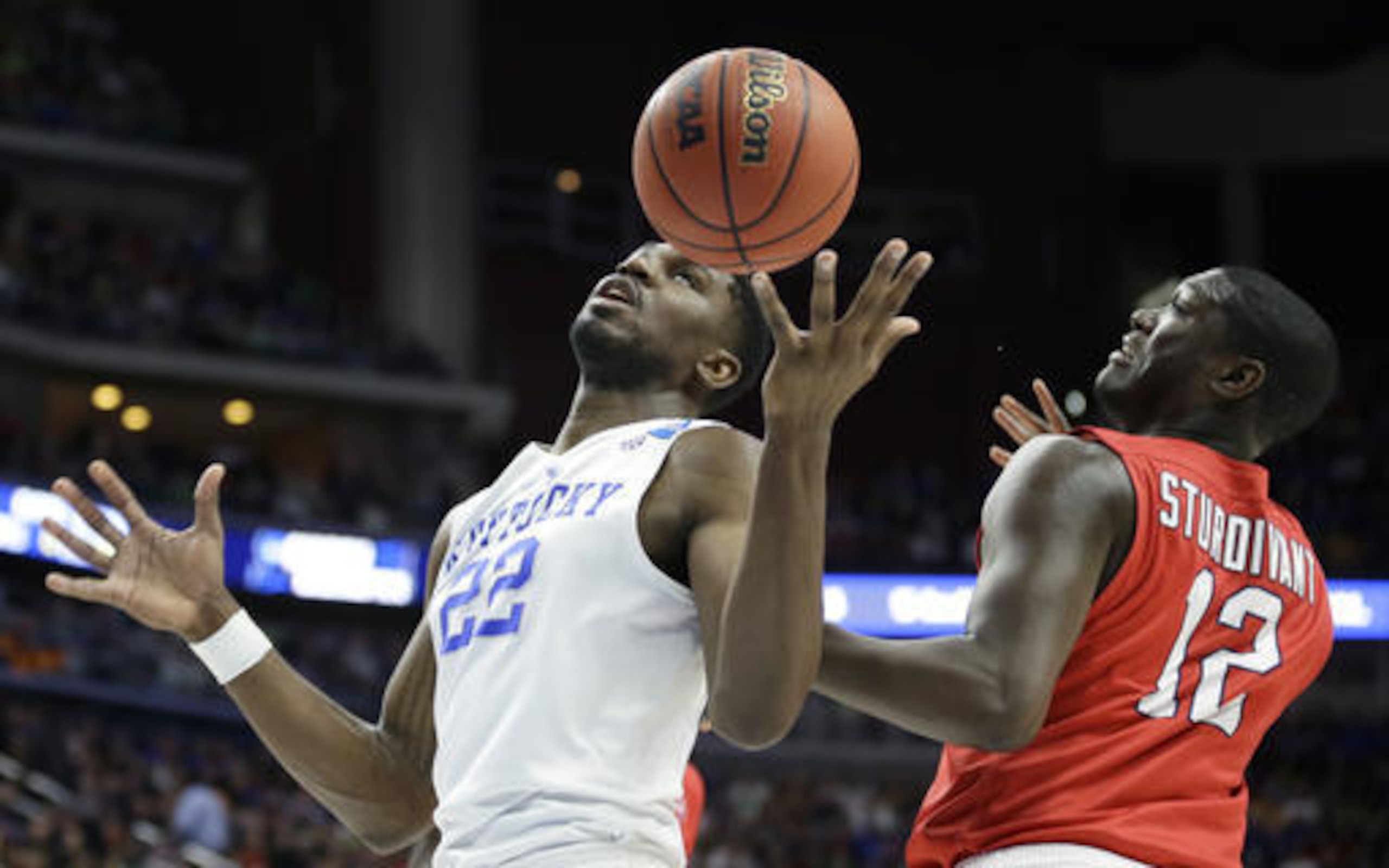
It's rare for a team so reliant on underclassmen to have an impact senior to rely upon like Kentucky did this year, though it's hard to quantify how much Alex Poythress meant to its success in 2015-16. That's mostly because Poythress didn't provide either the numbers or the leadership the Wildcats would have hoped for.
The 6'8" Poythress—who missed most of last season with a torn ACL—ended up being the Wildcats' top frontcourt scorer, averaging 10.2 points and 6.0 rebounds a night. But with the rest of their frontcourt options not contributing substantially, they needed much more from him—not just on the scoreboard or the stat sheet, but also in helping to set an example for Kentucky's many freshmen.
Poythress never matched his freshman-year production from 2012-13, though he did improve his shooting average to a career-best 60.1 percent this season.
(Some Of) Last Year's Underclassmen
4 of 5
There's no point lamenting over what the likes of Karl-Anthony Towns or Devin Booker, stars from the 2014-15 team who have already established themselves in the NBA, could have done for Kentucky this season. The same goes for Willie Cauley-Stein, who put in three solid years in Lexington and was ready to begin his professional career.
The rest of Kentucky's NBA early entrants, though? How would things have gone if some of them decided to stick around another year, particularly those who could have beefed up what ended up being a regularly outmatched front line?
Trey Lyles is averaging 5.1 points and 3.5 rebounds in just over 16 minutes per game for the Utah Jazz, while Dakari Johnson, who Oklahoma City selected in the second round, has spent the entire season in the NBA D-League. Had either one remained at Kentucky for 2015-16, the slow development of Labissiere and subpar play from Poythress and junior Marcus Lee wouldn't have mattered nearly as much.
John Calipari
5 of 5
We're not questioning John Calipari's coaching ability, nor his philosophy of loading up on players who he knows aren't going to stick around for more than a year or two. But this is now the second time that approach has resulted in a disappointing season, the other coming in 2013 when Kentucky didn't get to defend its national title because it ended up in the NIT.
Calipari was expecting all of the early departures and did his best to bring in a class that could fill in the gaps. However, a number of high-profile misses on frontcourt prospects (other than Labissiere) set the Wildcats up for trouble in the paint if Labissiere didn't pan out.
It also didn't help that Calipari seemed unabashedly defensive of Labissiere, saying he'd come around eventually even when the results weren't there. It wasn't until midway through the season that Kentucky found its groove in terms of a rotation of post players, but by then it had become too reliant on guards Jamal Murray and Tyler Ulis for any consistency up front to matter.
Derek Willis spent a lot of time as a strong option because of his ability to spread the floor, but the insistence to play Labissiere kept Willis from being able to have a bigger impact in some games (including the loss to Indiana).
"I'm sick for some individual players who didn't perform well," Calipari said after the game, per Kyle Tucker of the Louisville Courier-Journal. "I'm sick for Tyler and Jamal, who had great years. I feel so bad, because I'll sit back (and wonder), 'Could I have done something different? Is there something else I could have done to help get them over the hump?'"
Unless Big Blue Nation is okay with having a down year every now and then—for the record, it probably isn't—then Calipari might need to start making sure there's enough left in the cupboard each year after players move on to the NBA draft.
Follow Brian J. Pedersen on Twitter at @realBJP.
.jpg?w=2560 "Myles Garrett Got Warning 👀")
.jpg?w=2560 "Caleb Williams Starting Sunday")
.jpg?w=2560 "Bills LB Fined for Taunting Rams")