Sevilla's Perpetual Reinvention: The Unique Model That Continues to Thrive
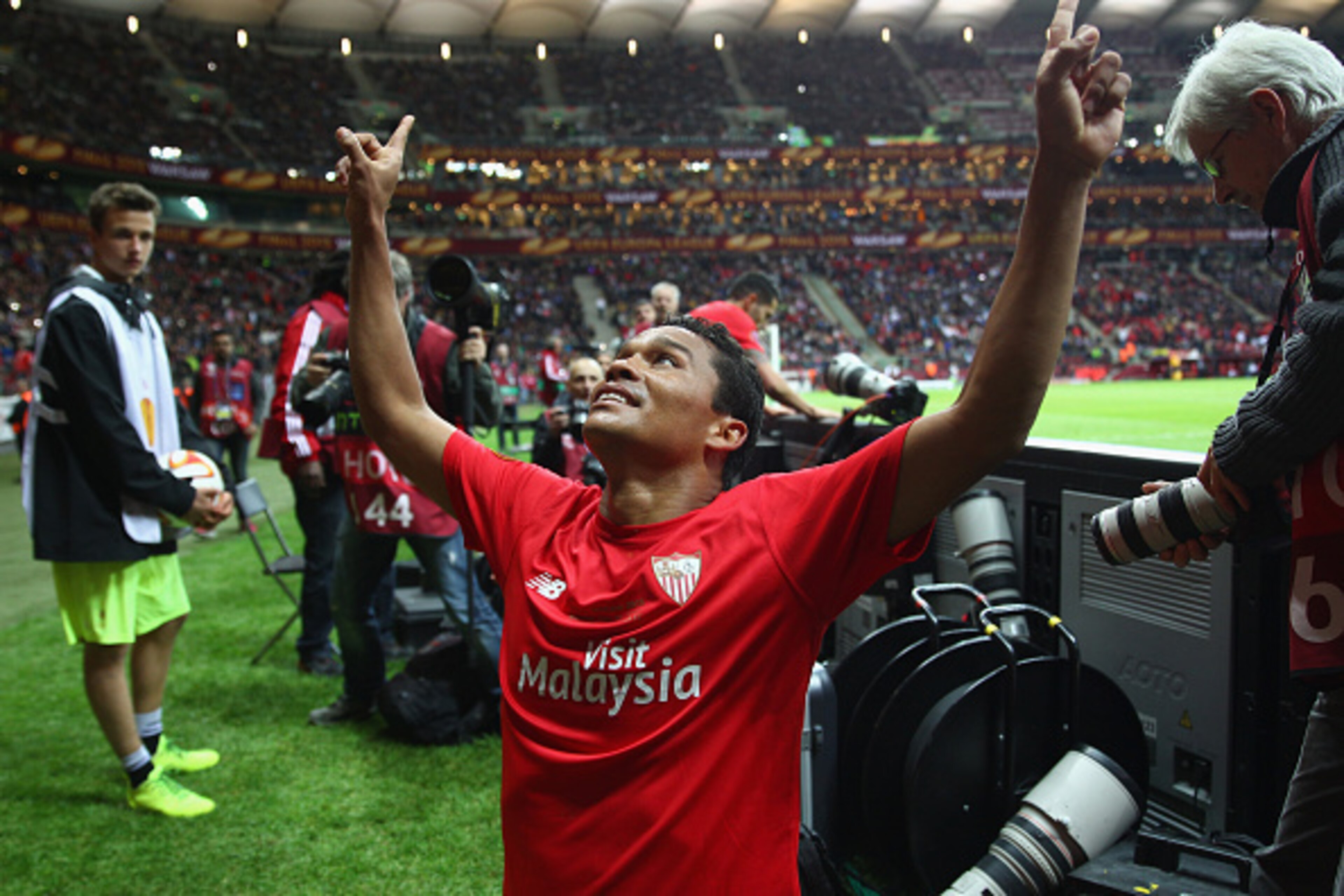
Carlos Bacca sat on a bench in Warsaw, tears flowing down his face, his hands unable to hide them. For 12 minutes, he'd sat anxiously looking on, but he didn't have to anymore. It was over.
Once a bus conductor and a fisherman in Colombia, Bacca was now a Europa League champion with Sevilla. Not just any champion, either, a back-to-back champion, his club defeating Dnipro 3-2 in the 2015 final to claim a second straight title. And they'd done so because of him.
At 1-0 down, he'd set up Grzegorz Krychowiak for the equaliser. Three minutes later, he'd put Sevilla in front himself when he latched on to a Jose Antonio Reyes pass. Then, not long from full-time, after Dnipro had equalised themselves to get to 2-2, he'd put Sevilla ahead again.
TOP NEWS

BS Meter on Transfer Buzz 🕵️♂️
Men's Ballon d'Or Rankings 🏆

World Cup's Most Disappointing Players 😬
For good.
The tears flowed soon after, tears accompanied by smiles, gestures to the skies above, a Colombian flag and, most importantly, a trophy. His trophy.
Not only had Bacca scored twice in the final, he'd scored in the Round of 32 against Borussia Monchengladbach, in both quarter-final legs against Zenit St Petersburg and in the semi-final second leg against Fiorentina. In the league, he'd added another 20 goals to take his season tally to 28—a number only eclipsed in Spain's top flight in 2014-15 by Cristiano Ronaldo, Lionel Messi and Neymar.
From nothing to everything, from unknown to unbelievable, Bacca in every possible way was the poster boy for the modern Sevilla.
And he'd never play for the club again.
Bacca had first moved to Europe to join Club Brugge from Atletico Junior, a club based in Barranquilla, Colombia, in 2012. Already 25 years of age, it wasn't just a chance for the striker, it was the chance. Blow it, and it would be career over.
But Bacca didn't blow it. Eighteen months later, he'd tallied 31 goals for Club Brugge, 28 of them coming in a breakout 2012-13 season. Yet, 18 months is a long time for a late bloomer; by the summer of 2013, the Colombian was 26, and he would turn 27 in the opening months of the new campaign.
Essentially, Bacca was exactly the sort of risk elite football clubs don't like taking. Closer to 30 than 20, unproven in a top league and his talents not universally understood, he represented the classic gamble. Well, he did for those who hadn't been watching closely.
But Sevilla had been watching closely. They always do. For they have Ramon Rodriguez Verdejo leading their worldwide hunt for talent—the man known to the rest of the world as "Monchi."
The man who perpetually reinvents Sevilla.
Monchi is a former Sevilla goalkeeper, who came through the club's youth system and spent a decade in the 1990s as its second-choice gloveman. In 2000, after the club had been relegated to the Segunda Division, Monchi, having retired as a player, was installed as Sevilla's sporting director, his job to haul them out of a crisis.
Amid financial constraints and with the club facing an uncertain future, Monchi had to turn Sevilla around the hard way: without bags of cash. It meant the focus had to be on unrivalled talent-spotting, savvy transfer-market activity and consistent youth development.
In all three categories, he's succeeded. Emphatically. And 15 years on, he's still doing it.
It was just two years ago when Monchi oversaw the purchase of Bacca for just £4.9 million. From a striker few others had coveted, he got 49 goals in two seasons from the Colombian, before selling him in 2015 to AC Milan for £21 million—more than four times the initial outlay. In that same summer, Monchi sold Aleix Vidal to Barcelona for £11.9 million, just 12 months after he'd signed the Catalan from Almeria for £2.1 million.
Both men had quickly become stars at the Ramon Sanchez Pizjuan, both contributed significantly to team success and both were moved on at a hefty profit: It's a trick Monchi has been pulling for years.
But it's not done for fun; it's a necessity.
As recently as 2013, Sevilla were more than €100 million in debt and had racked up €42 million of unpaid player wages on the back of disastrous financial years following the country's economic crisis. Selling wasn't just an option.
"Every single player has a price and any of them could leave us in the summer," former president Jose Maria del Nido said at the time, a statement that essentially defined Sevilla's existence and probably still does.
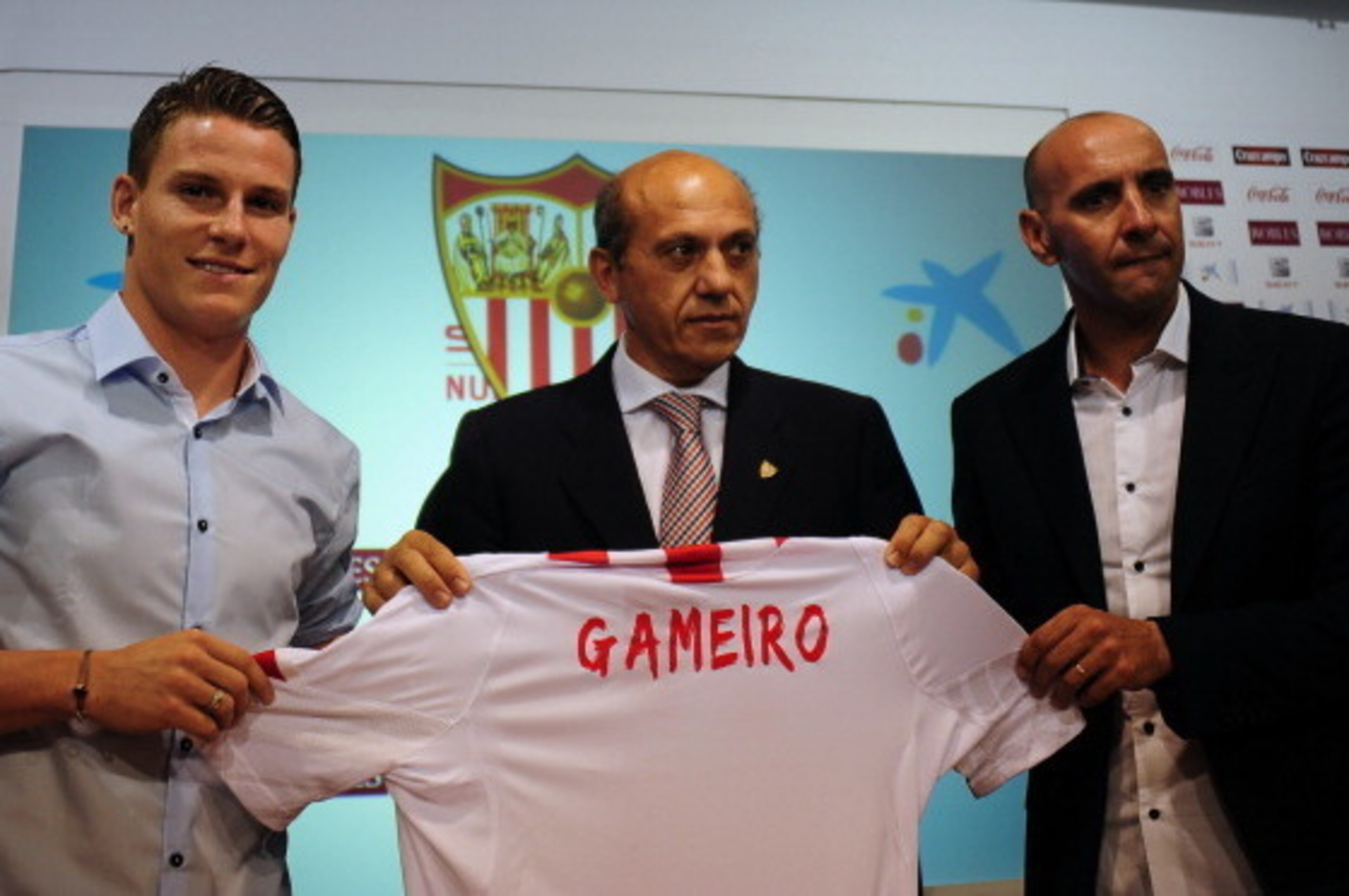
That summer was the one in which Bacca arrived, along with Kevin Gameiro, Vicente Iborra, Vitolo, Beto, Daniel Carrico, Nicolas Pareja and Stephane Mbia at a total outlay of roughly £20 million. At the same time, Alvaro Negredo, Jesus Navas, Geoffrey Kondogbia, Gary Medel and Luis Alberto were all sold for a collective £60 million, helping to pay off the wage bill while also ensuring the club could remain extremely competitive among rivals for the wages it could offer.
It's remarkable business. More remarkable still is that Sevilla won the Europa League after doing it. More remarkable again is that they repeated the feat once more the very next season.
Indeed, after lifting the 2014 Europa League trophy, Monchi's Sevilla sold Ivan Rakitic, Alberto Moreno and Federico Fazio for more than £30 million in total, and they brought in 13 players for less than half of that. Among them was Grzegorz Krychowiak for £3.85 million, a player now regarded among the best holding midfielders in the world.
Again, Sevilla won the Europa League. Back-to-back. For the second time.

Almost a decade earlier, the club had risen to capture the same trophy in consecutive years in 2006 and 2007, again on the back of Monchi's excellence in scouting and player development.
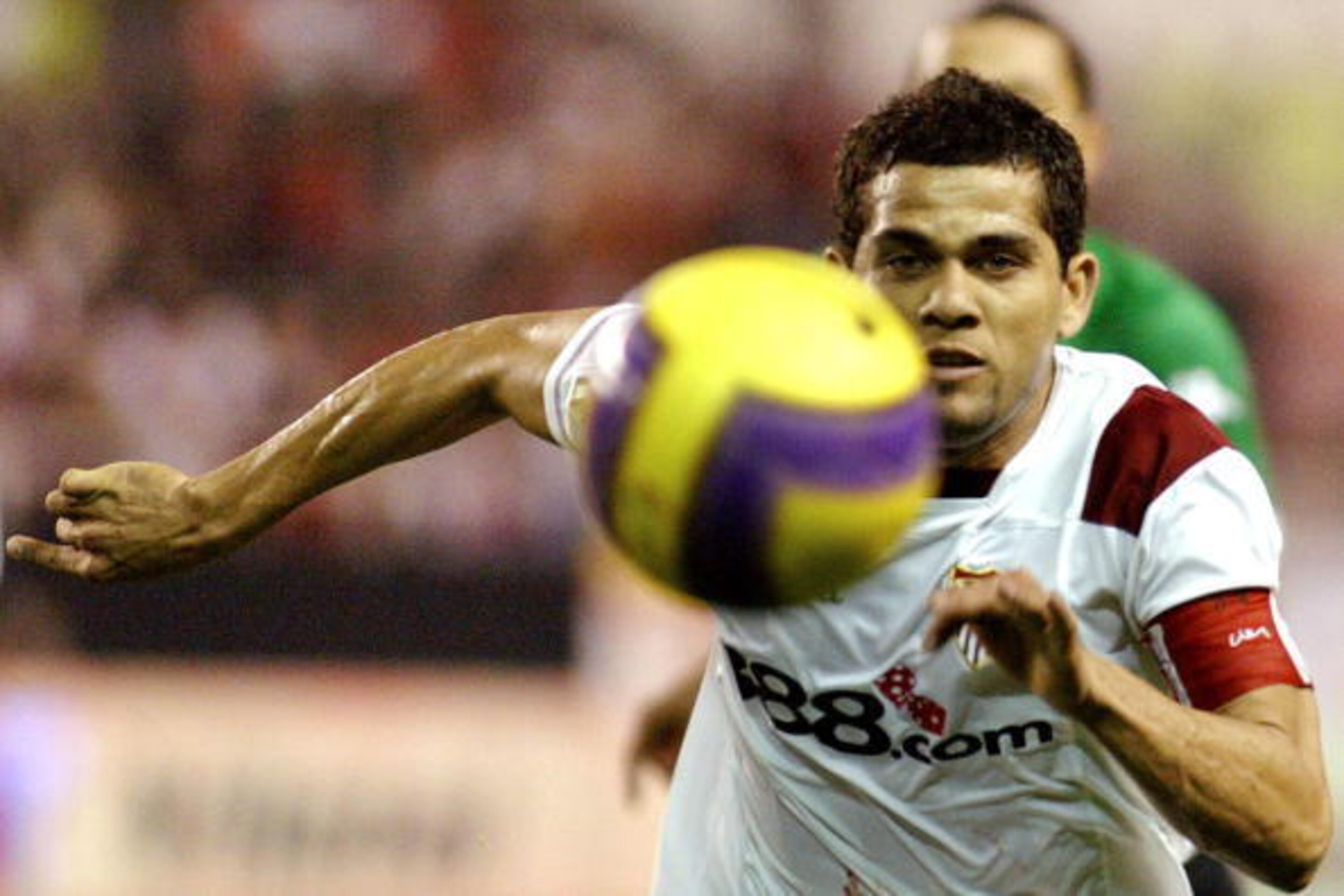
Through the academy had come Sergio Ramos, Antonio Puerta and Reyes, while the arrivals list included: Dani Alves, Julio Baptista, Adriano, Renato, Freddie Kanoute, Enzo Maresca, Luis Fabiano and Andres Palop. Seydou Keita quickly followed, too.
In that period, Sevilla appeared in six cup finals and won five of them, spending minimally while receiving colossal fees for the likes of Reyes, Ramos, Baptista and Alves from Arsenal, Real Madrid and Barcelona, respectively. They almost won the league title, too.
Monchi's record was incredible. Time and time again, Sevilla reinvented themselves as the squad was turned over, the man behind it buying and selling better than anyone and drawing admiring eyes from the likes of Madrid and Barca—admiring eyes that have remained to this day, even though there have been some bumps along the road.
Reinvention isn't an exact science, after all. More than a few clubs will testify to that.
Indeed, there was a period when Monchi and Sevilla seemed to have lost their touch. In 2007, the club completed the expensive signing of Arouna Kone, only to see the Ivorian striker manage just two goals in four seasons in Seville. Almost as forgettable were the purchases of Abdoulay Konko, Aquivaldo Mosquera, Christian Romaric and Javier Chevanton.
Sevilla subsequently fell away steadily. From the upper-echelon of the Primera Division and a consistent presence in Europe, the club slid into middle-of-the-road status in La Liga by 2011-12.
"This city is not big enough for a Champions League club and we don't have the fanbase for it," president Del Nido had said in a defeated manner during the slide. "Over the last few years we've lived in the clouds, achieving way above our genuine possibilities."
He was right. For the time being, anyway.
In recent years, other clubs have endured similar rises and falls for various reasons.
Villarreal, Real Sociedad, Malaga and Athletic Bilbao have all soared into the league's top four in recent times, but sustaining it has proved problematic. The harsh reality is that such clubs are stepping stones; once they rise, their squads are plundered by the continent's heavyweights.
Though Villarreal are coming again, Real Sociedad were hit hard by the departures of Asier Illarramendi and Antoine Griezmann, Athletic Bilbao have found replacing Javi Martinez and Ander Herrera difficult, and Malaga have been pulled apart by the loss of, well, everyone.
But Sevilla have rebounded from setbacks rapidly; Monchi has regained his touch. Again and again, the club keeps finding a way to keep the whole thing standing even as rich rivals continue to burn the foundations. And though many continue to try, emulating the Andalusians is proving extremely difficult.
In the football world, Monchis are rare. As are long-standing managers.
Tellingly, Sevilla have had both.
Though the club's malaise several years ago featured a three-year period that saw four different managers come and go, Sevilla in their two periods of success have maintained continuity at the coaching level even as the playing deck has kept shuffling.
For five years from 2000 to 2005, Joaquin Caparros led the side, before Juande Ramos and Manolo Jimenez split the next half-decade. Now, it's Unai Emery at the helm.
In La Liga right now, only Diego Simeone at Atletico Madrid and Paco Jemez at Rayo Vallecano have been in their current posts for longer than Emery, and the Basque has shown he's very adept at dealing with perpetually changing squads.

Like he did at Valencia, Emery has developed something sustainable at the Ramon Sanchez Pizjuan despite little around him sharing the same quality. In his first full season at the club, 14 players arrived and more than 20 departed, the core of his team among them. In his second season, 13 arrived and another 17 departed. This season has seen much the same.
Success, in theory, shouldn't be attainable then, but somehow, it is.
Denied squad stability, Emery has struck a winning recipe through his obsessive planning and attention to the tiniest details. A fanatical tactician and a notorious game-to-game rotator, he's the sort of manager who uses specific lineups and assigns specific roles for each opponent. Nothing is left to chance.
On the training pitch, his sessions are rigorous, and he studies video like few others in the game. "Emery put on so many videos I ran out of popcorn," Joaquin, who played under the Basque at Valencia, joked earlier this year, per Sid Lowe of the Guardian. "He's obsessed by football, it's practically an illness."
For Emery, the method appears to have grown on his players in Seville. Even amid the revolving door, the team's style remains distinct, his Sevilla full of hard running, pressing, intensity and real presence. What's more, the continued existence of such a template makes Monchi's job easier, the qualities required in new signings specific and well understood.
"The success of our superb scouting is a major strength," said Emery to Graham Hunter for the Daily Mail, deflecting praise from himself. "Monchi has a fabulous eye for talent and works really hard to get in fast whenever a new prospect is identified. He's absolutely tenacious."
He's right. Monchi has succeeded with others managers before and now he's doing so again with Emery. Under his watch, Sevilla continue to reinvent themselves like no other, the list of stunning pieces of business still growing.
Now, it's the turn of the latest crop. As ever, time will be needed, but recent signs are positive. On Saturday, Sevilla defeated the treble-winning Barcelona 2-1 at home, Michael Krohn-Dehli scoring the first and making the assist for the second.
Monchi and Sevilla, of course, signed him for free.


.png?w=3840 "Jaylen Brown's LeBron Post ✈️")
.jpg?w=3840 "Grading SmackDown 🔠")
.png?w=3840 "Ranking the Best Shooters of All Time 🎯")