
What Mayweather-Pacquiao Could've Been: Duran-Leonard I 35 Years Later
When Manny Pacquiao finally stepped into the ring with Floyd Mayweather Jr., a bout five years in the making, it was widely proclaimed the Fight of the Century, a throwback to the kind of superfights that made boxing a pillar of the mainstream sports scene for decades. But, while it was compared to any number of superfights, including heavyweight tussles starring Muhammad Ali or Joe Louis, the most obvious analogue flew mostly under the radar.
Not much connects Mayweather and Pacquiao to titanic struggles like Louis vs. Max Schmeling or Ali vs. Joe Frazier—bouts that were bigger than mere sport. The two men, despite being the top prizefighters of their era, weren't fighting for anything that transcended self.
TOP NEWS
.jpg?w=2560 "Jets Saints Football")
Taysom Hill Posts Goodbye to Saints
.jpg?w=2560 "Bengals Camp Football")
Ja'Marr Chase in Camp Fight 😳
Every Team's Chance at Skubal 🔄
Mayweather vs. Pacquiao was simply a prizefight—a special fight but just a fight nonetheless. In one corner was the premier stylist of his time, a brilliant technician who had captured the attention of the mainstream with his undeniable skill and charisma. In the other corner was a foreigner who had emerged from the most extreme poverty, a relentless berserker who had made the boxing world stand up and take note with his power and fury.
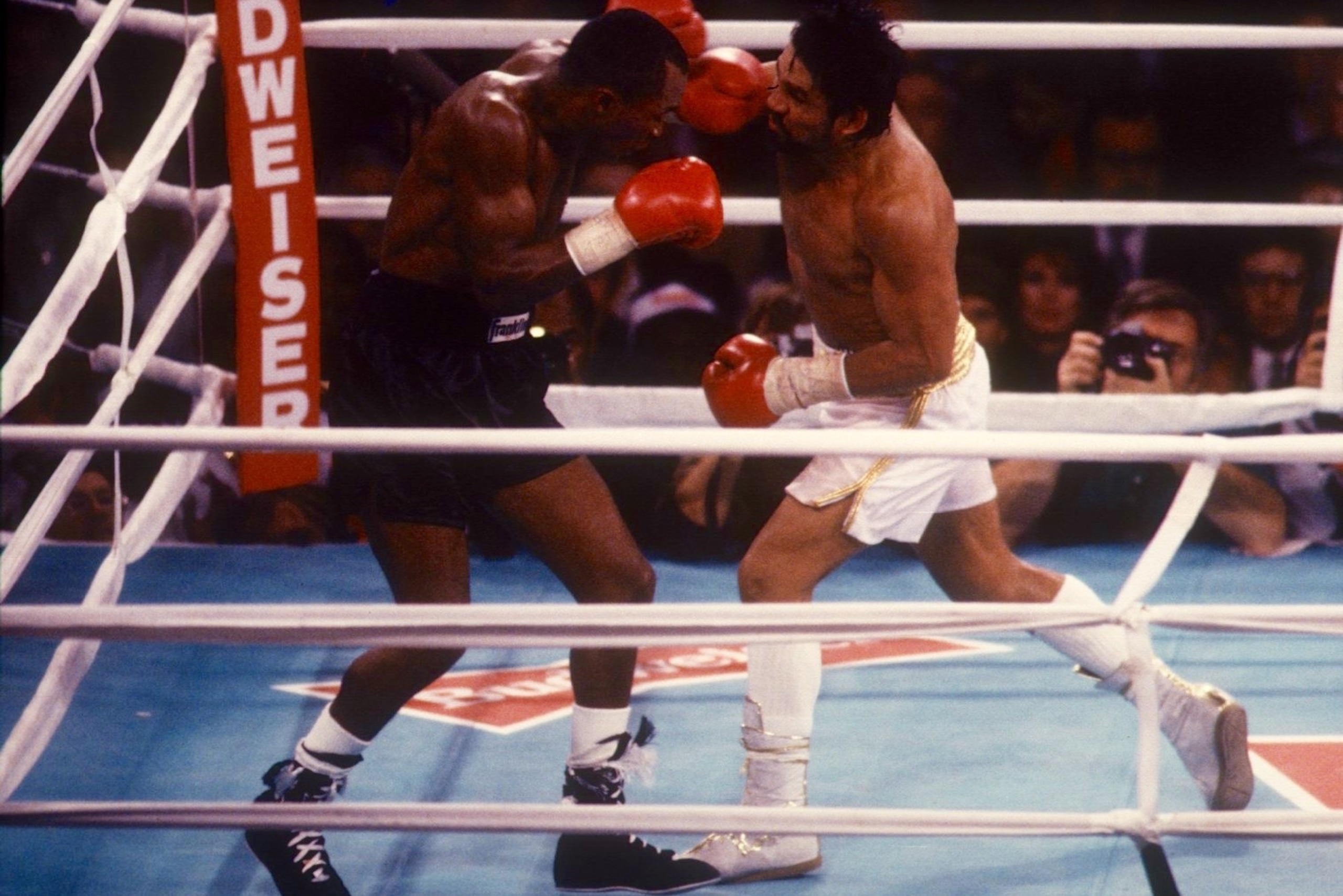
To longtime boxing fans, that description borders on deja vu, one that fits, to a T, another battle between two first-ballot Hall of Famers: "Sugar" Ray Leonard and Roberto Duran. Thirty-five years ago Saturday, the two met for the first time in Montreal in a fight remembered fondly as one of the best of its era. In many ways, the two matchups are mirror images, with only the roles of hero and villain separating them from being identical.
While he was a hero in his native land like Pacquiao, the Panamanian Duran was the villain in America, unable to transcend cultural boundaries in the effortless way Manny mastered. He was brash, crass and cruel, "strutting around," as the New York Times' brilliant columnist Dave Anderson described, "with the sneer of a buccaneer. All he needed was a bandana around his black hair and a knife between his teeth. He always seemed to be daring the world to challenge him."
Duran insisted on doing things his way. He and trainer Freddie Brown did battle daily over the fighter's morning runs, which were long and hard thanks to his propensity to come into camp more than 30 pounds overweight. Duran was unyielding in all things.
Like Pacquiao, he has a hard childhood, born of nearly inconceivable poverty. While it motivated Manny to move in a positive direction, Duran seemed hard-pressed to escape the mentality of the streets that created him. Sports Illustrated's William Nack shared a story from Duran's youth that encapsulates his brand of admirable but exasperating stubbornness:
"Roberto Duran has been doing it his way, for the most part, since the street-urchin days when he surfaced as the resident roughneck of Panama City. Duran grew up in Chorrillo, a windblown slum of narrow streets and tumbledown two-story houses that lies on the east side of the mouth of the Panama Canal, across from Fort Amador. He is one of eight children. Roberto's father deserted his mother before he was born. As a youngster, with a sack slung over his shoulder. Duran used to swim the two miles to Fort Amador for daily raids on its bounteous mango trees. He would climb the trees, load the sack with the fruit and swim the two miles back. One day he almost drowned. Three hundred yards from the shore, encumbered by a particularly splendid harvest, he started to sink. "About three of us grabbed him and dragged him to shore," says Ruben Wallace, a friend of Roberto's. "He wouldn't let go of that damn sack."
"
That stubborn streak served him well in the ring. Raw ability and an awe-inspiring right hand propelled him up the lightweight ranks. Eventually, the Americans found him, tempering that aggressiveness and adding science to savagery.
Just as 40 years later trainer Freddie Roach would work hard with Pacquiao to introduce a right hook to complement his fighter's devastating straight left, Brown and the legendary Ray Arcel convinced Duran he would need to swing with two fists to dominate as he should.

And dominate he did. After beating Ken Buchanan for the championship in 1972, Duran cleaned house in the division, winning 12 of his 13 title fights by knockout. That was unprecedented in the lighter weight classes—and powerful enough for the Boxing Writers of America to name him the best lightweight of all time in 1978 after his final defense of the title against Esteban DeJesus.
In that fight, he won a rubber match against the only man to ever beat him up to that point, answering every question definitively. More than that, he was eating his way out of the weight class with every steak dinner.
It was time to conquer new ground.
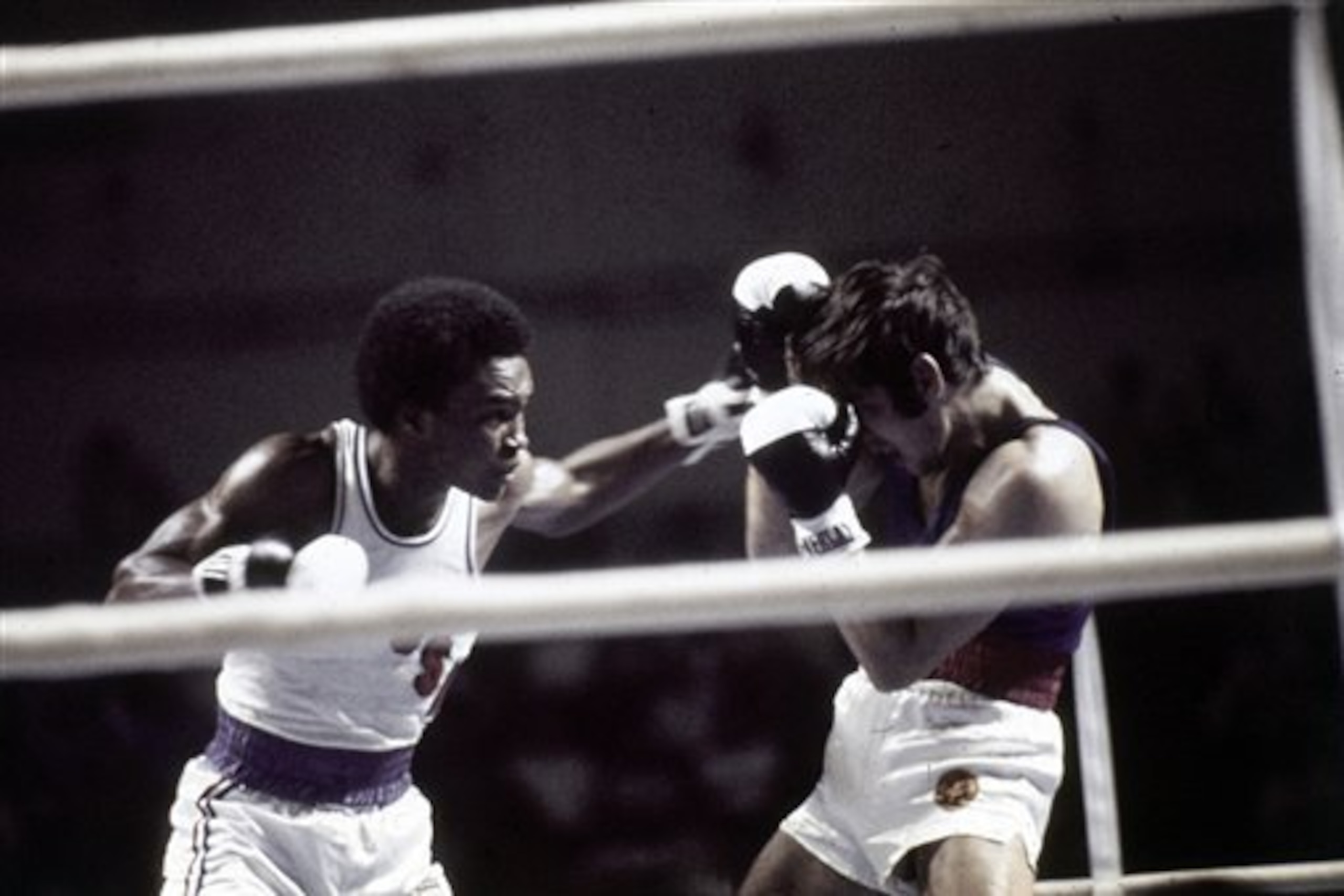
Standing in his way at welterweight was Leonard, not merely an astoundingly talented young Olympic champion but, as Nack explained, the heir to Muhammad Ali himself:
"In the 37 months since the Games, he has not only emerged as one of the most skilled craftsmen in boxing--a thinking man's fighter with the fastest, most exciting hands around and an unrelenting instinct for the kill--but he has also become its most popular and colorful practitioner. He is a phenomenon like no other in the sport today, unique in the success he has attained, and in the money and position he has come to command in so short a time. He is very much a creature of his time and place, his success as inextricably bound to the Nielsen ratings as it is to those incredible hands and the manifest skills he brings to the ring.
"
Leonard was the template every slick boxer for the next 30 years would attempt to follow, Mayweather included. Floyd's early years were spent trying hard to create the next "Sugar" Ray. But his was a hard act to follow. Though Leonard's life was filled with every bit as much chaos as engulfs Mayweather's, he never once stopped smiling—at least in public.
"What everybody gets with Ray is the all-American boy," Washington, D.C.-based boxing matchmaker Eddie Hrica told the New York Times' Phil Berger. "He loves mom, apple pie, the American flag. His kind has been gone for a while. But Ray is bringing it back."
The result was unprecedented success. Leonard became the first non-heavyweight to headline a national television card in decades. His management smartly spread him around to all three networks and HBO. Leonard, in a lesson that Mayweather would internalize, kept the bulk of the money earned with the power of his name. He demanded all of the television money from his fights, leaving promoters to scrounge for the gate—after he collected his guarantee first.
The approach frightened major promoters—but who needed expensive promoters when you were in such high demand? On the last day of November in 1979, Leonard's win over Wilfred Benitez for the WBC welterweight title drew an astounding 55 million viewers for ABC in prime time, solidifying his status as boxing's top dog.
While Leonard would take a fight with European champion Bobby Green for his first defense, the boxing public was fixated on a bout with Duran. So, too, was Leonard, who admitted to the press he was a prizefighter—emphasis on prize.
"I'm in this to make as much money as I can, and then get out," Leonard told the UPI (via New York Times). "Somebody told me after the Benitez fight that I proved I could take a punch. Well, I don't want to prove that. I'm in this for the money."
When Mayweather and Pacquiao count the money from their own epic superfight, they should consider thanking Duran and Leonard for blazing a trail. It was this fight, after all, that launched pay-per-view as the wave of the future.
Like most big fights of the era, the June 20, 1980, bout was available on closed circuit TV around the world. But it was a pilot program in Los Angeles and Columbus, Ohio, that really opened eyes.
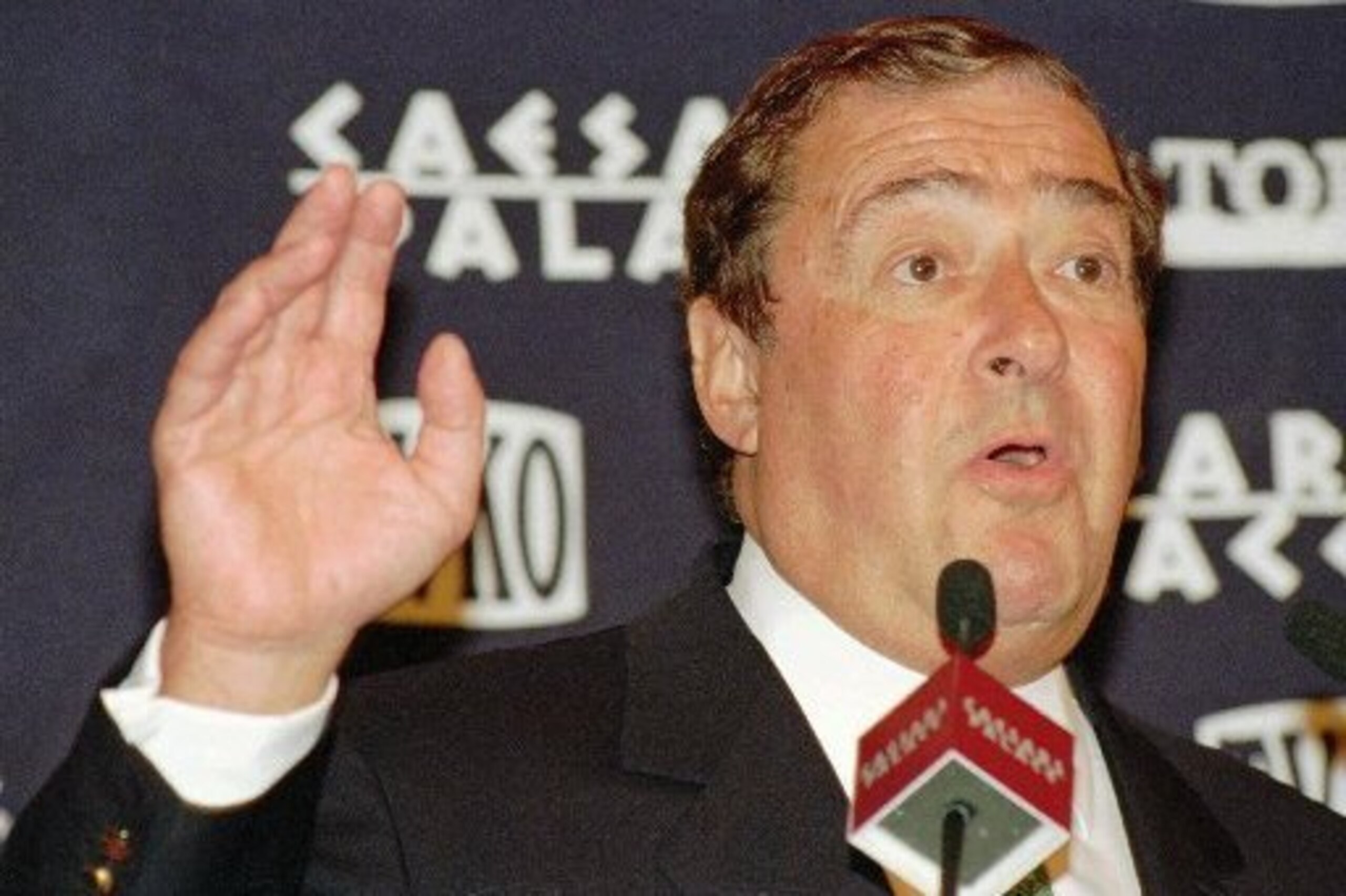
"This is the beginning of a revolution in boxing and television because it means we are moving closer to the day when almost all boxing will be seen, not on network television but on pay cable," promoter Bob Arum told the Associated Press after the fight. "We have seen the last of the big fights on network television. The networks know they have only two years left with boxing."
Returning to the scene of his greatest triumph, a gold medal at the 1976 Olympic Games, Leonard earned every bit of a record payday that was said to approach $10 million. The French Canadians called it Le Face-a-Face Historique, according to Sports Illustrated, and 46,317 braved the pouring rain to see the bout at the famed Olympic Stadium.
Oddsmakers and fans had established Leonard as a 9-5 favorite. Scribes were less sure, favoring Duran's experience and going with the older man.
| Leonard | Duran | |
| Height | 5'10" | 5'7" |
| Weight | 147 pounds | 147 pounds |
| Age | 24 | 29 |
| Reach | 74 inches | 66.5 inches |
| Record | 27-0 (18 KO) | 70-1 (55 KO) |
The fight was expected to be a Pacquiao vs. Mayweather-style tactical battle, with the taller Leonard sticking and moving and Duran chasing. But, despite the protestations that he was a pure business man, a raging pride burned in Leonard.
Duran had insulted Ray and his wife Juanita before the fight, in the press and in person. "Once his wife even gave my wife the finger," Leonard told author George Kimball. "Duran was weird."
He had challenged Ray's manhood and his courage. Leonard attempted to answer that challenge in the ring. In a way, as Leonard explained in his autobiography The Big Fight, Duran had won before the first bell rang:
"Gaining revenge became almost as important as gaining victory, and I refused to change my tactics no matter what (trainer) Angelo (Dundee) might have told me in the corner. I was too caught up in my own anger and pride to listen to the man who had saved Ali more than once, and could have saved me. I never gave him the chance.
"
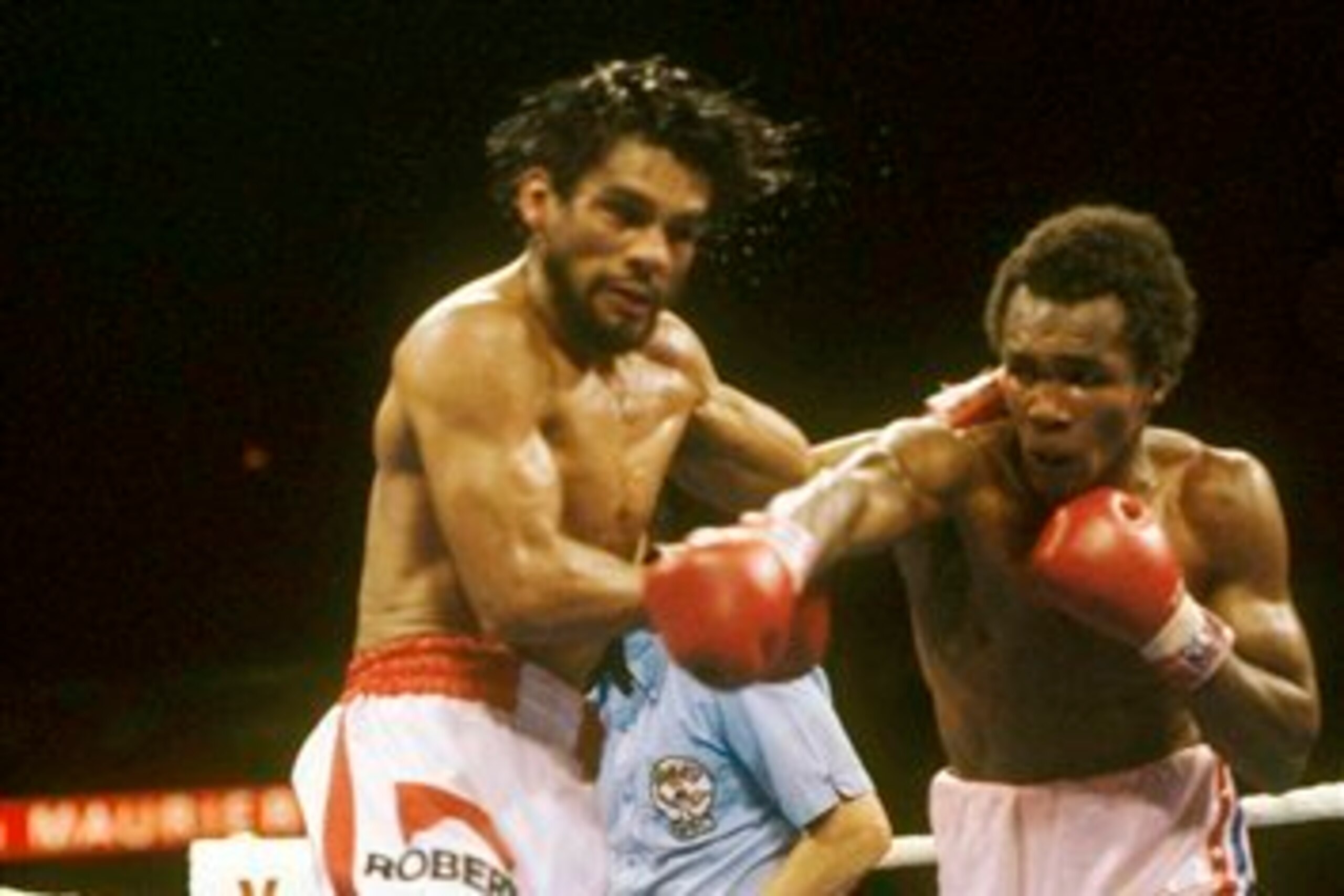
Instead of a clash of styles, fans were treated to a 15-round slugfest. It started with a Duran punch below the belt. It never got prettier, turning into a battle of wills and heart. Leonard gave almost as well as he got, even fighting outside of his wheelhouse. But there was no doubt he was fighting his opponent's fight.
In The Ring magazine, the dean of boxing writers Bert Sugar was perplexed by Leonard's strategy:
"...he of the lightning fists and well-defined moves inexplicably took on the man with the hands of stone and the straight-forward, but subtle, moves in a deadly game—a game of "Machismo." And, as he must, he lost...because he was destined to lose playing another man's game—a game which played right into Duran's hands.
"
"Some people think Duran is wild, but he follows orders," Duran's trainer Arcel told the New York Times' Dave Anderson. "Freddie Brown and I wanted him to crowd Leonard right from the start and he did...Duran dominated him right from the start. Nobody thinks of Duran as a thinking fighter, but he's smart; he can offset another fighter's style."
Leonard, whether because of his own desire to trade or Duran's exceptional skill at cutting off the ring, found himself backed again and again against the ropes. In the misty air, the two men shed their fear and stood toe-to-toe for 45 gripping minutes.
The result was an exceptionally close fight, so close one of the judges scored 10 rounds even. But despite being competitive throughout, the consensus was clear—Duran had done enough to wrest the title from the champion.
Though he raised his hands in the air, Leonard knew he may have lost his title. Unlike Pacquiao, who refused to accept defeat, Leonard never tried to fool himself. He'd been beaten by a better man that night.
"By the 14th round, I knew the fight was his," Leonard told NPR in 2011. "When they announced the decision, I felt like I had given 100 percent, just for the wrong fight. But the devastation—the emotional devastation that went across the board to my family and friends—was unbelievable. I saw them crying. Everyone was crying but me."
Although Duran did plenty to prove his doubters wrong in the ring, outside of it he made clear the black hat was never coming off. In his autobiography The Big Fight, Leonard told how, when the final bell rang, he approached his foe to shake hands. With a sneer, Duran walked away instead, a simple "f--k you" his only reply.
"Duran over Leonard," he boasted later. "(Panamanian General Omar) Torrijos over (President Jimmy) Carter. Panama over America."
Later, however, with the television cameras off, Duran would give Leonard his due.
"He is the best I have fought," Duran told the AP's Hal Bock. "...He was pretty good, but he had to be because he was fighting me."
Like Mayweather vs. Pacquiao, the fight was a mainstream sensation. In addition to the millions watching live at 250 closed circuit locations, the fight was broadcast on ABC's Wide World of Sports nearly a month later on July 19. An absurd 39 percent of televisions were tuned to the bout, despite the results being well-known in advance.
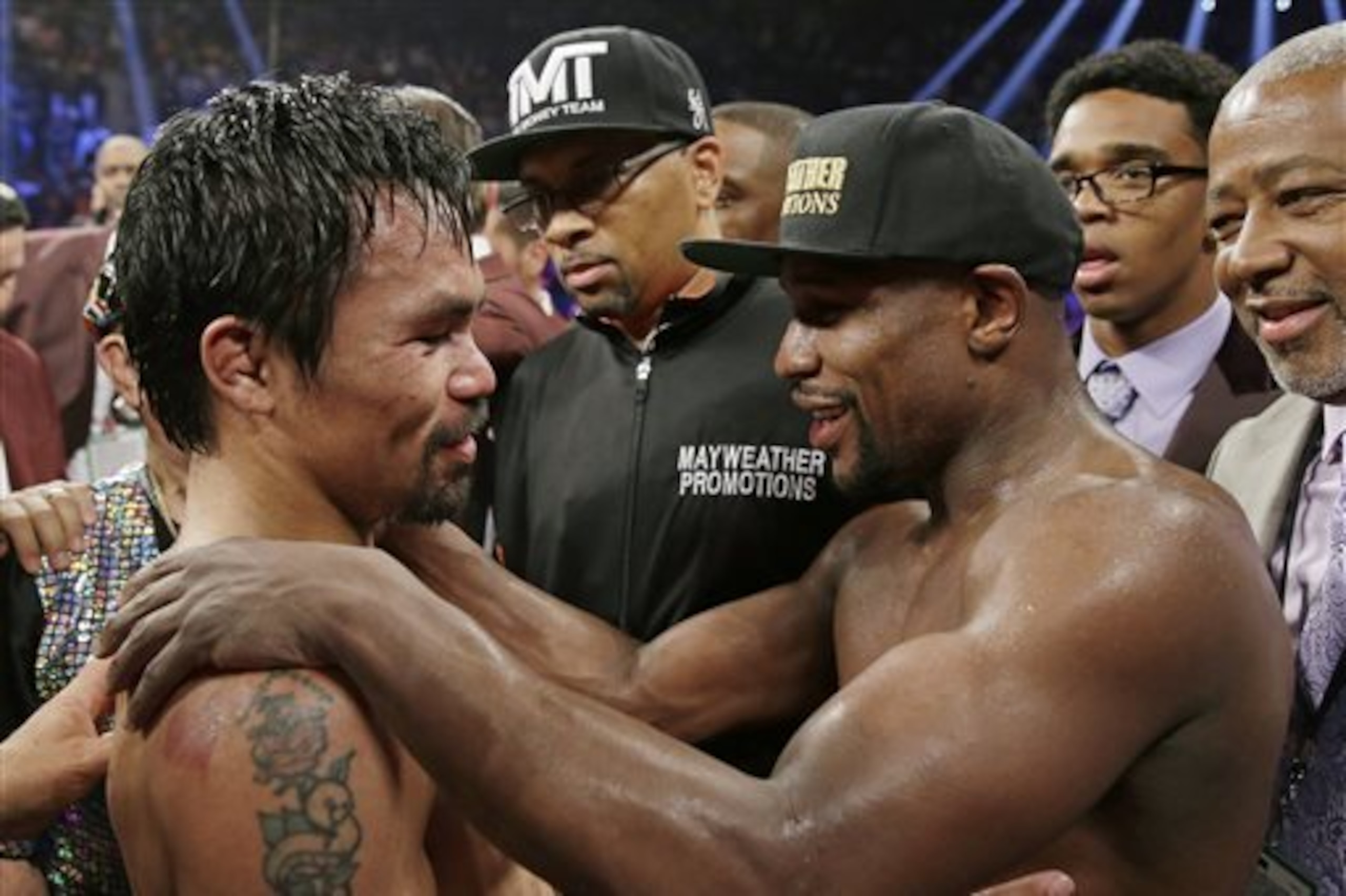
Unlike Pacquiao vs. Mayweather, the bout was a critical as well as a commercial success. Sports Illustrated featured the two men on its cover three times, and most agreed that the fight had lived up to its substantial hype.
The result was an immediate rematch—and a bout that will go down as one of the most famous in boxing history. Leonard made Duran quit on his stool, setting to rights a loss that was soon forgotten in the wake of its sequel.
Thanks to Leonard's courage, ill-advised or not, the rivalry is still being celebrated decades later. As he showed in the rematch, he likely could have outboxed Duran had he chosen that route. Instead, Leonard went out to prove something to himself and the fans. The resulting war will remain a part of boxing lore for generations, long after Mayweather and Pacquiao are mere historical footnotes.
When given an opportunity to shine, neither Mayweather nor Pacquiao showed up to fight. Both men played it safe throughout. While both Leonard and Duran landed around 300 punches in their bout, Mayweather landed just 148, according to CompuBox. Pacquiao, in a dismal showing, managed just 81.
Even when factoring in the three additional rounds allotted to championship fights in the 1980s, that's a stark difference. It's the difference between a fight that remains famous 35 years later and one that is merely infamous.
Ultimately, no one watches boxing to see the ultra-wealthy compete in a bout for nothing more than filthy lucre. We watch to see two men push themselves to the limit physically and mentally, baring their souls in the pursuit of victory.
Win or lose, we remember the pursuit of greatness. And we reward it. That's why, despite their losses, Leonard and Duran will rank above Mayweather and Pacquiao when historians list the best fighters of all time. When their moment came, they delivered. That, and not the size of a paycheck, is how legends are born.
Jonathan Snowden covers combat sports for Bleacher Report.
.jpg?w=2560 "Photos: Broncos reveal new practice facility")
.jpg?w=2560 "AEW Dynamite Grades 🔠")