
How Have the Atlanta Falcons Addressed Biggest Weaknesses from 2014?
When a team goes 6-10, it has more than a few weaknesses. The Atlanta Falcons had a ton of weaknesses throughout the team last year. However, the key weaknesses were what led to the biggest losses for the Falcons.
The lack of a leader as a head coach, the lack of a pass rush that could get after the quarterback and the lack of a competent running game to milk the clock and take some pressure off the defense all hurt the Falcons in 2014.
With Dan Quinn coming in this year, the Falcons should have a new head coach who's a true leader. By bringing in a plethora of B- and C-level free agents to compete for jobs along the defensive line, the pass rush should be better. And by switching to a zone scheme, the running game should be better as well.
.jpg?w=2560 "49ers Giants Football")
.jpg?w=2560 "Commanders Vikings Football")
Coaching
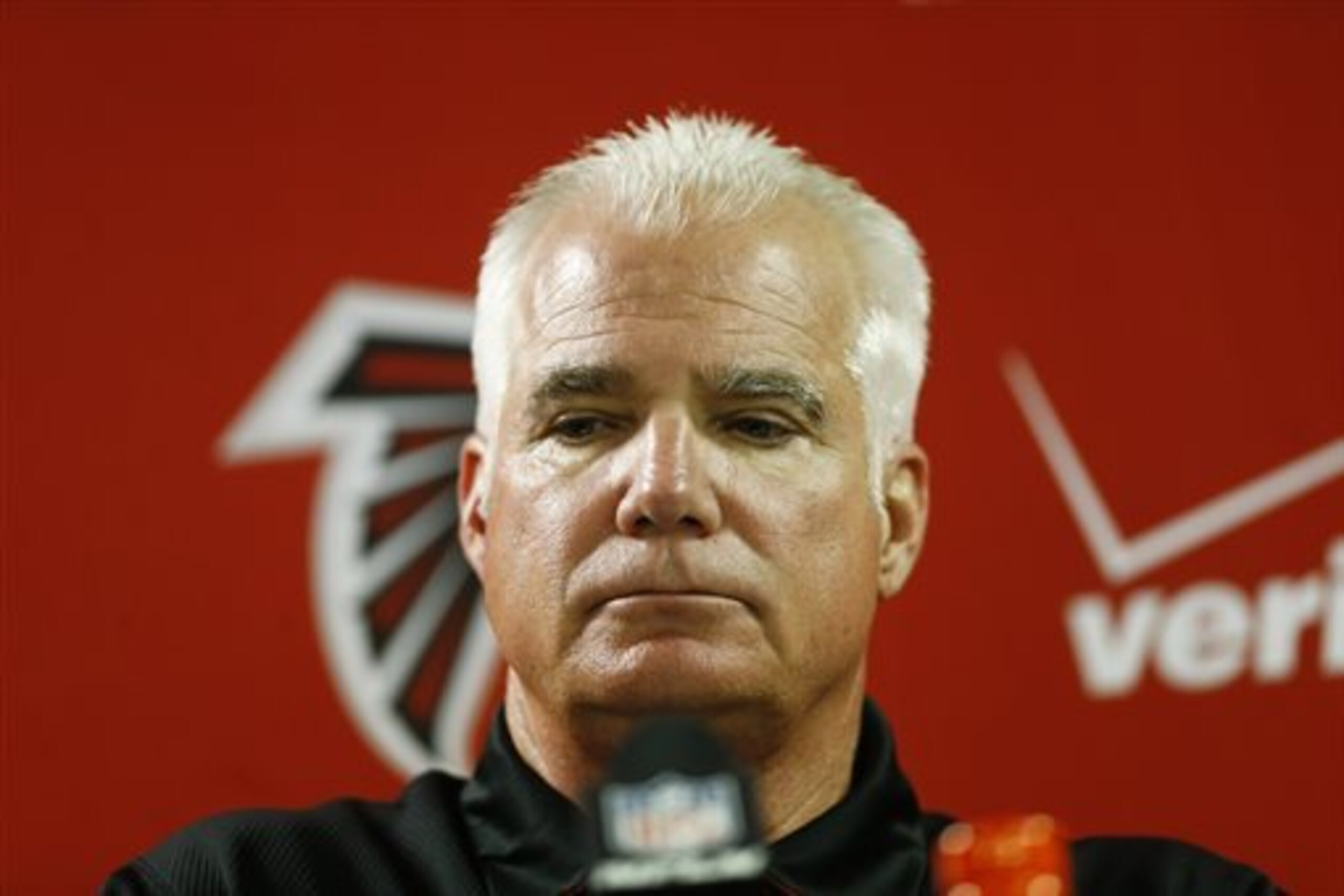
Mike Smith was a terrible head coach, but not always. During his final two years with the Falcons, Smitty, as the team called him, was missing something that he had during his early years. He didn't have the same fire. He didn't have the same coherent, simple schemes.
He didn't understand how to win.
Instead, he focused on how not to lose. And while the Falcons didn't shoot themselves in the foot anymore, they didn't take any risks to win, either. Add in injuries and depth issues to the mix, and it was a terrible fit for the Falcons to have him coaching the past two seasons.
Replacing him, the Falcons needed to bring in someone who could motivate the team. They needed someone whom they would want to run through a wall for. From his interviews, Quinn comes off as a coach whom anyone would want to fight for.
He's a coach who believes in simple schemes and letting the players play fast and play hard. He can turn the Falcons around and back into that playoff team that they were in 2008, 2010, 2011 and 2012. He might even help them take the next step.
And who knows?
Maybe the Falcons win a Super Bowl with Quinn at the helm. He's the right kind of coach to lead them to the title. He just needs the right talent and assistants to help out.
Pass Rush
The biggest need on the field came down to the Falcons' pass rush. They had one of the worst pass-rushing teams in the NFL in 2013 and 2014. This likely stems from the loss of their premier pass-rusher, John Abraham, after the 2012 season.
In 2015, they went out and got Adrian Clayborn in free agency, re-signed Kroy Biermann for the rotation, brought in Brooks Reed, drafted Vic Beasley (first round) and Grady Jarrett (fifth round) and completely changed the defensive scheme to allow for more one-gap pass-rushing attacks.
Combine these moves with the talent already on the roster in Malliciah Goodman, Paul Soliai, Ra'Shede Hageman and Jonathan Babineaux, and the Falcons might have a group that can both stuff the run on early downs and get after the quarterback on later downs.
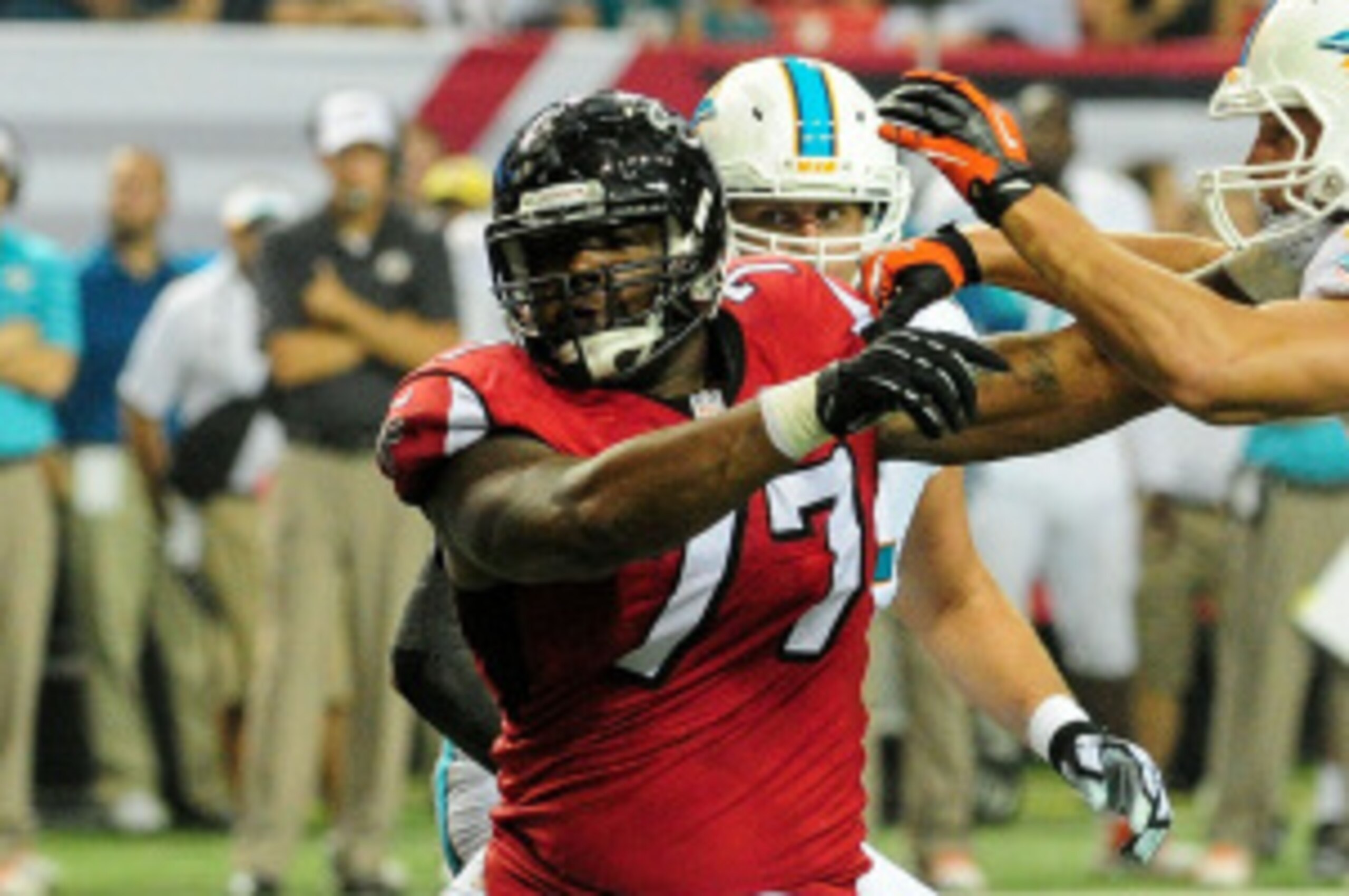
The simplified scheme will allow Hageman and Beasley to make a bigger impact early on. Hageman will go from a role where he was playing as a two-gapping 5-technique defensive end on one down and as a penetrating 3-technique defensive tackle on the next to a scheme where he lines up and controls one gap all the time.
This will allow him to be more impactful as a pass-rusher because his only job is to attack. Passing sets where Jarrett, Hageman, Beasley and Biermann are the primary pass-rushers won't look awful, either. Putting speed on the field and changing the scheme to allow for faster play should make the team better.
And when you can get after the quarterback, the pass defense will improve tremendously. The Falcons never had a great pass rush in the Mike Smith era, even with Abraham on the roster. They never had more than 34 sacks in a season from 2008 to 2014.
They could potentially shatter that number this year with Quinn at the helm and the added pass-rush talent on the roster. If they can improve from 22 sacks in 2014 to 40 sacks in 2015, the Falcons' win-loss record should improve from 6-10 to 10-6 or better.
Run Game
The Falcons need to get back to having an above-average running offense. Otherwise, quarterback Matt Ryan will have to shoulder the load again in 2015. They have made some strides over the past two seasons, but they could still stand to improve.
In 2012, the Falcons had the 29th-best running game in the NFL, as far as both yards per game (87.3) and yards per attempt (3.7) are concerned. In 2013, they were last in the NFL in yards per game (77.9) but 24th in yards per attempt (3.9). In 2014, they moved up to 24th in yards per game (93.6) but jumped to 21st in yards per attempt (4.0).
The jumps are nice to see.
Going from 87.3 yards per game in 2012 to 77.9 in 2013 and then 93.6 in 2014 was a nice improvement. But the real improvement was in yards per carry, where they went from 3.7 in 2012 to 3.9 in 2013 to 4.0 in 2014.
The improvement came from the offensive line play rather than the running backs getting better at finding holes. The big improvement in 2015 will come from the scheme switch to a zone-blocking style with wide-zone stretch principles.

The Falcons have a ton of athletic offensive linemen, and by putting them in positions to succeed by using their athleticism to create lanes instead of powering through defenses, the Falcons should be able to have a much better running game in 2015.
Add in the fact that the Falcons will be replacing the old, rundown Steven Jackson with Tevin Coleman (drafted in third round) and Devonta Freeman—a pair of running backs with few miles on the tires—and the Falcons could wind up with their best running game since 2010, when Michael Turner was in his prime.
Coleman and Freeman are both ideal zone backs because they win with a combination of vision and speed. If Atlanta can use them to create a yards-per-carry rate of over 4.2 and run the ball over 400 times, the team can take a ton of pressure off Ryan and win more games.
If the offense features an above-average running game, it can milk the clock and take some pressure off the defense as well. Atlanta has the potential to win a ton of games this year, but it needs the running game to improve.
All stats used are from Pro Football Focus' Premium Stats, ESPN.com, CFBStats or NFL.com. All combine and pro-day info is courtesy of NFLDraftScout.com. All contract information is courtesy of Spotrac.
Scott Carasik is a Featured Columnist for Bleacher Report. He covers the Atlanta Falcons, college football, the NFL and the NFL draft. He's also the Featured Draft Analyst for Pro Football Spot.
.jpg?w=2560 "WWE Raw Live Grades 🔠")

.jpg?w=2560 "Dak Addresses 'Dumb' Old Romo Tweet 🤣")