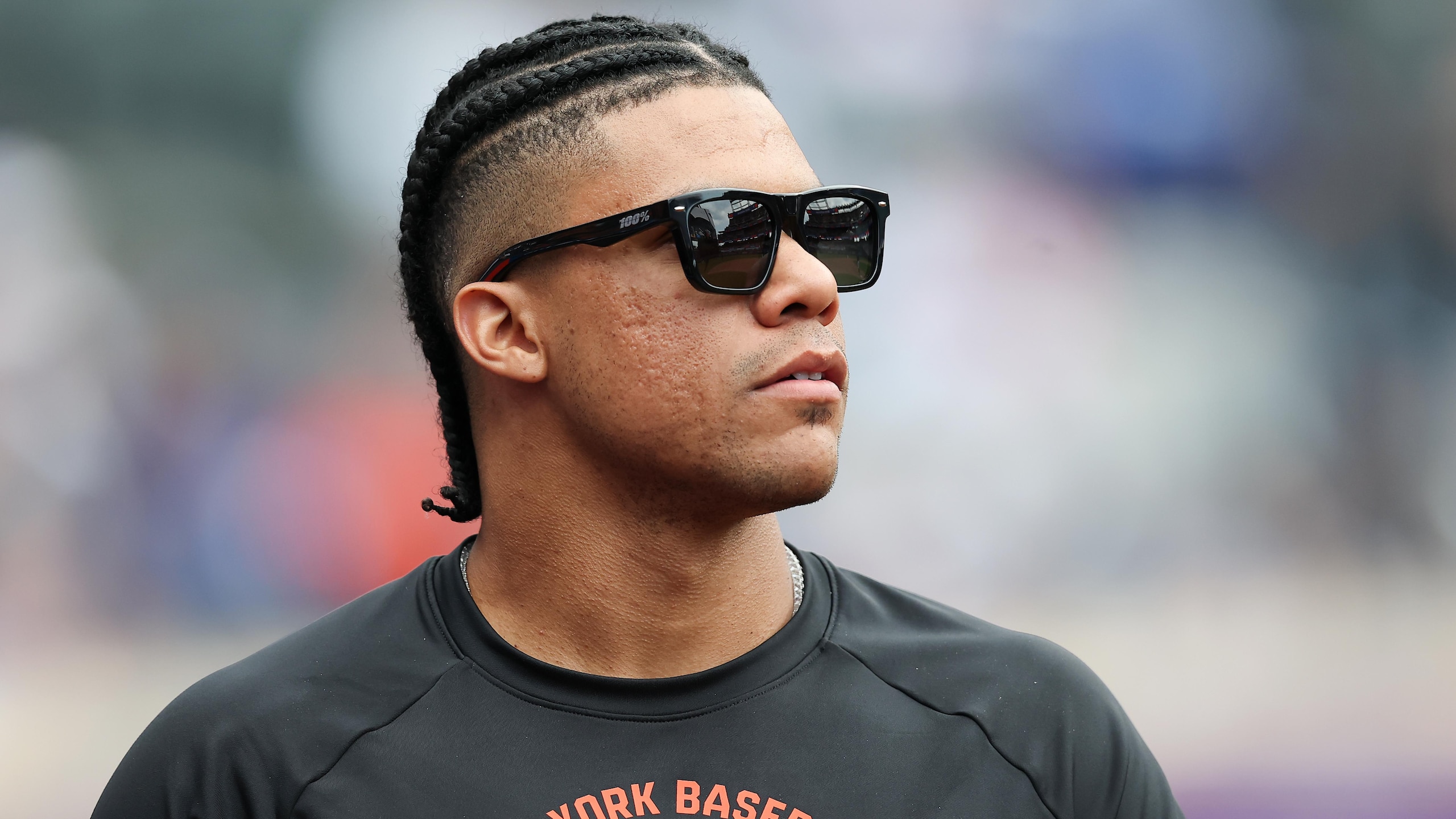
Gordon Hayward's Big Night Against LeBron James Again Shows He's Worth the Money
It's not at all uncommon for max contracts for young NBA players to draw considerable criticism.
Gordon Hayward should know. His four-year, $63 million offer sheet from the Charlotte Hornets, which spurred the Utah Jazz to match this past summer, garnered more than a few suspicious side-eyes. As Grantland's Zach Lowe wrote after Charlotte's pitch but before Utah's retort:
"Look, this is an overpayment for Hayward, even with the cap set to rise by $4 million or so every season going forward. This is different than betting on [Jrue] Holiday to produce $11 million of on-court value. This is a deal that will average better than $15 million per season for a guy who shot 41 percent overall and barely cracked 30 percent from long range.
"
.jpg?w=2560)
Lowe was far from alone in that regard. Hayward's poor campaign on a 25-win Jazz squad hardly seemed the sort that beckoned for a big investment.
So far, the Jazz's big bet on Hayward in the free-agent market is paying Apple-caliber dividends. Hayward's stellar two-way performance in Utah's 102-100 home win over the Cleveland Cavaliers at EnergySolutions Arena was just the latest.
The fifth-year guard out of Butler capped his night with a game-winning, 21-foot step-back at the horn over the outstretched arm of a lunging Tristan Thompson, who was himself covering for LeBron James after the four-time MVP stumbled to the floor earlier in the play.
"I've never really done that before," Hayward said. "It was just one of those moments."
Hayward had more than his fair share of notable moments against James, particularly on the defensive end. James struggled to move, much less score, against Hayward's sliding feet and active hands. Every point James scored with Hayward on him, he had to earn.
James' final line (31 points, 8-of-18 from the floor, 12-of-12 from the line) belies how many times he couldn't seem to create leverage against Hayward in the low post, most notably with less than half a minute left in the game and the Cavs desperate for a score. It merely hints at the magnitude of Hayward's chase-down block on James, the reigning king of the chase-down, with 1:25 remaining in the first half.
And it doesn't say all that much about Hayward's dunk on the other end of that very same sequence.
Or about the times he slipped by James on the way to the cup. On this night, at least, Hayward proved superior (in spurts) to James in more than just League of Legends.
To be sure, Hayward didn't score as many points as James—his 21 tied for the Jazz team lead with Derrick Favors—but he did drop more dimes (seven) than LeBron (four), have a hand in James' four turnovers and make life difficult all around for the best basketball player on planet Earth.
But this night wasn't about what James didn't do; frankly, he did everything he could to keep the Cavs in the game, including a preposterous three from the deep corner with 13 seconds left.
Rather, it was about what Hayward did do, which was make plays for his team and put Utah on his back—just like max contract-types are supposed to.
It was hardly the first time this season Hayward looked like someone who should be earning $14.7 million (compared to his peers, anyway). In fact, Hayward's standout showing against Cleveland was his third in as many games for the Jazz.
On Monday, he torched the Los Angeles Clippers for a season-high 27 points, on 10-of-19 shooting, with seven boards and five assists in what was a six-point loss for the Jazz. Two nights prior, Hayward led Utah to a 27-point stomping of the Phoenix Suns with 24 points and 10 rebounds—the sixth 20-10 game of Hayward's burgeoning career.
And, frankly, his final tally from an 18-point loss to the Dallas Mavericks two nights before that (16 points, six assists, four rebounds) was pretty good, too.

At this point, Hayward appears to be pairing top-notch production and pivotal playmaking at a capacity that's to be expected of someone in his tax bracket. The Jazz's 2-3 record is nothing to write home about, but Hayward's efforts therein certainly are.
Not that Hayward is the only Salt Lake City resident who has taken that all-important next step. Favors, who got paid last fall, and Enes Kanter, who'll have to wait for his windfall next summer, combined for 39 points, 15 rebounds, two blocks and stifling defense on Kevin Love (2-of-10 from the field), with a little help from combine champion Rudy Gobert (four rebounds, three blocks).
Alec Burks, proud owner of a $42 million extension, knocked down four massive free throws in the final 17 seconds. Trevor Booker, who's making a modest $5 million as part of a two-year pact with the Jazz, stepped up with a key three at the 3:11 mark of the fourth quarter.
In short, the Jazz's triumph over the fumbling, unformed Cavs—whose own recent rookie extendee (Kyrie Irving) led all scorers with 34 points but failed to register a single assist—was a showcase for all of its improved constituents.
Not to mention Dante Exum's five dimes off the bench or Rodney Hood's two threes. Someday, those guys could be channeling their inner Rod Tidwell after developing to the extent that Utah's core has.
To be sure, these guys all have a long way to go, Hayward included. They let slip a 16-point third-quarter cushion, allowing the Cavs to take their first short-lived lead of the evening on an acrobatic transition layup by Irving at the 5:24 mark of the final frame.
Fortunately, Hayward was there to bail them all out with a buzzer-beater that staved off overtime against a talented Cleveland team that had some semblance of momentum on its side.
It's moments like this that have shown—and will show—that Hayward's shiny new pact may well be not only the Jazz's biggest expenditure but also their best.
Find me on Twitter for your nightly NBA needs!
.jpg?w=2560 "Vita Vea Requests Trade")
.png?w=2560 "Madden 99 Club Revealed")
.jpg?w=2560 "WWE Raw Live Grades 🔠")
.jpg?w=2560 "Bills Reveal New Unis")