Numbers Lie About Impact of Falcons Tackling Machine Paul Worrilow
Atlanta Falcons linebacker Paul Worrilow leads the league in tackles after two weeks of the regular season.
Worrilow is a 24-year-old linebacker who became a starter for the Falcons as a rookie last season. Despite being an undrafted free agent out of Delaware, Worrilow started 12 games and totalled 127 total tackles by the NFL's official count.
Now in his second season, Worrilow has been credited with 35 tackles through three games.
.jpg?w=2560 "Browns Camp Football")
.png?w=2560 "Bills Camp Football")
Tackle stats in the NFL are very unreliable. They are tracked as the games develop, so mistakes inevitably arise. While Worrilow has been credited with 35 tackles, he hasn't actually made 35 tackles. On at least two occasions, he was given credit for a tackle when he didn't touch the ball-carrier.
On other occasions he touched the ball-carrier but wasn't the reason for the tackle being made.

Worrilow is No. 55. He initially lines up to the left side of the defense and is unable to get to the running back when he runs into a pile at the line of scrimmage. Worrilow shows good awareness to not overcommit to the pile of bodies.
His awareness allows him to track Giovani Bernard when he breaks outside, but he is too slow to get near him. Bernard is eventually led out of bounds by two other defenders who contact him, while Worrilow is blocked out of the play.
Worrilow never touched the ball-carrier on this play, but he is credited with the tackle. If these kinds of plays were rare, the NFL tackle statistic would be more valuable, but because these kinds of plays are fairly common, there is less value in the quantity of tackles a player accrues.
Even if the NFL did accurately track the quantity of tackles a player is responsible for, it's always more important to understand the quality of those tackles.
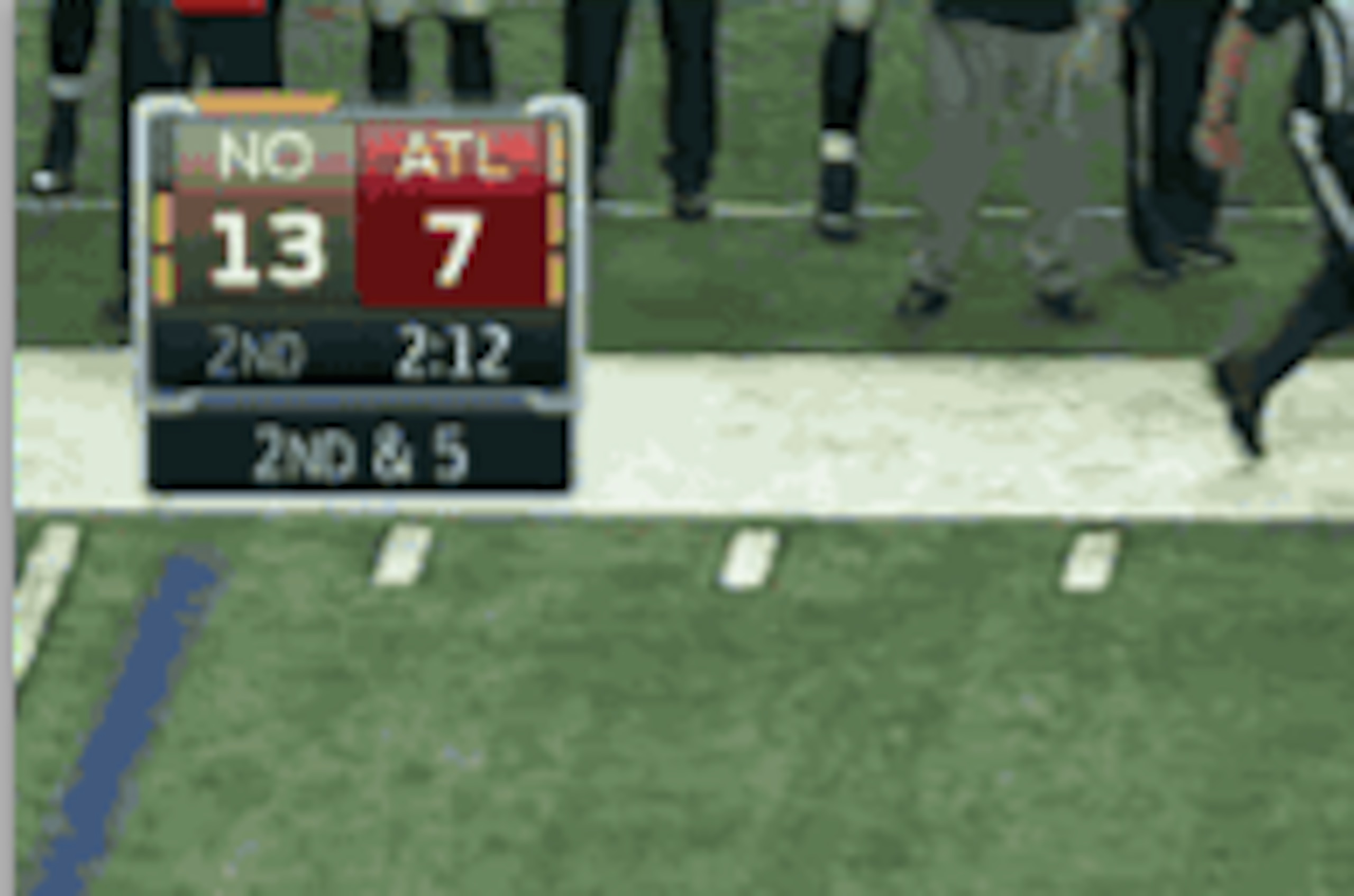
On this play, Worrilow has dropped into deeper coverage than where the ball ultimately lands. When the ball arrives to its intended receiver, one of Worrilow's teammates is there to tackle him. That defender initially struggles to bring the receiver down, but he has him in his grasp enough to be certain he isn't going anywhere.
When Worrilow arrives, he assists the defender by extending an arm onto him. Worrilow doesn't hit the opponent and knock him backward; instead he slides past him and grasps at him with his hands.
Worrilow was given an assist for this play. By the NFL's measure probably a good decision. However, his actual impact on the play was essentially nothing. He didn't change where the ball would be spotted on the next play, and he didn't punish the receiver for fighting for extra yards.
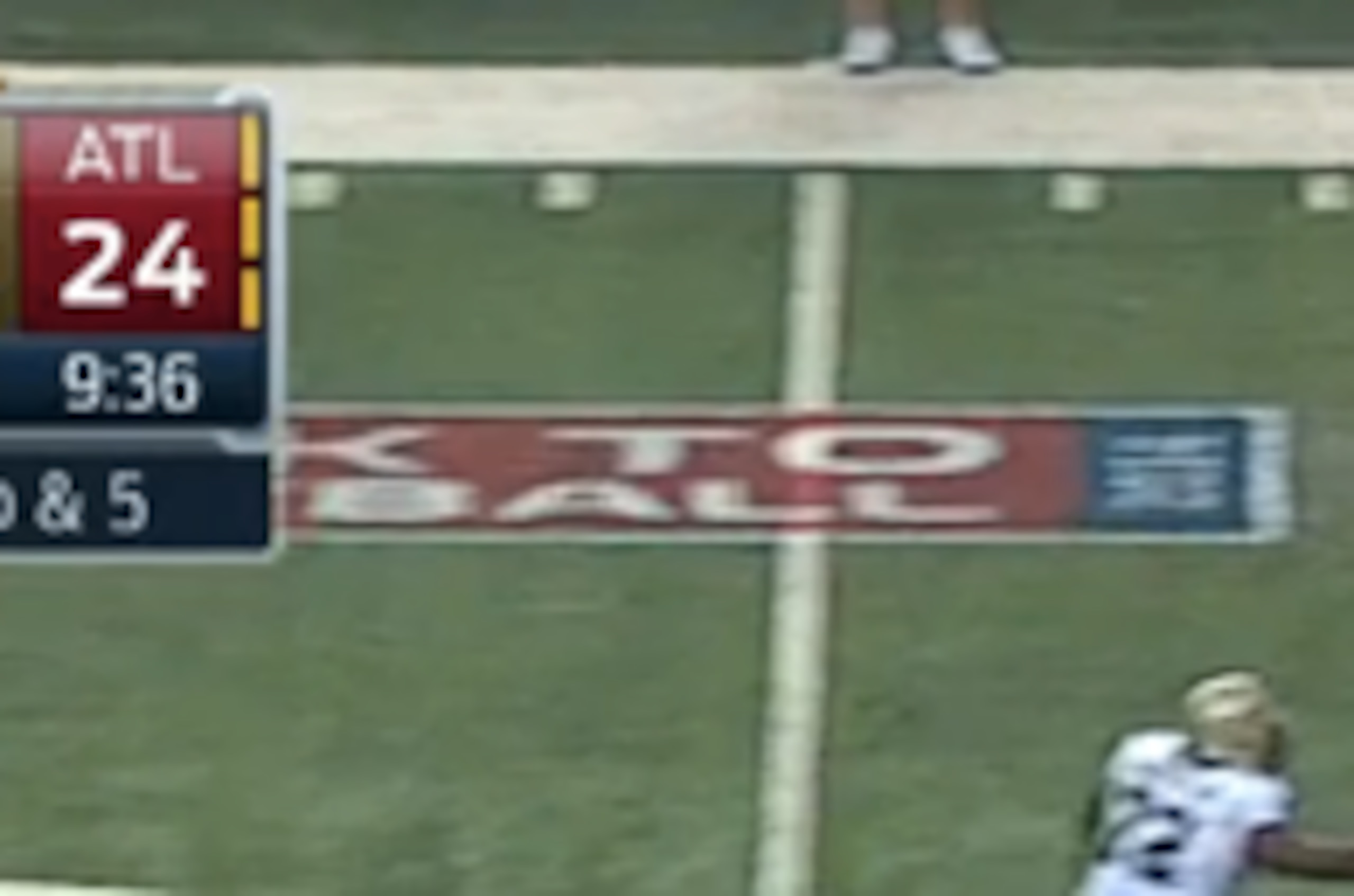
On this play, Worrilow overruns his gap responsibility at the start of the play, allowing a New Orleans Saints offensive lineman to use his momentum against him and push him out of the play. Worrilow is helpless as Saints running back Mark Ingram runs free into the secondary.
Worrilow trails the play, showing decent effort, and is in position to tackle Ingram when the back is held up by multiple Falcons defenders.
This play is represented on the stat sheet as another assist for Worrilow, but the negative largely outweighs the positive. He was a huge reason for Ingram's ability to gain more than 15 yards without being touched. A quality tackle on this play would have occurred within five yards of the line of scrimmage.
Quality tackles aren't simply tackles that end plays. They are tackles that come in areas of the field that are positive for the defense and that don't give up unnecessary yards at the point of contact either because of an inability to get off a block or because of a bad pursuit angle.
A player who is simply tackling a ball-carrier after he gets to the second level because he was initially well-blocked isn't making as big of an impact as a player who gets off a block and gets to the ball-carrier as early as possible.
Being a good defender is all about giving up yards. Regardless of how you do it, a good defender's job is to give up as few yards as possible within the structure of his defense.

When you look at Worrilow's tackle chart above (through the Falcons' first two games), you can see that most of his tackles come after the line of scrimmage.
Worrilow isn't consistently knifing into the backfield or taking on blockers to get tackles for loss. His only tackle for loss in the first two games of the season came on a screen pass against Cincinnati Bengals running back Giovani Bernard.
Even on that play, Bernard was initially stopped by another defender who got to the play ahead of Worrilow, but Worrilow was able to get the tackle when that defender failed to bring him down.
On the above chart, the green dots represent plays where Warrilow made a tackle on a passing play. The red dots represent tackles that Worrilow made on a running play. A large number of Worrilow's tackles on running plays come within five yards of the line of scrimmage. This is where his value lies.

Later on against the Bengals we got to view Worrilow on a play that he can consistently make. As Rotoworld's Josh Norris would put it, this is where his skill set wins. He initially lines up over the tight end to the right side of the offense just a couple of yards off the line of scrimmage.
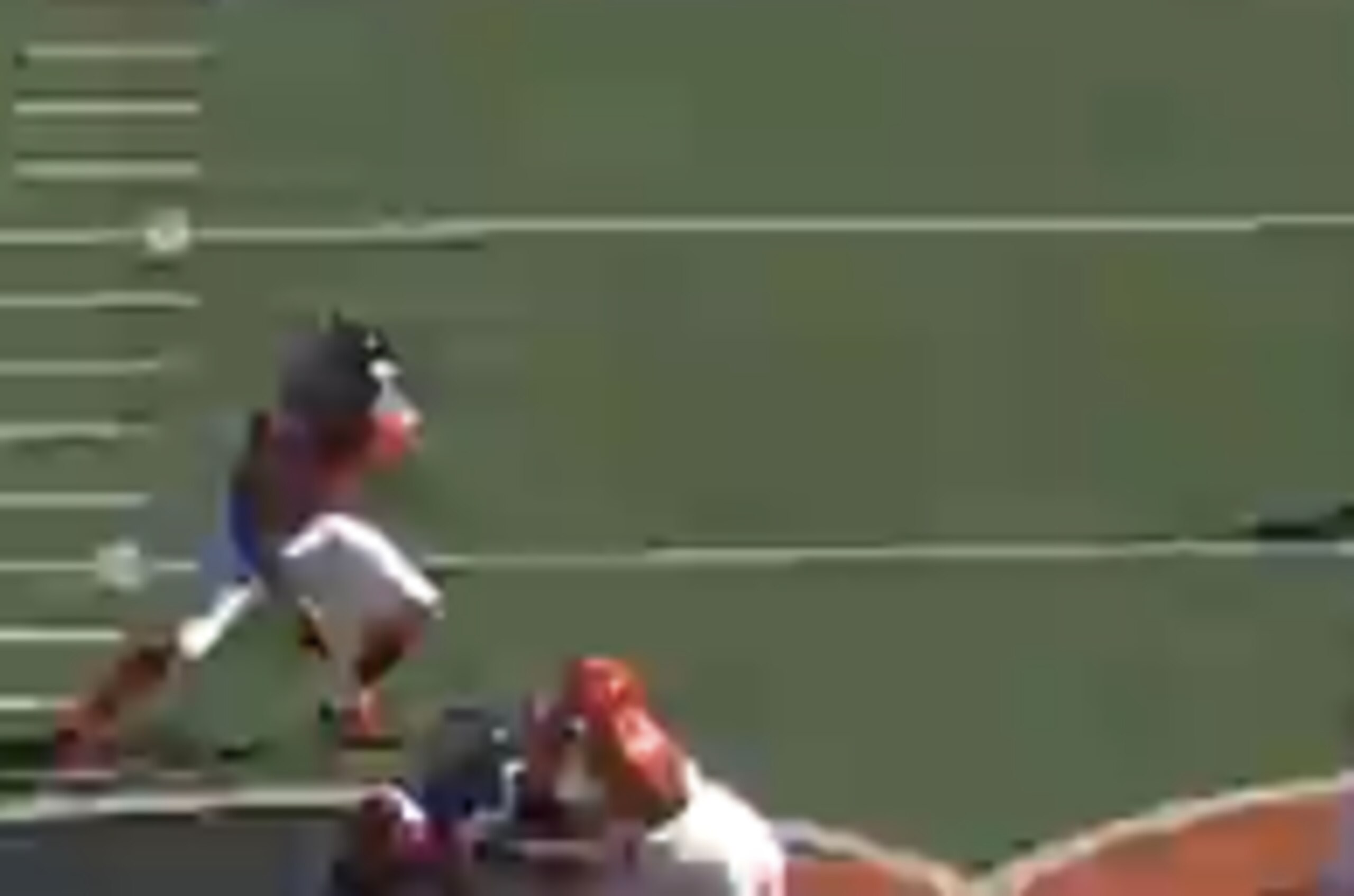
At the snap, Worrilow keeps his eyes in the backfield and meets the tight end just one yard past the line of scrimmage. He uses his power to hit the inside shoulder of the tight end before pushing him away with his arms.

By using his arms and gaining inside position, Worrilow is able to watch Jeremy Hill, the Bengals running back, as he takes the ball from the quarterback and runs up the middle of the defense. Worrilow is quick enough to meet Hill just a yard or two after the line of scrimmage.
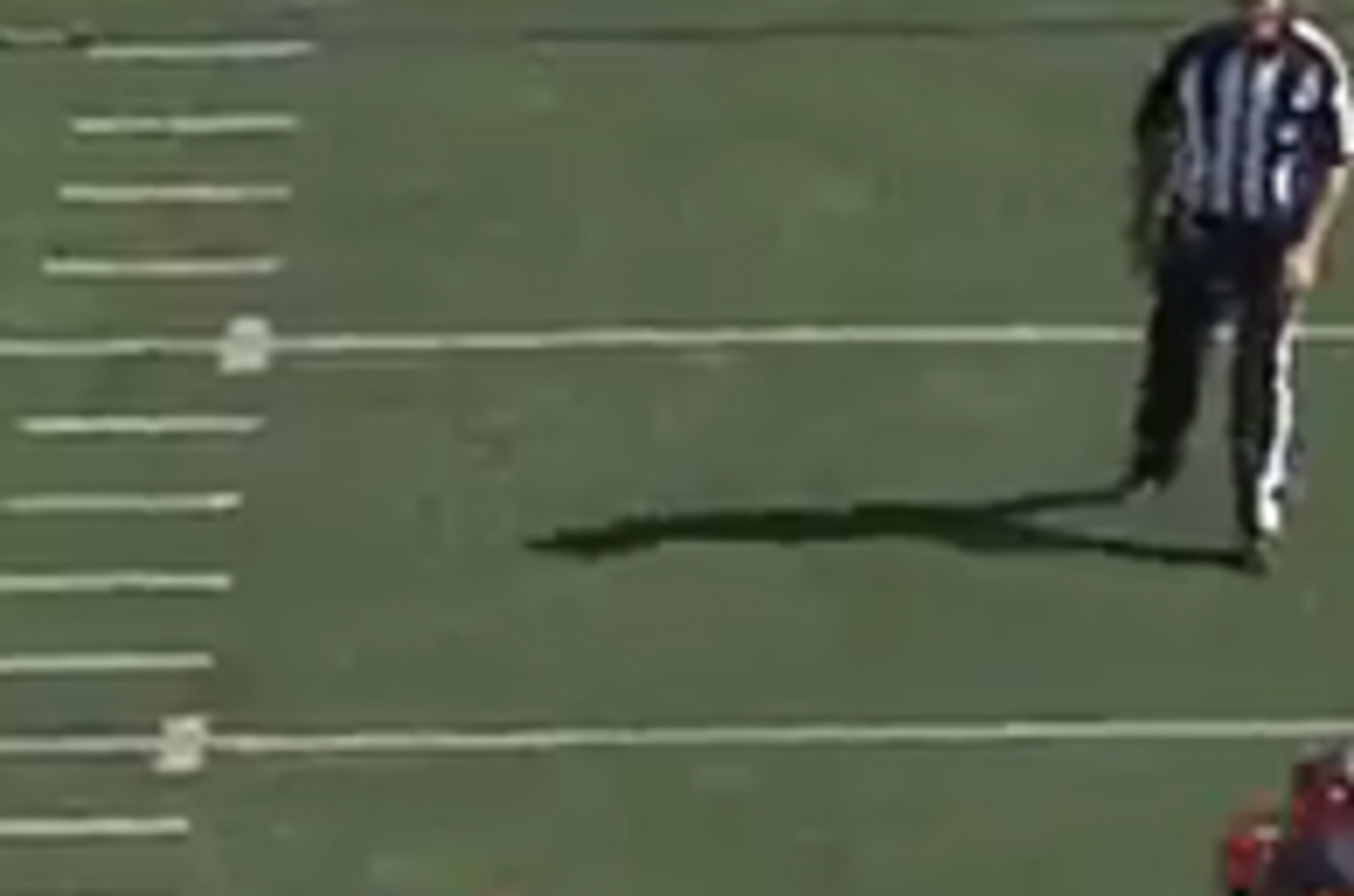
Worrilow makes a clean tackle but is dragged a couple yards downfield because of Hill's power.
Using good discipline and quickness between the tackles allows Worrilow to sniff out the ball in tight areas and close on it at speed on a regular basis. It's the consistency he shows in these areas that allows him to be a valuable starter for the Falcons.
However, when you consider Worrilow's standing against his peers across the league, his value is clearly limited by his lack of physical talent.
A lack of physical talent is likely the biggest reason why he wasn't selected in the 2013 draft. Worrilow has good strength, good quickness and good speed, but the linebackers in today's NFL are freakish athletes. Athletes who are simply physically able to do things that he can't.
This lack of physical talent shows up most in two areas. The first is at the point of contact.
As the previous play against Hill highlighted, Worrilow is susceptible to giving up yards through tackles. When the best linebackers in the NFL are able to square up to any opponent, they should always be favored to stop the play in its tracks or knock the runner backward.
On this play, the Saints come out in a heavy formation with two tight ends, one to either side of the field, and a fullback ahead of Mark Ingram in the backfield. Worrilow is lined up to the left of the defense directly across from the Saints' right guard.

Despite coming out in a tight formation, the Saints slide their offensive line to the right in a zone-blocking style for an outside stretch play. Worrilow is very quick to react as he reads the movement of the offensive line while keeping his eyes in the backfield.
Worrilow shows great awareness and discipline to fill the first hole on the left side of his nose tackle. He doesn't overcommit to the blocker in his face, instead keeping his eyes on the running back and using his extended hands to prevent him from engaging him.

To this point in the play, Worrilow has played his assignment perfectly. He moved with the running back and located him as he crossed the line of scrimmage. He is in a position where he can plant his feet and drive his shoulder into the ball-carrier while wrapping him up with his extended arms.
Ingram should be limited to a one-yard gain here at the very most.
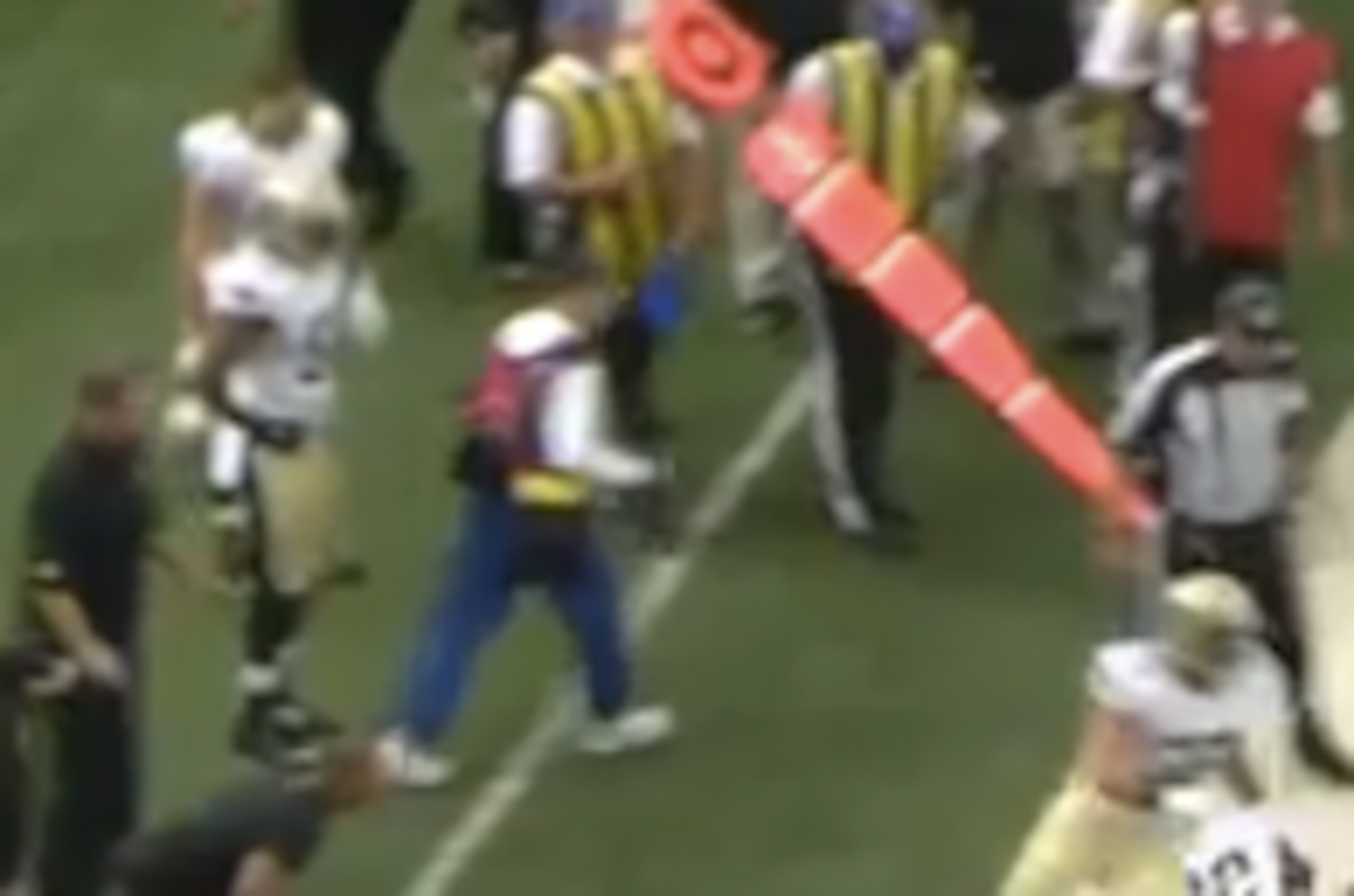
Instead, Ingram drags Worrilow down the field for another three yards before another defender arrives to aid the overmatched linebacker. Even though Worrilow showed perfect vision and discipline before executing a technically sound tackle, he simply didn't have the physical power to make a strong tackle.
In tackles against strong backs, Worrilow lacks power. In coverage, he lacks speed.
Worrilow isn't a major liability in coverage; he is just not the type of linebacker who can be given tough assignments. A large number of his tackles came on plays when he was covering a smaller zone over the middle of the field before running up to make the tackle.
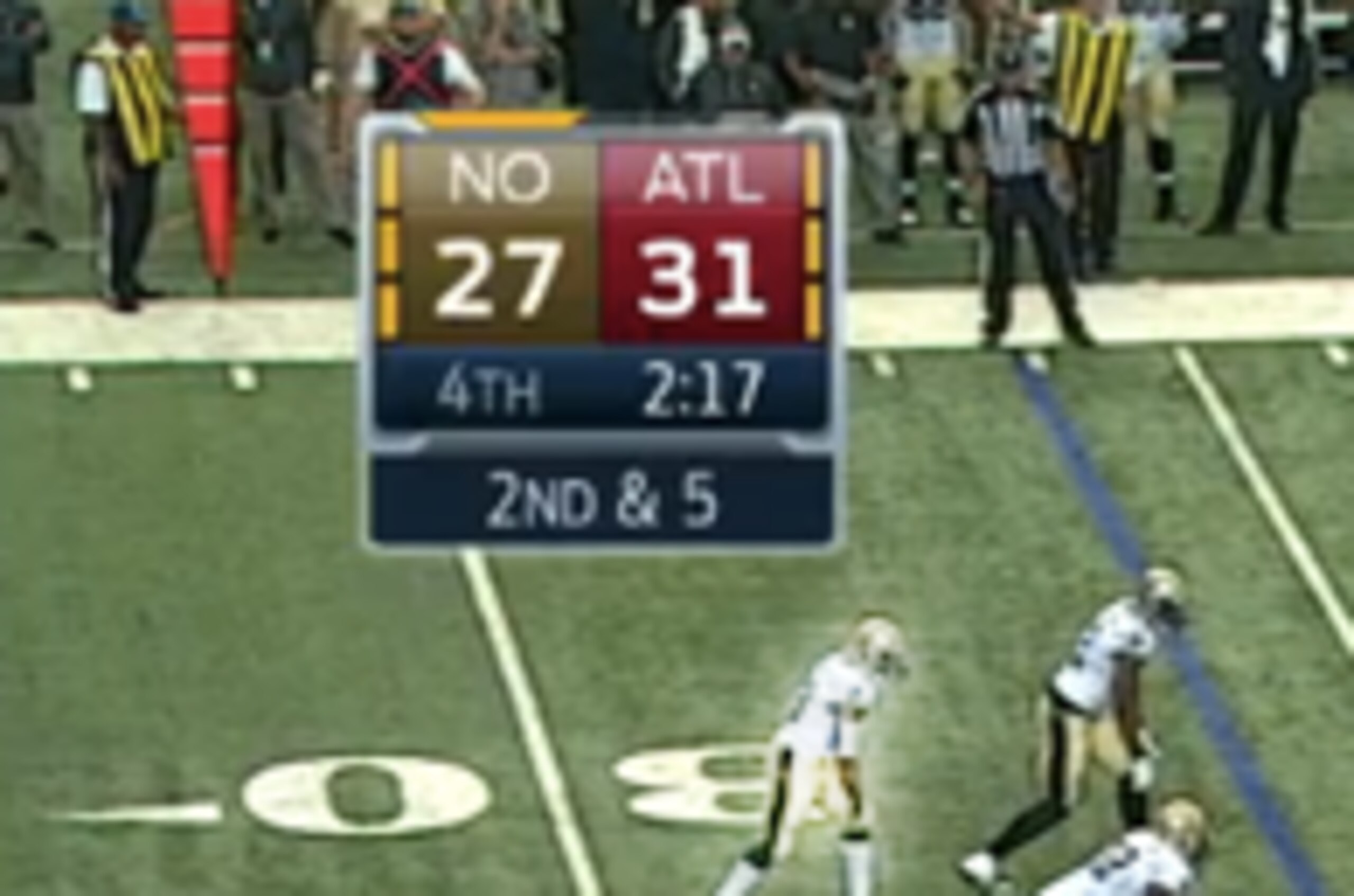
On this passing play from the Saints game, Worrilow is in man coverage against Pierre Thomas. Thomas is a good receiving back, but he's not exceptionally quick. From the snap, Worrilow is already conceding space to Thomas as he lines up on the first-down marker seven yards away from his assignment.

As soon as Drew Brees got the ball, he looked toward Thomas and Worrilow. Worrilow has already beaten himself on this play with poor footwork. He is overplaying the sideline, as his shoulders are essentially aligned to cover the outside receiver running down the field.

When Thomas angles his route infield quickly, Worrilow is forced to plant his outside foot and shift his weight to try and recover his position. Thomas is running what was previously thought of as the "Sproles route" as he slightly arced outside before running a quick slant.

Brees' pass is slow and slightly behind Thomas, but it doesn't matter because Worrilow and the Falcons defense have left him in a huge amount of space. Worrilow makes the tackle, but the Saints get an easy first down.
In everything he does, Warrilow is consistent and disciplined. He doesn't miss a lot of tackles, and he doesn't find himself out of position on a regular basis. His technique, awareness and quickness between the tackles is allowing him to lead the league in tackles.
So long as he continues to be consistent and plays behind that bulked-up defensive line, he should be able to comfortably finish this season with more than his 127 tackles from his rookie year.
Leading the league in tackles is a good thing, but its value is limited. From 2008 to 2013, Paul Posluszny of the Buffalo Bills and now the Jacksonville Jaguars totaled 792 tackles (132 per season). Posluszny was and largely still is an aware, disciplined player who lacked the physical talent to be one of the best linebackers in the NFL.
The best linebackers need to be all-around above-average players with one or two elite traits.
NaVorro Bowman was arguably the best linebacker in the NFL last year. He excelled in coverage more than anyone else. Luke Kuechly won Defensive Player of the Year. Kuechly closes on the ball from sideline-to-sideline faster than anyone. Patrick Willis has been considered a top linebacker since he got to the league. It's incredibly difficult to prevent him from getting off blocks.
Worrilow shares a skill set that is much closer to that of Posluszny than any of Bowman, Kuechly or Willis.