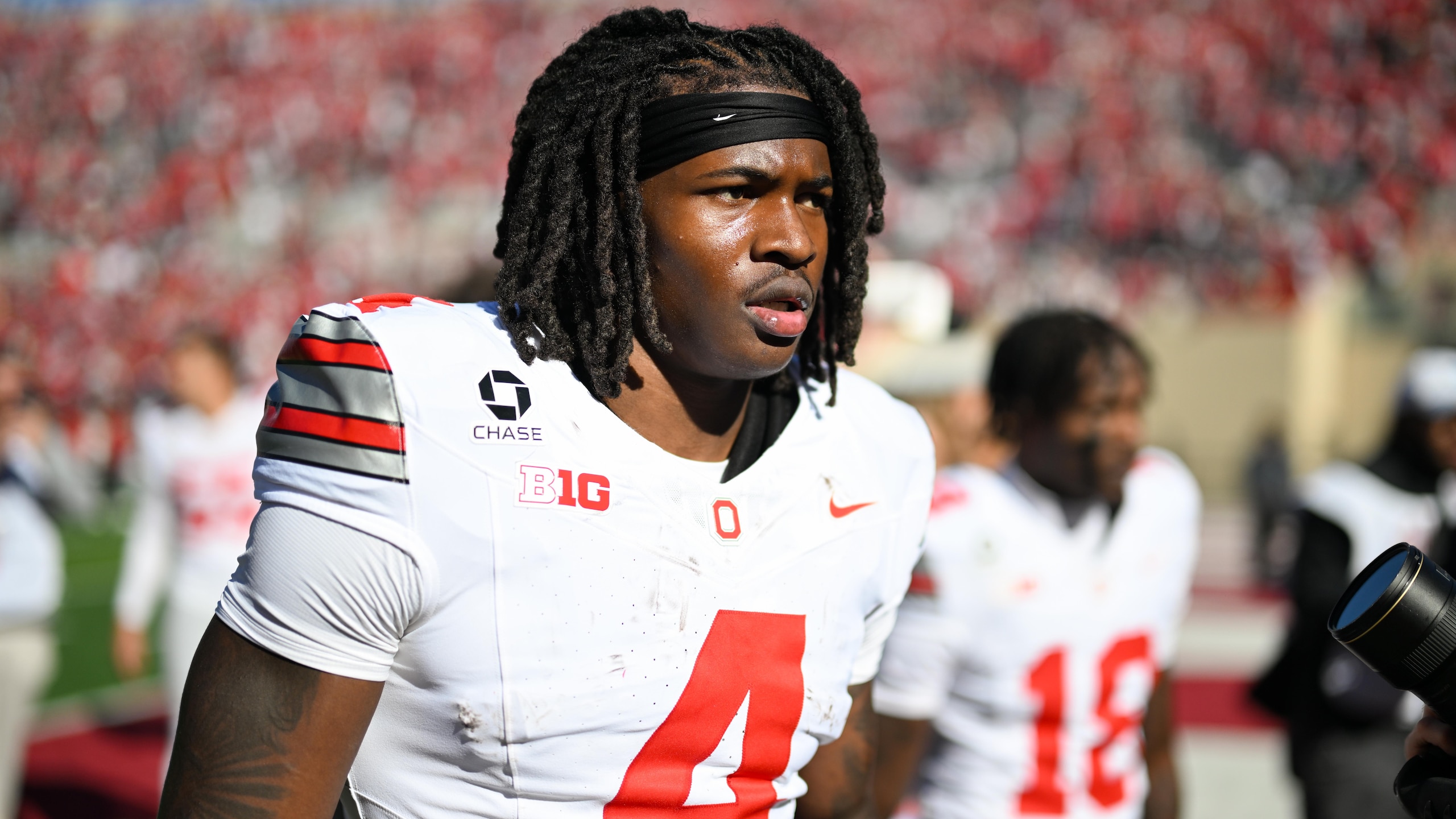
Strikeforce Challengers: Ovince St. Preux Talks Haitian Roots and Future in MMA
Riding high on a seven-match win streak, Ovince St. Preux, who is set to return to action on July 23 as a part of the upcoming Strikeforce Challengers card, will be looking to add a victory over Joe Cason onto his mixed martial arts resume.
A former football player at the University of Tennessee, St. Preux made his professional mixed martial arts debut in September 2009.
Despite dropping decisions in his first two outings, St. Preux, who holds notable victories over Jason Day, Antwain Britt, Benji Radach, and Ron Humphrey, has since won 10 of 12 bouts and is quietly establishing himself as one of the sport’s top light-heavyweight prospects.
TOP NEWS
Malott KOs Buckley at UFC Edmonton
.jpg?w=2560)
AEW WrestleDream Live Grades 🔠
.png?w=2560 "CFB Top 25")
B/R CFB Top 25 After Week 7 🔢
After a six-month layoff from professional competition, the man they call “OSP” is slated to take on Cason—a match that St. Preux feels, if won, would propel him to the top of Strikeforce’s light-heavyweight division.
Ed Kapp: How old were you when you moved to America?
Ovince St. Preux: I was actually born in Miami, Fla., but both of my parents were born in Haiti ... My dad came here during the mid-70’s and my mom came here in either 1980 or ’81.
Do you know what inspired their migration?
Haiti is obviously a third-world country and my parents wanted their kids to grow up and get a good education. It was, kind of, like a new starting point; they thought that their kids should have a better life than they had growing up.
When you were growing up, was there an emphasis on Haitian culture in the St. Preux household?
Oh, yeah—most definitely. To this day, I only speak Haitian Creole at home. My first language—even though I was born in the States—was Haitian Creole. My mom speaks English, but she barely speaks English. We have to translate for her quite a bit.
Through Haitian Creole is one of the only ways that I can communicate with my mom. There was definitely an emphasis on Haitian culture at home.
Have you ever been to Haiti?
To be quite honest, I haven’t been to Haiti, but I’m looking forward to going next year. One of my older brothers is getting married in Haiti, and I’m looking forward to going out there.
When you were growing up, what did you want to do for a living?
To be honest, I wanted to be a cop. I remember when I was in seventh grade, we had a little career day going on and I actually shadowed a police officer for a whole day. That’s what I wanted to do; to be a cop.
Why was that?
I don’t know, but I’ve always liked to help people. I thought that that was a good way to help people in the community.
If someone told you back then—in your youth—that you would be fighting for a living, what would you say to them?
“Are you on something?” I would ask them if they were on something [laughs].
[Laughs] What inspired you to try your hand at football?
It was just one of those things that you do when you grow up in Florida. Florida is really a football-state and I got into it late, but when I got into it, I immediately fell in love with it. I didn’t know that it would take me as far as it did—taking me to a major university—but I thought I was an average player. Midway through high-school, though, I think something kicked in and I got really, really good at football.
How do you feel about what you were able to accomplish in the game?
I feel really good, because a lot of people don’t get to accomplish those types of things in football.
Did you feel that professional football was an option for you?
Yeah. A lot of people ask me why I didn’t go into the NFL and play football, but it’s hard to play football in the NFL; less than one percent of college players make it to the NFL. A lot of people ask me why I quit on the NFL, but I say [laughs], “I didn’t quit on the NFL—the NFL quit on me.”
Did you have any ambitions to come up to Canada or maybe Europe to play?
I did at one point in time. I tried the first season and then I tried the second season, but it just gets harder and harder as you keep on trying, because there’s always new talent going into the NFL and going into the Canadian Football League.
Was it difficult to walk away from the game?
I’m not going to lie—it was. You’ve got to think about it; I played for almost 12 years and that’s pretty much all I knew. When everything stopped, though, it was hard. I live in Knoxville and I still meet up with my teammates when there’s a big function and it’s hard, because we always sit down and reminisce about the past.
A lot of them are still playing and a lot of them used to play at the professional level and we just sit back and talk about the past. Even though we’re laughing about all of the good times and stuff, you can tell that we all, kind of, miss it.
Do you think you would’ve enjoyed a life in professional football?
I think I would’ve. Football is hard, though; you can go from being a first-round pick to being out of the league in no-time. The average career span for a professional football player is only a few years and then your body is shot.
I would’ve loved to play in the NFL and have a really good career, but I wouldn’t want to be one of those football players that’s 35 and can’t play with their kids.
Have you noticed any parallels between football and mixed martial arts?
[Laughs] Both of the sports hurt. Both of the sports hurt and both take a lot of commitment. I think the two big correlations between football and mixed martial arts is that they both hurt and they both take a lot of commitment [laughs].
Which game do you feel is more dangerous?
You know what? To be quite honest, it’s a toss-up; you can get a concussion in football, but you can get a concussion in mixed martial arts, too. In football, you’re fingers definitely, definitely get jacked up all the time and you can roll your ankle, break your ankle, blow out your knee, there are a lot of neck injuries in football. I think it’s a toss-up between mixed martial arts and football, though.
Did you have a lot of injuries as a football player?
Not too many. I had an injury in high-school, but that’s about it and I sometimes forget that I have that injury [laughs].
How about through mixed martial arts?
Yeah. That’s another thing that I talk about; staying injury-free. In order to do that, I take care of my body. As much work as I’ve put into my body to get ready for my fight, I always put in equal effort to take care of my body to make sure that it can function at a high-level.
What inspired you to try your hand at the sport to begin with?
I was just done with football and I wanted to try some form of martial arts. I was told that I was going to kickboxing practice—it wasn’t kickboxing practice, though—and from there, I just fell in love with martial arts. The work-ethic part really struck me, because I love working out and pushing myself to the max. Mixed martial arts definitely does that.
What were your intentions when you started training?
Just to train and get in shape and for self-defence. My coach asked me if I wanted to fight, but I declined at first. He, kind of, convinced me to fight. He said that one of two things can happen after your first fight.
He said that if you lose, then you’re going to work really hard to get better or if you win, then you’re going to take it and you’re going to want more. I ended up winning my first fight and I wanted more.
How much convincing did it take for you to take the fight to begin with?
It didn’t take much convincing. He asked me and I declined and said that I didn’t want to get hit. He put some boxing gloves on, told me to put my hands up, and said that this was going to be as hard as I’m going to get hit. I said, “Cool.”
But there’s a difference between being hit with 18-ounce boxing gloves and when you get into the cage and you’ve got four-ounce gloves on. I won my first fight, though, and when I did that, I said, “Okay, I’m good.”
When did you realize that this was more than a hobby for you?
I asked my coach how far he thought I could make it and he said, “To be quite honest, you could make it to the Strikeforce- or UFC-level with your talent. If you want to.” I was like, “Okay.” That’s when I decided that I was going to give it everything I had. One thing led to another and I really don’t know when it happened [laughs].
My pro career started off pretty slow, but when everything was clicking, everything was clicking right. So far, I can’t complain. 2010 was a great year for me and, even though 2011 is halfway over, I’m looking for 2011 to be a great year for me, too.
In the beginning, did you believe your coach when he told you that fighting at such a high level was an option?
Most definitely. I look up to my coach; the relationship that I have with my coach is great. Sometimes people will tell you something and you, kind of, second-guess it, but if my coach tells me something, then there’s no second-guessing—it’s just, “Let’s do this.” “Okay, cool.”
If he tells me that he has a game-plan for me to fight a gorilla—“I know how you’re going to beat up this gorilla”—then I’m going to go out there and I’m going to be like, “Yeah—I’m going to kick this gorilla’s ass.”
How would you beat up a gorilla?
[Laughs] I wouldn’t know—he’d have to come up with a game-plan.
[Laughs] I’m going to ask you that the next time we speak, too—just so you know.
[Laughs]
How do you feel about what you’ve been able to accomplish in the sport so far?
It’s still overwhelming; I’m still taking it in. I remember at the beginning of 2010, if you asked anybody if you knew who I was or if you knew my name, they’d all say, “I don’t know who that kid is.” I’ve started to creep up the rankings, though, and people have started to notice me. I’ve definitely opened a few eyes. It’s good to get that recognition, but with that, there’s always someone who’s coming up and trying to take you out.
How do you deal with that pressure?
The same way I deal everything like that; I just ignore it. I just keep on doing what I’ve always been doing—training to the fullest and not holding anything back. A lot of people, when they get in a situation, they hold a little back, but when they look back, they say, “Man, I wish I gave it everything I had.” Every situation that I get into, I give everything and let the cards fall where they may.
Do you have any regrets so far?
I don’t. I guess I could say that my career didn’t go the way that I had planned early on, but I’m a firm believer in the idea that everything happens for a reason. I guess when I started, it wasn’t time for me to do what I’ve done. When I started, I was only a year-and-a-half in. Now, I’m more than four years in and I just feel that I’ve learned so much and grown so much in the sport. Looking back, I’m happy that it went this way.
How much better do you feel you are now than when we last saw you in action?
I feel a lot better. I had a six, seven month rest, so I had a lot of time to fine-tune my skills and learn some new things—I’ve taken advantage of the time.
How are you feeling going into your upcoming match?
I’m feeling really good. I’m dieting for this fight—I haven’t really dieted for any of my fights—and I’m eating really well and my weight is looking good. I’m feeling really good about this fight.
You didn’t diet before?
Nah. It was just one of those things where—whatever sport you’re in—there are going to be people with certain gifts. One of my gifts is that I have a really good metabolism. If you ask anybody, I eat a lot, but if I cut my meals in half, my weight would drop dramatically [laughs].
How much weight do you generally cut for a fight?
It could be anywhere from 15 to 20 pounds.
Do you think you could make it to 185? Or is that too much of a stretch?
That’s too much of a stretch. In order to move to middleweight, I would have to lose muscle mass.
Have you ever thought about moving up to heavyweight?
No.
That was quick.
As a heavyweight fighter, you’re fighting guys that walk around at 280, 290 and cut down to 265 and, on the next day, they weigh about 280. I walk around 225, so that’s definitely not happening.
Do you think it would be a good idea to make the heavyweight division from 206 to, say, 235 and set a super-heavyweight division at 236 and up?
It could happen, but you’ll still have people that are, you know, 250, 260 cutting down to 235. You can play with it and stuff like that, but fighters are always going to find the easiest weight-class for them to fight at.
If I could make it to 185, I would be fighting at 185, but I know that it would be extremely, extremely hard to make the cut. There’s also the question of stamina in a weight-cut like that, too.
What problems do you feel Joe poses to you?
He definitely comes from a great gym—Duke Roufus’ gym—and he’s got seven TKOs and two submissions, so he obviously knows what he’s doing. He’s definitely aggressive, too. I’m not saying that I’m going to be backing up or anything, but I know that I’ve got a fight on my hands; I’ve got to keep my chin down.
What do you feel Joe’s game-plan is going to be come fight-night?
I really don’t know. He’s probably going to try to take me down. That’s another thing that I’ve been working on; my ground-game. He’ll probably try to take me down, though.
Do you feel comfortable fighting off your back?
I do now. These past months have been really good for me, because I’ve been able to do a lot of jiu-jitsu training, as well. I am now.
Do you ever make predictions going into your fights?
I typically don’t. People don’t realize it, but mixed martial arts is a sport of inches; one minute you could be winning the fight and the next minute you could be waking up and saying, “What happened?” People always try to have their predictions, but stuff happens.
Even if a fight goes the distance—and it can be totally obvious who won the fight—you can’t leave it to the judges, because you never know what’s going to happen then.
Earlier in your career, did you make predictions going into your matches?
I’ve always put myself in every scenario possible before my fights—trying to visualize everything—and every time that I do that, every scenario that I think of never happens. I predict that I’ll win, though.
What would a victory mean to you?
It would mean a lot to me. It would be one of those things that could send me onto the big show; a lot of people would start to take notice of me. Given my calibre of opponent, I feel that I’m going to be fighting the top-level 205-pounders in Strikeforce after this.
How did you react when you learnt that Zuffa had purchased Strikeforce?
When they said that, my reaction wasn’t a bad reaction at all. In every sport—especially pro sports—everything just comes down to business, so I just figured that it was a good move for Zuffa. I trust Zuffa, so I think that nothing but good could come out of this and, so far, nothing but good has come out of it.
Do you often think about fighting in the UFC?
I do. At the same time, though, it will be my chance to fight there when it’s my chance. At this point in my career, though, it doesn’t really matter—to be honest. I tell people that I’d fight for the UFC and Strikeforce because I know it would keep me active. That’s one thing that I like; I like to stay active.
In that sense, was your layoff difficult to you?
It was hard, but at the same time, things happen for a reason. It was hard, but it was beneficial, because I got to sit down and work on a lot of things that I needed to work on and fix a lot of things that needed to be fixed.
Is that the longest layoff you’ve had in your career?
Yeah—seven months was the longest.
Does that at all change the way you approach a fight?
It doesn’t. It’s a job, now; I know what I need to do. I might have butterflies and all that, but when the fight starts, all of that goes away. It was just like when I played football; when they blew the whistle, I went. I know what to do—I’ve just got to go out there and do it.
Have you thought about how much longer you’d like to compete?
I have, but I don’t know. As long as I’m having a really good career and I’m enjoying it, then I’m going to pursue it. I love it. I’ve found something that I feel I can really do some damage in, so I’m definitely here for the long-haul.
What do you feel you can accomplish in this sport?
Hopefully I can be a title contender. Maybe someday I can get that belt around my waist.
What would a championship mean to you?
It would mean a lot, to be quite honest. Everyone trains to be the champ—everybody that I know trains to be the best.
What will you, personally, be satisfied with when it’s all said and done?
I’m really not too sure. Mixed martial arts was the last thing on my mind; I never thought that I would go down this avenue. I would tell people that football didn’t work out for me, but mixed martial arts did—everything happens for a reason. As a football player, you want to make it to the NFL and my career didn’t end how I wanted it to.
When my career was done, though, I said everything happens for a reason and, one thing led to another, and I was introduced to mixed martial arts. If I went to a different university to play football, you wouldn’t be talking to me right now. Things happen for a reason—I really believe that. It’s funny how destiny finds its way to put you where it puts you.

.jpg?w=2560 "Ex-NFLer BLASTS Fitzpatrick🤬")