
MLS Will Never Have the New York Cosmos, and That's Okay
Even if Real Madrid were to ink Ronaldinho, Cristiano Ronaldo and Elvis Presley's corpse, and play their home games on the moon, they would not begin to approach the circus that was the New York Cosmos, circa 1975-1977.
Many of you older readers may remember this as the time that Pele was brought to the United States to champion the game of soccer. The single biggest star in the history of the beautiful game plied his trade for three seasons in a small, struggling American soccer league before hanging up his boots.
The owners of the Cosmos and the executives of the North American Soccer League (NASL) thought that Pele would be the figure who could bring the game to the same level in America as it was in the rest of the world.
TOP NEWS
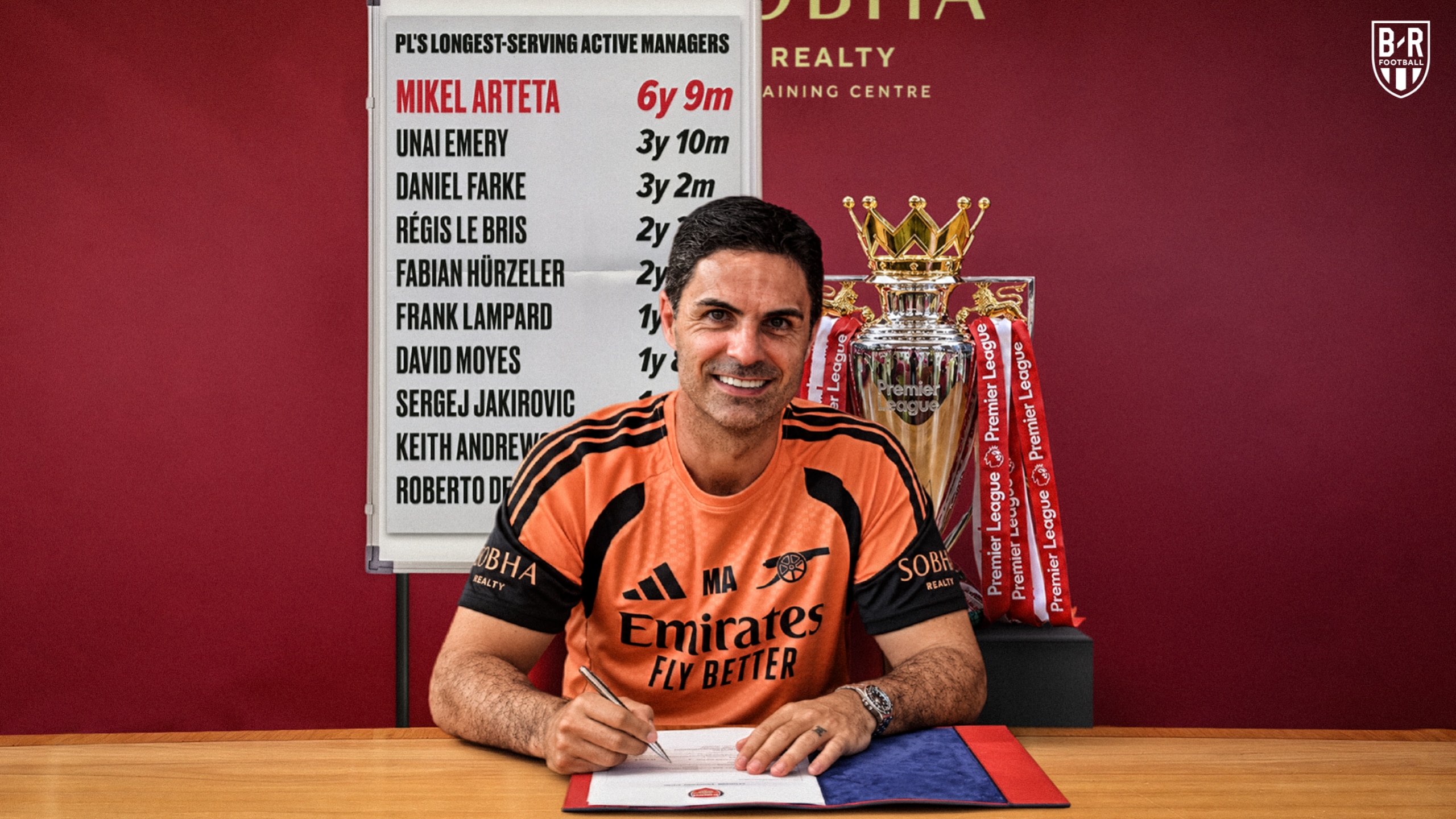
Report: Arteta Gets New Arsenal Deal 🤑

Haaland's Latest Troll Post 🤣
Henry Lists NYC Penthouse for $25M
They tried to import him from Brazil unsuccessfully many times before their dream finally came true in 1975.
Pele did indeed usher in a new era of American soccer. Unfortunately, his signing was ultimately the beginning of the end for the NASL.
Before Pele, NASL clubs would struggle to draw even 5,000 fans. Media coverage was poor, and Americans couldn't be bothered to go watch a league with a low standard of play and no recognizable superstars.
In Pele's first game in New York, their attendance jumped to 21,000 from a season average of 7,000.
Buoyed by the big draw that Pele had become, Cosmos ownership (along with the rest of the NASL) decided that the best way to make money was to spend it.
Before the NASL called it quits in 1984, Franz Beckenbauer, Johan Cruyff, George Best (who once famously remarked that if he had been ugly, the world never would have heard of Pele), Eusebio and Gerd Muller had all suited up in America, along with numerous other international stars.
Problem is, as great as those players were, none of them had the reputation of Pele. None of those players could get two warring factions in an African civil war to call a temporary cease fire so that they could play an exhibition game.
These players collected their big paychecks and left without ever putting butts on seats like Pele could, through no fault of their own. But this is a story about the Cosmos, so I digress...
Pele actually was a shrewd signing by New York, but after that, the owners at Warner Bros. couldn't help themselves. The next big name they brought in was an Italian striker, Giorgio Chinaglia.
Not coincidentally, this is where the Cosmos begin going from "feel-good story" to "cautionary tale."
Chinaglia had a legendary ego, often viewing himself as Pele's equal or better on the pitch. He was also an incredible goal scorer, finding the net 242 times in 254 games for the Cosmos.
His ego probably could have been excused had he simply stuck to putting up results on the pitch. Unfortunately for the team and league, he also acted as a de facto general manager, leading to the signings of several new players and the dismissal of several managers.
Allowing such interference from a player proved that the Cosmos brass had little idea how to run a successful sports franchise over the long term.
After Pele's retirement and thanks in small part to spoiled players like Chinaglia, the team's bubble burst, and along with it, the NASL gradually collapsed. The NASL was full of superstars, but no recognizable American names.
The public couldn't identify with the players no matter how high the quality of play. Teams flashed in and out of existence, and the league died.
Flash forward to World Cup 1994 in the United States. Part of FIFA's terms for allowing the US to host the tournament was the establishment of a new domestic soccer league, hence MLS.
There were a few worries in the air, mainly because of the dizzying heights the NASL reached before it collapsed. Luckily, it seems that MLS learned from the mistakes of its predecessors.
Teams are held to a salary cap, and salaries are paid by the league. This prevents teams from spending more than resources allow, and creates a great deal of parity.
Teams are allowed to sign up to two players exempt from the salary cap, but this money has to come out of their own pockets, which is a huge deterrent for smaller market teams.
This so-called "David Beckham" rule has allowed teams in the two biggest media markets to sign the most recognizable players. We have Beckham and Landon Donovan in Los Angeles, and have Juan Pablo Angel and (formerly) Jozy Altidore in New York.
Based solely upon the name recognition, you might expect those two teams to dominate the MLS landscape. Not true. While Beckham and Angel have been good, the foreign player who has played the best in MLS so far is Chicago's Cuauhtemoc Blanco.
By spending smartly instead of recklessly, teams have been successful with lesser-known stars.
The parity of the league goes even further. Back in the NASL, it was a huge upset if the Cosmos did not win the title. In MLS, teams like Houston (two titles), DC (four titles), LA (two titles), San Jose (two titles), Kansas City, and Chicago (one title each) are serious contenders every season.
Add into that mix New England, who consistently has one of the best regular-season records. Also add the two most recent expansion teams, Chivas and Toronto, who are on pace to make the playoffs this season.
MLS has achieved this parity by spreading its money around to each franchise. Its financial footing grows more solid with each passing season.
Attendance has also been rising. Average attendance last season was 16,770, or just a couple thousand behind France's Ligue 1 and Italy's Serie A.
American soccer will never have another box office draw like Pele, but it's doing just alright without one.
.png?w=2560 "NFL Draft Prospect Rankings 📊")
.jpg?w=2560 "OBJ's Post for Dart 🙏")
.jpg?w=2560 "Report: Bears' Backup QB Has Concussion")
.jpg?w=2560 "Broncos HC Had Beef with Seahawks 😡")
.jpg?w=2560 "Grading WWE NXT 🔠")
.jpg?w=2560 "Jets to sign former second-round pick QB")