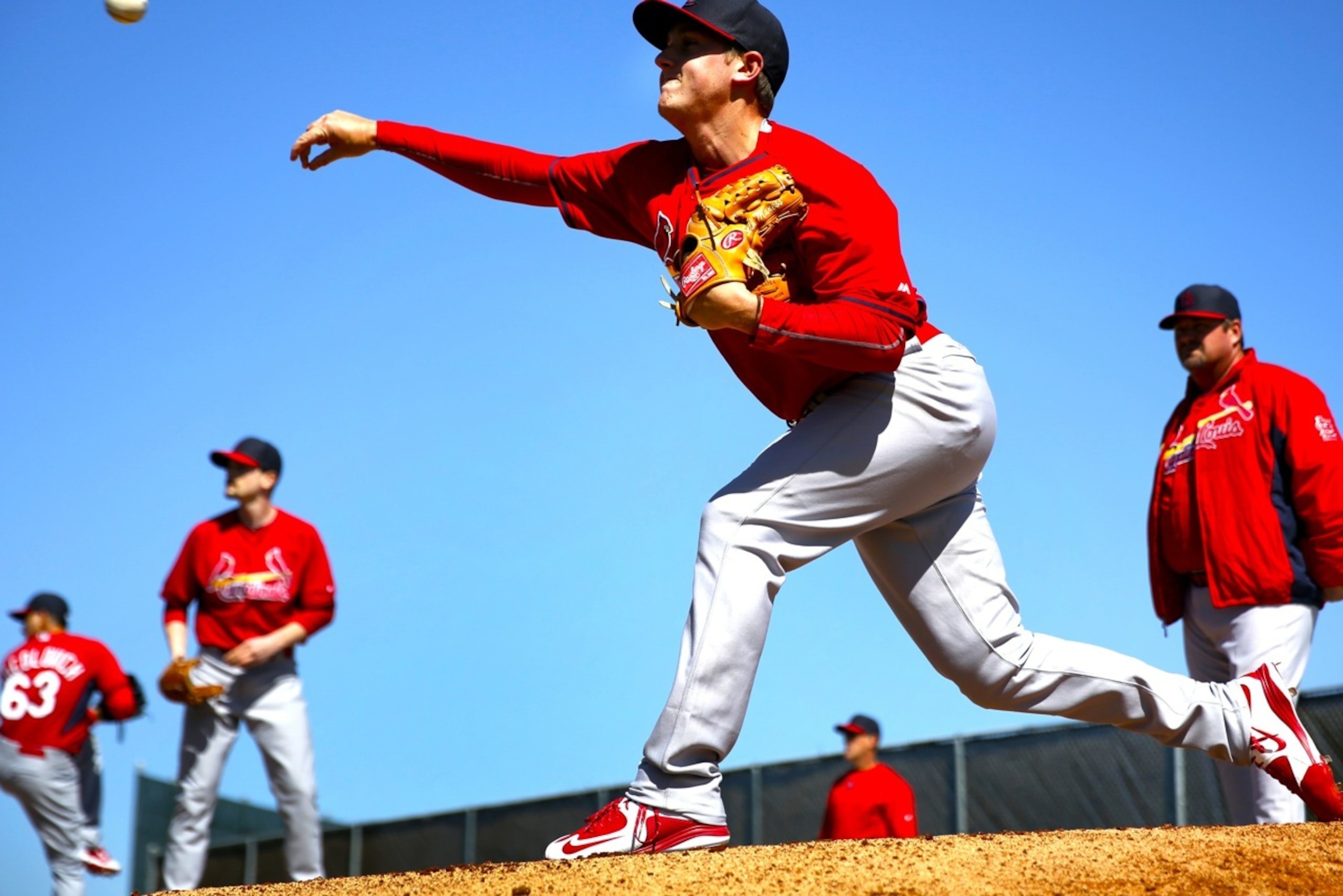

How the Cardinals Built Best Franchise Rotation Since Gibson-Carlton Era
Back in the late '60s, the St. Louis Cardinals had some darn good starting rotations. Those were the days when Bob Gibson was at his peak, and there was also a promising young lefty named Steve Carlton.
But the starting rotation the Cardinals have this year? It might actually be just as good.
No, really. Being dead serious here. Today's Cardinals may not have two pitchers as great as Gibson or Seaver, but we're watching them prove that four really good pitchers and a catcher who's really good at handling pitchers can be just as effective.
TOP NEWS

Latest LLWS Regionals Scores ⚾
MLB's Heavenly 'Field of Dreams' Glizzy
Every Team's Breakout Prospect 💥
But before we get to all that, let's get to the basis for this conversation.
If you want reasons why the Cardinals are an MLB-best 55-30 this season, the list starts with the fact that their starting pitchers have baseball's best ERA at 2.81. And if we look at where it ranks among Cardinals rotations in the expansion era (since 1961), we see this:
There it is, sandwiched in between those Gibson- and Seaver-led rotations of the late 1960s. That's a good look. A good look, indeed.
And certainly, a bit of a surprising look as well.
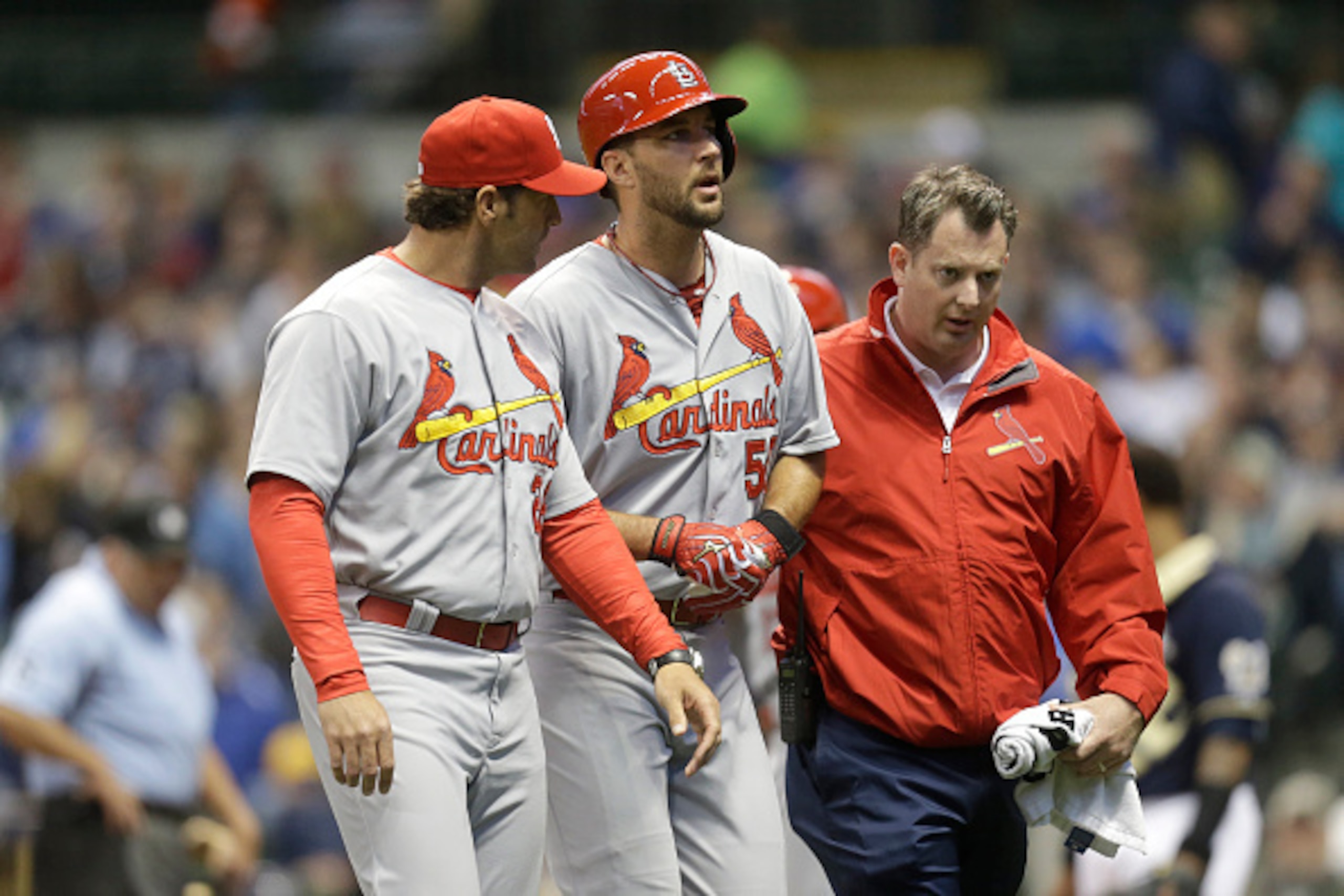
The current Cardinals rotation wouldn't seem to have any right to be this good, after all. Adam Wainwright, a guy with a 2.61 ERA since 2013, made just four starts this year before a torn Achilles ended his season. Meanwhile in Atlanta, Shelby Miller has responded to an offseason trade from the Cardinals to the Braves by developing into an elite starter.
That the current Cardinals rotation is this good, however, speaks volumes about the four guys mainly responsible.
They would be Michael Wacha, Carlos Martinez, Lance Lynn and John Lackey, who have made 65 of the club's 85 starts. And from a wide-angle view, they've more than earned their success.
By combining for an 8.1 K/9 and a 2.7 BB/9, they're handling strikeouts and walks better than the league average. They also entered Wednesday doing better than the league average with a 47.2 ground-ball percentage and inducing more soft contact (19.9 Soft%) and less hard contact (27.3 Hard%).
In so many words, the quartet of Wacha, Martinez, Lynn and Lackey has done everything you could ask of a group of starting pitchers. Collectively, they've been excellent.
And this is where we begin the fun part: how they've turned into excellent pitchers individually.
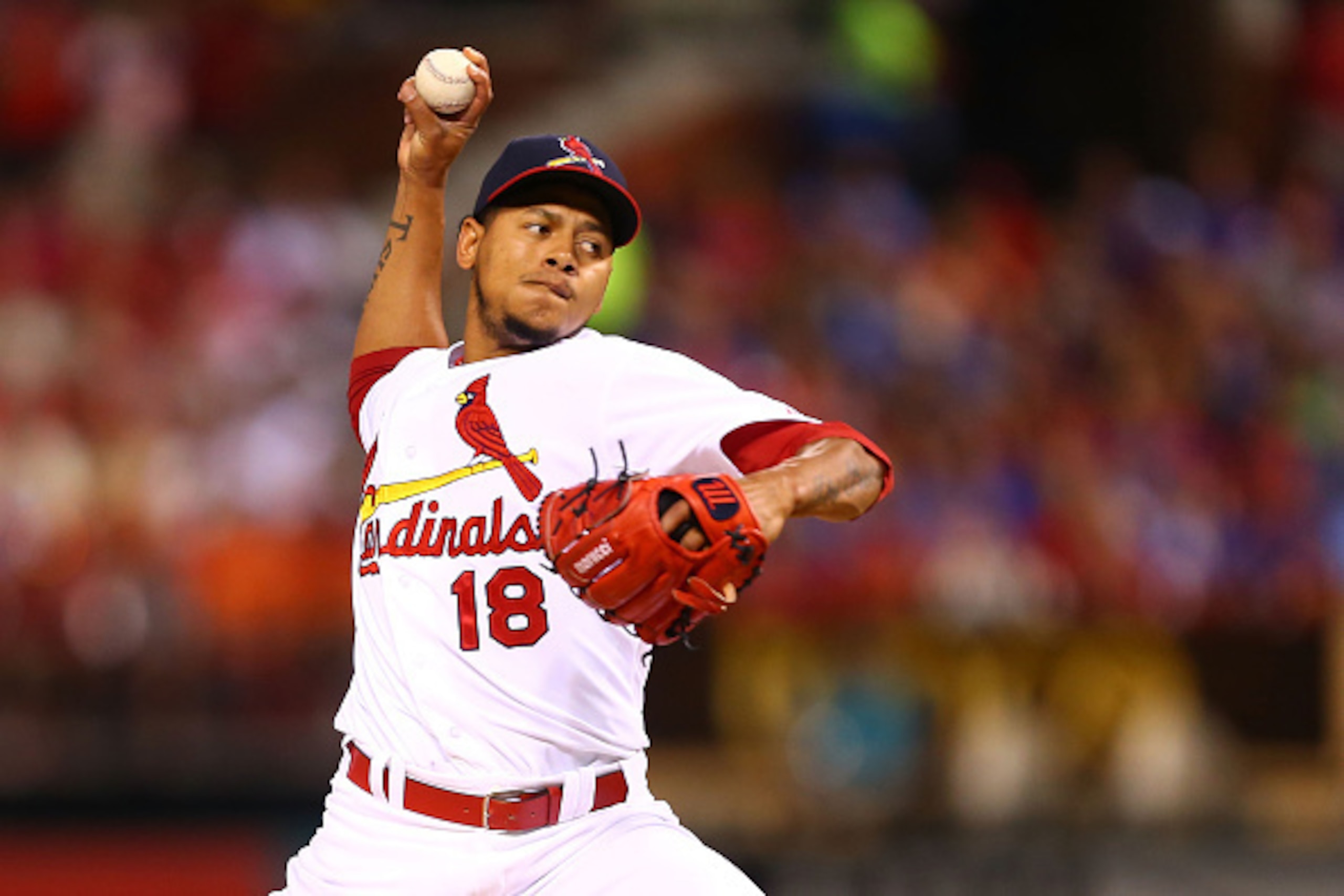
The Cardinals rotation would not be where it is without the development of the two kids: the 24-year-old Wacha and the 23-year-old Martinez.
Wacha's development into an ace-like pitcher with a 2.93 ERA in 107.1 innings isn't a big surprise. He was the No. 19 pick in the 2012 draft—a gift resulting from Albert Pujols' exodus the previous winter—so he had talent to begin with. And in his star turn in the 2013 postseason, that talent was on full display.
But though Wacha had lots of talent then, it was contained within simple packaging. He had the plus command to make it work, but he only had two pitches in his four-seam fastball and changeup. Though these things worked in the short term, odds were he would need more to succeed in the long term.
Now, more is exactly what Wacha has.
After toying around with the transformation in an injury-marred 2014, Wacha has gone from a two-pitch guy to a four-pitch guy in 2015. As Brooks Baseball can vouch, he went into Wednesday's start throwing his cutter and curveball more than 10 percent of the time.

The extra pitches haven't made Wacha a better strikeout pitcher. But he's showing that four pitches plus excellent command can equal expert contact manipulation. He entered Wednesday with a 47.8 ground-ball rate and, according to Baseball Savant, also ranked in the top 25 in average batted-ball velocity.
"I think he's a better pitcher," Cardinals skipper Mike Matheny told MLB.com's Jenifer Langosch in May. "I think he was a guy like a lot of the young pitchers we bring up who was a two-pitch pitcher with a real good fastball and a changeup. The curveball is a legitimate pitch now, and so is the cutter. He's improved."
Improved Wacha has, indeed. But not as much as Martinez.
A consensus top-50 prospect in 2012 and 2013, Martinez was also a well-regarded youngster before he came to the majors. And there were times in 2013 and 2014 when it was easy to see why, as he could look unhittable with a mid-to-high 90s fastball and an optical-illusion slider.
And yet, Martinez could only muster a 4.28 ERA in those two seasons. He had the stuff, but he was generally more interested in throwing than he was in pitching. And from listening to the buzz around him, you got the sense that was just one area where he needed to grow up.
Sadly, it took a tragic death for that to happen.
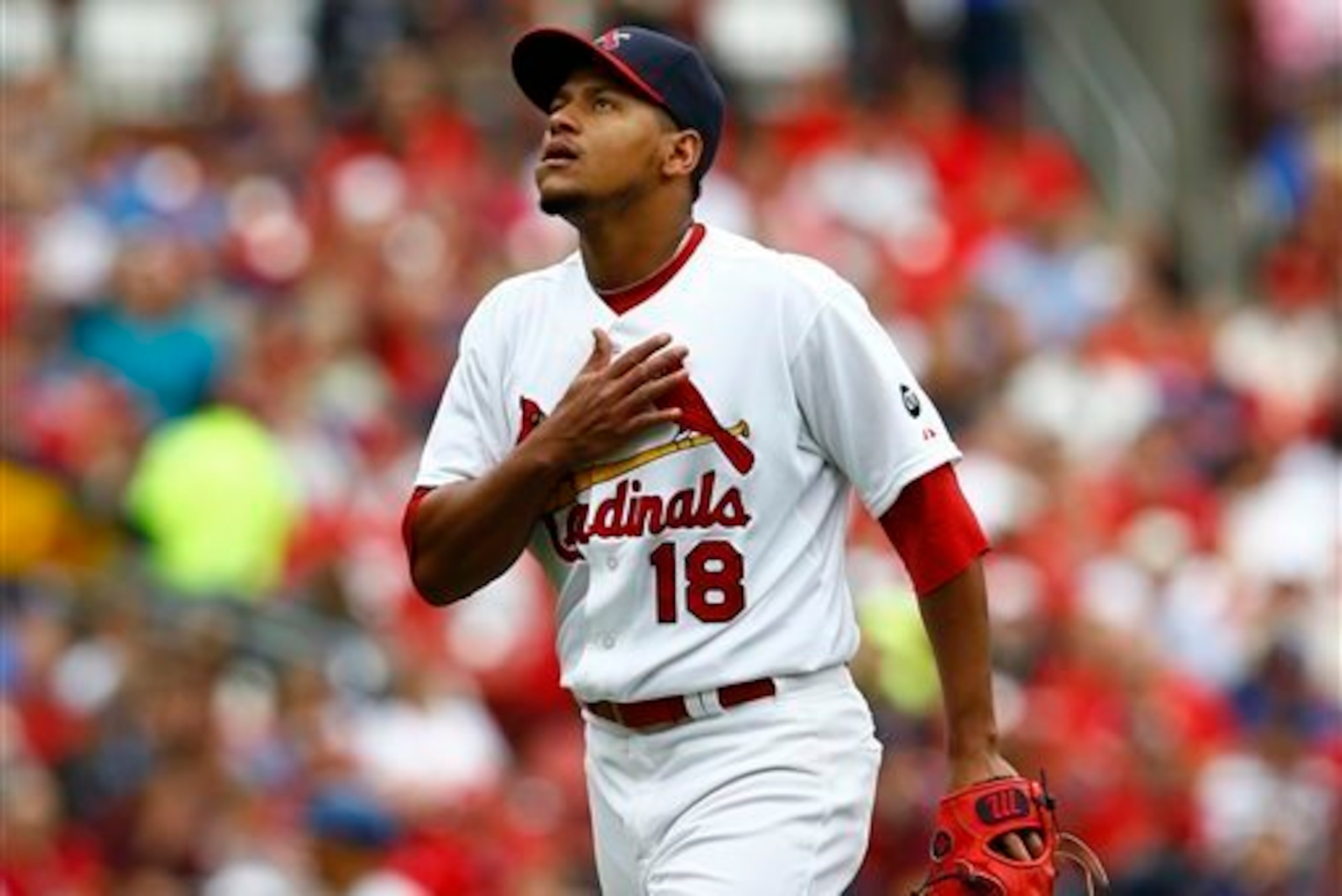
Martinez lost one of his best friends the night up-and-coming outfielder Oscar Taveras was killed in a car accident last October. In the wake of that, Martinez told Joan Niesen of Sports Illustrated that he's "gotten more focused on baseball."
His results certainly lend credence to that. Martinez still has issues with walks, but his 2.70 ERA in 100 innings comes from real dominance. He's striking out 9.5 batters per nine innings, and he also owns one of the NL's highest ground-ball rates at 55.6 percent.
There is, however, more than just tragedy-induced maturity feeding into Martinez's success. Like Wacha, he's also expanded his repertoire in 2015.
As Derrick Goold of the St. Louis Post-Dispatch reported in February, Martinez spent the winter working on his changeup after barely using it in 2013 and 2014. According to Brooks Baseball, now close to 20 percent of his pitches are changeups. And with batters hitting it at just a .100 clip, it has become the most dominant pitch in Martinez's arsenal.
Next to the developments of the two youngsters, it's easy to forget that Lynn isn't exactly ancient at 28 years old. It's also easy to overlook that he's been arguably St. Louis' best pitcher in 2015 with a 2.53 ERA in 92.1 innings, and that he now has a 2.68 ERA dating back to 2014.
Lynn's rise to ace status sort of makes sense in light of his background, as he was a first-round pick in 2008 who was at times dominant in the minors and pretty good in the majors in 2012 and 2013. But rather than a natural progression, Lynn's ace status is more the result of a personal rebellion.
As Jenifer Langosch told the tale at Sports on Earth last year, Lynn's 2012 and 2013 seasons consisted of him forcing adjustments and clashing with the Cardinals over his temper and physicality (read: his weight). This led to a seemingly never-ending series of ups and downs.
But in 2014, Lynn said he finally allowed himself to be himself.

"I think in the first two years, I was trying to do things to make people happy," he said. "But after a while, you have to be who you are in order to be successful. When you're trying to be something you're not, it's hard to concentrate on the real goal. The real goal is to go out there pitch, and try to get everybody out."
To their credit, the Cardinals did their part to help. Third baseman Matt Carpenter was instrumental in helping Lynn better channel his anger into his pitching. In addition, nobody lifted a finger as Lynn decided to ignore conventional baseball wisdom that changing speeds is vital to pitching success.
Last year was the year that Lynn started throwing fastballs almost exclusively, as Brooks Baseball can vouch that roughly 90 percent of his pitches since the start of 2014 have been four-seamers, sinkers and cutters. That approach makes changing speeds impossible, but the different actions of the three pitches allow Lynn to befuddle hitters anyway.
And now, the 2015 season has seen Lynn become more befuddling than many seem to realize. He has the same strikeout rate as Martinez, and he also entered Wednesday bumping elbows with Cy Young favorite Max Scherzer on the exit velocity leaderboard:
| 1 | Clayton Kershaw | LAD | 194 | 84.06 |
| 2 | Chris Sale | CHW | 196 | 84.07 |
| 3 | Dallas Keuchel | HOU | 306 | 85.21 |
| 4 | Jake Arrieta | CHC | 245 | 85.52 |
| 5 | Collin McHugh | HOU | 263 | 85.67 |
| 6 | Francisco Liriano | PIT | 207 | 85.74 |
| 7 | Shelby Miller | ATL | 217 | 86.21 |
| 8 | Jorge De La Rosa | COL | 162 | 86.28 |
| 9 | Max Scherzer | WAS | 249 | 86.39 |
| 10 | Lance Lynn | STL | 194 | 86.44 |
This brings us, at last, to Lackey. If the other three are the self-improvement stories of the Cardinals rotation, he's the redemption story.
The Cardinals didn't get much out of the veteran right-hander after they traded Joe Kelly and Allen Craig to the Boston Red Sox for him last July, as he posted just a 4.30 ERA in 10 starts in St. Louis. And though the Cardinals brought him back for next to nothing by exercising his $500,000 option for 2015, it was clear the 36-year-old Lackey would need some tweaks for even a deal that cheap to pay off.
Well, it's definitely paying off. Lackey has a 3.09 ERA in a team-high 110.2 innings. And for this, it would seem that the Cardinals indeed have tweaks to thank.
For one, Lackey has also altered his pitch selection. He was mainly a four-seamer/slider guy when the Cardinals picked him up, but this year they have him throwing his sinker again. Brooks Baseball puts its usage at 20.2 percent, the highest it's been since 2009.
Secondly, Lackey has also been more aggressive attacking the strike zone than even his impressive 2.2 BB/9 lets on. FanGraphs puts his percentage of in-zone pitches at 51.3, his highest since 2008.

All of this hasn't translated into more strikeouts, as Lackey's 6.6 K/9 rate is well below par. But it's not by accident that he's improved his BABIP and home run rate. His soft-contact percentage has improved to 18.2 percent from 14.7 percent last year.
So how have the Cardinals built a rotation that's put itself in the company of one of the great rotations in franchise history? It's been a long story, but the short version is this: Three talented young pitchers have all blossomed, and an older pitcher has turned back the clock.
But before we go, we must also tip our caps to the glue that's holding the pages of this story together: Yadier Molina.
With just a .699 OPS through 78 games, it looks like the 32-year-old's bat is continuing the decline it began in earnest last season. But lest anyone doubt that Molina is still one of the game's most valuable catchers, his influence with his pitchers is still among the great individual strengths in MLB.
Wacha, Martinez, Lynn and Lackey can attest to that, as they have a 2.55 ERA when throwing to Molina. That's compared to a 2.83 ERA overall. That speaks to his prowess as a game-caller, which Harry Pavlidis of ESPN.com revealed to be as good as advertised. It also speaks to Molina's ability to secure strikes, as Baseball Prospectus' figures put him among the season's top six strike framers.
If the Cardinals had their druthers, maybe they'd choose to have a rotation led by Gibson and Seaver over what they have now. Those guys were pretty great, after all, and they did great things.
But then, maybe they wouldn't. Having four quality pitchers throwing to a catcher who's really good at the whole "catching" thing may not sound as sexy on paper, but by the numbers, it could easily be mistaken for a rotation the Cardinals had when Gibson and Seaver were around.
Nobody could have predicted as much after Miller was traded or after Wainwright went down. But then, things do tend to work out for the Cardinals. It's almost as if they have a "way," or something.
Stats courtesy of Baseball-Reference.com and FanGraphs unless otherwise noted/linked.
If you want to talk baseball, hit me up on Twitter.



.jpg?w=2560 "NFL Win-Loss Predictions 🔮")

.jpg?w=2560 "Former Pats QB Calls Out Team")