
Cornell Basketball: Big Red's Journey to NCAA Sweet 16 is Unlike Kentucky's
Kentucky and Cornell.
Could two college basketball programs meeting in the Sweet 16 of the NCAA Tournament really be any more different?
Kentucky is the top ranked team remaining in the tournament (as the second overall No. 1 seed behind Kansas, which was dismissed by Northern Iowa), while Cornell ranked at a No. 12, has the worst seed left in the draw.

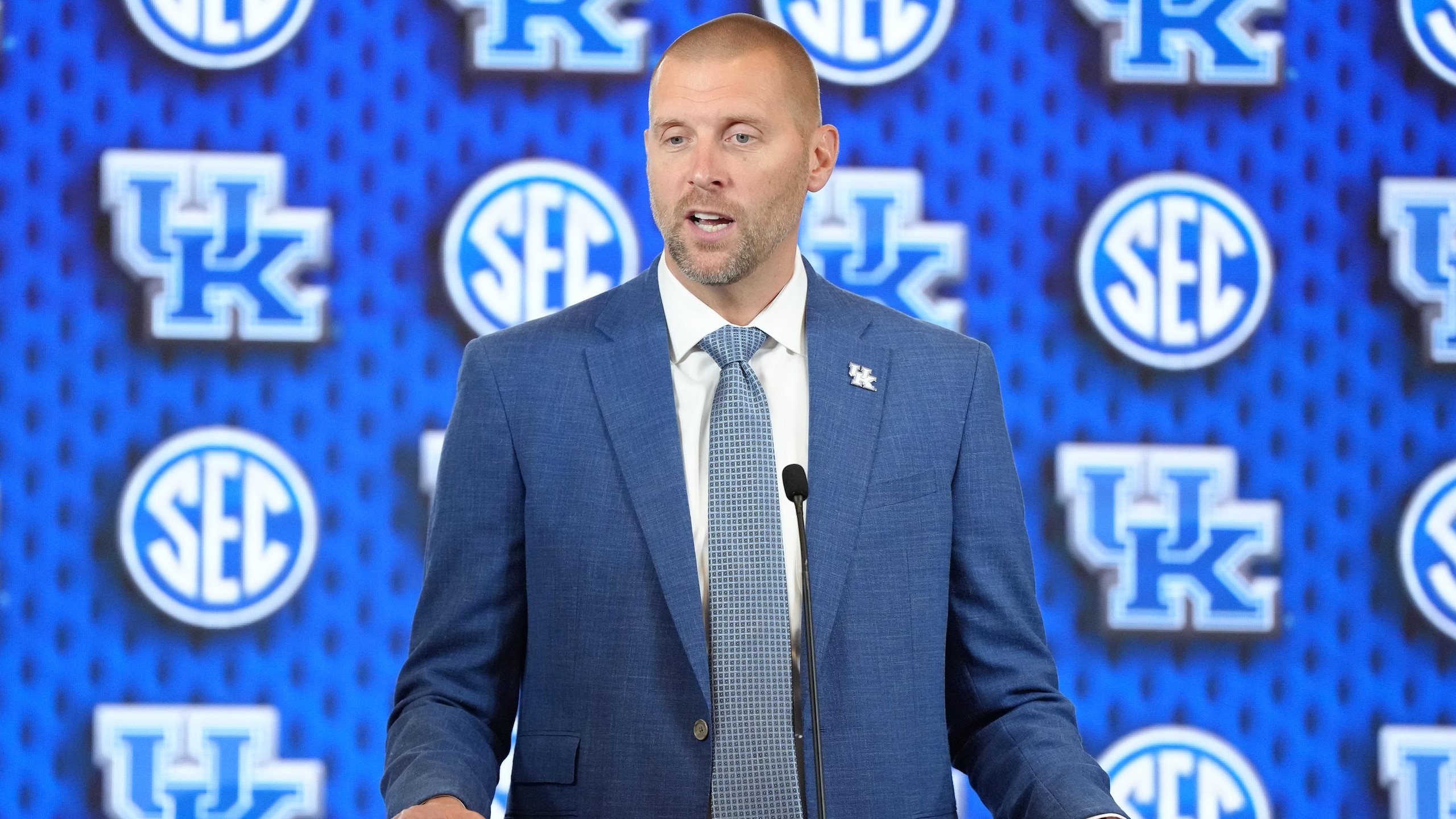
But the contrast goes much deeper.
The history of Kentucky’s basketball program is filled with superlatives.
The Wildcats have won more total games than any school in history (2,022); have appeared in more NCAA Tournaments than any other school (50); and are second only to North Carolina in tournament games won (100) and in national championships (seven) to UCLA.
Kentucky will be appearing in a record 41st Sweet 16 on Thursday. A victory would send the Wildcats to a record 32nd Elite Eight appearance and a game away from the 14th Final Four berth in school history.
While Kentucky looks to keep writing NCAA history, Cornell is in the process of writing its own basketball history this year, more or less for the first time.
On Thursday, the Big Red will be appearing in their first-ever Sweet 16. A victory would send them to their first Elite Eight and a game away from the first Final Four berth in school history.
Before last Friday, Cornell had never so much as won a game in the NCAA Tournament.
Their first round victory over Temple was the first tournament game win for an Ivy League school in more than 10 years.
Their second round win over Wisconsin gave the Big Red the Ivy League’s first Sweet 16 berth in more than 30 years.
By contrast, the SEC, of which Kentucky is a member, has crowned a national champion five times since 1994.
But does history really matter come Thursday?
Cornell is not going to back down and cower at the name on their opponents’ jerseys.
The Big Red have already taken down two historically successful programs from bigger conferences with Temple and Wisconsin. They also led No. 1 Kansas earlier this season with less than a minute to play on the road.
While part of a vaunted history, the Wildcats haven’t reached a Sweet 16 since 2005, making this the first Sweet 16 for all of the players on both squads.
So what really makes these two teams such polar opposites?
One can simply look at a stat sheet and read down the “year” column on each team’s roster to find the answers.
Cornell has nine seniors on its roster to Kentucky’s three.
Kentucky’s three seniors are all used sparingly, if at all, off the bench in most games.
Cornell has four seniors in the starting lineup. Of their eight players who play more than 10 minutes per game on average, six are seniors (one is a sophomore and the other a junior).
Kentucky, on the other hand, is led by a trio of freshman in the starting lineup, including Demarcus Cousins and National Player of the Year candidate John Wall, who in all likelihood will jump ship after this season and head for a big payday in the NBA.
Since 2004, when the NBA instituted an age requirement of 19-years-old (meaning high school seniors had to play a season of college basketball or sit the year out), the notion of “one and done” players in college basketball that can carry a team to a Final Four one season and head to the NBA the next, is the reality for many of the nation’s elite college basketball programs today.
Teams filled with upperclassmen have prevailed more often than not with the National Championship on the line, but plenty of teams have ridden the skills of one-and-done players to unprecedented heights.
Syracuse won its first national championship in 2003 on the shoulders of freshman wonder Carmelo Anthony.
Ohio State reached the title game in 2007 on the backs of freshmen Greg Oden and Mike Conley Jr.
Memphis came one free throw shy of a national championship in 2008 behind the play of freshman Derrick Rose.
Even 2005 National Champion North Carolina, which was led by juniors Sean May and Raymond Felton, benefited greatly from the one year that freshman Marvin Williams visited Chapel Hill.
Basically, now that most top players leave school before their senior years, talented underclassmen are able to come in and dominate the game for a year while the college juniors and seniors that should be outplaying them are all already in the NBA.
This year’s Kentucky team represents the epitome of how the game of college basketball game has changed in the last 20, or even 10 years.
In the context of their prestigious history, the Wildcats have struggled for the last decade without a Sweet 16 appearance since 2005 or a Final Four trip since 1998.
Yet, one year after the program missed the NCAA Tournament for the first time since 1991, Kentucky finds itself as a favorite to win the National Championship.
After last season’s failure, the University spent top dollars on a new coach, John Calipari, who had Final Four experience and a track record at Memphis of recruiting some of the best one-and-done freshmen in the nation.
Had Calipari not made the move from Memphis to Kentucky, the Wildcats two superstar freshmen—John Wall and Demarcus Cousins—would have likely ended up in the state of Tennessee with him.
So with one hiring and one big paycheck Kentucky rebuilt its basketball program.
At a program with money, alumni, a huge fan base, and a history of greatness, it’s that easy.
Contrast that with how Cornell built its basketball program and you could not find a more different team.
Head coach Steve Donahue was an assistant at Ivy League powerhouse Penn for 10 years from 1990 to 2000 before he landed the head coaching job at Cornell.
Donahue took over a program at Cornell that hadn’t been to the NCAA Tournament in more than 10 years.
In his first six years in Ithaca, NY, Donahue’s team didn’t post so much as a winning record. In his eighth year, the Big Red made it to the NCAA Tournament for the first time in almost 20 years.
After suffering first round NCAA Tournament losses in both 2008 and 2009, Cornell secured its first ever wins in the Big Dance this past weekend and is still looking for more.
The team is made up of a nucleus of seniors—Louis Dale, Jeff Foote, Jon Jaques, and Ivy League Player of the Year Ryan Wittman—who have helped Donahue build a successful basketball program from almost nothing.
It took these players four years and three years of NCAA tournament experience to have this chance and succeed.
It took Donahue 20 years of coaching in the Ivy League and 10 years at the helm of Cornell to build a team good enough to first dethrone the powers in his own league and then to compete with the best teams in the country.
It also took Cornell decades before that to find the right coach to lead its program to this moment.
After this season, Cornell will have to rebuild.
Not the Kentucky way, but the Cornell and the mid-major way—the way that all teams used to have to retool over at the very least a two to three year period after a down year or after their top players graduated.
The Big Red will surely be better off next season than they were 10 years ago when Donahue took over.
The underclassmen waiting in the wings may be skilled despite seeing little court time behind a roster of talented seniors. Cornell could even contend for another Ivy League title next year.
But to think that they will be back in the Sweet 16 next year is beyond far-fetched.
Not to discount Donahue’s coaching ability and how good this program has become, but there is in fact no guarantee that they will ever make it this far again in the foreseeable future.
Without doubt this tournament run and the national exposure from it should immensely help the program in the long-run.
Its not easy as a mid-major, particularly in the Ivy League, where you can’t give out athletic scholarships to land a three-point shooter like Wittman, or a seven footer with skills like Foote, or to get them to gel with the rest of a team and stay injury-free at all the right moments. It comes together once or twice out of every four years when they are upperclassmen.
Mid-major schools like Gonzaga, Butler, and Memphis, essentially turned themselves into major conference schools playing in mid-major conferences by having continued success in the NCAA Tournament.
They are now able to offer recruits the same type of national exposure and success as many top programs; they are exceptions.
Most mid-majors have their one or two shining moments over the course of a decade and are lucky if they ever make it back—Valparaiso, Miami of Ohio, and Kent State come to mind from the late '90s and early 2000s—and George Mason, Bradley, and Davidson more recently.
For most of the stars in Thursday’s night game, it will be their lone chance to play in the Sweet 16 and move onto the verge of a Final Four. Kentucky’s fabulous freshmen will likely head to the NBA next year and Cornell’s seniors will graduate.
Of course, the Kentucky program is likely to be back in the Sweet 16 with a new set of players long before the Cornell program. And even if it struggles it can always just be a year away as the Wildcats have shown this year.
If it hasn’t already, Cornell may become America’s darling Cinderella team in this tournament, and many will be pulling for them to pull their biggest upset yet on Thursday.
But it’s not just about being the underdog.
In fact, Cornell has proven to be more than just your average Cinderella No. 12 seed by blowing out Temple and Wisconsin. It’s unlikely, but the Big Red do stand a chance of upsetting Kentucky.
One could argue they even have a better chance than Purdue or Butler might have of upsetting the other remaining No. 1 seeds, Duke and Syracuse, in their Sweet 16 matchups.
This analysis of these two very different basketball programs isn’t to conclude that the game is any less meaningful to Kentucky’s players or its fans than Cornell’s—given Kentucky’s love for basketball, rabid fan base, and current Final Four drought, it may in fact be more meaningful—but it is to say that it’s about the journey, and what it has taken to get there, and what it will take to get back.
In that regard, Cornell and Kentucky could not be more different. And that’s what makes it pretty hard to root against the Big Red when they play the Wildcats on Thursday night in Syracuse, NY.

.jpg?w=2560 "B/R's Expert Week 7 NFL Picks 🔮")
.jpg?w=2560 "LaMelo Claps Back at Lonzo 🤣")
.jpg?w=2560 "Steelers Fan Event in Paris Canceled (AP)")
