White Sox Hitting Coach Greg Walker, "Alex Rios Is Fixed"
Apparently, Chicago White Sox hitting coach Greg Walker works quickly.
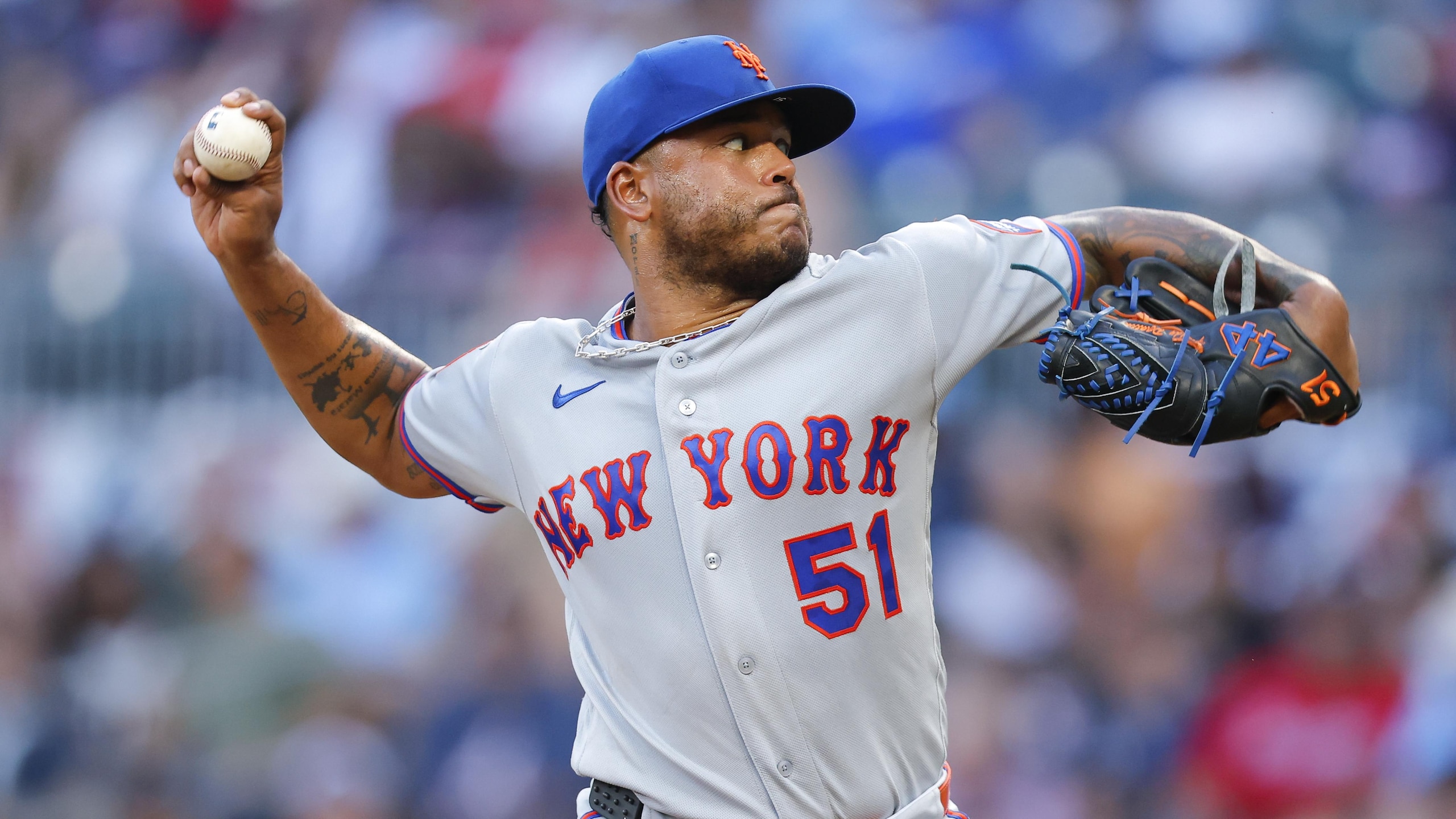
In a piece from the Chicago Sun-Times, Joe Cowley reports that Walker only needed to see five swings from Alex Rios to see that the beleaguered outfielder, whom the Sox acquired on the waiver wires from the Blue Jays last season, is back to form.
Walker took a trip to Miami for a three-day hitting seminar with Rios, and the reports were favorable.
_1.png?w=2560)
.png?w=2560)
Says Walker, ''But to be honest, it took the first five swings in the cage to show me that he had passed the eye test. Mechanically, this is the Alex Rios I saw on tape when he was in Toronto.''
That's right, five swings.
It took only five swings to see that a player owed a minimum $59.7 million over the rest of his deal, with the possibility of that figure ballooning to $72.2 million, is back to form. Really?
Now, I wanted to write a piece blasting Greg Walker and the White Sox organization proper for letting their undying loyalty to past players manifest itself as a complete lack of accountability with managing and front-office personnel, I really did.
But then I realized that Walker proclaiming a multi-million dollar investment as "fixed" after seeing five swings in a batting cage in Miami during the offseason is such a laughable notion that most people would think I was making it up.
So, I started thinking more about Rios, and what the White Sox will need out of him in 2010 to be successful, and what we might have actually seen in Rios' struggles last season (.247/.296/.395 batting line for all of 2009).
First off, what the Sox will need: average.
Indeed, with the White Sox's rotation easily being in the top three in the MLB, along with the AL Central looking not-so strong once again, the White Sox don't need to be an offensive powerhouse.
And really, Rios' 162-game average of .281/.330/.444 and his ability to produce around 15-20 home runs and 35-45 doubles a season should be contribution enough.
Personally, I would like to see his OBP go up a good amount, but even a marginal increase in OBP without a sacrifice in his power-hiting abilities would certainly be welcome, especially considering Rios' defensive abilities in CF for the White Sox, a club that at times would have been better off wearing their gloves on their heads last season.
Now, what exactly did we see in Rios' struggles last season?
The story coming out of Toronto was that Rios started phoning in plate appearances even before the ink dried on his re-worked 2008 contract extension.
This notion fails to match up perfectly with Rios' 2008 production, though, as his contribution to the Blue Jays that season (.291/.337/.461 with 47 doubles, 15 HR's and an OPS+ of 112) would have been worth $25.2 million in free agency, according to FanGraphs.com's "Dollars" metric, based on wins above replacement-level (WAR).
Although Rios' production in 2008 and the anecdotal stories about his attitude do not match up perfectly, let's assume that some aspects of these allegations are true, as Toronto would have little reason to want to unload Rios and his deal simply because of a bad 2009.
But is Rios' tremendous fall-off in production really just explained by his seemingly care-free approach to baseball?
Like many things in baseball, being productive on offense is a combination of luck and skill, and many Sox fans believe we haven't seen anything to make us believe that Rios has been the victim of a run of bad luck.
This isn't entirely true, though.
For every season he has been in the league, Rios has had a batting average on balls in play (BABIP) consistently above .300, with only two seasons falling below the .330 mark. Throughout his career, Rios has been well above league average in the BABIP up until the 2009 season.
In 2009, Rios' BABIP took a dive down to .277, significantly below league average and well below the average for his career. And along with taking a huge hit in BABIP, Rios' line-drive percentage (LD%) took a dip down to 16.4 percent, the lowest percentage of his career by far.
However, while a player's BABIP can be affected by his ability to hit the ball in the air (specifically, on a line) versus on the ground, the dip in Rios' LD% is more than likely not enough to explain the huge hit he took to is BABIP.
So then, what or who is responsible for Rios' large fall-off in production? What did we see?
Given his tremendous dip in BABIP and the unlikelihood that his inability to hit the ball on a line is the only explanation, what we probably saw in Rios was a "perfect storm" of sorts, with regression towards the mean meeting a lackadaisical approach (that affects his ability to hit line drives) at the plate for one season.
There is no reason to believe that Rios' abilities simply left him and won't return, therefore Sox fans can look forward to a jump in Rios' LD% as well as some more regression to the mean, this time affecting his BABIP in the other (the better) direction.
-Jonathan Platek


.jpg?w=2560 "Ashton Jeanty Helped Off Field")



.jpg?w=2560 "Bucs Rookie's 'Bane' Face Mask 😈")