The Baller, the Teacher, the Trigger: How One Man Lived and Died for NBA Dreams
It might have been a second, or a millisecond, or a milli of a millisecond.
Even were it the absolute slightest measure of time, Bryce Dejean-Jones had an opportunity to turn around.
To take a deep breath.
TOP NEWS
Maxey Denies Stephen A. Report 🤨
Jaylen Brown Calls Out Tatum 🧢
Knicks to Give Employees Rings
To pace the hallway.
To gather himself.
Wasn’t that exactly what Alvin Gentry, his coach with the New Orleans Pelicans, had told the 6’6” rookie shooting guard just a few weeks earlier? Bryce, you need to be able to walk away. Wasn’t that what Dave Rice, his coach at UNLV, had said on multiple occasions? Bryce, you have to calm down. Wasn’t that what Brian Beard, his AAU coach with the Compton Magic, had made so clear? Control yourself, Bryce. Control your emotions.
Control yourself, Bryce.
Basketball coaches liked Bryce Dejean-Jones. Pretty much everyone liked Bryce Dejean-Jones, most of the time. What with his goofy laugh, what with his devotion to signing autographs, what with his cravings for Chipotle burritos and pineapple-topped pizza, what with his talent for chess and his obsession with Xbox.
“He was a really good kid,” says Justin Hawkins, his teammate in high school and then at UNLV. “He was funny. He had sarcasm to him. If he trusted you, he could open up and really let himself go.”
But there was also this thing—this Bruce Banner-morphs-into-the-Incredible Hulk kind of rage that, upon reaching its boiling point, sent people running. On the basketball court, it revealed itself when Dejean-Jones felt his teammates weren’t hustling, or a play wasn’t designed correctly, or his unit wasn’t living up to its potential, or a practice felt disheveled.
He would stomp his feet and clench his fists and fire off expletives with a machine-gun intensity: “Why aren’t you guys fucking doing this right?”

Off the basketball court, this rage showed itself when Bryce Dejean-Jones drank.
Oh, he didn’t imbibe particularly often. But during his half-decade college basketball career—first at Southern Cal, then at UNLV, then a final season at Iowa State—Dejean-Jones was involved in a handful of altercations, unreported until now, some of which also involved alcohol. “He was a good guy,” recalls a teammate who requested anonymity, “who should not have been drinking.”
In the early morning hours of May 28, 2016, Dejean-Jones—fueled by alcohol, as well as marijuana, according to the toxicology report submitted by the coroner—found himself in a hallway at the Camden Belmont apartment complex in the Knox-Henderson neighborhood in Dallas.
His girlfriend lived with their one-year-old daughter in unit No. 1445, and the 203-pound Dejean-Jones was overcome with rage that he’d been locked out. According to witness reports, he proceeded to kick and punch the metal front door, repeatedly and with such force that he broke through a pair of deadbolts. Once inside, he tried opening the bedroom door, only to find that it too was locked.
That’s when Dejean-Jones decided, once again, to break through.
That’s when the occupant, a 22-year-old teacher, removed his gun from a nearby dresser and aimed at the door.
That’s when it became clear Bryce Dejean-Jones was, in fact, on the third floor of the Camden Belmont apartment complex, in unit No. 1345.
Bryce Dejean-Jones was in the wrong apartment.
It might have been a second, or a millisecond, or a milli of a millisecond.
Even were it the absolute slightest measure of time, that teacher had an opportunity to put the gun aside.
To take a deep breath.
To wait.
To gather himself.
Wasn’t that exactly what he had learned as the son and younger brother of United States Marines? Yes, a gun can be used for self-defense, but know what you’re doing. In college, he was a member of the school’s pistol club, where the stated objective was to teach “basic handgun safety and marksmanship skills in a safe, friendly and convenient environment.”
A safe, friendly and convenient environment.
Here, inside his bedroom, was as safe and friendly and convenient an environment as he knew. Although he had only relocated to Dallas from the Midwest 11 months earlier, the teacher was just starting to feel comfortable instructing the local high-schoolers only a few years younger than him.
No, the city wasn’t home, but it was growing on him. He had friends. A quiet roommate who kept to himself. Restaurants and shops within walking distance. “I liked it there,” he says. “I didn’t have any complaints.”
In the early morning hours of May 28, 2016, the teacher—having fallen asleep after watching Cleveland beat Toronto in Game 6 of the NBA’s Eastern Conference Finals—found himself stirred awake from beneath the blue comforter of his queen-sized bed. There was a banging at the front door of his apartment, unit No. 1345 on the third floor of the Camden Belmont apartment complex. Not a banging, he says in an interview—louder: a smashing.
“I would describe them as cracking noises,” the teacher who shot Dejean-Jones tells B/R Mag, which agreed not to identify the shooter because he had not been charged with a crime and to protect him from potential retribution for speaking publicly for the first time. “Vicious cracks. It sounded like there were multiple people and that they were breaking into my apartment.”
At that moment, the teacher sat up and—mind racing—opened the top drawer of the black nightstand situated alongside his bed. He reached for his Springfield 1911, a semi-automatic handgun that had been a college graduation gift from his father. He never kept the gun loaded, so after gripping it with his hand, he picked up the magazine—also in the nightstand—and loaded it.
For a couple of seconds, everything went quiet. At least one person, he was certain, had entered the apartment. The teacher pointed his gun at his bedroom door, which—out of habit dating back to living in a college house with too many free-roaming occupants—he kept locked.
He says he called out: Hello! Then, a second time: Hello! The declaration was meant to let an intruder know he’d entered an occupied house. “Hopefully he hears me and leaves,” the teacher recalls.
That’s when—WHOMP!
A shoulder or foot slammed into the door.
The teacher could not see who was on the other side, only that his door was now shattered at the base of the locking mechanism.
That’s when he decided he had no other choice.
That’s when he pulled the trigger and fired.
That’s when he pulled the trigger and fired again.
That’s when it became clear Bryce Dejean-Jones was, in fact, not on the fourth floor, in unit No. 1445.
Bryce Dejean-Jones was in the wrong apartment. He was 23 years old.
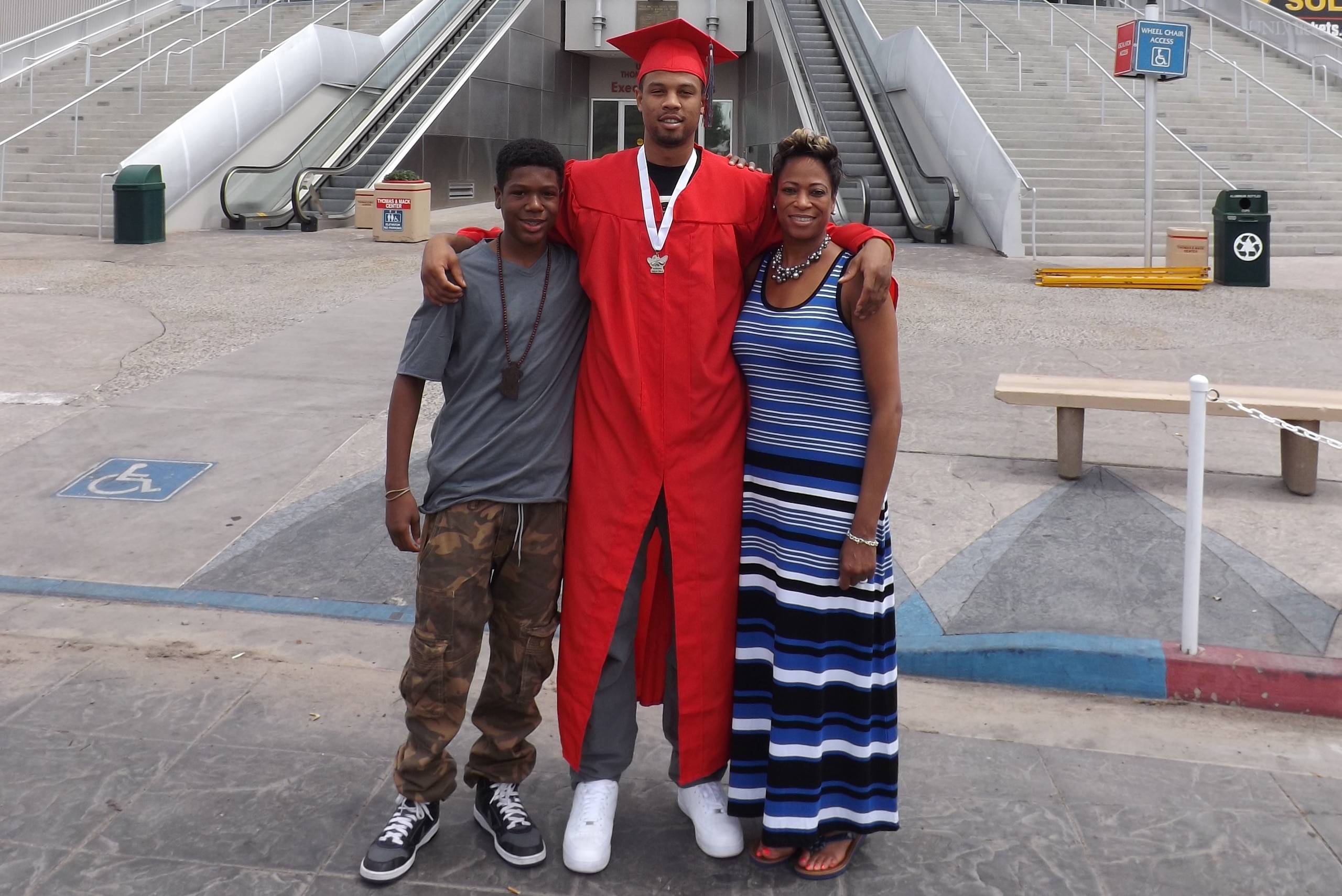
Bryce Dejean-Jones was living the dream. Yes, that’s a cliche. But one year ago, having just signed a three-year deal with the Pelicans, it was true. Here was a kid from Inglewood, California, raised by his mother, Fran, and stepfather, K.C. This was a kid who had aspired to reach the NBA from the time he was six or seven. This was a life built around the NBA, or else.
Most everyone knows someone like Bryce—the kid shooting hoops in the backyard until 1 in the morning; the kid with calloused fingers and battered Nikes; the kid pretending to be Kobe Bryant, counting aloud from the shot clock in his mind. Three…two…one—he makes it! Bryce makes it!
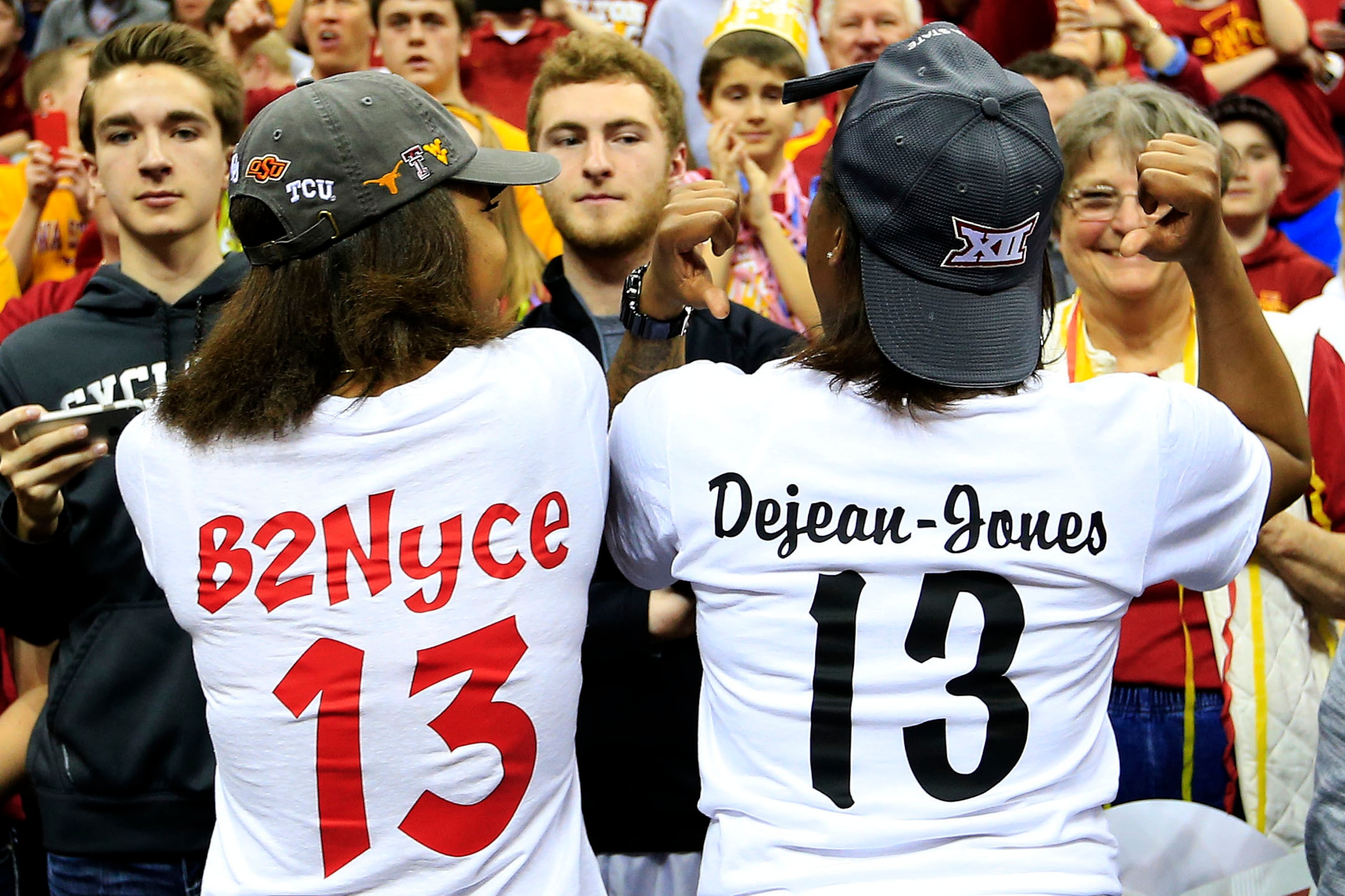
“You could hear him outside behind the house,” K.C., sitting on a couch inside the family’s Inglewood home, recalls with a forced grin. “He was both the star and his own announcer.”
Bryce bowled competitively. Rode a skateboard. Read all the Harry Potter books. Dreamed of inventing a flying car. Maintained an A average at the nearby Calvary Christian School.
“We swam, we shot baskets, we played video games,” says Richard Solomon, a childhood friend who now plays pro ball in France. “Bryce was your average kid who just really, really wanted to become a professional basketball player.”
He played at two high schools and was forced to sit his junior season after transferring from View Park Preparatory to William Howard Taft Charter High. (“He was allowed to play on our JV team, which was a joke,” says Derrick Taylor, Taft’s varsity coach. “We’re talking about games that ended up 78-20, 91-18. No one could handle him.”)
His AAU time was limited to one season with the Compton Magic. His birth father, Walter Dejean, re-emerged when Bryce was in ninth grade—a complicated period of divergent adult voices telling him what was best.
But then there was the temper. Bryce had one, and he did not manage it well.
During his freshman year at Southern Cal, he engaged in multiple confrontations during practices and had to be kicked out of the gym on several occasions. One afternoon, he fractured teammate Garrett Jackson’s nose after being led to believe the freshman forward had spiked his drink.
“He was a good kid,” says Kevin O’Neill, the Trojans coach, “who made some bad mistakes.”
Bryce moved on to UNLV the following year and remained there for three seasons. On the court, he could be dynamic. After sitting out the requisite redshirt year, he averaged 10.3 points and 2.3 assists in 2012-13. But, as O’Neill did at USC, UNLV coach Dave Rice found Dejean-Jones difficult to handle.
On the one hand, he loved his drive. “Off the charts,” Rice says. “I don’t think I’ve ever coached someone who wanted to win so badly.” Yet Rice, too, had to boot Dejean-Jones from multiple practices—sometimes forcibly.
“He definitely had moods, and there were times you’d need help from assistants getting him off the floor,” Rice says. “But I’m telling you, he didn’t want to hurt people. He just wanted to win desperately.”
Dejean-Jones’ last campaign in Las Vegas was 2013-14, and after the Rebels’ season-ending loss to San Diego State, he found himself in yet another heated standoff, this time with UNLV guard Jelan Kendrick.

Kendrick declined to comment about the incident, but according to a source close to the UNLV program, Kendrick threatened to “bust” Dejean-Jones “in the head”—which Bryce interpreted as a death threat. “It got to the point where Jelan was about to call his people and Bryce was about to call his,” says Hawkins, Dejean-Jones’ high school teammate who played at UNLV.
Rice made it clear Dejean-Jones was not welcome back for a fourth season, and after graduating from UNLV with a degree in sociology, he transferred to Iowa State for a final college run at the pros.
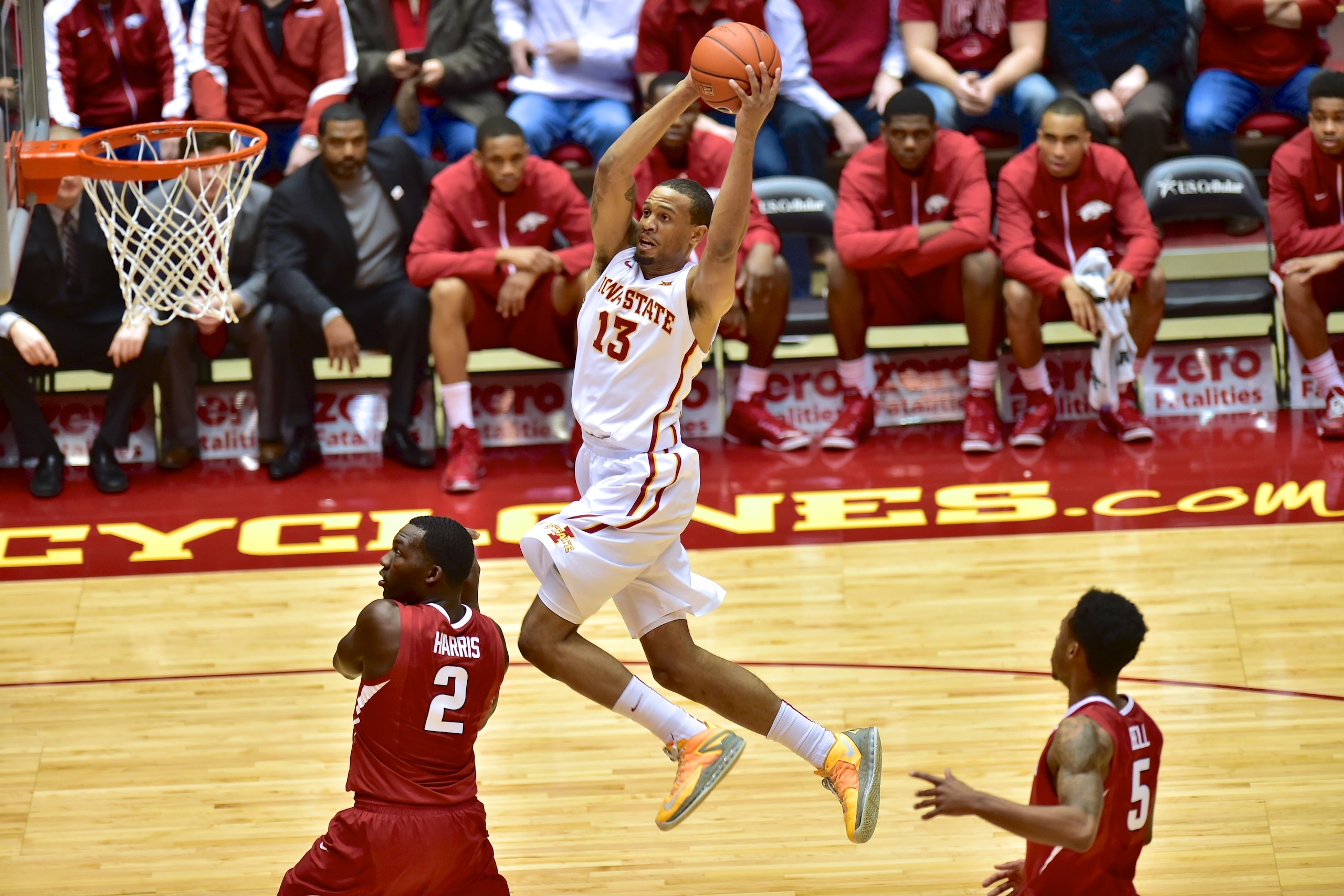
Dejean-Jones played well as a graduate student and enjoyed the peaceful isolation of Ames, Iowa. He averaged 10.5 points and lit up Arkansas for 27 points in a Cyclones win Dec. 4, 2014.
Yet there’s a long history of the naively unrealistic regenerative powers of new schools and new coaches and new teams believing all a person needs is change. Bryce was Bryce: Along with the passion and heart came the propensity for finding himself in bad situations. Were they always his fault? Absolutely not. But they continued to occur.
One week later, a noise complaint on Dejean-Jones’ apartment led to an arrest for gathering where marijuana was used. The charges were quickly dropped, and Dejean-Jones was cleared of any wrongdoing. But Fred Hoiberg, the head coach, still suspended him from the upcoming game against archrival Iowa.
“That was it for Bryce,” says Matt Abdelmassih, an Iowa State assistant coach. “He was a great kid. A great, great kid. But he felt like our program left him hanging out to dry, and he was probably right. From that point on, things spiraled out of control.”
Dejean-Jones arrived late to the next game, and Hoiberg permanently removed him from the starting lineup. “He still played hard and well,” Abdelmassih says. “But—I’d say unfairly—his reputation was sealed. Three schools, a bunch of incidents. That’s hard to escape.
“But here’s the thing: Most of what got him in trouble was his drive to win. He loved basketball. I mean, you won’t find a kid who loves basketball more than Bryce. And he expected perfection and dedication from everyone. When he didn’t see it, he lost his cool. It’s unfortunate, because his temper owned him sometimes. And, deep down, he’s one of the best guys I ever coached.”
People who knew Dejean-Jones well speak of his college time as lost opportunity. But he failed to see it that way. The outbursts, the anger, the frustration—it was never anything personal. He simply did not want to be a college basketball player and felt constrained and uncomfortable in the amateur surroundings.
“He wasn’t made for college,” says Tyrell Jamerson, a former UNLV point guard who worked as Bryce’s private coach. “His game was all NBA, and he knew that all along. You don’t have isolation in college, you’re not breaking defenders down in college. It’s system-oriented in the NCAA. He was always a pro waiting to go pro.”
Because of all the incidents, and the reputation as a hothead, and the so-so statistical line (Bryce averaged 10.8 points and 2.3 assists in 117 total collegiate games), Dejean-Jones was bypassed in the 2015 NBA draft. He hired an agent but ignored his representative’s encouragement to try to sign a lucrative contract in Europe or Australia. He was all about the NBA.
Two years ago, Dejean-Jones latched on with the Pelicans’ summer-league team in Las Vegas, averaging 12.8 points over six games. Still, questions about his maturity lingered.
During one matchup against Brooklyn, he hit a three-pointer over Rondae Hollis-Jefferson, the first-round selection out of Arizona, then was called for a technical foul for taunting. Seth Davis, calling the game for NBA TV, was apoplectic, saying, “You weren’t drafted because there are questions about your temperament…and then you act like a blockhead?!”
As the NBA season began, Dejean-Jones signed with the Boise Stampede of the NBA Development League and spent five miserable weeks hating every moment of it. If the intensity of Division I college basketball often disappointed him, how could he possibly handle the every-man-for-himself world of NBA Lite? Answer: Not well.
Dejean-Jones nearly came to blows with one D-League teammate during practice and another time engaged in a shouting match with Dean Cooper, the head coach. “But he was all about winning, and I loved that,” Cooper says. “This is not an embellishment: Bryce would dive on the floor five, six, seven times per game. He had no regard for his body. There are guys who don’t dive that often in a full season.
"“So could he be difficult? Yes. Would I want him on my team? Every single time.”
"
Dejean-Jones averaged 19.2 points in nine games with Boise, and while many of his teammates found his competitiveness insufferable, he could not have cared less. “It was his dream,” his father says. “He was chasing it with everything he had.”
That’s why, when Dell Demps, general manager of the Pelicans, called with a 10-day contract offer Jan. 21, 2016, Dejean-Jones didn’t know how to respond. Was he supposed to cry? Scream? Dance? Punch?
“He called me, real calm,” says his mother, Fran Jones. “He said, ‘I have to pack because I’m leaving in two hours.’ I asked where he was going, and he told me. He was really pumped up. He wasn’t crying, because we’re not big criers. But his dream was always the NBA, and now he was an NBA player. That was amazing.”
In the weeks that followed, Dejean-Jones behaved, well, perfectly. Gentry knew of his track record but saw none of the immaturity or temper. There were no fights, no punches, no complaints.
“I like it here,” Dejean-Jones told the New Orleans Advocate in January. “I think the system suits me well, and I was given the chance to go out and play and make the most of it.”
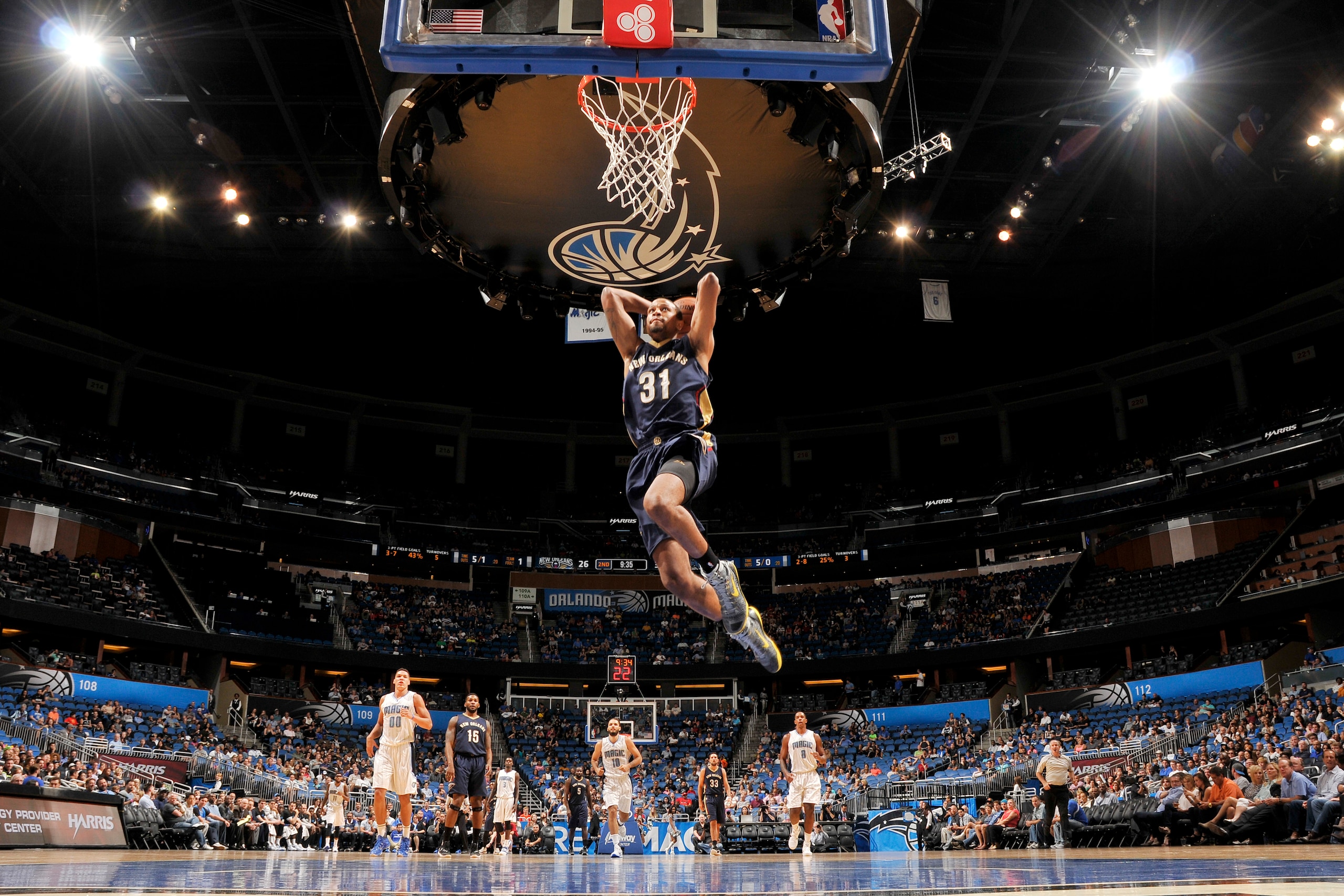
Unlike other NBA head coaches, who consider D-League refugees little more than sideline filler, Gentry wanted to see what the kid could do. So after coming in off the bench for his first three games, Dejean-Jones moved into the starting lineup. His first 10-day contract became a second 10-day contract, then the long-term deal.
“I really liked his game,” Gentry says. “He was very tough, very athletic. He could guard different positions, and he was extremely hungry. When someone has that level of talent, but he doesn’t see failing in the NBA as an option, you have something unique.”
Dejean-Jones averaged 5.6 points and 3.4 rebounds before his season ended with a fractured right wrist. Yet he was, at long last, an NBA player.
“I think he really grew with us,” Gentry says. “The difficult phase had passed, and he attained his goal. I think he realized he needed to change his ways to stay in the league. He was smart enough to do that.”
Bryce Dejean-Jones should never have gone to Dallas. A year later, it’s the part that still gets people.
He didn’t like to talk about her, but Dejean-Jones had what he considered to be an on-again, off-again girlfriend. Her name is Chrystal Graves. She was a native of Camden, Arkansas, whom he met while attending UNLV. Graves graduated cum laude from Southern Arkansas University in 2014, then took a job as an elementary school teacher. She was bright and pretty and energetic.
And, in the later months of 2014, she was also pregnant.
Dejean-Jones, who was busy trying to go pro, did not receive the news warmly. Though Graves declined to speak with B/R Mag, friends of Dejean-Jones say the two had a tempestuous relationship, marked by frequent arguments. “He complained about her a lot,” a former Iowa State confidant says. “It wasn’t a healthy pairing.”
Yet having been raised largely without his biological father around, Bryce committed himself to being an involved dad to their daughter, who was born May 28, 2015. That’s why he decided to fly to Dallas, where Chrystal now worked as a teacher: to be with their daughter for her first birthday.
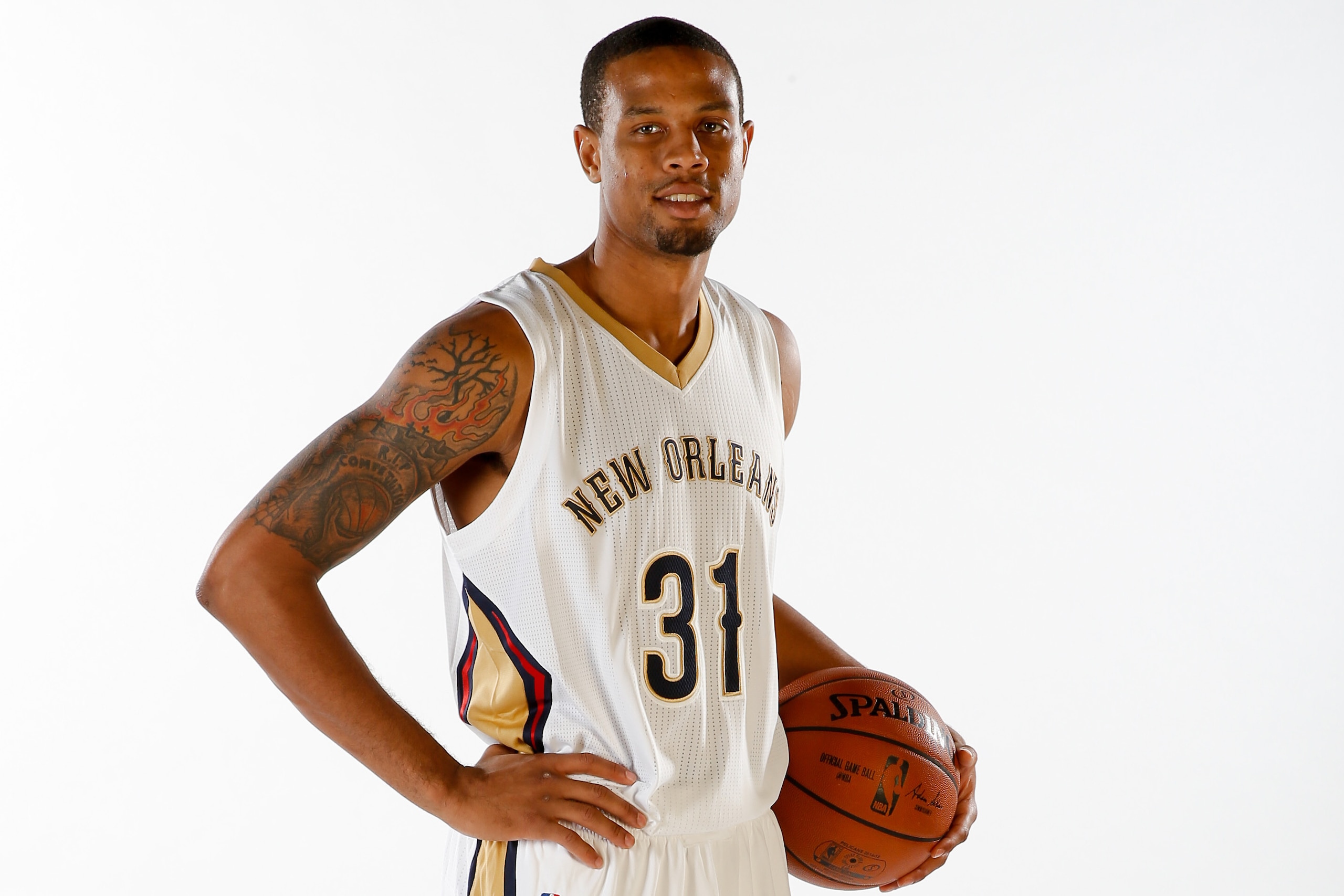
People familiar with Bryce and Chrystal’s difficult relationship insist they discouraged the trip. Shabazz Muhammad, the Minnesota Timberwolves forward who trained under Jamerson with Dejean-Jones in the offseason, says he urged his friend to skip Dallas and take a trek with him to Las Vegas. “He worked so hard, I wanted him to come along, have fun, relax,” Muhammad recalls. “But he wasn’t changing his plans.”
Jamerson, meanwhile, hated the idea of Dejean-Jones going to Dallas. “He’d never been there; he didn’t know the city,” Jamerson says. “I was worried, and I told him I’d fly his girlfriend and daughter out to California for him. He didn’t want that, but I should have insisted. I really should have. It’s my greatest regret.”
Walter Dejean, Bryce’s father, was with Jamerson. “Bryce and I fought about it,” he says. “One day he said he wouldn’t go, then he decided he would go. It didn’t get heated, but I thought he should bring Chrystal and [their daughter] to California—we would all be able to see the baby. But he wasn’t changing his mind. He had to go to Texas.”
Bryce Dejean-Jones flew from Los Angeles to Dallas-Fort Worth on the afternoon of May 24, 2016, and took an Uber to Chrystal’s two-bedroom apartment in the upscale Camden Belmont.
On their fourth night together, the couple decided to go out on the town. According to Graves’ statement to the Dallas Police Department, they found a last-minute babysitter via Craigslist, and at approximately 9 p.m. dropped their daughter off at a home at 2505 Peabody Ave. They proceeded to grab a bite at BuzzBrews, a 24-hour eatery, then drove in Graves’ car to Bungalow Beach Club downtown. Chrystal and Bryce spent approximately three hours at the club, which featured a pool, DJ and bottle service.
According to Graves, she and Bryce spent time apart inside Bungalow Beach, and she was “not sure” if he used drugs or alcohol. Later, however, Dejean-Jones’ blood-alcohol level was 0.188 (for his weight, anything over 0.08 is considered legally intoxicated), and he also tested positive for marijuana.
Bryce, Chrystal and Shaneka Kelly, Chrystal’s friend, departed Bungalow Beach at approximately 2:30 a.m., and the ensuing 20-minute drive to retrieve the baby was not a pleasant one.
“Graves says that when they arrived at the babysitter’s place,” reads the police report, “she and the complainant were already arguing about the usual things like money, the living arrangements, etc.”
Chrystal, who was driving, asked Bryce to go inside and pick up their daughter. Before he exited the car, however, she reminded him to grab the diaper bags and bottles. That set him off. As Chrystal placed their daughter in her car seat, she turned and saw Bryce walking away in a huff—down Peabody Avenue, then right onto Latimer Street.
She called his phone, but it had fallen out of his pocket and was resting on the passenger seat. She circled the block several times before giving up, leaving the Dallas novice to navigate the 4.7-mile walk back to her place alone.
Graves told police she returned to apartment No. 1445, where she put her daughter to bed and fell asleep on the couch.
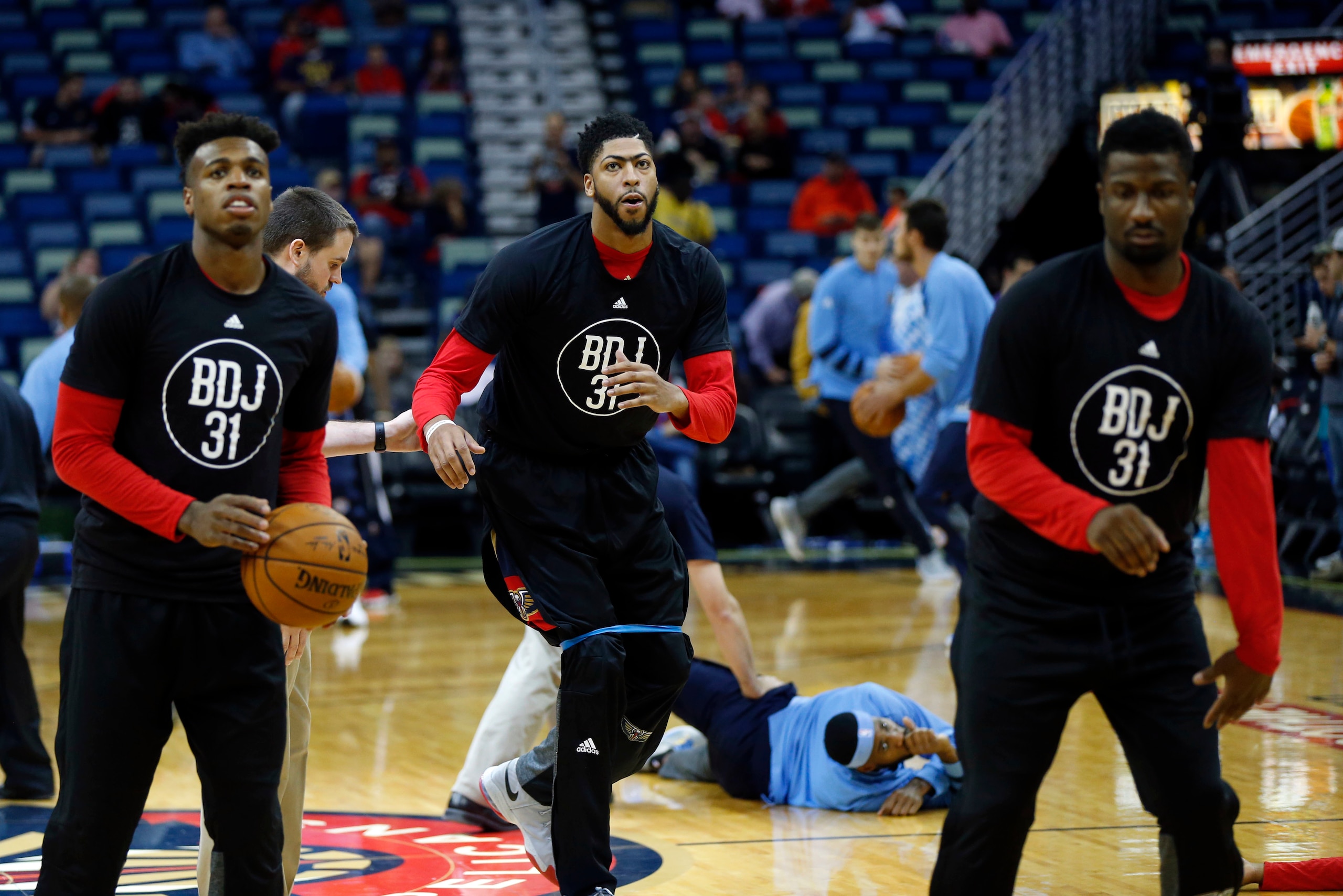
The next hour remains a mystery to police, to Graves, to Dejean-Jones’ family. But Bryce made it back to the Camden Belmont and, despite not having a key, was able to enter the building (on weekend nights, there’s often a steady stream of residents coming and going).
Maybe he had run there. Maybe he hitchhiked. Maybe he was the world’s fastest walker. “Maybe he got robbed,” his stepfather wonders, “because the police told us there was no money in his wallet.”
Whatever the case, Dejean-Jones could not have been in the best of moods as he entered the elevator, took it to the third floor (instead of the fourth), turned to the first unit on the left and began his assault on the door to apartment No. 1345.
One of the many strange details of the night was that, while the teacher’s apartment was filled with tables and chairs and pictures and the like, Graves—who just moved in a week earlier—had yet to furnish.
“It makes no sense to me,” says Walter, Bryce’s father. “None. Even if he were a wild man kicking in the door. I mean, let’s say that’s true. Don’t you think he’d immediately see the furniture and say, ‘Shit, I’m in the wrong place’ and walk out? I’m not saying anyone is lying. But it doesn’t fully compute.
“If the man living in that apartment felt so threatened that he had to shoot my son like a dead dog, at least tell me how it happened. Because I can’t make any sense out of it.”
Here—according to the man who shot Bryce Dejean-Jones, in an interview with B/R Mag—is how it happened:
After he slammed on my bedroom door, you could kind of see some light pouring in through the edges of the door. And my bedroom door was locked, yes, although it was never attempted to be opened by the handle, just slammed into or kicked. And at that point, I did feel very afraid. I did not know who, what or how many people were on the other side of the door or what their intentions were. But I did know their intentions were violent.
Fearing for my life, I took two shots through the door.
After I took those two shots, I immediately called 911, and in the course of that he stumbled out into the breezeway and then 911 called me. I, at that point, was afraid to leave my room. I was too scared to really do anything but just stand there and talk to the police. After a minute or two, I was able to look through one of the holes from the bullets in the door.
At that point I saw blood in my apartment but nobody in the apartment. The front door was wide-open. Somebody broke in—you could tell. At that point, I left my apartment and came into the main area with my roommate.
We didn’t leave our apartment, we didn’t do anything, we didn’t chase after anybody. We stayed in the apartment, where we stood for the several minutes it took until the police came. During that time, I was on the phone with the operator. Pretty much just holding the firearm, waiting for the police.
The teacher says he never saw Dejean-Jones, whose body, now lifeless, was found out in the hall by police. He also says he knew it wasn’t his roommate banging into his door because, well, that would make no sense. His roommate was a smallish man—and, besides, why would he break into his own apartment?
No charges were filed against the teacher. Under Texas law, a person is allowed to use deadly force to defend themselves in their home. It also says a person using force cannot provoke an attacker or be involved in criminal activity at the time.
The teacher agreed to talk about the shooting publicly for the first time to B/R Mag because, he says, too much misinformation has been making the rounds on social media. There were rumors that Dejean-Jones was robbing the apartment; rumors that the teacher fired for no reason.
“I believe the family deserves to at least know what really happened,” he says. “They deserve an opportunity to hear the story.”
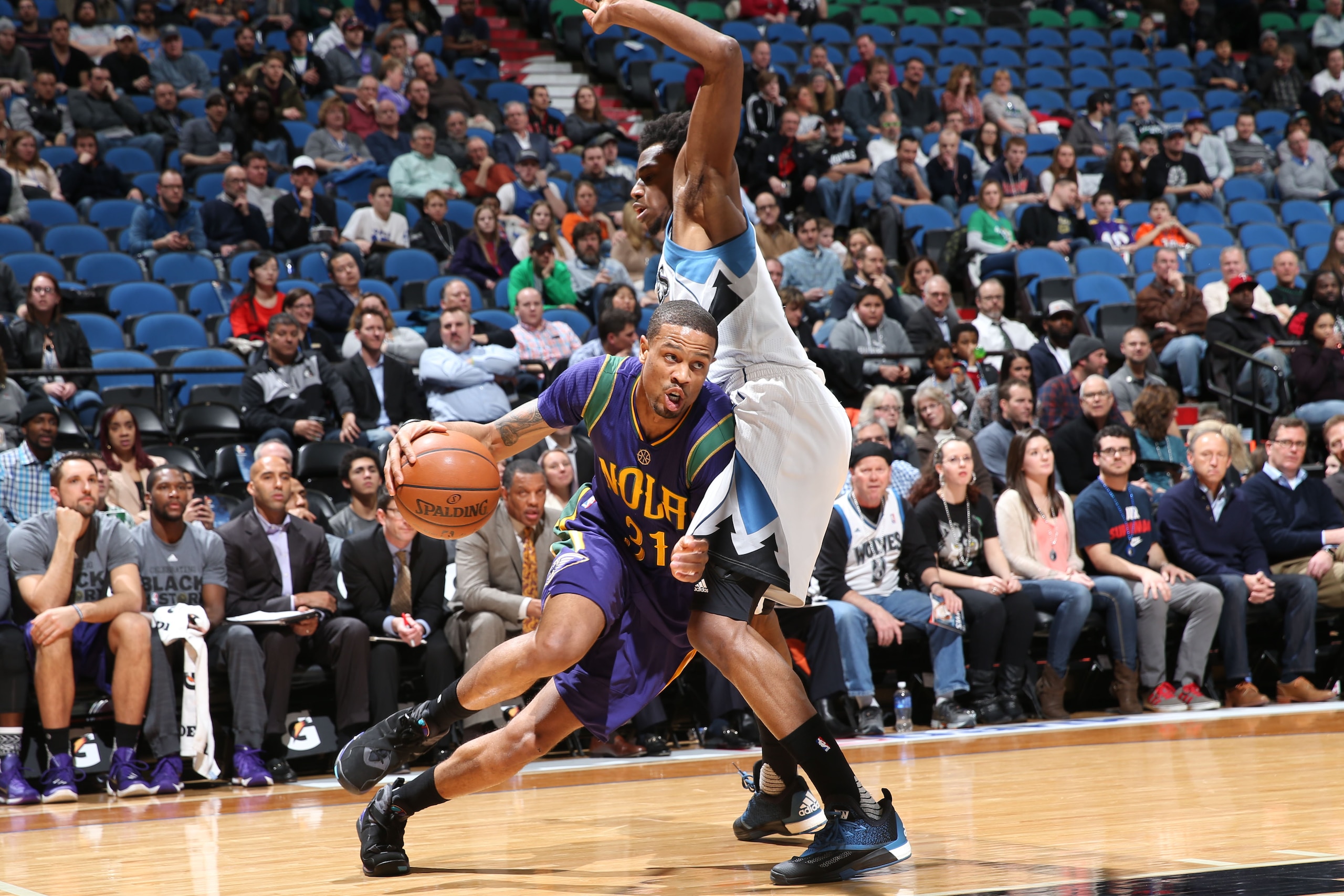
Despite the family’s repeated requests, K.C. Jones says they have never received a copy of the police report and that his son’s possessions have yet to be returned. In response to a request for comment for this story, a representative for the Dallas Police Department told B/R Mag the DPD would reach out to K.C. and Fran Jones to take care of the matter, and last week K.C. said he finally received a letter regarding property retrieval. But still, he wrote in a text to B/R Mag, “no report.”
“I still can’t figure out why.”
The phone rang inside the Jones home at approximately 3:30 in the morning. A groggy K.C., still 90 percent asleep, answered.
Hello?
“Is this the father of Bryce Dejean-Jones?”
It was Baylor Hospital in Dallas. A woman was on the other line. “Your son has been in an accident. He was shot.”
By now Fran was awake, and K.C. put the call on speaker.
“OK, OK,” Fran said. “Shot? So is he going to be OK?”
Silence.
Within the hour, Walter’s phone buzzed. And buzzed. And buzzed. Another of his biological sons, Khalil Muhammad, is an amateur boxer, and earlier that night he had suffered a brutal defeat in a bout outside of Los Angeles.
“He got ripped up,” Walter says. “But all through warm-ups he kept saying he didn’t feel right, something didn’t feel right. He never looked like himself.” Now Walter was standing inside the L.A. emergency room as his son was attended to. The phone kept buzzing; he kept ignoring it. Finally, he picked up.
It was Fran.
“What’s up?” Walter said.
“Bryce,” she said. “Bryce is dead.”
Silence.
“No he isn’t,” Walter said. “What are you talking about?”
“He’s dead,” Fran said. “He’s dead.”
“What do you do when someone tells you your child is gone?” Walter says, a year later. “You cry.”
Cemeteries are confounding places for many reasons, one of which is that they seek—and inevitably fail—to define complicated lives within a couple of words chiseled into a rock.
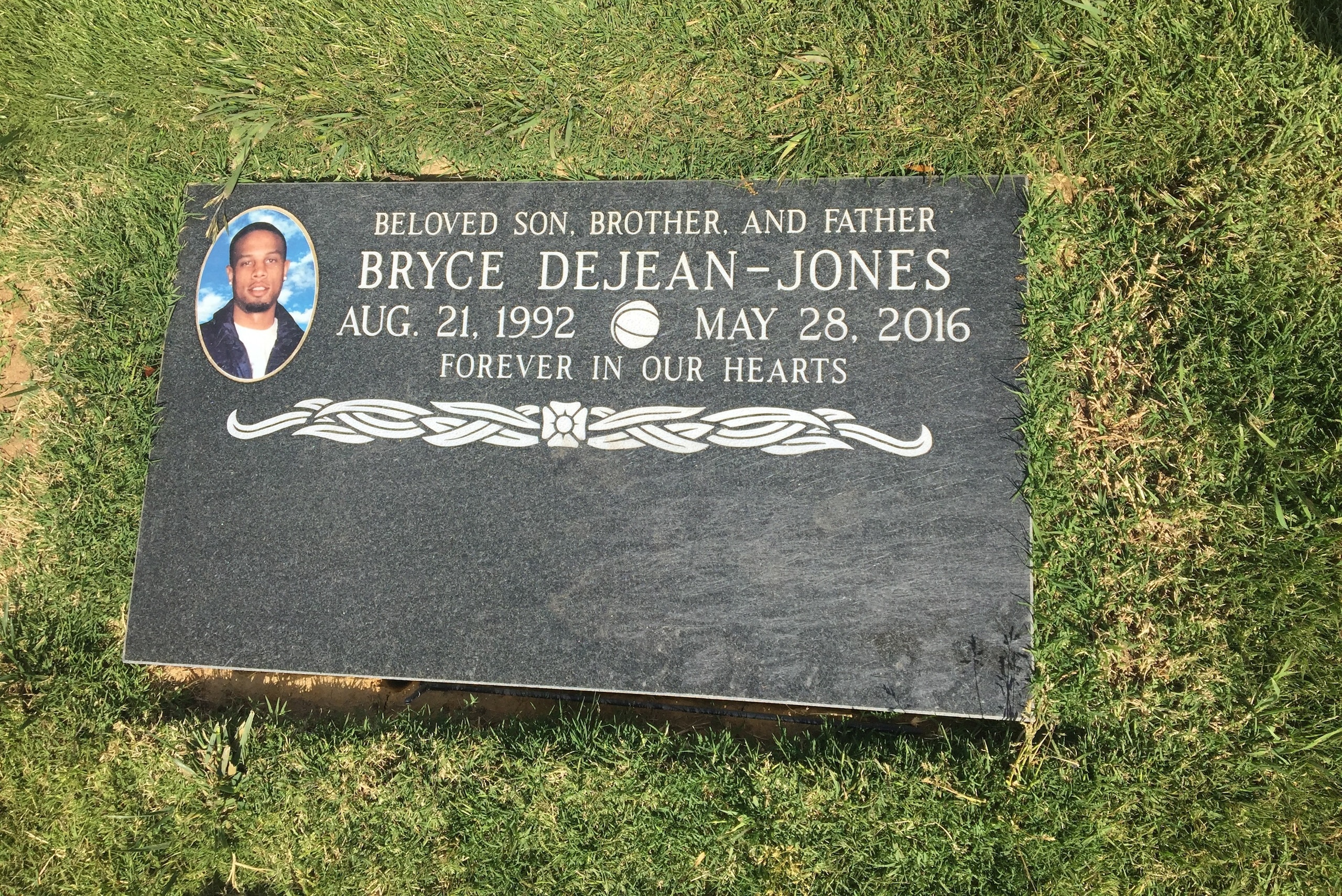
The body of Bryce Dejean-Jones was laid to rest in the Inglewood Park Cemetery, in a pine box beneath a small plot of grass on what the employees here identify, coldly, as spot 406D of the Siesta section.
His tombstone, purchased by his family, reads: BELOVED SON, BROTHER, AND FATHER. Below his name and dates of birth and death are another four words: FOREVER IN OUR HEARTS.
To the immediate left of Dejean-Jones’ grave is the tombstone belonging to Bonnie Lee Beggs, who was born Feb. 12, 1956, and died 34 days later. Beggs was resting, unbuckled, atop her mother’s lap in the front seat of the family car when a collision threw her out the window. She died of a head injury at Kaiser Hospital. That was 61 years ago.
When K.C. Jones hears the story of baby Bonnie, who never had the opportunity to live fully, he finds a small comfort.
Bryce, the family knows, was far from perfect. His temper was bad. His unwillingness to stick with one school was frustrating. He could be maddeningly stubborn.
And yet, Bryce was compassionate. And giving. He would have done anything for his mother, and he wanted to start a foundation to help at-risk children.
What allows K.C. and Fran and Walter to smile through their pain, however briefly, is that their son—who died three months before his 24th birthday—was able to reach his singular aspiration. Sixteen years earlier, Bryce had told people he was destined for the NBA. And then he became a Pelican. “What are the odds?” Fran asks. “Think about that.”
Many people surrender their dreams and settle for the comfort of meh. Others, like Bonnie Lee Beggs, never get the chance for either.
Yes, Bryce Dejean-Jones died in a violent, confusing manner at just 23 years old.
But he died a professional basketball player.
He died living the dream.
Jeff Pearlman is a B/R Mag contributing writer and the New York Times best-selling author of seven books. His latest, GUNSLINGER: The Remarkable, Improbable, Iconic Life of Brett Favre, is is available here. He podcasts daily here.
Click here to get B/R Mag on the go in the new B/R app for more sports storytelling worth your time, wherever you are.


.jpg?w=2560 "Bears TE Out for Season")
.jpg?w=2560 "Reported Details of Seahawks-K9 Split")