
It's impossible to fully judge an NFL team's draft class until at least a few seasons have passed. However, we can gauge how a team navigated the process by examining factors like perceived value, positional value, team needs and how well those needs were addressed.
For value, we'll utilize the Bleacher Report Scouting Department's final draft rankings as a guideline. Did a team draft a prospect significantly higher than he was expected to go? That will affect the overall grade. So will selections that were perceived steals.
Teams' strategies will also factor in. Did a team address its biggest weaknesses, reach for players or allow the best available players to fall to them? Because teams are in different stages of the rebuilding/contending process, there isn't a universal draft strategy that works for everyone.
Significant trades will also be considered, though deals completed before the 2023 offseason will not.
We'll have a much better idea of how these draft classes stack up in the coming years. But for now, let's examine how each team fared based on the information already available.
Teams are listed in alphabetical order.
Draft Results
1 of 33
Here's a quick recap of every 2023 draft selection.
Arizona Cardinals
2 of 33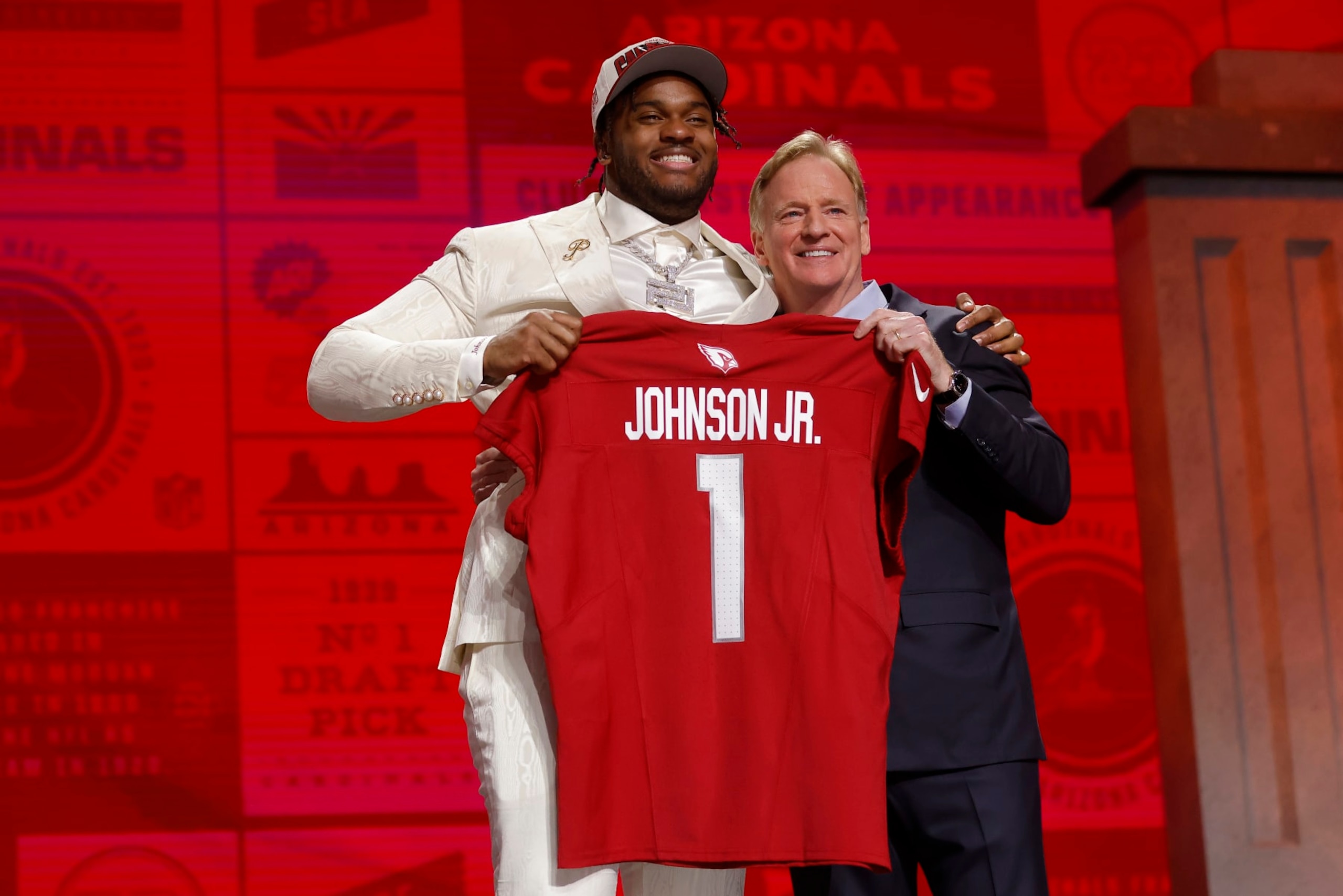
- Round 1 (No. 6): Paris Johnson Jr., Ohio State
- Round 2 (No. 41): BJ Ojulari, Edge, LSU
- Round 3 (No. 72): Garrett Williams, CB, Syracuse
- Round 3 (No. 94): Michael Wilson, WR, Stanford
- Round 4 (No. 122): Jon Gaines II, IOL, UCLA
- Round 5 (No. 139): Clayton Tune, QB, Houston
- Round 5 (No. 168): Owen Pappoe, LB, Auburn
- Round 6 (No. 180): Kei'Trel Clark, CB, Louisville
- Round 6 (No. 213): Dante Stills, DL, West Virginia
The Arizona Cardinals traded down from No. 3 and then back up to No. 6 to select Ohio State offensive tackle Paris Johnson Jr. In all, Arizona added a 2024 first-round pick and a 2024 third-round pick while still getting the top offensive tackle on the B/R big board.
According to NFL Network's Mike Garafolo, Cardinals quarterback Kyler Murray made it "known" to the front office that he liked Johnson "a lot." New general manager Monti Ossenfort made his quarterback happy while also adding great value.
Arizona opened Day 2 by trading the 33rd pick (along with No. 81) to the Tennessee Titans for picks No. 41 and 72 and a 2024 third-round pick. With the 41st pick, the Cardinals addressed their 31st-ranked scoring defense by adding LSU's BJ Ojulari, a versatile pass-rusher who logged 12.5 sacks over the past two seasons.
Cornerbacks Garrett Williams and Kei'Trel Clark will provide depth and upside for a defense that ranked 24th in passing yards allowed last season. Stanford wideout Michael Wilson could be an early contributor as a perimeter receiver and provides some insurance in case Arizona does trade star receiver DeAndre Hopkins this season.
The Cardinals also took a fifth-round flier on Houston quarterback Clayton Tune. He'll provide early depth while Murray recovers from his torn ACL, and he has the potential to eventually replace Colt McCoy as Arizona's long-term backup.
Overall, the Cardinals did a tremendous job of generating early trade value, getting Murray some help and not ignoring one of the worst defenses in the league.
Grade: A
Atlanta Falcons
3 of 33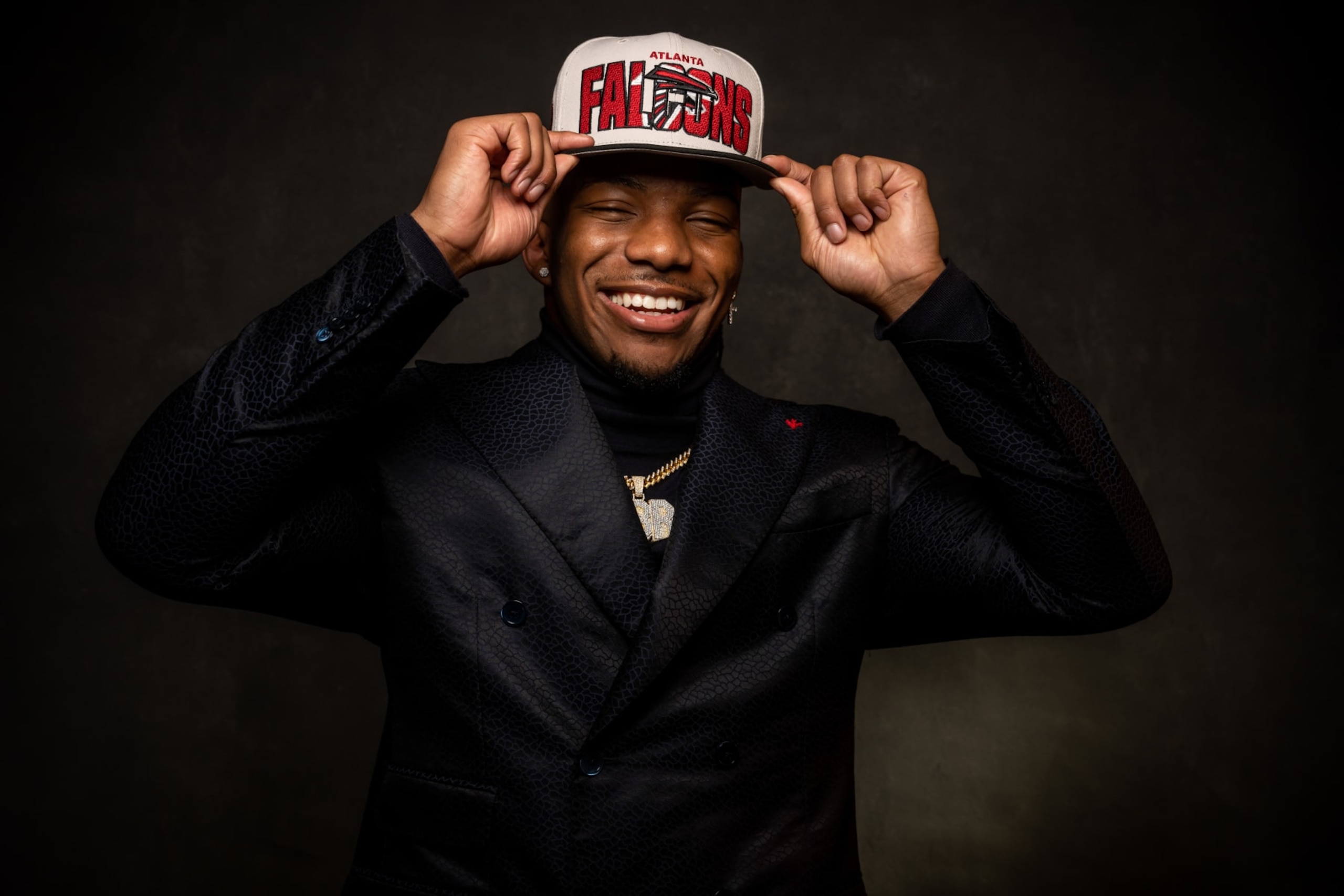
- Round 1 (No. 8): Bijan Robinson, RB, Texas
- Round 2 (No. 38): Matthew Bergeron, OL, Syracuse
- Round 3 (No. 75): Zach Harrison, DL, Ohio State
- Round 4 (No. 113): Clark Phillips III, CB, Utah
- Round 7 (No. 224): DeMarcco Hellams, S, Alabama
- Round 7 (No. 225): Jovaughn Gwyn, IOL, South Carolina
Did the Atlanta Falcons need to add Bijan Robinson to their third-ranked rushing attack? Probably not, but Robinson is more than a typical running back.
The fourth-ranked prospect on the B/R big board is an elite dual-threat tailback who will open up a host of options for the Falcons offense. With Tyler Allgeier, Cordarrelle Patterson, Drake London, Kyle Pitts, Mack Hollins and Scotty Miller at his disposal, second-year quarterback Desmond Ridder will have every chance to succeed in 2023.
The Falcons traded up on Day 2, grabbing Syracuse offensive lineman Matthew Bergeron with the 38th pick to further help support Ridder. Atlanta gave up the 110th pick to move from No. 44 to No. 38.
Atlanta next turned its attention to a defense that ranked 27th overall last season. Defensive lineman Zach Harrison, cornerback Clark Phillips III and safety DeMarcco Hellams will have good opportunities not only to stick with the 53-man roster but see early playing time.
Phillips, the 25th-ranked prospect on the B/R board, was a particularly valuable addition on Day 3.
Robinson was a pure luxury pick, which brings down the Falcons' grade a bit. However, if the Falcons' plan is to have an explosive offense while getting better on defense and seeing if Ridder can be the long-term answer at quarterback, they had a sound draft.
Grade: B
.jpg?w=2560 "Patriots 49ers Football")
.jpg?w=2560 "Raiders Saints Football")
.jpg?w=2560 "Broncos Chargers Football")
Baltimore Ravens
4 of 33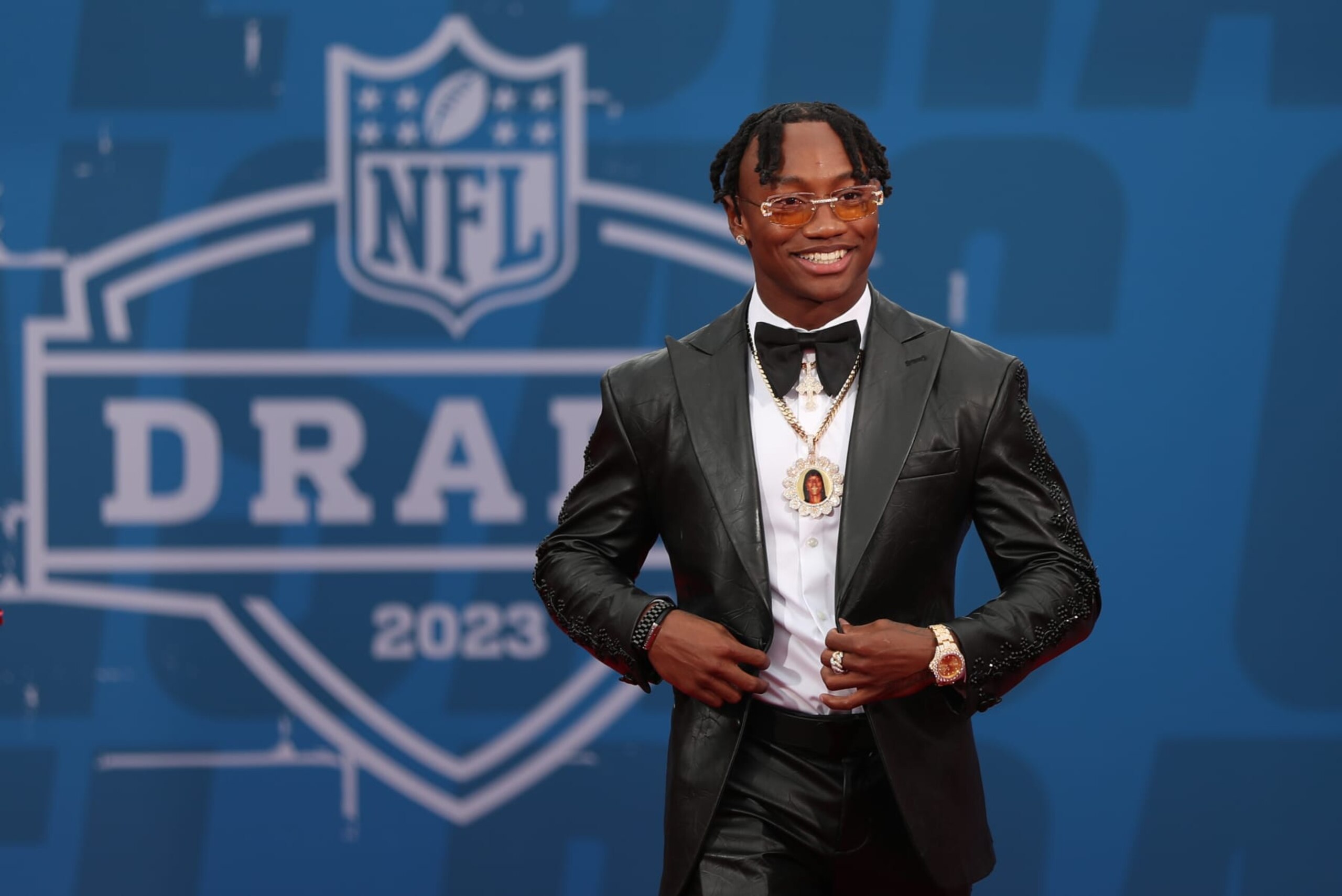
- Round 1 (No. 22): Zay Flowers, WR, Boston College
- Round 3 (No. 86): Trenton Simpson, LB, Clemson
- Round 4 (No. 124): Tavius Robinson, Edge, Mississippi
- Round 5 (No. 157): Kyu Blu Kelly, CB, Stanford
- Round 6 (No. 199): Malaesala Aumavae-Laulu, IOL, Oregon
- Round 7 (No. 229): Andrew Vorhees, IOL, USC
Hours after the Baltimore Ravens signed quarterback Lamar Jackson to a five-year extension, they added an explosive playmaker for him to utilize. Between first-round pick Zay Flowers and free-agent signing Odell Beckham Jr., the Ravens have significantly bolstered Jackson's receiving corps this offseason.
They also got a tremendous value by landing linebacker Trenton Simpson in the third round. Simpson was the 43rd-ranked prospect on the B/R big board and was labeled the top coverage linebacker in the draft.
Simpson and Roquan Smith could quickly emerge as one of the league's better linebacker duos, though his selection could mean that 2020 first-round pick Patrick Queen no longer has a secure future in Baltimore.
Tavius Robinson and Kyu Blu Kelly should be good fits in defensive coordinator Mike Macdonald's system. A Ravens defense that ranked third in points allowed last season should be just as potent in 2023.
Overall, the Ravens did a great job of reloading their defense while getting another dynamic target for Jackson. While Baltimore didn't have a ton of early draft capital—it used its second-round pick to acquire Smith ahead of last year's trade deadline—it was a pretty good weekend to be a Ravens fan, particularly with the Jackson saga finally resolved.
Grade: B+
Buffalo Bills
5 of 33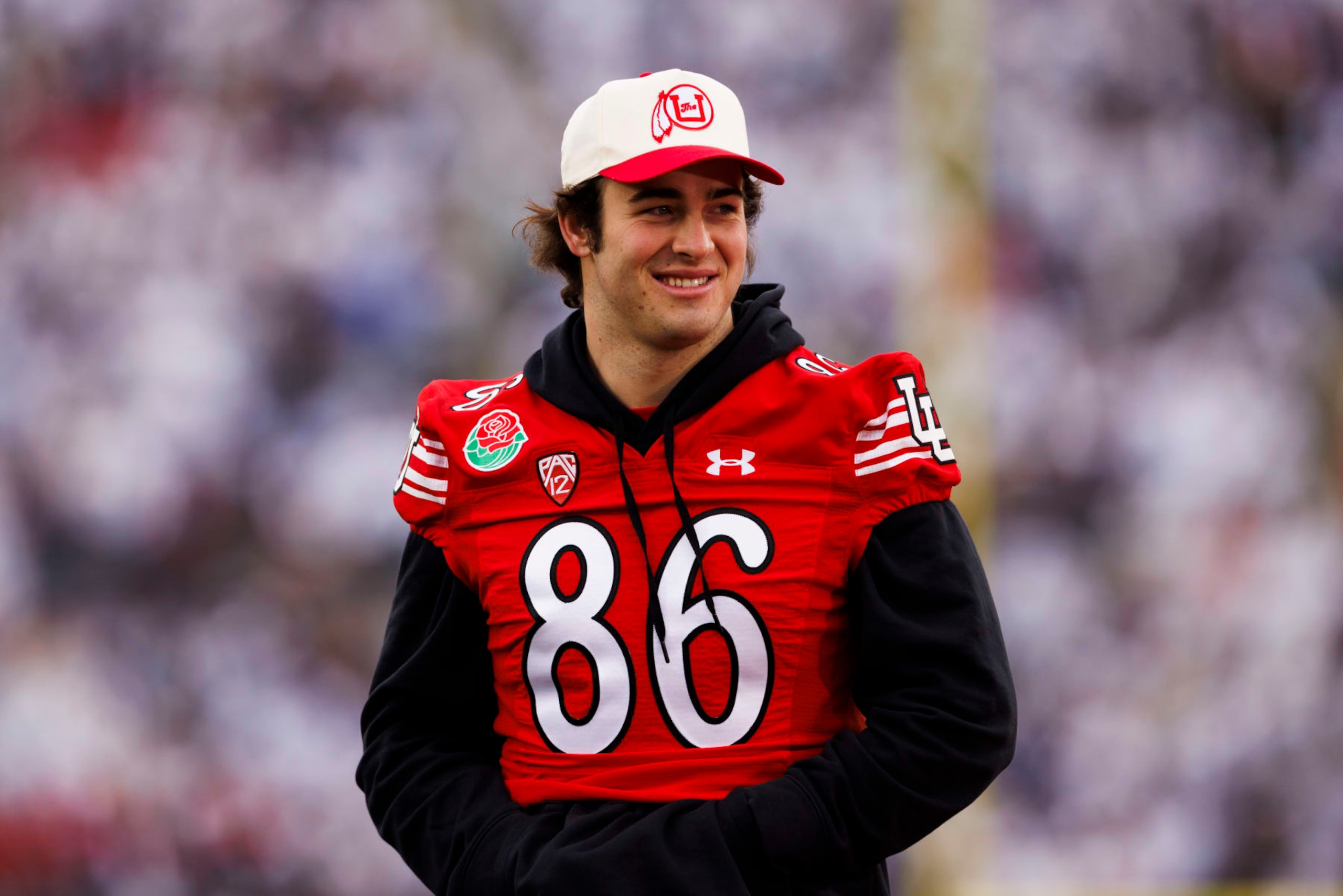
- Round 1 (No. 25): Dalton Kincaid, TE, Utah
- Round 2 (No. 59): O'Cyrus Torrence, IOL, Florida
- Round 3 (No. 91): Dorian Williams, LB, Tulane
- Round 5 (No. 150): Justin Shorter, WR, Florida
- Round 7 (No. 230): Nick Broeker, IOL, Mississippi
- Round 7 (No. 252): Alex Austin, CB, Oregon State
The Buffalo Bills moved up two spots in Round 1 to make Dalton Kincaid the first tight end off the board. It cost them the 130th pick, but Kincaid has enough upside to develop into one of the league's most productive pass-catchers at his position.
Kincaid provides another dynamic skill-position weapon to go with Stefon Diggs, Gabe Davis and Dawson Knox, which the Bills needed.
Buffalo addressed its other big need on Day 2 by grabbing Florida interior lineman O'Cyrus Torrence. It added additional interior depth by taking Nick Broeker in the seventh round.
Third-round Dorian Williams should help replace departed linebacker Tremaine Edmunds. Although he doesn't have the raw size of the 6'5" Edmunds or the elite physical tools, he can be a big asset in coverage.
"In coverage, the Tulane product has the speed and acceleration to carry his man or click and close, and he has impressive ball production with 15 career interceptions and pass breakups combined," Matt Holder of the B/R Scouting Department wrote.
While Buffalo didn't grab an elite receiver prospect at the top of the draft, it did get a nice developmental prospect in Florida's Justin Shorter late.
The Bills did well to grab a receiving weapon and an interior lineman early. However, they still don't have a reliable third receiver, and they failed to address a pass rush that sagged following after Von Miller tore his ACL in November.
Grade: C+
Carolina Panthers
6 of 33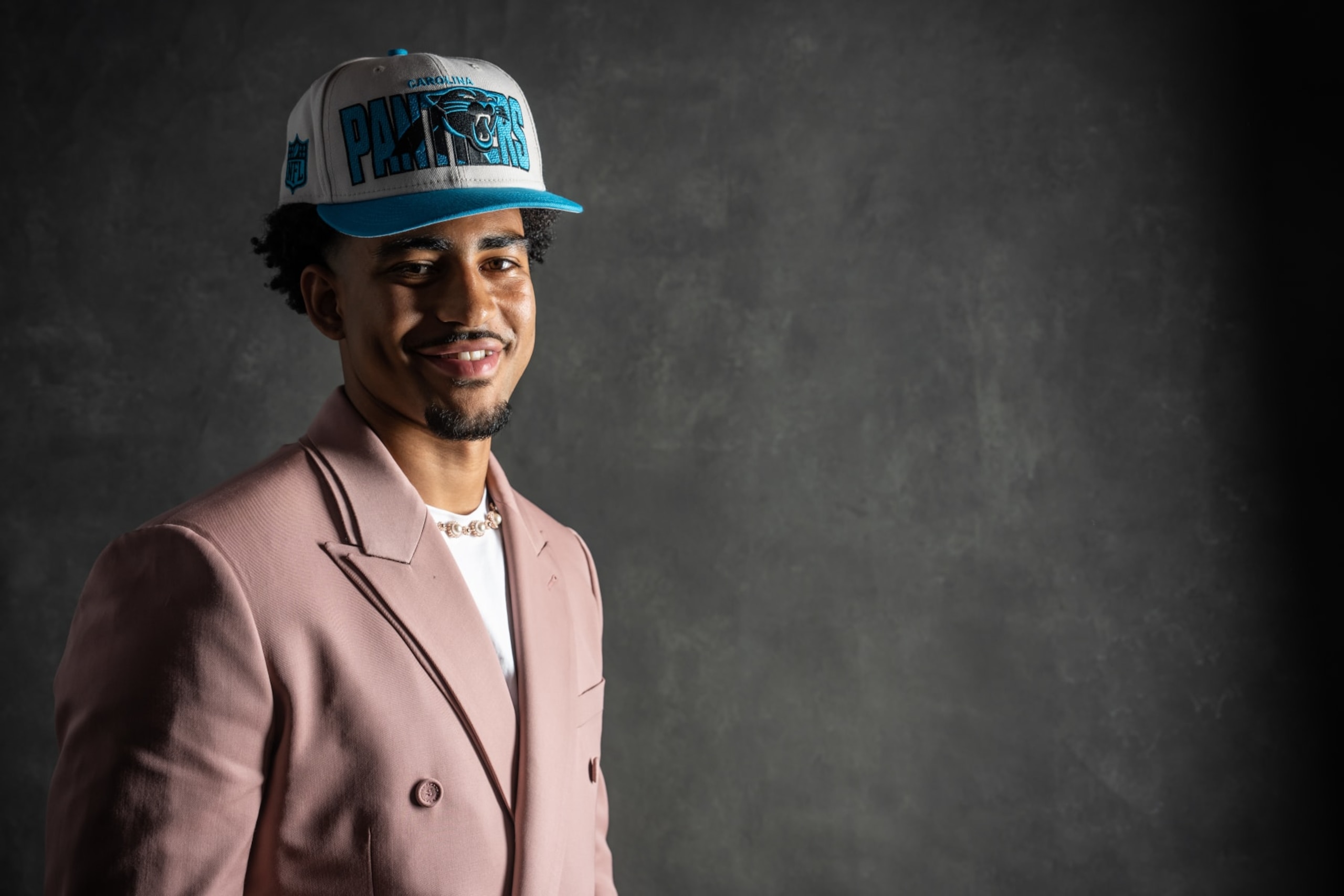
- Round 1 (No. 1): Bryce Young, QB, Alabama
- Round 2 (No. 39): Jonathan Mingo, WR, Mississippi
- Round 3 (No. 80): DJ Johnson, Edge, Oregon
- Round 4 (No. 114): Chandler Zavala, IOL, North Carolina State
- Round 5 (No. 145): Jammie Robinson, S, Florida State
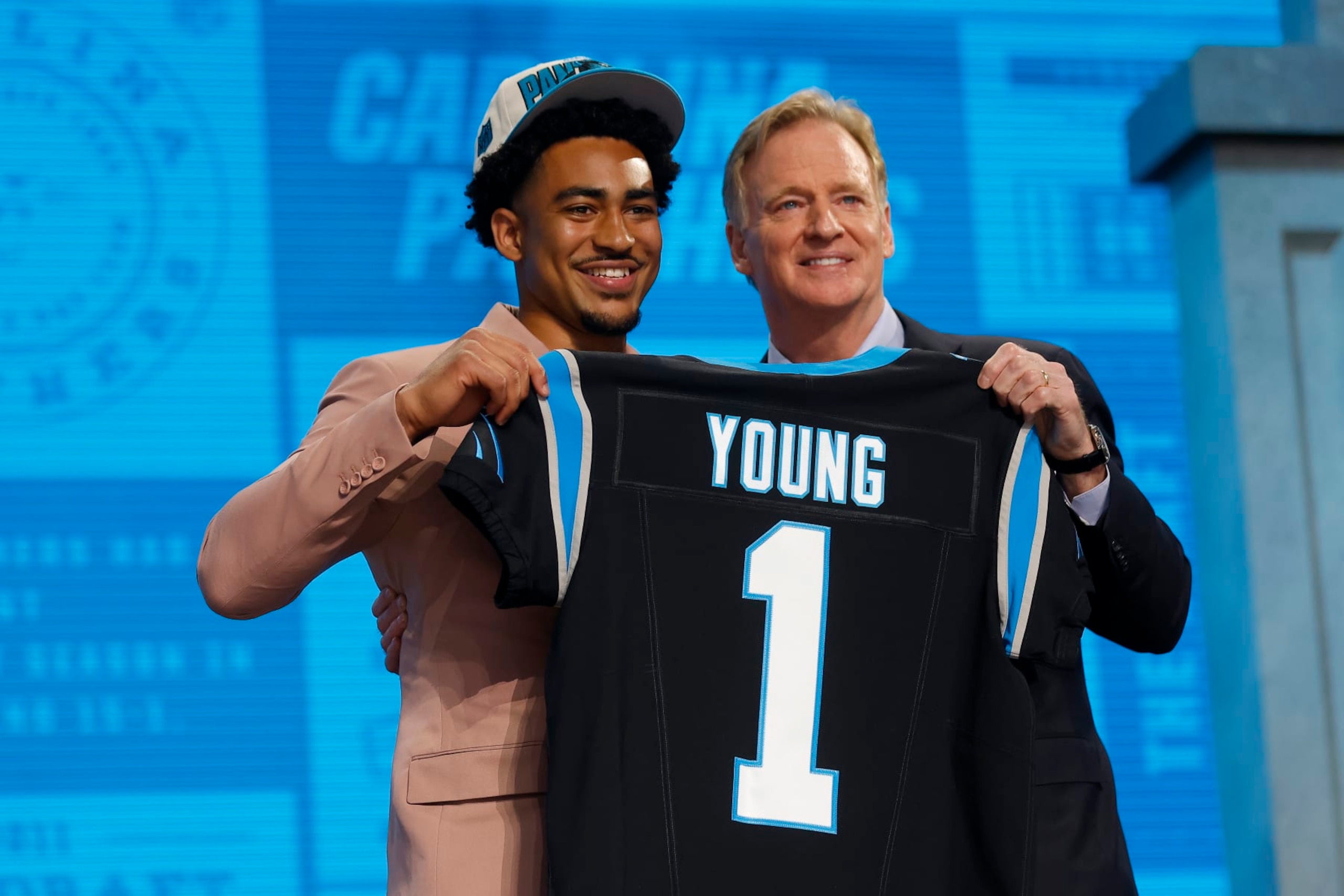
The Carolina Panthers gave up a huge haul to get the No. 1 overall pick from the Chicago Bears. However, the move gave Carolina its choice of top quarterback prospects.
The Panthers settled on Alabama's Bryce Young, a dynamic playmaker who should start sooner than later.
"He has a great understanding of which throws aren't open and how to avoid forcing the ball," Derrik Klassen of the B/R Scouting Department wrote. "That skill bleeds into his ability as a playmaker."
Carolina came back in Round 2 to get Young a big target in 6'2", 220-pound Ole Miss wideout Jonathan Mingo. In Round 3, it found Oregon edge-rusher DJ Johnson, who could quickly develop into a bookend player opposite Brian Burns.
Chandler Zavala will provide early depth along the offensive line, while Jammie Robinson was a terrific value in the fifth round. The Florida State product was the 87th-ranked prospect on the B/R board.
Credit the Panthers for making the bold move to trade up and get their quarterback and still coming away with a potential starting-caliber receiver and rotational edge-rusher. However, this wasn't a big draft class, and everything rests on Young's ability to become a good early starter.
Because of the significant cost to get the No. 1 pick, the grade here isn't exceedingly high. That won't matter if Young proves to be Carolina's quarterback of the future, though.
Grade: B
Chicago Bears
7 of 33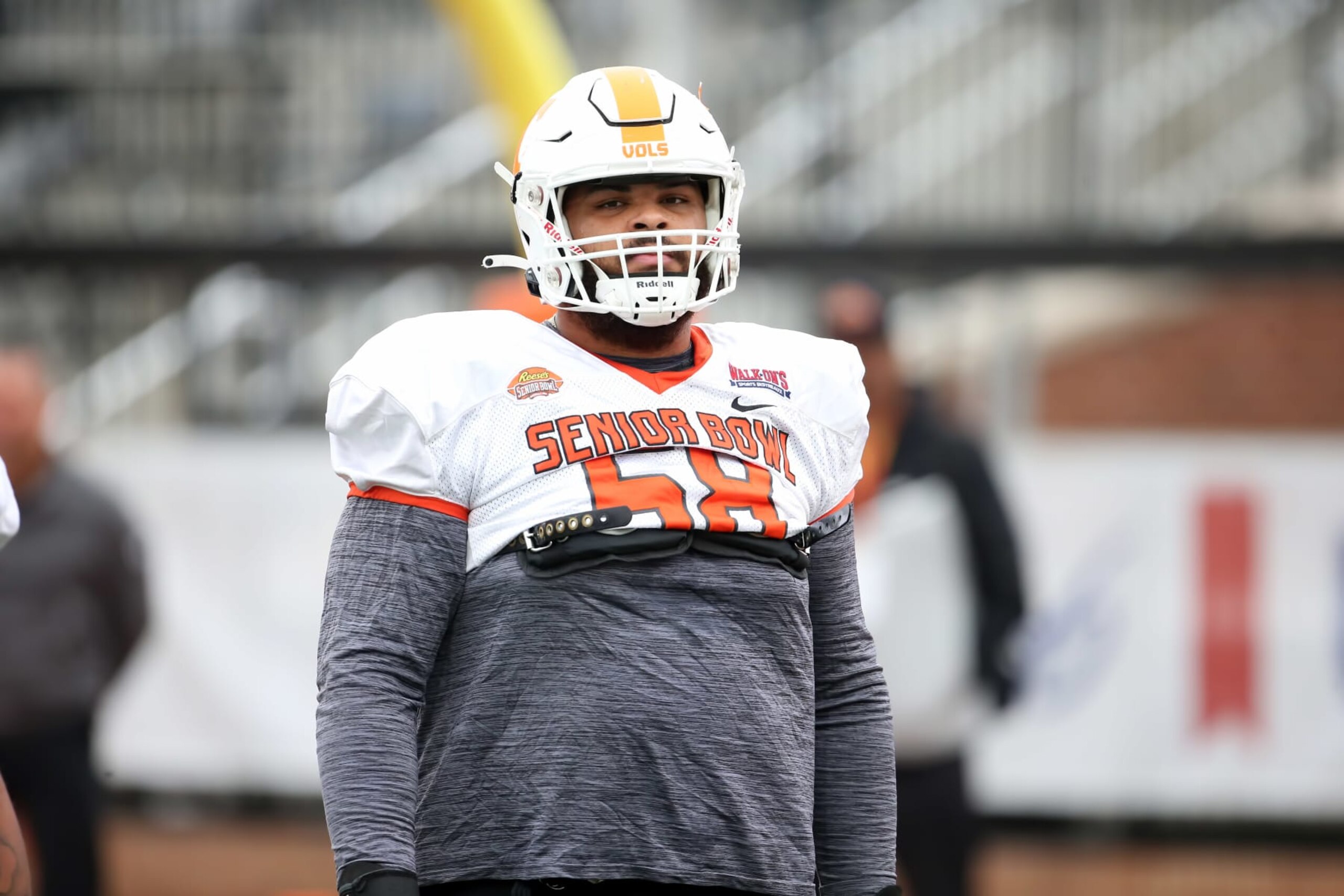
- Round 1 (No. 10): Darnell Wright, OT, Tennessee
- Round 2 (No. 53): Gervon Dexter Sr., DT, Florida
- Round 2 (No. 56): Tyrique Stevenson, CB, Miami
- Round 3 (No. 64): Zacch Pickens, DL, South Carolina
- Round 4 (No. 115): Roschon Johnson, RB, Texas
- Round 4 (No. 133): Tyler Scott, WR, Cincinnati
- Round 5 (No. 148): Noah Sewell, LB, Oregon
- Round 5 (No. 165): Terell Smith, CB, Minnesota
- Round 7 (No. 218): Travis Ball, DT, Kennesaw State
- Round 7 (No. 258): Kendall Williamson, DB, Stanford
The Chicago Bears ended up trading down twice in the first round. General manager Ryan Poles got the ninth and 61st picks along with a 2024 first-rounder, a 2025 second-rounder and wideout D.J. Moore by giving up the first pick. He then got a 2024 fourth-round pick by moving down from No. 9 to No. 10.
At No. 10, Chicago landed Tennessee offensive tackle Darnell Wright, who should quickly start at right tackle and significantly improve the protection of quarterback Justin Fields.
In Round 2, the Bears grabbed Florida defensive tackle Gervon Dexter Sr. Defense was a need after Chicago ranked last in points allowed last season, but this felt like a big reach for the 72nd-ranked prospect on the B/R big board.
Chicago then traded up for Miami cornerback Tyrique Stevenson, sending the 61st and 136th picks to the Jacksonville Jaguars to do so. He'll strengthen a pass defense that ranked 32nd in yards per pass attempt allowed (7.4), but he might have been another reach. (He was the 123rd-ranked prospect on the B/R board.)
The Bears got wonderful value by landing Oregon linebacker Noah Sewell, the 73rd-ranked prospect on the B/R board, in the fifth round. Along with prospects like Stevenson, Zacch Pickens and Terell Smith, he'll have a chance to improve Chicago's underwhelming defense sooner than later.
While the Bears might have reached for a few of their middle-round targets, they had a clear plan for improving their defense, grabbing a key supporting player for Fields and turning the No. 1 pick into valuable pieces for their ongoing rebuild.
Grade: A
Cincinnati Bengals
8 of 33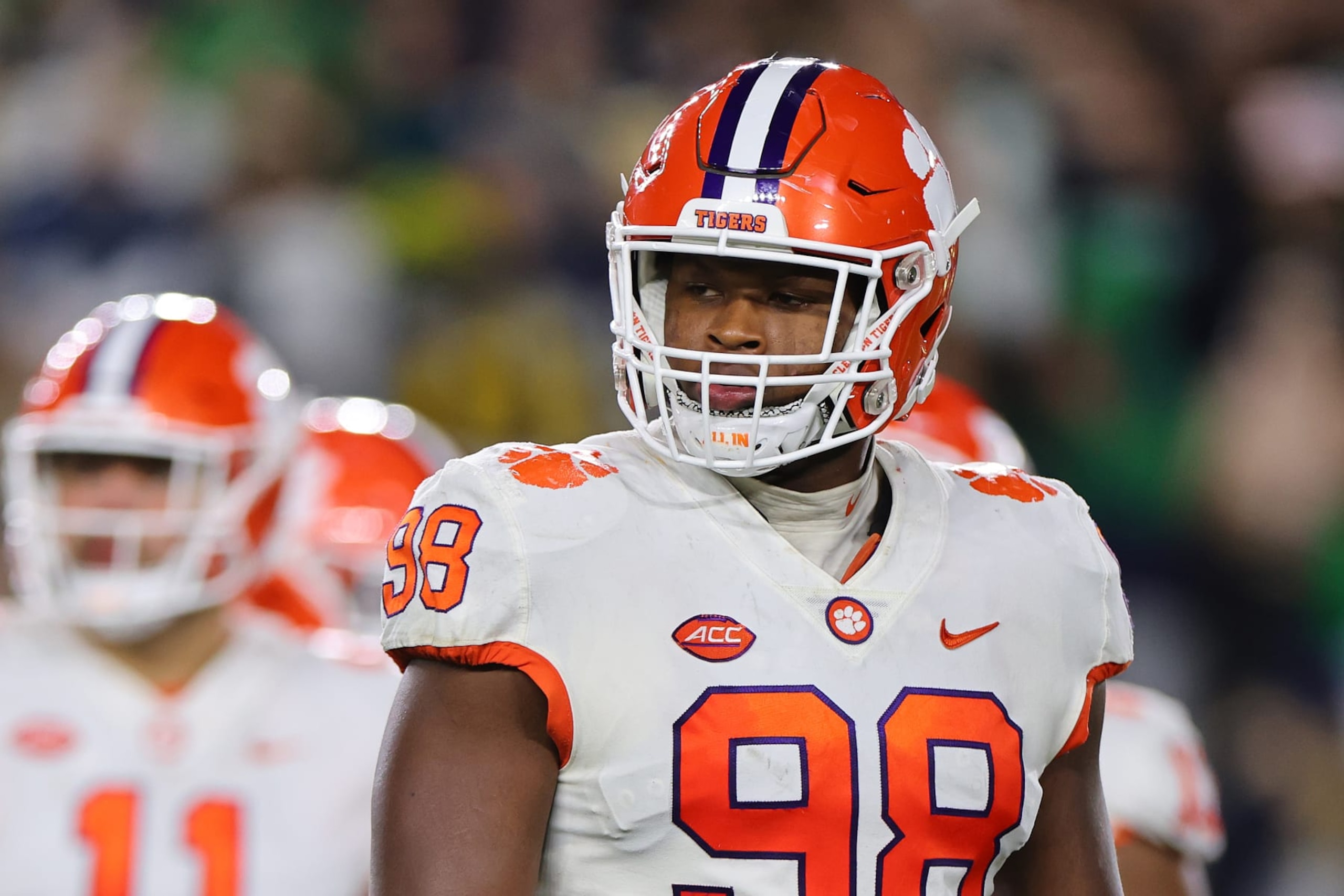
- Round 1 (No. 28): Myles Murphy, Edge, Clemson
- Round 2 (No. 60): DJ Turner II, CB, Michigan
- Round 3 (No. 95): Jordan Battle, S, Alabama
- Round 4 (No. 131): Charlie Jones, WR, Purdue
- Round 5 (No. 163): Chase Brown, RB, Illinois
- Round 6 (No. 206): Andrei Iosivas, WR, Princeton
- Round 6 (No. 217): Brad Robbins, P, Michigan
- Round 7 (No. 246): D.J. Ivey, DB, Miami
The Cincinnati Bengals did an excellent job of letting the first round fall to them. They ended up with Myles Murphy, the third-ranked prospect and second-ranked pass-rusher on the B/R big board. That was a huge coup for the Bengals, who logged only 30 sacks last season.
On Day 2, Cincinnati took a chance on Michigan cornerback DJ Turner II. While Turner is an incomplete prospect on defense—and was the 89th-ranked prospect on the B/R board—his 4.26-second speed is undeniable. He could become special after working with defensive coordinator Lou Anarumo, and he should provide immediate special teams value in the interim.
Jordan Battle should help Cincinnati offset the losses of starting safeties Jessie Bates III and Vonn Bell, while wide receivers Charlie Jones and Andrei Iosivas and running back Chase Brown will provide strong depth offensively. While Jones and Iosivas might not see early playing time behind Cincinnati's vaunted receiving trio of Ja'Marr Chase, Tyler Boyd and Tee Higgins, Brown could see the field quickly.
Cincinnati lost Samaje Perine in free agency and has a decision to make on Joe Mixon, who averaged only 3.9 yards per carry last season. The Bengals could save $10 million against the 2023 cap by releasing him after June 1.
Overall, the Bengals did a great job of adding value and addressing needs early while finding valuable depth late. They could have used more offensive line depth, though, and the decision not to take a top tight end early means Cincinnati will bet heavily on the inconsistent and oft-injured Irv Smith Jr.
Grade: B+
Cleveland Browns
9 of 33
- Round 3 (No. 74): Cedric Tillman, WR, Tennessee
- Round 3 (No. 98): Siaki Ika, DL, Baylor
- Round 4 (No. 111): Dawand Jones, OT, Ohio State
- Round 4 (No. 126): Isaiah McGuire, DL, Missouri
- Round 5 (No. 140): Dorian Thompson-Robinson, QB, UCLA
- Round 5 (No. 142): Cameron Mitchell, CB, Northwestern
- Round 6 (No. 190): Luke Wypler, IOL, Ohio State
The Cleveland Browns didn't have first- or second-round selections following last year's trade for quarterback Deshaun Watson and this year's deal for wide receiver Elijah Moore. However, the Browns did get a second third-round pick back in the Moore trade.
The Browns used their first pick on wideout Cedric Tillman, the fifth-ranked receiver on the B/R board. The physical 6'3", 213-pound pass-catcher could be an early contributor alongside Moore, Amari Cooper and Donovan Peoples-Jones in Cleveland's receiving room.
Cleveland bolstered its defensive front and a run defense that ranked 25th last season with the selections of Siaki Ika—the top-rated pure nose tackle on the B/R board—and Isaiah McGuire. Landing Dawand Jones (B/R's 41st-ranked player) in Round 4 was incredible value, even if he won't walk right into a starting role.
Cleveland added more line depth by snagging Jones' former teammate, Luke Wypier, in the sixth round. Meanwhile, Dorian Thompson-Robinson was a traits-based upside pick who could develop into a long-term backup and spot starter.
The Browns didn't have many glaring holes coming into the draft, but despite not having early draft capital, they did an excellent job of addressing the big ones—receiver depth and the defensive line—with their picks. It was a good all-around weekend for general manager Andrew Berry.
Grade: B+
Dallas Cowboys
10 of 33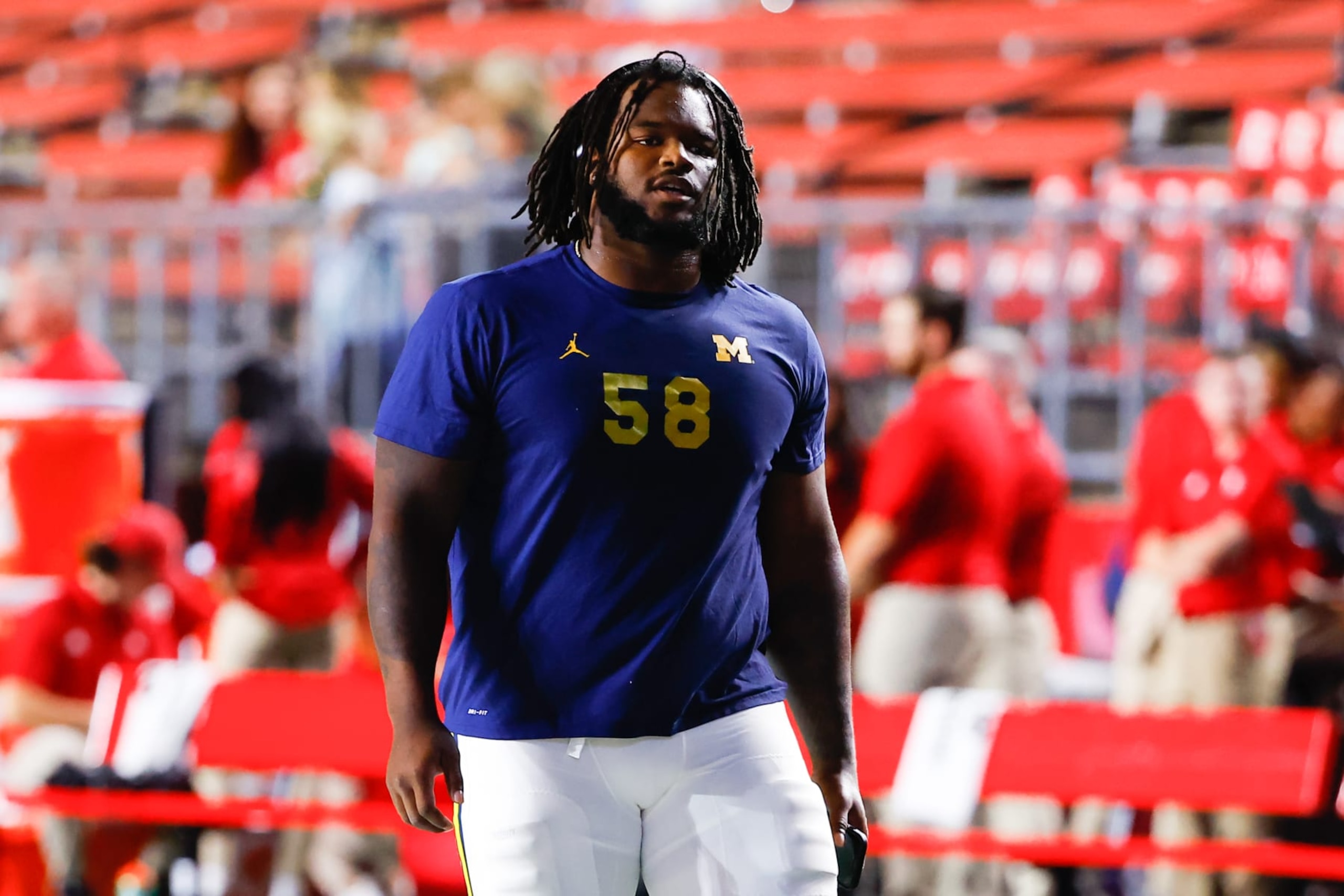
- Round 1 (No. 26): Mazi Smith, DL, Michigan
- Round 2 (No. 58): Luke Schoonmaker, TE, Michigan
- Round 3 (No. 90): DeMarvion Overshown, LB, Texas
- Round 4 (No. 129): Viliami Fehoko Jr., Edge, San Jose State
- Round 5 (No. 169): Asim Richards, OT, North Carolina
- Round 6 (No. 178): Eric Scott Jr., CB, Southern Mississippi
- Round 6 (No. 212): Deuce Vaughn, RB, Kansas State
- Round 7 (No. 244): Jalen Brooks, WR, South Carolina
The Dallas Cowboys needed some front-seven help after ranking 22nd in rushing yards allowed last season. However, Michigan's Mazi Smith was a bit of a reach in Round 1. Smith was the 63rd-ranked prospect and the seventh-ranked defensive tackle on the B/R board.
While Dallas didn't find a replacement for departed tight end Dalton Schultz in the first round, it came back to the position in Round 2 by selecting Michigan's Luke Schoonmaker 58th overall. That filled a need, but it might have been another reach, as Schoonmaker was the 95th-ranked prospect on the B/R board.
DeMarvion Overshown, the 168th-ranked prospect on the B/R board, was yet another reach by Dallas. He's on the lighter side (6'3", 229 lbs), but his sideline-to-sideline chase-and-tackle ability is something that Dallas could desperately use.
Pass-rusher Viliami Fehoko Jr. and offensive lineman Asim Richards will provide solid depth at two critical positions, too.
The Cowboys finally found their complementary running back in Round 6, snagging Kansas State's Deuce Vaughn. He won't outright replace Ezekiel Elliott, but he should fill a nice committee role along with the franchise-tagged Tony Pollard and 2022 undrafted rookie Malik Davis.
Dallas clearly stuck with its draft board and did a fine job of addressing needs. However, the Cowboys didn't do the best in the value department.
Grade: C
Denver Broncos
11 of 33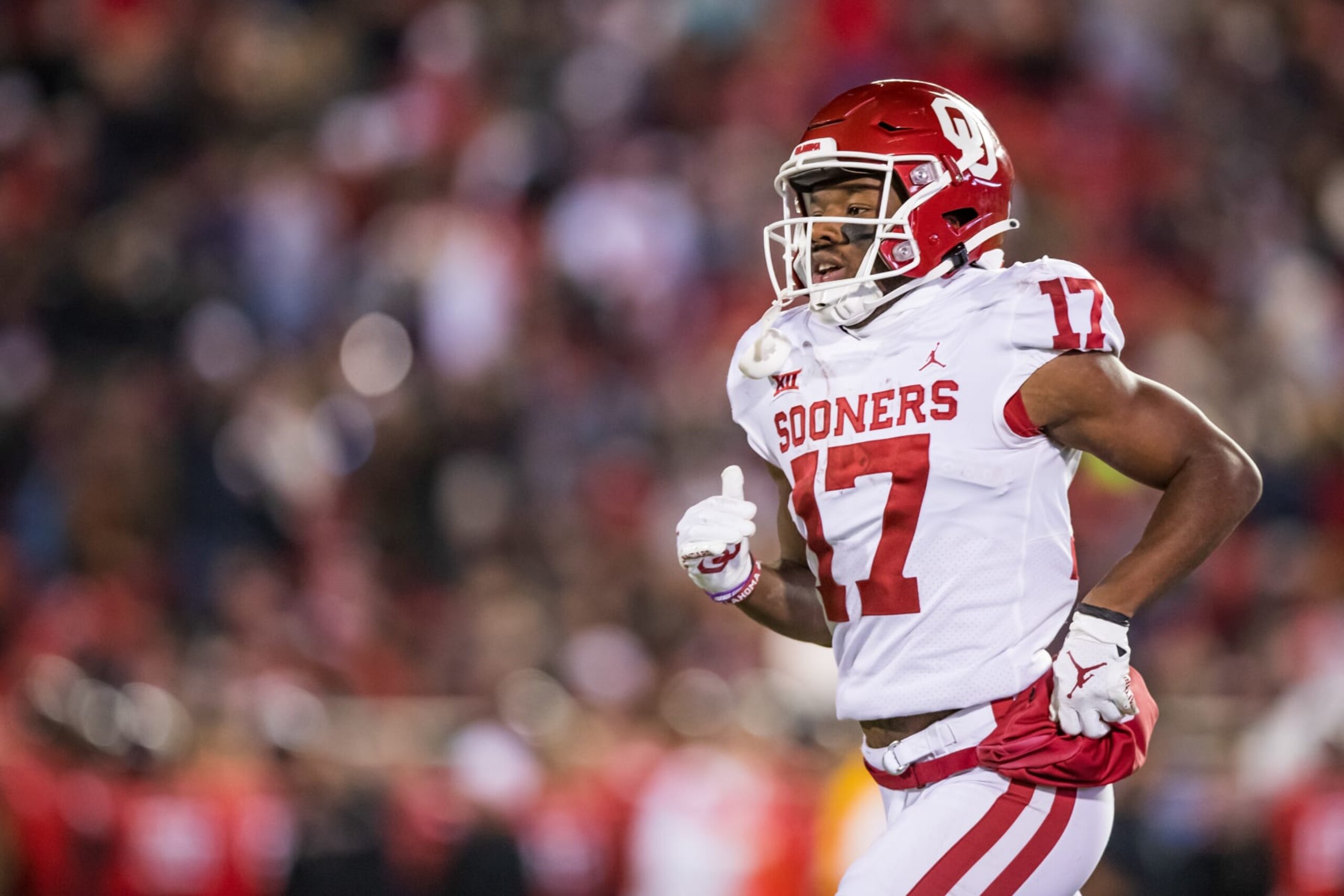
- Round 2 (No. 63): Marvin Mims Jr., WR, Oklahoma
- Round 3 (No. 67): Drew Sanders, LB, Arkansas
- Round 3 (No. 83): Riley Moss, CB, Iowa
- Round 6 (No. 183): JL Skinner, S, Boise State
- Round 7 (No. 257): Alex Forsyth, C, Oregon
The Denver Broncos didn't have first- or second-round selections after their trades for Russell Wilson and head coach Sean Payton. However, Denver traded into the second round to secure Oklahoma wideout Marvin Mims Jr.
Mims is a legitimate deep threat who should help quarterback Russell Wilson push the ball down the field. However, Denver trading up for the 102nd-ranked prospect on the B/R board was more than a little surprising.
Denver got much better value at No. 67, landing Arkansas linebacker Drew Sanders, the 33rd-ranked prospect on the B/R board.
Riley Moss and JL Skinner will add some depth to an already strong pass defense (fifth in yards per attempt allowed), though Forsyth really addresses an area of need.
It's an underwhelming draft class overall, especially if Mims doesn't go on to make GM George Paton look like a genius for flipping the switch early. Expect this draft to be judged by any success Wilson and Payton have on the field this season.
Payton in Denver remains an unknown, and to this point, the Wilson trade has been a bust.
Grade: D
Detroit Lions
12 of 33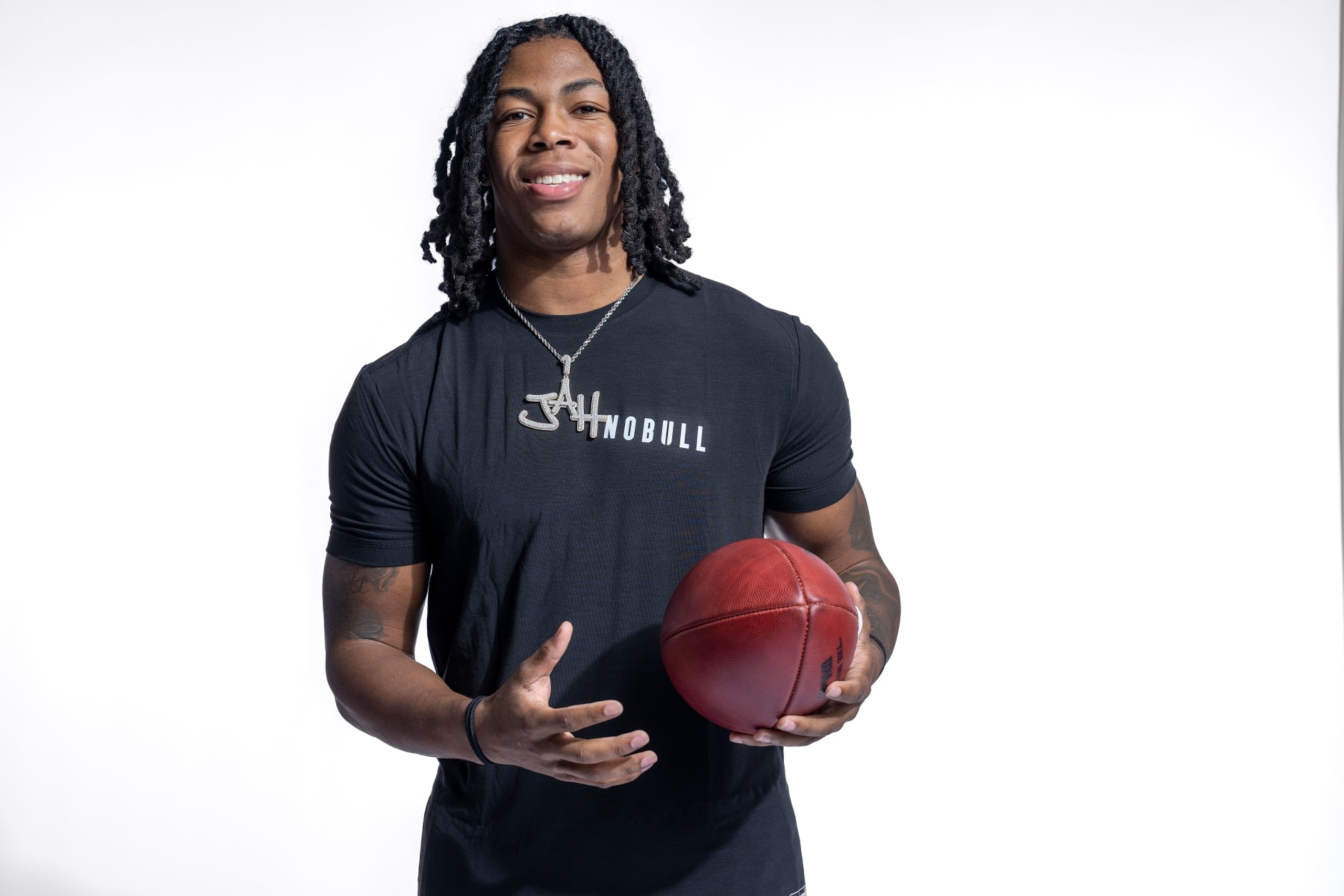
- Round 1 (No. 12): Jahmyr Gibbs, RB, Alabama
- Round 1 (No. 18): Jack Campbell, LB, Iowa
- Round 2 (No. 34): Sam LaPorta, TE, Iowa
- Round 2 (No. 45): Brian Branch, S, Alabama
- Round 3 (No. 68): Hendon Hooker, QB, Tennessee
- Round 3 (No. 96): Brodric Martin, DL, Western Kentucky
- Round 5 (No. 152): Colby Sorsdal, IOL, William & Mary
- Round 7 (No. 219): Antoine Green, WR, North Carolina
The Lions got good value by trading down from No. 6 to No. 12, getting the 34th overall pick as part of the deal. Did Detroit reach a bit for Jahmyr Gibbs and Jack Campbell, prospects at increasingly devalued positions? Perhaps, but not significantly so. Both players were ranked inside the top 31 on the B/R board and worthy of first-round picks in this class.
Detroit came back early in Round 2 to grab Iowa's Sam LaPorta. The talented tight end should slide right into the Lions offense, filling the void created when Detroit traded T.J. Hockenson at the 2022 deadline.
The Lions then executed a rare in-the-division trade, giving the Green Bay Packers the 159th pick to move from No. 48 to No. 45. With that pick, Detroit added Alabama's Brian Branch, the top-ranked safety on the B/R board. He'll be another fine addition to the league's 32nd-ranked defense in 2022.
In the third round, Detroit tapped Tennessee's Hendon Hooker as the potential heir to quarterback Jared Goff. Coming off a torn ACL, Hooker may not be ready to play immediately, but he won't have to with Goff leading one of the league's most potent passing attacks.
Outsiders are free to question Detroit's draft strategy at the very top of the draft, but coming away with Gibbs, Campbell, LaPorta and Branch is a huge win for the hottest team in the NFC North.
Grade: A
Green Bay Packers
13 of 33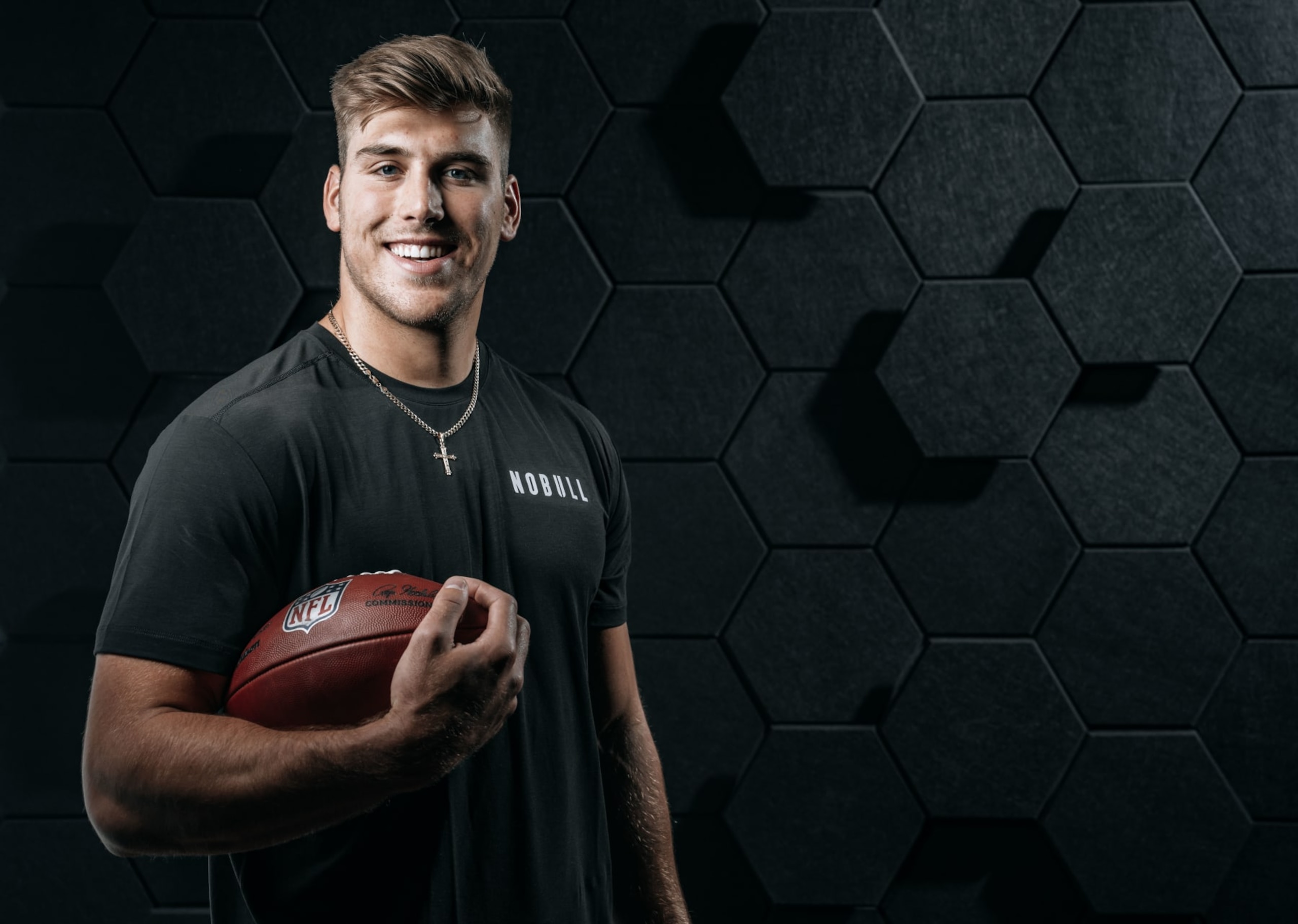
- Round 1 (No. 13): Lukas Van Ness, Edge, Iowa
- Round 2 (No. 42): Luke Musgrave, TE, Oregon State
- Round 2 (No. 50): Jayden Reed, WR, Michigan State
- Round 3 (No. 78): Tucker Kraft, TE, South Dakota State
- Round 4 (No. 116): Colby Wooden, DL, Auburn
- Round 5 (No. 149): Sean Clifford, QB, Penn State
- Round 5 (No. 159): Dontayvion Wicks, WR, Virginia
- Round 6 (No. 179): Karl Brooks, DL, Bowling Green
- Round 6 (No. 207): Anders Carlson, K, Auburn
- Round 7 (No. 232): Carrington Valentine, CB, Kentucky
- Round 7 (No. 235): Lew Nichols III, RB, Central Michigan
- Round 7 (No. 242): Anthony Johnson Jr., S, Iowa State
- Round 7 (No. 256) Grant DuBose, WR, Charlotte
The Packers moved up two spots in Round 1 as part of the Aaron Rodgers trade. That allowed them to grab Iowa's Lukas Van Ness, the fourth-ranked edge-rusher on the B/R board.
In Round 2, the Packers got new starting quarterback Jordan Love some serious help in the form of Oregon State tight end Luke Musgrave.
"He can succeed as a field-stretching tight end who doesn't have to leave the field on run downs," Derrik Klassen of the B/R Scouting Department wrote.
Green Bay traded down twice with its second Day 2 selection before getting Love even more help in the form of Michigan State wideout Jayden Reed. The Packers continued the trend by adding tight end Tucker Kraft on Day 2 and wideouts Dontayvion Wicks and Grant DuBose on Day 3.
The Packers put a strong emphasis on supporting Love, which was a sound strategy. If Green Bay exercises the fifth-year option on Love's contract, it will have two years to evaluate him before having to sign him to a new deal (or franchise tag) or part ways.
If supporting Love was the goal, Green Bay did a nice job of throwing proverbial darts at its target. The Packers didn't come away with one of the very best pass-catchers, but they added offensive volume without ignoring the other side of the football.
Grade: B+
Houston Texans
14 of 33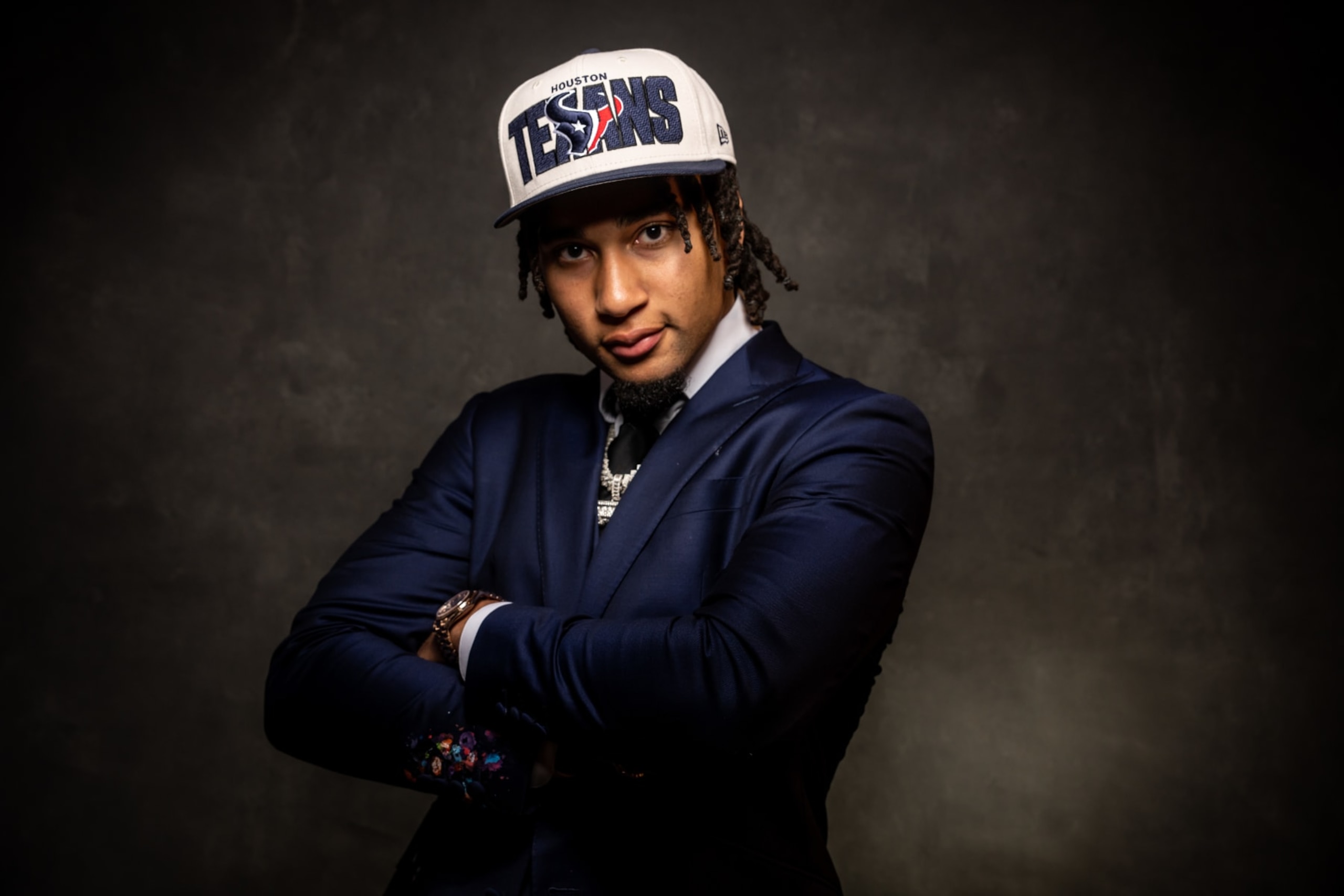
- Round 1 (No. 2): C.J. Stroud, QB, Ohio State
- Round 1 (No. 3): Will Anderson Jr., Edge, Alabama
- Round 2 (No. 62): Juice Scruggs, IOL, Penn State
- Round 3 (No. 69): Tank Dell, WR, Houston
- Round 4 (No. 109): Dylan Horton, Edge, TCU
- Round 5 (No. 167): Henry To'oTo'o, LB, Alabama
- Round 6 (No. 201): Jarrett Patterson, IOL, Notre Dame
- Round 6 (No. 205): Xavier Hutchinson, WR, Iowa State
- Round 7 (No. 248): Brandon Hall, S, Pittsburgh
The Texans opted to flip the switch on Ohio State quarterback C.J. Stroud, the top-ranked signal-caller on the B/R board. They then traded back up to No. 3 to select the Scouting Department's top overall prospect, Will Anderson Jr.
Moving up for the Alabama product was costly—Houston surrendered the No. 12 pick, the No. 33 pick, a 2024 first-round pick and a 2024 third-round pick for Nos. 3 and 105—but the Texans now have a legitimate centerpiece on each side of the ball.
On Day 2, Houston traded up into the second round to get Penn State interior lineman Juice Scruggs. He'll bring versatility to the offensive line and another foundational piece to put in front of Stroud.
Houston's Tank Dell should give Stroud a quick and shifty receiving option in the slot but was a reach in Round 3 (153rd-ranked prospect on the B/R board).
Pass-rusher Dylan Horton and linebacker Henry To'oTo'o were smart picks on Day 3. They'll provide good depth and could be early contributors on a defense that ranked 30th overall last season.
Xavier Hutchinson, the 122nd-ranked prospect on the B/R board, was a brilliant pickup in Round 6. He could crack Houston's underwhelming receiver lineup sooner than later.
Did the Texans give up a bit too much to move back up for Anderson? Maybe, but there's no way to argue that Houston isn't dramatically better than it was a few days ago. The Texans have their quarterback of the future, now have legitimate building blocks on offense and defense, and they significantly improved the depth on one of the league's most lackluster rosters.
Grade: A
Indianapolis Colts
15 of 33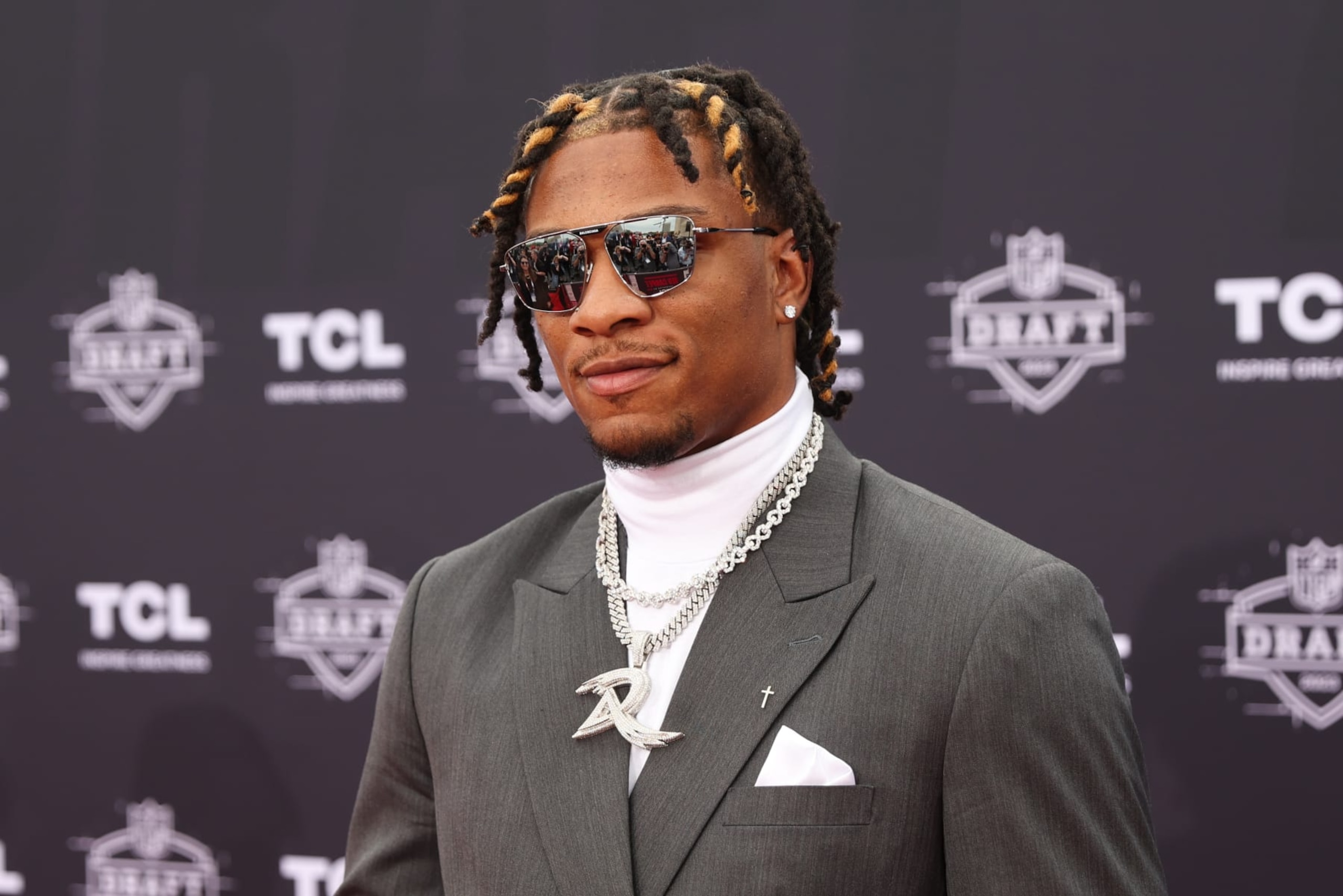
- Round 1 (No. 4): Anthony Richardson, QB, Florida
- Round 2 (No. 44): Julius Brents, CB, Kansas State
- Round 3 (No. 79): Josh Downs, WR, North Carolina
- Round 4 (No. 106): Blake Freeland, OT, BYU
- Round 4 (No. 110): Adetomiwa Adebawore, DL, Northwestern
- Round 5 (No. 138): Darius Rush, CB, South Carolina
- Round 5 (No. 158): Daniel Scott, S, California
- Round 5 (No. 162): Will Mallory, TE, Miami
- Round 5 (No. 176): Evan Hull, RB, Northwestern
- Round 6 (No. 211): Titus Leo, Edge, Wagner
- Round 7 (No. 221): Jaylon Jones, CB, Texas A&M
- Round 7 (No. 236): Jake Witt, OT, Northern Michigan
It turns out that the Indianapolis Colts weren't smitten with Kentucky quarterback Will Levis. Instead, they grabbed the quarterback with the most upside at No. 3, Florida's Anthony Richardson.
"Anthony Richardson is a home run swing on elite tools and fearless pocket management," Derrik Klassen of the B/R Scouting Department wrote.
The Colts traded down just a bit to open Day 2, snagging the 141st pick to drop from No. 35 to No. 38. Indy traded down again before selecting Kansas State cornerback Julius Brents 44th overall. Brents was a logical target after Indianapolis traded Stephon Gilmore to the Cowboys.
Indy reached a bit for BYU tackle Blake Freeland, the 209th-ranked prospect on the B/R board, but the 6'8", 302-pound prospect has intriguing physical traits. Northwestern defensive lineman Adetomiwa Adebawore, the 56th-ranked prospect on the B/R board, was a much better value in Round 4.
The Colts added a couple of additional weapons for Richardson in North Carolina receiver Josh Downs and Miami tight end Will Mallory. They could be early contributors next to Michael Pittman Jr. and Alec Pierce.
General manager Chris Ballard did solid work addressing Indy's glaring needs, and he came away with the quarterback with arguably the highest upside in this class.
Grade: A-
Jacksonville Jaguars
16 of 33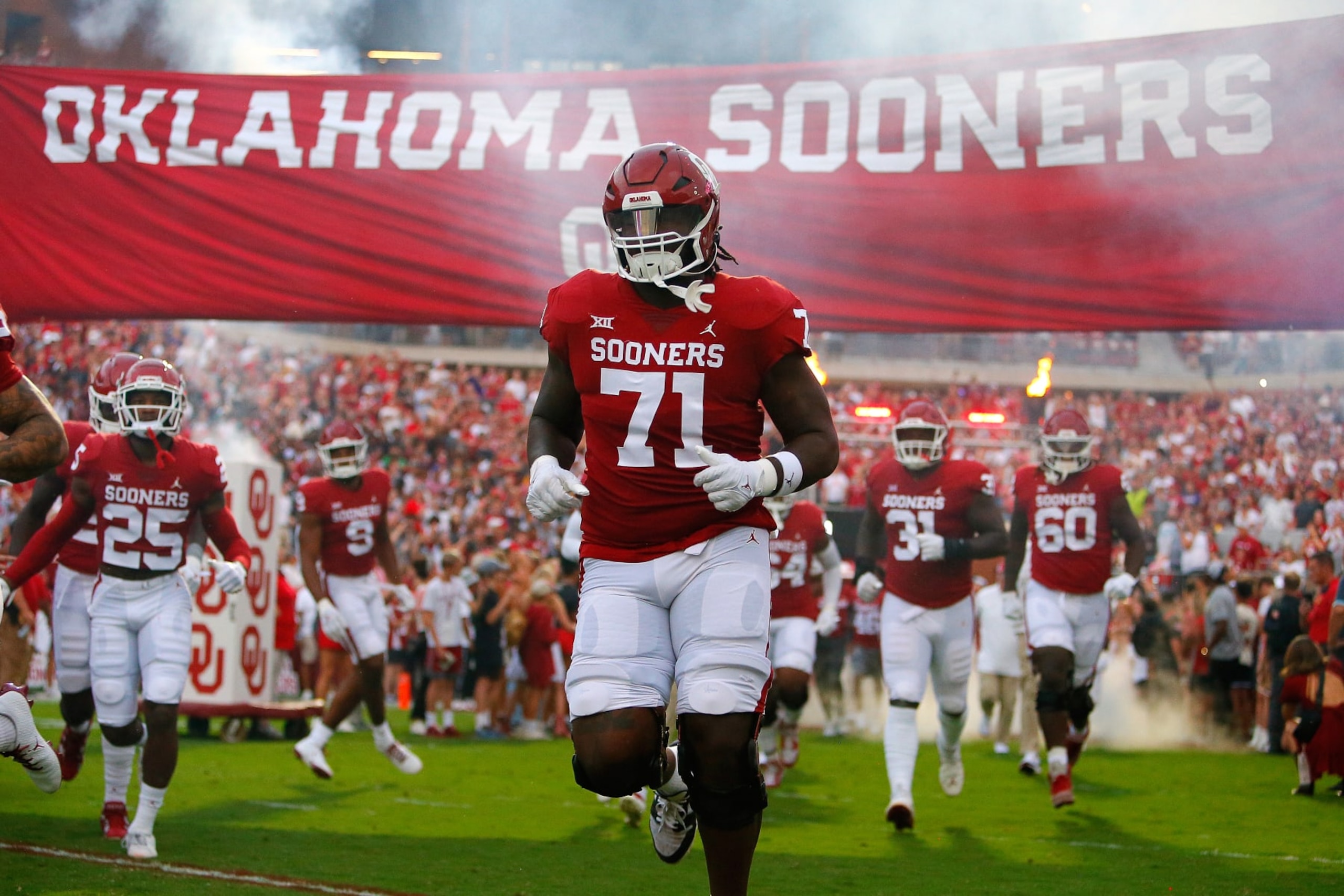
- Round 1 (No. 27): Anton Harrison, OT, Oklahoma
- Round 2 (No. 61): Brenton Strange, TE, Penn State
- Round 3 (No. 88): Tank Bigsby, RB, Auburn
- Round 4 (No. 121): Ventrell Miller, LB, Florida
- Round 4 (No. 130): Tyler Lacy, DL, Oklahoma State
- Round 5 (No. 136): Yasir Abdullah, Edge, Louisville
- Round 5 (No. 160): Antonio Johnson, S, Texas A&M
- Round 6 (No. 185): Parker Washington, WR, Penn State
- Round 6 (No. 202): Christian Braswell, CB, Rutgers
- Round 6 (No. 208): Erick Hallett, DB, Pittsburgh
- Round 7 (No. 226): Cooper Hodges, OT, Appalachian State
- Round 7 (No. 227): Raymond Vohasek, DT, North Carolina
- Round 7 (No. 240): Derek Parish, Edge, Houston
The Jaguars traded down twice in Round 1, netting the 130th, 160th and 240th picks to go from No. 24 to No. 27. That's great value, and Jacksonville still ended up with one of the top offensive tackles in Oklahoma's Anton Harrison.
With Jawaan Taylor departing in free agency, taking a tackle early was logical.
The Jaguars traded down on Day 2, then nabbed Penn State tight end Brenton Strange. He should quickly become one of Trevor Lawrence's more reliable targets and provides some insurance for franchise-tagged tight end Evan Engram.
Jacksonville did a nice job of adding skill players to its offense, grabbing a terrific potential No. 2 back in Tank Bigsby and a powerful (5'10", 204 lbs) complementary receiving target in Parker Washington.
The Jags also put a strong focus on adding to a defense that ranked 24th overall. Prospects like Ventrell Miller, Tyler Lacy and Yasir Abdullah will provide valuable early depth in an AFC South that will soon be headlined by young, dynamic quarterbacks.
It was a fairly by-the-numbers draft for the Jaguars, who focused on addressing needs without making any major reaches or truly surprising selections. If Jacksonville is the favorite in its division—and it should be after last season—that didn't change over draft weekend.
Grade: B-
Kansas City Chiefs
17 of 33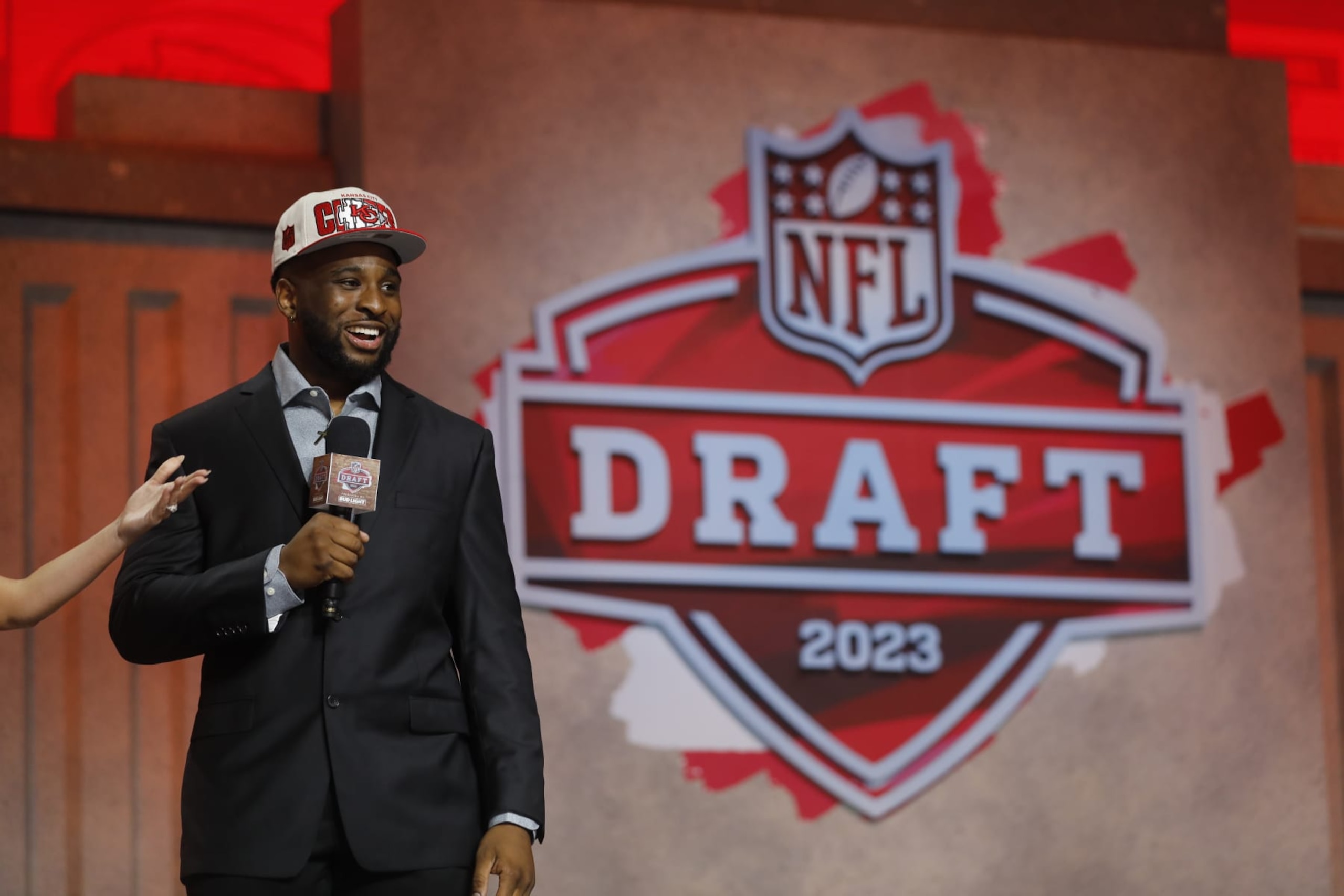
- Round 1 (No. 31): Felix Anudike-Uzomah, Edge, Kansas State
- Round 2 (No. 55): Rashee Rice, WR, SMU
- Round 3 (No. 92): Wanya Morris, OT, Oklahoma
- Round 4 (No. 119): Chamarri Conner, DB, Virginia Tech
- Round 5 (No. 166): BJ Thompson, Edge, Stephen F. Austin
- Round 6 (No. 194): Keondre Coburn, DL, Texas
- Round 7 (No. 250): Nic Jones, CB, Ball State
For the second straight year, the Kansas City Chiefs grabbed a promising young pass-rusher on opening night. Kansas State's Felix Anudike-Uzomah should immediately step in as a long-term replacement for Frank Clark.
On Day 2, Kansas City traded up to land SMU wideout Rashee Rice. He'll be a great fit in the Chiefs' new-look passing attack.
"Rice is a high-end No. 2 or a low-end No. 1 akin to San Francisco's Brandon Aiyuk. His ability as a ball-winner on the outside would be welcome on any team," Derrik Klassen of the B/R scouting team wrote.
Wanya Morris was a logical choice in Round 3, as Kansas City lost both of its 2022 starting tackles—Andrew Wylie and Orlando Brown Jr. Despite signing Jawaan Taylor, there was a need at the position.
Kansas City addressed its three biggest needs with its first three selections while adding depth prospects like defensive back Chamarri Conner and BJ Thompson in the latter rounds.
Considering we just saw 2022 late-round picks like Jaylen Watson and Isiah Pacheco contribute in the Super Bowl, there's a chance that even the talent-laden Chiefs find roles for most of their draft picks this season.
Grade: B+
Las Vegas Raiders
18 of 33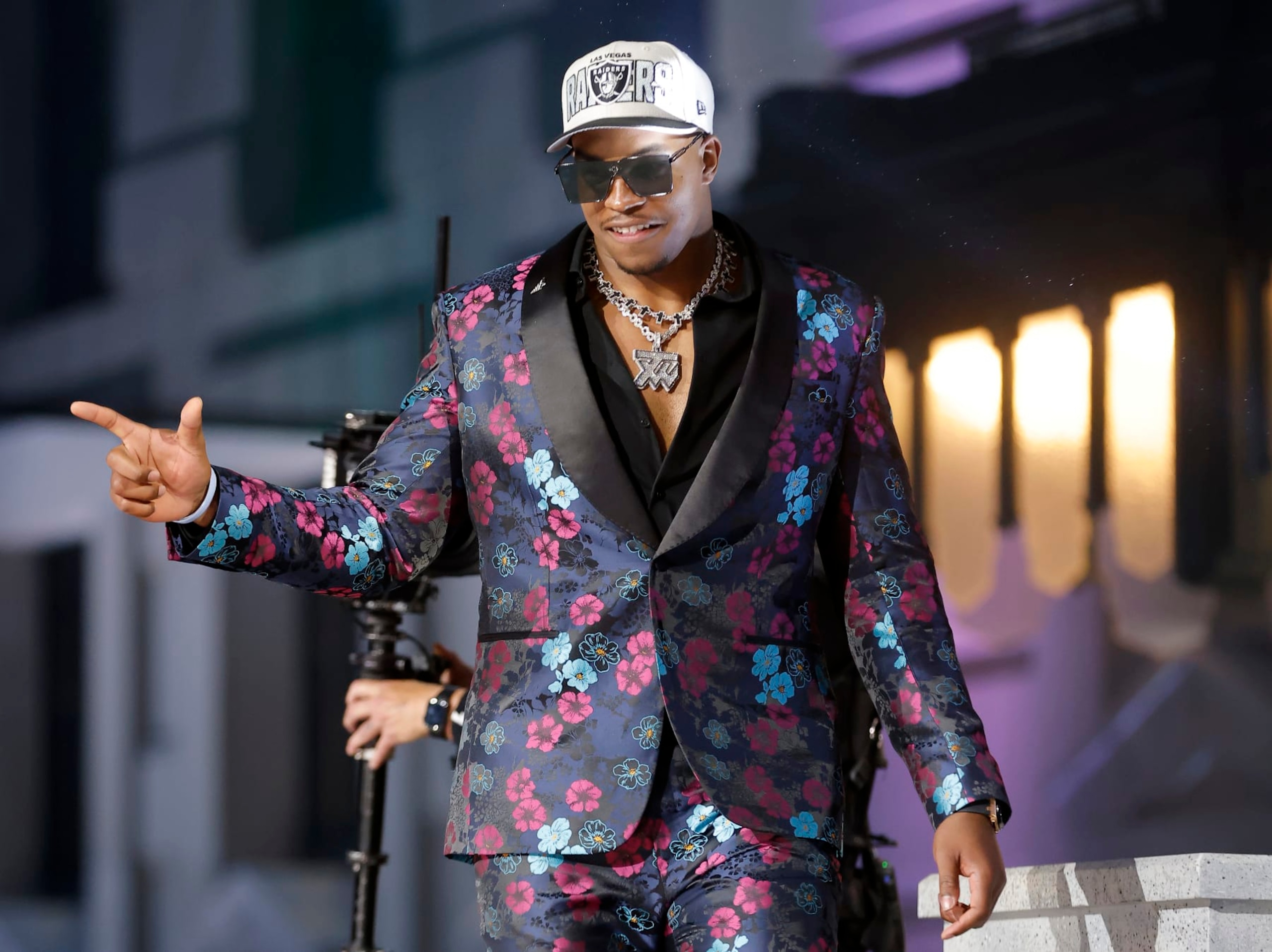
- Round 1 (No. 7): Tyree Wilson, DL, Texas Tech
- Round 2 (No. 35): Michael Mayer, TE, Notre Dame
- Round 3 (No. 70): Byron Young, DL, Alabama
- Round 3 (No. 100): Tre Tucker, WR, Cincinnati
- Round 4 (No. 104): Jakorian Bennett, CB, Maryland
- Round 4 (No. 135): Aidan O'Connell, QB, Purdue
- Round 5 (No. 170): Christopher Smith, S, Georgia
- Round 6 (No. 203): Amari Burney, LB, Florida
- Round 7 (No. 231): Nesta Jade Silvera, DL, Arizona State
Cornerback was a bigger need for the Las Vegas Raiders in Round 1. However, it's hard to argue with the selection of Texas Tech defensive lineman Tyree Wilson. He's versatile, can rush the passer and will immediately boost a defense that ranked 28th in yards allowed last season.
Grabbing Wilson early was smart too, as the draft was deep at cornerback. Las Vegas didn't take a defensive back in the second round, though. They trade up to No. 35 to grab the top tight end on the B/R board.
Notre Dame's Michael Mayer will partner with O.J. Howard and Austin Hooper to give head coach Josh McDaniels the sort of multifaceted tight end room he once enjoyed with the New England Patriots.
Las Vegas further bolstered its defense with value picks like Jakorian Bennett—who addresses that cornerback need—and Christopher Smith—the latter was the 35th-ranked prospect on the B/R board and a steal in Round 5.
The Raiders also got their developmental quarterback in Purdue's Aidan O'Connell. While O'Connell probably isn't Las Vegas' long-term answer under center, he could become a valuable back and spot starter for the next several years.
The addition of wideout Tre Tucker—along with the signings of Phillip Dorsett and Jakobi Meyers—likely gives Hunter Renfrow a murky future in Las Vegas.
Was it a perfect all-around draft for the Raiders? Perhaps not, but general manager Dave Ziegler did a wonderful job of finding value and addressing needs. It's hard to argue with landing two of the top 18 prospects on the B/R board.
Grade: A
Los Angeles Chargers
19 of 33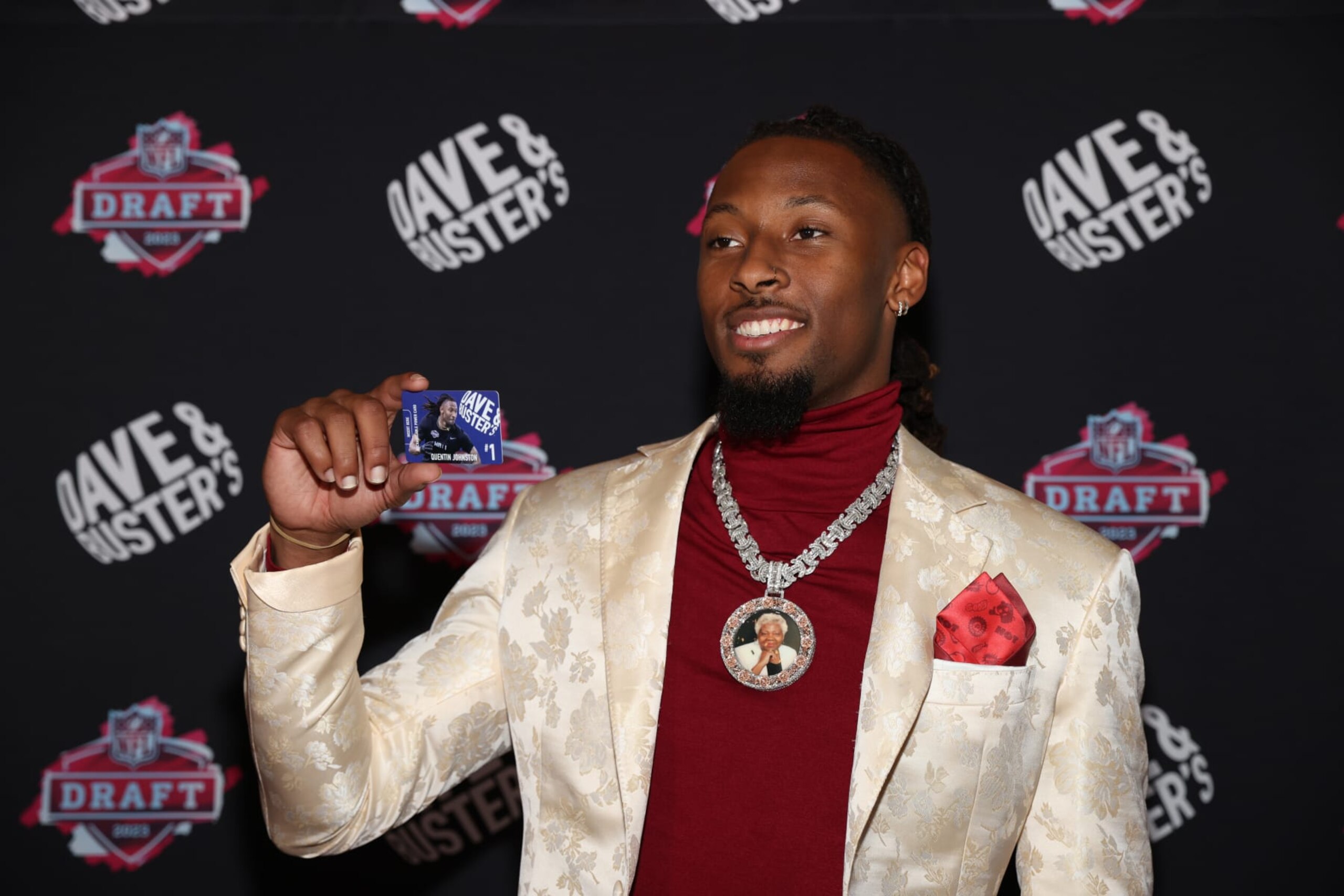
- Round 1 (No. 21): Quentin Johnston, WR, TCU
- Round 2 (No. 54): Tuli Tuipulotu, Edge, USC
- Round 3 (No. 85): Daiyan Henley, LB, Washington State
- Round 4 (No. 125): Derius Davis, WR, TCU
- Round 5 (No. 156): Jordan McFadden, IOL, Clemson
- Round 6 (No. 200): Scott Matlock, DL, Boise State
- Round 7 (No. 239): Max Duggan, QB, TCU
The first-round selection of TCU wideout Quentin Johnston was a bit of a luxury pick for the Los Angeles Chargers—who already have Keenan Allen and Mike Williams. However, Johnston was the top-ranked receiver on the B/R board and immediately gives L.A. one of the top receiving corps in the league.
If the Chargers hope to see Justin Herbert out-throw the likes of Patrick Mahomes and Joe Burrow, they're well-equipped to do it.
On Day 2, the Chargers addressed their defense by adding USC's Tuli Tuipulotu. This was solid value, as Tuipulotu was the 47th-ranked prospect on the B/R board. He should help strengthen a run defense that ranked 32nd in yards per rush allowed (5.4) while rotating with Joey Bosa and Khalil Mack on passing downs.
Daiyan Henley—along with free-agent signing Eric Kendricks—should help offset the departure of linebacker Drue Tranquill. TCU wideout Derius Davis and Clemson lineman Jordan McFadden will bring additional depth to the offensive side of the ball.
Los Angeles came back in Round 7 to take a flier on TCU quarterback Max Duggan. He could soon replace Easton Stick as a more permanent backup to Herbert.
This wasn't a bad draft class by any means, but it's worth wondering if adding two receivers, and one in the first round, was the right strategy for a team that ranked ninth in offensive yardage and 20th in yards allowed last season.
Grade: C
Los Angeles Rams
20 of 33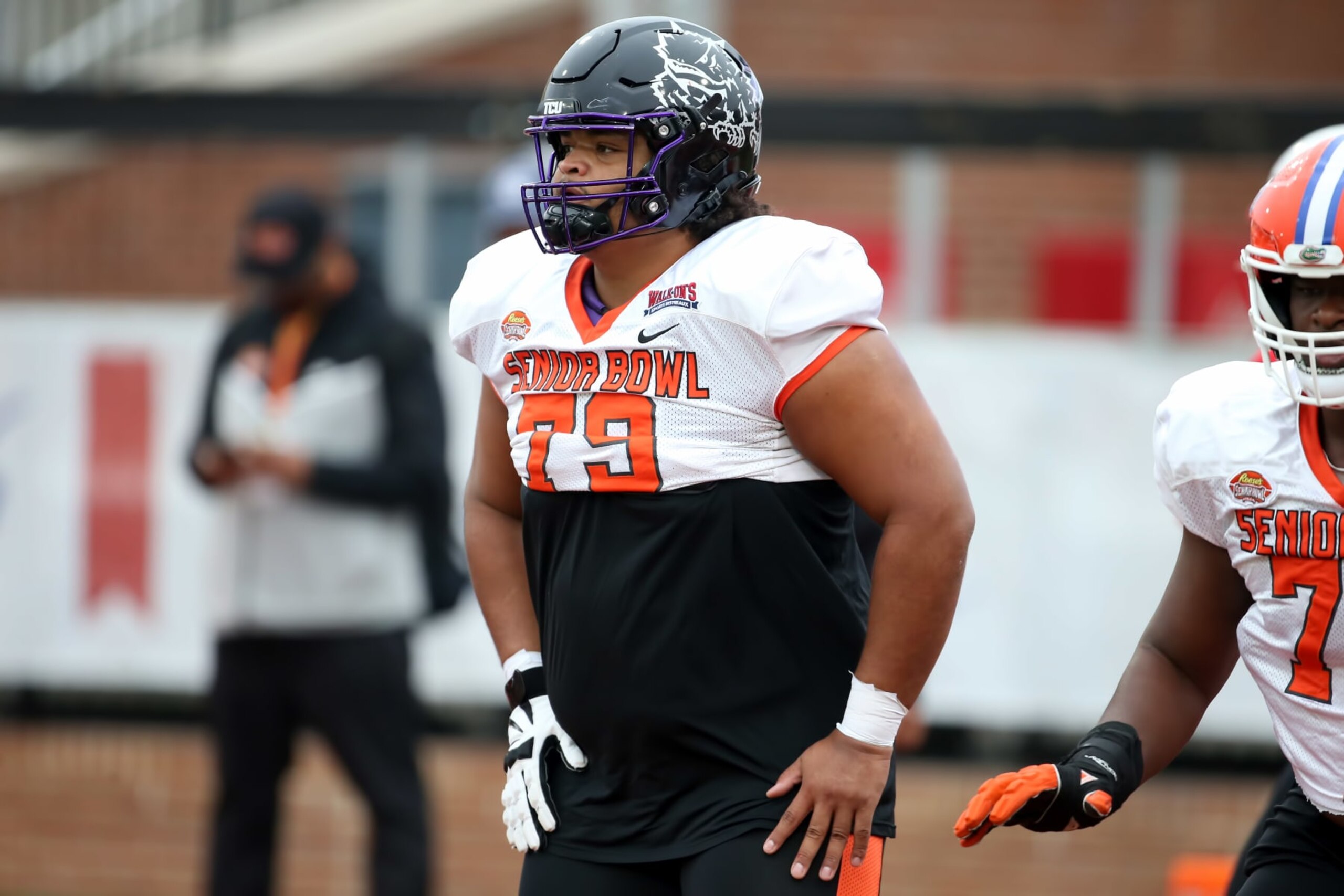
- Round 2 (No. 36): Steve Avila, IOL, TCU
- Round 3 (No. 77): Byron Young, Edge, Tennessee
- Round 3 (No. 89): Kobie Turner, DL, Wake Forest
- Round 4 (No. 128): Stetson Bennett, QB, Georgia
- Round 5 (No. 161): Nick Hampton, Edge, Appalachian State
- Round 5 (No. 174): Warren McClendon Jr., OT, Georgia
- Round 5 (No. 175): Davis Allen, TE, Clemson
- Round 5 (No. 177): Puka Nacua, WR, BYU
- Round 6 (No. 182): Tre'Vius Hodges-Tomlinson, CB, TCU
- Round 6 (No. 189): Ochaun Mathis, Edge, Nebraska
- Round 6 (No. 215): Zach Evans, RB, Mississippi
- Round 7 (No. 223): Ethan Evans, P, Wingate
- Round 7 (No. 234): Jason Taylor II, S, Oklahoma State
- Round 7 (No. 259): Desjuan Johnson, DL, Toledo
The Los Angeles Rams didn't have a first-round selection and spent opening night on the sidelines. Their draft began with the 36th overall pick, a spot where Los Angeles landed TCU interior lineman Steve Avila.
This was a smart way to kick off the draft, as the Rams surrendered a whopping 59 sacks this past season. Avila was the second-ranked interior lineman on the B/R board after Northwestern's Peter Skoronski.
Los Angeles largely focused on reloading its defense, adding pass-rusher Byron Young, defensive lineman Kobie Turner, Appalachian State edge-rusher Nick Hampton and TCU corner Tre'Vius Hodges-Tomlinson.
Retooling the defensive front was smart after L.A. lost the likes of Leonard Floyd and Bobby Wagner in the offseason—even if the Rams reached a bit with some of their defensive selections.
The Rams also added a developmental quarterback in two-time national champion and Georgia product Stetson Bennett.
Bennett, the 284th-ranked prospect on the B/R board, was another potential reach. If he's Sean McVay's guy, however, it's hard to argue with the pick. Matthew Stafford is 35 and coming off an injury-hampered campaign.
While Young might be the only early starter, the Rams desperately needed players to round out their roster after doing next to nothing in free agency. L.A. did a decent job of that, even without a first-round pick and without hitting a home run with any single selection.
Grade: C
Miami Dolphins
21 of 33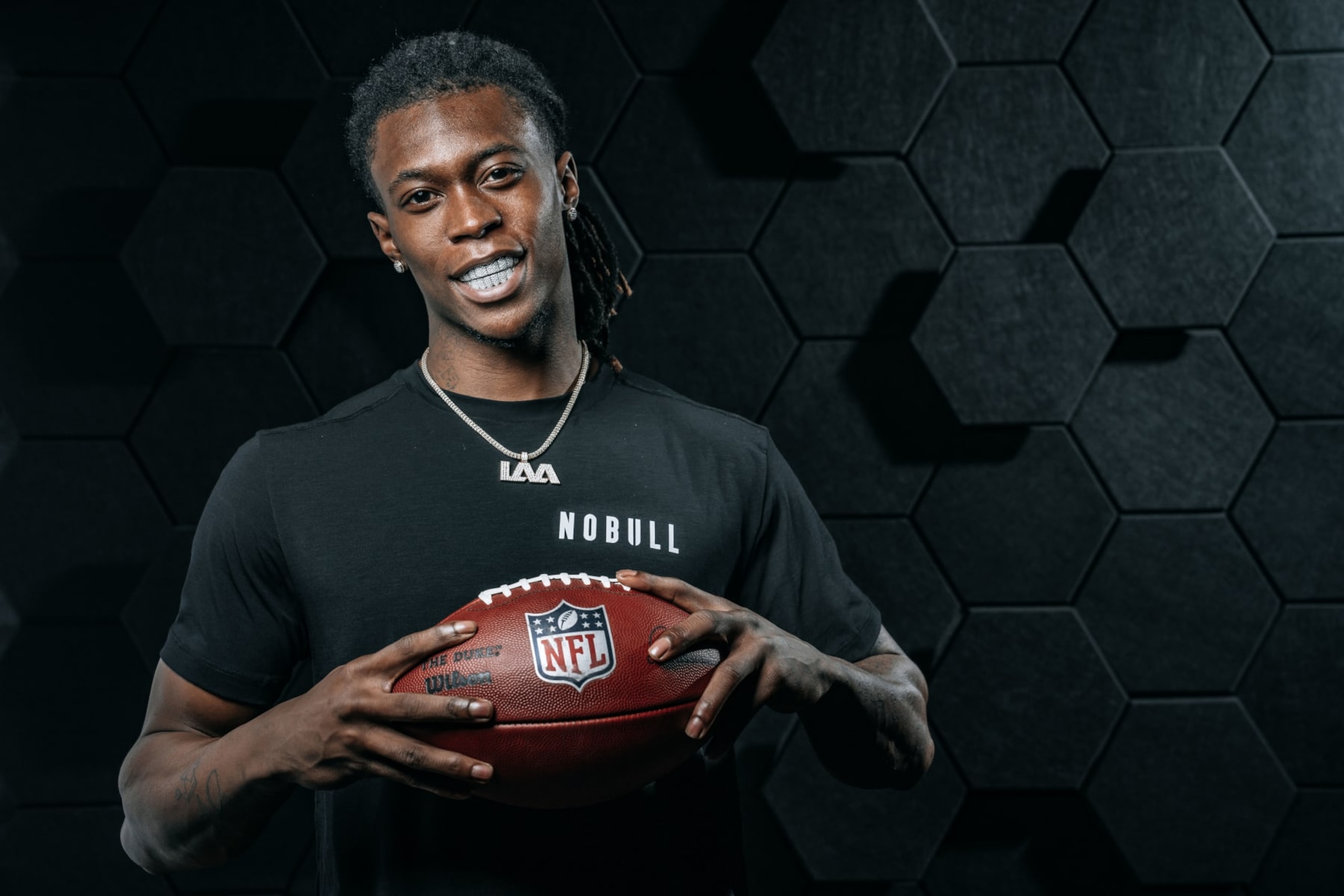
- Round 2 (No. 51): Cam Smith, CB, South Carolina
- Round 3 (No. 84): Devon Achane, RB, Texas A&M
- Round 6 (No. 197): Elijah Higgins, WR, Stanford
- Round 7 (No. 238): Ryan Hayes, IOL, Michigan
The Miami Dolphins didn't have a first-round selection after acquiring pass-rusher Bradley Chubb at the 2022 trade deadline and losing their other first-rounder because of tampering. However, Miami got a quality defensive prospect in South Carolina's Cam Smith early on Day 2.
Devon Achane adds more speed to Miami's backfield. Even if he isn't the every-down back the Dolphins currently lack, he's another home run hitter to go with Tyreek Hill, Jaylen Waddle and Raheem Mostert.
Stanford wideout Elijah Higgins was a luxury pick, given Miami's established receiving corps, and Ryan Hayes is purely a depth player who might not make the final roster.
It's a small draft class, but it's worth noting that one third-round selection went toward acquiring cornerback Jalen Ramsey. Ramsey and Smith have the potential to dramatically improve a pass defense that ranked 27th in yards allowed last season.
Getting Ramsey, Chubb and a couple of potential early contributors is a win, even if the actual 2023 class doesn't do much to excite.
Grade: B
Minnesota Vikings
22 of 33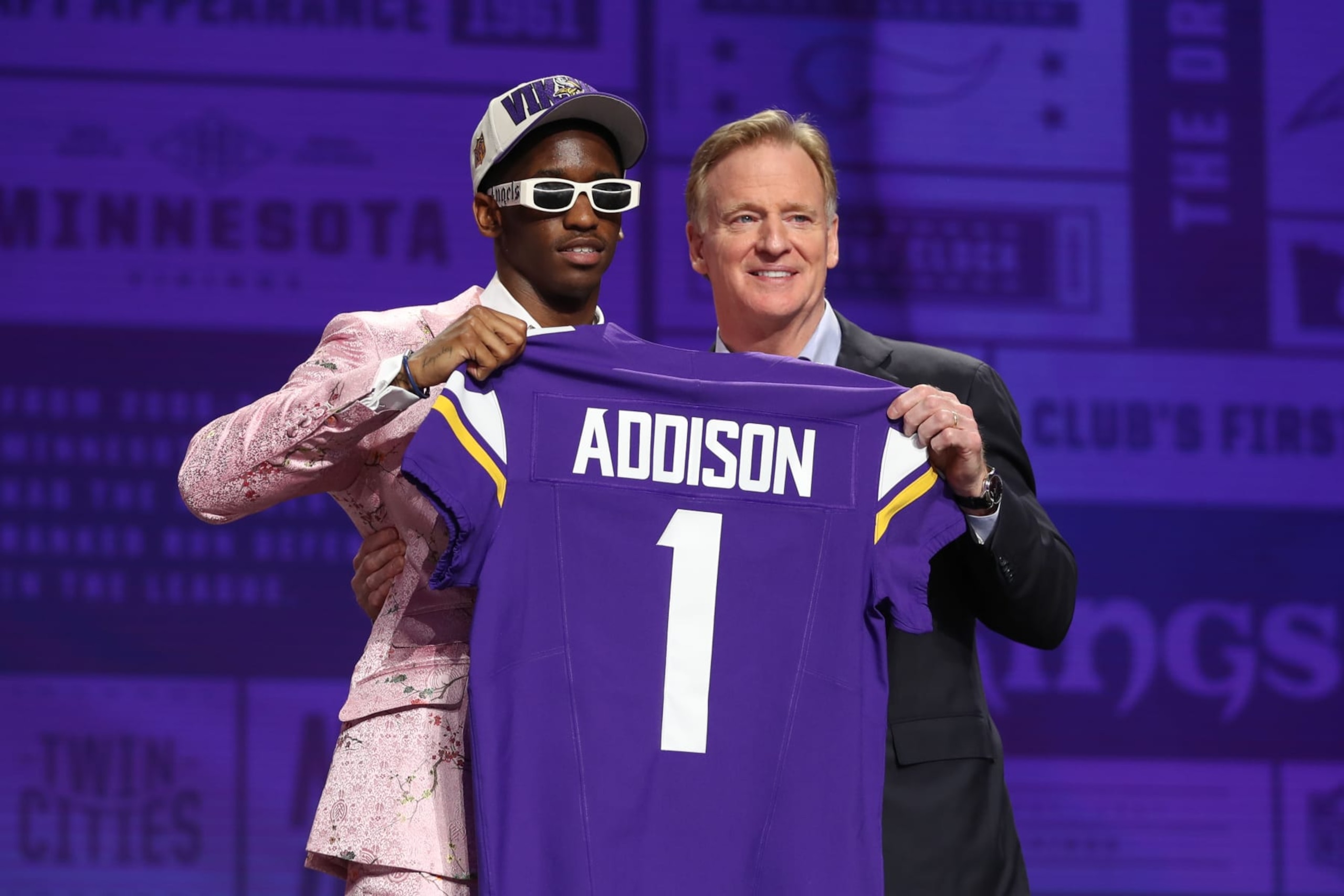
- Round 1 (23): Jordan Addison, WR, USC
- Round 3 (No. 102): Mekhi Blackmon, CB, USC
- Round 4 (No. 134): Jay Ward, S, LSU
- Round 5 (No. 141): Jaquelin Roy, DL, LSU
- Round 5 (No. 164): Jaren Hall, QB, BYU
- Round 7 (No. 222): DeWayne McBride, RB, UAB
The Minnesota Vikings needed a receiver after parting with Adam Thielen in the offseason. They got a good one in USC's Jordan Addison.
"His route-running chops, speed and ball-carrying skills will make him an impact player soon," Derrik Klassen of the B/R Scouting Department wrote. "Addison would be the perfect explosive playmaker type to complement a more stable, ball-winning receiver on the outside."
Justin Jefferson is the epitome of a stable, ball-winning perimeter receiver.
Minnesota used its next three selections on cornerback Mekhi Blackmon, safety Jay Ward and defensive lineman Jaquelin Roy. All were smart picks for new defensive coordinator Brian Flores, who is tasked with improving a unit that ranked 31st overall and 28th in points allowed last season.
While many expected the Vikings to draft a quarterback early—possibly even in Round 1—they waited until the fifth round to snag Brigham Young's Jaren Hall. He'll become the latest draft flier, after 2021 third-round pick Kellen Mond, to get a developmental opportunity behind Kirk Cousins.
Cousins is scheduled to be a free agent in 2024.
The Vikings also added some running back depth by grabbing UAB's DeWayne McBride late. Minnesota's class is filled with logical selections that address critical and future needs, even if there isn't a day-one difference-maker in the group after Addison.
Grade: B
New England Patriots
23 of 33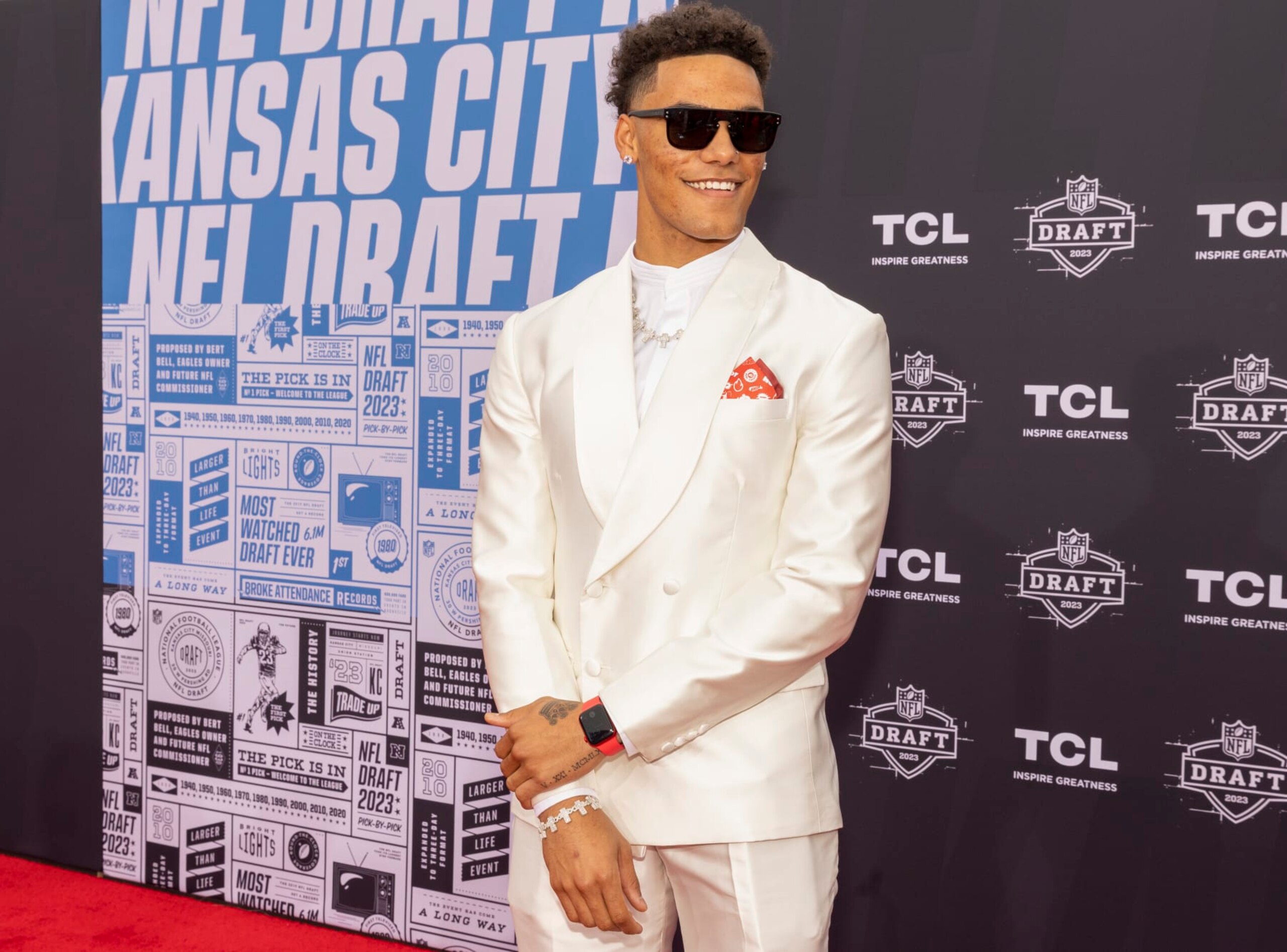
- Round 1 (No. 17): Christian Gonzalez, CB, Oregon
- Round 2 (No. 46): Keion White, Edge, Georgia Tech
- Round 3 (No. 76): Marte Mapu, LB, Sacramento State
- Round 4 (No. 107): Jake Andrews, IOL, Troy
- Round 4 (No. 112): Chad Ryland, K, Maryland
- Round 4 (No. 117): Sidy Sow, IOL, Eastern Michigan
- Round 5 (No. 144): Atonio Mafi, IOL, UCLA
- Round 6 (No. 187): Kayshon Boutte, WR, LSU
- Round 6 (No. 192): Bryce Baringer, P, Michigan State
- Round 6 (No. 210): Demario Douglas, WR, Liberty
- Round 6 (No. 214): Ameer Speed, CB, Michigan State
- Round 7 (No. 245): Isaiah Bolden, CB, Jackson State
The Patriots traded down from No. 14, netting the 120th pick from the Pittsburgh Steelers in the process. Somehow, they still managed to snag Oregon's Christian Gonzalez—the third-ranked cornerback on the B/R board—in the first round.
In the second round, New England continued adding to its defense with Georgia Tech pass-rusher Keion White—the 34th-ranked prospect on the B/R board. Marte Mapu was a late-rising prospect, and while he's not a finished product, he's exactly the sort of versatile project the Patriots love to develop.
"Mapu has been praised for his versatility, but he might need to prove he can excel in at least one department—whether in run support or in coverage—at the next level," NFL Media's Lance Zierlein wrote.
New England added to its offensive line depth by grabbing Jake Andrews, Sidy Sow and Atonio Mafi. It also took an early swing on a kicker, grabbing Maryland's Chad Ryland in the fourth round. It's perhaps not the best value selection, but teams either have a reliable kicker or they don't. There isn't much of an in-between.
The same is true at punter, and the Patriots addressed that need too, taking Michigan State's Bryce Baringer in Round 6.
The Patriots did a solid job of addressing needs throughout the draft and got incredible value early. However, while they took late fliers on Kayshon Boutte and Demario Douglas, they could have done more to support quarterback Mac Jones.
Grade: B+
New Orleans Saints
24 of 33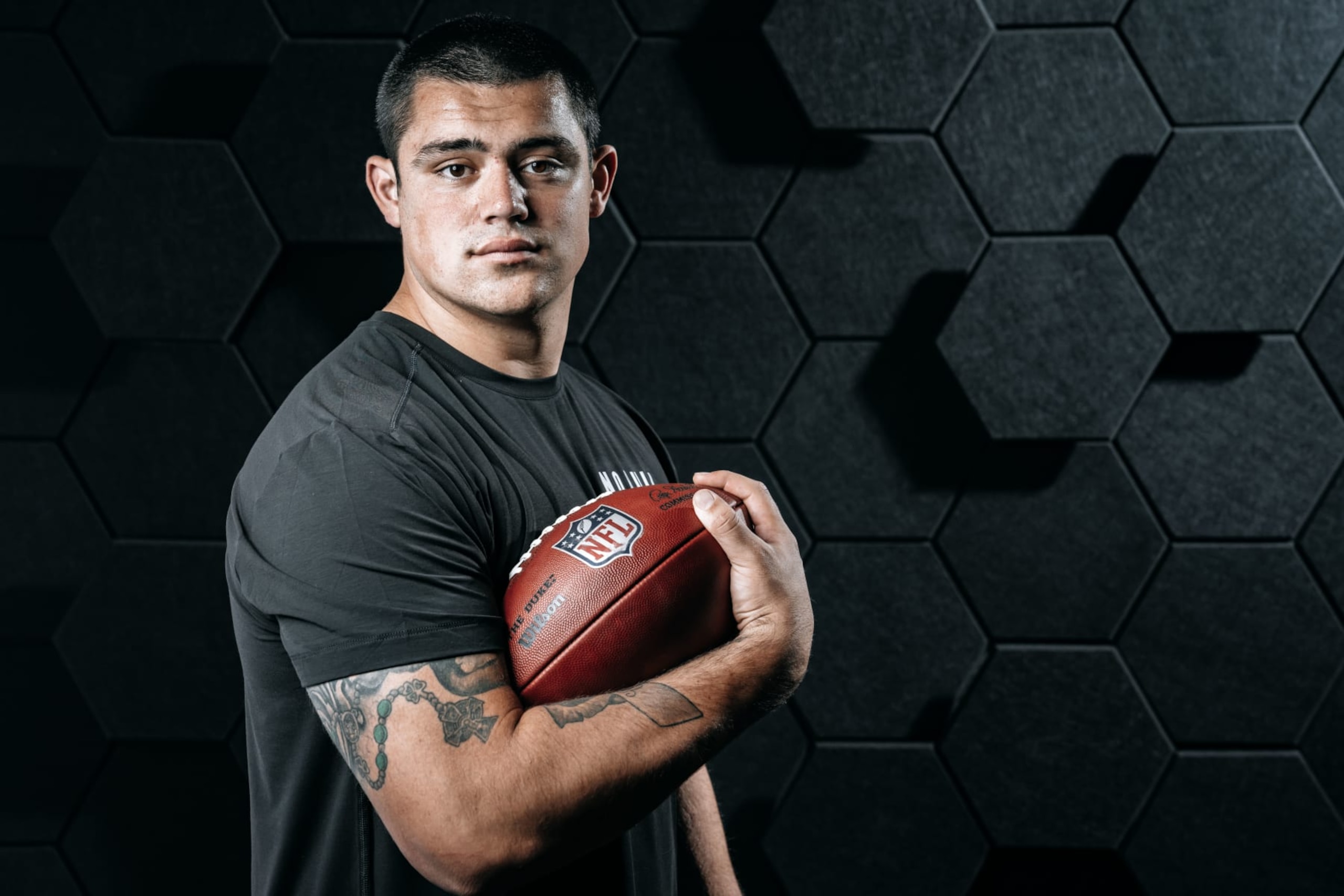
- Round 1 (No. 29): Bryan Bresee, DL, Clemson
- Round 2 (No. 40): Isaiah Foskey, Edge, Notre Dame
- Round 3 (No. 71): Kendre Miller, RB, TCU
- Round 4 (No. 103): Nick Saldiveri, OT, Old Dominion
- Round 4 (No. 127): Jake Haener, QB, Fresno State
- Round 5 (No. 146): Jordan Howden, S, Minnesota
- Round 6 (No. 195): A.T. Perry, WR, Wake Forest
Snagging Bryan Bresee at the bottom of Round 1 was a masterful move by the New Orleans Saints. They now have Derek Carr at quarterback but should still look to lean on their fifth-ranked defense.
Bresee should step in as an immediate replacement for departed defensive lineman David Onyemata.
New Orleans added another explosive playmaker to its defensive front in the second round, adding Notre Dame's Isaiah Foskey. He'll help replace departed pass-rusher Marcus Davenport.
Kendre Miller adds value to a backfield rotation that includes Alvin Kamara and free-agent addition Jamaal Williams. Kamara faces possible league discipline after being indicted on battery charges, but general manager Micky Loomis insisted that this wouldn't impact New Orleans' draft plans.
"It’s not going to influence who we pick,” Loomis said, per Luke Johnson of NOLA.com. "That’s a short-term issue."
Miller does feel like an insurance pick.
The Saints got a fine developmental quarterback in Fresno State's Jake Haener, the seventh-ranked QB on the B/R board. With Carr under contract through 2026, Haener can be brought along slowly.
This was a sensible and sound draft class for a franchise hoping to return to NFC South contention with Carr at the helm.
Grade: B+
New York Giants
25 of 33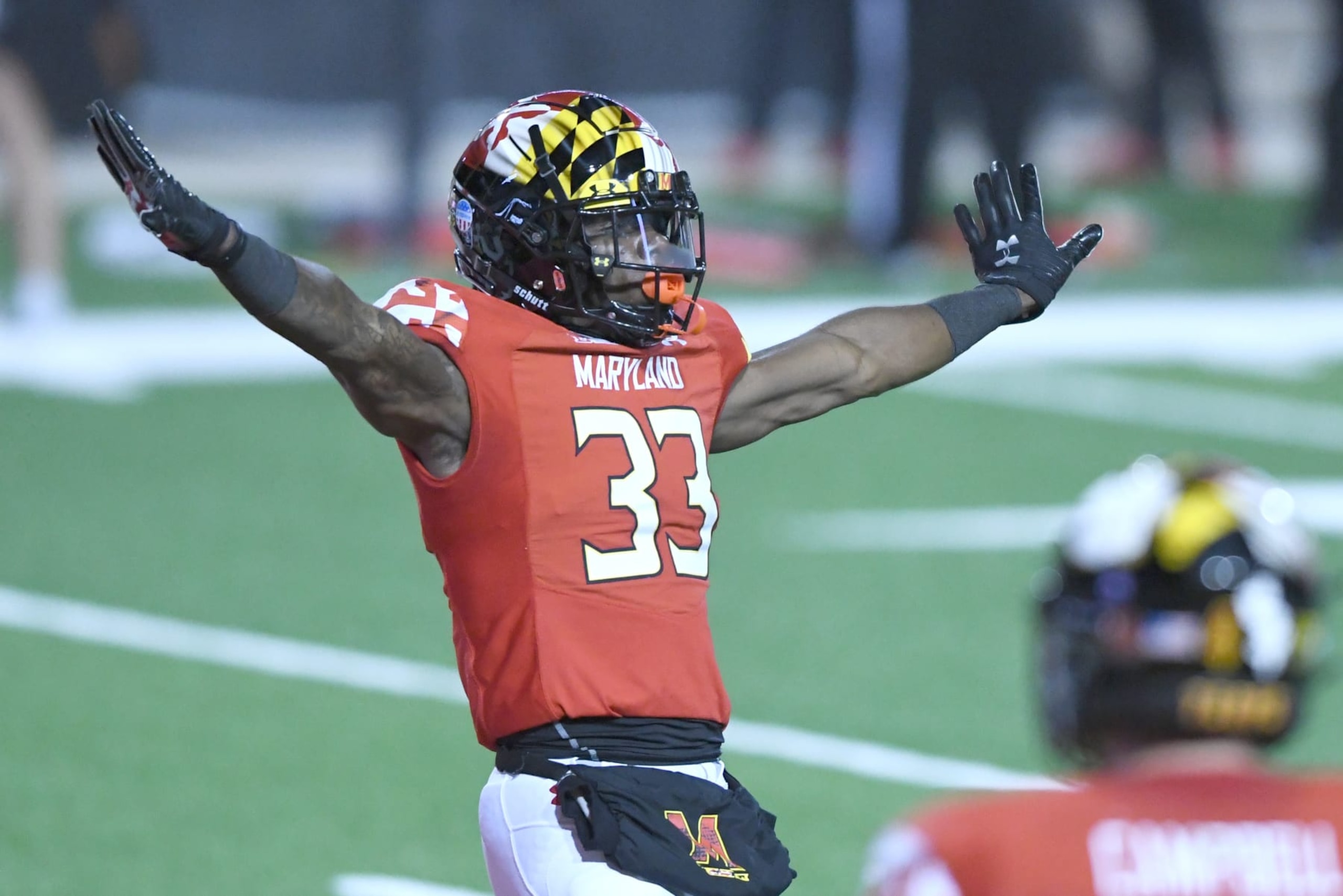
- Round 1 (No. 24): Deonte Banks, CB, Maryland
- Round 2 (No. 57): John Michael Schmitz, IOL, Minnesota
- Round 3 (No. 73): Jalin Hyatt, WR, Tennessee
- Round 5 (No. 172): Eric Gray, RB, Oklahoma
- Round 6 (No. 209): Tre Hawkins III, CB, Old Dominion
- Round 7 (No. 243): Jordon Riley, DL, Oregon
- Round 7 (No. 254): Gervarrius Owens, S, Houston
The New York Giants traded up one spot in Round 1 to secure Maryland cornerback Deonte Banks. It was a solid move and a good one for defensive coordinator Don Martindale. Banks has the tools to be a reliable starter on the perimeter and a playmaker—something New York needed after recording just six interceptions in 2022.
In the second round, New York found itself a long-term answer at the center position in Minnesota's John Michael Schmitz.
Jalin Hyatt isn't the most complete receiver in this draft class and is slight at 6'0" and 176 pounds, but he has legitimate 4.4 speed and can give New York a new home run hitter in its passing attack. He has upside, but Hyatt's former teammate, Cedric Tillman, went one spot later and is better suited to become the true go-to perimeter target that New York lacks.
The Giants found better value in Oklahoma running back Eric Gray, the 105th-ranked prospect on the B/R board, in Round 5. He'll provide tremendous depth behind franchise-tagged superstar Saquon Barkley.
New York didn't land the top-tier receiver it has needed, but it did address the line, add an ancillary receiver and land a potential lockdown cornerback on the perimeter. The biggest disappointment is that the Giants did virtually nothing to address a run defense that ranked 31st in yards per carry last season (5.2).
Grade: C+
New York Jets
26 of 33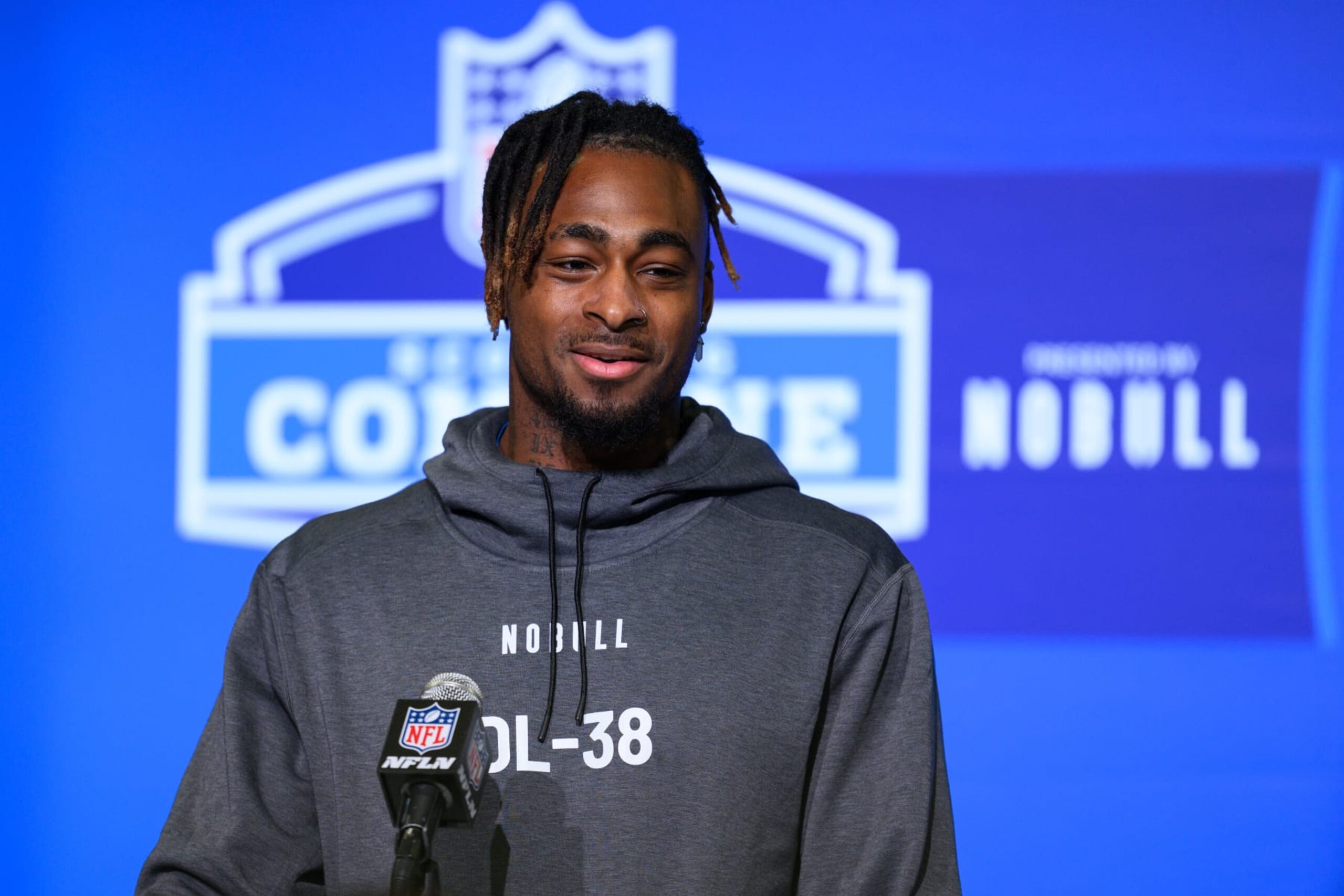
- Round 1 (No. 15): Will McDonald IV, Edge, Iowa State
- Round 2 (No. 43): Joe Tippmann, IOL, Wisconsin
- Round 4 (No. 120): Carter Warren, OT, Pittsburgh
- Round 5 (No. 143): Israel Abanikanda, RB, Pittsburgh
- Round 6 (No. 184): Zaire Barnes, LB, Western Michigan
- Round 6 (No. 204): Jarrick Bernard-Converse, CB, LSU
- Round 7 (No. 220): Zack Kuntz, TE, Old Dominion
The New York Jets moved down in the first round and dealt second- and sixth-round selections for Aaron Rodgers. That move should solidify the game's most important position for at least this year.
Unfortunately, moving down in Round 1 prevented New York from landing one of the top offensive tackles in this class. That's a potential problem, as the oft-injured Mekhi Becton has appeared in only 15 games in three seasons. Adding Will McDonald IV at No. 15, though, will help keep the Jets' fourth-ranked defense thriving.
The Jets did land a promising offensive lineman on Day 2, grabbing Wisconsin center Joe Tippmann, and they finally landed a tackle in Round 4 with Pittsburgh's Carter Warren.
Pittsburgh running back Israel Abanikanda gives Rodgers another potential home run hitter and should provide some insurance as Breece Hall continues to recover from last year's torn ACL.
New York added more defensive depth on Day 3, grabbing Western Michigan linebacker Zaire Burns and LSU cornerback Jarrick Bernard-Converse.
If the move to acquire Rodgers gets the Jets into the AFC title game, this draft will be viewed as a success. However, New York didn't get the best value in the Elijah Moore trade and whiffed on landing an anchor tackle early in the draft.
Grade: C+
Philadelphia Eagles
27 of 33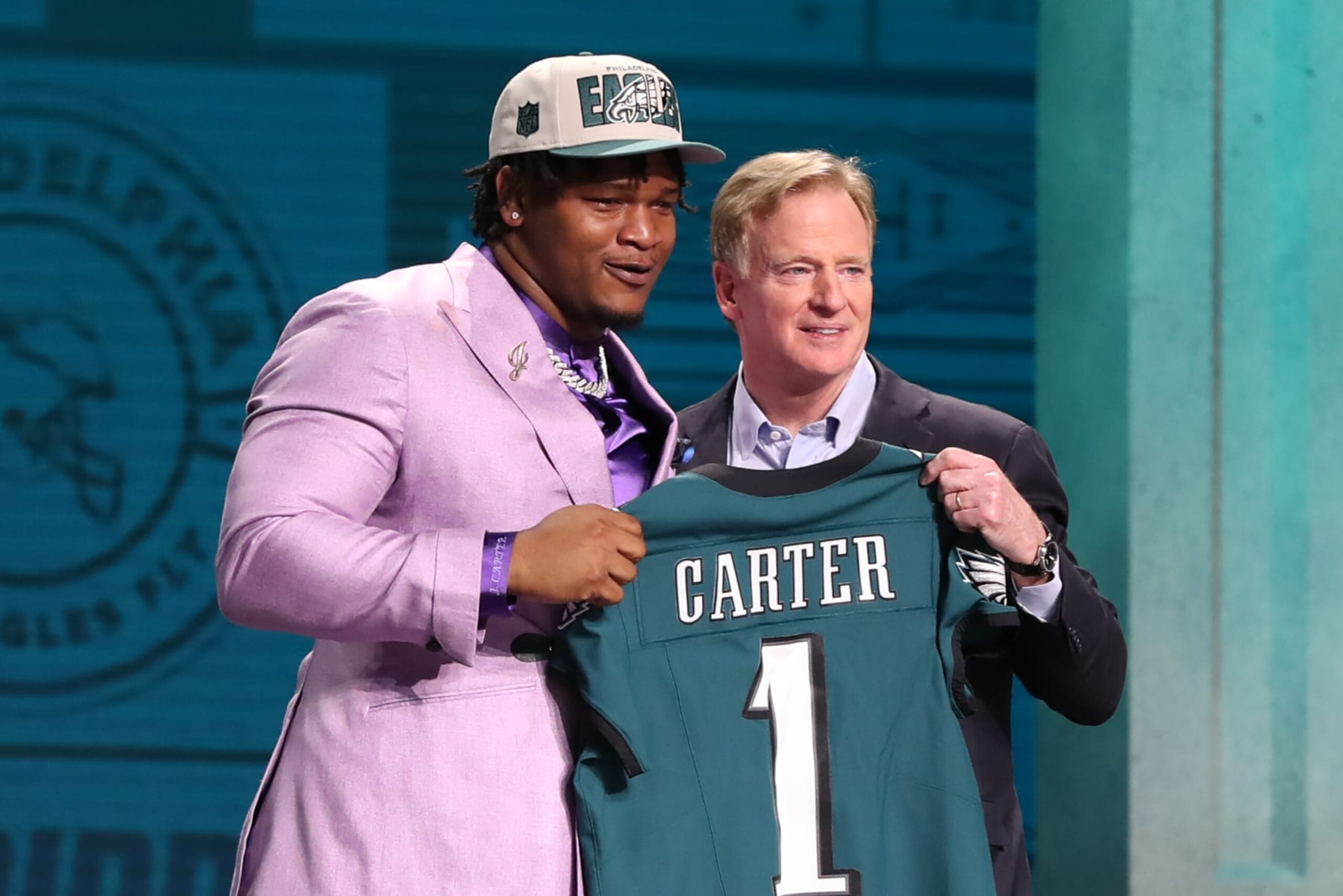
- Round 1 (No. 9): Jalen Carter, DL, Georgia
- Round 1 (No. 30): Nolan Smith, Edge, Georgia
- Round 3 (No. 65): Tyler Steen, OL, Alabama
- Round 3 (No. 66): Sydney Brown, S, Illinois
- Round 4 (No. 105): Kelee Ringo, CB, Georgia
- Round 6 (No. 188): Tanner McKee, QB, Stanford
- Round 7 (No. 249: Moro Ojomo, DL, Texas
Eagles general manager Howie Roseman couldn't have navigated the first round any more perfectly. He traded up one spot to secure Georgia defensive tackle Jalen Carter, the second-ranked prospect on the B/R board. He then allowed Georgia pass-rusher Nolan Smith—the 13th-ranked prospect on the B/R board, to fall to him at No. 30.
Carter carried some concerns into the draft. He pleaded no contest to misdemeanor charges of reckless driving and racing in connection with a crash that killed Georgia teammate Devin Willock and recruiting staffer Chandler LeCroy and disappointed at his pro day. His motivation has been a question mark.
The Eagles will reunite Carter with former teammates in Smith, Jordan Davis and Nakobe Dean. They'll have a plan for keeping him motivated and playing at a high level.
After trading out of Round 2—for the 65th, 188th and 230th picks—the Eagles grabbed Alabama lineman Tyler Steen.
Philadelphia continued to find good value throughout the draft, adding safety Sydney Brown early in the third round and Kelee Ringo early in the fourth. Ringo was the 54th-ranked prospect on the B/R board, and both players are perfect fits for Philly's physical, zone-oriented defense.
In Round 6, the Eagles got even more value, adding Stanford QB Tanner McKee, the fifth-ranked signal-caller on the B/R board. McKee won't challenge Jalen Hurts for the starting job, but he should soon supplant Marcus Mariota as the franchise's long-term backup.
Simply put, Roseman nailed this draft from start to finish, and the Eagles remain the team to beat in the NFC.
Grade: A+
Pittsburgh Steelers
28 of 33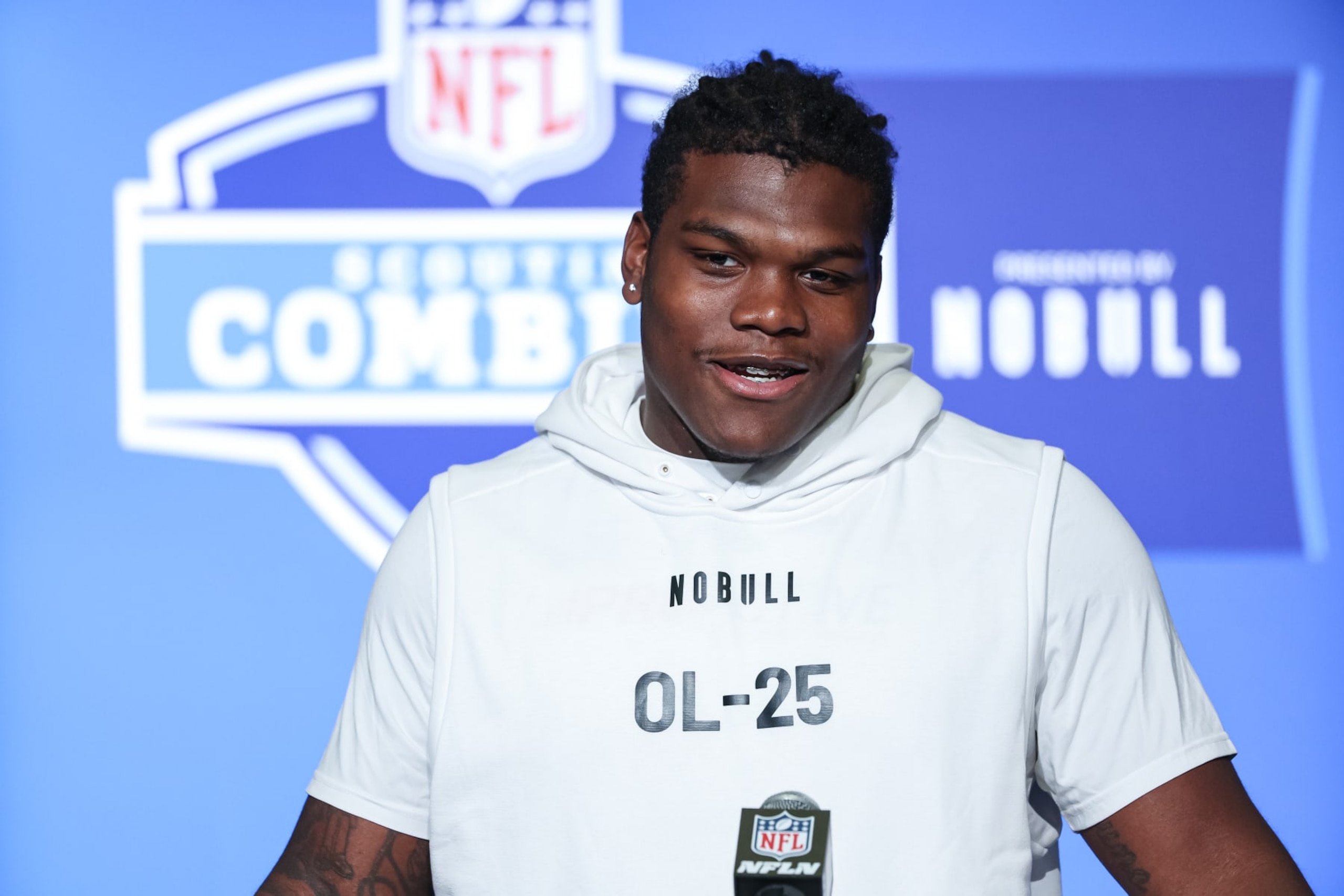
- Round 1 (No. 14): Broderick Jones, OT, Georgia
- Round 2 (No. 32): Joey Porter Jr., CB, Penn State
- Round 2 (No. 49): Keeanu Benton, DL, Wisconsin
- Round 3 (No. 93): Darnell Washington, TE, Georgia
- Round 4 (No. 132): Nick Herbig, LB, Wisconsin
- Round 7 (No. 241): Cory Trice Jr., CB, Purdue
- Round 7 (No. 251): Spencer Anderson, C, Maryland
The Steelers made a small jump in Round 1, giving up the 120th pick to move from No. 17 to No. 14. That allowed Pittsburgh to leapfrog the Jets and snag Georgia offensive tackle Broderick Jones.
While Jones might not be a finished product, he has a ceiling that far outreaches left tackle Dan Moore Jr.— who was responsible for 10 penalties and seven sacks allowed in 2022, according to Pro Football Focus.
Snagging cornerback Joey Porter Jr. at the top of Day 2 was also a big win for Pittsburgh. Not only did Porter's father, Joey Porter, begin his NFL career in Pittsburgh, but the younger Porter was the second-ranked cornerback on the B/R board.
With their second Day 2 pick, the Steelers took Wisconsin defensive lineman Keeanu Benton. This was a reach, as Benton was the 68th-ranked prospect on the B/R board, but Benton can become the heir to the 33-year-old Cameron Hayward.
The Steelers added linebacker depth by grabbing Nick Herbig, the brother of recently signed lineman Nate Herbig. Cory Trice will provide depth in the secondary, while Spencer Anderson adds more depth along the offensive line.
The only negative here is that Pittsburgh didn't add the explosive slot receiver it lacks—though the trade for Allen Robinson II may help alleviate the issue. The Steelers nailed three of their first four picks and have a markedly better roster than they did last week.
Grade: A
San Francisco 49ers
29 of 33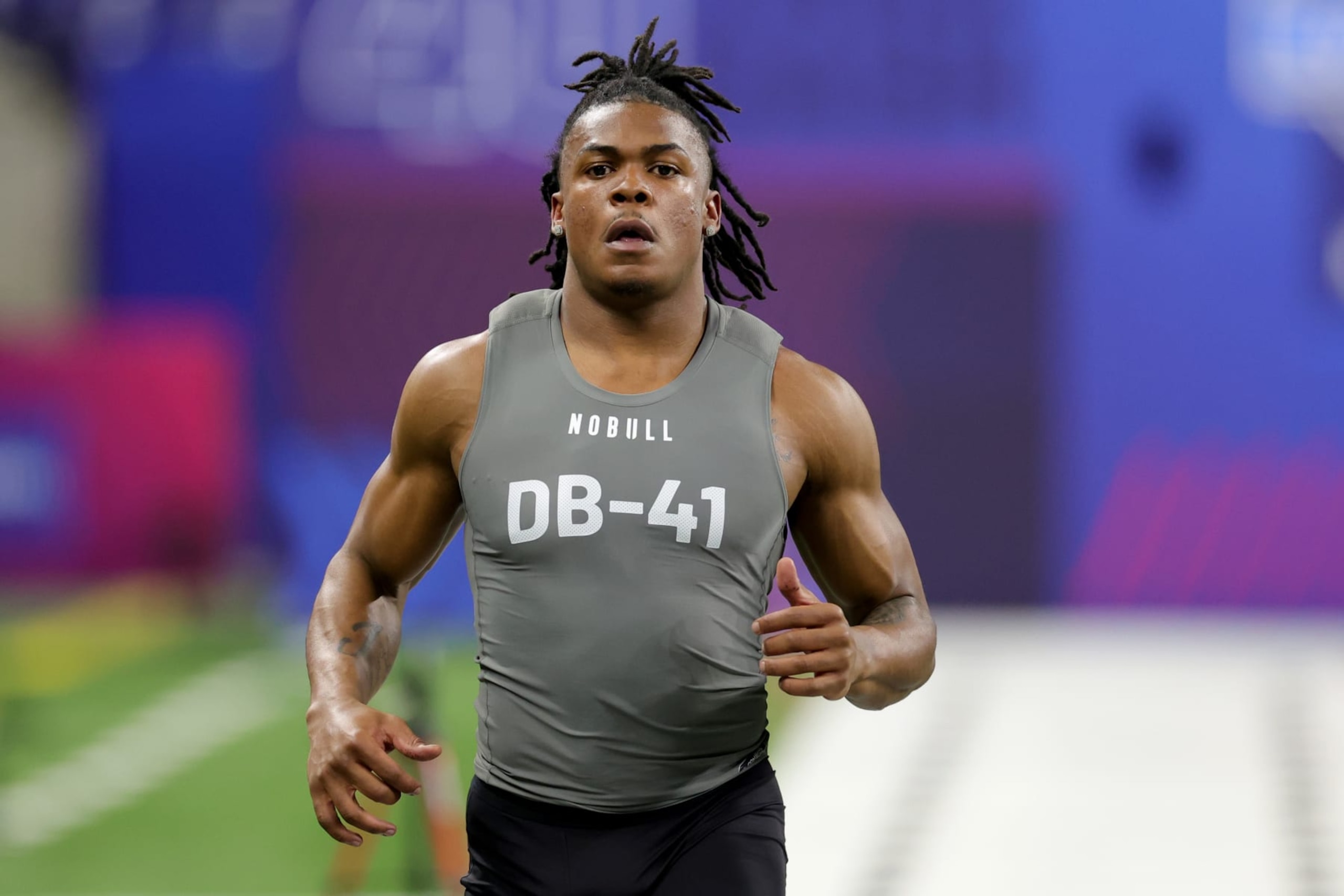
- Round 3 (No. 87): Ji'Ayir Brown, S, Penn State
- Round 3 (No. 99): Jake Moody, K, Michigan
- Round 3 (No. 101): Cameron Latu, TE, Alabama
- Round 5 (No. 155): Darrell Luter Jr., CB, South Alabama
- Round 5 (No. 173): Robert Beal Jr., Edge, Georgia
- Round 6 (No. 216): Dee Winters, LB, TCU
- Round 7 (No. 247): Brayden Willis, TE, Oklahoma
- Round 7 (No. 253): Ronnie Bell, WR, Michigan
- Round 7 (No. 255): Jalen Graham, LB, Purdue
The San Francisco 49ers didn't have first- or second-round selections because of their trades for Trey Lance (in the 2021 draft) and running back Christian McCaffrey. When San Francisco finally got on the clock in Round 3, it clearly stuck to its own draft board.
Penn State safety Ji'Ayir Brown was a logical choice as a potential replacement for Jimmie Ward, who departed in free agency. However, the selection of Michigan kicker Jake Moody in Round 3 was a surprise.
Moody became the highest-draft kicker since the Tampa Bay Buccaneers took Roberto Aguayo in the second round of the 2016 draft.
Cameron Latu was also a surprising choice, as he was the 17th-ranked tight end on the B/R board and will be a pure depth player behind George Kittle.
It was an odd draft by the 49ers, who admittedly don't have many glaring needs. Brown was a logical target, but San Francisco didn't do a good job of maximizing value with its two other Day 2 picks. The fact that the 49ers do have McCaffrey makes the draft look better, but this was one of the more underwhelming classes.
Grade: C-
Seattle Seahawks
30 of 33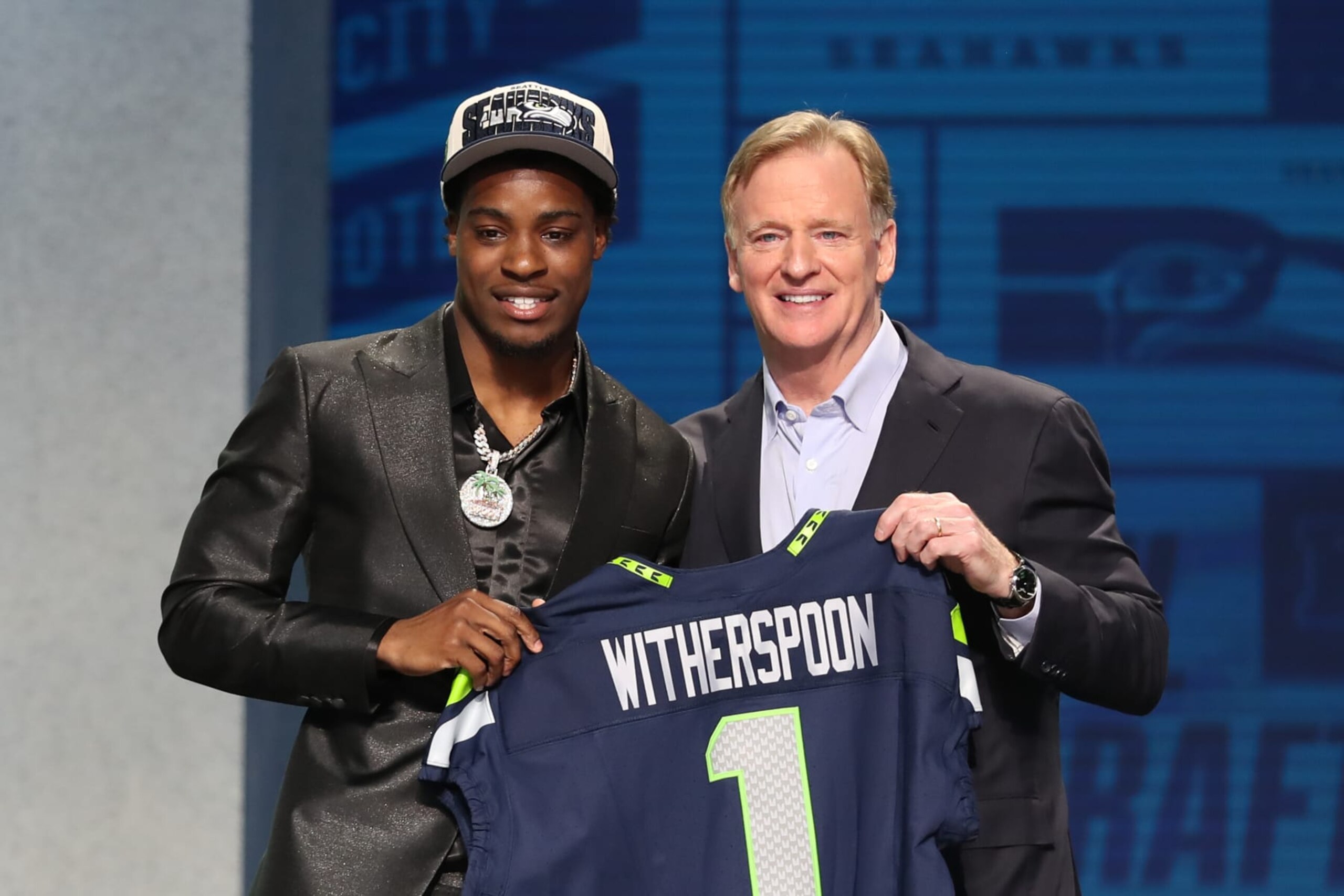
- Round 1 (No. 5): Devon Witherspoon, CB, Illinois
- Round 1 (No. 20): Jaxon Smith-Njigba, WR, Ohio State
- Round 2 (No. 37): Derick Hall, Edge, Auburn
- Round 2 (No. 52): Zach Charbonnet, RB, UCLA
- Round 4 (No. 108): Anthony Bradford, IOL, LSU
- Round 4 (No. 123): Cameron Young, DL, Mississippi State
- Round 5 (No. 151): Mike Morris, DL, Michigan
- Round 5 (No. 154): Olu Oluwatimi, IOL, Michigan
- Round 6 (No. 198): Jerrick Reed II, S, New Mexico
- Round 7 (No. 237): Kenny McIntosh, RB, Georgia
The Seattle Seahawks had an extra first-round pick due to the Russell Wilson trade. That's a deal that looks brilliant in retrospect, as Geno Smith emerged as a Pro Bowl quarterback.
Seattle did good work with its pair of first-round picks too, landing the top-ranked cornerback and second-ranked receiver on the B/R board—Devon Witherspoon and Jaxon Smith-Njigba, respectively.
In Round 2, the Seahawks snagged Auburn pass-rusher Derick Hall and UCLA running back Zach Charbonnet. Hall should jump right into the pass-rushing rotation, while Charbonnet will form a dynamic running-back duo with second-year man Kenneth Walker III.
The Seahawks came back in Round 7 to grab another running back in Georgia's Kenny McIntosh, who like Charbonnet was a luxury selection.
Seattle concentrated on building the offensive and defensive lines in the middle rounds, a sound strategy for a team looking to establish the run and improve last year's 30th-ranked run defense.
Prospects like Anthony Bradford, Cameron Young, Mike Morris and Olu Oluwatimi might not be immediate stars, but they should find roles in Seattle.
The Seahawks did a wonderful job of identifying needs and adding value with their first three selections. The fact that Seattle grabbed two running backs when Walker is already a budding star keeps this from being a perfect grade.
Grade: A-
Tampa Bay Buccaneers
31 of 33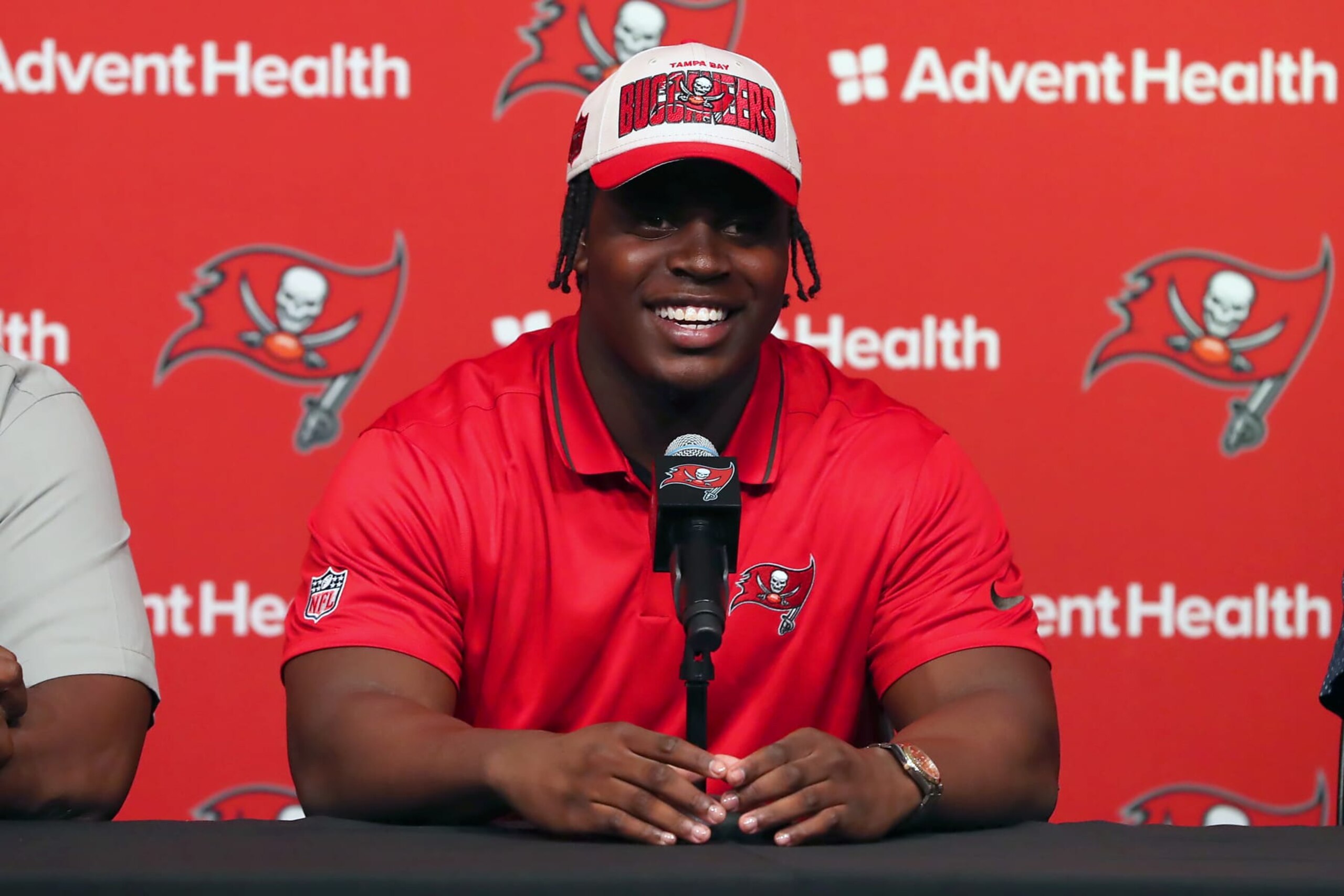
- Round 1 (No. 19): Calijah Kancey, DL, Pittsburgh
- Round 2 (No. 48): Cody Mauch, IOL, North Dakota State
- Round 3 (No. 82): YaYa Diaby, Edge, Louisville
- Round 5 (No. 153): SirVocea Dennis, LB, Pittsburgh
- Round 5 (No. 171): Payne Durham, TE, Purdue
- Round 6 (No. 181): Josh Hayes, DB, Kansas State
- Round 6 (No. 191): Trey Palmer, WR, Nebraska
- Round 6 (No. 196): Jose Ramirez, Edge, Eastern Michigan
The Tampa Bay Buccaneers are set to hold a quarterback competition between Baker Mayfield and Kyle Trask this offseason. Regardless of who wins the job, Tampa is likely to lean on a defense that ranked ninth overall last season.
In this context, Calijah Kancey was a solid first-round selection. He was labeled the best pass-rushing interior lineman by the B/R Scouting Department, and he can be an immediate difference-maker next to Vita Vea on the defensive front.
Tampa traded up in Round 2 to land interior lineman Cody Mauch. A powerful run-blocker, Mauch should bolster the Buccaneers' ground game and help support whichever quarterback earns the starting job this season.
Adding YaYa Diaby and SirVocea Dennis in the middle rounds should add additional explosiveness and upside to the Buccaneers defense. Neither selection came with tremendous value—both were ranked outside of the Scouting Department's top 200—but Tampa had an apparent plan for reloading its defense.
Pass-catchers Payne Durham and Trey Palmer could be valuable early targets for Mayfield and/or Trask. The Bucs needed a tight end after losing O.J. Howard and Cameron Brate in free agency. Palmer, the 112th-ranked prospect on the B/R board, has the upside to be a starter and was a real value in Round 6.
Tampa did a nice job of reloading on both sides of the ball, but it could have used a true left tackle to help replace Donovan Smith—maybe Mauch can compete there, maybe not—and it still has a significant need at running back.
Grade: C+
Tennessee Titans
32 of 33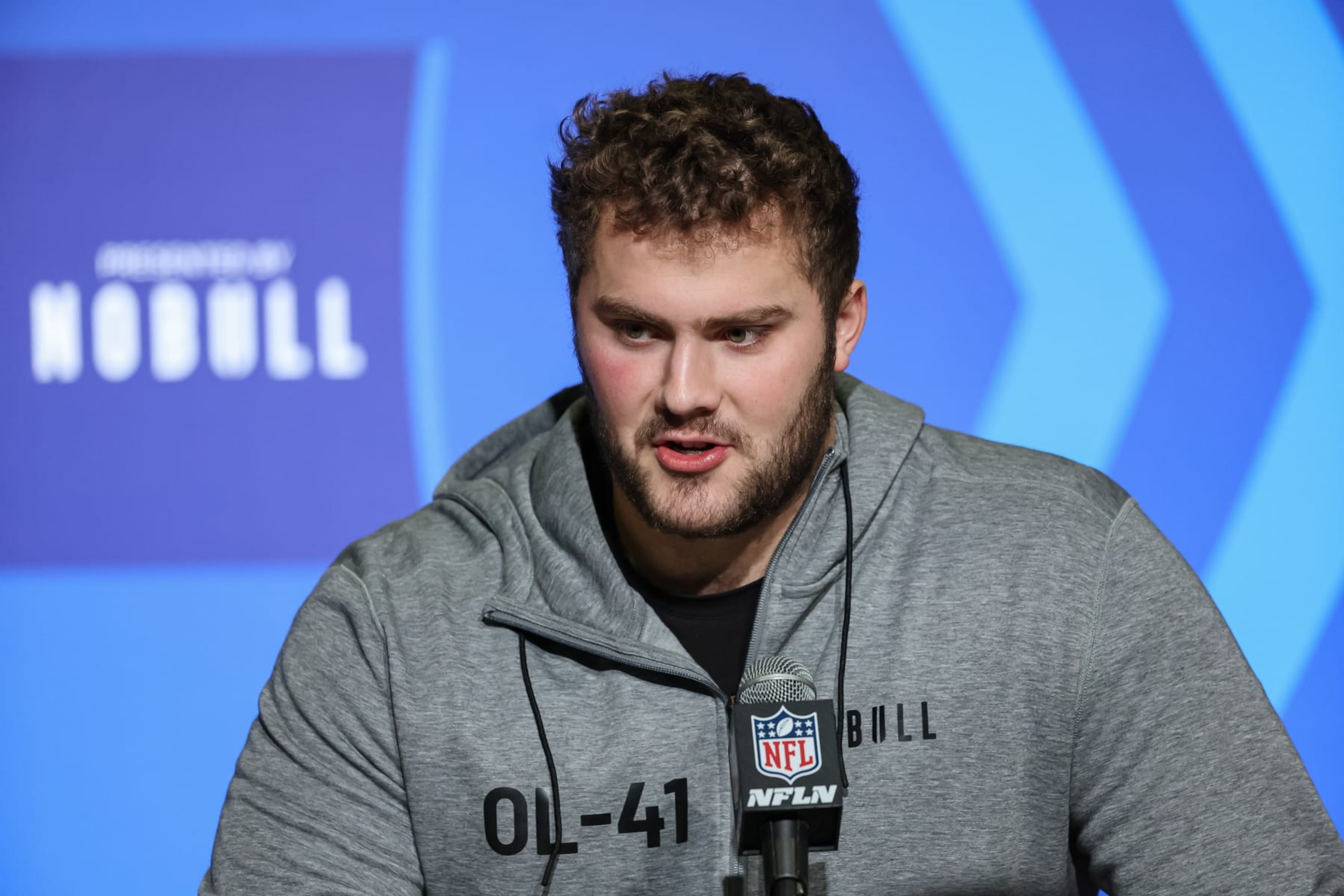
- Round 1 (No. 11): Peter Skoronski, IOL, Northwestern
- Round 2 (No. 33): Will Levis, QB, Kentucky
- Round 3 (No. 81): Tyjae Spears, RB, Tulane
- Round 5 (No. 147): Josh Whyle, TE, Cincinnati
- Round 6 (No. 186): Jaelyn Duncan, OT, Maryland
- Round 7 (No. 228): Colton Dowell, WR, Tennessee-Martin
The Titans were pegged as a team to watch in the quarterback market on opening night. Instead of reaching for QB3, Tennessee stayed put and grabbed the top-ranked offensive lineman on the B/R board.
Tennessee opened Day 2 by trading up to the 33rd pick to grab Kentucky quarterback Will Levis. The former Wildcat was widely viewed as a first-round pick heading into draft weekend, and he should immediately leap Malik Willis as the heir apparent to Ryan Tannehill.
Tannehill is entering the final year of his contract.
The Titans added a quality running back in Tulane's Tyjae Spears, who has the potential to be a longtime starter and may eventually take over for Derrick Henry. Josh Whyle, Jaelyn Duncan and Colton Dowell will provide further offensive depth.
Tennessee got the best overall offensive lineman in the draft and a possible quarterback of the future. That's a big win for a franchise hoping to get back to winning in the AFC South.
Grade: A-
Washington Commanders
33 of 33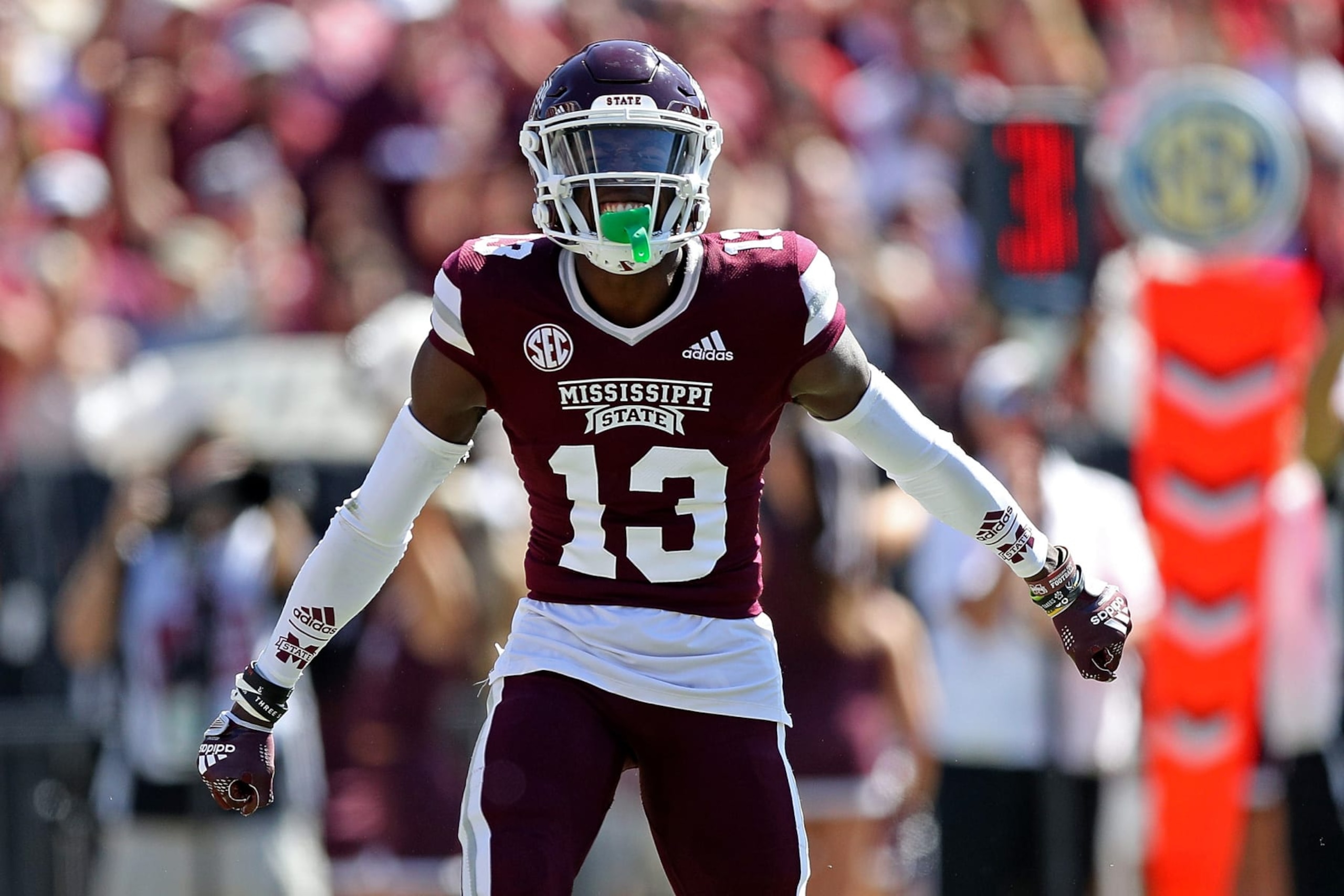
- Round 1 (No. 16): Emmanuel Forbes, CB, Mississippi State
- Round 2 (No. 47): Jartavius Martin, S, Illinois
- Round 3 (No. 97): Ricky Stromberg, IOL, Arkansas
- Round 4 (No. 118): Braeden Daniels, IOL, Utah
- Round 5 (No. 137): KJ Henry, Edge, Clemson
- Round 6 (No. 193): Chris Rodriguez Jr., RB, Kentucky
- Round 7 (No. 233): Andre Jones Jr., Edge, Louisiana
I get the logic behind taking Emmanuel Forbes in the first round. The Washington Commanders generated only nine interceptions in 2022. Forbes had six interceptions and three pick-sixes by himself last season.
It was still a reach, though. Forbes' upside is incredible, but he's a 166-pound cornerback and was the 103rd-ranked prospect on the B/R board.
Washington then doubled down on its secondary, grabbing Illinois safety Jartavius Martin in the second round. Like Forbes, Martin is a defender who can create takeaways (three interceptions in 2022).
The Commanders targeted interior line depth in the middle rounds, adding Rocky Stromberg and Braeden Daniels. That was a logical plan, as Washington never quite recovered from losing Brandon Scherff in the 2022 offseason and surrendered 48 sacks last season.
KJ Henry was a solid value in the fifth round, though Washington isn't exactly short on defensive-line talent. Perhaps he was viewed as an insurance piece after the Commanders declined the fifth-year option on Chase Young's contract.
Grabbing Chris Rodriguez was a bit of a luxury pick for a team that ranked 12th in rushing last season, but Rodriguez averaged a solid 5.2 yards per carry in 2022 and will be a nice depth piece.
Overall, Washington's strategy made sense, but the Commanders failed to get another reliable receiving weapon for second-year quarterback Sam Howell and probably flipped the switch on Forbes far too early.
Grade: C-
*Contract information via Spotrac. College statistics from Sports Reference.