Should ROY Candidate Karl-Anthony Towns Be an NBA All-Star Too?
In dominating Rookie of the Year discussions, Minnesota Timberwolves newbie Karl-Anthony Towns has simultaneously, if unofficially, inserted himself into the NBA's pool of potential All-Stars.
This is not a premise to be taken lightly. Rookies seldom earn All-Star nods this side of the draft lottery. Only three freshmen—Tim Duncan (1998), Blake Griffin (2011) and Yao Ming (2003)—have been invited to the famed February shindig over the last two decades.
But Towns has been good enough for long enough to entertain the possibility that he, like a select few superstars in training before him, could become the latest exception.


Love at First Box Score
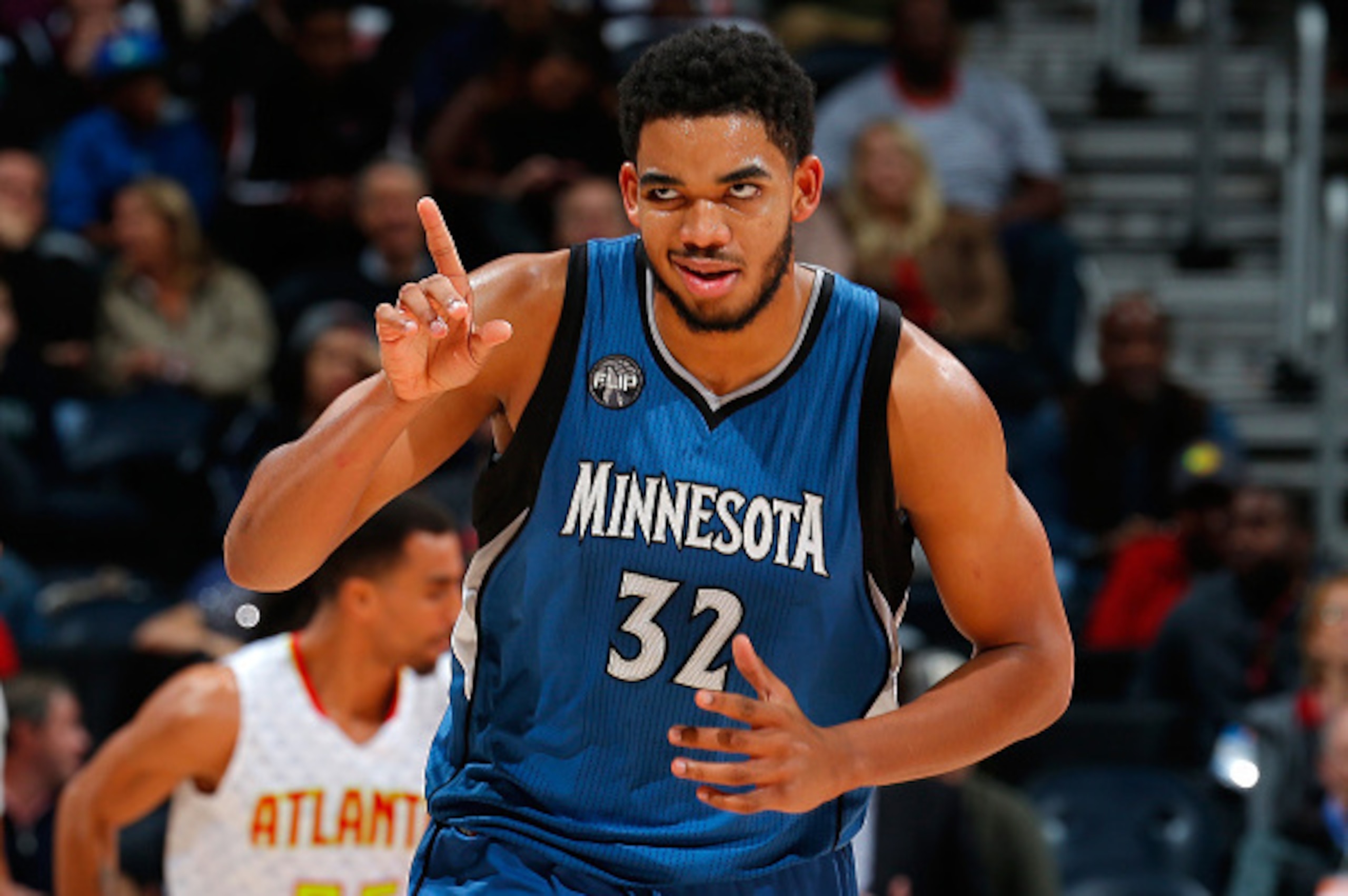
Should his numbers hold steady, as they have all season, Towns will be just the fifth rookie to average at least 19 points, 11 rebounds and 2.5 blocks per 36 minutes. His company? Hall of Famers Hakeem Olajuwon, David Robinson and Ralph Sampson and eventual Hall of Famer Shaquille O'Neal.
All four of Towns' binary brethren secured All-Star selections as rookies—though only two, O'Neal (1993) and Robinson (1990), did so during the lottery era.
Towns leads this year's new kids in player efficiency rating, rebounding percentage and block rate. He is second in win shares behind New York Knicks sensation Kristaps Porzingis and trails only Nemanja Bjelica, his teammate, in box plus/minus—the measurement of how much better the average team is per 100 possessions with a specific player on the floor.
Towns is already, and very seriously, the Timberwolves' best weapon. He paces them in win shares and, despite being deemed an offensive project (he's not), ranks third on the team in usage rate.
The issue here, of course, is that All-Star affections aren't earned exclusively through rookie and team distinctions.
Superstar Credentials
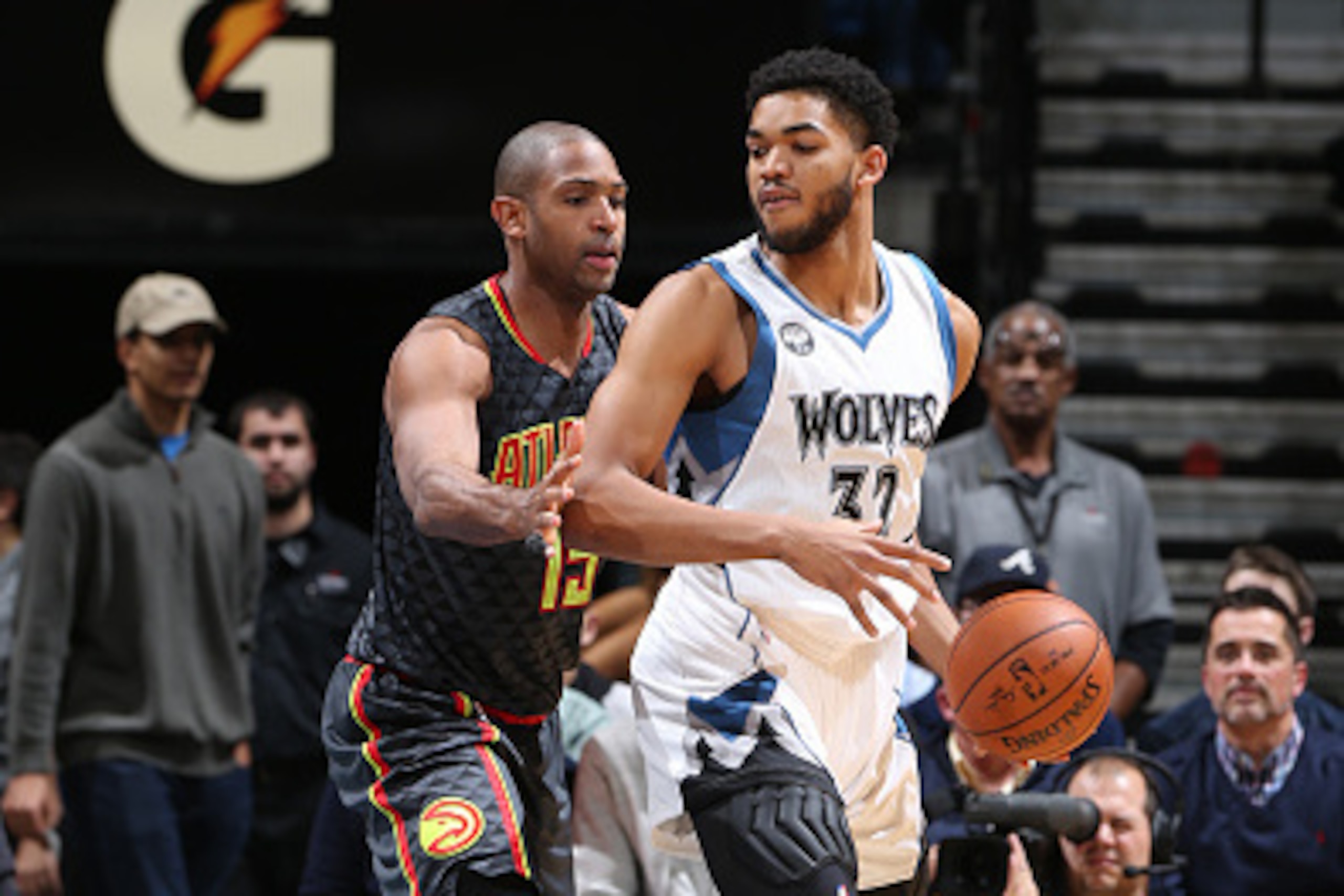
There's a reason Porzingis' rise through the rookie ranks is engendering more adulation than that of Towns, who has authored a better overall body of work—and did so as a No. 1 pick who didn't top draft boards until midway through his lone season at Kentucky.
Porzingis has the bright lights of New York and the people of Latvia behind him. Towns hails from a small town in New Jersey, doesn't play for a top-10 market and has no chance of winning the fan ballot or hope of parlaying a viral brand into deferential votes from coaches (Hey, 2010-11 Blake Griffin).
If he's to realistically force his way onto the superstars' playground, he needs to be playing like one of them. And he is.
Only three players are clearing 14 points, nine rebounds and two blocks per game this season: Anthony Davis, Pau Gasol and Towns. Of the three, Towns has the highest effective field-goal percentage—which gauges accuracy of two- and three-point shooting—and owns a comparable usage rate to boot.
This link to Davis isn't a superficial one. Towns' rookie efforts have been fastened to Davis since—well, since the third game of his young career, as noted by ESPN.com's David Thorpe:
Those sentiments, while ostensibly overstating Towns' early exploits, have neither faded nor been invalidated with time.
Towns' defensive rating is already better than Davis' career-best mark, while both his rebounding and block rates are also higher than Davis'—an immediate development you can't help but assume is due to Towns having Kevin Garnett whispering sweet defensive everythings into his ear (Davis has, um, Kendrick Perkins).
More impressively, Towns stacks up against the New Orleans Pelicans megastar on the offensive end. The resemblance in how they fare by possession type is downright staggering:
Quick caveat: New Orleans is allocating more than twice as many isolation sets to Davis as Minnesota is to Towns.
But that's the extent of this "#wellactually" factor. Towns' usage in every other instance either compares to or exceeds Davis', while his proficiency in those situations is similarly relatable or just plain better.
Assessing The Field
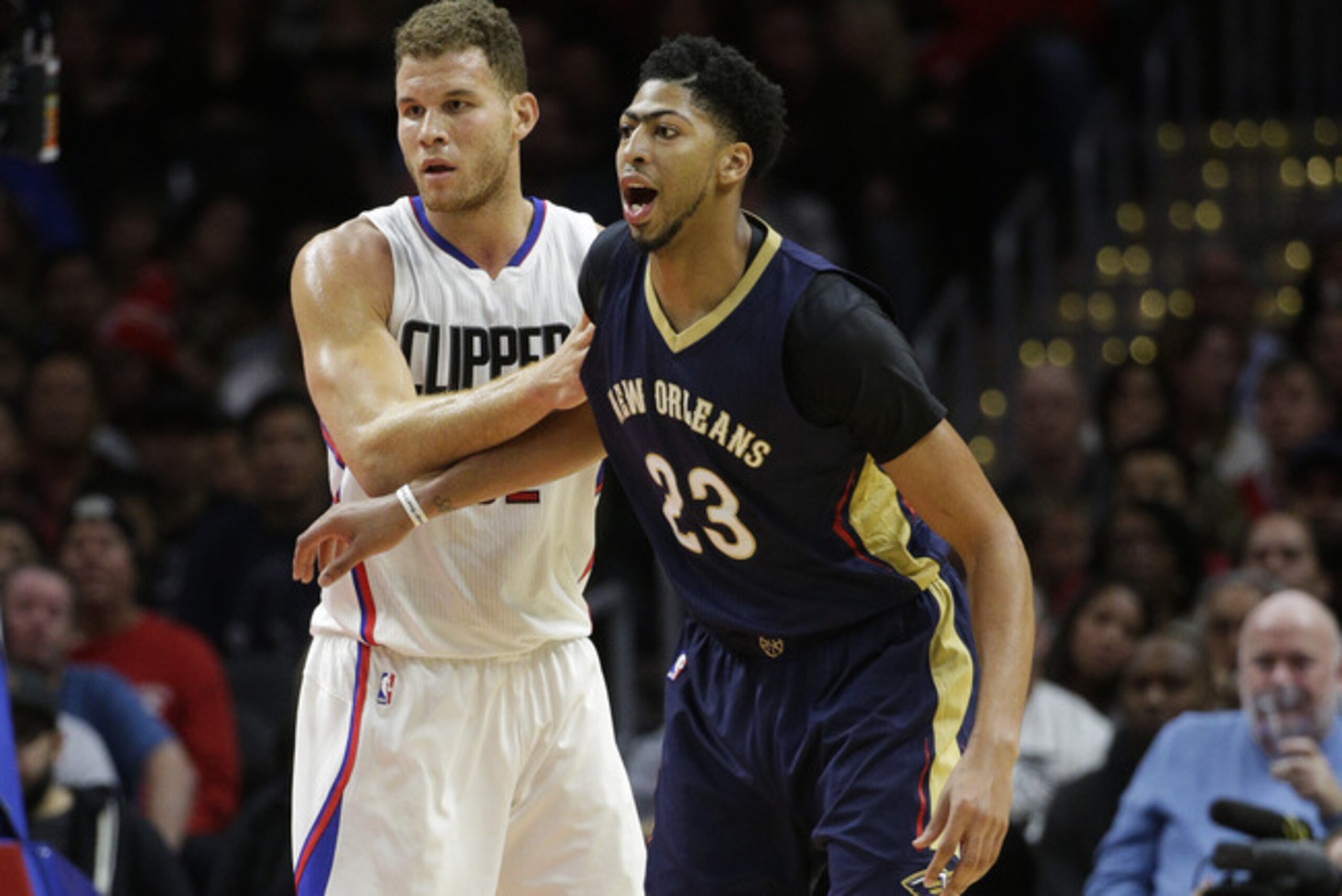
Deserving players get left off the All-Star roster every year. And since he won't be winning the fan vote—pencil in Davis, Kevin Durant and Griffin as the victors—Towns is at the mercy of head coaches, who can choose him as a reserve.
Grouping Towns into the forward-center category at large pits him against every frontcourt participant from 2015. LaMarcus Aldridge, Demarcus Cousins, Duncan(!), Durant, Gasol and Dirk Nowitzki all remain viable All-Star options.
Davis and Griffin, both of whom didn't play last year due to injury, are also virtual locks. And then there are the various other hopefuls to consider.
Draymond Green and Kawhi Leonard are having career years. Derrick Favors and Gordon Hayward have their own cases. Serge Ibaka and DeAndre Jordan are forever on the All-Star bubble. Dwight Howard has not yet been stripped of his "superstar" label.
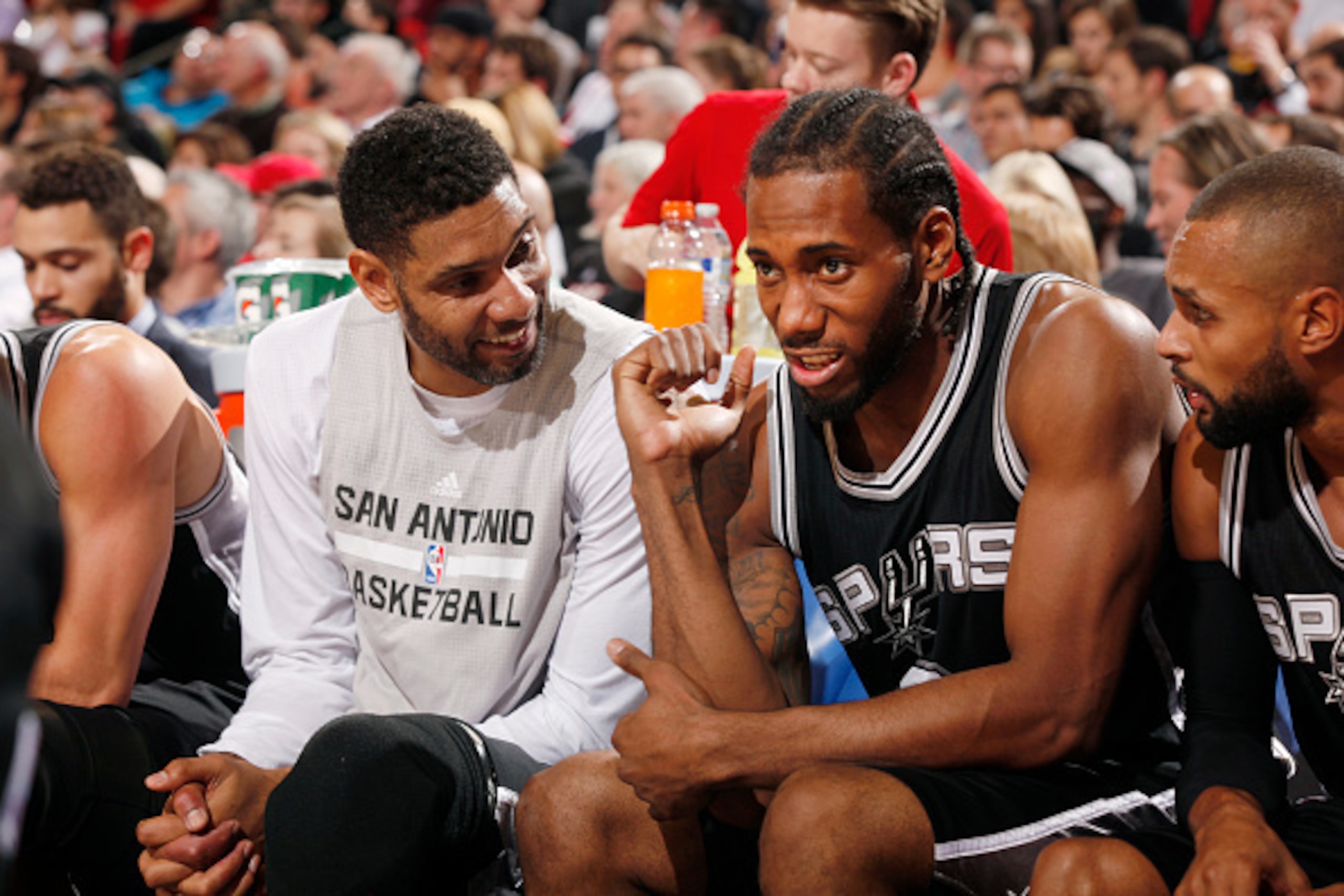
Important still, the lottery-old stigma against rookie sample sizes stands strong, as Towns inadvertently alluded to while responding to the notion that he's the best player of his draft class.
"I felt that I haven't done enough yet," he said, via NBA.com's Scott Howard-Cooper. "I still have a lot to grow. I expect myself to do more."
Even with some of the usual suspects regressing relative to last season (Aldridge, Gasol) and battling injuries (Cousins, Howard), Towns needs to unequivocally check in as one of the West's seven best frontcourt members just to have a puncher's chance at making the cut. And even then, Towns' lack of experience and seniority works against him.
All-Star At Heart

What the West's unending cluster of big-name talent doesn't take away from Towns, Minnesota's less-than-liberal approach to his development will.
Relative to most rookies who gained All-Star recognition, Towns doesn't play enough and isn't a big enough focal point:
As the chart shows, Towns has the second-lowest minutes average and third-lowest usage rate of the company he's trying to keep, which is problematic.
Bigs typically register lower usage rates in today's pace-and-space NBA, but only two rookies since 2000 have grabbed All-Star credentials while seeing fewer than 28 minutes per game: Ming and Alonzo Mourning (2000). And one of them (Ming) benefited from a global popularity that Towns simply cannot rival.
Maybe, then, Towns hasn't done enough to leapfrog the many veterans standing between him and All-Star niceties. But he's already everything the NBA values most now: that shot-blocking force with an unlimited supply of offensive tricks, including a game-ready three-point touch.

Since 1985, just six players, of any experience, have amassed 275 points, 175 rebounds, 40 blocks and seven made triples through the first 20 games of the season. Three of the six checked those boxes this year: Davis, Porzingis and Towns.
So yes, more likely than not, Towns won't be named to the West's 2016 All-Star team. But not for lack of merit. His potential absence would merely make him tomorrow's All-Star, today.
Stats courtesy of Basketball-Reference.com and NBA.com unless otherwise cited and are accurate leading into games on Dec. 9.
Dan Favale covers the NBA for Bleacher Report. Follow him on Twitter, @danfavale.
.jpg?w=2560 "Reports: A.J. in Walking Boot")