

Kevin Love, Cavaliers Will Likely Reunite, but Don't Necessarily Need Each Other
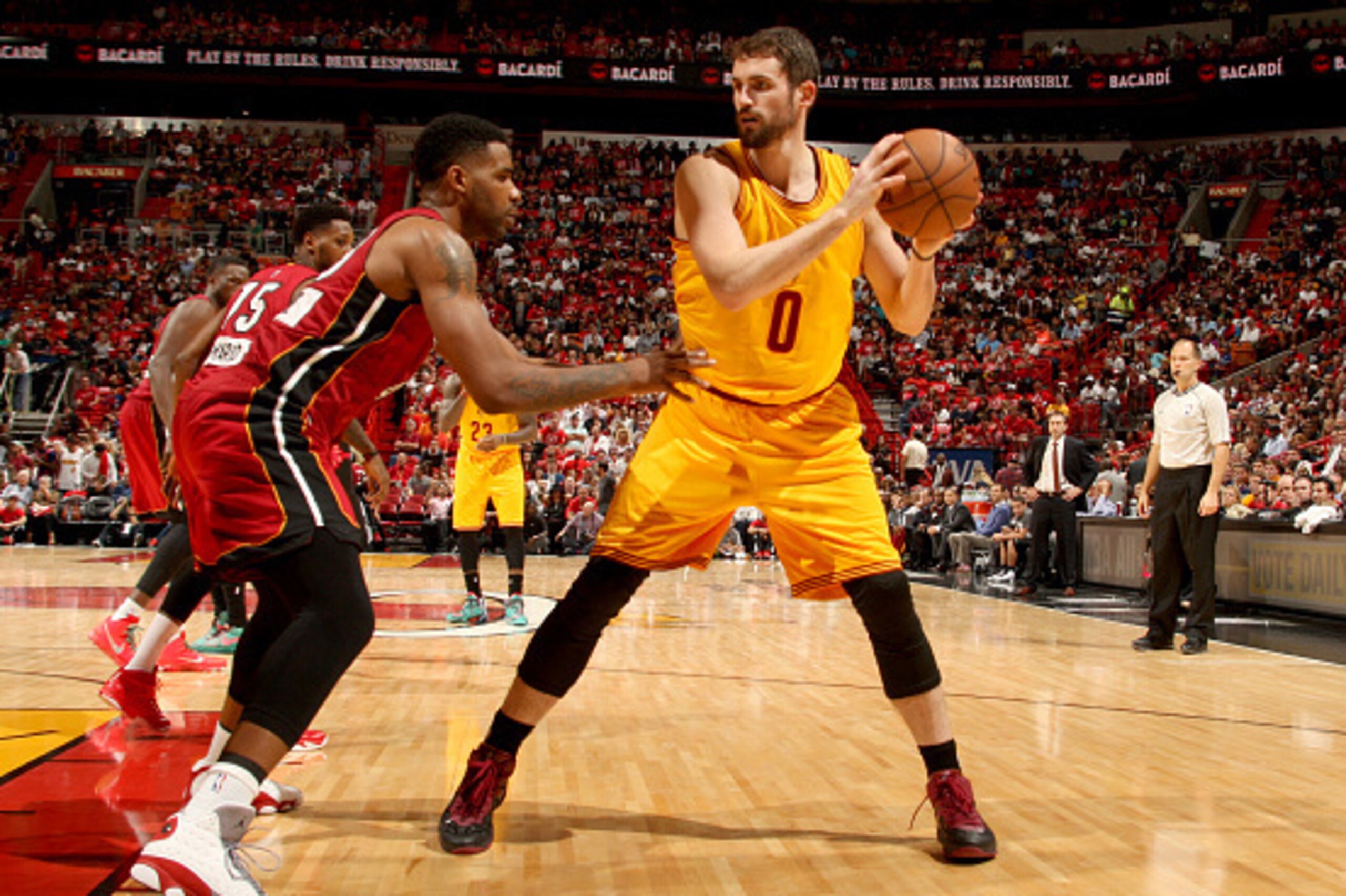
Kevin Love has done what most observers expected, opting out of his $16.7 million contract.
Financially, nothing else ever made any sense, not when signing a maximum one-year deal with Cleveland would earn him $2.2 million more. And yet, the overreaction was equally expected, an overreaction that speaks to the outsized obsession the public has had with Love's status this season, one that isn't proportional to his value to the organization, now or in the future.
"I plan on being here," Love insisted more than once, albeit under media duress, throughout a season that often appeared more frustrating than fulfilling.
TOP NEWS
.png?w=2560)
Ranking the Best Shooters of All Time 🎯
Ranking the Best Defenders of All Time 📊
Report: LeBron 'Slow-Playing' Decision
That remains the place the smart money should go, since according to those most familiar, money and security matter most to Love. The collective bargaining agreement ensures the money will be better in Cleveland, in the short and long term, than anywhere else, as much as $37 million more if he waits until the television cash influx in 2016 to sign a long-term deal.
Plus, a source close to Love said that while he is looking to leave his downtown Cleveland condo, it's only because he's looking into rental homes in the area.
But what if that's wrong?
What if he flees now?
Should that decision be greeted with derision from the public?
By panic from the Cavaliers?
How about neither?
How about a yawn?
Sure, you know some will call Love a quitter, a liar, a loser, for spurning a near-certain championship chance after the Cavaliers reached the NBA Finals without him.
Sure, you know others will mock and chide the Cavaliers for either losing him for nothing or collaborating on a sign-and-trade in which they recoup lesser assets. That's especially so after they just sacrificed a decade of Andrew Wiggins for a few months from a former All-Star they couldn't figure out how to fit.
And you know what?
None of that should matter.
Not the labels.
Not the laughter.
It comes down to this, and this alone:
Kevin Love and the Cavaliers may decide to stay together, even if for only another season. But if so, it should be because that's what they want, not because anyone believes they need each other, whether to win, to justify prior decisions or to change public perceptions.
Because they don't, not really.
And it shouldn't be because they believe they owe each other.
Because they don't, not at all.
Each has options without the other.
Yes, Love went six seasons without making the playoffs in Minnesota. Still, Cleveland isn't the only team in the NBA with a chance to win in the years to come. Nor should he worry about proving to pundits that winning matters most, if comfort matters more, more even than cash. After all, it's not as if he can be accused of greed should he leave, not when the right financial play is to stay.

He won't be 27 until September, still nowhere near the age when players typically alter their aspirations, away from individual accolades and toward team-oriented accomplishments. And not every player's priorities change that much, even when crossing their 30s.
Love is more than four years younger than Carmelo Anthony was when Anthony chose money, the Madison Square Garden marquee and shots rather than joining a more collective, closer-to-contention situation in still-big-market Chicago.
Love's decision would be more understandable than Anthony's was, especially if Love chooses a rebuilding situation in a major market, where turnarounds can occur quickly. And Anthony, no matter where he went, whether Chicago or Houston, was never in danger of being marginalized to the degree Love experienced this season in Cleveland.
Carmelo Anthony, third wheel?
He's never even been that on an Olympic team.
It's not for everyone. Yes, Chris Bosh, James Worthy and Robert Parish did so in pursuit of parades, but often without much pleasure. And, in speaking to Love's associates, the offensive sacrifice was greater than he anticipated, and at times more than he could tolerate.
Love proved in Minnesota that no matter what his statistics say, he can't be the singular cornerstone on a serious contender. He simply doesn't have the defensive and shot-creating chops for that. But maybe he didn't need to fall so far.
Consider this recent quote from an NBA executive, one who, for various reasons, is unlikely to be a suitor for Love: "Kevin has been miscast in Cleveland, and I'm not sure it's really anyone's fault. He's too good, in too many ways, to be a third option, and he's not emotionally equipped for it either. He's not a first option on a championship team. He may not be one on a playoff team. He proved that in Minnesota. But, as a second option somewhere, he'd probably be perfect."
Where could such a "second option" opportunity appear?
A few spots, actually.
It's what he could be with the Lakers, so long as Kobe Bryant is under contract and over his injuries. It's what he could be with them even after Bryant retires, provided they sign another premier player (Love's former UCLA teammate Russell Westbrook?) down the line. That said, it could be a crowded frontcourt if Los Angeles drafts Jahlil Okafor on Thursday while retaining Julius Randle.
It's what he could be with the Knicks, simply because there's nobody currently of note behind Anthony. Though if Love had difficulty assimilating with the selfless LeBron James, it might be challenging to mesh with one of the NBA's notorious gunners, or to stop anyone on the other end.

It's what he could be with the Rockets via trade, especially as Dwight Howard continues to recede offensively. He'd provide the shooting as a stretch-4 that general manager Daryl Morey hoped to get from Bosh when he pursued the Heat veteran last summer.
It's what he could be with the Celtics, eventually, as Danny Ainge deploys his bounty of draft picks, either for college prospects or established stars. But at first, he'd be back in a similar situation to Minnesota as the face of the franchise, albeit one with more competent management.
It's what he could be with the Trail Blazers, the team representing the region where he was raised, if LaMarcus Aldridge leaves. That's assuming Damian Lillard continues to emerge as a primary scorer.
Would any of those situations be better than sticking as the third option in Cleveland?
Only he knows.
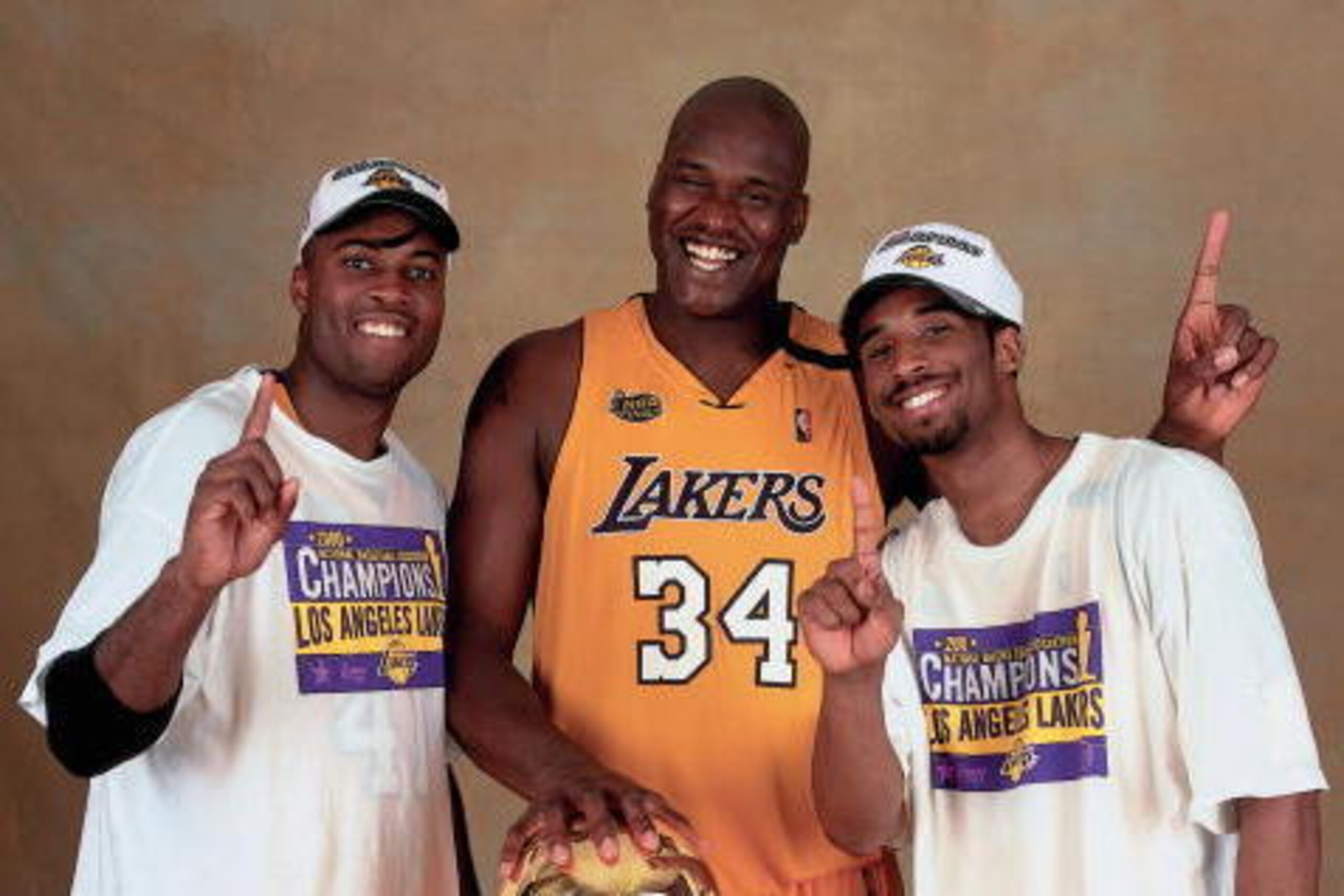
For every Worthy, Bosh or Parish who adjusted and persisted as the guy behind the guy behind the guy, there's a Glen Rice who wanted to get out of town.
The sharpshooter had been among the leading scorers while with Miami and then Charlotte, and he seemed like the perfect floor-spacing piece to complement Shaquille O'Neal and Kobe Bryant when he was traded to the Lakers in March 1999. Yet Rice spent much of his two seasons with the Lakers moaning about his role, with his shot attempts returning to his rookie levels.
The Lakers did win a championship in 2000, with Rice third in scoring average, his 15.9 points more than twice as many as the next Laker. But after an NBA Finals in which Rice's wife criticized coach Phil Jackson, Rice was shipped away in a four-team trade that netted veteran dirty-work forward Horace Grant.
The Lakers won 11 fewer games in the 2000-01 regular season than in 1999-00 but were even better in that postseason. They went 16-1 as compared to 16-7, with Grant providing grit, and Rick Fox and Derek Fisher increasing their production in support of the Lakers' Super Two.
They may have missed some of what Rice provided, but they found other ways to win, not just that postseason, but in the next, as they won a third straight title.
Would the Cavaliers, without Love, move on more or less as easily as those Lakers did?
Might they even be better off?
That second premise is a stretch, since Love was a net positive for the Cavaliers during the regular season. Cleveland was a plus-7.9 per 100 possessions with him on the court, second to LeBron James among players who partook in the choppy first two months of the season. He then was a plus-15.1 per 100 possessions, third behind Timofey Mozgov and James, after the Cavaliers' 19-20 start.
It's silly to suggest any team would rather do without someone of Love's skill set, whether his passing, rebounding or shooting, even if the Cavaliers didn't always use each to their best advantage. That's especially true when the team can afford to keep the player, as the Cavaliers can, so long as owner Dan Gilbert is willing to make record luxury-tax payments, as league sources continue to say he is.
So sure, if you have unlimited dollars and cents, it makes sense to offer Love a contract. And if he isn't ready to take a five-year deal for roughly $109 million, because he's waiting on the cap explosion of 2016, a one-year salary of $18.9 million, plus a player option, is a palatable compromise.
But if he balks at both, that shouldn't be portrayed as a tragedy, not when he has proved, on the Cavaliers' path to the NBA Finals, to be more luxury than necessity.
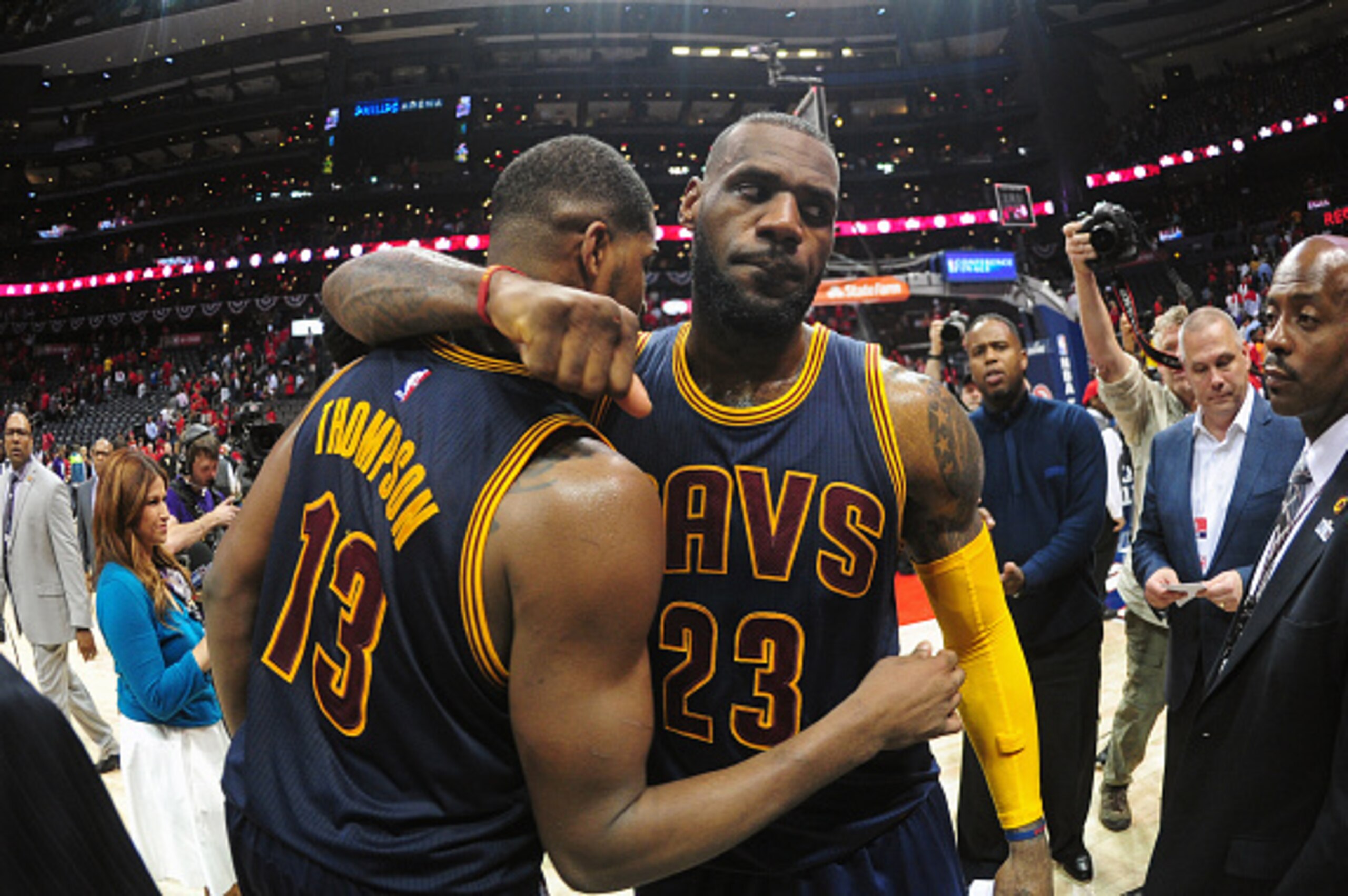
Love played in the first-round series against Boston, until Kelly Olynyk yanked his shoulder out in the fourth and final game. In the 10 games that followed, eight of which were wins against Chicago or Atlanta, something happened: Tristan Thompson.
Thompson averaged 37.9 minutes, up from 26.8 in the regular season, while averaging 10.3 points and 11.1 rebounds, making the Cavaliers a plus-8.8 per 100 possessions with him on the court. That was largely due to what the fourth-year player did on defense.
In the regular season, the key metrics weren't all that different: In fact, according to SportVU, Love actually held his assignment below that player's usual field-goal percentage (45.4 compared to 46.2). Thompson, meanwhile, allowed his assignment to shoot better (47.0 compared to 46.0).
In those first 10 Love-less playoff games, though, Thompson was dominant on the defensive end, allowing the Cavaliers to switch pick-and-rolls regularly. He held his assignment to 39.7 percent shooting, down from those players' overall 44.8 percent shooting in the playoffs.
In the Finals against Golden State, Love's absence on offense was more glaring, especially after Kyrie Irving was done for good following the first game. Even so, Thompson still defended at a high level, holding his assignment 3.7 percentage points below their shooting average. And he still was a force on the glass, grabbing 16.9 percent of the available rebounds while on the court. For comparison purposes, Love grabbed 16.5 percent of the available rebounds during the regular season.
For all of the accolades Love has received for his rebounding, Thompson actually brings more in that area. He typically gets the tougher ones: offensive, and contested.
In the regular season, Thompson grabbed 14.4 percent of the caroms off the offensive boards while he was on the court. Love snagged 6.6 percent, lowest of all the Cavaliers' regular centers or power forwards—in part because he was often parked behind the arc. During the regular season, 62.7 percent of Love's rebounds were uncontested, compared to 52.6 percent for Thompson, who tends to get them in traffic.

Now, naturally, they can play together. Along with Mozgov (whose $4.95 million team option has been exercised) and the recovering Anderson Varejao (back after an Achilles injury at $9.7 million), they can give Cleveland a fearsome foursome in the frontcourt. It all but assures James won't be required to play much of the position he loathes: power forward.
But this could also prove to be an uncomfortable crowd.
Thompson and Love played in 75 games together in the regular season and were a respectable plus-8.6 per 100 possessions in their 1,081 shared minutes. They could play more together, even with Mozgov and Varejao available.
Still, it's reasonable to wonder whether Thompson, whatever his salary, would be given the space to soar that he was this postseason, with someone of Love's pedigree and personality still on the roster. And whether, over time, this could get clunky.
Thompson, by all accounts, is low-maintenance. It's one of the reasons, beyond just sharing an agent, that James likes him so much.
James typically embraces three types of players.
Type one: Those who have won before, those he can lean on in times of trouble, which is why the likes of Ray Allen and James Jones and Mike Miller and Shawn Marion and Kendrick Perkins will always have a place in his locker room.
Type two: Those who add what former Heat teammate Chris Andersen called "swag," spiking the atmosphere the way J.R. Smith and Iman Shumpert did, since their in-season additions.
Type three: Those who keep their noses down, ignore the individual accolades and just do what's asked. Guys who don't ask a lot of questions that are about anything but improving themselves and the team.
That last characterization fits the guy James calls "TT" to a tee, even if it's easier to say you're willing to be a "janitor forever" when you know James is angling for you to receive a maximum contract.
Is Love any of those types?
Is it surprising that such sacrifice would be tougher for Love to swallow, after three All-Star appearances and serving as the face of another franchise? Is it surprising that he would sometimes struggle to hide his frustration, no matter how he tried, especially as he was ignored on some offensive possessions and idled in some fourth quarters?
Cavaliers officials were generally happy with Love throughout the season but were concerned that he wasn't happy with himself, or with his role, and that he didn't see himself contributing as much as he should.
Is it possible he might now see another situation as a better opportunity for appreciation?
Sure, even if the most likely scenario is still that he stays for at least one more season.
Is it possible the Cavaliers, if he does go, can cut their losses and still rack up wins?
Sure, even though they cannot, with their current roster construction, replace him with another "max" player.
What Cleveland could do, even while retaining restricted free agents Thompson and Shumpert, and even if the Cavs choose to re-sign the freshly opted-out Smith, is find supporting pieces such as a cheaper stretch-4 and a more consistent backup point guard.
They could do so by using Brendan Haywood's non-guaranteed $10.2 million contract and the taxpayers midlevel exception of about $3.3 million. They might be able to put together a team that isn't quite as threatening on paper but is even more compatible on the court. They'd have a clear Big Two, like those post-Rice Lakers, while others have room to grow into larger roles.
That would include Thompson who, while lacking anything approaching Love's shooting range, is superior at things that may matter more on a team that already has two elite playmakers (James, Irving) and passable floor-spacers in place.
And if the Cavaliers do enough to continue competing for titles, why would it matter what Wiggins is doing in Minnesota? That was the cost of doing business, in the name of James coming home. If he'd asked for the team to move to Akron, Gilbert would have broken ground in Quaker Square.

Similarly, why should Love feel any guilt about his acquisition costing Cleveland a premium talent? Or about going back on his word, to stick it out? Why should he care what the public thinks about anything, so long as he sleeps better, in a place he believes he can play better?
The odds are still in favor of staying together, at least for now, because of the financial forces at play.
Still, if they split, neither side need apologize.
Nor should either side care how we characterize.
Ethan Skolnick covers the NBA for Bleacher Report and is a co-host of NBA Sunday Tip, 9-11 a.m. ET on SiriusXM Bleacher Report Radio. Follow him on Twitter, @EthanJSkolnick.
.png?w=2560 "FA Big Board")
.jpg?w=2560 "QB Trades to Pursue Right Now 📞")
.png?w=2560 "Lane's Son Trolls His QB Play 😭")
.png?w=2560 "AEW Dynamite Live Grades 🔠")