

What's rapping, rapping at your chamber door? That would be the NBA playoffs.
With the regular season winding down, it's time to try relating what we've seen thus far to what we're about to see. And we might as well start by parsing through some statistically dangerous lineups, because it's rude to buck a centuries-old tradition.*
Projections for the postseason's best "Hey! Watch out for them!" units will be carried out objectively. To qualify, five-man combinations must rank in the top 50 of total minutes played. This unequivocally stinks for teams ravaged by injuries, but volume and availability has to matter (i.e. Utah Jazz).
From there, we'll remove the lineups of teams that aren't inside their conference's playoff picture as of April 3. We'll also purge the ranks of groupings that no longer exist. The Toronto Raptors' use of Cory Joseph, Kyle Lowry, Lucas Nogueira, Patrick Patterson and Terrence Ross would earn a mention if Ross weren't playing for the Orlando Mickey Mouses.
After that, we'll strike from the record lineups that are no longer seeing the light of day for reasons beyond trace injuries. The Washington Wizards looked like they had a good thing going with Bradley Beal, Marcin Gortat, Kelly Oubre, Otto Porter and John Wall, but then Oubre started struggling. And then the Wizards traded for Bojan Bogdanovic.
Every remaining lineup will have its net rating multiplied by its total court time. We'll divide the resulting number, the "Lineup Score," by 100, for cleaner aesthetics. And presto! Just like that, we've used the regular-season sample to determine which lineups, given their entire body of work, profile as the most dangerous.
*This might be the most egregious, dumbest fib of all time.
Just Missed the Cut: Nos. 15 to 11
1 of 11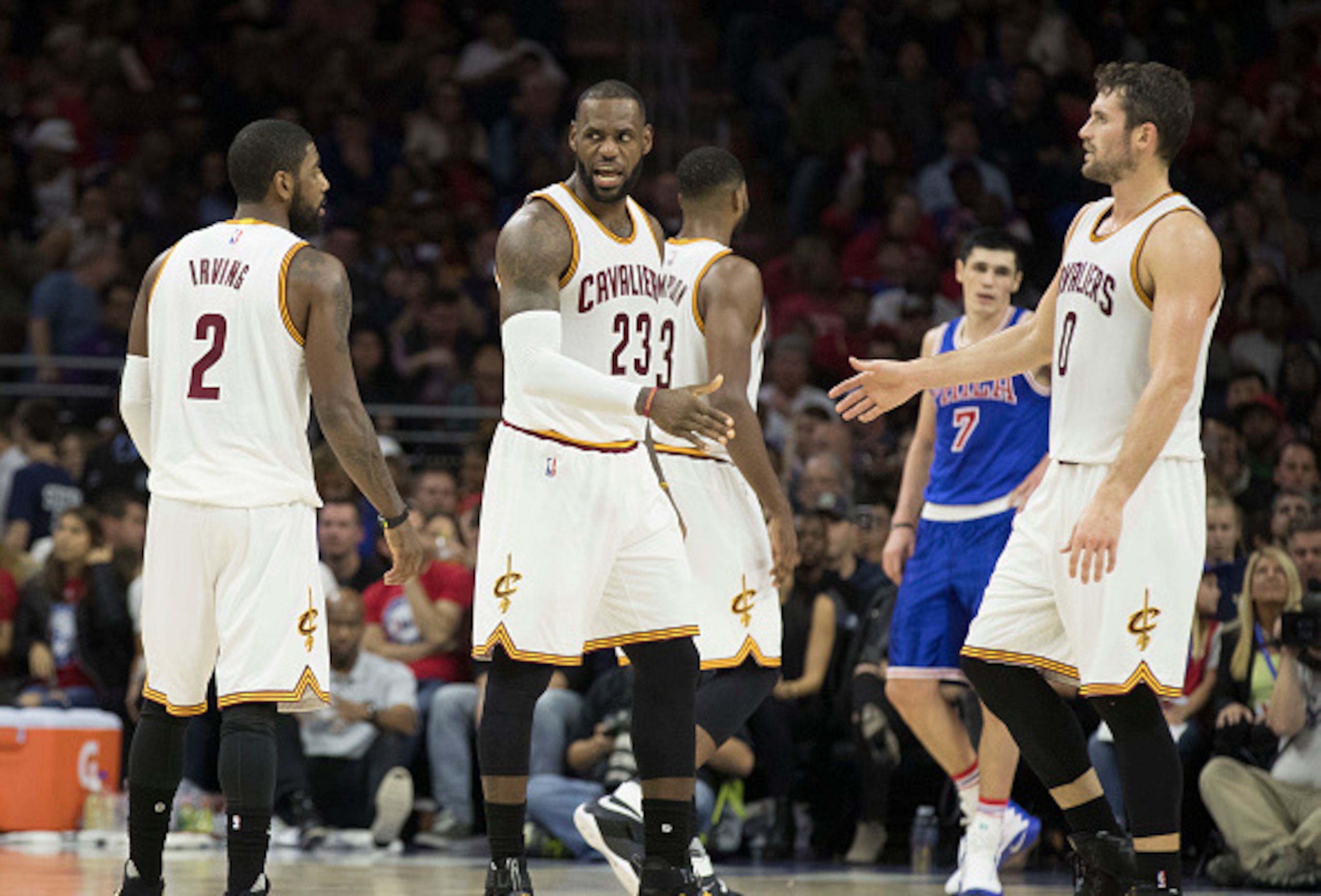
15. Atlanta Hawks: K.Bazemore, T.Hardaway Jr., D.Howard, P.Millsap, D.Schroder
Games Played: 33
Minutes Played: 232
Net Rating: 2.3
Lineup Score: 5.34
And now for some less than ideal news: The Atlanta Hawks have three lineups that have totaled 150 or more minutes. This is the only one that's a net positive.
14. Cleveland Cavaliers: K.Irving, L.James, K.Love, I.Shumpert, T.Thompson
Games Played: 30
Minutes Played: 226
Net Rating: 3.2
Lineup Score: 7.23
Not surprisingly, defense is at the heart of the Cleveland Cavaliers' second most used lineup missing the top 10. LeBron James, Iman Shumpert and Tristan Thompson should, in theory, represent three plus-defenders, but this gaggle is still coughing up 107 points per 100 possessions—a bottom-10 mark overall.
13. Portland Trail Blazers: M.Harkless, D.Lillard, C.McCollum, J.Nurkic, N.Vonleh
Games Played: 19
Minutes Played: 229
Net Rating: 5.5
Lineup Score: 11.48
The Portland Trail Blazers don't waste any time. They've thrown out this lineup in 19 games, and it already places in the top 50 of total usage. And for good reason: It maintains top-seven offensive (109.4) and defensive (103.9) ratings.
It's no wonder why the Blazers have worked themselves back into the Western Conference's playoff picture.
12. Cleveland Cavaliers: K.Irving, L.James, K.Love, J.Smith, T.Thompson
Games Played: 26
Minutes Played: 434
Net Rating: 3.1
Lineup Score: 13.45
If J.R. Smith doesn't miss as much time, this lineup probably cracks the top 10, if not the top five. But while this group is scoring like the NBA's best offense, it's allowing 111.5 points per 100 possessions—the equivalent of a league-worst defense.
Cleveland will have to hope the defense of its most important lineup figures itself out as the crew gets more time together.
11. Houston Rockets: R. Anderson, T.Ariza, E.Gordon, J.Harden, N.Hilario
Games Played: 43
Minutes Played: 192
Net Rating: 9.4
Lineup Score: 18.05
With the way Nene is defending in the post and scoring out of the pick-and-roll, just one thing prevents this five-man combination from usurping the Houston Rockets' preferred starting lineup: playing time.
10. Houston Rockets: R.Anderson, T.Ariza, C.Capela, E.Gordon, J.Harden
2 of 11
Games Played: 41
Minutes Played: 271
Net Rating: 7.0
Lineup Score: 18.97
Anytime you deploy a lineup featuring Ryan Anderson and Eric Gordon, in semi-volume, that posts what would be a league-leading defensive rating (98.6), you're doing something right.
It remains to be seen how important this quintet will be to the Rockets' postseason cause. Anderson's sprained right ankle should be ready to go soon, but the arrival of Lou Williams at the trade deadline has changed things.
Head coach Mike D'Antoni is more focused on pairing Anderson with additional defensive stoppers. We're more likely to see Patrick Beverley subbed in for Gordon. And if the Rockets are searching for a frenetic offensive unit, they'll really go for it. Clint Capela or Nene will be surrounded by four wings, none of whom are Anderson.
Still, this unit continues to get spin in small spurts. Between the trade deadline and Anderson's last game, all five members were available for 13 games. This squadron made nine appearances, during which time it posted a net rating of 9.9 despite shooting just 25 percent from three-point range.
Even if D'Antoni favors other combinations in the postseason, these five will get burn. Trevor Ariza and Capela provide enough of a seal to neutralize whatever Anderson gives up, and the group as a whole is proving surprisingly adept at controlling the defensive glass.
9. San Antonio Spurs: L.Aldridge, D.Dedmon, D.Green, K.Leonard, T.Parker
3 of 11
Games Played: 29
Minutes Played: 241
Net Rating: 8.4
Lineup Score: 20.24
Let's take a moment to give the San Antonio Spurs a round of applause for propping up so many demonstratively positive five-man units that include Tony Parker. The 34-year-old is a liability on defense when he guards anyone with a semblance of lateral quickness, and while he can still get into the lane, he's shooting a career-low 56.8 percent around the rim.
San Antonio's placement here, and elsewhere, is the luxury of controlling the pace and housing Danny Green and Kawhi Leonard. They can typically stymie their opponents' two best perimeter weapons.
Dewayne Dedmon should end up being a part of the Spurs' most important playoff lineups, period. They've struggled (see: 2014-15 Los Angeles Clippers) or been blasted (see: 2015-16 Oklahoma City Thunder) against more athletic teams in postseasons past. Dedmon gives them explosion and switchability they haven't ever enjoyed up front.
Successfully pairing him with LaMarcus Aldridge will be the key. The Spurs have seen better results when stacking him next to Pau Gasol and David Lee, but there's a lot of noise in those performances. Dedmon played a lot more second-unit minutes before being moved to the starting lineup, for good, at the end of January, and Aldridge is the more rangy of San Antonio's remaining skyscrapers.
These surrounding factors ensure this will stay one of the Spurs' most dangerous (and used) lineups leading into the postseason. Head coach Gregg Popovich might test swapping out Parker for Patty Mills, but the resulting lineup, while offensive dynamite, has yielded unflattering defensive returns.
.jpg?w=2560 "NBA Gambling Charges")

8. OKC Thunder: S.Adams, V.Oladipo, A.Roberson, D.Sabonis, R.Westbrook
4 of 11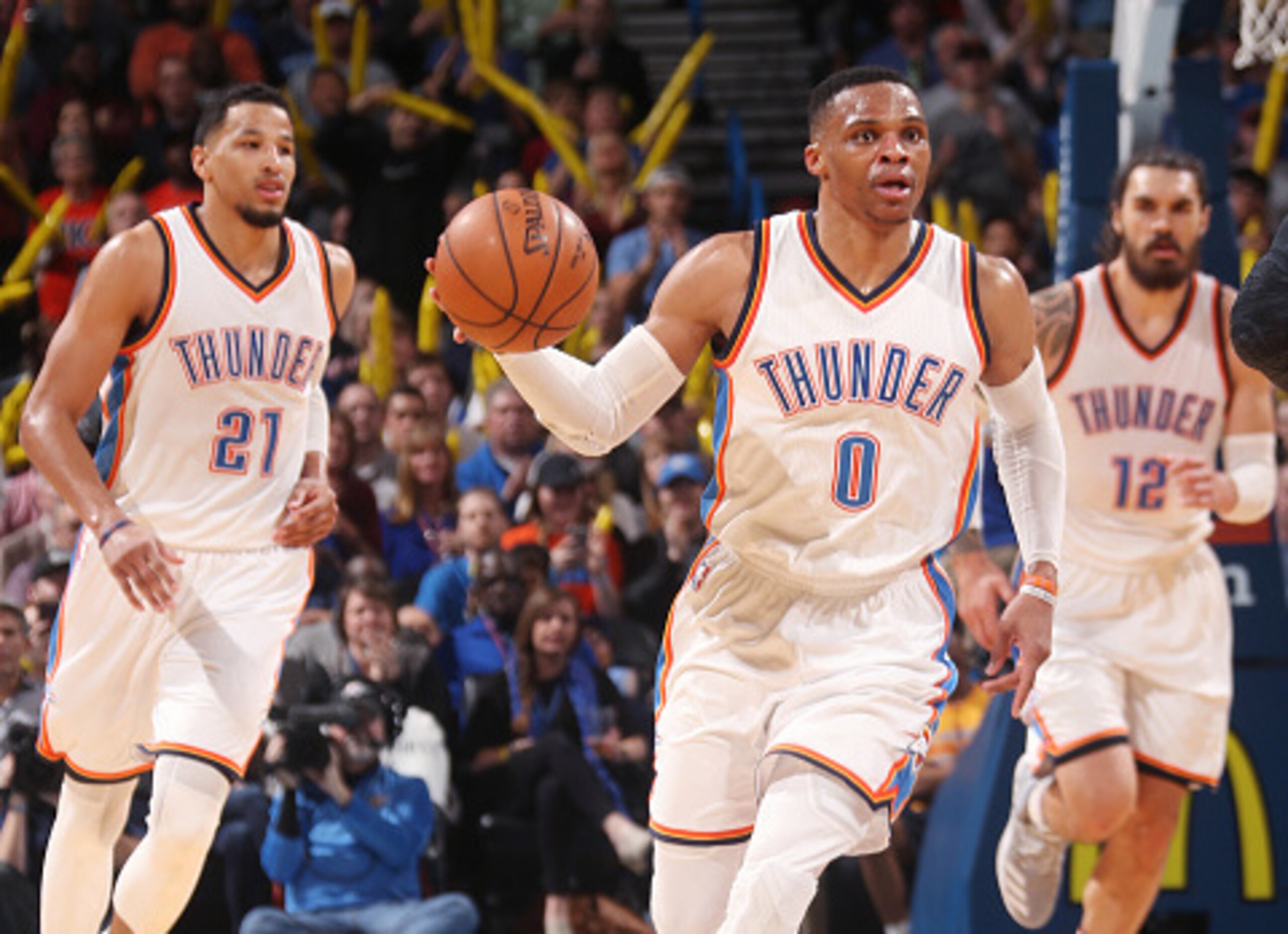
Games Played: 51
Net Rating: 3.5
Lineup Score: 22.05
Taj Gibson's arrival has eaten into the playing time of rookie Domantas Sabonis, and that probably won't change ahead of the postseason. Replace Sabonis for Gibson, and this unit is outscoring opponents by 13.2 points per 100 possessions and grabbing an amazing 33.2 percent of available offensive boards.
Fast forward another 20 minutes of action, and the Gibson-included lineup would have qualified for an appearance here—with a much higher score. But that doesn't make the Thunder's previous go-to starting five unimportant.
Bully ball doesn't always get it done in the playoffs. Sabonis gives Oklahoma City a more finesse touch—someone who is going to create additional space on offense and defend better when rotating into one-on-one situations. He hits more of his long twos (48 percent) than Gibson (34.1 percent) and is by far the better passer.
Granted, the version of this lineup that features Sabonis is shooting worse from deep (28.6 percent) since the trade deadline. But the trio of Andre Roberson, Victor Oladipo and Russell Westbrook is an outside-shooting roller coaster—the kind that hands out paper bags for vomiting, just in case.
Anyhow, whoever the fifth member of this foundation is, Gibson or Sabonis, the Thunder have two things going for them: Defensive versatility and a point guard who tallies triple-doubles in his sleep.
7. San Antonio Spurs: L.Aldridge, P.Gasol, D.Green, K.Leonard, T.Parker
5 of 11
Games Played: 33
Net Rating: 7.3
Lineup Score: 28.18
Oh, how very Spurs of the Spurs to have two lineups in the top 10 but outside the top five.
The identity of this platoon tilts more toward the offensive side. San Antonio has no choice. Pau Gasol can get by as a half-mobile rim protector, but he isn't going to disrupt pick-and-rolls and switch onto wings like Dedmon. Playing him with Aldridge and Parker puts Green and Leonard into defensive overload.
But the efficiency of this unit is off the charts. It's shooting better than 42 percent from beyond the arc and pumping in 112.5 points per 100 possessions—an offensive rating that would rank second overall, just ahead of the Rockets.
Here's the thing: In the 10 appearances this assembly has made since the trade deadline, it's being outscored by 15.1 points per 100 possessions. The offense has staggered, while the defensive trade-off has been untenable.
There's a chance this malaise continues into the postseason. Popovich has already started favoring the clique that features Dedmon instead of Gasol in the middle. But the playoffs are a different beast. The pace is more apt to slow, much to the benefit of a plodding lineup like this one.
San Antonio's old starting lineup may get a second statistical wind yet.
6. Boston Celtics: A.Bradley, J.Crowder, A.Horford, A.Johnson, I.Thomas
6 of 11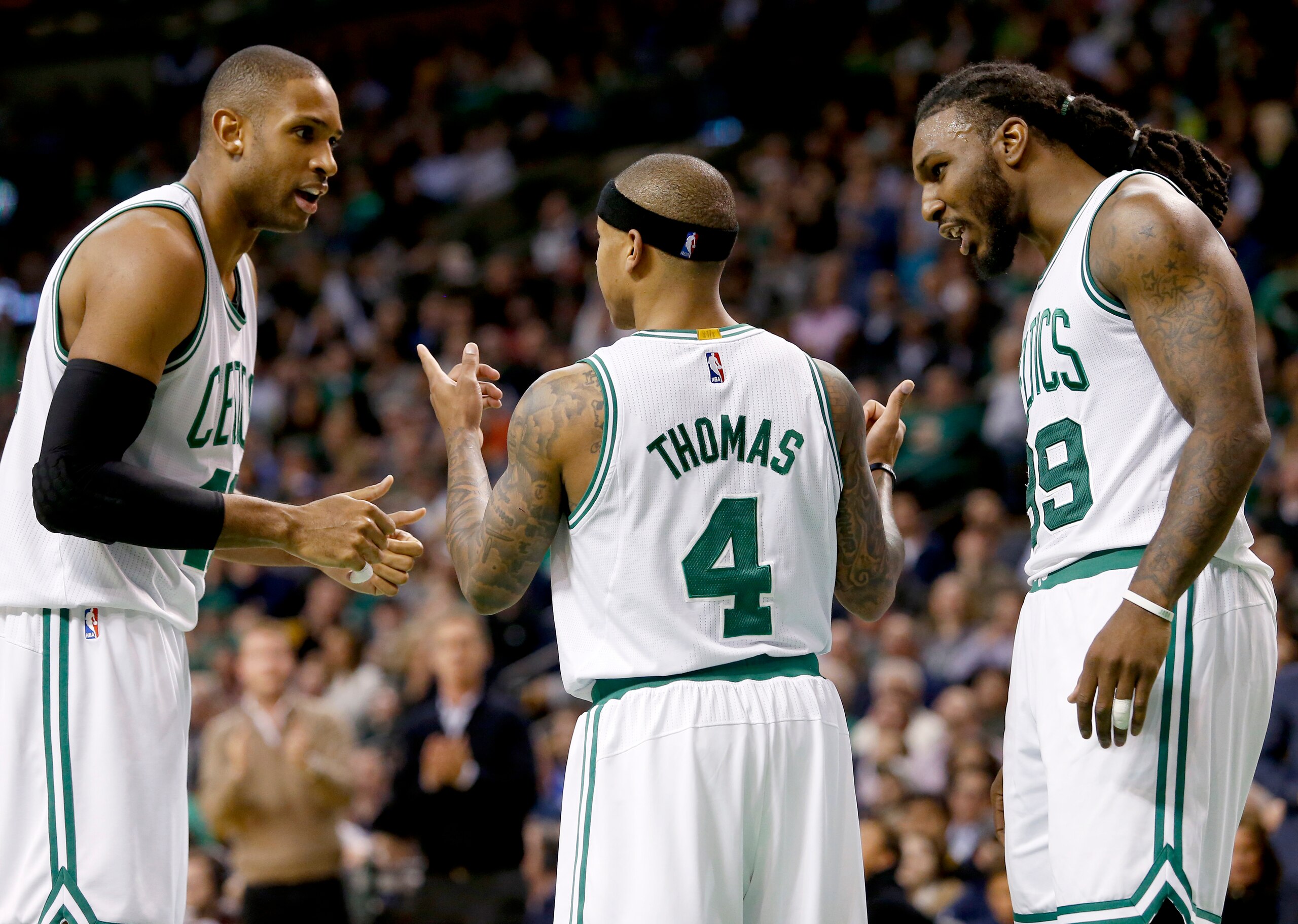
Games Played: 32
Minutes Played: 390
Net Rating: 8.8
Lineup Score: 34.32
No other five-man billing is more potentially underrated than this one.
Avery Bradley, Jae Crowder, Al Horford, Amir Johnson and Isaiah Thomas have only been available at the same time for 32 games, through which the Boston Celtics are a ridiculous 24-8, with a league-best offensive rating (114.7).
Though the defense of this group can be shaky, keyed in part by funky rebounding percentages, it's been better since the All-Star break. The Celtics are allowing 104.8 points per 100 possessions when these five are on the floor, a mark that would rank eighth on the season. Even the offensive rating has climbed during this time.
Opponents cannot do anything to force this lineup off the floor. Neither Horford nor Johnson qualifies as a small-ball 4, but they both shoot threes and protect the rim. Johnson has the gait and length to switch pick-and-rolls; Horford can hold his own when defending in space.
Insert Marcus Smart for Johnson, and the defense slips. It's been very good since the All-Star break but in small, measured doses.
Crowder's sore left elbow is something to watch as the postseason nears. Both the offensive and defensive balance will be thrown off if he's noticeably worse than 100 percent. But barring a sinister prognosis, the Celtics enter the playoffs armed with one of the most dangerous lineups in existence despite relative infrequent usage.
And, yes, this should terrify the competition.
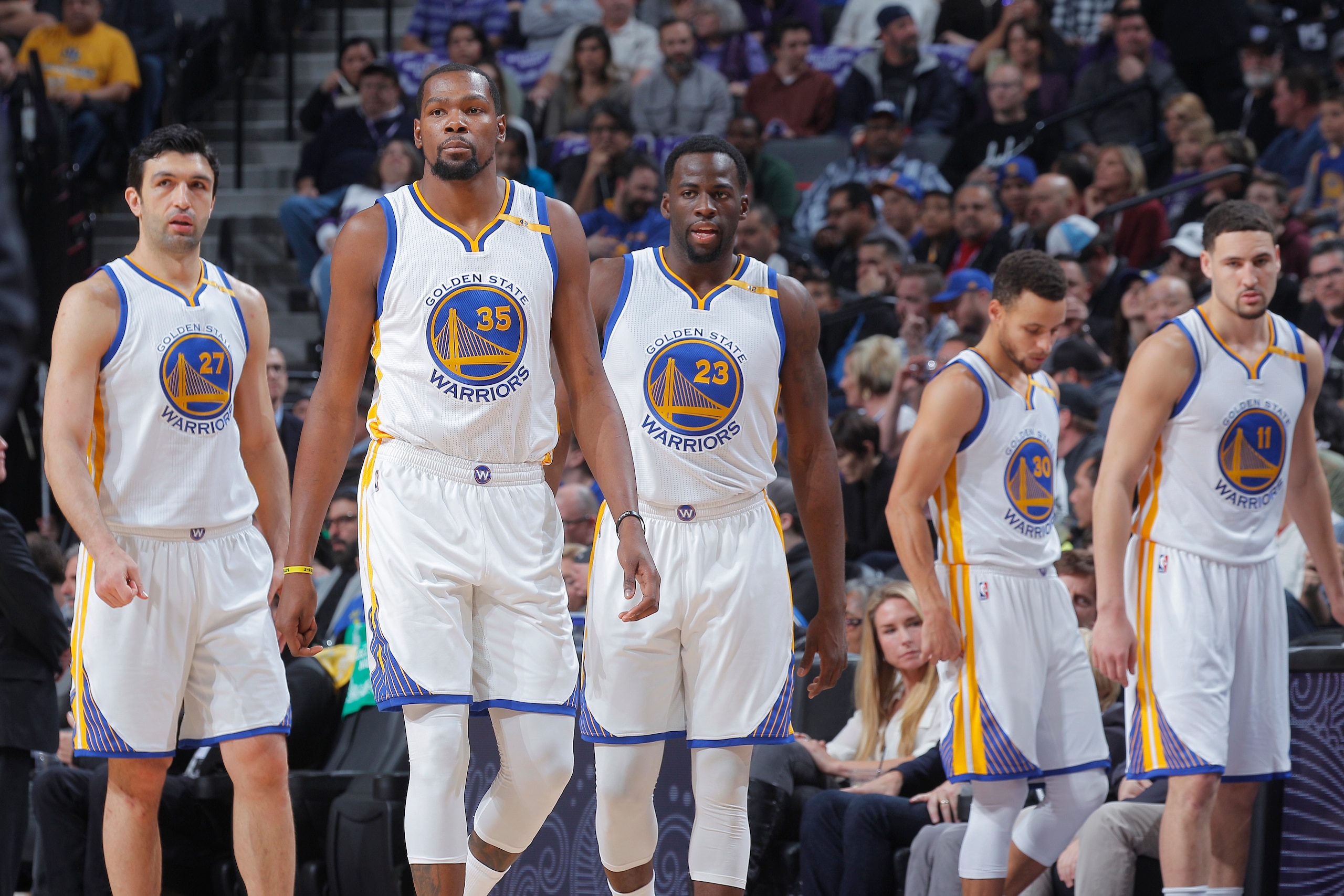
5. Golden State Warriors: S.Curry, K.Durant, D.Green, A.Iguodala, K.Thompson
7 of 11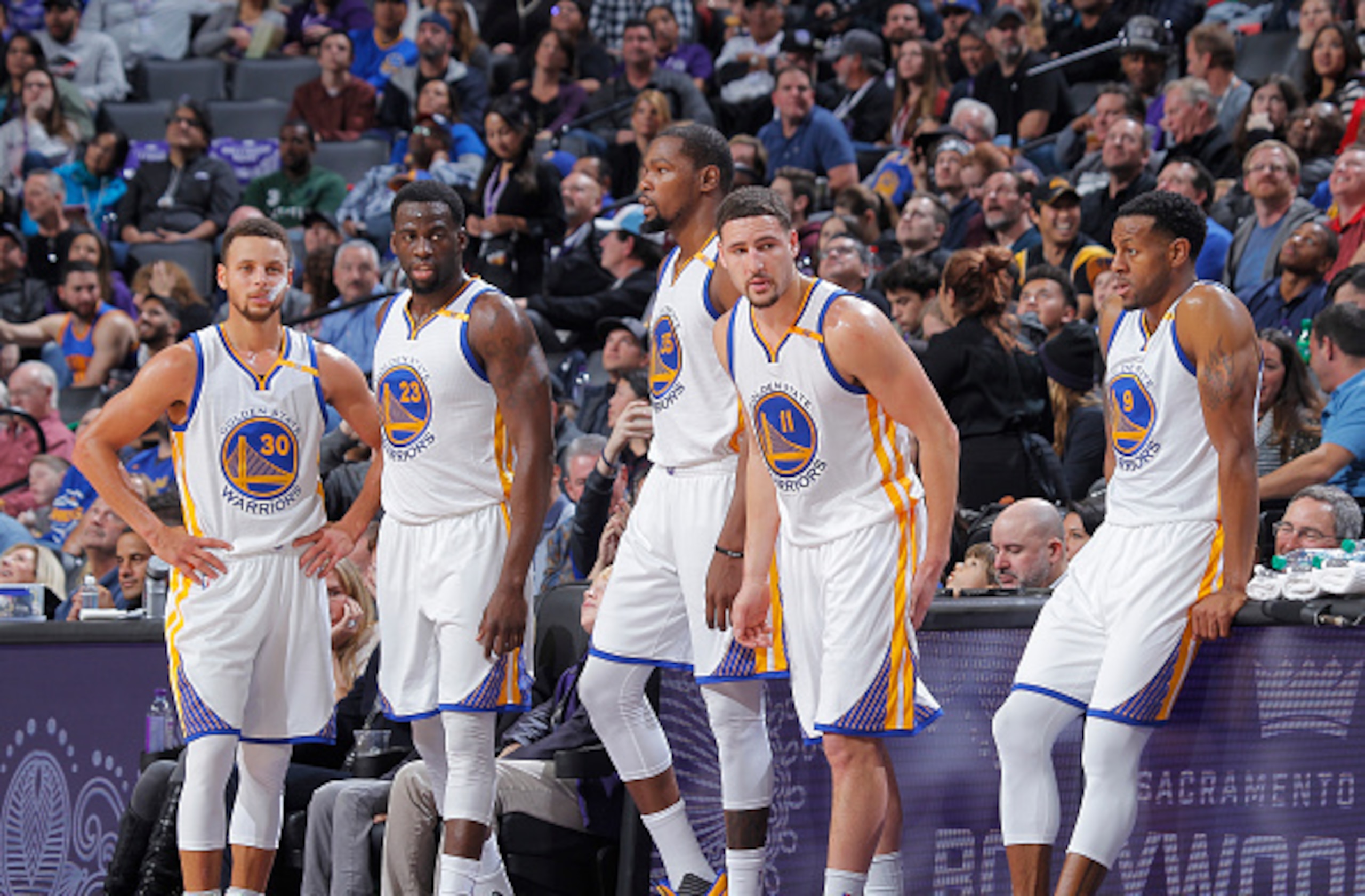
Games Played: 45
Minutes Played: 224
Net Rating: 23.9
Lineup Score: 53.54
Death, taxes and a Golden State Warriors "Death Squad" rating as one of the most spine-searing lineups in basketball.
There wouldn't be another five-man crew with a better score if Kevin Durant never sprains his MCL. It doesn't always seem or feel like it, but head coach Steve Kerr turns to this small-ball acid trip more than last year's version. The results are similarly harrowing:
| 2015-16 Death Squad | 37 | 172 | 59.7% | 53.5% | 142.0 | 95.0 | 47.0 |
| 2016-17 Death Squad | 45 | 224 | 51.8 | 33.9 | 122.4 | 98.4 | 23.9 |
This year's Death Squad would make a better impression if it weren't shooting under 26 percent from three-point land in the fourth quarter. It can still switch everything and is notching Association-best offensive and defensive marks while checking in as one of the 38 most used lineups.
What I'm trying to say is: Clearly, Durant ruined the Warriors. And that should mean the rest of the NBA won't care when he makes his return against the New Orleans Pelicans on April 8, per ESPN.com's Marc Stein.
Right?
4. Houston Rockets: R.Anderson, T.Ariza, P.Beverley, C.Capela, J.Harden
8 of 11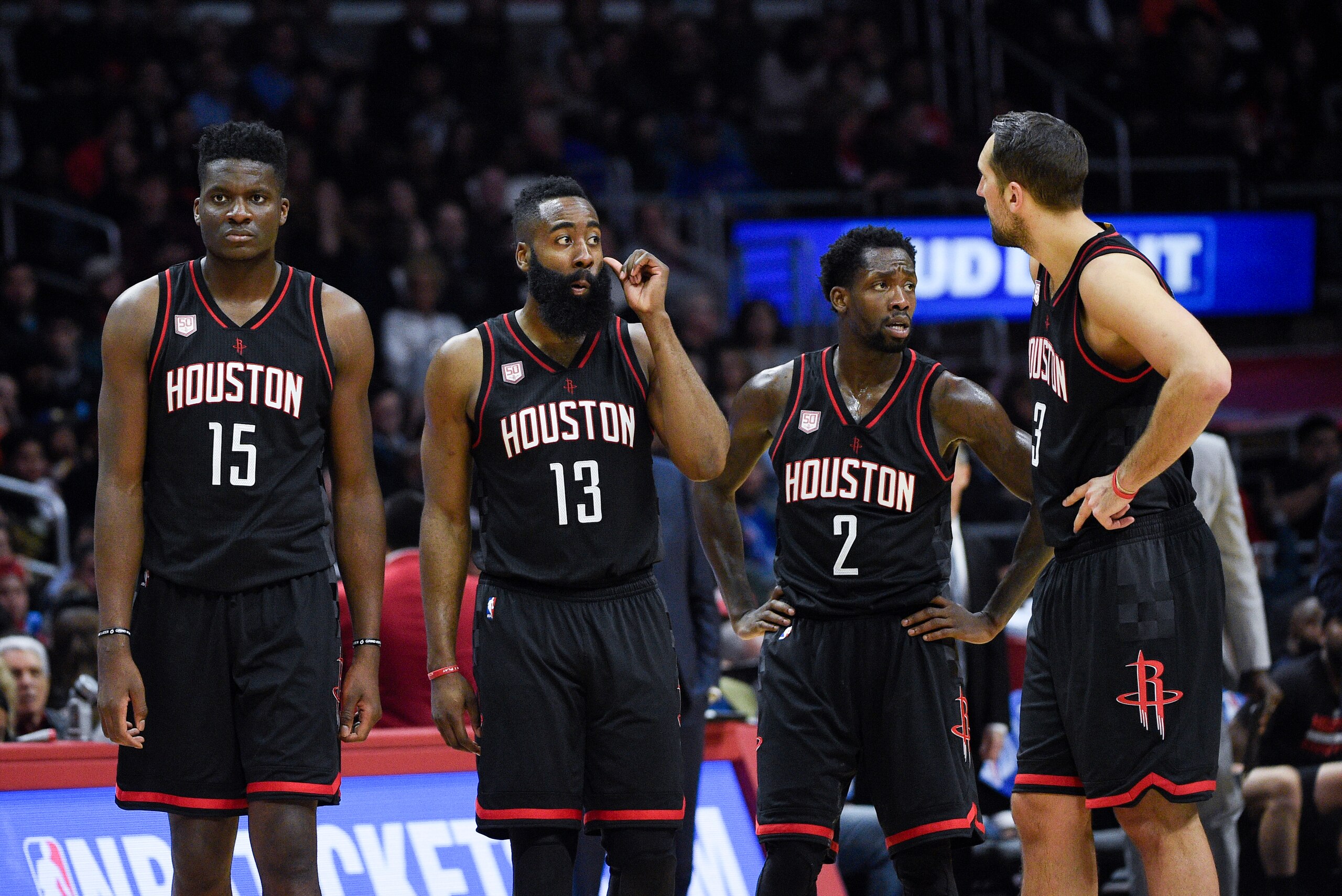
Games Played: 41
Minutes Played: 489
Net Rating: 13.9
Lineup Score: 67.97
Unless D'Antoni decides exclusively running five-out lineups is the way to go, the Rockets' most-used regular-season lineup figures to be the one that does the most postseason damage.
Good things happen when you surround James Harden with three shooters and a rim-runner such as Capela. The Rockets are dropping 121 points per 100 possessions with this five-man army while drilling more than 39 percent of their three-pointers.
Before Anderson suffered his sprained ankle, Houston was, somehow, enjoying even better overall results out of the trade deadline:
"We want to win the title, and obviously that's probably going through the Warriors at some point," Rockets general manager Daryl Morey said during an interview on SiriusXM NBA Radio (via James Herbert of CBS Sports). "And we absolutely figured the only way we're gonna beat 'em is with a barrage of three-pointers, and it's probably gonna be a 124-120 affair if we're gonna get past them."
Well, at some point, the Rockets must also lock down to win a playoff series, be it against the Warriors or another team. Rolling super small is tempting, but the balance of their eventual starting lineup gives them a far better shot at playing deep into the postseason and possibly withstanding run-ins with the Spurs and/or Warriors.
3. Washington Wizards: B.Beal, M.Gortat, M.Morris, O.Porter Jr., J.Wall
9 of 11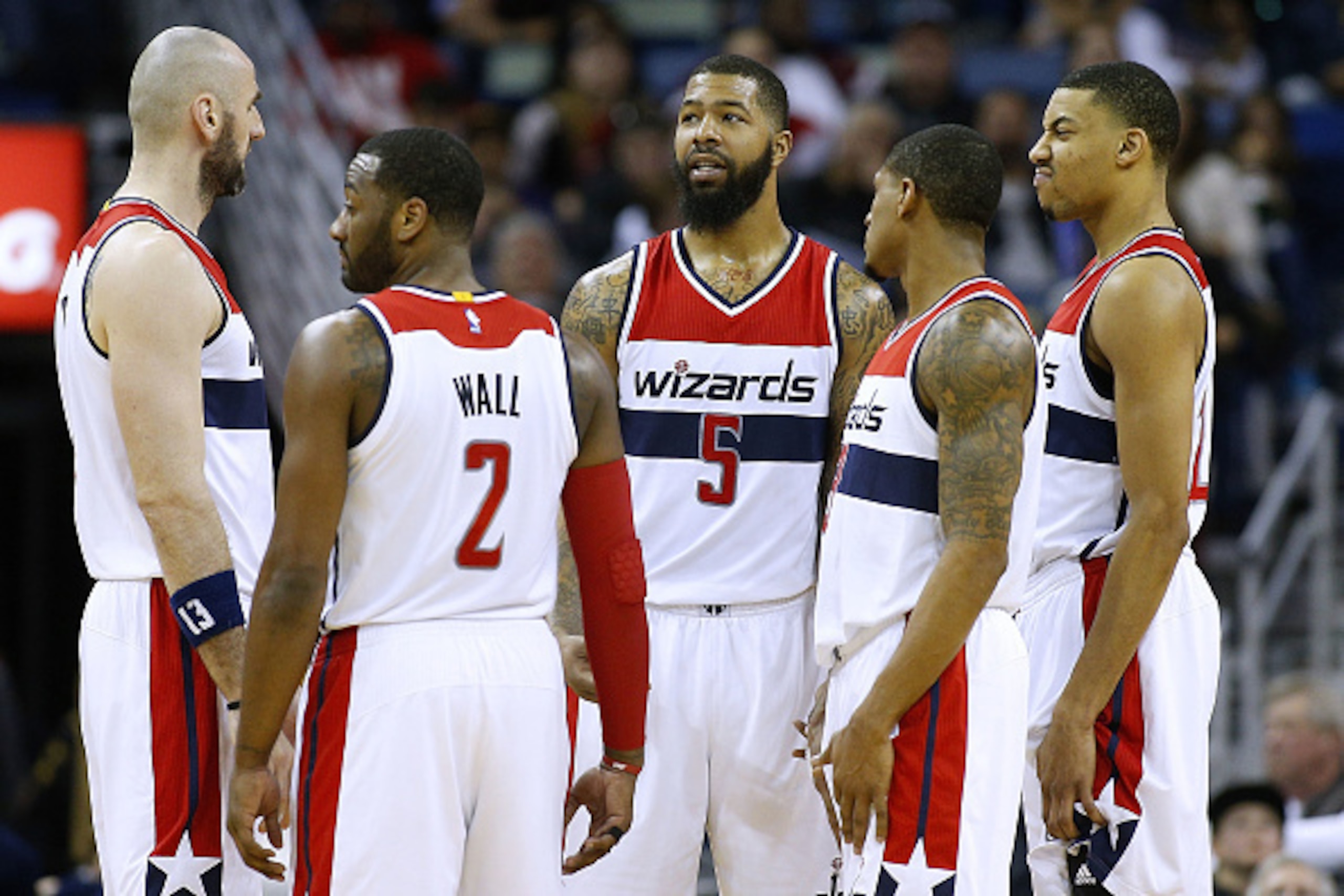
Games Played: 68
Minutes Played: 1,328
Net Rating: 7.8
Lineup Score: 103.58
How's that old saying go? Ah, yes: If it works, use it until it breaks.
The Washington Wizards' starting five has logged more total time than any other lineup. The distance between it and the second most used unit, from the Minnesota Timberwolves, is 448 minutes—about the same as the chasm separating second and 12th place.
Only two lineups have seen as much court time over the past seven years. Both played during the 2013-14 campaign, for the Blazers (1,373) and Indiana Pacers (1,468).
Whether this is good or bad comes down to a matter of preference. But the Wizards didn't have much of a choice this season. Their bench is shallow. Only recently, after the trade deadline, did it begin to add real, reliable depth.
"All it takes is a bad night from [Bojan] Bogdonovic shooting the ball, and you have to bring the starters back in early," Bullets Forever's Jake Whitacre told On Tap Magazine's Trent Johnson. "On the flip side, the starting lineup has played so many minutes together that they know exactly what they’re doing."
Bradley Beal, Markieff Morris, Otto Porter Jr. and John Wall are all on the right side of 28, so the monumental burden they're carrying isn't unsustainable. This unit guarantees the right amount of everything, from floor spacers and attackers, to playmakers and spot-up shooters, to athleticism and IQ, to multiposition defenders.
Fatigue might become an issue as April leaks into May. If it doesn't, the Wizards could find themselves playing into the Eastern Conference Finals, fully equipped to put whoever their opponent is through 94 feet worth of hell.
2. Los Angeles Clippers: B.Griffin, D.Jordan, L.Mbah a Moute, C.Paul, J.Redick
10 of 11
Games Played: 42
Minutes Played: 784
Net Rating: 14.0
Lineup Score: 109.76
Piecing together at least one dominant lineup is never an issue for the Clippers. It was easy from the moment Chris Paul arrived, ahead of 2011-12. Adding J.J. Redick to a foundation of him, Blake Griffin and DeAndre Jordan rendered this seasonal quest a cakewalk:
From here, it's all about finding a fifth body. Anyone with a pulse will do. But the Clippers prefer low-end wings with a defensive conscience. Luc Mbah a Moute has been the guy for each of the last two seasons, and as Robert Flom wrote for Clips Nation, he's peaked at just the right time:
"Luc has upped his stats across the board from last season, and substantially so in some areas. He’s shooting better, scoring more, and accumulating more blocks and steals. The only blemish is a decrease in rebounding, which is a real issue when paired with backcourts that are already poor in that talent. But no matter. Luc has been awesome and deserves real accolades (cough Second-Team All-Defense cough) for his efforts on defense this season.
"
Urgency is a given for the Clippers, with their core growing stale. Mbah a Moute rounds out a lineup capable of getting them deep enough into the postseason to, at minimum, run it back next year with confidence.
After all, every team outside the Bay Area would kill to have a 39.6 percent three-point shooter who guts opposing pick-and-rolls and destroys lives in isolation as its fifth-best starter.
1. Golden State Warriors: S.Curry, K.Durant, D.Green, Z.Pachulia, K.Thompson
11 of 11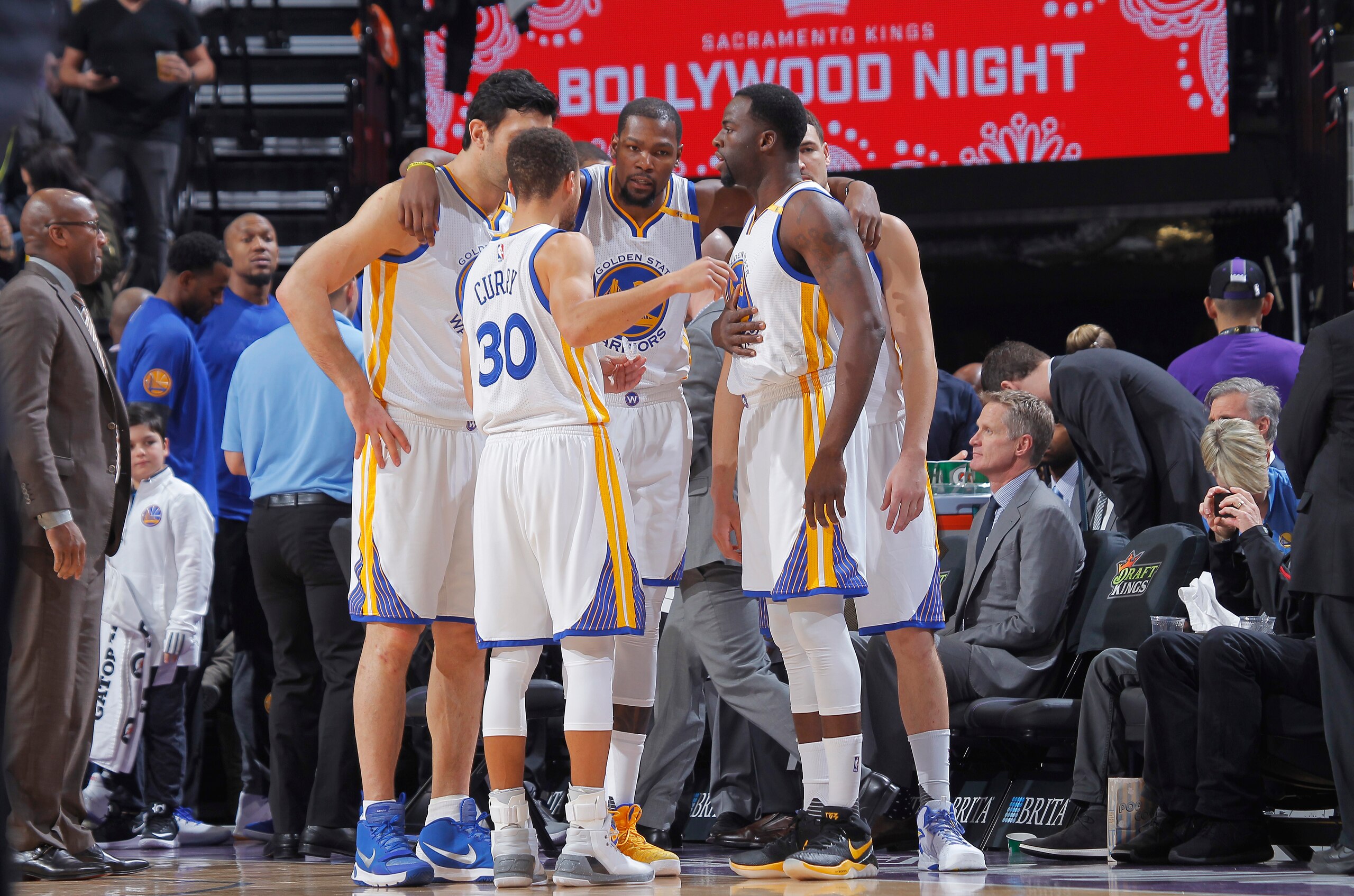
Games Played: 43
Minutes Played: 532
Net Rating: 23.1
Lineup Score: 122.89
Where would the Warriors' starting five be without would have been an All-Star under the old voting protocols Zaza Pachulia?
Probably still here.
Yank Pachulia for JaVale McGee, and the score of the resulting lineup explodes. It just hasn't played enough minutes. And yet, there's something unnecessarily unnerving about anointing McGee the official fifth wheel of a four-man herd that could run you out of the building playing 4-on-5—or with LaVar Ball as its resident novelty.
Pachulia isn't the better rim protector, but he's the more reliable post defender. Golden State can play faster with McGee, but Pachulia doesn't disrupt the offensive flow and is a much better passer.
The goal of polishing off any superstar formation is to find someone who won't stand out for all the wrong reasons. And for all McGee is doing right with the Warriors, Pachulia does a better job blending in and letting the Curry-Durant-Green-Thompson quartet work its peerless voodoo.
Sure, we talk a lot about potential challengers—about teams and lineups and play styles that might be able to push Golden State to the brink. If we're being honest, though, there isn't yet an adversary built to withstand seven games of what this starting lineup, and so many other Warriors combinations, have to offer.
Dan Favale covers the NBA for Bleacher Report. Follow him on Twitter (@danfavale) and listen to his Hardwood Knocks podcast co-hosted by B/R's Andrew Bailey.
Stats courtesy of Basketball Reference or NBA.com and accurate leading into games April 4.



.jpg?w=2560 "Aikman Blasts Cowboys WR 🫣")
.jpg?w=2560 "Jonathan Taylor Landing Spots")