

Terrence Jones Proving He Can Be Houston Rockets' 3rd Star
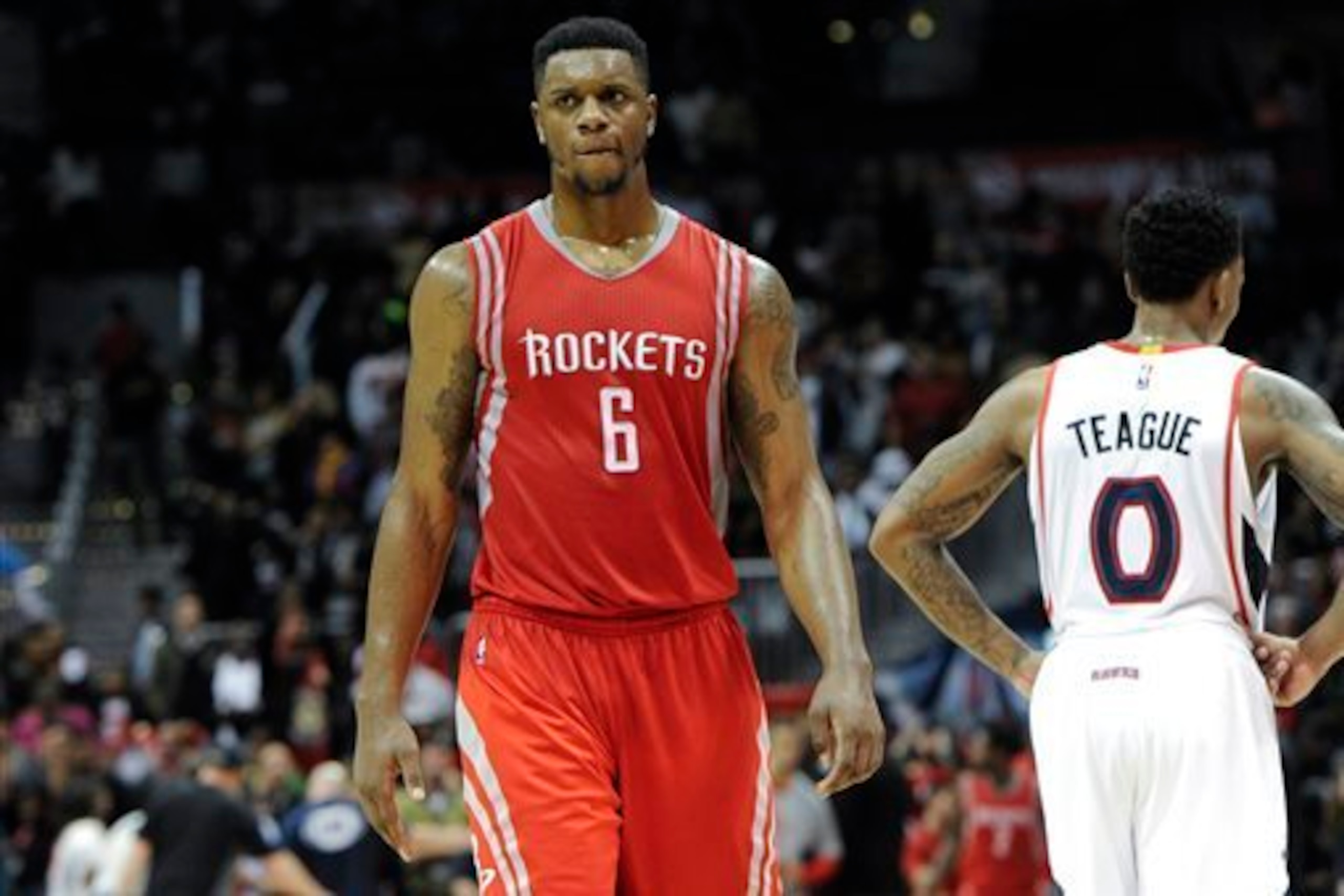
Terrence Jones is feasting at the rim, and in doing so, he is becoming the third scorer the Houston Rockets desperately need to take the pressure off James Harden in a postseason run.
The Rockets' second star, Dwight Howard, has been out recovering from a marrow injection to his knee, but is expected to be back before the playoffs.
Jones had an abbreviated start to the season, playing just four games before suffering a peroneal nerve contusion, which cut off all feeling in the lower part of his right leg. According to Jenny Dial Creech of the Houston Chronicle, he was concerned his career might be over
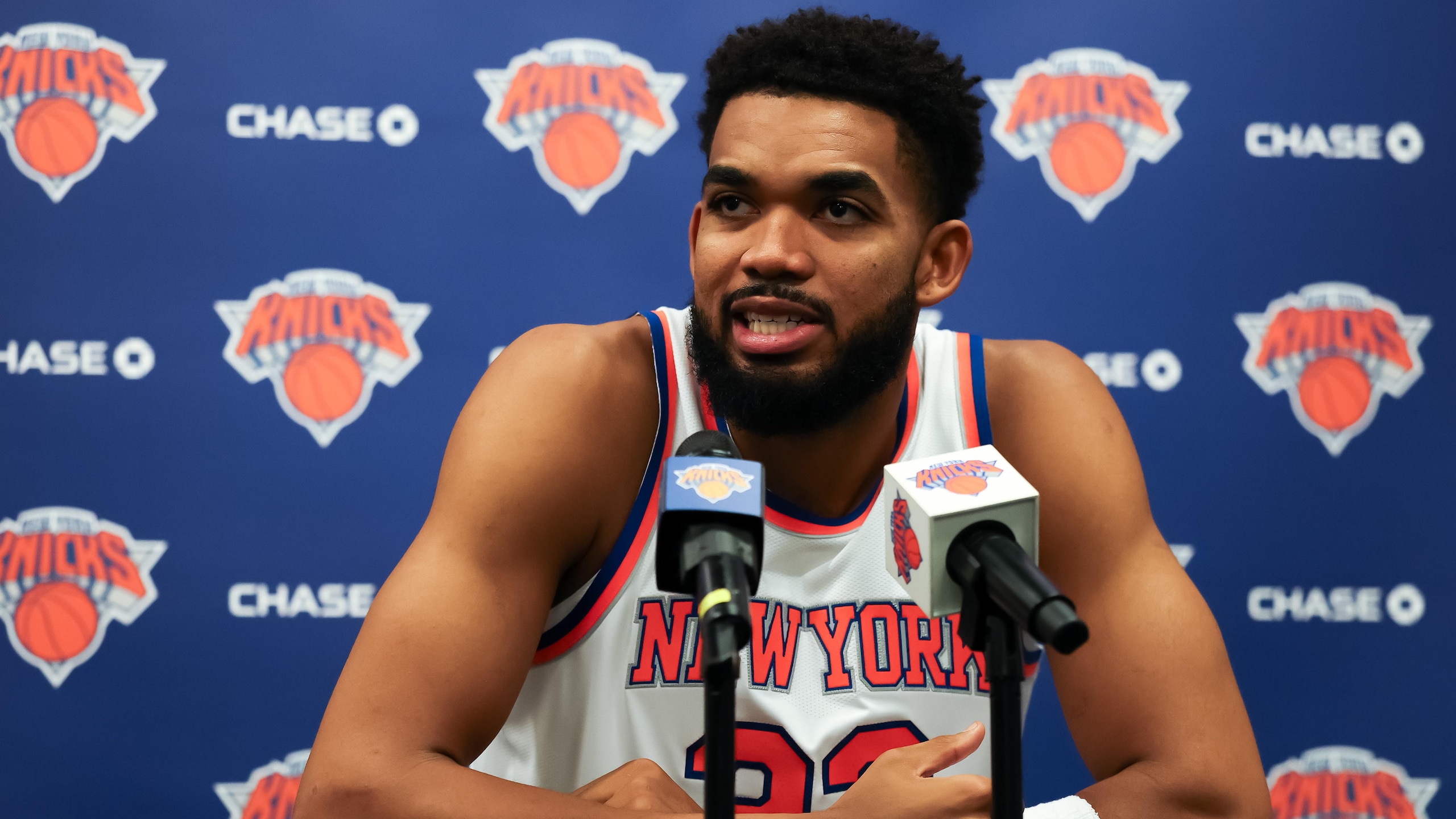


"Especially when it first happened. They were running so many tests and I was sitting in that hospital for days. It was very difficult.
In the beginning it was very scary, not being able to move my leg for a solid two weeks and having no ankle mobility, toe mobility and not knowing when it could be back was very difficult for me and my family.
"
But he’s back—and not just in a feel-good story either. He’s playing well and making the Rockets offense purr like a Hemi. Per the media version of NBA.com/Stats, when he’s on the court, Houston scores 109.2 points per 100 possessions, 6.8 more than when he’s on the bench.
Jones' Direct Contribution
According to NBA.com/Stats, only three players average more points and score more efficiently in the restricted area than Jones’ 4.1 field goals on 70.5 percent shooting. That is making a world of difference for the Rockets—and in ways that aren’t immediately obvious if you look at his shot chart:
Nearly everything is coming inside the restricted area. (For an amazing and more detailed look at the shot chart, visit BBALLBREAKDOWN/Buckets). I mean, look at all that white!
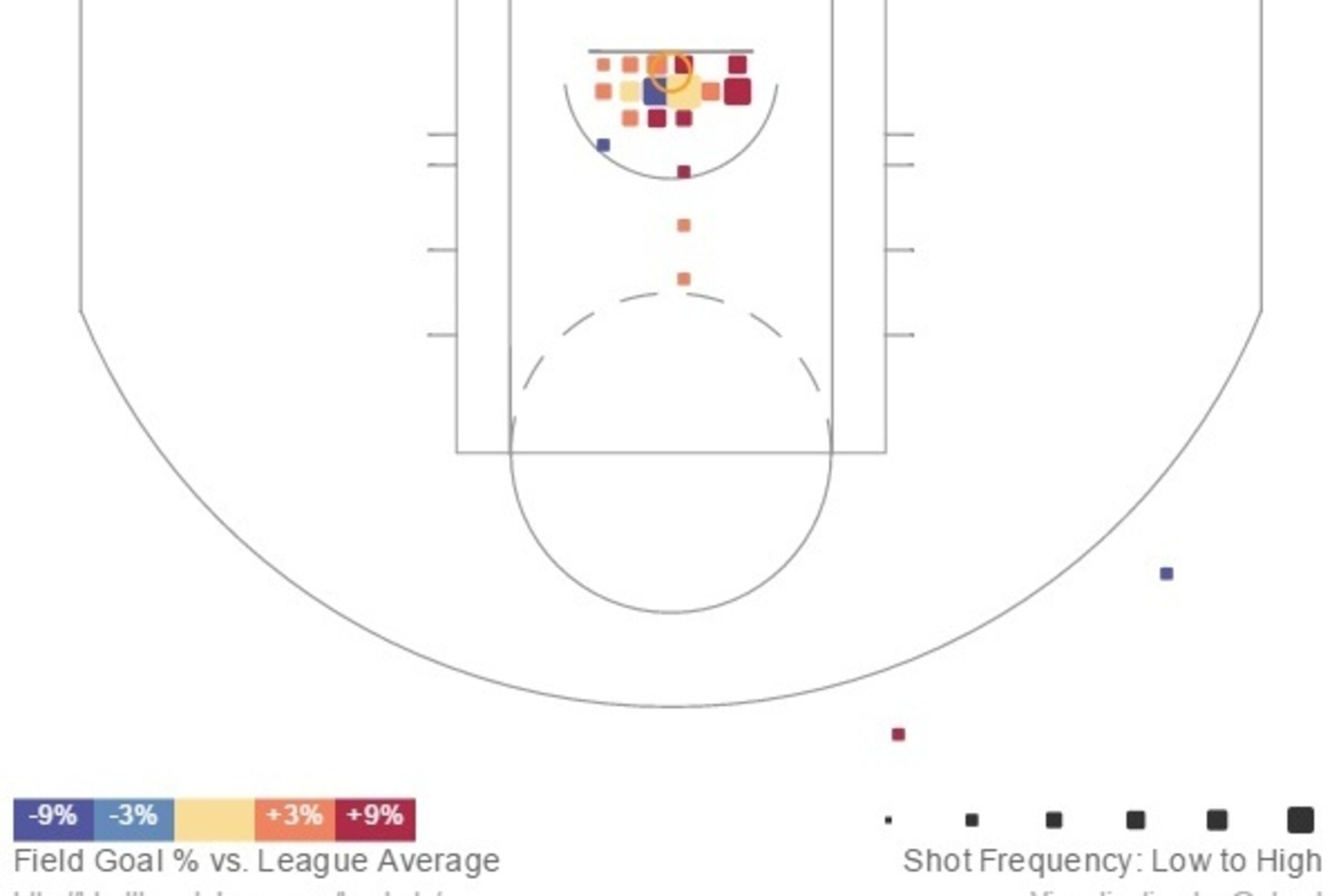
Jones is scoring only in the one zone, but he’s getting his looks in multiple ways. Some are coming by leaking out in transition, such as on this outlet pass from Harden:
Or from running the break, such as he does here on the feed from Donatas Motiejunas:
They can come as the roll man in the pick-and-roll. He averages a whopping 1.54 points on such possessions, which is second-best in the league, trailing only Kevin Durant. Watch him and Harden work their magic here:
Or where he catches the Toronto Raptors sleeping on the rim side of this alley-oop.
He can get them posting up, such as here, where he jukes Dirk Nowitzki and pockets the easy two:
He’s also great with putbacks, leading Houston with 1.21 points per possession on such opportunities.
The Indirect Contribution
We often look things in a linear way, so we might not conclude from Jones’ production at the rim that the Rockets improve from the three-point line when he’s on the court, but they do.
Imagine a basketball court with a rubber band stretched around the three-point line. Because it’s essentially a line—albeit a curved one—the rubber band can double up and retain strength. But now, imagine that same rubber band connected to the restricted area too. With another dimension to it, the resistance the rubber band can offer is greatly reduced.
That’s what happens to defenses when Jones is on the court. Adding a presence down low makes a massive difference in and of itself. When Jones is playing, Houston gets 35.7 percent of its shots from inside the smaller semi-circle and it makes 63.6 percent of them. When he’s not those numbers fall 33.7 and 58.6 percent respectively.
But the larger semi-circle is impacted too. Houston attempts 34.0 threes per 48 minutes while Jones is on the bench, compared to 31.3 when he’s on the court. Yet it makes 12.5 over 11.5 when he’s playing. The Rocket’s three-point percentage is up six full percentage points in spite of Jones shooting a mere 29.7 percent from deep.
Because there’s an inside threat to account for, defenses get thinned out. That allows for more open looks and a corresponding increased efficiency from deep. Sometimes that even comes off a pass from Jones himself:
Creating shots in the post makes for more passes out of the post, and that accounts for more assists by the Rockets as a team. The inside-out game works a lot better when there’s an actual inside. Like here:
Jones doesn’t drop a lot of dimes, but Houston is a better passing team with him in spite of that. His 7.0 assist percentage is the lowest of any Rocket averaging more than 12 minutes per game, but when he’s on the court, 63.5 percent of their field goals are assisted, compared to just 58.8 percent when he’s not.
Jones takes some of the pressure off Harden. When both players are on the court, the Rockets are grotesquely effective, outscoring their opponents 113.3 to 96.5 every 100 possessions. The best thing is that Harden’s usage percentage drops from 31.0 percent to 29.9 percent. Less burden on Harden plus more scoring from the team overall equals more wins for the Rockets.
Jones also makes it possible for Houston to survive for spells without Harden.
Using NBAWowy, (which calculates possessions slightly differently, so don’t compare them with the NBA.com numbers) when Harden and Jones are together, the Rockets average 1.152 points per possession. When Jones plays without Harden, that falls to 1.04. When the team has neither of them, it’s an atrocious .929.
For those not familiar with advanced stats, that means that the Rockets go from being a horrid offense (Philadelphia 76ers level) without either of them, to being average (Washington Wizards) with just Jones to being elite (Golden State Warriors) with both of them.
And his scoring says nothing about his rebounding, either. Daniel Lewis, writing for Hardwood Paroxysm, discusses Jones' "gift of grab:
"While his per game numbers aren’t DeAndre Jordan god-mode high, Jones is grabbing a good percentage of contested rebounds, at 3.1 per game. That’s on par with more well-known big men like Marc Gasol, Al Horford and Serge Ibaka, according to NBA player tracking. So while he’s only playing 27 minutes a game, he’s grabbing 9 rebounds a game, with 3.4 of those coming on the offensive end.
"
Conclusion

And bear in mind, this isn’t the Rockets’ best product. Dwight Howard has barely played with Jones and Harden. In the 70 minutes the trio have been on the court together, they’ve outscored their opponents 172-129.
Howard and Jones combined should be able to man the post together well enough to keep defenses honest and allow the three-point shooters space to bury their shots. And that, in turn, should open up all kinds of room for Harden to wreak all kinds of havoc.
And this is where I think people are sleeping on the Rockets. They have their best ball ahead of them because they still haven’t had their best team on the court. Jones' reinsertion to the lineup is just another aspect of their steady improvement through the season.
The Rockets have added Corey Brewer, Josh Smith and Pablo Prigioni to the team since Jones and Howard last played together, and their bench has become one of the league’s best. Toss in the development of Motojieunas in the post as well.
When you add those reserves to a “Big Three” outscoring its opponents by 31.1 points per 100 possessions, you’ve got a scary-looking force come playoff time.
Much of winning in the postseason is about when you peak. The Rockets look like they plan to do so at just the right time. And when they do, no one is going to want to be in their way.
Unless otherwise noted, all stats were obtained from NBA.com/Stats.



.jpg?w=2560 "Love's Body Already 'Tired'")

.jpg?w=2560 "Tyreek Deal May Come Soon")
.jpg?w=2560 "Ward Nearly Walks Out of Presser ▶️")
