Missing the Spark That Defines OKC, Spurs' Season Comes to Stunning End
OKLAHOMA CITY — The last words said to Russell Westbrook before he took the court Thursday and ended what not long ago was accurately being called the greatest San Antonio Spurs season ever:
"Let's go, fool."
Oklahoma City Thunder teammate Anthony Morrow spoke them, practically singing the words as a tune.
.jpg?w=2560)
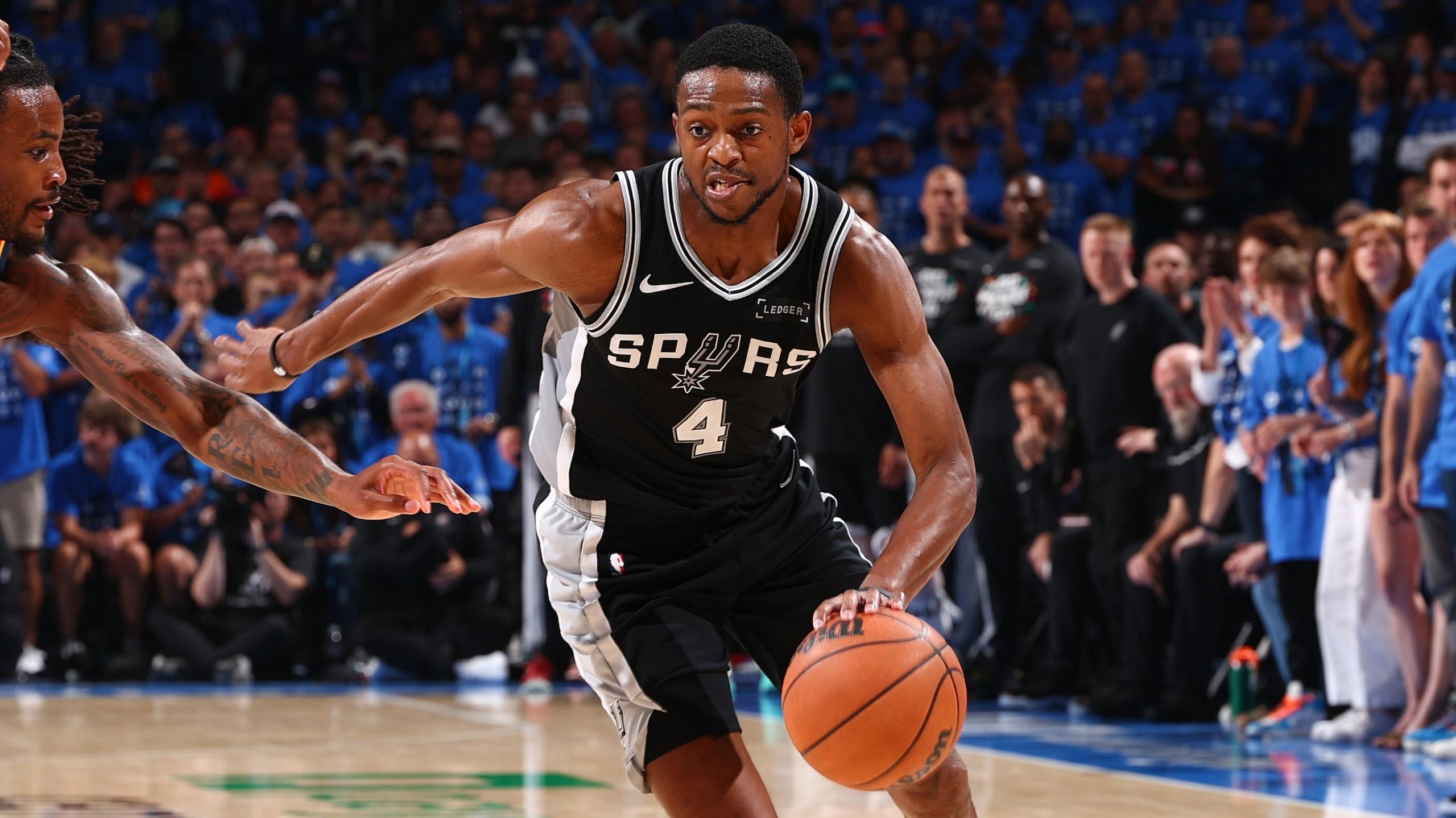

It was the antithesis of what any of the button-down, veteran Spurs would ever say to each other, especially in a pressure-packed playoff moment.
As such, the words serve as an apt stamp to put on a Spurs' season that came to a close after a 113-99 Game 6 loss to the Thunder.
The Spurs are not chill and reckless and eager to dance.
They are not fools.
And seriousness speaks to something they lacked in this six-game Western Conference semifinal blitz by a team that finished 12 games behind them in the standings.
It wasn't simply athleticism, though that was part of it.
It was vitality.
"Relentless" is how Spurs coach Gregg Popovich described Oklahoma City's will in pursuit of rebounds—especially Steven Adams, who was three years old when Tim Duncan was drafted.

Popovich's long-held belief that he wants players who have "gotten over themselves" undeniably helps build a team.
"The more character you bring in—or people who have gotten over themselves or are already competitive and don't need to be motivated—the job's a whole lot easier," he said earlier this season. "You can concentrate on other things. So that's part of the formula."
But as Popovich himself said, that's not all that is needed.
If some "gotten over themselves" guys are going to be so vanilla, other ingredients must promote, rather than stifle, creativity.
And without enough flavor in the mix and explosion in the chemistry, the Spurs were exposed by the onrushing Thunder to be so much less than they purported to be.
They were charlatans, really. Via black smoke and silver mirrors, the Spurs made unfocused opponents look stupid in the regular season en route to a club-record 67 regular-season victories.
Yet when it came down to it, the Spurs had no next gear and no unstoppable individual stars. The long, nimble Thunder defense hunkered down instead of falling for all that deception. Kevin Durant had it figured out by late Thursday night, explaining how the quick-passing Spurs offense just tries to "make you move around a lot." OKC just didn't move.
For some observers it was a stunningly premature end to San Antonio's season, but it was telling how well the Spurs accepted defeat.
They knew their bench was heavy with experience but offered no infusions of energy when on the court.
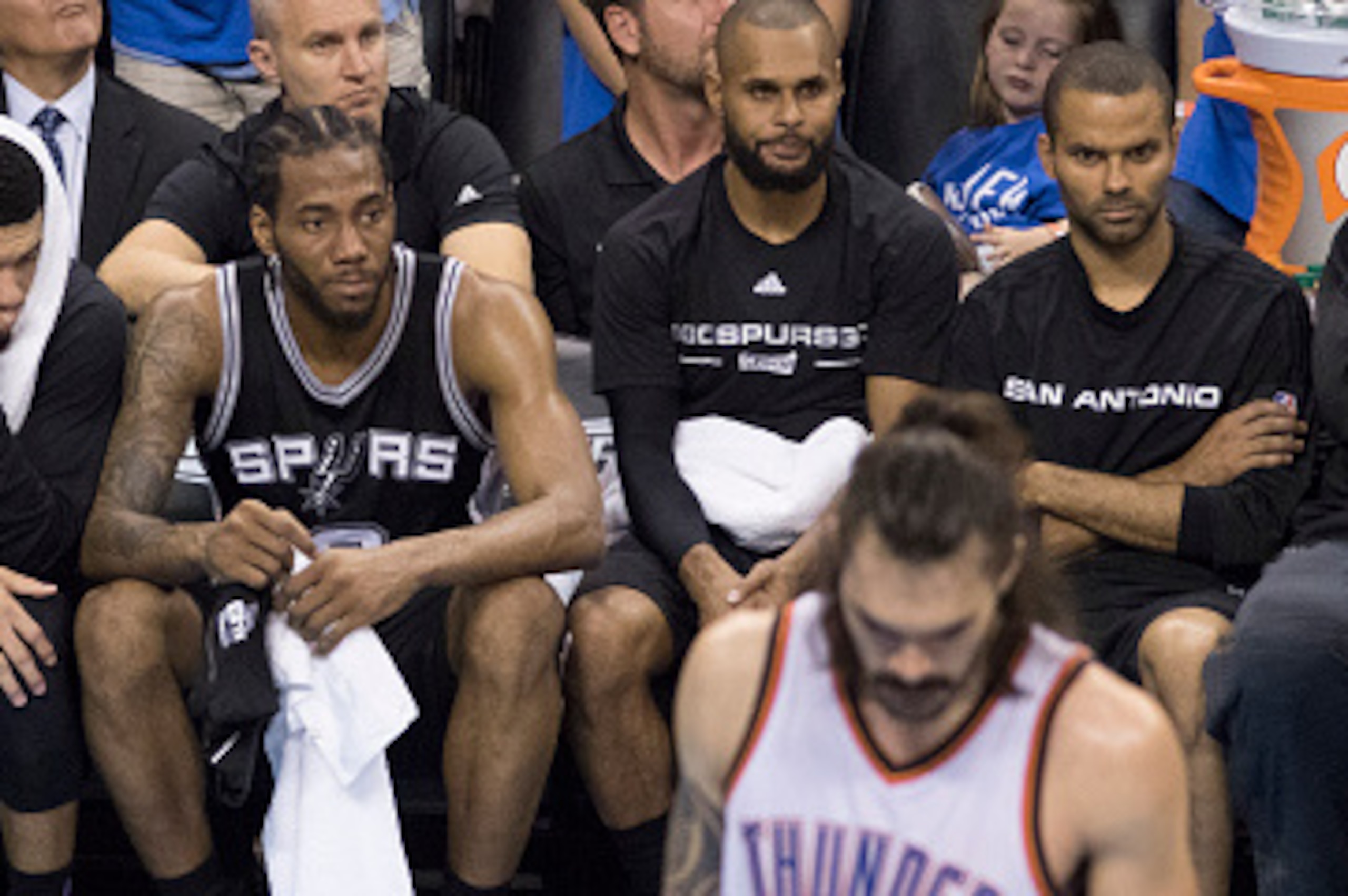
They knew they got tired late in games and thus failed to execute.
And they got really tired late in the series, trailing by 28 points in the final game.
Bear in mind how the Spurs fell off late in their playoff series last year, too, losing Games 6 and 7 to the Los Angeles Clippers to exit in the first round.
This year, Oklahoma City grew wise to the Spurs' tricks while not letting go of its own irrational exuberance. Only one side had healthy spice on it.
That's what San Antonio must seek in the offseason—especially something dynamic and imaginative on the perimeter that Tony Parker and Manu Ginobili gave as 2014 champions but can no longer.
The Spurs will also ask for even more from Kawhi Leonard, perhaps more than he can give.
When a season ends with a loss instead of a victory, we nitpick even when you've done as amazingly well as Leonard, the runner-up to Stephen Curry for NBA MVP.
Part of Leonard's greatness stems from the fact that he doesn't freelance the way Curry does. The guy is so solid. But in a playoff series where the opponent learns so well to take away set plays, favorite actions and even simple tendencies, freelancing for points is a must.
It's unclear, from a basic personality perspective, if Leonard can take another leap into becoming that kind of inventive player after he has grown almost everything else in his game.
An even more important question is this:
Will Leonard's soundless demeanor—he still rarely talks, even to teammates, despite five NBA seasons complete—allow him to blossom into a full-fledged team leader for the next Spurs championship team?
"Like any good player, you want him to improve in all areas," Popovich said earlier this season. "I talk to him about leadership; I talk to him about time and score of games, and every little piece of what's going on. He's somebody who wants to be great—and he's progressed significantly every single season. So when a player wants it that badly, it's fun to be able to keep feeding him. And he keeps taking it, and he keeps getting better and better."
But with Duncan, 40, practically a parent after whom Leonard, 24, is modeling behavior—and with the Spurs' entire operation closed off to the public the way Popovich prefers—Leonard is not exactly encouraged to change his inward ways.

So often you'll see him stooped over on the court with his hands on his knees. It's not that he's out of shape or breath; it's just natural for him to lie low.
When Leonard speaks, his chin is practically in his chest. When he does look up, his eyes move past people and wander to vague points in the distance.
While he has been emboldened to begin complaining about referee calls, more often than not, Leonard talks while walking away from referees, unwilling to engage and directly make his point.
These are little things, far less important than his fantastic defense or improved shooting and finishing. But it's unlikely that straightforward LaMarcus Aldridge will ever offer the passion Leonard does not in balancing this team. That need for a spiritual counterweight has become clearer the less Parker and Ginobili do. For all of their basketball skills, those two also have a certain sparkle in their eye and a way with people.
Leonard simply does not, and the Spurs will have to surround him with some splash to make this more than a machine.
No one exemplifies that machine more than Duncan, and when he retires, as he is considering, the Spurs will lose much of their vibrancy.
Believe it or not, Duncan is funnier, weirder and more inclusive within the team structure he loves than people realize.
In final pregame warmups, Duncan will spend a significant amount of time playing a unique game with Leonard. It can last minutes rather than seconds.
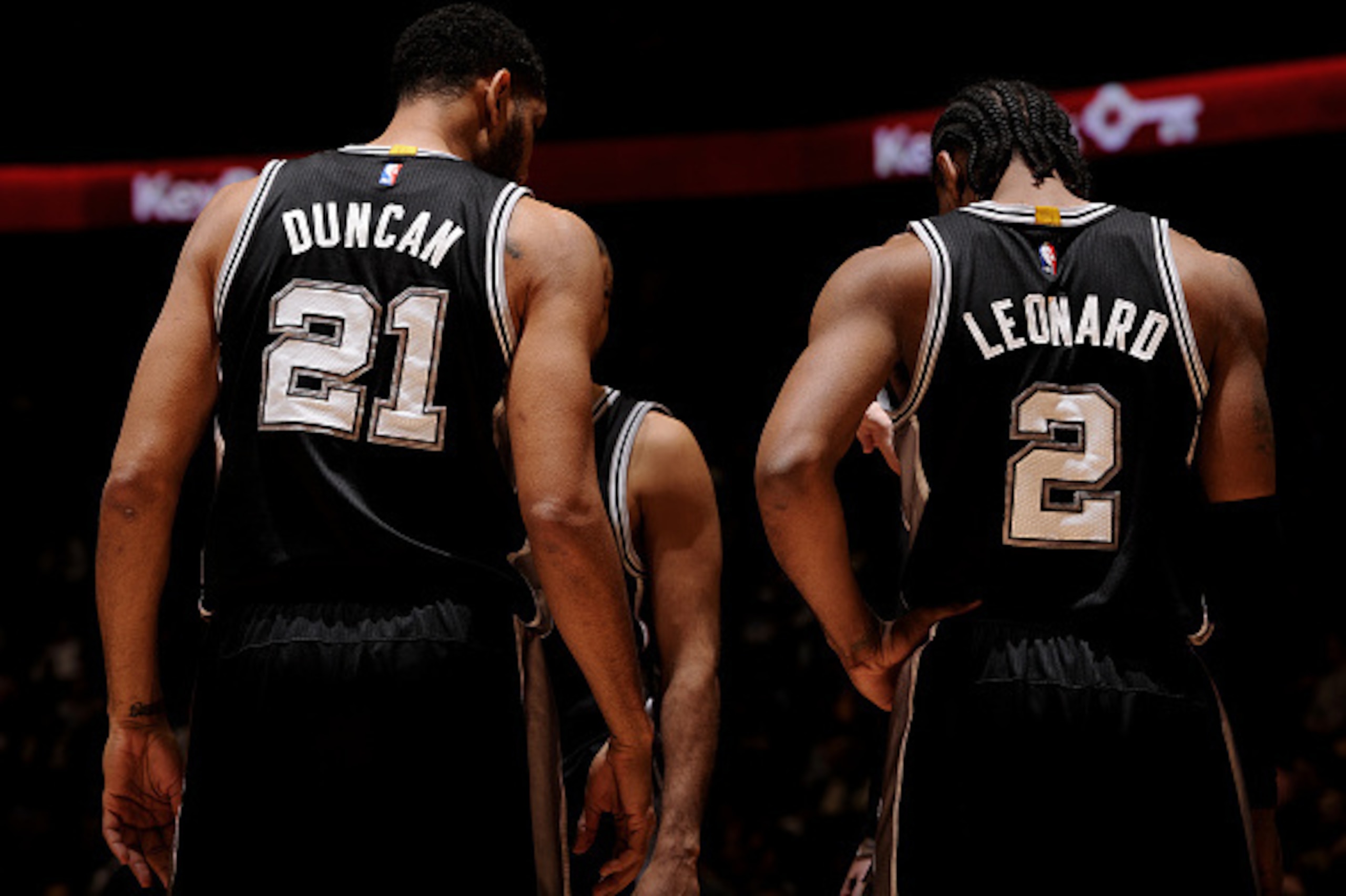
It basically boils down to Duncan pushing Leonard to see if he can make all sorts of shots in the paint with Duncan fouling him.
Not just defending him, but blatantly fouling him.
Duncan wants Leonard to get ready to play through contact in the game and refine that spider-arm reach to squeeze off shots, but he also wants to entertain him.
So every once in a while, Duncan will do something that is such a ridiculous foul—or is actually quite inappropriate—and Leonard is moved to flash the briefest of smiles.
"He's been a great teammate for me," Leonard said. "Helped me grow up a lot."
Leonard isn't Duncan's only project.
Since Aldridge's arrival, Duncan has given every piece of advice he can to the former Trail Blazer—and then goes and asks Aldridge what else he can do, on and off the court, to accommodate him further.
As impassive as he appears, Duncan not playing a prominent, active role these days has already cost this team some spark. No one talks on defense like he does. No one messes with guys in his odd ways. No one builds more bridges on the team better.
His outsized value is why the best way to get Popovich to be human and not indignantly gruff if you're a reporter is simply to ask him a question about Duncan.
Timmy is not a topic that elicits a mocking response. Popovich knows how much Duncan adds not just in professionalism or defensive rotations to his teams, but in humanity—and Popovich wants to speak earnestly in praise of his longtime leader.
Whether just standing and staring behind Popovich as if he's the muscle to intimidate referees as the coach harangues them or accepting coaching criticism with even composure to set an example for teammates, Duncan is a subtle team connector.
But as Duncan's game impact dwindles, the less he factors into the team's identity. He is limited by the brace he wears on his left knee—and some days he wears a brace on his right knee, too. Had the Spurs won this series, Duncan still would've been shelved for much of the next round against the speed-and-spacing system of the Warriors.
The Thunder's game plan for him was simple: sag off him and let him shoot or just funnel him to move at his glacial pace toward OKC's more agile bigs.
Duncan didn't even try to attack much of the series, but he went for it more Thursday. When Popovich asked him if he wanted to play the fourth quarter, Duncan said, "I always want to play."
He finished with 19 points—more than in all but one of his games this entire season—though he had just five rebounds.
It didn't end well. There was one last clap of those hands in chagrin after he missed an open shot with 3:39 left. Then Serge Ibaka absolutely floored Duncan with a clean block when Duncan tried to drive into open space.
At least he was trying still to be a difference-maker instead of settling. And after the play, Duncan came back out of the timeout well before any player on either team, standing determinedly on the court with his hands on his hips, ready to keep at it.
Except he never again touched the ball with the clock moving.
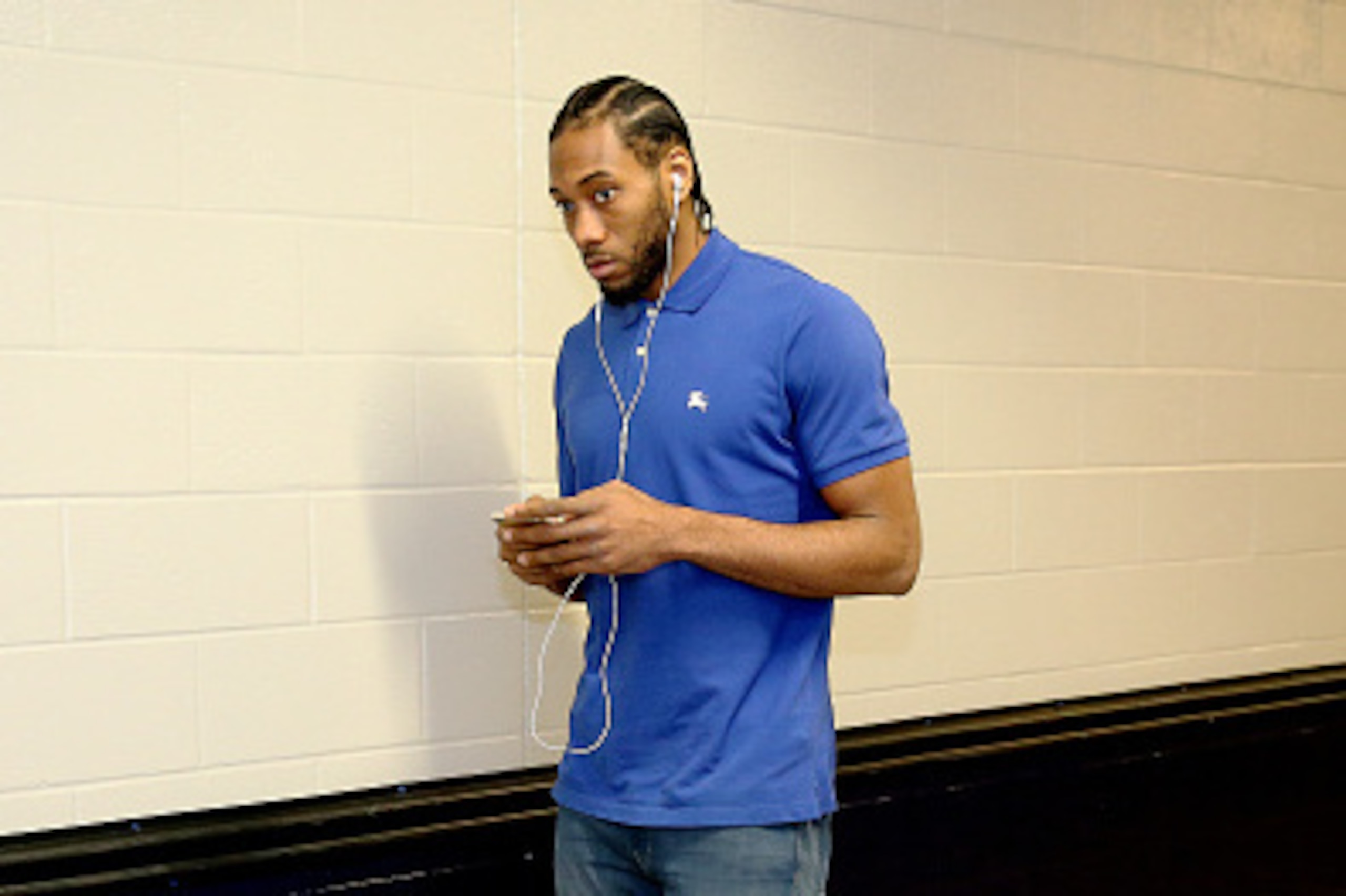
After the loss and season were complete Thursday, Leonard came out of the shower in two towels and sat down—predictably with the chair and his body facing into his locker and away from the room.
He got dressed in his polo shirt and jeans, although the back of his collar was accidentally left flipped up. Of course, no one had told him or fixed it before Leonard spoke to reporters because Leonard hadn't interacted with any teammates.
This is the sort of fashion thing Leonard doesn't care about anyway. He wears sweaters with visible hanger bumps on his shoulders. He showed up at All-Star weekend in Toronto with mud on his shoes.
Leonard wants to do his job as opposed to aspiring for celebrity, and that's a lot better than vice-versa. Yet even if he eschews the part of his job that is entertainment, he has to accept this:
A basketball team needs energy, even internally, to be the best it can be.
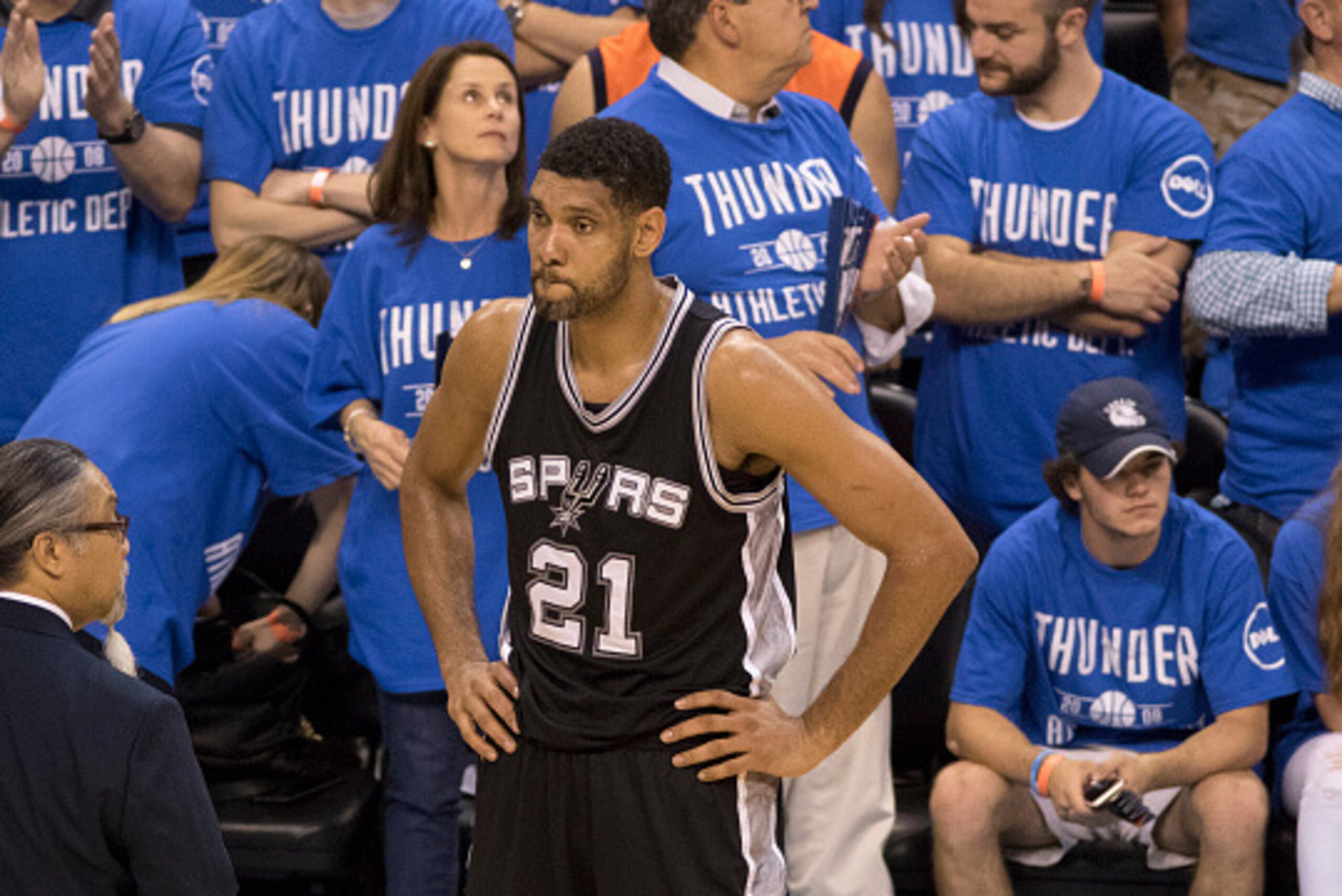
The Spurs, as they move forward with Leonard and Aldridge as the linchpins, need more of it.
Parker, who played less than half of Game 6 and scored just six points, was the only Spur who went to the large interview room to face the crowd of media and explain his team's failure to the world.
He had one positive note to sound. It was about Duncan.
"He was aggressive," Parker said. "He was not thinking."
Sure, there's a risk when someone pushes that approach too far, as Westbrook sometimes demonstrates. He just goes for it, and there are moments that do not work for him or the Thunder.
But having that improvisational spirit is critical to a team's synergy.
And the Spurs now know how hard that can be to find.
Kevin Ding is an NBA senior writer for Bleacher Report. Follow him on Twitter, @KevinDing.


.jpg?w=2560 "Picks for Irish, Every Week 1 Game 🔮")
.jpg?w=2560 "Projecting NFL Win Totals")