

Jay Gruden's Commitment to Kirk Cousins Will Get Him Fired
What is Jay Gruden doing?
When Washington hired Gruden to be its head coach, it was clear Robert Griffin III offered him the best chance at long-term success. Griffin was a worthy second overall pick who proved to be decisive, smart and accurate in a simplified scheme during his rookie season.
An injury ended his first season and ultimately hampered his second season. He clearly shouldn't have been on the field during the 2013 campaign, but the previous coaching staff continued to mismanage him. Griffin may have wanted to play, but then-head coach Mike Shanahan should have ultimately made the decision.
TOP NEWS
.jpg?w=2560 "Saints Lions Football")
Rap: Lions, LaPorta End Contract Talks
.jpg?w=2560 "Vikings Buccaneers Football")
Report: Baker May Miss Up to 6 Weeks
.jpg?w=2560)
EVERY Fantasy Football Update
Gruden's understanding of what had preceded him was supposed to set up his direction in his new role.
Learning from Shanahan's mistakes could have allowed Gruden to move forward with the most talented quarterback on his roster. Instead, Gruden made two major errors in his handling of the quarterback position that should ultimately see him fired.
Firstly, Gruden needed to adjust his offense to gradually transition Griffin into his offense. As a rookie, Griffin ran a play-action-heavy offense that made use of the quarterback's mobility and ability to read coverages from specific situations.
During his third season, Gruden wanted Griffin to be more of a pocket passer who didn't rely as much on the running game. This was always going to be a transition that Griffin would need time to gradually grow through on the field.
Griffin started for Gruden during the duo's first game together, but a dislocated ankle ended his second outing after just three pass attempts.
This is where Gruden made his second major error. Griffin sat out for six more games before returning to the starting lineup in Week 9 against the Minnesota Vikings. He was inconsistent, but that was to be expected. Meanwhile, he made enough positive plays to be optimistic about his development moving forward.
Griffin remained inconsistent over the next three weeks, at which point Gruden benched him. After just four games, Gruden gave up on Griffin in favor of Colt McCoy.
McCoy, then a 28-year old, had proved throughout his career he was an incapable starter. His physical limitations and inconsistent decision-making had seen him wash out of the Cleveland Browns franchise before the San Francisco 49ers decided Blaine Gabbert was a better option as Colin Kaepernick's backup.
Had Gruden understood the situation he was inheriting, he would have known Griffin was going to need time to adjust to a new offense. He would have known that gradually expanding the quarterback's responsibilities made much, much more sense than asking him to immediately swap one for the other.
Griffin resumed his role as the starting quarterback once McCoy landed on injured reserve before Gruden named him the starter early in the offseason this year. Another injury during the preseason this year would give Gruden another opportunity to move away from Griffin.
That is how we landed with Kirk Cousins.
Cousins had filled in for Griffin after he dislocated his ankle in 2014. Over the majority of six games, Cousins compiled 1,710 yards on 204 attempts with 10 touchdowns and nine interceptions. Cousins' play enthused Gruden so much that he reversed his decision to start Griffin this season.
Although his numbers weren't spectacular last season, they still overstated how well Cousins played. The quarterback had a penchant for turning the ball over and was fortunate he only threw nine interceptions on 204 attempts last season.
He threw an interceptable pass once every 11.3 attempts in 2014, the worst rate of any quarterback charted.
Cousins' consistency throwing the ball to the other team is startling. According to Michael David Smith of Pro Football Talk, Cousins was the only quarterback to throw eight-plus interceptions on 230 or fewer pass attempts last season, and he's the only quarterback to do it again this season.
He has thrown 16 interceptable passes so far this season for an improved rate of one every 14.3 attempts. However, 14.3 attempts would rank him only above Brian Hoyer, EJ Manuel and his own previous mark if compared to last season.
For comparison, Robert Griffin III threw an interceptable pass once every 23.8 pass attempts last season.
Pointing to Cousins' improving interceptable pass rate as potential development would be foolish. Not only is he still throwing the ball to defenders at an outrageous rate, but he is doing so while playing in a cautious, simplistic offense.
Through six games this year, Cousins has thrown 228 passes for 1,420 yards, six touchdowns and eight interceptions. Once again, those numbers flatter him.
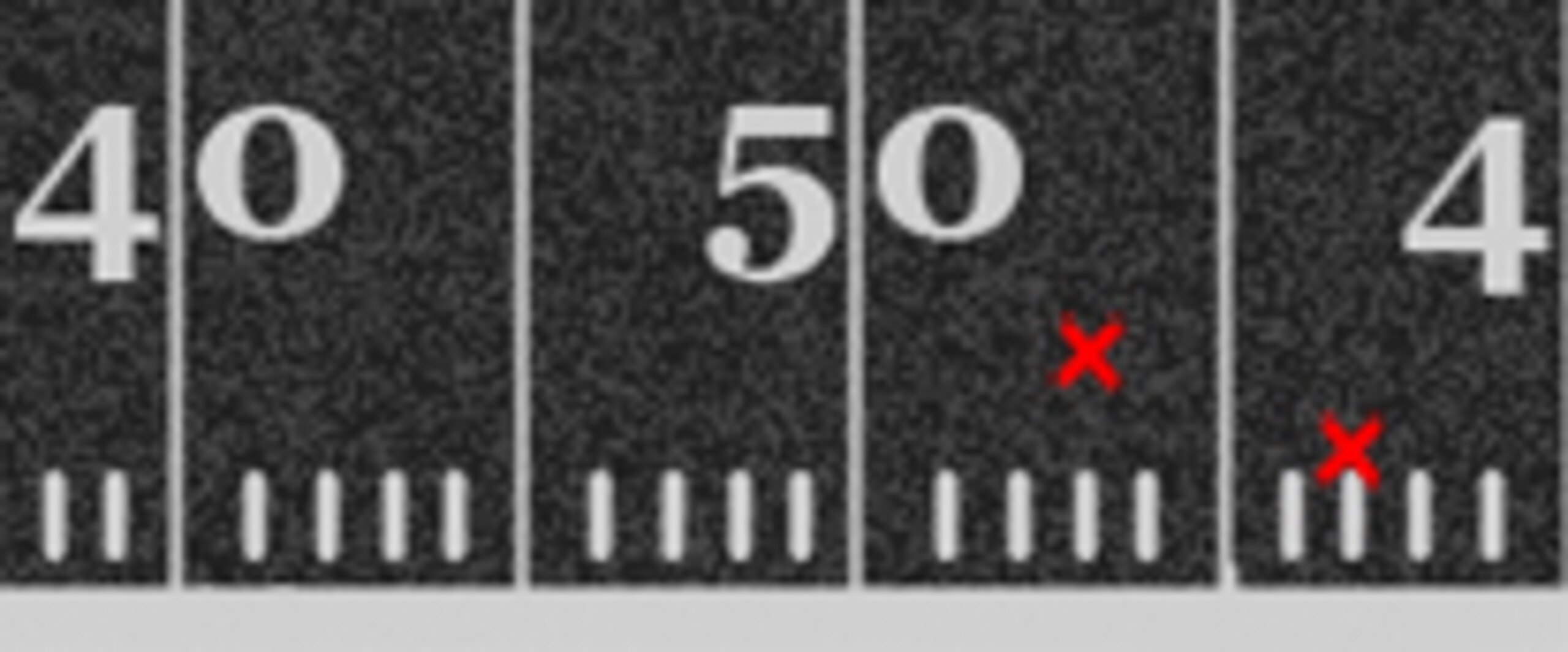
In the above chart, all of Cousins' pass attempts this season have been charted except for spikes, intentional throwaways and miscommunications. The chart doesn't track completions and incompletions; it doesn't track catchable or uncatchable passes. It considers ball placement.
Every green tick is an accurate pass, and every red cross is an inaccurate pass.
As the chart shows, Cousins can't throw the ball down the field. He throws an abnormal percentage of his pass attempts within five yards of the line of scrimmage. The offense is unusually based on throwing the ball within five yards of the line of scrimmage and outside of the numbers.
These are typically throws to receivers running curl routes or receivers running out from inside alignments. As such, they are safer throws from the quarterback. Gruden does a good job of creating quick throws for Cousins with his route combinations, but those throws typically gain very few yards.
Against the New York Jets this past Sunday, Cousins' poor deep accuracy was highlighted repeatedly.
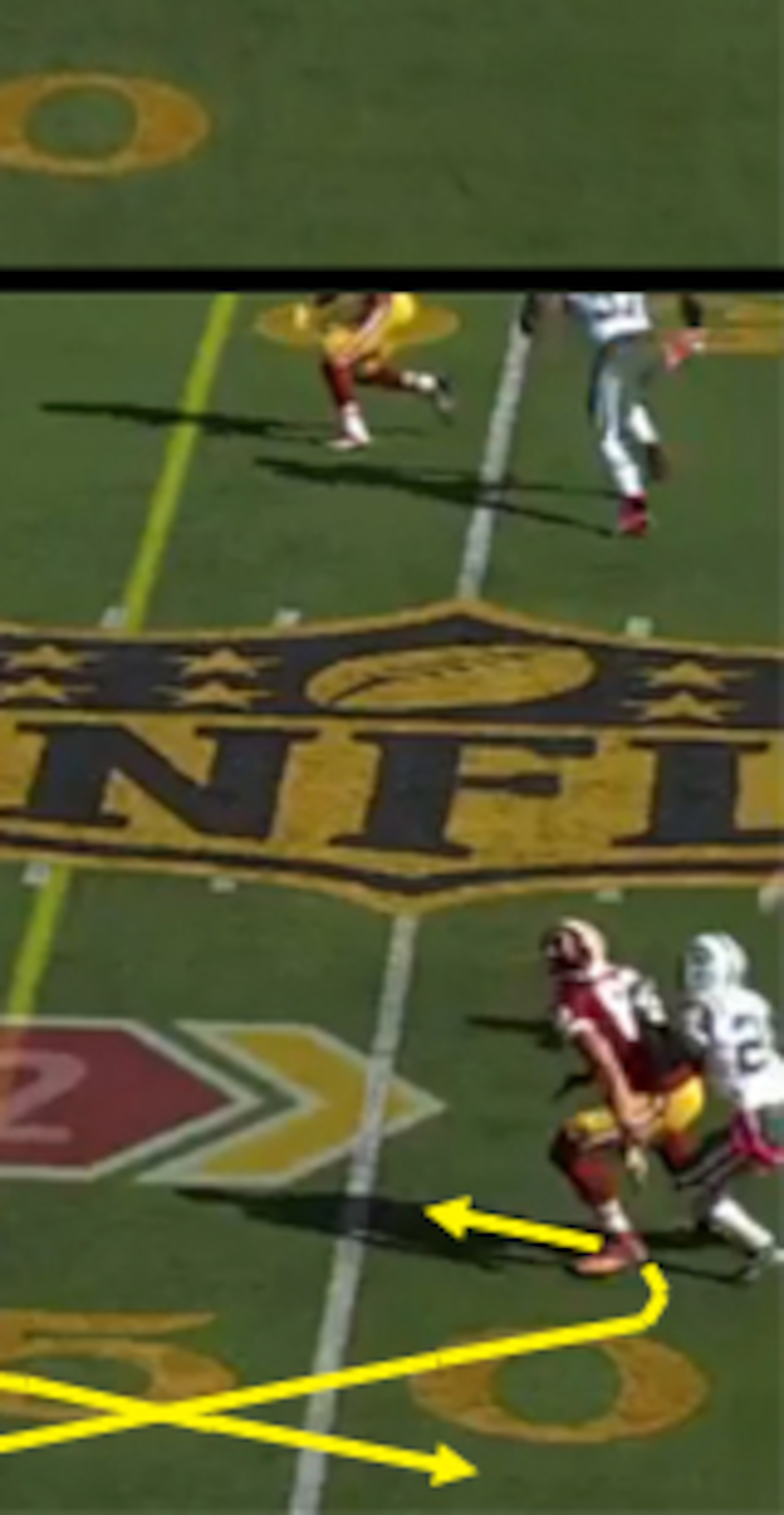
Late in the first quarter, Cousins missed his first opportunity for a big play. Running back Chris Thompson ran an outstanding route from the backfield to get behind the linebacker covering him early in the play. This gave Cousins an easy read to that side of the field.
Thompson was running into wide-open space, so Cousins only needed to lead the running back downfield for a first down and a huge gain on 3rd-and-2.

An accurate pass would give Thompson an opportunity to run in a long touchdown. He had created two yards of separation from the linebacker, and the deep safety coming across the field would have been too far away to prevent him from getting to the end zone.
Instead, Thompson was forced to slow down and turn around.
He almost came to a complete stop as he worked to locate Cousins' pass. The ball should have arrived with velocity just in front of the receiver or lofted further downfield. Instead, it arrived limply over his outside shoulder, four or five yards shorter than it needed to be.
Thompson made an impressive adjustment just to get his hands to the ball, but to do so he had to leave his feet while upside down in the air. Not only could he not make the reception, but he hurt himself with his attempt.
This play was the first miss of the game for Cousins, but it wasn't the worst of the game.
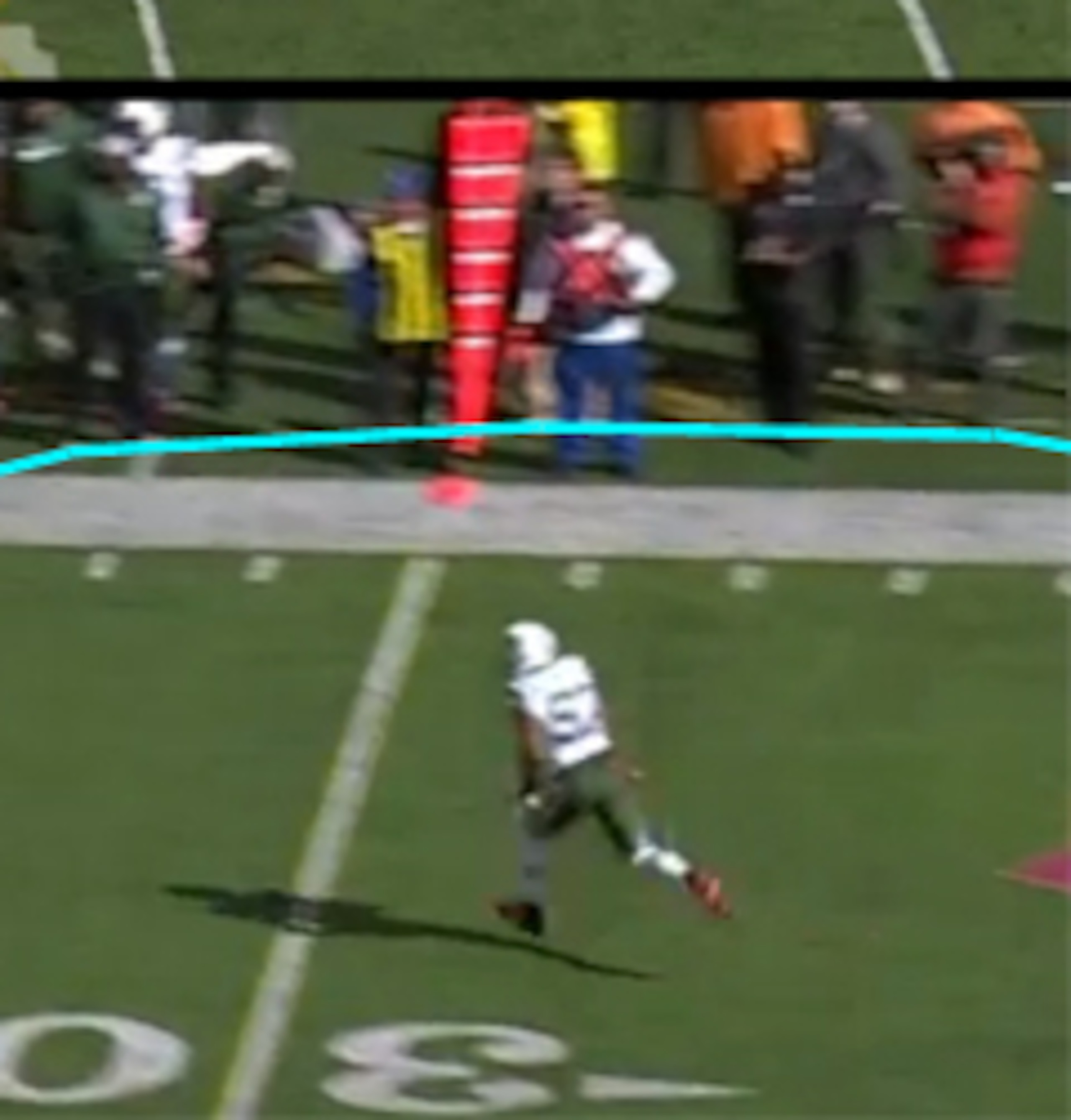
Cousins can't throw with anticipation. He has to wait to see his receivers get open before he releases the ball. As such, he invites pressure in the pocket and has poor timing with his receivers. On this play, Pierre Garcon is able to create a lot of separation against Darrelle Revis on a comeback route.
After initially reading the other side of the field, Cousins is hesitant to release the ball when he brings his eyes back to Garcon.
His pass is late because he wasn't mentally sharp, requiring Garcon to come open before he could trust what his eyes were telling him. When Cousins does release the ball, he does so with pressure in his face.
He fades away from the pressure, causing the ball to drop limp long before it reaches Garcon.
Against a defense with as many reputable names as the Jets defense boasts, it would be easy to simply surmise that Cousins couldn't throw the ball downfield because his receivers weren't getting open. That wasn't the case, though.
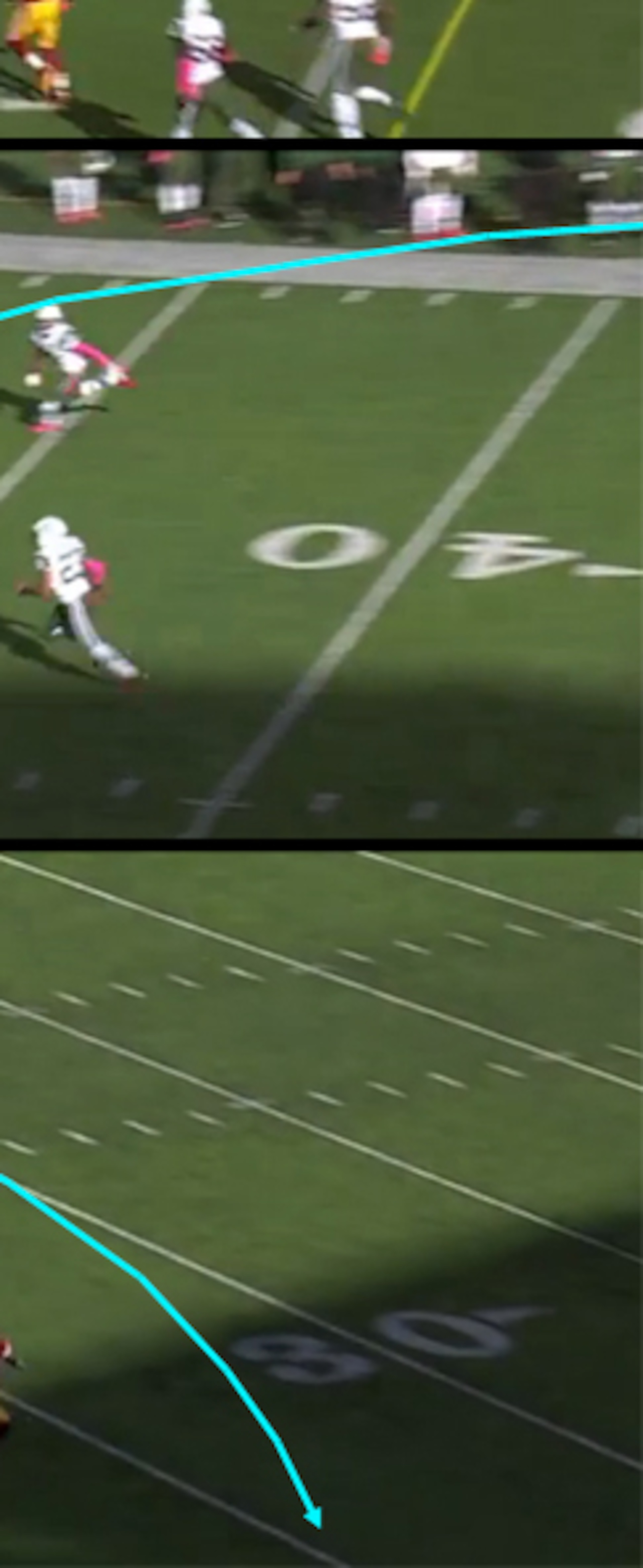
A lack of arm strength means Cousins will never be a precision downfield passer. He simply doesn't possess the ability to fit the ball into tighter windows or create such velocity on the ball that he can make up for being even slightly out of time or off balance.
Quarterbacks who lack arm talent have to be more accurate with touch throws.
When Cousins finds receivers downfield, he does so by dropping the ball into the right spot for where his receiver is going. Unfortunately for him, he is still too inconsistent in doing this to become even an acceptable deep passer.
You can be an effective quarterback in the NFL with limited arm strength, but you have to be above-average in everything else you do. Most importantly, you have to be a very smart passer.
Despite how he is often sold by supporters, Cousins isn't a smart quarterback. He's not close to a smart quarterback. He may be able to read a defense perfectly in the film room, but the true value of that isn't high if he can't act it out on the field.
On the field, most of Cousins' interceptions come from bad decisions to throw downfield, while he regularly makes bad decisions checking the ball down to covered running backs or tight ends. Both of Cousins' interceptions against the Jets were results of his being incapable of running the offense as designed.
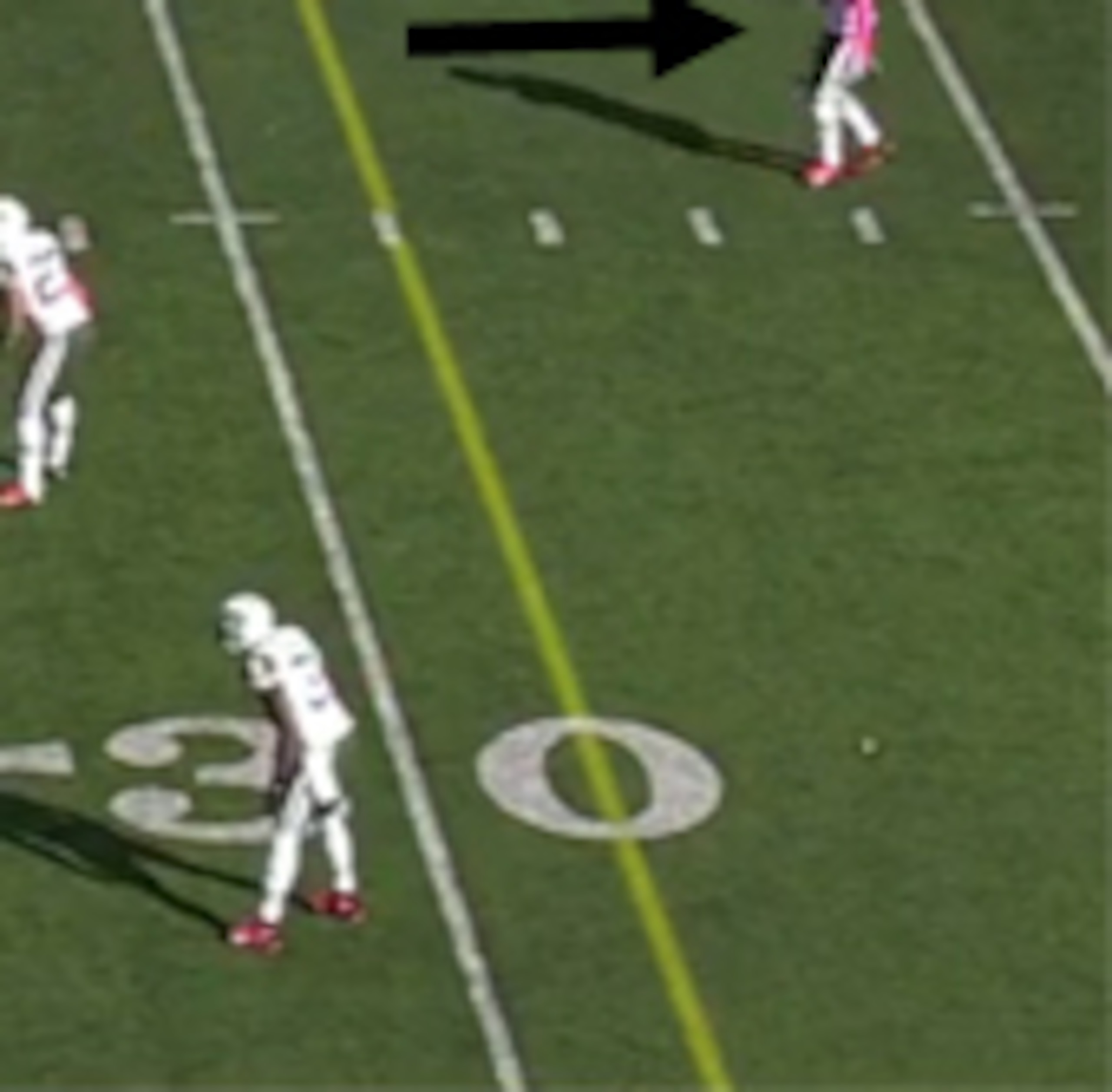
Cousins' first interception comes early in the third quarter, with the game tied at 13-13. The ball is deep in Washington territory, so Cousins has no reason to force a pass in any direction even on 2nd-and-8. With both safeties back, the defense is showing Cover 2.
Against the Jets, it's always important to note where Darrelle Revis is. Revis is aligned to the top of the screen in press coverage against Pierre Garcon.

A quarterback with a more talented arm can comfortably fit this ball into his slot receiver running the quick out. Cousins doesn't have that kind of arm talent, so he is hesitant to make the throw. He lets his eyes linger on that side of the field for a moment before turning back to the other side of the field.
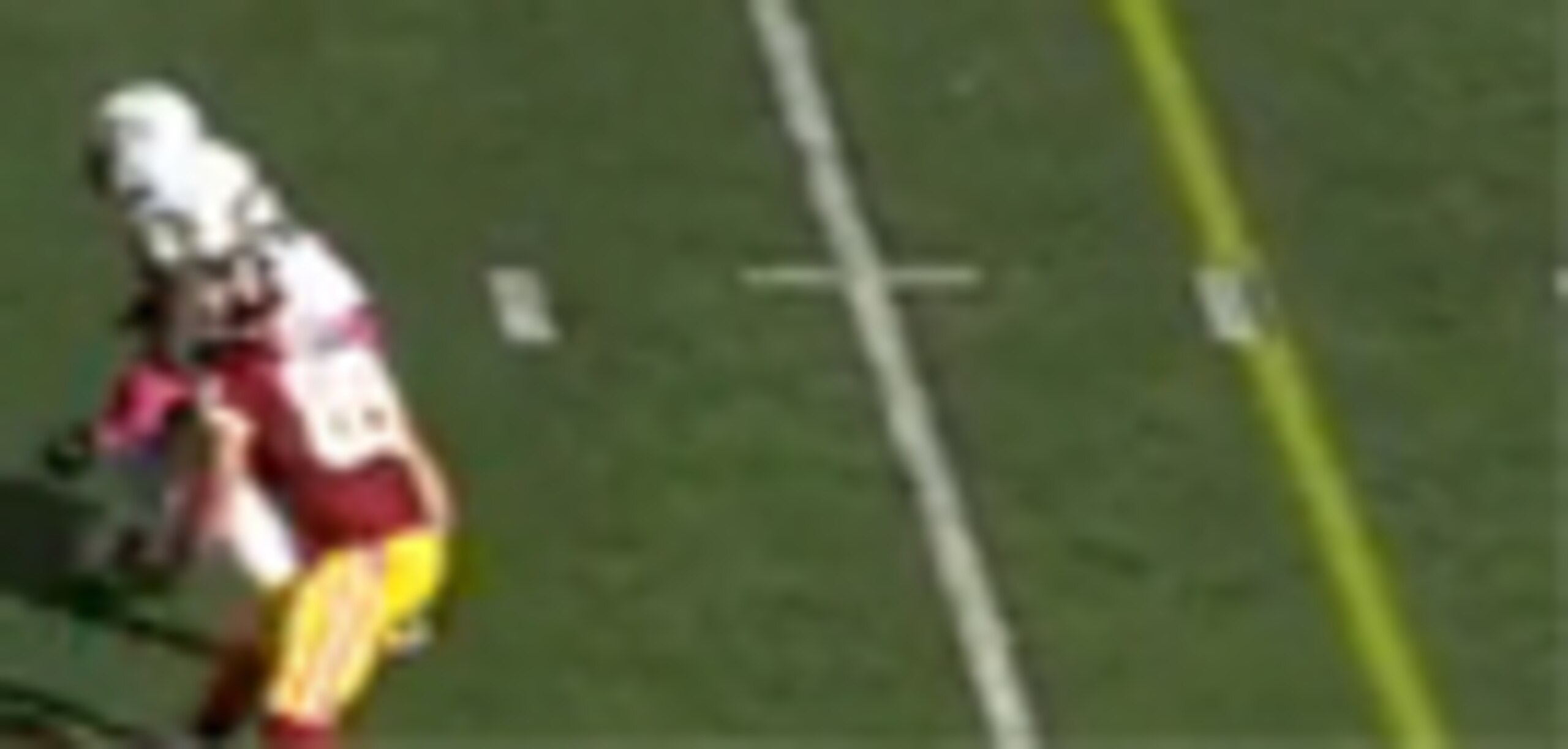
Again, the slant route would be an option for most quarterbacks here. His receiver wasn't wide-open, but there was an obvious throwing window to hit as the receiver was between the quarterback and the defender trying to cover him.
Instead of finding his first two options, Cousins flings the ball into the flat ignorantly.
There is no reason to make this throw. Darrelle Revis was sitting on the route from the start of the play. It didn't take a great cornerback to make this play, but Revis being the one who did just highlighted how mind-numbingly bad the decision was.
Cousins showed no awareness at all of what coverage the defense was playing. He showed even less awareness of who was an option and who wasn't at the snap. He made the worst possible decision on the play and did so from a completely clean pocket.
His second interception of the game was another play that highlighted his lack of awareness.

It was 3rd-and-10 late in the third quarter with Washington down by 14 points. The offense came out with three receivers in a bunch to the wide (left) side of the formation. The defense immediately showed man coverage against that bunch at the snap.
Two of the three receivers released vertically downfield, while one released toward the sideline before cutting back infield.
All three receivers would have been in Cousins' line of sight as he took the ball and dropped into the pocket. Cousins ultimately heaves the ball from a clean pocket down the left sideline into double coverage. The ball is easily intercepted by a safety who simply followed the quarterback's eyes to the ball.
In the top of the above image, you can see a Washington receiver breaking back infield.

Cousins didn't need to force the ball down the field. That receiver running infield was creating separation from the cornerback trying to cover him. Had the quarterback led him back infield with a pass, he would have had an opportunity to gain a first down.
At worst, it would have set up an opportunity to consider going for it on a short fourth down.
It's difficult to claim that Cousins can read NFL defenses with a straight face when he is making plays such as these on a consistent basis. Every quarterback in the league can read a defense if it's about doing it in the film room, but doing it on the field clearly isn't the same thing.
Considering he isn't running an extremely complex offense or putting up big numbers with his turnovers, it's difficult to understand what Cousins offers over what Griffin offered. Griffin has at least proved he can be consistently productive in a simple offense without consistently turning the ball over.
Gruden's treatment of the two quarterbacks suggests it's not that simple for him, though.
The 48-year old has taken an almost child-like stance of stubbornness with Cousins. Instead of assessing his play as critically as he had with Griffin in tougher circumstances, Gruden is doing his best to wash all blame away from his quarterback.
He has done that throughout his season, not budging on the idea that Cousins is his long-term starter. It peaked immediately after the loss to the Jets, per Gabe Hiatt of the Washington Post:
"That was a tough play. That was tough. He looked to the right side initially and they clamped it down. It was a basic stick route with our No. 2 and No. 3 receiver. I think they both were covered or he couldn’t see them, one or the other, I’ll check the film out, and he came back late. You know, that’s tough. But he’s not the only quarterback in history to make a poor decision or a poor throw, and it won’t be the last time he does it. He’s a young quarterback, he’ll learn from it and we all will.
"
This quote is a response to being asked about Cousins' first interception. Gruden repeats that it was "tough," points out other quarterbacks make mistakes, points out that Cousins is a young quarterback (he's 27) and affirms the outlook is still positive moving forward.
Everything about his tone suggested empathy toward Cousins as if he were playing hurt or playing outstanding football to only be dragged down by his teammates. That is not how Gruden spoke about Griffin in the past.
Gruden wasn't finished after the Jets game, though. When asked about Cousins' play in general, per Hiatt:
"Yeah I don’t know. I’ll have to look at the film. Like I said – also, it was little windy. But, and also, [there was] a lot of pressure on him. There’s a lot of things going on pre-snap that he’s got to deal with, getting the formations and protections and all that. You know last week the Jets had about 15 cover-zeroes [all-out blitzes] against Miami, so we’re always looking out for those and making sure he’s aware of those. They played pretty vanilla today, and I think he hurried in some throws he didn’t have to, or maybe he did. But I’ll have to look at the film. But overall, you hate to pin this game on Kirk. I know he could have played better, but we had no running game whatsoever. Kirk’s not at this stage in his career right now – nor is anyone on our roster – to carry the team throwing the ball as much as we would have had to today.
"
This quote is incredible. Gruden is actively highlighting how he feels it's unfair to criticize Cousins for not doing the job he is supposed to do. He even admits Cousins wasn't good enough before brushing that aside to point out the 27-year-old simply isn't capable of carrying a passing game.
The coach does all this in defense of his quarterback without understanding he is essentially pointing out his quarterback isn't good enough and pointing out that he has tied himself to one who isn't good enough.
He's a quarterback who is incapable of consistently reading defenses or throwing the ball accurately downfield, a quarterback who has footwork issues in the pocket, a lack of athleticism to work outside of the pocket and an extremely limited range of passing.
Gruden wants Cousins to be his quarterback. He wants it so much he can't see or doesn't want to see that Cousins is going to be the cause of his downfall.
Advanced tracking info firsthand unless otherwise noted.
.jpg?w=2560 "Commanders Eagles Football")
.jpg?w=2560 "Colts Commanders Football")
_0.png?w=2560 "Week 5 Winners & Losers 📊")
