

Clippers' Emotional Nature Holding Them Back from Postseason Success
The Los Angeles Clippers still aren’t cool.
Not in the hip sense of being a trendy, newfound America’s Team that won a rebellion against former owner Donald Sterling, but insofar as they're still losers who’ve never been to the Western Conference finals.
Most definitely not in the poised way that great basketball teams must be to survive in the playoffs.
.png?w=2560 "Houston Rockets v Los Angeles Lakers - Game Two")
There is nothing like a Game 7 on the road to test the latter definition of "cool."
Unfortunately for the Clippers, they revealed on Sunday just how overly emotional they are. They completed their collapse from a 3-1 series advantage (including a 19-point lead late in Game 6 at home) with a 113-100 loss in Houston.

The emotional instability, just as much as their shaky defensive rotations and thin bench, led the Clippers to lose this stunning second-round series to the Rockets.
All season long, the Clippers have shrouded their “Lob City” athleticism and excitement with joyless play that features whining to referees and complaining about perceived injustices. With the opportunity to steal some local Lakers fans these days, the Clippers have acted with a surprising level of entitlement for having accomplished so little.
Part of the team’s character has been a reliance on what it does well instead of accepting what it doesn’t.
Head coach Doc Rivers cautioned his team after its first playoff game—a 15-point victory over the defending-champion San Antonio Spurs—that it wasn’t going to be enough to bring that kind of activity and effort. There needed to be execution, too.
Trace it back further to Rivers' arrival in Los Angeles in 2013, and remember how the Clippers wanted to trade DeAndre Jordan for Kevin Garnett, but the NBA stopped it because it looked like part of the deal that brought Rivers from the Celtics for a first-round pick.
It seems ludicrous to be regretting that trade now that Garnett is on his last legs as a player and Jordan is set to sign a maximum contract as a coveted free agent.
But even after Rivers’ successful project to build up the center's defensive awareness, Jordan is part of the Clippers’ Big Three in athletic ability only.
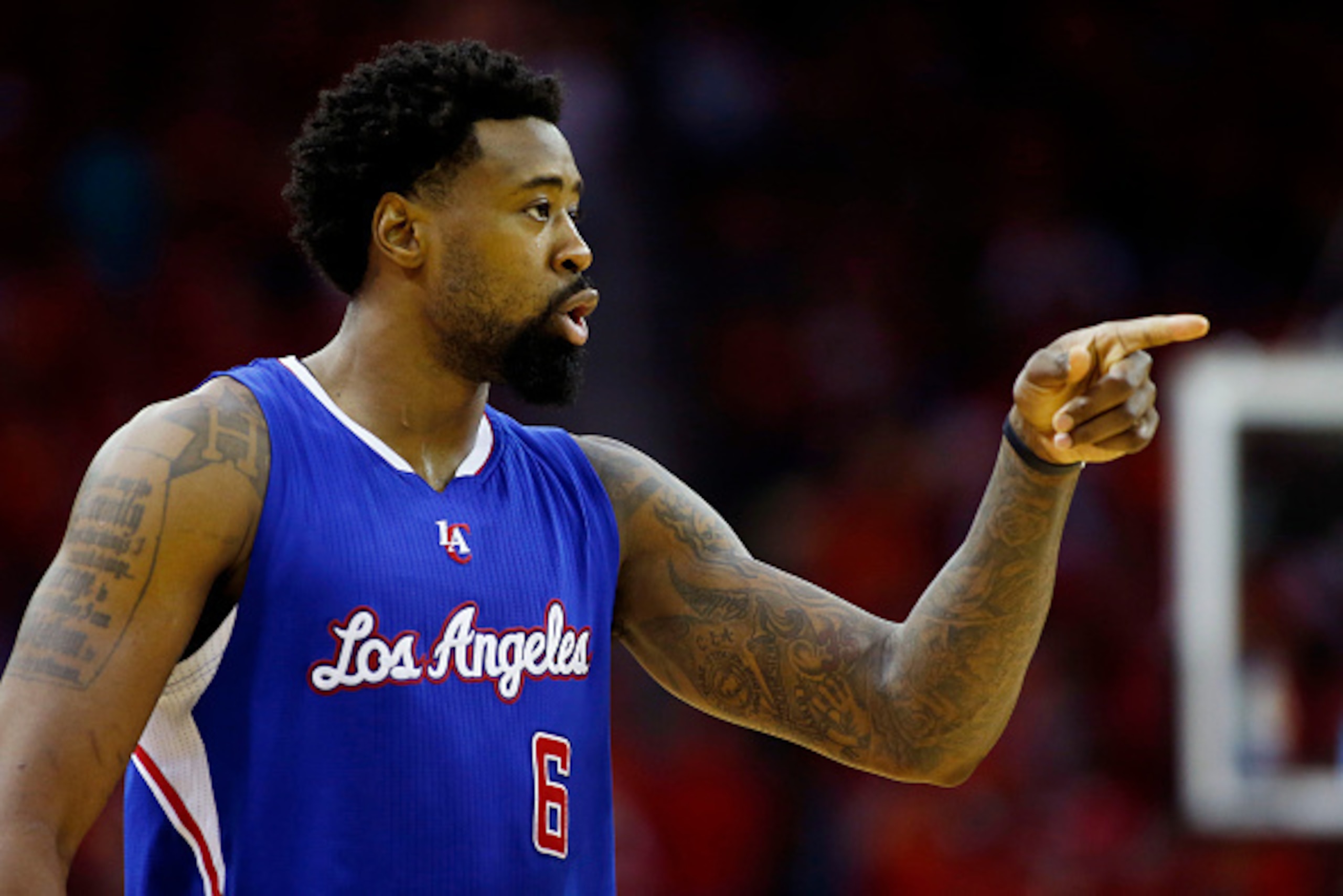
The underlying message from back then remains: The Clippers lack a certain level of professionalism, whether it’s in Garnett’s passion or someone else’s composure. Their ability to work together declines rather than improves in stressful situations. Jordan’s humiliating free-throw moments only add nervous tension to the mood of a Clippers game instead of true confidence.
Point guard Chris Paul is a fierce competitor and incredible player, but he gets too caught up in getting all the calls—and freaking out when he doesn’t get all the calls.
Paul can rise to the challenge the way he did in the Clippers’ Game 7 home victory over San Antonio, but he can also stress out the way he did in the Clippers’ Game 5 road loss to Oklahoma City a year ago. His emotional style—rooted in how much he wants to win, make no mistake—is a core element of the Clippers’ identity.
That emotional style is why the Clippers relaxed before they'd officially won anything in Game 6 at Staples Center on Thursday night. That’s why they panicked when it got dicey instead of tightening up their execution, especially on defense.
After that game, star forward Blake Griffin didn’t just say it was an example of the team letting up—he said it was characteristic of this team.
“We talked about it all year,” Griffin said then. “Putting the pedal down.”
It was in a way just what Magic Johnson would later mock the team for on Twitter on Sunday: “The Clippers are still the Clippers.”
They have such high-end talent and new management, but they maintained that loser mentality by blowing this series without the poise that winners possess.
For a brief moment—with that 3-1 series lead over Houston and other title contenders seemingly struggling—it was a time for Clippers fans to indulge in the hope that their team had what it takes.
But playoff basketball is, at its heart, about execution. It’s not about being fired up or wanting it more. It is about having great players, yes, but also excellent teamwork—and the magic lies in the ability to fuse those two halves into a whole.
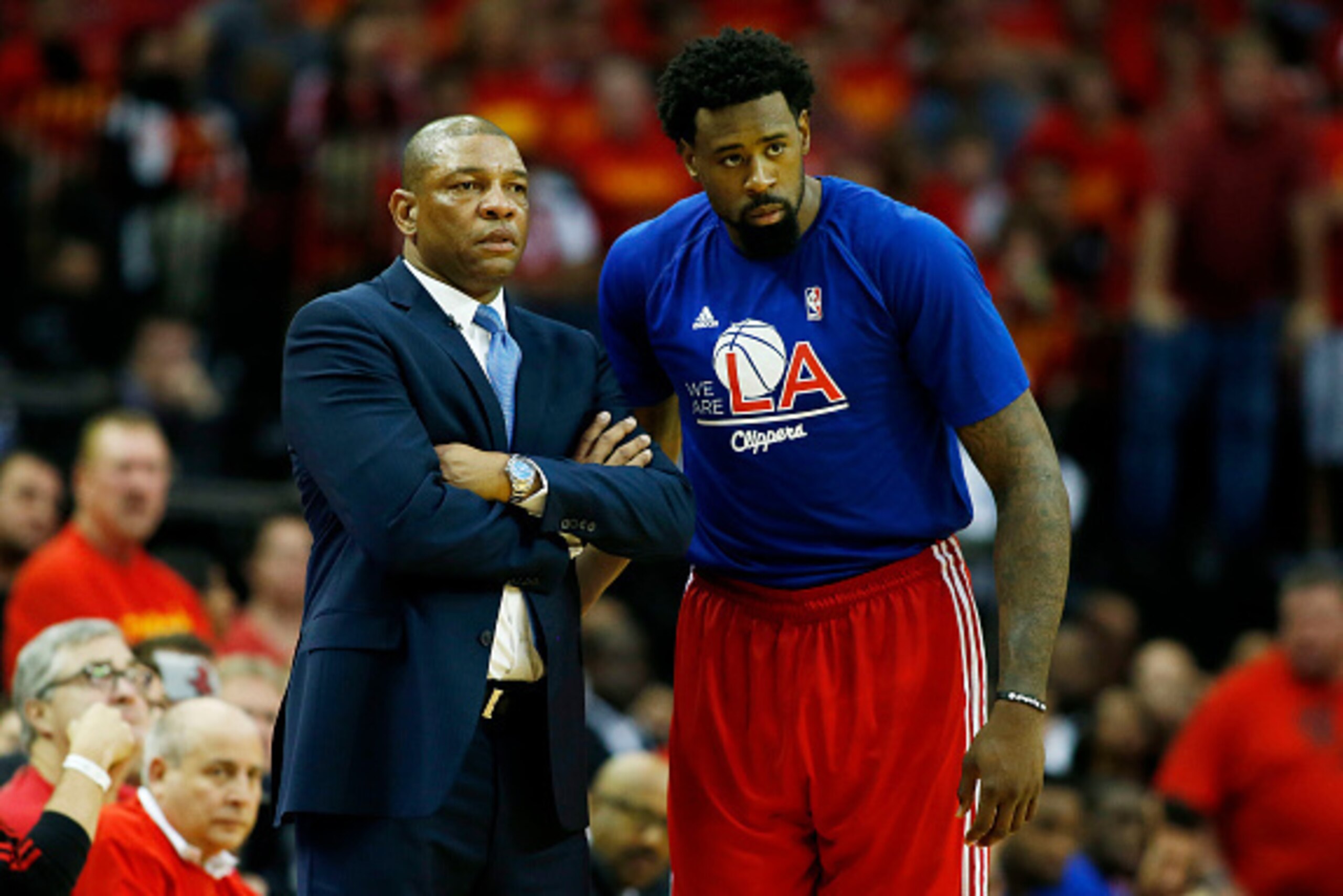
As good as Rivers is at some aspects of his job, and as much as his 2008 championship pedigree lends credibility to the franchise, he also feeds into the drama.
He is skilled at grandstanding through the media, but that only exacerbates the emotional vibe instead of telling the team it is good enough to win without anyone’s help.
And now Rivers is 0-4 in Game 7 road contests, having coached the ninth team in NBA history to squander a 3-1 series lead and now wondering what can be done to change the mindset—as well as the depth of talent and defensive commitment.
The chemistry would’ve obviously been different had Rivers, as team president, been able to sign another of his Celtic champs, Paul Pierce, instead of little-used Spencer Hawes last summer.
Pierce’s strong personality and play on the wing clearly helped the Washington Wizards in their playoff run.
But Rivers’ affinity for known commodities such as former Celtic Glen “Big Baby” Davis and Rivers’ son, Austin, didn’t do the trick, either. Both Davis and Austin Rivers, it should be noted, only add to the emotional flavor of this team.
This puzzle may not be one solvable with another piece anyway.
Griffin and Jordan might not be commanding leaders wrestling for power of the team, but they are good buddies who feel marginalized at times by Paul’s ball-dominance and domineering—and emotional—personality.
Trading Paul, 30, to let Griffin expand the face-up game he dreams of is one logical way to bring in younger talent and give the Clippers a new identity.
As impossible as it is to know if a new group would work better, we do know that this group has issues. We know because we saw it lose its cool against Dwight Howard and Josh Smith late in the third quarter of Game 6 and then again against James Harden and Pablo Prigioni late in the third quarter of Game 7.
The broader story of Game 7 on Sunday was about the Clippers still drowning in the sorrows of Game 6, their emotions getting the better of them.
It’s their worst quality.
And it has cost them dearly.
Kevin Ding is an NBA senior writer for Bleacher Report. Follow him on Twitter @KevinDing.
.jpg?w=2560 "Diggs Picks New Uni Number")
.jpg?w=2560 "Carson Beck Shines in Debut")
.jpg?w=2560 "Stefon Diggs' Quote on Rook 😏")