How Jay Gruden Can Make the Game Easier for RG3 and Washington Redskins Offense
In Week 16, Jay Gruden took a step toward finding the right blueprint to win with Robert Griffin III as his quarterback. The Gruden and Griffin-led Washington Redskins beat the Philadelphia Eagles with a run-heavy offense that helped create some select big plays through the air.
That plan played to one of Griffin's core strengths, namely his cannon of an arm. But the safety-first approach also masked some of Griffin's main weaknesses: deciphering coverage, progressing through reads and protecting the ball.
But the performance against the Eagles, as encouraging as it was, was merely a baby step toward Gruden and Griffin being simpatico directing an offense that works for the Redskins.
.jpg?w=2560 "Titans Giants Football")

Gruden made things simple for Griffin in Week 16, but he can still make the game even easier for his raw and developing young quarterback. The best way to do that will be to flesh out the passing concepts to give Griffin some get-out plays.
If ever there was a quarterback in dire need of a get-out play, safety valve or dumpoff, whichever term you prefer, it's Griffin. A headstrong young quarterback who too often locks onto his first read needs a better understanding of what to do when that read is taken away.
More specifically, he needs a better option. Griffin needs an alternative outlet, preferably one he doesn't have to think about but can connect with instinctively.
That should be the cue for a pass-catching running back to emerge. Actually, it's the signal for Gruden and offensive coordinator Sean McVay to design more plays that include running backs as receivers.
A backfield pass-catcher can be a quarterback's best friend when the pressure is on or his primary options are dwindling. Yet the Redskins are one of the NFL's least generous teams when it comes to affording catching opportunities to its running backs, as these figures prove:
| Player | Catches | Yards | Touchdowns |
| Alfred Morris | 15 | 136 | 0 |
| Roy Helu Jr. | 38 | 436 | 2 |
| Silas Redd | 8 | 107 | 0 |
| Chris Thompson | 6 | 27 | 1 |
| Darrel Young | 10 | 72 | 2 |
Washington quarterbacks have completed 337 passes this season, but just 77 of those have been by the running backs. Roy Helu Jr.'s injury hasn't helped, but the fact remains this offense doesn't use its backs enough as secondary receivers.
That's a terrible waste considering the matchup advantages running backs create in coverage. They are usually too quick or too difficult to see and tackle for linebackers. Depending on the back, they also often have the speed to outrun a safety.
Perhaps more important, runners can be forgotten in many coverage schemes. There are probably 1,000 ways for a smart offensive coordinator to use wide receivers and tight ends to spread and manipulate coverage to help free a running back.
The mere fact that a runner often releases late and can sneak through traffic only adds to the ease by which he can escape attention. That has to be a huge bonus for any quarterback who sees his primary targets on a play covered up.
Gruden and McVay are spoiled for choice when it comes to explosive, vertical playmakers. DeSean Jackson, Pierre Garcon, Andre Roberts and Jordan Reed can all stretch defenses.
But the offensive brain trust must make more use of short-range targets who can give Griffin a get-out release when he's struggling. Think back to the team's offense in 1999.
That group was every bit as high-powered and talented as the current vintage should be. It had dynamic outside receivers in Michael Westbrook and Albert Connell, as well as a crafty third option in veteran Irving Fryar.
Stephen Alexander was a dynamic "move" tight end in a similar mold to Reed. Meanwhile, sledgehammer-style running back Stephen Davis was every bit a prolific workhorse as Alfred Morris.
But what the '99 unit had that the current offense lacks is a reliable get-out receiver in the form of fullback Larry Centers. The crafty, sure-handed outlet was targeted 90 times that season and tallied 69 receptions, per Pro Football Reference.

Centers was an invaluable safety valve quarterback Brad Johnson could turn to whenever he got into trouble. Then-head coach Norv Turner designed routes and concepts featuring Centers that were built into every pass play.
That's exactly what Gruden and McVay must do. They have to include a natural outlet route in every passing concept Griffin is asked to execute, a get-out play he can turn to whenever he gets into trouble.
In Darrel Young, the Redskins already have a highly capable, multipurpose fullback who can provide this type of safety valve. Modifying Griffin's gung-ho instincts is one more reason why Young should be on the field much more than he is.
Offering Griffin a simple dumpoff to the fullback would eliminate many of his most frequent mistakes. Those mistakes usually take the form of turnovers borne from forcing the ball into coverage, determined to make the deep ball happen, or fumbling after being sacked because he's taken too long in the pocket, refusing to give up on the primary read.
Of course, putting a get-out play in for Griffin is one thing. Convincing him to take it is another matter altogether, one that requires a shift in thinking from the raw quarterback.
But such a shift is possible if it's prompted by smart and forceful coaching. Certainly, Griffin wouldn't be the first erratic, mistake-prone quarterback to reinvent himself as a model of efficiency.
Need convincing? Then how about another journey back to the late '90s. Back to one year before Johnson, Centers and company dominated the NFC East. Back to when the New York Jets made the AFC title game with a certain Vinny Testaverde under center.
Testaverde joined the Jets after famously bombing out with the Tampa Bay Buccaneers. He continued to be a turnover machine for much of his time with the Cleveland Browns and Baltimore Ravens.
Yet the quarterback who had previously made boneheaded interceptions his trademark suddenly completed 61.5 percent of his passes and tossed just seven picks.

The Jets carefully remodeled Testaverde, and the process started with safety-first passing. His inaugural start for the Jets was a Week 3 win over the Indianapolis Colts.
In Parcells: A Biography, author Bill Gutman described the game plan Jets boss Bill Parcells had Testaverde execute:
"Vinny didn't throw often, completing twelve of twenty-one for 203 yards, but he made his passes count. When the game ended he had thrown for four touchdowns and the Jets has their first win by an impressive 44-6 score.
...
The Jets had stayed with the game plan, not having Testaverde throw downfield. None of his four TD passes traveled more than twenty yards in the air. Fortunately, both the runners and receivers did a fine job. The Jets gained 302 yards on the ground, and Leon Johnson turned a screen pass into an eighty-two-yard touchdown.
(Parcells: A Biography, Bill Gutman, pages 235 and 241, Carroll & Graf Publishers Inc., New York, 2000)
"
Of course, Parcells didn't keep Testaverde reined in forever. It would have been stupid to do so considering the quarterback's rocket-like arm and the vertical speed of burners such as Keyshawn Johnson and Dedric Ward.
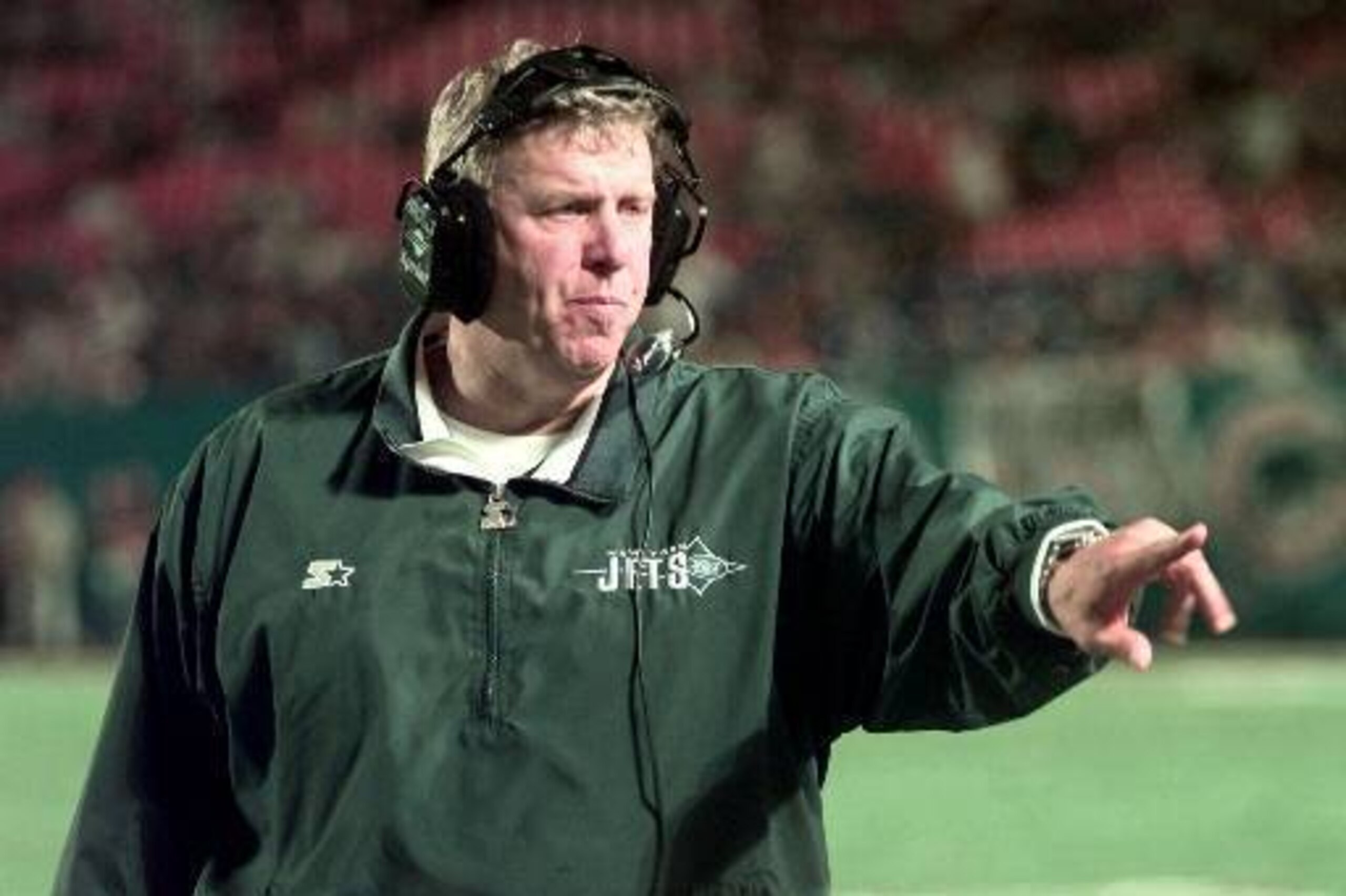
Gruden knows he has the same thing with Griffin, a passer who can put the ball in the clouds even off his back foot. It would be insanity to waste that talent, particularly when it's combined with Jackson's ability to take the top off a defense.
But Parcells knew he first had to get Testaverde calm, settled and confident. That required taking the pressure off by letting the running game lead the way.
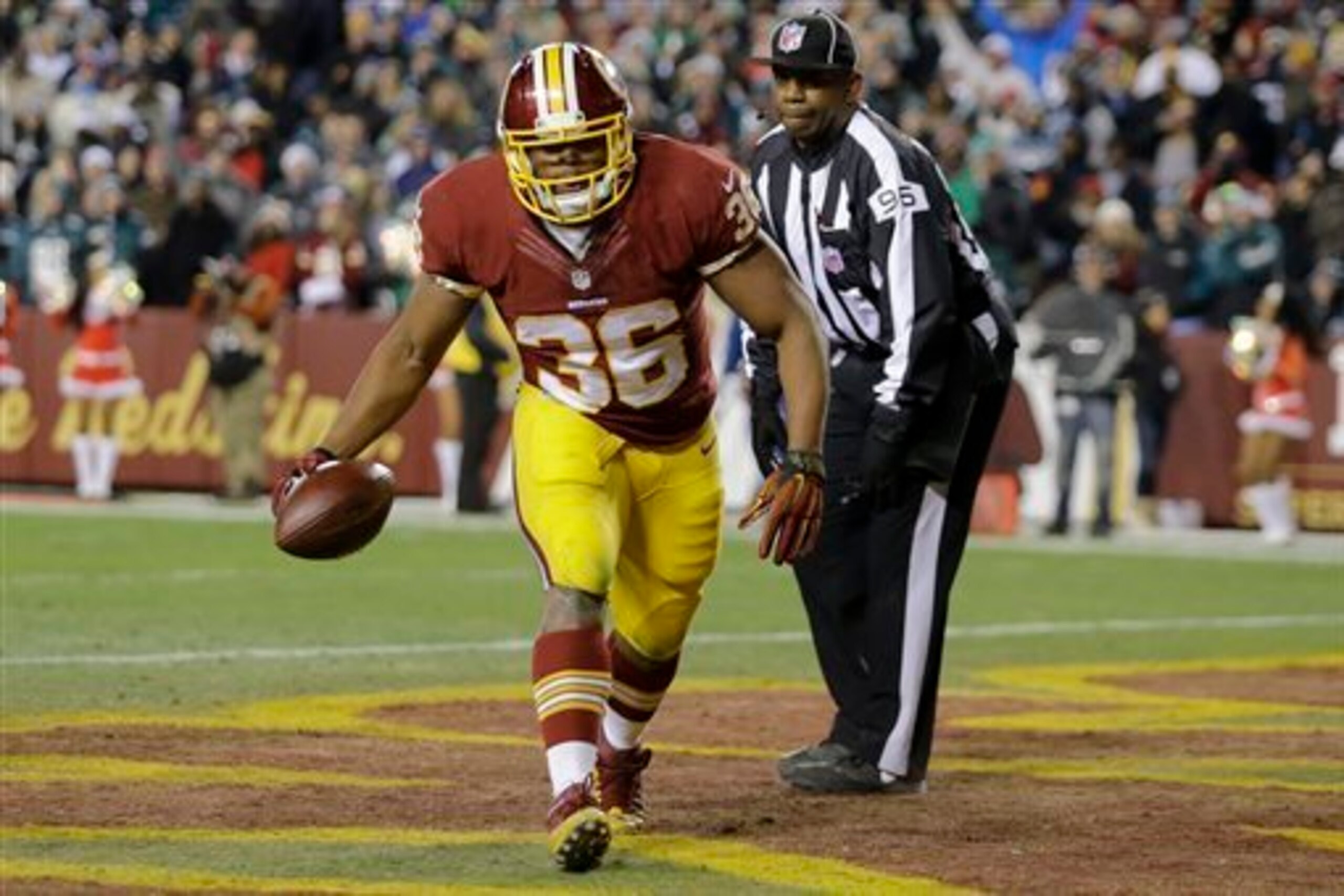
Gruden did the same thing when the offense ran the ball 29 times against the Eagles, trusting his ground attack to win the game. Now all he needs to do is balance the passing game the way Parcells did for Testaverde.
The latter had a dependable fullback in Keith Byars—one of the game's great backfield receivers—to aim for. He also had Wayne Chrebet, a crafty receiver who combined intelligence and deceptive shiftiness to produce a knack for always getting open.
This type of receiver is something Griffin has missed. He's always had burners and big-play merchants such as Jackson, Garcon and Roberts around him. But rarely has he had the short-range, possession-style catch machine who can make any quarterback look good.
Griffin needs a Wes Welker, Julian Edelman, Lance Moore type to make his life easier. That's why it's disappointing that fifth-round pick Ryan Grant hasn't seen more action this season.

He entered the league with a reputation for excellent hands and a natural flair for getting open, per CBS Sports analyst Dane Brugler:
"Smooth body control and coordination, using his footwork to hold and deceive DBs in coverage...crafty route runner with proper timing, precision and depth to set up his moves and create just enough space to operate - knows how to win in 1-on-1 situations...quick, good-sized hands and tracks very well, locating and watching it into his hands.
"
Yet Grant has caught just six passes for 61 yards. The ex-Tulane product seems set to join 2013 rookie free agent Nick Williams, who made only three catches in regular-season action, as a potentially very useful little possession receiver who's been wasted.
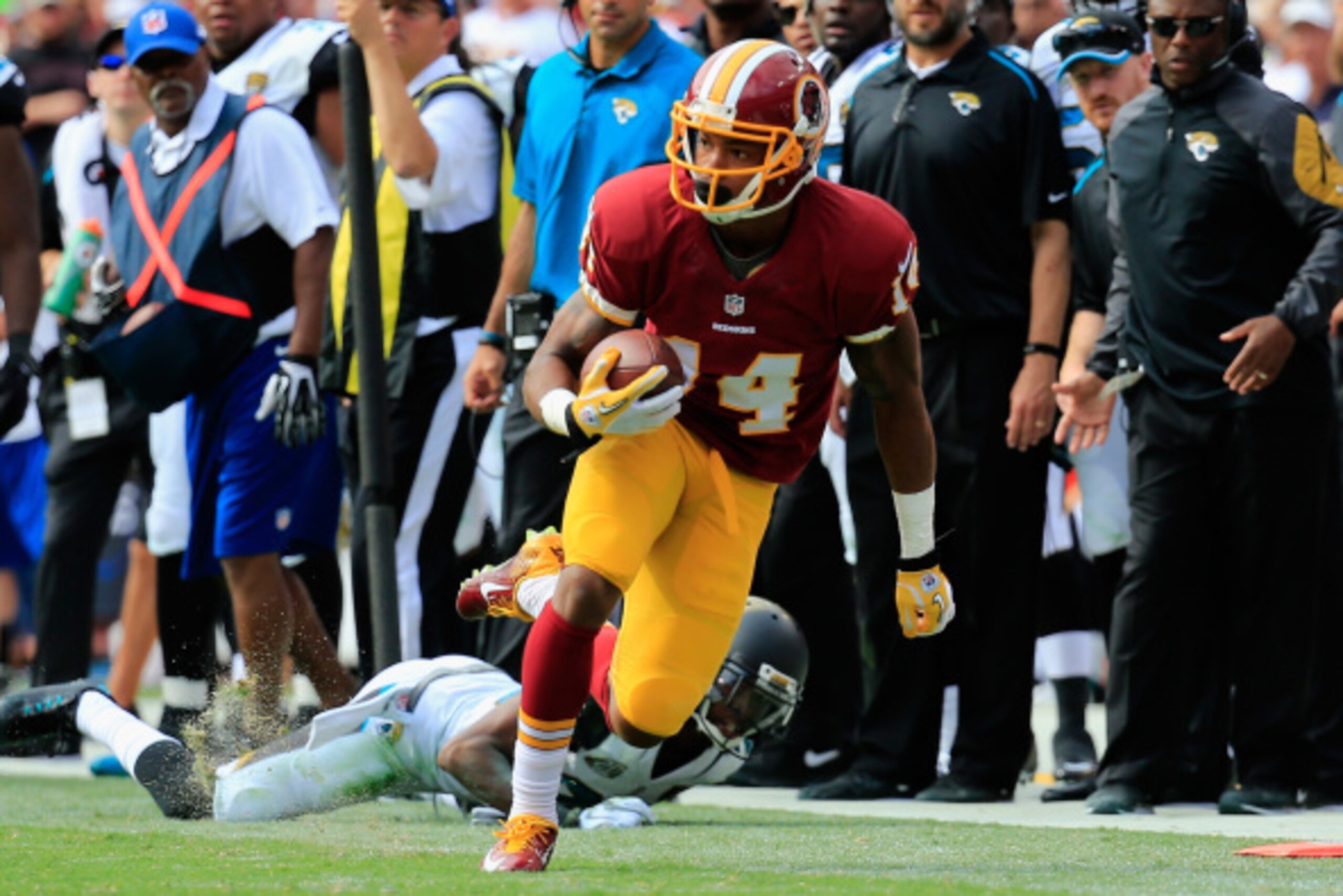
Gruden needs to put natural outlets like backfield pass-catchers and diminutive possession receivers into Griffin's plays. Without them, his habit of locking onto the first read and always chasing the deep ball won't ever go away.
That problem was brutally illustrated by a fourth-quarter interception against Philadelphia. Griffin had already successfully targeted Jackson on two vertical throws.
He couldn't resist a third, even with a safety lurking over the top. In the process, Griffin ignored open, underneath receivers and committed a potentially fatal turnover.
Richmond Times-Dispatch writer Michael Phillips captured an image of the play, courtesy of CBS Sports and NFL Network:
But this gaffe surely didn't come as a surprise to Gruden. After all, he'd identified this type of folly as Griffin's primary failing during the offseason, per Todd Dybas of The Washington Times:
The only way to encourage a change in that thinking is to include players and designs Griffin knows will give him a get-out throw when he's struggling.
That's the next logical step to changing the temperament of a quarterback who has found out the hard way that pure athletic gifts alone aren't enough to bail you out of trouble in the NFL.
It's also the next step in Gruden reinventing himself as a play-caller to suit what the quarterback of choice can and can't do. That's a process Gruden started against the Eagles.
It's also one he won't be able to avoid as long he walks a sideline for Washington, per Jason Reid of The Washington Post:
"Gruden would prefer to call at least 30 drop-back plays featuring the complex route combinations he enjoys devising. After a painful experience tutoring Griffin, Gruden knows that approach won’t work if Griffin remains the team’s starter. And owner Daniel Snyder plans for Griffin to remain in the role, people in the organization say.
"
The slowly evolving Gruden-Griffin Redskins offense gets its next audition in the season finale against the Dallas Cowboys. That will say a lot about this team's immediate future.
If Gruden shows he's still willing to do all he can to make the game easier for Griffin, then all's well that ends well. But if Gruden reverts to type and expects Griffin to lead a complex air attack, then duck for cover, because it's going to be a long and uncomfortable next few years for this franchise.
All statistics via NFL.com, unless otherwise stated.