Jay Gruden Finally Trusts Washington Redskins' Running Game to Carry the Offense
Perhaps Jay Gruden did it because he really doesn't trust Robert Griffin III. Maybe Gruden looked at Alfred Morris and decided the crestfallen running back had waited long enough for another 20-carry game.
Whatever the reason, Gruden finally trusted his running game to lead the offense. The usually pass-happy, first-year Washington Redskins head coach actually called more runs than passes.
And guess what? The Redskins won.
TOP NEWS
.jpg?w=2560 "Bengals Football")
Ja'Marr Chase Eyeing NFL Record
.jpg?w=2560 "Colts Camp Football")
Richardson Unsure of Future With Colts
.jpg?w=2560 "Packers Vikings Football")
Lions Try Out Trevon Diggs
Washington's offense ran the ball 29 times, compared with 23 passes in Week 16. That formula led to a dramatic 27-24 victory over the Philadelphia Eagles.
Gruden's rare trust in the run was rewarded by a Morris-led ground attack that produced big plays and clutch gains in key situations. Nowhere was that trust more obvious than when the Redskins got the ball back with just over 90 seconds remaining and had the chance to win the game.
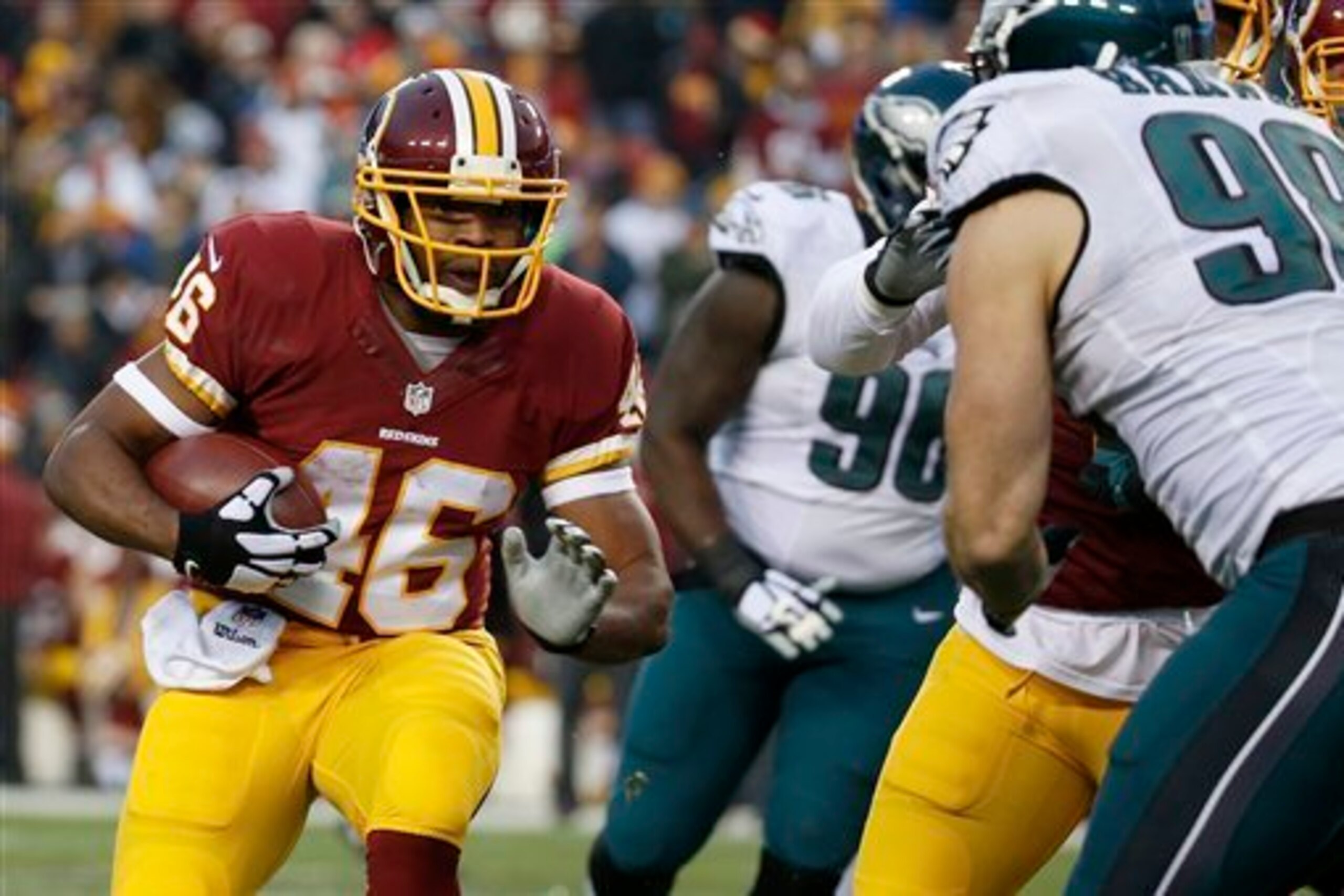
It was then that Gruden, presumably while being gagged from shouting pass plays into quarterback Robert Griffin III's headset, let the run take over. Griffin handed the ball to Morris on all bar one play of a short but decisive drive that ended in Kai Forbath's 26-yard field goal.
Both design and intent were significant on this drive. The latter was crystalized by only letting Griffin put the ball in the air once. Even when left tackle Trent Williams was guilty of an inexplicable false start on 3rd-and-goal, Gruden still kept things on the ground.
Obviously, running with under two minutes left in a tied game to kill the clock and force the Eagles to use their timeouts seemed like common sense. Somewhere, somebody probably used that dreaded phrase, "football 101."
But remember, this is the Gruden-led Redskins, the team that never lets common sense get in the way of a pass play. Gruden had already made that mistake once.
After the Eagles scored to pull to within three at 24-21, the smart call would've been to run and work the clock. It would have also taken the steam out of a fired-up Eagles pass rush, sensing the chance to win and hungry for a big play to make it happen.
Yet somehow in Gruden's mind, his offense beginning deep in its own territory with a slender lead was the perfect cue to air it out. The first play was a baffling zone-read play-action pass that resulted in Griffin being promptly decked by defensive tackle Fletcher Cox.
The call was a hugely infuriating moment, even in a season defined by frustration. At the end of this inevitable three-and-out, many, including 106.7 The Fan host Grant Paulsen, bemoaned Gruden's choices:
But credit to Gruden, he clearly learned a lesson from that fiasco. Sanity certainly prevailed when Bashaud Breeland's interception gave Washington one more chance to win, as ESPN 980 reporter Chris Russell noted:
Gruden's intent was aided by some clever designs that are helping reshape the Washington running game. Watching the Redskins run the ball against Philadelphia was eye-opening in terms of how this zone-style ground attack is evolving.
Since Gruden took over this offseason, Washington has still operated the same zone principles Mike Shanahan successfully installed in 2010. But Gruden has also been steadily introducing some power-based looks and concepts.
Against the Eagles, that meant a heavy dose of two and three-tight end sets. It also meant some uses of pulling guards, a defining characteristic of all power schemes.
On the game-winning drive, Morris made steady gains behind a two-tight end front and fullback Darrel Young. Right guard Chris Chester also pulled around the corner on a classic power sweep.
At different times during the game, the Redskins even had a jumbo-style short-yardage package that moved left tackle Trent Williams to the right side next to fellow tackle Tom Compton. Back on the left, a pair of tight ends bookended the line.
Of course, Washington didn't abandon it's favored zone-stretch run, even amid all of these odes to power football. Morris burst into the end zone from 28 yards out on a perfectly executed example of this trademark play.
That was the highlight of his 21-carry, 83-yard performance. The latter number put Morris over 1,000 yards and into the franchise record books, according to Mike Jones of The Washington Post:
Like Morris, Davis was a talented back whose deceptive speed and power often surprised defenses. More importantly though, Davis was a product of offensive schemes that valued the run.
Respective head coaches Norv Turner and Marty Schottenheimer made a strong rushing attack the backbone of their offenses. Everything else the Redskins did came from Davis' success on the ground.

That's just how things should work, especially when you have a runner as gifted as Morris in the backfield. Gruden thankfully trusted him in key moments other than the game-winning march.
Morris was a feature of the run-heavy drive that began the third quarter. Washington ran eight of 12 plays on a march that ended with the first of Young's two short-yardage plunges.
A team's opening second-half possession can often be a hugely significant tone-setter. Turning to the run in this context was not only a measure of Gruden's trust. It was also the perfect way to tame the aggressive Eagles D' and keep the high-powered Philly offense watching from the sideline.
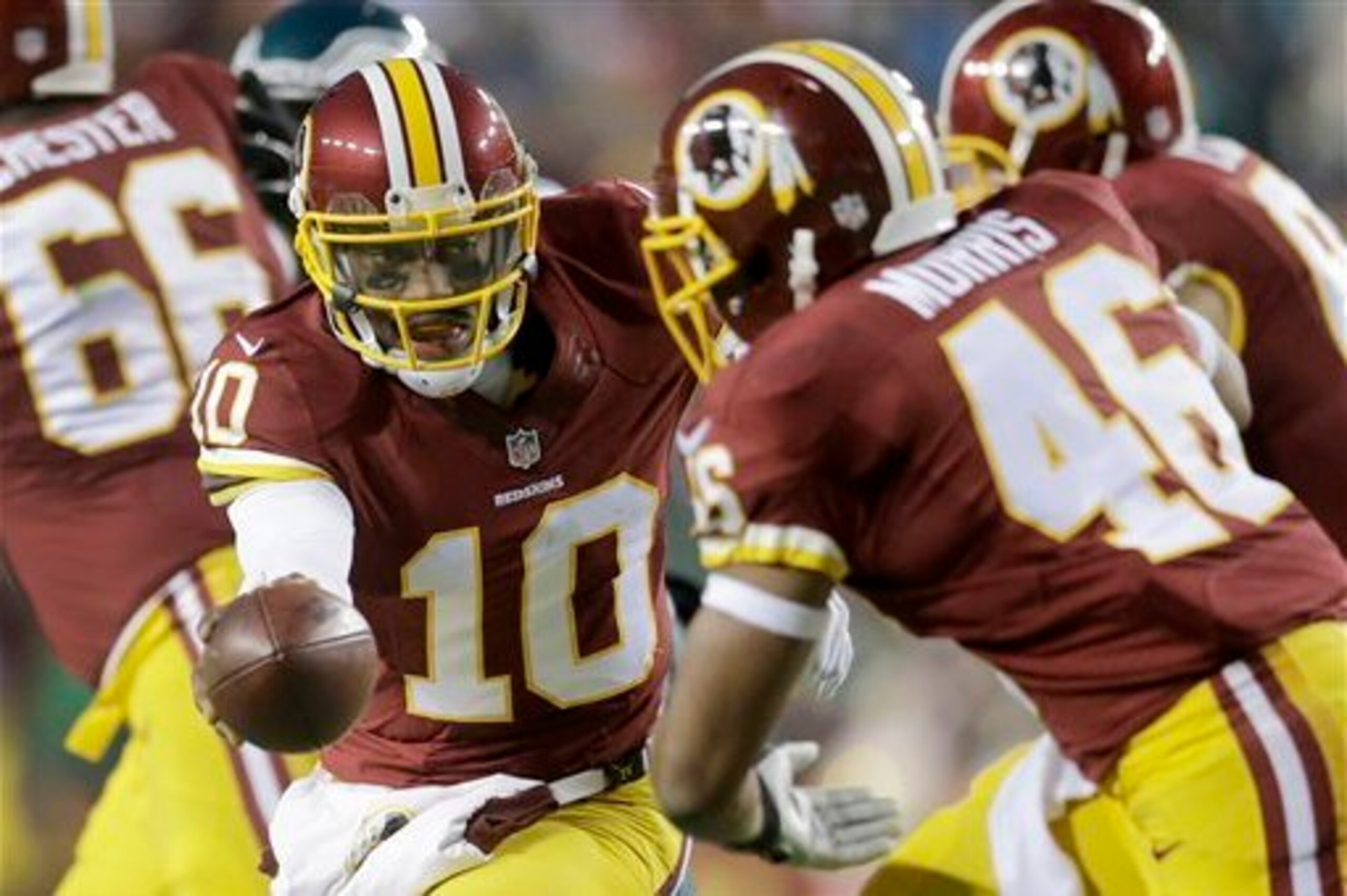
Washington's running game did all those things, as well as offering a beleaguered defense a rest. It was also clear how much Griffin benefited from playing the role of complement rather than driving force.
Without the pressure of having to win the game himself, Griffin played a more restrained and ultimately smarter game. He didn't need to take risks because he knew his ground attack would continue to put him in good situations and create opportunities for big plays off play action.
All of those things represent the true value of a running game that's used properly. It's taken Gruden long enough, but he's finally put his faith in the strength of this team.
All statistics via NFL.com.
.jpg?w=2560 "Browns Camp Football")
.jpg?w=2560 "Lions Football")
.jpg?w=2560 "Buzz: Terrion Arnold Visits Seahawks")