Russell Wilson Is Not an MVP Candidate—He's Something Much Better
If you look up the all-time passer rating leaders, you are in for a surprise.
Aaron Rodgers is the all-time passer rating leader, with a 105.1 rating. No surprise there. He's been on top of that list for several seasons.
Here's the surprise, what you wouldn't have seen if you looked at the list last season or even a few weeks ago: Russell Wilson is second at 99.5—ahead of Tom Brady, Peyton Manning, Joe Montana, Steve Young, Drew Brees, Kurt Warner and every other current superstar and Hall of Famer you can name. Wilson also now appears near the top of the all-time yards-per-attempt (fifth), interception-rate (third lowest) and completion-percentage (eighth) lists.
.jpg?w=2560 "Panthers Saints Football")
.jpg?w=2560 "Jaguars Saints Football")
Wilson did two things in the last three weeks to leap onto the all-time lists. First, he threw 91 passes to inch past the minimum qualification of 1,500 career attempts for those leaderboards. And second, he made those 91 attempts count. Nine touchdowns (10 percent of Wilson's career total!) can still make the passer rating needle bounce after three-and-a-half seasons as a starter.
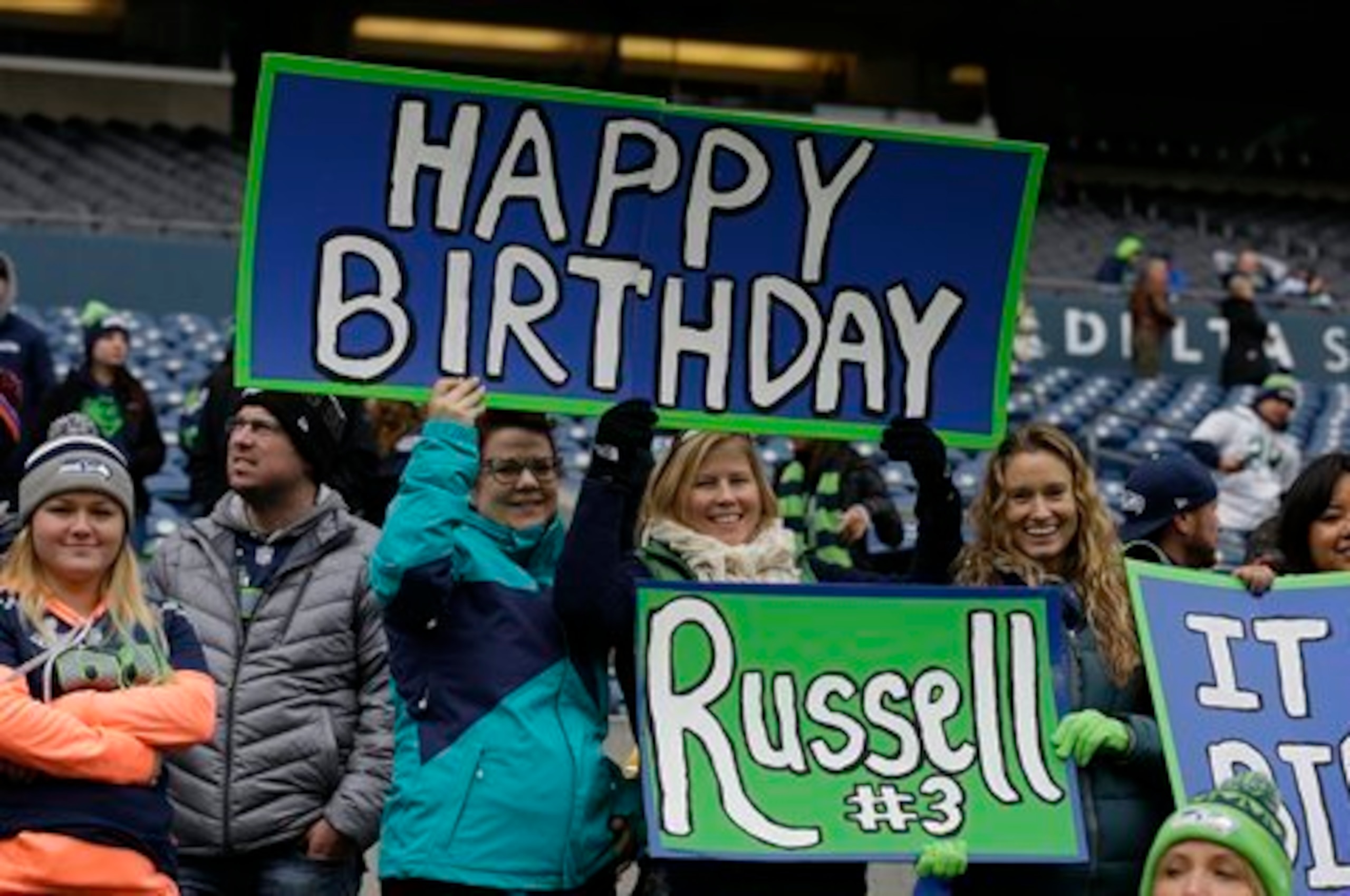
Arrival on the all-time passer rating list is like a bar mitzvah gift. Wilson also turned 27 years old last week, crossing a symbolic barrier between young quarterback and veteran quarterback.
OK, so Wilson over Brady and Montana on the passer rating leaderboard is the kind of statistical fluke that makes you hate football statistics in general and the passer rating in particular. Here are some stats that aren't fluky:
• Wilson ranks fourth in the NFL in passer rating for 2015 at 102.9, behind Brady, Carson Palmer and Andy Dalton.
• Wilson ranks fourth in the NFL in completion percentage at 67.7 percent, behind Philip Rivers, Kirk Cousins and Drew Brees.
• Wilson ranks third in the NFL in yards per attempt at 8.4, behind Palmer and Ben Roethlisberger. Do the math, and that means he completes a high percentage of his passes and those passes gain lots of yardage.
• Though rushing isn't really the story here, Wilson's rushing yards (399) rank second among quarterbacks to Cam Newton and his 5.2 yards per attempt are third to Ryan Mathews and Thomas Rawls.
Wilson is doing all this behind one of the worst offensive lines in the NFL, with one of the most nondescript receiving corps in the NFL. He has been doing it without Marshawn Lynch for much of the year. He will now have to do it without Jimmy Graham, who wasn't making much of an impact anyway. Wilson has the Seahawks winning games while the Legion of Boom suffers through a bear market.
Meet the new, improved Russell Wilson: gutsy leader, daring scrambler, downfield bomber and now (this is the new-and-improved part) precise pocket passer. He's playing the best football of his career, and he has made the Seahawks the scariest predators lurking in the wild-card grass.
Pete Carroll downplayed talk after Sunday's 39-30 win over the Steelers that the Seahawks are playing a different, more offense-oriented brand of football.
"That was just that game," he said at Monday's press conference. "It just became a throwing ballgame."
Since when do the Seahawks play "throwing ballgames"? Since when do they win "throwing ballgames"? Sunday's win was just the fifth 300-plus-yard passing game of Russell Wilson's career. The Seahawks we saw at the start of this season had no chance of winning a shootout against Ben Roethlisberger. With Wilson running for his life behind a bumbling offensive line, the Seahawks barely generated enough offense to squeak past the Cowboys, Lions and 49ers.
Carroll did acknowledge that the Seahawks tweaked their offense after their Week 9 bye. "Since the break we had, we've really tried to feature a fast rhythm and making sure [Wilson has] really got a chance to get the ball out fast to keep the pressure off of the guys up front."
The shift in offensive gears came midway through the second quarter of the Seahawks' Week 10 loss to the Cardinals, after Wilson surrendered the kind of strip-sack that typified the offense for much of the season. On the next drive, the Seahawks began committing to a snap-set-throw approach in the passing game that eliminates the need for long, sustained blocks along the offensive line.
Other changes are similarly apparent in the film from the Seahawks' 49ers and Steelers wins:
• The Seahawks are using more spread concepts and empty-backfield formations. Whereas they kept tight ends and receivers closer to the tackles early in the year, they now more frequently bunch three receivers outside the numbers. They have gotten a pair of long touchdowns from a "double stacks" alignment (see figure). The spread formations turn the open space on the field into an extra blocker. Opponents can only keep six defenders at most in the box, and blitzers must either tip their hand or cross the length of the field to get to Wilson.
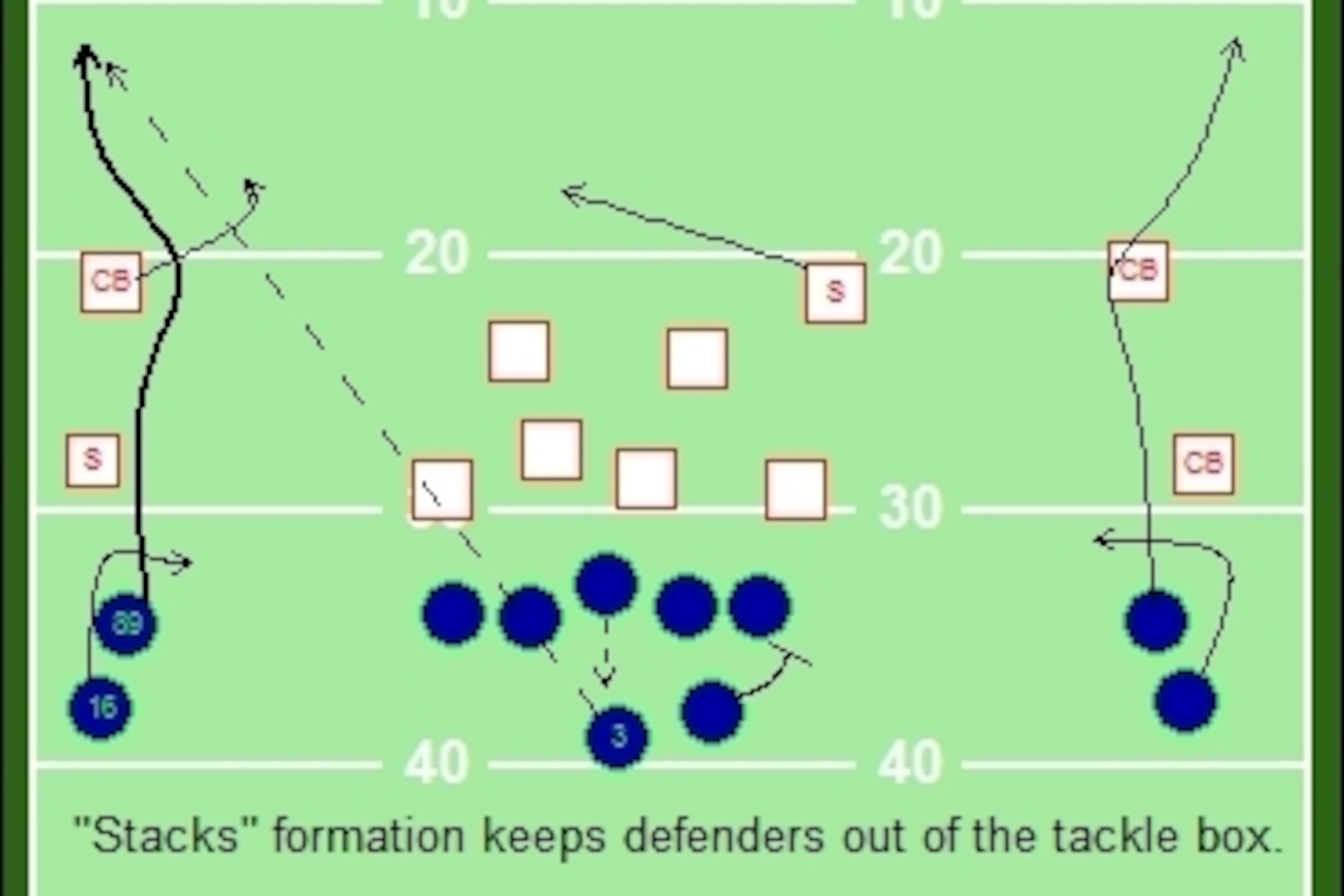
• They're also using less play action. The play-fake to Lynch used to be Wilson's best tool for freezing the defense before delivering a pass. This season, it often just gave defenders an extra split second to beat their blockers. Play action also forced Seahawks linemen to fire off the ball as if they were run-blocking, allowing defenders to shoot gaps and begin flushing Wilson from the pocket. There is still some play action in the Seahawks offense, of course—one of Doug Baldwin's touchdowns against the Steelers was set up by an old-fashioned play-action rollout—but most of their big pass plays in the last three weeks have come from quicker-tempo throws.
• The protection has improved. Wilson has suffered just six sacks in his last four games. The changes listed above account for much of the improvement—there were times when Wilson delivered a quick pass just as one of his protectors was knocked onto his back—but the line got a boost when Patrick Lewis replaced Drew Nowak at center. Right tackle Garry Gilliam and left guard Justin Britt appear to be growing into their roles. Continuity and experience mean a lot along the offensive line.
Statistics also indicate that the offensive adjustments are working. Wilson has completed 83.3 percent of his passes from inside the pocket over the past two weeks, with eight touchdowns and no interceptions, according to ESPN's Sheil Kapadia. Pro Football Focus says he released the ball after an average of 2.14 seconds against the Steelers, down from 2.72 seconds earlier in the season, which is significant considering his quarterback rating is 106.4 when releasing the ball in 2.5 seconds or less. He's been a much better quarterback without play action (70.3 percent completion rate, 8.7 yards per attempt) than with (58.0, 7.0), also per PFF.
Spreading the field and downplaying the run threat would actually backfire if Wilson were "just another scrambler." But Wilson has never been just another scrambler. The spread formations allow him to make pre-snap reads and deliver pinpoint passes to receivers in stride. Wilson has grown steadily as a pocket passer since he entered the NFL, but the Seahawks have not furnished him with many pockets. This refreshed offense makes Wilson look like a young Brady with wheels or a pre-slump Rodgers.
The new offense is also making the Seahawks look like a team with more avenues to victory than just 13-10 slugfests. Football Outsiders gives the Seahawks a 76.4 percent chance to reach the playoffs, higher than the once trendy Falcons (12.7 percent) or any NFC East team. They have a 10.0 percent chance of reaching the Super Bowl and a 5.0 percent chance of winning, better odds than the Packers (7.1, 2.7) or Vikings (6.4. 2.3). Football Outsiders doesn't base these percentages on they are proven winners logic, but on strength of schedule and a deep, nitty-gritty statistical dive.
In other words, the Seahawks offense has a reasonable chance to lead the team to a third straight Super Bowl, despite a rough start and the loss of two of its biggest playmakers.
Which should make people pause before turning in that MVP ballot.
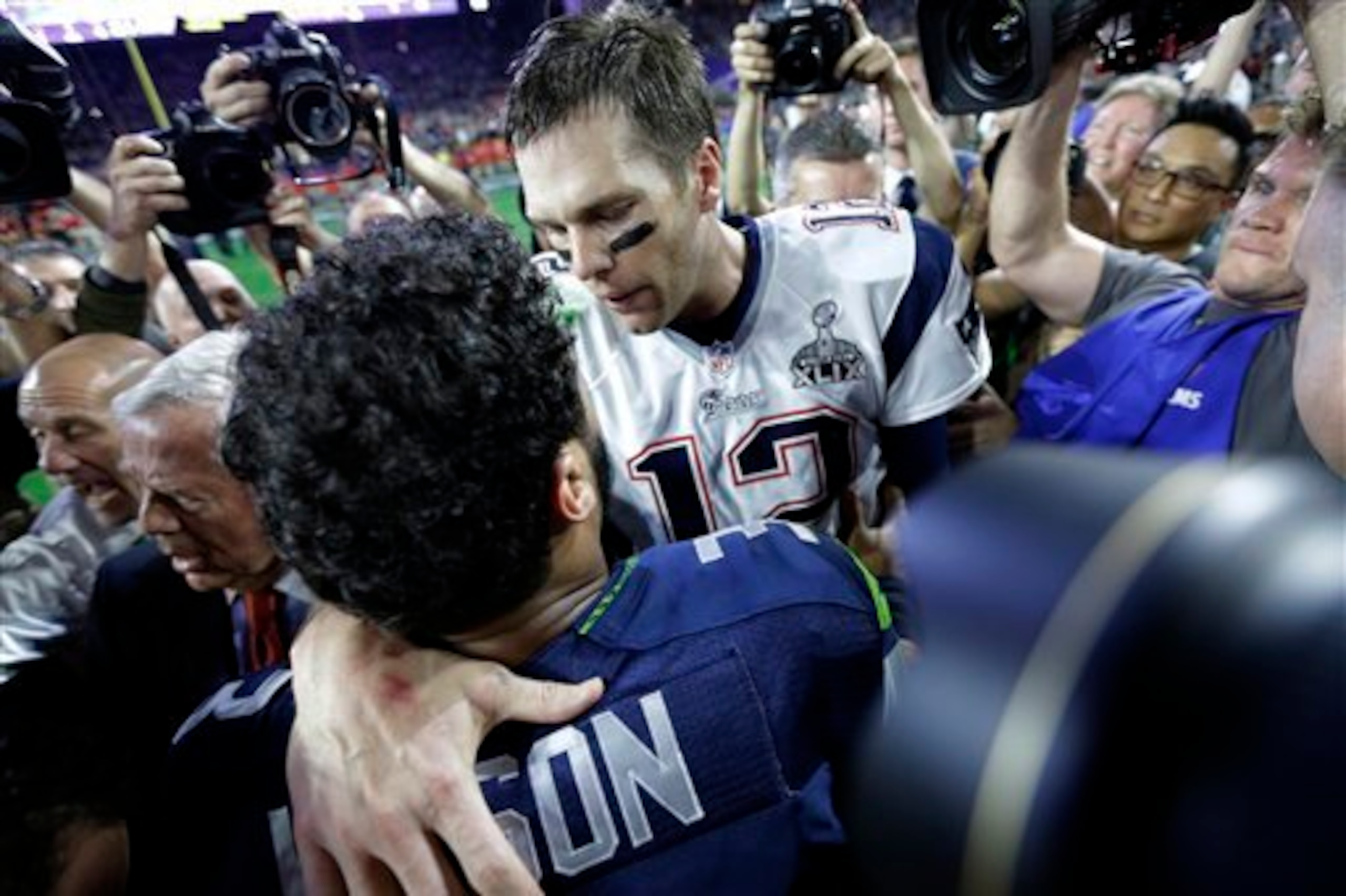
OK, the MVP dance card is already pretty full. There's Tom Brady, Cam Newton, Adrian Peterson, Carson Palmer and maybe J.J. Watt if you are tired of just handing him Defensive Player of the Year every year. The thought of giving the award to the quarterback of a 6-5 team probably makes you bristle, even if that quarterback is a defending two-time conference champion having a marvelous statistical season and carrying his offense—and increasingly his team—on his shoulders toward the postseason.
Fair enough. Wilson has done pretty darn well in the "validation" department for his young career, so the individual awards aren't a huge deal. But the last three weeks—and Wilson's sudden appearance atop some all-time quarterback leaderboards—are telling us something that goes far beyond this season.
Wilson is changing. He's growing. He has graduated from "young superstar" to "superstar" and shed the last downy "system quarterback" feathers on his way to "complete quarterback" status. The Wilson we have seen in recent weeks is the one who can keep leading teams into the playoffs and sparking MVP debates for the next 10 years.
Welcome to the all-time leaderboards, Russell. We expect you to stick around for a while.
Mike Tanier covers the NFL for Bleacher Report.
.jpg?w=2560 "Raiders Football")


.jpg?w=2560 "NFL Clarifies CFB Return Rules")