Can Peyton Manning Find Himself Before He Destroys the Unbeaten Broncos?
Peyton Manning isn't Peyton Manning anymore—and until he realizes it, the undefeated Denver Broncos won't realize their Super Bowl-winning potential.
When Manning looks in the mirror, he probably sees the same guy he's always seen: high-and-tight hair, distinct forehead, aw-shucks smile. When he and the Broncos coaches watch the film of this 26-23 defeat of the Cleveland Browns, though, they won't see a seven-time first-team All-Pro under center. They won't recognize the guy who shredded the NFL for 5,477 yards and 55 touchdowns while wearing the same Denver Broncos uniform just two years ago. They'll see a guy who no longer has the physical tools to play the game the way he used to play it and is dragging a massive mental block about it behind him.
.jpg?w=2560 "Cardinals Giants Football")
.jpg?w=2560 "Cowboys Texans Football")
His three-interception day against a Browns defense missing its top ball hawk turned a roll-out-of-bed win into an overtime squeaker. Just like nearly every other of the Broncos' six wins, Manning made victory harder than it needed to be for one of the NFL's best teams.
We've seen this before with Hall of Fame quarterbacks: Even the very best, even the most talented hit the wall at some point—and they either adapt or fail.
Brett Favre was pushed out the door in Green Bay. He led the league in interceptions in his one short year in New York City. But when he came to Minnesota, Favre humbled himself, redefined his game and played the best football of his life.
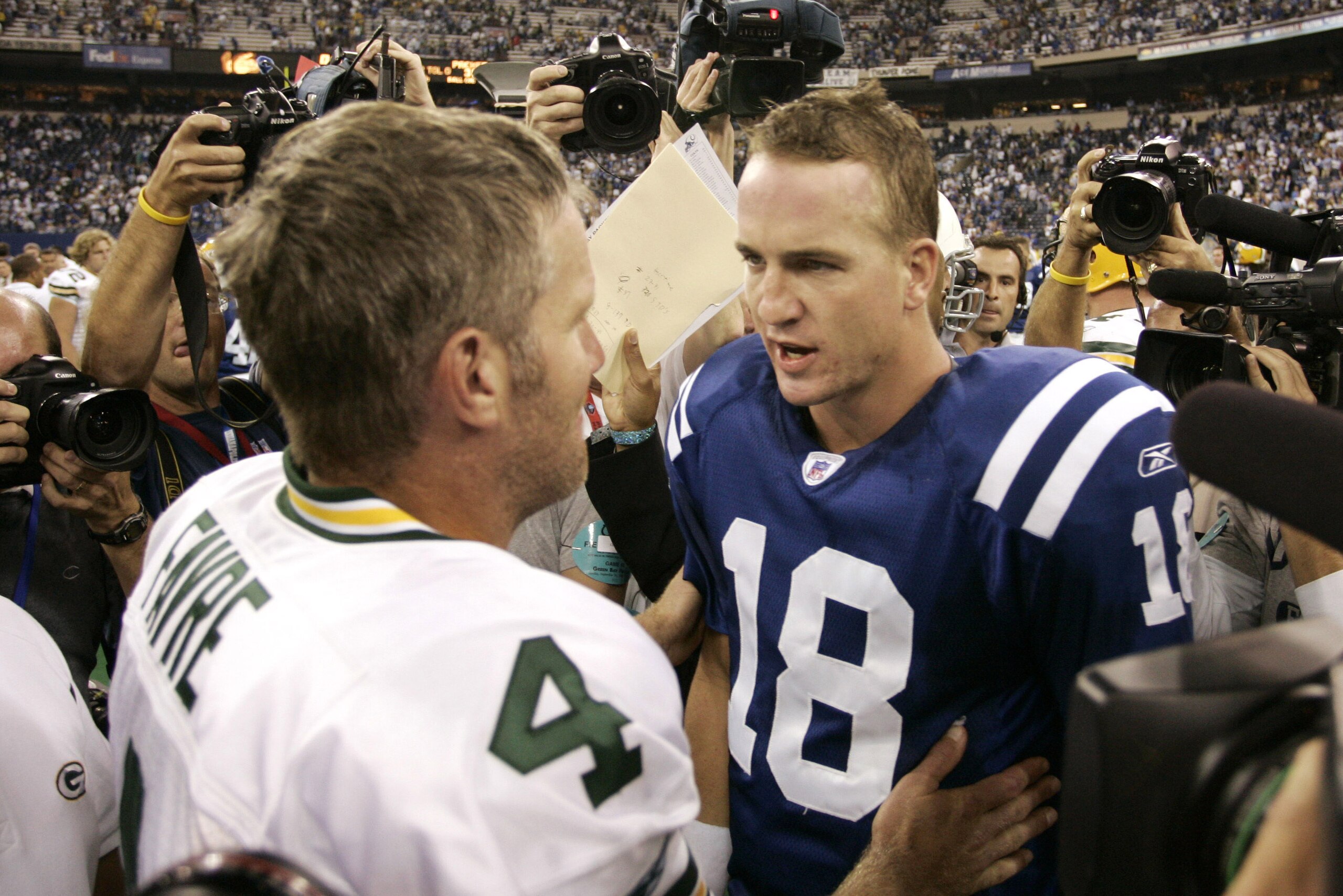
At age 40, Favre posted career bests in completion percentage (68.4 percent), average yards per attempt (8.6) and passer rating (107.2), per Pro-Football-Reference. His NFL-leading interception rate of 1.3 percent was by far his best, far lower than his career rate of 3.3 percent. I'll say it again: At age 40, the Ol' Gunslinger so completely redefined his game, he had the NFL's lowest interception rate.
Manning is 39, and for all he's still got left in the tank, his arm is unquestionably diminished. Though he's done some evolving through all of the coaching changes in Denver—he's on his third offensive coordinator in four seasons—in clutch time, he inevitably reverts to the routes and patterns he's been throwing his entire career. A chastened Manning searched for an explanation after the game.
"We're doing some things right when we have to," Manning said in his postgame press conference, as broadcast on NFL Network. "We're going to continue to work and try and improve in the red zone and on third down."
Personnel-wise, this is much the same offense as the one that finished No. 2, No. 1 and No. 2 in scoring over the last three seasons. Coming into this win over the Browns, they were ranked 17th, per Pro Football Focus, and needed overtime to better their season average of 23 points. What's gone wrong with the Broncos offense is much deeper than red-zone offense; Manning suggested supernatural forces might be at play.
"I'm not going to Vegas on my bye week," Manning said with a rueful grin. "I'm not feeling real lucky right now."
Really?
Because so far, Manning's been bailed out by Steve Smith dropping an easy touchdown catch, Jamaal Charles fumbling in the final minute, Matthew Stafford throwing a fourth-quarter pick, the Vikings forgetting to block T.J. Ward and Demaryius Thomas recovering a Raiders onside kick.
The Broncos have needed a great defensive play (or two), or a crucial opponent mistake (or both), to escape with a victory in every single one of their six wins. Against the Browns, the Broncos got an entire highlight reel's worth of game-changing defensive plays—and it nearly wasn't enough:
This is testing the football gods, daring Lady Luck to turn on you and take it all away. If Manning keeps trying to win games by throwing it the way he always has, the scoreboard will start coming up snake eyes. At least in postgame reflection, Manning admitted as much to the assembled media:
"When things aren't going as well the challenge you always have is avoiding pressing and trying to do too much, which was certainly the case on that throw in overtime. It was going to [Demaryius Thomas], they dropped an extra D-lineman and had it covered up; instead of refusing to just say, 'Okay, they got us on this play and try to make it happen,' I obviously put us in a bad spot.
"
When the Broncos come back from the bye week, Manning will go head-to-head with Aaron Rodgers and the Green Bay Packers. The week after that, Andrew Luck and the Indianapolis Colts. Three weeks after that, Tom Brady and the white-hot New England Patriots. The following week, a resurgent Philip Rivers and the Chargers. In the last three weeks of the regular season, he'll face a healthy Ben Roethlisberger, Andy Dalton and a rematch with Rivers.
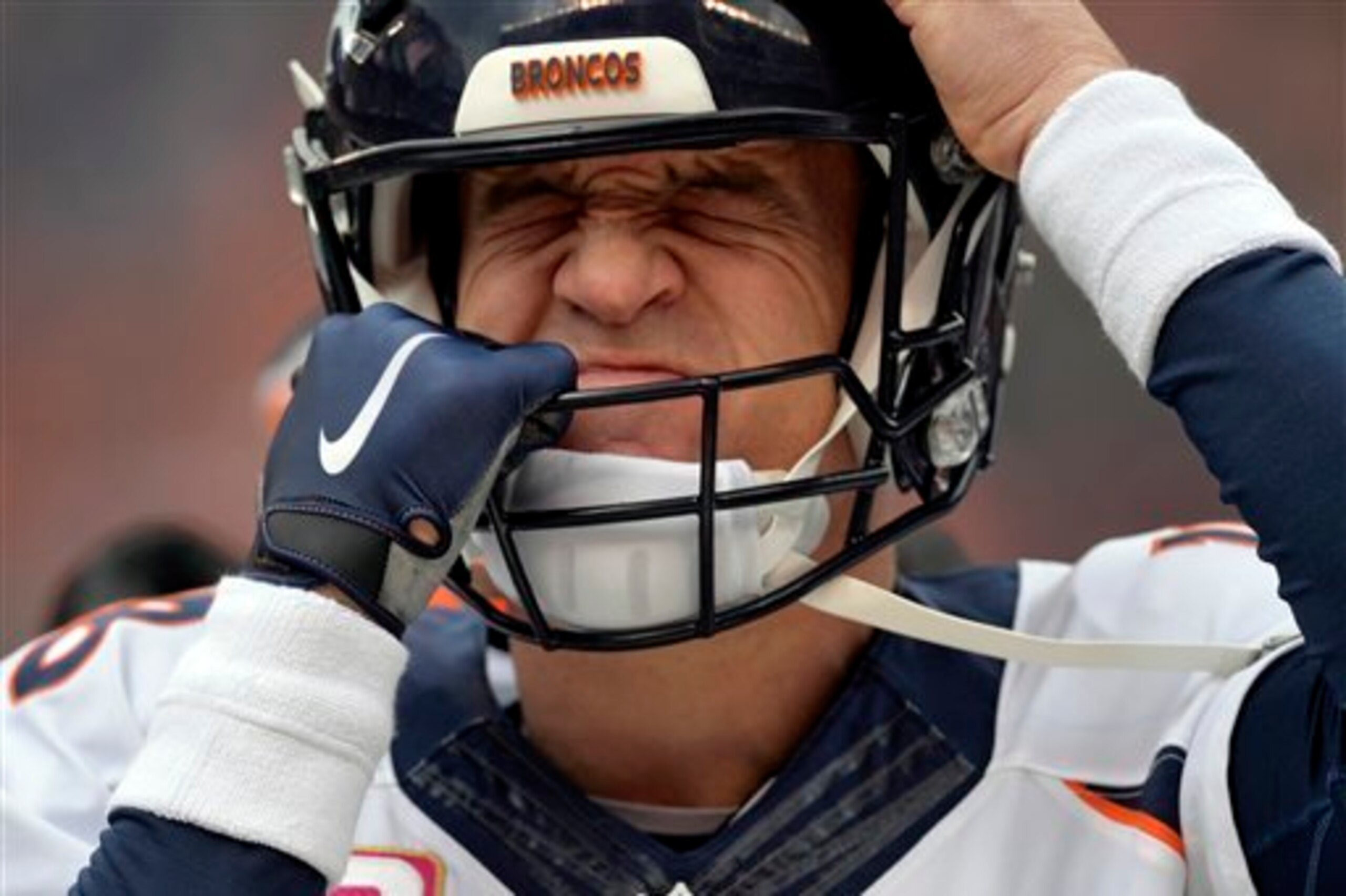
That's seven games against talented teams with six quarterbacks who, with the exception of Luck, are playing much better than Manning is now—and who make up almost his entire pool of potential playoff foes. The level Manning's playing at is just not good enough to win many of those games, and the Broncos have used all their lucky charms to get through the easy part of their schedule unscathed.
For all his tools, all his skills, all his bloodlines, Manning has never been the most physically gifted quarterback; even at his peak, he competed against and beat the Favres of the world with training, study, preparation, execution. To admit his age and re-tool his game the way legends like Favre, and current Broncos team president John Elway, did should be relatively simple.
Right now, as strange as it is to say, the anchor dragging the Broncos down is in the space between Manning's ears. If they're going to win the Super Bowl, he has to cut the past loose and play in the moment—because at the moment, he's at the helm of the fastest ship in football.
.jpg?w=2560 "Steelers Texans Football")
.jpg?w=2560 "Vikings Football")
.jpg?w=2560 "Money in the Bank Grades 💼")
.jpg?w=2560 "Follow All The MITB Action Live 💼")