

Why Jason Hatcher Will Finally Live Up to His Billing for Washington Redskins
When you poach a Pro Bowler from a hated division rival, you expect a season's worth of making your enemy green with envy over what it's missing. But it certainly didn't work out that way for the Washington Redskins after they snagged defensive tackle Jason Hatcher from arch nemesis the Dallas Cowboys last offseason.
The veteran lineman arrived as possibly the best interior pass-rusher in the NFL after logging 11 sacks for the Cowboys in 2013. He'd done it as a 4-3 D-tackle, but a switch back to playing end in Washington's 3-4 front stifled his production. Hatcher tallied a mere 5.5 sacks and left head coach Jay Gruden expecting more.
TOP NEWS

Peyton Manning's son sidelined with injury
Each Team’s 53-Man Roster📋
.jpg?w=2560 "Falcons Buccaneers Football")
Bijan Accepts Godfather Offer ✅
Now Hatcher is ready to live up to his billing and make the money then-general manager Bruce Allen spent last year look like a bargain. The key to his revival will be a defense better suited to his core skills.
Specifically, the arrival of new coordinator Joe Barry will free Hatcher and the rest of the defensive front to attack more often. Hatcher and his mates didn't always enjoy that level of freedom in the more traditional style of 3-4 favored by previous play-caller Jim Haslett.
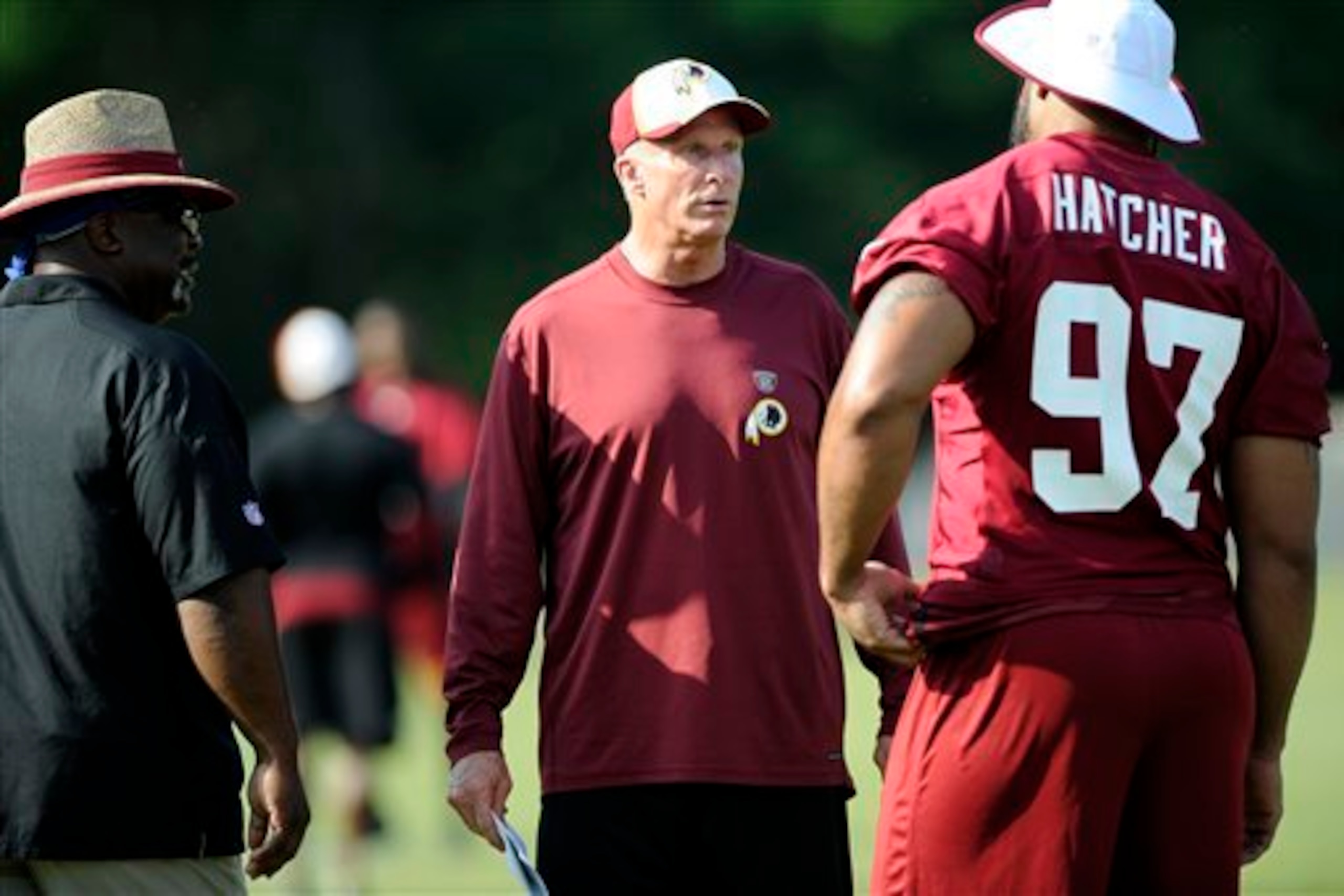
While Haslett and his staff merely paid lip service to the idea of turning linemen loose, Barry will make it a staple of the new scheme. Hatcher is already excited about the possibilities in Barry's one-gap version of the front the Redskins have run since 2010, according to ESPN reporter John Keim:
"You’re expected to make more plays in this system. You can make more plays in the backfield, make a lot of tackles, as long as you’re in your gap and do what you’re supposed to do it’ll be fun. Just attack. You ain’t holding up blocks no more. You can make a play here and there.
"
Hatcher also noted how he struggled playing hurt, referencing the knee injury that hampered him a year ago: "When you don’t have a wheel it’s hard to be the player [you want], and the scheme didn’t help out at all either. We’re lucky this year where we have a scheme where we can attack."
The distinction a healthy-again Hatcher makes between attacking and "holding up blocks" is significant. In 2015, Washington's D-linemen will no longer be required to set the table the way most ends in linebacker-led schemes do.
Instead, Hatcher can do what he does best. That's rushing the passer from the guard-tackle gap. But what will those changes actually look like?
To use the correct terms, Hatcher is a classic 3-technique. It's a numerical distinction meaning he aligns between an offensive tackle and guard.
Hatcher positions himself between the inside shoulder of the tackle and outside shoulder of the guard. This area is known as the B-gap.
The advantages of this single-gap alignment are obvious. Hatcher can go straight ahead and split the gap, or he can slant and stunt in either direction, perhaps across the face of the guard or around the tackle.
Barry's recent experience with the San Diego Chargers and their hybrid 3-4 means you should expect to see Hatcher in this alignment often this season. The Chargers frequently deployed their best lineman, athletic tackle Corey Liuget, as a 3-technique.
A sack from Week 7 against the Kansas City Chiefs shows how effective a 3-technique can be in a 3-4 scheme.
Notice how Liuget lined up right in the middle of left tackle Eric Fisher and guard Mike McGlynn:
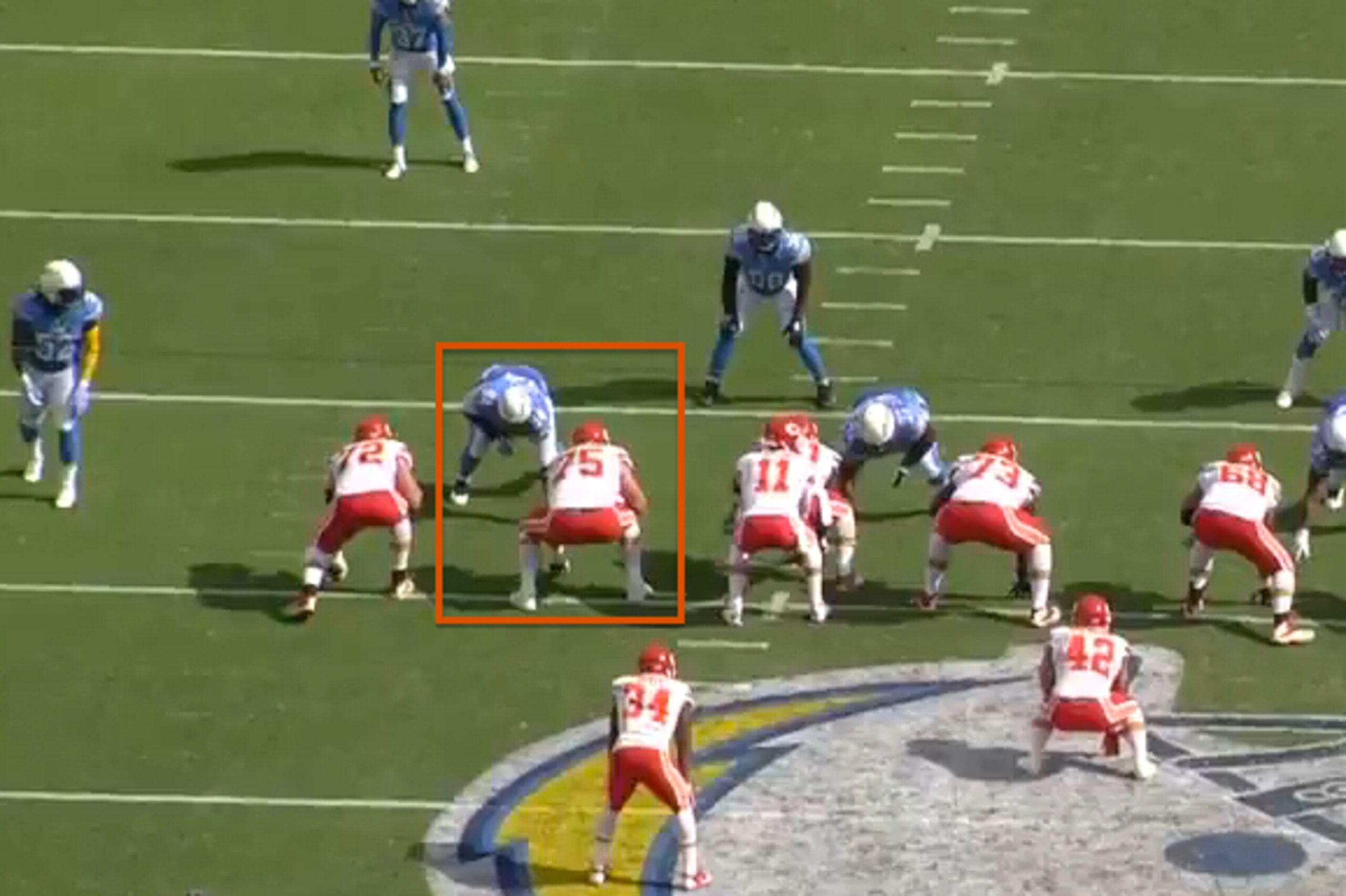
Liuget had a choice. He could press the edge and lock up the tackle to give the outside linebacker a free pass-rush lane against a mismatched running back.
His second option was to isolate the guard and enjoy a one-on-one matchup. He wisely chose the latter:
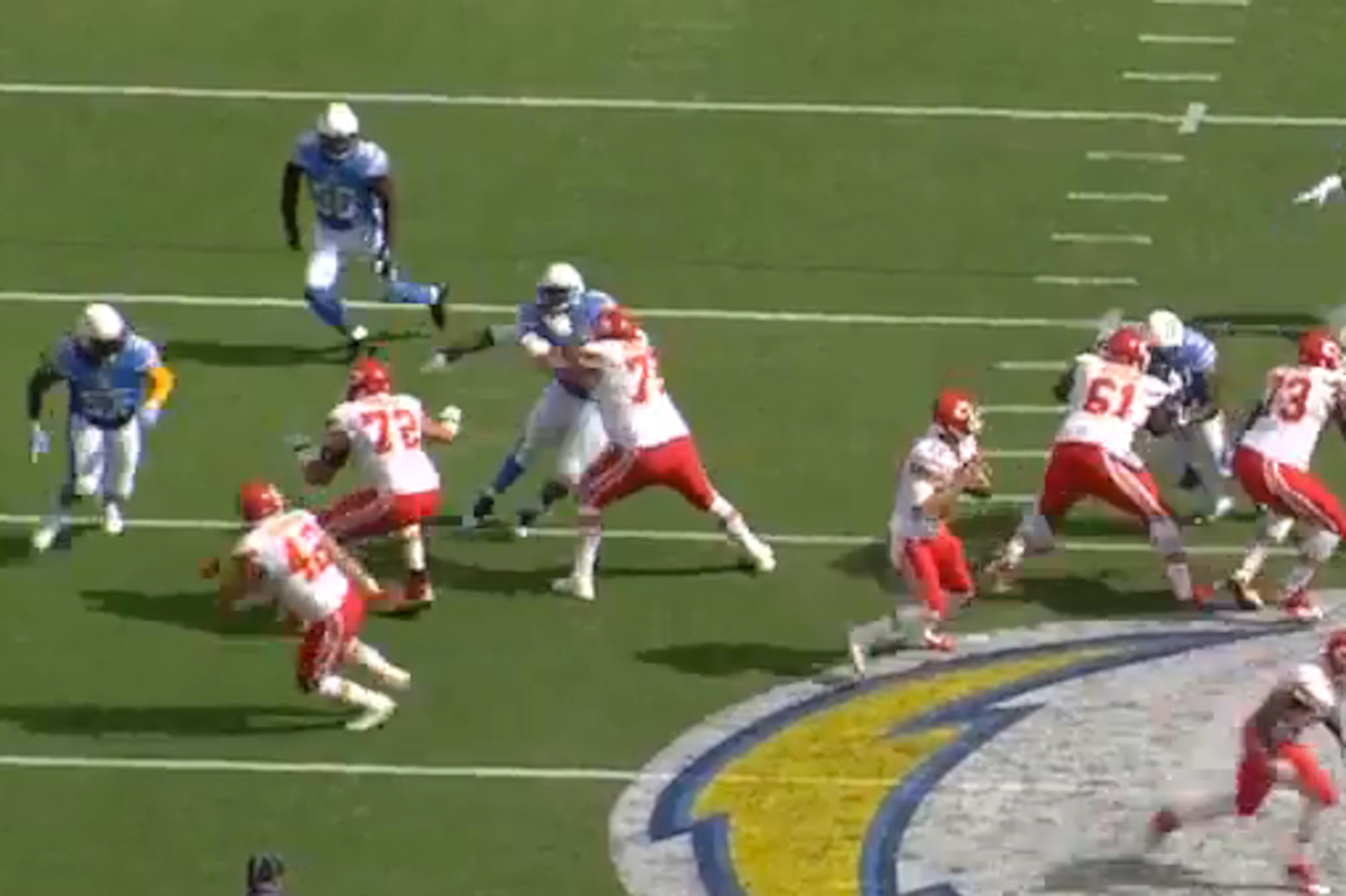
Liuget shrugged his blocker to the outside, before setting up an inside move. He brought his arm over to collapse the interior of the pocket and prevent quarterback Alex Smith from stepping up:

With no lane to step into, Smith couldn't escape Liuget as the big D-tackle closed on the helpless passer to record the sack:
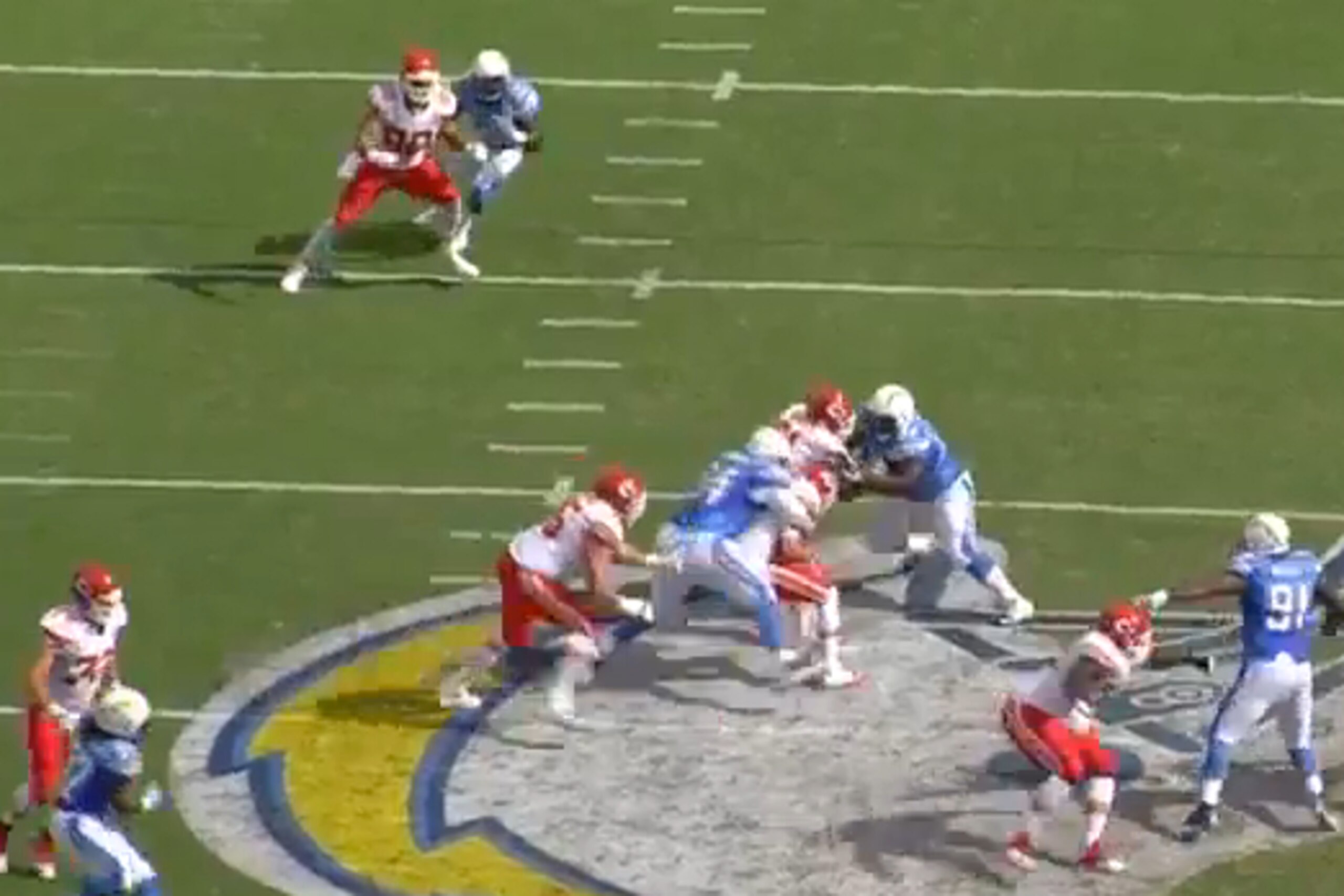
This is the type of play Hatcher was making for fun in Dallas. In a scheme that gave him full license to rush the passer from the interior, the 32-year-old routinely isolated overmatched interior blockers.
Take a look at this play from Week 1 of the 2013 season against the New York Giants. It's a fine example of what to expect from Hatcher in a scheme more tailored to his particular skills.
He shifted over to the right side of the Dallas line but maintained his 3-technique alignment. Hatcher positioned himself in the B-gap to isolate right guard Chris Snee:

He slanted across Snee's face and used a rip move to get underneath the veteran blocker:
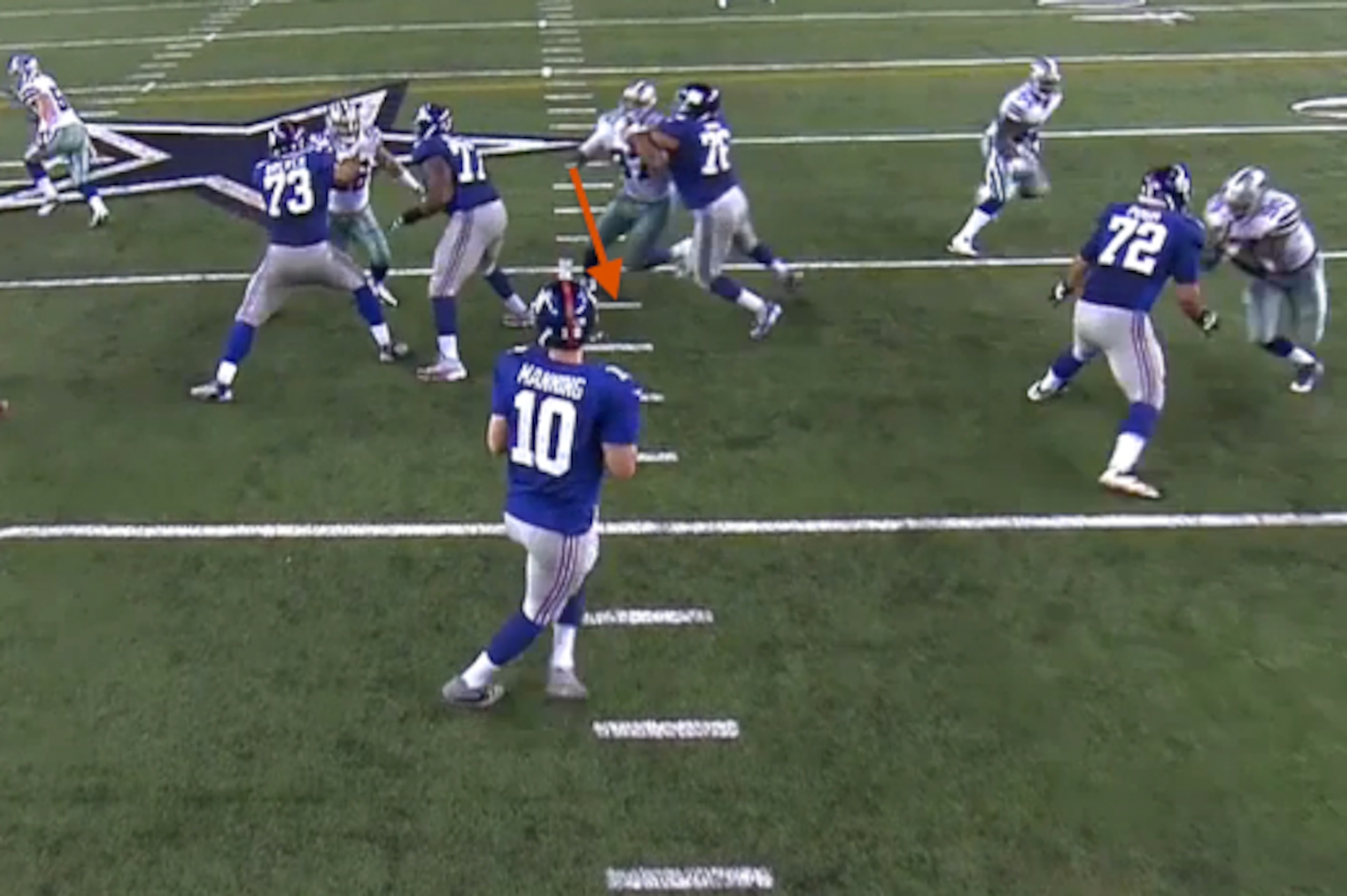
Despite Snee holding Hatcher and trying to push him out of the throwing lane, the nimble D-tackle redirected his body and still pressed the middle of the pocket. He moved quarterback Eli Manning off his spot, preventing him from setting his feet and launching a clean throw:
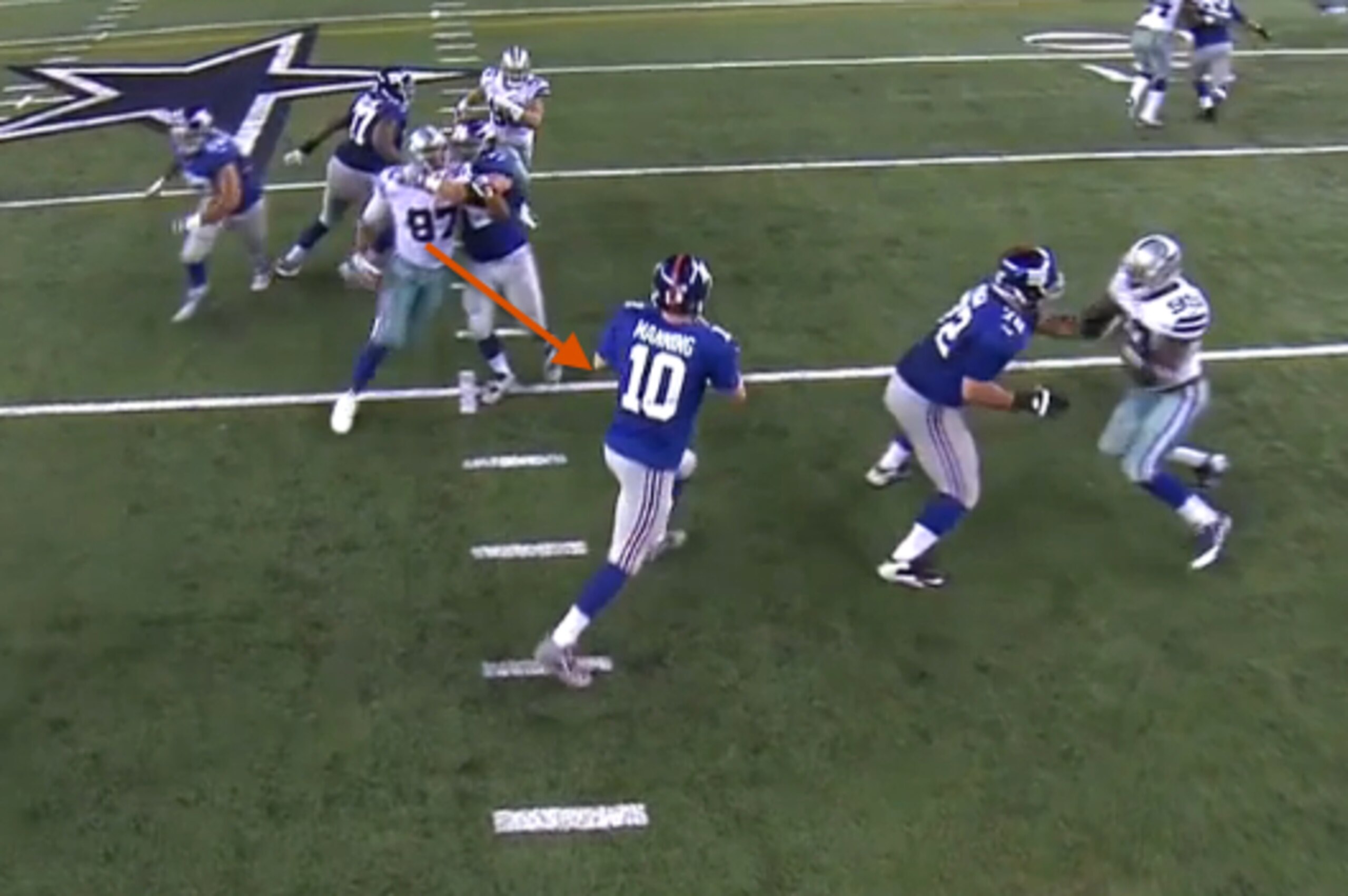
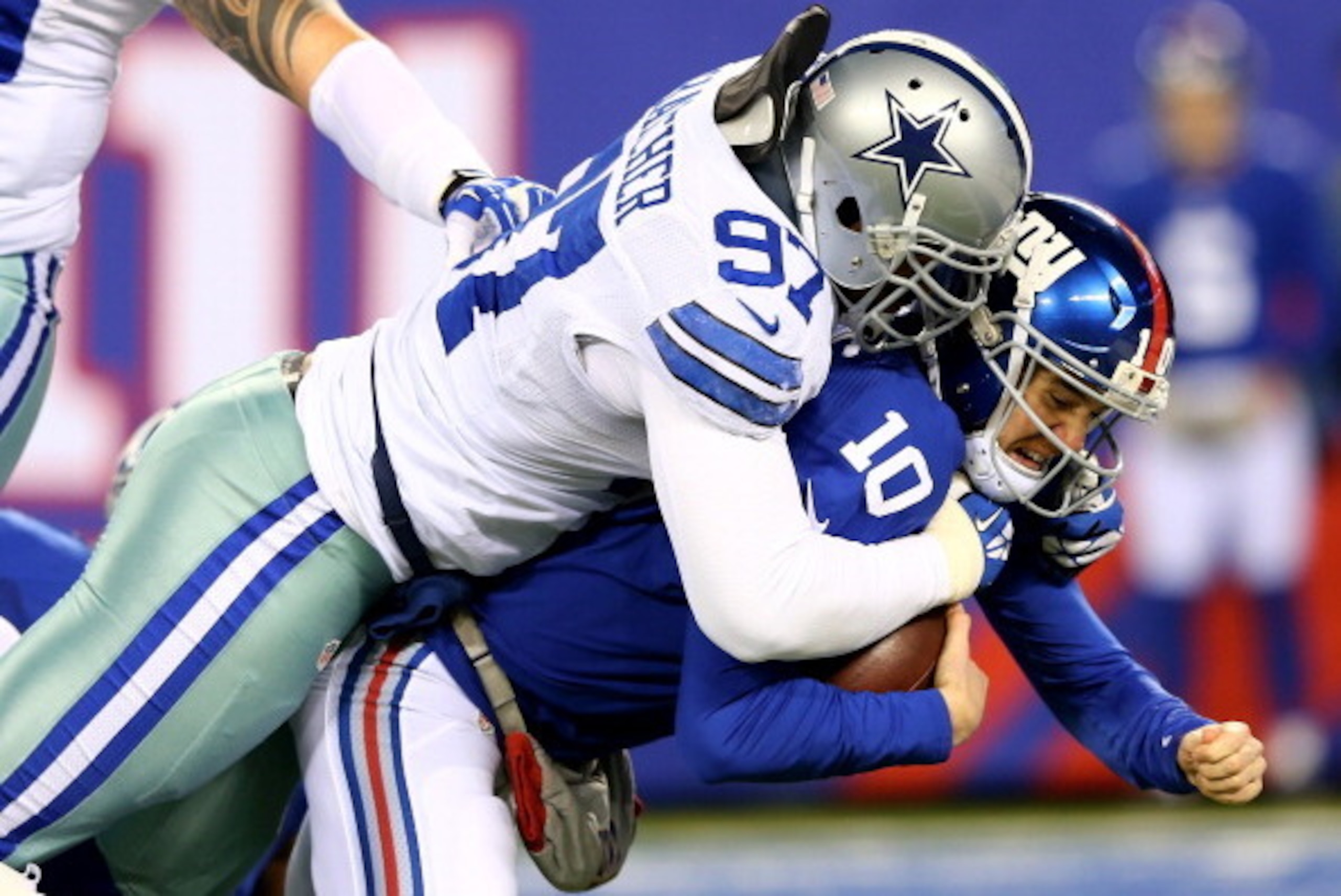
With Manning now on the move and scrambling to adjust his reads, Hatcher put his foot on the pedal. He displayed tremendous closing speed for a 6'6", 299-pounder and chased down Manning to notch a vital sack:
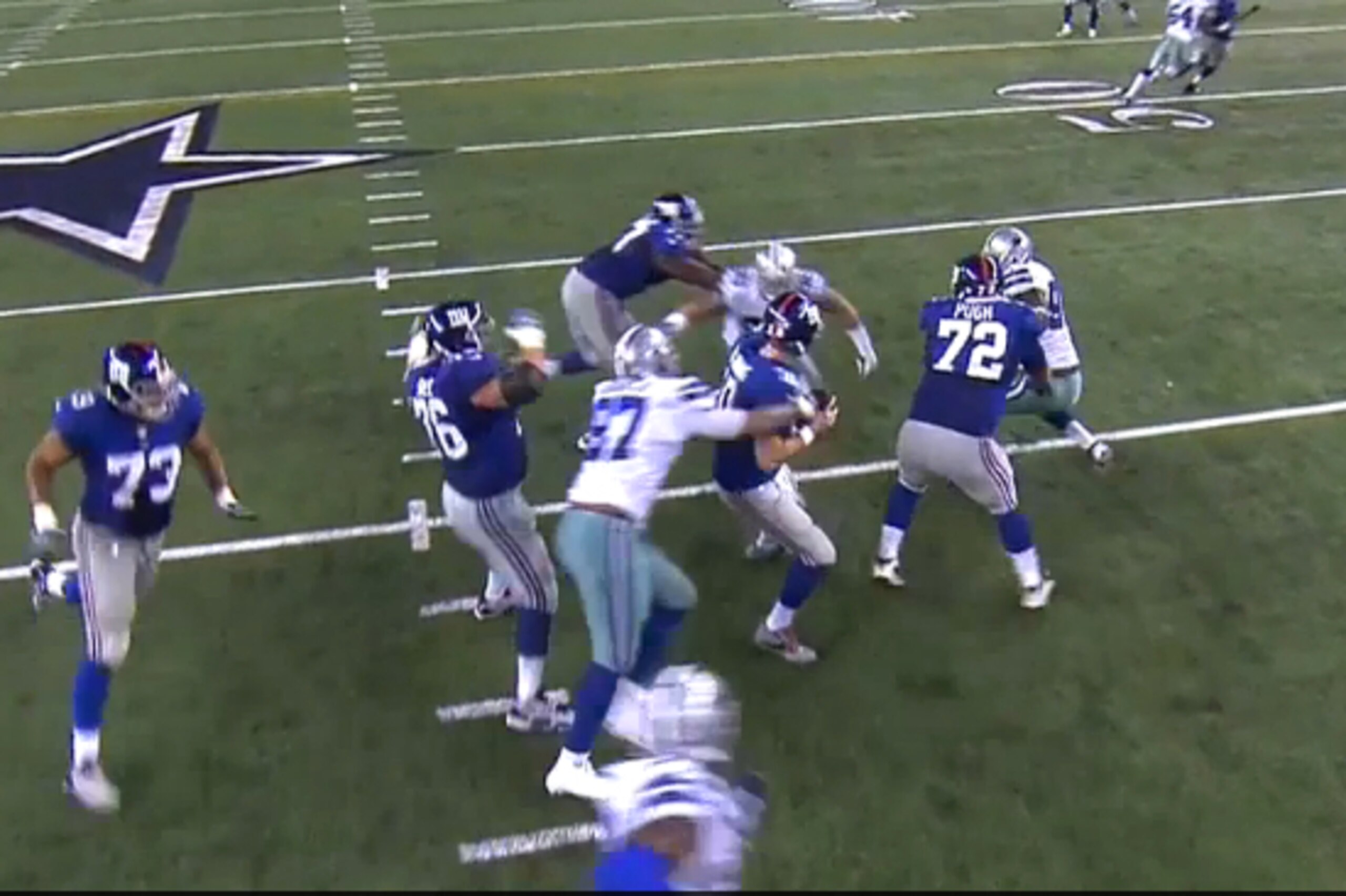
This play showcased the attributes that make Hatcher one of the most disruptive interior playmakers in football. He's boasts imposing size, combined with underrated flexibility and deceptive speed. It's a blend that makes him a matchup nightmare in one-on-one situations.
A scheme dedicated to putting him in those situations more often can only mean great things for both Hatcher and Washington's defense.
But it won't just be the playbook that helps set Hatcher free in 2015. New personnel up front will also play a key role.
One of the first things Scot McCloughan did when he assumed control as new general manager was to restock the defensive trenches. He plucked Ricky Jean Francois off the waiver wire and made Stephen Paea his first signing in free agency.
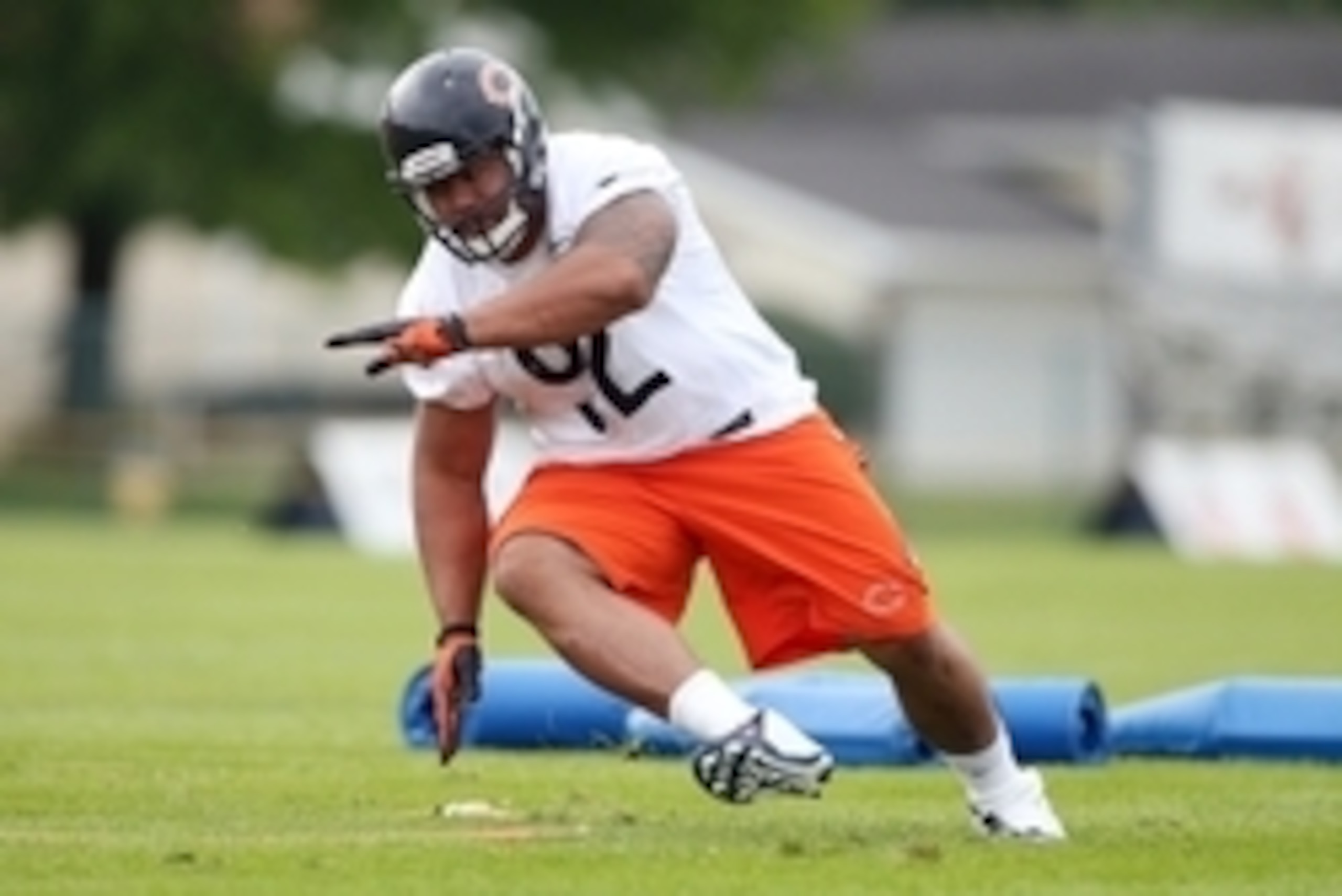
Both are natural, one-gap players. They fit the new scheme like a glove and will draw blockers away from Hatcher.
Speaking of drawing blockers away, nobody's going to do that better than another free-agent addition, man mountain nose guard Terrance Knighton. A 331-pound (conservatively speaking) immovable object, Knighton will routinely tie up double-teams.
In the old system, Hatcher and his fellow end would be required to try to do the same in order to keep all four linebackers clean. But on Barry's watch, both ends can play 3-tech and get into the backfield.
Hatcher is aware of how the new talent can help him. He's already rolled out the welcome mat, per Keim: "I was campaigning. I had a big sign up, 'Go get 'em.' I know how important it is to have good D-linemen."
The increased talent up front is one reason why B/R analyst Chris Simms believes the Redskins boast the best defense in the NFC East ahead of the new season:
But Simms' assessment will only bear out on the field if Barry and his staff consistently unleash Hatcher, one of the new-look unit's few blue-chip players. Fortunately, giving him more opportunities for big plays doesn't look like it will be a problem in the new scheme.
As much as he'll impact the base D', Hatcher can be lethal rushing from the team's nickel sets. Four-man front schemes will naturally put him in his favored position.
In another ESPN report, Keim indicates the Redskins, "likely will be in their nickel defense at least 70 percent of the time." It's a hefty number that will translate to increased production for Hatcher.
So will more flexibility in the way Washington attacks quarterbacks from the nickel front. Again, Barry can consult the pages of his playbook from San Diego for help.
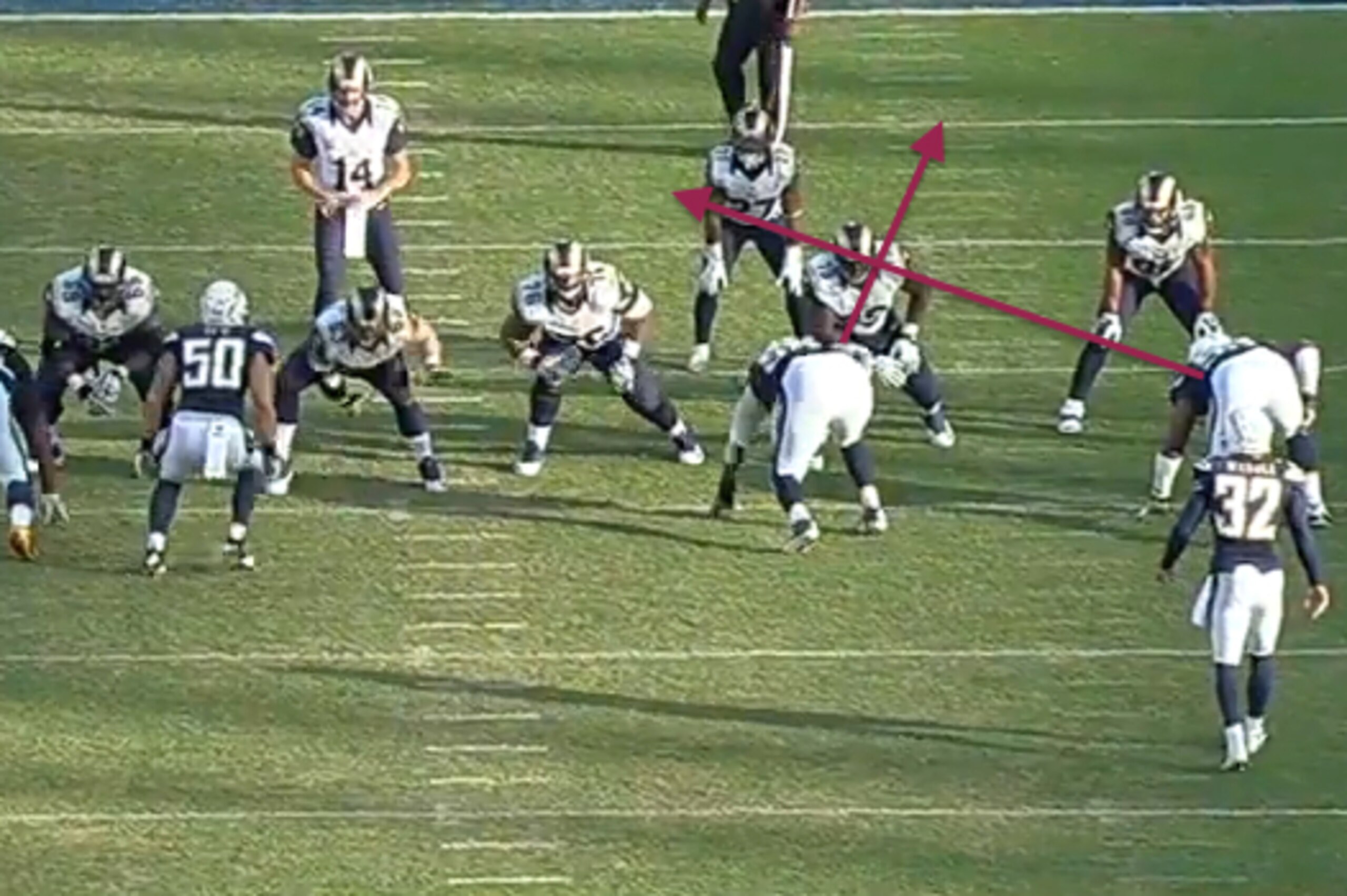
On this Liuget sack against the St. Louis Rams in Week 12, the Chargers spread their four linemen out. Liuget was again a 3-tech but would run a stunt with rush end Dwight Freeney.
Liuget took the outside lane, while Freeney slanted inside:
It was Liuget who looped around the tackle and made the play, stripping the ball loose in the process:
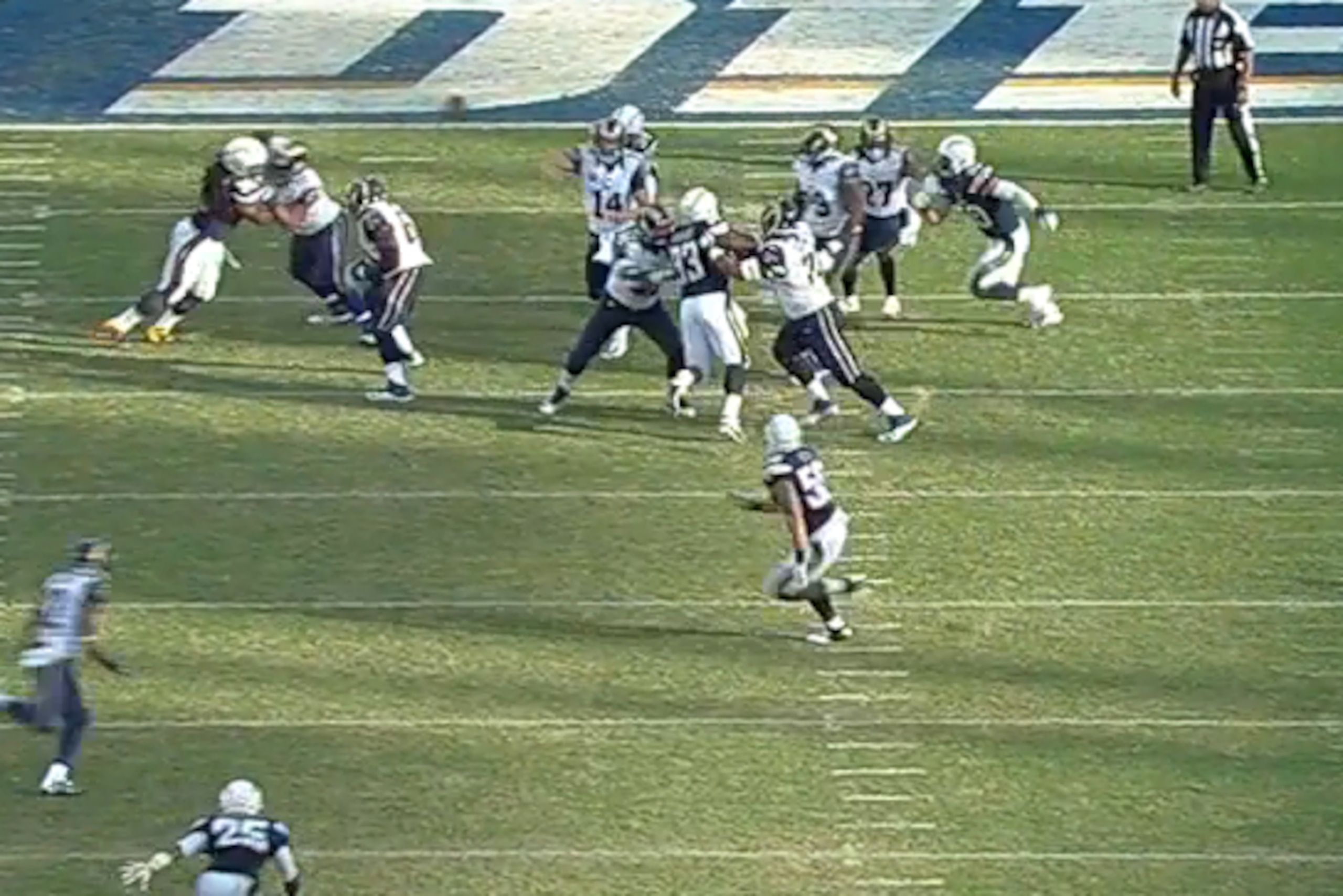
Although the Chargers tweaked their alignment and brought a linebacker blitzing off one edge while dropping the D-end on the other side into underneath coverage, it was the stunt that really caused havoc.
Imagine this same stunt executed between Hatcher and rookie Preston Smith. Washington's second-round pick has been running twists and games during OTAs, per Mike Jones of the Washington Post: "Several times, Smith ran stunts where he started on the right side of the line and swung all the way around to the left after the snap of the ball."
With Hatcher next to him, Smith could become a key weapon in sub-package situations.
The combination of new personnel and a scheme tailored to letting him do what he does best is sure to see Hatcher dominate during his second season in Washington. He's injury-free and liberated from the restraints of Haslett's system.
Now Hatcher has no excuse not to live up to his billing.
All screen shots courtesy of CBS Sports, Fox Sports, NBC Sports and NFL.com Game Pass.
Statistics and player information via NFL.com.

.jpg?w=2560 "Jets RB Taken To Hospital")
.jpg?w=2560 "Grading Every Team's Season 🔠")