Power Ranking Houston Rockets Players Heading into Final Month of Season
It's time for the final edition of the regular-season Houston Rockets player power rankings.
After the trade deadline and some injuries, the roster is a little shaken up since the last edition. Dwight Howard is still out but is close to coming back. Terrence Jones had a glorious return, only to get hurt yet again. Pablo Prigioni and K.J. McDaniels came over at the deadline but haven't done much else.
In the past few rankings, I've graded the players based on their contributions throughout the entire season. This time around, I'm changing it up.
As we gear up for the playoffs, I'm taking a more forward-looking approach with these ranks. Instead of assessing how each player has pitched in along the way, the following slides are based on how essential each player will be once the postseason rolls around.
Of course, my evaluations of each player's significance in the near future are mostly based on recent performances, so keep that in mind. Let's get started.
Dwight Howard: Unranked
1 of 12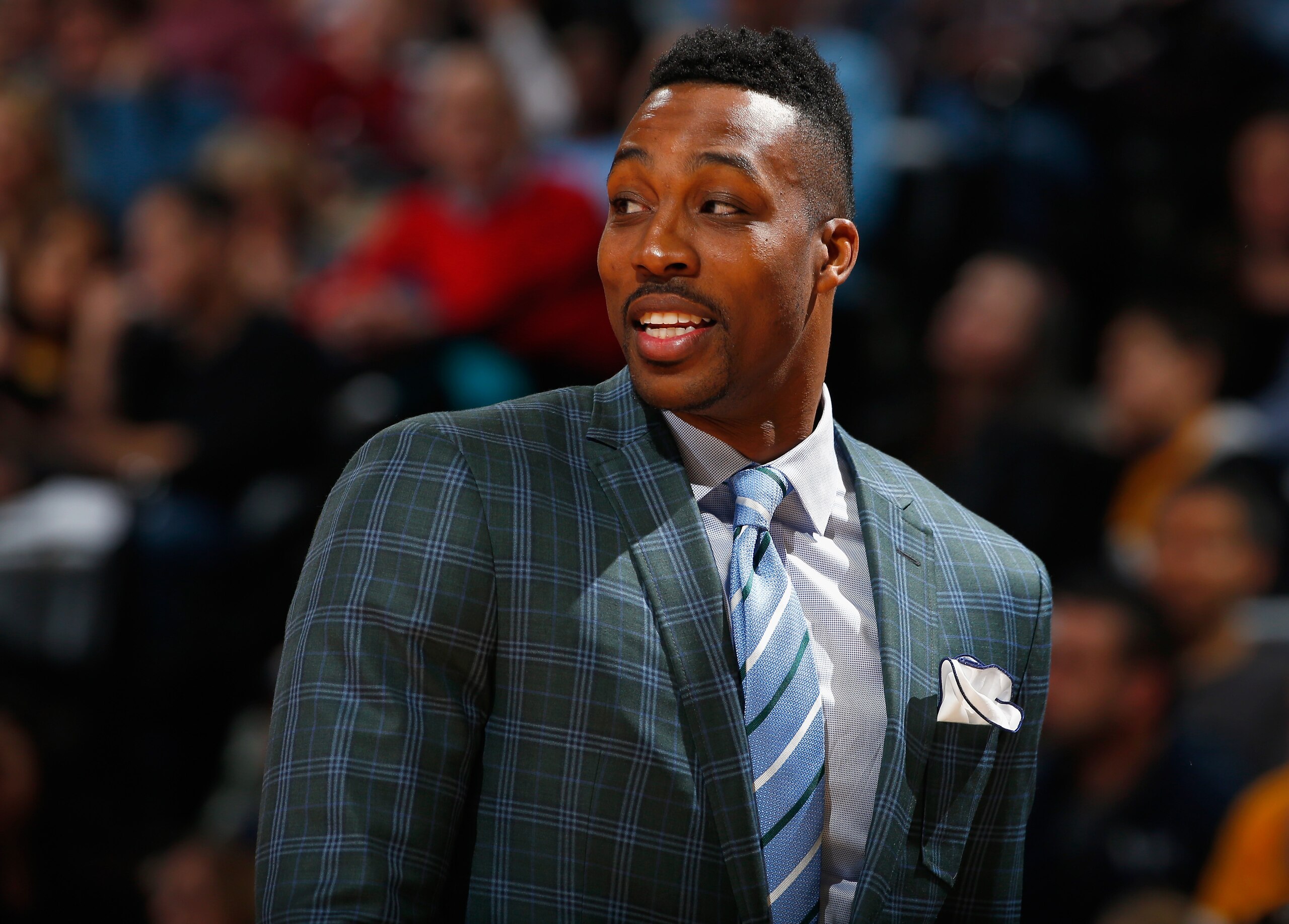
For now, I'll continue to leave Howard out of the rankings because we just don't know what to expect. He's missed the last 24 games and still has no definitive return date.
Don't think this means that he isn't important for the Rockets' playoff hopes, because he is. Sure, Houston has gone 24-12 without its big man, thanks to the heroics of James Harden. However, Dwight's interior presence added to what the Rockets have going on now lifts them from a very good team to a legitimate contender.
Since Dwight's last game on January 23, the Rockets have been severely out-rebounded in his absence. Houston lost back-to-back games to the Portland Trail Blazers and Utah Jazz with a rebound margin of minus-40. That's what happens when you try to replace the three-time defensive player of the year with the likes of Joey Dorsey.
It's uncertain when exactly he will return, but hopefully, Howard will get back on the court with about 10 regular-season games left to shake off the rust. He will have a 20-to-25-minute restriction when he gets back, and he also will sit out at least half of the three remaining back-to-backs.
As long as he is healthy in the playoffs, Rockets fans shouldn't be too concerned. Harden and company have more than weathered the storm these last several weeks, but they'll need Dwight's elite rim protection in the postseason.
The Irrelevants
2 of 12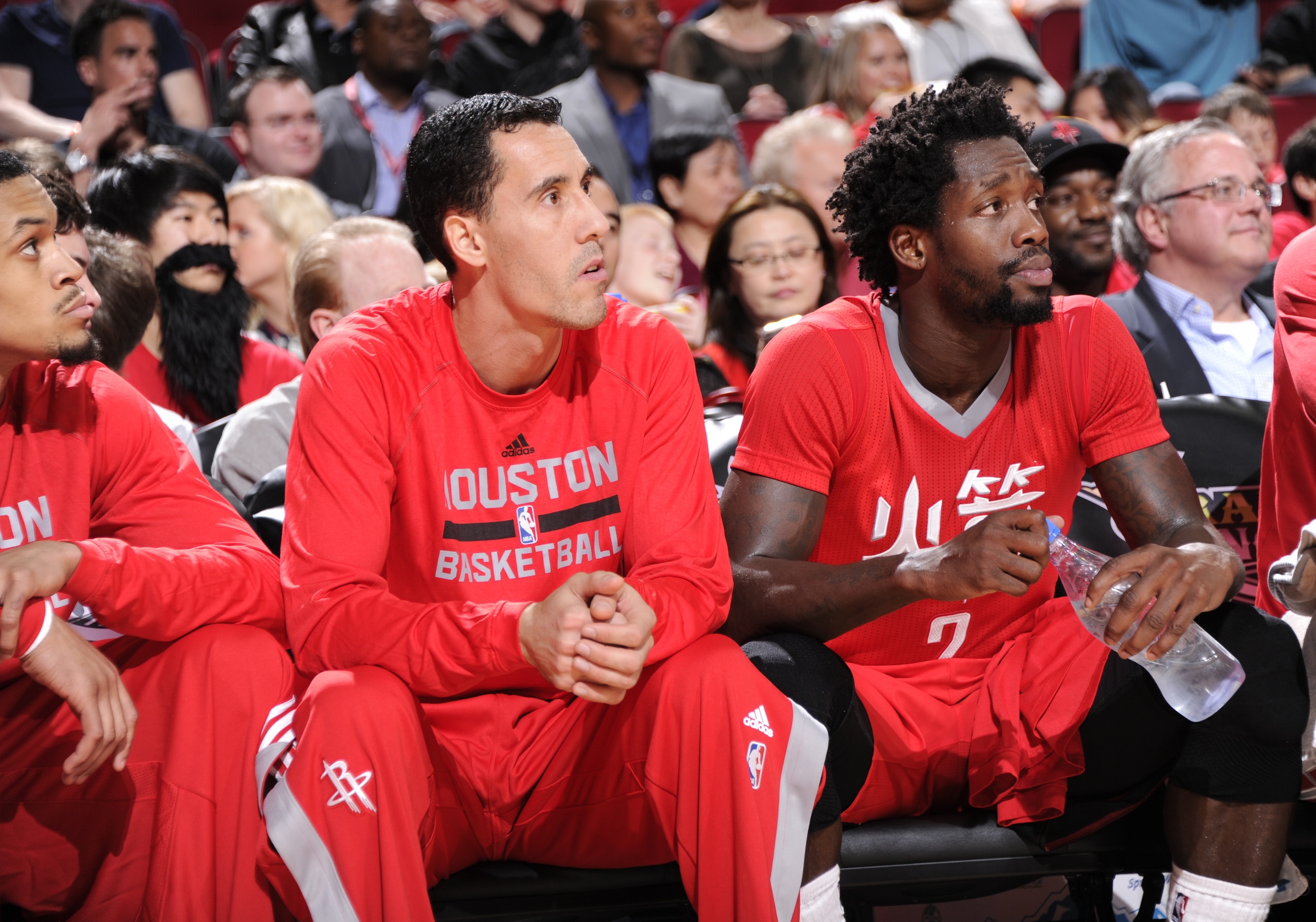
It may sound harsh, but it's true. The players on this slide will have little to no playing time in the playoffs, so essentially they are irrelevant at this point in the season, barring any injuries.
With Howard not a part of the countdown, that leaves 14 remaining players on the roster.
The two draft picks from last summer, Clint Capela and Nick Johnson, have been up and down from the D-League all season long. They'll join the Rockets once the Rio Grande Vipers' season finishes up, but there's no chance these guys see the floor in the postseason. They don't even play now, so it's fairly safe to write them off for the remainder of this year. I'll rank them 14th and 13th, respectively, giving Johnson the slight edge because he has played more recently and has actually scored a point in the NBA.
K.J. McDaniels is an interesting case. He doesn't get any playing time in the NBA but has not been sent down to Rio Grande either. My best guess would have to be in relation to his awkward contract situation.
Even though he's a rookie, McDaniels' contract expires at the end of this season. He will become a restricted free agent this summer, and general manager Daryl Morey would like to keep him for a reasonable price. The less he plays, D-League included, the less likely it is that he gets a lucrative contract in the offseason. Thus, McDaniels will remain on the bench as a non-contributor. His future is bright, but for the time being, he comes in at No. 12 on the rankings.
Pablo Prigioni, the other deadline acquisition, doesn't do much either, but for different reasons. The 37-year-old Argentine veteran isn't a part of the future plans. I think that this was just a deadline deal from Morey that didn't work out as well as he expected.
Prigioni has played meaningful minutes in about half of the games since he's been a Rocket, including a handful of did-not-plays. The Rockets desperately needed a backup point guard, but Prigioni has not filled that hole sufficiently. In 10 games played, he is averaging 1.1 points and 2.4 assists and shooting 16.7 percent from deep.
Unless he significantly picks up his game, which is perhaps plausible considering he's a career 41 percent three-point shooter, he could watch the entire playoff run from the sidelines. He's ranked 11th in the power rankings.
10. Kostas Papanikolaou
3 of 12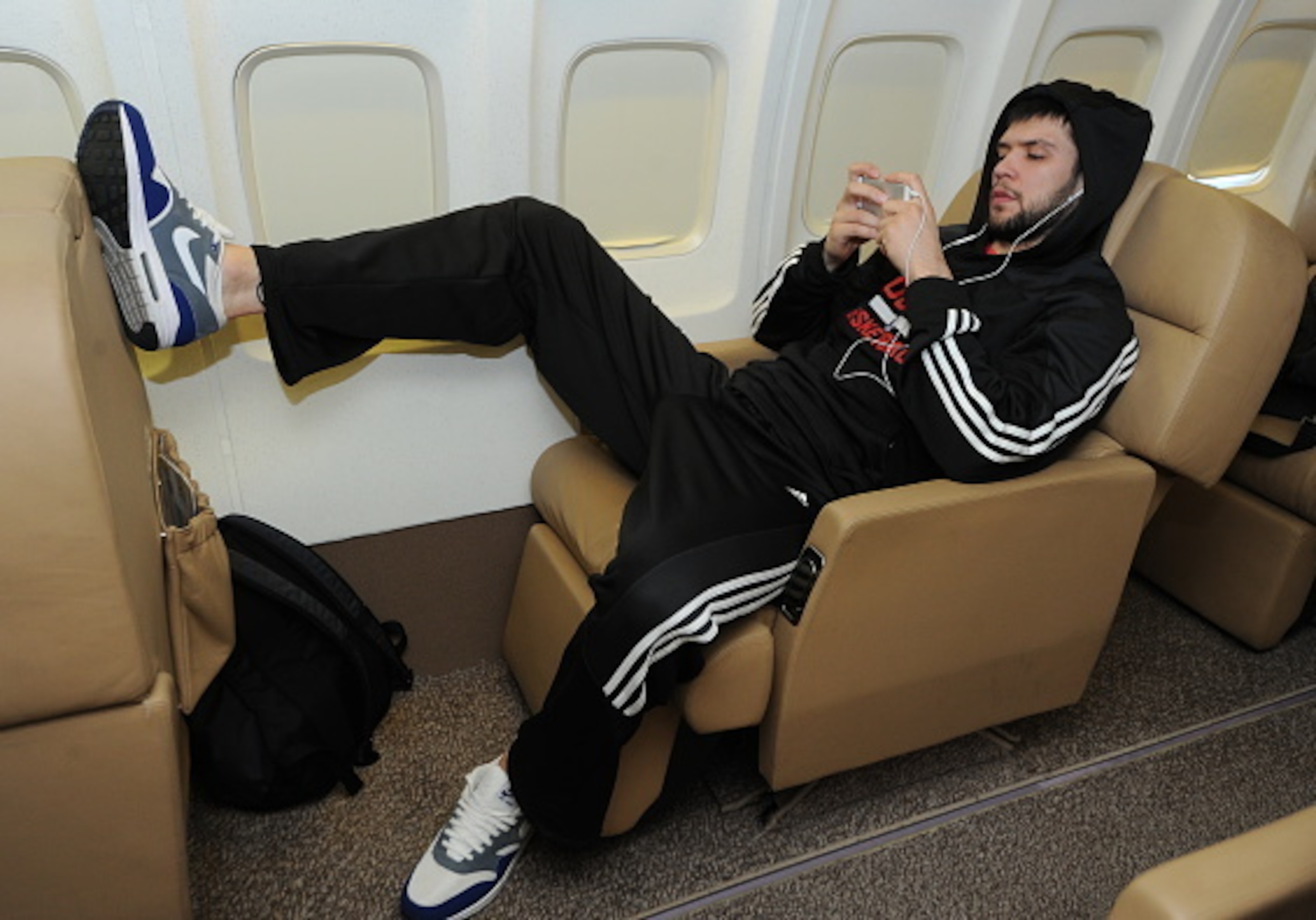
4.4 PPG, 2.8 RPG, 2.0 APG
In case you weren't sure, Kostas Papanikolaou is still on the team. He's missed 13 straight games after turning his ankle in warm-ups before a matchup against the Minnesota Timberwolves.
Truth be told, the Rockets have a definitive nine-man rotation going forward. However, someone had to take this 10th spot as the odd man out, and I'll give K-Pap the benefit of the doubt.
The 6'8" forward has been out of the lineup so long that we're unsure where he left off exactly. His playing time was sporadic, so his role upon his return is still unclear. A lot of it will depend on injuries, because we don't know exactly when Jones, Howard or even Papanikolaou will return.
This uncertainty surrounding the Greek rookie is why he has a minor advantage over the irrelevants for this 10th spot. My guess is he won't play much at all in the playoffs, but we just don't know what coach Kevin McHale is going to do. Last year, he benched Donatas Motiejunas throughout the postseason but played inexperienced rookie Troy Daniels quite a bit, so it's tough to predict how McHale will set his playoff rotation.
It depends on the matchup, but Papanikolaou could be a valuable point forward as part of the second unit. The problem is that Josh Smith has completely taken over that role. I wouldn't be surprised if Prigioni slides into this 10th spot by the time the season ends.
9. Joey Dorsey
4 of 12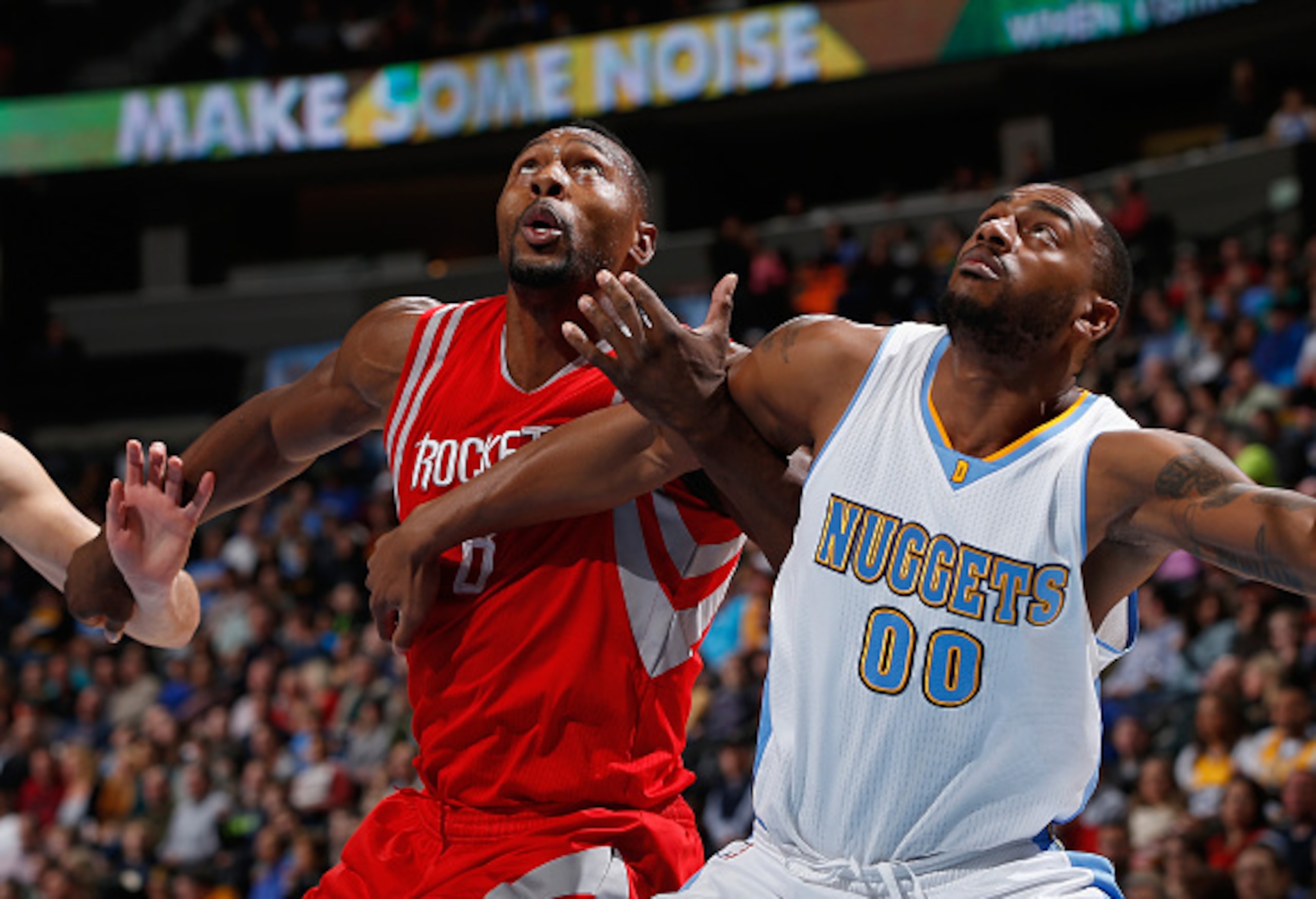
2.4 PPG, 3.8 RPG, 0.3 APG
Joey Dorsey's main role this year has been filling in for Dwight Howard. Of course, he's not nearly as effective as Howard, but Dorsey has done a decent job of protecting the paint for Houston.
The 6'9" center doesn't get a lot of playing time, even when he starts. In his 12 games as a starter, he is averaging just over 14 minutes per game. When evaluating Dorsey, it's not as much about the quantity of minutes as it is the quality.
He doesn't stuff the stat sheet, but the Rockets don't need him to. The 31-year-old has a specific role: protect the rim.
Houston has some nice shot-blockers in Josh Smith and Terrence Jones, but Dorsey is a true paint enforcer. While those guys get the flashy blocks, Dorsey's job is to do all the dirty work in the lane. That means defending the low post, boxing out and crashing the boards.
Dorsey isn't a particularly standout player, but he earns his paycheck by doing what he is asked. That's why he could sneak into the playoff rotation for a small handful of minutes per game. Depending on the matchup, the Rockets could use him as an extra big body to get rebounds and collect fouls (i.e., hacking DeAndre Jordan). Keep in mind, Howard will be on a minutes restriction and avoid back-to-backs, so Dorsey could definitely get some playing time.
8. Jason Terry
5 of 12
6.7 PPG, 1.9 APG, 1.6 RPG
Jason Terry has had a nice role for the Rockets in the twilight of his career. The 15-year veteran is a positive reinforcement both on and off the court.
After a hot start, Jet has lost some steam over the course of the season. His numbers are down a bit across the board, as are his minutes, which is understandable a 37-year-old. Unfortunately, his most important stat is slowly decreasing. Terry is shooting just 34 percent from deep since the All-Star break, after connecting on over 39 percent of his three-point attempts to start the year.
Still, even though his output on the court has gone down, the 6'2" guard still contributes in other ways. Terry is the Rockets' biggest cheerleader from the sideline. He is always standing up cheering and encouraging the home fans to join him. That kind of attitude is a nice boost during the playoffs.
Come mid-April, Terry could be a big help off the bench. He won't get a ton of minutes, but he is key when it comes to energizing the crowd. When he checks into the game, Houston wants him to hit a couple of threes and get the fans going. That's why Morey got him.
Terry has had to play the backup point guard role this year. The Rockets bench had been a weakness for quite some time before Josh Smith and Corey Brewer hopped on board. Nowadays, Terry's role has thankfully diminished a considerable amount. Hopefully, he can transition back into a sharpshooting role like he has throughout his career and play more off the ball.
7. Patrick Beverley
6 of 12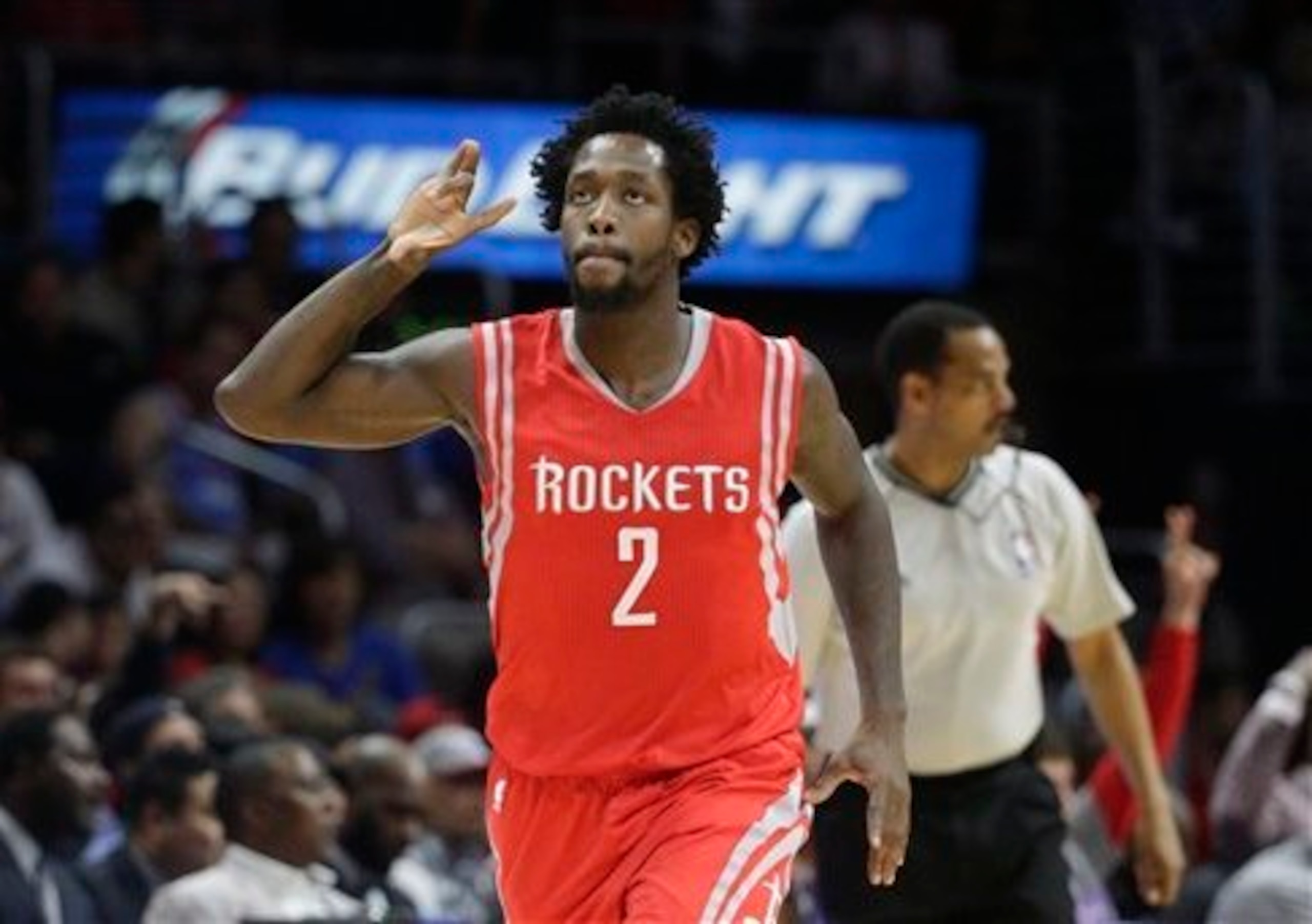
10.2 PPG, 3.5 APG, 4.3 RPG
Although it hasn't been the best of seasons for Patrick Beverley, the Rockets still need his unique assets for a postseason push.
Point guard is a glaring weakness in Houston's starting lineup. It's hard for Beverley, who had to play overseas before getting his chance in the NBA, to compete with the plethora of point guard all-stars in the West. Guys like Steph Curry, Damian Lillard andChris Paul are all superstars whom the Rockets might have to face during the playoffs.
Beverley is not a great scorer or passer. While he's somewhat of a liability on offense, his motor and tenacity defensively have kept him in the starting lineup. It's a bonus when he gets it going offensively, but that feat doesn't happen all that often.
Harden does the majority of the ball-handling anyway, but the Rockets lack a second ball-handler who can create his own scoring, particularly when the Beard gets a breather. Beverley is not that guy.
The 6'1" guard is better suited in a role where he plays off the ball. His inability to facilitate an offense effectively would not be an issue if he could hit threes at a solid rate alongside Harden in the starting lineup. However, Beverley is shooting just 30.6 percent from behind the arc since the All-Star break. He has made some big shots, but that percentage needs to go up in the postseason.
While the Rockets were looking for an upgrade at the point during the trade deadline, it's important to realize that Beverley is still vital to Houston's success.
His defense might be a bit overrated, but he's still an above-average on-ball defender. His greatest assets are his mental toughness combined with his relentlessness. He's not afraid of anybody, not even LeBron James. He's like the enforcer in hockey, somehow in the middle of every brawl or disagreement. That's an underrated role on a championship team.
6. Terrence Jones
7 of 12
12.4 PPG, 7.3 RPG, 1.6 BPG
This slide is painfully upsetting to write.
After missing 41 games with a mysterious nerve injury in his leg, Terrence Jones came back as a revelation. All of his hard work during rehab paid off in a big way. He's a dynamic force down low for the Rockets, averaging 14.5 points and 9.0 rebounds since the All-Star break.
This is not the same player who got bullied by LaMarcus Aldridge in last year's playoffs. This is a new and improved version—a version that would have been much higher on these rankings if he hadn't suffered another blow, this time to one of his lungs.
Jones is now significantly stronger. When he missed all those games with a leg injury, he spent some time in the weight room, and it shows on the court. He is still a great athlete in transition, but now he can also stand his ground in the paint.
On both ends of the court, Jones is much better in the post. He can hold his ground on defense against much bigger players. Against the Orlando Magic, the 6'9" Jones held 7'0" Nikola Vucevic to 5-of-17 from the field. Vucevic is a talented big man, shooting 52.4 percent this season, but Jones held him to just 29.4 percent despite his height disadvantage.
You can tell on offense too that he is stronger than before. He goes up with confidence and finishes quite often even with taller guys draped over him in the paint. Jones is shooting 31.3 percent from deep since the break, which isn't great, but his shooting touch in the paint has definitely improved.
I can't believe I ever wanted to trade Jones in a package for Goran Dragic. This guy has been elite since his return from the first injury, and we can only hope he does the same from this second one.
5. Josh Smith
8 of 12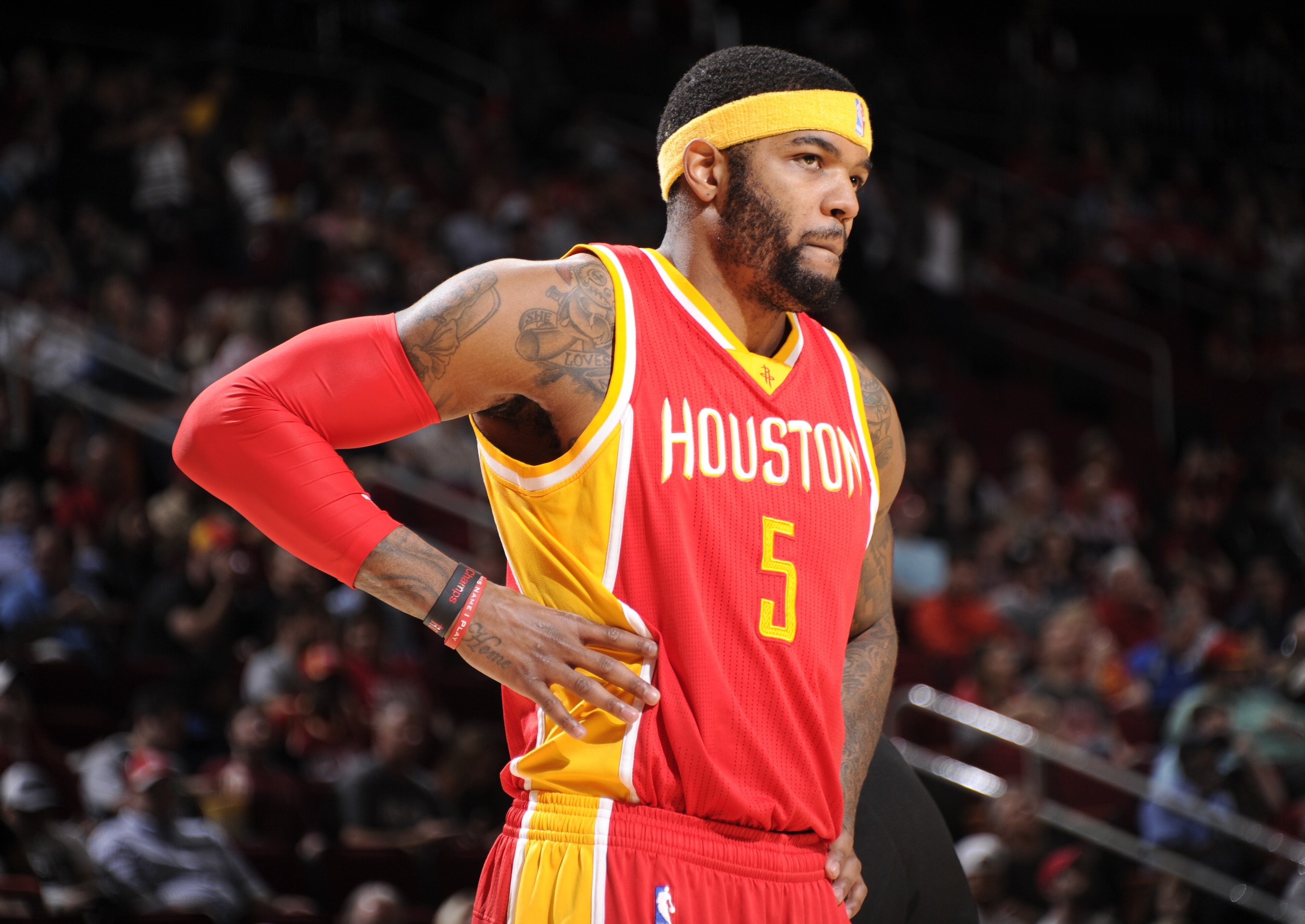
11.5 PPG, 5.9 RPG, 2.5 APG (with Houston)
Josh Smith is a main reason why the Rockets bench went from one of the worst to one of the best. His worrisome habits made us think he might not be a great fit in Houston, but now there's no doubt that this guy is a crucial cog in the rotation.
Smith's height and unique athleticism make him a special player. His attitude and bad tendencies have held him back over the years, but now that he's in a defined role on a contender, Smoove finally fits just right.
With Howard out, Smith is both the Rockets' backup point guard and center. I'm not sure the league has seen something like that since Magic Johnson was a rookie for the L.A. Lakers. It's rare for a guy to be able to block a shot on one end and then run the fast break on the other, and that's why he's so dangerous.
Coming off the bench, Smith will be a big part of the Rockets' playoff hopes. He runs that second unit, which oftentimes serves as a game-changer against other teams' benches (I'll get back to this later).
Especially with Howard and Jones currently hurt, the Rockets need Smith to continue to play big. He's been blocking 1.5 shots per game since the break, so it appears he's up to the challenge. On offense, however, his role is more than that of a typical big man.
Smoove is a terrific passer for his size. It's also nice that he's shooting 33 percent off the bench for the Rockets, compared to 23 percent as a Detroit Piston. The problem is he's been fairly inconsistent, having some huge games and some quiet ones.
His ability to facilitate the offense in the half-court set is crucial for that second unit, which struggles to score with Harden on the bench. Houston can't afford its frequent dry spells without the Beard in the playoffs, and Smith will be a big part of preventing that from happening.
4. Donatas Motiejunas
9 of 12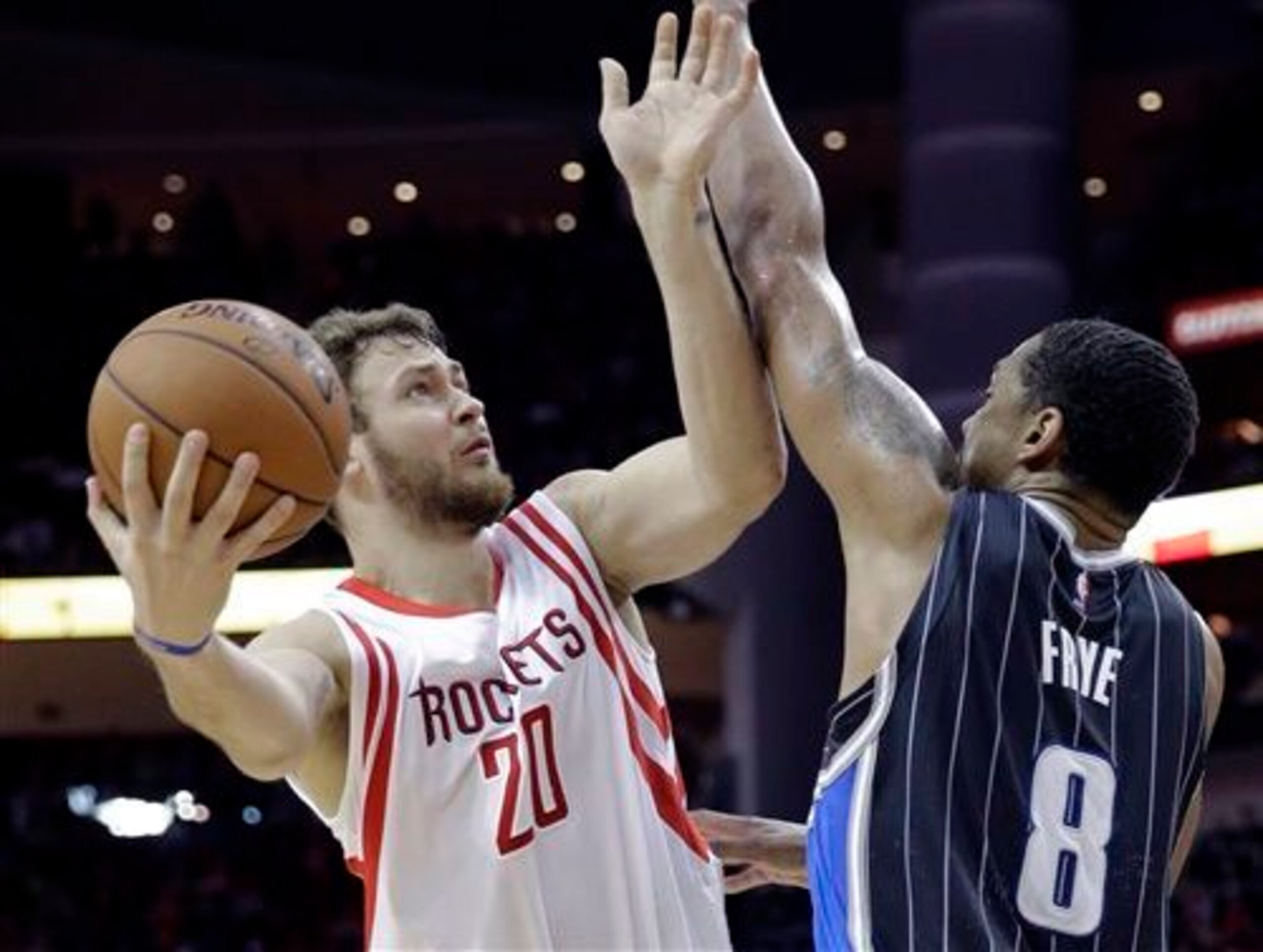
11.8 PPG, 6.0 RPG, 1.8 APG
It's hard to be critical of D-Mo when he has done such an incredible job of replacing Howard throughout the season. The 7-foot Lithuanian has emerged as a great player for the Rockets this year.
As of late, however, Motiejunas' production has noticeably decreased. The man is tired! He has never played this many minutes of basketball in his life, and it's showing. He has recently been missing some easy shots in the paint that were automatic for him a month-and-a-half ago.
After shooting 51.8 percent from the field before the All-Star break, D-Mo is shooting just 43.5 percent since. A big factor is that he now is more of a priority on offense, so his touches are through the roof. With Howard out (and probably even with him healthy), D-Mo is by far the best post scorer on the team. The shots hadn't been falling since the break, but it looks like he's starting to get his touch again, as he recently dropped 20-plus points for the first time in nearly seven weeks against the Orlando Magic.
The best part about D-Mo's game lately is his outside shot. He's shooting nearly 48 percent from deep, which is light-years better than the 31.2 percent for his career. If he can carry that hot streak into the postseason, he will truly be a stretch-4 threat alongside Howard, which would make the Rockets lethal.
3. Corey Brewer
10 of 12
11.7 PPG, 3.7 RPG, 2.3 APG
Of all the additions in the Western arms race throughout this season, Corey Brewer may actually be the best of them all. I'm talking about Rajon Rondo, Jeff Green, Arron Afflalo and all those other midseason additions.
Getting Brewer was the best move of them all.
No one off the bench in the NBA has the ability to change a game as much as Brewer. He nearly got arrested for the outright thievery of a game in Portland against the Blazers, scoring 17 points in the fourth quarter of a game that was surely over. The Rockets fell just short, but Brewer's effort on defense and swiftness on the break are incomparable.
He is 6'9" with crazy long legs that make him incredibly quick. He is faster than everyone else on the floor, which makes him the quintessential spark plug. Any missed basket can turn into a fast-break dunk the other way instantaneously.
With that second unit, Brewer can wreak some serious havoc against other second-stringers. The bench struggles offensively when Harden comes out of the game, so they play with a much different style than the starters. Here's how it works:
When the bench checks in, it starts with defense. The Rockets will often double-team ball-handlers on the wing, aggressively playing the passing lanes and hoping for a steal. The Rockets force the second-most steals per game in the league this way, and it often leads to a fast-break opportunity. When the defense forces turnovers, the players get out in transition, which is the best way to consistently score while the Beard rests.
Every time Harden takes a seat, Rockets fans have to hold their breath (which should say something about the MVP race). In the playoffs, Smith and Brewer especially will have to weather the storm while he sits. That is indescribably important to Houston's success or failure once the postseason begins.
People often say that the pace slows down in the playoffs, and that the runners and gunners don't stand a chance. The Rockets play with the second-fastest pace in the league, but I'm not concerned about the change of pace, and that's because of Brewer. The way this unit plays, it's nearly impossible to slow Houston down.
2. Trevor Ariza
11 of 12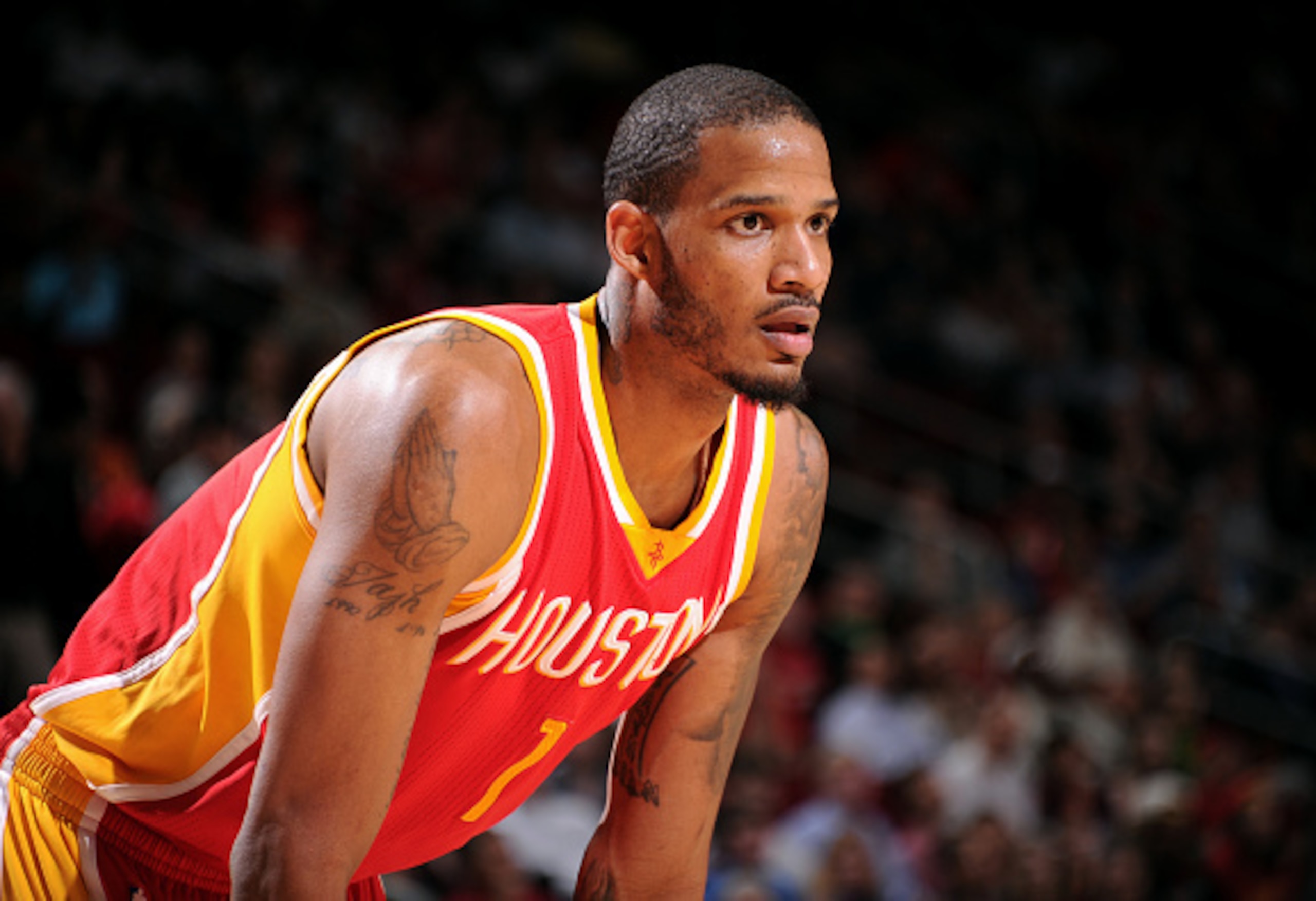
12.5 PPG, 5.4 RPG, 2.5 APG
It's safe to say that the nail is officially in the coffin for any debate: Trevor Ariza is far more valuable than Chandler Parsons.
Ariza is the only Rocket to start every game this season. Houston's entire refocus on defense has been centered on this one guy, and it's the reason the Rockets are legitimate contenders for the first time in years.
That's a pretty good reason for a No. 2 ranking, if you ask me.
Ariza always matches up with the opponent's best player, whether it's a point guard or center. When the game is on the line, he is the guy you want shutting down the opposing ball-handler. He ranks seventh in steals per game in the NBA and forces several other turnovers and missed shots that don't make it into the stat sheet.
His scoring has been up and down throughout the year, but it doesn't matter when you take into account Ariza's defensive contributions. However, he's been shooting the ball well the past several weeks.
He jumped from 10.2 points per game in January up to 14.8 in February. Since the All-Star break, he's shooting almost 36 percent from behind the arc, which is a lot better than his 33 percent prior. As more teams try to double up on Harden defensively, Ariza has been more aggressive off the dribble, attacking the basket. It's definitely not his specialty, but he's gotten better the past month or so.
When it comes to the playoffs, the Rockets will need Ariza if they want to finally get out of the first round. His defense is key to Houston's success in a brutal Western Conference, and every offensive contribution is greatly appreciated. He is the glue that holds this team together.
1. James Harden
12 of 12
27.1 PPG, 7.0 APG, 5.9 RPG
These player power rankings get less exciting each time. The inevitable No. 1 James Harden continues his campaign for MVP.
The Beard is no longer the league's leading scorer thanks to the recent surge from Russell Westbrook. Harden's 50-point outburst against the Denver Nuggets closed the gap a bit, but Westbrook still has a narrow 0.7 margin in his favor.
Nevertheless, Harden is still a top candidate for the NBA's Most Valuable Player. His numbers are stacked across the board. He ranks in the top five of several categories including points, steals, minutes, free throws and three-pointers. Most impressively, he tops the league in win shares, per Basketball-Reference.com, leading the Rockets to a top-four record in the NBA despite the absence of his partner in crime Dwight Howard.
I've already given my whole spiel on why Harden is the most deserving MVP. His supporting cast is good but cannot stay healthy. When he struggles, the team suffers badly. In the one game he missed due to suspension, Houston blew a 15-point lead in the fourth quarter. The Rockets are lost without the Beard, but with him, they are a championship contender.
Recent criticism has accused Harden of accumulating too many of his points from the free-throw line. What these people fail to realize is that his ability to draw fouls is a testament to how the best defenders around the league still can't figure out how to guard him.
The MVP award is based solely on the regular season, but Harden can't take his foot off the gas when the playoffs roll around.
Last year, the Beard struggled against Wes Matthews and the Blazers, as the Rockets got bounced in yet another first round. If he wants to hold that trophy in front of the home fans at the Launch Pad in the second round, Harden has to continue to carry the load offensively and give effort on defense.
Clutch City will only go as far as the Beard can take them. Teams will throw different looks on defense at him to try to slow him down, but he's been able to involve his teammates all year long. The playoffs will be no exception.
With six other contenders in the conference and the Dallas Mavericks (yeah that was a cheap shot) in their way, it won't be easy. But a healthy Rockets team can really make a run at a title this year, 20 years since the last time there was a banner in the city of Houston. If he struggles, it could be another early exit, but if Harden continues to play at an MVP level, it could happen.


.jpg?w=2560 "Players with Shocking Career Earnings 😳")
.jpg?w=2560 "Shedeur Out Preseason Finale")
.jpg?w=2560 "BTJ Suffers Shoulder Injury")