

Can Cary Williams Replace Byron Maxwell for Seahawks Defense?
Free agency in the NFL is a search for value and talent. With the right approach, the two can exist in a loving marriage.
Ideally, both are given the same weight, and a budget isn’t stretched too far. Ideally, the power of each dollar is maximized, and short-term needs are addressed with enough caution to ensure long-term problems can still be solved. Ideally, each decision leads to a smart allocation of resources.
And ideally, if you’re the Seattle Seahawks, you replace the departing Byron Maxwell with a lesser though still effective alternative whose services come at a much cheaper rate.
TOP NEWS
.jpg?w=2560 "49ers York Arrested")
York Responded to Ad on Prostitution Site Before Arrest
Joey Porter Jr. Trade Packages 📦
💀 McVay's Quote on CFB Returns
Ideally that replacement is Cary Williams, and you commit only $7 million to him in guaranteed money.
Williams was among the many Philadelphia Eagles released from Chip Kelly’s empire. Before the free-agency festivities truly started rolling Tuesday afternoon, the Baltimore Sun’s Aaron Wilson confirmed he would sign with the Seahawks.
That came after Maxwell’s destination was known, though not official yet. Over the weekend, Maxwell told ESPN’s Josina Anderson he’s “going to Philly," and it was assumed he’d become the highest-paid cornerback this year not named Darrelle Revis.
Then the contract details emerged through NFL Network’s Ian Rapoport: $60 million over six years for Maxwell, with a whopping $25 million guaranteed.
The Seahawks then faced the challenge of maintaining the boom in their Legion of Boom, and doing it at an affordable price. The latter goal was accomplished overwhelmingly.
There’s a drop-off in quality from Maxwell to Williams, to be sure. But not one that’s significant considering the vast difference in guaranteed money.
In Williams, the Seahawks saw both talent and value. Can he truly replace Maxwell? Answering that means first looking at what Maxwell did for the Seahawks… and what he didn’t do.
Maxwell is physical, but not smooth
Maxwell brings a looming, physical presence at 6’1” and 207 pounds. He can win at the point of attack by jamming opposing receivers and is best utilized in press coverage.
He’s also a cornerback who entered the open market with a bit of unknown murkiness. Maxwell made only 17 starts over his four seasons in Seattle, and his 2014 season was shortened due to an injury.
His physicality is clear immediately when you press play on Maxwell’s game film. But his inability to pivot and cut with ease is clear, too, along with his struggles in space.
All of which should have made teams leery of throwing fistfuls of money at him.
Maxwell’s weaknesses were exposed in Week 3 this season by Denver Broncos wide receiver Emmanuel Sanders.
He could keep up with the shifty Sanders just fine when the challenge was simple and he only had to match the receiver’s straight-line speed. But maintaining coverage became an entirely different matter when there was a sudden change of direction.
In the first quarter, Sanders sold a vertical route, forcing Maxwell to respect his quickness. Then he planted hard with his right foot about 14 yards downfield.
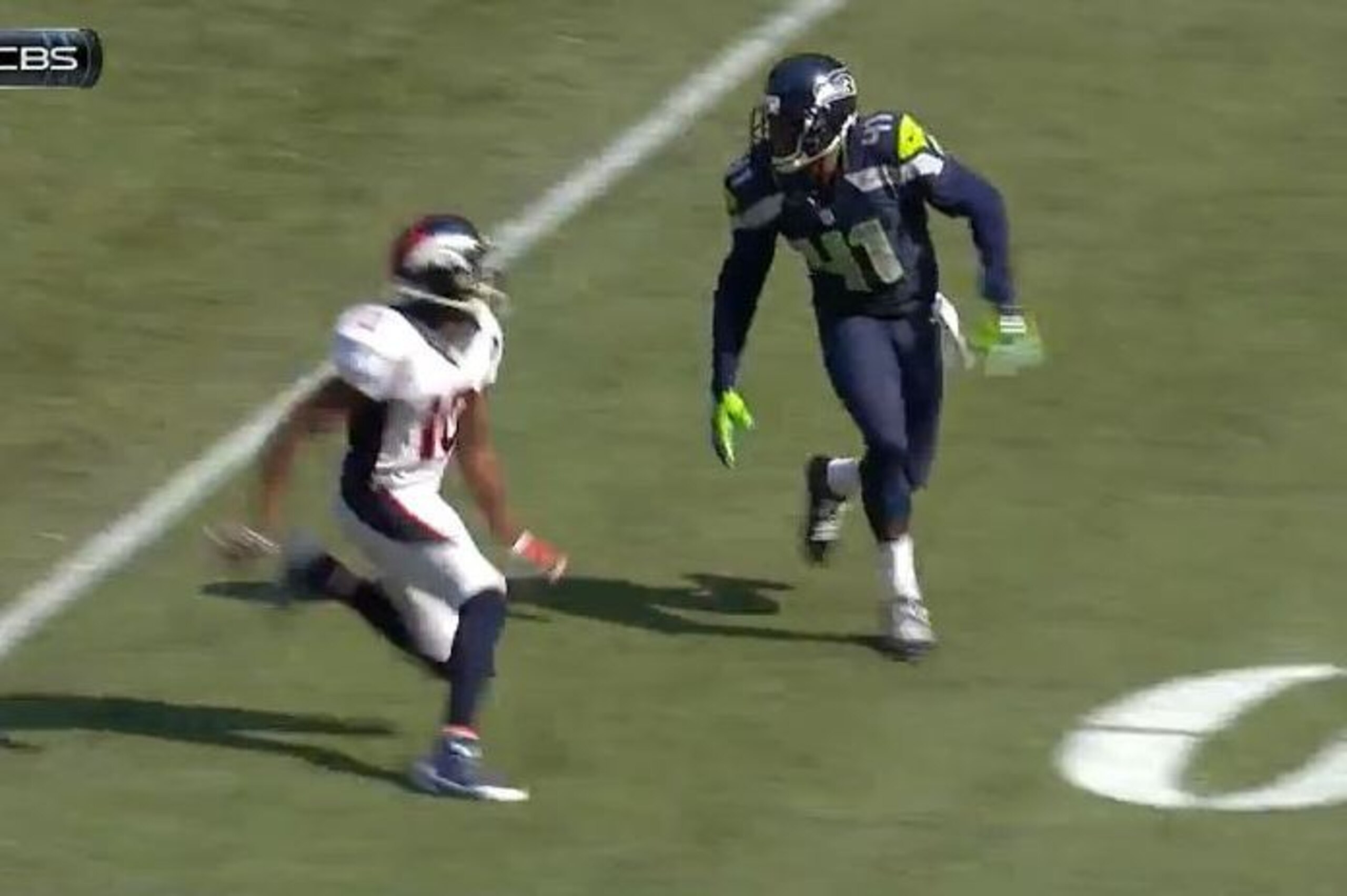
Maxwell’s hips were stiff, and he couldn’t rotate quickly enough to close the throwing window Sanders had opened with his abrupt cut. He wasn’t able to execute the proper footwork and body control to turn with the receiver.
Instead, Maxwell drifted a few yards further. He committed a cardinal cornerback sin: His back was turned to the receiver. Even briefly, as was the case here, that usually results in failure.
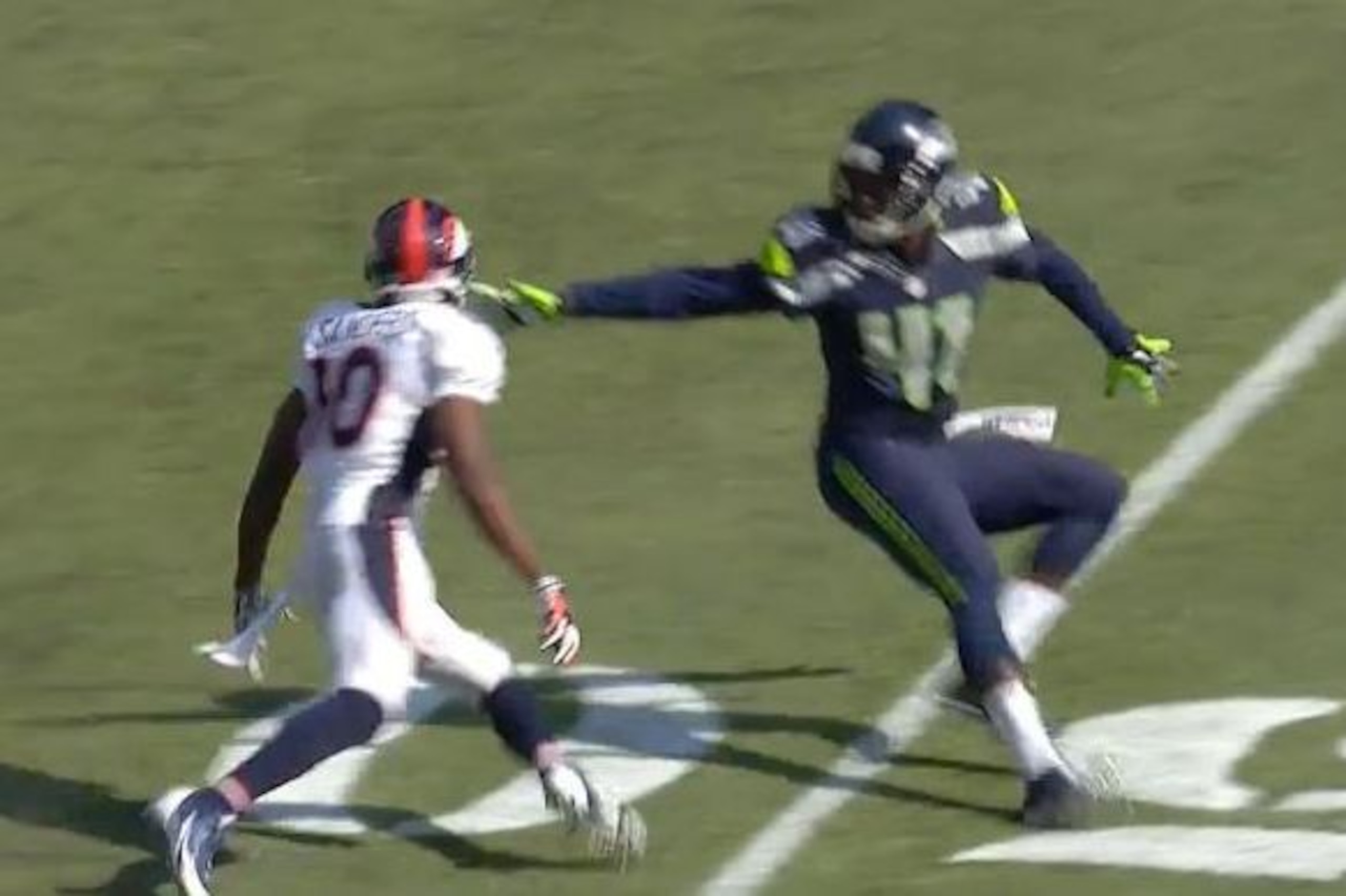
Sanders exploited Maxwell’s inability to move laterally for a 17-yard gain.
That was a repeated scene, and the matchup now serves as a prime example of Maxwell at his worst. He excels when the game calls for physicality, an environment that becomes familiar and comfortable for a cornerback who thrives while jamming opposing receivers and disrupting routes.
Once more for good measure, here’s Maxwell getting roasted again just a few plays later during the same game, and the same drive.
The Broncos faced a critical 3rd-and-5 in Seattle’s red zone, and they lined up with a bunch set to quarterback Peyton Manning’s right. That left Maxwell on the other side isolated in man coverage against Sanders, who accelerated after the snap to sell a short slant.
Maxwell stayed with him stride for stride initially. But he was left trailing when Sanders dug in hard again, breaking off the route and sprinting toward the sideline.

Just as before, Maxwell was unable to plant, pivot and turn to match the movement of a fleet-footed receiver.
The mismatch with Sanders showed what happens when Maxwell tries to stay with a receiver who can use his speed to steer far clear of the cornerback’s wheelhouse, avoiding a physical game. He allowed 152 receiving yards while spending the afternoon primarily assigned to Sanders, according to Pro Football Focus.
But that game illustrates a reality the Seahawks knew and accepted. Maxwell's lateral mobility may be average or, at best, slightly above, which became the price gladly paid for his physical dominance. When used effectively, he’s an overbearing press corner.
Like the rest of the Seahawks secondary, Maxwell was asked to drop the boom often. That usage made for a perfect connection between team, player and role. Including the playoffs, he allowed an opposing passer rating of only 78.5 in 2014 when targeted in coverage, per PFF, with that dog-walking by Sanders his only significant blemish.
So the question then becomes this: Can Williams bring an upgrade in one area (lateral mobility), while not subtracting too much in another (physicality)?
Which then leads to another question: Is maintaining the status quo worth what Williams will be paid? That answer is complicated, and it’s important to acknowledge the salary-cap motivations before looking at Williams’ fit.
"Cary Williams, to me at least, isn't a good cornerback. Minimal deal he's fine, 6+ per yr seems crazy. Other side is situation he's entering
— Cian Fahey (@Cianaf) March 10, 2015"
The financial realities
Williams’ contract essentially functions as a one-year deal worth $7 million followed by two option years.
The reflex is to note even that single-year price feels costly. When his signing bonus is included along with his base salary (which combine to form his guaranteed money), Williams is put among the top 10 highest-earning cornerbacks in 2015, according to Spotrac.
Which is expensive for a cornerback who gave up 80-plus yards in four games during the 2014 season. But as is so often the case when we peer inside the salary-cap machine, context is needed.
In addition to losing Maxwell, the Seahawks may also be without slot cornerback Jeremy Lane for a chunk of next season after he suffered a torn ACL during Super Bowl XLIX. So general manager John Schneider had to replace two starters, and do it while being leery of upcoming mega extensions for quarterback Russell Wilson and linebacker Bobby Wagner.
That’s why he thanked Maxwell for his services and then brought in Williams and Will Blackmon, the former Jacksonville Jaguars cornerback signed to a one-year deal worth $950,000, per Wilson again. And he did it for a fraction of the guaranteed money.
The lack of financial commitment is critical, and it is a product of the wise maneuvering Schneider has used to build his almost-dynasty.
Wilson also has the finer details of Maxwell’s contract he’ll sign with the Eagles. Sure, Williams may be getting more than what he’s worth. But he’ll also be paid a whole lot loss than Maxwell, both in guaranteed money and 2015 base salary.
The challenge before Williams is to be both affordable (at least compared to Maxwell) and not a major downgrade.
And he can probably do that
The Seahawks are asking Williams to be the ideal veteran free agent: a piece that can slid in to keep their defensive gears moving smoothly enough, and at worst be a short-term replacement until a better option comes along.
He had his issues early in 2014, struggling as the Eagles’ top cornerback. But then suddenly his wayward season was corrected.
| First 5 games | 69.8 |
| Last 11 games | 37 |
At 6’1” and weighing 190 pounds, Williams doesn’t quite match Maxwell’s size. But he’s not far off either, and he plays with enough aggressiveness to trade blows with the NFL’s most physical receivers. He also has the closing speed to slam throwing windows shut.
A prime example showing his skill range came in Week 13 when Williams was staring down Dallas Cowboys wide receiver Dez Bryant, who often plays like a tight end screaming to be released from a wide receiver’s body.
In the first quarter, Bryant ran a sideline route. Williams jammed him immediately at the line to disrupt his timing with quarterback Tony Romo.
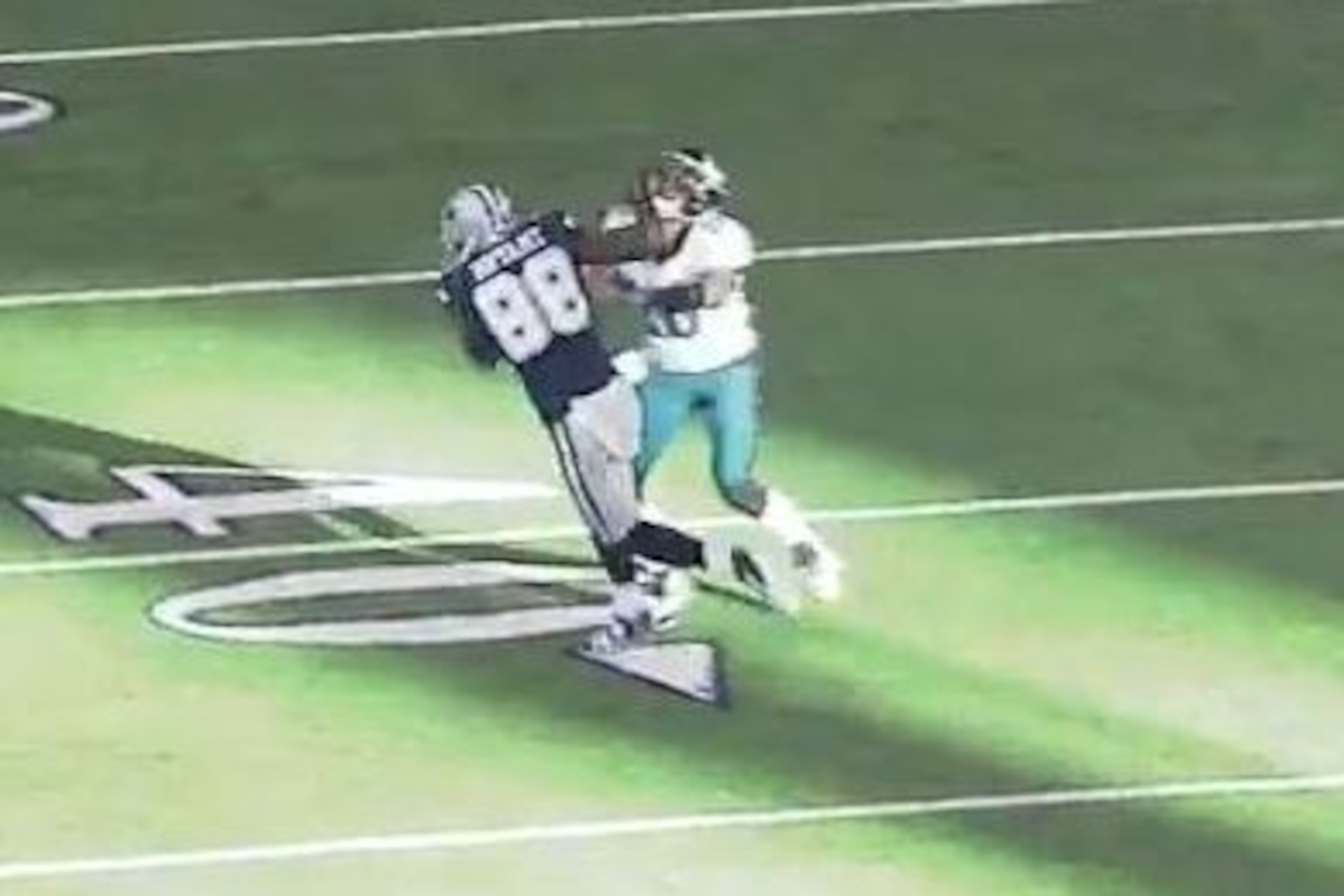
But of course Bryant powered through.
Now Williams was trailing behind after contact didn’t slow Bryant, or at least not enough. He needed to close the gap fast.
He did that with ease, mirroring Bryant’s movement as he broke off his route 15 yards downfield.
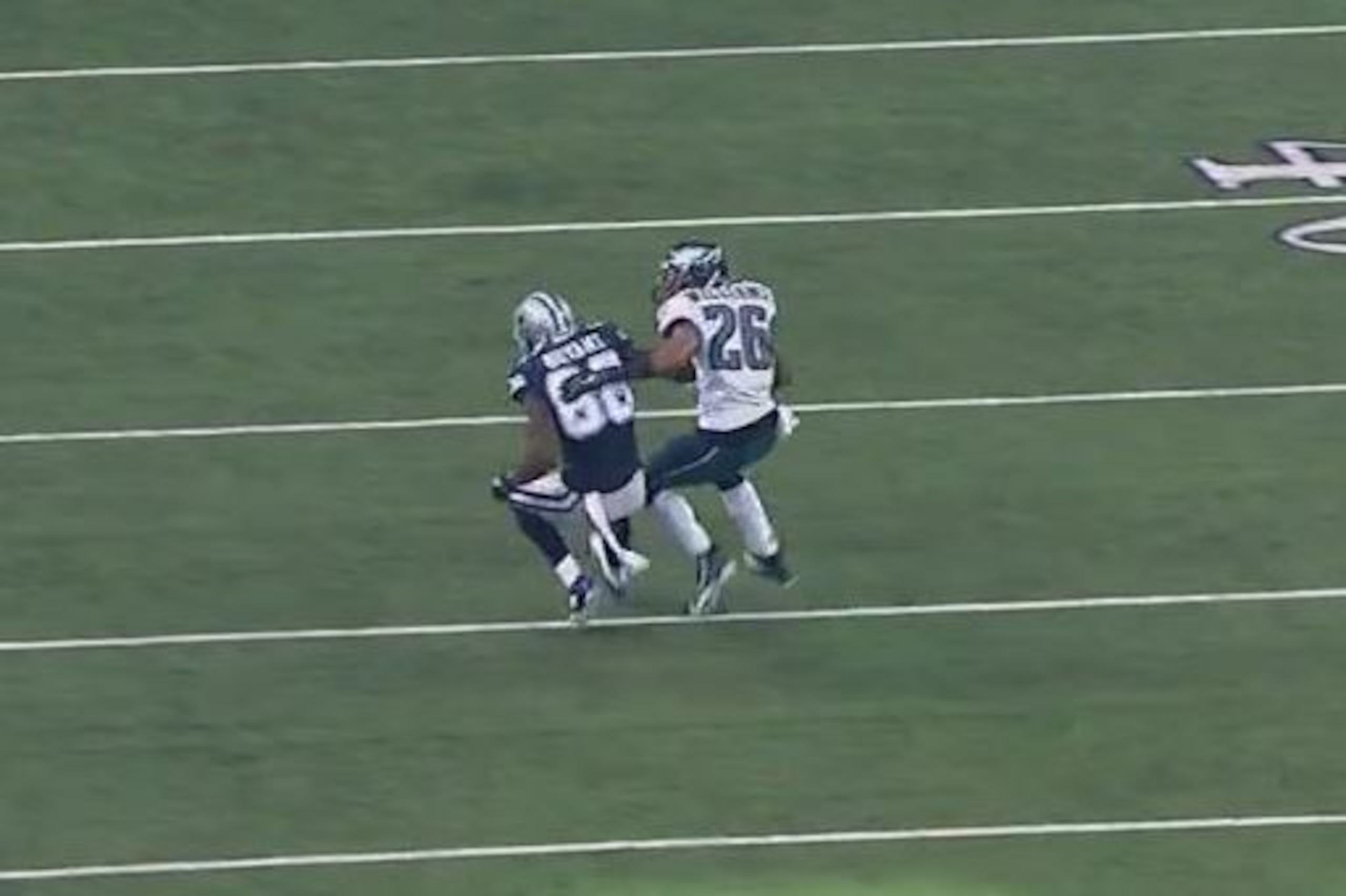
Then he was in perfect position to swat away what would have been a first-down reception.
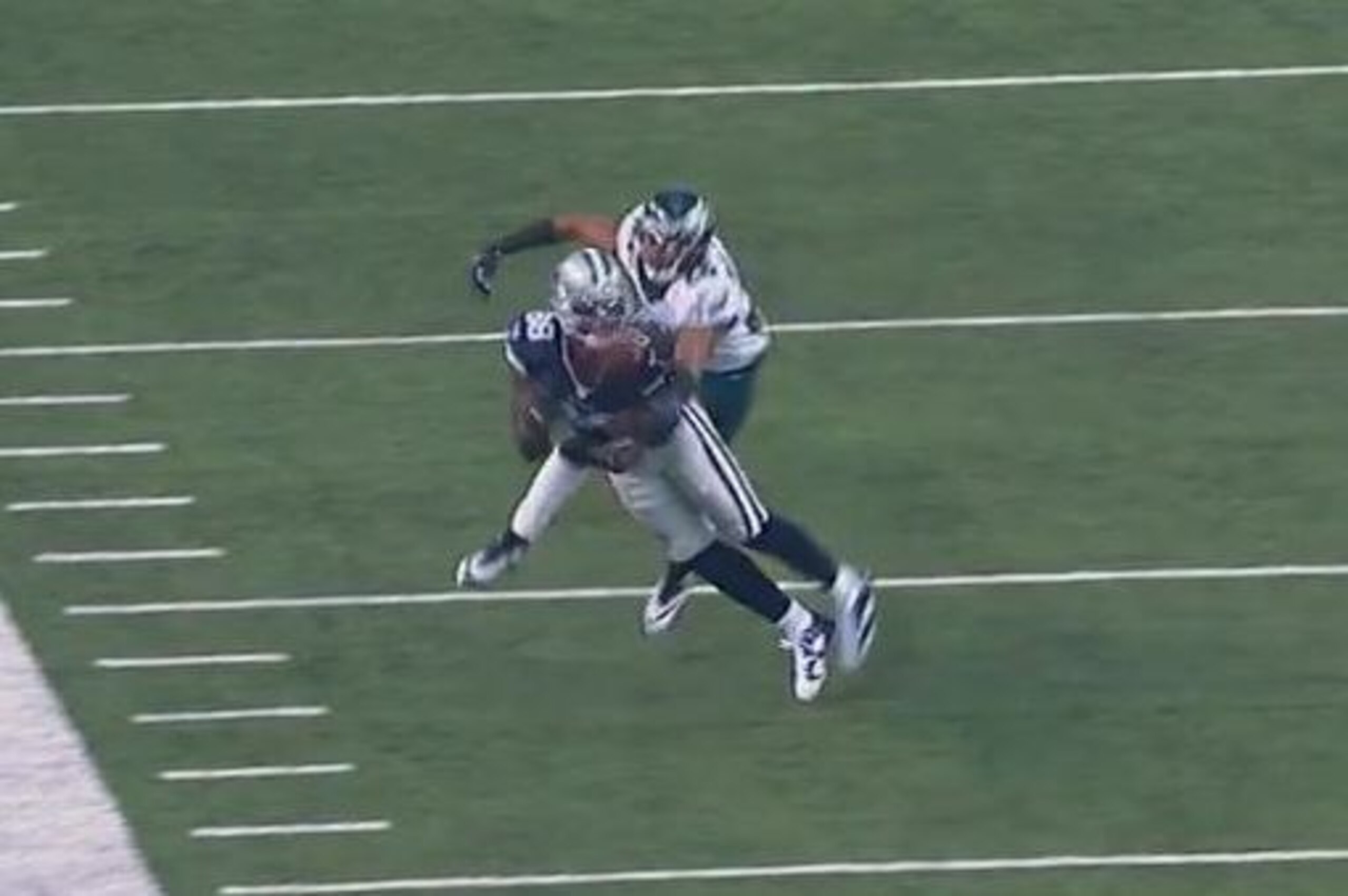
Williams is only a season removed from allowing an opposing passer rating of 80.6 in coverage, per PFF, which placed him ahead of Revis. He brings movement that’s a little more fluid, while still maintaining a scrappy element to his game.
He has size, though not quite as much as Maxwell. He plays with a physical presence, too, though he also falls just short of Maxwell there.
Williams isn’t Maxwell, and he won’t become Maxwell. But he’s close enough, and in the salary-cap era, close enough can go a long way.
Sean Tomlinson is an NFL Analyst for Bleacher Report. Follow him on Twitter.
.jpg?w=2560 "Seahawks Camp Football")


.jpg?w=2560 "WWE NXT Results, Winners, Live Grades, Reaction, Highlights Before Heatwave 2026")
.jpg?w=2560 "Players with Shocking Career Earnings 😳")