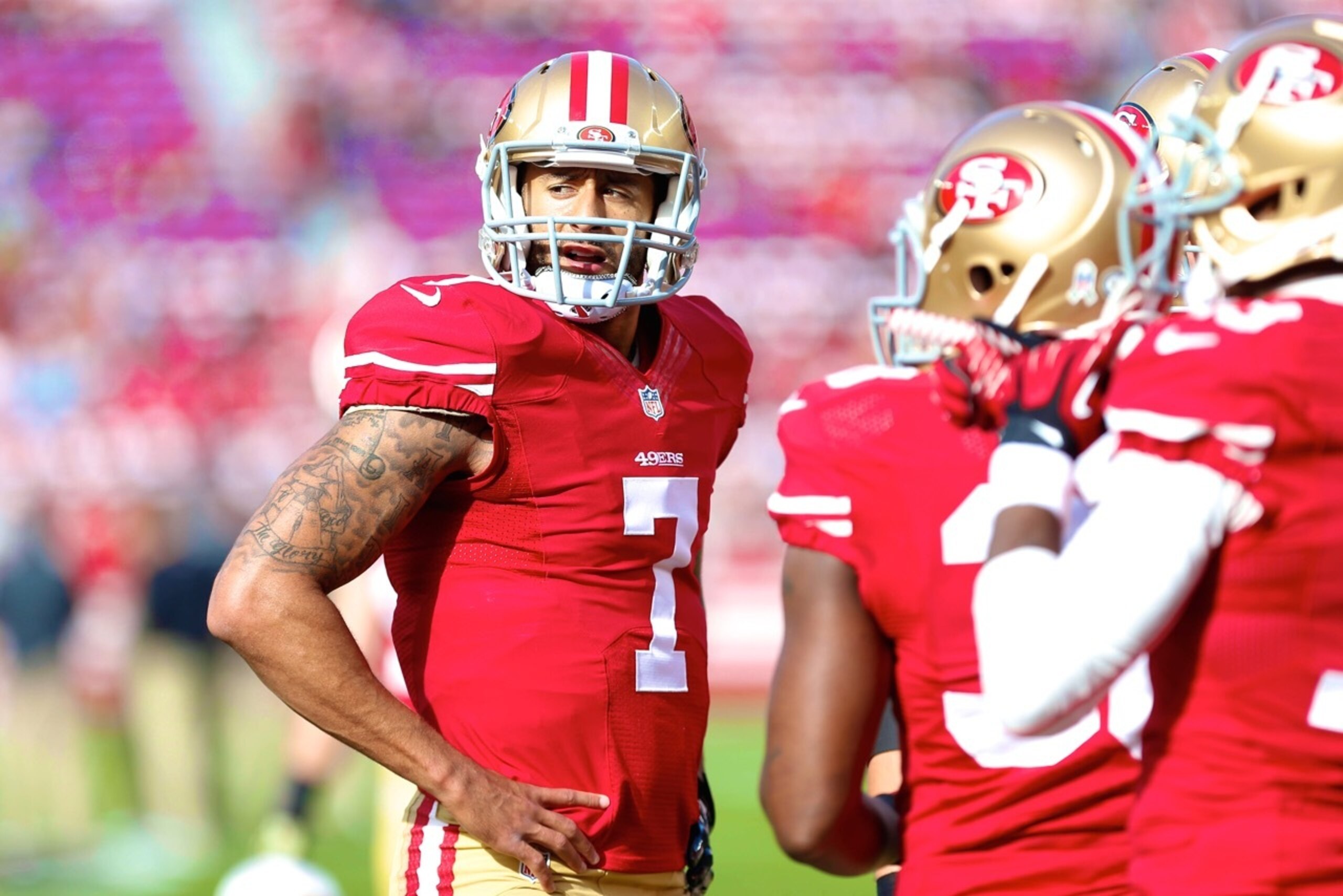

Colin Kaepernick, 49ers Crumbling Under Broken System and Lost Identity
Using the term “identity” to describe an NFL offense is often an overused buzzword, as the majority of teams in this league are multiple in their personnel, alignment and game plan. But I still believe every team has a “core identity” when you break down the tape and push through the window dressing that offensive coordinators love to throw out on the field.
The Philadelphia Eagles are a spread “read” team. The Kansas City Chiefs run the West Coast offense. The Dallas Cowboys are a zone-running team. The New England Patriots, though multiple, are more of a pro-style system.
The San Francisco 49ers? I really don’t know the answer. Power? Spread? Zone Read? Pro Style?
This system under head coach Jim Harbaugh and offensive coordinator Greg Roman looks broken, and the impact has filtered down to Colin Kaepernick at the quarterback position. Does Kaepernick need to play better? There is no question about that. In this league, it starts and ends with the production under center.
That’s a must to win games and move the ball consistently in critical situations. From ball placement to route progressions, Kaepernick has struggled. But I can’t ignore the lack of flow (or structure) that exists in the play-calling out in San Francisco.

During the Week 14 loss to the Oakland Raiders, the 49ers ran two straight power plays in the first quarter (Counter OF, Power O) out of 21 (2WR-1TE-2RB) and 22 (1WR-2TE-2RB) personnel for gains of five and 11 yards with Frank Gore.
That’s good production. Establish the front. Line up and run the ball downhill. The next play? The 49ers spread the field and ran an inside handoff with wide receiver Anquan Boldin aligned in the backfield.
Why?
Throughout the season, the 49ers have often abandoned the physical style of football that has led to winning seasons and playoff runs over the last two years under Harbaugh.
Remember those teams? They were built for December because of the ability to line up, point to the hole and still hit opposing defenses right in the mouth. They wore down defenses with two (or three) tight ends on the field before they broke them in half to close out the game.
Off-tackle, power runs with the wham (trap), Iso, the crack toss, etc., that led to play-action opportunities and quick, two-level reads for Kaepernick to move the sticks or expose secondaries down the field. Add in the zone read, and this team was dynamic enough to move the ball while giving defenses a variety of formation looks off misdirection reads in both the run and the pass game.
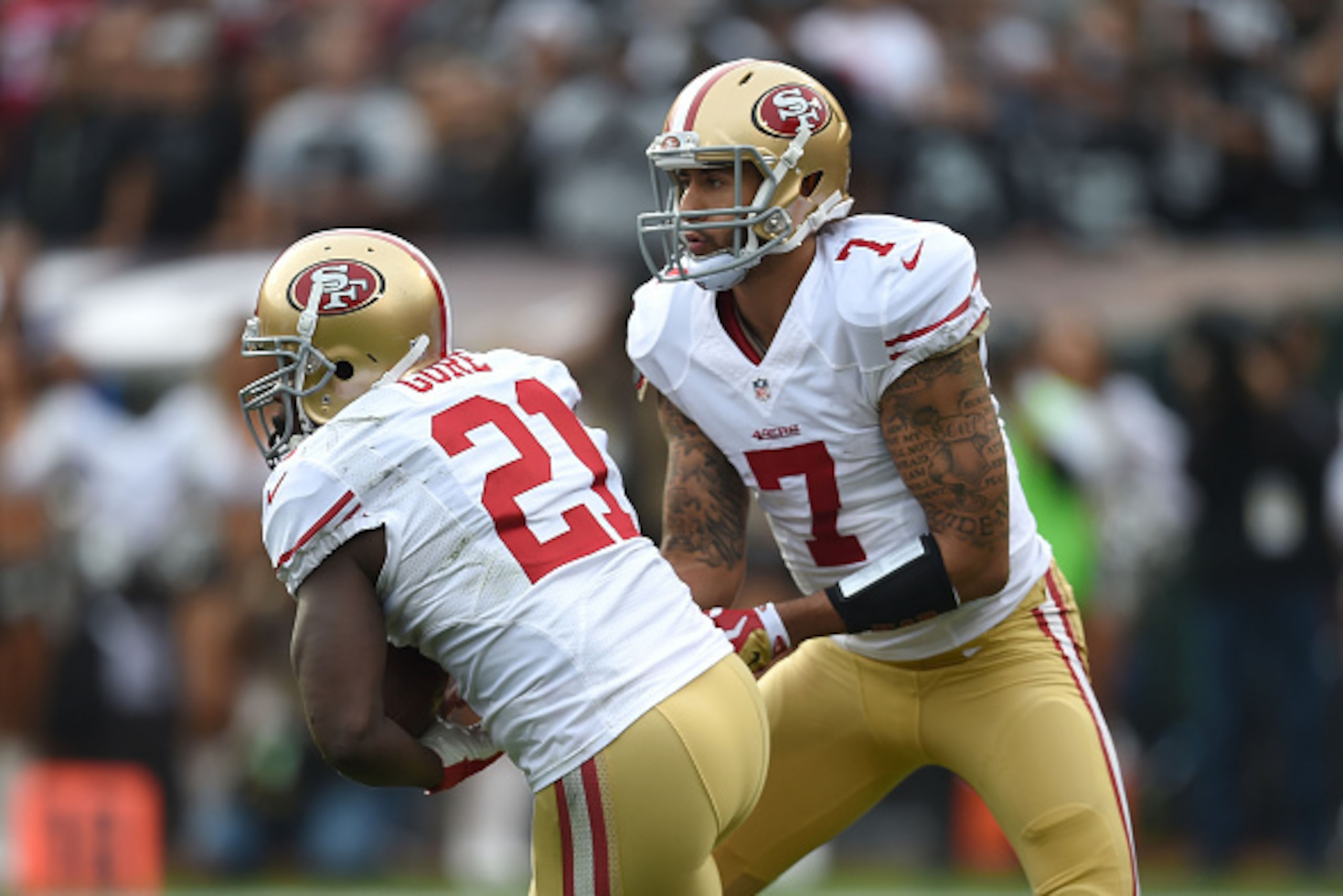
But things have changed. The offensive line in San Francisco has dealt with injuries this season, and that unit isn’t as physically dominant as we have seen in the past. Vernon Davis—a matchup weapon at tight end—hasn’t produced the same impact in 2014, and the wide receivers lack the top-end speed and one-on-one ability to win consistently versus quality competition in the secondary.
The head coach? Well, he isn’t coming back—and the players know it. More importantly, the development of Kaepernick has hit a plateau without the security of a physical run game and the option schemes.
Going back through the tape, there are positives with Kaepernick, but it’s the negatives (especially in the last two weeks) which stand out for an offense that can’t execute and produce explosive plays in the passing game. The throwing windows are small versus man coverage (lack of separation at the break point with the 49ers receivers), and that requires Kaepernick to showcase accuracy and ball placement to make plays.
In the Week 13 loss to the Seattle Seahawks, Kaepernick threw an interception on the comeback with cornerback Richard Sherman stacking on top of the route.

Tight window here. This ball has to be thrown to the outside shoulder of the receiver, low and away from Sherman’s leverage/positioning. However, Kaepernick leaves this ball to the inside. It’s poor throw and an easy pick for the Pro Bowl talent.
Kaepernick often locks on to targets while failing to find other options in the route scheme or progression. Here’s an example of that from the Raiders game with the 49ers running a base “spot” route (corner-curl-flat combo).
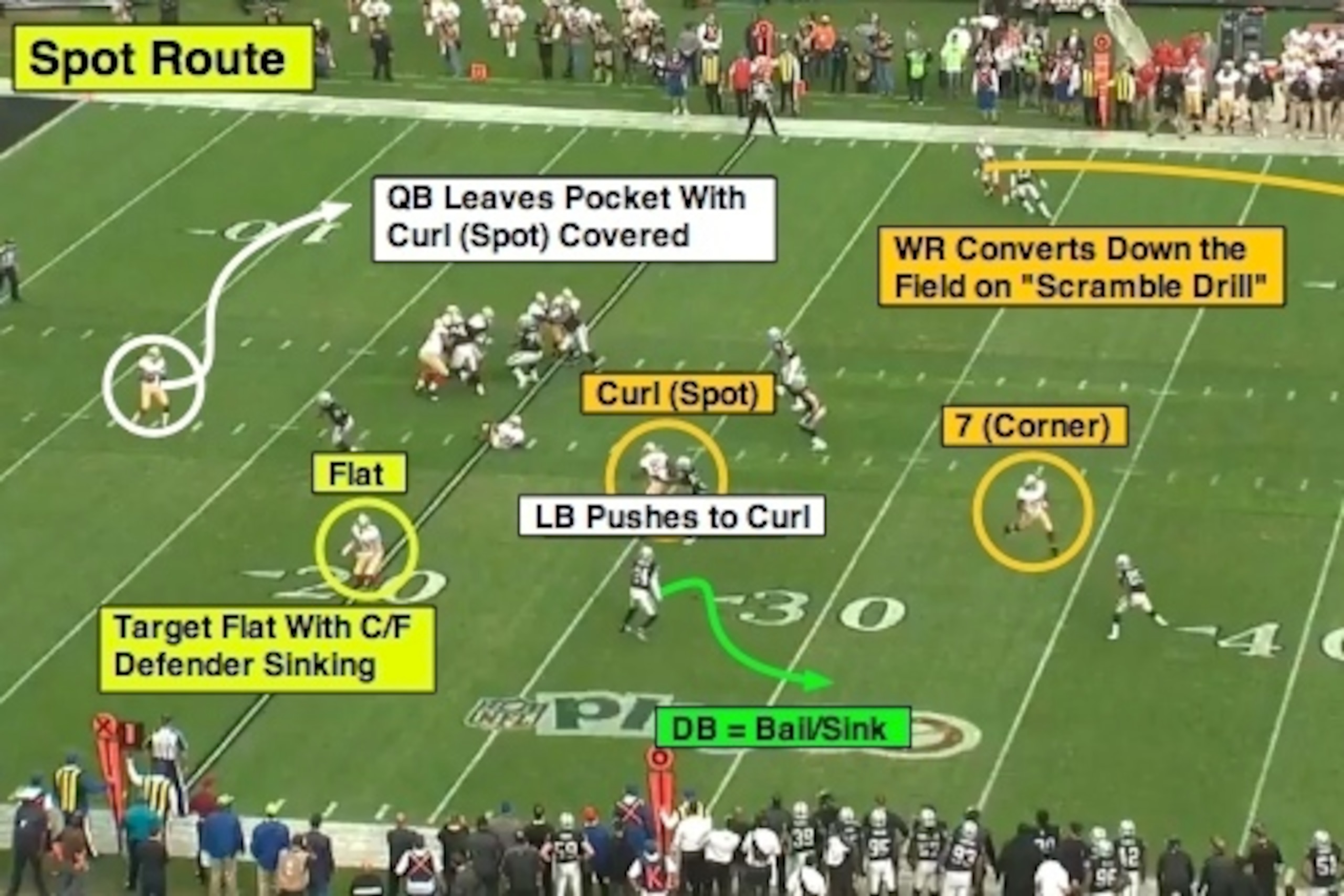
The curl is covered with the linebacker pushing to the “spot.” But instead of working the Hi-Lo read (Flat-7) versus the defensive back sinking in the curl, Kaepernick comes backside and leaves the pocket. That forces Michael Crabtree to convert his route up the field.
The result? Instead of targeting the quick throw to the flat, this leads to an interception on the 49ers’ first offensive snap of the game due to a wild pass from the quarterback in a “scramble drill.”
Let’s check out another example from the Seahawks game on the inside vertical seam versus Cover 3 (three-deep, four-under).

What do we see here? There is an inside throwing lane to target the tight end with the curl-flat defender widening in his drop and the linebacker (middle hook) underneath. This is a classic three-deep beater designed to split the free safety and cornerback.
Even with the closing speed of Earl Thomas in the post, Kaepernick has the arm strength to fit this ball to the tight end working between the numbers and the hash. Instead, the 49ers quarterback targets the outside vertical with the cornerback stacking on top of the route.
That’s a contested throw, an incompletion and a missed opportunity versus a defense that doesn’t give the quarterback many chances to make a play.
Later in that ballgame, the 49ers ran another Cover 3 beater with the tight end on the wheel route, the running back in the flat and the wide receiver on the deep curl. The idea is to widen the defense, occupy the curl/flat defender and create a throwing lane to target the curl.
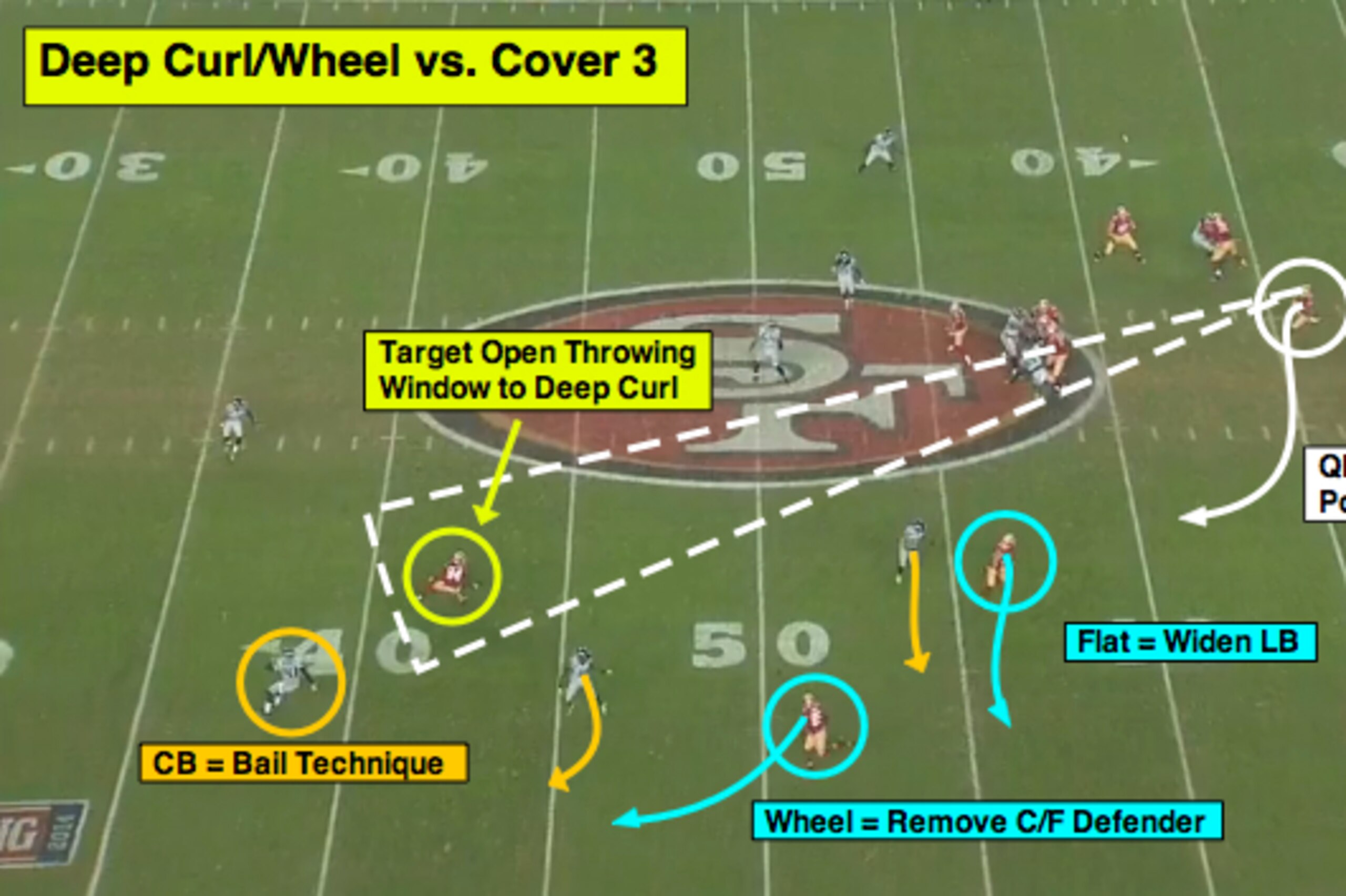
Again, it's another opportunity to make a play versus the Seahawks, but Kaepernick pulls this ball down with a clean pocket, drops his eyes and runs for a minimal gain.
Maybe we are looking at a situation where the quarterback doesn’t trust his offensive line, as this unit allowed a free runner on a protection bust versus the Seahawks, couldn’t pick up a simple twist stunt in the loss to the Raiders, etc. But I also see plays on the tape where Kaepernick can step up (or slide) to manage the pocket only to pull the ball down and look for an escape door to run.
That’s not going to cut it when there are throws to be made.
Overall, there are multiple issues with this unit in San Francisco. From the play-calling to the offensive line, this thing has layers. And, in my opinion, that has limited the development of Kaepernick to a degree in a system that used to cater to his abilities in the past.
The quarterback hasn’t progressed, and while he has to take the responsibility for that as a pro, I can’t just point the finger at Kaepernick for the lack of offensive production in San Francisco. This is a collective problem that has resulted in a disappointing season for an offense that used to control the tempo, push people around and force opponents to quit.
Seven-year NFL veteran Matt Bowen is an NFL National Lead Writer for Bleacher Report.
.jpg?w=2560 "Rams 49ers Football")