Oklahoma City Thunder Building New Identity on the Defensive End
The Oklahoma City Thunder have rebranded themselves as a defensive-minded team.
Traditionally, the Thunder have let their explosive offense lead the way. Over the past four seasons, the team has finished in the top five in scoring while the defense mostly stayed in the middle of the pack. The lone exception was during the 2012-13 season, when OKC tied for ninth in points allowed per game (96.5).
| Year | Points Per Game | NBA Rank | Points Allowed Per Game | NBA Rank |
| 2010-11 | 104.8 | 5th | 101 | 16th |
| 2011-12 | 103.1 | 3rd | 96.9 | 17th |
| 2012-13 | 105.7 | 3rd | 96.5 | T-9th |
| 2013-14 | 106.2 | 5th | 99.8 | T-11th |

.png?w=2560 "Oklahoma City Thunder v Los Angeles Lakers - Game Four")
This season, injuries have ravaged the roster and left the offense toothless. Reigning MVP Kevin Durant has yet to make his 2014-15 debut, and fellow star Russell Westbrook has played all of 42 minutes. Role players such as Perry Jones, Anthony Morrow, Jeremy Lamb and Reggie Jackson have also missed time.
As a result, the club is 29th in the NBA in scoring, averaging a mere 90.1 points per game. The Thunder are also near the bottom of the Western Conference with a record of 4-12.
The bright side to this miserable start is that the defense has been stellar. Scott Brooks' boys are allowing just 94.1 points per game, which is fourth in the league.
"We're competing. That's all we talked about from day one when these injuries started happening," Brooks said, per Darnell Mayberry of The Oklahoman. "Just go out there and compete and get better, and we’ll figure things out as the game goes on."
In the Zone
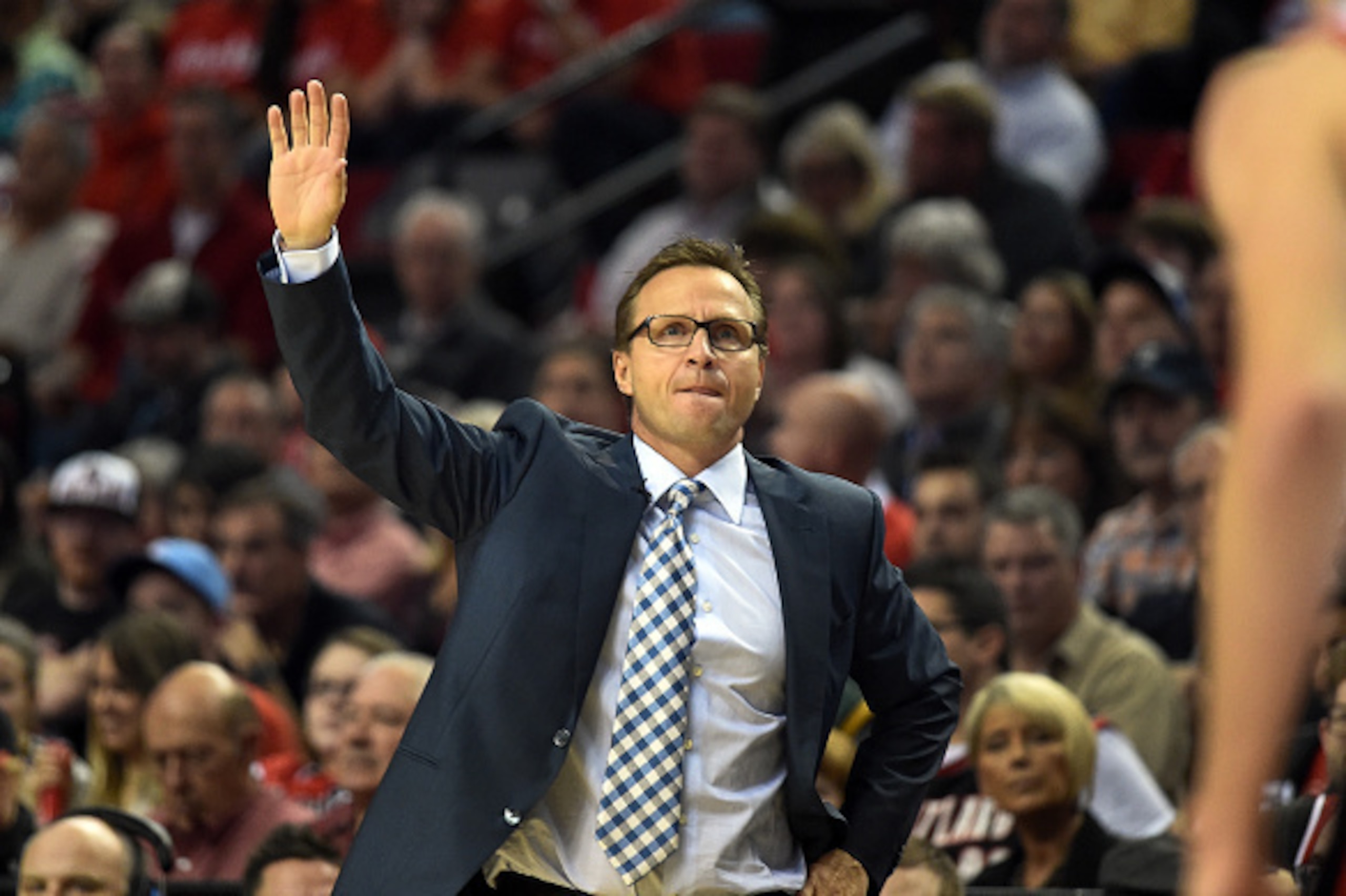
The key to the Thunder's success has been the utilization of zone defense. It's a strategy that was born out of necessity, given the team's lack of healthy bodies. However, according to Mayberry, it's hard to ignore the benefits the scheme has given them.
"For the Thunder, a zone defense has helped manage foul trouble and has kept its bigger players from having to defend smaller, quicker scorers. In other words, it has eliminated mismatches. It also has helped limit fatigue, a constant worry with such few available players, and slowed down the game.
"
One thing working in Oklahoma City's favor is that, despite being short-handed, the remaining players are long-armed. The team's slew of big men (Serge Ibaka, Steven Adams, Nick Collison, Kendrick Perkins) are all 6'10" and above, while Lamb is a 6'5" guard with a 6'11" wingspan.
That uncanny length frustrated the Boston Celtics, who suffered a 109-94 loss at the hands of the Thunder on Nov. 12.
"The biggest thing is, they're playing it very traditional in some ways and with a lot of length," Celtics coach Brad Stevens said, per CSNNE.com's A.Sherrod Blakely. "It's like whenever you were playing Syracuse in college, the 2-3 zone is a great scheme for them. It also works really well because they're a lot longer than everyone else."
While Oklahoma City's defense doesn't force a ton of turnovers (14.9 per game, 25th in the league), they make up for it by hindering opponents' shooting. According to NBA.com, opposing teams are shooting 42.5 percent from the field (fourth) and 30.7 percent from three (fifth).
That kind of disruption comes in handy when your offense has struggled as much as the Thunder's has.
Group Effort
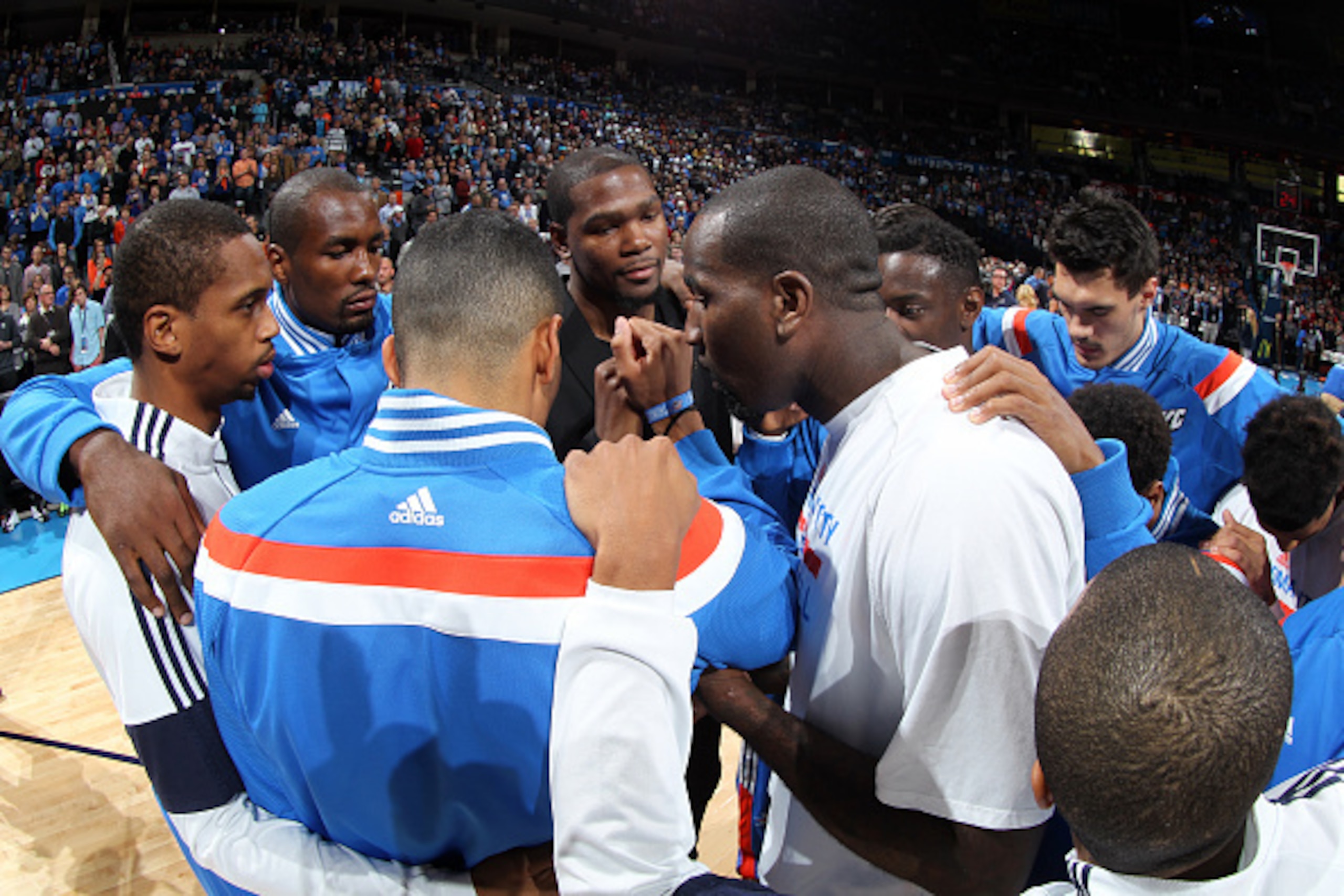
Scott Brooks has done a remarkable job of developing his young role players and turning them into key contributors. The success of this defense hasn't been contingent on the excellence of just one guy. In fact, the Thunder are third in the NBA in blocks per game (5.6) despite human swat machine Serge Ibaka averaging his worst output (2.1) in that category since his rookie season.
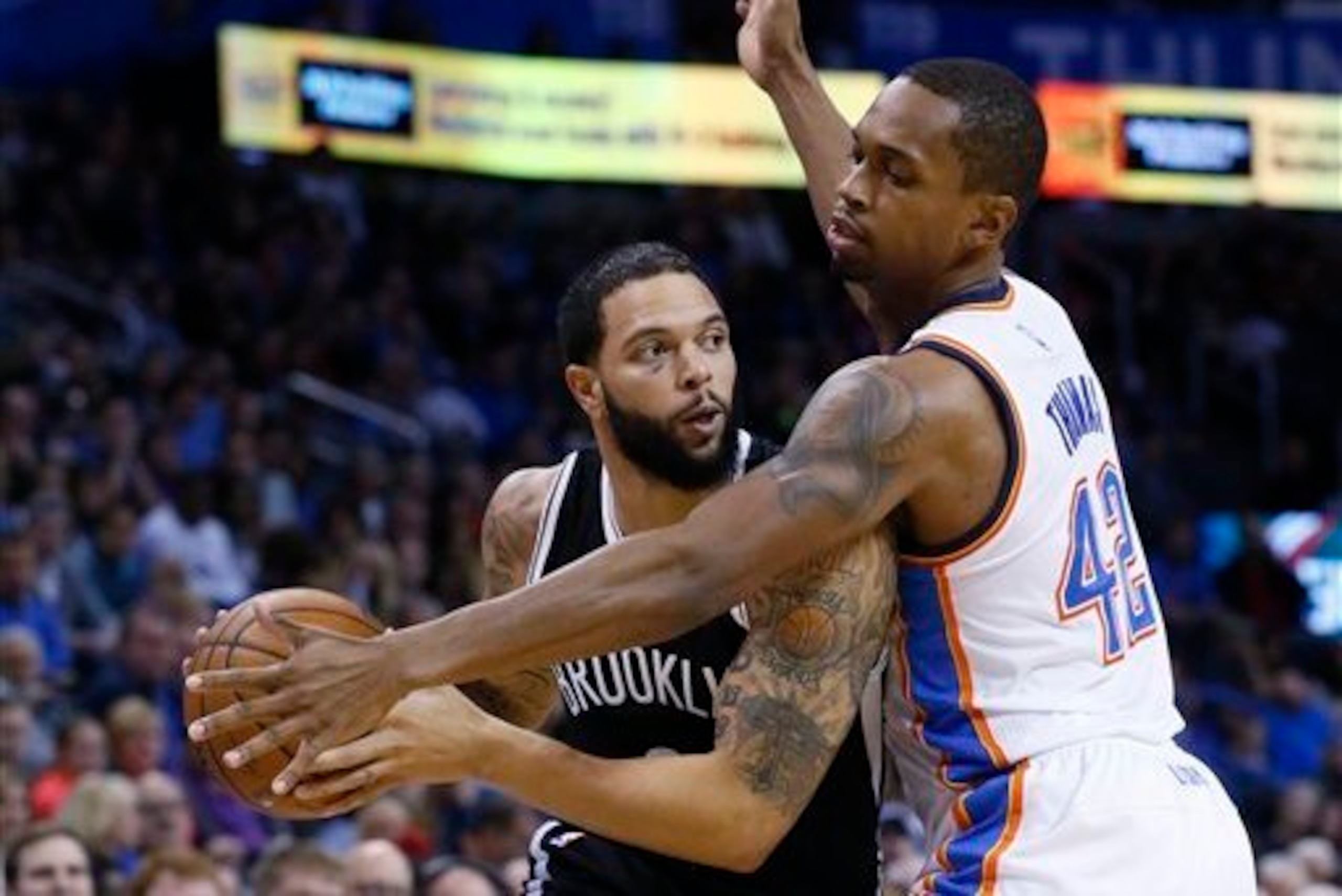
Brooks' biggest reclamation project has been Lance Thomas. Initially a long shot to make the team, Thomas hustled his way onto the final roster spot. Now, he's carved his niche with his impressive perimeter defense.
"He can guard 1's, 2's, 3's and 4's," Brooks said, per Anthony Slater of The Oklahoman. "And I’m shocked that I’m able to say that. We’re all learning about him at about the same rate.”
The emergence of Thomas only bolsters a strong defensive frontcourt. Ibaka has led the league in total blocks for the past four seasons, and Kendrick Perkins is one of the NBA's best stoppers in the post.
"We have good defensive bigs," forward Nick Collison said, per NBA.com's Nick Gallo. "We’re able to communicate. We have good defenders and we’re sticking to it."
In the backcourt, shooting guard Andre Roberson has the potential to be a solid perimeter defender as well. He has good size at 6'7", 210 pounds, and he's already holding opponents to 46.8 percent shooting, per 82games.com.
The combined efforts of these unsung heroes has led to a defensive rating of 101.3, which is ninth in the NBA, according to ESPN's Hollinger stats. That, in essence, has been the story of this year's Thunder team. In the absence of star power, they have reformed themselves into a scrappy bunch that plays for each other.
With the offense reeling, the Oklahoma City Thunder had no choice but to flip the script. The result was a stout defensive unit that has been one of the biggest surprises of the early season. Long knocked for his inability to adapt, head coach Scott Brooks deserves some credit for switching almost exclusively to the zone to keep the team competitive.
"We're using (zone defense) as a weapon to keep teams off balance." Brooks said, per ESPN's Kevin Pelton (subscription required).
When Durant and Westbrook return, Oklahoma City will transform again. With the league's best one-two punch back in the fold, the offense should finally be able to take some weight off of the defense's shoulders.
In the meantime, this Thunder team will continue to embrace its new identity.
Note: Unless otherwise noted, all stats are current as of Nov. 27 and are courtesy of ESPN.com.
.jpg?w=2560)
.jpg?w=2560 "NFL Rookies Who Could Earn Starting Jobs 🌟")
.jpg?w=2560 "Ranking Every Team's Path to Playoffs 🗺️")