Redskins vs. Vikings: Breaking Down a Game Plan for Robert Griffin III
Robert Griffin III will start his first game since Week 2 when the Washington Redskins battle the Minnesota Vikings on the road in Week 9. Griffin has been nursing an ankle injury sustained against the Jacksonville Jaguars, but his return has been confirmed by NBC reporter Dianna Marie Russini:
The caveat is the event of any recurrence of Griffin's injury:
.jpg?w=2560 "Chargers Mack")
.jpg?w=2560 "Green Bay Steelers Football")
.jpg?w=2560 "Giants Football")
The Vikings are actually a very appropriate opponent for Griffin's return. When the Redskins faced them in Minnesota in Week 10 last season, the game provided the perfect template for how Griffin should be used.
Well, at least part of it did. On that day, Washington built a 27-14 lead in the third quarter. Although they eventually lost 34-27, Griffin has rarely looked better for the Redskins than he did during that early scoring rally.
Finding the right blend on offense to incorporate Griffin's dual-threat skills but also mask his deficiencies as a passer remains a major challenge for head coach Jay Gruden.
Fortunately, he can take plenty from last season's three-touchdown effort in Minnesota. To beat the Vikings in 2014, Gruden must arm Griffin with a similar game plan based on getting the ball out of his hands quickly.
Passes must be made to connect with receivers on the run in space. That requirement can be achieved by smart designs from Gruden and offensive coordinator Sean McVay.
Griffin's first touchdown pass from last season's game is a perfect illustration. The play was a simple quick-hitch screen to Pierre Garcon:
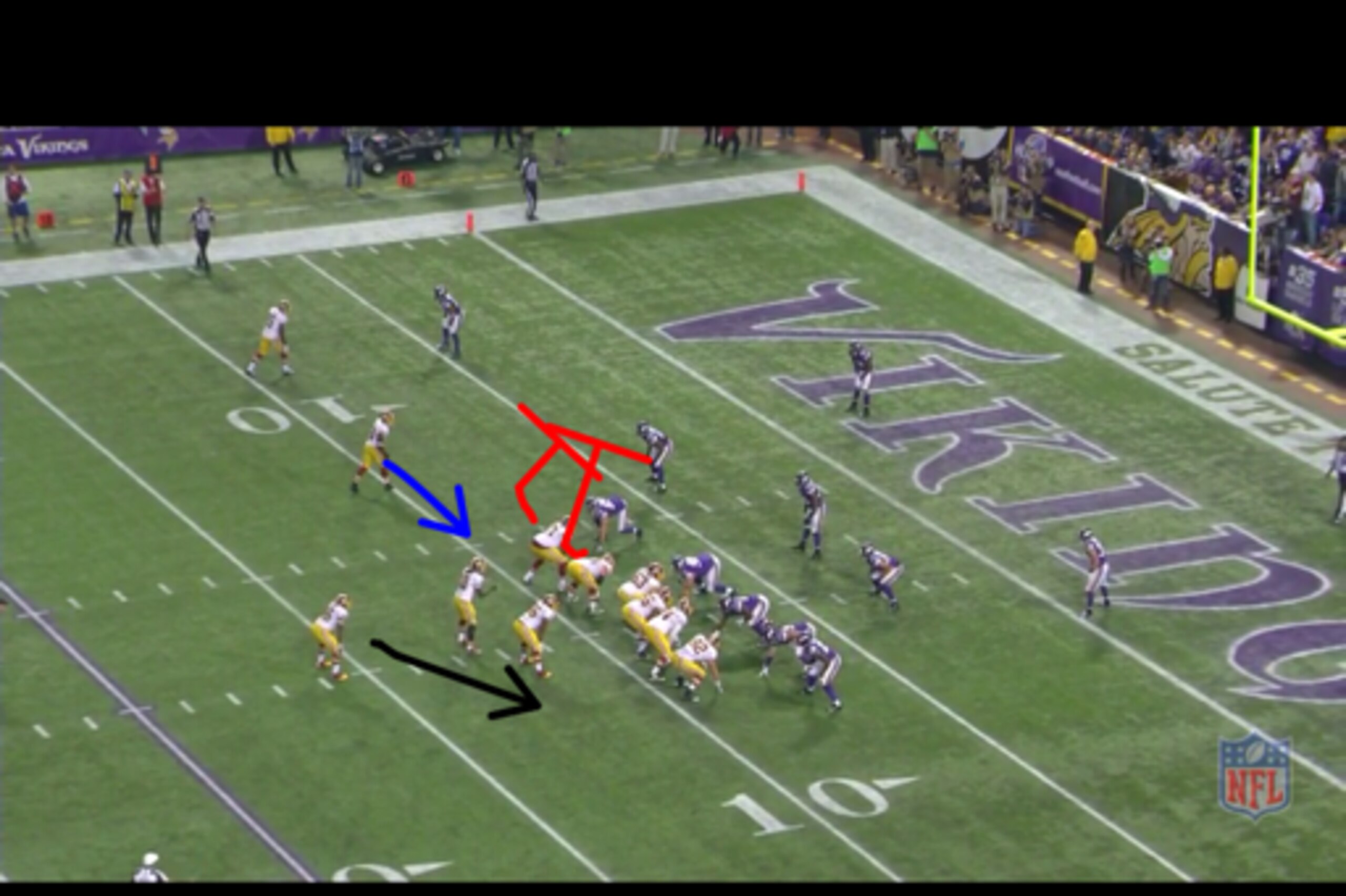
It was set up by faking the zone-stretch run to the right. To help clear Garcon's way, left tackle Trent Williams and then-guard Kory Lichtensteiger drifted off the line to absorb linebackers and defensive backs.
Griffin faked to Alfred Morris and the right side of the Washington O-line executed classic zone-style, stretch blocking to sell the run:
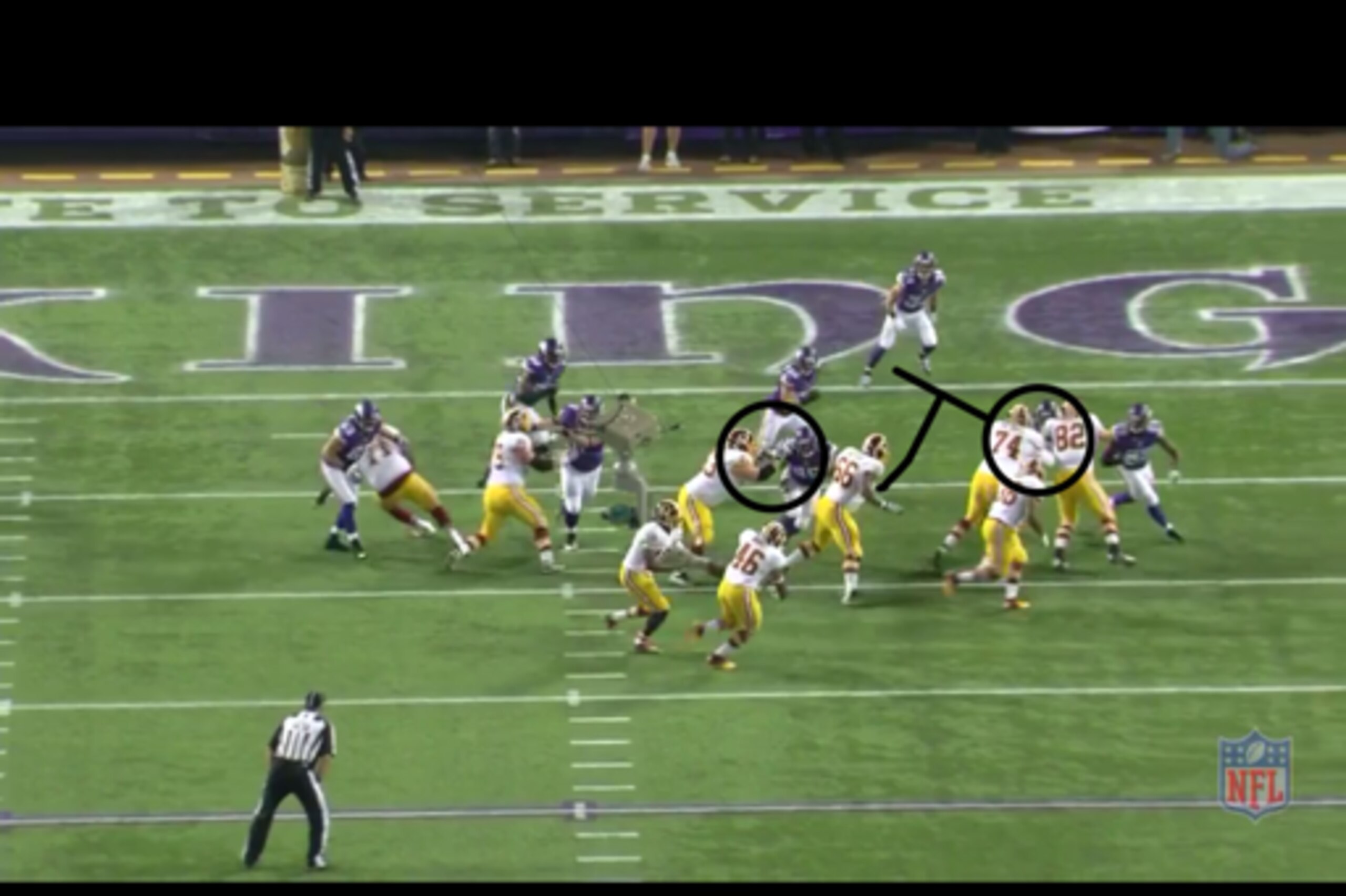
With Williams and Lichtensteiger out in front, Garcon took the quick pass and had an easy passage to complete an eight-yard scoring play:
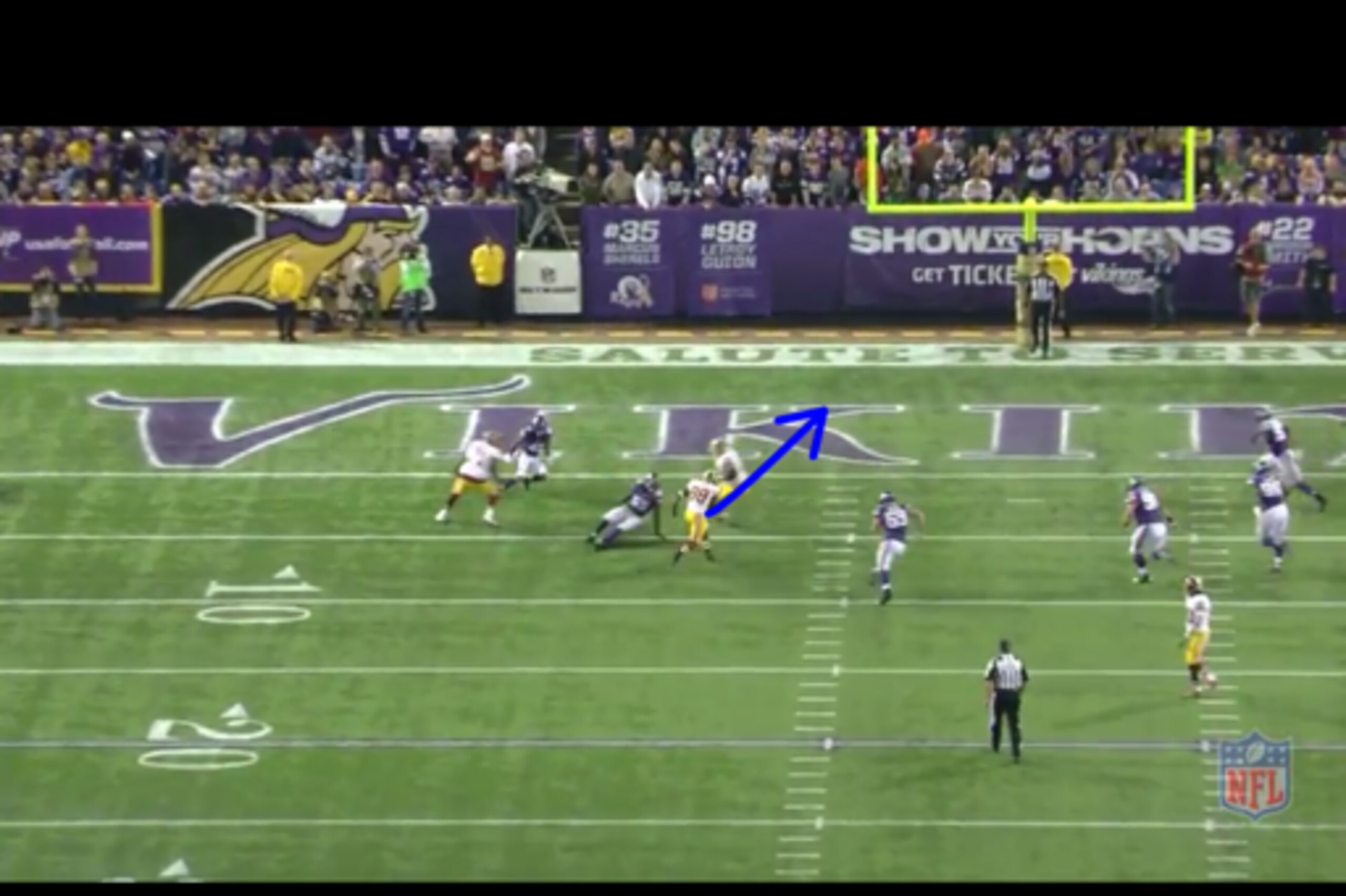
Using receivers underneath to attack the inside lanes was a staple of last season's game plan, crafted by Mike and Kyle Shanahan. It enabled Griffin to waste no time making quick reads and even quicker throws.
That same combination worked again for Griffin's second touchdown strike, an 11-yarder to ultra-talented tight end Jordan Reed.
This time, Reed circled underneath a trio of vertical releases:

Those routes ran coverage to the end zone and cleared space for Reed over the middle:
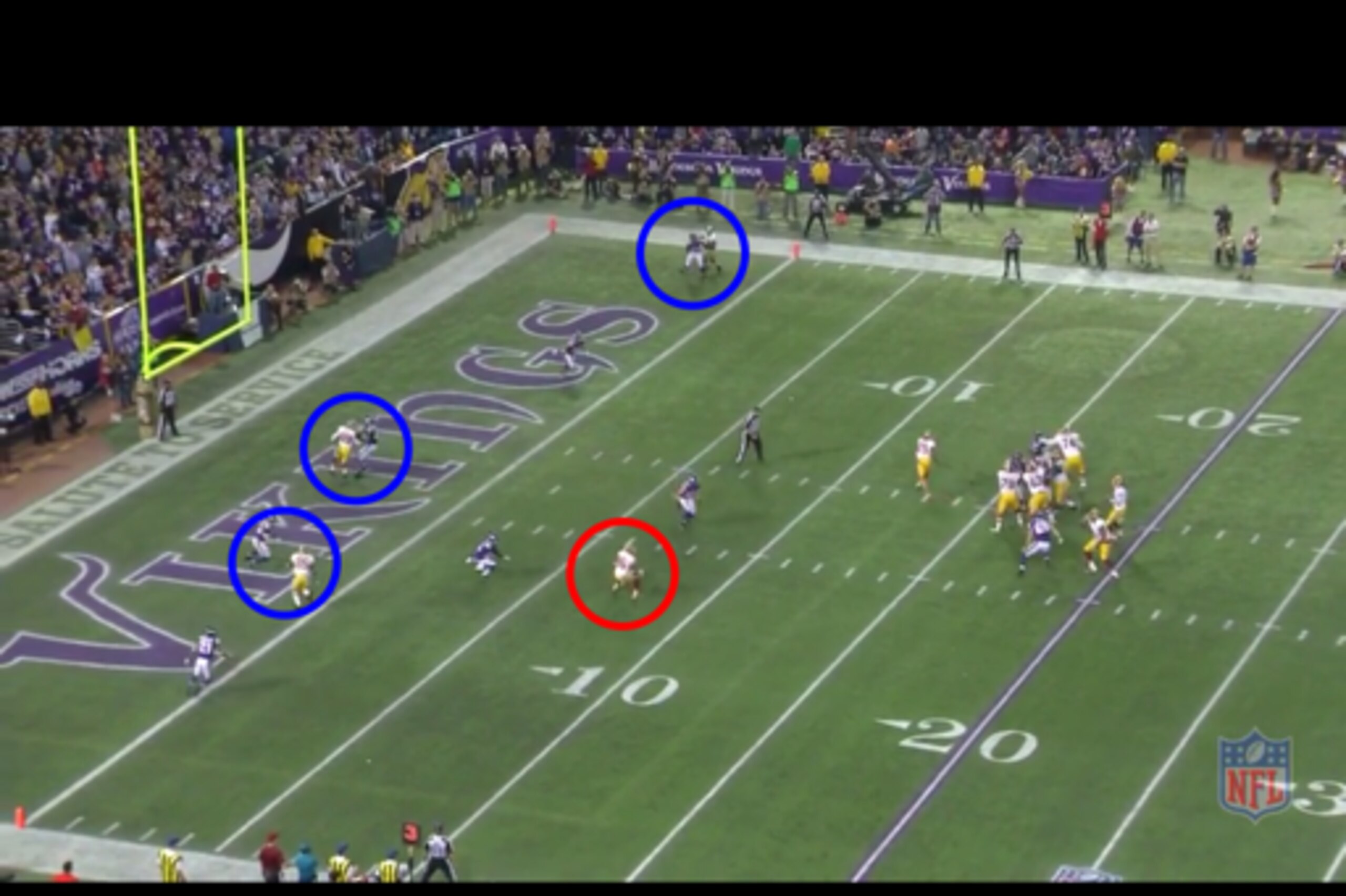
Reed was wide-open to make the catch and run for an easy touchdown:
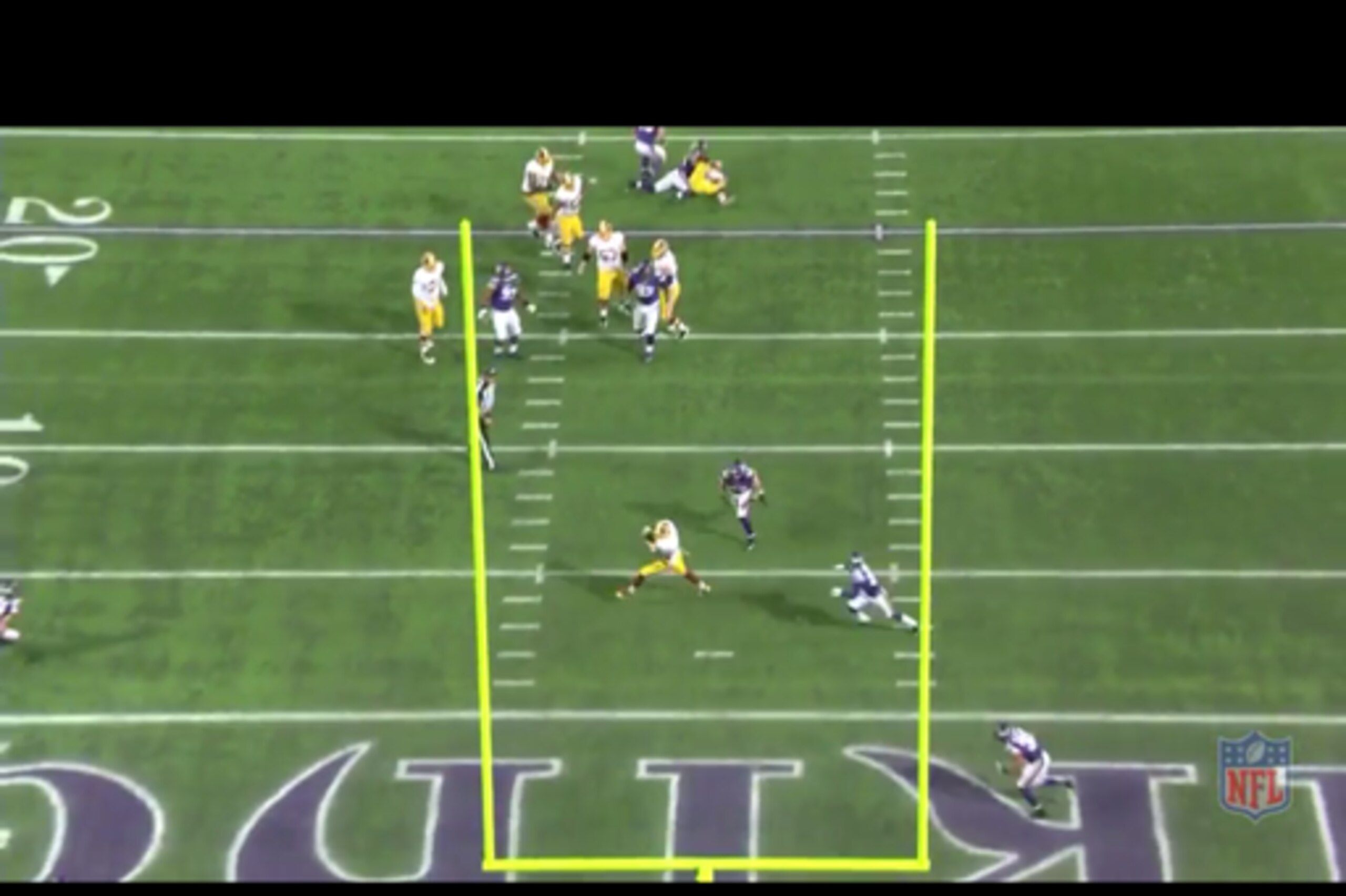
The purpose of these plays is to give a quarterback an easy read before a simple, short-range throw. Given Griffin's previous issues with accuracy and diagnosing coverage, these schemes are perfect. They can build confidence for a developing quarterback fresh off an injury.
With the right design, such plays can even create big gains. Griffin and Garcon provided a perfect example early in the third quarter.
The Redskins designed a perfect middle screen to get Garcon on the move underneath. Four vertical patterns away from Garcon, including a deep swing route by running back Roy Helu Jr., would be used to take coverage away from the underneath lanes:
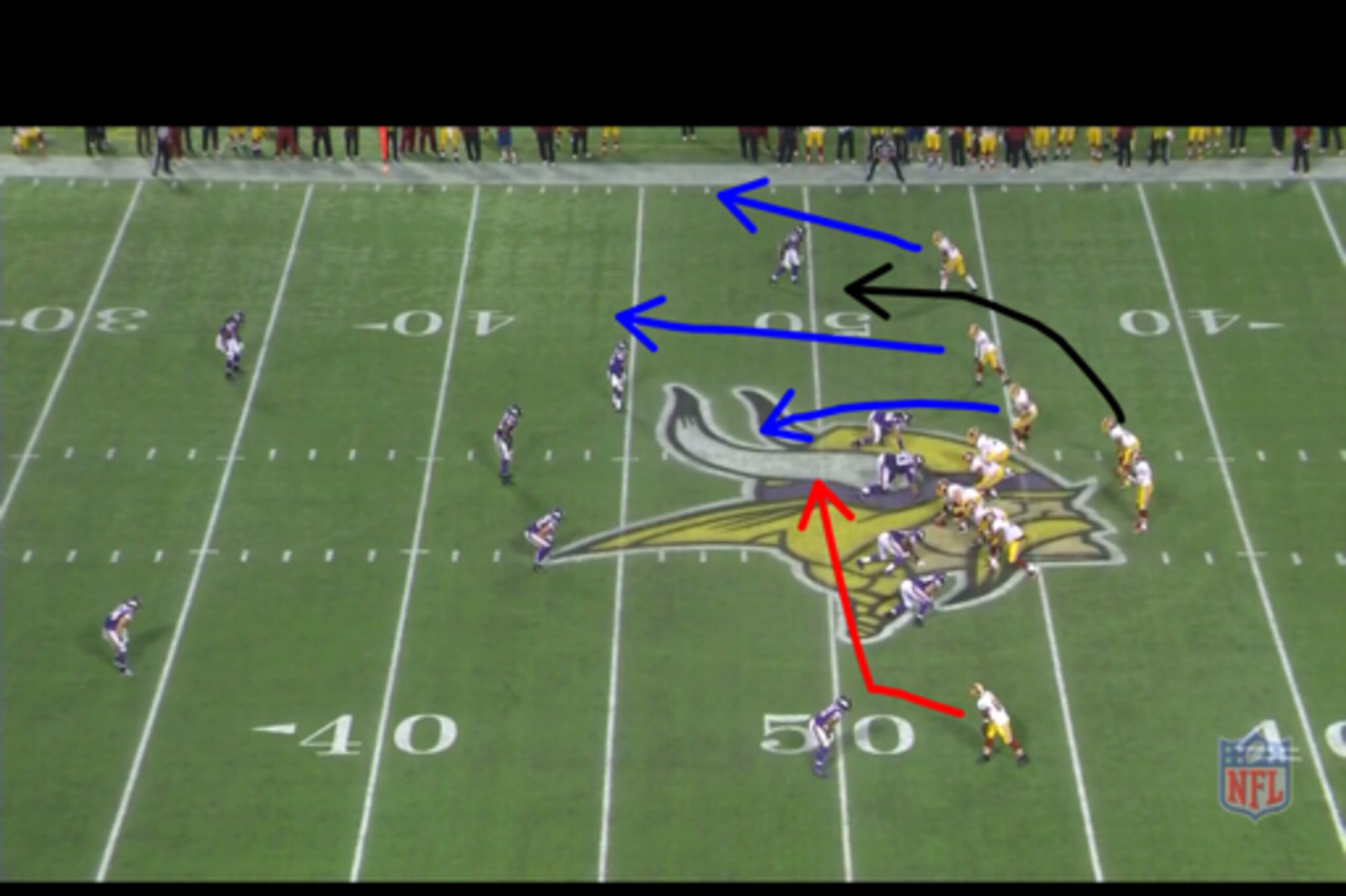
That left Garcon wide-open across the middle:

The downfield receivers acted as a convoy of blockers for Garcon on the screen:

Giving a talented receiver like Garcon this much room to work can only have one result. He amassed 30 yards on this cleverly constructed catch-and-run.
This play reminded me of the Kansas City Chiefs offense. It's a system deeply rooted in slants and screens.
It's also one in which Alex Smith, a quarterback who's also a talented runner but not without his issues as a passer, has thrived. Griffin can do the same in a scheme more suited to making his job easier.

Let's take a look at one more pass play from last season's tilt with the Vikings for an example of an easy throw and gain any quarterback would welcome.
Again, the concept was simple. It centred on releasing a receiver in space underneath vertical routes. This time, the short-range target would work to the outside.
Reed released into the flat, behind two post patterns:
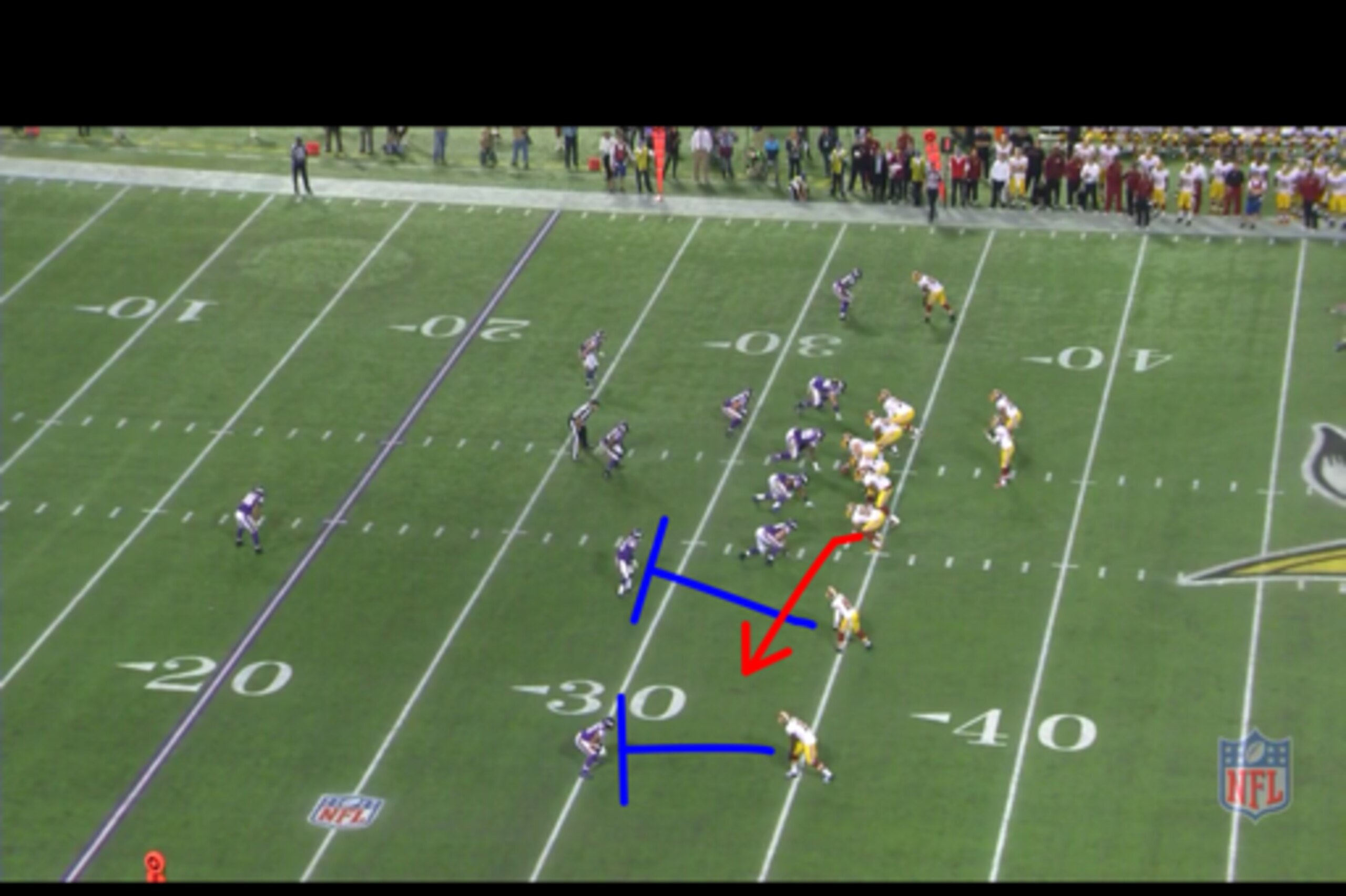
Reed was left open for a quick throw Griffin couldn't miss:

The outside receivers acted as blockers for another modified screen. Reed used their assistance to turn a short throw into 12 yards:
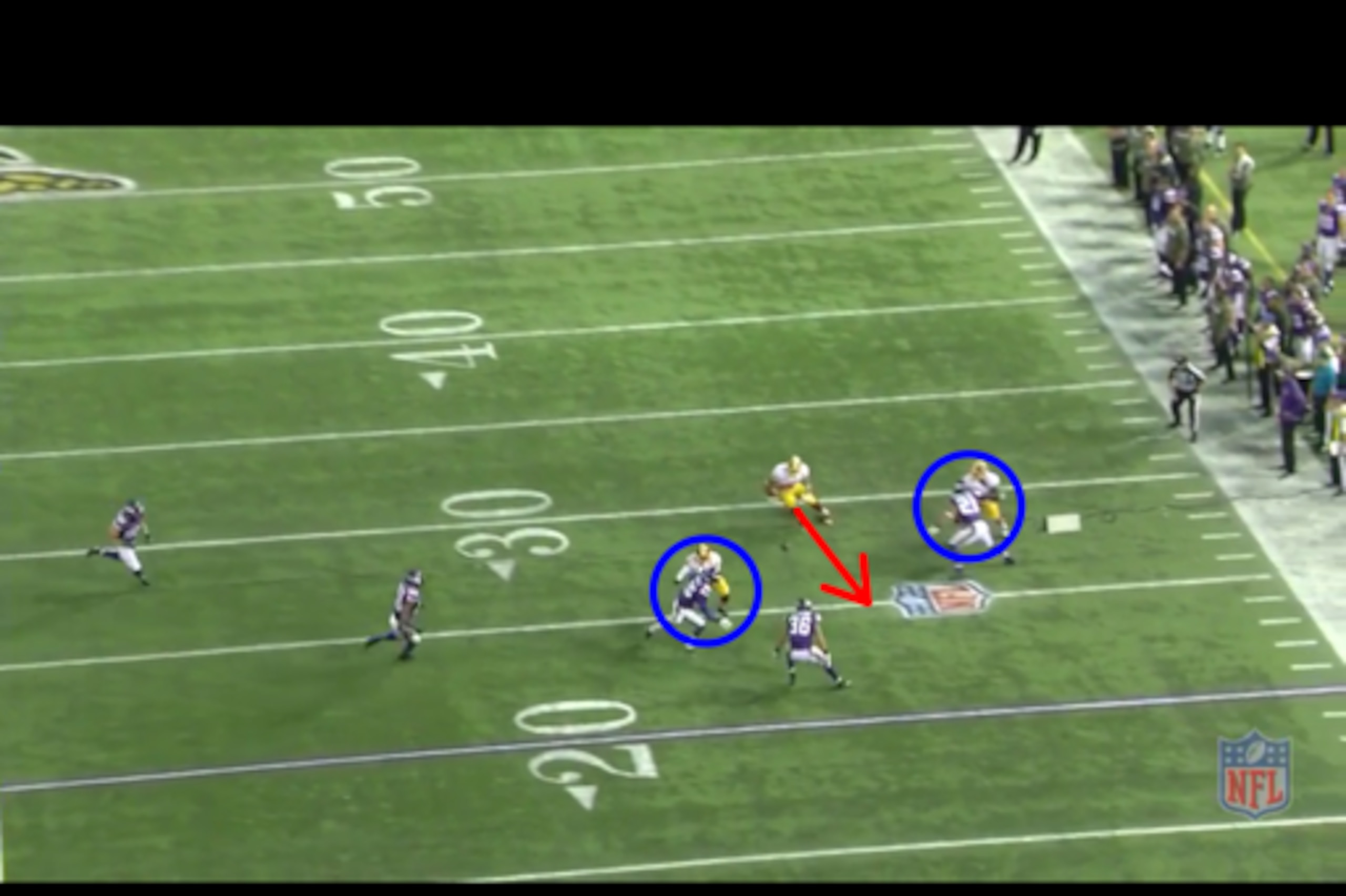
Consult Washington's recent 20-17 road win over the Dallas Cowboys from Week 8, and you'll see this same play thrown to Niles Paul for seven yards in the third quarter.
These are the type of designs where Griffin needs to make decisive throws that can be converted into positive yardage. During Week 1 against the Houston Texans, too many of the short range and intermediate plays he was asked to execute were slow developing.
Throwing snail-like passes to the outside also gave receivers no chance to make yards after the catch. Thankfully, Gruden and McVay have become more adept at giving their quarterbacks better options since the season's opening day.
The thrilling win in Dallas offered ample evidence of that. Lost in the deserved plaudits for the blitz-happy defense was the surprisingly balanced and creative game called on offense.
They spread the ball around among this team's ample amount of playmakers. More importantly though, they also designed plays that made throws easier for third-string quarterback Colt McCoy.
A great example came early in the third quarter. It involved targeting DeSean Jackson on a slant pattern on 3rd-and-10:
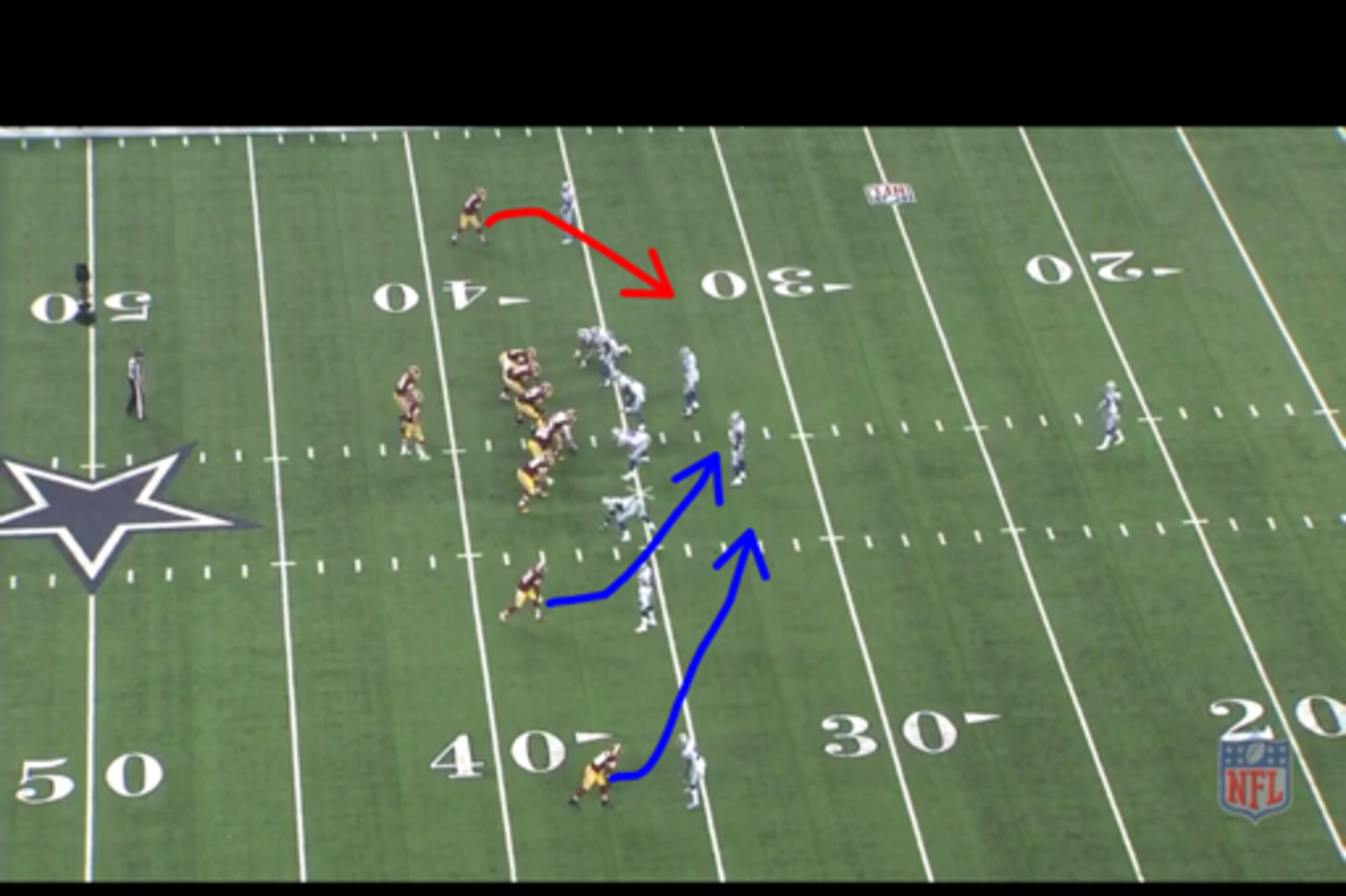
To help isolate Jackson, the Redskins had every wide receiver in the play run a slant pattern:
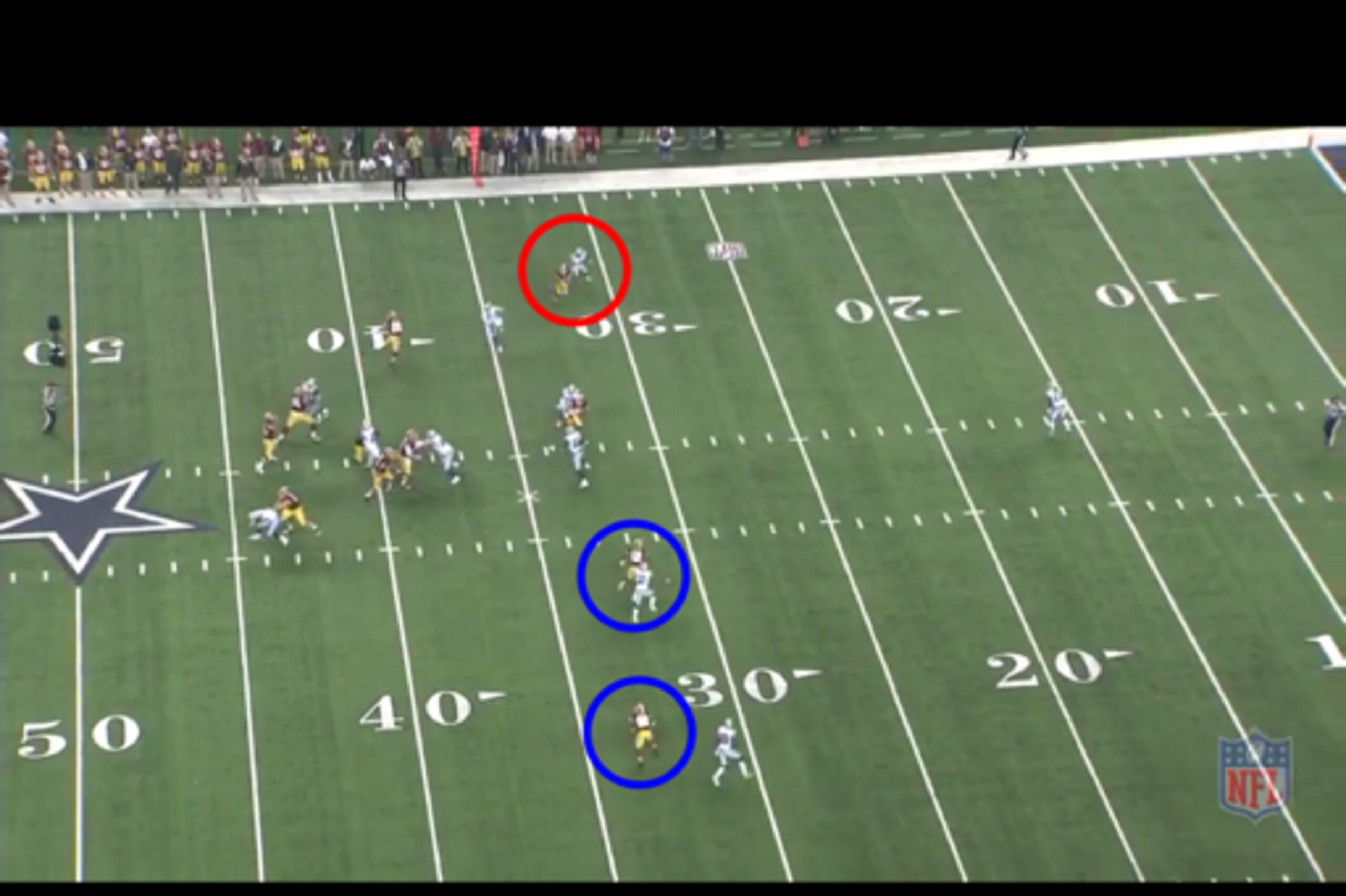
The overload of slants meant there was no inside help for cornerback Sterling Moore. Jackson was unchallenged on a 10-yard catch:
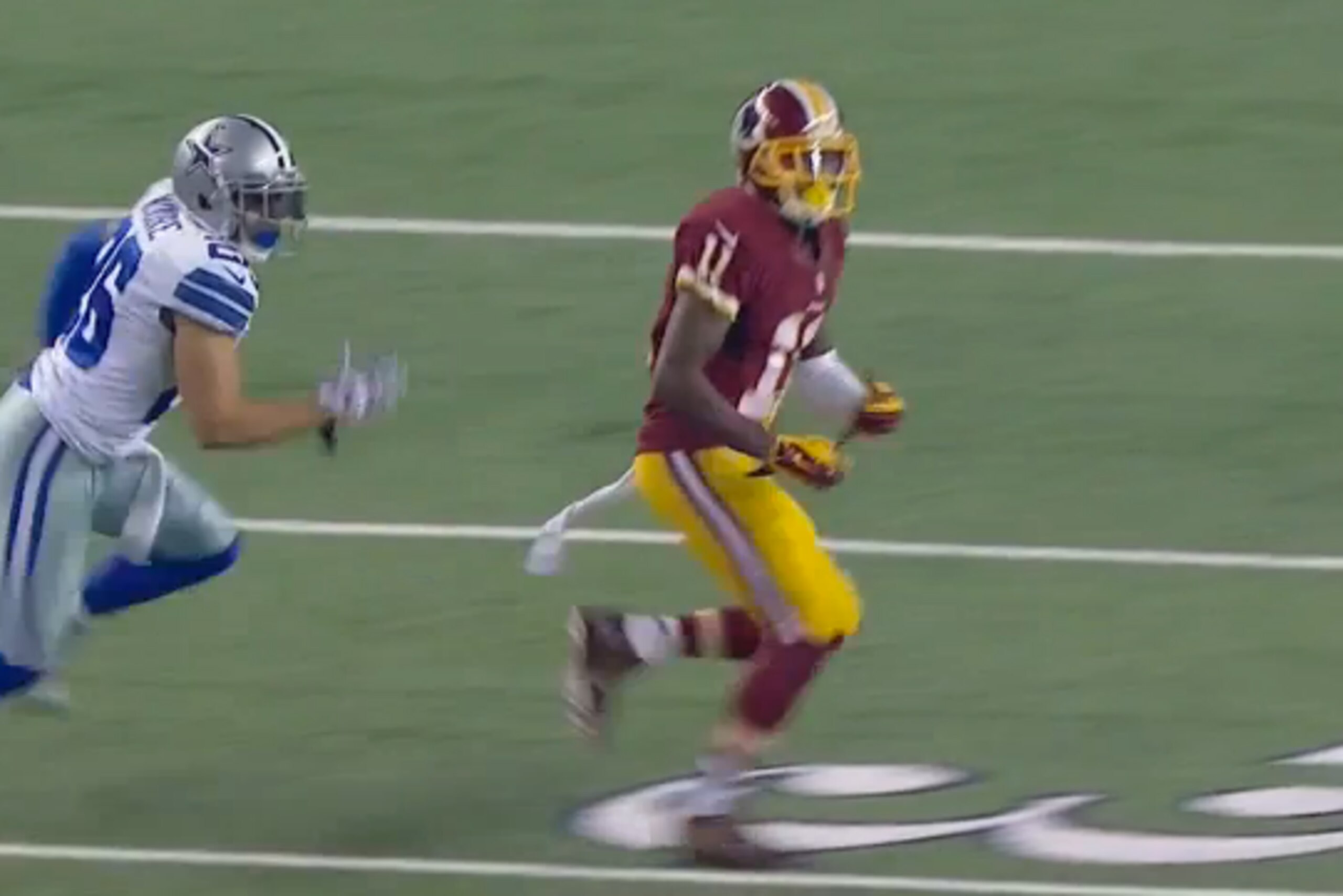
Jackson in single coverage was the ideal matchup for McCoy on this play. He was able to make that read pre-snap and quickly fire the pass Jackson's way.
Later in the third quarter, Gruden and McVay gave McCoy even more help on a key third down. Central to the play was isolating Reed on the outside.
This was achieved by aligning him away from a trips, three-receiver set. Reed was covered by strong safety J.J. Wilcox, an obvious matchup advantage for Washington:
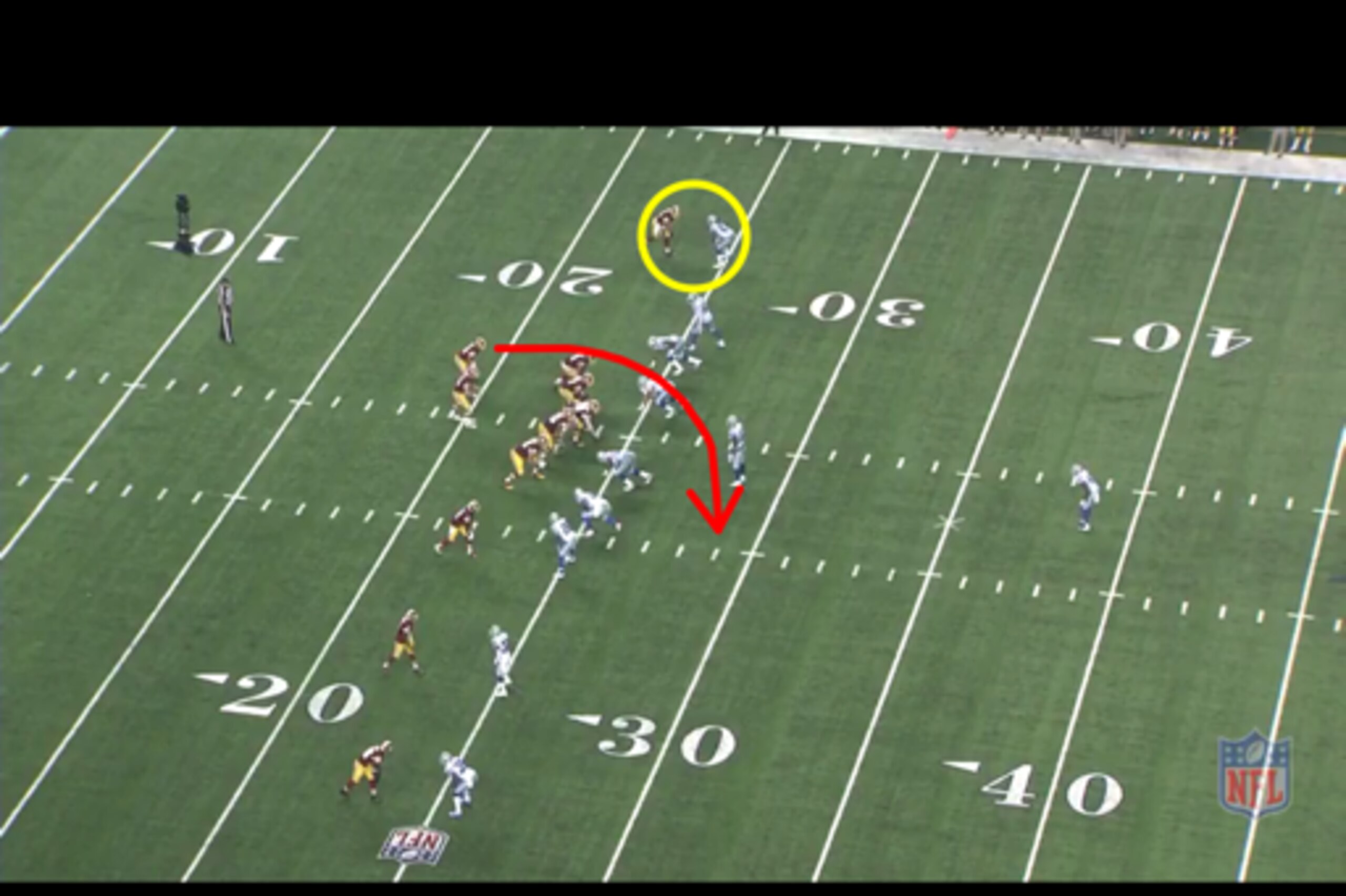
But the design also included a circle route out of the backfield by Helu. This gave McCoy a safety valve.
At the snap, McCoy initially zeroed in on Reed as his best matchup and primary option. Meanwhile, Helu worked across the middle:

With outside receivers all demanding coverage, Helu was left matched up against a linebacker:
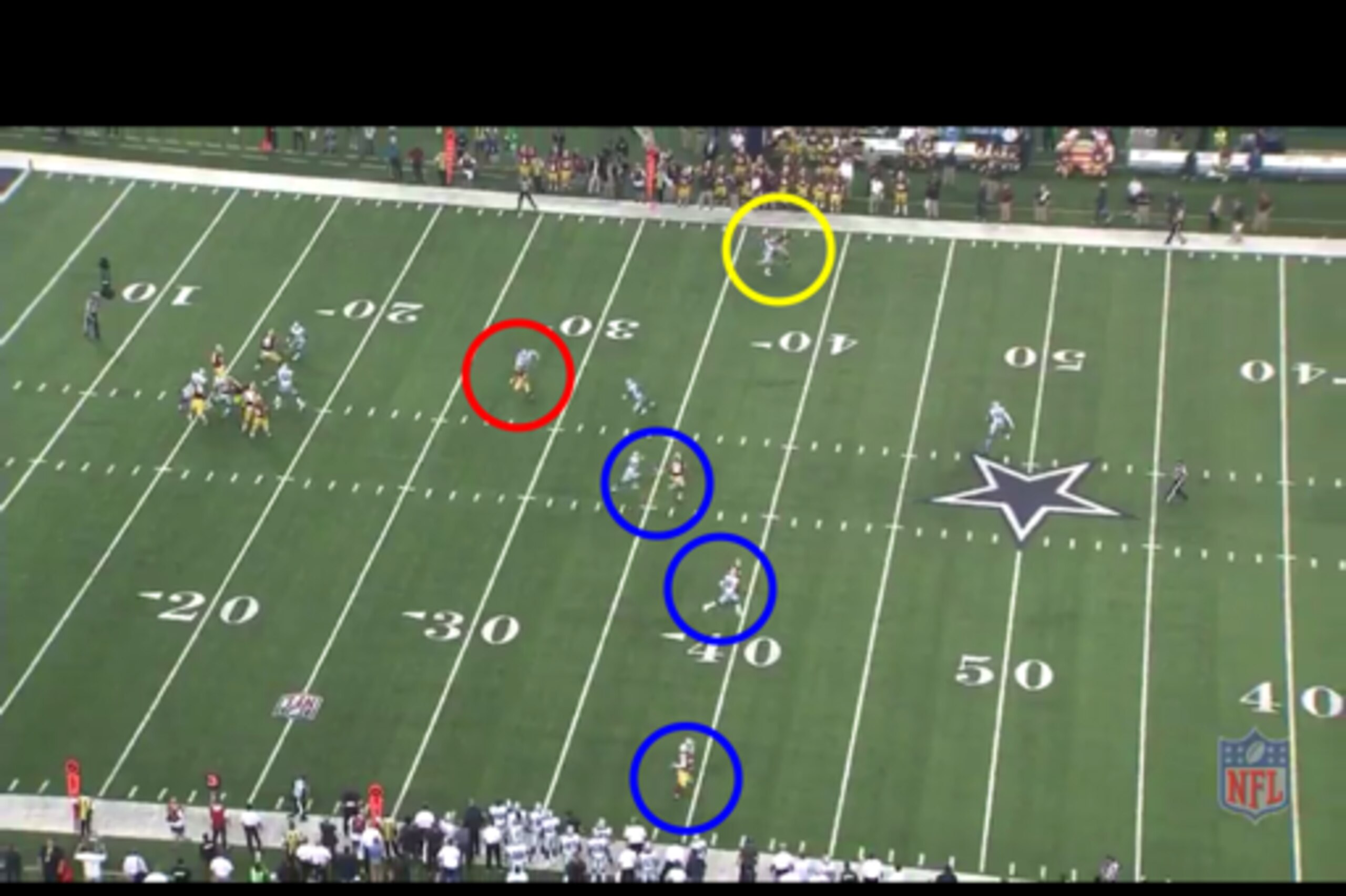
To his credit, McCoy saw this. He wisely progressed from his primary read to target Helu on the checkdown to convert the down:
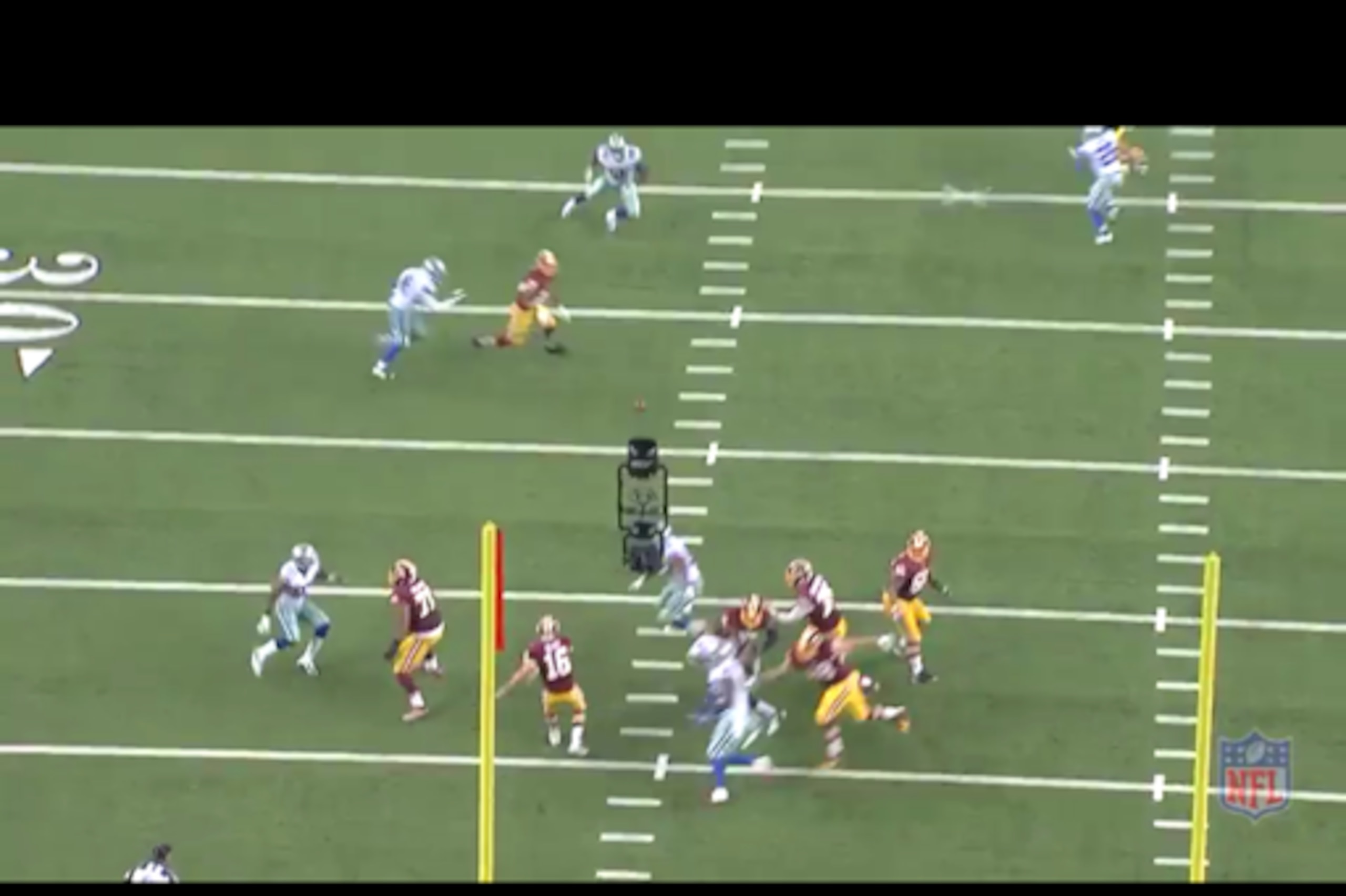
Building a natural outlet into passing concepts is the best way for a coach to protect his quarterback and make his job easier. That's a major reason why the Redskins converted six of 14 third downs in Dallas. That's a solid number by this season's standards.
It's also worth noting that the Griffin-led Washington offense, equipped with a similar game plan, converted nine of 16 third downs in Minnesota last season.
Of course, a big reason for the success of the offense in both games analyzed here was the help of a productive running game. The last time Washington met the Vikings, Morris rushed for 139 yards on 26 carries (his last 100-yard game for the Redskins).
Against the Cowboys, he took 18 carries and gained 73 yards, averaging 4.1 yards per rush. Griffin will need a similar, if not better, showing from Morris this week.
Fortunately, Gruden, who has not always been the running game's best friend this season, still has faith in Morris delivering, per Real Redskins blogger Rich Tandler:
"Well, I think from an expectation level, I think we all expected him to have probably more yards, more touchdowns and that’s a combination of things—not getting as many looks, me not calling enough runs, maybe. Like I said, in the running game, there’s a lot of things that can go wrong. But he is where he is. He’s still a force.
"
Gruden's confidence in Washington's capable ground attack is certainly welcome. The Vikings have been just average at repelling the run this season, ranking 16th in the league.
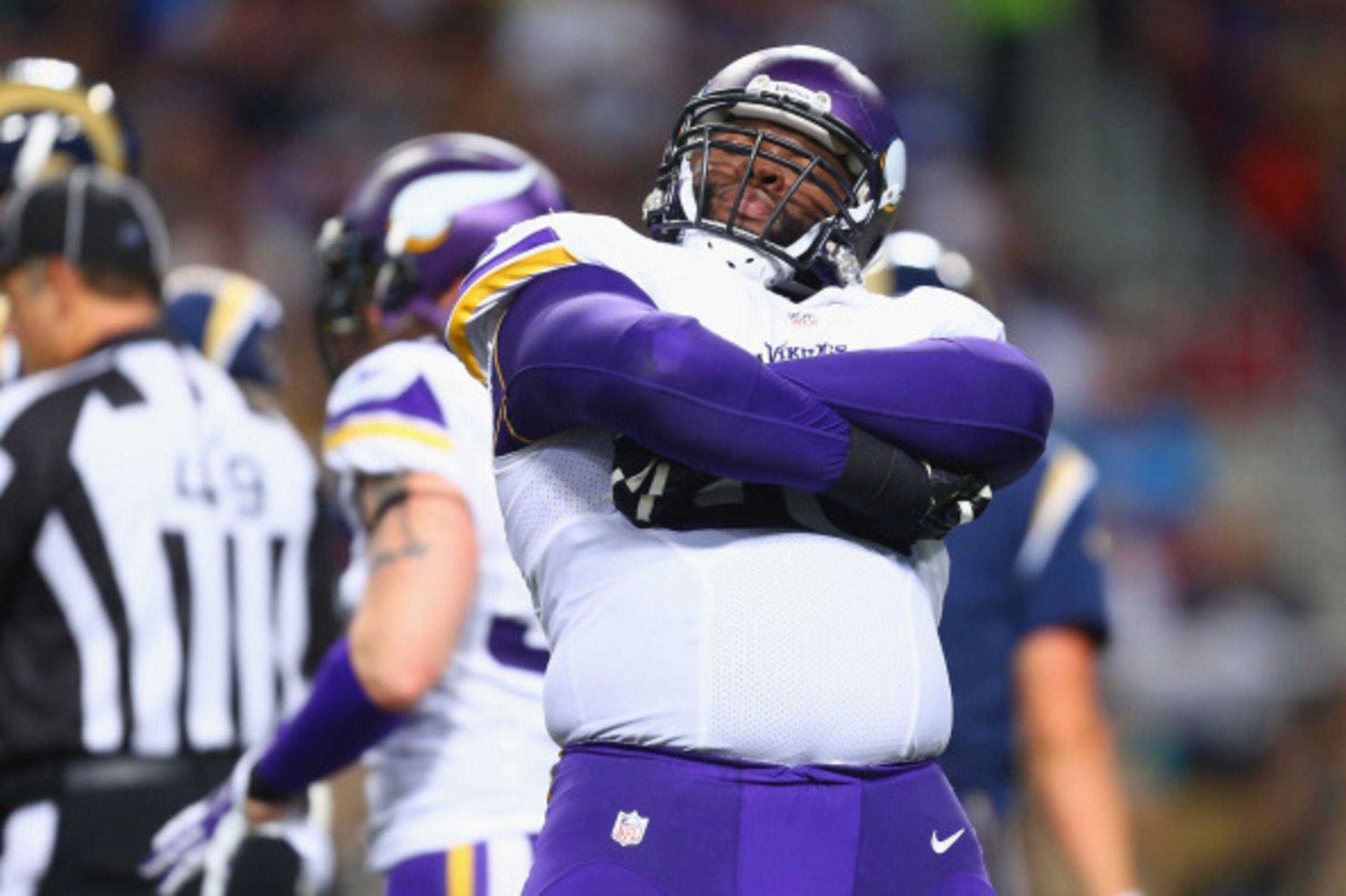
Controlling beefy, 6'4", 323-pound former New York Giants starter Linval Joseph inside will be the key to Morris' continued revival.
It will also help to have Griffin, and the threat he brings as a runner, back under center. It's a threat Gruden can't be reluctant to utilize.
That means read-option looks like this one deployed against the Vikings last season:

Griffin aligned in the classic pistol look with "22" personnel, two backs and a pair of tight ends.
In familiar zone-read fashion, Griffin faked a handoff to Morris. He then read the action of the play-side defensive end:

Once he slanted inside, Griffin kept the ball and darted to the outside. Paul helped seal the corner with a good block:

Naturally, any time Griffin takes off on a scamper the hearts of Washington fans sink just a little at the prospect of yet another injury. The trick has often been getting Griffin to avoid extra contact and live to fight another day.
On this occasion, he correctly sought the sanctity of the sideline:

Griffin has to run for the good of this offense. It occupies backside pursuit and freezes edge defenders. Those two things create additional space for Morris to overrun undermanned fronts.
These type of edge runs can stretch a stout Minnesota defensive front and wear out Joseph.
One thing Gruden must be wary of is how the Vikings used Cover 0 blitz schemes to nullify Griffin in the second half of last season's game. Minnesota frequently sent three linebackers through the middle to score big hits on Griffin and wreck the Washington passing game:
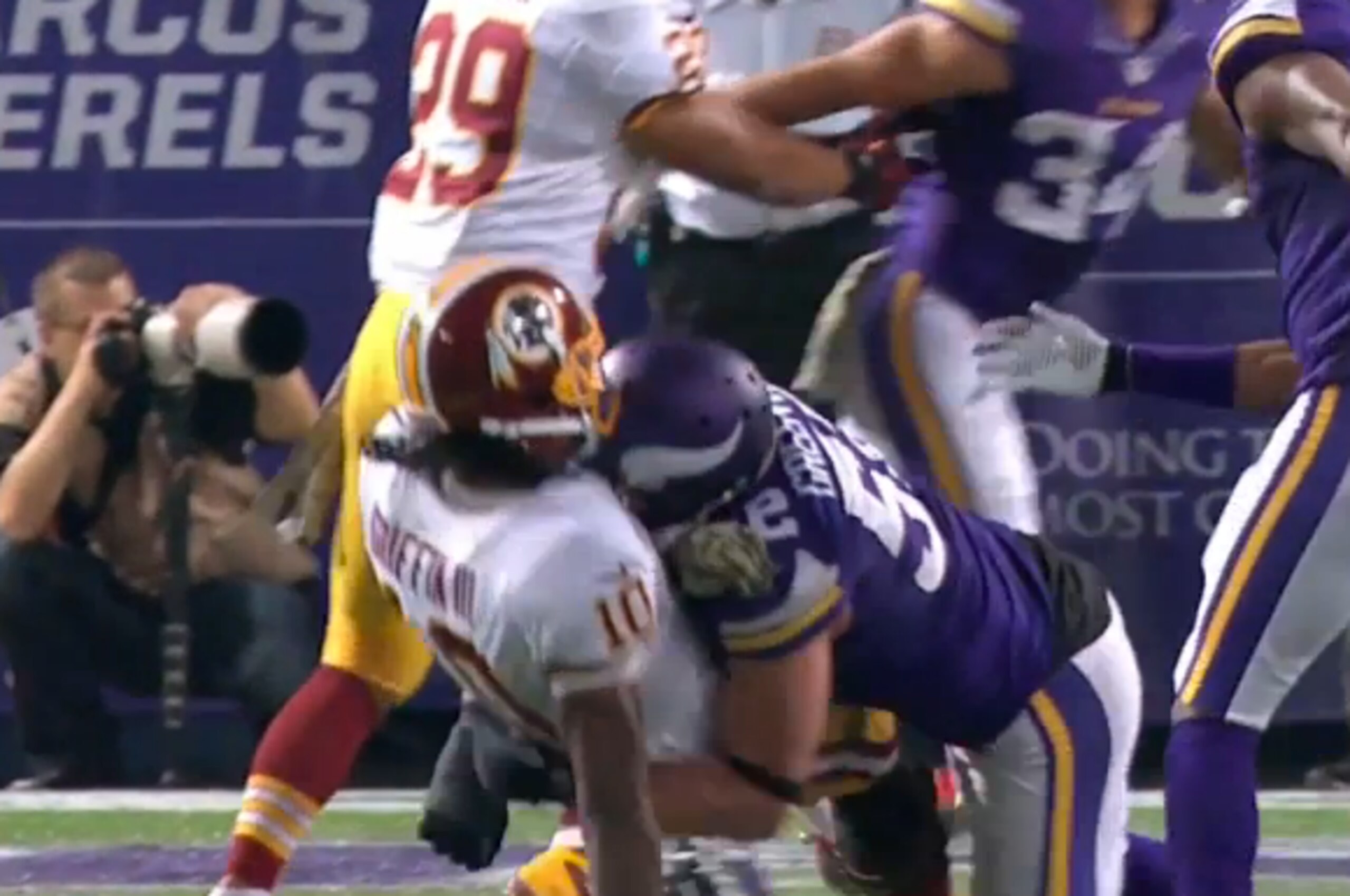
The coaching staff has since changed. However, new boss Mike Zimmer is an aggressive, defensive-minded play-caller who loves to stymie offenses with heavy pressure.
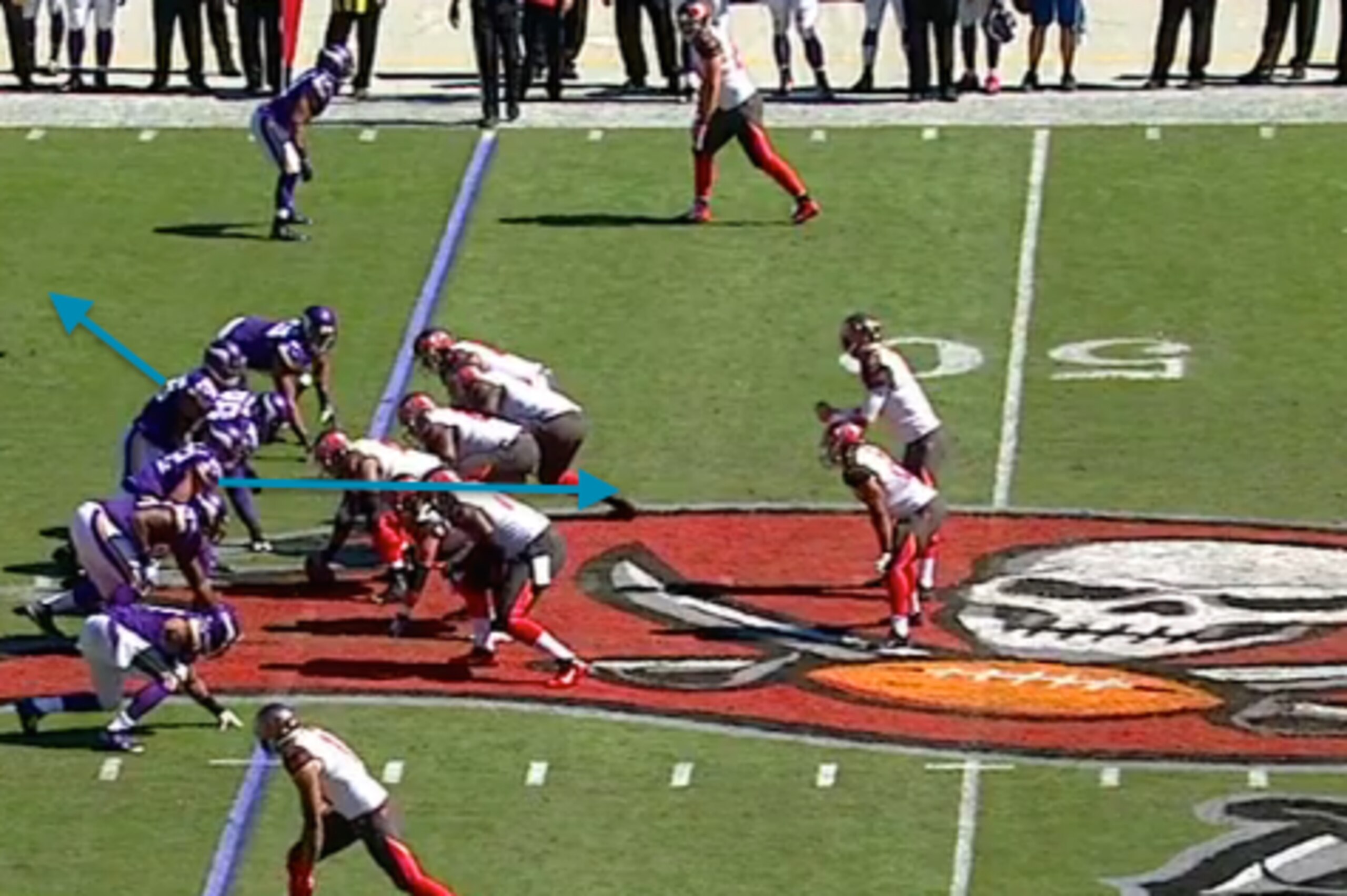
Specifically, Zimmer loves to use A-gap pressure which challenges the spaces on either side of a center. He showcased that scheme on a second-down play in last week's road win over the Tampa Bay Buccaneers.
Zimmer positioned veteran Chad Greenway and versatile rookie rush end Anthony Barr in both A-gaps. Greenway would blitz, while Barr rotated into underneath coverage:
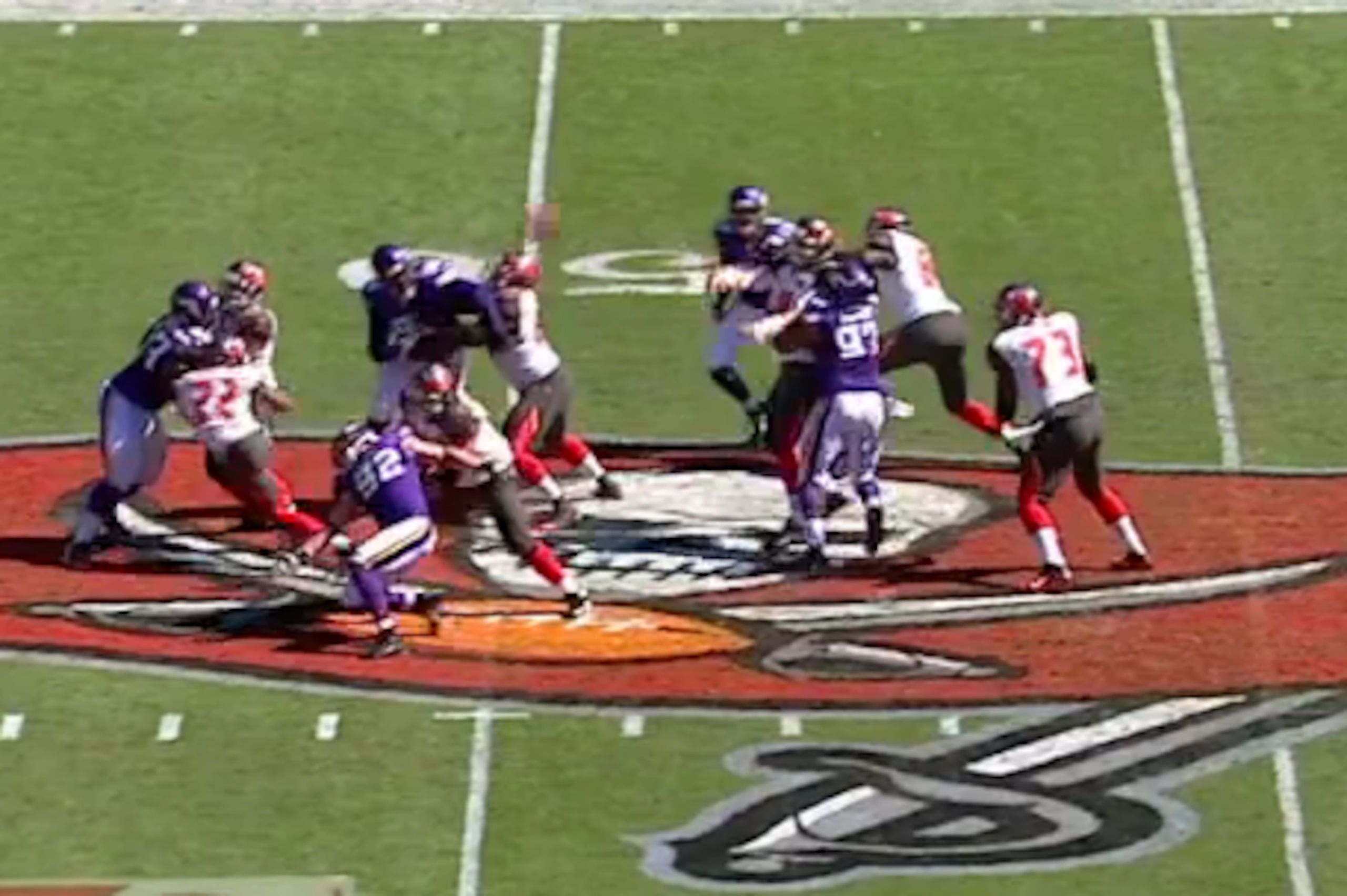
The five-man pressure collapsed the pocket around Tampa Bay passer Mike Glennon. He was hit as he threw, causing his pass to harmlessly flutter to the ground:
Gruden certainly needs a plan for Zimmer's A-gap pressures. His best bet is to keep Griffin out of 3rd-and-long situations as much as possible.
Griffin was sacked four times in Minnesota last season. With Zimmer running things, the pressure on him could be even more intense.
Minnesota was where Washington's season went to die in 2013. To beat the Vikings in 2014, Gruden needs a game plan that suits what Griffin does best, as ESPN.com Redskins reporter John Keim has noted:
"Regardless, this is why Gruden is in Washington. Now it’s up to him and Griffin to prove this was the wise choice -- to return him against a good defense that can be tough for a player in Griffin’s position.
What I hope not to see is a quarterback confined to the pocket. If that means more zone-read runs, so be it -- those plays worked in the past for a reason. It opens the run game, it opens the play-action pass game....
Griffin still offers a unique blend at quarterback, with a strong arm and fast feet. You absolutely need to see where that can take you. But the Redskins need him to find his game in a hurry. They have won two straight and don’t want to stop now.
"
As much as anything else though, Gruden must craft plays that let Griffin get rid of the ball quickly to receivers on the run. Manufacturing big plays that way will lead to a confident, efficient and winning return for Griffin.
All statistics via NFL.com.
All screen shots courtesy of ESPN, Fox Sports, NFL Network and NFL.com Game Pass.
.jpg?w=2560 "Seahawks Cardinals Football")
.jpg?w=2560 "Commanders Cowboys Football")