What's Wrong with LeSean McCoy and the Eagles' Rushing Attack?
Philadelphia Eagles running back LeSean McCoy is arguably the most talented offensive player in the NFL.
McCoy had 1,607 rushing yards on 314 attempts with nine rushing touchdowns last season. To complement his rushing production, he added 52 receptions for 539 yards and two receiving touchdowns. McCoy was consistently explosive and elusive while only fumbling the ball once.
Yet, McCoy is finding out this year that talent alone won't sustain his production.
TOP NEWS
.jpg?w=2560 "Saints Lions Football")
Rap: Lions, LaPorta End Contract Talks
.jpg?w=2560 "Commanders Eagles Football")
Commanders May Change Logo 👀
.jpg?w=2560)
Live EVERY Fantasy Football Update
In 2013, McCoy's production peaked because of the system he played in and the offensive line he played behind. Chip Kelly's offense excels at creating space everywhere, while the Eagles offensive line was the best in the NFL last season.
Kelly's offense is still creating space, but the offensive line has been decimated.
Instead of running behind Jason Peters, Evan Mathis, Jason Kelce, Todd Herremans and Lane Johnson, McCoy finished the Week 4 game against the San Francisco 49ers running behind Peters, Matt Tobin, David Molk, Dennis Kelly and Herremans.
McCoy and that line combined for 17 yards on 10 carries against the 49ers, while McCoy didn't have a single reception. For the season as a whole, he has 70 rushes for 192 yards and one touchdown, with 10 receptions for 64 yards and one fumble.
If you extrapolate McCoy's numbers out to cover a full 16-game season, he would finish this year with 280 carries for 768 yards and four rushing touchdowns, with 40 receptions for 256 receiving yards and four fumbles.
That means McCoy would have 48 fewer touches, 839 fewer rushing yards, 283 fewer receiving yards and seven fewer total touchdowns. That's without even considering the three extra fumbles.
Sometimes the simplest answers are the best ones, and in this scenario it seems clear that McCoy's struggles are being created by his offensive line. Yet, it's never safe to simply make a presumption with any player in the NFL. Presumptions make for lazy analysis, and with a player of McCoy's talent, it's very easy to be lazy.
McCoy's most productive rushing performance of the season came in Week 2, when he averaged 4.0 yards per carry and scored a touchdown.
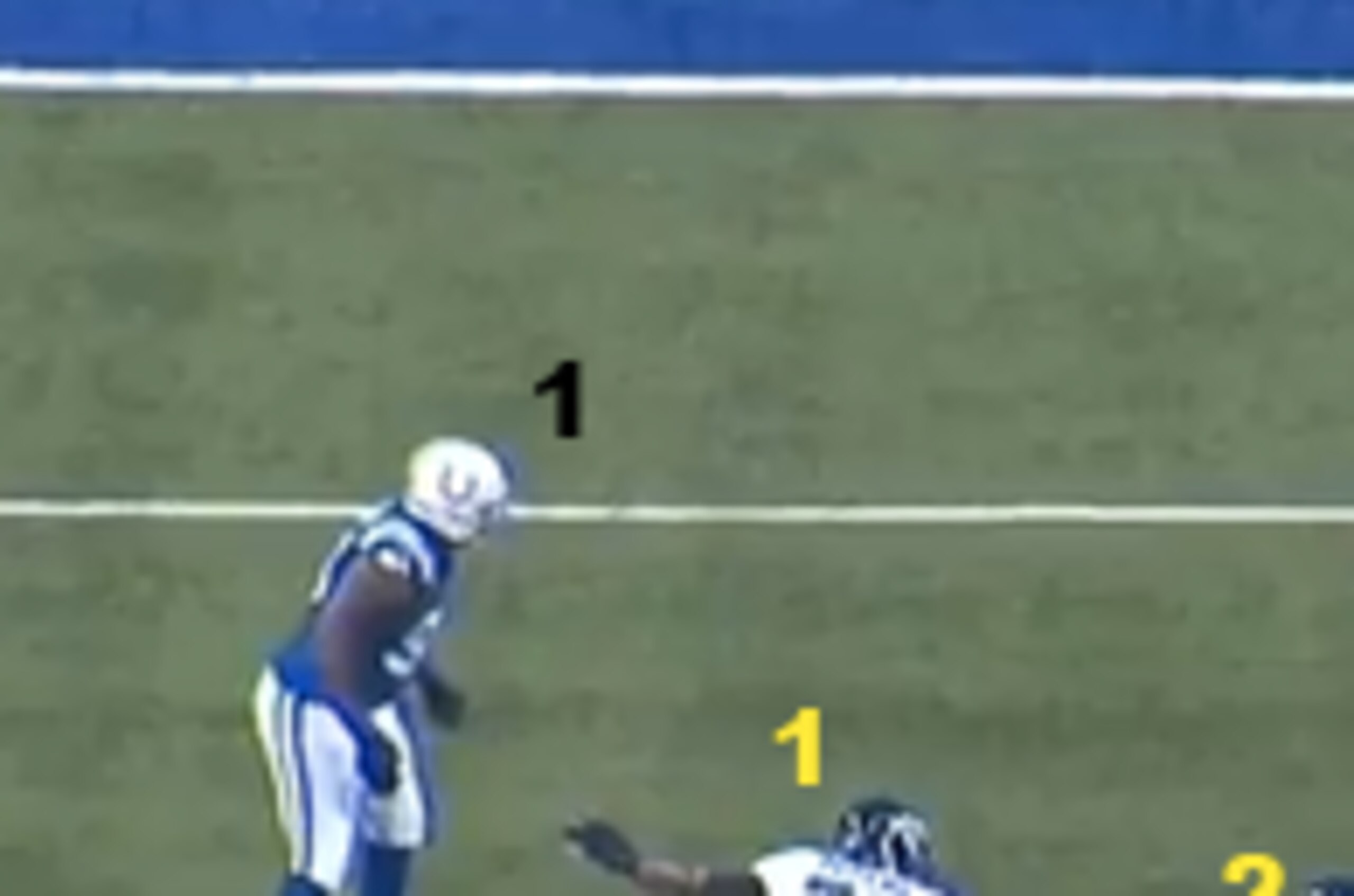
Early in the first quarter, a very telling play occurred. In the red zone, the Eagles spread the field with receivers wide on each side of the field. That left McCoy and his five offensive linemen against five immediate defenders.
This numbers advantage should work in the offense's favor, but that isn't how the play develops.
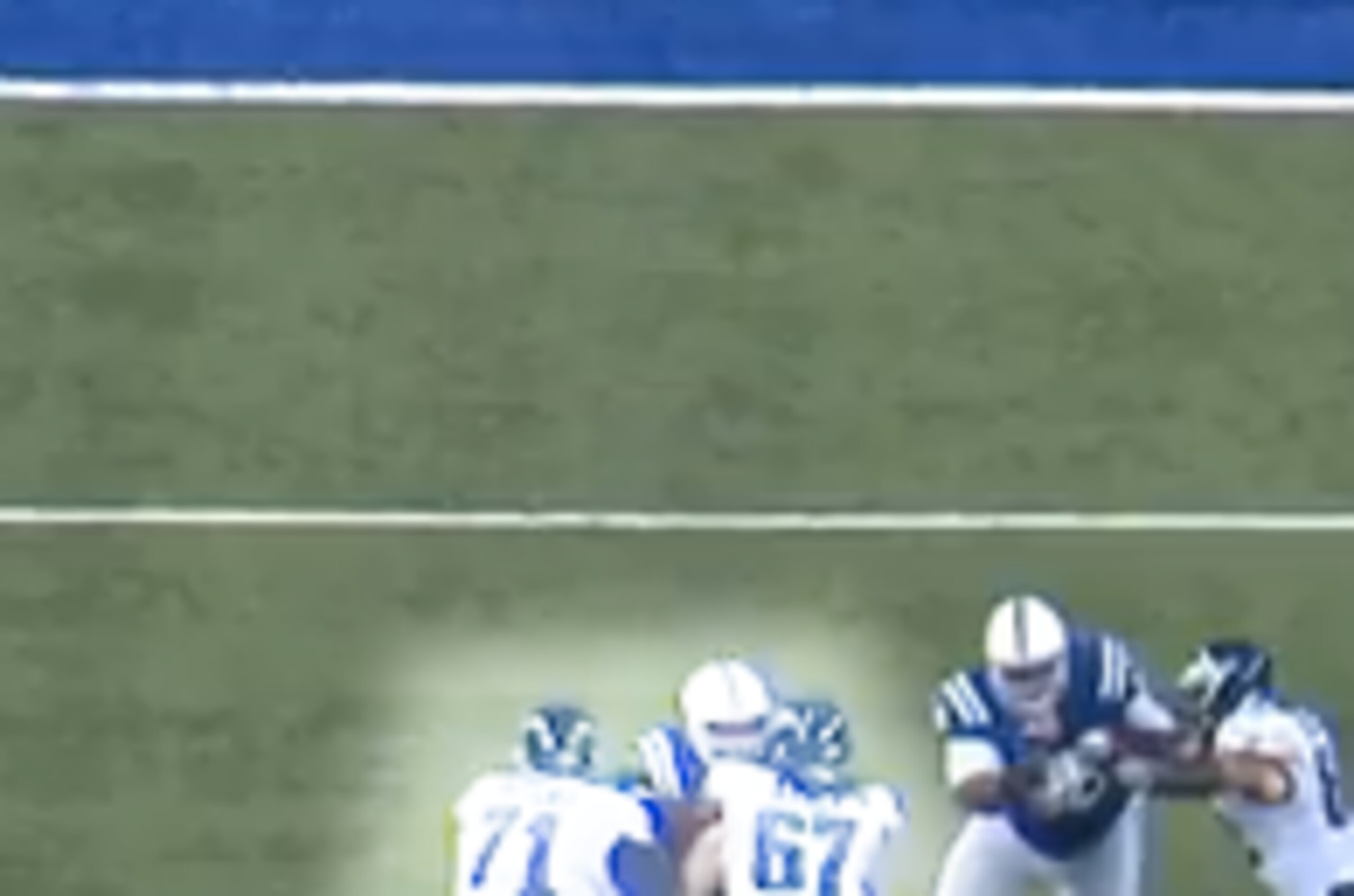
The Eagles' offensive line appears to make one significant mistake. Right guard Herremans advances to the second level, but he never accounts for the closest defender. Instead, he engages a defensive back who isn't in position to get to McCoy either way.
Herremans was presumably expecting the center or right guard to advance onto the immediate defender, but the double-team at the end of the line meant that there wasn't a spare defender to account for him.
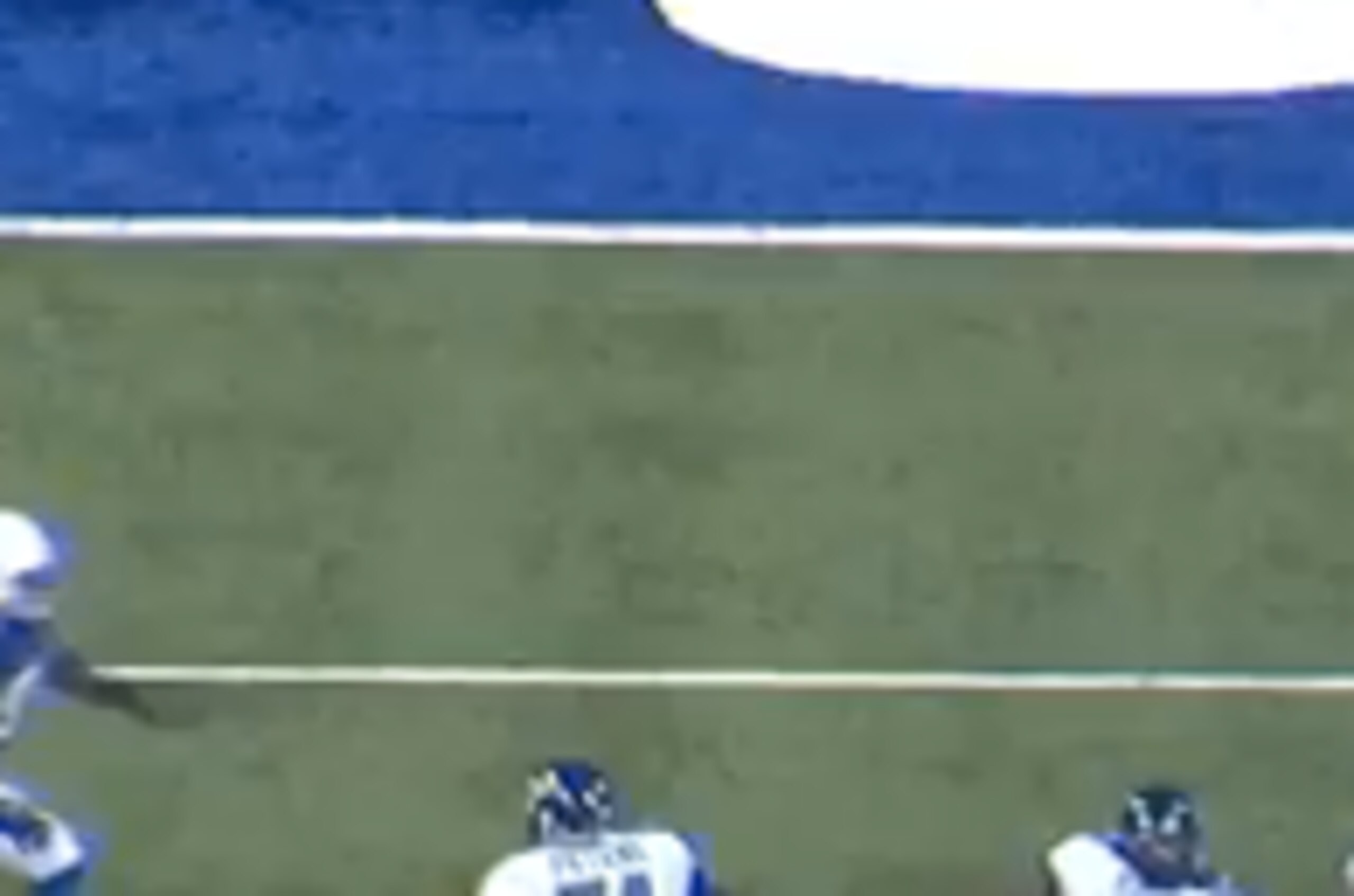
Even with the blown assignment, McCoy is still in space against the defender in front of him because of Kelly's play call. McCoy in space against anyone should be considered an advantage for the running back. Typically, in this situation, McCoy will make one decisive cut and use his quickness to slip past the defender into the secondary.
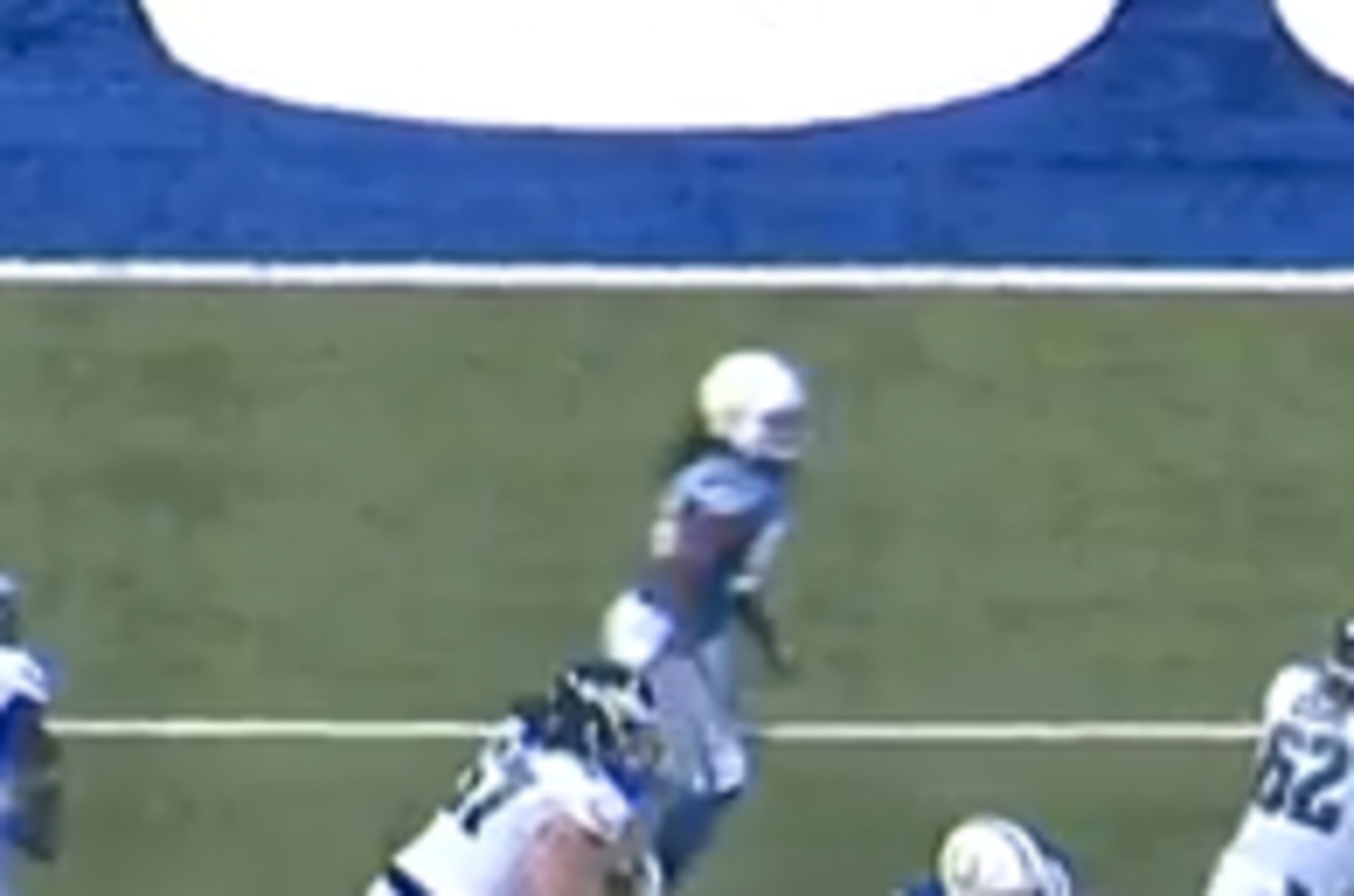
Instead, he hesitates before turning to run sideways to the wrong side of the field. Instead of breaking to the left where he had blocking, McCoy runs into his right tackle who is being beaten on his block. Even if he got outside of his right tackle, there were other defenders in position to stop him.
Not only did the offensive line fail on this play, but McCoy failed to play to his potential to make up for that mistake.
Attributing all of the fault on this kind of play to McCoy's offensive line would be an insult to his talent. It would suggest that he is the kind of back who needs perfect blocking to be productive. A blocking-dependant back isn't necessarily a bad thing in the NFL, but it's not something you say about a back as talented as McCoy.
McCoy is definitely capable of masking the flaws of his offensive line, and he does do it at times, but he hasn't been doing it often enough this season.

On this play in the third quarter, the Eagles came out with a tighter formation that drew more Indianapolis Colts defenders to the football. This is a more typical situation for McCoy to be facing, as teams have been more aggressive against the run when playing the Eagles this year.
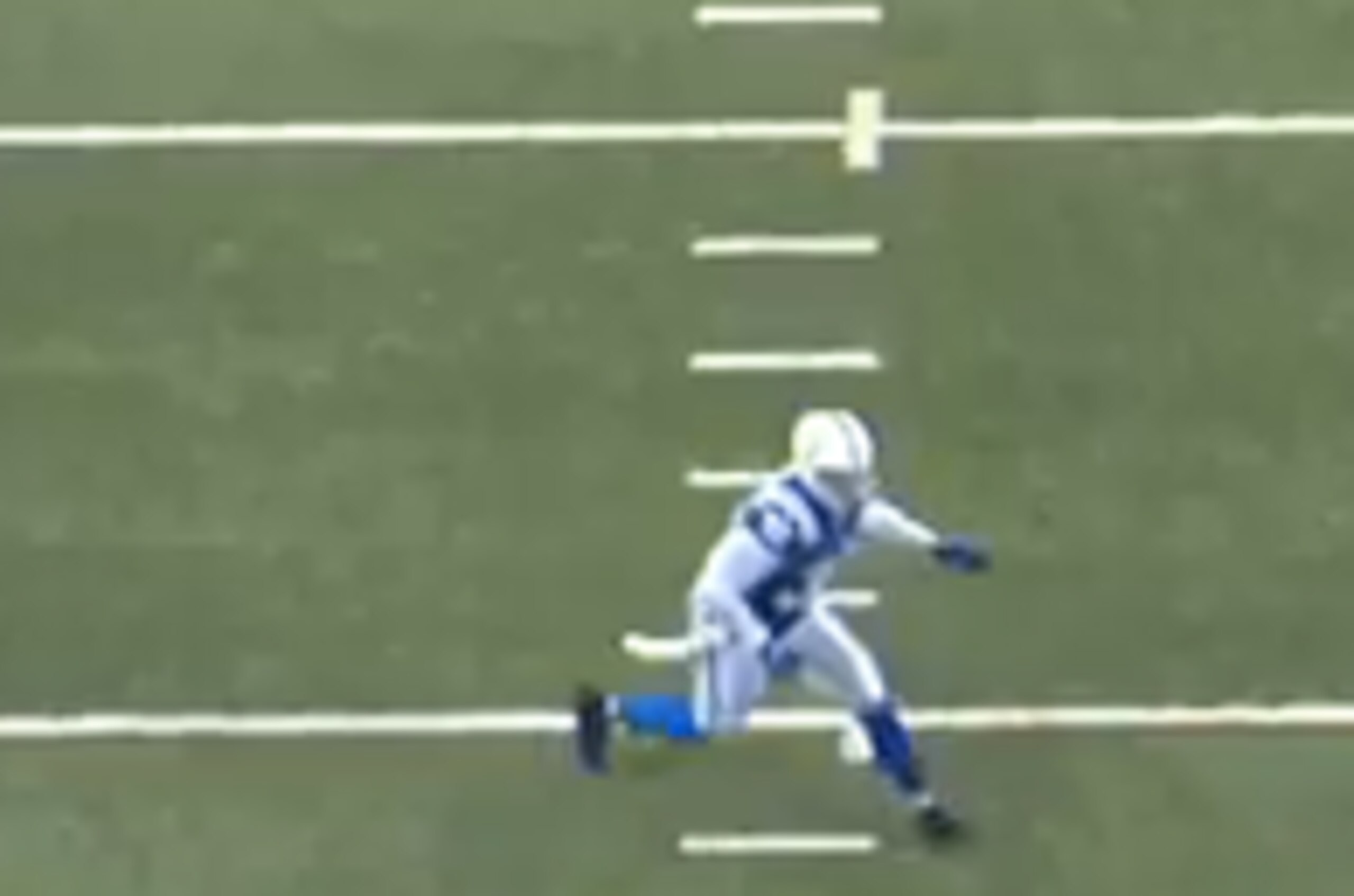
The Eagles run behind zone blocking where quarterback Nick Foles hands the ball off to McCoy running parallel with his teammates. McCoy doesn't have anywhere to run on the right side as the defenders there are gaining good positions, so he must cut back.
McCoy recognizes the cutback opportunity, but that is quickly taken away by a failed block.
This is the crucial point of the play. McCoy has come to a stop outside past where the initial running lane originally was. Now he has two choices: He either tries to use his speed to break outside of the defensive back in front of him or he cuts back behind his tight end who has inadvertently created a running lane when his assignment followed McCoy outside.
This is a difficult play to make, but it's the kind of play you would expect McCoy to make more often than not.

Instead of quickly cutting back infield, McCoy hesitates. Much like he did early in the game when faced with a defender in the hole, McCoy doesn't make a decisive move and is eventually tackled by two players where he stands.
Unfortunately for the back, he would have had the opportunity for a huge play if he had found that crease because a receiver was in position to block downfield.
McCoy has the physical ability to make this play; there just appears to be doubt in his approach that wasn't evident last season. These are the kinds of plays that McCoy needs to be consistently better at if he is to mimic the play of a back such as Marshawn Lynch or Le'Veon Bell, who consistently get the most out of their blocking.
While those are notable flaws for McCoy to address when compared to the best backs in the NFL, they are very minor flaws when you look at the Eagles' issues as a whole.
Teams have done a much better job of crowding the line of scrimmage this year and forcing Foles to beat them by throwing the ball down the field. This was particularly evident against Washington in Week 3. Washington didn't have the talent to shut the Eagles offense down, but it took the right approach.
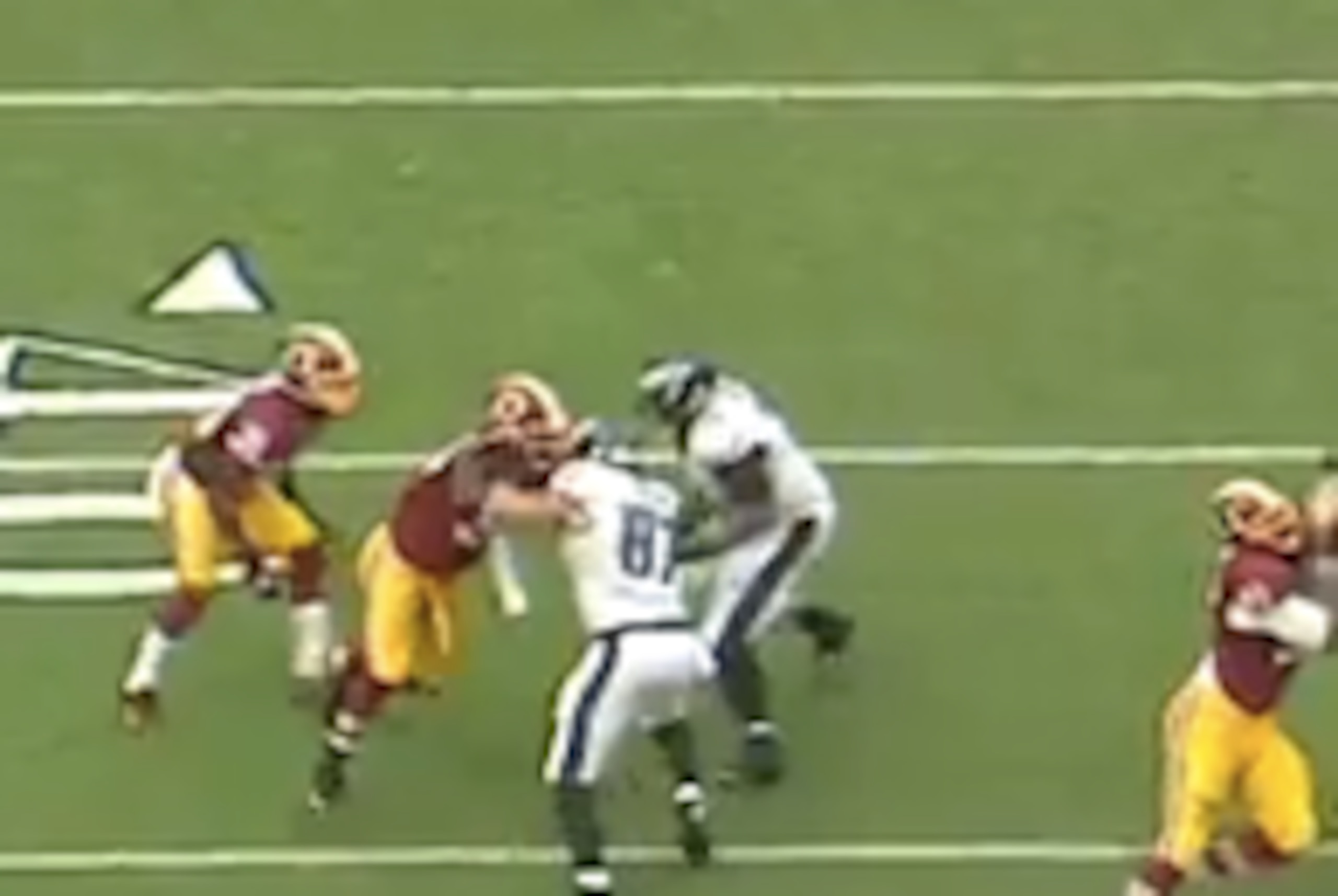
In Week 4, the 49ers were able to bottle McCoy up by taking a similar approach, but even that depleted 49ers defense had significantly more talent on it than the Washington defense did, so the effect proved to be even greater.
It was so great that not only did McCoy struggle, but the team itself became just the second in history to score three non-offensive touchdowns and still lose.
Typically, the focus for a struggling offense will be put on the quarterback. The quarterback will be expected to elevate the play of those around him to sustain success. However, the Eagles' best player is their running back, and the offense runs a scheme that is very quarterback-friendly.
Because of that, the focus falls more on McCoy to re-establish the effect of the running game to set the offense back to where Kelly expects it to be.
That is going to be very difficult without Evan Mathis and Jason Kelce, the team's left guard and center, but the return of Lane Johnson should allow Herremans to slide back into right guard and give the offensive line three quality starters.
For a back as talented as McCoy, three quality starters on the offensive line should be more than enough to allow him to flourish.
.jpg?w=2560 "Chargers Mack")
.jpg?w=2560 "Seahawks Football Owners")
_0.png?w=2560 "Week 5 Winners & Losers 📊")